

Systematic review of cost effectiveness and budget impact of artificial intelligence in healthcare
Open accessThe DOI matches its Crossref record; 59 of the 59 references it cites were found in a registry or an index; 25 of the 53 sources its claims cite were checked for support.
Abstract
This systematic review examines 19 studies of clinical AI interventions across multiple specialties and finds economic promise, while warning that cost components are often underreported.
Overview
CoChat Summary
## TL;DR
This systematic review of 19 studies found that clinical AI interventions were generally associated with improved diagnostic accuracy, gains in QALYs, and frequent cost savings or favorable ICERs across multiple specialties. The authors caution that many studies used static models and omitted important cost components, so the reported economic value of AI may be overstated.
## Key findings
- The review included 19 studies published from 2020 to 2024 across oncology, atrial fibrillation screening, gastrointestinal endoscopy, diabetic retinopathy screening, dental caries detection, ICU management, medication management, tuberculosis screening/monitoring, glaucoma screening, lung cancer screening, and breast cancer screening.
- Economic evaluation types were CEA (n = 14), CUA (n = 4), CMA (n = 2), and BIA (n = 1); 13 studies used a healthcare system perspective, 4 a societal perspective, and 1 a payer perspective.
- Example results reported in the paper include AF screening ICERs of £4847–£5544 per QALY gained, diabetic retinopathy screening cost reductions of 14–19.5% with ICERs as low as $1107.63 per QALY, and AI-assisted colonoscopy savings of $149.2 million in Japan and $85.2 million in the United States annually.
- Reporting quality was high: CHEERS 2022 scores ranged from 21/28 to 27/28, and Drummond scores ranged from 8/10 to 9/10.
## Methods
- The authors conducted a PRISMA 2020 systematic review of clinical AI economic evaluations, searching PubMed/MEDLINE, Embase, Web of Science, and the Cochrane Library from database inception to January 2025.
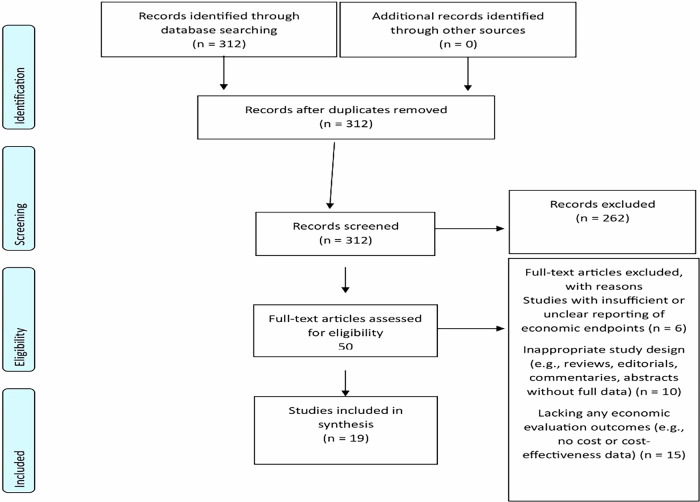
- They screened 312 unique records, assessed 50 full-text articles, and included 19 studies after excluding studies for unclear/insufficient economic reporting, ineligible design, or no economic outcomes.
- They extracted study characteristics and economic outcomes using a standardized form, then performed a thematic synthesis and quality appraisal with CHEERS 2022 and the Drummond checklist.
## Limitations
- The paper states that many studies omitted indirect costs, upfront infrastructure costs, integration costs, and ongoing maintenance costs, which may overstate economic benefits.
- The paper states that many evaluations used static decision-analytic models and did not capture adaptive learning or time-dependent performance improvements in AI; this may overestimate cost-effectiveness.
- The paper states that equity was underexplored, with limited subgroup analyses and limited disaggregation by demographic variables.
- Evident from the text: the review synthesized heterogeneous studies across settings, specialties, and methods, which the authors say may limit generalizability.
Model-written summary. Check it against the paper before relying on it.
Integrity signals
Registry
Cites
Statistics
Figures
Verification
Claims the paper makes
21 Valid · 2 Not valid · 17 Not checked · 76 Own results and interpretations
Every source the paper cites for this claim was checked and supports it.
In the paper
“Mori et al.20 reported annual national savings of $149.2 million in Japan and $85.2 million in the United States from an AI-assisted colonoscopy strategy”
§ Systematic review of cost effectiveness and budget impact of artificial intelligence in healthcare > Results > Comparative economic outcomes
What the sources say
- Supportedcites Mori et al.20 Mori, Y. et al. Cost savings in colonoscopy with artificial intelligence-aided polyp diagnosis: an add-on analysis of a clinical trial (with video). Gastrointest. Endosc. 92, 905–911.e1 (2020). 32240683 source
The Abstract reports estimated reductions in gross annual colonoscopy reimbursement of $149.2 million in Japan and $85.2 million in the United States. The Discussion identifies these as savings from an AI-supported diagnose-and-leave strategy compared with resecting all polyps; they are estimates, not observed national savings. (LLM, conf=0.93)
plainstates a cause- Asserted: passes — The authors put it forward as true.
- Checkable: passes — It can be checked against evidence.
- Load-bearing: unclear — It is unclear whether the paper’s conclusions depend on it.
- Based: passes — The paper gives a reason why it holds.
- Supported
The cited sources support only part of this claim — read each source’s verdict below.
In the paper
“Ziegelmayer et al.25 used up to 30,000 Monte Carlo simulations to demonstrate that AI-assisted LDCT remained cost-saving under various scenarios.”
§ Systematic review of cost effectiveness and budget impact of artificial intelligence in healthcare > Results > Comparative economic outcomes
What the sources say
- Partly supportedcites Ziegelmayer et al.25 Ziegelmayer, S., Graf, M., Makowski, M., Gawlitza, J. & Gassert, F. Cost-effectiveness of artificial intelligence support in computed tomography-based lung cancer screening. Cancers14, 1729 (2022). PMC8997030 35406501 sourceExperimental — accuracy not yet measured
Methods §2.7 reports a Monte Carlo probabilistic sensitivity analysis with 30,000 iterations, rather than 30,000 separate simulations. Results §3.1 finds lower costs for CT + AI in the base case, but Results §3.2 says the ICER turned positive when specificity varied. Those cases remained cost-effective at the stated willingness-to-pay threshold, not cost-saving. (LLM, conf=0.90)
boostedstates a cause- Asserted: passes — The authors put it forward as true.
- Checkable: passes — It can be checked against evidence.
- Load-bearing: unclear — It is unclear whether the paper’s conclusions depend on it.
- Based: passes — The paper gives a reason why it holds.
- Partly supported
The cited sources support only part of this claim — read each source’s verdict below.
In the paper
“the performance differences between semi-automated and fully automated AI models—as shown by Xie et al.23 and Huang et al.36 —directly impacted cost per patient and ICERs”
§ Systematic review of cost effectiveness and budget impact of artificial intelligence in healthcare > Results > Comparative economic outcomes
What the sources say
- Partly supportedcites Xie et al.23 Xie, Y. et al. Artificial intelligence for teleophthalmology-based diabetic retinopathy screening in a national programme: an economic analysis modelling study. Lancet Digit Health 2, e240–e249 (2020). 33328056 sourceExperimental — accuracy not yet measured
Our copy supports the cost-per-patient half of the attribution: the Results (base-case analysis) report 12-month total costs of $77, $62 and $66 per patient for the human assessment, semi-automated and fully automated models, and the Results sensitivity paragraph states that 'Specificity was the most important factor affecting the cost differentials, because the higher rate of false positives drives up costs', with the Discussion attributing the fully automated model's higher cost to its higher false-positive rate. However, the ICER half is not supported: the study is explicitly a cost-minimisation analysis (Cost-minimisation analysis; Added value of this study), in which the null hypothesis of no difference in sensitivity/false negatives between models could not be rejected and effectiveness was therefore assumed equal, so no incremental cost-effectiveness ratios were computed; searches for 'incremental cost-effectiveness ratio', 'ICER' and 'QALY' returned no passage in our copy. The claim also bundles Huang et al., which is judged separately and not on this source. (LLM, conf=0.78)
- Partly supportedcites Huang et al.36 Huang, X. M. et al. Cost-effectiveness of artificial intelligence screening for diabetic retinopathy in rural China. BMC Health Serv. Res 22, 1–12 (2022). 35216586 PMC8881835 sourceExperimental — accuracy not yet measured
The Discussion (page unavailable) reports lower per-patient grading costs for AI than for ophthalmologist screening, and the Results > Cost-effectiveness analysis reports an ICER for AI screening. The paper does not compare semi-automated with fully automated AI models or show that performance differences between those models directly affected costs or ICERs; it mentions those model types separately when discussing other studies. (LLM, conf=0.86)
plainstates a cause- Asserted: passes — The authors put it forward as true.
- Checkable: passes — It can be checked against evidence.
- Load-bearing: unclear — It is unclear whether the paper’s conclusions depend on it.
- Based: passes — The paper gives a reason why it holds.
- Partly supported
The cited sources support only part of this claim — read each source’s verdict below.
In the paper
“Salcedo et al.30 found that AiCure was cost-saving in 96.4% of simulations at a $150,000/QALY threshold.”
§ Systematic review of cost effectiveness and budget impact of artificial intelligence in healthcare > Results > Comparative economic outcomes
What the sources say
- Partly supportedcites Salcedo et al.30 Salcedo, J. et al. Cost-effectiveness of artificial intelligence monitoring for active tuberculosis treatment: a modeling study. PLoS One16, e0254950 (2021). PMC8294556 34288951 sourceExperimental — accuracy not yet measured
The Results report that AiCure was cost-effective in 96.4% of simulations at a $150,000/QALY threshold. They separately report that it produced more QALYs at a lower cost than DOT in 93.5% of simulations. The claim conflates cost-effectiveness with cost savings. (LLM, conf=0.94)
plainstates a cause- Asserted: passes — The authors put it forward as true.
- Checkable: passes — It can be checked against evidence.
- Load-bearing: unclear — It is unclear whether the paper’s conclusions depend on it.
- Based: passes — The paper gives a reason why it holds.
- Partly supported
Every source the paper cites for this claim was checked and supports it.
In the paper
“Szymanski et al.28 further estimated that ML-based AF screening in the UK could reduce NHS and Personal Social Services (PSS) costs by up to –£80.4 million over three years28.”
§ Systematic review of cost effectiveness and budget impact of artificial intelligence in healthcare > Results > Comparative economic outcomes
What the sources say
- Supportedcites Szymanski et al.28 Szymanski, T. et al. Budget impact analysis of a machine learning algorithm to predict high risk of atrial fibrillation among primary care patients. Europace 24, 1240–1247 (2022). 35226101 source
The Estimated budget impact section reports £80,441,386 in savings over three years for Scenario 2 when Personal Social Services costs are included alongside NHS costs. This is the largest saving reported across the three screening scenarios, matching the claim’s ‘up to £80.4 million’ estimate. (LLM, conf=0.93)
hedgedstates a cause- Asserted: passes — The authors put it forward as true.
- Checkable: passes — It can be checked against evidence.
- Load-bearing: unclear — It is unclear whether the paper’s conclusions depend on it.
- Based: passes — The paper gives a reason why it holds.
- Supported
64 more claims · 3 with their cited sources checked
Create a free account to see all 116 claims and to verify the 16 references still open.
- It may state two separate claims as one. 29
- Probably not a substantial claim. 18
Claims other papers make about this one
Each is checked against this paper’s own text: does it say what the citing paper says it does?
The source backs part of the claim, not all of it — or backs it for a different population, condition or comparison.
In the citing paper
“Dynamic modeling suggests that long-term value is maximized when adaptive learning and workflow integration are considered, but indirect costs and equity issues are often underreported in current analyses [59].”
From Artificial Intelligence in Oncologic Thoracic Surgery: Clinical Decision Support and Emerging Applications (2026) · cites this paper as [59]
Experimental — accuracy not yet measuredThe source backs part of the claim, not all of it — or backs it for a different population, condition or comparison.
In the citing paper
“Artificial intelligence in thoracic surgery demonstrates potential for cost-effectiveness primarily by improving diagnostic accuracy, reducing unnecessary procedures, and optimizing resource utilization.”
From Artificial Intelligence in Oncologic Thoracic Surgery: Clinical Decision Support and Emerging Applications (2026) · cites this paper as [59]
Experimental — accuracy not yet measured
Self-check
Percentages, sums and reported differences re-computed from the paper’s own numbers.
Self-check results appear here once an independent check has confirmed them.
Cited works that were retracted
Works this paper cites that were later retracted, from the retraction notices publishers deposit. Major when the notice came out before this paper was published.
A note, not an issue: for example, a cited work that was retracted only after this paper was published, which its authors could not have known.
In the paper
“Whether an incremental analysis was performed, 8.”
Cited work 10.1016/j.heliyon.2024.e33186 · retracted 2025-11-12 · notice 10.1016/j.heliyon.2025.e44166 · this paper published 2025-08-26
Citations
Cites
1 retracted
Hussain, A., Umair, M., Khan, S., Alonazi, W. B., Almutairi, S. S., & Malik, A. (2024) · Heliyon · doi:10.1016/j.heliyon.2024.e33186 · Cited by 141 · cited 1×
“Whether an incremental analysis was performed, 8.”
RetractedUsing thematic analysis in psychology
Braun, V., & Clarke, V. (2006) · Qualitative Research in Psychology · doi:10.1191/1478088706qp063oa · Cited by 194,414
Rayyan-a web and mobile app for systematic reviews.
Ouzzani, M., Hammady, H., Fedorowicz, Z., & Elmagarmid, A. (2016) · Systematic Reviews · doi:10.1186/s13643-016-0384-4 · Cited by 26,092
Methods for the thematic synthesis of qualitative research in systematic reviews
Thomas, J., & Harden, A. (2008) · BMC Medical Research Methodology · doi:10.1186/1471-2288-8-45 · Cited by 9,312
Updating guidance for reporting systematic reviews: development of the PRISMA 2020 statement
Page, M. J., McKenzie, J. E., Bossuyt, P. M., Boutron, I., Hoffmann, T. C., Mulrow, C. D., Shamseer, L., Tetzlaff, J. M., & Moher, D. (2021) · Journal of Clinical Epidemiology · doi:10.1016/j.jclinepi.2021.02.003 · Cited by 3,490
Artificial intelligence in healthcare: transforming the practice of medicine
Bajwa, J., Munir, U., Nori, A., & Williams, B. (2021) · Future Healthcare Journal · doi:10.7861/fhj.2021-0095 · Cited by 1,856
Husereau, D., Drummond, M., Augustovski, F., de Bekker-Grob, E., Briggs, A. H., Carswell, C., Caulley, L., Chaiyakunapruk, N., Greenberg, D., Loder, E., et al. (2022) · Value in Health · doi:10.1016/j.jval.2021.10.008 · Cited by 847 · cited 2×
“Strategies to mitigate these obstacles include encouraging global adherence to standards such as CHEERS 2022 49 and CHEERS-AI 45 , facilitating international consensus-building forums, and standardizing reporting practices to enhance trans-parency and comparability across healthcare systems.”
Bias in artificial intelligence algorithms and recommendations for mitigation
Nazer, L. H., Zatarah, R., Waldrip, S., Ke, J. X. C., Moukheiber, M., Khanna, A. K., Hicklen, R. S., Moukheiber, L., Moukheiber, D., Ma, H., et al. (2023) · PLOS Digital Health · doi:10.1371/journal.pdig.0000278 · Cited by 621
Sources of bias in artificial intelligence that perpetuate healthcare disparities—A global review
Celi, L. A., Cellini, J., Charpignon, M.-L., Dee, E. C., Dernoncourt, F., Eber, R., Mitchell, W. G., Moukheiber, L., Schirmer, J., Situ, J., et al. (2022) · PLOS Digital Health · doi:10.1371/journal.pdig.0000022 · Cited by 576
Medical image analysis using deep learning algorithms
Li, M., Jiang, Y., Zhang, Y., & Zhu, H. (2023) · Frontiers in Public Health · doi:10.3389/fpubh.2023.1273253 · Cited by 505 · cited 1×
“For instance, deep learning algorithms applied to medical imaging have demonstrated diagnostic accuracies that rival — and in some cases surpass — that of expert clinicians 11 .”
Economics of artificial intelligence in healthcare: Diagnosis vs. treatment
Khanna, N. N., Maindarkar, M. A., Viswanathan, V., Fernandes, J. F. E., Paul, S., Bhagawati, M., Ahluwalia, P., Ruzsa, Z., Sharma, A., Kolluri, R., et al. (2022) · Healthcare · doi:10.3390/healthcare10122493 · Cited by 347
How to Calculate Indirect Costs in Economic Evaluations
Liljas, B. (1998) · PharmacoEconomics · doi:10.2165/00019053-199813010-00001 · Cited by 344 · cited 1×
“Indirect cost valuation speci fi cally refers to estimating costs associated with productivity losses due to illness or healthcare interventions, such as lost earnings from work absences or reduced productivity,typicallyassessedusingmethodslikethehumancapitalorfriction costapproach 57,58 .”
Xie, Y., Nguyen, Q. D., Hamzah, H., Lim, G., Bellemo, V., Gunasekeran, D. V., Yip, M. Y. T., Qi Lee, X., Hsu, W., Li Lee, M., et al. (2020) · The Lancet Digital Health · doi:10.1016/s2589-7500(20)30060-1 · Cited by 288 · cited 6×
“Similarly, regional cost differences are highlightedinstudiesonDRscreening,whereSingapore 23 andruralChina 35 reported how optimized integration and regional economic context directly in fl uenced the generalizability of AI bene fi ts, reinforcing the thematic understanding of contextual variability in AI economic evalu…”
InfluentialCost-effectiveness of artificial intelligence for screening colonoscopy: a modelling study
Areia, M., Mori, Y., Correale, L., Repici, A., Bretthauer, M., Sharma, P., Taveira, F., Spadaccini, M., Antonelli, G., Ebigbo, A., et al. (2022) · The Lancet Digital Health · doi:10.1016/s2589-7500(22)00042-5 · Cited by 233
Rahman, A., Debnath, T., Kundu, D., Khan, M. S. I., Aishi, A. A., Sazzad, S., Sayduzzaman, M., & Band, S. S. (2024) · AIMS Public Health · doi:10.3934/publichealth.2024004 · Cited by 226 · cited 1×
“Whether the alternatives (including the AI intervention and comparators) were clearly described, 3.”
Generative AI: A systematic review using topic modelling techniques
Gupta, P., Ding, B., Guan, C., & Ding, D. (2024) · Data and Information Management · doi:10.1016/j.dim.2024.100066 · Cited by 218
Generative AI’s environmental costs are soaring — and mostly secret
Crawford, K. (2024) · Nature · doi:10.1038/d41586-024-00478-x · Cited by 175 · cited 1×
“RecentevidencesuggeststhatAI,particularlygenerative models,canbeextraordinarilyenergy-andwater-intensive,thereby incurringsigni fi cant environmental costs 41 .”
Addressing algorithmic bias and the perpetuation of health inequities: An AI bias aware framework
Agarwal, R., Bjarnadottir, M., Rhue, L., Dugas, M., Crowley, K., Clark, J., & Gao, G. (2023) · Health Policy and Technology · doi:10.1016/j.hlpt.2022.100702 · Cited by 170 · cited 1×
“Models optimized for majority groups often perform poorly forunderrepresented patients, increasing misdiagnosesand inequitable treatment recommendations 43,44 .”
Advancing Patient Care: How Artificial Intelligence Is Transforming Healthcare
Poalelungi, D. G., Musat, C. L., Fulga, A., Neagu, M., Neagu, A. I., Piraianu, A. I., & Fulga, I. (2023) · Journal of Personalized Medicine · doi:10.3390/jpm13081214 · Cited by 166
Mori, Y., Kudo, S.-E., East, J. E., Rastogi, A., Bretthauer, M., Misawa, M., Sekiguchi, M., Matsuda, T., Saito, Y., Ikematsu, H., et al. (2020) · Gastrointestinal Endoscopy · doi:10.1016/j.gie.2020.03.3759 · Cited by 155 · cited 2×
“Mori et al. 20 emphasized that maintaining AI implementation costs at approximately $19 per colonoscopy procedure is crucial for achieving cost-savings.”
InfluentialCost-effectiveness of Artificial Intelligence for Proximal Caries Detection
Schwendicke, F., Rossi, J. G., Göstemeyer, G., Elhennawy, K., Cantu, A. G., Gaudin, R., Chaurasia, A., Gehrung, S., & Krois, J. (2021) · Journal of Dental Research · doi:10.1177/0022034520972335 · Cited by 152
Gomez Rossi, J., Rojas-Perilla, N., Krois, J., & Schwendicke, F. (2022) · JAMA Network Open · doi:10.1001/jamanetworkopen.2022.0269 · Cited by 141
Comunale, M., & Manera, A. (2024) · IMF Working Paper · doi:10.5089/9798400268588.001 · Cited by 139 · cited 2×
“Whether heterogeneity was explored, 10.”
Uses and Limitations of Artificial Intelligence for Oncology
Kolla, L., & Parikh, R. B. (2024) · Cancer · doi:10.1002/cncr.35307 · Cited by 126
The Global South political economy of health financing and spending landscape – history and presence
Jakovljevic, M., Liu, Y., Cerda, A., Simonyan, M., Correia, T., Mariita, R. M., Kumara, A. S., Garcia, L., Krstic, K., Osabohien, R., et al. (2021) · Journal of Medical Economics · doi:10.1080/13696998.2021.2007691 · Cited by 123
Rashidi, H. H., Pantanowitz, J., Hanna, M. G., Tafti, A. P., Sanghani, P., Buchinsky, A., Fennell, B. D., Deebajah, M., Wheeler, S., Pearce, T. M., et al. (2025) · Modern Pathology · doi:10.1016/j.modpat.2024.100688 · Cited by 113
El Arab, R. A., Abu-Mahfouz, M. S., Abuadas, F. H., Alzghoul, H., Almari, M., Ghannam, A., & Seweid, M. M. (2025) · Healthcare · doi:10.3390/healthcare13070701 · Cited by 108
Principles of pharmacoeconomic analysis: the case of pharmacist-led interventions
Tonin, F. S., Aznar‐Lou, I., Pontinha, V. M., Pontarolo, R., & Fernández-Llimós, F. (2021) · Pharmacy Practice · doi:10.18549/pharmpract.2021.1.2302 · Cited by 107
Voets, M. M., Veltman, J., Slump, C. H., Siesling, S., & Koffijberg, H. (2022) · Value in Health · doi:10.1016/j.jval.2021.11.1362 · Cited by 105
Cost-effectiveness of artificial intelligence screening for diabetic retinopathy in rural China
Huang, X.-M., Yang, B.-F., Zheng, W.-L., Liu, Q., Xiao, F., Ouyang, P.-W., Li, M.-J., Li, X.-Y., Meng, J., Zhang, T.-T., et al. (2022) · BMC Health Services Research · doi:10.1186/s12913-022-07655-6 · Cited by 89 · cited 4×
“In diabetic retinopathy screening, both Xie et al. 23 and Huang et al. 36 found that AI-driven models reduced per-patient screening costs by 14 – 19.5% and achieved ICERs as low as $1107.63 per QALY.”
InfluentialAssessing the Economic Value of Clinical Artificial Intelligence: Challenges and Opportunities
Hendrix, N., Veenstra, D. L., Cheng, M., Anderson, N. C., & Verguet, S. (2022) · Value in Health · doi:10.1016/j.jval.2021.08.015 · Cited by 83
Elvidge, J., Hawksworth, C., Avşar, T. S., Zemplenyi, A., Chalkidou, A., Petrou, S., Petykó, Z., Srivastava, D., Chandra, G., Delaye, J., et al. (2024) · Value in Health · doi:10.1016/j.jval.2024.05.006 · Cited by 74
Developing Criteria for Health Economic Quality Evaluation Tool
Kim, D. D., Do, L. A., Synnott, P. G., Lavelle, T. A., Prosser, L. A., Wong, J. B., & Neumann, P. J. (2023) · Value in Health · doi:10.1016/j.jval.2023.04.004 · Cited by 73 · cited 1×
“Newer alternatives, such as the CHEQUE checklist 46 , have been proposed;however,nosinglequalitychecklistforcost-effectivenessanalyses isuniversallyaccepted.”
van Leeuwen, K. G., Meijer, F. J. A., Schalekamp, S., Rutten, M. J. C. M., van Dijk, E. J., van Ginneken, B., Govers, T. M., & de Rooij, M. (2021) · Insights into Imaging · doi:10.1186/s13244-021-01077-4 · Cited by 70
Artificial Intelligence: An Overview
Jaboob, A. S., Durrah, O., & Chakir, A. (2024) · Synthesis lectures on engineering, science, and technology · doi:10.1007/978-3-031-50300-9_1 · Cited by 70
Ethical Considerations in AI Addressing Bias and Fairness in Machine Learning Models
Sreerama, J., & Krishnamoorthy, G. (2022) · Journal of Knowledge Learning and Science Technology ISSN: 2959-6386 (online) · doi:10.60087/jklst.vol1.n1.p138 · Cited by 68 · cited 1×
“Moreover, future evaluations must incorporate assessments of algorithmic bias and explicitly examine AI ’ s impact on various demographic populations 53,54 .”
Vithlani, J., Hawksworth, C., Elvidge, J., Ayiku, L., & Dawoud, D. (2023) · Frontiers in Pharmacology · doi:10.3389/fphar.2023.1220950 · Cited by 65
Ziegelmayer, S., Graf, M., Makowski, M., Gawlitza, J., & Gassert, F. (2022) · Cancers · doi:10.3390/cancers14071729 · Cited by 63
Indirect Costs and Cost-Effectiveness Analysis
Ernst, R. L. (2006) · Value in Health · doi:10.1111/j.1524-4733.2006.00114.x · Cited by 58 · cited 1×
“Indirect cost valuation speci fi cally refers to estimating costs associated with productivity losses due to illness or healthcare interventions, such as lost earnings from work absences or reduced productivity,typicallyassessedusingmethodslikethehumancapitalorfriction costapproach 57,58 .”
Xiao, X., Xue, L., Ye, L., Li, H., & He, Y. (2021) · BMC Public Health · doi:10.1186/s12889-021-11097-w · Cited by 44
Salcedo, J., Rosales, M., Kim, J. S., Nuno, D., Suen, S.-C., & Chang, A. H. (2021) · PLOS ONE · doi:10.1371/journal.pone.0254950 · Cited by 41
Hill, N. R., Sandler, B., Mokgokong, R., Lister, S., Ward, T., Boyce, R., Farooqui, U., & Gordon, J. (2020) · Journal of Medical Economics · doi:10.1080/13696998.2019.1706543 · Cited by 38
Mital, S., & Nguyen, H. V. (2022) · BMC Cancer · doi:10.1186/s12885-022-09613-1 · Cited by 38
Zhang, Y., Peña, M. T., Fletcher, L., Lal, L. S., Swint, J. M., & Reneker, J. C. (2023) · International Journal of Technology Assessment in Health Care · doi:10.1017/s0266462323000156 · Cited by 36
Nsengiyumva, N. P., Hussain, H., Oxlade, O., Majidulla, A., Nazish, A., Khan, A. J., Menzies, D., Ahmad Khan, F., & Schwartzman, K. (2021) · Open Forum Infectious Diseases · doi:10.1093/ofid/ofab567 · Cited by 34
Pursuing Equity With Artificial Intelligence in Health Care
Johnson, K. B., Horn, I. B., & Horvitz, E. (2025) · JAMA Health Forum · doi:10.1001/jamahealthforum.2024.5031 · Cited by 31
Kessler, S., Desai, M., McConnell, W., Jai, E. M., Mebine, P., Nguyen, J., Kiroyan, C., Ho, D., Von Schweber, E., & Von Schweber, L. (2021) · Journal of Managed Care & Specialty Pharmacy · doi:10.18553/jmcp.2021.21036 · Cited by 30 · cited 3×
“For example, studies in AF screening 26 , colonoscopy 20 , and medication management 27 consistently reportedlowICERsandsubstantialper-patientcostreductionsrelativeto conventionalcare.”
InfluentialAfzali, P., Hosseini, S. A., & Peyghami, S. (2024) · Applied Sciences · doi:10.3390/app142412042 · Cited by 29 · cited 1×
“A recent review advocates for the use of advanced uncertainty analysis methods — such as Monte Carlo simulations and scenario analyses — that address both parameter and structural uncertainties 42 .”
Trustworthy AI: AI developers’ lens to implementation challenges and opportunities
Cousineau, C., Dara, R. A., & Chowdhury, A. H. (2024) · Data and Information Management · doi:10.1016/j.dim.2024.100082 · Cited by 29 · cited 1×
“Potential challenges here include inconsistent de fi nitions and cost-reporting practices, variability in regional standards, and resistance to standardization 48 .”
de Vos, J., Visser, L. A., de Beer, A. A., Fornasa, M., Thoral, P. J., Elbers, P. W. G., & Cinà, G. (2022) · Value in Health · doi:10.1016/j.jval.2021.06.018 · Cited by 28
Karabeg, M., Petrovski, G., Hertzberg, S. N. W., Erke, M. G., Fosmark, D. S., Russell, G., Moe, M. C., Volke, V., Raudonis, V., Verkauskienė, R., et al. (2024) · International Journal of Retina and Vitreous · doi:10.1186/s40942-024-00547-3 · Cited by 24 · cited 1×
“Karabeg et al. 24 conducted in underservedminoritypopulations,emphasizestheimportanceofdesigning andevaluatingAIinterventionsthatareinclusive,demographicallyrepre-sentative,andaccessibleacrossallcaresettings.”
Szymanski, T., Ashton, R., Sekelj, S., Petrungaro, B., Pollock, K. G., Sandler, B., Lister, S., Hill, N. R., & Farooqui, U. (2022) · EP Europace · doi:10.1093/europace/euac016 · Cited by 22
Innovations in cost-effectiveness analysis that advance equity can expand its use in health policy
Avanceña, A. L. V., & Prosser, L. A. (2022) · BMJ Global Health · doi:10.1136/bmjgh-2021-008140 · Cited by 19
Franklin, M. K., Lomas, J. R. S., & Richardson, G. A. (2020) · PharmacoEconomics · doi:10.1007/s40273-020-00907-5 · Cited by 17 · cited 1×
“Incontrast Incontrast,budgetimpactanalysisevaluatessolelythe fi nancial consequences of adopting a new intervention within a speci fi c healthcare setting or payer budget, without explicitly measuring clinical effectiveness or broader societal outcomes 16,17 .”
Griffiths, M. J. S., Cookson, R., Avanceña, A. L. V., Espinoza, M., Jacobsen, C. M., Sussell, J. A., & Kowal, S. L. (2025) · Value in Health · doi:10.1016/j.jval.2024.09.012 · Cited by 17
Murtojärvi, M., Halkola, A. S., Airola, A., Laajala, T. D., Mirtti, T., Aittokallio, T., & Pahikkala, T. (2020) · International Journal of Medical Informatics · doi:10.1016/j.ijmedinf.2019.104014 · Cited by 14
Solís-Martín, D., Galán-Páez, J., & Borrego-Díaz, J. (2025) · Mathematics · doi:10.3390/math13040555 · Cited by 7
The Financial Sustainability of the Portuguese Health System
Costa, E. P. P. A., Santos, R., & Barros, P. P. (2021) · Emerald Group Publishing Limited eBooks · doi:10.1108/s0573-855520210000295017 · Cited by 6
The Challenges for Health Systems and Policies: Growing Medicalization and Global Risks
Steffen, M. (2023) · Springer eBooks · doi:10.1007/978-981-99-4771-3_17 · Cited by 4
Research works printed but not linked: 1
- Drummond, M. F., Sculpher, M. J., Claxton, K., Stoddart, G. L. & Torrance, G. W. Methods for the Economic Evaluation of Health Care Programmes. Consumption Benefits of Healthcare (Oxford University Press, London, 2015).
Cited by
El Arab, R. A., Alshakihs, A. H., Alabdulwahab, S. H., Almubarak, Y. S., Alkhalifah, S. S., Abdrbo, A., Hassanein, S., & Sagbakken, M. (2025) · Frontiers in Digital Health · doi:10.3389/fdgth.2025.1666005 · Cited by 113
Młynarska, E., Bojdo, K., Bulicz, A., Frankenstein, H., Gąsior, M., Kustosik, N., Rysz, J., & Franczyk, B. (2025) · Current Issues in Molecular Biology · doi:10.3390/cimb47100787 · Cited by 108
“Consequently, their accessibility could be severely limited, exacerbating inequities in healthcare resource distribution, as only those systems with considerable budgets can afford the initial investment and ongoing maintenance of such sophisticated AI [178,180].”
Boussi Rahmouni, H., Hassine, N. B. E. H., Chouchen, M., Ceylan, H. İ., Muntean, R. I., Bragazzi, N. L., & Dergaa, I. (2025) · Healthcare · doi:10.3390/healthcare13202553 · Cited by 25
“Operationally, these investments may be considerable, emphasizing that the “predicted financial outcome” might be overstated if such costs are overlooked [189,190].”
Al-Ewaidat, O. A., & Naffaa, M. M. (2025) · Rheumato · doi:10.3390/rheumato5040017 · Cited by 28
“Interoperability remains a persistent barrier, as variability across hospital information systems often impedes the standardized exchange of multimodal data essential for model recalibration and longitudinal monitoring [245–247].”
Artificial Intelligence for Noninvasive Health Diagnostics
Wankhede, P., Bhuyar, D. L., Zanwar, S. R., Pawar, R., Jadhav, M. R., Gandhewar, N., Kulkarni, M. B., Bhaiyya, M. L., & Haick, H. (2025) · ACS Sensors · doi:10.1021/acssensors.5c03171 · Cited by 33
Metadata
- Authors
- El Arab, R. A., & Al Moosa, O. A.
- Venue
- npj Digital Medicine
- Published
- 2025-08-26
- Volume
- 8
- Issue
- 1
- Pages
- 548-548
- ISSN
- 2398-6352 (ISSN-L)
- PMC
- PMC12381244
- OpenAlex
- W4413645249
- Semantic Scholar
- 477e6d6bf842a0e02d123b0e917a98e340b31cff
- Cited by
- 149
- References
- 58
- Citations by year
- 2026: 123 · 2025: 25
- FWCI
- 8.74
- Type
- journal article
- Language
- en
- Open access
- gold
- doi.org
- Licence
- cc-by
- creativecommons.org/licenses/by/4.0 (tdm)
- creativecommons.org/licenses/by/4.0 (vor)
- Locations
- npj Digital Medicine (publishedVersion, cc-by)
- Europe PMC (PubMed Central) (publishedVersion, cc-by)
- PubMed Central (publishedVersion, cc-by)
- PubMed (publishedVersion)
- DOAJ (DOAJ: Directory of Open Access Journals) (submittedVersion, cc-by-sa)
- Funders
- Almoosa College of Health Sciences
- Topics
- Health Sciences › Medicine › Health Informatics › Artificial Intelligence in Healthcare and Education
- Social Sciences › Economics, Econometrics and Finance › Economics and Econometrics › Health Systems, Economic Evaluations, Quality of Life
- Health Sciences › Health Professions › Health Information Management › Artificial Intelligence in Healthcare
- Keywords
- clinical AI, cost-effectiveness, budget impact, incremental cost-effectiveness ratio, diagnostic accuracy, quality-adjusted life years, health equity, ophthalmology, infectious diseases
About these checks
Registry, retraction, Cites and statistics results are computed, not judged, with one exception: a printed reference that no index lists is read once by a model before it counts as a citation error. Claims are extracted by a model and kept only when their quote appears verbatim in the text; each cited source is then checked, with a model’s help, for whether it says what the claim relies on. Those verdicts can be wrong — read the claim’s quote and the cited source before relying on one.
The claim verdicts this report counts are experimental: their accuracy is not yet measured.
A language model drew the claims from the paper on 2026-10-10, under version 3 of the claim definition (model deepseek-v4.1-flash, prompt extract-v3).
A second model labelled each claim on 2026-10-10 (model jev-1.13-20260917, definition revision gold-guideline-v0.2).
Cited sources are checked with a language model’s help (gpt-6-sol and qwen3.8-omni-flash).
Statistics and arithmetic are recomputed, not judged.
Confidence bands are shown only for fields calibrated on our annotated test set. None is calibrated yet, so no band is shown.
What counts as a claim ›How we measure confidence ›How we check this ›
Are you an author, or do you see a problem with this page? Request a review
Data sources
Bibliographic data: Semantic Scholar, OpenAlex, Crossref.
Contains information from the Semantic Scholar Academic Graph Datasets, made available under the ODC Attribution License (ODC-BY 1.0).
Semantic Scholar’s data is described in: Kinney, R., et al. (2023). The Semantic Scholar Open Data Platform. arXiv:2301.10140.
