

Comprehensive short and long read sequencing analysis for the Gaucher and Parkinson’s disease-associated GBA gene
Open accessPublished version of a preprint
The DOI matches its Crossref record; 51 of the 51 references it cites were found in a registry or an index.
Abstract
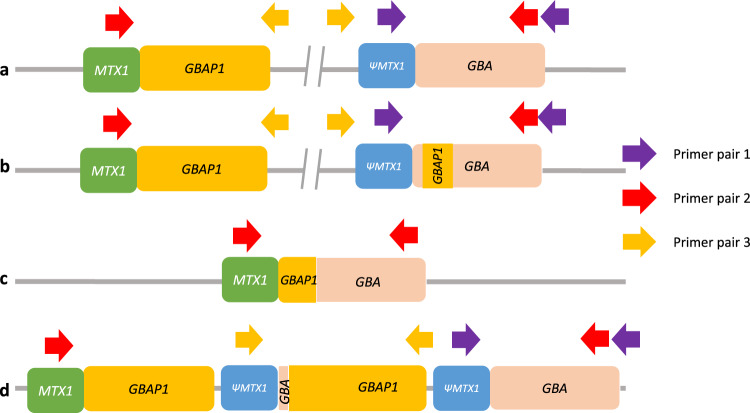
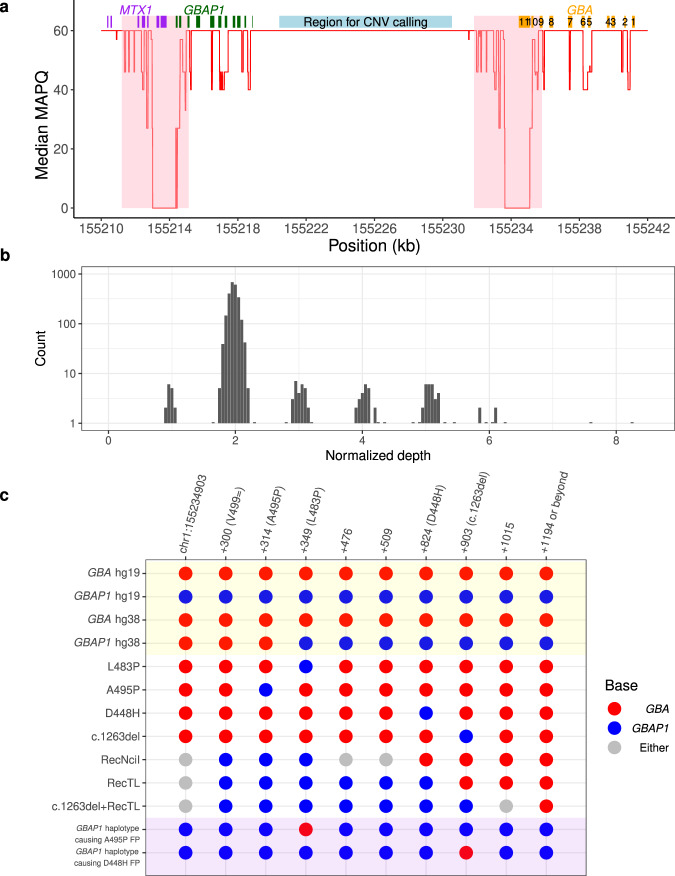
GBA variants carriers are at increased risk of Parkinson’s disease (PD) and Lewy body dementia (LBD). The presence of pseudogene GBAP1 predisposes to structural variants, complicating genetic analysis. We present two methods to resolve recombinant alleles and other variants in GBA : Gauchian, a tool for short-read, whole-genome sequencing data analysis, and Oxford Nanopore sequencing after PCR enrichment. Both methods were concordant for 42 samples carrying a range of recombinants and GBAP1 -related mutations, and Gauchian outperformed the GATK Best Practices pipeline. Applying Gauchian to sequencing of over 10,000 individuals shows that copy number variants (CNVs) spanning GBAP1 are relatively common in Africans. CNV frequencies in PD and LBD are similar to controls. Gains may coexist with other mutations in patients, and a modifying effect cannot be excluded. Gauchian detects more GBA variants in LBD than PD, especially severe ones. These findings highlight the importance of accurate GBA analysis in these patients.
Overview
The claims and statistics of this paper haven’t been checked yet.
Free: it reads the open-access text and checks the first 5 claims that cite a source we can check. Create a free account to check every claim.
Integrity signals
Registry
Cites
Statistics
Figures
Verification
Claims the paper makes
The claims and statistics of this paper haven’t been checked yet.
Free: it reads the open-access text and checks the first 5 claims that cite a source we can check. Create a free account to check every claim.
Claims other papers make about this one
Each is checked against this paper’s own text: does it say what the citing paper says it does?
The check wasn’t confident either way, so it gives no verdict — never disputed.
In the citing paper
“For the GBA28 caller that detects both recombinant-like and non-recombinant-like variants in the GBA gene, DRAGEN reported no samples with any presence of a recombinant-like variant on each chromosome (homozygous variant or compound heterozygous).”
From Comprehensive genome analysis and variant detection at scale using DRAGEN (2025) · cites this paper as [28]
Experimental — accuracy not yet measured
Self-check
Percentages, sums and reported differences re-computed from the paper’s own numbers.
The self-check needs the paper’s full text.
Citations
Cites
The Sequence Alignment/Map format and SAMtools
Li, H., Handsaker, B., Wysoker, A., Fennell, T., Ruan, J., Homer, N., Marth, G., Abecasis, G., Durbin, R., & 1000 Genome Project Data Processing Subgroup (2009) · Bioinformatics · doi:10.1093/bioinformatics/btp352 · Cited by 62,041 · cited 1×
“Phasing of SNV was carried out with Whatshap (version 1.0) 45 and data manipulation with Samtools (version 1.10) 46 , Bedtools (version 2.29.1) 47 and Tabix (version 1.7-2).”
InfluentialBEDTools: a flexible suite of utilities for comparing genomic features
Quinlan, A. R., & Hall, I. M. (2010) · Bioinformatics · doi:10.1093/bioinformatics/btq033 · Cited by 27,437
Van der Auwera, G. A., Carneiro, M. O., Hartl, C., Poplin, R., del Angel, G., Levy‐Moonshine, A., Jordan, T., Shakir, K., Roazen, D., Thibault, J., et al. (2013) · Current Protocols in Bioinformatics · doi:10.1002/0471250953.bi1110s43 · Cited by 6,687
Aligning sequence reads, clone sequences and assembly contigs with BWA-MEM
Li, H. (2013) · DROPS (Schloss Dagstuhl – Leibniz Center for Informatics) · doi:10.48550/arxiv.1303.3997 · Cited by 5,159 · cited 1×
“Moreover, the reliability of the standard WGS secondary analysis pipelines such as the Genome Analysis Toolkit best practice work fl ow 12 has not been formally assessed.”
Endogenous microRNA sponges: evidence and controversy
Thomson, D. W., & Dinger, M. E. (2016) · Nature Reviews Genetics · doi:10.1038/nrg.2016.20 · Cited by 2,185 · cited 1×
“Although these do not alter the GBA coding region, they could affect expression and function, for example by acting as a competing endogenous microRNA sponge 33 .”
Multicenter Analysis of Glucocerebrosidase Mutations in Parkinson's Disease
Sidransky, E., Nalls, M. A., Aasly, J. O., Aharon-Peretz, J., Annesi, G., Barbosa, E. R., Bar-Shira, A., Berg, D., Bras, J., Brice, A., et al. (2009) · New England Journal of Medicine · doi:10.1056/nejmoa0901281 · Cited by 2,135
The Parkinson Progression Marker Initiative (PPMI)
Marek, K., Jennings, D., Lasch, S., Siderowf, A., Tanner, C., Simuni, T., Coffey, C., Kieburtz, K., Flagg, E., Chowdhury, S., et al. (2011) · Progress in Neurobiology · doi:10.1016/j.pneurobio.2011.09.005 · Cited by 1,892 · cited 3×
“These included 15 samples from 1kGP with CNVs or gene conversions, and 22 samples from Parkinson ’ s Progression Markers Initiative (PPMI — included in AMP-PD cohort), where Gauchian showed CNVs or GBAP1 -related variants ( n = 7), or was discordant with available Broad Institute ’ s Joint Genotyping pipeline (referre…”
Accurate detection of complex structural variations using single-molecule sequencing
Sedlazeck, F. J., Rescheneder, P., Smolka, M., Fang, H., Nattestad, M., von Haeseler, A., & Schatz, M. C. (2018) · Nature Methods · doi:10.1038/s41592-018-0001-7 · Cited by 1,654 · cited 1×
“The resulting reads were aligned to GRCh38.p13, without the alternative reference contigs, using NGMLR (version 0.2.7) 43 unless otherwise stated.”
InfluentialSelf-citationThe Oxford Nanopore MinION: delivery of nanopore sequencing to the genomics community
Jain, M., Olsen, H. E., Paten, B., & Akeson, M. (2016) · Genome Biology · doi:10.1186/s13059-016-1103-0 · Cited by 1,588 · cited 1×
“Primary acquisition of sequencing data was carried out with MinION (version 20.10.3) 42 , and base-calling and demultiplexing with Guppy (version 4.2.2).”
InfluentialHaplotype-resolved diverse human genomes and integrated analysis of structural variation
Ebert, P., Audano, P. A., Zhu, Q., Rodriguez-Martin, B., Porubsky, D., Bonder, M. J., Sulovari, A., Ebler, J., Zhou, W., Serra Mari, R., et al. (2021) · Science · doi:10.1126/science.abf7117 · Cited by 702 · cited 1×
“These results are consistent with the greater African genetic diversity, with recent evidence of “ African ” genomes demonstrating unexplored structural variation 23 and more variability in copy numbers of SMN1 , SMN2 and CYP2D6 14,15 .”
Self-citation
Cited by
Rizig, M., Bandres-Ciga, S., Makarious, M. B., Ojo, O. O., Crea, P. W., Abiodun, O. V., Levine, K. S., Abubakar, S. A., Achoru, C. O., Vitale, D., et al. (2023) · The Lancet Neurology · doi:10.1016/s1474-4422(23)00283-1 · Cited by 159
Comprehensive genome analysis and variant detection at scale using DRAGEN
Behera, S., Catreux, S., Rossi, M., Truong, S., Huang, Z., Ruehle, M., Visvanath, A., Parnaby, G., Roddey, C., Onuchic, V., et al. (2025) · Nature Biotechnology · doi:10.1038/s41587-024-02382-1 · Cited by 137
Self-citationLong‐read sequencing for molecular diagnostics in constitutional genetic disorders
Conlin, L. K., Aref‐Eshghi, E., McEldrew, D., Luo, M., & Rajagopalan, R. (2022) · Human Mutation · doi:10.1002/humu.24465 · Cited by 76
Clinical, mechanistic, biomarker, and therapeutic advances in GBA1-associated Parkinson’s disease
Zhang, X., Wu, H., Tang, B., & Guo, J. (2024) · Translational Neurodegeneration · doi:10.1186/s40035-024-00437-6 · Cited by 71
“The high degree of homology and proximity between GBA1 and GBAP1 facilitates recombination events caused by gene conversion, fusion, or duplication, and can give rise to a variety of structural variants [33, 34].”
BackgroundGaucher disease provides a unique window into Parkinson disease pathogenesis
Hertz, E., Chen, Y., & Sidransky, E. (2024) · Nature Reviews Neurology · doi:10.1038/s41582-024-00999-z · Cited by 68
Comprehensive and accurate genome analysis at scale using DRAGEN accelerated algorithmsPreprint
Behera, S., Catreux, S., Rossi, M., Truong, S., Huang, Z., Ruehle, M., Visvanath, A., Parnaby, G., Roddey, C., Onuchic, V., et al. (2024) · bioRxiv (Cold Spring Harbor Laboratory) · doi:10.1101/2024.01.02.573821 · Cited by 39
Self-citationMechanisms of Glucocerebrosidase Dysfunction in Parkinson’s Disease
Chatterjee, D., & Krainc, D. (2023) · Journal of Molecular Biology · doi:10.1016/j.jmb.2023.168023 · Cited by 34
Consensus Guidance for Genetic Counseling in GBA1 Variants: A Focus on Parkinson's Disease
Vieira, S. R. L., Mezabrovschi, R., Toffoli, M., Pozo, S. L. D., Menozzi, E., Mullin, S., Yalkic, S., Limbachiya, N., Koletsi, S., Loefflad, N., et al. (2024) · Movement Disorders · doi:10.1002/mds.30006 · Cited by 33
“80 Large-scale, full sequencing of the entire GBA1 gene is essential to identify variants accurately, especially to show the clinical relevance of novel, rare, and population-speci fi c GBA1 variants.”
InfluentialSelf-citationGenome-wide structural variant analysis identifies risk loci for non-Alzheimer’s dementias
Kaivola, K., Chia, R., Ding, J., Rasheed, M., Fujita, M., Menon, V., Walton, R. L., Collins, R. L., Billingsley, K. J., Brand, H., et al. (2023) · Cell Genomics · doi:10.1016/j.xgen.2023.100316 · Cited by 35
Pachchek, S., Landoulsi, Z., Pavelka, L., Schulte, C., Buena‐Atienza, E., Groß, C., Hauser, A., Bobbili, D. R., Casadei, N., May, P., et al. (2023) · npj Parkinson s Disease · doi:10.1038/s41531-023-00595-w · Cited by 37
The annotation of GBA1 has been concealed by its protein-coding pseudogene GBAP1
Gustavsson, E. K., Sethi, S., Gao, Y., Brenton, J. W., García-Ruiz, S., Zhang, D., Garza, R., Reynolds, R. H., Evans, J. R., Chen, Z., et al. (2024) · Science Advances · doi:10.1126/sciadv.adk1296 · Cited by 30
Parkinson’s families project: a UK-wide study of early onset and familial Parkinson’s disease
Towns, C., Fang, Z., Tan, M. M. X., Jasaityte, S., Schmaderer, T. M., Stafford, E. J., Pollard, M. I., Tilney, R., Hodgson, M., Wu, L., et al. (2024) · npj Parkinson s Disease · doi:10.1038/s41531-024-00778-z · Cited by 34
Self-citationAfrican ancestry neurodegeneration risk variant disrupts an intronic branchpoint in GBA1
Jerez, P. Á., Crea, P. W., Ramos, D. M., Gustavsson, E. K., Radefeldt, M., Damianov, A., Makarious, M. B., Ojo, O. O., Billingsley, K. J., Malik, L., et al. (2024) · Nature Structural & Molecular Biology · doi:10.1038/s41594-024-01423-2 · Cited by 29
“…with increased numbers, a likely allelic dosage effect becomes visible (that is, GG has significantly more intron 8 expression compared to GT carriers), although larger GG numbers in future data-sets would be helpful to confirm this pattern (Supplementary Figs. and 9 and Supplementary Table 11).”
Guha, S., Reddi, H. V., Aarabi, M., DiStefano, M. T., Wakeling, E. N., Dungan, J. S., & Gregg, A. R. (2024) · Genetics in Medicine · doi:10.1016/j.gim.2024.101137 · Cited by 26
Kopytova, A. E., Rychkov, G. N., Cheblokov, A. A., Grigor’eva, E. V., Nikolaev, M. A., Yarkova, E. S., Sorogina, D. A., Ibatullin, F. M., Baydakova, G., Izyumchenko, A. D., et al. (2023) · International Journal of Molecular Sciences · doi:10.3390/ijms24109105 · Cited by 20
“Mutation N370S was regarded as “mild” and L444P, c84dupG, R120W and W184R as “severe” [4,33].”
BackgroundRizig, M., Bandres-Ciga, S., Makarious, M., Ojo, O., Crea, P. W., Abiodun, O., Levine, K., Abubakar, S., Achoru, C., Vitale, D., et al. (2023) · medRxiv · doi:10.1101/2023.05.05.23289529 · Cited by 15
“The Gauchian algorithm 39 was then applied to nominate potential structural variants driving the GBA1 signal.”
MethodResultInfluentialAdvances in the genetics and pathology of Lewy body dementia
Scholz, S. W., Okubadejo, N. U., Prakash, P., Liddelow, S. A., Ryten, M., & Halliday, G. M. (2025) · The Lancet Neurology · doi:10.1016/s1474-4422(25)00363-1 · Cited by 23
Self-citationGBA1 in Parkinson’s disease: variant detection and pathogenicity scoring matters
Gabbert, C., Schaake, S., Lüth, T., Much, C., Klein, C., Aasly, J. O., Farrer, M. J., & Trinh, J. (2023) · BMC Genomics · doi:10.1186/s12864-023-09417-y · Cited by 20
“A strength of Oxford Nanopore long-range sequencing is to specifically target the GBA1 gene without sequencing the pseudogene GBAP1, and to detect all disease-causing variants including information on phase [15, 16].”
BackgroundMethodInfluentialBrunialti, E., Villa, A. M., Toffoli, M., Pozo, S. L. D., Rizzi, N., Meda, C., Maggi, A. C., Schapira, A. H. V., & Ciana, P. (2023) · Cells · doi:10.3390/cells12030343 · Cited by 14
“com/Illumina/Gauchian accessed on 26 September 2022), a software described in a previous publication [34].”
MethodSelf-citationToffoli, M., Chohan, H., Mullin, S., Jesuthasan, A., Yalkic, S., Koletsi, S., Menozzi, E., Rahall, S., Limbachiya, N., Loefflad, N., et al. (2023) · Neurobiology of Disease · doi:10.1016/j.nbd.2023.106343 · Cited by 14
Self-citationGenetics and Neuropathology of Neurodegenerative Dementias
Scholz, S. W., & Cobos, I. (2024) · CONTINUUM Lifelong Learning in Neurology · doi:10.1212/con.0000000000001505 · Cited by 13
Self-citationCogan, G., Daida, K., Blauwendraat, C., Billingsley, K. J., & Brice, A. (2025) · Movement Disorders · doi:10.1002/mds.30151 · Cited by 12
“80-82 Similarly, NOTCH2NLC that has four closely located pseudogenes with more than 99% sequence similarity bene fi ts from LRS. 83 LRS Limitations, Challenges, and Opportunities for the Future LRS still faces challenges in data management, storage, and analysis.”
Akçimen, F., Paquette, K., Crea, P. W., Step, K., Waldo, E., Koretsky, M. J., Awad, P. S., Achoru, C., Taiwo, F., Ozomma, S. I., et al. (2025) · Brain · doi:10.1093/brain/awaf379 · Cited by 11
“To distinguish GBA1 variation from GBAP1 pseudogene mutations, we implemented the Gauchian targeted caller 25 on whole-genome sequencing data to detect known GBAP1 variation within the exons 9–11 homology region.”
Is Gauchian genotyping of GBA1 variants reliable?
Tayebi, N., Lichtenberg, J., Hertz, E., & Sidransky, E. (2025) · Communications Biology · doi:10.1038/s42003-025-08059-y · Cited by 9
“Recently, Toffoli et al. introduced the software tool Gauchian 24 to establish GBA1 variants, including pointmutationsandrecombinantalleles from short-read whole genome sequencing (WGS) data.”
InfluentialOrimo, K., Mitsui, J., Matsukawa, T., Tanaka, M., Nomoto, J., Ishiura, H., Omae, Y., Kawai, Y., Tokunaga, K., Ishibashi-Ueda, H., et al. (2024) · Journal of Human Genetics · doi:10.1038/s10038-024-01266-1 · Cited by 8
“Gauchian is reported to have a more accurate genotyping performance than the BWA-GATK pipeline [28].”
InfluentialLONG-NEXT: A new accurate and efficient NGS-based method for GBA1 analysis in Parkinson disease
Cuconato, G., Palmieri, I., Percetti, M., Pagliarani, S., Tenace, S., Morelli, M. J., Zapparoli, E., Avenali, M., Carelli, V., Dentelli, P., et al. (2025) · Parkinsonism & Related Disorders · doi:10.1016/j.parkreldis.2025.107780 · Cited by 8
“Several studies highlighted incongruencies in GBA1 genotyping using sr-NGS, especially when referring to structural variants [14,15].”
VACmap: an accurate long-read aligner for unraveling complex genomic rearrangements
Ding, H., Sedlazeck, F. J., Proukakis, C., Morley, C., Toffoli, M., Schapira, A. H. V., Liao, Z., Pu, L., & Zhu, S. (2026) · Nature Communications · doi:10.1038/s41467-025-67096-7 · Cited by 9
“We previously detected using ONT long reads with adaptive sampling a pathogenic deletion which could not be correctly called after minimap2 or NGMLR alignment 34 .”
Self-citationTwo lysosomal genes ATP13A2 and GBA1 interact to drive neurodegeneration
Gu, M., Zhao, J., Deng, M., Lin, G., Pan, X., Lin, W. W., Ma, M., Kim, J., Byeon, S. K., Pandey, A., et al. (2026) · Molecular Neurodegeneration · doi:10.1186/s13024-025-00923-z · Cited by 8
“We used the Gauchian pipeline ( h t t p s : / / g i t h u b . c o m / I l l u m i n a / G a u c h i a n ) [52] for WGS data as a variant caller for GBA1 .”
The molecular mechanism of Gaucher disease caused by compound heterozygous mutations in GBA1 gene
Liu, Q., Shen, Z., Pan, H., Ma, S., Xiong, F., & He, F. (2023) · Frontiers in Pediatrics · doi:10.3389/fped.2023.1092645 · Cited by 6
“Multiple studies have implicated heterozygous GBA1 mutations as a major genetic risk factor for Parkinson’s disease (14, 15).”
BackgroundObstacles to Early Diagnosis of Gaucher Disease
Nishimura, S., Ma, C., Sidransky, E., & Ryan, E. (2025) · Therapeutics and Clinical Risk Management · doi:10.2147/tcrm.s388266 · Cited by 9
“18 Further advancements are necessary to consistently ensure accurate GBA1 genotyping.”
Sex Distribution of GBA1 Variants Carriers with Dementia with Lewy Bodies and Parkinson's Disease
Toffoli, M., Schapira, A. H. V., & Proukakis, C. (2023) · Movement Disorders · doi:10.1002/mds.29609 · Cited by 6
Self-citationThe Black and African American Connections to Parkinson’s Disease (BLAAC PD) study protocol
Chahine, L. M., Louie, N., Solle, J. C., Akçimen, F., Ameri, A., Augenbraun, S., Avripas, S. A., Breaux, S., Causey, C. D., Chandra, S., et al. (2024) · BMC Neurology · doi:10.1186/s12883-024-03914-7 · Cited by 4
“0.2 [42] and genotype known neurological repeat expansions with STRipy v2.”
BackgroundInfluentialTran, N. L. K., van Blitterswijk, M., Springer, W., McLean, P. J., Peña, E. G. M., Savica, R., & Ross, O. A. (2025) · Med · doi:10.1016/j.medj.2025.100880 · Cited by 3
Dagasso, G., Vigneshwaran, V., Winder, A. J., Souza, R., Ohara, E. Y., Wilms, M., & Forkert, N. D. (2025) · NeuroImage Clinical · doi:10.1016/j.nicl.2025.103928 · Cited by 2
The Global Parkinson's Disease Genetics ( GP2 ) Genome Browser
Fang, Z., Grant, R. H., Vitale, D., Hernández, C. F., Hong, S., Leonard, H. L., Makarious, M. B., Lange, L. M., Solomonson, M., Heutink, P., et al. (2026) · Movement Disorders · doi:10.1002/mds.70309 · Cited by 4
“26 Furthermore, some GBA1 variants may be missed due to false-negative calls.”
Integrative omics in Parkinson’s disease: An introduction
Laß, J., & Trinh, J. (2024) · Elsevier eBooks · doi:10.1016/b978-0-443-13550-7.00003-3 · Cited by 1
Decoding the Alphabet Soup: A Practical Guide to Genetic Testing in Hyperkinetic Movement Disorders
Gamba, C. D., & Riboldi, G. M. (2025) · Tremor and Other Hyperkinetic Movements · doi:10.5334/tohm.971 · Cited by 1
“LRS or bioinformatic tools for the analysis of WGS data represent a valid alternative [67–69].”
GiOPARK Project: The Genetic Study of Parkinson’s Disease in the Croatian Population
Rački, V., Bergant, G., Papić, E., Kovanda, A., Hero, M., Rožmarić, G., Čizmarević, N. S., Ristič, S., Ostojić, S., Kapović, M., et al. (2024) · Genes · doi:10.3390/genes15020255 · Cited by 2
“A recent study presented an NGS pipeline for the analysis of the GBA gene, which also highlights the importance of copy number variants in the gene [59].”
Lee, D. (2024) · Korean Journal of Clinical Laboratory Science · doi:10.15324/kjcls.2024.56.4.307 · Cited by 1
GBA in Parkinson’s disease: variant detection and pathogenicity scoring mattersPreprint
Gabbert, C., Schaake, S., Lüth, T., Much, C., Klein, C., Aasly, J. O., Farrer, M. J., & Trinh, J. (2023) · medRxiv · doi:10.1101/2023.02.03.23285410 · Cited by 1
Reply to: Is Gauchian genotyping of GBA1 variants reliable?
Toffoli, M., Schapira, A. H. V., Sedlazeck, F. J., & Proukakis, C. (2025) · Communications Biology · doi:10.1038/s42003-025-08060-5 · Cited by 1
“Finally, in clinical cases where absolute certainty is required, Sanger sequencing could be considered, with targeted long-read sequencing as another option 1,5 – 7 .”
Self-citationBiomarkers of LRRK2 and lysosomal dysfunction in Progressive Supranuclear PalsyPreprint
Nielsen, L.-K., Frost, J. L., Vaughan, D. P., Real, R., Fumi, R., Jensen, M. T., Hodgson, M., Stafford, E. J., Wu, L., Ansorge, O., et al. (2025) · medRxiv · doi:10.1101/2025.11.24.25340830 · Cited by 1
Self-citationMethods to investigate somatic structural variants in synucleinopathies
Morley, C., & Proukakis, C. (2024) · Elsevier eBooks · doi:10.1016/b978-0-443-13550-7.00008-2
Self-citationRozenberg, R., de Araújo, F. T., Chien, H. F., Barbosa, E. R., & Pereira, L. V. (2025) · Clinical Parkinsonism & Related Disorders · doi:10.1016/j.prdoa.2025.100338
“This SV populational incidence remains largely unknown [4].”
InfluentialGBA1 variants and Parkinson’s Disease: A dual approach combining clinical data and literature review
Canbek, S., Mert, G., Gülseven, M. F., & Şenol, M. G. (2025) · Ege Tıp Dergisi · doi:10.19161/etd.1583422
“Gauchian, a novel GBA1 browser for Illumina WGS data that can discover SVs and SNVs inside GBA1 , performed differently from BWA-Volume GATK analysis utilizing ONT-targeted sequencing in 2022, proving its confirmatory validity (28).”
Gabbert, C., Schaake, S., Lüth, T., Much, C., Klein, C., Aasly, J. O., Farrer, M. J., & Trinh, J. (2023) · Figshare · doi:10.6084/m9.figshare.23512772
Ding, Q., Salsbery, K. T., Vidal‐Folch, N., Oglesbee, D., & Hasadsri, L. (2025) · Clinical Chemistry · doi:10.1093/clinchem/hvaf125
Clinical Utility of GBA Genotyping Prior to Deep Brain Stimulation: A Narrative Review
Rački, V., Lasić, S., Đerke, F., Belančić, A., & Ŝoŝic̀, M. (2026) · Genes · doi:10.3390/genes17010069
“All these issues can lead to misclassification of variant severity or erroneous assignment of non-carrier status, particularly in cohorts relying on standard short-read pipelines [43,45,46].”
InfluentialGenetic landscape of Parkinson’s disease in the Personalized Parkinson Project cohortPreprint
Lüth, T., Klein, C., Helmich, R. C. G., Brüggemann, N., Hrir, S., Kuiperij, H. B., Gorgogietas, V. A., Fernandes, S. B. G., Prasuhn, J., May, P., et al. (2026) · medRxiv · doi:10.64898/2026.03.16.26348127
Nielsen, L., Frost, J. L. I., Vaughan, D. P., Real, R., Fumi, R., Jensen, M. T., Hodgson, M., Stafford, E. J., Wu, L., Ansorge, O., et al. (2026) · Movement Disorders · doi:10.1002/mds.70295 · Cited by 2
Self-citationUnraveling the potential of short and long read sequencing for human genome profilingPreprint
Leduc, A., Bachr, A., Sandron, F., Délepine, M., Delafoy, D., Fund, C., Daviaud, C., Meslage, S., Turon, V., Bacq‐Daian, D., et al. (2026) · bioRxiv (Cold Spring Harbor Laboratory) · doi:10.64898/2026.04.20.719568
Research progress regarding iminosugars for glycosidase inhibition and hypoglycemic activity
Chao-Na, A., Yang, M.-Q., Song, X.-R., Zhao, H.-S., Yin, F., Li, M.-Y., & Wang, K. (2026) · RSC Medicinal Chemistry · doi:10.1039/d6md00293e
Hong, Y.-J., Jang, M., Yang, D., Kim, J., Youn, J., Cho, J. W., & Jang, J. (2026) · Journal of Human Genetics · doi:10.1038/s10038-026-01486-7
“Therefore, many investigations have utilized long-read sequencing technologies to address these challenges [16 – 19].”
Veldman, A., Arar, C. E., Kiewiet, M. B. G., Voorhoeve, E., Dollé, M. E. T., der Velden, M. G. M. D. S., Maase, R. E., van Spronsen, F. J., Sikkema‐Raddatz, B., & Heiner-Fokkema, M. R. (2026) · Metabolomics · doi:10.1007/s11306-026-02486-6
“An example of a complex gene structure is GBA , which is affected by the highly homologous pseudogene GBAP1 , complicating variant interpretation (Toffoli et al., 2022).”
Wang, S., Tavassoly, O., Chowdhury, M. A., Carter, L., Brown, D., Bravo, R. C., Madaan, A., Zhang, Z., Tesolin, D., Quartey, M. O., et al. (2026) · Cell chemical biology · doi:10.1016/j.chembiol.2026.07.007
An Icelandic pangenome reference
Holley, G., Eggertsson, H. P., Kristmundsdóttir, S., Beyter, D., Skúladóttir, Á., Moore, K. H. S., Olason, P. I., Gylfason, A., Magnusson, O. T., Oddsson, Á., et al. (2026) · Nature · doi:10.1038/s41586-026-10924-7 · Cited by 3
“Long reads have been used 48,49 to overcome the high sequence similarity of the two genes in attempts to find pathogenic variants.”
Sun, Y., Ni, R., & Yu, Y. (2026) · Frontiers in Neuroscience · doi:10.3389/fnins.2026.1920271
“Furthermore, due to the lack of formal phasing and analysis of GBA1 /GBAP1 recombinant alleles and copy-number variations, the current genetic interpretation should be considered with caution (Vieira et al., 2024; Toffoli et al., 2022).”
Bioinformatics for human long-read whole-genome sequencing
Zheng, X., Sanio, P., Luo, R., Li, H., & Sedlazeck, F. J. (2026) · Nature Reviews Methods Primers · doi:10.1038/s43586-026-00519-x · Cited by 2
Self-citationArevalo-Vargas, I., Serrano‐Gonzalo, I., Roca-Esteve, S., Lahoz, C., Mozas, M. P., & Giraldo, P. (2026) · Archives of Medical Research · doi:10.1016/j.arcmed.2026.103523
Metadata
- Authors
- Toffoli, M., Chen, X., Sedlazeck, F. J., Lee, C.-Y., Mullin, S., Higgins, A., Koletsi, S., Garcia-Segura, M. E., Sammler, E., Scholz, S. W., Schapira, A. H. V., Eberle, M. A., & Proukakis, C.
- Affiliations
- UCL Queen Square Institute of Neurology (GB)
- Illumina (United States) (US)
- Baylor College of Medicine (US)
- University of Dundee (GB)
- Johns Hopkins University (US)
- Corresponding author
- Eberle, Michael A.
- Proukakis, Christos
- ORCID
- Venue
- Communications Biology
- Published
- 2022-07-06
- Volume
- 5
- Issue
- 1
- Pages
- 670-670
- ISSN
- 2399-3642 (ISSN-L)
- PMC
- PMC9259685
- OpenAlex
- W4284890937
- Cited by
- 59
- References
- 47
- Citations by year
- 2026: 15 · 2025: 14 · 2024: 16 · 2023: 13 · 2022: 1
- FWCI
- 6.80
- Type
- journal article
- Language
- en
- Open access
- gold
- doi.org
- Licence
- cc-by
- creativecommons.org/licenses/by/4.0 (tdm)
- creativecommons.org/licenses/by/4.0 (vor)
- Locations
- Communications Biology (publishedVersion, cc-by)
- medRxiv (acceptedVersion, cc-by)
- PubMed Central (publishedVersion, cc-by)
- PubMed (publishedVersion)
- Discovery Research Portal (University of Dundee) (publishedVersion, cc-by)
- PEARL (University of Plymouth) (submittedVersion)
- DOAJ (DOAJ: Directory of Open Access Journals) (submittedVersion, cc-by-sa)
- UCL Discovery (University College London) (submittedVersion)
- Funders
- U.S. Department of Health & Human Services | NIH | National Institute of Neurological Disorders and Stroke (1ZIANS003154)
- RCUK | MRC | Medical Research Foundation (MR/T046007/1)
- Topics
- Health Sciences › Medicine › Genetics (clinical) › Lysosomal Storage Disorders Research
- Life Sciences › Biochemistry, Genetics and Molecular Biology › Genetics › Genomics and Rare Diseases
- Life Sciences › Biochemistry, Genetics and Molecular Biology › Biochemistry › Glycogen Storage Diseases and Myoclonus
- Keywords
- GBA gene, Gaucher disease, Parkinson's disease, dementia with Lewy bodies, copy number variation, Oxford Nanopore sequencing, variant calling, African populations, genetic risk
- MeSH terms
- Alleles, Glucosylceramidase, Heterozygote, Humans, Parkinson Disease, Lewy Body Disease
About these checks
Registry, retraction, Cites and statistics results are computed, not judged, with one exception: a printed reference that no index lists is read once by a model before it counts as a citation error. Claims are extracted by a model and kept only when their quote appears verbatim in the text; each cited source is then checked, with a model’s help, for whether it says what the claim relies on. Those verdicts can be wrong — read the claim’s quote and the cited source before relying on one.
Statistics and arithmetic are recomputed, not judged.
Confidence bands are shown only for fields calibrated on our annotated test set. None is calibrated yet, so no band is shown.
What counts as a claim ›How we measure confidence ›How we check this ›
Are you an author, or do you see a problem with this page? Request a review
Data sources
Bibliographic data: Semantic Scholar, OpenAlex, Crossref.
Contains information from the Semantic Scholar Academic Graph Datasets, made available under the ODC Attribution License (ODC-BY 1.0).
Semantic Scholar’s data is described in: Kinney, R., et al. (2023). The Semantic Scholar Open Data Platform. arXiv:2301.10140.
