

Comprehensive short and long read sequencing analysis for the Gaucher and Parkinson’s disease-associated GBA gene
Open accessPublished version of a preprint
The DOI matches its Crossref record; 51 of the 51 references it cites were found in a registry or an index.
Abstract
GBA variants carriers are at increased risk of Parkinson’s disease (PD) and Lewy body dementia (LBD). The presence of pseudogene GBAP1 predisposes to structural variants, complicating genetic analysis. We present two methods to resolve recombinant alleles and other variants in GBA : Gauchian, a tool for short-read, whole-genome sequencing data analysis, and Oxford Nanopore sequencing after PCR enrichment. Both methods were concordant for 42 samples carrying a range of recombinants and GBAP1 -related mutations, and Gauchian outperformed the GATK Best Practices pipeline. Applying Gauchian to sequencing of over 10,000 individuals shows that copy number variants (CNVs) spanning GBAP1 are relatively common in Africans. CNV frequencies in PD and LBD are similar to controls. Gains may coexist with other mutations in patients, and a modifying effect cannot be excluded. Gauchian detects more GBA variants in LBD than PD, especially severe ones. These findings highlight the importance of accurate GBA analysis in these patients.
Overview
The claims and statistics of this paper haven’t been checked yet.
Free: it reads the open-access text and checks the first 5 claims that cite a source we can check. Create a free account to check every claim.
Integrity signals
Registry
Cites
Statistics
Figures
Verification
Claims the paper makes
The claims and statistics of this paper haven’t been checked yet.
Free: it reads the open-access text and checks the first 5 claims that cite a source we can check. Create a free account to check every claim.
Claims other papers make about this one
Each is checked against this paper’s own text: does it say what the citing paper says it does?
The check wasn’t confident either way, so it gives no verdict — never disputed.
In the citing paper
“For the GBA28 caller that detects both recombinant-like and non-recombinant-like variants in the GBA gene, DRAGEN reported no samples with any presence of a recombinant-like variant on each chromosome (homozygous variant or compound heterozygous).”
From Comprehensive genome analysis and variant detection at scale using DRAGEN (2025) · cites this paper as [28]
Experimental — accuracy not yet measured
Self-check
Percentages, sums and reported differences re-computed from the paper’s own numbers.
The self-check needs the paper’s full text.
Citations
Cites
The Sequence Alignment/Map format and SAMtools
Li, H., Handsaker, B., Wysoker, A., Fennell, T., Ruan, J., Homer, N., Marth, G., Abecasis, G., Durbin, R., & 1000 Genome Project Data Processing Subgroup (2009) · Bioinformatics · doi:10.1093/bioinformatics/btp352 · Cited by 62,041 · cited 1×
“Phasing of SNV was carried out with Whatshap (version 1.0) 45 and data manipulation with Samtools (version 1.10) 46 , Bedtools (version 2.29.1) 47 and Tabix (version 1.7-2).”
InfluentialBEDTools: a flexible suite of utilities for comparing genomic features
Quinlan, A. R., & Hall, I. M. (2010) · Bioinformatics · doi:10.1093/bioinformatics/btq033 · Cited by 27,437
Van der Auwera, G. A., Carneiro, M. O., Hartl, C., Poplin, R., del Angel, G., Levy‐Moonshine, A., Jordan, T., Shakir, K., Roazen, D., Thibault, J., et al. (2013) · Current Protocols in Bioinformatics · doi:10.1002/0471250953.bi1110s43 · Cited by 6,687
Aligning sequence reads, clone sequences and assembly contigs with BWA-MEM
Li, H. (2013) · DROPS (Schloss Dagstuhl – Leibniz Center for Informatics) · doi:10.48550/arxiv.1303.3997 · Cited by 5,159 · cited 1×
“Moreover, the reliability of the standard WGS secondary analysis pipelines such as the Genome Analysis Toolkit best practice work fl ow 12 has not been formally assessed.”
Endogenous microRNA sponges: evidence and controversy
Thomson, D. W., & Dinger, M. E. (2016) · Nature Reviews Genetics · doi:10.1038/nrg.2016.20 · Cited by 2,185 · cited 1×
“Although these do not alter the GBA coding region, they could affect expression and function, for example by acting as a competing endogenous microRNA sponge 33 .”
Multicenter Analysis of Glucocerebrosidase Mutations in Parkinson's Disease
Sidransky, E., Nalls, M. A., Aasly, J. O., Aharon-Peretz, J., Annesi, G., Barbosa, E. R., Bar-Shira, A., Berg, D., Bras, J., Brice, A., et al. (2009) · New England Journal of Medicine · doi:10.1056/nejmoa0901281 · Cited by 2,135
The Parkinson Progression Marker Initiative (PPMI)
Marek, K., Jennings, D., Lasch, S., Siderowf, A., Tanner, C., Simuni, T., Coffey, C., Kieburtz, K., Flagg, E., Chowdhury, S., et al. (2011) · Progress in Neurobiology · doi:10.1016/j.pneurobio.2011.09.005 · Cited by 1,892 · cited 3×
“These included 15 samples from 1kGP with CNVs or gene conversions, and 22 samples from Parkinson ’ s Progression Markers Initiative (PPMI — included in AMP-PD cohort), where Gauchian showed CNVs or GBAP1 -related variants ( n = 7), or was discordant with available Broad Institute ’ s Joint Genotyping pipeline (referre…”
Accurate detection of complex structural variations using single-molecule sequencing
Sedlazeck, F. J., Rescheneder, P., Smolka, M., Fang, H., Nattestad, M., von Haeseler, A., & Schatz, M. C. (2018) · Nature Methods · doi:10.1038/s41592-018-0001-7 · Cited by 1,654 · cited 1×
“The resulting reads were aligned to GRCh38.p13, without the alternative reference contigs, using NGMLR (version 0.2.7) 43 unless otherwise stated.”
InfluentialSelf-citationThe Oxford Nanopore MinION: delivery of nanopore sequencing to the genomics community
Jain, M., Olsen, H. E., Paten, B., & Akeson, M. (2016) · Genome Biology · doi:10.1186/s13059-016-1103-0 · Cited by 1,588 · cited 1×
“Primary acquisition of sequencing data was carried out with MinION (version 20.10.3) 42 , and base-calling and demultiplexing with Guppy (version 4.2.2).”
InfluentialHaplotype-resolved diverse human genomes and integrated analysis of structural variation
Ebert, P., Audano, P. A., Zhu, Q., Rodriguez-Martin, B., Porubsky, D., Bonder, M. J., Sulovari, A., Ebler, J., Zhou, W., Serra Mari, R., et al. (2021) · Science · doi:10.1126/science.abf7117 · Cited by 702 · cited 1×
“These results are consistent with the greater African genetic diversity, with recent evidence of “ African ” genomes demonstrating unexplored structural variation 23 and more variability in copy numbers of SMN1 , SMN2 and CYP2D6 14,15 .”
Self-citationGaucher disease: mutation and polymorphism spectrum in the glucocerebrosidase gene (GBA)
Hruska, K. S., LaMarca, M. E., Scott, C. R., & Sidransky, E. (2008) · Human Mutation · doi:10.1002/humu.20676 · Cited by 678
WhatsHap: fast and accurate read-based phasing
Martin, M., Patterson, M., Garg, S., O Fischer, S., Pisanti, N., Klau, G. W., Schöenhuth, A., & Marschall, T. (2016) · bioRxiv (Cold Spring Harbor Laboratory) · doi:10.1101/085050 · Cited by 449 · cited 1×
“Phasing of SNV was carried out with Whatshap (version 1.0) 45 and data manipulation with Samtools (version 1.10) 46 , Bedtools (version 2.29.1) 47 and Tabix (version 1.7-2).”
InfluentialA Multicenter Study of Glucocerebrosidase Mutations in Dementia With Lewy Bodies
Nalls, M. A., Duran, R., Lopez, G., Kurzawa-Akanbi, M., McKeith, I. G., Chinnery, P. F., Morris, C. M., Theuns, J., Crosiers, D., Cras, P., et al. (2013) · JAMA Neurology · doi:10.1001/jamaneurol.2013.1925 · Cited by 439 · cited 1×
“…report in this cohort 21 (3.68 v 2.90), and a previous study (2.55) 4 , due to the detection of additional mutations and the fi ltering of p.N409S. GBA mutations increase the risk of cognitive decline in PD 26 , and the odds ratio for GBA variants is higher in LBD than in PD with dementia 27 .”
InfluentialChia, R., Sabir, M. S., Bandres-Ciga, S., Saez-Atienzar, S., Reynolds, R. H., Gustavsson, E., Walton, R. L., Ahmed, S., Viollet, C., Ding, J., et al. (2021) · Nature Genetics · doi:10.1038/s41588-021-00785-3 · Cited by 438
Self-citationThe human glucocerebrosidase gene and pseudogene: Structure and evolution
Horowitz, M., Wilder, S., Horowitz, Z., Reiner, O., Gelbart, T., & Beutler, E. (1989) · Genomics · doi:10.1016/0888-7543(89)90319-4 · Cited by 428
Differential effects of severe vs mild GBA mutations on Parkinson disease
Gan-Or, Z., Amshalom, I., Kilarski, L. L., Bar-Shira, A., Gana-Weisz, M., Mirelman, A., Marder, K., Bressman, S., Giladi, N., & Orr-Urtreger, A. (2015) · Neurology · doi:10.1212/wnl.0000000000001315 · Cited by 364 · cited 1×
“Severe GBA variants in particular, which cause the neuronopathic form of GD 1 , have a higher risk of PD 28 and a faster cognitive decline in PD than mild variants 29 .”
Mullin, S., Smith, L., Lee, K., D’Souza, G., Woodgate, P., Elflein, J., Hällqvist, J., Toffoli, M., Streeter, A., Hosking, J., et al. (2020) · JAMA Neurology · doi:10.1001/jamaneurol.2019.4611 · Cited by 356 · cited 1×
“Given the importance of this gene and the rapid progress to targeted clinical trials in PD 34 , we propose that the adoption of either work fl ow should be considered by research and diagnostic labs, based on local resources and data availability.”
Self-citationGlucocerebrosidase and its relevance to Parkinson disease
Do, J., McKinney, C., Sharma, P., & Sidransky, E. (2019) · Molecular Neurodegeneration · doi:10.1186/s13024-019-0336-2 · Cited by 300
Targeted nanopore sequencing by real-time mapping of raw electrical signal with UNCALLED
Kovaka, S., Fan, Y., Ni, B., Timp, W., & Schatz, M. C. (2021) · Nature Biotechnology · doi:10.1038/s41587-020-0731-9 · Cited by 279 · cited 4×
“UNCALLED analyses the signal generated by the DNA molecules passing through each pore of the device in real-time and decides whether they align to a reference sequence provided.”
InfluentialGuerreiro, R., Ross, O. A., Kun-Rodrigues, C., Hernandez, D. G., Orme, T., Eicher, J. D., Shepherd, C. E., Parkkinen, L., Darwent, L., Heckman, M. G., et al. (2018) · The Lancet Neurology · doi:10.1016/s1474-4422(17)30400-3 · Cited by 270 · cited 2×
“Heterozygous variants in GBA [MIM: * 606463] are associated with an increased risk of developing Parkinson's disease (PD) 3 , the second most common neurodegenerative disease, and the closely related Lewy body dementia (LBD) 4 .”
InfluentialSelf-citationSpecifically neuropathic Gaucher's mutations accelerate cognitive decline in Parkinson's
Liu, G., Boot, B., Locascio, J. J., Jansen, I. E., Winder‐Rhodes, S., Eberly, S., Elbaz, A., Brice, A., Ravina, B., van Hilten, J. J., et al. (2016) · Annals of Neurology · doi:10.1002/ana.24781 · Cited by 263
Cognitive performance of GBA mutation carriers with early-onset PD: The CORE-PD study
Alcalay, R. N., Caccappolo, E., Mejia-Santana, H., Tang, M.-X., Rosado, L., Orbe Reilly, M., Ruiz, D., Ross, B., Verbitsky, M., Kisselev, S., et al. (2012) · Neurology · doi:10.1212/wnl.0b013e318253d54b · Cited by 262 · cited 1×
“…report in this cohort 21 (3.68 v 2.90), and a previous study (2.55) 4 , due to the detection of additional mutations and the fi ltering of p.N409S. GBA mutations increase the risk of cognitive decline in PD 26 , and the odds ratio for GBA variants is higher in LBD than in PD with dementia 27 .”
InfluentialHematologically important mutations: Gaucher disease
Beutler, E., Gelbart, T., & Scott, C. R. (2005) · Blood Cells, Molecules, and Diseases · doi:10.1016/j.bcmd.2005.07.005 · Cited by 241
Regier, A. A., Farjoun, Y., Larson, D. E., Krasheninina, O., Kang, H. M., Howrigan, D. P., Chen, B.-J., Kher, M., Banks, E., Ames, D. C., et al. (2018) · Nature Communications · doi:10.1038/s41467-018-06159-4 · Cited by 238
Blauwendraat, C., Reed, X., Krohn, L., Heilbron, K., Bandres-Ciga, S., Tan, M., Gibbs, J. R., Hernandez, D. G., Kumaran, R., Langston, R., et al. (2020) · Brain · doi:10.1093/brain/awz350 · Cited by 236
Self-citationGlucocerebrosidase gene mutations in patients with type 2 Gaucher disease
Stone, D. L., Tayebi, N., Orvisky, E., Stubblefield, B., Madike, V., & Sidransky, E. (2000) · Human Mutation · doi:10.1002/(sici)1098-1004(200002)15:2<181::aid-humu7>3.0.co;2-s · Cited by 224
Ebbert, M. T. W., Jensen, T. D., Jansen-West, K., Sens, J. P., Reddy, J. S., Ridge, P. G., Kauwe, J. S. K., Belzil, V., Pregent, L., Carrasquillo, M. M., et al. (2019) · Genome Biology · doi:10.1186/s13059-019-1707-2 · Cited by 195
Huang, Y., Liu, P., & Shih, P.-W. (2021) · Genome biology · doi:10.1186/s13059-021-02282-6 · Cited by 168
GP2: The Global Parkinson's Genetics Program
Program, T. G. P. G. (2021) · Movement Disorders · doi:10.1002/mds.28494 · Cited by 158 · cited 1×
“They further highlight the need to study non-European genomes, which has yielded additional insights into Alzheimer ’ s disease 24 and is being expanded in PD 25 .”
Bodian, D. L., Klein, E., Iyer, R. K., Wong, W. S. W., Kothiyal, P., Stauffer, D., Huddleston, K. C., Gaither, A. D., Remsburg, I., Khromykh, A., et al. (2016) · Genetics in Medicine · doi:10.1038/gim.2015.111 · Cited by 137
Spinal muscular atrophy diagnosis and carrier screening from genome sequencing data
Chen, X., Sanchis-Juan, A., French, C. E., Connell, A. J., Delon, I., Kingsbury, Z., Chawla, A., Halpern, A. L., Taft, R. J., Bentley, D. R., et al. (2020) · Genetics in Medicine · doi:10.1038/s41436-020-0754-0 · Cited by 137 · cited 5×
“For these, since variants don ’ t correspond to GBAP1 , or, if they do, the region between GBA and GBAP1 is not highly similar and alignments are accurate, Gauchian parses read alignments and calls the CN of variants based on the number of variants supporting reads as described for SMN/CYP2D6 callers.”
InfluentialSelf-citationExploring the limit of using a deep neural network on pileup data for germline variant calling
Luo, R., Wong, C.-L., Wong, Y.-S., Tang, C.-I., Liu, C.-M., Leung, C.-M., & Lam, T.-W. (2020) · Nature Machine Intelligence · doi:10.1038/s42256-020-0167-4 · Cited by 136 · cited 2×
“Clair (version 2.1.1) 44 was used for SNV calling.”
InfluentialTayebi, N., Stubblefield, B. K., Park, J. K., Orviský, E., Walker, J. M., LaMarca, M. E., & Sidransky, E. (2003) · The American Journal of Human Genetics · doi:10.1086/367850 · Cited by 128 · cited 16×
“SVs that disrupt the coding sequence by gene conversion or reciprocal recombination are expected to be pathogenic for GD and risk factors for PD. Conversely, SVs not affecting the coding sequence are not pathogenic, although a modi fi er effect cannot be excluded 7 .”
InfluentialAccelerating Medicines Partnership: Parkinson's Disease. Genetic Resource
Iwaki, H., Leonard, H. L., Makarious, M. B., Bookman, M., Landin, B., Vismer, D., Casey, B., Gibbs, J. R., Hernandez, D. G., Blauwendraat, C., et al. (2021) · Movement Disorders · doi:10.1002/mds.28549 · Cited by 116
Self-citationHematologically Important Mutations: Gaucher Disease
Beutler, E., & Gelbart, T. (1997) · Blood Cells Molecules and Diseases · doi:10.1006/bcmd.1997.0114 · Cited by 108
Cyrius: accurate CYP2D6 genotyping using whole-genome sequencing data
Chen, X., Shen, F., Gonzaludo, N., Malhotra, A., Rogert, C., Taft, R. J., Bentley, D. R., & Eberle, M. A. (2021) · The Pharmacogenomics Journal · doi:10.1038/s41397-020-00205-5 · Cited by 95 · cited 3×
“…of the Illumina WGS analysis for other dif fi cult regions due to sequence homology, demonstrating reliable resolution of SVs in such regions on Illumina WGS data in the SMN1 [MIM: * 600354] / SMN2 [MIM: * 601627] genes in spinal muscular atrophy 14 and the pharmacogene CYP2D6 [MIM: * 124030] 15 .”
Self-citationLeija‐Salazar, M., Sedlazeck, F. J., Toffoli, M., Mullin, S., Mokretar, K., Athanasopoulou, M., Donald, A., Sharma, R., Hughes, D., Schapira, A. H. V., et al. (2019) · Molecular Genetics & Genomic Medicine · doi:10.1002/mgg3.564 · Cited by 87 · cited 10×
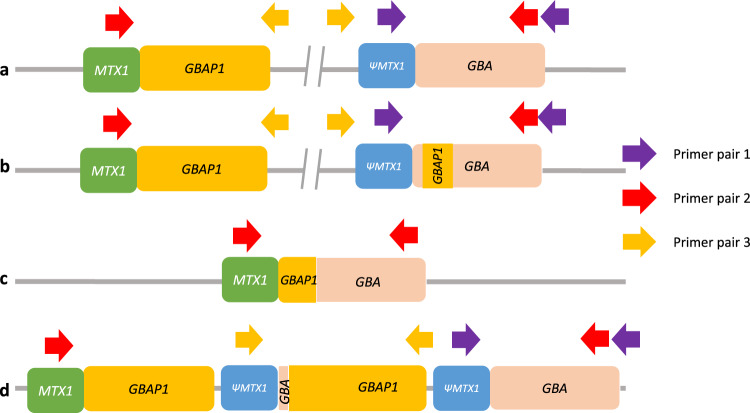
“Primer pair 1 is designed to amplify the GBA gene, as previously described 16 .”
InfluentialSelf-citationA Large‐Scale Full GBA1 Gene Screening in Parkinson's Disease in the Netherlands
den Heijer, J. M., Cullen, V., Quadri, M., Schmitz, A., Hilt, D. C., Lansbury, P. T., Berendse, H. W., van de Berg, W. D. J., de Bie, R. M. A., Boertien, J. M., et al. (2020) · Movement Disorders · doi:10.1002/mds.28112 · Cited by 74
GBA Analysis in Next-Generation Era
Zampieri, S., Cattarossi, S., Bembi, B., & Dardis, A. (2017) · Journal of Molecular Diagnostics · doi:10.1016/j.jmoldx.2017.05.005 · Cited by 73 · cited 2×
“Targeted short-read sequencing approaches are also possible but may require forced alignment to GBA and visual inspection and Sanger validation to detect recombinant variants, and are not likely to provide copy number information 6,13 .”
The language of race, ethnicity, and ancestry in human genetic researchPreprint
Birney, E., Inouye, M., Raff, J., Rutherford, A. D., & Scally, A. (2021) · arXiv (Cornell University) · doi:10.48550/arxiv.2106.10041 · Cited by 64
Exome variant discrepancies due to reference-genome differences
Li, H., Dawood, M., Khayat, M. M., Farek, J. R., Jhangiani, S. N., Khan, Z. M., Mitani, T., Coban-Akdemir, Z., Lupski, J. R., Venner, E., et al. (2021) · The American Journal of Human Genetics · doi:10.1016/j.ajhg.2021.05.011 · Cited by 61
Godart, F., Bellanné‐Chantelot, C., Clauin, S., Gragnoli, C., Abderrahmani, A., Blanch�, H., Boutin, P., Chèvre, J.-C., Froguel, P., & Bailleul, B. (2000) · Human Mutation · doi:10.1002/(sici)1098-1004(200002)15:2<173::aid-humu6>3.0.co;2-w · Cited by 43
Common Variants Coregulate Expression of GBA and Modifier Genes to Delay Parkinson's Disease Onset
Schierding, W. S., Farrow, S. L., Fadason, T., Graham, O. E. E., Pitcher, T. L., Qubisi, S., Davidson, A. J., Perry, J. K., Anderson, T., Kennedy, M. A., et al. (2020) · Movement Disorders · doi:10.1002/mds.28144 · Cited by 39
Next-Generation Sequencing Analysis of GBA1: The Challenge of Detecting Complex Recombinant Alleles
Woo, E. G., Tayebi, N., & Sidransky, E. (2021) · Frontiers in Genetics · doi:10.3389/fgene.2021.684067 · Cited by 36 · cited 16×
“Moreover, the reliability of the standard WGS secondary analysis pipelines such as the Genome Analysis Toolkit best practice work fl ow 12 has not been formally assessed.”
InfluentialNacheva, E. P., Mokretar, K., Soenmez, A., Pittman, A. M., Grace, C. D., Valli, R., Ejaz, A., Vattathil, S., Maserati, E., Houlden, H., et al. (2017) · PLoS ONE · doi:10.1371/journal.pone.0180467 · Cited by 34 · cited 1×
“Brain samples from 16 PD patients were obtained from the Queen Square Brain Bank, and DNA was extracted with phenol-chloroform 39 or MagAttract HMW DNA kit (Qiagen) from the frontal cortex, cerebellum or midbrain.”
Self-citationHow understudied populations have contributed to our understanding of Alzheimer’s disease genetics
Dehghani, N., Brás, J., & Guerreiro, R. J. (2021) · Brain · doi:10.1093/brain/awab028 · Cited by 25
Detection of genomic rearrangements from targeted resequencing data in Parkinson's disease patients
Spataro, N., Roca‐Umbert, A., Cervera‐Carles, L., Vallès, M., Anglada, R., Pagonabarraga, J., Pascual‐Sedano, B., Campolongo, A., Kulisevsky, J., Casals, F., et al. (2016) · Movement Disorders · doi:10.1002/mds.26845 · Cited by 22 · cited 2×
“Importantly, both methods detect CNGs and CNLs arising from reciprocal recombination and allow straightforward classi fi cation of CNLs into those that do and do not affect the coding region, previously a complex task 8,22 .”
InfluentialJeong, S., Kim, S., Yang, J., Hong, J.-H., Lee, S.-J., & Kim, H. J. (2011) · Journal of Human Genetics · doi:10.1038/jhg.2011.37 · Cited by 19
Higgins, A., Toffoli, M., Mullin, S., Lee, C., Koletsi, S., Avenali, M., Blandini, F., & Schapira, A. H. V. (2021) · Neurodegenerative Disease Management · doi:10.2217/nmt-2021-0032 · Cited by 13
Self-citationIntronic Haplotypes in the GBA Gene Do Not Predict Age at Diagnosis of Parkinson's Disease
Toffoli, M., Higgins, A., Lee, C., Koletsi, S., Chen, X., Eberle, M. A., Sedlazeck, F. J., Mullin, S., Proukakis, C., & Schapira, A. H. V. (2021) · Movement Disorders · doi:10.1002/mds.28616 · Cited by 6 · cited 2×
“An effect of common intronic haplotypes was suggested 31 , but not seen by us in the AMP-PD cohort and part of the RAPSODI cohort used here 32 .”
Self-citationHiggins, A. L., Toffoli, M., Mullin, S., et al. (2021) · medRxiv · doi:10.1101/2021.07.21.21260533 · Cited by 2
Self-citation
Cited by
Rizig, M., Bandres-Ciga, S., Makarious, M. B., Ojo, O. O., Crea, P. W., Abiodun, O. V., Levine, K. S., Abubakar, S. A., Achoru, C. O., Vitale, D., et al. (2023) · The Lancet Neurology · doi:10.1016/s1474-4422(23)00283-1 · Cited by 159
Comprehensive genome analysis and variant detection at scale using DRAGEN
Behera, S., Catreux, S., Rossi, M., Truong, S., Huang, Z., Ruehle, M., Visvanath, A., Parnaby, G., Roddey, C., Onuchic, V., et al. (2025) · Nature Biotechnology · doi:10.1038/s41587-024-02382-1 · Cited by 137
Self-citationLong‐read sequencing for molecular diagnostics in constitutional genetic disorders
Conlin, L. K., Aref‐Eshghi, E., McEldrew, D., Luo, M., & Rajagopalan, R. (2022) · Human Mutation · doi:10.1002/humu.24465 · Cited by 76
Clinical, mechanistic, biomarker, and therapeutic advances in GBA1-associated Parkinson’s disease
Zhang, X., Wu, H., Tang, B., & Guo, J. (2024) · Translational Neurodegeneration · doi:10.1186/s40035-024-00437-6 · Cited by 71
“The high degree of homology and proximity between GBA1 and GBAP1 facilitates recombination events caused by gene conversion, fusion, or duplication, and can give rise to a variety of structural variants [33, 34].”
BackgroundGaucher disease provides a unique window into Parkinson disease pathogenesis
Hertz, E., Chen, Y., & Sidransky, E. (2024) · Nature Reviews Neurology · doi:10.1038/s41582-024-00999-z · Cited by 68
Metadata
- Authors
- Toffoli, M., Chen, X., Sedlazeck, F. J., Lee, C.-Y., Mullin, S., Higgins, A., Koletsi, S., Garcia-Segura, M. E., Sammler, E., Scholz, S. W., Schapira, A. H. V., Eberle, M. A., & Proukakis, C.
- Affiliations
- UCL Queen Square Institute of Neurology (GB)
- Illumina (United States) (US)
- Baylor College of Medicine (US)
- University of Dundee (GB)
- Johns Hopkins University (US)
- Corresponding author
- Eberle, Michael A.
- Proukakis, Christos
- ORCID
- Venue
- Communications Biology
- Published
- 2022-07-06
- Volume
- 5
- Issue
- 1
- Pages
- 670-670
- ISSN
- 2399-3642 (ISSN-L)
- PMC
- PMC9259685
- OpenAlex
- W4284890937
- Cited by
- 59
- References
- 47
- Citations by year
- 2026: 15 · 2025: 14 · 2024: 16 · 2023: 13 · 2022: 1
- FWCI
- 6.80
- Type
- journal article
- Language
- en
- Open access
- gold
- doi.org
- Licence
- cc-by
- creativecommons.org/licenses/by/4.0 (tdm)
- creativecommons.org/licenses/by/4.0 (vor)
- Locations
- Communications Biology (publishedVersion, cc-by)
- medRxiv (acceptedVersion, cc-by)
- PubMed Central (publishedVersion, cc-by)
- PubMed (publishedVersion)
- Discovery Research Portal (University of Dundee) (publishedVersion, cc-by)
- PEARL (University of Plymouth) (submittedVersion)
- DOAJ (DOAJ: Directory of Open Access Journals) (submittedVersion, cc-by-sa)
- UCL Discovery (University College London) (submittedVersion)
- Funders
- U.S. Department of Health & Human Services | NIH | National Institute of Neurological Disorders and Stroke (1ZIANS003154)
- RCUK | MRC | Medical Research Foundation (MR/T046007/1)
- Topics
- Health Sciences › Medicine › Genetics (clinical) › Lysosomal Storage Disorders Research
- Life Sciences › Biochemistry, Genetics and Molecular Biology › Genetics › Genomics and Rare Diseases
- Life Sciences › Biochemistry, Genetics and Molecular Biology › Biochemistry › Glycogen Storage Diseases and Myoclonus
- Keywords
- GBA gene, Gaucher disease, Parkinson's disease, dementia with Lewy bodies, copy number variation, Oxford Nanopore sequencing, variant calling, African populations, genetic risk
- MeSH terms
- Alleles, Glucosylceramidase, Heterozygote, Humans, Parkinson Disease, Lewy Body Disease
About these checks
Registry, retraction, Cites and statistics results are computed, not judged, with one exception: a printed reference that no index lists is read once by a model before it counts as a citation error. Claims are extracted by a model and kept only when their quote appears verbatim in the text; each cited source is then checked, with a model’s help, for whether it says what the claim relies on. Those verdicts can be wrong — read the claim’s quote and the cited source before relying on one.
Statistics and arithmetic are recomputed, not judged.
Confidence bands are shown only for fields calibrated on our annotated test set. None is calibrated yet, so no band is shown.
What counts as a claim ›How we measure confidence ›How we check this ›
Are you an author, or do you see a problem with this page? Request a review
Data sources
Bibliographic data: Semantic Scholar, OpenAlex, Crossref.
Contains information from the Semantic Scholar Academic Graph Datasets, made available under the ODC Attribution License (ODC-BY 1.0).
Semantic Scholar’s data is described in: Kinney, R., et al. (2023). The Semantic Scholar Open Data Platform. arXiv:2301.10140.
