

Vitamin D status modulates mitochondrial oxidative capacities in skeletal muscle: role in sarcopenia
Open accessThe DOI matches its Crossref record; 41 of the 41 references it cites were found in a registry or an index.
Abstract
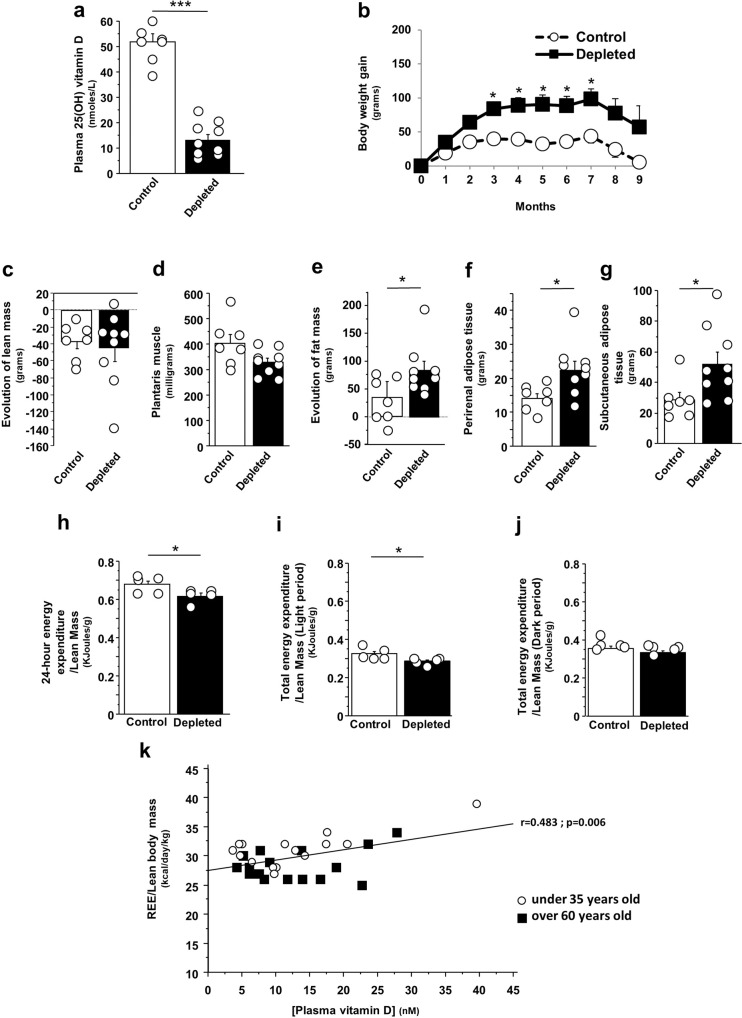
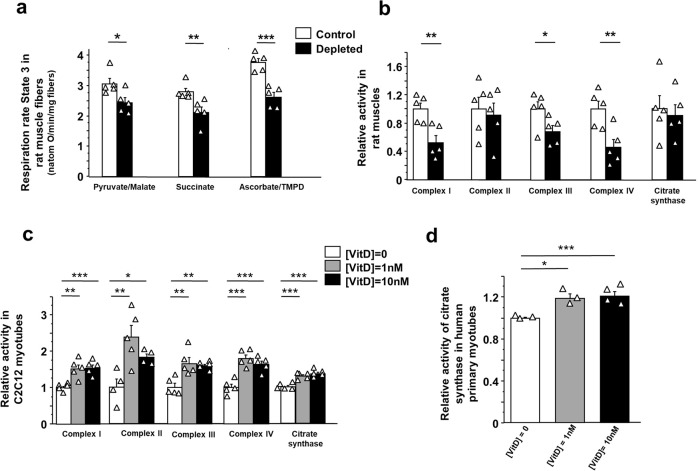
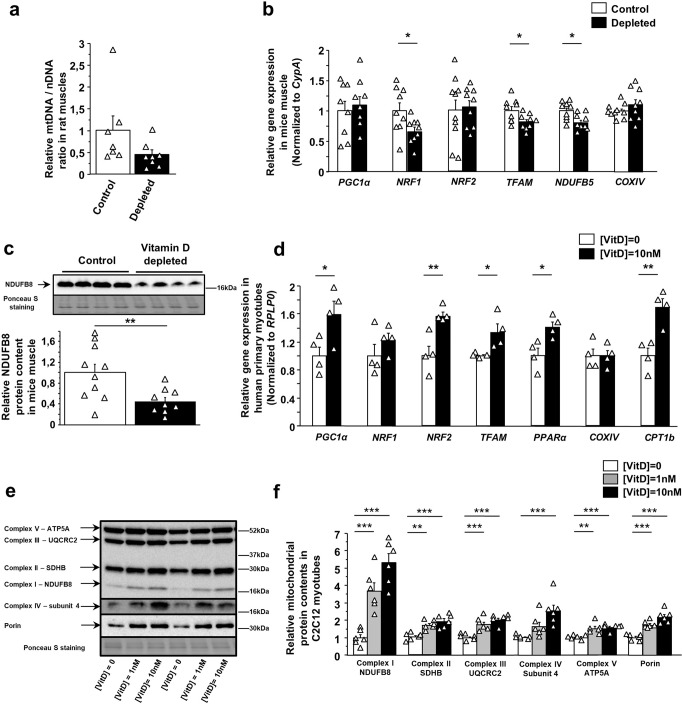
Skeletal muscle mitochondrial function is the biggest component of whole-body energy output. Mitochondrial energy production during exercise is impaired in vitamin D-deficient subjects. In cultured myotubes, loss of vitamin D receptor (VDR) function decreases mitochondrial respiration rate and ATP production from oxidative phosphorylation. We aimed to examine the effects of vitamin D deficiency and supplementation on whole-body energy expenditure and muscle mitochondrial function in old rats, old mice, and human subjects. To gain further insight into the mechanisms involved, we used C2C12 and human muscle cells and transgenic mice with muscle-specific VDR tamoxifen-inducible deficiency. We observed that in vivo and in vitro vitamin D fluctuations changed mitochondrial biogenesis and oxidative activity in skeletal muscle. Vitamin D supplementation initiated in older people improved muscle mass and strength. We hypothesize that vitamin D supplementation is likely to help prevent not only sarcopenia but also sarcopenic obesity in vitamin D-deficient subjects.
Overview
The claims and statistics of this paper haven’t been checked yet.
Free: it reads the open-access text and checks the first 5 claims that cite a source we can check. Create a free account to check every claim.
Integrity signals
Registry
Cites
Statistics
Figures
Verification
Claims the paper makes
The claims and statistics of this paper haven’t been checked yet.
Free: it reads the open-access text and checks the first 5 claims that cite a source we can check. Create a free account to check every claim.
Claims other papers make about this one
Each is checked against this paper’s own text: does it say what the citing paper says it does?
The cited source says what the claim attributes to it.
In the citing paper
“the binding of the vitamin D receptor to its ligand 1,25 (OH)2D3 triggers gene transcription associated with muscle function (83).”
From Sarcopenic obesity: epidemiology, pathophysiology, cardiovascular disease, mortality, and management (2023) · cites this paper as [83]
Self-check
Percentages, sums and reported differences re-computed from the paper’s own numbers.
The self-check needs the paper’s full text.
Citations
Cites
New methods for calculating metabolic rate with special reference to protein metabolism
Weir, J. B. D. V. (1949) · The Journal of Physiology · doi:10.1113/jphysiol.1949.sp004363 · Cited by 5,603 · cited 1×
“Energy expenditure was calculated using Weir’s equation(31).”
Raudvere, U., Kolberg, L., Kuzmin, I., Arak, T., Adler, P., Peterson, H., & Vilo, J. (2019) · Nucleic Acids Research · doi:10.1093/nar/gkz369 · Cited by 5,045
Decreased bioavailability of vitamin D in obesity
Wortsman, J., Matsuoka, L. Y., Chen, T. C., Lu, Z., & Holick, M. F. (2000) · The American Journal of Clinical Nutrition · doi:10.1093/ajcn/72.3.690 · Cited by 3,204
Enrichment Map: A Network-Based Method for Gene-Set Enrichment Visualization and Interpretation
Merico, D., Isserlin, R., Stueker, O., Emili, A., & Bader, G. D. (2010) · PLoS ONE · doi:10.1371/journal.pone.0013984 · Cited by 2,235
Vimaleswaran, K. S., Berry, D. J., Lu, C., Tikkanen, E., Pilz, S., Hiraki, L. T., Cooper, J. D., Dastani, Z., Li, R., Houston, D. K., et al. (2013) · PLoS Medicine · doi:10.1371/journal.pmed.1001383 · Cited by 1,046
Metabolic Differentiation of Distinct Muscle Types at the Level of Enzymatic Organization
Bass, A., Brdiczka, D., Eyer, P., Hofer, S., & Pette, D. (1969) · European Journal of Biochemistry · doi:10.1111/j.1432-1033.1969.tb00674.x · Cited by 668
Duodenal calcium absorption in vitamin D receptor–knockout mice: Functional and molecular aspects
Van Cromphaut, S. J., Dewerchin, M., Hoenderop, J. G. J., Stockmans, I., Van Herck, E., Kato, S., Bindels, R. J. M., Collen, D., Carmeliet, P., Bouillon, R., et al. (2001) · Proceedings of the National Academy of Sciences · doi:10.1073/pnas.231474698 · Cited by 591
Vitamin D Receptor Expression in Human Muscle Tissue Decreases with Age
Bischoff-Ferrari, H., Borchers, M., Gudat, F., Dürmüller, U., Stähelin, H., & Dick, W. (2004) · Journal of Bone and Mineral Research · doi:10.1359/jbmr.2004.19.2.265 · Cited by 585
Vitamin D Deficiency: Defining, Prevalence, Causes, and Strategies of Addressing
Cashman, K. D. (2020) · Calcified Tissue International · doi:10.1007/s00223-019-00559-4 · Cited by 384
Sinha, A., Hollingsworth, K. G., Ball, S., & Cheetham, T. (2013) · The Journal of Clinical Endocrinology & Metabolism · doi:10.1210/jc.2012-3592 · Cited by 226
Cited by
Sarcopenic obesity: epidemiology, pathophysiology, cardiovascular disease, mortality, and management
Wei, S., Nguyen, T. T., Zhang, Y., Ryu, D., & Gariani, K. (2023) · Frontiers in Endocrinology · doi:10.3389/fendo.2023.1185221 · Cited by 291
Li, X., He, J., & Sun, Q. (2024) · Clinical Nutrition · doi:10.1016/j.clnu.2024.07.006 · Cited by 74
Golubnitschaja, O., Kapinová, A., Sargheini, N., Bojková, B., Kapalla, M., Heinrich, L., Gkika, E., & Kubatka, P. (2024) · The EPMA Journal · doi:10.1007/s13167-024-00358-4 · Cited by 65
“Decreased vitamin D levels reduce mitochondrial activity and ATP production from oxidative phosphorylation and increase oxidative stress and inflammation [205, 206].”
BackgroundFeng, Z., Xia, J., Yu, J., Wang, J. P., Yin, S., Yang, H. J., Wu, T., Zhang, Z., Yan, W., Wang, S., et al. (2025) · International Journal of Molecular Sciences · doi:10.3390/ijms26115113 · Cited by 55
“This compromised mitochondrial function results in diminished energy metabolism efficiency, characterized by reduced overall energy expenditure, further aggravating muscle wasting and fat deposition [126].”
Cochet, C., Belloni, G., Buondonno, I., Chiara, F., & D’Amelio, P. (2023) · Nutrients · doi:10.3390/nu15173703 · Cited by 53
“Even though several authors showed that active vitamin D supplementation (calcitriol) significantly improves mitochondrial function, biogenesis and decreases oxidative stress [35,36,74], and, clinically, hypovitaminosis D induces muscle atrophy, clinical trials on vitamin D supplementation were not effective in provin…”
BackgroundZhang, F., & Li, W. (2024) · Therapeutics and Clinical Risk Management · doi:10.2147/tcrm.s471191 · Cited by 51
“99 When vitamin D binds to intracellular receptors (VDRs), it activates a series of signaling pathways that regulate mitochondrial production and function.”
Nutritional Strategies for Muscle Atrophy: Current Evidence and Underlying Mechanisms
Shen, Y., Zhang, C., Dai, C., Zhang, Y., Wang, K., Gao, Z., Chen, X., Yang, X., Sun, H., Yao, X., et al. (2024) · Molecular Nutrition & Food Research · doi:10.1002/mnfr.202300347 · Cited by 41
Jeong, I., Cho, E., Yook, J.-S., Choi, Y., Park, D., Kang, J., Lee, S.-H., Seo, D. Y., Jung, S., & Kwak, H. (2024) · Life · doi:10.3390/life14080962 · Cited by 40
“Skeletal muscle loss is influenced by several factors and pathways, including chronic inflammation, reduced growth hormone signaling, and inadequate protein intake [25–27].”
BackgroundZhang, W., Yu, S., Jiao, B., Zhang, C., Zhang, K., Liu, B., & Zhang, X. (2024) · CNS Neuroscience & Therapeutics · doi:10.1111/cns.70067 · Cited by 30
Resveratrol and Vitamin D: Eclectic Molecules Promoting Mitochondrial Health in Sarcopenia
Russo, C., Valle, M. S., D’Angeli, F., Surdo, S., & Malaguarnera, L. (2024) · International Journal of Molecular Sciences · doi:10.3390/ijms25147503 · Cited by 28
“Reestablishing optimal vitamin D levels alleviates myopathy symptoms and improves muscle mitochondrial oxidative capability [173] (Figure 3).”
BackgroundThe Role of Maternal Vitamin D Deficiency in Offspring Obesity: A Narrative Review
Wu, Y., Zeng, Y., Zhang, Q., & Xiao, X. (2023) · Nutrients · doi:10.3390/nu15030533 · Cited by 24
“In muscle, VDR is a key intermediate between VD status and mitochondrial function [52].”
BackgroundEscobedo-Monge, M. F., Bahillo-Curieses, P., Parodi-Román, J., Escobedo-Monge, M. A., Alonso‐López, P., & Marugán‐Miguelsanz, J. M. (2024) · Nutrients · doi:10.3390/nu16091349 · Cited by 23
“In an animal model, there was a significant association between Vit-D depletion in old rats and a decrease in whole-body EE related to a change in body composition (increase in FM and a reduction in skeletal FFM, and with compromised muscle mitochondrial activity) [40].”
BackgroundNutritional Support of Chronic Obstructive Pulmonary Disease
Simon, P., Török, É., Szalontai, K., Kari, B., Neuperger, P., Zavala, N., Kanizsai, I., Puskás, L. G., Török, S., & Szebeni, G. J. (2025) · Nutrients · doi:10.3390/nu17071149 · Cited by 19
“Furthermore, by helping to maintain phosphate levels, vitamin D regulates the production of ATP, and its deficiency has been linked to muscle weakness, suggesting a role in respiratory muscle function [352,353].”
Consensus statement on vitamin D role in metabolic health
Giustina, A., di Filippo, L., Aleksova, A., Bollerslev, J., Colao, A. M., Dawson-Hughes, B. F., Donini, L. M., Ebeling, P. R., Lazaretti-Castro, M., Lorusso, R., et al. (2025) · Metabolism · doi:10.1016/j.metabol.2025.156484 · Cited by 15
Cosio, P. L., Moreno-Simonet, L., Porcelli, A., Lloret, M., Padullés, X., Padulles, J. M., Farrán-Codina, A., & Cadefau, J. A. (2024) · Frontiers in Physiology · doi:10.3389/fphys.2023.1331878 · Cited by 15
Activation of the apelin/APJ system by vitamin D attenuates age-related muscle atrophy
Lee, Y. J., Kim, G. H., Lee, D. S., Jeong, H., & Lim, J. H. (2024) · Life Sciences · doi:10.1016/j.lfs.2024.123205 · Cited by 16
Salles, J., Gueugneau, M., Patrac, V., Malnero-Fernandez, C., Guillet, C., Bacquer, O. L., Giraudet, C., Sanchez, P., Collin, M., Hermet, J., et al. (2023) · Nutrients · doi:10.3390/nu15173766 · Cited by 14
“Citrate synthase activity was measured by following the reduction of 5,5-dithiobis(2-nitrobenzoic acid) (DTNB) [23,25,27–29].”
InfluentialSelf-citationAssociations Between Prenatal Vitamin D and Placental Gene Expression
Parenti, M., Melough, M. M., Lapehn, S., MacDonald, J. W., Bammler, T. K., Firsick, E. J., Choi, H. Y., Derefinko, K. J., Enquobahrie, D. A., Carroll, K. N., et al. (2024) · Journal of Nutrition · doi:10.1016/j.tjnut.2024.10.019 · Cited by 13
“In vitro studies suggest that 1,25(OH) 2 D and VDR regulate mitochondrial function in skeletal muscle (55–57) and vitamin D supplementation improved strength and muscle mass in older adults (57).”
The Role of Vitamin D Supplementation in Enhancing Muscle Strength Post-Surgery: A Systemic Review
Wang, J. D. J., Quak, G. S. W., Lee, H.-B., Foo, L.-X., Tay, P. W. L., Mah, S., Tong, C., & Koh, F. H.-X. (2025) · Nutrients · doi:10.3390/nu17091512 · Cited by 14
“Studies indicate that vitamin D contributes to mitochondrial health in muscle cells, improving energy production and reducing oxidative stress, which are vital for maintaining muscle function [35].”
Talib, N. F., Zhu, Z., & Kim, K. S. (2023) · Nutrients · doi:10.3390/nu15224714 · Cited by 13
“Restoring optimal vitamin D levels not only alleviates myopathy symptoms but also enhances muscle mitochondrial oxidative capacity [71,72].”
BackgroundLi, Y., & Shao, X. (2025) · Journal of Health Population and Nutrition · doi:10.1186/s41043-025-00981-5 · Cited by 11
“25(OH) D deficiency can impair mitochondrial oxidative capacity in skeletal muscle, reduce basal metabolic rate, and promote fat accumulation [35].”
Nanodrug Delivery Systems for Myasthenia Gravis: Advances and Perspectives
Huang, J., Zhao, Y., Song, Y., & Chen, T. (2024) · Pharmaceutics · doi:10.3390/pharmaceutics16050651 · Cited by 11
Vitamin D and Atherosclerosis: Unraveling the Impact on Macrophage Function
Wang, D., Sun, Z., Yin, Y., Xiang, J., Wei, Y., Ma, Y., Wang, L., & Liu, G. (2024) · Molecular Nutrition & Food Research · doi:10.1002/mnfr.202300867 · Cited by 12
Vitamin D in the elderly: the phil-rouge in preventing bone, muscle and adipose deterioration?
di Filippo, L., Terenzi, U., & Giustina, A. (2026) · Archives of Endocrinology and Metabolism · doi:10.20945/2359-4292-2025-0281 · Cited by 13
“In addition, it was proved to increase adenosine triphosphate production capacity and to improve oxidative function enhancing the activity of electron transport chain complexes (37,38).”
Genomic and non-genomic action of vitamin D on ion channels – Targeting mitochondria
Olszewska, A. M., & Zmijewski, M. A. (2024) · Mitochondrion · doi:10.1016/j.mito.2024.101891 · Cited by 11
Ren, Q., Liang, J., Su, Y., Tian, R., Wu, J., Ge, S., & Chen, P. (2025) · Journal of Cachexia Sarcopenia and Muscle · doi:10.1002/jcsm.13778 · Cited by 9
“…study by Rondanelli et al., 127 elderly patients with sarcopenia (aged 81 ± 6 years) were randomly assigned to the experimental group ( n = 64; 20 g of whey protein, 2.8 g of leucine and 800 IU of vitamin D orally once daily at meal-time) or the control group ( n = 63; an isocaloric product) [37].”
InfluentialStem cell therapy: A promising therapeutic approach for skeletal muscle atrophy
Wang, Y., Chen, Z., Shen, Y., Wang, K., Han, Y.-M., Zhang, C., Yang, X.-M., & Chen, B. (2025) · World Journal of Stem Cells · doi:10.4252/wjsc.v17.i2.98693 · Cited by 8
“This therapeutic strategy has also been applied to enhance the regenerative capacity of skeletal muscle following injury or degradation due to diseases such as muscular dystrophy[43,44].”
Elmorsy, E. M., Al-Ghafari, A. B., Doghaither, H. A. A., Alrowaili, M. G., Khired, Z. A., Toraih, E. A., Fawzy, M. S., & Shehata, S. A. (2024) · Biological Trace Element Research · doi:10.1007/s12011-024-04337-8 · Cited by 9
“One plausible mechanism is that VD enhances the activity of mitochondrial biogenesis pathways or stabilization of mitochondrial membranes, which supports cellular ATP production and overall bioenergetic balance [29].”
Chen, Y.-L., Wu, J., Chen, K.-Y., Wu, M.-H., Yang, P., Lee, P., Chen, P.-D., Kuo, T., Yeh, S., & Lin, M.-T. (2024) · Biomedicine & Pharmacotherapy · doi:10.1016/j.biopha.2024.116926 · Cited by 8
Li, X., Jiang, Y., Zhang, M., Liu, H., & Li, M. (2025) · Journal of Periodontology · doi:10.1002/jper.70002 · Cited by 7
Targeted nutritional intervention attenuates experimental lung cancer cachexia
van de Worp, W. R. P. H., Theys, J., Wolfs, C. J. A., Verhaegen, F., Schols, A. M. W. J., van Helvoort, A., & LANGEN, R. C. J. (2024) · Journal of Cachexia Sarcopenia and Muscle · doi:10.1002/jcsm.13520 · Cited by 7
“17 Moreover, vitamin D de fi ciency is very common in patients with cancer cachexia.”
BackgroundNagaoka, R., Katano, S., Yano, T., Numazawa, R., Yamano, K., Fujisawa, Y., Honma, S., Kamoda, T., Sato, K., Kouzu, H., et al. (2023) · Nutrition Metabolism and Cardiovascular Diseases · doi:10.1016/j.numecd.2023.10.003 · Cited by 7
Intermuscular Adipose Tissue in CKD: A Window into Muscle Quality and Health?
Demirci, M., Dilaver, R. G., Roshanravan, B., Ikizler, T. A., & Gamboa, J. L. (2025) · Clinical Journal of the American Society of Nephrology · doi:10.2215/cjn.0000000745 · Cited by 6
Nadh, A. G., Mohan, A., Sajal, H., & Raju, R. (2026) · The Journal of Steroid Biochemistry and Molecular Biology · doi:10.1016/j.jsbmb.2026.107001 · Cited by 6
Wang, D., Sun, Z., Zhang, H., Xiang, J., Wu, H., Lu, C., Li, M., Ma, Y., Liu, G., & Wang, L. (2025) · Food & Function · doi:10.1039/d5fo00717h · Cited by 6
Xu, Q., Bu, F., Song, Z., Li, K., Chen, F., Luo, Y., Zhang, L., & Pei, Y. (2025) · Obesity · doi:10.1002/oby.24286 · Cited by 7
“Second, vitamin D can regulate muscle mitochondrial function and biogenesis through highly coordinated regulation of gene expression by vitamin D receptor, thereby affecting changes in body composition [36].”
Salles, J., Gueugneau, M., Laleg, K., Giraudet, C., Sanchez, P., Blot, A., Richard, R., Neveux, N., Lefranc‐Millot, C., Perreau, C., et al. (2024) · Nutrients · doi:10.3390/nu16172870 · Cited by 5
“Cells were then induced to differentiate into myotubes by switching to DMEM containing Cells were then induced to di ff erentiate into myotubes by switching to DMEM containing 2% heat-inactivated horse serum [23,24].”
MethodSelf-citationTian, M., Li, X., Qi, D., Wei, P., & Jin, P. (2025) · Neurotherapeutics · doi:10.1016/j.neurot.2025.e00767 · Cited by 5
“Emerging evidence suggests that VDR may influence cellular signaling pathways critical for stress response and mitochondrial regulation [56].”
Vitamin D alleviates chronic stress-induced testicular steroidogenesis disruption in Wistar rats
Srivastava, S., Srivastava, S., Agarwal, V., Rehman, M., Chaudhary, R., Kaushik, A. S., Kushwaha, S., & Mishra, V. (2025) · Tissue and Cell · doi:10.1016/j.tice.2025.102910 · Cited by 4
He, D., Liu, H., Zhao, Y., Wei, W., Cai, Q., Shi, S., Chu, X., Zhang, N., Qin, X., Jia, Y., et al. (2024) · The Journal of Clinical Endocrinology & Metabolism · doi:10.1210/clinem/dgae195 · Cited by 4
Sullivan, V. K., Chen, J., Bernard, L., Yu, B., Michos, E. D., Appel, L. J., Lichtenstein, A. H., & Rebholz, C. M. (2025) · Clinical Nutrition ESPEN · doi:10.1016/j.clnesp.2025.03.172 · Cited by 4
Lee, T., Lee, T.-I., Higa, S., Kao, Y., & Chen, Y. (2025) · European Journal of Pharmacology · doi:10.1016/j.ejphar.2025.177858 · Cited by 3
Epigenetic effects of four nutraceutical products on human liver cells
Davis, C., Davis, P., & Gubler, D. (2025) · Functional Foods in Health and Disease · doi:10.31989/ffhd.v15i1.1524 · Cited by 3
Vitamin D stimulates Il-15 synthesis in rodent muscle
Ewendt, F., Drewitz, F., Althammer, M., Eichler, C., Brandsch, C., Brey, S., Winkler, T., Wilkens, M. R., St‐Arnaud, R., Kreutz, M. P., et al. (2025) · Biochemistry and Biophysics Reports · doi:10.1016/j.bbrep.2025.101925 · Cited by 2
Nutri-epigenetics of mitochondrial function and energy homeostasis in obesity
Goss, L. R., & Voruganti, V. S. (2025) · Genes & Nutrition · doi:10.1186/s12263-025-00781-w · Cited by 2
“Vitamins play a key role in mitochondrial function, bio-genesis, and epigenetic modifications, which together influence cellular energy metabolism and overall metabolic health [76].”
Feraco, A., Camajani, E., Muscogiuri, G., Barrea, L., Colao, A., & Caprio, M. (2026) · Current Obesity Reports · doi:10.1007/s13679-026-00695-7 · Cited by 2
Yang, Q., Jiang, Q., Bai, T., Zhu, Y., Zhao, Y., Xu, G., Wu, F., Cui, P., & Li, F. (2026) · BMC Geriatrics · doi:10.1186/s12877-026-07202-6 · Cited by 2
“Low serum levels diminish satellite-cell activation, accelerate protein ubiquitination via the atrogenes Atrogin-1 and MuRF-1, and impair mitochondrial oxidative capacity, collectively leading to losses in muscle mass and strength [40].”
Ma, D., Liu, Y., Zhao, J., & Li, Q. (2026) · Foods · doi:10.3390/foods15071162 · Cited by 2
Zhan, L., Liu, L., Yuan, J., Zhou, C., & Zha, Y. (2023) · Renal Failure · doi:10.1080/0886022x.2023.2271066 · Cited by 2
“…in the highest tertile of the ECW/BCM group may have had intestinal edema or decreased appetite, which results in deficiencies of essential nutrients such as protein and vitamin D. Protein and vitamin D have been shown to play a critical role in the preservation of muscle mass and strength [23].”
BackgroundYamaguchi, T., Kawakubo, S., Yamaura, K., Kinoshita, S., Kanai, R., Kanbe, I., Sameda, M., Yamaoka, S., Watanabe, Y., Tsuji, S., et al. (2024) · Obesity Pillars · doi:10.1016/j.obpill.2024.100134 · Cited by 2
“Salles et al. [29] found that 25OHD levels are associated with skeletal muscle mass and function in animal models.”
BackgroundLuo, C., Zhang, W., Hua, L.-Y., Zeng, M.-Q., Xu, H. J., Duan, C., Xu, S., Zhan, S., Pan, X.-F., Sun, D., et al. (2025) · World Journal of Diabetes · doi:10.4239/wjd.v16.i11.112236 · Cited by 1
Zhang, C. M., Li, M., Li, C., Xue, L., Lv, C., Guo, Q., Zhao, Y., & Zhao, H. (2026) · The journal of nutrition health & aging · doi:10.1016/j.jnha.2026.100886 · Cited by 1
“Emerging evidence also implicates vitamin D in skeletal muscle biology, including myoblast proliferation and differentiation, as well as intra-muscular fat accumulation [10,11].”
Vitamin D and frailty: Clinical evidence, mechanistic insights, and translational challenges
Viola, V., Tramontana, F., Leanza, G., Faraj, M., & Napoli, N. (2026) · Metabolism · doi:10.1016/j.metabol.2026.156697 · Cited by 1
Berger, M. M., Blaauw, R., D’Amelio, P., Ehrhart, N. P., Gombart, A. F., Gramlich, L. M., Kressig, R. W., & Calder, P. C. (2026) · GeroScience · doi:10.1007/s11357-026-02402-9 · Cited by 1
“Vitamin D supplementation potentially restores mitochondrial function and reduces inflammatory cytokine expression in muscle cells [81].”
Michalczyk, M. M., Gepfert, M., Roczniok, R., Mroszczyk, W., Brodowski, A., Gawełczyk, M., & Zydek, G. (2026) · Nutrients · doi:10.3390/nu18152460 · Cited by 1
“A biological relationship remains plausible because vitamin D signaling may influence calcium handling, muscle protein turnover, and mitochondrial metabolism [7,33–39].”
Systematic review and meta-analysis of biomarkers of sarcopenia and sarcopenic obesity
Yang, Y., Wang, C., Xu, R., Xuan, W., & Chen, X. (2026) · Medicine · doi:10.1097/md.0000000000050799 · Cited by 1
“[65,66] Skeletal muscle is a target organ of vitamin D, and the mechanisms underlying the association between vitamin D and sarcopenia/SO have not been fully elucidated.”
Vitamin D: A Role Beyond Rickets
Sultana, N., Roy, R. R., Kamal, A. H. M., & Ray, A. (2024) · Paediatric Nephrology Journal of Bangladesh · doi:10.4103/pnjb.pnjb_5_24 · Cited by 1
Adhityarani, P., Sunardi, D., & Dewiasty, E. (2024) · Contagion Scientific Periodical Journal of Public Health and Coastal Health · doi:10.30829/contagion.v6i1.19030
“(Salles et al., 2022) Thus, to increase muscle mass and muscle performance in older people, vitamin D3 supplementation is recommended, along with other therapies such as resistance training and supplementation with BCAAs.”
BackgroundHu, X., Song, Y., Cao, M., Du, Y., Li, Y., Liu, X., Tang, J., Shen, H., Liu, C., Deng, F., et al. (2024) · Research Square · doi:10.21203/rs.3.rs-4146496/v1
Pritchard, J., Struszczak, L., Henry, C. O., Lugtmeijer, C., Bowtell, J. L., & O’Leary, M. F. (2025) · Frontiers in Nutrition · doi:10.3389/fnut.2025.1656798
“In skeletal muscle, in vivo and in vitro changes in vitamin D levels influence mitochondrial biogenesis and oxidative capacity (127).”
Mohamed Nalim, A. R. (2025) · University Library of Skövde (University of Skövde)
Sarcopenic Obesity and Hormones: A Narrative Review
Yu, D., & Zhou, B. (2025) · Journal of Biosciences and Medicines · doi:10.4236/jbm.2025.1312003 · Cited by 1
Sakaue, M., Yamamoto, A., Onishi, T., Oyabu, M., & Kamei, Y. (2026) · Bioscience Biotechnology and Biochemistry · doi:10.1093/bbb/zbag033
Kalın, M., Karakullukçu, H. K., Karakullukcu, M., Arslan, A., Gül, S. Ş., Toyran, R., Özkan, Ö. F., Ercan, G., & Aygün, H. (2026) · Nutrients · doi:10.3390/nu18071097
“Although the vitamin D/VDR axis has been implicated in skeletal-muscle oxidative metabolism and mitochondrial function, these mechanisms were not directly evaluated in the current study [66,67].”
Yu, Y.-S., & Ming, H. (2026) · Science & Sports · doi:10.1016/j.scispo.2026.01.008 · Cited by 2
Das, J. K., Banskota, N., Donegà, S., Shehadeh, N., Piao, Y., Price, N., Mattison, J. A., Candia, J., de Cabo, R., & Ferrucci, L. (2026) · Skeletal Muscle · doi:10.1186/s13395-026-00422-9
“VDR is essential for muscle function and mitochondrial activity [116], and since caloric restriction influences systemic vitamin D metabolism [55], these variants may modulate VDR-dependent signaling pathways critical for CR adaptation.”
Xi, F., Zheng, N., Wang, D., Teng, R., Wang, X., & Tan, S. (2026) · International Journal for Vitamin and Nutrition Research · doi:10.31083/ijvnr44226
Modeling intramuscular fat infiltration in the engineered skeletal muscle myobundles
Wang, D., Liu, Q., Han, S., Zhong, W., Yin, B., Zou, J., Liu, H., Zhang, X., Zhang, X., Qin, J., et al. (2026) · Materials & Design · doi:10.1016/j.matdes.2026.116301
Pathological changes and therapeutic strategies for sarcopenia
Yang, K., Peng, S., Zhang, C., Guo, L., Dong, L., & Tao, L. (2026) · EFORT Open Reviews · doi:10.1530/eor-2025-0066
“Vitamin D promotes mitochondrial biogenesis and enhances oxidative respiration to prevent the aggravation of sarcopenia and the occurrence of SO (352).”
Biswas, T., Chongtham, C., Kumari, N., Saneja, Y., Yadav, N. K., Maras, J. S., Kamat, S. S., & Arimbasseri, G. A. (2026) · bioRxiv (Cold Spring Harbor Laboratory) · doi:10.64898/2026.06.10.731289
[Interpretation of the Expert Consensus Statement on the Role of Vitamin D in Metabolic Health].
Zhao, Z., & Zeng, Y. (2026) · PubMed Central · doi:10.7507/1002-1892.202603096
Versari, I., Bavelloni, A., Sbrighi, C., Traversari, M., Faenza, I., & Salucci, S. (2026) · Nutrients · doi:10.3390/nu18152494
Główczewska-Siedlecka, E., Szafrańska, M., Doligalska, A., Dolina, M., Zoń, A., Pekala, M., Skowroński, M., Pałgan, K., & Napiórkowska-Baran, K. (2026) · Journal of Gerontology and Geriatrics · doi:10.3390/jgg74030029
Yu, D., Ou, Q., Xie, B., Li, Y., Liao, K., Li, R., Mei, M., & Zhou, B. (2026) · Medicine · doi:10.1097/md.0000000000050242
“[25] This genomic pathway may also modulate body composition by influencing muscular calcium transport and phospholipid metabolism.”
The ageing microenvironment in sarcopenia: early alterations and targeted therapeutic strategies
Zhang, L., Li, G., Long, L., Pan, L., Bai, Y., Ni, L., Han, L., & Cao, R. (2026) · Frontiers in Immunology · doi:10.3389/fimmu.2026.1929891
“Vitamin D status can in fl uence skeletal muscle mitochondrial biogenesis and oxidative metabolic capacity, suggesting that vitamin D intervention may be more relevant for early energy metabolism and mitochondrial functional support (214, 215).”
Saviola, G., Rosini, S., Rosini, S., Molfetta, F., & Molfetta, L. (2026) · Revista de Osteoporosis y Metabolismo Mineral · doi:10.20960/revosteoporosmetabminer.00119
Çiçek, O., Akkar, I., Turgut, Z. İ., Kars, M. Y., Dogan, M. H., Tosun, Y., & Kızılarslanoğlu, M. C. (2026) · Journal of Investigative Medicine · doi:10.1177/10815589261493463
Martínez, C. I. A. (2025) · Repositorio Institucional Académico , Sistema de Bibliotecas Universidad Andrés Bello (UNAB) (Universidad Andrés Bello (UNAB))
Faradilla, M. A., Yastani, D., Yohana, Y., Anastasya, K., & Salma, N. M. (2026) · Science Midwifery
Dong, Z., Liu, L. N., Guo, Y., Sun, H., Shi, W., Zhou, M., Tong, X., Wang, Z., Qian, F., & Guo, Y. (2026) · Journal of Cachexia Sarcopenia and Muscle · doi:10.1002/jcsm.70401
Díaz, S. A. (2026) · CDEFIS REVISTA CIENTÍFICA
da Silva, L. K. T. M., Manhães‐de‐Castro, R., da Silva, M. M., Gouveia, H. J. C. B., Gentil, T. L. D. S., dos Santos, G. L., da Silva, J. A. G. P., de Lemos, M. D. T. B., & Toscano, A. E. (2026) · Archives of Medical Research · doi:10.1016/j.arcmed.2026.103538
Metadata
- Authors
- Salles, J., Chanet, A., Guillet, C., Vaes, A. M., Brouwer-Brolsma, E. M., Rocher, C., Giraudet, C., Patrac, V., Meugnier, E., Montaurier, C., Denis, P., Le Bacquer, O., Blot, A., Jourdan, M., Luiking, Y., Furber, M., Van Dijk, M., Tardif, N., Yves Boirie, Y., & Walrand, S.
- Affiliations
- Université Clermont Auvergne (FR)
- Wageningen University & Research (NL)
- Centre National de la Recherche Scientifique (FR)
- Lyon 1 Université (FR)
- Centre de Recherche en Nutrition Humaine d'Auvergne (FR)
- Nutricia Research (Netherlands) (NL)
- Karolinska University Hospital (SE)
- Corresponding author
- Walrand, Stéphane
- ORCID
- Venue
- Communications Biology
- Published
- 2022-11-24
- Volume
- 5
- Issue
- 1
- Pages
- 1288-1288
- ISSN
- 2399-3642 (ISSN-L)
- PMC
- PMC9700804
- OpenAlex
- W4310056597
- Cited by
- 73
- References
- 41
- Citations by year
- 2026: 24 · 2025: 19 · 2024: 23 · 2023: 7
- FWCI
- 8.30
- Type
- journal article
- Language
- en
- Open access
- gold
- doi.org
- Licence
- cc-by
- creativecommons.org/licenses/by/4.0 (tdm)
- creativecommons.org/licenses/by/4.0 (vor)
- Locations
- Communications Biology (publishedVersion, cc-by)
- PubMed Central (publishedVersion, cc-by)
- PubMed (publishedVersion)
- HAL (submittedVersion, other-oa)
- Socio-Environmental Systems Modeling (submittedVersion, cc-by)
- HAL (submittedVersion)
- DOAJ (DOAJ: Directory of Open Access Journals) (submittedVersion, cc-by-sa)
- Oskar-Bordeaux (Universite de Bordeaux) (submittedVersion, cc-by)
- Data Archiving and Networked Services (DANS) (submittedVersion, cc-by)
- Funders
- Institut National de Recherche pour l'Agriculture, l'Alimentation et l'Environnement
- Topics
- Health Sciences › Medicine › Endocrinology, Diabetes and Metabolism › Vitamin D Research Studies
- Life Sciences › Biochemistry, Genetics and Molecular Biology › Molecular Biology › Muscle Physiology and Disorders
- Life Sciences › Biochemistry, Genetics and Molecular Biology › Molecular Biology › Mitochondrial Function and Pathology
- Keywords
- vitamin D status, vitamin D deficiency, vitamin D supplementation, sarcopenia, sarcopenic obesity, skeletal muscle, mitochondrial function, mitochondrial biogenesis, oxidative phosphorylation, mitochondrial respiration, vitamin D receptor, aging, muscle mass and strength, energy expenditure
- MeSH terms
- Aged, Animals, Humans, Mitochondria, Vitamin D, Vitamin D Deficiency, Oxidative Stress, Muscle, Skeletal, Mice, Rats, Sarcopenia
About these checks
Registry, retraction, Cites and statistics results are computed, not judged, with one exception: a printed reference that no index lists is read once by a model before it counts as a citation error. Claims are extracted by a model and kept only when their quote appears verbatim in the text; each cited source is then checked, with a model’s help, for whether it says what the claim relies on. Those verdicts can be wrong — read the claim’s quote and the cited source before relying on one.
Statistics and arithmetic are recomputed, not judged.
Confidence bands are shown only for fields calibrated on our annotated test set. None is calibrated yet, so no band is shown.
What counts as a claim ›How we measure confidence ›How we check this ›
Are you an author, or do you see a problem with this page? Request a review
Data sources
Bibliographic data: Semantic Scholar, OpenAlex, Crossref.
Contains information from the Semantic Scholar Academic Graph Datasets, made available under the ODC Attribution License (ODC-BY 1.0).
Semantic Scholar’s data is described in: Kinney, R., et al. (2023). The Semantic Scholar Open Data Platform. arXiv:2301.10140.
