

Tissue damaging toxins in snake venoms: mechanisms of action, pathophysiology and treatment strategies
Open accessThe DOI matches its Crossref record; 216 of the 216 references it cites were found in a registry or an index.
Abstract
Snakebite envenoming is an important public health issue responsible for mortality and severe morbidity. Where mortality is mainly caused by venom toxins that induce cardiovascular disturbances, neurotoxicity, and acute kidney injury, morbidity is caused by toxins that directly or indirectly destroy cells and degrade the extracellular matrix. These are referred to as ‘tissue-damaging toxins’ and have previously been classified in various ways, most of which are based on the tissues being affected (e.g., cardiotoxins, myotoxins). This categorisation, however, is primarily phenomenological and not mechanistic. In this review, we propose an alternative way of classifying cytotoxins based on their mechanistic effects rather than using a description that is organ- or tissue-based. The mechanisms of toxin-induced tissue damage and their clinical implications are discussed. This review contributes to our understanding of fundamental biological processes associated with snakebite envenoming, which may pave the way for a knowledge-based search for novel therapeutic options.
Overview
The claims and statistics of this paper haven’t been checked yet.
Free: it reads the open-access text and checks the first 5 claims that cite a source we can check. Create a free account to check every claim.
Integrity signals
Registry
Cites
Statistics
Figures
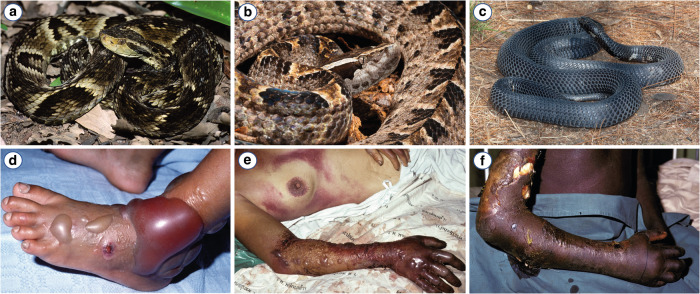
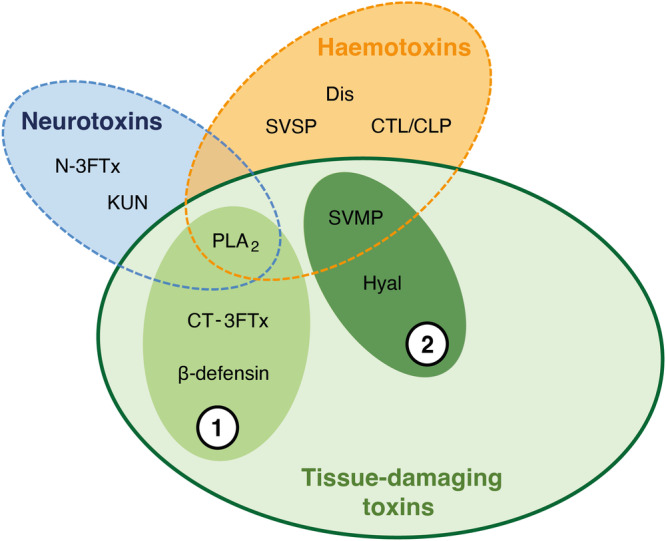
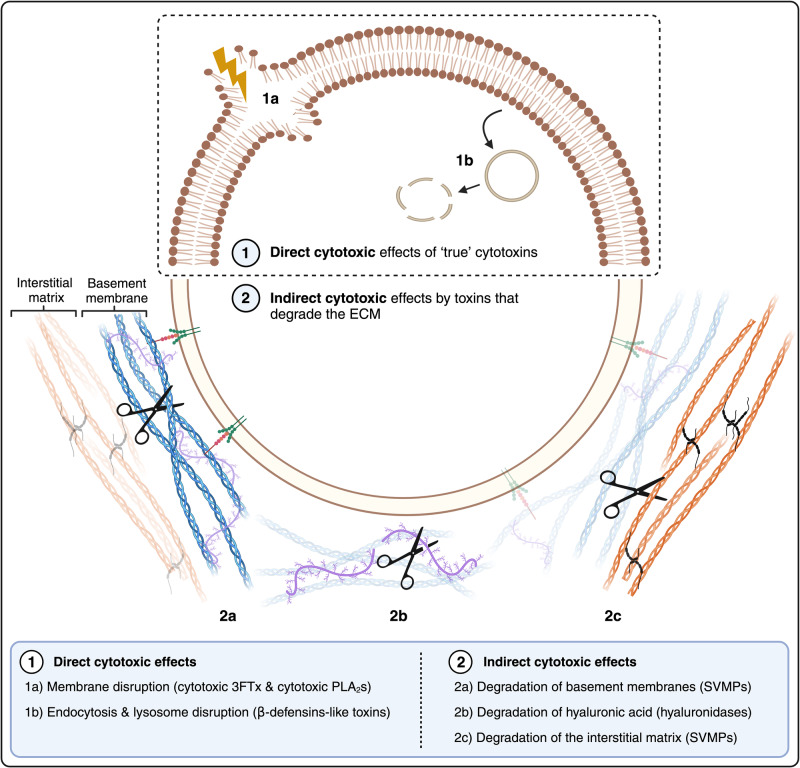
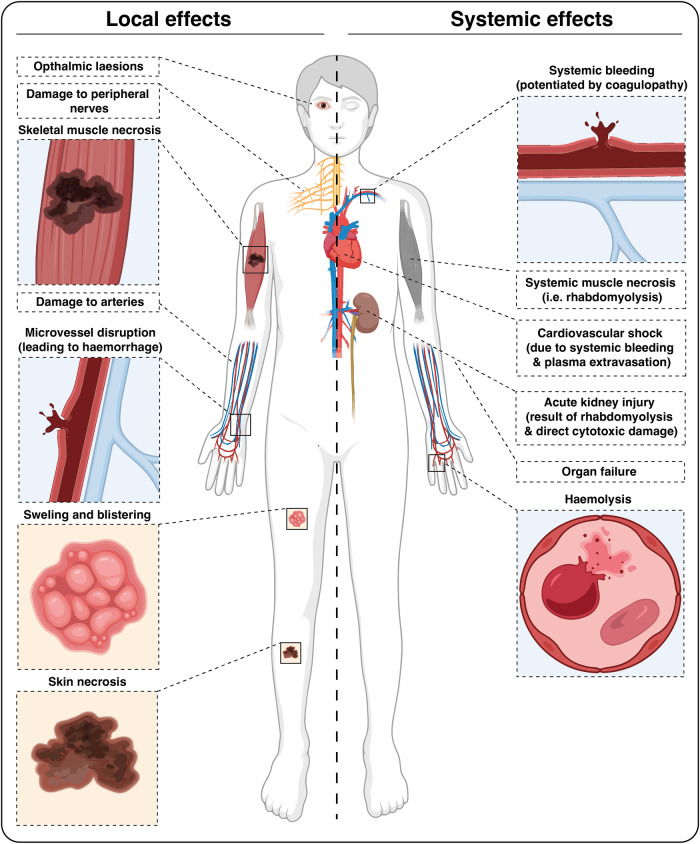
Verification
Claims the paper makes
The claims and statistics of this paper haven’t been checked yet.
Free: it reads the open-access text and checks the first 5 claims that cite a source we can check. Create a free account to check every claim.
Claims other papers make about this one
Each is checked against this paper’s own text: does it say what the citing paper says it does?
The source backs part of the claim, not all of it — or backs it for a different population, condition or comparison.
In the citing paper
“Local and systemic toxicity due to snakebite envenomation is primarily driven by cytotoxic venom components that affect cell viability and extracellular matrix degradation [4,26].”
From Role of Regulated Cell Death Pathways in Snakebite Envenomation: Mechanisms, Crosstalk, and Therapeutic Opportunities (2026) · cites this paper as [4]
Experimental — accuracy not yet measuredThe cited source says what the claim attributes to it.
In the citing paper
“While mortality is a major concern, snakebite envenomation also causes local tissue damage, leading to permanent disability and long-term complications [4].”
From Role of Regulated Cell Death Pathways in Snakebite Envenomation: Mechanisms, Crosstalk, and Therapeutic Opportunities (2026) · cites this paper as [4]
Self-check
Percentages, sums and reported differences re-computed from the paper’s own numbers.
The self-check needs the paper’s full text.
Citations
Cites
ROS function in redox signaling and oxidative stress
Schieber, M., & Chandel, N. S. (2014) · Current Biology · doi:10.1016/j.cub.2014.03.034 · Cited by 6,931 · cited 1×
“Although low ROS levels are intrinsically associated with normal cellular functioning, the accumulation of ROS (e.g., hydrogen peroxide) is suggested to be the primary inducer of oxidative stress 133 .”
BackgroundThe extracellular matrix at a glance
Frantz, C., Stewart, K. M., & Weaver, V. M. (2010) · Journal of Cell Science · doi:10.1242/jcs.023820 · Cited by 4,334 · cited 1×
“The interstitial matrix consists of several types of collagens, as well as fi bronectin, various proteoglycans, and hyaluronic acid, and plays critical roles in the homeostasis of tissues 40,76 .”
BackgroundA phylogeny and revised classification of Squamata, including 4161 species of lizards and snakes
Pyron, R., Burbrink, F. T., & Wiens, J. J. (2013) · BMC Evolutionary Biology · doi:10.1186/1471-2148-13-93 · Cited by 1,641
The extracellular matrix as a cell survival factor.
Meredith, J. E., Fazeli, B., & Schwartz, M. A. (1993) · Molecular Biology of the Cell · doi:10.1091/mbc.4.9.953 · Cited by 1,526
Dennis, E. A., Cao, J., Hsu, Y.-H., Magrioti, V., & Kokotos, G. (2011) · Chemical Reviews · doi:10.1021/cr200085w · Cited by 1,203
Anoikis molecular pathways and its role in cancer progression
Paoli, P., Giannoni, E., & Chiarugi, P. (2013) · Biochimica et Biophysica Acta (BBA) - Molecular Cell Research · doi:10.1016/j.bbamcr.2013.06.026 · Cited by 1,160
Bours, M. J. L., Swennen, E. L. R., Di Virgilio, F., Cronstein, B. N., & Dagnelie, P. C. (2006) · Pharmacology & Therapeutics · doi:10.1016/j.pharmthera.2005.04.013 · Cited by 1,030
Gutiérrez, J. M., Calvete, J. J., Habib, A. G., Harrison, R. A., Williams, D. J., & Warrell, D. A. (2017) · Nature Reviews Disease Primers · doi:10.1038/nrdp.2017.63 · Cited by 955
Self-citationWarrell, D. A. (2010) · The Lancet · doi:10.1016/s0140-6736(09)61754-2 · Cited by 774
Excitement ahead: structure, function and mechanism of snake venom phospholipase A2 enzymes
Manjunatha Kini, R. (2003) · Toxicon · doi:10.1016/j.toxicon.2003.11.002 · Cited by 720
Research works printed but not linked: 4
- Sarkar B Maitra S Ghosh B The Effect of Neurotoxin, Haemolysin and Choline Esterase Isolated from Cobra Venom on Heart, Blood Pressure and Respiration J. Ind. chem. Soc. 1942 30 453 460
- Sarkar NK Isolation of cardiotoxin from cobra venom (Naja tripudians), monocellate variety). J. Ind. Chem. Soc 1947 24 227 232
- Harvey AL Cardiotoxins from cobra venoms: Possible mechanisms of action Toxin Rev. 1985 4 41 69
- Alberts, B. et al. Essential cell biology: Fifth international student edition. (WW Norton & Company., 2018).
Cited by
Items 101–132 of 132
Advances and Challenges in Snakebite Management in India: A Contemporary Review
Jayaprakash, V., Sharma, A., & Chandran, D. (2026) · National Journal of Emergency Medicine SEMI · doi:10.5005/njem-11015-0090
Prashanth, K. S., Karthik, K. V., Chithrashree, G. C., Hemant, G., Sumedini, M. L., Girish, K. S., & Kemparaju, K. (2026) · International Journal of Biological Macromolecules · doi:10.1016/j.ijbiomac.2026.153035
Dine, F. M. M. B. E., Taha, S. H. N., Abdel‐Rahman, S., Elnaggar, F., Fasfous, M. W., Gebreal, A., Kengo, N. E., Gaitan, G., Okafor, U. G., Benti, A., et al. (2026) · Annals of Medicine · doi:10.1080/07853890.2026.2684168 · Cited by 1
Bite-Bot: A Robotic Platform for Studying Envenomation
Cieply, J., & Moore, T. Y. (2026) · Integrative and Comparative Biology · doi:10.1093/icb/icag089
In vitro cellular effects of Montivipera xanthina and Vipera ammodytes meridionalis venoms
Huriyet, H., Vatan, Ö., Çinkılıç, N., & Çavaş, T. (2026) · North-Western Journal of Zoology · doi:10.61215/nwjz.2026.22.1.07
Salazar, M. G. M., Picelli, A. M., da Silva, V. C. P. R., Bisneto, P. F., da Cruz, C. B. N., Carvalho, É. D. S., Alencar, R. M., Nascimento, T. P., Monteiro, W. M., Wen, F. H., et al. (2026) · Experimental and Molecular Pathology · doi:10.1016/j.yexmp.2026.105062
Elgendy, M. M., Madkour, S. A.-G., Sheta, A., Hamouda, E. H., & Ghitani, S. A. (2026) · Egyptian Journal of Forensic Sciences · doi:10.1186/s41935-026-00561-6
Emergency management of snakebite patients
Vodovar, D., Dünser, M. W., Larréché, S., & Toxicology Interest Group of the ESICM TEM section (2026) · European Journal of Emergency Medicine · doi:10.1097/mej.0000000000001361
de Assis, T. C. S., Costa, T. G. F., Lopes-de-Souza, L., Costal-Oliveira, F., Rodrigues, C. R., Campos, C. R., Guerra-Duarte, C., Fagundes, M. Í., Machado‐de‐Ávila, R. A., Braga, V. M. M., et al. (2026) · Toxicon · doi:10.1016/j.toxicon.2026.109218
Oliveira, D. N., Cordeiro, J. S. M., Saraiva, A. G. M., da Gama, H. S. S., de Castro, D. B., Silva-Neto, A. V., Sachett, A., Sartim, M. A., Murta, F., Monteiro, W. M., et al. (2026) · The Journal of venomous animals and toxins including tropical diseases · doi:10.1590/1678-9199-jvatitd-2025-0092
Acute gonadal toxicity induced by Bothrops atrox venom in mice
Kallel, H., Ghariani, M., Lakhrem, M., Aroui, M., Rebeh, I. B., Boudawara, O., Pujo, J. M., Résière, D., Alsibai, K. D., LONTSI, G. R., et al. (2026) · Toxicon · doi:10.1016/j.toxicon.2026.109243
Comparative Mitogenomics of Meiacanthus Blennies Reveals Venom System Evolution and Adaptive Traits
Luo, T., Yu, H. R., Xiao, W., Wu, B., Liu, Z., Tang, Y., Lin, Q., & Zhang, Y. (2026) · Animals · doi:10.3390/ani16152315
Barros, B. C. S. C., Chaves, A. F. A., Morone, M. S. L. C., Sachetto, A. T. A., Santoro, M. L., Schilling, O., & Serrano, S. M. T. (2026) · Protein Science · doi:10.1002/pro.70740
Epidemiological characterization of snakebite in Colombia, 2017–2023
Piñeros, M. C. R., Ramiro-González, M. D., Olivera, M. J., Gómez, J. L., & López-Rodríguez, J. A. (2026) · Tropical Medicine and Health · doi:10.1186/s41182-026-01040-3
Antivenom efficacy and traditional practices for Snakebite in Brazil: Where do they meet?
da Silva, W. R. G. B., Lira, D., Brito, I. M. D. C., Vidal, I., Bezerra, J. J. L., Alves, R. R. N., Soares, A. M., Jorge, R. J. B., & Sakamoto, T. (2026) · Toxicon · doi:10.1016/j.toxicon.2026.109268
Ferreira, I. G., Oliveira, I. S., Cresswell, C. T., Raybould, C. O., Horder, J. L., Harris, P. E., Arantes, E. C., & Benest, A. V. (2026) · Biochimie · doi:10.1016/j.biochi.2026.08.011
Isaac, J. A., & Ozhe, S. I. (2026) · Toxicon · doi:10.1016/j.toxicon.2026.109274
Nzienghi, D. M., Bouya, R., Ossouka, L. A. O., Ondo, S. W., Jidane, S., Nebhani, T., Chouaib, N., Belkouch, A., & Belyamani, L. (2026) · Cureus · doi:10.7759/cureus.115002 · Cited by 1
Hall, S., Rand, B. O., Cardoso, I. A., Robinson, A., Wilkinson, M. C., Shen, D., Fernández, S., Balchin, G., Hus, K. K., Poole, A. W., et al. (2026) · bioRxiv (Cold Spring Harbor Laboratory) · doi:10.64898/2026.08.26.747306
Self-citationGenotoxic Activity of Cerastes cerastes Viper Venom Using Alkaline Single-Cell Gel Electrophoresis
Ouhemmou, Z., Benbaak, N., Laouija, Z., Behlaouane, S., Fenni, N. E., Mkamel, M., Cherki, M., Karkouri, M., & Chgoury, F. (2026) · Biology · doi:10.3390/biology15171485
Shirazi, F. “., Adhikari, S. R., Nielsen, V. G., & Smelski, G. T. (2026) · Toxins · doi:10.3390/toxins18090391
Sani, I., Ukwuani-Kwaja, A. N., Muhammad, H., Bello, F., Fakai, H. J. H., Kankara, A. I., & Abdulrauf, M. S. (2026) · Trends in Pharmacology and Toxicology · doi:10.21124/tpt.2026.120.129
The development of the Taipan Antivenom – An Australian story from Far North Queensland
Grace, R. F. (2026) · Anaesthesia and Intensive Care · doi:10.1177/0310057x261486046
Hosseini, S. M., Shadnia, S., Mostafazadeh, B., Rahimi, M., Zandiyeh, F., Nezhad, A. R., & Evini, P. E. T. (2026) · Clinical Case Reports · doi:10.1002/ccr3.73512
Snake venom and cardiovascular health: From clot prevention to vascular repair
Dey, S., Mondal, H., Murmu, N., Gomes, A., & Giri, B. (2026) · Elsevier eBooks · doi:10.1016/b978-0-443-44394-7.00003-2
Managing diabetes and thrombosis with snake venom–derived therapies
de Oliveira, J. D. F. M., Wiezel, G. A., Cordeiro, F. A., Zoccal, K. F., & Bordon, K. D. C. F. (2026) · Elsevier eBooks · doi:10.1016/b978-0-443-44394-7.00012-3
Healing with venom: Dermatological applications of snake-derived molecules
Cordeiro, F. A., Ferreira, I. G., Zoccal, K. F., Bordon, K. D. C. F., & Arantes, E. C. (2026) · Elsevier eBooks · doi:10.1016/b978-0-443-44394-7.00001-9
Kirdoliya, D., Zacaria, A., J, M. A. N., Pulagura, S. S. K., & Meshram, V. (2026) · Legal Medicine · doi:10.1016/j.legalmed.2026.103036
Yusty, S. Y., Aguilar, C., Prescilla-Ledezma, A., Martínez, A. A., González, C., & de Patiño, H. A. (2026) · Toxins · doi:10.3390/toxins18100440
Moschem, J. D. C., Chaves, A. F. A., Barros, B. C. S. C., Zelanis, A., & Serrano, S. M. T. (2026) · Journal of Proteome Research · doi:10.1021/acs.jproteome.6c00503
Boeno, C. N., Paloschi, M. V., Silva, M. D. S., & Zuliani, J. P. (2026) · Pharmacological Reports · doi:10.1007/s43440-026-00913-y · Cited by 1
Proteomic and functional comparison of active-season and overwintering-stage venoms from Naja atra
Hu, J., Lu, X., & Guo, H. (2026) · Toxicon · doi:10.1016/j.toxicon.2026.109342
Metadata
- Authors
- Bittenbinder, M. A., van Thiel, J., Cardoso, F. C., Casewell, N. R., Gutiérrez, J.-M., Kool, J., & Vonk, F. J.
- Affiliations
- Naturalis Biodiversity Center (NL)
- The University of Queensland (AU)
- Liverpool School of Tropical Medicine (GB)
- Vrije Universiteit Amsterdam (NL)
- Corresponding author
- Kool, Jeroen
- ORCID
- Venue
- Communications Biology
- Published
- 2024-03-22
- Volume
- 7
- Issue
- 1
- Pages
- 358-358
- ISSN
- 2399-3642 (ISSN-L)
- PMC
- PMC10960010
- OpenAlex
- W4393078489
- Cited by
- 132
- References
- 216
- Citations by year
- 2026: 63 · 2025: 45 · 2024: 24
- FWCI
- 9.08
- Type
- journal article
- Language
- en
- Open access
- gold
- doi.org
- Licence
- cc-by
- creativecommons.org/licenses/by/4.0 (tdm)
- creativecommons.org/licenses/by/4.0 (vor)
- Locations
- Communications Biology (publishedVersion, cc-by)
- PubMed Central (publishedVersion, cc-by)
- PubMed (publishedVersion)
- LSTM Online Archive (Liverpool School of Tropical Medicine) (acceptedVersion)
- The Digital Academic Repository of Naturalis Biodiversity Center (Naturalis Biodiversity Center) (submittedVersion, cc-by)
- DOAJ (DOAJ: Directory of Open Access Journals) (submittedVersion, cc-by-sa)
- VU Research Portal (submittedVersion, other-oa)
- Topics
- Life Sciences › Pharmacology, Toxicology and Pharmaceutics › Toxicology › Venomous Animal Envenomation and Studies
- Life Sciences › Agricultural and Biological Sciences › Ecology, Evolution, Behavior and Systematics › Amphibian and Reptile Biology
- Health Sciences › Medicine › Pharmacology (medical) › Healthcare and Venom Research
- Keywords
- snakebite, snake venom toxins, cytotoxin, extracellular matrix degradation, cardiotoxin, myotoxins, neurotoxins, acute kidney injury, cardiovascular disturbances, pathophysiology
- MeSH terms
- Extracellular Matrix, Humans, Public Health, Snake Bites, Snake Venoms
About these checks
Registry, retraction, Cites and statistics results are computed, not judged, with one exception: a printed reference that no index lists is read once by a model before it counts as a citation error. Claims are extracted by a model and kept only when their quote appears verbatim in the text; each cited source is then checked, with a model’s help, for whether it says what the claim relies on. Those verdicts can be wrong — read the claim’s quote and the cited source before relying on one.
Statistics and arithmetic are recomputed, not judged.
Confidence bands are shown only for fields calibrated on our annotated test set. None is calibrated yet, so no band is shown.
What counts as a claim ›How we measure confidence ›How we check this ›
Are you an author, or do you see a problem with this page? Request a review
Data sources
Bibliographic data: Semantic Scholar, OpenAlex, Crossref.
Contains information from the Semantic Scholar Academic Graph Datasets, made available under the ODC Attribution License (ODC-BY 1.0).
Semantic Scholar’s data is described in: Kinney, R., et al. (2023). The Semantic Scholar Open Data Platform. arXiv:2301.10140.
