

Enabling systemic identification and functionality profiling for Cdc42 homeostatic modulators
Open accessPublished version of a preprint
The DOI matches its Crossref record; 56 of the 56 references it cites were found in a registry or an index; none of the 29 sources its claims cite is checked for support yet.
Abstract
Maintaining body homeostasis is the ultimate key to health. There are rich resources of bioactive materials for the functionality of homeostatic modulators (HMs) from both natural and synthetic chemical repertories1–3. HMs are powerful modern therapeutics for human diseases including neuropsychiatric diseases, mental disorders, and drug addiction (e.g. Buspirone and benzodiazepines)4–7. However, the identification of therapeutic HMs are often unpredictable and limited to membrane protein receptors and ion channels. Based on a serendipitously encountered small molecule ZCL278 with partial agonist (PA) profile as a model compound8–10, the Mant-GTP fluorophore-based Cdc42-GEF (guanine nucleotide exchange factor) screening uncovered a near holistic spectrum of HMs for Cdc42, a cytoplasmic small GTPase in the Ras superfamily11,12. We categorized these HMs as functionally distinct, with some previously understudied classes: Class I-competitive PAs, Class II-hormetic agonists, Class III-bona fide inhibitors, Class IV-bona fide activators, and Class V-ligand-enhanced agonists. The model HMs elicited striking biological functionalities in modulating bradykinin activation of Cdc42 signaling as well as actin remodeling while they ameliorated Alzheimer’s disease-like social behavior in mouse model. Furthermore, molecular structural modeling analyses led to the concept of preferential binding pocket order (PBPO) for profiling HMs that target Cdc42 complexed with intersectin (ITSN), a GEF selectively activating Cdc42. Remarkably, the PBPO enabled a prediction of HM class that mimics the pharmacological functionality. Therefore, our study highlights a model path to actively capture different classes of HM to broaden therapeutic landscape. Homeostatic modulators (HMs) are powerful modern therapeutics for human diseases including neuropsychiatric diseases, mental disorders, and drug addiction; however, their discovery is often unpredictable and limited to membrane protein receptors and ion channels. Here, the authors analyze a spectrum of novel HMs for Cdc42, a cytoplasmic small GTPase in the Ras superfamily, with striking biological functionalities and potential therapeutic applications.
Overview
CoChat Summary
TL;DR
Using a Mant-GTP Cdc42-GEF screening platform and CADD-based profiling, this study identifies five functionally distinct classes of homeostatic modulators (HMs) for the cytoplasmic GTPase Cdc42. Model HMs modulate Cdc42 signaling, actin remodeling, and Alzheimer’s disease-like social behavior in mice, with preferential binding pocket order (PBPO) predicting pharmacological class.
Key findings
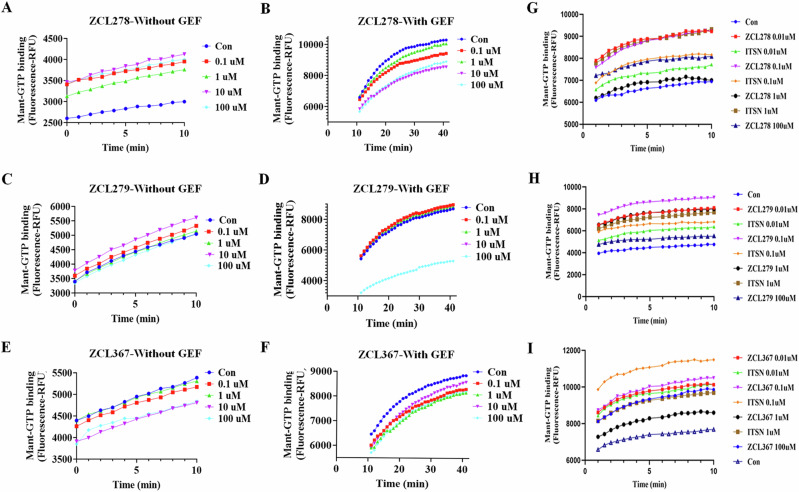
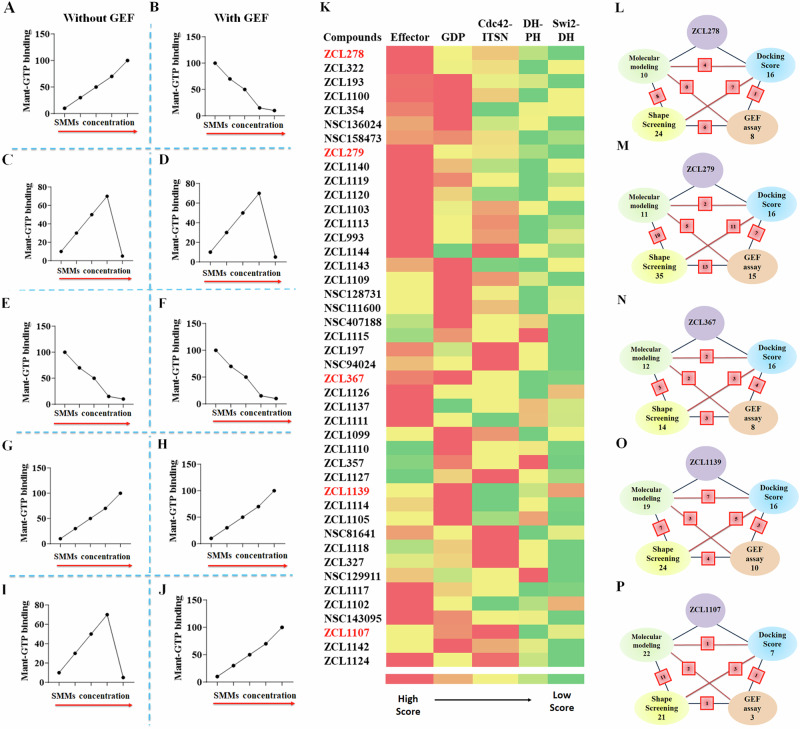
- Screening over 2,500 GEF assays classified Cdc42 HMs into five classes: Class I competitive partial agonists (ZCL278-like), Class II hormetic agonists (ZCL279-like), Class III bona fide inhibitors (ZCL367-like), Class IV bona fide activators (ZCL1139-like), and Class V ligand-enhanced agonists (ZCL1107-like).
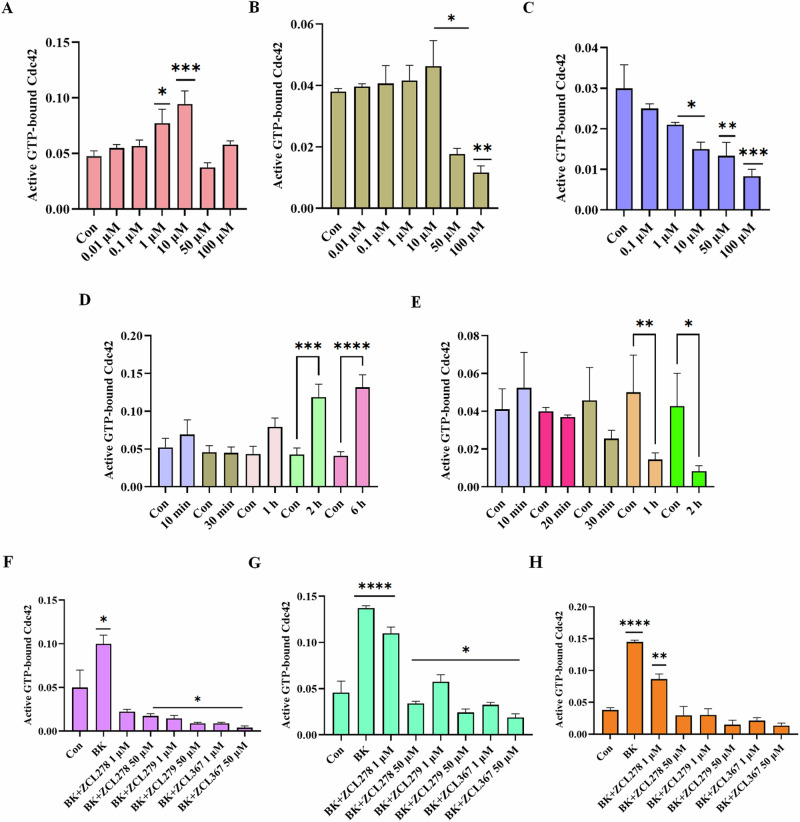
- Model compounds showed distinct in vitro profiles: ZCL278 promoted Cdc42 GTP loading without GEF but inhibited with GEF; ZCL279 promoted at low concentrations and inhibited at higher concentrations (reversal between 10 and 100 µM; 50 µM significantly inhibited); ZCL367 inhibited GTP loading with and without GEF. In Swiss 3T3 cells, ZCL278 promoted Cdc42 activation, ZCL279 was biphasic, and ZCL367 suppressed activation.
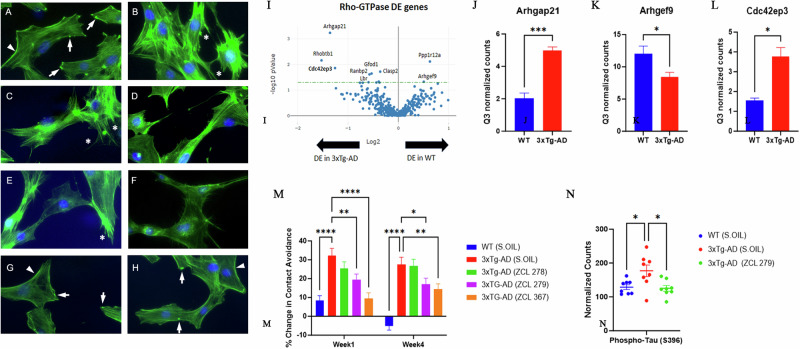
- In 3xTg-AD mice, all three model compounds attenuated contact avoidance behavior; ZCL279 reduced phospho-tau (S396). Transcriptomic analysis showed downregulation of Arhgef9, upregulation of Arhgap21, and upregulation of cdc42ep3 in 3xTg-AD brain.
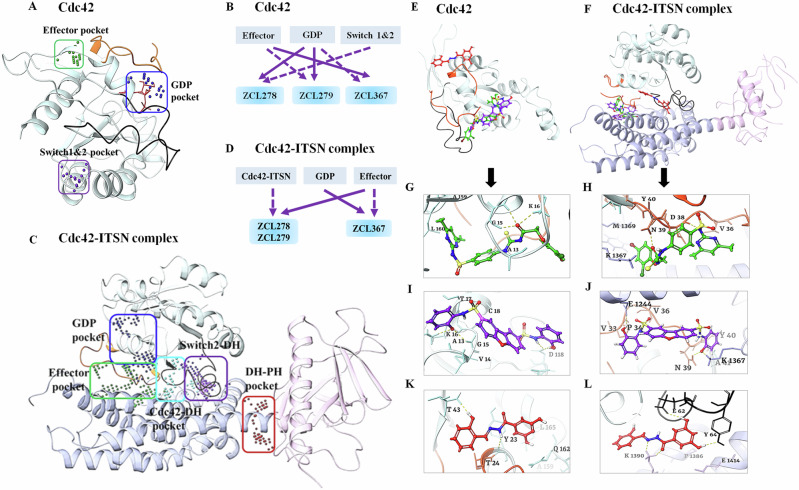
- CADD PBPO analysis identified five binding pockets at the Cdc42-ITSN interface; 16 compounds preferred GDP pockets and 17 preferred Effector pockets. Prediction rates were Shape screening 54.2%, molecular docking 34.2%, and molecular modeling 30.8%; normalized average prediction rates were 21.4% for docking vs. 20.6% for Shape. ZCL993 was identified by all methods as a Class II compound.
Methods
- In vitro: Mant-GTP Cdc42-GEF assay with purified Cdc42 ± ITSN and compounds at 0.01–100 µM; GTPase-Glo assay; G-LISA for active Cdc42 in serum-starved Swiss 3T3 cells ± bradykinin; fluorescein phalloidin staining for actin remodeling.
- In silico: Schrödinger Maestro 2022.03; SiteMap for binding pockets; Glide docking (G-XP and HTVS); Desmond MD simulations (500 ns); E-pharmacophore and Phase Shape screening; Canvas hierarchical clustering on 44 top-ranked HMs.
- In vivo: 3xTg-AD and WT mice; intraperitoneal 20 µg/g ZCL278, ZCL279, or ZCL367 every other day; social interaction scored 1–5; GeoMx spatial transcriptomics (19,963 genes, 52 ROIs, 10,560 above LOQ2) and 87-antibody protein analysis; n = 15 mice/group for behavior, n = 2 mice/group for molecular analyses.
Limitations
- Stated: the CADD comparison may benefit from more data points for better match-up, and future AI/ML-based prediction of unknown HM classes requires more cumulative data.
- Evident: in vivo molecular analyses used n = 2 mice per group (transcriptomics and phospho-tau), limiting statistical power; behavioral analysis used n = 15 mice/group.
- Evident: the study profiles top-ranked SMMs/44 compounds rather than exhaustive chemical space, and normalized prediction rates for CADD methods were modest (21.4% docking, 20.6% Shape).
Model-written summary. Check it against the paper before relying on it.
Integrity signals
Registry
Cites
Statistics
Figures
Verification
Claims the paper makes
0 Valid · 0 Not valid · 19 Not checked · 68 Own results and interpretations
A result the paper reports from its own data — it cites no other source for it, so there is none to check. The quote shows it is in the paper.
In the paper
“Under the same experimental condition, ZCL367 suppressed Cdc42 activation in a straight concentration-dependent manner (Fig. 3C).”
§ Enabling systemic identification and functionality profiling for Cdc42 homeostatic modulators > Results > Homeostatic modulating effects on Cdc42 activation in cultured cells
plainstates a cause- Asserted: passes — The authors put it forward as true.
- Checkable: passes — It can be checked against evidence.
- Load-bearing: passes — The paper’s conclusions depend on it.
- Based: passes — The paper gives a reason why it holds.
A result the paper reports from its own data — it cites no other source for it, so there is none to check. The quote shows it is in the paper.
In the paper
“The average prediction rate with each screening method for all five GEF-validated HM classes are as follow: Shape screening (54.2%) > Molecular docking (34.2%) > Molecular modeling (30.8%).”
§ Enabling systemic identification and functionality profiling for Cdc42 homeostatic modulators > Results > Independent profiling of HMs by CADD
plain- Asserted: passes — The authors put it forward as true.
- Checkable: passes — It can be checked against evidence.
- Load-bearing: unclear — It is unclear whether the paper’s conclusions depend on it.
- Based: passes — The paper gives a reason why it holds.
A result the paper reports from its own data — it cites no other source for it, so there is none to check. The quote shows it is in the paper.
In the paper
“The model HMs elicited striking biological functionalities in modulating bradykinin activation of Cdc42 signaling as well as actin remodeling while they ameliorated Alzheimer’s disease-like social behavior in mouse model.”
§ Enabling systemic identification and functionality profiling for Cdc42 homeostatic modulators > Abstract
plainstates a cause- Asserted: passes — The authors put it forward as true.
- Checkable: passes — It can be checked against evidence.
- Load-bearing: passes — The paper’s conclusions depend on it.
- Based: passes — The paper gives a reason why it holds.
A result the paper reports from its own data — it cites no other source for it, so there is none to check. The quote shows it is in the paper.
In the paper
“Compound ZCL993 was identified by all in silico and Cdc42GEF-based screening methods as a ZCL279-like Class II compound.”
§ Enabling systemic identification and functionality profiling for Cdc42 homeostatic modulators > Results > Profiling of HMs by biochemical activity with Cdc42-GEF approach
plain- Asserted: passes — The authors put it forward as true.
- Checkable: passes — It can be checked against evidence.
- Load-bearing: unclear — It is unclear whether the paper’s conclusions depend on it.
- Based: passes — The paper gives a reason why it holds.
A result the paper reports from its own data — it cites no other source for it, so there is none to check. The quote shows it is in the paper.
In the paper
“AD associated protein phospho-tau (S396) levels were reduced in 3xTg-AD mice upon treatment with ZCL279 (Fig. 4N).”
§ Enabling systemic identification and functionality profiling for Cdc42 homeostatic modulators > Results > HMs modified the social interaction behavior in AD mice in vivo
plainstates a cause- Asserted: passes — The authors put it forward as true.
- Checkable: passes — It can be checked against evidence.
- Load-bearing: passes — The paper’s conclusions depend on it.
- Based: passes — The paper gives a reason why it holds.
52 more claims
Create a free account to see all 87 claims and to verify the 29 references still open.
- Probably not a substantial claim. 11
- It may state two separate claims as one. 22
Self-check
Percentages, sums and reported differences re-computed from the paper’s own numbers.
Each contradiction between two passages listed here was confirmed by an independent check.
Rated major: it would touch a result — a value a result rests on, reported and recomputed p-values on opposite sides of the significance level, two passages that conflict with no sign which is right, or a cited work retracted before this paper was published.
In the paper
§ Enabling systemic identification and functionality profiling for Cdc42 homeostatic modulators > Results > Homeostatic modulating effects on Cdc42 activation in cultured cells
“Serum-starved Swiss 3T3 cells were incubated with 1 and 50 µM of ZCL278, ZCL279 and ZCL367 and then stimulated with Cdc42 activator bradykinin for 20 min.”
§ Enabling systemic identification and functionality profiling for Cdc42 homeostatic modulators > Methods > Protein/cell-based assays
“bradykinin (BK) (25 µg/ml) was used to activate Cdc42 in Swiss 3T3 cells, followed by treatment with 1 or 50 μM of either ZCL278, ZCL279 or ZCL367 for 15 min, 1 hour or 6 hours.”
Rated minor: it would not touch a result — a value no result rests on, a p-value that stays on the same side of the significance level, or a conflict that is clerical, resolved elsewhere in the paper, or outside its own findings.
In the paper
§ Enabling systemic identification and functionality profiling for Cdc42 homeostatic modulators > Results > Independent profiling of HMs by CADD
“The identified pharmacophoric hypotheses features for ZCL278, ZCL279, ZCL367, ZCL1139 and ZCL1107 were RNRAR, RNDRRR, DDRDDR, RAARD and RAA”
§ Enabling systemic identification and functionality profiling for Cdc42 homeostatic modulators > Results > Independent profiling of HMs by CADD
“containing five, six, four and three features, respectively”
Rated minor: it would not touch a result — a value no result rests on, a p-value that stays on the same side of the significance level, or a conflict that is clerical, resolved elsewhere in the paper, or outside its own findings.
In the paper
§ Enabling systemic identification and functionality profiling for Cdc42 homeostatic modulators > Results > Identification of novel HMs on Cdc42-ITSN signaling
“The amount of GTP loading on Cdc42 for ITSN as a full agonist were comparable to those for HMs in different concentrations (0.01–1 µM) of G ZCL278, H ZCL279 and I ZCL367 respectively.”
§ Enabling systemic identification and functionality profiling for Cdc42 homeostatic modulators > Methods > Protein/cell-based assays
“Different solutions of ZCL compounds and ITSN with final concentrations of (0.1, 1 and 10 μM) were prepared.”
Citations
Cites
Highly accurate protein structure prediction with AlphaFold
Jumper, J., Evans, R., Pritzel, A., Green, T., Figurnov, M., Ronneberger, O., Tunyasuvunakool, K., Bates, R., Žídek, A., Potapenko, A., et al. (2021) · Nature · doi:10.1038/s41586-021-03819-2 · Cited by 43,764
Natural Products as Sources of New Drugs over the Nearly Four Decades from 01/1981 to 09/2019
Newman, D. J., & Cragg, G. M. (2020) · Journal of Natural Products · doi:10.1021/acs.jnatprod.9b01285 · Cited by 7,015
Friesner, R. A., Murphy, R. B., Repasky, M. P., Frye, L. L., Greenwood, J. R., Halgren, T. A., Sanschagrin, P. C., & Mainz, D. T. (2006) · Journal of Medicinal Chemistry · doi:10.1021/jm051256o · Cited by 6,851
Madhavi Sastry, G., Adzhigirey, M., Day, T., Annabhimoju, R., & Sherman, W. (2013) · Journal of Computer-Aided Molecular Design · doi:10.1007/s10822-013-9644-8 · Cited by 6,006
GEFs and GAPs: Critical Elements in the Control of Small G Proteins
Bos, J. L., Rehmann, H., & Wittinghofer, A. (2007) · Cell · doi:10.1016/j.cell.2007.05.018 · Cited by 1,903
Sotorasib for Lung Cancers with KRAS p.G12C Mutation
Skoulidis, F., Li, B. T., Dy, G. K., Price, T. J., Falchook, G. S., Wolf, J., Italiano, A., Schuler, M., Borghaei, H., Barlesi, F., et al. (2021) · New England Journal of Medicine · doi:10.1056/nejmoa2103695 · Cited by 1,849
Identifying and Characterizing Binding Sites and Assessing Druggability
Halgren, T. A. (2009) · Journal of Chemical Information and Modeling · doi:10.1021/ci800324m · Cited by 1,759
Dixon, S. L., Smondyrev, A. M., Knoll, E. H., Rao, S. N., Shaw, D. E., & Friesner, R. A. (2006) · Journal of Computer-Aided Molecular Design · doi:10.1007/s10822-006-9087-6 · Cited by 1,198
Concepts of Artificial Intelligence for Computer-Assisted Drug Discovery
Yang, X., Wang, Y., Byrne, R., Schneider, G., & Yang, S. (2019) · Chemical Reviews · doi:10.1021/acs.chemrev.8b00728 · Cited by 1,022
Kozma, R., Ahmed, S., Best, A., & Lim, L. (1995) · Molecular and Cellular Biology · doi:10.1128/mcb.15.4.1942 · Cited by 1,021
Bar-Sagi, D., & Hall, A. (2000) · Cell · doi:10.1016/s0092-8674(00)00115-x · Cited by 779
PHASE: A Novel Approach to Pharmacophore Modeling and 3D Database Searching
Dixon, S. L., Smondyrev, A. M., & Rao, S. N. (2006) · Chemical Biology & Drug Design · doi:10.1111/j.1747-0285.2006.00384.x · Cited by 675
The ‘invisible hand’: Regulation of RHO GTPases by RHOGDIs
Garcia-Mata, R., Boulter, E., & Burridge, K. (2011) · Nature Reviews Molecular Cell Biology · doi:10.1038/nrm3153 · Cited by 560
Duan, J., Dixon, S. L., Lowrie, J. F., & Sherman, W. (2010) · Journal of Molecular Graphics and Modelling · doi:10.1016/j.jmgm.2010.05.008 · Cited by 439
Calabrese, E. J. (2013) · Critical Reviews in Toxicology · doi:10.3109/10408444.2013.808172 · Cited by 380
GABAA receptor: Positive and negative allosteric modulators
Olsen, R. W. (2018) · Neuropharmacology · doi:10.1016/j.neuropharm.2018.01.036 · Cited by 354
Sastry, M., Lowrie, J. F., Dixon, S. L., & Sherman, W. (2010) · Journal of Chemical Information and Modeling · doi:10.1021/ci100062n · Cited by 332
Novel Method for Generating Structure-Based Pharmacophores Using Energetic Analysis
Salam, N. K., Nuti, R., & Sherman, W. (2009) · Journal of Chemical Information and Modeling · doi:10.1021/ci900212v · Cited by 323
Sastry, G. M., Dixon, S. L., & Sherman, W. (2011) · Journal of Chemical Information and Modeling · doi:10.1021/ci2002704 · Cited by 244
Sterniczuk, R., Antle, M. C., LaFerla, F. M., & Dyck, R. H. (2010) · Brain Research · doi:10.1016/j.brainres.2010.06.011 · Cited by 228 · cited 2×
“We recently discovered that small GTPase signaling such as RhoA was spatially dysregulatedin the brain of triple transgenic mouse model (3xTg-AD) bearing AD-like mutations in presenilin-1 (PS1M146V), amyloid precursor protein (APPsw), and microtubule-associated protein tau (TauP301L) 22,23 .”
Buspirone: What is it all about?
Loane, C., & Politis, M. (2012) · Brain Research · doi:10.1016/j.brainres.2012.04.032 · Cited by 222
Making Sense of Pharmacology: Inverse Agonism and Functional Selectivity
Berg, K. A., & Clarke, W. P. (2018) · International Journal of Neuropsychopharmacology · doi:10.1093/ijnp/pyy071 · Cited by 178
Structure-based discovery of nonopioid analgesics acting through the α 2A -adrenergic receptor
Fink, E. A., Xu, J., Hübner, H., Bráz, J. M., Seemann, P., Avet, C., Craik, V., Weikert, D., Schmidt, M. F., Webb, C. M., et al. (2022) · Science · doi:10.1126/science.abn7065 · Cited by 176
Friesland, A., Zhao, Y., Chen, Y.-H., Wang, L., Zhou, H., & Lu, Q. (2013) · Proceedings of the National Academy of Sciences · doi:10.1073/pnas.1116051110 · Cited by 174
Self-citationLoving, K., Salam, N. K., & Sherman, W. (2009) · Journal of Computer-Aided Molecular Design · doi:10.1007/s10822-009-9268-1 · Cited by 163
Targeting the Small GTPase Superfamily through Their Regulatory Proteins
Gray, J. L., von Delft, F., & Brennan, P. E. (2020) · Angewandte Chemie International Edition · doi:10.1002/anie.201900585 · Cited by 142
Cerione, R. (2004) · Trends in Cell Biology · doi:10.1016/j.tcb.2004.01.008 · Cited by 134
Partial agonists and G protein-coupled receptor desensitization
Clark, R. B., Knoll, B. J., & Barber, R. (1999) · Trends in Pharmacological Sciences · doi:10.1016/s0165-6147(99)01351-6 · Cited by 133
Rho GTPases as therapeutic targets in Alzheimer’s disease
Aguilar, B. J., Zhu, Y., & Lu, Q. (2017) · Alzheimer's Research & Therapy · doi:10.1186/s13195-017-0320-4 · Cited by 124
Self-citationTargeting Rac and Cdc42 GEFs in Metastatic Cancer
Maldonado, M. D. M., Medina, J. I., Velazquez, L., & Dharmawardhane, S. (2020) · Frontiers in Cell and Developmental Biology · doi:10.3389/fcell.2020.00201 · Cited by 122
Activity-Induced Rapid Synaptic Maturation Mediated by Presynaptic Cdc42 Signaling
Shen, W., Wu, B., Zhang, Z., Dou, Y., Rao, Z.-R., Chen, Y.-R., & Duan, S. (2006) · Neuron · doi:10.1016/j.neuron.2006.03.017 · Cited by 120
Self-citationRaf-MEK-Erk Cascade in Anoikis Is Controlled by Rac1 and Cdc42 via Akt
Zugasti, O., Rul, W., Roux, P., Peyssonnaux, C., Eychene, A., Franke, T. F., Fort, P., & Hibner, U. (2001) · Molecular and Cellular Biology · doi:10.1128/mcb.21.19.6706-6717.2001 · Cited by 115
Ide, M., & Lewis, D. A. (2010) · Biological Psychiatry · doi:10.1016/j.biopsych.2010.02.016 · Cited by 101
Datta, D., Arion, D., Corradi, J. P., & Lewis, D. A. (2015) · Biological Psychiatry · doi:10.1016/j.biopsych.2015.03.030 · Cited by 91
Control of protein signaling using a computationally designed GTPase/GEF orthogonal pair
Kapp, G. T., Liu, S., Stein, A., Wong, D. T., Reményi, A., Yeh, B. J., Fraser, J. S., Taunton, J., Lim, W. A., & Kortemme, T. (2012) · Proceedings of the National Academy of Sciences · doi:10.1073/pnas.1114487109 · Cited by 88
Mondal, S., Hsiao, K., & Goueli, S. A. (2015) · Assay and Drug Development Technologies · doi:10.1089/adt.2015.643 · Cited by 74
Novel Human Lipoxygenase Inhibitors Discovered Using Virtual Screening with Homology Models
Kenyon, V., Chorny, I., Carvajal, W. J., Holman, T. R., & Jacobson, M. P. (2006) · Journal of Medicinal Chemistry · doi:10.1021/jm050639j · Cited by 71
Liu, W., Du, W., Shang, X., Wang, L., Evelyn, C., Florian, M. C., A. Ryan, M., Rayes, A., Zhao, X., Setchell, K., et al. (2019) · Leukemia · doi:10.1038/s41375-018-0251-5 · Cited by 65
Guasch, L., Sala, E., Castell‐Auví, A., Cedó, L., Liedl, K. R., Wolber, G., Muehlbacher, M., Mulero, M., Pinent, M., Ardèvol, A., et al. (2012) · PLoS ONE · doi:10.1371/journal.pone.0050816 · Cited by 59
MET Signaling Pathways, Resistance Mechanisms, and Opportunities for Target Therapies
Rivas, S., Marín, A., Samtani, S., González, E., & Armisén, R. (2022) · International Journal of Molecular Sciences · doi:10.3390/ijms232213898 · Cited by 58
Progress in the therapeutic inhibition of Cdc42 signalling
Murphy, N. P., Mott, H. R., & Owen, D. (2021) · Biochemical Society Transactions · doi:10.1042/bst20210112 · Cited by 56
Pereira, A. S. P., den-Haan, H., Peña-García, J. J., Moreno, M. M., Pérez‐Sánchez, H., & Apostolides, Z. (2019) · Molecules · doi:10.3390/molecules24102002 · Cited by 48
Mechanistic explanation for the unique pharmacologic properties of receptor partial agonists
Zhu, B. T. (2005) · Biomedicine & Pharmacotherapy · doi:10.1016/j.biopha.2005.01.010 · Cited by 44
Aguilar, B. J., Zhao, Y., Zhou, H., Huo, S., Chen, Y.-H., & Lu, Q. (2019) · Cancer Biology & Therapy · doi:10.1080/15384047.2018.1564559 · Cited by 37
Self-citationCdc42GAP deficiency contributes to the Alzheimer’s disease phenotype
Zhu, M., Xiao, B., Xue, T., Qin, S., Ding, J., Wu, Y., Tang, Q., Huang, M., Zhao, N., Ye, Y., et al. (2023) · Brain · doi:10.1093/brain/awad184 · Cited by 35
Translational gene mapping of cognitive decline
Wilmot, B., McWeeney, S. K., Nixon, R. R., Montine, T. J., Laut, J., Harrington, C. A., Kaye, J. A., & Kramer, P. L. (2008) · Neurobiology of Aging · doi:10.1016/j.neurobiolaging.2006.11.008 · Cited by 31
A machine learning model for classifying G-protein-coupled receptors as agonists or antagonists
Oh, J., Ceong, H.-T., Na, D., & Park, C. (2022) · BMC Bioinformatics · doi:10.1186/s12859-022-04877-7 · Cited by 28
Cdc42 inhibitor ML141 enhances G-CSF-induced hematopoietic stem and progenitor cell mobilization
Chen, C., Song, X., Ma, S., Wang, X., Xu, J., Zhang, H., Wu, Q., Zhao, K., Cao, J., Qiao, J., et al. (2014) · International Journal of Hematology · doi:10.1007/s12185-014-1690-z · Cited by 20
Activation of Rho Family GTPases by Small Molecules
Palsuledesai, C. C., Surviladze, Z., Waller, A., Miscioscia, T. F., Guo, Y., Wu, Y., Strouse, J., Romero, E., Salas, V. M., Curpan, R. F., et al. (2018) · ACS Chemical Biology · doi:10.1021/acschembio.8b00038 · Cited by 18
Latif‐Hernandez, A., Yang, T., Butler, R. R., Losada, P. M., Minhas, P. S., White, H., Tran, K. C., Liu, H., Simmons, D. A., Langness, V. F., et al. (2024) · Alzheimer s & Dementia · doi:10.1002/alz.13857 · Cited by 14
Crosstalk between the Rho and Rab family of small GTPases in neurodegenerative disorders
Nik Akhtar, S., Bunner, W. P., Brennan, E., Lu, Q., & Szatmari, E. M. (2023) · Frontiers in Cellular Neuroscience · doi:10.3389/fncel.2023.1084769 · Cited by 14
Self-citationBareiss, S. K., Johnston, T., Lu, Q., & Tran, T. D. (2022) · Neuroscience Research · doi:10.1016/j.neures.2022.01.003 · Cited by 11
Self-citationSmall GTPases are involved in sprout formation in human granulosa lutein cells
Franz, M. B., Daube, S., Keck, C., Sator, M., & Pietrowski, D. (2013) · Archives of Gynecology and Obstetrics · doi:10.1007/s00404-012-2642-6 · Cited by 8
Nik Akhtar, S., & Lu, Q. (2023) · Journal of Alzheimer's Disease · doi:10.3233/jad-230408 · Cited by 5
Self-citationLatif-Hernandez, A., Yang, T., Raymond-Butler, R., Losada, P. M., Minhas, P., White, H., Tran, K. C., Liu, H., Simmons, D. A., Langness, V., et al. (2023) · doi:10.1101/2023.09.18.558138 · Cited by 1
(2016) · Science · doi:10.1126/science.351.6278.1223-a · Cited by 1
Cited by
The role of small GTPases in Alzheimer’s disease tau pathologies
Hoegy, P., Chen, Y., & Lu, Q. (2025) · Frontiers in Cellular Neuroscience · doi:10.3389/fncel.2025.1650400 · Cited by 3
Self-citationRho GTPase and Rho Kinase Signaling in Tissue Contractility and Intraocular Pressure Regulation
Raghavan, S., & Pattabiraman, P. P. (2026) · Frontiers in Bioscience-Landmark · doi:10.31083/fbl44589 · Cited by 2
Recent advances in CDC42 subfamily inhibition and therapeutic potential
Serra, M. A. L., Yadav, A., Ganesan, A. K., & Vivo, M. D. (2026) · Trends in Pharmacological Sciences · doi:10.1016/j.tips.2026.04.004 · Cited by 1
Cdc42 Inhibition in G93A-hSOD1 Amyotrophic Lateral Sclerosis: In Vitro and In Vivo Studies
Myhre, V. D. (2026) · Digital Commons - DU (University of Denver) · doi:10.56902/etdcrp.2026.109
Metadata
- Authors
- Malasala, S., Azimian, F., Chen, Y.-H., Twiss, J. L., Boykin, C., Akhtar, S. N., & Lu, Q.
- Affiliations
- University of South Carolina (US)
- University of North Carolina at Chapel Hill (US)
- Corresponding author
- Lu, Qun
- Venue
- Communications Chemistry
- Published
- 2024-11-19
- Volume
- 7
- Issue
- 1
- Pages
- 271-271
- ISSN
- 2399-3669 (ISSN-L)
- PMC
- PMC11577034
- OpenAlex
- W4404512960
- Semantic Scholar
- 039b8dee8819e00ec0e355e0bad0e777e7335584
- Cited by
- 4
- References
- 56
- Citations by year
- 2026: 3 · 2025: 1
- FWCI
- 0.37
- Type
- journal article
- Language
- en
- Open access
- gold
- doi.org
- Licence
- cc-by-nc-nd
- creativecommons.org/licenses/by-nc-nd/4.0 (tdm)
- creativecommons.org/licenses/by-nc-nd/4.0 (vor)
- Locations
- Communications Chemistry (publishedVersion, cc-by-nc-nd)
- bioRxiv (Cold Spring Harbor Laboratory) (submittedVersion)
- PubMed Central (publishedVersion, cc-by-nc-nd)
- PubMed (publishedVersion)
- PubMed Central (submittedVersion)
- PubMed (submittedVersion)
- Carolina Digital Repository (University of North Carolina at Chapel Hill) (submittedVersion, cc-by-nc-nd)
- DOAJ (DOAJ: Directory of Open Access Journals) (submittedVersion)
- UNC Libraries
- Funders
- U.S. Department of Health & Human Services | NIH | NIH Office of the Director (R01GM146257)
- Topics
- Life Sciences › Biochemistry, Genetics and Molecular Biology › Molecular Biology › Protein Kinase Regulation and GTPase Signaling
- Life Sciences › Biochemistry, Genetics and Molecular Biology › Molecular Biology › Receptor Mechanisms and Signaling
- Life Sciences › Biochemistry, Genetics and Molecular Biology › Molecular Biology › Sphingolipid Metabolism and Signaling
- Keywords
- Cdc42, small GTPases, partial agonists, GTPase inhibitors, bradykinin signaling, actin cytoskeleton remodeling, intersectin, Ras superfamily, drug discovery
About these checks
Registry, retraction, Cites and statistics results are computed, not judged, with one exception: a printed reference that no index lists is read once by a model before it counts as a citation error. Claims are extracted by a model and kept only when their quote appears verbatim in the text; each cited source is then checked, with a model’s help, for whether it says what the claim relies on. Those verdicts can be wrong — read the claim’s quote and the cited source before relying on one.
A language model drew the claims from the paper on 2026-11-27, under version 3 of the claim definition (model deepseek-v4.1-flash, prompt extract-v3).
A second model labelled each claim on 2026-11-27 (model jev-1.13-20260917, definition revision gold-guideline-v0.2).
Statistics and arithmetic are recomputed, not judged.
Confidence bands are shown only for fields calibrated on our annotated test set. None is calibrated yet, so no band is shown.
What counts as a claim ›How we measure confidence ›How we check this ›
Are you an author, or do you see a problem with this page? Request a review
Data sources
Bibliographic data: Semantic Scholar, OpenAlex, Crossref.
Contains information from the Semantic Scholar Academic Graph Datasets, made available under the ODC Attribution License (ODC-BY 1.0).
Semantic Scholar’s data is described in: Kinney, R., et al. (2023). The Semantic Scholar Open Data Platform. arXiv:2301.10140.
