

Liraglutide restores impaired associative learning in individuals with obesity
Open accessThe DOI matches its Crossref record; 99 of the 99 references it cites were found in a registry or an index.
Abstract
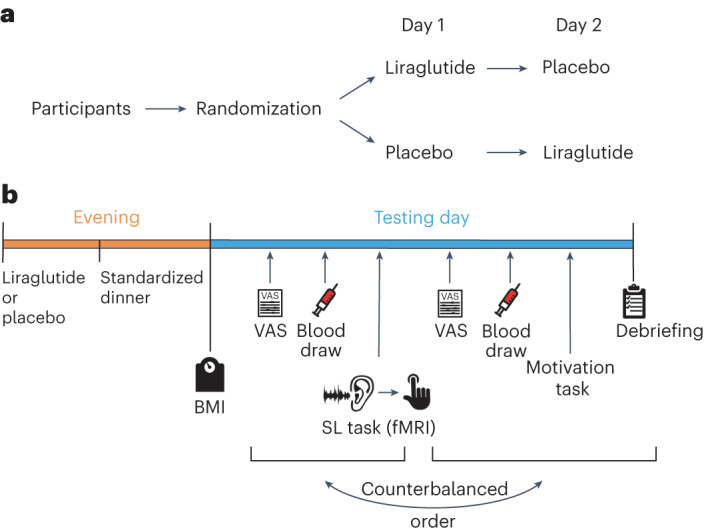
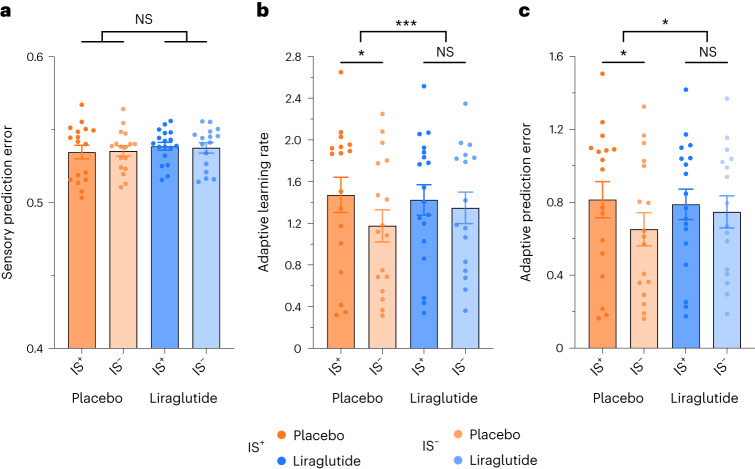
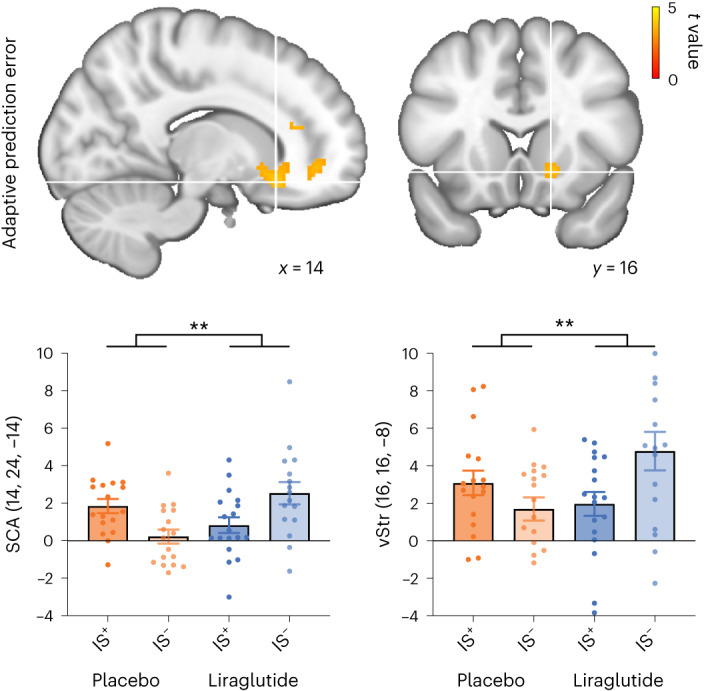
Survival under selective pressure is driven by the ability of our brain to use sensory information to our advantage to control physiological needs. To that end, neural circuits receive and integrate external environmental cues and internal metabolic signals to form learned sensory associations, consequently motivating and adapting our behaviour. The dopaminergic midbrain plays a crucial role in learning adaptive behaviour and is particularly sensitive to peripheral metabolic signals, including intestinal peptides, such as glucagon-like peptide 1 (GLP-1). In a single-blinded, randomized, controlled, crossover basic human functional magnetic resonance imaging study relying on a computational model of the adaptive learning process underlying behavioural responses, we show that adaptive learning is reduced when metabolic sensing is impaired in obesity, as indexed by reduced insulin sensitivity (participants: N = 30 with normal insulin sensitivity; N = 24 with impaired insulin sensitivity). Treatment with the GLP-1 receptor agonist liraglutide normalizes impaired learning of sensory associations in men and women with obesity. Collectively, our findings reveal that GLP-1 receptor activation modulates associative learning in people with obesity via its central effects within the mesoaccumbens pathway. These findings provide evidence for how metabolic signals can act as neuromodulators to adapt our behaviour to our body’s internal state and how GLP-1 receptor agonists work in clinics.
Overview
The claims and statistics of this paper haven’t been checked yet.
Free: it reads the open-access text and checks the first 5 claims that cite a source we can check. Create a free account to check every claim.
Integrity signals
Registry
Cites
Statistics
Figures
Verification
Claims the paper makes
The claims and statistics of this paper haven’t been checked yet.
Free: it reads the open-access text and checks the first 5 claims that cite a source we can check. Create a free account to check every claim.
Claims other papers make about this one
Each is checked against this paper’s own text: does it say what the citing paper says it does?
The source backs part of the claim, not all of it — or backs it for a different population, condition or comparison.
In the citing paper
“Liraglutide improved task performance at the behavioral level and enhanced the encoding of adaptive prediction errors, which are crucial neural signals in the learning process.435”
From Glucagon-like peptide-1 receptor: mechanisms and advances in therapy (2024) · cites this paper as [435]
Experimental — accuracy not yet measuredThe source backs part of the claim, not all of it — or backs it for a different population, condition or comparison.
In the citing paper
“It modulated neural activity in the ventral striatum and midbrain pathways, affecting brain areas related to metabolic signaling.435,436”
From Glucagon-like peptide-1 receptor: mechanisms and advances in therapy (2024) · cites this paper as [435]
Experimental — accuracy not yet measuredThe cited source says what the claim attributes to it.
In the citing paper
“Liraglutide significantly enhanced associative learning abilities in obese individuals with impaired insulin sensitivity.”
From Glucagon-like peptide-1 receptor: mechanisms and advances in therapy (2024) · cites this paper as [435]
Self-check
Percentages, sums and reported differences re-computed from the paper’s own numbers.
The self-check needs the paper’s full text.
Citations
Cites
Advances in functional and structural MR image analysis and implementation as FSL
Smith, S. M., Jenkinson, M., Woolrich, M. W., Beckmann, C. F., Behrens, T. E. J., Johansen-Berg, H., Bannister, P. R., De Luca, M., Drobnjak, I., Flitney, D. E., et al. (2004) · NeuroImage · doi:10.1016/j.neuroimage.2004.07.051 · Cited by 13,630 · cited 9×
“4Faculty of Medicine and University Hospital Cologne, Department I of Internal Medicine, Center for Integrated Oncology Aachen Bonn Cologne Duesseldorf (CIO ABCD) and Excellence Center for Medical Mycology (ECMM), University of Cologne, Cologne, Germany.”
MethodInfluentialJenkinson, M., Bannister, P., Brady, M., & Smith, S. (2002) · NeuroImage · doi:10.1006/nimg.2002.1132 · Cited by 11,888
Fast robust automated brain extraction
Smith, S. M. (2002) · Human Brain Mapping · doi:10.1002/hbm.10062 · Cited by 10,496
Mechanisms linking obesity to insulin resistance and type 2 diabetes
Kahn, S. E., Hull, R. L., & Utzschneider, K. M. (2006) · Nature · doi:10.1038/nature05482 · Cited by 5,448 · cited 9×
“4Faculty of Medicine and University Hospital Cologne, Department I of Internal Medicine, Center for Integrated Oncology Aachen Bonn Cologne Duesseldorf (CIO ABCD) and Excellence Center for Medical Mycology (ECMM), University of Cologne, Cologne, Germany.”
MethodInfluentialMovement‐Related effects in fMRI time‐series
Friston, K. J., Williams, S., Howard, R., Frackowiak, R. S. J., & Turner, R. (1996) · Magnetic Resonance in Medicine · doi:10.1002/mrm.1910350312 · Cited by 3,774 · cited 9×
“4Faculty of Medicine and University Hospital Cologne, Department I of Internal Medicine, Center for Integrated Oncology Aachen Bonn Cologne Duesseldorf (CIO ABCD) and Excellence Center for Medical Mycology (ECMM), University of Cologne, Cologne, Germany.”
MethodInfluentialAndersson, J. L. R., Skare, S., & Ashburner, J. (2003) · NeuroImage · doi:10.1016/s1053-8119(03)00336-7 · Cited by 3,469
Dopamine in motivational control: rewarding, aversive, and alerting
Bromberg-Martin, E. S., Matsumoto, M., & Hikosaka, O. (2010) · Neuron · doi:10.1016/j.neuron.2010.11.022 · Cited by 2,396
Salimi-Khorshidi, G., Douaud, G., Beckmann, C. F., Glasser, M. F., Griffanti, L., & Smith, S. M. (2014) · NeuroImage · doi:10.1016/j.neuroimage.2013.11.046 · Cited by 1,770
Neural Mechanisms for Interacting with a World Full of Action Choices
Cisek, P., & Kalaska, J. F. (2010) · Annual Review of Neuroscience · doi:10.1146/annurev.neuro.051508.135409 · Cited by 1,543
Resting-state fMRI in the human connectome project
Smith, S. M., Beckmann, C. F., Andersson, J., Auerbach, E. J., Bijsterbosch, J., Douaud, G., Duff, E., Feinberg, D. A., Griffanti, L., Harms, M. P., et al. (2013) · NeuroImage · doi:10.1016/j.neuroimage.2013.05.039 · Cited by 1,502 · cited 9×
“4Faculty of Medicine and University Hospital Cologne, Department I of Internal Medicine, Center for Integrated Oncology Aachen Bonn Cologne Duesseldorf (CIO ABCD) and Excellence Center for Medical Mycology (ECMM), University of Cologne, Cologne, Germany.”
MethodInfluential
Cited by
Glucagon-like peptide-1 receptor: mechanisms and advances in therapy
Zheng, Z., Zong, Y., Ma, Y., Tian, Y., Pang, Y., Zhang, C., & Gao, J. (2024) · Signal Transduction and Targeted Therapy · doi:10.1038/s41392-024-01931-z · Cited by 1,036
“435,436 Liraglutide improved task performance at the behavioral level and enhanced the encoding of adaptive prediction errors, which are crucial neural signals in the learning process.”
BackgroundPsychotropic Drug–Related Weight Gain and Its Treatment
McIntyre, R. S., Kwan, A. T. H., Rosenblat, J. D., Teopiz, K. M., & Mansur, R. B. (2024) · American Journal of Psychiatry · doi:10.1176/appi.ajp.20230922 · Cited by 113
Glucagon-like peptide 1 agonist and effects on reward behaviour: A systematic review
Badulescu, S., Tabassum, A., Le, G. H., Wong, S., Phan, L., Gill, H., Llach, C.-D., McIntyre, R. S., Rosenblat, J., & Mansur, R. (2024) · Physiology & Behavior · doi:10.1016/j.physbeh.2024.114622 · Cited by 90
“An alternate explanation is that GLP-1RA can normalize the prediction error deficits in the nucleus accumbens and the subcallosal area caused by insulin resistance, thereby minimizing the existing inflated valuation magnitude of the reward stimuli [47].”
BackgroundBremmer, M. P., & Hendershot, C. S. (2023) · Journal of Studies on Alcohol and Drugs · doi:10.15288/jsad.23-00318 · Cited by 31
Pharmacological Treatment of Obesity in Older Adults
Žižka, O., Haluzík, M., & Jude, E. B. (2024) · Drugs & Aging · doi:10.1007/s40266-024-01150-9 · Cited by 23
“Recently, beneficial effect of liraglutide on impaired associative learning in individuals with obesity was also reported by Hanssen et al. [55].”
BackgroundAn interoceptive model of energy allostasis linking metabolic and mental health
Mehrhof, S. Z., Fleming, H. A., & Nord, C. L. (2025) · Science Advances · doi:10.1126/sciadv.ady4356 · Cited by 25
“Notable exceptions include studies by Hanssen and colleagues, who found that the GLP-1 agonist liraglutide increased learning rates on an associative learning task ( 75 ) and restored the motivating effect of hunger in participants with insulin resistance ( 76 ).”
Tongta, S., Sungkaworn, T., & Pathomthongtaweechai, N. (2025) · International Journal of Molecular Sciences · doi:10.3390/ijms262210974 · Cited by 21
“Beyond reducing hedonic food value, liraglutide enhances cognitive control over food-related behaviors, potentially through hippocampal-dependent mechanisms involved in behavioral inhibition [186–188].”
Poly-Agonist Pharmacotherapies for Metabolic Diseases: Hopes and New Challenges
Allard, C., Cota, D., & Quarta, C. (2023) · Drugs · doi:10.1007/s40265-023-01982-6 · Cited by 17
“Recently, a single-blind, randomised, controlled, crossover human functional magnetic resonance imaging study reported that adaptive learning is reduced when metabolic sensing is impaired in obesity, as indexed by reduced insulin sensitivity in participants [232].”
InfluentialLlach, C.-D., Badulescu, S., Tabassum, A., Shah, H., Gill, H., Le, G. H., Vieta, E., McIntyre, R. S., Rosenblat, J. D., & Mansur, R. B. (2025) · Molecular Psychiatry · doi:10.1038/s41380-025-03261-0 · Cited by 21
“In obese, insulin-resistant individuals, liraglutide restored impaired associative learning by normalizing behavioral updating in response to predictive cues and increasing activation in dopaminergic targets such as the ventral striatum and NAc [177].”
Ribeiro, G., Fernandes, A. B., Oliveira, F. P. M., Duarte, J. S., Oliveira, M., Limbert, C., Costa, R. M., Costa, D. C., & Oliveira-Maia, A. J. (2024) · PLoS Biology · doi:10.1371/journal.pbio.3002936 · Cited by 13
Alhomoud, I. S., Wheeler, S. E., & Dixon, D. L. (2025) · Canadian Journal of Physiology and Pharmacology · doi:10.1139/cjpp-2025-0038 · Cited by 14
Cognitive dysfunction in diabetes – the ‘forgotten’ diabetes complication: a narrative review
Sjöholm, Å., Bennet, L., & Nilsson, P. M. (2025) · Scandinavian Journal of Primary Health Care · doi:10.1080/02813432.2025.2455136 · Cited by 10
“…tests including memory and attention compared to the con-trol group [57], a similar effect by liraglutide seen in non-diabetic obese patients [58]. the protective effects on cognitive dysfunction observed with of pioglitazone [59] warrant further investigation in randomized trials. long-term…”
Semaglutide and Effort-Based Decision-Making in Major Depressive Disorder
Gill, H., Badulescu, S., Shah, H., Brudner, R. M., Phan, L., Vincenzo, J. D. D., Tabassum, A., Thanarajah, S. E., Llach, C.-D., Rosenblat, J. D., et al. (2026) · JAMA Psychiatry · doi:10.1001/jamapsychiatry.2026.0594 · Cited by 9
Wu, Y., Tang, W., Ding, Y., Zhao, Y., Zhou, C., Cheng, Y., Dong, R., Li, Y., Zhao, G., Xu, A., et al. (2025) · Scientific Reports · doi:10.1038/s41598-025-98440-y · Cited by 8
“Subsequently, we conducted a salt aversion learning experiment with C. elegans , as learning is an important ability for animals to adapt to changing environments and is closely related to survival 18,19 .”
Shen, S., Liao, Q., Gu, L., Zhu, Y., Liu, Y., Zhang, X., Zhang, J., Shi, Q., Sun, Y., Wang, J., et al. (2024) · Acta Materia Medica · doi:10.15212/amm-2023-0041 · Cited by 13
“Recently, clinical trials involving therapeutic agents targeting the glucagon-like peptide 1 receptor (GLP1R), such as semaglutide, indicated drug-based management of metabolic diseases, including obesity, may be forthcoming [9–11].”
BackgroundProgress in anti-ageing drug research for age-related diseases: A review
Zhou, Z., Duan, H.-T., Xue, S.-T., & Li, Z. (2025) · Ageing Research Reviews · doi:10.1016/j.arr.2025.102982 · Cited by 15
Yan, J., Hao, P.-L., Zeng, S.-M., Liang, C.-X., Chen, Y., Chen, K.-W., Qu, W., Zeng, X., Zhong, Z., & Zhang, X. (2025) · Journal of Controlled Release · doi:10.1016/j.jconrel.2025.113585 · Cited by 8
Multimodal Neuroimaging of Obesity: From Structural-Functional Mechanisms to Precision Interventions
Liu, W., Li, N., Tang, D., Qin, L., & Zhu, Z. (2025) · Brain Sciences · doi:10.3390/brainsci15050446 · Cited by 11
“Extending these findings, Hanssen et al. (2023) revealed how metabolic signals, including GLP-1, modulate dopaminergic midbrain pathways that underlie learning [62].”
Semaglutide ameliorates neuroinflammation and cognitive impairment in APP/PS1 mice
Yuan, Y., ZHANG, J., Zhang, Z., Zhai, Y., Cheng, X. J., Xue, L., Zhao, F., Cao, L., & Wang, H. (2026) · Molecular and Cellular Biochemistry · doi:10.1007/s11010-026-05568-0 · Cited by 8
“In addition, a randomized controlled trial (RCT) published in 2023 showed that liraglutide could improve impaired associative learning in obesity via a mesoaccum-bens pathway [52].”
Are glucagon-like peptide-1 receptor agonists anti-consummatory drugs?
Mansur, R. B., Vincenzo, J. D. D., Badulescu, S., Gill, H., Tabassum, A., Llach, C.-D., Rosenblat, J. D., & McIntyre, R. S. (2024) · CNS Spectrums · doi:10.1017/s109285292400244x · Cited by 9
Engineered thumbtack needle for augmented acupuncture therapy
Cai, R., Zhao, S., Lu, Z., You, J., Wang, H., Xie, A., Wang, S., Han, Q., Zhang, Y., Yu, J., et al. (2025) · Cell Biomaterials · doi:10.1016/j.celbio.2024.100002 · Cited by 7
Glucagon-like Peptide-1 Receptor Agonists: Exciting Avenues Beyond Weight Loss
Sundararaman, L. V., Gouda, D., Kumar, A., Sundararaman, S., & Goudra, B. (2025) · Journal of Clinical Medicine · doi:10.3390/jcm14061978 · Cited by 7
“Associative learning is shown to improve with liraglutide in patients with obesity [59].”
How are overweight and obesity associated with reinforcement learning deficits? A systematic review
Weydmann, G. J., Miguel, P. M., Hakim, N., Dubé, L., Silveira, P. P., & Bizarro, L. (2023) · Appetite · doi:10.1016/j.appet.2023.107123 · Cited by 8
Noruzi, M., Behmadi, H., Sabzevari, O., Foroumadi, A., Ghahremani, M. H., Pourahmad, J., Hassani, S., Baeeri, M., Gholami, M., Ghahremanian, A., et al. (2024) · European Journal of Pharmacology · doi:10.1016/j.ejphar.2024.176776 · Cited by 8
Glucagon-like peptide-1 receptor agonists: What ophthalmologists need to know
Bala, S., Allan, K. C., Decker, N. L., Abbass, N. J., Joo, J. H., Zhao, A., Talcott, K. E., & Rachitskaya, A. V. (2025) · Survey of Ophthalmology · doi:10.1016/j.survophthal.2025.12.007 · Cited by 7
O’Connor, R. M. (2026) · Frontiers in Behavioral Neuroscience · doi:10.3389/fnbeh.2026.1805953 · Cited by 6
“For example, GLP-1R agonism appears to facilitate new learning, potentially by modifying neural circuits involved in reward and adaptive behavior (Hanssen et al., 2023).”
Fleming, H. A., Stasiak, M. K., Lau, I. H. W., Whines, A., Mehrhof, S. Z., & Nord, C. L. (2025) · Biological Psychiatry Global Open Science · doi:10.1016/j.bpsgos.2025.100645 · Cited by 6
Mitophagy in perioperative neurocognitive disorder: mechanisms and therapeutic strategies
Feng, Z., Hou, Y., Yu, C. S., Li, T., Fu, H., Lv, F., & Li, P. (2025) · European journal of medical research · doi:10.1186/s40001-025-02400-1 · Cited by 3
“Liraglutide improves neural encoding in the ventromedial prefrontal cortex and ventral striatum, correcting adaptation mispredictions in patients with impaired insulin sensitivity and normalizing sensory-related learning deficits in obese patients [98].”
Conditioned overconsumption is dependent on reinforcer type in lean, but not obese, mice
Lewis-Sanders, D., Bullich, S., Olvera, M.-J., Vo, J., Hwang, Y.-S., Mizrachi, E., & Stern, S. A. (2024) · Appetite · doi:10.1016/j.appet.2024.107355 · Cited by 3
“In humans, one study showed that females with obesity are unable to form cue-reward associations with food, but they are able to form them with money (Zhang et al., 2014), and interestingly, a GLPR1 agonist can reverse associative learning deficits in obese individuals (Hanssen et al., 2023).”
Xiang, J., Shi, M., Kang, J., Zhang, X., Ling, J., Zhan, W., Li, D., Hu, R. K., & Xu, H. (2026) · Cell Discovery · doi:10.1038/s41421-025-00857-2 · Cited by 4
Cholecystokinin in the central and peripheral nervous system
Hökfelt, T. G. M., Barde, S. S., Zhong, W., & He, J. (2025) · Elsevier eBooks · doi:10.1016/b978-0-443-23720-1.00026-5 · Cited by 3
Ubbes, V. A. (2025) · Children · doi:10.3390/children12060663 · Cited by 3
The therapeutic potential of galanin in the management of pain – a review article
Hökfelt, T. G. M., & Wiesenfeld‐Hallin, Z. (2024) · Danish Medical Journal · doi:10.61409/a10230653 · Cited by 3
The gut and heart’s role in reward processing
Arinel, M., & Abdelaal, K. (2025) · Frontiers in Integrative Neuroscience · doi:10.3389/fnint.2025.1479923 · Cited by 3
Zhao, W., Niu, X., Zhou, X., Shi, R., & Zhou, X. (2025) · Elsevier eBooks · doi:10.1016/b978-0-443-33885-4.00007-x · Cited by 1
Semaglutide Ameliorates Neuroinflammation Caused by Enterogenous Pyrogen in APP/PS1 MicePreprint
Yuan, Y., Zhang, J., Zhang, Z., Zhai, Y., Cheng, X., Xue, L., Zhao, F. L., Cao, L. H., & Wang, H. (2025) · Research Square · doi:10.21203/rs.3.rs-6098406/v1 · Cited by 1
Metabolic mode estimated by breathing reflects long-term motor memoryPreprint
Hayashi, T., Nakano, N., Washino, S., & Murai, A. (2024) · bioRxiv (Cold Spring Harbor Laboratory) · doi:10.1101/2024.06.27.600911
“Furthermore, insulin resistance in healthy obese individuals impairs their ability to learn; however, the administration of liraglutide, which temporarily stimulates insulin release, can restore this ability (Hanssen et al., 2023).”
Wie Übergewicht das Essverhalten und die Motivation sabotiert
(2025) · Diabetes aktuell · doi:10.1055/a-2525-5305
In2Se3 FET-Based Neural Network Circuit Design for Complete Associative Learning
Xiong, W., Wang, Y., Miao, X., Chai, Y., & He, Y. (2025) · IEEE Electron Devices Technology & Manufacturing Conference (EDTM) · doi:10.1109/edtm61175.2025.11040168
“Associative learning, a crucial mechanism for biological adaptation to the environment [3], primarily relies on neural plasticity and is well suited to be implemented through NC architecture.”
Metrics of glycemic control but not body weight influence flavor nutrient conditioning in humans
Baugh, M. E., Ahrens, M., Burns, A., Sullivan, R. M., Valle, A. N., Hanlon, A. L., & DiFeliceantonio, A. G. (2025) · Physiology & Behavior · doi:10.1016/j.physbeh.2025.115037 · Cited by 2
Immunometabolic state modulation of sequential decision making in patch-foraging micePreprint
Lau, D., Gagnon, P., Fay, A., Palmer, D. D., Boisjoly, F., Majeur, D., Manceau, R., Nakajima, S., Robb, J. L., Zeighami, Y., et al. (2025) · bioRxiv (Cold Spring Harbor Laboratory) · doi:10.1101/2025.09.07.674667
“However, considerably less is understood about how animals make decisions during appetitive behaviour to procure food, particularly in complex food environments 26 , and recent studies have begun to interrogate the impact of unique metabolic states to shape cognition 27,28,29,30,31,32,33,34 .”
Geysen, S., Brands, A. M. A., Schultz, H., Koenig, J., Tittgemeyer, M., & Peters, J. (2025) · bioRxiv (Cold Spring Harbor Laboratory) · doi:10.1101/2025.10.20.683454
Self-citationUnfriendly dialogue of gut microbiota and lipid metabolism in Alzheimer's disease
Cao, Y., Liu, S., Zhang, H., Pan, W., & Wang, D. (2025) · Journal of Alzheimer s Disease · doi:10.1177/13872877251391771 · Cited by 1
“123 These studies suggest that targeting lipid or glucose metabolism offers therapeutic bene fi ts for AD, and combining conventional pharmacological therapies with microbiota-targeted interventions may represent a novel therapeutic strategy with synergistic effects.”
Hayashi, T., Nakano, N., Washino, S., & Murai, A. (2025) · The Journal of Physiology · doi:10.1113/jp289233
“Furthermore, insulin resistance in healthy obese individuals impairs their ability to learn; however, J Physiol 604.3 the administration of liraglutide, which temporarily stimulates insulin release, can restore this ability (Hanssen et al., 2023).”
InfluentialEvers, A. G., Watson, K. T., Abbasi, F., Haque, K., Verma, A., Eitan, E., & Rasgon, N. (2026) · The Journal of Clinical Endocrinology & Metabolism · doi:10.1210/clinem/dgag176
Li, J., Chen, W., Li, C., Fu, D., Liu, A., & Liu, Y. (2026) · Cognitive Affective & Behavioral Neuroscience · doi:10.3758/s13415-026-01449-7
“Dopaminergic receptors are a group of five G protein-coupled receptors (D1-D5) that regulate diverse biological functions, including learning and memory (Gainetdinov et al., 2003; Hanssen et al., 2023).”
Stenlid, R., Cerenius, S. Y., Torbahn, G., Aydın, B. K., Ciba, I., Vilén, H., Mörwald, K., Geiersberger, S., Roomp, K., Cadamuro, J., et al. (2026) · Obesity Facts · doi:10.1159/000552826
“Previous studies in adults have explored how GLP-1RA may induce behavioral change [8, 30–32].”
Learning Mechanisms in Alcohol Use Disorders
Heinz, A., Icoez, S., Treusch, Y., Chiara, G. D., & Halil, M. G. (2026) · Addiction Biology · doi:10.1111/adb.70168 · Cited by 1
“However, it was recently reported that a glucagon-like peptide-1 receptor agonist (GLP1RA) can restore impaired associative learning among persons with obesity [178], hypothetically via modulation of phasic dopamine release in the Nucleus accumbens/ventral striatum [179].”
GLP-1 receptor agonists in addiction and affective disorders: Implications for dual disorders
Seijas‐Amigo, J., Salgado‐Barreira, Á., Eiras, S., Arias-Rivas, S., Rodríguez-Carnero, G., & González‐Juanatey, J. R. (2026) · Progress in Neuro-Psychopharmacology and Biological Psychiatry · doi:10.1016/j.pnpbp.2026.111802 · Cited by 3
Geysen, S., Brands, A. M. A., Schultz, H., Koenig, J., Tittgemeyer, M., & Peters, J. (2026) · Imaging Neuroscience · doi:10.1162/imag.a.1330
“Support for these interactions has been observed in human participants as well ( Han ß en et al., 2023; Kahn & Shohamy, 2013; Wallner-Liebmann et al., 2010).”
Self-citationBrucar, L. R., Miller, K. M., & Volkow, N. D. (2026) · Neuroscience & Biobehavioral Reviews · doi:10.1016/j.neubiorev.2026.106990
“…(Schlögl et al., 2013; van Bloemendaal et al., 2014, 2015a; Eldor et al., 2016; Bae et al., 2019; Binda et al., 2019; van Bloemendaal et al., 2015b; Hanssen et al., 2023; Coveleskie et al., 2017; Daniele et al., 2015), indicating that GLP-1RA-related neural effects can emerge prior to substantial…”
InfluentialHanßen, R. (2026) · Diabetologie und Stoffwechsel · doi:10.1055/a-2884-6749
Metadata
- Authors
- Hanssen, R., Rigoux, L., Kuzmanovic, B., Iglesias, S., Kretschmer, A. C., Schlamann, M., Albus, K., Edwin Thanarajah, S., Sitnikow, T., Melzer, C., Cornely, O. A., Brüning, J. C., & Tittgemeyer, M.
- Affiliations
- University of Cologne (DE)
- Max Planck Institute for Metabolism Research (DE)
- University of Zurich (CH)
- Corresponding author
- Tittgemeyer, Marc
- ORCID
- Venue
- Nature Metabolism
- Published
- 2023-08-17
- Volume
- 5
- Issue
- 8
- Pages
- 1352-1363
- ISSN
- 2522-5812 (ISSN-L)
- PMC
- PMC10447249
- OpenAlex
- W4385955544
- Cited by
- 52
- References
- 98
- Citations by year
- 2026: 12 · 2025: 26 · 2024: 11 · 2023: 3
- FWCI
- 7.73
- Type
- journal article
- Language
- en
- Open access
- hybrid
- doi.org
- Licence
- cc-by
- creativecommons.org/licenses/by/4.0 (tdm)
- creativecommons.org/licenses/by/4.0 (vor)
- Locations
- Nature Metabolism (publishedVersion, cc-by)
- PubMed Central (publishedVersion, cc-by)
- PubMed (publishedVersion)
- Zurich Open Repository and Archive (University of Zurich) (acceptedVersion, cc-by-nc-nd)
- Repository for Publications and Research Data (ETH Zurich) (submittedVersion, cc-by)
- Zurich Open Repository and Archive (University of Zurich) (submittedVersion, cc-by)
- ETH Zürich Research Collection (cc-by)
- Zurich Open Repository and Archive (University of Zurich)
- Funders
- University College London
- Deutsche Forschungsgemeinschaft (SFB 1451, 390661388, 431549029)
- Eidgenössische Technische Hochschule Zürich
- Max-Planck-Gesellschaft
- Topics
- Life Sciences › Neuroscience › Endocrine and Autonomic Systems › Regulation of Appetite and Obesity
- Life Sciences › Neuroscience › Cellular and Molecular Neuroscience › Neurotransmitter Receptor Influence on Behavior
- Health Sciences › Medicine › Endocrinology, Diabetes and Metabolism › Diabetes Treatment and Management
- Keywords
- liraglutide, obesity, associative learning, glucagon-like peptide-1, GLP-1 receptor agonists, insulin resistance, dopaminergic midbrain, metabolic sensing, neuromodulation, computational models of learning, sensory associations
- MeSH terms
- Glucagon-Like Peptide-1 Receptor, Liraglutide, Female, Humans, Insulin Resistance, Male, Obesity, Glucagon-Like Peptide 1
About these checks
Registry, retraction, Cites and statistics results are computed, not judged, with one exception: a printed reference that no index lists is read once by a model before it counts as a citation error. Claims are extracted by a model and kept only when their quote appears verbatim in the text; each cited source is then checked, with a model’s help, for whether it says what the claim relies on. Those verdicts can be wrong — read the claim’s quote and the cited source before relying on one.
Statistics and arithmetic are recomputed, not judged.
Confidence bands are shown only for fields calibrated on our annotated test set. None is calibrated yet, so no band is shown.
What counts as a claim ›How we measure confidence ›How we check this ›
Are you an author, or do you see a problem with this page? Request a review
Data sources
Bibliographic data: Semantic Scholar, OpenAlex, Crossref.
Contains information from the Semantic Scholar Academic Graph Datasets, made available under the ODC Attribution License (ODC-BY 1.0).
Semantic Scholar’s data is described in: Kinney, R., et al. (2023). The Semantic Scholar Open Data Platform. arXiv:2301.10140.
