

From attribution maps to human-understandable explanations through Concept Relevance Propagation
Open accessThe DOI matches its Crossref record; 72 of the 72 references it cites were found in a registry or an index.
Abstract
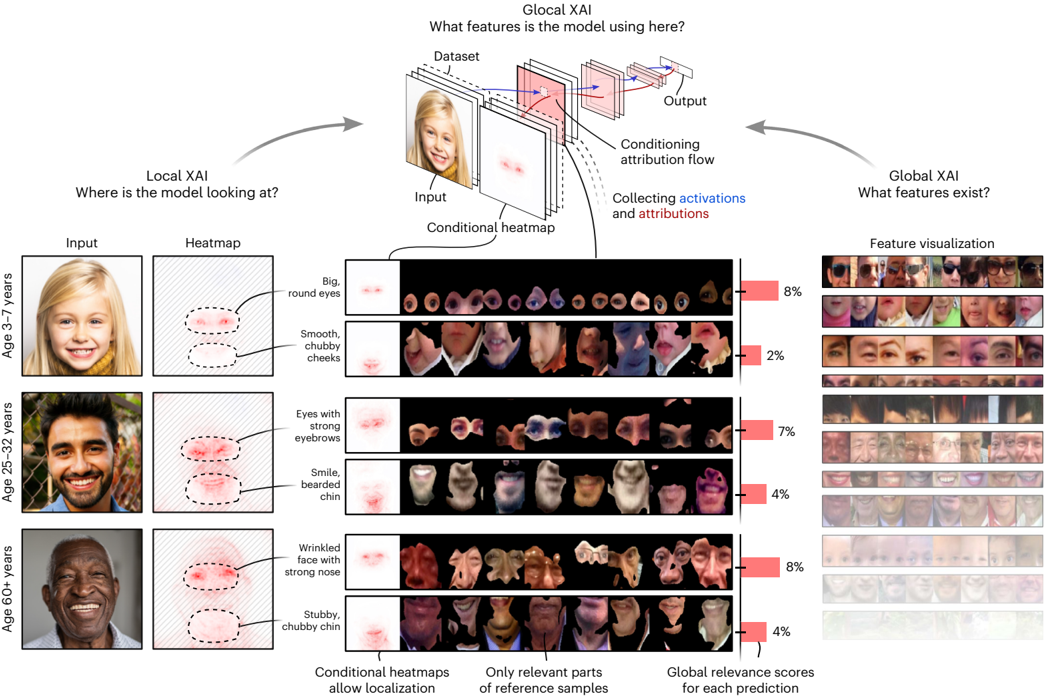
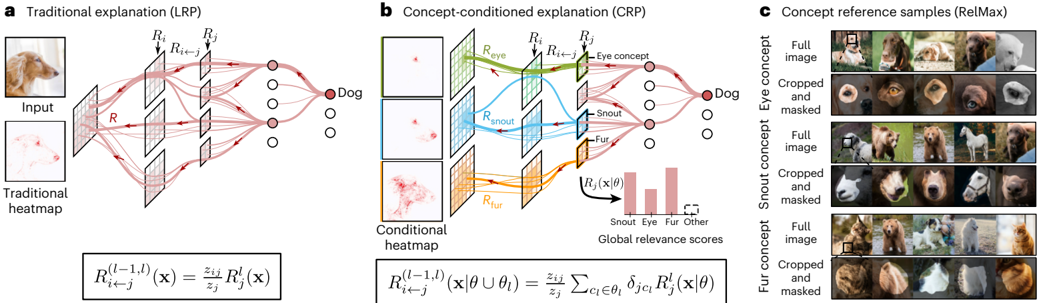
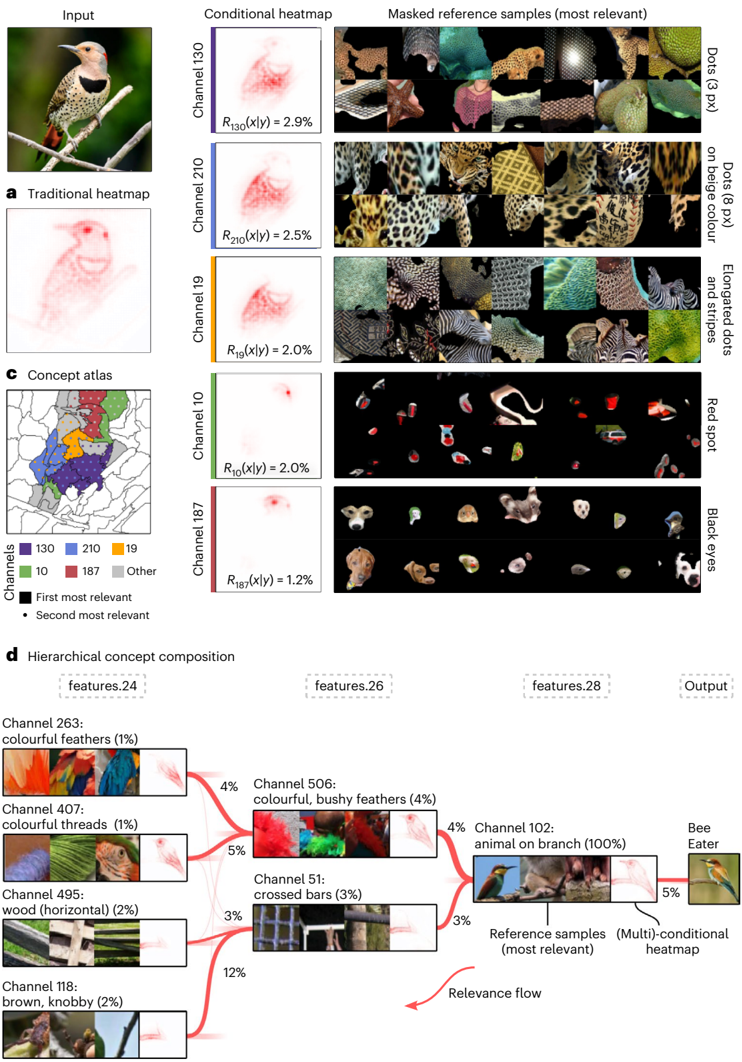
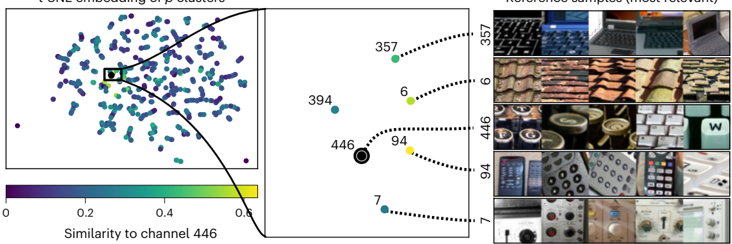
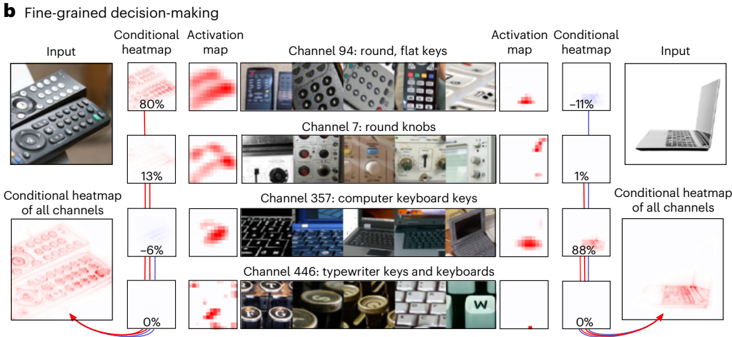
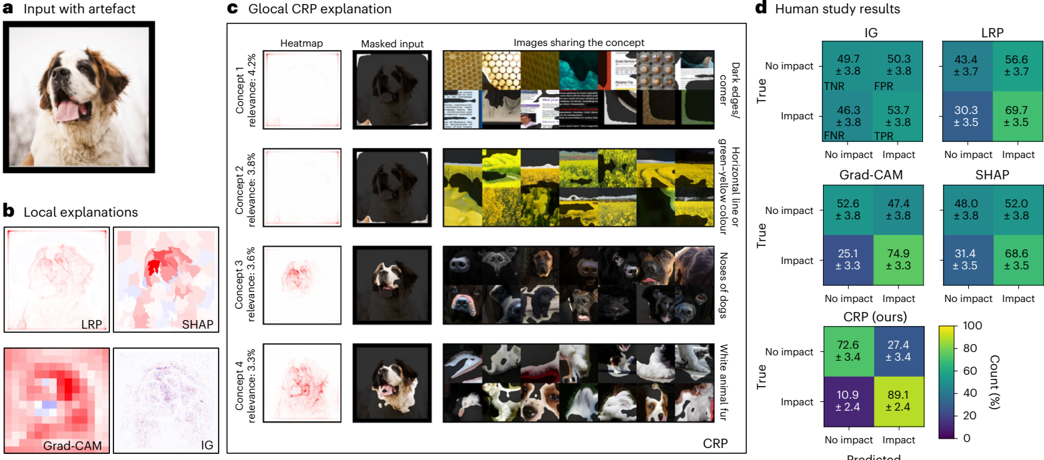
The field of explainable artificial intelligence (XAI) aims to bring transparency to today’s powerful but opaque deep learning models. While local XAI methods explain individual predictions in the form of attribution maps, thereby identifying ‘where’ important features occur (but not providing information about ‘what’ they represent), global explanation techniques visualize what concepts a model has generally learned to encode. Both types of method thus provide only partial insights and leave the burden of interpreting the model’s reasoning to the user. Here we introduce the Concept Relevance Propagation (CRP) approach, which combines the local and global perspectives and thus allows answering both the ‘where’ and ‘what’ questions for individual predictions. We demonstrate the capability of our method in various settings, showcasing that CRP leads to more human interpretable explanations and provides deep insights into the model’s representation and reasoning through concept atlases, concept-composition analyses, and quantitative investigations of concept subspaces and their role in fine-grained decision-making.
Overview
The claims and statistics of this paper haven’t been checked yet.
Free: it reads the open-access text and checks the first 5 claims that cite a source we can check. Create a free account to check every claim.
Integrity signals
Registry
Cites
Statistics
Figures
Verification
Claims the paper makes
The claims and statistics of this paper haven’t been checked yet.
Free: it reads the open-access text and checks the first 5 claims that cite a source we can check. Create a free account to check every claim.
Claims other papers make about this one
Each is checked against this paper’s own text: does it say what the citing paper says it does?
The source backs part of the claim, not all of it — or backs it for a different population, condition or comparison.
In the citing paper
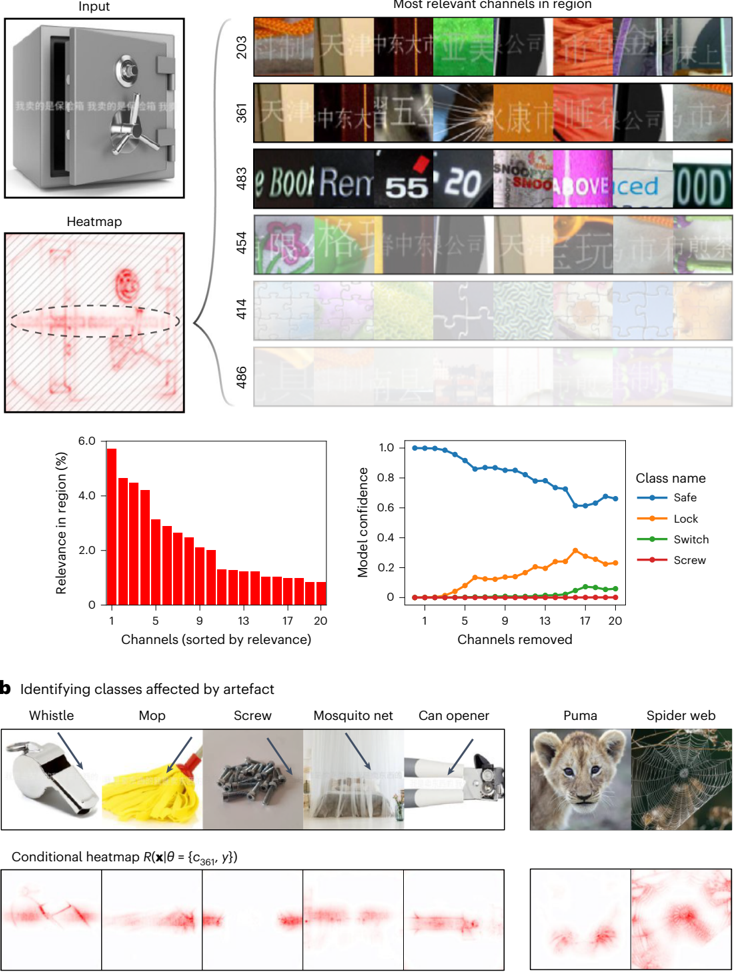
“The only approach combining human involvement with quantitative methods was by Achtibat et al. [1], where users were asked to assess if the model relied on artifacts in the prediction process.”
From Study on the Helpfulness of Explainable Artificial Intelligence (2024) · cites this paper as [1]
Experimental — accuracy not yet measuredThe cited source says what the claim attributes to it.
In the citing paper
“This approach is a very interesting step in the right direction for quantitative XAI user-studies, but also focused on a sub-task, namely detection of model bias.”
From Study on the Helpfulness of Explainable Artificial Intelligence (2024) · cites this paper as [1]
Self-check
Percentages, sums and reported differences re-computed from the paper’s own numbers.
The self-check needs the paper’s full text.
Citations
Cites
Deep Residual Learning for Image Recognition
He, K., Zhang, X., Ren, S., & Sun, J. (2016) · 2016 IEEE Conference on Computer Vision and Pattern Recognition (CVPR) · doi:10.1109/cvpr.2016.90 · Cited by 235,474
LeCun, Y., Bengio, Y., & Hinton, G. (2015) · Nature · doi:10.1038/nature14539 · Cited by 84,126
Gradient-based learning applied to document recognition
Lecun, Y., Bottou, L., Bengio, Y., & Haffner, P. (1998) · Proceedings of the IEEE · doi:10.1109/5.726791 · Cited by 58,805
ImageNet Large Scale Visual Recognition Challenge
Russakovsky, O., Deng, J., Su, H., Krause, J., Satheesh, S., Ma, S., Huang, Z., Karpathy, A., Khosla, A., Bernstein, M., et al. (2015) · International Journal of Computer Vision · doi:10.1007/s11263-015-0816-y · Cited by 39,380
PyTorch: An Imperative Style, High-Performance Deep Learning Library
Paszke, A., Gross, S., Massa, F., Lerer, A., Bradbury, J., Chanan, G., Killeen, T., Lin, Z., Gimelshein, N., Antiga, L., et al. (2019) · arXiv · doi:10.48550/arxiv.1912.01703 · Cited by 31,473
Grad-CAM: Visual Explanations from Deep Networks via Gradient-Based Localization
Selvaraju, R. R., Cogswell, M., Das, A., Vedantam, R., Parikh, D., & Batra, D. (2017) · 2017 IEEE International Conference on Computer Vision (ICCV) · doi:10.1109/iccv.2017.74 · Cited by 24,513
A Unified Approach to Interpreting Model Predictions
Lundberg, S., & Lee, S.-I. (2017) · arXiv · doi:10.48550/arxiv.1705.07874 · Cited by 23,707
"Why Should I Trust You?": Explaining the Predictions of Any Classifier
Ribeiro, M. T., Singh, S., & Guestrin, C. (2016) · Proceedings of the 22nd ACM SIGKDD International Conference on Knowledge Discovery and Data Mining · doi:10.1145/2939672.2939778 · Cited by 17,555
Neural Machine Translation by Jointly Learning to Align and Translate
Bahdanau, D., Cho, K., & Bengio, Y. (2014) · arXiv · doi:10.48550/arxiv.1409.0473 · Cited by 16,213
Visualizing and understanding convolutional networks
Zeiler, M. D., & Fergus, R. (2014) · Lecture Notes in Computer Science · doi:10.1007/978-3-319-10590-1_53 · Cited by 15,839 · cited 1×
“210 and 130), ‘red spot’ (10), ‘black eyes’ (187) and ‘stripes-like’ (19).”
Research works printed but not linked: 4
- 11. Goodman, B. & Flaxman, S. European Union regulations on algorithmic decision-making and a 'right to explanation'. AI Mag. 38, 50-57 (2017).
- 18. Murdoch, W. J., Liu, P. J. & Yu, B. Beyond word importance: contextual decomposition to extract interactions from LSTMs. In 6th International Conference on Learning Representations (ICLR, 2018).
- 22. Erhan, D., Bengio, Y., Courville, A. & Vincent, P. Visualizing higher- layer features of a deep network. Univ. Montreal 1341, 1 (2009).
- 36. Nguyen, A., Dosovitskiy, A., Yosinski, J., Brox, T. & Clune, J. Synthesizing the preferred inputs for neurons in neural networks via deep generator networks. Adv. Neural Inf. Process. Syst. 29, 3387-3395 (2016).
Cited by
Longo, L., Brcic, M., Cabitza, F., Choi, J., Confalonieri, R., Ser, J. D., Guidotti, R., Hayashi, Y., Herrera, F., Holzinger, A., et al. (2024) · Information Fusion · doi:10.1016/j.inffus.2024.102301 · Cited by 626
“…learn features that describe ‘prototypical concepts’ or ‘prototypes’ present in individual inputs to the model, including ProtoPNet [147], ProtoTree [148], ProtoPShare [149], Concept Bottleneck Models [150], Concept Activation Vectors [146], Concept Embedding Models [151] or Concept Atlases [152].”
Self-citationAudioMNIST: Exploring Explainable Artificial Intelligence for audio analysis on a simple benchmark
Becker, S., Vielhaben, J., Ackermann, M., Müller, K.-R., Lapuschkin, S., & Samek, W. (2024) · Journal of the Franklin Institute · doi:10.1016/j.jfranklin.2023.11.038 · Cited by 73
“This can be achieved by employing innovative concept-based methods that have demonstrated improved interpretability in computer vision applications [41].”
BackgroundMethodResultInfluentialSelf-citationHow Interpretable Machine Learning Can Benefit Process Understanding in the Geosciences
Jiang, S., Sweet, L., Blougouras, G., Brenning, A., Li, W., Reichstein, M., Denzler, J., Shangguan, W., Yu, G., Huang, F., et al. (2024) · Earth's Future · doi:10.1029/2024ef004540 · Cited by 182
“This oversight may be due to the fact that ML models, even when trained on multicollinear data, are likely to retain predictive power, especially when the test data used have a similar dependence structure (Farrell et al., 2019).”
InfluentialA survey on explainable artificial intelligence for cybersecurity
Rjoub, G., Bentahar, J., Abdel Wahab, O., Mizouni, R., Song, A., Cohen, R., Otrok, H., & Mourad, A. (2023) · IEEE Transactions on Network and Service Management · doi:10.1109/tnsm.2023.3282740 · Cited by 158
“LRP has been applied to many applications, including computer vision [44], [45], natural language processing (NLP) [46], recommendation [47], object recognition [48], and anomaly detection [49].”
MethodConcept-based Explainable Artificial Intelligence: A Survey
Poeta, E., Ciravegna, G., Pastor, E., Cerquitelli, T., & Baralis, E. (2026) · ACM Computing Surveys · doi:10.1145/3774643 · Cited by 182
Digital twins as global learning health and disease models for preventive and personalized medicine
Li, X., Loscalzo, J., Mahmud, A. K. M. F., Aly, D. M., Rzhetsky, A., Žitnik, M., & Benson, M. (2025) · Genome Medicine · doi:10.1186/s13073-025-01435-7 · Cited by 152
Opening the Black Box: A systematic review on explainable artificial intelligence in remote sensing
Höhl, A., Obadić, I., Fernández‐Torres, M., Najjar, H., Oliveira, D. A. B., Akata, Z., Dengel, A. R., & Zhu, X. X. (2024) · IEEE Geoscience and Remote Sensing Magazine · doi:10.1109/mgrs.2024.3467001 · Cited by 142
Understanding CNN fragility when learning with imbalanced data
Dablain, D. A., Jacobson, K. N., Bellinger, C., Roberts, M., & Chawla, N. V. (2023) · Machine Learning · doi:10.1007/s10994-023-06326-9 · Cited by 100
Bridging the human–AI knowledge gap through concept discovery and transfer in AlphaZero
Schut, L., Tomašev, N., McGrath, T., Hassabis, D., Paquet, U., & Kim, B. (2025) · Proceedings of the National Academy of Sciences · doi:10.1073/pnas.2406675122 · Cited by 110
Explainable AI (XAI) in image segmentation in medicine, industry, and beyond: A survey
Gipiškis, R., Tsai, C.-W., & Kurasova, O. (2024) · ICT Express · doi:10.1016/j.icte.2024.09.008 · Cited by 91
Explainable Artificial Intelligence for Medical Applications: A Review
Sun, Q., Akman, A., & Schuller, B. W. (2025) · ACM Transactions on Computing for Healthcare · doi:10.1145/3709367 · Cited by 141
FFA-GPT: an automated pipeline for fundus fluorescein angiography interpretation and question-answer
Chen, X., Zhang, W., Xu, P., Zhao, Z., Zheng, Y., Shi, D., & He, M. (2024) · npj Digital Medicine · doi:10.1038/s41746-024-01101-z · Cited by 72
Anders, C. J., Neumann, D., Samek, W., Müller, K., & Lapuschkin, S. (2026) · PLoS ONE · doi:10.1371/journal.pone.0336683 · Cited by 79
Self-citationSelf-eXplainable AI for medical image analysis: A survey and new outlooks
Hou, J., Liu, S., Bie, Y., Wang, H., Tan, A., Luo, L., & Chen, H. (2026) · Information Fusion · doi:10.1016/j.inffus.2026.104791 · Cited by 66
Wu, Z., Chen, J., Li, Y., Deng, Y., Zhao, H., Hsieh, C., & Hou, T. (2023) · Journal of Chemical Information and Modeling · doi:10.1021/acs.jcim.3c01642 · Cited by 71
Robot learning in the era of foundation models: a survey
Xiao, X., Liu, J., Wang, Z., Zhou, Y., Qi, Y., Jiang, S., He, B., & Cheng, Q. (2025) · Neurocomputing · doi:10.1016/j.neucom.2025.129963 · Cited by 91
Generating and evaluating synthetic data in digital pathology through diffusion models
Pozzi, M., Noei, S., Robbi, E., Cima, L., Moroni, M., Munari, E., Torresani, E., & Jurman, G. (2024) · Scientific Reports · doi:10.1038/s41598-024-79602-w · Cited by 62
Human-like object concept representations emerge naturally in multimodal large language models
Du, C., Fu, K., Wen, B., Sun, Y., Peng, J., Wei, W., Gao, Y., Wang, S., Zhang, C., Li, J., et al. (2025) · Nature Machine Intelligence · doi:10.1038/s42256-025-01049-z · Cited by 83
Müller, R. (2024) · International Journal of Human-Computer Interaction · doi:10.1080/10447318.2024.2381929 · Cited by 54
“One study required participants to report whether the AI had relied on a data artefact (Achtibat et al., 2023).”
InfluentialExplaining Deep Learning for ECG Analysis: Building Blocks for Auditing and Knowledge Discovery
Wagner, P., Mehari, T., Haverkamp, W., & Strodthoff, N. (2024) · Computers in Biology and Medicine · doi:10.1016/j.compbiomed.2024.108525 · Cited by 48
“Further investigations incorporating alternative methodologies for automatic concept discovery, as suggested by [71, 70], could provide a complementary perspective on this topic.”
MethodDahal, A., Tanyaş, H., & Lombardo, L. (2024) · Communications Earth & Environment · doi:10.1038/s43247-024-01243-8 · Cited by 47
CausalFormer: An Interpretable Transformer for Temporal Causal Discovery
Kong, L., Li, W., Yang, H., Zhang, Y., Guan, J., & Zhou, S. (2024) · IEEE Transactions on Knowledge and Data Engineering · doi:10.1109/tkde.2024.3484461 · Cited by 66
Discover-then-Name: Task-Agnostic Concept Bottlenecks via Automated Concept Discovery
Rao, S., Mahajan, S., Böhle, M., & Schiele, B. (2024) · Lecture notes in computer science · doi:10.1007/978-3-031-72980-5_26 · Cited by 114
Aligning generalization between humans and machines
Ilievski, F., Hammer, B., van Harmelen, F., Paassen, B., Saralajew, S., Schmid, U., Biehl, M., Bolognesi, M., Dong, X. L., Gashteovski, K., et al. (2025) · Nature Machine Intelligence · doi:10.1038/s42256-025-01109-4 · Cited by 26
“This observation has recently been reflected in research on explainable AI, where novel approaches to explain black-box models have been proposed focusing on explanations based on concepts and relations 40 .”
Explainable AI for time series via Virtual Inspection Layers
Vielhaben, J., Lapuschkin, S., Montavon, G., & Samek, W. (2024) · Pattern Recognition · doi:10.1016/j.patcog.2024.110309 · Cited by 38
Self-citationDisentangled Explanations of Neural Network Predictions by Finding Relevant Subspaces
Chormai, P., Herrmann, J., Müller, K., & Montavon, G. (2024) · IEEE Transactions on Pattern Analysis and Machine Intelligence · doi:10.1109/tpami.2024.3388275 · Cited by 58
“The filtering approach is also found e.g. in [39], [20], [23].”
BackgroundMethodInfluentialEye tracking insights into physician behaviour with safe and unsafe explainable AI recommendations
Nagendran, M., Festor, P., Komorowski, M., Gordon, A. C., & Faisal, A. A. (2024) · npj Digital Medicine · doi:10.1038/s41746-024-01200-x · Cited by 36
“XAIthereforeachievesitseffectvia an in fl uence on human decision-making, which can be positive,negative or a mixture of both 5 – 7 .”
BackgroundExplainable AI: To Reveal the Logic of Black-Box Models
Chinu, & Bansal, U. (2023) · New Generation Computing · doi:10.1007/s00354-022-00201-2 · Cited by 41
Dreyer, M., Achtibat, R., Wiegand, T., Samek, W., & Lapuschkin, S. (2023) · IEEE/CVF Conference on Computer Vision and Pattern Recognition Workshops (CVPRW) · doi:10.1109/cvprw59228.2023.00397 · Cited by 45
“Our method is based on the (modified) gradient and, therefore, can be computed in the order of seconds [1].”
BackgroundMethodInfluentialSelf-citationVisual Instance-aware Prompt Tuning
Xiao, X., Zhang, Y., Li, X., Wang, T., Wang, X., Wei, Y., Hamm, J., & Xu, M. (2025) · ACM International Conference on Multimedia (ACM MM) · doi:10.1145/3746027.3754858 · Cited by 60
“Understanding and optimizing information flow across network layers is crucial for deep learning performance [1, 2, 30, 34].”
Rotem, O., Schwartz, T., Maor, R., Tauber, Y., Shapiro, M. T., Meseguer, M., Gilboa, D., Seidman, D. S., & Zaritsky, A. (2024) · Nature Communications · doi:10.1038/s41467-024-51136-9 · Cited by 38
“First, we visually interpreted the top two classi fi cation-driving latent features that encode two well established blastocyst quality grading parameters: blastocyst size, as a proxy of development stage and degree of expansion, and trophectoderm quality.”
Knowledge Augmented Machine Learning with Applications in Autonomous Driving: A SurveyPreprint
Wörmann, J., Bogdoll, D., Brunner, C., Buehrle, E., Chen, H., Chuo, E. F., Cvejoski, K., van Elst, L., Gottschall, P., Griesche, S., et al. (2022) · arXiv · doi:10.48550/arxiv.2205.04712 · Cited by 33
Parasar, P., & Krishna, A. P. (2025) · Scientific Reports · doi:10.1038/s41598-025-13221-x · Cited by 33
“To overcome the interpretability deficit, Explainable Artificial Intelligence (XAI) techniques such as Shapley Additive exPlanations (SHAP) 27 have emerged as effective tools for providing insight into model behaviour and feature attribution 28–32 .”
Mechanistic understanding and validation of large AI models with SemanticLens
Dreyer, M., Berend, J., Labarta, T., Vielhaben, J., Wiegand, T., Lapuschkin, S., & Samek, W. (2025) · Nature Machine Intelligence · doi:10.1038/s42256-025-01084-w · Cited by 50
“It is, for example, not enough to measure only that specific components detect certain input patterns (‘concepts’) 13,14 ; it is also essential to understand how these components are used 15–18 and where these patterns originate within the training dataset 19 .”
InfluentialSelf-citationReveal to Revise: An Explainable AI Life Cycle for Iterative Bias Correction of Deep Models
Pahde, F., Dreyer, M., Samek, W., & Lapuschkin, S. (2023) · Lecture notes in computer science · doi:10.1007/978-3-031-43895-0_56 · Cited by 40
Self-citationA survey of post-hoc xai methods from a visualization perspective: Challenges and opportunities
Bhati, D., Amiruzzaman, M., Zhao, Y., Guercio, A., & Le, T. (2025) · IEEE Access · doi:10.1109/access.2025.3581136 · Cited by 24
“Decomposition-based methods , like Layer-wise Relevance Propagation (LRP) [49] and Concept Relevance Propagation (CRP) [50] , offer detailed heatmaps that highlight specific features, focusing on key areas like the cat’s face and body. predictions or decisions.”
Dreyer, M., Achtibat, R., Samek, W., & Lapuschkin, S. (2024) · IEEE/CVF Conference on Computer Vision and Pattern Recognition Workshops (CVPRW) · doi:10.1109/cvprw63382.2024.00353 · Cited by 42
“We adhere to the recently proposed Relevance Maximization approach [1].”
InfluentialSelf-citationJütte, L., González-Villà, S., Quintana, J., Steven, M., García, R., & Roth, B. (2024) · Frontiers in Medicine · doi:10.3389/fmed.2024.1445318 · Cited by 28
Valdez, A. S. C., Heine, M., Franke, T., Jochems, N., Jetter, H.-C., & Schrills, T. (2024) · i-com · doi:10.1515/icom-2024-0014 · Cited by 22
Schnake, T., Jafari, F. R., Lederer, J., Xiong, P., Nakajima, S., Gugler, S., Montavon, G., & Müller, K. (2025) · Information Fusion · doi:10.1016/j.inffus.2024.102923 · Cited by 27
“The authors in [1] propose a propagation-based method to identify specific parts of a neural network that correspond to particular concepts, such as ‘eyes’ or ‘snout’ in an image of a dog.”
BackgroundMethodInfluentialBrenner, A., Knispel, F., Fischer, F. P., Rossmanith, P., Weber, Y. G., Koch, H., Röhrig, R., Varghese, J., & Kutafina, E. V. (2024) · Computer Methods and Programs in Biomedicine · doi:10.1016/j.cmpb.2024.108448 · Cited by 23
Deep Neural Networks Internal Representation via Neuron Community Exploration
Lan, G., Xiao, S., Yang, J., Lu, W. B., Meng, Q., & Gao, X. (2025) · IEEE Transactions on Emerging Topics in Computational Intelligence · doi:10.1109/tetci.2025.3622647 · Cited by 25
“[19]proposedaconcept-related propagationmethodthatintegrateslocalandglobalperspectives, offeringmoreinterpretableexplanationsofdeeplearningmod-els.”
Uncertainty explanation of artificial intelligence models by SHAP
Cheng, X., Wang, T., Zhu, D., & Ma, J. (2026) · Knowledge-Based Systems · doi:10.1016/j.knosys.2026.115437 · Cited by 22
Understanding imbalanced data: XAI & interpretable ML framework
Dablain, D. A., Bellinger, C., Krawczyk, B., Aha, D. W., & Chawla, N. V. (2024) · Machine Learning · doi:10.1007/s10994-023-06414-w · Cited by 23
Towards friendly AI: a comprehensive review and new perspectives on human-AI alignment
Sun, Q., Li, Y., Alturki, E., Murthy, S. M. K., & Schuller, B. W. (2026) · AI and Ethics · doi:10.1007/s43681-026-01070-x · Cited by 25
Bello, M., Bello, R., García, M.-M., Nowé, A., Sevillano-García, I., & Herrera, F. (2025) · Information Systems Frontiers · doi:10.1007/s10796-025-10668-1 · Cited by 24
“Techniques such as Concept Relevance Propagation (CRP) [72] translate traditional attribution maps into concept-based explanations, allowing the relevance of a prediction to be traced back to predefined concepts.”
Arias-Londoño, J. D., & Godino-Llorente, J. I. (2023) · Biomedical Signal Processing and Control · doi:10.1016/j.bspc.2023.105831 · Cited by 21
Akter, S. B., Akter, S., Tuli, M. D., Eisenberg, D., Lotvola, A., Islam, H., Fresneda, J. E., Hüttemann, M., & Pias, T. S. (2024) · Computers in Biology and Medicine · doi:10.1016/j.compbiomed.2024.109413 · Cited by 19
Pahde, F., Wiegand, T., Lapuschkin, S., & Samek, W. (2025) · Machine Learning · doi:10.1007/s10994-025-06834-w · Cited by 18
“Specifically, while Activation Maximization (ActMax) [70, 12] selects samples that maximally activate a given neuron, Relevance Maximization (RelMax) [1] selects samples for which the neuron is maximally relevant for the classification task, as computed by a local explainability methods.”
Self-citationAhn, Y. H., Kim, H. B., & Kim, S. T. (2024) · IEEE Computer Society Conference on Computer Vision and Pattern Recognition/Proceedings - IEEE Computer Society Conference on Computer Vision and Pattern Recognition/Proceedings · doi:10.1109/cvpr52733.2024.01043 · Cited by 25
“Also, Achtibat et al. [1] and Fel et al. [6] proposed methods to interpret each CAV’s role in decision-making.”
MethodPruning by Explaining Revisited: Optimizing Attribution Methods to Prune CNNs and Transformers
Hatefi, S. M. V., Dreyer, M., Achtibat, R., Wiegand, T., Samek, W., & Lapuschkin, S. (2025) · Lecture notes in computer science · doi:10.1007/978-3-031-92648-8_10 · Cited by 17
Self-citationApplications of Explainable artificial intelligence in Earth system sciencePreprint
Huang, F., Jiang, S., Li, L., Zhang, Y., Zhang, Y., Zhang, R., Li, Q., Li, D., Shangguan, W., & Dai, Y. (2024) · arXiv · doi:10.48550/arxiv.2406.11882 · Cited by 24
Explainable AI for Audio and Visual Affective Computing: A Scoping Review
Johnson, D. S., Hakobyan, O., Paletschek, J., & Drimalla, H. (2024) · IEEE Transactions on Affective Computing · doi:10.1109/taffc.2024.3505269 · Cited by 27
“Atfirst glance,saliencymapslookintuitivewhensuperimposedon originalinput,butinactuality,theyonlyshow which regions of the input are important and not what is important about those regions [25], [43].”
InfluentialKafetzis, I. S., Sodmann, P., Herghelegiu, B.-E., Brand, M., Zoller, W. G., Seyfried, F., Fuchs, K., Meining, A. G., & Hann, A. (2024) · United European Gastroenterology Journal · doi:10.1002/ueg2.12721 · Cited by 13
Bobek, S., & Nalepa, G. J. (2025) · Information Fusion · doi:10.1016/j.inffus.2025.103357 · Cited by 17
Kowal, M. D., Wildes, R. P., & Derpanis, K. G. (2024) · IEEE Computer Society Conference on Computer Vision and Pattern Recognition/Proceedings - IEEE Computer Society Conference on Computer Vision and Pattern Recognition/Proceedings · doi:10.1109/cvpr52733.2024.01036 · Cited by 31
A quantitatively interpretable model for Alzheimer’s disease prediction using deep counterfactuals
Oh, K., Heo, D.-W., Mulyadi, A. W., Jung, W., Kang, E., Lee, K. H., & Suk, H. (2025) · NeuroImage · doi:10.1016/j.neuroimage.2025.121077 · Cited by 12
Understanding User Preferences in Explainable Artificial Intelligence: A Mapping Function Proposal
Hashemi, M., Darejeh, A., & Cruz, F. (2025) · ACM Transactions on Intelligent Systems and Technology · doi:10.1145/3733837 · Cited by 16
“However, our study revealed that many algorithms do not adequately account for causality or have not sufficiently developed it.”
The Atlas of In-Context Learning: How Attention Heads Shape In-Context Retrieval Augmentation
Kahardipraja, P., Achtibat, R., Wiegand, T., Samek, W., & Lapuschkin, S. (2025) · neural information processing systems · doi:10.52202/085713-3940 · Cited by 22
Self-citationHofmann, S., Goltermann, O., Scherf, N., Müller, K., Loeffler, M., Villringer, A., Gaebler, M., Witte, A. V., & Beyer, F. (2025) · Imaging Neuroscience · doi:10.1162/imag_a_00497 · Cited by 12
“…are new variants of LRP that allow to extract higher-order structure ( Eberle et al., 2022; Schnake et al., 2022) or underlying relevant concepts ( Achtibat et al., 2023; here, e.g., this could be interacting structural changes of two brain regions); hence, it would be a promising path of…”
Cai, S., Peng, H., Liu, R., & Chen, P. (2025) · Communications Physics · doi:10.1038/s42005-025-02170-6 · Cited by 14
“The key process for LRP is to calculate the message R ð l ; l þ 1 Þ i j , for which various rules have been proposed 39,40 .”
InfluentialXAI Technology in EEG Signal Based Disease Detection Models
Sanjaya, F. N., Balakrishnan, S., Sindiramutty, S. R., & Narputro, P. (2025) · International Conference on Metaverse and Current Trends in Computing (ICMCTC) · doi:10.1109/icmctc62214.2025.11196271 · Cited by 11
“The relevance is then propagated backward layer by layer to make sure the values remain maintained at each step[25-26].”
Integrating XAI into Safe AI Development and AI Certification Processes: An Expert-Based Analysis
Frész, B., Göbels, V. P., Omri, S., Brajovic, D., Aichele, A., Kutz, J., Neuhüttler, J., & Huber, M. F. (2026) · Lecture notes in computer science · doi:10.1007/978-3-032-30849-8_13 · Cited by 11
“In combination with such concepts, data-based explanations can be used, which show data instances similar to the input in question or relevant for the concept(s) used (Achtibat et al. 2023).”
BackgroundLin, T., Lau, R. Y. K., & Hu, S. (2026) · Artificial Intelligence Review · doi:10.1007/s10462-026-11565-y · Cited by 13
“The future of XAI needs to explore the deep integration of different explanation mechanisms, such as combining con - cept-based explanations with feature importance methods (Achtibat et al. 2023 ), and com - bining the attention explanation mechanism with attribution methods (Chefer et al. 2021 ).”
Human-Centered Evaluation of XAI Methods
Tomotaki-Dawoud, K., Samek, W., Eisert, P., Lapuschkin, S., & Bosse, S. (2023) · IEEE ... International Conference on Data Mining workshops · doi:10.1109/icdmw60847.2023.00122 · Cited by 18
“However, it had the fewest number of responses, which may suggest that in situations where Occlusion was effective, the provided low-complexity (Table I) boxy explanation was sufficiently good.”
BackgroundSelf-citationTowards Explaining Hypercomplex Neural Networks
Lopez, E., Grassucci, E., Capriotti, D., & Comminiello, D. (2024) · International Joint Conference on Neural Networks (IJCNN) · doi:10.1109/ijcnn60899.2024.10650793 · Cited by 12
“Among the first category, we can find saliency maps [16], Grad-CAM [15] and attribution propagation methods such as LRP [35] and CRP [36].”
BackgroundMethodRB-XAI: Relevance-Based Explainable AI for Traffic Detection in Autonomous Systems
Adom, I. T., & Mahmoud, M. N. (2024) · IEEE SoutheastCon · doi:10.1109/southeastcon52093.2024.10500215 · Cited by 9
“In this study, the CRP algorithm [19] is utilized as a bias-resistant framework, extending the LRP [18] to offer a nuanced methodology for interpreting AI models.”
MethodFrom visual question answering to intelligent AI agents in ophthalmology
Chen, X., Chen, R., Xu, P., Wan, X., Zhang, W., Yan, B., Shang, X., He, M., & Shi, D. (2025) · British Journal of Ophthalmology · doi:10.1136/bjo-2024-326097 · Cited by 12
A Survey on Interpretability in Visual Recognition
Wan, Q., Gao, C., Wang, R., & Chen, X. (2026) · IEEE Transactions on Pattern Analysis and Machine Intelligence · doi:10.1109/tpami.2026.3672629 · Cited by 11
“• Patch Patch-based representations use spatial parts of images to show how specific local patterns affect the overall decision [67], [82], [86], [87], [109]–[112].”
Trustworthy AI in digital health: a comprehensive review of robustness and explainability
Mamun, A., Soumma, S. B., & Ghasemzadeh, H. G. (2026) · Progress in Biomedical Engineering · doi:10.1088/2516-1091/ae4e74 · Cited by 12
“For instance, Achtibat et al [9] propose concept relevance propagation (CRP), a novel method that bridges the gap between local and global XAI approaches.”
Concept-Based Explanations in Computer Vision: Where Are We and Where Could We Go?
Lee, J. H., Mikriukov, G., Schwalbe, G., Wermter, S., & Wolter, D. (2025) · Lecture notes in computer science · doi:10.1007/978-3-031-92648-8_17 · Cited by 25
Finzel, B. (2024) · Künstliche Intell. · doi:10.1007/s13218-024-00835-y · Cited by 11
“For example, there exists a concept-level extension to LRP [1, 2].”
Explainable AI for Time Series via Virtual Inspection LayersPreprint
Vielhaben, J., Lapuschkin, S., Montavon, G., & Samek, W. (2023) · arXiv (Cornell University) · doi:10.17169/refubium-42891 · Cited by 10
Self-citationTowards Understanding How Data Augmentation Works with Imbalanced DataPreprint
Dablain, D. A., & Chawla, N. V. (2023) · arXiv (Cornell University) · doi:10.48550/arxiv.2304.05895 · Cited by 12
“They can also be computationally expensive because they involve repeated forward passes through a model [59].”
BackgroundStudy on the Helpfulness of Explainable Artificial Intelligence
Labarta, T., Kulicheva, E., Froelian, R., Geißler, C., Melman, X., & von Klitzing, J. (2024) · Communications in Computer and Information Science · doi:10.1007/978-3-031-63803-9_16 · Cited by 8
“A recently published user study is by Achtibat et al. [1] where they explored the practical utility of Concept Relevance Propagation (CRP), a promising development from Layerwise Relevance Propagation.”
MethodNeuron Semantic-Guided Test Generation for Deep Neural Networks Fuzzing
Huang, L., Sun, W., Yan, M. L., Liu, Z., Lei, Y., & Lo, D. (2024) · ACM Transactions on Software Engineering and Methodology · doi:10.1145/3688835 · Cited by 10
Assessment of the Reliablity of a Model's Decision by Generalizing Attribution to the Wavelet DomainPreprint
Kasmi, G., Dubus, L., Saint‐Drenan, Y., & Blanc, P. (2023) · arXiv (Cornell University) · doi:10.48550/arxiv.2305.14979 · Cited by 8
Exploring the clinical value of concept-based AI explanations in gastrointestinal disease detection
Storås, A. M., Dreyer, M., Pahde, F., Lapuschkin, S., Samek, W., Halvorsen, P., de Lange, T., Mori, Y., Hann, A., Berzin, T. M., et al. (2025) · Scientific Reports · doi:10.1038/s41598-025-14408-y · Cited by 8
“This work explores two of them, namely Testing with Concept Activation Vectors (TCAV) 16 and Concept Relevance Propagation (CRP) 17 .”
InfluentialSelf-citationSynthetic Generation of Dermatoscopic Images with GAN and Closed-Form Factorization
Mekala, R. R., Pahde, F., Baur, S., Chandrashekar, S., Diep, M. M., Wenzel, M. A., Wisotzky, E. L., Yolcu, G. Ü., Lapuschkin, S., Ma, J., et al. (2025) · Lecture notes in computer science · doi:10.1007/978-3-031-91907-7_22 · Cited by 11
Self-citationWasserstein Distances Made Explainable: Insights Into Dataset Shifts and Transport Phenomena
Naumann, P., Kauffmann, J., & Montavon, G. (2026) · IEEE Transactions on Pattern Analysis and Machine Intelligence · doi:10.1109/tpami.2026.3656947 · Cited by 12
“Our method also integrates with subspace analysis methods (see Section VI), thereby instantiating “Concept-based XAI” [22], [23], [24] to the problem of explaining Wasserstein distances.”
Unsupervised Interpretable Basis Extraction for Concept-Based Visual Explanations
Doumanoglou, A., Asteriadis, S., & Zarpalas, D. (2023) · IEEE Transactions on Artificial Intelligence · doi:10.1109/tai.2023.3338169 · Cited by 11
“In [19], a local explanation method [20] has been extended in order to provide global concept-based explanations.”
Data Science Principles for Interpretable and Explainable AI
Sankaran, K. (2024) · Journal of Data Science · doi:10.6339/24-jds1150 · Cited by 11
Introducing Geo-Glocal Explainable Artificial Intelligence
Roussel, C., & Böhm, K. (2025) · IEEE Access · doi:10.1109/access.2025.3541781 · Cited by 7
“In their concept, they combine both ways into glocal XAI, which can ‘ identify the relevant neurons for a particular prediction (property of local XAI) and then visualize the concepts these neurons encode (property of global XAI) ’ [23].”
Glocal Explanations of Expected Goal Models in SoccerPreprint
Çavuş, M., Stańdo, A., & Biecek, P. (2023) · arXiv (Cornell University) · doi:10.48550/arxiv.2308.15559 · Cited by 13
“Achtibat et al. [50] identified glocal XAI, which aims to combine local and global XAI perspectives in order to enhance explainability by minimising the observer’s interpretation workload.”
BackgroundFovEx: Human-Inspired Explanations for Vision Transformers and Convolutional Neural Networks
Panda, M. P., Tiezzi, M., Vilas, M. G., Roig, G., Eskofier, B. M., & Zanca, D. (2025) · International Journal of Computer Vision · doi:10.1007/s11263-025-02543-y · Cited by 6
“However, as these models become increasingly more complex, the lack of understanding of their decision-making processes poses significant challenges(Achtibat et al., 2023; Goodman & Flaxman, 2017; Longo et al., 2024).”
DEAL: Disentangle and Localize Concept-Level Explanations for VLMs
Li, T., Ma, M., & Peng, X. (2024) · Lecture notes in computer science · doi:10.1007/978-3-031-72933-1_22 · Cited by 16
Explainable classification of goat vocalizations using convolutional neural networks
Ntalampiras, S., & Gamacchio, G. P. (2025) · PLoS ONE · doi:10.1371/journal.pone.0318543 · Cited by 6
“Specifically, we adapted the Concept Relevance Propagation algorithm [24] to the present problem and located the audio structures which were systematically employed by the model during classification.”
Sevillano-García, I., Luengo, J., & Herrera, F. (2026) · Pattern Recognition · doi:10.1016/j.patcog.2026.113254 · Cited by 7
Bayesian XAI Methods Towards a Robustness-Centric Approach to Deep Learning: An ABIDE I Study
Bargagna, F., Santi, L. A. D., Santarelli, M. F., Positano, V., & Vanello, N. (2024) · IEEE International Symposium on Medical Measurements and Applications (MeMeA) · doi:10.1109/memea60663.2024.10596826 · Cited by 7
“They tell which parts of the input constitute the important information, but not what is the abstract concept of the information captured [20], [21].”
BackgroundUnveiling diagnostic information for type 2 diabetes through interpretable machine learning
Lv, X., Luo, J., Zhang, Y., Guo, H. M., Yang, M., Li, M., Chen, Q., & Jing, R. (2024) · Information Sciences · doi:10.1016/j.ins.2024.121582 · Cited by 6
Artificial Neural Nets and the Representation of Human Concepts
Freiesleben, T. (2025) · Synthese Library/Synthese library · doi:10.1007/978-3-032-03083-2_13 · Cited by 10
When a Relation Tells More Than a Concept: Exploring and Evaluating Classifier Decisions with CoReXPreprint
Finzel, B., Hilme, P., Rabold, J., & Schmid, U. (2024) · arXiv (Cornell University) · doi:10.48550/arxiv.2405.01661 · Cited by 7
“A recent method that builds upon the relevance-based approach LRP [27] is Concept Relevance Propagation CRP [1, 2].”
BackgroundMethodInfluentialKasmi, G., Dubus, L., Saint‐Drenan, Y., & Blanc, P. (2025) · Environmental Data Science · doi:10.1017/eds.2025.13 · Cited by 11
Toward trustworthy AI with integrative explainable AI frameworks
Finzel, B. (2025) · it - Information Technology · doi:10.1515/itit-2025-0007 · Cited by 8
Insurance Fraud Detection Using Machine Learning and XAI Algorithms
Bolukbasi, Z., Yurtoglu, H., Kugu, E., & Çukurtepe, H. (2025) · IEEE International Conference on Electro Information Technology · doi:10.1109/eit64391.2025.11103653 · Cited by 5
Generating Counterfactual Trajectories with Latent Diffusion Models for Concept Discovery
Varshney, P., Lucieri, A., Balada, C., Dengel, A. R., & Ahmed, S. (2024) · Lecture notes in computer science · doi:10.1007/978-3-031-78198-8_10 · Cited by 11
Understanding Distributed Representations of Concepts in Deep Neural Networks without Supervision
Chang, W., Kwon, D., & Choi, J. (2024) · Proceedings of the AAAI Conference on Artificial Intelligence · doi:10.1609/aaai.v38i10.28999 · Cited by 5
AS‐XAI: Self‐Supervised Automatic Semantic Interpretation for CNN
Sun, C., Xu, H., Chen, Y., & Zhang, D. (2024) · Advanced Intelligent Systems · doi:10.1002/aisy.202400359 · Cited by 5
Atlas-Alignment: Making Interpretability Transferable Across Language ModelsPreprint
Puri, B., Berend, J., Lapuschkin, S., & Samek, W. (2025) · arXiv (Cornell University) · doi:10.48550/arxiv.2510.27413 · Cited by 5
“Features and Concepts Neural network neurons and their linear combinations have been shown to encode human-aligned concepts to a surprising degree Achtibat et al. (2023); Bykov et al. (2023).”
Self-citationConcept learning for algorithmic reasoning: Insights from SAT-solving GNNs
Shoham, E., Cohen, H., Wattada, K., Rika, H., & Vilenchik, D. (2025) · Information Sciences · doi:10.1016/j.ins.2025.122754 · Cited by 7
Metadata
- Authors
- Achtibat, R., Dreyer, M., Eisenbraun, I., Bosse, S., Wiegand, T., Samek, W., & Lapuschkin, S.
- Affiliations
- Fraunhofer Institute for Telecommunications, Heinrich Hertz Institute (DE)
- Corresponding author
- Samek, Wojciech
- Lapuschkin, Sebastian
- ORCID
- Venue
- Nature Machine Intelligence
- Published
- 2023-09-20
- Volume
- 5
- Issue
- 9
- Pages
- 1006-1019
- ISSN
- 2522-5839 (ISSN-L)
- OpenAlex
- W4386897466
- Semantic Scholar
- c2fbc8ad4e2403c795529c2606e4686f5a571215
- Cited by
- 181
- References
- 45
- Citations by year
- 2026: 43 · 2025: 71 · 2024: 57 · 2023: 10
- FWCI
- 16.02
- Type
- journal article
- Language
- en
- Open access
- hybrid
- doi.org
- Licence
- cc-by
- creativecommons.org/licenses/by/4.0 (tdm)
- creativecommons.org/licenses/by/4.0 (vor)
- Locations
- Nature Machine Intelligence (publishedVersion, cc-by)
- arXiv (Cornell University) (submittedVersion)
- Fraunhofer-Publica (Fraunhofer-Gesellschaft) (submittedVersion)
- arXiv (Cornell University)
- Funders
- Fraunhofer-Gesellschaft
- Karl-Franzens-Universität Graz
- Medizinische Universität Graz
- Topics
- Physical Sciences › Computer Science › Artificial Intelligence › Explainable Artificial Intelligence (XAI)
- Physical Sciences › Computer Science › Software › Software Testing and Debugging Techniques
- Physical Sciences › Computer Science › Computer Vision and Pattern Recognition › Advanced Neural Network Applications
- Keywords
- explainable AI, attribution maps, local and global explanations, concept composition, deep learning model interpretability
About these checks
Registry, retraction, Cites and statistics results are computed, not judged, with one exception: a printed reference that no index lists is read once by a model before it counts as a citation error. Claims are extracted by a model and kept only when their quote appears verbatim in the text; each cited source is then checked, with a model’s help, for whether it says what the claim relies on. Those verdicts can be wrong — read the claim’s quote and the cited source before relying on one.
Statistics and arithmetic are recomputed, not judged.
Confidence bands are shown only for fields calibrated on our annotated test set. None is calibrated yet, so no band is shown.
What counts as a claim ›How we measure confidence ›How we check this ›
Are you an author, or do you see a problem with this page? Request a review
Data sources
Bibliographic data: Semantic Scholar, OpenAlex, Crossref.
Contains information from the Semantic Scholar Academic Graph Datasets, made available under the ODC Attribution License (ODC-BY 1.0).
Semantic Scholar’s data is described in: Kinney, R., et al. (2023). The Semantic Scholar Open Data Platform. arXiv:2301.10140.
