

Probabilistic projections of increased heat stress driven by climate change
Open accessThe DOI matches its Crossref record; 22 of the 22 references it cites were found in a registry or an index.
Abstract
The Heat Index is a metric that quantifies heat exposure in human beings. Here, using probabilistic emission projections, we show that changes in the Heat Index driven by anthropogenic CO 2 emissions will increase global exposure to dangerous environments in the coming decades. Even if the Paris Agreement goal of limiting global warming to 2 °C is met, the exposure to dangerous Heat Index levels will likely increase by 50–100% across much of the tropics and increase by a factor of 3–10 in many regions throughout the midlatitudes. Without emissions reductions more aggressive than those considered possible by our statistical projection, it is likely that by 2100, many people living in tropical regions will be exposed to dangerously high Heat Index values during most days of each typical year, and that the kinds of deadly heat waves that have been rarities in the midlatitudes will become annual occurrences.
Overview
The claims and statistics of this paper haven’t been checked yet.
Free: it reads the open-access text and checks the first 5 claims that cite a source we can check. Create a free account to check every claim.
Integrity signals
Registry
Cites
Statistics
Figures
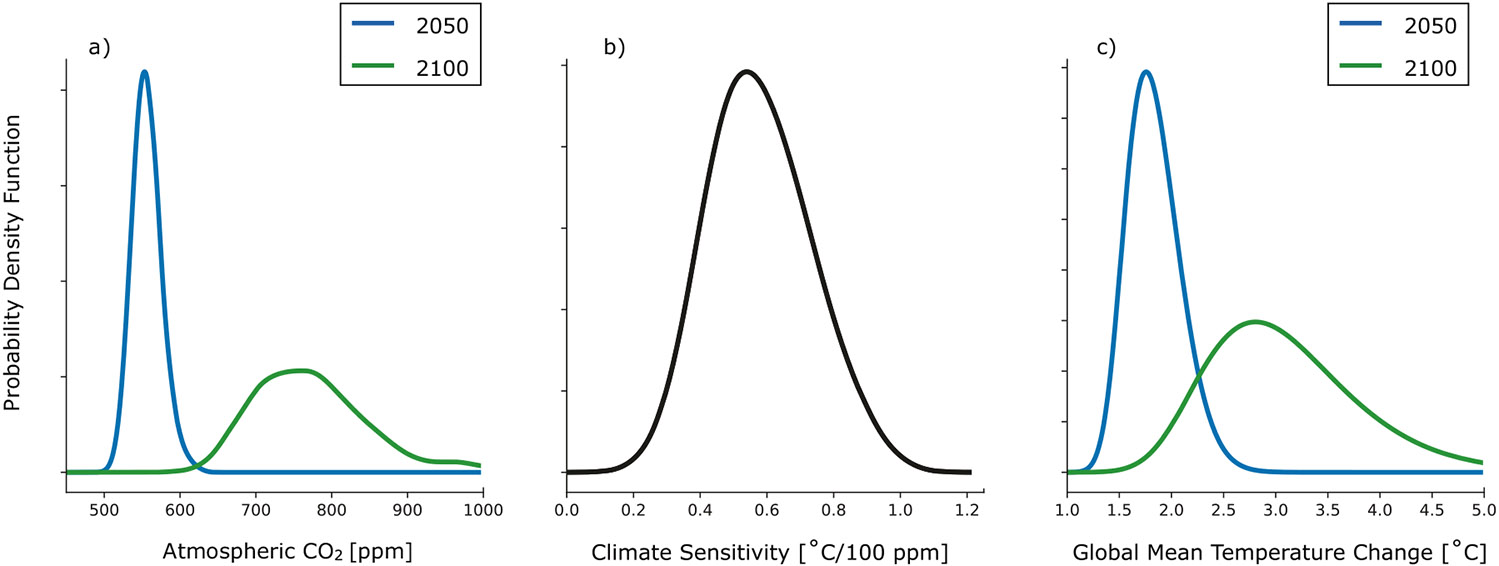
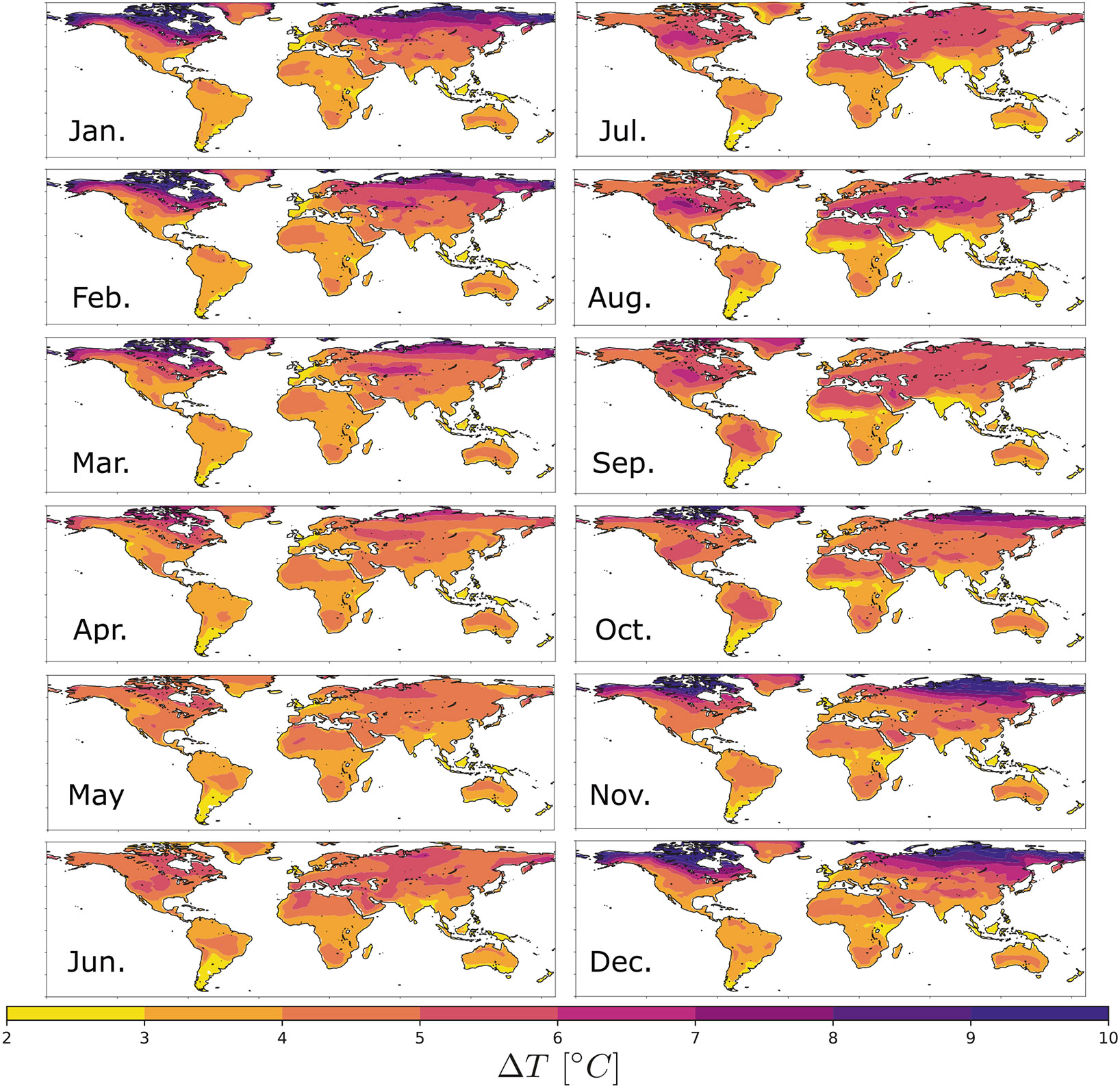
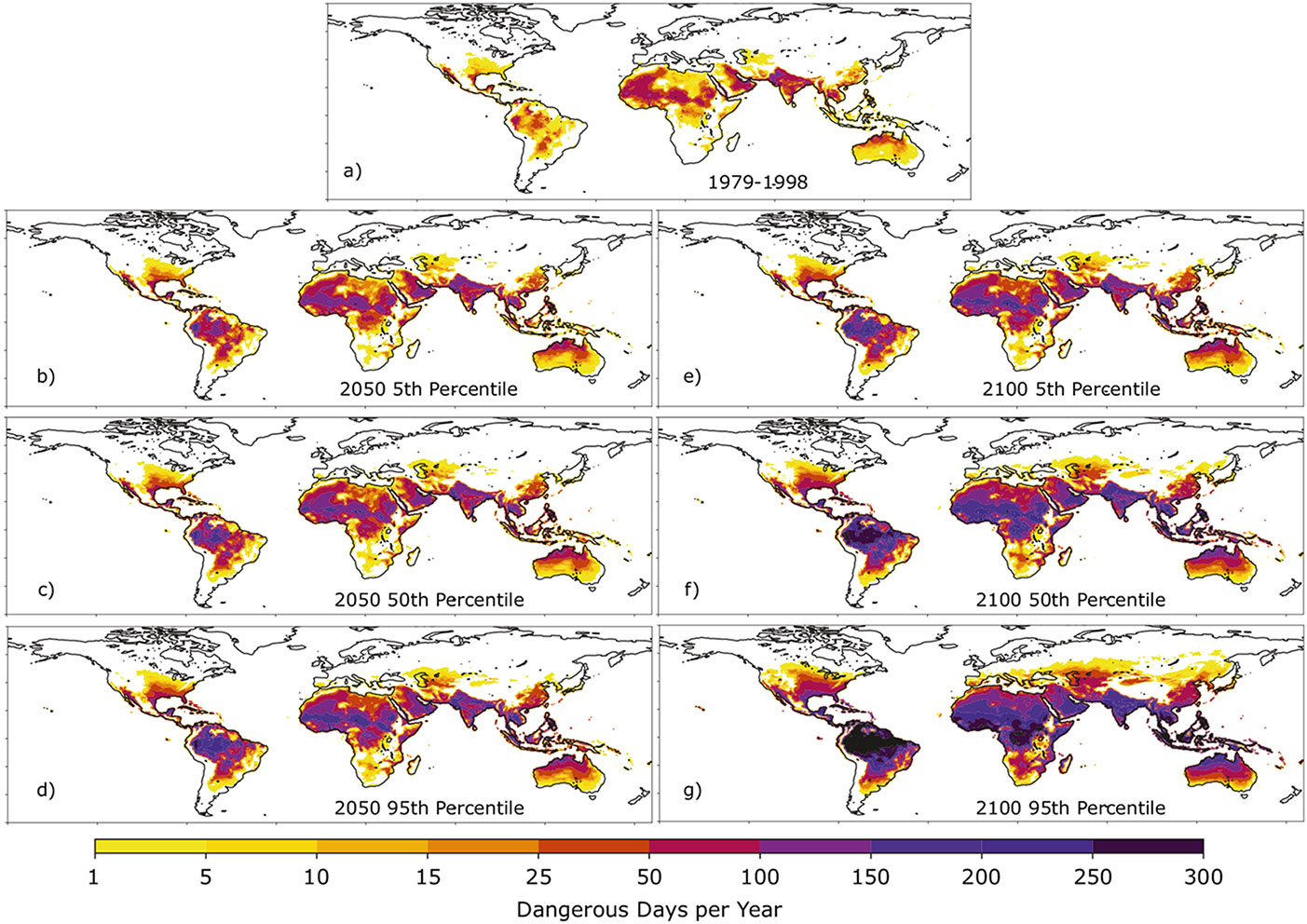
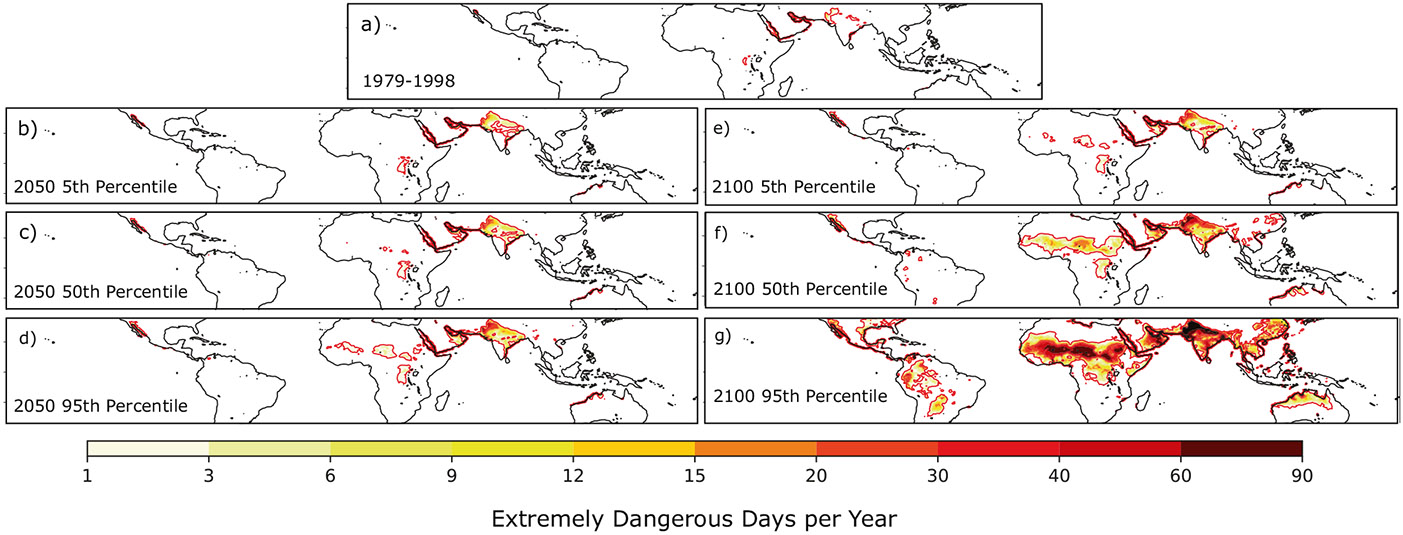
Verification
Claims the paper makes
The claims and statistics of this paper haven’t been checked yet.
Free: it reads the open-access text and checks the first 5 claims that cite a source we can check. Create a free account to check every claim.
Claims other papers make about this one
Each is checked against this paper’s own text: does it say what the citing paper says it does?
The source backs part of the claim, not all of it — or backs it for a different population, condition or comparison.
In the citing paper
“All of these aspects of climate change threaten food, water, and other resource security and dramatically increase the risk of heat-related illness and death.71, 75, 76, 77, 78”
From Global fertility in 204 countries and territories, 1950–2021, with forecasts to 2100: a comprehensive demographic analysis for the Global Burden of Disease Study 2021 (2024) · cites this paper as [76]
Experimental — accuracy not yet measured
Self-check
Percentages, sums and reported differences re-computed from the paper’s own numbers.
The self-check needs the paper’s full text.
Citations
Cites
The NCEP/NCAR 40-Year Reanalysis Project
Kalnay, E., Kanamitsu, M., Kistler, R., Collins, W., Deaven, D., Gandin, L., Iredell, M., Saha, S., White, G., Woollen, J., et al. (1996) · Bulletin of the American Meteorological Society · doi:10.1175/1520-0477(1996)077<0437:tnyrp>2.0.co;2 · Cited by 28,360
Climate Extremes: Observations, Modeling, and Impacts
Easterling, D. R., Meehl, G. A., Parmesan, C., Changnon, S. A., Karl, T. R., & Mearns, L. O. (2000) · Science · doi:10.1126/science.289.5487.2068 · Cited by 4,867 · cited 1×
“Given the interest in temperature extremes driven by climate change 7-9 and new research showing that warming has already caused some populations to experience heat stress that approaches the limit of survivability 10 , this paper will quantify the extent to which different regions across Earth’s…”
Friedlingstein, P., O'Sullivan, M., Jones, M. W., Andrew, R. M., Hauck, J., Olsen, A., Peters, G. P., Peters, W., Pongratz, J., Sitch, S., et al. (2020) · Earth System Science Data · doi:10.5194/essd-12-3269-2020 · Cited by 2,544
Heat Stress and Public Health: A Critical Review
Kovats, R. S., & Hajat, S. (2008) · Annual Review of Public Health · doi:10.1146/annurev.publhealth.29.020907.090843 · Cited by 1,896 · cited 3×
“We calculated the global mean temperature for each year from 2015 to 2100 using output from 23 models that participated in the Coupled Model Intercomparison Project Phase 6 (CMIP6) and were forced by four different emissions scenarios (SSP1-2.”
InfluentialRobustness and uncertainties in the new CMIP5 climate model projections
Knutti, R., & Sedláček, J. (2013) · Nature Climate Change · doi:10.1038/nclimate1716 · Cited by 1,569 · cited 2×
“While the mean warming pattern is known to be relatively consistent across climate models 17 and the relationship between relative humidity changes over land and global mean temperature change has been detailed from observations 18 , there is still uncertainty in these pattern effects that is not…”
An Assessment of Earth's Climate Sensitivity Using Multiple Lines of Evidence
Sherwood, S. C., Webb, M. J., Annan, J. D., Armour, K. C., Forster, P. M., Hargreaves, J. C., Hegerl, G., Klein, S. A., Marvel, K. D., Rohling, E. J., et al. (2020) · Reviews of Geophysics · doi:10.1029/2019rg000678 · Cited by 1,254 · cited 1×
“The uncertainty in transient climate sensitivity is similar to that reported in other studies 13 and reflects the different model physics and parameterizations that lead to various amounts of global warming across climate models forced by the same amount of anthropogenic emissions.”
An adaptability limit to climate change due to heat stress
Sherwood, S. C., & Huber, M. (2010) · Proceedings of the National Academy of Sciences · doi:10.1073/pnas.0913352107 · Cited by 1,236
The emergence of heat and humidity too severe for human tolerance
Raymond, C., Matthews, T., & Horton, R. M. (2020) · Science Advances · doi:10.1126/sciadv.aaw1838 · Cited by 839 · cited 2×
“…7-9 and new research showing that warming has already caused some populations to experience heat stress that approaches the limit of survivability 10 , this paper will quantify the extent to which different regions across Earth’s land surface will experience “dangerous” and “extremely dangerous”…”
Less than 2 °C warming by 2100 unlikely
Raftery, A. E., Zimmer, A., Frierson, D. M. W., Startz, R., & Liu, P. (2017) · Nature Climate Change · doi:10.1038/nclimate3352 · Cited by 711
Self-citationReductions in labour capacity from heat stress under climate warming
Dunne, J. P., Stouffer, R. J., & John, J. G. (2013) · Nature Climate Change · doi:10.1038/nclimate1827 · Cited by 660
Research works printed but not linked: 2
- IPCC. Climate Change 2021: The Physical Science Basis. Contribution of Working Group I to the Sixth Assessment Report of the Intergovernmental Panel on Climate Change (Cambridge University Press, 2021).
- Changnon SA, Kunkel KE & Reinke BC Impacts and responses to the 1995 heat wave: a call to action. Bull. Am. Meteorol. Soc 77, 1497– 1506 (1996). · doi:10.1175/1520-0477(1996)077
Cited by
Bhattacharjee, N. V., Schumacher, A. E., Aali, A., Abate, Y. H., Abbasgholizadeh, R., Abbasian, M., Abbasi-Kangevari, M., Abbastabar, H., Abd ElHafeez, S., Abd-Elsalam, S., et al. (2024) · The Lancet · doi:10.1016/s0140-6736(24)00550-6 · Cited by 629
Mahesh, A., Collins, W. D., Bonev, B., Brenowitz, N., Cohen, Y., Elms, J., Harrington, P., Kashinath, K., Kurth, T., North, J. S., et al. (2025) · Geoscientific model development · doi:10.5194/gmd-18-5575-2025 · Cited by 81
Impacts of warming on outdoor worker well-being in the tropics and adaptation options
Masuda, Y. J., Parsons, L. A., Spector, J. T., Battisti, D. S., Castro, B., Erbaugh, J. T., Game, E. T., Garg, T., Kalmus, P. M., Kroeger, T., et al. (2024) · One Earth · doi:10.1016/j.oneear.2024.02.001 · Cited by 72
Self-citationHeat waves accelerate the spread of infectious diseases
Lian, X., Huang, J., Li, H., He, Y., Ouyang, Z., Fu, S., Zhao, Y., Wang, D., Wang, R., & Guan, X. (2023) · Environmental Research · doi:10.1016/j.envres.2023.116090 · Cited by 62
Daily rainfall variability controls humid heatwaves in the global tropics and subtropics
Jackson, L., Birch, C. E., Chagnaud, G., Marsham, J. H., & Taylor, C. M. (2025) · Nature Communications · doi:10.1038/s41467-025-58694-6 · Cited by 60
A rapidly closing window for coral persistence under global warming
Bozec, Y., Adam, A. A. S., Nava, B. A., Cresswell, A. K., Haller‐Bull, V., Iwanaga, T., Lachs, L., Matthews, S. A., McWhorter, J. K., Anthony, K. R. N., et al. (2025) · Nature Communications · doi:10.1038/s41467-025-65015-4 · Cited by 62
“Under a more likely scenario of ~2.7°C global warming 33,34 (SSP2-4.”
InfluentialGloUTCI-M: a global monthly 1 km Universal Thermal Climate Index dataset from 2000 to 2022
Yang, Z., Peng, J., Liu, Y., Jiang, S., Cheng, X., Liu, X., Dong, J., Hua, T., & Yu, X. (2024) · Earth system science data · doi:10.5194/essd-16-2407-2024 · Cited by 52
Accelerated Historical and Future Warming in the Middle East and North Africa
Malik, A., Stenchikov, G. L., Mostamandi, S., Parajuli, S., Lelieveld, J., Zittis, G., Ahsan, M. S., Atique, L., & Usman, M. (2024) · Journal of Geophysical Research Atmospheres · doi:10.1029/2024jd041625 · Cited by 57
“Desert areas have also warmed at rates exceeding the global average warming rate (Zittis et al., 2022), especially in the tropics and subtropics (Bathiany et al., 2018; Battisti & Naylor, 2009; Fischer & Knutti, 2013; Mora et al., 2017; Vargas Zeppetello et al., 2022; Willett & Sherwood, 2012).”
DiluviumDEM: Enhanced accuracy in global coastal digital elevation models
Dusseau, D., Zobel, Z., & Schwalm, C. R. (2023) · Remote Sensing of Environment · doi:10.1016/j.rse.2023.113812 · Cited by 44
Houghton, B. D. V., Rosenblum, J. S., Lampi, K., Beaudry, E. G., Herron, J., del Cerro, M., Finnda, C. T. K. D., Elimelech, M., Gilron, J., & Cath, T. Y. (2024) · ACS ES&T Water · doi:10.1021/acsestwater.4c00673 · Cited by 42
Perspective on the Era of Global Boiling: A Future beyond Global Warming
Amnuaylojaroen, T. (2023) · Advances in Meteorology · doi:10.1155/2023/5580606 · Cited by 51
“According to a study conducted by Vargas Zeppetello et al. [25], it was shown that the likelihood of experiencing elevated heat index values is projected to rise by 50–100% in a signifcant portion of tropical regions and by a factor of 3–10 in numerous midlatitude areas.”
MethodSawadogo, W., Neya, T., Semde, I., Korahiré, J. A., Combasséré, A. W., Traoré, D. E., Ouedraogo, P., Diasso, U. J., Abiodun, B. J., Bliefernicht, J., et al. (2024) · Environmental Challenges · doi:10.1016/j.envc.2024.100860 · Cited by 43
“With the SSP scenarios, our results are consistent with the study of Zeppetello et al. (2022) in terms of the increase of dangerous HI days per year.”
ResultJiang, J., Shi, S., & Raftery, A. E. (2025) · Communications Earth & Environment · doi:10.1038/s43247-025-02743-x · Cited by 39
“In addition toprojecting global temperature change, this approach has beenusedtoproducelocalprobabilisticclimateprojections 9 andprojections of the number of hot days in given locations 10 .”
Self-citationFang, Z., Mao, Y., Zhu, Y., Lu, J., Zheng, Z., & Chen, X. (2023) · The Science of The Total Environment · doi:10.1016/j.scitotenv.2023.162779 · Cited by 36
Ramaswami, A., Pandey, B., Li, Q., Das, K., & Nagpure, A. S. (2023) · Annual Review of Environment and Resources · doi:10.1146/annurev-environ-112621-063931 · Cited by 49
Qiuyue, Z., Tao, L., Song, H., Lin, Y., Ji, Y., Geng, J., Yu, K., & Liu, J. (2025) · Sustainable Cities and Society · doi:10.1016/j.scs.2025.106300 · Cited by 33
High-resolution projections of ambient heat for major European cities using different heat metrics
Schwingshackl, C., Daloz, A. S., Iles, C. E., Aunan, K., & Sillmann, J. (2024) · Natural hazards and earth system sciences · doi:10.5194/nhess-24-331-2024 · Cited by 32
A supply-demand model of vegetation cooling for urban heatwave mitigation
Li, W., & Sun, R. (2023) · Urban Climate · doi:10.1016/j.uclim.2023.101699 · Cited by 32
Alvarez, I., Díaz-Poso, A., Lorenzo, M. N., & Royé, D. (2024) · Atmospheric Research · doi:10.1016/j.atmosres.2024.107512 · Cited by 30
Gómez-Guzmán, J. A., Parra‐Bracamonte, G. M., & Velazquez, M. A. (2024) · Animals · doi:10.3390/ani14152280 · Cited by 34
Asresu, A. T., Furlan, E., Horneman, F., Zennaro, F., Nguyen, N. D., Torresan, S., Critto, A., & Marcomini, A. (2025) · Estuarine Coastal and Shelf Science · doi:10.1016/j.ecss.2025.109194 · Cited by 31
Dong, W. G., Jia, X., & Wu, R. (2023) · Environmental Research Letters · doi:10.1088/1748-9326/ad1435 · Cited by 28
“…more serious and far-reaching impact on ecologically sustainable development, global food supply, social balance, and human health than regional heatwave events (Mazdiyasni et al 2017, Zscheischler et al 2017, Kornhuber et al 2019, Kuhla et al 2021, Stone et al 2021, Vargas Zeppetello et al 2022).”
BackgroundIt's getting hot in here: Spatial impact of humidity on heat wave severity in the U.S.
Narayanan, A., Rezaali, M., Bunting, E., & Keellings, D. J. (2025) · The Science of The Total Environment · doi:10.1016/j.scitotenv.2025.178397 · Cited by 27
Molina, S., Gómez-Soriano, J., Lopez-Juarez, M., & Olcina-Girona, M. (2023) · Energy Conversion and Management · doi:10.1016/j.enconman.2023.117968 · Cited by 28
Temperature overshoot responses to ambitious forestation in an Earth System Model
Moustakis, Y., Nützel, T., Wey, H., Bao, W., & Pongratz, J. (2024) · Nature Communications · doi:10.1038/s41467-024-52508-x · Cited by 28
“…to infer upon the appropriateness of large-scale AR, one should also consider AR-induced changes in climate hazard exposure, such as droughts 108 , rainfall variability and extremes 59,109 , heat stress 110 , and compound events 111 , that could increase adaptation needs locally or regionally 112 .”
Rapid Acceleration of Dangerous Compound Heatwaves and Their Impacts in a Warmer China
Dong, W. G., Jia, X., Qian, Q., & Li, X. (2023) · Geophysical Research Letters · doi:10.1029/2023gl104850 · Cited by 23
“Compared to single extreme heatwaves, multivariate CHWs possess the potential to amplify the overall risk and trigger cascading impacts on human health, ecological well-being, and the environment, and have garnered considerable attention (Vargas Zeppetello et al., 2022).”
BackgroundVirgilio, G. D., Ji, F., Tam, E., Evans, J. P., Kala, J., Andrys, J., Thomas, C. J., Choudhury, D., Rocha, C. V., Li, Y., et al. (2025) · Geoscientific model development · doi:10.5194/gmd-18-703-2025 · Cited by 28
Gebhardt, N., Schwaab, L., Friederich, H.-C., & Nikendei, C. (2023) · Frontiers in Psychiatry · doi:10.3389/fpsyt.2023.1274523 · Cited by 20
Omitting labor responses underestimates the effects of future heat stress on agriculture
Sheng, D., Zhao, X., Edmonds, J., Morris, S. T., Patel, P., O’Neill, B. C., Tebaldi, C., & Wise, M. (2025) · Communications Earth & Environment · doi:10.1038/s43247-025-02318-w · Cited by 21
“While our estimates of exogenous agricultural labor productivity loss generally align with the literature 19,29,35 , showing that labor in Africa, Southeast Asia, and South Asia is more vulnerable to future higher temperatures and humidity, the magnitude is sensitive to both GCM and labor-heat…”
Jia, L., Delworth, T. L., Yang, X., Cooke, W. F., Johnson, N. C., Zhang, L., Joh, Y., Lu, F., & McHugh, C. E. (2024) · npj Climate and Atmospheric Science · doi:10.1038/s41612-024-00723-0 · Cited by 22
“Despite the growing body of research on HHE, studies have primarily focused on future projections 5,13 – 16 .”
BackgroundResultOhashi, Y., Ihara, T., Oka, K., Takane, Y., & Kikegawa, Y. (2023) · Scientific Reports · doi:10.1038/s41598-023-44181-9 · Cited by 19
Parajuli, S., Biggs, T. W., Sales, F. D., Zavala, M., He, C., Jones, C., Thompson, C. F., López-Gálvez, N. I., Ciborowski, H. M., Quintino, T., et al. (2024) · Communications Earth & Environment · doi:10.1038/s43247-024-01959-7 · Cited by 18
Shindell, D. T., Faluvegi, G., Nagamoto, E., Parsons, L. A., & Zhang, Y. (2024) · Proceedings of the National Academy of Sciences · doi:10.1073/pnas.2312832120 · Cited by 21
“For heat - related deaths, many studies show projected increases in exposure to extreme heat across the globe (13, 14).”
BackgroundAnthropogenic climate change drives rising global heat stress and its spatial inequality
Peng, J., Wang, Q., Yang, Z., Dong, J., Yu, X., & Corcoran, J. (2026) · Nature Communications · doi:10.1038/s41467-026-69164-y · Cited by 25
“This trend is projected to intensify, which was reported that even under 2 °C warming scenarios, exposure to dangerous heat stress levels might increase dramatically in the tropics and midlatitudes, with a tenfold increase likely in many areas by 2100 19 .”
Citizen and machine learning-aided high-resolution mapping of urban heat exposure and stress
Wang, X., Hsu, A., & Chakraborty, T. (2023) · Environmental Research Infrastructure and Sustainability · doi:10.1088/2634-4505/acef57 · Cited by 20
“Climate change is increasing the probability of intense, prolonged heat waves in many parts of the world (IPCC, 2021; Vargas Zeppetello et al., 2022).”
BackgroundLi, Y., Zhai, Z., Tian, Y., Fang, Z., Jiang, X., Mao, Y., & Zheng, Y. (2024) · Case Studies in Thermal Engineering · doi:10.1016/j.csite.2024.105049 · Cited by 17
Omokpariola, D. O. (2025) · iScience · doi:10.1016/j.isci.2025.112995 · Cited by 16
Pranta, A. M., Islam, S. M. A., & Khan, R. I. (2025) · Smart Agricultural Technology · doi:10.1016/j.atech.2025.101306 · Cited by 16
Policy responses to extreme heat and its impact on education: The Philippine experience
Preña, E. M., & Labayo, C. P. (2024) · Policy Futures in Education · doi:10.1177/14782103241288276 · Cited by 18
“According to a study, the heat index is projected to increase global exposure to dangerous environments in the coming decades (Vargas Zeppetello et al., 2022).”
Li, X., Chen, Y., Zhu, Y., Shi, Y., An, N., & Liao, Z. (2023) · Frontiers in Environmental Science · doi:10.3389/fenvs.2022.1104039 · Cited by 14
Review of Cooling Effects from Roof Mitigation Strategies Against Urban Heat Island Effects
Yang, Y., Pan, Z., Zhang, B., Huang, S., Chen, X., & Hong, T. (2025) · Buildings · doi:10.3390/buildings15213835 · Cited by 17
The Effect of Air Pollution Control Auditing on Reducing Carbon Emissions: Evidence from China
Zhao, C., Zhu, J., Xu, Z., Wang, Y., Liu, B., Yuan, L., Wang, X., Xiong, J., & Zhao, Y. (2022) · International Journal of Environmental Research and Public Health · doi:10.3390/ijerph192417019 · Cited by 14
Occupant behavior and building type jointly shape indoor heat stress in Guangzhou urban villages
Xie, W., Yao, L., Xia, D., Zou, Y., Lou, S., & Yang, L. (2026) · Building and Environment · doi:10.1016/j.buildenv.2026.114505 · Cited by 13
Avoidable heat risk under scenarios of carbon neutrality by mid-century
Zhang, J., & You, Q. (2023) · The Science of The Total Environment · doi:10.1016/j.scitotenv.2023.164679 · Cited by 13
A comparative analysis of accelerating humid and dry heat stress in India
Sojan, J. M., & Srinivasan, J. (2024) · Environmental Research Communications · doi:10.1088/2515-7620/ad2490 · Cited by 13
No Trespassing! Abandoning the Novice/Expert Problem
Levy, N. L. (2024) · Erkenntnis · doi:10.1007/s10670-024-00794-8 · Cited by 15
Modelling mangrove dynamics in Mauritius: Implications for conservation and climate resilience
Sunkur, R., Kantamaneni, K., Bokhoree, C., Rathnayake, U., & Fernando, M. (2025) · Journal for Nature Conservation · doi:10.1016/j.jnc.2025.126864 · Cited by 13
Where heat does not come in waves: a framework for understanding and managing chronic heat
Cruz, M., Mach, K. J., Turek‐Hankins, L. L., Ashad‐Bishop, K. C., Bailey, Z., Evans, S. D., Fanning, A., Fernandez-Burgos, M., Gilbert, J., Howard, B., et al. (2025) · Environmental Research Climate · doi:10.1088/2752-5295/adc827 · Cited by 18
“Adapted from [3].”
Impact of climate change induced heat stress on the people working in the coastal cities of India
Kumar, T. V. L., Bharath, J., Filho, W. L., Barbosa, H. A., & Rao, K. K. (2024) · Natural Hazards · doi:10.1007/s11069-024-06872-y · Cited by 13
“There will be an increase in the exposure to dangerous levels of heat stress of 50–100% across the tropical regions (Vargas et al. 2022a).”
InfluentialCoping with extreme heat: current exposure and implications for the future
Weitz, C. A. (2024) · Evolution Medicine and Public Health · doi:10.1093/emph/eoae015 · Cited by 11
(2024) · International Journal of Agriculture and Biosciences · doi:10.47278/journal.ijab/2024.200 · Cited by 11
Li, X., Luo, M., Li, J., Wu, S., Zhang, H., Huang, Z., Wang, Q., Cao, W., Tang, Y., & Wang, X. (2025) · Sustainable Cities and Society · doi:10.1016/j.scs.2025.106201 · Cited by 11
Vinodhkumar, B., Athira, U. N., Ullah, S., Rao, K. K., Osuri, K. K., & Al‐Ghamdi, S. G. (2025) · Environmental Research Letters · doi:10.1088/1748-9326/ade31d · Cited by 14
“On a global scale, the intensification of heat stress is expected as a consequence of climate change (Vargas Zeppetello et al 2022), with alarm-ingly high temperatures becoming increasingly prevalent in areas, such as sub-Saharan Africa, parts of the AP, and much of the Indian subcontinent (Ullah…”
Kim, G.-J., Jo, H., Cho, M. S., Noh, N. J., Han, S. H., Khamzina, A., Kim, H., & Son, Y. (2024) · Scientific Reports · doi:10.1038/s41598-024-56120-3 · Cited by 10
Adaptation to heat stress: a qualitative study from Eastern India
Khetan, A. K., Yakkali, S., Dholakia, H. H., & Hejjaji, V. (2024) · Environmental Research Letters · doi:10.1088/1748-9326/ad33d2 · Cited by 10
“India is home to the largest number of people affected by high heat stress, a number only expected to grow with time [3].”
BackgroundEffective heat adaptation must engage with unequal heat risk
Singh, C., & Nirwan, N. (2024) · One Earth · doi:10.1016/j.oneear.2024.07.023 · Cited by 9
Spatiotemporal variation of intra-urban heat and heatwaves across Greater Sydney, Australia
Pfautsch, S., Wujeska‐Klause, A., & Walters, J. R. (2024) · Weather and Climate Extremes · doi:10.1016/j.wace.2024.100741 · Cited by 12
Virginia Heat Watch: Collaboration to assess climate vulnerability at local to regional scales
Lookingbill, T. R., Warren, K. P., Haley, J. C., Malcolm, E. G., Powell, L. J., Starr, S. M., Witiak, S. M., Wolyniak, M. J., & Zizzamia, B. (2024) · Urban Climate · doi:10.1016/j.uclim.2024.102252 · Cited by 10
Rahman, M. M., Mckeon, K. L., Luglio, D. G., Hossain, C. A., Rabito, F. A., Alam, N., Morrow, N., Gonzales, M., & Thurston, G. D. (2025) · The Science of The Total Environment · doi:10.1016/j.scitotenv.2025.180220 · Cited by 9
Probabilistic projections of temperature and rainfall for climate risk assessment in Vietnam
Tran-Anh, Q., & Ngo‐Duc, T. (2024) · Journal of Water and Climate Change · doi:10.2166/wcc.2024.461 · Cited by 8
Zhao, C., Kong, L., Zhong, C., & Ying, N. (2024) · Cities · doi:10.1016/j.cities.2024.105555 · Cited by 8
Evaluation of a Temperature/Humidity Data Logger for the Usage in Cattle Barns
Flessner, M., König, F., Guse, C., Iwersen, M., & Klein-Jöbstl, D. (2024) · Sensors · doi:10.3390/s24227117 · Cited by 8
Extreme Heat and Poor Air Quality: Dual Threats to Cardiovascular Health
Khatana, S. A. M., & Groeneveld, P. W. (2023) · Circulation · doi:10.1161/circulationaha.123.065572 · Cited by 8
Lethal Heat and Humidity Events
Zhou, S., Wu, Y. Y., Liu, Y., Gao, Y. F., Yu, P., Xu, R., Chen, G., Ye, T., Yu, W., Añel, J. A., et al. (2025) · Annual Review of Environment and Resources · doi:10.1146/annurev-environ-111523-102139 · Cited by 10
“Notably, many locations susceptible to future dangerous heat stress are also densely populated and thus more vulnerable (28, 29).”
Fiorentini, M., Orsini, R., Zenobi, S., Francioni, M., Rivosecchi, C., Bianchini, M., di Tella, B., D’Ottavio, P., Ledda, L., Santilocchi, R., et al. (2024) · Soil Use and Management · doi:10.1111/sum.13050 · Cited by 7
“Vargas Zeppetello et al. (2022) predicted an increase of 2°C on a global scale, which may result in a shift in growing areas of many crops.”
BackgroundPlant Multi-element Coupling as an Indicator of Nutritional Mismatches Under Global Change
Ochoa‐Hueso, R., Piñeiro, J., Morán, L. G., Grijalva, L. S., & Power, S. A. (2024) · Ecosystems · doi:10.1007/s10021-024-00914-z · Cited by 8
Expert Review: Confronting Climate-Driven Heat Risks to Maternal and Fetal Health
Marudo, C. P., Mohan, V., Paidas, M. J., Toledo, P., Fu, E. S., Junior, H. P. D. O. S., Shepherd, J. M., McHugh, E. G., Fletcher, M. M., & Shultz, J. M. (2025) · Obstetrical & Gynecological Survey · doi:10.1097/ogx.0000000000001361 · Cited by 8
Evaluating the Present and Future Heat Stress Conditions in the Grand Duchy of Luxembourg
Junk, J., Sulis, M., Trebs, I., & Torres-Matallana, J. A. (2024) · Atmosphere · doi:10.3390/atmos15010112 · Cited by 7
Weeding, B., Love, P. T., Beyer, K., Lucieer, A., & Remenyi, T. (2024) · International Journal of Biometeorology · doi:10.1007/s00484-024-02622-8 · Cited by 7
Tran, N. Q. L., Chu, C. M.-Y., Phung, H. N., Nghiem, S. H., Le, H. H. T. C., Tran, T.-H., & Phung, D. T. (2026) · Urban Climate · doi:10.1016/j.uclim.2026.102811 · Cited by 6
Farnham, C., Yuan, J., & Emura, K. (2025) · Clean Technologies · doi:10.3390/cleantechnol7010009 · Cited by 5
Trzebiatowski, L., Wehrle, F., Freick, M., Donat, K., & Wehrend, A. (2025) · Animals · doi:10.3390/ani15121772 · Cited by 7
“One of the greatest challenges for future agriculture in the face of progressive climate change is increasing heat stress in many parts of the world [43,44].”
A Theory on Regional Impacts of Global Warming
Eltahir, E. A. B., & Choi, Y. (2025) · Geophysical Research Letters · doi:10.1029/2025gl118808 · Cited by 5
“…diseases (Mora et al., 2022; Romanello et al., 2024; Siraj et al., 2014), outdoor days (Choi et al., 2024a, 2024b; Zhang et al., 2023), and heat stress (Choi & Eltahir, 2022; Koteswara Rao et al., 2020; Mora et al., 2017; Powis et al., 2023; Vargas Zeppetello et al., 2022; Y. Zhang et al., 2021).”
Amplified warming in tropical and subtropical cities under 2 °C climate change
Berk, S., Joshi, M. M., Goodess, C. M., & Nowack, P. J. (2026) · Proceedings of the National Academy of Sciences · doi:10.1073/pnas.2502873123 · Cited by 6
“City temperatures are already amplified due to the UHI in most regions, with exception of the most arid (33, 34), and globally all areas face increases in temperature due to climate change (35).”
Ragupathy, S., Pranavi, A. S., Latha, P. K., Garg, S. S., & Venugopal, V. (2025) · Human Factors and Ergonomics in Manufacturing & Service Industries · doi:10.1002/hfm.21062 · Cited by 5
Peplinski, M., Kalmus, P. M., & Sanders, K. T. (2023) · Environmental Research Letters · doi:10.1088/1748-9326/acfb96 · Cited by 5
“Global heat stress projections show significant growth in both exposure to and frequency of dangerous heat conditions through the 21st century [1, 2].”
BackgroundImpact of Building Energy Mitigation Measures on Future Climate
Pokhrel, R., Comarazamy, D., Ramamurthy, P., & González, J. E. (2023) · Atmosphere · doi:10.3390/atmos14030463 · Cited by 5
van der Meer, W., Zantinge, F., & Steeneveld, G. (2025) · City and Environment Interactions · doi:10.1016/j.cacint.2025.100201 · Cited by 5
Kushwaha, R., Kumar, P., & Hisaki, Y. (2025) · Atmospheric Research · doi:10.1016/j.atmosres.2025.108367 · Cited by 7
Robles, M. E., Oh, Y., Haque, M. T., Uy, M. J., Mueca, C. C., & Kim, L.-H. (2025) · Environmental Impact Assessment Review · doi:10.1016/j.eiar.2025.108250 · Cited by 4
Patil, A., Kakade, V. D., Kalalbandi, B. M., Morade, A., Chavan, S. B., Salunkhe, V. N., Nangare, D. D., Basavaraj, P. S., Jinger, D., & Reddy, K. S. (2024) · Environment Development and Sustainability · doi:10.1007/s10668-024-05619-w · Cited by 7
“So, with climate change and global warming, heat waves will increase with the rise in temperature in the coming years (Koteswara Rao et al., 2020; Vargas Zeppetello et al., 2022; Zhou et al., 2024).”
Exertional Heat Illness Prevention: Current Cooling Strategies and Promising Innovations
Caruso, J. F., King, K. M., & Jaggers, J. R. (2023) · ACSMʼs Health & Fitness Journal · doi:10.1249/fit.0000000000000911 · Cited by 4
“Lastly, heat illness and mortality are projected to rise with continued increases in global temperature (20 – 22).”
BackgroundYates, D. T., White, M. R., Curry, S. A., & Hahn, A. A. (2025) · Meat and Muscle Biology · doi:10.22175/mmb.20179 · Cited by 3
Climate mitigation outcomes from China-led emission reductions toward global carbon neutrality
Lei, Y., Wang, Z., Zhong, J., Yu, X., Guo, L., Tian, C., Li, L., Lu, Y., Zhang, D., Liu, L., et al. (2025) · National Science Review · doi:10.1093/nsr/nwaf545 · Cited by 4
“Driven by global warming, the frequency of heat extreme days is projected to keep rising throughout the 21st century [28 ].”
Rizmie, D., Christo, E., Carosella, E. A., Almstead, L., Bhinge, M., & Sivasankaran, A. (2025) · PLOS Climate · doi:10.1371/journal.pclm.0000637 · Cited by 3
“Projections also indicate that extreme heat events in India will not only intensify but also extend in duration, particularly during the monsoon months, when elevated humidity levels further amplify physiological heat stress and health risks [36–38].”
Intensifying global heat threatens livability for younger and older adults
Parsons, L. A., Baldwin, J. W., Guzmán-Echavarría, G., Jay, O., Kalmus, P. M., Staudmyer, H., Vanos, J., & Wolff, N. H. (2026) · Environmental Research Health · doi:10.1088/2752-5309/ae3c3a · Cited by 4
“For instance, the HI combines air temperature and relative humidity to estimate the apparent temperature [2], while UTCI accounts for temperature, humidity, wind speed, and solar radiation, estimating temperatures that yield an equivalent physiological strain [16].”
Qian, C., Xi, C., Wang, L., Guo, L., & Cao, S. (2026) · Urban Climate · doi:10.1016/j.uclim.2026.102881 · Cited by 3
Microbial-based stimulants on plant adaptation to climate change
Harsonowati, W., Manohara, D., Dwiastuti, M. E., Widawati, S., Suliasih, Sodiq, A. H., Khastini, R. O., & Purwani, J. (2024) · Elsevier eBooks · doi:10.1016/b978-0-443-15884-1.00015-4 · Cited by 3
Davidović, D., & Ivajnšič, D. (2024) · Journal for Geography · doi:10.18690/rg.19.1.4442 · Cited by 3
Comment on ‘CO2 fertilization effect may balance climate change impacts on oil palm cultivation’
Paterson, R. R. M. (2023) · Environmental Research Letters · doi:10.1088/1748-9326/ad1345 · Cited by 3
Does Microhabitat Elevation Play a Role in Thermal Stress Response in Porcelain Crab Embryos?
Holdreith, J. M. (2024) · doi:10.46569/3x816v909 · Cited by 3
Outcomes for a Heat Illness Prevention Program in Outdoor Workers: A 9-Year Overview
Perkison, W. B., Schaefer, C. M., Green-McKenzie, J., Roy, R. W., Shofer, F. S., & McCarthy, R. B. (2024) · Journal of Occupational and Environmental Medicine · doi:10.1097/jom.0000000000003051 · Cited by 2
Heat exposure during susceptible windows of spermatogenesis and sperm epigenetic age
Nobles, C. J., Canty, T. P., Mendola, P., Russo, L. M., Rabeya, K., Schliep, K. C., Shaaban, M., Singh, A., Ring, A., Hemmert, R. B., et al. (2026) · Human Reproduction · doi:10.1093/humrep/deag048 · Cited by 2
Zhao, Q., Tao, L., Qinranji, G., Song, H., Zheng, X., Yu, K., & Liu, J. (2026) · Mitigation and Adaptation Strategies for Global Change · doi:10.1007/s11027-026-10320-6 · Cited by 2
“The combined and coupled impacts of these factors elevate overall urban temperatures and increase the frequency and intensity of extreme heatwave events (Guo et al. 2023; Ignjačević et al. 2024; Mitchell 2021; Vargas Zeppetello et al. 2022).”
Lin, Y., Qian, W., Zhang, X., & Yang, Y. (2024) · Polish Journal of Environmental Studies · doi:10.15244/pjoes/175263 · Cited by 2
Climate change exacerbates the compounding of heat stress and flooding in the mid‐latitudes
Treppiedi, D., Villarini, G., & Noto, L. (2024) · International Journal of Climatology · doi:10.1002/joc.8453 · Cited by 3
“…increases in temperature are expected to lead to an increased capacity of the atmosphere to hold water vapour (Fowler et al., 2021), with negative impacts related to heat stress conditions (e.g., Coffel et al., 2017; Mora et al., 2017; Pörtner et al., 2022; Vargas Zeppetello et al., 2022).”
BackgroundAdeleye, O. C., & Risenga, I. M. (2024) · Biomedical & Pharmacology Journal · doi:10.13005/bpj/3032 · Cited by 2
Khanna, J., & Karan, K. M. (2025) · Environmental Research Letters · doi:10.1088/1748-9326/add174 · Cited by 1
Energy and emission changes in industrial sectors: evidence from Indonesia
Zain, R. K., Patunru, A. A., & Hartono, D. (2025) · Energy Sources Part B Economics Planning and Policy · doi:10.1080/15567249.2025.2532161 · Cited by 1
Global metrics quantify shifts in chronic heat
Fanning, A., Mach, K. J., Cruz, M., & Clement, A. (2026) · Climatic Change · doi:10.1007/s10584-026-04254-w · Cited by 1
“…frequent, intense, and prolonged (Perkins-Kirkpatrick and Lewis 2020; Romanello et al. 2021), with probabilistic projections indicating substantial increases in heat stress under continued Extended author information available on the last page of the article warming (Vargas Zeppetello et al. 2022).”
Metadata
- Authors
- Vargas Zeppetello, L. R., Raftery, A. E., & Battisti, D. S.
- Affiliations
- University of Washington (US)
- Venue
- Communications Earth & Environment
- Published
- 2022-08-25
- Volume
- 3
- Issue
- 1
- ISSN
- 2662-4435 (ISSN-L)
- PMC
- PMC11485542
- OpenAlex
- W4293237588
- Cited by
- 140
- References
- 22
- Citations by year
- 2026: 27 · 2025: 41 · 2024: 42 · 2023: 29 · 2022: 1
- FWCI
- 11.09
- Type
- journal article
- Language
- en
- Open access
- gold
- doi.org
- Licence
- cc-by
- creativecommons.org/licenses/by/4.0 (tdm)
- creativecommons.org/licenses/by/4.0 (vor)
- Locations
- Communications Earth & Environment (publishedVersion, cc-by)
- PubMed (publishedVersion)
- PubMed Central (acceptedVersion, cc-by)
- HAL (submittedVersion, cc-by-nc-nd)
- DOAJ (DOAJ: Directory of Open Access Journals) (submittedVersion, cc-by-sa)
- Funders
- James S. McDonnell Foundation
- Topics
- Physical Sciences › Environmental Science › Health, Toxicology and Mutagenesis › Climate Change and Health Impacts
- Physical Sciences › Environmental Science › Global and Planetary Change › Climate variability and models
- Physical Sciences › Environmental Science › Global and Planetary Change › Climate Change and Environmental Impact
- Keywords
- heat stress, heat index, climate change projections, anthropogenic CO2 emissions, heat waves, tropical regions, mid-latitudes, human health exposure
About these checks
Registry, retraction, Cites and statistics results are computed, not judged, with one exception: a printed reference that no index lists is read once by a model before it counts as a citation error. Claims are extracted by a model and kept only when their quote appears verbatim in the text; each cited source is then checked, with a model’s help, for whether it says what the claim relies on. Those verdicts can be wrong — read the claim’s quote and the cited source before relying on one.
Statistics and arithmetic are recomputed, not judged.
Confidence bands are shown only for fields calibrated on our annotated test set. None is calibrated yet, so no band is shown.
What counts as a claim ›How we measure confidence ›How we check this ›
Are you an author, or do you see a problem with this page? Request a review
Data sources
Bibliographic data: Semantic Scholar, OpenAlex, Crossref.
Contains information from the Semantic Scholar Academic Graph Datasets, made available under the ODC Attribution License (ODC-BY 1.0).
Semantic Scholar’s data is described in: Kinney, R., et al. (2023). The Semantic Scholar Open Data Platform. arXiv:2301.10140.
