

The DOI matches its Crossref record; 59 of the 59 references it cites were found in a registry or an index.
Regulatory potential for concerted modulation of Nrf2- and Nfkb1-mediated gene expression in inflammation and carcinogenesis
Open accessAbstract
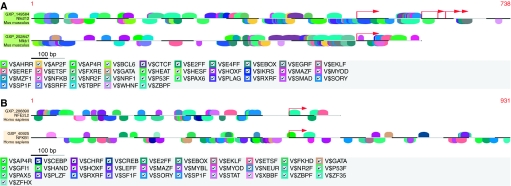
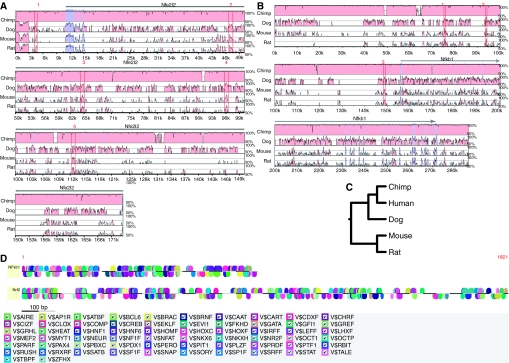
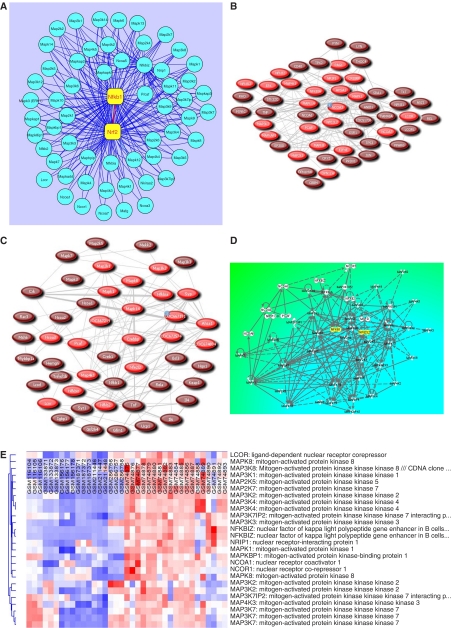
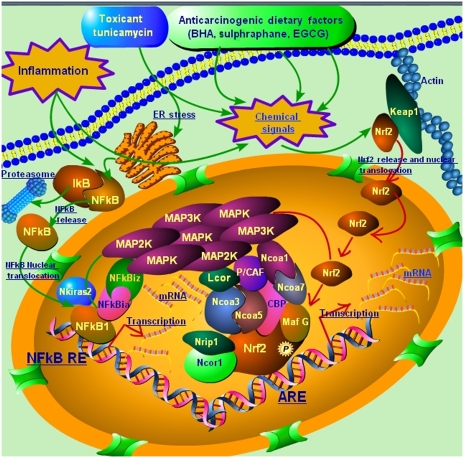
Many studies have implicated nuclear factor E2-related factor 2 (Nrf2) and nuclear factor-kappaB1 (Nfkb1) in inflammation and cancer. However, the regulatory potential for crosstalk between these two important transcription factors in inflammation and carcinogenesis has not been explored. To delineate conserved transcription factor-binding site signatures, we performed bioinformatic analyses on the promoter regions of human and murine Nrf2 and Nfkb1. We performed multiple sequence alignment of Nrf2 and Nfkb1 genes in five mammalian species - human, chimpanzee, dog, mouse and rat - to explore conserved biological features. We constructed a canonical regulatory network for concerted modulation of Nrf2 and Nfkb1 involving several members of the mitogen-activated protein kinase (MAPK) family and present a putative model for concerted modulation of Nrf2 and Nfkb1 in inflammation/carcinogenesis. Our results reflect potential for putative crosstalk between Nrf2 and Nfkb1 modulated through the MAPK cascade that may influence inflammation-associated etiopathogenesis of cancer. Taken together, the elucidation of potential relationships between Nrf2 and Nfkb1 may help to better understand transcriptional regulation, as well as transcription factor networks, associated with the etiopathogenesis of inflammation and cancer.
Overview
The claims and statistics of this paper haven’t been checked yet.
Run the check — free, no account needed. It reads the open-access text and checks the sources it cites.
Integrity signals
Registry
Cites
Statistics
Figures
Verification
Claims the paper makes
The claims and statistics of this paper haven’t been checked yet.
Run the check — free, no account needed. It reads the open-access text and checks the sources it cites.
Claims other papers make about this one
Each is checked against this paper’s own text: does it say what the citing paper says it does?
In the citing paper
“In addition, decreased levels of Nrf2, a transcription factor negatively regulated by NF-κB (Liu et al., 2008) that is involved in antioxidants response mechanisms (Nair et al., 2008), have been reported in the brains of AD patients (Ramsey et al., 2007).”
From Exploring the Therapeutic Potential of Phytochemicals in Alzheimer’s Disease: Focus on Polyphenols and Monoterpenes (2022) · cites this paper as Nair et al., 2008
Self-check
Percentages, sums and reported differences re-computed from the paper’s own numbers.
The self-check needs the paper’s full text.
Citations
Cites
Cytoscape: A software Environment for integrated models of biomolecular interaction networks
Shannon, P., Markiel, A., Ozier, O., Baliga, N. S., Wang, J. T., Ramage, D., Amin, N., Schwikowski, B., & Ideker, T. (2003) · Genome Research · doi:10.1101/gr.1239303 · Cited by 51,888
Coussens, L. M., & Werb, Z. (2002) · Nature · doi:10.1038/nature01322 · Cited by 15,111
Inflammation and cancer: back to Virchow?
Balkwill, F., & Mantovani, A. (2001) · The Lancet · doi:10.1016/s0140-6736(00)04046-0 · Cited by 7,746
NF-κB: linking inflammation and immunity to cancer development and progression
Karin, M., & Greten, F. R. (2005) · Nature reviews. Immunology · doi:10.1038/nri1703 · Cited by 3,175
Model-based analysis of oligonucleotide arrays: Expression index computation and outlier detection.
Li, C., & Wong, W. H. (2001) · Proceedings of the National Academy of Sciences · doi:10.1073/pnas.98.1.31 · Cited by 3,133
Quandt, K., Frech, K., Karas, H., Wingender, E., & Werner, T. (1995) · Nucleic Acids Research · doi:10.1093/nar/23.23.4878 · Cited by 2,587
MatInspector and beyond: promoter analysis based on transcription factor binding sites
Cartharius, K., Frech, K., Grote, K., Klocke, B., Haltmeier, M., Klingenhoff, A., Frisch, M., Bayerlein, M., & Werner, T. (2005) · Computer applications in the biosciences · doi:10.1093/bioinformatics/bti473 · Cited by 2,003
LAGAN and Multi-LAGAN: Efficient tools for large-scale multiple alignment of genomic DNA
Brudno, M., Do, C. B., Cooper, G. M., Kim, M. F., Davydov, E., Program, N. C. S., Green, E. D., Sidow, A., & Batzoglou, S. (2003) · Genome Research · doi:10.1101/gr.926603 · Cited by 1,115
Ramos-Gomez, M., Kwak, M.-K., Dolan, P. M., Itoh, K., Yamamoto, M., Talalay, P., & Kensler, T. W. (2001) · Proceedings of the National Academy of Sciences · doi:10.1073/pnas.051618798 · Cited by 1,102
Li, C., & Wong, W. H. (2001) · Genome biology · doi:10.1186/gb-2001-2-8-research0032 · Cited by 977
Cited by
Sorted by citations
Brigelius-Flohé, R., & Maiorino, M. (2013) · Biochimica et Biophysica Acta (BBA) - General Subjects · doi:10.1016/j.bbagen.2012.11.020 · Cited by 1,904
NRF2, a Transcription Factor for Stress Response and Beyond
He, F., Ru, X., & Wen, T. (2020) · International Journal of Molecular Sciences · doi:10.3390/ijms21134777 · Cited by 1,820
The Nrf2 cell defence pathway: Keap1-dependent and -independent mechanisms of regulation
Bryan, H. K., Olayanju, A., Goldring, C. E., & Park, B. K. (2012) · Biochemical Pharmacology · doi:10.1016/j.bcp.2012.11.016 · Cited by 1,047
Buendía, I., Michalska, P., Navarro, E., Gameiro‐Ros, I., Egea, J., & Leon, R. M. (2015) · Pharmacology & Therapeutics · doi:10.1016/j.pharmthera.2015.11.003 · Cited by 698
When NRF2 Talks, Who's Listening?
Wakabayashi, N., Slocum, S. L., Skoko, J. J., Shin, S., & Kensler, T. W. (2010) · Antioxidants & Redox Signaling · doi:10.1089/ars.2010.3216 · Cited by 595
Metadata
- Authors
- Nair, S., Doh, S. T., Chan, J. Y., Kong, A.-N., & Cai, L.
- Affiliations
- Rutgers, The State University of New Jersey (US)
- University of California, Irvine (US)
- Corresponding author
- Cai, L
- Venue
- British Journal of Cancer
- Published
- 2008-12
- Volume
- 99
- Issue
- 12
- Pages
- 2070-2082
- ISSN
- 0007-0920 (ISSN-L)
- 1532-1827
- PMC
- PMC2607222
- OpenAlex
- W2059649811
- Cited by
- 167
- References
- 58
- Citations by year
- 2026: 8 · 2025: 9 · 2024: 6 · 2023: 7 · 2022: 11 · 2021: 8 · 2020: 13 · 2019: 13 · 2018: 10 · 2017: 16 · 2016: 13 · 2015: 11 · 2014: 7 · 2013: 8 · 2012: 10
- FWCI
- 2.20
- Type
- journal article
- Language
- en
- Open access
- hybrid
- doi.org
- Licence
- cc-by-nc-sa
- www.springer.com/tdm (unspecified)
- Locations
- British Journal of Cancer (publishedVersion, cc-by-nc-sa)
- PubMed Central (publishedVersion, cc-by)
- PubMed (publishedVersion)
- Rutgers University Community Repository (Rutgers University) (submittedVersion)
- eScholarship (California Digital Library) (submittedVersion, cc-by)
- Funders
- National Institutes of Health
- National Cancer Institute (CA133675, R01CA094828, R21CA133675)
- National Institute of Environmental Health Sciences (P30ES005022)
- Topics
- Life Sciences › Biochemistry, Genetics and Molecular Biology › Molecular Biology › Genomics, phytochemicals, and oxidative stress
- Life Sciences › Biochemistry, Genetics and Molecular Biology › Cancer Research › NF-κB Signaling Pathways
- Life Sciences › Biochemistry, Genetics and Molecular Biology › Molecular Biology › Signaling Pathways in Disease
- Keywords
- Nrf2, NFKB1, transcription factor crosstalk, inflammation, carcinogenesis, MAPK signaling, transcription factor binding sites, promoter analysis, transcriptional regulation, inflammation-associated cancer
- MeSH terms
- Amino Acid Sequence, Animals, Binding Sites, Cell Transformation, Neoplastic, Humans, Inflammation, Molecular Sequence Data, Gene Expression Regulation, Neoplastic, Sequence Alignment, Conserved Sequence, Computational Biology, Microarray Analysis, NF-E2-Related Factor 2, Mice, Rats, NF-kappa B p50 Subunit
About these checks
Registry, retraction, Cites and statistics results are computed, not judged, with one exception: a printed reference that no index lists is read once by a model before it counts as a citation error. Claims are extracted by a model and kept only when their quote appears verbatim in the text; each cited source is then checked, with a model’s help, for whether it says what the claim relies on. Those verdicts can be wrong — read the claim’s quote and the cited source before relying on one.
Statistics and arithmetic are recomputed, not judged.
Confidence bands are shown only for fields calibrated on our annotated test set. None is calibrated yet, so no band is shown.
What counts as a claim ›How we measure confidence ›How we check this ›
Are you an author, or do you see a problem with this page? Request a review
