

Imbalanced functional link between executive control network and reward network explain the online-game seeking behaviors in Internet gaming disorder
Open accessThe DOI matches its Crossref record; 61 of the 61 references it cites were found in a registry or an index.
Abstract
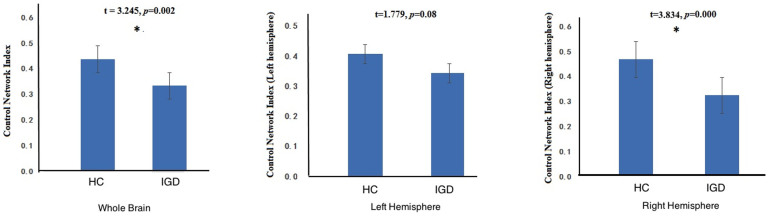
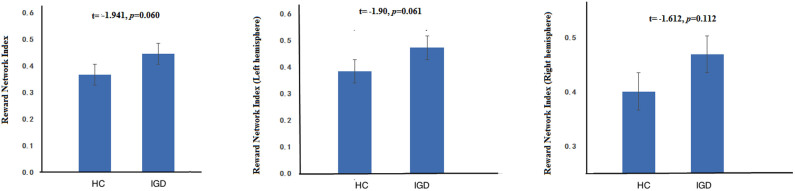
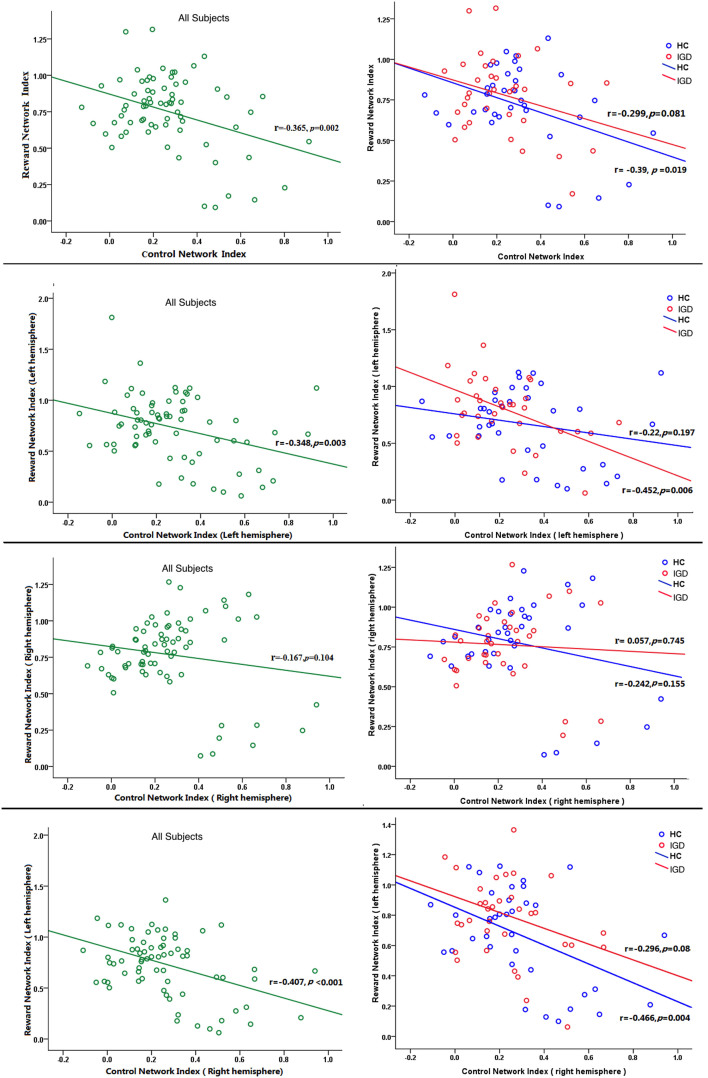
Literatures have shown that Internet gaming disorder (IGD) subjects show impaired executive control and enhanced reward sensitivities than healthy controls. However, how these two networks jointly affect the valuation process and drive IGD subjects' online-game-seeking behaviors remains unknown. Thirty-five IGD and 36 healthy controls underwent a resting-states scan in the MRI scanner. Functional connectivity (FC) was examined within control and reward network seeds regions, respectively. Nucleus accumbens (NAcc) was selected as the node to find the interactions between these two networks. IGD subjects show decreased FC in the executive control network and increased FC in the reward network when comparing with the healthy controls. When examining the correlations between the NAcc and the executive control/reward networks, the link between the NAcc - executive control network is negatively related with the link between NAcc - reward network. The changes (decrease/increase) in IGD subjects' brain synchrony in control/reward networks suggest the inefficient/overly processing within neural circuitry underlying these processes. The inverse proportion between control network and reward network in IGD suggest that impairments in executive control lead to inefficient inhibition of enhanced cravings to excessive online game playing. This might shed light on the mechanistic understanding of IGD.
Overview
The claims and statistics of this paper haven’t been checked yet.
Free: it reads the open-access text and checks the first 5 claims that cite a source we can check. Create a free account to check every claim.
Integrity signals
Registry
Cites
Statistics
Figures

Verification
Claims the paper makes
The claims and statistics of this paper haven’t been checked yet.
Free: it reads the open-access text and checks the first 5 claims that cite a source we can check. Create a free account to check every claim.
Claims other papers make about this one
Each is checked against this paper’s own text: does it say what the citing paper says it does?
The source backs part of the claim, not all of it — or backs it for a different population, condition or comparison.
In the citing paper
“the fMRI study by Dong et al. (2015) have shown that individuals with internet gaming disorders are in a state of imbalance between executive control and the reward network, and a decrease in executive control leads to an increase in motivation-seeking and craving.”
From The effect of short-form video addiction on undergraduates' academic procrastination: a moderated mediation model (2023) · cites this paper as Dong et al., 2015
Experimental — accuracy not yet measuredThe cited source says what the claim attributes to it.
In the citing paper
“Dong and colleagues propose that the imbalance between executive control and reward networks represent a mechanism seen in individuals with Internet-gaming disorder, with reductions in executive control leading to a diminished inhibition of motivation-seeking and craving, resulting in excessive Internet gaming.”
From Integrating psychological and neurobiological considerations regarding the development and maintenance of specific Internet-use disorders: An Interaction of Person-Affect-Cognition-Execution (I-PACE) model (2016) · cites this paper as Dong et al., 2015
The cited source says what the claim attributes to it.
In the citing paper
“In addition, the individuals with Internet-gaming disorder showed increased functional connectivity in reward-associated networks (including ventral striatum and orbitofrontal cortex).”
From Integrating psychological and neurobiological considerations regarding the development and maintenance of specific Internet-use disorders: An Interaction of Person-Affect-Cognition-Execution (I-PACE) model (2016) · cites this paper as Dong et al., 2015
Self-check
Percentages, sums and reported differences re-computed from the paper’s own numbers.
The self-check needs the paper’s full text.
Citations
Cites
Diagnostic and Statistical Manual of Mental Disorders
American Psychiatric Association (2013) · doi:10.1176/appi.books.9780890425596 · Cited by 116,369
An inventory for measuring depression
BECK, A. T. (1961) · Archives of General Psychiatry · doi:10.1001/archpsyc.1961.01710120031004 · Cited by 38,032 · cited 1×
“We further assessed ‘depression’ with the Beck Depression Inventory 34 and only participants scoring less than 5 were included.”
An Integrative Theory of Prefrontal Cortex Function
Miller, E. K., & Cohen, J. D. (2001) · Annual Review of Neuroscience · doi:10.1146/annurev.neuro.24.1.167 · Cited by 12,803 · cited 1×
“These two network interact in a pull and push fashion where strong motivation will lead to the disturbance of the executive control circuit, and the strong executive control will lead to the inhibition of the motivational desires 53 .”
The organization of the human cerebral cortex estimated by intrinsic functional connectivity
Thomas Yeo, B. T., Krienen, F. M., Sepulcre, J., Sabuncu, M. R., Lashkari, D., Hollinshead, M., Roffman, J. L., Smoller, J. W., Zöllei, L., Polimeni, J. R., et al. (2011) · Journal of Neurophysiology · doi:10.1152/jn.00338.2011 · Cited by 9,182
Dissociable intrinsic connectivity networks for salience processing and executive control
Seeley, W. W., Menon, V., Schatzberg, A. F., Keller, J., Glover, G. H., Kenna, H., Reiss, A. L., & Greicius, M. D. (2007) · The Journal of Neuroscience · doi:10.1523/jneurosci.5587-06.2007 · Cited by 7,426 · cited 3×
“These temporal correlations are presumed to reflect intrinsic functional connectivity (FC) and have been demonstrated across several distinct networks 28–30 .”
Scoville, W. B. (1949) · Journal of neurosurgery · doi:10.3171/jns.1949.6.1.0065 · Cited by 7,380
The organization of the human cerebellum estimated by intrinsic functional connectivity
Buckner, R. L., Krienen, F. M., Castellanos, A., Diaz, J. C., & Yeo, B. T. T. (2011) · Journal of Neurophysiology · doi:10.1152/jn.00339.2011 · Cited by 7,304
Spontaneous fluctuations in brain activity observed with functional magnetic resonance imaging
Fox, M. D., & Raichle, M. E. (2007) · Nature Reviews Neuroscience · doi:10.1038/nrn2201 · Cited by 6,700
Consistent resting-state networks across healthy subjects
Damoiseaux, J. S., Rombouts, S. A. R. B., Barkhof, F., Scheltens, P., Stam, C. J., Smith, S. M., & Beckmann, C. F. (2006) · Proceedings of the National Academy of Sciences · doi:10.1073/pnas.0601417103 · Cited by 4,326
Neural systems of reinforcement for drug addiction: from actions to habits to compulsion
Everitt, B. J., & Robbins, T. W. (2005) · Nature Neuroscience · doi:10.1038/nn1579 · Cited by 3,785
Cited by
Brand, M., Young, K. S., Laier, C., Wölfling, K., & Potenza, M. N. (2016) · Neuroscience & Biobehavioral Reviews · doi:10.1016/j.neubiorev.2016.08.033 · Cited by 2,416
“…by eeking a short-term attractive behavior that results in the expeience of gratification despite negative long-term consequences. his hypothesized type of dysfunctional interaction between exective control and reward-seeking has been emphasized recently y the fMRI study of Dong et al. (2015).”
Neuroscience of Internet Pornography Addiction: A Review and Update
Love, T., Laier, C., Brand, M., Hatch, L., & Hajela, R. (2015) · Behavioral Sciences · doi:10.3390/bs5030388 · Cited by 262
“Categorized by technology, these brain studies comprise 44 fMRI studies [103,132,134,135,160–199],”
MethodSugaya, N., Shirasaka, T., Takahashi, K., & Kanda, H. (2019) · BioPsychoSocial Medicine · doi:10.1186/s13030-019-0144-5 · Cited by 194
Dong, G., & Potenza, M. N. (2016) · Journal of Psychiatric Research · doi:10.1016/j.jpsychires.2015.11.011 · Cited by 163
Self-citationDong, G., Li, H., Wang, L., & Potenza, M. N. (2017) · European Psychiatry · doi:10.1016/j.eurpsy.2017.03.004 · Cited by 139
“Studies suggest enhanced reward sensitivity and decreased loss sensitivity in IGD subjects [28,41–43].”
BackgroundResultInfluentialSelf-citationXie, J., Xu, X., Zhang, Y., Tan, Y., Wu, D., Shi, M., & Huang, H. (2023) · Frontiers in Psychology · doi:10.3389/fpsyg.2023.1298361 · Cited by 125
Young, K. S., & Brand, M. (2017) · Frontiers in Psychology · doi:10.3389/fpsyg.2017.01853 · Cited by 109
“Prefrontal activity has been shown—dependent upon the task and prefrontal areas included in the analyses—to be both increased and decreased compared to healthy subjects (e.g., Dong et al., 2012, 2013, 2015; Brand et al., 2014b).”
ResultDysfunctional cognitive control and reward processing in adolescents with Internet gaming disorder
Li, Q., Wang, Y., Zhong, Y. J., Dai, W., Zheng, Y., Sun, Y., & Liu, X. (2019) · Psychophysiology · doi:10.1111/psyp.13469 · Cited by 116
Zheng, H., Hu, Y., Wang, Z., Wang, M., Du, X., & Dong, G. (2019) · Progress in Neuro-Psychopharmacology and Biological Psychiatry · doi:10.1016/j.pnpbp.2019.109656 · Cited by 107
Self-citationDong, G., Zheng, H., Liu, X., Wang, Y., Du, X., & Potenza, M. N. (2018) · Journal of Behavioral Addictions · doi:10.1556/2006.7.2018.118 · Cited by 88
Self-citationQi, X., Du, X., Yang, Y., Du, G., Gao, P., Zhang, Y., Qin, W., Li, X., & Zhang, Q. (2015) · Frontiers in Behavioral Neuroscience · doi:10.3389/fnbeh.2015.00296 · Cited by 90
Self-citationDong, G., Wang, M., Zheng, H., Wang, Z., Du, X., & Potenza, M. N. (2020) · Psychological Medicine · doi:10.1017/s003329172000032x · Cited by 85
“Additionally, resting-state data suggested imbalanced functional links between executive-control and reward networks in IGD (Bae, Han, Jung, Nam, & Renshaw, 2017; Dong et al., 2015).”
Self-citationWang, Y., Wu, L., Zhou, H., Lin, X., Zhang, Y., Du, X., & Dong, G. (2016) · European Archives of Psychiatry and Clinical Neuroscience · doi:10.1007/s00406-016-0721-6 · Cited by 81
“Furthermore, previous rest-state fMRI studies have found the changes in IGD’s brain synchrony in ECN compared with HC [19, 20, 84].”
ResultSelf-citationD’Hondt, F., Billieux, J., & Maurage, P. (2015) · Neuroscience & Biobehavioral Reviews · doi:10.1016/j.neubiorev.2015.10.005 · Cited by 74
Zhang, J.-T., Yao, Y.-W., Potenza, M. N., Xia, C.-C., Lan, J., Liu, L., Wang, L.-J., Liu, B., Ma, S.-S., & Fang, X.-Y. (2016) · Scientific Reports · doi:10.1038/srep28109 · Cited by 66
Abnormal gray matter volume and impulsivity in young adults with Internet gaming disorder
Lee, D., Namkoong, K., Lee, J., & Jung, Y. (2018) · Addiction Biology · doi:10.1111/adb.12552 · Cited by 63
“This hypothesis was supported by a functional MRI study on IGD, which demonstrated decreased functional connectivity in the executive-central network and increased functional connectivity in the rewardassociated networks(Dong et al. 2015).”
ResultZhang, J., Ma, S., Yan, C., Zhang, S., Liu, L., Wang, L., Liu, B., Yao, Y., Yang, Y., & Fang, X. (2017) · European Psychiatry · doi:10.1016/j.eurpsy.2017.06.012 · Cited by 59
“For example, the imbalanced functional link between ECN and reward network in IGD can predict their online-gaming behaviors [20], and inefficient functional interactions and reduced fractional anisotropy between ECN and SN were also detected in IGD [19].”
BackgroundAltered Reward Processing System in Internet Gaming Disorder
Raiha, S., Yang, G., Wang, L., Dai, W., Wu, H., Meng, G., Zhong, B., & Liu, X. (2020) · Frontiers in Psychiatry · doi:10.3389/fpsyt.2020.599141 · Cited by 63
Comparison of frontostriatal circuits in adolescent nicotine addiction and internet gaming disorder
von Deneen, K. M., Hussain, H., Waheed, J., Xinwen, W., Yu, D., & Yuan, K. (2022) · Journal of Behavioral Addictions · doi:10.1556/2006.2021.00086 · Cited by 51
Dong, G., Wang, M., Wang, Z., Zheng, H., Du, X., & Potenza, M. N. (2019) · Progress in Neuro-Psychopharmacology and Biological Psychiatry · doi:10.1016/j.pnpbp.2019.109829 · Cited by 49
Self-citationDu, X., Yang, Y., Gao, P., Qi, X., Du, G., Zhang, Y., Li, X., & Zhang, Q. (2016) · Brain Imaging and Behavior · doi:10.1007/s11682-016-9655-x · Cited by 50
Self-citationDong, H., Wang, M., Zhang, J., Hu, Y., Potenza, M. N., & Dong, G. (2020) · Addiction Biology · doi:10.1111/adb.12985 · Cited by 47
“For example, the NAcc has a key role in addiction(33) and constitutes an important connective node.(34,35) Third, we investigated and compared different processing parameter combinations, which could provide additional support for conclusions drawn.”
BackgroundSelf-citationNi, H., Wang, H., Ma, X., Li, S., Liu, C., Song, X., Potenza, M. N., & Dong, G. (2024) · JAMA Network Open · doi:10.1001/jamanetworkopen.2024.16684 · Cited by 48
Self-citationSong, K., Potenza, M. N., Fang, X., Gong, G., Yao, Y., Wang, Z., Liu, L., Ma, S., Xia, C., Lan, J., et al. (2020) · Addiction Biology · doi:10.1111/adb.12969 · Cited by 45
“The former aims to ascertain whole-brain differences in connectivity patterns (including differences within and between brain functional systems) in IGD, while the latter focuses on independent brain functional networks such as the DMN and executive-control network.”
BackgroundInfluentialDong, G., Liu, X., Zheng, H., Du, X., & Potenza, M. N. (2019) · Journal of Psychiatric Research · doi:10.1016/j.jpsychires.2019.03.003 · Cited by 42
Self-citationVargas, T., Maloney, J., Gupta, T., Damme, K. S. F., Kelley, N. J., & Mittal, V. A. (2019) · Psychiatry Research · doi:10.1016/j.psychres.2019.03.032 · Cited by 35
“processing, inhibition, and impulse control, though it is unclear which specific facets are most affected in PIU (Brand et al., 2016; Dong et al., 2015; Kuss and Lopez-Fernandez, 2016b; Kuss and Lopez-Fernandez, 2016a; Nalwa, 2003; Younes et al., 2016).”
BackgroundResultDigital behavioral technology, vulnerability and justice: towards an integrated approach
Herzog, L. M., Kellmeyer, P., & Wild, V. (2021) · Review of Social Economy · doi:10.1080/00346764.2021.1943755 · Cited by 41
Wang, M., Zheng, H., Zhou, W., Yang, B., Wang, L., Chen, S., & Dong, G. (2022) · Psychological Medicine · doi:10.1017/s0033291722002665 · Cited by 43
“, 2014), and subjects with IGD (Dong et al., 2015), which suggests that impairments in executive control lead to ineffective inhibition of aggravated cravings for excessive online game playing.”
BackgroundSelf-citationUnderstanding older adults’ smartphone addiction in the digital age: empirical evidence from China
Xu, Y., Zeng, K., Dong, L., Zheng, X., & Si, Y. (2023) · Frontiers in Public Health · doi:10.3389/fpubh.2023.1136494 · Cited by 39
“When executive control is reduced, older adults are less able to inhibit their pleasure demands (52) and are inclined to repeat actions that please themselves.”
BackgroundDong, G., Li, H., Wang, L., & Potenza, M. N. (2017) · Progress in Neuro-Psychopharmacology and Biological Psychiatry · doi:10.1016/j.pnpbp.2017.04.016 · Cited by 38
“The brain connectivity among DMN regions permits exploration of interactions between different brain regions and can be used as indexes to mark cognitive functions (Dong et al., 2015b; Friston, 2011; Kahan et al., 2014; Riedl et al., 2016).”
Self-citationWang, L., Zhang, Y., Lin, X., Zhou, H., Du, X., & Dong, G. (2017) · CNS Spectrums · doi:10.1017/s1092852917000360 · Cited by 35
Self-citationWang, L., Zheng, H., Wang, M., Chen, S., Du, X., & Dong, G. (2022) · Journal of Behavioral Addictions · doi:10.1556/2006.2022.00057 · Cited by 38
Self-citationYu, J., Abdullah, M. F. I. L. B., & Mansor, N. S. (2024) · Brain and Behavior · doi:10.1002/brb3.3388 · Cited by 35
Internet Gaming Disorder, Obsessive-Compulsive Disorder, and Addiction
Starčević, V., & Aboujaoude, E. N. (2017) · Current Addiction Reports · doi:10.1007/s40429-017-0158-7 · Cited by 36
The topological organization of white matter network in internet gaming disorder individuals
Zhai, J., Luo, L., Qiu, L., Kang, Y., Liu, B., Yu, D., Lu, X., & Yuan, K. (2016) · Brain Imaging and Behavior · doi:10.1007/s11682-016-9652-0 · Cited by 30
Wang, Z., Dong, H., Du, X., Zhang, J., & Dong, G. (2020) · Journal of Behavioral Addictions · doi:10.1556/2006.2020.00012 · Cited by 31
Self-citationChan, S. Y., Ong, Z. Y., Ngoh, Z. M., Chong, Y. S., Zhou, J. H., Fortier, M. V., Daniel, L. M., Qiu, A., Meaney, M. J., & Tan, A. P. (2022) · Developmental Cognitive Neuroscience · doi:10.1016/j.dcn.2022.101107 · Cited by 29
“2 gaming disorders (Dong et al., 2015) and depression (Zhang et al.”
BackgroundLee, J., Choi, C.-H., Park, M., Park, S., & Choi, J. (2022) · Psychological Medicine · doi:10.1017/s0033291722000137 · Cited by 28
Network-Based Analysis Reveals Functional Connectivity Related to Internet Addiction Tendency
Wen, T., & Hsieh, S. (2016) · Frontiers in Human Neuroscience · doi:10.3389/fnhum.2016.00006 · Cited by 27
“…networks (Yuan et al., 2015 examined the central executive network and salience network; Dong et al., 2015b examined the executive control network; Dong et al., 2015a examined the executive control network and reward network; Li et al., 2014 examined the response inhibition network; Lin et al.,…”
BackgroundYe, S., Wang, M., Yang, Q., Dong, H., & Dong, G. (2022) · Journal of Affective Disorders · doi:10.1016/j.jad.2022.08.078 · Cited by 28
Self-citationShort-term Internet-search practicing modulates brain activity during recollection
Dong, G., & Potenza, M. N. (2016) · Neuroscience · doi:10.1016/j.neuroscience.2016.08.028 · Cited by 26
Self-citationChen, S., Li, H., Wang, L., Du, X., & Dong, G. (2019) · Addictive Behaviors · doi:10.1016/j.addbeh.2019.106202 · Cited by 25
Self-citationLee, D., Lee, J., Namkoong, K., & Jung, Y. (2018) · Frontiers in Psychiatry · doi:10.3389/fpsyt.2018.00380 · Cited by 22
“interactions between brain networks have been proposed as part of the pathophysiology of IGD (64, 65).”
BackgroundWang, Z., Liu, X., Hu, Y., Zheng, H., Du, X., & Dong, G. (2019) · CNS Spectrums · doi:10.1017/s1092852918001505 · Cited by 22
Self-citationZeng, N., Wang, M., Dong, H., Du, X., & Dong, G. (2020) · CNS Spectrums · doi:10.1017/s1092852920001832 · Cited by 20
“Another rsFC study reported decreased synchrony of the ECN in IGD subjects, suggesting their executive control systemwas impaired by long-time online-game playing.(50) The present results are consistent with the previous research: the dynamic interaction within the ECN is impaired in IGD.”
BackgroundResultSelf-citationDong, G., Li, H., Wang, Y., & Potenza, M. N. (2018) · International Journal of Psychophysiology · doi:10.1016/j.ijpsycho.2018.03.014 · Cited by 18
Self-citationZhao, W., Wei, T., Zhou, R., Wang, Y., Wang, Y., Ren, Z., Shao, W., Luo, H., Zhou, Y., Chen, N., et al. (2021) · Frontiers in Psychiatry · doi:10.3389/fpsyt.2021.713364 · Cited by 17
“Impaired executive function leads to limbic system dysregulation, thus aggravating impulsive behavior and causing IGA (40).”
BackgroundShi, W., Zhao, Y., Zhou, J., & Shi, J. (2025) · Addictive Behaviors · doi:10.1016/j.addbeh.2025.108346 · Cited by 15
Does TikTok addiction exist? A qualitative study
Caponnetto, P., Lanzafame, I., Chiara Prezzavento, G., Fakhrou, A., Lenzo, V., Sardella, A., Ali Moussa, M., & C. Quattropani, M. (2025) · Health Psychology Research · doi:10.52965/001c.127796 · Cited by 13
Gaming disorder: Neural mechanisms and ongoing debates
Zheng, Y., Zhang, S.-N., Tang, H.-D., Wang, S.-W., Lin, X., Bao, Y., Wang, Y.-M., Griffiths, M. D., Sun, J., Han, Y., et al. (2025) · Journal of Behavioral Addictions · doi:10.1556/2006.2024.00071 · Cited by 17
“Additionally, individuals with IGD show lower functional connectivity in executive control networks than healthy controls during the resting state (Dong et al., 2015a).”
Self-citationGong, L., Zhou, H., Su, C., Geng, F., Xi, W., Teng, B., Yuan, K., Zhao, M., & Hu, Y. (2022) · Addiction Biology · doi:10.1111/adb.13210 · Cited by 16
“Resting-state functional connectivity between nucleus accumbens (NAc) and reward networks (including amygdala, striatum, and orbitofrontal regions) have been found significantly higher in addictive populations than that in control groups.(27) While the sensitization to drug and drug cues is thought to be underpinned b…”
BackgroundSelf-citationBiomarkers of Internet Gaming Disorder—A Narrative Review
Skok, K., & Waszkiewicz, N. (2024) · Journal of Clinical Medicine · doi:10.3390/jcm13175110 · Cited by 13
Li, S., Jiang, A., Ma, X., Zhang, Z., Ni, H., Wang, H., Liu, C., Song, X., & Dong, G.-H. (2025) · Biological Psychiatry Global Open Science · doi:10.1016/j.bpsgos.2025.100485 · Cited by 10
“Prior studies have consistently suggested discernible alternations within the reward-processing system in individuals with IGD (71,72).”
Self-citationZhang, Z., Wang, M., Meng, G., Qi, Y., Wang, L., & Dong, G. (2025) · Journal of Behavioral Addictions · doi:10.1556/2006.2025.00036 · Cited by 9
“…and orbitofrontal cortex (OFC)); decreased FC in the execution control network (ECN) (including several parts of the frontoparietal cortex) in IGD (Dong, Lin, Hu, Xie, & Du, 2015; Dong, Lin, & Potenza, 2015); and a decreased coactivation pattern in the prefrontal-striatal circuit (L. Wang et al.,…”
Self-citationYu, Y., Fong, V. W. I., Li, J., Zhang, J., & Lau, J. T. F. (2023) · Computers in Human Behavior · doi:10.1016/j.chb.2023.107965 · Cited by 9
Liu, X., Zheng, Y., Niculescu, M., Liang, Q., Ai, Y., Dong, G., Gao, Z., Lin, P., Liu, Y., Chen, L., et al. (2023) · Frontiers in Psychiatry · doi:10.3389/fpsyt.2023.1093784 · Cited by 9
“Our previous study found individuals with IGD have stronger reward network connection and lower inhibition and control ability (14).”
Self-citationZhou, H., Xing, X., Zhang, J., Meng, G., Hu, K., Wei, P., Chen, M., Xiao, J., & Li, Q. (2025) · Journal of Applied Developmental Psychology · doi:10.1016/j.appdev.2025.101881 · Cited by 5
Cui, S., Xu, X., Luo, X., Wei, M., & Dong, G. (2025) · JMIR Serious Games · doi:10.2196/83597 · Cited by 4
“Resting-state fMRI has found that compared to healthy controls, patients with IGD showed decreased FC in the ECN (including several parts of the frontoparietal cortex) [66, 67], indicating impaired executive functioning.”
Self-citationAn Overview of the Neurobiology of Impulsivity in Gambling and Gaming Disorder
Punia, K., & Balodis, I. M. (2019) · Current Behavioral Neuroscience Reports · doi:10.1007/s40473-019-00190-5 · Cited by 4
Connectome-based predictive modelling of problematic gaming in youth from the ABCD study
Park, J. J., Lacadie, C., Scheinost, D., McCurdy, L. Y., Potenza, M. N., & Zhao, Y. (2026) · Journal of Behavioral Addictions · doi:10.1556/2006.2025.00103 · Cited by 3
“Impaired response inhibition has been observed in individuals with IGD using a variety of tasks, including Stroop, go/no-go, and task-switching tasks (Dong, Lin, Hu, Xie, & Du, 2015).”
Li, S., Jiang, A., Wang, M., Ni, H., Fu, J., & Dong, G. (2025) · Journal of Behavioral Addictions · doi:10.1556/2006.2025.00047 · Cited by 3
Self-citationTechniques of Neutralization: A Brain Network Perspective
Jantz, P. B., & Morley, R. H. (2017) · International Journal of Offender Therapy and Comparative Criminology · doi:10.1177/0306624x17735045 · Cited by 4
The Left Frontoparietal Brain Network in Addictions
Costumero, V., & Barrós‐Loscertales, A. (2021) · Springer eBooks · doi:10.1007/978-3-030-67928-6_27-1 · Cited by 3
Elevated integration within the reward network underlies vulnerability to distress
Kozak, S., Dezachyo, O., Stanford, W., Bar‐Haim, Y., Censor, N., & Dayan, E. (2022) · Cerebral Cortex · doi:10.1093/cercor/bhac460 · Cited by 3
Dong, H., Wang, M., Wang, Y., Ma, X., Wan, H., Dong, G., & Zhou, R. (2025) · Addictive Behaviors · doi:10.1016/j.addbeh.2025.108437 · Cited by 2
Self-citationChang, J. W., Lee, J.-Y., Yoo, S. Y., Choi, H., & Choi, J. (2025) · Precision and Future Medicine · doi:10.23838/pfm.2025.00331 · Cited by 1
Guo, Y., Lu, G., Li, W., Wang, X. R., Liu, Y., Zhou, S., Ma, L., Mei, B., Zhang, M., Wei, Y., et al. (2026) · Brain Research Bulletin · doi:10.1016/j.brainresbull.2026.112022 · Cited by 1
Tian, J., Zhang, H., Wang, X., Zhang, H., Ma, L., Mei, B., Zhang, M., Lang, Y., Wei, Y., Han, S., et al. (2026) · Addiction Biology · doi:10.1111/adb.70175 · Cited by 1
“Both possibilities are compatible with previous evidence of impaired executive control and altered control–reward circuit interactions in IGD [10, 33].”
Functional Imaging Study of Internet Gaming Disorder
Ko, C., & Yen, J. (2017) · Studies in neuroscience, psychology and behavioral economics · doi:10.1007/978-3-319-46276-9_4
NCLT Therapy: Introductory Considerations
Wasserman, T. H., & Wasserman, L. D. (2017) · Springer eBooks · doi:10.1007/978-3-319-60849-5_9
Neurobiology of technological addiction : Impulsive compulsive spectrum
Ghosal, M. K. (2016) · Bengal Journal of Psychiatry · doi:10.51332/bjp.2016.v21.i2.22
The Left Frontoparietal Brain Network in Addictions
Costumero, V., & Barrós‐Loscertales, A. (2022) · Springer eBooks · doi:10.1007/978-3-030-92392-1_27
Die Rolle des mGlu-2/3 Rezeptors im Belohnungssystem und dessen Einfluss auf Suchtverhalten
Wagner, K. (2023) · heiDOK (Heidelberg University) · doi:10.11588/heidok.00033454
Brandtner, A. (2023) · DuEPublico (University of Duisburg-Essen) · doi:10.17185/duepublico/78298 · Cited by 1
The Easy Way Out : Escapism as a central motive for addictions
Jouhki, H. (2025) · Tampere University Institutional Repository (Tampere University) · Cited by 2
Normative modeling reveals functional connectivity heterogeneity in internet gaming disorder
Wang, Z., Xie, Y., Wang, Y., Wang, L., & Dong, G.-H. (2026) · Annals of General Psychiatry · doi:10.1186/s12991-026-00664-3
Self-citationTu, S., Li, X., Zhao, Y., Liu, J., Huang, M., Xiao, J., & Li, Q. (2026) · Computers in Human Behavior Reports · doi:10.1016/j.chbr.2026.101250
Li, R., Zheng, Y., Li, S., Yang, S., Li, Y., Wei, M., & Dong, G. (2026) · Addictive Behaviors · doi:10.1016/j.addbeh.2026.108876
Self-citation
Metadata
- Authors
- Dong, G., Lin, X., Hu, Y., Xie, C., & Du, X.
- Affiliations
- Zhejiang Normal University (CN)
- University of Reading (GB)
- Southeast University (CN)
- East China Normal University (CN)
- Corresponding author
- Dong, Guangheng
- Venue
- Scientific Reports
- Published
- 2015-03-17
- Volume
- 5
- Issue
- 1
- Pages
- 9197-9197
- ISSN
- 2045-2322 (ISSN-L)
- PMC
- PMC4361884
- OpenAlex
- W1983375484
- Cited by
- 76
- References
- 61
- Citations by year
- 2026: 6 · 2025: 9 · 2024: 3 · 2023: 5 · 2022: 9 · 2021: 4 · 2020: 6 · 2019: 9 · 2018: 3 · 2017: 10 · 2016: 8 · 2015: 4
- FWCI
- 27.65
- Type
- journal article
- Language
- en
- Open access
- gold
- doi.org
- Licence
- cc-by
- creativecommons.org/licenses/by/4.0 (tdm)
- creativecommons.org/licenses/by/4.0 (vor)
- Locations
- Scientific Reports (publishedVersion, cc-by)
- PubMed Central (publishedVersion, cc-by)
- PubMed (publishedVersion)
- CentAUR (University of Reading) (acceptedVersion)
- London Met Repository (London Metropolitan University) (acceptedVersion)
- Funders
- National Natural Science Foundation of China (31371023)
- Topics
- Social Sciences › Sociology and Political Science › Impact of Technology on Adolescents
- Life Sciences › Neuroscience › Cognitive Neuroscience › Functional Brain Connectivity Studies
- Social Sciences › Psychology › Clinical Psychology › Gambling Behavior and Treatments
- Keywords
- internet gaming disorder, frontoparietal network, reward network, functional connectivity, nucleus accumbens, craving, resting-state functional connectivity, reward sensitivity
- MeSH terms
- Adult, Mental Disorders, Brain, Brain Mapping, Humans, Magnetic Resonance Imaging, Male, Play and Playthings, Case-Control Studies, Behavior, Addictive, Internet, Young Adult, Executive Function
About these checks
Registry, retraction, Cites and statistics results are computed, not judged, with one exception: a printed reference that no index lists is read once by a model before it counts as a citation error. Claims are extracted by a model and kept only when their quote appears verbatim in the text; each cited source is then checked, with a model’s help, for whether it says what the claim relies on. Those verdicts can be wrong — read the claim’s quote and the cited source before relying on one.
Statistics and arithmetic are recomputed, not judged.
Confidence bands are shown only for fields calibrated on our annotated test set. None is calibrated yet, so no band is shown.
What counts as a claim ›How we measure confidence ›How we check this ›
Are you an author, or do you see a problem with this page? Request a review
Data sources
Bibliographic data: Semantic Scholar, OpenAlex, Crossref.
Contains information from the Semantic Scholar Academic Graph Datasets, made available under the ODC Attribution License (ODC-BY 1.0).
Semantic Scholar’s data is described in: Kinney, R., et al. (2023). The Semantic Scholar Open Data Platform. arXiv:2301.10140.
