

The DOI matches its Crossref record; 1 of the 1 references it cites were found in a registry or an index.
Genome-wide circulating microRNA expression profiling indicates biomarkers for epilepsy
Abstract
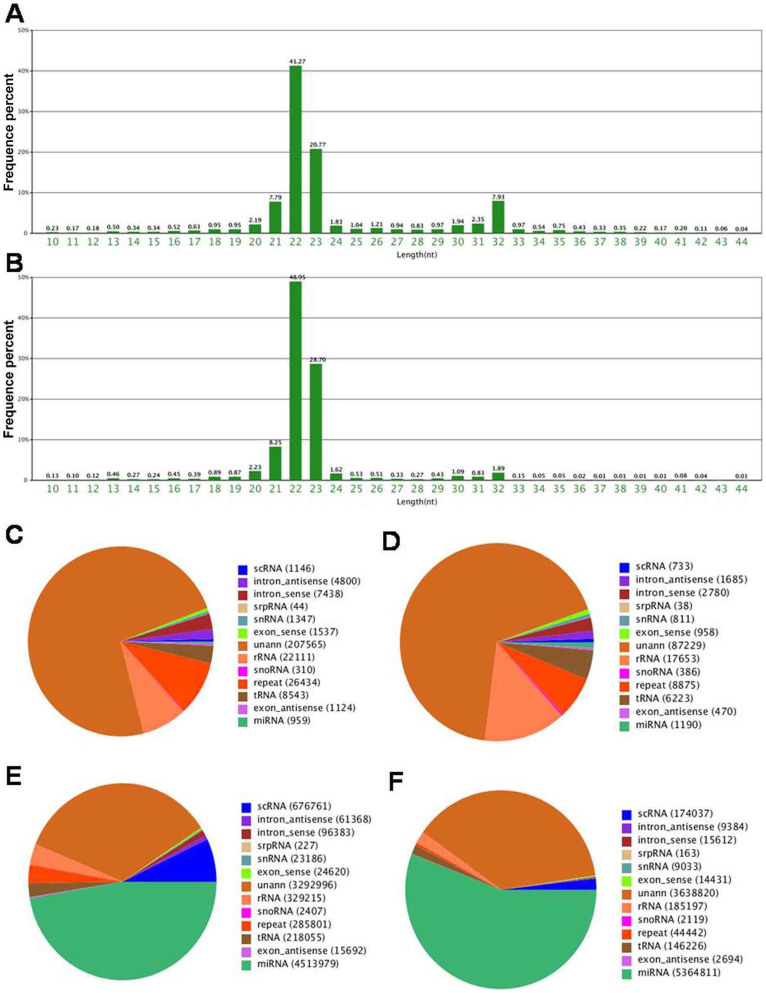
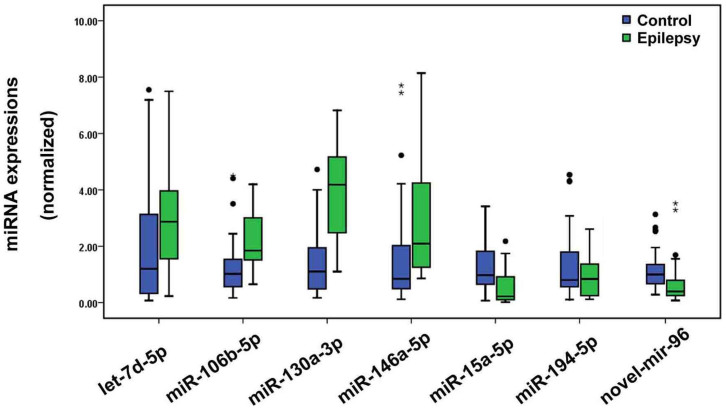
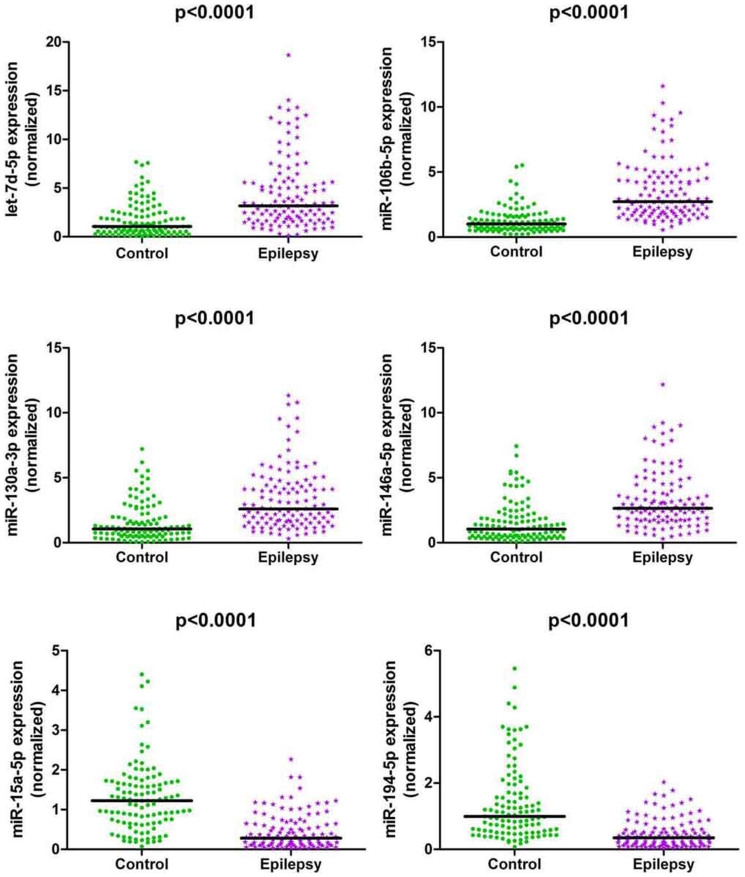
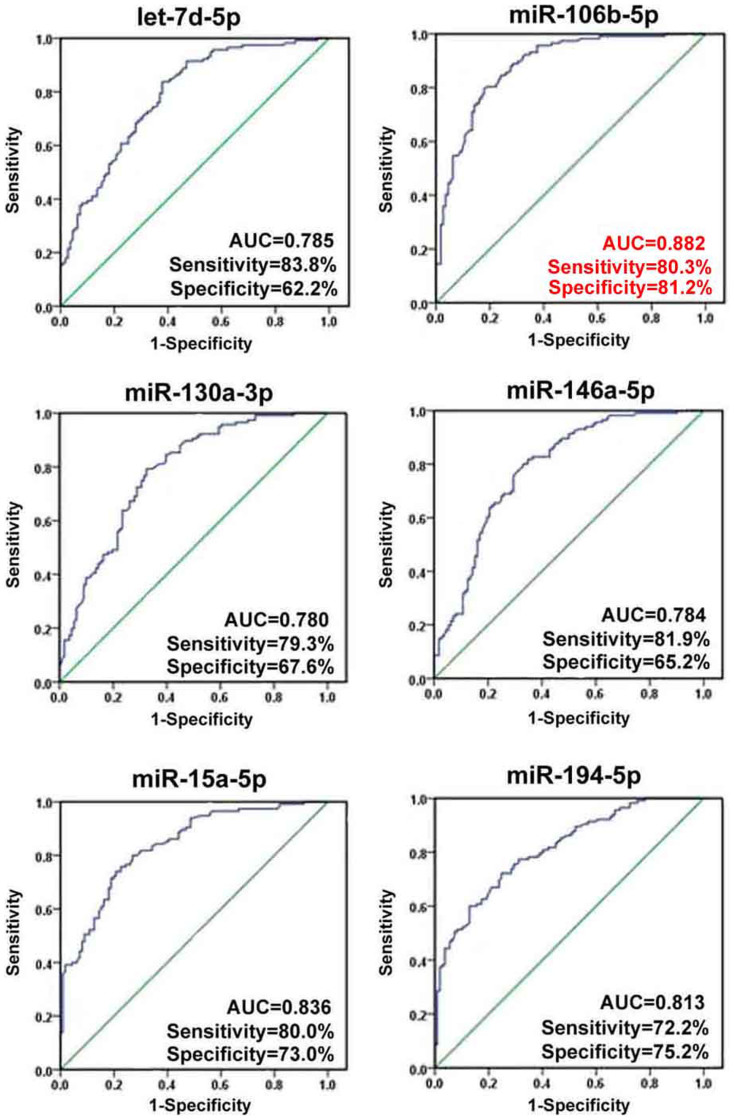
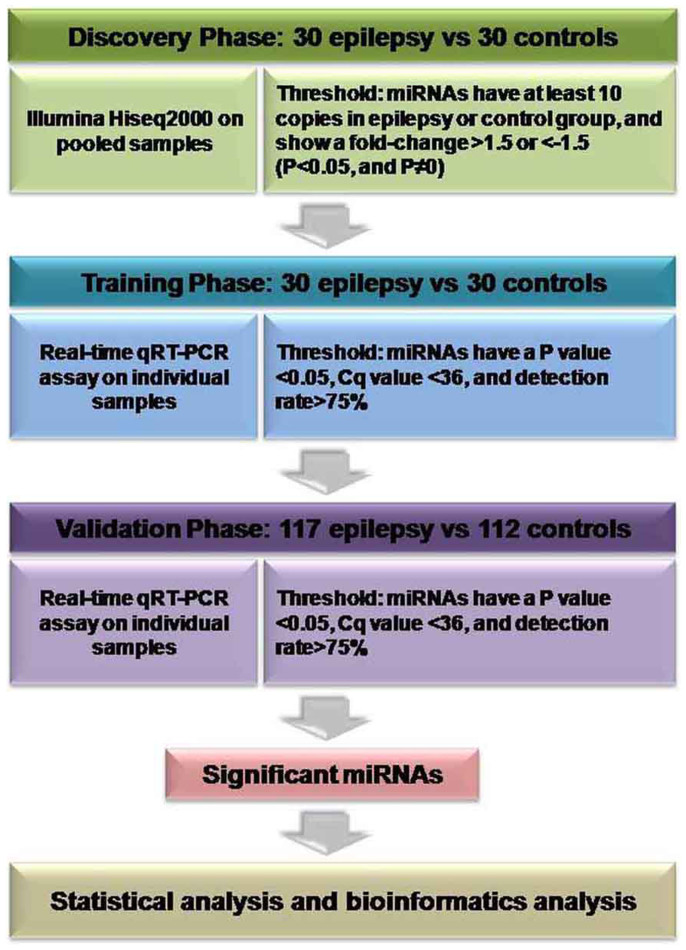
MicroRNAs (miRNAs) have been proposed as biomarkers for cancer and other diseases due to their stability in serum. In epilepsy, miRNAs have almost been studied in brain tissues and in animals' circulation, but not in circulation of human. To date, a major challenge is to develop biomarkers to improve the current diagnosis of epilepsy. The aim of this study was to evaluate whether circulating miRNAs can be used as biomarkers for epilepsy. We measured the differences in serum miRNA levels between 30 epilepsy patients and 30 healthy controls in discovery and training phases using Illumina HiSeq2000 sequencing followed by quantitative reverse transcriptase polymerase chain reaction (qRT-PCR) assays. The selected miRNAs were then validated in 117 epilepsy patients and 112 healthy controls by qRT-PCR. Let-7d-5p, miR-106b-5p, -130a-3p and -146a-5p were found up-regulated, whereas miR-15a-5p and -194-5p were down-regulated in epilepsy patients compared to controls (P < 0.0001). Among these miRNAs, miR-106b-5p had the best diagnostic value for epilepsy with 80.3% sensitivity and 81.2% specificity. Circulating miRNAs were differentially regulated in epilepsy patients as compared with controls. MiR-106b-5p may serve as a novel, noninvasive biomarker to improve the current diagnosis of epilepsy.
Overview
The claims and statistics of this paper haven’t been checked yet.
Run the check — free, no account needed. It reads the open-access text and checks the sources it cites.
Integrity signals
Registry
Cites
Statistics
Figures
Verification
Claims the paper makes
The claims and statistics of this paper haven’t been checked yet.
Run the check — free, no account needed. It reads the open-access text and checks the sources it cites.
Claims other papers make about this one
Each is checked against this paper’s own text: does it say what the citing paper says it does?
In the citing paper
“Clinical studies have identified circulating miRNA biomarkers of epilepsy in CSF (Raoof et al., 2017) and blood (serum and plasma) (Wang et al., 2015; Enright et al., 2018; Raoof et al., 2018; Brennan et al., 2020; Ioriatti et al., 2020).”
From Brain cell-specific origin of circulating microRNA biomarkers in experimental temporal lobe epilepsy (2023) · cites this paper as Wang et al., 2015
Self-check
Percentages, sums and reported differences re-computed from the paper’s own numbers.
The self-check needs the paper’s full text.
Citations
Cites
Taganov, K. D., Boldin, M. P., Chang, K.-J., & Baltimore, D. (2006) · Proceedings of the National Academy of Sciences · doi:10.1073/pnas.0605298103 · Cited by 4,317
Research works printed but not linked: 41
- Henshall, D. C. MicroRNA and epilepsy: profiling, functions and potential clinical applications. Curr Opin Neurol 27, 199–205 (2014). · DOI
- Esteller, M. Non-coding RNAs in human disease. Nat Rev Genet 12, 861–874 (2011). · DOI · Paper page
- Chen, X. et al. Characterization of microRNAs in serum: a novel class of biomarkers for diagnosis of cancer and other diseases. Cell Res 18, 997–1006 (2008). · DOI · Paper page
- ElSharawy, A. et al. Genome-wide miRNA signatures of human longevity. Aging Cell 11, 607–616 (2012). · DOI
- Tan, L. et al. Genome-wide serum microRNA expression profiling identifies serum biomarkers for Alzheimer's disease. J Alzheimers Dis 40, 1017–1027 (2014). · DOI
- Gandhi, R. et al. Circulating microRNAs as biomarkers for disease staging in multiple sclerosis. Ann Neurol 73, 729–740 (2013). · DOI
- Shtilbans, A. & Henchcliffe, C. Biomarkers in Parkinson's disease: an update. Curr Opin Neurol 25, 460–465 (2012). · DOI
- Li, M. M. et al. Genome-wide microRNA expression profiles in hippocampus of rats with chronic temporal lobe epilepsy. Sci Rep 4, 4734 (2014). · DOI
- Gorter, J. A. et al. Hippocampal subregion-specific microRNA expression during epileptogenesis in experimental temporal lobe epilepsy. Neurobiol Dis 62, 508–520 (2014). · DOI · Paper page
- Sun, Z. et al. Genome-wide microRNA profiling of rat hippocampus after status epilepticus induced by amygdala stimulation identifies modulators of neuronal apoptosis. PLoS One 8, e78375 (2013). · DOI
- Bot, A. M., Debski, K. J. & Lukasiuk, K. Alterations in miRNA levels in the dentate gyrus in epileptic rats. PLoS One 8, e76051 (2013). · DOI
- McKiernan, R. C. et al. Reduced mature microRNA levels in association with dicer loss in human temporal lobe epilepsy with hippocampal sclerosis. PLoS One 7, e35921 (2012). · DOI · Paper page
- Kan, A. A. et al. Genome-wide microRNA profiling of human temporal lobe epilepsy identifies modulators of the immune response. Cell Mol Life Sci 69, 3127–3145 (2012). · DOI
- Hu, K. et al. MicroRNA expression profile of the hippocampus in a rat model of temporal lobe epilepsy and miR-34a-targeted neuroprotection against hippocampal neurone cell apoptosis post-status epilepticus. BMC Neurosci 13, 115 (2012). · DOI
- Yu, S. et al. Circulating microRNA profiles as potential biomarkers for diagnosis of papillary thyroid carcinoma. J Clin Endocrinol Metab 97, 2084–2092 (2012). · DOI
- Yang, C. et al. Identification of seven serum microRNAs from a genome-wide serum microRNA expression profile as potential noninvasive biomarkers for malignant astrocytomas. Int J Cancer 132, 116–127 (2013). · DOI
- Zhang, X. et al. Screening and identification of six serum microRNAs as novel potential combination biomarkers for pulmonary tuberculosis diagnosis. PLoS One 8, e81076 (2013). · DOI
- Hou, J. et al. MicroRNA-146a feedback inhibits RIG-I-dependent Type I IFN production in macrophages by targeting TRAF6, IRAK1 and IRAK2. J Immunol 183, 2150–2158 (2009). · DOI · Paper page
- Wang, X. J., Cao, Q., Zhang, Y. & Su, X. D. Activation and Regulation of Caspase-6 and Its Role in Neurodegenerative Diseases. Annu Rev Pharmacol Toxicol (2014) [Epub ahead of print]. · DOI
- Lecat, A. et al. The c-Jun N-terminal kinase (JNK)-binding protein (JNKBP1) acts as a negative regulator of NOD2 protein signaling by inhibiting its oligomerization process. J Biol Chem 287, 29213–29226 (2012). · DOI
- Guma, M. et al. Antiinflammatory functions of p38 in mouse models of rheumatoid arthritis: advantages of targeting upstream kinases MKK-3 or MKK-6. Arthritis Rheum 64, 2887–2895 (2012). · DOI
- Sun, L., Tan, M. S., Hu, N., Yu, J. T. & Tan, L. Exploring the value of plasma BIN1 as a potential biomarker for alzheimer's disease. J Alzheimers Dis 37, 291–295 (2013). · DOI
- Engel, J., Jr et al. Epilepsy biomarkers. Epilepsia 54 Suppl 4, 61–69 (2013). · DOI · Paper page
- Jacobs, J. et al. High-frequency oscillations (HFOs) in clinical epilepsy. Prog Neurobiol 98, 302–315 (2012). · DOI
- Zijlmans, M. et al. High-frequency oscillations as a new biomarker in epilepsy. Ann Neurol 71, 169–178 (2012). · DOI
- Moeller, F., Stephani, U. & Siniatchkin, M. Simultaneous EEG and fMRI recordings (EEG-fMRI) in children with epilepsy. Epilepsia 54, 971–982 (2013). · DOI
- Aronica, E. et al. Expression pattern of miR-146a, an inflammation-associated microRNA, in experimental and human temporal lobe epilepsy. Eur J Neurosci 31, 1100–1107 (2010). · DOI · Paper page
- Song, Y. J. et al. Temporal lobe epilepsy induces differential expression of hippocampal miRNAs including let-7e and miR-23a/b. Brain Res 1387, 134–140 (2011). · DOI · Paper page
- Vezzani, A., Ravizza, T., Balosso, S. & Aronica, E. Glia as a source of cytokines: implications for neuronal excitability and survival. Epilepsia 49 Suppl 2, 24–32 (2008). · DOI · Paper page
- Sheedy, F. J. & O'Neill, L. A. Adding fuel to fire: microRNAs as a new class of mediators of inflammation. Ann Rheum Dis 67 Suppl 3, iii50–55 (2008). · DOI · Paper page
- Sondergaard, H. B., Hesse, D., Krakauer, M., Sorensen, P. S. & Sellebjerg, F. Differential microRNA expression in blood in multiple sclerosis. Mult Scler 19, 1849–1857 (2013). · DOI
- Liu, F. et al. MicroRNA-106b-5p boosts glioma tumorigensis by targeting multiple tumor suppressor genes. Oncogene 33, 4813–4822(2013). · DOI · Paper page
- Zhang, J. et al. NF-kappaB-modulated miR-130a targets TNF-alpha in cervical cancer cells. J Transl Med 12, 155 (2014). · DOI
- Hager, M. et al. MicroRNA-130a-mediated down-regulation of Smad4 contributes to reduced sensitivity to TGF-beta1 stimulation in granulocytic precursors. Blood 118, 6649–6659 (2011). · DOI
- Cimmino, A. et al. miR-15 and miR-16 induce apoptosis by targeting BCL2. Proc Natl Acad Sci U S A 102, 13944–13949 (2005). · DOI
- Roccaro, A. M. et al. MicroRNAs 15a and 16 regulate tumor proliferation in multiple myeloma. Blood 113, 6669–6680 (2009). · DOI
- Soreq, L. et al. Small RNA sequencing-microarray analyses in Parkinson leukocytes reveal deep brain stimulation-induced and splicing changes that classify brain region transcriptomes. Frontiers in Molecular Neuroscience 6, 10 (2013). · DOI
- Engel, J., Jr A proposed diagnostic scheme for people with epileptic seizures and with epilepsy: report of the ILAE Task Force on Classification and Terminology. Epilepsia 42, 796–803 (2001). · DOI
- Mitchell, P. S. et al. Circulating microRNAs as stable blood-based markers for cancer detection. Proc Natl Acad Sci U S A 105, 10513–10518 (2008). · DOI · Paper page
- McDonald, J. S., Milosevic, D., Reddi, H. V., Grebe, S. K. & Algeciras-Schimnich, A. Analysis of circulating microRNA: preanalytical and analytical challenges. Clin Chem 57, 833–840 (2011). · DOI
- Livak, K. J. & Schmittgen, T. D. Analysis of relative gene expression data using real-time quantitative PCR and the 2(-Delta Delta C(T)) Method. Methods 25, 402–408 (2001). · DOI · Paper page
Cited by
Sorted by citations
Wang, W.-T., Sun, Y.-M., Huang, W., He, B., Zhao, Y.-N., & Chen, Y.-Q. (2016) · Scientific Reports · doi:10.1038/srep23343 · Cited by 97
Brain cell-specific origin of circulating microRNA biomarkers in experimental temporal lobe epilepsy
Brindley, E., Heiland, M., Mooney, C., Diviney, M., Mamad, O., Hill, T. D. M., Yan, Y., Venø, M. T., Reschke, C. R., Batool, A., et al. (2023) · Frontiers in Molecular Neuroscience · doi:10.3389/fnmol.2023.1230942 · Cited by 21
Metadata
- Authors
- Wang, J., Yu, J.-T., Tan, L., Tian, Y., Ma, J., Tan, C.-C., Wang, H.-F., Liu, Y., Tan, M.-S., Jiang, T., & Tan, L.
- Venue
- Scientific Reports
- Published
- 2015-03-31
- Volume
- 5
- Issue
- 1
- ISSN
- 2045-2322
- PMC
- PMC4379481
- Cited by
- 140
- References
- 1
- Language
- en
About these checks
Registry, retraction, Cites and statistics results are computed, not judged, with one exception: a printed reference that no index lists is read once by a model before it counts as a citation error. Claims are extracted by a model and kept only when their quote appears verbatim in the text; each cited source is then checked, with a model’s help, for whether it says what the claim relies on. Those verdicts can be wrong — read the claim’s quote and the cited source before relying on one.
Statistics and arithmetic are recomputed, not judged.
Confidence bands are shown only for fields calibrated on our annotated test set. None is calibrated yet, so no band is shown.
What counts as a claim ›How we measure confidence ›How we check this ›
Are you an author, or do you see a problem with this page? Request a review
How to cite
Cite CoChat for the checks on this page, and the paper for its own findings.
- This page
- CoChat. (2026). Citation check: Genome-wide circulating microRNA expression profiling indicates biomarkers for epilepsy. https://app.cochat.ai/papers/10.1038/srep09522
- The paper
- Wang, J., Yu, J.-T., Tan, L., Tian, Y., Ma, J., Tan, C.-C., Wang, H.-F., Liu, Y., Tan, M.-S., Jiang, T., & Tan, L. (2015). Genome-wide circulating microRNA expression profiling indicates biomarkers for epilepsy. Scientific Reports. https://doi.org/10.1038/srep09522
