

Electronic system with memristive synapses for pattern recognition
Open accessThe DOI matches its Crossref record; 20 of the 20 references it cites were found in a registry or an index.
Abstract
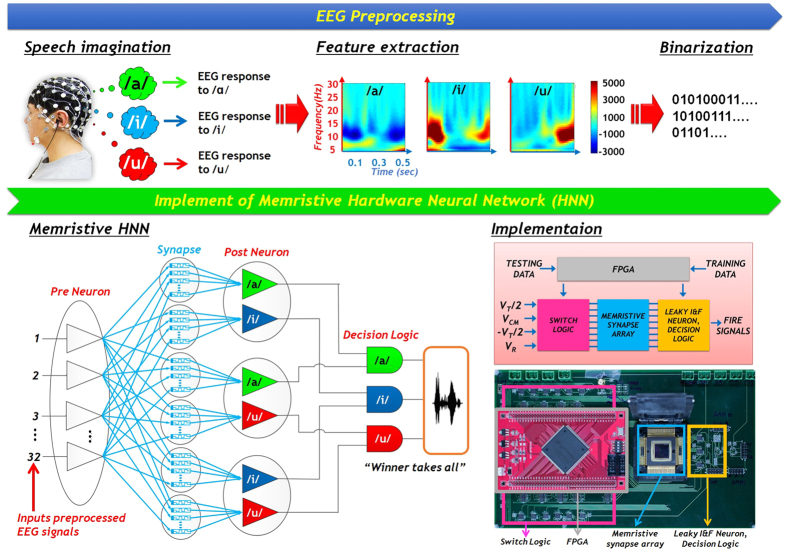
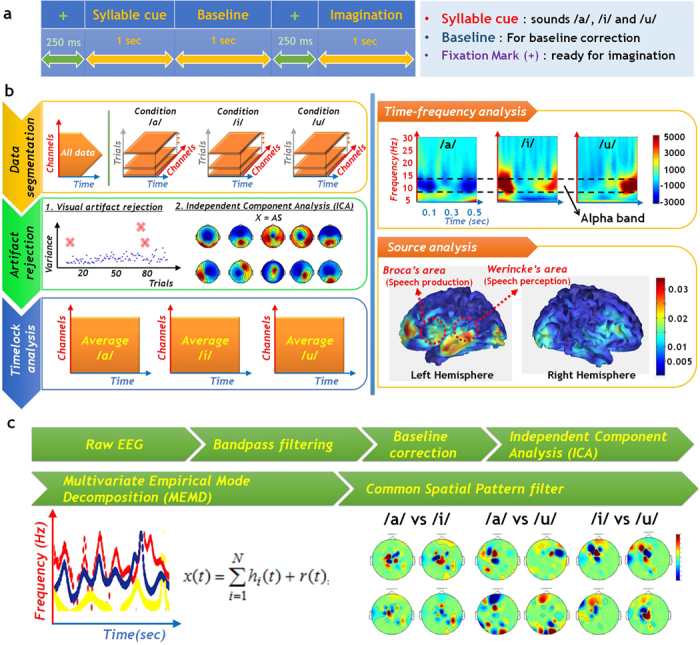
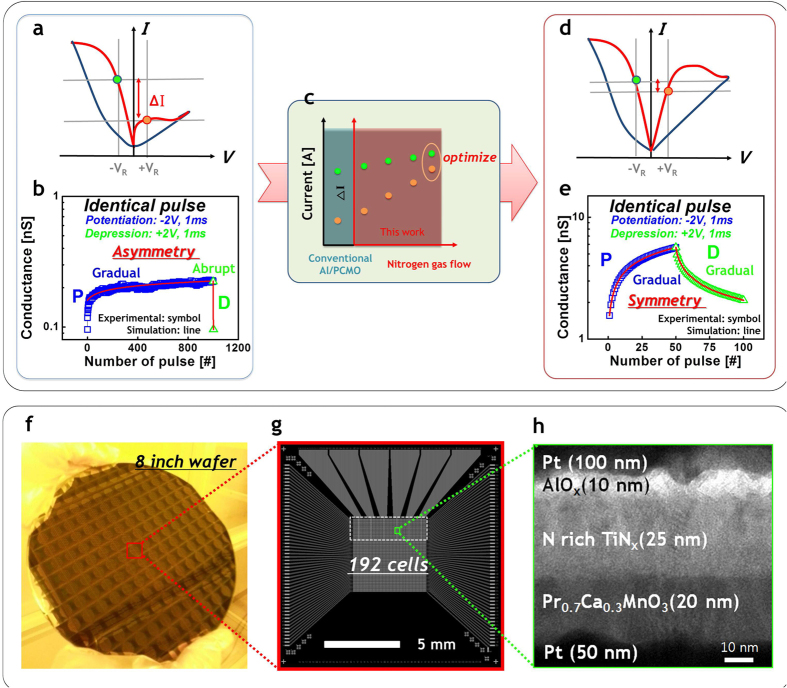
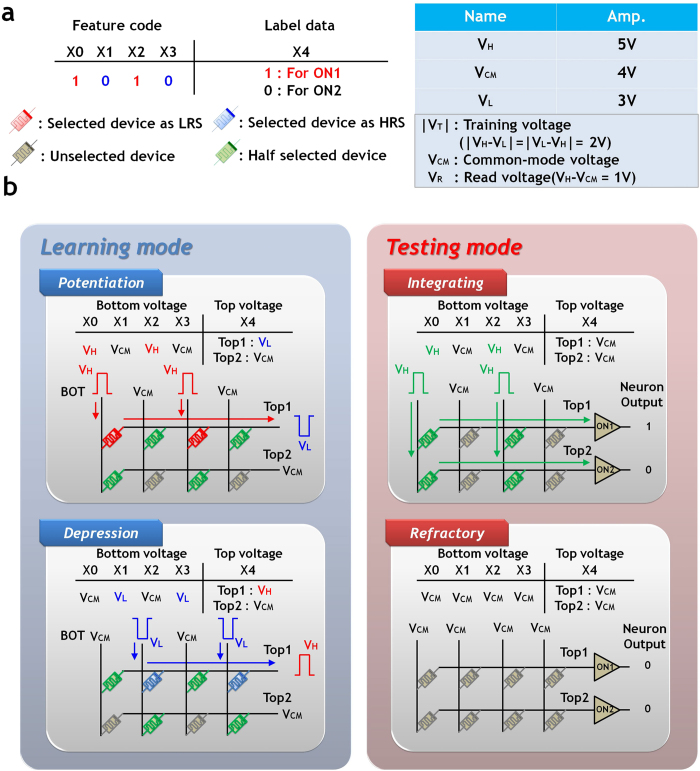
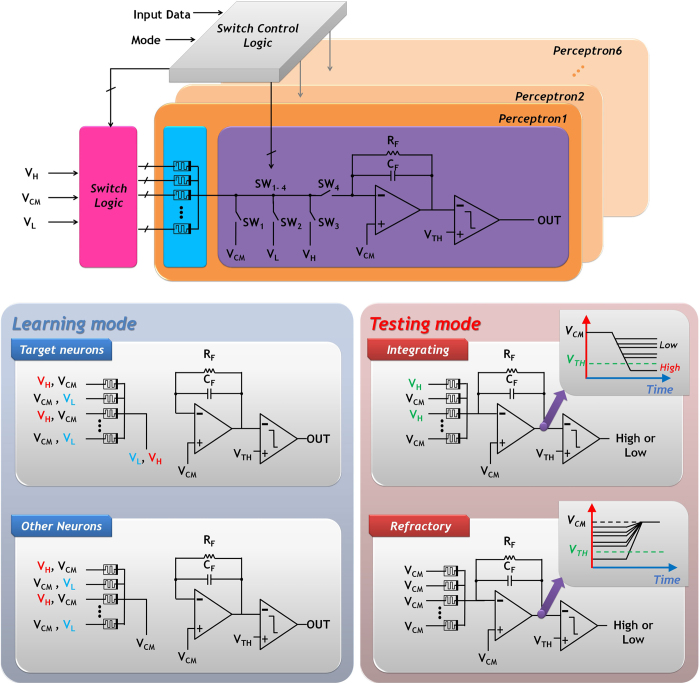
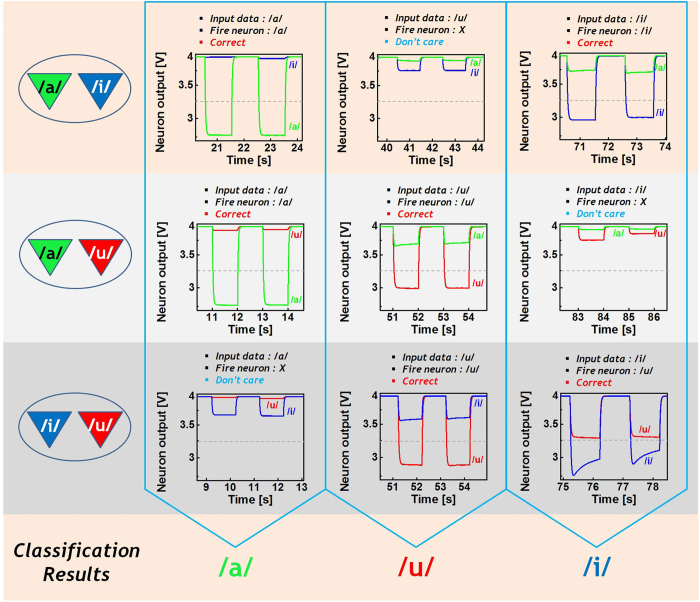
Memristive synapses, the most promising passive devices for synaptic interconnections in artificial neural networks, are the driving force behind recent research on hardware neural networks. Despite significant efforts to utilize memristive synapses, progress to date has only shown the possibility of building a neural network system that can classify simple image patterns. In this article, we report a high-density cross-point memristive synapse array with improved synaptic characteristics. The proposed PCMO-based memristive synapse exhibits the necessary gradual and symmetrical conductance changes and has been successfully adapted to a neural network system. The system learns and later recognizes, the human thought pattern corresponding to three vowels, i.e. /a /, /i / and /u/, using electroencephalography signals generated while a subject imagines speaking vowels. Our successful demonstration of a neural network system for EEG pattern recognition is likely to intrigue many researchers and stimulate a new research direction.
Overview
The claims and statistics of this paper haven’t been checked yet.
Free: it reads the open-access text and checks the first 5 claims that cite a source we can check. Create a free account to check every claim.
Integrity signals
Registry
Cites
Statistics
Figures
Verification
Claims the paper makes
The claims and statistics of this paper haven’t been checked yet.
Free: it reads the open-access text and checks the first 5 claims that cite a source we can check. Create a free account to check every claim.
Claims other papers make about this one
Each is checked against this paper’s own text: does it say what the citing paper says it does?
The cited source says what the claim attributes to it.
In the citing paper
“Crossbar arrays of two-terminal metal/insulator/metal (MIM) memristive devices can be fabricated easily using standard lithography and deposition techniques; this has been readily achieved by multiple groups57,64,68–70,85,93,105,216,217.”
From Hardware implementation of memristor-based artificial neural networks (2024) · cites this paper as [217]
Experimental — accuracy not yet measuredThe cited source says what the claim attributes to it.
In the citing paper
“Then, analogue VMM has been demonstrated both for binary inputs and weights218–220, as well as for binary inputs and analogue/multilevel weights60,85,105,217.”
From Hardware implementation of memristor-based artificial neural networks (2024) · cites this paper as [217]
Self-check
Percentages, sums and reported differences re-computed from the paper’s own numbers.
The self-check needs the paper’s full text.
Citations
Cites
A million spiking-neuron integrated circuit with a scalable communication network and interface
Merolla, P. A., Arthur, J. V., Alvarez-Icaza, R., Cassidy, A. S., Sawada, J., Akopyan, F., Jackson, B. L., Imam, N., Guo, C., Nakamura, Y., et al. (2014) · Science · doi:10.1126/science.1254642 · Cited by 4,147
Nanoelectronic programmable synapses based on phase change materials for brain-inspired computing
Kuzum, D., Jeyasingh, R. G. D., Lee, B., & Wong, H.-S. P. (2012) · Nano Letters · doi:10.1021/nl201040y · Cited by 1,267
Self-citationNeurogrid: A Mixed-Analog-Digital Multichip System for Large-Scale Neural Simulations
Benjamin, B. V., Gao, P., McQuinn, E., Choudhary, S., Chandrasekaran, A. R., Bussat, J.-M., Alvarez-Icaza, R., Arthur, J. V., Merolla, P. A., & Boahen, K. (2014) · Proceedings of the IEEE · doi:10.1109/jproc.2014.2313565 · Cited by 1,266
Artificial neural networks in hardware: A survey of two decades of progress
Misra, J., & Saha, I. (2010) · Neurocomputing · doi:10.1016/j.neucom.2010.03.021 · Cited by 646
Pattern classification by memristive crossbar circuits using ex situ and in situ training
Alibart, F., Zamanidoost, E., & Strukov, D. B. (2013) · Nature Communications · doi:10.1038/ncomms3072 · Cited by 642 · cited 1×
“using a simple crossbar array 13 .”
High-Density Crossbar Arrays Based on a Si Memristive System
Jo, S. H., Kim, K.-H., & Lu, W. (2009) · Nano Letters · doi:10.1021/nl8037689 · Cited by 574 · cited 1×
“A simple, two-terminal cross array structure is necessary for the practical implementation of high-density HNN 17 .”
BackgroundYu, S., Gao, B., Fang, Z., Yu, H., Kang, J., & Wong, H. ‐. P. (2013) · Advanced Materials · doi:10.1002/adma.201203680 · Cited by 527
Neuromorphic Hardware System for Visual Pattern Recognition With Memristor Array and CMOS Neuron
Chu, M., Kim, B., Park, S., Hwang, H., Jeon, M., Lee, B. H., & Lee, B.-G. (2015) · IEEE Transactions on Industrial Electronics · doi:10.1109/tie.2014.2356439 · Cited by 296
Self-citationCrossbar RRAM Arrays: Selector Device Requirements During Write Operation
Kim, S., Zhou, J., & Lu, W. D. (2014) · IEEE Transactions on Electron Devices · doi:10.1109/ted.2014.2327514 · Cited by 219 · cited 1×
“Generally, in memory applications 20 , this problem is easily solved using the half-bias scheme.”
MethodNeuromorphic speech systems using advanced ReRAM-based synapse
Park, S., Sheri, A., Kim, J., Noh, J., Jang, J., Jeon, M., Lee, B., Lee, B. R., Lee, B. H., & Hwang, H. (2013) · 2013 IEEE International Electron Devices Meeting · doi:10.1109/iedm.2013.6724692 · Cited by 201
Self-citation
Research works printed but not linked: 1
- Anzai, Y. Pattern Recognition & Machine Learning. (Elsevier, 1992).
Cited by
Analogue signal and image processing with large memristor crossbars
Li, C., Hu, M., Li, Y., Jiang, H., Ge, N., Montgomery, E., Zhang, J., Song, W., Dávila, N., Graves, C. E., et al. (2017) · Nature Electronics · doi:10.1038/s41928-017-0002-z · Cited by 1,292
“So far, demonstrations of this concept have been limited to binary signal input and/or binary matrix weights 14–16 .”
BackgroundResistive switching materials for information processing
Wang, Z., Wu, H., Burr, G. W., Hwang, C. S., Wang, K. L., Xia, Q., & Yang, J. J. (2020) · Nature Reviews Materials · doi:10.1038/s41578-019-0159-3 · Cited by 1,214
Neuro-Inspired Computing With Emerging Nonvolatile Memorys
Yu, S. (2018) · Proceedings of the IEEE · doi:10.1109/jproc.2018.2790840 · Cited by 1,170
“[98] demonstrated a single-layer perceptron network in 32 × 6 PCMO crossbar array with off-chip neuron circuits on a printed circuit board.”
BackgroundNeuromorphic computing using non-volatile memory
Burr, G. W., Shelby, R. M., Sebastian, A., Kim, S., Kim, S., Sidler, S., Virwani, K., Ishii, M., Narayanan, P., Fumarola, A., et al. (2017) · Advances in Physics: X · doi:10.1080/23746149.2016.1259585 · Cited by 1,107
Self-citationEfficient and self-adaptive in-situ learning in multilayer memristor neural networks
Li, C., Belkin, D., Li, Y., Yan, P., Hu, M., Ge, N., Jiang, H., Montgomery, E., Lin, P., Wang, Z., et al. (2018) · Nature Communications · doi:10.1038/s41467-018-04484-2 · Cited by 931
Face classification using electronic synapses
Yao, P., Wu, H., Gao, B., Eryilmaz, S. B., Huang, X., Zhang, W., Zhang, Q., Deng, N., Shi, L., Wong, H.-S. P., et al. (2017) · Nature Communications · doi:10.1038/ncomms15199 · Cited by 909
“Meanwhile, pattern recognition tasks based on analogue resistive random access memory (RRAM) have been demonstrated either through simulations or on a small crossbar array 13,14 .”
BackgroundMethodEmbedded Devices for Neuromorphic Time-Series Assessment
Mazumder, A. N., Hosseini, M., & Mohsenin, T. (2022) · Research Explorer (The University of Manchester) · doi:10.13016/m2ksy0-wxr3 · Cited by 652
Organic core-sheath nanowire artificial synapses with femtojoule energy consumption
Xu, W., Min, S.-Y., Hwang, H., & Lee, T.-W. (2016) · Science Advances · doi:10.1126/sciadv.1501326 · Cited by 570
Self-citationHardware implementation of memristor-based artificial neural networks
Aguirre, F., Sebastian, A., Le Gallo, M., Song, W., Wang, T., Yang, J. J., Lu, W., Chang, M.-F., Ielmini, D., Yang, Y., et al. (2024) · Nature Communications · doi:10.1038/s41467-024-45670-9 · Cited by 564
“Then, analogue VMM has been demonstrated both for binary inputs and weights 218 – 220 , as well as for binary inputs and analogue/multilevel weights 60,85,105,217 .”
Spintronic Nanodevices for Bioinspired Computing
Grollier, J., Querlioz, D., & Stiles, M. D. (2016) · Proceedings of the IEEE · doi:10.1109/jproc.2016.2597152 · Cited by 433
Brain-inspired computing with memristors: Challenges in devices, circuits, and systems
Zhang, Y., Wang, Z., Zhu, J., Yang, Y., Rao, M., Song, W., Zhuo, Y., Zhang, X., Cui, M., Shen, L., et al. (2020) · Applied Physics Reviews · doi:10.1063/1.5124027 · Cited by 384
Engineering incremental resistive switching in TaOxbased memristors for brain-inspired computing
Wang, Z., Yin, M., Zhang, T., Cai, Y., Wang, Y., Yang, Y., & Huang, R. (2016) · Nanoscale · doi:10.1039/c6nr00476h · Cited by 329
Towards Oxide Electronics: a Roadmap
Coll, M., Fontcuberta, J., Althammer, M., Bibes, M., Boschker, H., Calleja, A., Cheng, G., Cuoco, M., Dittmann, R., Dkhil, B., et al. (2019) · Applied Surface Science · doi:10.1016/j.apsusc.2019.03.312 · Cited by 314
Emerging Artificial Synaptic Devices for Neuromorphic Computing
Wan, Q., Sharbati, M. T., Erickson, J. R., Du, Y., & Xiong, F. (2019) · Advanced Materials Technologies · doi:10.1002/admt.201900037 · Cited by 303
Memristive Artificial Synapses for Neuromorphic Computing
Huang, W., Xia, X., Zhu, C., Steichen, P., Quan, W., Mao, W., Yang, J., Chu, L., & Li, X. (2021) · Nano-Micro Letters · doi:10.1007/s40820-021-00618-2 · Cited by 288
Jang, B. C., Kim, S., Yang, S. Y., Park, J., Cha, J.-H., Oh, J., Choi, J., Im, S. G., Dravid, V. P., & Choi, S.-Y. (2019) · Nano Letters · doi:10.1021/acs.nanolett.8b04023 · Cited by 203
Memristive Crossbar Arrays for Storage and Computing Applications
Li, H., Wang, S., Zhang, X., Wang, W., Yang, R., Sun, Z., Feng, W., Lin, P., Wang, Z., Sun, L., et al. (2021) · Advanced Intelligent Systems · doi:10.1002/aisy.202100017 · Cited by 205
Adaptive Extreme Edge Computing for Wearable Devices
Covi, E., Donati, E., Liang, X., Kappel, D., Heidari, H., Payvand, M., & Wang, W. (2021) · Frontiers in Neuroscience · doi:10.3389/fnins.2021.611300 · Cited by 177
“However, more recently, systems able of solving different tasks, such as speech recognition ( 246 ), and exploring different architectures and learning algorithms are being investigated.”
BackgroundKim, S., Lee, Y., Park, M., Go, G., Kim, Y., Xu, W., Lee, H., Kim, H., Seo, D., Lee, W., et al. (2019) · Advanced Electronic Materials · doi:10.1002/aelm.201900008 · Cited by 179
Analog Memristive Synapse in Spiking Networks Implementing Unsupervised Learning
Covi, E., Brivio, S., Serb, A., Prodromakis, T., Fanciulli, M., & Spiga, S. (2016) · Frontiers in Neuroscience · doi:10.3389/fnins.2016.00482 · Cited by 181
“…hand, analog evolution of device resistance is desirable to improve the robustness of the network (Bill and Legenstein, 2014; Garbin et al., 2015; Park et al., 2015), but the difficulty of operating memristors in an analog fashion renders hardware implementations of networks with analog synapses…”
BackgroundRaeis‐Hosseini, N., Park, Y., & Lee, J. (2018) · Advanced Functional Materials · doi:10.1002/adfm.201800553 · Cited by 172
A physical view of computational neurodynamics
Ma, J., Yang, Z.-Q., Yang, L.-J., & Tang, J. (2019) · Journal of Zhejiang University-SCIENCE A · doi:10.1631/jzus.a1900273 · Cited by 174
“Therefore, when two neurons are connected by a memristive synapse (Park et al., 2015; Covi et al., 2016; Azghadi et al., 2017; Xu F et al., 2018), the synapse current for the coupled neurons is estimated by where u 1 and u 2 describe the membrane potential for each of the two neurons respectively,…”
BackgroundPedretti, G., Milo, V., Ambrogio, S., Carboni, R., Bianchi, S., Calderoni, A., Ramaswamy, N., Spinelli, A. S., & Ielmini, D. (2017) · Scientific Reports · doi:10.1038/s41598-017-05480-0 · Cited by 167
“Neuromorphic circuits with memristive synaptic arrays were experimentally evaluated by using recurrent Hopfield networks 32–34 and perceptron networks, showing pattern classification 35 and supervised weight-update via backpropagation 36 or winner-take-all algorithms 37 .”
MethodDevice and materials requirements for neuromorphic computing
Islam, R., Li, H., Chen, P.-Y., Wan, W., Chen, H.-Y., Gao, B., Wu, H., Yu, S., Saraswat, K., & Philip Wong, H.-S. (2019) · Journal of Physics D: Applied Physics · doi:10.1088/1361-6463/aaf784 · Cited by 158
“3MnO3/Pt from top to bottom) based RRAM synaptic device which exhibits the necessary gradual and symmetric conductance change [79].”
BackgroundYu, J. J., Liang, L. Y., Hu, L. X., Duan, H. X., Wu, W. H., Zhang, H. L., Gao, J. H., Zhuge, F., Chang, T. C., & Cao, H. T. (2019) · Nano Energy · doi:10.1016/j.nanoen.2019.06.007 · Cited by 163
A new photosensitive neuron model and its dynamics
Liu, Y., Xu, W., Ma, J., Alzahrani, F. S., & Hobiny, A. D. (2020) · Frontiers of Information Technology & Electronic Engineering · doi:10.1631/fitee.1900606 · Cited by 151
Xiang, S., Zhang, Y., Gong, J., Guo, X., Lin, L., & Hao, Y. (2019) · IEEE Journal of Selected Topics in Quantum Electronics · doi:10.1109/jstqe.2019.2911565 · Cited by 149
Demonstration of Convolution Kernel Operation on Resistive Cross-Point Array
Gao, L., Chen, P.-Y., & Yu, S. (2016) · IEEE Electron Device Letters · doi:10.1109/led.2016.2573140 · Cited by 154
“, 40 × 40 Ag:a-Si crossbar (loading weights only without learning) [12], 12×12 TiOx/Al2O3 crossbar (simple perceptron algorithm with software neurons) [13], 32×32 PCMO crossbar (off-chip neuron circuits on a board) [14], 10×10 phase change memory (PCM) 1-transitor-1-resistor (1T1R) array (simple”
MethodPCMO RRAM for Integrate-and-Fire Neuron in Spiking Neural Networks
Lashkare, S., Chouhan, S., Chavan, T., Bhat, A., Kumbhare, P., & Ganguly, U. (2018) · IEEE Electron Device Letters · doi:10.1109/led.2018.2805822 · Cited by 145
“Synapses based on RRAM devices are demonstrated with analog conductance states controlled by square pulse voltage and time [7], [8].”
BackgroundMethodChang, C.-C., Chen, P.-C., Chou, T., Wang, I.-T., Hudec, B., Chang, C.-C., Tsai, C.-M., Chang, T.-S., & Hou, T.-H. (2017) · IEEE Journal on Emerging and Selected Topics in Circuits and Systems · doi:10.1109/jetcas.2017.2771529 · Cited by 140
Abbas, Y., Jeon, Y., Sokolov, A. S., Kim, S., Ku, B., & Choi, C. (2018) · Scientific Reports · doi:10.1038/s41598-018-19575-9 · Cited by 131
You, B. K., Kim, J. M., Joe, D. J., Yang, K., Shin, Y., Jung, Y. S., & Lee, K. J. (2016) · ACS Nano · doi:10.1021/acsnano.6b04578 · Cited by 124
Self-citationSynaptic Characteristics of Ag/AgInSbTe/Ta-Based Memristor for Pattern Recognition Applications
Zhang, Y., Li, Y., Wang, X., & Friedman, E. G. (2017) · IEEE Transactions on Electron Devices · doi:10.1109/ted.2017.2671433 · Cited by 126
“circuits [13], [14], [17] and metal–oxide memristive synaptic circuits [15], [16], since the synapse can be realized by a single memristor.”
BackgroundMethodA memristor-based adaptive neuromorphic decoder for brain–computer interfaces
Liu, Z., Mei, J., Tang, J., Xu, M., Gao, B., Wang, K., Ding, S., Liu, Q., Qin, Q., Chen, W., et al. (2025) · Nature Electronics · doi:10.1038/s41928-025-01340-2 · Cited by 138
“There have been attempts to use memristors to decode brain signals, including epilepsy detection 36–38 and distinguishing motor imagery 39,40 and neural firing signals 41,42 .”
Brain-inspired computing via memory device physics
Ielmini, D., Wang, Z., & Liu, Y. (2021) · APL Materials · doi:10.1063/5.0047641 · Cited by 123
Xiang, S., Ren, Z., Song, Z., Zhang, Y., Guo, X., Han, G., & Hao, Y. (2020) · IEEE Transactions on Neural Networks and Learning Systems · doi:10.1109/tnnls.2020.3006263 · Cited by 109
Memristive Synapses for Brain‐Inspired Computing
Wang, J., & Zhuge, F. (2019) · Advanced Materials Technologies · doi:10.1002/admt.201800544 · Cited by 110
Baek, K., Park, S., Park, J., Kim, Y., Hwang, H., & Oh, S. H. (2016) · Nanoscale · doi:10.1039/c6nr06293h · Cited by 105
Self-citationA Survey on Silicon Photonics for Deep Learning
Sunny, F., Taheri, E., Nikdast, M., & Pasricha, S. (2021) · ACM Journal on Emerging Technologies in Computing Systems · doi:10.1145/3459009 · Cited by 114
Utilizing multiple state variables to improve the dynamic range of analog switching in a memristor
Jeong, Y., Kim, S., & Lu, W. D. (2015) · Applied Physics Letters · doi:10.1063/1.4934818 · Cited by 101
On non-von Neumann flexible neuromorphic vision sensors
Wang, H., Sun, B., Ge, S. S., Su, J., & Jin, M. (2024) · npj Flexible Electronics · doi:10.1038/s41528-024-00313-3 · Cited by 109
Hong, X., Huang, Y., Tian, Q., Zhang, S., Liu, C., Wang, L., Zhang, K., Sun, J., Liao, L., & Zou, X. (2022) · Advanced Science · doi:10.1002/advs.202202019 · Cited by 100
Khan, R., Rehman, N. U., Iqbal, S., Abdullaev, S. S., & Aldosari, H. M. (2023) · ACS Applied Electronic Materials · doi:10.1021/acsaelm.3c01323 · Cited by 104
Zhang, H., Jiang, B., Cheng, C., Huang, B., Zhang, H., Chen, R., Xu, J., Huang, Y., Chen, H., Pei, W., et al. (2023) · Nano Letters · doi:10.1021/acs.nanolett.2c03624 · Cited by 96
Dynamics and coherence resonance in a thermosensitive neuron driven by photocurrent*
Xu, Y., Liu, M., Zhu, Z., & Ma, J. (2020) · Chinese Physics B · doi:10.1088/1674-1056/ab9dee · Cited by 87
Evidence of soft bound behaviour in analogue memristive devices for neuromorphic computing
Frascaroli, J., Brivio, S., Covi, E., & Spiga, S. (2018) · Scientific Reports · doi:10.1038/s41598-018-25376-x · Cited by 88
Wang, D.-T., Dai, Y.-W., Xu, J., Chen, L., Sun, Q.-Q., Zhou, P., Wang, P.-F., Ding, S.-J., & Zhang, D. W. (2016) · IEEE Electron Device Letters · doi:10.1109/led.2016.2570279 · Cited by 80
“Recently, RRAM was linked to a synapse [9], [10], the function of which can be mimicked with RRAM device operation.”
Optimization of non-linear conductance modulation based on metal oxide memristors
Liu, H., Wei, M., & Chen, Y. (2018) · Nanotechnology Reviews · doi:10.1515/ntrev-2018-0045 · Cited by 80
“[9, 138] are researchers who have done research in this area.”
BackgroundSilicon synaptic transistor for hardware-based spiking neural network and neuromorphic system
Kim, H., Hwang, S., Park, J., & Park, B. (2017) · Nanotechnology · doi:10.1088/1361-6528/aa86f8 · Cited by 77
“…requires additional selection device because arti fi cial synapses have to transfer signals to the post-synaptic neurons and receive back-propagation signals from the post-synaptic neurons for learning under spike timing-dependent plasticity ( STDP ) rules through the same electrodes [ 28 – 33 ] .”
BackgroundOpto-electronic memristors: Prospects and challenges in neuromorphic computing
Emboras, A., Alabastri, A., Lehmann, P., Portner, K., Weilenmann, C., Ma, P., Cheng, B., Lewerenz, M., Passerini, E., Koch, U., et al. (2020) · Applied Physics Letters · doi:10.1063/5.0028539 · Cited by 78
In-memory computing to break the memory wall*
Huang, X., Liu, C., Jiang, Y., & Zhou, P. (2020) · Chinese Physics B · doi:10.1088/1674-1056/ab90e7 · Cited by 79
Byun, K., Choi, I., Kwon, S., Kim, Y., Kang, D., Cho, Y. W., Yoon, S. K., & Kim, S. (2022) · Advanced Materials Technologies · doi:10.1002/admt.202200884 · Cited by 68
Interfacing Biology and Electronics with Memristive Materials
Tzouvadaki, I., Gkoupidenis, P., Vassanelli, S., Wang, S., & Prodromakis, T. (2023) · Advanced Materials · doi:10.1002/adma.202210035 · Cited by 66
An Attention-Based Spiking Neural Network for Unsupervised Spike-Sorting
Bernert, M., & Yvert, B. (2018) · International Journal of Neural Systems · doi:10.1142/s0129065718500594 · Cited by 66
Modeling the Metal–Insulator Phase Transition in Li x CoO 2 for Energy and Information Storage
Nadkarni, N., Zhou, T., Fraggedakis, D., Gao, T., & Bazant, M. Z. (2019) · Advanced Functional Materials · doi:10.1002/adfm.201902821 · Cited by 68
Predicting House Price With a Memristor-Based Artificial Neural Network
Wang, J. J., Hu, S. G., Zhan, X. T., Luo, Q., Yu, Q., Liu, Z., Chen, T. P., Yin, Y., Hosaka, S., & Liu, Y. (2018) · IEEE Access · doi:10.1109/access.2018.2814065 · Cited by 61
HfO2-based memristors for neuromorphic applications
Covi, E., Brivio, S., Serb, A., Prodromakis, T., Fanciulli, M., & Spiga, S. (2016) · IEEE International Symposium on Circuits and Systems proceedings · doi:10.1109/iscas.2016.7527253 · Cited by 60
“Indeed, biologically inspired systems, which aim to emulate the living beings’ nervous system, are the best solution to solve ill-posed problems, such as real time interaction with the external environment or pattern recognition [2], [3].”
BackgroundMethodBilayered Oxide‐Based Cognitive Memristor with Brain‐Inspired Learning Activities
Xiong, W., Zhu, L. Q., Ye, C., Yu, F., Ren, Z. Y., & Ge, Z. Y. (2019) · Advanced Electronic Materials · doi:10.1002/aelm.201900439 · Cited by 59
PCMO-Based RRAM and NPN Bipolar Selector as Synapse for Energy Efficient STDP
Lashkare, S., Panwar, N., Kumbhare, P., Das, B., & Ganguly, U. (2017) · IEEE Electron Device Letters · doi:10.1109/led.2017.2723503 · Cited by 59
Jiang, Y., Huang, P. C., Zhu, D., Zhou, Z., Han, R., Liu, L., Liu, X., & Kang, J. (2018) · IEEE Transactions on Circuits and Systems I Regular Papers · doi:10.1109/tcsi.2018.2812419 · Cited by 62
“is regarding to the LIF neurons which were often employed by ANN systems as reported in the previous publications [16], [17], [23].”
BackgroundMethodOptoelectronic artificial synapses based on β-Ga2O3 films by RF magnetron sputtering
Chen, X., Mi, W., Li, M., Tang, J., Zhao, J., Zhou, L., Zhang, X., & Luan, C. (2021) · Vacuum · doi:10.1016/j.vacuum.2021.110422 · Cited by 58
Zhou, L., Lin, H., & Tan, F. (2023) · Chaos Solitons & Fractals · doi:10.1016/j.chaos.2023.113643 · Cited by 57
Unsupervised Hebbian learning experimentally realized with analogue memristive crossbar arrays
Hansen, M., Zahari, F., Kohlstedt, H., & Ziegler, M. (2018) · Scientific Reports · doi:10.1038/s41598-018-27033-9 · Cited by 66
“…to this unique behaviour of memristive devices, promising computing schemes, including implicit learning schemes 18,19 , auto-associative networks 20,21 , and per-ceptron networks for pattern recognition 22,23 , classification 24–27 , and unsupervised learning 28–30 , have been already presented.”
BackgroundLin, Y., Wang, C., Ren, Y., Wang, Z., Xu, H., Zhao, X., Ma, J., & Liu, Y. (2019) · Small Methods · doi:10.1002/smtd.201900160 · Cited by 57
Berco, D., & Ang, D. S. (2019) · Advanced Intelligent Systems · doi:10.1002/aisy.201900003 · Cited by 58
Experimental study of gradual/abrupt dynamics of HfO2-based memristive devices
Brivio, S., Covi, E., Serb, A., Prodromakis, T., Fanciulli, M., & Spiga, S. (2016) · Applied Physics Letters · doi:10.1063/1.4963675 · Cited by 55
Development of a neuromorphic computing system
Shi, L., Pei, J., Deng, N., Wang, D., Deng, L., Wang, Y., Zhang, Y., Chen, F., Zhao, M., Song, S., et al. (2015) · Technical digest - International Electron Devices Meeting/Technical digest · doi:10.1109/iedm.2015.7409624 · Cited by 54
Emerging memristive artificial neuron and synapse devices for the neuromorphic electronics era
Li, J., Abbas, H., Ang, D. S., Ali, A., & Ju, X. (2023) · Nanoscale Horizons · doi:10.1039/d3nh00180f · Cited by 56
Hwang, S., Kim, H., Park, J., Kwon, M.-W., Baek, M.-H., Lee, J.-J., & Park, B. (2018) · IEEE Electron Device Letters · doi:10.1109/led.2018.2853635 · Cited by 52
Liu, Q., Yan, H., Zhang, H., Zhan, X., & Shi, K. (2022) · IEEE Transactions on Systems Man and Cybernetics Systems · doi:10.1109/tsmc.2022.3220979 · Cited by 50
“Moreover, the MINNs can be embedded in FPGA to complete the task of pattern recognition [38].”
BackgroundRecent trends in neuromorphic engineering
Soman, S., Jayadeva, J., & Suri, M. (2016) · Big Data Analytics · doi:10.1186/s41044-016-0013-1 · Cited by 56
“[117] memristive synapse neural network to recognize human thoughts corresponding to imagined speech of three vowels of the English alphabet.”
Single-Readout High-Density Memristor Crossbar
Zidan, M. A., Omran, H. A., Naous, R., Sultan, A., Fahmy, H. A. H., Lu, W. D., & Salama, K. N. (2016) · Scientific Reports · doi:10.1038/srep18863 · Cited by 50
Yin, X., Yang, R., Xue, K., Tan, Z., Zhang, X., Miao, X., & Guo, X. (2016) · Physical Chemistry Chemical Physics · doi:10.1039/c6cp06049h · Cited by 48
A Recoverable Synapse Device Using a Three‐Dimensional Silicon Transistor
Hur, J. H., Jang, B. C., Park, J., Moon, D., Bae, H., Park, J., Kim, G., Jeon, S., Seo, M., Kim, S., et al. (2018) · Advanced Functional Materials · doi:10.1002/adfm.201804844 · Cited by 50
Fu, Y. M., Wan, C., Zhu, L. Q., Xiao, H. J., Chen, X. D., & Wan, Q. C. (2018) · Advanced Biosystems · doi:10.1002/adbi.201700198 · Cited by 46
Yoon, Y., Kim, Y., Hwang, W. S., & Shin, M. (2023) · Advanced Electronic Materials · doi:10.1002/aelm.202300098 · Cited by 52
Metal oxide resistive random access memory based synaptic devices for brain-inspired computing
Gao, B., Kang, J., Zhou, Z., Chen, Z., Huang, P. C., Liu, L., & Liu, X. (2016) · Japanese Journal of Applied Physics · doi:10.7567/jjap.55.04ea06 · Cited by 42
Photonic spiking neural network based on excitable VCSELs-SA for sound azimuth detection
Song, Z. W., Xiang, S., Ren, Z. X., Wang, S. H., Wen, A. J., & Hao, Y. (2019) · Optics Express · doi:10.1364/oe.381229 · Cited by 41
Brivio, S., Conti, D. V., Nair, M. V., Frascaroli, J., Covi, E., Ricciardi, C., Indiveri, G., & Spiga, S. (2018) · Nanotechnology · doi:10.1088/1361-6528/aae81c · Cited by 43
Song, Z., Xiang, S., Ren, Z., Han, G., & Hao, Y. (2020) · IEEE Journal of Selected Topics in Quantum Electronics · doi:10.1109/jstqe.2020.2975564 · Cited by 40
Neuromorphic architectures with electronic synapses
Eryilmaz, S. B., Joshi, S., Neftci, E., Wan, W., Cauwenberghs, G., & Wong, H. ‐. P. (2016) · International Symposium on Quality Electronic Design (ISQED) · doi:10.1109/isqed.2016.7479186 · Cited by 42
“3) [53-56] or simulation [57-59].”
A differential memristive synapse circuit for on-line learning in neuromorphic computing systems
Nair, M. V., Müller, L. K., & Indiveri, G. (2017) · Nano Futures · doi:10.1088/2399-1984/aa954a · Cited by 39
“Clearly, the area of this synaptic circuit ismuch larger than that of synapse elements employed in dense 1R or 1T-1R crossbar arrays [15, 19, 24].”
BackgroundMethodBroadband Optoelectronic Synaptic Thin‐Film Transistors Based on Oxide Semiconductors
Duan, H., Javaid, K., Liang, L., Huang, L., Yu, J., Zhang, H., Gao, J., Zhuge, F., Chang, T., & Cao, H. (2020) · physica status solidi (RRL) - Rapid Research Letters · doi:10.1002/pssr.201900630 · Cited by 38
Niu, G., Schubert, M. A., Sharath, S. U., Zaumseil, P., Vogel, S., Wenger, C., Hildebrandt, E., Bhupathi, S., Pérez, E., Alff, L., et al. (2017) · Nanotechnology · doi:10.1088/1361-6528/aa6cd9 · Cited by 36
Chang, C.-C., Liu, J., Shen, Y.-L., Chou, T., Chen, P.-C., Wang, I., Su, C.-C., Wu, M.-H., Hudec, B., Chang, C., et al. (2017) · Technical digest - International Electron Devices Meeting/Technical digest · doi:10.1109/iedm.2017.8268373 · Cited by 38
Njitacke, Z. T., Awrejcewicz, J., Telem, A. N. K., Fozin, T. F., & Kengne, J. (2022) · IEEE Transactions on Circuits & Systems II Express Briefs · doi:10.1109/tcsii.2022.3172141 · Cited by 35
“Among them are memristive synapses [2], electrical synapses [3], chemical synapses [4], as well as Josephson”
BackgroundTraining a Probabilistic Graphical Model With Resistive Switching Electronic Synapses
Eryilmaz, S. B., Neftci, E., Joshi, S., Kim, S., BrightSky, M., Lung, H.-L., Lam, C., Cauwenberghs, G., & Wong, H.-S. P. (2016) · IEEE Transactions on Electron Devices · doi:10.1109/ted.2016.2616483 · Cited by 34
1.2 Intelligence on Silicon: From Deep-Neural-Network Accelerators to Brain Mimicking AI-SoCs
Yoo, H. (2019) · Digest of technical papers/Digest of technical papers - IEEE International Solid-State Circuits Conference · doi:10.1109/isscc.2019.8662469 · Cited by 39
“If such a device can be integrated with neuronal circuits, non Von Neumann architectures such as biological neuronal computation can be realized, minimizing power consumption needed to transfer weight values from memory to the synapse [32, 33, 34].”
Improvement in conductance modulation linearity of artificial synapses based on NaNbO3 memristor
Woo, J., Hwang, H.-G., Park, S.-M., Lee, T., & Nahm, S. (2020) · Applied Materials Today · doi:10.1016/j.apmt.2020.100582 · Cited by 35
Self-citationSpike-driven threshold-based learning with memristive synapses and neuromorphic silicon neurons
Covi, E., George, R., Frascaroli, J., Brivio, S., Mayr, C., Mostafa, H., Indiveri, G., & Spiga, S. (2018) · Journal of Physics D Applied Physics · doi:10.1088/1361-6463/aad361 · Cited by 32
“While passive and selector free crossbars have been proposed and demonstrated for some applications [51, 52], the co-integration of selectors and memristive devices might be required for very high density systems.”
BackgroundGutsche, A., Siegel, S., Zhang, J., Hambsch, S., & Dittmann, R. (2021) · Frontiers in Neuroscience · doi:10.3389/fnins.2021.661261 · Cited by 34
Extremely rich dynamics of coupled heterogeneous neurons through a Josephson junction synapse
Njitacke, Z. T., Ramakrishnan, B., Rajagopal, K., Fozin, T. F., & Awrejcewicz, J. (2022) · Chaos Solitons & Fractals · doi:10.1016/j.chaos.2022.112717 · Cited by 30
Vijayakumar, M. D., Natiq, H., Tametang, M. I. M., Leutcho, G. D., & Njitacke, Z. T. (2022) · Chaos Solitons & Fractals · doi:10.1016/j.chaos.2021.111765 · Cited by 29
Koo, B. M., Sung, S., Wu, C., Song, J., & Kim, T. W. (2019) · Scientific Reports · doi:10.1038/s41598-019-46226-4 · Cited by 28
Huo, Q., Song, R., Lei, D., Luo, Q., Wu, Z., Wu, Z., Zhao, X., Zhang, F., Li, L., & Liu, M. (2020) · IEEE Electron Device Letters · doi:10.1109/led.2020.2970536 · Cited by 28
Graphene‐Assisting Nonvolatile Vanadium Dioxide Phase Transition for Neuromorphic Machine Vision
Yu, X., Cheng, C., Liang, J., Wang, M., Huang, B., Wang, Z., & Li, L. (2024) · Advanced Functional Materials · doi:10.1002/adfm.202312481 · Cited by 27
An Analysis of Components and Enhancement Strategies for Advancing Memristive Neural Networks
Park, H., Han, J., Yim, S., Shin, D. H., Park, T. W., Woo, K. S., Lee, S. H., Cho, J. M., Kim, H. W., Park, T., et al. (2025) · Advanced Materials · doi:10.1002/adma.202412549 · Cited by 27
Partition SRAM and RRAM based synaptic arrays for neuro-inspired computing
Chen, P.-Y., & Yu, S. (2016) · IEEE International Symposium on Circuits and Systems proceedings · doi:10.1109/iscas.2016.7539046 · Cited by 27
“12×12 TiOx/Al2O3 crossbar (simple perceptron algorithm with software neurons) [7], 32×32 PCMO crossbar (off-chip neuron circuits on a board) [8].”
MethodLiu, K., Qin, L., Zhang, X., Zhu, J., Sun, X., Ke, Y., Cai, Y., Yang, Y., & Huang, R. (2018) · Faraday Discussions · doi:10.1039/c8fd00113h · Cited by 29
Zarrin, P. S., Zahari, F., Mahadevaiah, M. K., Pérez, E., Kohlstedt, H., & Wenger, C. (2020) · Scientific Reports · doi:10.1038/s41598-020-76823-7 · Cited by 29
Metadata
- Authors
- Park, S., Chu, M., Kim, J., Noh, J., Jeon, M., Hun Lee, B., Hwang, H., Lee, B., & Lee, B.-G.
- Affiliations
- Gwangju Institute of Science and Technology (KR)
- Pohang University of Science and Technology (KR)
- Corresponding author
- Lee, Boreom
- Lee, Byung-geun
- Venue
- Scientific Reports
- Published
- 2015-05-05
- Volume
- 5
- Issue
- 1
- Pages
- 10123-10123
- ISSN
- 2045-2322 (ISSN-L)
- PMC
- PMC4419523
- OpenAlex
- W2407840779
- Cited by
- 181
- References
- 20
- Citations by year
- 2026: 3 · 2025: 9 · 2024: 13 · 2023: 12 · 2022: 15 · 2021: 15 · 2020: 21 · 2019: 26 · 2018: 24 · 2017: 19 · 2016: 21 · 2015: 3
- FWCI
- 10.77
- Type
- journal article
- Language
- en
- Open access
- gold
- doi.org
- Licence
- cc-by
- creativecommons.org/licenses/by/4.0 (tdm)
- creativecommons.org/licenses/by/4.0 (vor)
- Locations
- Scientific Reports (publishedVersion, cc-by)
- Europe PMC (PubMed Central) (publishedVersion, cc-by)
- PubMed Central (publishedVersion, cc-by)
- PubMed (publishedVersion)
- Open Access System for Information Sharing (Pohang University of Science and Technology) (submittedVersion, cc-by-nc-nd)
- Funders
- National Research Foundation (2012-0009460)
- National Research Foundation of Korea (2012-0009460)
- Topics
- Physical Sciences › Engineering › Electrical and Electronic Engineering › Advanced Memory and Neural Computing
- Physical Sciences › Computer Science › Artificial Intelligence › Neural Networks and Applications
- Physical Sciences › Engineering › Electrical and Electronic Engineering › Ferroelectric and Negative Capacitance Devices
- Keywords
- memristive synapses, neural network hardware, pattern recognition, EEG, vowel recognition, synaptic conductance, artificial neural networks
- MeSH terms
- Electroencephalography, Electronics, Humans, Imagination, Learning, Pattern Recognition, Automated, Signal Processing, Computer-Assisted, Speech, Synapses, Neural Networks, Computer
About these checks
Registry, retraction, Cites and statistics results are computed, not judged, with one exception: a printed reference that no index lists is read once by a model before it counts as a citation error. Claims are extracted by a model and kept only when their quote appears verbatim in the text; each cited source is then checked, with a model’s help, for whether it says what the claim relies on. Those verdicts can be wrong — read the claim’s quote and the cited source before relying on one.
Statistics and arithmetic are recomputed, not judged.
Confidence bands are shown only for fields calibrated on our annotated test set. None is calibrated yet, so no band is shown.
What counts as a claim ›How we measure confidence ›How we check this ›
Are you an author, or do you see a problem with this page? Request a review
Data sources
Bibliographic data: Semantic Scholar, OpenAlex, Crossref.
Contains information from the Semantic Scholar Academic Graph Datasets, made available under the ODC Attribution License (ODC-BY 1.0).
Semantic Scholar’s data is described in: Kinney, R., et al. (2023). The Semantic Scholar Open Data Platform. arXiv:2301.10140.
