

Default and Executive Network Coupling Supports Creative Idea Production
Open accessThe DOI matches its Crossref record; 75 of the 75 references it cites were found in a registry or an index; 12 of the 61 sources its claims cite were checked for support.
Abstract
The role of attention in creative cognition remains controversial. Neuroimaging studies have reported activation of brain regions linked to both cognitive control and spontaneous imaginative processes, raising questions about how these regions interact to support creative thought. Using functional magnetic resonance imaging (fMRI), we explored this question by examining dynamic interactions between brain regions during a divergent thinking task. Multivariate pattern analysis revealed a distributed network associated with divergent thinking, including several core hubs of the default (posterior cingulate) and executive (dorsolateral prefrontal cortex) networks. The resting-state network affiliation of these regions was confirmed using data from an independent sample of participants. Graph theory analysis assessed global efficiency of the divergent thinking network and network efficiency was found to increase as a function of individual differences in divergent thinking ability. Moreover, temporal connectivity analysis revealed increased coupling between default and salience network regions (bilateral insula) at the beginning of the task, followed by increased coupling between default and executive network regions at later stages. Such dynamic coupling suggests that divergent thinking involves cooperation between brain networks linked to cognitive control and spontaneous thought, which may reflect focused internal attention and the top-down control of spontaneous cognition during creative idea production.
Overview
CoChat Summary
TL;DR
Using fMRI during an alternate-uses divergent thinking task, the study found that creative idea production is supported by dynamic coupling among default, executive, and salience networks rather than isolated network activity. Greater global efficiency of this divergent-thinking network correlated with better behavioral divergent thinking ability.
Key findings
- The whole-brain MVPA contrast (alternate uses > object characteristics) identified a distributed divergent-thinking network including default regions (left precuneus, right PCC, bilateral IPL), the executive region right DLPFC, salience regions (right ACC, bilateral insula), and temporal clusters such as bilateral MTG.
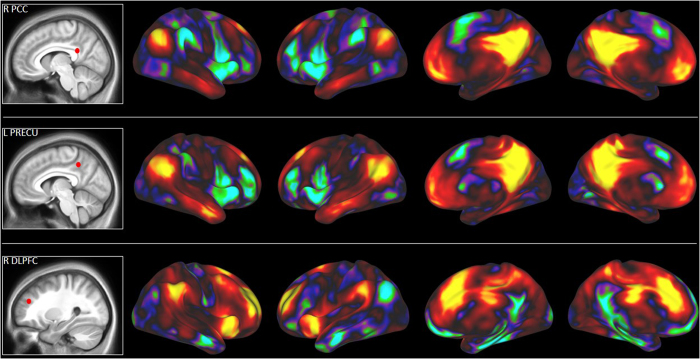
- Resting-state analysis in an independent sample (n = 42) confirmed network affiliations: precuneus/PCC seeds positively connected with DMN regions and negatively with ECN regions, while the right DLPFC seed positively connected with ECN regions and negatively with DMN regions.
- Temporal ROI-to-ROI analyses showed the PCC initially coupled with bilateral insula (salience network) and later with right DLPFC (executive network); right DLPFC coupled with default regions (right PCC, right IPL) only during the second half of the task (TRs 4–5).
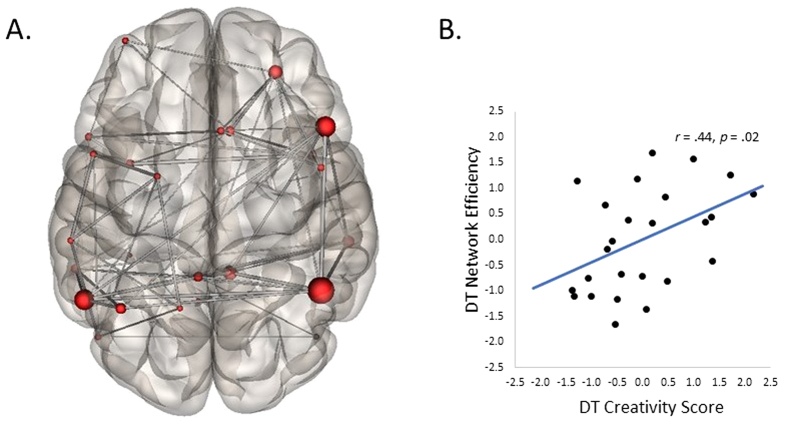
- Global efficiency of the whole-brain ROI network positively correlated with composite creativity scores from the out-of-scanner alternate uses task (r = .44, p = .02).
Methods
- Final sample: 25 right-handed young adults (13 females; mean age 21.04 years, range 18–30) after excluding 3 of 28 for head movement >3 mm; participants completed alternate uses divergent thinking and object characteristics control tasks during fMRI (46 event-related trials; 12-s idea generation).
- fMRI data were acquired on a 3T Siemens Magnetom; preprocessing used SPM8; task functional connectivity used the CONN toolbox with CompCor; analyses included whole-brain MVPA, seed-to-voxel, and ROI-to-ROI temporal connectivity across five 2-s windows (TRs 2–6), plus resting-state connectivity in an independent n = 42 sample.
- Graph theory computed global efficiency of the whole-brain ROI network and correlated it with composite creativity scores (average of three raters; Cronbach’s alpha = .87) from an out-of-scanner alternate uses task.
Limitations
- Stated: the study could not capture participant responses in the scanner, limiting checks of task compliance and parametric analyses of response creative quality.
- Stated: it used a single assessment (alternate-uses divergent thinking) to index broadly defined creativity; future work should test other creative tasks and domains and clarify whether creative cognition differs from other imaginative processes in executive involvement.
- Evident in the text: the final fMRI sample was small (n = 25), and the key brain–behavior finding is correlational, so causal direction and generalizability remain uncertain.
Model-written summary. Check it against the paper before relying on it.
Integrity signals
Registry
Cites
Statistics
Figures



Verification
Claims the paper makes
10 Valid · 0 Not valid · 27 Not checked · 51 Own results and interpretations
Every source the paper cites for this claim was checked and supports it.
In the paper
“Emerging evidence, however, suggests that the executive and default networks actually cooperate whenever it is necessary to perform a task that requires extended evaluation of internal information8.”
§ Default and Executive Network Coupling Supports Creative Idea Production > The Present Research
What the sources say
- Supportedcites [8] Andrews-Hanna, J. R., Smallwood, J. & Spreng, R. N. The default network and self-generated thought: Component processes, dynamic control and clinical relevance. Ann. NY Acad. Sci., USA, 1316, 29–52. (2014). source
In the section 'Default and frontoparietal control network interactions', our copy states 'There is now a relatively extensive body of work suggesting that default and control networks can cooperate to perform particular mental operations,' and, after listing problem-solving with mental simulation, autobiographical planning, social working memory and evaluation of creative ideas, concludes 'All of these tasks depend on the maintenance or extended evaluation of internal information in the service of a goal, leading to the suggestion that these forms of large-scale interactions reflect temporally extended evaluation of self-generated thoughts.' This matches the cited sentence's content — emerging/hedged evidence for executive (frontoparietal control) and default network cooperation during tasks requiring extended evaluation of internal information. The only difference is wording: the source frames the cooperation as a suggestion drawn from these tasks (and adds 'in the service of a goal') rather than as an absolute 'whenever', but the same point is made at the same level of confidence ('suggesting', 'leading to the suggestion'). (LLM, conf=0.85)
hedgedstates an association- Asserted: passes — The authors put it forward as true.
- Checkable: passes — It can be checked against evidence.
- Load-bearing: passes — The paper’s conclusions depend on it.
- Based: passes — The paper gives a reason why it holds.
- Supported
The sources with a verdict support this claim; the rest weren’t checked yet, have no full text we could read, or their verdicts aren’t rated yet.
In the paper
“The DMN is associated with cognitive processes that require internally-directed or self-generated thought, such as mind-wandering10, future thinking11, perspective taking12, and mental simulation13.”
§ Default and Executive Network Coupling Supports Creative Idea Production > Large-Scale Networks and Creative Cognition
What the sources say
- Not checked yetcites [10] Mason, M. F. et al. Wandering minds: The default network and stimulus-independent thought. Sci., 315, 393–395 (2007). source
- Supportedcites [11] Schacter, D. L. et al. The future of memory: Remembering, imagining and the brain. Neuron, 76, 677–694 (2012). source
The citation attached to “future thinking” is supported by the section “The Default Network Can Couple Flexibly with Other Networks to Support Complex Goal-Directed Simulations” (page not provided), which links imagining personal futures and future simulations to default-network activity. The other examples in the citing sentence have separate citations and are not attributed to this source here. (LLM, conf=0.92)
- Not checked yetcites [12] Buckner, R. L. & Carroll, D. C. Self-projection and the brain. Trends Cogn. Sci., 11, 49–57 (2007). source
plainstates an association- Asserted: passes — The authors put it forward as true.
- Checkable: passes — It can be checked against evidence.
- Load-bearing: passes — The paper’s conclusions depend on it.
- Based: passes — The paper gives a reason why it holds.
The cited sources support only part of this claim — read each source’s verdict below.
In the paper
“Moreover, these regions correspond to the core hubs of large-scale networks that typically act in opposition1.”
§ Default and Executive Network Coupling Supports Creative Idea Production > Abstract
What the sources say
- Partly supportedcites [1] Fox, M. D. et al. The human brain is intrinsically organized into dynamic, anticorrelated functional networks. Proc. Natl. Acad. Sci. USA, 102, 9673–9678 (2005). sourceExperimental — accuracy not yet measured
The Results identify regions in two widely distributed networks and report that the networks’ activity is largely anticorrelated. They identify seed regions and peak foci, but do not establish that the regions are specifically network hubs; the citing sentence also does not identify which regions “these regions” refers to. (LLM, conf=0.78)
plain- Asserted: passes — The authors put it forward as true.
- Checkable: passes — It can be checked against evidence.
- Load-bearing: passes — The paper’s conclusions depend on it.
- Based: passes — The paper gives a reason why it holds.
- Partly supported
Every source the paper cites for this claim was checked and supports it.
In the paper
“Such findings suggest that DMN and ECN regions show increased coupling when attention is focused on internally-directed processes8.”
§ Default and Executive Network Coupling Supports Creative Idea Production > Discussion
What the sources say
- Supportedcites [8] Andrews-Hanna, J. R., Smallwood, J. & Spreng, R. N. The default network and self-generated thought: Component processes, dynamic control and clinical relevance. Ann. NY Acad. Sci., USA, 1316, 29–52. (2014). source
In 'Default and frontoparietal control network interactions' the paper reviews DN–control-network cooperation, stating that during autobiographical planning 'DN to FPCN coupling was found to be specific to actively imagining the steps necessary to attain a personal goal,' and that DN and FPCN coactivate during social working memory and creative evaluation, tasks that 'depend on the maintenance or extended evaluation of internal information in the service of a goal.' The same section notes 'a high level of intrinsic functional integration among the default and frontoparietal control systems,' and the Summary frames the FPCN as mediating internally and externally directed cognition. The citing sentence is hedged ('suggest'), matching the source's own hedging; the only wording shift is 'ECN' for the paper's FPCN, which the paper describes as the network playing 'an important role in executive control of attention.' (LLM, conf=0.85)
hedgedstates an association- Asserted: passes — The authors put it forward as true.
- Checkable: passes — It can be checked against evidence.
- Load-bearing: passes — The paper’s conclusions depend on it.
- Based: passes — The paper gives a reason why it holds.
- Supported
Every source the paper cites for this claim was checked and supports it.
In the paper
“For example, Benedek and colleagues29. found that generating new ideas during a divergent thinking task (responses participants identified as novel during functional imaging) was related to increased involvement of the left IPL, providing further support for a role of default mode regions in creative cognition.”
§ Default and Executive Network Coupling Supports Creative Idea Production > Large-Scale Networks and Creative Cognition
What the sources say
- Supportedcites [29] Benedek, M. et al. To create or to recall? Neural mechanisms underlying the generation of creative new ideas. NeuroImage, 88, 125–133 (2014). source
The Results (fMRI analysis, page not available) report significantly stronger activation in the left inferior parietal cortex when participants generated new ideas rather than recalled old ones. This directly supports the attributed finding about left IPL involvement during divergent thinking. (LLM, conf=0.93)
plainstates an association- Asserted: passes — The authors put it forward as true.
- Checkable: passes — It can be checked against evidence.
- Load-bearing: unclear — It is unclear whether the paper’s conclusions depend on it.
- Based: passes — The paper gives a reason why it holds.
- Supported
43 more claims · 1 with their cited sources checked
Create a free account to see all 88 claims and to verify the 49 references still open.
- It may state two separate claims as one. 23
- Probably not a substantial claim. 26
- The quote only partly states this claim. 1
Claims other papers make about this one
Each is checked against this paper’s own text: does it say what the citing paper says it does?
The source backs part of the claim, not all of it — or backs it for a different population, condition or comparison.
In the citing paper
“Moreover, dynamic functional connectivity analysis showed differential coupling of network hubs across the task duration; for example, the PCC showed early coupling with the right anterior insula and later coupling with the right DLPFC, among other regions (see Figure 1C).”
From Creative Cognition and Brain Network Dynamics (2016) · cites this paper as [26]
Experimental — accuracy not yet measuredThe source backs part of the claim, not all of it — or backs it for a different population, condition or comparison.
In the citing paper
“Indeed, several works indicate that dreaming and creativity may both involve regions of the DMN, and especially the prefrontal areas.23–28”
From High Dream Recall Frequency is Associated with Increased Creativity and Default Mode Network Connectivity (2022) · cites this paper as [28]
Experimental — accuracy not yet measuredThe source backs part of the claim, not all of it — or backs it for a different population, condition or comparison.
In the citing paper
“the generation of creative ideas is thought to be supported by a preferential recruitment of regions of the DMN, and particularly of the MPFC.24–28,47”
From High Dream Recall Frequency is Associated with Increased Creativity and Default Mode Network Connectivity (2022) · cites this paper as [28]
Experimental — accuracy not yet measuredThe source backs part of the claim, not all of it — or backs it for a different population, condition or comparison.
In the citing paper
“Studies of between-network functional connectivity (for review, see Beaty et al. 2016) using multivariate independent components analysis (ICA) and univariate region of interest (ROI) approaches have also suggested that components of the core network and frontoparietal cognitive control and dorsal and ventral attention networks may couple and decouple during various stages of divergent thinking”
From Neural Mechanisms of Episodic Retrieval Support Divergent Creative Thinking (2019) · cites this paper as Beaty et al. 2015
Experimental — accuracy not yet measuredThe cited source says what the claim attributes to it.
In the citing paper
“As depicted in Figure 1B, the posterior cingulate cortex (PCC) showed increased coupling with regions of the control network (i.e., DLPFC) and salience network (i.e., bilateral insula and anterior cingulate).”
From Creative Cognition and Brain Network Dynamics (2016) · cites this paper as [26]
3 more claims about this paper
Create a free account to see every claim other papers make about this one.
Self-check
Percentages, sums and reported differences re-computed from the paper’s own numbers.
Each contradiction between two passages listed here was confirmed by an independent check.
Rated minor: it would not touch a result — a value no result rests on, a p-value that stays on the same side of the significance level, or a conflict that is clerical, resolved elsewhere in the paper, or outside its own findings.
In the paper
§ Default and Executive Network Coupling Supports Creative Idea Production > Results > ROI-to-ROI Temporal Connectivity
“During the fifth time window, the precuneus showed connectivity with bilateral MTG and the left RLPFC; no significant connectivity differences were found during the final time window.”
§ Default and Executive Network Coupling Supports Creative Idea Production > Method > Seed-to-Voxel and ROI-to-ROI Analyses
“Due to the temporal lag in the BOLD signal, the first time window was not analyzed, resulting in five temporal windows for analysis (i.e., TRs 2-6).”
Rated minor: it would not touch a result — a value no result rests on, a p-value that stays on the same side of the significance level, or a conflict that is clerical, resolved elsewhere in the paper, or outside its own findings.
In the paper
§ Default and Executive Network Coupling Supports Creative Idea Production > Results > ROI-to-ROI Temporal Connectivity
“We then explored temporal connectivity with the right DLPFC target ROI.”
§ Default and Executive Network Coupling Supports Creative Idea Production > Results > ROI-to-ROI Temporal Connectivity
“The PCC, precuneus, and DLPPFC were specified as “source” ROIs, and the remaining ROIs were specified as “targets”.”
Citations
Cites
Collective dynamics of ‘small-world’ networks
Watts, D. J., & Strogatz, S. H. (1998) · Nature · doi:10.1038/30918 · Cited by 43,060
The Brain's Default Network: Anatomy, Function, and Relevance to Disease
Buckner, R. L., Andrews‐Hanna, J. R., & Schacter, D. L. (2008) · Annals of the New York Academy of Sciences · doi:10.1196/annals.1440.011 · Cited by 9,761
The human brain is intrinsically organized into dynamic, anticorrelated functional networks
Fox, M. D., Snyder, A. Z., Vincent, J. L., Corbetta, M., Van Essen, D. C., & Raichle, M. E. (2005) · Proceedings of the National Academy of Sciences · doi:10.1073/pnas.0504136102 · Cited by 8,553 · cited 2×
“Moreover, these regions correspond to the core hubs of large-scale networks that typically act in opposition (2).”
Dissociable intrinsic connectivity networks for salience processing and executive control
Seeley, W. W., Menon, V., Schatzberg, A. F., Keller, J., Glover, G. H., Kenna, H., Reiss, A. L., & Greicius, M. D. (2007) · The Journal of Neuroscience · doi:10.1523/jneurosci.5587-06.2007 · Cited by 7,426 · cited 3×
“increased activation while the DMN deactivates (3), presumably indicating the suppression of taskunrelated thought during cognitive control (33).”
BackgroundResultConn : A Functional Connectivity Toolbox for Correlated and Anticorrelated Brain Networks
Whitfield-Gabrieli, S., & Nieto-Castanon, A. (2012) · Brain Connectivity · doi:10.1089/brain.2012.0073 · Cited by 4,885
A component based noise correction method (CompCor) for BOLD and perfusion based fMRI
Behzadi, Y., Restom, K., Liau, J., & Liu, T. T. (2007) · NeuroImage · doi:10.1016/j.neuroimage.2007.04.042 · Cited by 4,502
The associative basis of the creative process.
Mednick, S. (1962) · Psychological Review · doi:10.1037/h0048850 · Cited by 4,140
Searching for a baseline: Functional imaging and the resting human brain
Gusnard, D. A., & Raichle, M. E. (2001) · Nature Reviews Neuroscience · doi:10.1038/35094500 · Cited by 3,371 · cited 1×
“One of the most widely studied networks is the default mode network (DMN), a set of midline and inferior parietal regions that activate in the absence of most external task demands (6, 7).”
BackgroundExploring the brain network: A review on resting-state fMRI functional connectivity
van den Heuvel, M. P., & Hulshoff Pol, H. E. (2010) · European Neuropsychopharmacology · doi:10.1016/j.euroneuro.2010.03.008 · Cited by 3,326
Wandering minds: the default network and stimulus-independent thought
Mason, M. F., Norton, M. I., Van Horn, J. D., Wegner, D. M., Grafton, S. T., & Macrae, C. N. (2007) · Science · doi:10.1126/science.1131295 · Cited by 2,792
Cited by
Mind-wandering as spontaneous thought: a dynamic framework
Christoff, K., Irving, Z. C., Fox, K. C. R., Spreng, R. N., & Andrews-Hanna, J. R. (2016) · Nature Reviews Neuroscience · doi:10.1038/nrn.2016.113 · Cited by 1,376
Creative Cognition and Brain Network Dynamics
Beaty, R. E., Benedek, M., Silvia, P. J., & Schacter, D. L. (2016) · Trends in Cognitive Sciences · doi:10.1016/j.tics.2015.10.004 · Cited by 1,105
“A recent study assessed dynamic interactions between brain regions during an alternate uses divergent thinking task [26].”
BackgroundResultInfluentialSelf-citationRobust prediction of individual creative ability from brain functional connectivity
Beaty, R. E., Kenett, Y. N., Christensen, A. P., Rosenberg, M. D., Benedek, M., Chen, Q., Fink, A., Qiu, J., Kwapil, T. R., Kane, M. J., et al. (2018) · Proceedings of the National Academy of Sciences · doi:10.1073/pnas.1713532115 · Cited by 820
“, box and rope), which were subsequently coded for creative quality by four trained raters along with the in-scanner responses, using a 1 (not at all creative) to 5 (very creative) scale; raters were instructed to consider uncommonness, remoteness, and cleverness when coding responses, but to provide a single holistic…”
BackgroundMethodResultInfluentialSelf-citationBeaty, R. E., Seli, P., & Schacter, D. L. (2019) · Current Opinion in Behavioral Sciences · doi:10.1016/j.cobeha.2018.08.013 · Cited by 296
“Other related work [34] found that a high divergent thinking group showed greater global efficiency within a resting-state network of executive and default nodes, similar to previous task-based research reporting a positive correlation between divergent thinking ability and global efficiency within a network of execut…”
ResultSelf-citationImmordino-Yang, M. H., Darling-Hammond, L., & Krone, C. R. (2019) · Educational Psychologist · doi:10.1080/00461520.2019.1633924 · Cited by 296
“…the Default Mode Network is also important for conceptual understanding, reading comprehension, creativity, nonlinear and “ out-of-the-box ” thinking (Beaty et al., 2015; Immordino-Yang et al., 2012; K € uhn et al., 2014), feelings of inspiration and intrinsic motivation, cognitively complex…”
BackgroundThe neuroscience of musical improvisation
Beaty, R. E. (2015) · Neuroscience & Biobehavioral Reviews · doi:10.1016/j.neubiorev.2015.01.004 · Cited by 261
“…and executive network interaction uring improvisation would also be consistent with recent funcional connectivity analyses showing cooperation between these etworks during other creative thinking tasks, such as divergent hinking (e.g., Beaty et al., 2014a) and artistic drawing (Ellamil t al., 2012.”
BackgroundResultInfluentialSelf-citationMetacontrol of human creativity: The neurocognitive mechanisms of convergent and divergent thinking
Zhang, W., Sjoerds, Z., & Hommel, B. (2020) · NeuroImage · doi:10.1016/j.neuroimage.2020.116572 · Cited by 242
Benedek, M., Kenett, Y. N., Umdasch, K., Anaki, D., Faust, M., & Neubauer, A. C. (2017) · Thinking & Reasoning · doi:10.1080/13546783.2016.1278034 · Cited by 229
Self-citationMental Time Travel? A Neurocognitive Model of Event Simulation.
Addis, D. R. (2020) · Review of Philosophy and Psychology · doi:10.1007/s13164-020-00470-0 · Cited by 225
Atasoy, S., Roseman, L., Kaelen, M., Kringelbach, M. L., Deco, G., & Carhart-Harris, R. L. (2017) · Scientific Reports · doi:10.1038/s41598-017-17546-0 · Cited by 214
“linked to top-down control of attention and cognition (SAL, executive control network (ECN)) and the DMN associated with spontaneous thought (70).”
Beaty, R. E., Christensen, A. P., Benedek, M., Silvia, P. J., & Schacter, D. L. (2017) · NeuroImage · doi:10.1016/j.neuroimage.2017.01.012 · Cited by 203
“In an fMRI study of divergent thinking, Beaty et al. (2015) found increased functional connectivity between regions of the default (PCC), control (DLPFC), and salience (insula) networks across the task duration.”
Self-citationBeaty, R. E., Kaufman, S. B., Benedek, M., Jung, R. E., Kenett, Y. N., Jauk, E., Neubauer, A. C., & Silvia, P. J. (2016) · Human Brain Mapping · doi:10.1002/hbm.23065 · Cited by 198
“…by assessing DN efficiency during various tasks requiring imaginative and sensory processing in a high-Openness sample [cf. Passamonti et al., 2015], or by exploring whether Openness and related cognitive abilities modulate brain network connectivity during cognitive tasks [Beaty et al., 2015].”
Self-citationAre episodic memories special? On the sameness of remembered and imagined event simulation
Addis, D. R. (2018) · Journal of the Royal Society of New Zealand · doi:10.1080/03036758.2018.1439071 · Cited by 193
“…(Spreng et al. 2010) and problem solving (Gerlach et al. 2011); and with the ventral attention (salience) network when simulations are emotionally- or cognitively-salient (e.g. theory of mind; Spreng & Grady 2010: e.g. creative cognition; Ellamil et al. 2012; Beaty et al. 2015; Madore et al. 2017).”
BackgroundThe Impact of Physical Activity on Brain Structure and Function in Youth: A Systematic Review
Valkenborghs, S. R., Noetel, M., Hillman, C. H., Nilsson, M., Smith, J. J., Ortega, F. B., & Lubans, D. R. (2019) · Pediatrics · doi:10.1542/peds.2018-4032 · Cited by 189
The Process Definition of Creativity
Green, A. E., Beaty, R. E., Kenett, Y. N., & Kaufman, J. C. (2024) · Creativity Research Journal · doi:10.1080/10400419.2023.2254573 · Cited by 208
Self-citationGolchert, J., Smallwood, J., Jefferies, E., Seli, P., Huntenburg, J. M., Liem, F., Lauckner, M. E., Oligschläger, S., Bernhardt, B. C., Villringer, A., et al. (2017) · NeuroImage · doi:10.1016/j.neuroimage.2016.11.025 · Cited by 178
“…the DMN and FPN in tasks that depend on the retrieval of information from memory, including working-memory tasks (Konishi et al., 2015; Vatansever et al., 2015), demanding semantic tasks (Krieger-Redwood et al., 2016) and tasks assessing creativity (Beaty et al., 2015; Benedek et al., 2016).”
MethodThe role of memory in creative ideation
Benedek, M., Beaty, R. E., Schacter, D. L., & Kenett, Y. N. (2023) · Nature Reviews Psychology · doi:10.1038/s44159-023-00158-z · Cited by 173
Self-citationDynamic network interactions supporting internally-oriented cognition
Zabelina, D. L., & Andrews-Hanna, J. R. (2016) · Current Opinion in Neurobiology · doi:10.1016/j.conb.2016.06.014 · Cited by 176
Beaty, R. E., Chen, Q., Christensen, A. P., Qiu, J., Silvia, P. J., & Schacter, D. L. (2018) · Human Brain Mapping · doi:10.1002/hbm.23884 · Cited by 175
“A growing body of neuroimaging investigations have reported positive correlations between regions of the default and control networks, including experimental studies showing network interactions during creative thinking tasks (Beaty et al., 2015; Beaty, Silvia, & Benedek, 2017b; Pinho et al., 2016) as well as individu…”
BackgroundSelf-citationBrain mechanisms associated with internally directed attention and self-generated thought
Benedek, M., Jauk, E., Beaty, R. E., Fink, A., Koschutnig, K., & Neubauer, A. C. (2016) · Scientific Reports · doi:10.1038/srep22959 · Cited by 175
Self-citationDouw, L., Wakeman, D. G., Tanaka, N., Liu, H., & Stufflebeam, S. M. (2016) · Neuroscience · doi:10.1016/j.neuroscience.2016.09.034 · Cited by 162
Creativity in and out of (cognitive) control
Chrysikou, E. G. (2019) · Current Opinion in Behavioral Sciences · doi:10.1016/j.cobeha.2018.09.014 · Cited by 165
A systematic framework of creative metacognition
Lebuda, I., & Benedek, M. (2023) · Physics of Life Reviews · doi:10.1016/j.plrev.2023.07.002 · Cited by 168
Self-citationSafron, A. (2020) · Frontiers in Artificial Intelligence · doi:10.3389/frai.2020.00030 · Cited by 133
The Dynamics of Creative Ideation: Introducing a New Assessment Paradigm
Barbot, B. (2018) · Frontiers in Psychology · doi:10.3389/fpsyg.2018.02529 · Cited by 161
Sun, J., Liu, Z., Rolls, E. T., Chen, Q., Yao, Y., Yang, W., Wei, D., Zhang, Q., Zhang, J., Feng, J., et al. (2018) · Cerebral Cortex · doi:10.1093/cercor/bhy010 · Cited by 150
Updating the dynamic framework of thought: Creativity and psychedelics
Girn, M., Mills, C., Roseman, L., Carhart-Harris, R. L., & Kalina Christoff, A. (2020) · NeuroImage · doi:10.1016/j.neuroimage.2020.116726 · Cited by 149
“Although a neuroimaging study of divergent thinking which explicitly separates the idea generation and evaluation is lacking, one study examined whole-brain dynamic FC during a divergent thinking task (Beaty et al., 2015).”
BackgroundNeural Mechanisms of Episodic Retrieval Support Divergent Creative Thinking
Madore, K. P., Thakral, P. P., Beaty, R. E., Addis, D. R., & Schacter, D. L. (2019) · Cerebral Cortex · doi:10.1093/cercor/bhx312 · Cited by 137
“After each main task trial, participants completed one engagement rating to verify task compliance (as in Beaty et al. 2015) for 4 s followed by a basic odd/even number judgment, which served as a rest period (M = 6 s; jittered at 4, 6, or 8 s).”
BackgroundMethodInfluentialSelf-citationSpontaneous and deliberate creative cognition during and after psilocybin exposure
Mason, N. L., Kuypers, K. P. C., Reckweg, J. T., Müller, F., Tse, D. H. Y., Rios, B. D., Toennes, S. W., Stiers, P. L. J., Feilding, A., & Ramaekers, J. G. (2021) · Translational Psychiatry · doi:10.1038/s41398-021-01335-5 · Cited by 155
Chain free association, creativity, and the default mode network
Marron, T. R., Lerner, Y., Berant, E., Kinreich, S., Shapira‐Lichter, I., Hendler, T., & Faust, M. (2018) · Neuropsychologia · doi:10.1016/j.neuropsychologia.2018.03.018 · Cited by 147
“, 2015), and the executive network, functionally related to executive control processes (Friedman and Miyake, 2017), are involved in creative idea production (Beaty et al., 2015; Christoff et al., 2009; Mok, 2014).”
Assessment of creativity evaluation skills: A psychometric investigation in prospective teachers
Benedek, M., Nordtvedt, N., Jauk, E., Koschmieder, C., Pretsch, J., Krammer, G., & Neubauer, A. C. (2016) · Thinking Skills and Creativity · doi:10.1016/j.tsc.2016.05.007 · Cited by 148
Self-citationSubregions of DLPFC Display Graded yet Distinct Structural and Functional Connectivity
Jung, J., Ralph, M. A. L., & Jackson, R. L. (2022) · Journal of Neuroscience · doi:10.1523/jneurosci.1216-21.2022 · Cited by 159
“Emerging evidence suggest that the executive and default network coupling is associated with self-regulation, memory, planning, cognitive control, and creative thinking (Spreng and Grady, 2010; Spreng et al., 2014; Andrews-Hanna et al., 2014; Gerlach et al., 2014; Beaty et al., 2015).”
BackgroundDriving the brain towards creativity and intelligence: A network control theory analysis
Kenett, Y. N., Medaglia, J. D., Beaty, R. E., Chen, Q., Betzel, R. F., Thompson‐Schill, S. L., & Qiu, J. (2018) · Neuropsychologia · doi:10.1016/j.neuropsychologia.2018.01.001 · Cited by 132
“The authors show DMN and ECN cooperation at later stages of the creative task, which they interpret as the ECN executing evaluation processes on ideas generated by the DMN during earlier stages of the task (Beaty et al., 2015).”
Self-citationAbraham, A. (2016) · Human Brain Mapping · doi:10.1002/hbm.23300 · Cited by 157
“…responses (idea selection) in order to be deemed truly creative, semantic and cognitive control brain networks are activated, particularly lateral aspects of the prefrontal and frontopolar cortex [Abraham, 2014; Abraham et al., 2012; Beaty et al., 2015; Jung et al., 2013; Limb and Braun, 2008].”
BackgroundWilliams, K. J. H., Lee, E., Hartig, T., Sargent, L. D., Williams, N. S. G., & Johnson, K. A. (2018) · Journal of Environmental Psychology · doi:10.1016/j.jenvp.2018.08.005 · Cited by 154
“Evidence that both associative abilities and attention control play a role in creativity, and the increasing support for dual (conscious top-down and unconscious bottom-up) process models generally, warn against reliance on a single mechanism (Beaty et al., 2015; Sowden et al., 2015).”
BackgroundShi, L., Sun, J., Xia, Y., Ren, Z., Chen, Q., Wei, D., Yang, W., & Qiu, J. (2018) · Biological Psychology · doi:10.1016/j.biopsycho.2018.03.005 · Cited by 116
He, L., Kenett, Y. N., Zhuang, K., Liu, C., Zeng, R., Yan, T., Huo, T., & Qiu, J. (2020) · Thinking & Reasoning · doi:10.1080/13546783.2020.1819415 · Cited by 126
“Independently, creativity has been related to associative abilities (Beaty et al., 2014; 2015; Benedek et al., 2012).”
BackgroundCommon and distinct brain networks underlying verbal and visual creativity
Zhu, W., Chen, Q., Xia, L., Beaty, R. E., Yang, W., Tian, F., Sun, J., Cao, G., Zhang, Q., Chen, X., et al. (2017) · Human Brain Mapping · doi:10.1002/hbm.23507 · Cited by 112
“Together, these results suggest that brain regions linked to cognitive control play a central role in creative cognition by inhibiting unoriginal ideas and selecting useful and original ideas [Beaty et al., 2014a, 2015, 2016; Jung et al., 2013].”
BackgroundMethodResultInfluentialSelf-citationGhanavati, E., Salehinejad, M. A., Nejati, V., & Nitsche, M. A. (2019) · Scientific Reports · doi:10.1038/s41598-019-40273-7 · Cited by 98
Benedek, M., Schües, T., Beaty, R. E., Jauk, E., Koschutnig, K., Fink, A., & Neubauer, A. C. (2017) · Cortex · doi:10.1016/j.cortex.2017.10.024 · Cited by 119
Self-citationBeaty, R. E., Johnson, D. R., Zeitlen, D. C., & Forthmann, B. (2022) · Creativity Research Journal · doi:10.1080/10400419.2022.2025720 · Cited by 120
“The OCT is a common semantic con-trol task in fMRI studies of divergent thinking (Beaty, Benedek, Barry Kaufman, & Silvia, 2015; Fink et al., 2009), and it requires participants to think of the defining physical features of a series of objects (23 trials); OCT responses were not analyzed in the…”
MethodSelf-citationVolle, E. (2018) · Cambridge University Press eBooks · doi:10.1017/9781316556238.020 · Cited by 142
Beaty, R. E., Chen, Q., Christensen, A. P., Kenett, Y. N., Silvia, P. J., Benedek, M., & Schacter, D. L. (2019) · NeuroImage · doi:10.1016/j.neuroimage.2019.116499 · Cited by 112
Self-citationBrain networks underlying novel metaphor production
Beaty, R. E., Silvia, P. J., & Benedek, M. (2016) · Brain and Cognition · doi:10.1016/j.bandc.2016.12.004 · Cited by 111
“This work extends previous research on metaphor production and creative cognition by showing increased cooperation between regions of the DN and ECN, largescale brain systems involved in opposing modes of attention and cognition.”
InfluentialSelf-citationRominger, C., Papousek, I., Perchtold‐Stefan, C. M., Benedek, M., Weiss, E. M., Schwerdtfeger, A. R., & Fink, A. (2019) · Cognitive Affective & Behavioral Neuroscience · doi:10.3758/s13415-019-00699-y · Cited by 100
“…ideas is one of the most important and fascinating cognitive skills, relevant in many different contexts and situations in daily life (see, e.g., Beaty, 2015; Boccia, Piccardi, Palermo, Nori, & Palmiero, 2015; Fink et al., 2017; Fink, Bay, et al., 2018; Lopata, Nowicki, & Joanisse, 2017;…”
BackgroundSelf-citationDefault Mode and Executive Networks Areas: Association with the Serial Order in Divergent Thinking
Heinonen, J., Numminen, J., Hlushchuk, Y., Antell, H., Taatila, V. P., & Suomala, J. (2016) · PLoS ONE · doi:10.1371/journal.pone.0162234 · Cited by 100
Chen, Q., Beaty, R. E., & Qiu, J. (2020) · Human Brain Mapping · doi:10.1002/hbm.25025 · Cited by 108
Self-citationCore Network Contributions to Remembering the Past, Imagining the Future, and Thinking Creatively
Beaty, R. E., Thakral, P. P., Madore, K. P., Benedek, M., & Schacter, D. L. (2018) · Journal of Cognitive Neuroscience · doi:10.1162/jocn_a_01327 · Cited by 84
“The Sentence condition served as a baseline to control for brain activity related to semantic processing and mental imagery (Beaty et al., 2015; Fink et al., 2009; Kleibeuker et al., 2013) and it has been widely used in numerous previous studies as a comparison relative to episodic retrieval and…”
Self-citationNeural basis of functional fixedness during creative idea generation: An EEG study
Camarda, A., Salvia, É., Vidal, J., Weil, B., Poirel, N., Houdé, O., Borst, G., & Cassotti, M. (2018) · Neuropsychologia · doi:10.1016/j.neuropsychologia.2018.03.009 · Cited by 98
“In line with findings from both behavioral and neuroimaging studies (Beaty et al., 2015; Camarda et al., in press; Cassotti et al., 2016), this correlation suggests that the inhibition of automatic close”
Frith, E., Kane, M. J., Welhaf, M. S., Christensen, A. P., Silvia, P. J., & Beaty, R. E. (2021) · Creativity Research Journal · doi:10.1080/10400419.2020.1855906 · Cited by 99
“For more on the specific task procedures, see Beaty et al. (2015) and Fink et al. (2009).”
BackgroundSelf-citationAdnan, A., Beaty, R. E., Silvia, P. J., Spreng, R. N., & Turner, G. R. (2018) · Neurobiology of Aging · doi:10.1016/j.neurobiolaging.2018.11.004 · Cited by 83
“These investigations of creativity using both whole-brain multivariate approaches (Beaty et al., 2015) and a priori region of interest (ROI) based investigations (Beaty et al.”
BackgroundMethodSelf-citationNeural correlates of Eureka moment
Sprugnoli, G., Rossi, S., Emmendorfer, A. K., Rossi, A., Liew, S., Tatti, E., Lorenzo, G. D., Pascual‐Leone, Á., & Santarnecchi, E. (2017) · Intelligence · doi:10.1016/j.intell.2017.03.004 · Cited by 93
“Considering the involvement of all these networks in creativity and insight moments, salience regions could be fundamental to permit a dynamic switching between opposite networks during these cognitive processes (Beaty et al., 2015).”
BackgroundSaggar, M., Quintin, E., Bott, N. T., Kienitz, E., Chien, Y.-H., Hong, D. W.-C., Liu, N., Royalty, A., Hawthorne, G., & Reiss, A. L. (2016) · Cerebral Cortex · doi:10.1093/cercor/bhw171 · Cited by 86
“In a recent study, Beaty et al. (2015) showed engagement of large-scale brain networks of executive functioning, in addition to spontaneous thought processes, during a divergent thinking task (i.e., to find alternate uses of a given object).”
Nieto-Castañón, A. (2022) · PLoS Computational Biology · doi:10.1371/journal.pcbi.1010634 · Cited by 88
O’Callaghan, C., Walpola, I. C., & Shine, J. M. (2020) · Philosophical Transactions of the Royal Society B Biological Sciences · doi:10.1098/rstb.2019.0699 · Cited by 82
Neuroimaging predictors of creativity in healthy adults
Sunavsky, A., & Poppenk, J. (2020) · NeuroImage · doi:10.1016/j.neuroimage.2019.116292 · Cited by 82
Neural correlates of serial order effect in verbal divergent thinking
Wang, M., Hao, N., Ku, Y., Grabner, R. H., & Fink, A. (2017) · Neuropsychologia · doi:10.1016/j.neuropsychologia.2017.03.001 · Cited by 93
“…EEG researches support the important roles of executive processes in DT. Recent fMRI studies also indicated that executive processes were involved in DT. Beaty et al. (2015) assessed dynamic interactions between brain regions (e.g., the default-mode, control, and salience networks) during DT.”
Chen, Q., Beaty, R. E., Wei, D., Yang, J., Sun, J., Liu, W., Yang, W., Zhang, Q., & Qiu, J. (2016) · Cerebral Cortex · doi:10.1093/cercor/bhw353 · Cited by 83
“A growing body of fMRI studies has shown that the control network, including PPC and lateral PFC, is responsible for goal-directed processing and evaluation to meet specific task demands, and that this network cooperates with the default network during both domain-general and domain-specific creativity tasks (Beaty et…”
BackgroundSelf-citationHigh transition frequencies of dynamic functional connectivity states in the creative brain
Li, J., Zhang, D., Liang, A., Liang, B., Wang, Z., Cai, Y., Gao, M., Gao, Z., Chang, S., Jiao, B., et al. (2017) · Scientific Reports · doi:10.1038/srep46072 · Cited by 70
“Finally, following a previous study23, we performed additional postprocessing steps on the time courses of the 42 ICNs, including (1) linear, quadratic, and cubic detrend; (2) low-pass filtering (0.”
Connectome-Based Predictive Modeling of Creativity Anxiety
Ren, Z., Daker, R. J., Shi, L., Sun, J., Beaty, R. E., Wu, X., Chen, Q., Yang, W., Lyons, I. M., Green, A. E., et al. (2020) · NeuroImage · doi:10.1016/j.neuroimage.2020.117469 · Cited by 74
Self-citationBerkovich‐Ohana, A., Glicksohn, J., Ben‐Soussan, T. D., & Goldstein, A. (2016) · Mindfulness · doi:10.1007/s12671-016-0649-y · Cited by 91
“In addition, direct fMRI evidence shows diverse DMN regions to activate during divergent thinking tasks, including the left lateral posterior parietal cortex—specifically, the angular gyrus (Bechtereva et al. 2004; Kleibeuker et al. 2013) and the posterior cingulate cortex (Beaty et al. 2015).”
BackgroundFabro, L. D., Schmidt, A., Fortea, L., Delvecchio, G., D’Agostino, A., Raduà, J., Borgwardt, S., & Brambilla, P. (2021) · Neuroscience & Biobehavioral Reviews · doi:10.1016/j.neubiorev.2021.06.020 · Cited by 86
Internally Directed Attention in Creative Cognition
Benedek, M. (2018) · Cambridge University Press eBooks · doi:10.1017/9781316556238.011 · Cited by 98
Self-citationCogdell-Brooke, L. S., Sowden, P. T., Violante, I. R., & Thompson, H. E. (2020) · Human Brain Mapping · doi:10.1002/hbm.25170 · Cited by 81
“…et al. (2016) propose that whereas the default mode and executive control networks normally act in opposition to each other, when thinking creatively a pattern of co-operative activation emerges over time, with the salience network acting to co-ordinate this coupling (see also Beaty et al., 2015).”
BackgroundThe role of the motor system in generating creative thoughts
Matheson, H. E., & Kenett, Y. N. (2020) · NeuroImage · doi:10.1016/j.neuroimage.2020.116697 · Cited by 87
“…using divergent thinking tasks (e.g., the alternative uses task) in which participants are required to generate creative uses to words or pictures of objects (Acar & Runco, 2019; Runco & Acar, 2012), or by having participants spontaneously improvise artistic output (e.g. jazz piano; Beaty, 2015).”
BackgroundMethodSpontaneous and Controlled Processes in Creative Cognition
Benedek, M., & Jauk, E. (2018) · Oxford University Press eBooks · doi:10.1093/oxfordhb/9780190464745.013.22 · Cited by 96
Self-citationBrain morphometry predicts individual creative potential and the ability to combine remote ideas
Bendetowicz, D., Urbanski, M., Aichelburg, C., Lévy, R., & Volle, E. (2016) · Cortex · doi:10.1016/j.cortex.2016.10.021 · Cited by 72
Vartanian, O. A. (2019) · Cambridge University Press eBooks · doi:10.1017/9781316979839.010 · Cited by 93
The Costs and Benefits of Cognitive Control for Creativity
Chrysikou, E. G. (2018) · Cambridge University Press eBooks · doi:10.1017/9781316556238.018 · Cited by 89
Common and distinct brain activity associated with risky and ambiguous decision-making
Poudel, R., Riedel, M. C., Salo, T., Flannery, J. S., Hill-Bowen, L. D., Eickhoff, S. B., Laird, A. R., & Sutherland, M. T. (2020) · Drug and Alcohol Dependence · doi:10.1016/j.drugalcdep.2020.107884 · Cited by 70
Shi, B., Cao, X., Chen, Q., Zhuang, K., & Qiu, J. (2017) · Scientific Reports · doi:10.1038/srep42911 · Cited by 79
Dimensions of Musical Creativity
Schiavio, A., & Benedek, M. (2020) · Frontiers in Neuroscience · doi:10.3389/fnins.2020.578932 · Cited by 104
“Divergent thinking ability was shown to predict the creativity of humor production besides intelligence (Kellner and Benedek, 2017), as well as mathematical creativity besides mathematical competence (Schoevers et al., 2018).”
BackgroundResultInfluentialSelf-citationThe neural correlates of ideation in product design engineering practitioners
Hay, L., Duffy, A. H. B., Gilbert, S. J., Lyall, L. M., Campbell, G., Coyle, D., & Grealy, M. (2019) · Design Science · doi:10.1017/dsj.2019.27 · Cited by 72
Belden, A. G., Zeng, T., Przysinda, E., Anteraper, S. A., Whitfield, S., & Loui, P. (2019) · NeuroImage · doi:10.1016/j.neuroimage.2019.116384 · Cited by 65
The Relationships Between Cognitive Reserve and Creativity. A Study on American Aging Population
Colombo, B., Antonietti, A., & Daneau, B. (2018) · Frontiers in Psychology · doi:10.3389/fpsyg.2018.00764 · Cited by 66
“If is true that creative thinking can be seen as the result of the concurrent activation of several neural networks (see, for example, Beaty et al., 2015), the dorsolateral prefrontal cortex (DLPFC) in particular appears to regulate some aspects of the creative process (e.g., Chrysikou et al.,…”
BackgroundWang, Y., Bernanke, J., Peterson, B. S., McGrath, P., Stewart, J., Chen, Y., Lee, S., Wall, M., Bastidas, V., Hong, S., et al. (2019) · The Lancet Psychiatry · doi:10.1016/s2215-0366(19)30179-8 · Cited by 55
Enhancing creative cognition with a rapid right-parietal neurofeedback procedure
Agnoli, S., Zanon, M., Mastria, S., Avenanti, A., & Corazza, G. E. (2018) · Neuropsychologia · doi:10.1016/j.neuropsychologia.2018.02.015 · Cited by 68
“, 2014) and this network seems to cooperate with areas of the executive system (such as the ventral anterior cingulate cortex and the dorsolateral prefrontal cortex) during the AU task (Beaty et al., 2015; Mayseless et al., 2015).”
BackgroundParticipation of the left inferior frontal gyrus in human originality
Kleinmintz, O. M., Abecasis, D., Tauber, A., Geva, A., Chistyakov, A. V., Kreinin, I., Klein, E., & Shamay‐Tsoory, S. (2017) · Brain Structure and Function · doi:10.1007/s00429-017-1500-5 · Cited by 67
Vartanian, O. A., Beatty, E. L., Smith, I., Blackler, K., Lam, Q., & Forbes, S. (2018) · Neuropsychologia · doi:10.1016/j.neuropsychologia.2018.02.024 · Cited by 62
“Specifically, a series of studies have revealed that the DMN and the ECN cooperate in the course of creative cognition across a wide range of tasks including divergent thinking (Beaty et al., 2015; Mayseless et al., 2015), creative drawing (Ellamil et al.”
BackgroundCreative ways to well-being: Reappraisal inventiveness in the context of anger-evoking situations
Fink, A., Weiss, E. M., Schwarzl, U., Weber, H., de Assunção, V. L., Rominger, C., Schulter, G., Lackner, H. K., & Papousek, I. (2016) · Cognitive Affective & Behavioral Neuroscience · doi:10.3758/s13415-016-0465-9 · Cited by 70
“…that creative cognition is organized in widespread neural networks, including both regions associated with executive processes and cognitive control, and regions closely linked with (at least a subset of) the default network of the brain (e.g., Beaty et al., 2015, 2016; Jung et al., 2013).”
BackgroundInfluentialThompson, W. H., Thelin, E. P., Lilja, A., Bellander, B., & Fransson, P. (2016) · NeuroImage Clinical · doi:10.1016/j.nicl.2016.05.005 · Cited by 60
“The method has been used in several recent studies (Whitfield-Gabrieli et al., 2015; Beaty et al., 2015).”
MethodPromoting Creativity Through Transcranial Direct Current Stimulation (tDCS). A Critical Review
Lucchiari, C., Sala, P. M., & Vanutelli, M. E. (2018) · Frontiers in Behavioral Neuroscience · doi:10.3389/fnbeh.2018.00167 · Cited by 59
“However, different studies showed that an increase of DMN activity, in particular, the connection strength between mPFC and PCC/pre, is involved in creative processes (Beaty et al., 2015).”
BackgroundOgawa, T., Aihara, T., Shimokawa, T., & Yamashita, O. (2018) · Scientific Reports · doi:10.1038/s41598-018-24981-0 · Cited by 68
An fMRI investigation of the relationship between future imagination and cognitive flexibility
Roberts, R. P., Wiebels, K., Sumner, R. L., van Mulukom, V., Grady, C. L., Schacter, D. L., & Addis, D. R. (2017) · Neuropsychologia · doi:10.1016/j.neuropsychologia.2016.11.019 · Cited by 58
“We were interested in examining the functional connectivity of regions of interest in the FPCN (dorsolateral and rostrolateral prefrontal cortex) and SN (insula, anterior cingulate cortex) associated with the Incongruent condition, in line with previous reports of these regions coupling with the DMN during tasks that…”
InfluentialA shared novelty-seeking basis for creativity and curiosity
Ivancovsky, T., Baror, S., & Bar, M. (2023) · Behavioral and Brain Sciences · doi:10.1017/s0140525x23002807 · Cited by 82
Abraham, A., Rutter, B., Bantin, T., & Hermann, C. (2018) · Neuropsychologia · doi:10.1016/j.neuropsychologia.2018.05.004 · Cited by 63
Moore, D., Jung, M., Hillman, C. H., Kang, M., & Loprinzi, P. D. (2022) · Psychophysiology · doi:10.1111/psyp.14014 · Cited by 71
Stillman, C. M., Uyar, F., Huang, H., Grove, G., Watt, J. C., Wollam, M. E., & Erickson, K. I. (2018) · Hippocampus · doi:10.1002/hipo.22827 · Cited by 59
Brain flexibility associated with need for cognition contributes to creative achievement
He, L., Zhuang, K., Li, Y., Sun, J., Meng, J., Zhu, W., Mao, Y., Chen, Q., Chen, X., & Qiu, J. (2019) · Psychophysiology · doi:10.1111/psyp.13464 · Cited by 54
Creativity and Cognitive Control
Benedek, M., & Jauk, E. (2019) · Cambridge University Press eBooks · doi:10.1017/9781316979839.012 · Cited by 78
Self-citationKim, H., Tegethoff, M., Meinlschmidt, G., Stalujanis, E., Belardi, A., Jo, S., Lee, J., Kim, D., Yoo, S., & Lee, J. (2019) · NeuroImage · doi:10.1016/j.neuroimage.2019.03.066 · Cited by 55
Ecologically Grounded Creative Practices in Ubiquitous Music
Keller, D., & Lazzarini, V. (2017) · Organised Sound · doi:10.1017/s1355771816000340 · Cited by 70
“…– that is, neural pathways that stay active despite the lack of conscious processes which are usually linked to the area of the pre-frontal cortex (Beaty et al. 2015) – it is very likely that activities that have no impact on the material resources, such as sleeping or doing physical…”
BackgroundMotor Learning Induces Plasticity in the Resting Brain—Drumming Up a Connection
Amad, A., Seidman, J., Draper, S. B., Bruchhage, M. M. K., Lowry, R., Wheeler, J. S., Robertson, A., Williams, S., & Smith, M. S. (2016) · Cerebral Cortex · doi:10.1093/cercor/bhw048 · Cited by 59
Vartanian, O., Wertz, C. J., Flores, R. A., Beatty, E. L., Smith, I., Blackler, K., Lam, Q., & Jung, R. E. (2018) · Human Brain Mapping · doi:10.1002/hbm.24054 · Cited by 53
Yu, E., Liao, Z., Tan, Y., Qiu, Y., Zhu, J., Zhang, H., Wang, J., Wang, X., Wang, H., Chen, Y., et al. (2017) · Brain Imaging and Behavior · doi:10.1007/s11682-017-9727-6 · Cited by 51
Prefrontal contributions to the stability and variability of thought and conscious experience
Zamani, A., Carhart-Harris, R. L., & Kalina Christoff, A. (2021) · Neuropsychopharmacology · doi:10.1038/s41386-021-01147-7 · Cited by 51
Investigating Creativity from a Semantic Network Perspective
Kenett, Y. N. (2018) · Springer eBooks · doi:10.1007/978-3-319-76054-4_3 · Cited by 65
Takeuchi, H., Taki, Y., Nouchi, R., Yokoyama, R., Kotozaki, Y., Nakagawa, S., Sekiguchi, A., Iizuka, K., Yamamoto, Y., Hanawa, S., et al. (2017) · NeuroImage · doi:10.1016/j.neuroimage.2017.02.079 · Cited by 50
“It has been reported that the RSFC of areas belonging to different functional networks increases during divergent thinking (Beaty et al., 2015).”
Functional Realignment of Frontoparietal Subnetworks during Divergent Creative Thinking
Beaty, R. E., Cortes, R. A., Zeitlen, D. C., Weinberger, A. B., & Green, A. E. (2021) · Cerebral Cortex · doi:10.1093/cercor/bhab100 · Cited by 64
Self-citationRominger, C., Papousek, I., Perchtold‐Stefan, C. M., Benedek, M., Weiss, E. M., Weber, B., Schwerdtfeger, A. R., Eglmaier, M. T. W., & Fink, A. (2019) · NeuroImage · doi:10.1016/j.neuroimage.2019.116395 · Cited by 51
Self-citation
Metadata
- Authors
- Beaty, R. E., Benedek, M., Barry Kaufman, S., & Silvia, P. J.
- Affiliations
- University of North Carolina at Greensboro (US)
- University of Graz (AT)
- Corresponding author
- Beaty, Roger E.
- Venue
- Scientific Reports
- Published
- 2015-06-17
- Volume
- 5
- Issue
- 1
- Pages
- 10964-10964
- ISSN
- 2045-2322 (ISSN-L)
- PMC
- PMC4472024
- OpenAlex
- W2206828072
- Semantic Scholar
- b7780162bde0ed7daf4681a9be1e186dee293b1b
- Cited by
- 705
- References
- 75
- Citations by year
- 2026: 62 · 2025: 76 · 2024: 60 · 2023: 60 · 2022: 91 · 2021: 78 · 2020: 75 · 2019: 63 · 2018: 68 · 2017: 36 · 2016: 31 · 2015: 4
- FWCI
- 70.02
- Type
- journal article
- Language
- en
- Open access
- gold
- doi.org
- Licence
- cc-by
- creativecommons.org/licenses/by/4.0 (tdm)
- creativecommons.org/licenses/by/4.0 (vor)
- Locations
- Scientific Reports (publishedVersion, cc-by)
- Europe PMC (PubMed Central) (publishedVersion, cc-by)
- PubMed Central (publishedVersion, cc-by)
- PubMed (publishedVersion)
- NC Digital Online Collection of Knowledge and Scholarship (The University of North Carolina at Greensboro) (submittedVersion)
- Topics
- Social Sciences › Psychology › Experimental and Cognitive Psychology › Creativity in Education and Neuroscience
- Life Sciences › Neuroscience › Cognitive Neuroscience › Functional Brain Connectivity Studies
- Life Sciences › Neuroscience › Cognitive Neuroscience › Neural and Behavioral Psychology Studies
- Keywords
- divergent thinking, default mode network, frontoparietal network, salience network, posterior cingulate cortex, dorsolateral prefrontal cortex, insula, network coupling, spontaneous thought, top-down control, individual differences in creativity, network efficiency, dynamic functional connectivity
About these checks
Registry, retraction, Cites and statistics results are computed, not judged, with one exception: a printed reference that no index lists is read once by a model before it counts as a citation error. Claims are extracted by a model and kept only when their quote appears verbatim in the text; each cited source is then checked, with a model’s help, for whether it says what the claim relies on. Those verdicts can be wrong — read the claim’s quote and the cited source before relying on one.
The claim verdicts this report counts are experimental: their accuracy is not yet measured.
A language model drew the claims from the paper on 2026-10-04, under version 3 of the claim definition (model deepseek-v4.1-flash, prompt extract-v3).
A second model labelled each claim on 2026-10-04 (model jev-1.13-20260917, definition revision gold-guideline-v0.2).
Cited sources are checked with a language model’s help (qwen3.8-omni-flash and gpt-6-sol).
Statistics and arithmetic are recomputed, not judged.
Confidence bands are shown only for fields calibrated on our annotated test set. None is calibrated yet, so no band is shown.
What counts as a claim ›How we measure confidence ›How we check this ›
Are you an author, or do you see a problem with this page? Request a review
Data sources
Bibliographic data: Semantic Scholar, OpenAlex, Crossref.
Contains information from the Semantic Scholar Academic Graph Datasets, made available under the ODC Attribution License (ODC-BY 1.0).
Semantic Scholar’s data is described in: Kinney, R., et al. (2023). The Semantic Scholar Open Data Platform. arXiv:2301.10140.
