

H/C atomic ratio as a smart linkage between pyrolytic temperatures, aromatic clusters and sorption properties of biochars derived from diverse precursory materials
Open accessThe DOI matches its Crossref record; 76 of the 76 references it cites were found in a registry or an index.
Abstract
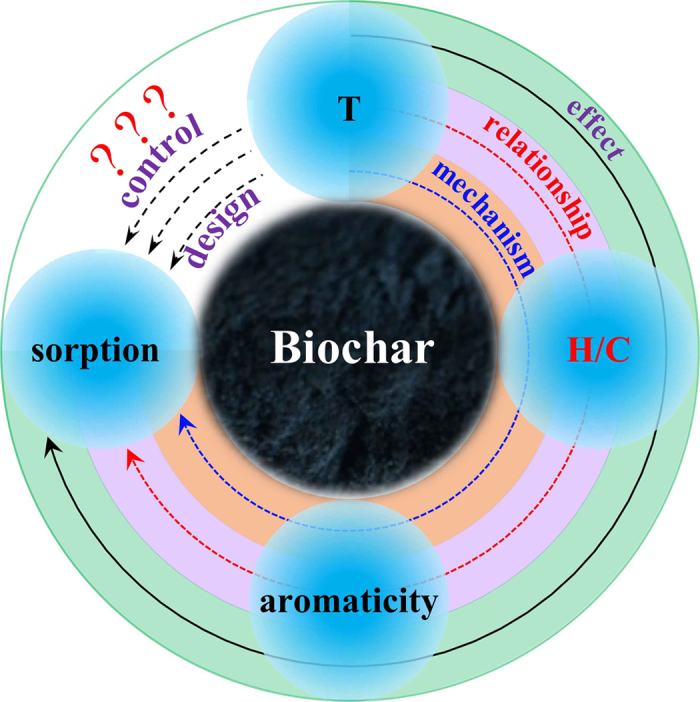
Biochar is increasingly gaining attention due to multifunctional roles in soil amelioration, pollution mitigation and carbon sequestration. It is a significant challenge to compare the reported results from world-wide labs regarding the structure and sorption of biochars derived from various precursors under different pyrolytic conditions due to a lack of a simple linkage. By combining the published works on various biochars, we established a quantitative relationship between H/C atomic ratio and pyrolytic temperature (T), aromatic structure and sorption properties for naphthalene and phenanthrene. A reverse sigmoid shape between T and the H/C ratio was observed, which was independent of the precursors of biochars, including the ash contents. Linear correlations of Freundlich parameters (N, log Kf) and sorption amount (log Qe, log QA) with H/C ratios were found. A rectangle-like model was proposed to predict the aromatic cluster sizes of biochars from their H/C ratios and then a good structure-sorption relationship was derived. These quantitative relationships indicate that the H/C atomic ratio is a universal linkage to predict pyrolytic temperatures, aromatic cluster sizes and sorption characteristics. This study would guide the global study of biochars toward being comparable and then the development of the structure-sorption relationships will benefit the structural design and environmental application of biochars.
Overview
The claims and statistics of this paper haven’t been checked yet.
Free: it reads the open-access text and checks the first 5 claims that cite a source we can check. Create a free account to check every claim.
Integrity signals
Registry
Cites
Statistics
Figures


Verification
Claims the paper makes
The claims and statistics of this paper haven’t been checked yet.
Free: it reads the open-access text and checks the first 5 claims that cite a source we can check. Create a free account to check every claim.
Claims other papers make about this one
Each is checked against this paper’s own text: does it say what the citing paper says it does?
The check wasn’t confident either way, so it gives no verdict — never disputed.
In the citing paper
“This biochar has an alkaline pH, a low ash content (18.5%; Table 1) suggesting it has limited acid neutralizing capacity (Yuan and Xu, 2012, Xiao et al., 2016).”
From Remediation of an acidic mine spoil: Miscanthus biochar and lime amendment affects metal availability, plant growth, and soil enzyme activity (2018) · cites this paper as Xiao et al., 2016
Experimental — accuracy not yet measured
Self-check
Percentages, sums and reported differences re-computed from the paper’s own numbers.
The self-check needs the paper’s full text.
Citations
Cites
Characteristics of hemicellulose, cellulose and lignin pyrolysis
Yang, H., Yan, R., Chen, H., Lee, D. H., & Zheng, C. (2007) · Fuel · doi:10.1016/j.fuel.2006.12.013 · Cited by 8,155
Biochar as a sorbent for contaminant management in soil and water: A review
Ahmad, M., Rajapaksha, A. U., Lim, J. E., Zhang, M., Bolan, N., Mohan, D., Vithanage, M., Lee, S. S., & Ok, Y. S. (2014) · Chemosphere · doi:10.1016/j.chemosphere.2013.10.071 · Cited by 4,662
Dynamic Molecular Structure of Plant Biomass-Derived Black Carbon (Biochar)
Keiluweit, M., Nico, P. S., Johnson, M. G., & Kleber, M. (2010) · Environmental Science & Technology · doi:10.1021/es9031419 · Cited by 3,230
Bio-char Sequestration in Terrestrial Ecosystems – A Review
Lehmann, J., Gaunt, J., & Rondon, M. (2006) · Mitigation and Adaptation Strategies for Global Change · doi:10.1007/s11027-005-9006-5 · Cited by 3,053 · cited 1×
“1038/srep22644 = + Q K N C log log log (9) e f e”
Lehmann, J. (2007) · Nature · doi:10.1038/447143a · Cited by 2,477 · cited 2×
“The reasons why the H/C atomic ratio was chosen are as follows: (1) The H/C atomic ratio is a quantity obtained by taking biochar as a whole and is easily acquired from elemental analysis.”
BackgroundMethodBiochar for Environmental Management: Science, Technology and Implementation
(2015) · doi:10.4324/9780203762264 · Cited by 2,280
Chen, B., Zhou, D., & Zhu, L. (2008) · Environmental Science & Technology · doi:10.1021/es8002684 · Cited by 1,823 · cited 2×
“(3) The H/C atomic ratio is often connected to the O/C ratio in van Krevelen plots50.”
BackgroundSelf-citationImpact of pyrolysis temperature and manure source on physicochemical characteristics of biochar
Cantrell, K. B., Hunt, P. G., Uchimiya, M., Novak, J. M., & Ro, K. S. (2012) · Bioresource Technology · doi:10.1016/j.biortech.2011.11.084 · Cited by 1,502
Ahmad, M., Lee, S. S., Dou, X., Mohan, D., Sung, J.-K., Yang, J. E., & Ok, Y. S. (2012) · Bioresource Technology · doi:10.1016/j.biortech.2012.05.042 · Cited by 1,357
Kim, S., Kramer, R. W., & Hatcher, P. G. (2003) · Analytical Chemistry · doi:10.1021/ac034415p · Cited by 1,336
Cited by
Items 101–200 of 309
Hai, A., Bharath, G., Ali, I., Daud, M., Othman, I., Rambabu, K., Haija, M. A., Hasan, S. W., & BANAT, F. A. (2021) · Energy Conversion and Management · doi:10.1016/j.enconman.2021.115127 · Cited by 43
Ge, Y., Zhu, S., Chang, J.-S., Jin, C., & Ho, S.-H. (2020) · Environmental Pollution · doi:10.1016/j.envpol.2020.115087 · Cited by 42
Wang, Y., Gu, X., Huang, Y., Ding, Z., Chen, Y., & Hu, X. (2022) · RSC Advances · doi:10.1039/d2ra03052g · Cited by 44
Wang, Y., Song, X., Xu, Z., Cao, X., Song, J., Huang, W., Ge, X., & Wang, H. (2021) · Water Air & Soil Pollution · doi:10.1007/s11270-021-05145-9 · Cited by 41
“to the increased aromaticity or stability of the material (Xiao et al., 2016).”
BackgroundPei, S., Zhao, Y., Li, W., Qu, C., Ren, Y., Yang, Y., Liu, J., & Wu, C. (2023) · Chemical Engineering Journal · doi:10.1016/j.cej.2023.147274 · Cited by 46
Carbon storage in coal mine spoil by Dalbergia sissoo Roxb.
Mukhopadhyay, S., & Masto, R. E. (2016) · Geoderma · doi:10.1016/j.geoderma.2016.09.004 · Cited by 41
Ri, C., Tang, J., Liu, F., Lyu, H., & Li, F. (2021) · Journal of Environmental Sciences · doi:10.1016/j.jes.2021.05.023 · Cited by 40
Lignite biosolubilization and bioconversion by Bacillus sp.: the collation of analytical data
Akimbekov, N. S., Digel, I., Абдиева, Г. Ж., Ualieva, P. S., & Tastambek, K. T. (2020) · Biofuels · doi:10.1080/17597269.2020.1753936 · Cited by 39
Hailegnaw, N. S., Mercl, F., Pračke, K., Praus, L., Száková, J., & Tlustoš, P. (2020) · Agronomy · doi:10.3390/agronomy10060885 · Cited by 46
“The increment in the production temperature of biochar could result in the decline of H/C ratio, leading to an increase in the aromaticity of biochar and thus causing the immobilization of Cu [46].”
BackgroundMondal, A. K., Hinkley, C., Krishnan, L., Ravi, N. M., Akter, F., Ralph, P. J., & Kuzhiumparambil, U. (2024) · RSC Sustainability · doi:10.1039/d4su00008k · Cited by 46
David, B., Fletcher, M., Connor, S., Pullin, V. R., Birkett-Rees, J., Delannoy, J., Mariani, M., Romano, A., & Maezumi, S. Y. (2024) · Cambridge University Press eBooks · doi:10.1017/9781009485340 · Cited by 38
Developing a molecular-level understanding of biochar materials using public characterization data
Wood, R., Mašek, O., & Erastova, V. (2024) · Cell Reports Physical Science · doi:10.1016/j.xcrp.2024.102036 · Cited by 53
Su, L., Zhang, H., Oh, K., Na, L., Luo, Y., Cheng, H., Zhang, G., & He, X. (2021) · Water Science & Technology · doi:10.2166/wst.2021.222 · Cited by 48
Wu, Y., & Chen, B. (2019) · The Science of The Total Environment · doi:10.1016/j.scitotenv.2019.06.501 · Cited by 37
Self-citationPyrolysis of biosolids as an effective tool to reduce the uptake of pharmaceuticals by plants
Mercl, F., Košnář, Z., Maršík, P., Vojtíšek, M., Dušek, J., Száková, J., & Tlustoš, P. (2020) · Journal of Hazardous Materials · doi:10.1016/j.jhazmat.2020.124278 · Cited by 41
Nair, R. R., Schaate, A., Klepzig, L. F., Turcios, A. E., Lecinski, J., Shamsuyeva, M., Endres, H., Papenbrock, J., Behrens, P. J., & Weichgrebe, D. (2023) · Clean Technologies and Environmental Policy · doi:10.1007/s10098-023-02525-z · Cited by 42
“At higher HTTs, these oxygen and nitrogen functionalities also decompose due to polycondensation, and the biochar’s affinity for water is limited to the adsorption on the well-developed micropores.”
The emerging role of biochar in the carbon materials family for hydrogen production
Bhakta, A. K., Fiorenza, R., Jlassi, K., Mekhalif, Z., Ali, A. M. A., & Chehimi, M. M. (2022) · Chemical Engineering Research and Design · doi:10.1016/j.cherd.2022.09.028 · Cited by 64
Ghorbani, M., Amirahmadi, E., & Zamanian, K. (2021) · Land Degradation and Development · doi:10.1002/ldr.4006 · Cited by 35
Chen, T., Zhang, N., Zhao, X., Hu, X., & Ding, Z. (2018) · Environmental Science and Pollution Research · doi:10.1007/s11356-018-3789-x · Cited by 34
“H/C can reflect the content of aromatic C (Xiao et al. 2016).”
BackgroundBonanomi, G., Ippolito, F., Cesarano, G., Vinale, F., Lombardi, N., Crasto, A., Woo, S. L., & Scala, F. (2017) · Applied Soil Ecology · doi:10.1016/j.apsoil.2017.11.027 · Cited by 35
Optimizing pyrolysis conditions for recycling pig bones into phosphate fertilizer
Piccolla, C. D., Hesterberg, D. L., Muraoka, T., & Novotny, E. H. (2021) · Waste Management · doi:10.1016/j.wasman.2021.06.012 · Cited by 32
Ganesan, A., Rezazgui, O., Langlois, S., Boussabbeh, C., & Barnabé, S. (2025) · Science of The Total Environment · doi:10.1016/j.scitotenv.2025.178650 · Cited by 38
Nair, R. R., Kißling, P. A., Marchanka, A., Lecinski, J., Turcios, A. E., Shamsuyeva, M., Rajendiran, N., Ganesan, S., Srinivasan, S. V., Papenbrock, J., et al. (2023) · Sustainable Environment Research · doi:10.1186/s42834-023-00176-9 · Cited by 37
“The molar ratio of H/Corg is correlated to an n*n aromatic cluster size for H/Corg ⩽ 1 as in ref [25] (Eq.”
BackgroundHu, J.-W., Yang, S., Ma, P., & Deng, Z. (2025) · Desalination and Water Treatment · doi:10.1016/j.dwt.2025.101262 · Cited by 34
Wang, Z., Chen, H., Zhu, Z., Xing, S., Wang, S., & Chen, B. (2022) · The Science of The Total Environment · doi:10.1016/j.scitotenv.2022.154790 · Cited by 35
Self-citationDu, Z., Huang, C., Meng, J., Yuan, Y., Yin, Z., Feng, L., Liu, Y., & Zhang, L. (2020) · Frontiers of Environmental Science & Engineering · doi:10.1007/s11783-020-1220-6 · Cited by 31
“For both solutes, a high HTT increased the nonlinearity of the sorption isotherms by the pyrochars (Table 2).”
BackgroundResultInfluentialBirer, A. M., Gözmen, B., Sönmez, Ö., & Kalderis, D. (2020) · Chemosphere · doi:10.1016/j.chemosphere.2020.128866 · Cited by 31
Sierra, I., Iriarte‐Velasco, U., Ayastuy, J. L., & Aguayo, A. T. (2022) · Biomass Conversion and Biorefinery · doi:10.1007/s13399-022-02372-w · Cited by 34
“Hydrogen mainly includes aromatic hydrogen, fatty hydrogen, and hydrogen in functional groups [40].”
Yang, J., Pignatello, J. J., Yang, K., Wu, W., Lu, G., Zhang, L., Yang, C., & Dang, Z. (2021) · Environmental Science & Technology · doi:10.1021/acs.est.0c04852 · Cited by 28
Schellekens, J., Silva, C. A., Buurman, P., Rittl, T. F., Domingues, R. R., Justi, M., Vidal‐Torrado, P., & Trugilho, P. F. (2018) · Journal of Analytical and Applied Pyrolysis · doi:10.1016/j.jaap.2018.01.020 · Cited by 30
Effects of Biochar on Microalgal Growth: Difference between Dissolved and Undissolved Fractions
Huang, X., Zhang, C., Zhu, S., Chen, D., & Ho, S. (2020) · ACS Sustainable Chemistry & Engineering · doi:10.1021/acssuschemeng.0c02768 · Cited by 27
Faizan, M., Alam, P., Kumari, A., Suresh, G., Sharma, P., Karabulut, F., Soysal, S., Djalović, I. G., Trivan, G., Adil, M. F., et al. (2024) · Plant Stress · doi:10.1016/j.stress.2024.100615 · Cited by 34
Rubio, R. S., Balseiro‐Romero, M., Antelo, J. M., Díez, E. G., Fiol, S., & Macías, F. (2018) · Environmental Science and Pollution Research · doi:10.1007/s11356-018-3798-9 · Cited by 27
Krzyszczak, A., Dybowski, M. P., Jośko, I. N., Kusiak, M., Sikora, M., & Czech, B. (2021) · Environmental Pollution · doi:10.1016/j.envpol.2021.118664 · Cited by 28
Shen, M., Song, W., Shi, X., Wang, S., Wang, H., Liu, J., Jin, W., Fan, S., & Cao, Z. (2022) · Journal of Hazardous Materials · doi:10.1016/j.jhazmat.2022.128867 · Cited by 25
Kwak, J., Lee, S.-H., Shin, J., Lee, Y.-G., Kim, S., Son, C., Ren, X., Shin, J.-K., Park, Y., & Chon, K. (2022) · Environmental Pollution · doi:10.1016/j.envpol.2022.120138 · Cited by 28
Matos, M., Mattos, B. D., de Cademartori, P. H. G., Lourençon, T. V., Hansel, F. A., Zanoni, P. R. S., Yamamoto, C. I., & Magalhães, W. L. E. (2020) · BioEnergy Research · doi:10.1007/s12155-020-10094-y · Cited by 28
Burdová, H., Brázová, V., Kwoczynski, Z., Snow, J., Trögl, J., & Kříženecká, S. (2024) · Journal of Cleaner Production · doi:10.1016/j.jclepro.2024.142545 · Cited by 25
Wei, T., Hong, H., Zhang, H., & Wu, F. (2025) · BioEnergy Research · doi:10.1007/s12155-025-10819-x · Cited by 27
Akech, S., Harrison, O., & Saha, A. (2018) · Environmental Technology & Innovation · doi:10.1016/j.eti.2018.09.002 · Cited by 27
Building a risk matrix for the safety assessment of wood derived biochars
Marmiroli, M., Caldara, M., Pantalone, S., Malcevschi, A., Maestri, E., Keller, A. A., & Marmiroli, N. (2022) · The Science of The Total Environment · doi:10.1016/j.scitotenv.2022.156265 · Cited by 30
Siddiq, M., Tawabini, B., Kirmizakis, P., Kalderis, D., Ntarlagiannis, D., & Soupios, P. M. (2021) · Chemosphere · doi:10.1016/j.chemosphere.2021.131390 · Cited by 27
Novel kinetic studies on biomass hydrothermal carbonization
Gallifuoco, A., & Di Giacomo, G. (2018) · Bioresource Technology · doi:10.1016/j.biortech.2018.06.087 · Cited by 24
Enhancing the pyrolytic conversion of biosolids to value-added products via mild acid pre-treatment
Hakeem, I. G., Halder, P. K., Patel, S., Sharma, A., Gupta, R. P., Surapaneni, A., Paz‐Ferreiro, J., & Shah, K. V. (2023) · Journal of Analytical and Applied Pyrolysis · doi:10.1016/j.jaap.2023.106087 · Cited by 24
The H/C Molar Ratio and Its Potential Pitfalls for Determining Biochar's Permanence
Petersen, H. I., & Sanei, H. (2025) · GCB Bioenergy · doi:10.1111/gcbb.70049 · Cited by 29
Unraveling the role of Fe in As(III & V) removal by biochar via machine learning exploration
Liu, J., Xu, Z., & Zhang, W. (2023) · Separation and Purification Technology · doi:10.1016/j.seppur.2023.123245 · Cited by 26
Krohn, C. C., Jin, J., Wood, J. L., Hayden, H. L., Kitching, M., Ryan, J., Fabijański, P., Franks, A. E., & Tang, C. (2020) · Journal of Hazardous Materials · doi:10.1016/j.jhazmat.2020.124077 · Cited by 23
Wang, C., Zhang, X., Wang, W., Sun, J., Mao, Y., Zhao, X., & Song, Z. (2021) · Fuel · doi:10.1016/j.fuel.2021.122770 · Cited by 23
Pyrolytic conversion of agricultural residue using continuous auger reactor for resource recovery
Kakku, S., Naidu, S., Bhatt, M., Chakinala, A. G., Joshi, J. B., Gautam, S., Mohanty, K., Kataria, G., & Sharma, A. (2023) · Journal of Analytical and Applied Pyrolysis · doi:10.1016/j.jaap.2023.105951 · Cited by 23
Wei, Y., Chen, L., Jiao, G., Wen, Y., Liao, Q., Zhou, H., & Tang, S. (2023) · Chemosphere · doi:10.1016/j.chemosphere.2023.138719 · Cited by 24
Changes in availability of Ca, K, Mg, P and S in sewage sludge as affected by pyrolysis temperature
Mercl, F., Košnář, Z., Pierdonà, L., Ulloa-Murillo, L. M., Száková, J., & Tlustoš, P. (2020) · Plant Soil and Environment · doi:10.17221/605/2019-pse · Cited by 21
“According to Xiao et al. (2016), the H/C ratio < 1 may indicate a presence of benzene rings and/or aromatic clusters.”
BackgroundBoubkr, L., Bhakta, A. K., Snoussi, Y., Silva, C. M. D., Michely, L., Jouini, M., Ammar, S., & Chehimi, M. M. (2022) · Catalysts · doi:10.3390/catal12111475 · Cited by 21
Chang, Z., Tian, L., Zhang, J., & Zhou, D. (2022) · Ecotoxicology and Environmental Safety · doi:10.1016/j.ecoenv.2022.113598 · Cited by 20
Khan, F. A., Dar, B. A., & Farooqui, M. N. (2022) · International Journal of Phytoremediation · doi:10.1080/15226514.2022.2098909 · Cited by 23
“The atomic ratio of H/C was an excellent mediate index for reflecting the aromaticity of biochars and a perfect indicator for predicting the adsorption capacity of organic contaminants on biochars (Xiao et al. 2016).”
BackgroundOptimizing pyrolysis and Co-Pyrolysis of plastic and biomass using Artificial Intelligence
Timilsina, M. S., Chaudhary, Y., Bhattarai, P., Uprety, B., & Khatiwada, D. (2024) · Energy Conversion and Management X · doi:10.1016/j.ecmx.2024.100783 · Cited by 56
Șen, A. U., Nobre, C., Dur�ão, L., Miranda, I., Pereira, H., & Gonçalves, M. (2020) · Biomass Conversion and Biorefinery · doi:10.1007/s13399-020-00949-x · Cited by 21
Density Functional Theory Study on the Mechanism of Biochar Gasification in CO2 Environment
Tian, H., He, Z., Wang, J., Jiao, H., Hu, Z., & Yang, Y. (2020) · Industrial & Engineering Chemistry Research · doi:10.1021/acs.iecr.0c04105 · Cited by 18
Climate mitigation through soil amendments: quantification, evidence, and uncertainty
Rubin, R. L., Oldfield, E. E., Lavallee, J. M., Griffin, T., Mayers, B., & Sanderman, J. (2023) · Carbon Management · doi:10.1080/17583004.2023.2217785 · Cited by 27
“Next, a permanence adjustment factor is applied depending on the stability of biochar, typically the hydrogen to organic C ratio (H:Corg) a relative indicator of carbonization [35, 77, 85].”
MethodClemente-Castro, S., Palma, A., Montoya, M. R., Giráldez, I., & Díaz, M. J. (2023) · Environmental Sciences Europe · doi:10.1186/s12302-023-00800-w · Cited by 20
“Also, the H/C ratio can be used as an indicator of the aromaticity and stability of biochar [71, 72].”
MethodMetal-rich biochar as an asphalt modifier to improve sustainability and reduce VOC emissions
Mousavi, M., Park, K.-B., Kim, J.-S., & Fini, E. H. (2024) · Sustainable materials and technologies · doi:10.1016/j.susmat.2024.e00903 · Cited by 29
Biochar-microplastics interaction modulates soil nitrous oxide emissions and microbial communities
Zou, Z., Yu, Q., Chen, R., Wang, J., & Liu, X. (2025) · Biochar · doi:10.1007/s42773-024-00413-3 · Cited by 18
“Furthermore, the MPs used in our study had a high C-to-hydrogen ratio, which is not conducive to plant growth (Xiao et al. 2016).”
Zhou, X., Lai, C., Almatrafi, E., Liu, S., Yan, H., Qian, S., Li, H., Qin, L., Yi, H., Fu, Y., et al. (2022) · The Science of The Total Environment · doi:10.1016/j.scitotenv.2022.161062 · Cited by 22
Li, G., Ye, R., Wu, S., Liu, X., Huang, M., Guo, J., Gao, Y., Chen, W., & Ma, Y. (2025) · Carbon Research · doi:10.1007/s44246-024-00185-2 · Cited by 19
“A lower H:C ratio indicates higher biochar stability as well as higher aromatization and carbonization (Chen et al. 2008; Oleszczuk et al. 2016; Xiao et al. 2016).”
Yadav, G., & Lamers, P. (2025) · Energy & Fuels · doi:10.1021/acs.energyfuels.5c05655 · Cited by 20
Mukarunyana, B., Boman, C., Kabera, T., Lindgren, R., & Fick, J. B. (2023) · Environmental Technology & Innovation · doi:10.1016/j.eti.2023.103391 · Cited by 15
Biochar enhances microbial degradation of phenol in water: Response surface optimization
Dong, J. Z., Xu, L., Liu, Y., Ren, L., & Yuan, K. (2023) · Biochemical Engineering Journal · doi:10.1016/j.bej.2023.109145 · Cited by 16
Loebsack, G., Kang, K., Klinghoffer, N. B., et al. (2024) · Journal of Analytical and Applied Pyrolysis · doi:10.1016/j.jaap.2023.106340 · Cited by 17
Khalid, U., & Inam, M. A. (2024) · Water Air & Soil Pollution · doi:10.1007/s11270-024-06922-y · Cited by 18
“The decrease in hydrogen and oxygen content is due to the loss of volatiles in the form of CH 4 , CO 2 , H 2 , and CO gases (Xiao et al., 2016).”
Use of Waste-Derived Biochar to Remove Copper from Aqueous Solution in a Continuous-Flow System
Arán, D., Antelo, J. M., Lodeiro, P., Macías, F., & Fiol, S. (2017) · Industrial & Engineering Chemistry Research · doi:10.1021/acs.iecr.7b03056 · Cited by 18
Janković, B., Manić, N. G., & Dodevski, V. M. (2021) · Fuel · doi:10.1016/j.fuel.2021.120637 · Cited by 20
Cao, H., Milan, Y. J., Mood, S. H., Ayiania, M., Zhang, S., Gong, X., Lora, E. E. S., Yuan, Q., & Garcìa-Pèrez, M. (2021) · Artificial Intelligence in Agriculture · doi:10.1016/j.aiia.2021.06.002 · Cited by 17
Gallifuoco, A., Taglieri, L., Scimia, F., Papa, A. A., & Giacomo, G. D. (2019) · Biomass and Bioenergy · doi:10.1016/j.biombioe.2018.12.005 · Cited by 17
Sierra, I., Epelde, E., Ayastuy, J. L., & Iriarte‐Velasco, U. (2024) · Journal of Analytical and Applied Pyrolysis · doi:10.1016/j.jaap.2024.106545 · Cited by 19
Torboli, A., Foladori, P., Lu, M., Gialanella, S., & Maines, L. (2024) · Cleaner Engineering and Technology · doi:10.1016/j.clet.2024.100839 · Cited by 29
Sorption of sulfamethoxazole on biochars of varying mineral content
Li, J., Chen, Y., He, L., Liang, N., Wang, L., Zhao, J., & Pan, B. (2020) · Environmental Science Processes & Impacts · doi:10.1039/d0em00102c · Cited by 16
Mun, H., Ri, C., Liu, Q., & Tang, J. (2022) · Environmental Science and Pollution Research · doi:10.1007/s11356-022-21143-8 · Cited by 17
“The ratio of O/C can reflect the changes in O-containing functional groups of BMPCs with different pyrolysis temperatures (Xiao et al. 2016).”
BackgroundEfficiency of Metal-Incorporated Carbonaceous Adsorbents in the Presence of Phenolic Compounds
Mousavi, M., Kaur, H., Ackerman, L. K. G., Park, K.-B., Kim, J.-S., & Fini, E. H. (2024) · ACS Applied Engineering Materials · doi:10.1021/acsaenm.4c00066 · Cited by 17
Choi, J., Nam, H., Carter, S., & Capareda, S. C. (2017) · Journal of environmental chemical engineering · doi:10.1016/j.jece.2017.07.028 · Cited by 17
Chang, Z., Tian, L., Zhang, J., Zhao, Q. X., Li, F., Wu, M., & Pan, B. (2019) · Chemosphere · doi:10.1016/j.chemosphere.2019.03.164 · Cited by 14
Yang, L., Jin, J., Wang, Y., An, W., Zhao, Y., Cui, C., Han, L., & Wang, X. (2021) · Chemosphere · doi:10.1016/j.chemosphere.2021.132644 · Cited by 16
Loebsack, G., Yeung, K. K. ‐., Berruti, F., & Klinghoffer, N. B. (2025) · Water Environment Research · doi:10.1002/wer.70164 · Cited by 16
“Previous studies have found that the characteristics that have the biggest impact on the adsorption mechanisms of aromatic contaminants are the aromaticity and the oxygen functional groups (B. Chen et al. 2008; Xiao et al. 2016; Tan et al. 2021).”
Li, L., Niu, W., Cong, H., HaiBo, M., Niu, Z., Shen, X., Cao, L., & Kong, X. (2023) · BioResources · doi:10.15376/biores.18.1.2112-2136 · Cited by 16
Siedt, M., Teggers, E., Linnemann, V., Schäffer, A., & van Dongen, J. T. (2023) · Soil Systems · doi:10.3390/soilsystems7020062 · Cited by 18
“The H/C ratio was suggested as an indicator to compare the recalcitrance of biochars [20].”
Tang, M., Bhakta, A. K., Snoussi, Y., Jlassi, K., Garah, M. E., & Chehimi, M. M. (2024) · Surfaces and Interfaces · doi:10.1016/j.surfin.2024.104446 · Cited by 17
Munira, S., Dynes, J. J., Islam, M., Khan, F., Adesanya, T., Regier, T., Spokas, K. A., & Farenhorst, A. (2021) · Chemosphere · doi:10.1016/j.chemosphere.2021.131023 · Cited by 14
Brewer’s Spent Grain Biochar: Grinding Method Matters
Bhakta, A. K., Snoussi, Y., Garah, M. E., Ammar, S., & Chehimi, M. M. (2022) · C – Journal of Carbon Research · doi:10.3390/c8030046 · Cited by 19
Huang, W., Wang, L., Zhu, J., Dong, L., Hu, H., Yao, H., Wang, L., & Lin, Z. (2024) · Environmental Science and Pollution Research · doi:10.1007/s11356-024-32951-5 · Cited by 16
“As the temperature increases, Sbet and PV gradually increase as well, and H/C gradually decreases in contrast (Xiao et al. 2016b; Yuan et al. 2015).”
Li, Y., Li, H., Zhang, Y., Zhang, J., Wang, S., & Lv, J. (2024) · Process Safety and Environmental Protection · doi:10.1016/j.psep.2024.06.072 · Cited by 13
Mbasabire, P., Murindangabo, Y. T., Frouz, J., & Brom, J. (2024) · Chemosphere · doi:10.1016/j.chemosphere.2024.143565 · Cited by 14
Chen, D., Fang, Z., Wei, Y., Xu, J., Xu, K. L., Jiang, L. K., Wang, Y., Su, S., Hu, S. J., & Xiang, J. H. (2025) · Journal of Analytical and Applied Pyrolysis · doi:10.1016/j.jaap.2025.107057 · Cited by 14
Strategic way for valorization of manure into chemicals and fuels
Cho, S.-H., Jung, S., Tsang, Y. F., Lin, K. A., Jeon, Y. J., & Kwon, E. E. (2021) · Journal of Cleaner Production · doi:10.1016/j.jclepro.2021.129109 · Cited by 14
Zhang, Y., Deng, Q., Wang, M., Zhang, J., Man, Y. B., Shan, S., Wu, S., Liang, P., Cao, Y., Song, C., et al. (2018) · Waste Management · doi:10.1016/j.wasman.2018.07.045 · Cited by 13
Carbon Sequestration with Biochar: Global Trends, Knowledge Gaps, and Future Directions
de Souza, D. C. S., Freire, J. V. D. A., da Silva, L. F., da Silva, P. P., Antunes, L. F. D. S., Souto, A. G. D. L., Valença, R. D., Fernandes, B. C. C., Lima, A. E. D. O., dos Santos, J. C. S., et al. (2025) · ACS ES&T Water · doi:10.1021/acsestwater.5c00606 · Cited by 18
Kujawska, J., Cel, W., Charmas, B., & Szala, D. (2026) · Energies · doi:10.3390/en19041043 · Cited by 15
“The H/C and O/C ratios can be utilized to evaluate the aromaticity, polarity, and stability of biochar [9].”
Impact of carbonization on oak wood δ18O: A preliminary study
Boisgueheneuc, D. D., Delarue, F., Daux, V., Tu, T. T. N., Baudin, F., & Dufraisse, A. (2023) · Journal of Analytical and Applied Pyrolysis · doi:10.1016/j.jaap.2023.106198 · Cited by 13
Biomass carbonization technologies
Peláez-Samaniego, M. R., Mood, S. H., García‒Núñez, J. A., Garcia‐Perez, T., Yadama, V., & Garcìa-Pèrez, M. (2022) · Elsevier eBooks · doi:10.1016/b978-0-12-822225-6.00017-8 · Cited by 22
Hyeon, G.-W., Lee, G. B., Kang, D. J., Lee, S. E., Seong, K. M., & Park, J.-E. (2025) · Molecules · doi:10.3390/molecules30122557 · Cited by 11
Márquez, R.-A. L., Saldarriaga-Noreña, H. A., Betancourt, M. L. G., Rodríguez, A., Morera‐Boado, C., Albañil, L., Kesarla, M. K., & Murillo-Tovar, M. A. (2025) · Separation and Purification Technology · doi:10.1016/j.seppur.2025.135377 · Cited by 16
Latif, J., Chen, N., Saleem, A., Li, K., Qin, J., Yang, H., & Jia, H. (2024) · Carbon Research · doi:10.1007/s44246-024-00125-0 · Cited by 13
“Generally, higher PT results in biochar characterized by increased SSA and reduced atomic ratios of hydrogen to carbon H/C and oxygen to carbon O/C (Xiao et al. 2016; Wang et al. 2022).”
Siedt, M., Vonhoegen, D., Smith, K. E. C., Roß‐Nickoll, M., van Dongen, J. T., & Schäffer, A. (2023) · Chemosphere · doi:10.1016/j.chemosphere.2023.140298 · Cited by 11
Metadata
- Authors
- Xiao, X., Chen, Z., & Chen, B.
- Affiliations
- Zhejiang University (CN)
- Ningbo University (CN)
- Corresponding author
- Chen, Baoliang
- Venue
- Scientific Reports
- Published
- 2016-03-04
- Volume
- 6
- Issue
- 1
- Pages
- 22644-22644
- ISSN
- 2045-2322 (ISSN-L)
- PMC
- PMC4778134
- OpenAlex
- W2330543631
- Cited by
- 309
- References
- 76
- Citations by year
- 2026: 23 · 2025: 45 · 2024: 38 · 2023: 36 · 2022: 35 · 2021: 35 · 2020: 37 · 2019: 22 · 2018: 16 · 2017: 16 · 2016: 6
- FWCI
- 11.84
- Type
- journal article
- Language
- en
- Open access
- gold
- doi.org
- Licence
- cc-by
- creativecommons.org/licenses/by/4.0 (tdm)
- creativecommons.org/licenses/by/4.0 (vor)
- Locations
- Scientific Reports (publishedVersion, cc-by)
- PubMed Central (publishedVersion, cc-by)
- PubMed (publishedVersion)
- Funders
- National Natural Science Foundation of China (2014CB441106, 21537005, 21425730, 21277120)
- National Key Research and Development Program of China (2014CB441106, 21537005, 21425730)
- Topics
- Physical Sciences › Environmental Science › Water Science and Technology › Adsorption and biosorption for pollutant removal
- Physical Sciences › Energy › Fuel Technology › Thermochemical Biomass Conversion Processes
- Life Sciences › Agricultural and Biological Sciences › Soil Science › Soil Carbon and Nitrogen Dynamics
- Keywords
- biochar, H/C ratio, pyrolysis temperature, aromatic clusters, Freundlich isotherm, ash content, aromaticity
About these checks
Registry, retraction, Cites and statistics results are computed, not judged, with one exception: a printed reference that no index lists is read once by a model before it counts as a citation error. Claims are extracted by a model and kept only when their quote appears verbatim in the text; each cited source is then checked, with a model’s help, for whether it says what the claim relies on. Those verdicts can be wrong — read the claim’s quote and the cited source before relying on one.
Statistics and arithmetic are recomputed, not judged.
Confidence bands are shown only for fields calibrated on our annotated test set. None is calibrated yet, so no band is shown.
What counts as a claim ›How we measure confidence ›How we check this ›
Are you an author, or do you see a problem with this page? Request a review
Data sources
Bibliographic data: Semantic Scholar, OpenAlex, Crossref.
Contains information from the Semantic Scholar Academic Graph Datasets, made available under the ODC Attribution License (ODC-BY 1.0).
Semantic Scholar’s data is described in: Kinney, R., et al. (2023). The Semantic Scholar Open Data Platform. arXiv:2301.10140.
