

H/C atomic ratio as a smart linkage between pyrolytic temperatures, aromatic clusters and sorption properties of biochars derived from diverse precursory materials
Open accessThe DOI matches its Crossref record; 76 of the 76 references it cites were found in a registry or an index.
Abstract
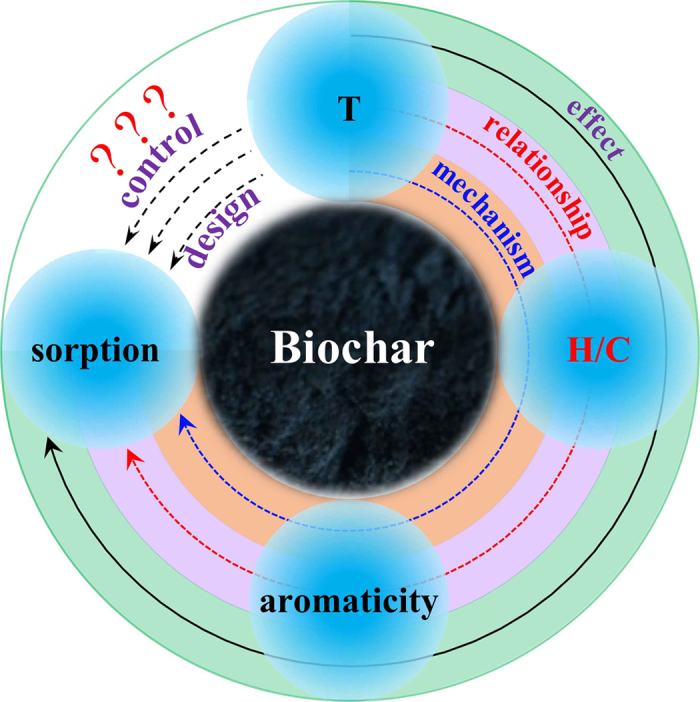
Biochar is increasingly gaining attention due to multifunctional roles in soil amelioration, pollution mitigation and carbon sequestration. It is a significant challenge to compare the reported results from world-wide labs regarding the structure and sorption of biochars derived from various precursors under different pyrolytic conditions due to a lack of a simple linkage. By combining the published works on various biochars, we established a quantitative relationship between H/C atomic ratio and pyrolytic temperature (T), aromatic structure and sorption properties for naphthalene and phenanthrene. A reverse sigmoid shape between T and the H/C ratio was observed, which was independent of the precursors of biochars, including the ash contents. Linear correlations of Freundlich parameters (N, log Kf) and sorption amount (log Qe, log QA) with H/C ratios were found. A rectangle-like model was proposed to predict the aromatic cluster sizes of biochars from their H/C ratios and then a good structure-sorption relationship was derived. These quantitative relationships indicate that the H/C atomic ratio is a universal linkage to predict pyrolytic temperatures, aromatic cluster sizes and sorption characteristics. This study would guide the global study of biochars toward being comparable and then the development of the structure-sorption relationships will benefit the structural design and environmental application of biochars.
Overview
The claims and statistics of this paper haven’t been checked yet.
Free: it reads the open-access text and checks the first 5 claims that cite a source we can check. Create a free account to check every claim.
Integrity signals
Registry
Cites
Statistics
Figures


Verification
Claims the paper makes
The claims and statistics of this paper haven’t been checked yet.
Free: it reads the open-access text and checks the first 5 claims that cite a source we can check. Create a free account to check every claim.
Claims other papers make about this one
Each is checked against this paper’s own text: does it say what the citing paper says it does?
The check wasn’t confident either way, so it gives no verdict — never disputed.
In the citing paper
“This biochar has an alkaline pH, a low ash content (18.5%; Table 1) suggesting it has limited acid neutralizing capacity (Yuan and Xu, 2012, Xiao et al., 2016).”
From Remediation of an acidic mine spoil: Miscanthus biochar and lime amendment affects metal availability, plant growth, and soil enzyme activity (2018) · cites this paper as Xiao et al., 2016
Experimental — accuracy not yet measured
Self-check
Percentages, sums and reported differences re-computed from the paper’s own numbers.
The self-check needs the paper’s full text.
Citations
Cites
Characteristics of hemicellulose, cellulose and lignin pyrolysis
Yang, H., Yan, R., Chen, H., Lee, D. H., & Zheng, C. (2007) · Fuel · doi:10.1016/j.fuel.2006.12.013 · Cited by 8,155
Biochar as a sorbent for contaminant management in soil and water: A review
Ahmad, M., Rajapaksha, A. U., Lim, J. E., Zhang, M., Bolan, N., Mohan, D., Vithanage, M., Lee, S. S., & Ok, Y. S. (2014) · Chemosphere · doi:10.1016/j.chemosphere.2013.10.071 · Cited by 4,662
Dynamic Molecular Structure of Plant Biomass-Derived Black Carbon (Biochar)
Keiluweit, M., Nico, P. S., Johnson, M. G., & Kleber, M. (2010) · Environmental Science & Technology · doi:10.1021/es9031419 · Cited by 3,230
Bio-char Sequestration in Terrestrial Ecosystems – A Review
Lehmann, J., Gaunt, J., & Rondon, M. (2006) · Mitigation and Adaptation Strategies for Global Change · doi:10.1007/s11027-005-9006-5 · Cited by 3,053 · cited 1×
“1038/srep22644 = + Q K N C log log log (9) e f e”
Lehmann, J. (2007) · Nature · doi:10.1038/447143a · Cited by 2,477 · cited 2×
“The reasons why the H/C atomic ratio was chosen are as follows: (1) The H/C atomic ratio is a quantity obtained by taking biochar as a whole and is easily acquired from elemental analysis.”
BackgroundMethodBiochar for Environmental Management: Science, Technology and Implementation
(2015) · doi:10.4324/9780203762264 · Cited by 2,280
Chen, B., Zhou, D., & Zhu, L. (2008) · Environmental Science & Technology · doi:10.1021/es8002684 · Cited by 1,823 · cited 2×
“(3) The H/C atomic ratio is often connected to the O/C ratio in van Krevelen plots50.”
BackgroundSelf-citationImpact of pyrolysis temperature and manure source on physicochemical characteristics of biochar
Cantrell, K. B., Hunt, P. G., Uchimiya, M., Novak, J. M., & Ro, K. S. (2012) · Bioresource Technology · doi:10.1016/j.biortech.2011.11.084 · Cited by 1,502
Ahmad, M., Lee, S. S., Dou, X., Mohan, D., Sung, J.-K., Yang, J. E., & Ok, Y. S. (2012) · Bioresource Technology · doi:10.1016/j.biortech.2012.05.042 · Cited by 1,357
Kim, S., Kramer, R. W., & Hatcher, P. G. (2003) · Analytical Chemistry · doi:10.1021/ac034415p · Cited by 1,336
Cited by
Zhu, X., Chen, B., Zhu, L., & Xing, B. (2017) · Environmental Pollution · doi:10.1016/j.envpol.2017.04.032 · Cited by 1,021
“S1) (Hale et al., 2015; Xiao et al., 2016).”
Self-citationXiao, X., Chen, B., Chen, Z., Zhu, L., & Schnoor, J. L. (2018) · Environmental Science & Technology · doi:10.1021/acs.est.7b06487 · Cited by 914
Self-citationWang, L., O’Connor, D., Rinklebe, J., Ok, Y. S., Tsang, D. C. W., Shen, Z., & Hou, D. (2020) · Environmental Science & Technology · doi:10.1021/acs.est.0c04033 · Cited by 655
Hassan, M., Liu, Y., Naidu, R., Parikh, S. J., Du, J., Qi, F., & Willett, I. R. (2020) · Science of The Total Environment · doi:10.1016/j.scitotenv.2020.140714 · Cited by 610
Prediction of Soil Heavy Metal Immobilization by Biochar Using Machine Learning
Palansooriya, K. N., Li, J., Dissanayake, P. D., Suvarna, M., Li, L., Yuan, X., Sarkar, B., Tsang, D. C. W., Rinklebe, J., Wang, X., et al. (2022) · Environmental Science & Technology · doi:10.1021/acs.est.1c08302 · Cited by 518
Choudhary, M., Kumar, R., & Neogi, S. (2020) · Journal of Hazardous Materials · doi:10.1016/j.jhazmat.2020.122441 · Cited by 431
Ghodake, G. S., Shinde, S. K., Kadam, A. A., Saratale, R. G., Saratale, G. D., Kumar, M., Palem, R. R., AL-Shwaiman, H. A., Elgorban, A. M., Syed, A., et al. (2021) · Journal of Cleaner Production · doi:10.1016/j.jclepro.2021.126645 · Cited by 414
Elnour, A. Y., Alghyamah, A. A., Shaikh, H. M., Poulose, A. M., Al-Zahrani, S. M., Anis, A., & Al-Wabel, M. I. (2019) · Applied Sciences · doi:10.3390/app9061149 · Cited by 360
“Also, the decrease in the ((O+N)/C) ratio, which is known as the polarity index, indicates a reduction of the biochars surface polar functional groups with increased pyrolytic temperatures [26].”
Liu, Y., Lonappan, L., Brar, S. K., & Yang, S. (2018) · Science of The Total Environment · doi:10.1016/j.scitotenv.2018.07.099 · Cited by 357
Chen, Y.-D., Wang, R., Duan, X., Wang, S., Ren, N.-Q., & Ho, S.-H. (2020) · Water Research · doi:10.1016/j.watres.2020.116390 · Cited by 345
Zama, E. F., Zhu, Y.-G., Reid, B. J., & Sun, G.-X. (2017) · Journal of Cleaner Production · doi:10.1016/j.jclepro.2017.01.125 · Cited by 323
“The process changes the properties of biochar, and enhances its sorptive capacity for 49 PTEs both in soil and water (Khan et al., 2013; Xiao et al., 2016).”
BackgroundKOH-activated high surface area Douglas Fir biochar for adsorbing aqueous Cr(VI), Pb(II) and Cd(II)
Herath, A., Layne, C. A., Perez, F., Hassan, E. B., Pittman, C. U., & Mlsna, T. E. (2021) · Chemosphere · doi:10.1016/j.chemosphere.2020.128409 · Cited by 308
Jin, J., Wang, M., Cao, Y., Wu, S., Liang, P., Li, Y., Zhang, J., Zhang, J., Wong, M. H., Shan, S., et al. (2017) · Bioresource Technology · doi:10.1016/j.biortech.2016.12.103 · Cited by 268
Abdul, G., Zhu, X., & Chen, B. (2017) · Chemical Engineering Journal · doi:10.1016/j.cej.2017.02.074 · Cited by 256
Self-citationA Direct Observation of the Fine Aromatic Clusters and Molecular Structures of Biochars
Xiao, X., & Chen, B. (2017) · Environmental Science & Technology · doi:10.1021/acs.est.6b06300 · Cited by 250
Self-citationLu, L., Yu, W., Wang, Y., Zhang, K., Zhu, X., Zhang, Y., Wu, Y., Ullah, H., Xiao, X., & Chen, B. (2020) · Biochar · doi:10.1007/s42773-020-00041-7 · Cited by 229
Self-citationQin, F., Zhang, C., Zeng, G., Huang, D., Tan, X., & Duan, A. (2022) · Renewable and Sustainable Energy Reviews · doi:10.1016/j.rser.2021.112056 · Cited by 213
Isaeva, V. I., Vedenyapina, M. D., Kurmysheva, A. Y., Weichgrebe, D., Nair, R. R., Nguyen, N. P. T., & Kustov, L. M. (2021) · Molecules · doi:10.3390/molecules26216628 · Cited by 196
Application of Rice Husk Biochar for Achieving Sustainable Agriculture and Environment
Asadi, H., Ghorbani, M., Rezaei-Rashti, M., Abrishamkesh, S., Amirahmadi, E., Chengrong, C., & Gorji, M. (2021) · Rice Science · doi:10.1016/j.rsci.2021.05.004 · Cited by 187
“By increasing pyrolysis temperature, O and H contents decrease during dehydration and decarboxylation reactions, which result in the decrease of H/C and O/C ratios (Xiao et al, 2016).”
Tisserant, A., & Cherubini, F. (2019) · Land · doi:10.3390/land8120179 · Cited by 186
Xu, Z., Xu, X., Zhang, Y., Yu, Y., & Cao, X. (2020) · Journal of Hazardous Materials · doi:10.1016/j.jhazmat.2019.121794 · Cited by 184
Yin, Y., Yang, C., Li, M., Zheng, Y., Ge, C., Gu, J., Li, H., Duan, M., Wang, X., & Chen, R. (2021) · Science of The Total Environment · doi:10.1016/j.scitotenv.2021.149294 · Cited by 182
Chen, Y.-D., Duan, X., Zhang, C., Wang, S., Ren, N.-Q., & Ho, S.-H. (2020) · Chemical Engineering Journal · doi:10.1016/j.cej.2019.123244 · Cited by 171
Mukherjee, A., Patra, B. R., Podder, J., & Dalai, A. K. (2022) · Frontiers in Materials · doi:10.3389/fmats.2022.870184 · Cited by 165
Zhang, J., Jin, J., Wang, M., Naidu, R., Liu, Y., Man, Y. B., Liang, X., Wong, M. H., Christie, P., Zhang, Y., et al. (2020) · Environmental Research · doi:10.1016/j.envres.2020.110034 · Cited by 160
Luo, K., Pang, Y., Wang, D., Li, X., Wang, L., Lei, M., Huang, Q., & Yang, Q. (2021) · Journal of Environmental Sciences · doi:10.1016/j.jes.2021.02.021 · Cited by 161
A review of post-consumption food waste management and its potentials for biofuel production
Pour, F. H., & Makkawi, Y. T. (2021) · Energy Reports · doi:10.1016/j.egyr.2021.10.119 · Cited by 161
Chen, Y.-D., Liu, F., Ren, N.-Q., & Ho, S.-H. (2020) · Chinese Chemical Letters · doi:10.1016/j.cclet.2020.08.019 · Cited by 157
Zeng, X.-Y., Wang, Y., Li, R.-X., Cao, H., Li, Y., & Lü, J. (2022) · Biochar · doi:10.1007/s42773-022-00143-4 · Cited by 170
Nanobiochar for the remediation of contaminated soil and water: challenges and opportunities
Jiang, M., He, L., Niazi, N. K., Wang, H., Gustave, W., Vithanage, M. S., Geng, K., Shang, H., Zhang, X., & Wang, Z. (2023) · Biochar · doi:10.1007/s42773-022-00201-x · Cited by 157
Standardization and micromechanistic study of tetracycline adsorption by biochar
Zhang, X., Hou, J., Zhang, S., Cai, T., Liu, S., Hu, W., & Zhang, Q. (2024) · Biochar · doi:10.1007/s42773-023-00299-7 · Cited by 158
Effect of minerals on the stability of biochar
Yang, Y., Sun, K., Han, L., Jin, J., Sun, H., Yang, Y., & Xing, B. (2018) · Chemosphere · doi:10.1016/j.chemosphere.2018.04.057 · Cited by 136
Tailoring biochar for persulfate-based environmental catalysis: Impact of biomass feedstocks
Song, G., Qin, F., Yu, J., Tang, L., Pang, Y., Zhang, C., Wang, J., & Deng, L. (2021) · Journal of Hazardous Materials · doi:10.1016/j.jhazmat.2021.127663 · Cited by 141
Estimating the organic oxygen content of biochar
Bakshi, S., Banik, C., & Laird, D. A. (2020) · Scientific Reports · doi:10.1038/s41598-020-69798-y · Cited by 132
Biochar As Plant Growth Promoter: Better Off Alone or Mixed with Organic Amendments?
Bonanomi, G., Ippolito, F., Cesarano, G., Nanni, B., Lombardi, N., Rita, A., Saracino, A., & Scala, F. (2017) · Frontiers in Plant Science · doi:10.3389/fpls.2017.01570 · Cited by 156
“This index, which has been proposed to define biochar quality in the context of bioremediation (Xiao et al., 2016), seems to be the best parameter to identify the biochar with the ability to Frontiers in Plant Science | www.frontiersin.org 8 September 2017 | Volume 8 | Article 1570 promote plant…”
BackgroundChen, J., Yu, X., Cheng, L., Tang, X. G., & Sun, Y. (2019) · Chemical Engineering Journal · doi:10.1016/j.cej.2019.122916 · Cited by 129
Li, J., Liang, N., Jin, X., Zhou, D., Li, H., Wu, M., & Pan, B. (2016) · Chemosphere · doi:10.1016/j.chemosphere.2016.12.041 · Cited by 137
Comparative analysis of biochar carbon stability methods and implications for carbon credits
Adhikari, S., Moon, E. M., Paz‐Ferreiro, J., & Timms, W. A. (2023) · The Science of The Total Environment · doi:10.1016/j.scitotenv.2023.169607 · Cited by 150
Novak, J. M., Ippolito, J. A., Ducey, T. F., Watts, D. W., Spokas, K. A., Trippe, K. M., Sigua, G. C., & Johnson, M. G. (2018) · Chemosphere · doi:10.1016/j.chemosphere.2018.04.107 · Cited by 119
“5%; Table 1) suggesting it has limited acid neutralizing capacity (Yuan and Xu, 2012; Xiao et al., 2016).”
BackgroundYang, H., Li, S., Liu, B., Chen, Y., Xiao, J., Dong, Z., Gong, M., & Chen, H. (2020) · Fuel · doi:10.1016/j.fuel.2020.117302 · Cited by 120
Li, M., Tang, Y., Ren, N., Zhang, Z., & Cao, Y. (2017) · Journal of Cleaner Production · doi:10.1016/j.jclepro.2017.11.090 · Cited by 114
Nan, H., Zhao, L., Yang, F., Liu, Y., Xiao, Z., Cao, X., & Qiu, H. (2020) · Journal of Cleaner Production · doi:10.1016/j.jclepro.2020.120162 · Cited by 118
Synthesis of carbon nanotubes using biochar as precursor material under microwave irradiation
Hidalgo, P., Navia, R., Hunter, R., Coronado, G., & Gonzalez, M. (2019) · Journal of Environmental Management · doi:10.1016/j.jenvman.2019.03.082 · Cited by 111
Soil lead immobilization by biochars in short-term laboratory incubation studies
Igalavithana, A. D., Kwon, E. E., Vithanage, M., Rinklebe, J., Moon, D. H., Meers, E., Tsang, D. C. W., & Ok, Y. S. (2019) · Environment International · doi:10.1016/j.envint.2019.03.031 · Cited by 107
Lam, S. S., Tsang, Y. F., Yek, P. N. Y., Liew, R. K., Osman, M. S., Peng, W., Lee, W. H., & Park, Y.-K. (2019) · Process Safety and Environmental Protection · doi:10.1016/j.psep.2019.05.034 · Cited by 107
Soil PH Restricts the Ability of Biochar to Passivate Cadmium: A Meta-Analysis
Wei, B., Peng, Y., Jeyakumar, P., Lin, L., Zhang, D., Yang, M., Zhu, J., Ki Lin, C. S., Wang, H., Wang, Z., et al. (2023) · Environmental Research · doi:10.1016/j.envres.2022.115110 · Cited by 105
De la Rosa, J. M., Sánchez-Martín, Á. M., Campos, P., & Miller, A. Z. (2019) · Science of The Total Environment · doi:10.1016/j.scitotenv.2019.02.421 · Cited by 98
Integral valorization of fruit waste from wine and cider industries
Sette, P., Fernandez, A., Soria, J. M. G., Rodríguez, R., Salvatori, D. M., & Mazza, G. (2019) · Journal of Cleaner Production · doi:10.1016/j.jclepro.2019.118486 · Cited by 109
pH-dependent sorption of sulfonamide antibiotics onto biochars: Sorption mechanisms and modeling
Chen, Z., Xiao, X., Xing, B., & Chen, B. (2019) · Environmental Pollution · doi:10.1016/j.envpol.2019.01.087 · Cited by 98
Self-citationWei, L., Huang, Y., Huang, L., Li, Y., Huang, Q., Xu, G., Müller, K., Wang, H., Ok, Y. S., & Liu, Z. (2020) · Environmental Research · doi:10.1016/j.envres.2020.109324 · Cited by 100
Enhanced Microbial Ferrihydrite Reduction by Pyrogenic Carbon: Impact of Graphitic Structures
Yu, W., Chu, C., & Chen, B. (2021) · Environmental Science & Technology · doi:10.1021/acs.est.1c04440 · Cited by 95
Self-citationConti, R., Fabbri, D., Vassura, I., & Ferroni, L. (2016) · Journal of Analytical and Applied Pyrolysis · doi:10.1016/j.jaap.2016.10.003 · Cited by 102
Zong, Y., Xiao, Q., & Lu, S. (2021) · Bioresource Technology · doi:10.1016/j.biortech.2020.124459 · Cited by 89
Bioresource Upgrade for Sustainable Energy, Environment, and Biomedicine
Li, F., Li, Y., Novoselov, K. S., Liang, F., Meng, J., Ho, S., Zhao, T., Zhou, H., Ahmad, A., Zhu, Y., et al. (2023) · Nano-Micro Letters · doi:10.1007/s40820-022-00993-4 · Cited by 117
“1007/s40820-022-00993-4 © The authors models and rectangular polycyclic aromatic ring-like models are proposed to describe the carbon skeleton morphology [57].”
BackgroundXiao, X., Chen, B., Zhu, L., & Schnoor, J. L. (2017) · Environmental Science & Technology · doi:10.1021/acs.est.7b03639 · Cited by 93
Self-citationBiochar-supported polyaniline hybrid for aqueous chromium and nitrate adsorption
Herath, A., Reid, C., Perez, F. A., Pittman, C. U., & Mlsna, T. (2021) · Journal of Environmental Management · doi:10.1016/j.jenvman.2021.113186 · Cited by 91
Yu, Y., Yang, Y., Cheng, Z., Blanco, P. H., Liu, R., Bridgwater, A. V., & Cai, J. (2016) · Energy & Fuels · doi:10.1021/acs.energyfuels.6b02276 · Cited by 96
Santos, D. C. B. D., Evaristo, R. B. W., Dutra, R. C., Suarez, P. A. Z., Silveira, E. A., & Ghesti, G. F. (2025) · Sustainability · doi:10.3390/su17062685 · Cited by 105
Lead adsorption by biochar under the elevated competition of cadmium and aluminum
Han, L., Qian, L., Liu, R., Chen, M., Yan, J., & Hu, Q. (2017) · Scientific Reports · doi:10.1038/s41598-017-02353-4 · Cited by 87
Haldar, D., Shabbirahmed, A. M., Singhania, R. R., Chen, C., Dong, C., Ponnusamy, V. K., & Patel, A. K. (2022) · Bioresource Technology · doi:10.1016/j.biortech.2022.127390 · Cited by 98
Hassan, M., Liu, Y., Naidu, R., Du, J., Qi, F., Donne, S. W., & Islam, M. M. (2021) · ACS Omega · doi:10.1021/acsomega.1c01642 · Cited by 83
Chen, D., Xu, J., Ling, P., Fang, Z., Ren, Q., Xu, K. L., Jiang, L. K., Wang, Y., Su, S., Hu, S. J., et al. (2023) · Fuel · doi:10.1016/j.fuel.2023.129910 · Cited by 85
Qian, L., Chen, B., & Chen, M. (2016) · Scientific Reports · doi:10.1038/srep29346 · Cited by 89
“Biochar produced during the pyrolysis of biomass has received increasing attention as a novel material for contaminated soil remediation 2,4,9 , carbon sequestration 1,3,5,6,10 , N 2 O emission reduction 11,12 , and an electron shuttle for chemical or biochemical reactions 13,14 .”
Self-citationBhatnagar, A., Singhal, A., Tolvanen, H., Valtonen, K., Joronen, T., & Konttinen, J. (2021) · Waste Management · doi:10.1016/j.wasman.2021.12.013 · Cited by 86
Removal of aqueous Cr(VI) by Zn- and Al-modified hydrochar
Li, F., Zimmerman, A. R., Hu, X., & Gao, B. (2020) · Chemosphere · doi:10.1016/j.chemosphere.2020.127610 · Cited by 80
Huang, H., Niu, Z., Shi, R., Tang, J., Lv, L., Wang, J., & Fan, Y. (2020) · Bioresource Technology · doi:10.1016/j.biortech.2020.123096 · Cited by 79
Does soluble starch improve the removal of Cr(VI) by nZVI loaded on biochar?
Yang, C. M., Ge, C., Li, X., Li, L., Wang, B., Lin, A., & Yang, W. (2020) · Ecotoxicology and Environmental Safety · doi:10.1016/j.ecoenv.2020.111552 · Cited by 72
Wu, W., Zhu, S., Huang, X., Wei, W., Jin, C., & Ni, B. (2021) · Environmental Science & Technology · doi:10.1021/acs.est.1c01882 · Cited by 70
Azargohar, R., Nanda, S., Dalai, A. K., & Koziński, J. A. (2018) · Biomass and Bioenergy · doi:10.1016/j.biombioe.2018.12.011 · Cited by 78
Co-pyrolysis of metal contaminated oily waste for oil recovery and heavy metal immobilization
Tian, Y., Li, J., Yan, X., Whitcombe, T. W., & Thring, R. W. (2019) · Journal of Hazardous Materials · doi:10.1016/j.jhazmat.2019.03.061 · Cited by 70
The Effect of Leonardite-Derived Amendments on Soil Microbiome Structure and Potato Yield
Akimbekov, N., Qiao, X., Digel, I., Абдиева, Г. Ж., Ualieva, P. S., & Zhubanova, A. A. (2020) · Agriculture · doi:10.3390/agriculture10050147 · Cited by 66
“These data are comparable with other reported results for different coal-derived humic acids [39,41].”
ResultTowards predicting biochar impacts on plant-available soil nitrogen content
Phillips, C. L., Meyer, K. M., García‐Jaramillo, M., Weidman, C., Stewart, C. E., Wanzek, T. A., Grusak, M. A., Watts, D. W., Novak, J. M., & Trippe, K. M. (2022) · Biochar · doi:10.1007/s42773-022-00137-2 · Cited by 74
Tu, Y., Peng, Z., Huang, J., Wu, X., Kong, L., Liang, Z., Yang, L., & Lin, Z. (2020) · Industrial & Engineering Chemistry Research · doi:10.1021/acs.iecr.9b04590 · Cited by 62
Quesada, H. B., de Araújo, T. P., Cusioli, L. F., de Barros, M. A. S. D., Gomes, R. G., & Bergamasco, R. (2020) · Journal of environmental chemical engineering · doi:10.1016/j.jece.2020.104914 · Cited by 83
Singh, M. K., Ahsan, M., Pandey, V., Singh, A., Mishra, D., Tiwari, N., Singh, P., Karak, T., & Khare, P. (2022) · Biochar · doi:10.1007/s42773-022-00140-7 · Cited by 68
Wang, B., Hu, J., Chen, W., Chang, C., Pang, S., & Li, P. (2023) · Fuel · doi:10.1016/j.fuel.2023.129859 · Cited by 61
Lobato-Peralta, D. R., Ayala-Cortés, A., Longoria, A., Pacheco-Catalán, D. E., Okoye, P. U., Villafán-Vidales, H. I., Arancibia-Bulnes, C. A., & Cuentas-Gallegos, A. K. (2022) · Journal of Energy Storage · doi:10.1016/j.est.2022.104888 · Cited by 57
Review on the preparation of high value-added carbon materials from biomass
Ge, L., Zhao, C., Zuo, M., Tang, J., Ye, W., Wang, X., Zhang, Y., & Xu, C. (2022) · Journal of Analytical and Applied Pyrolysis · doi:10.1016/j.jaap.2022.105747 · Cited by 63
Ren, J., Huang, H., Zhang, Z., Xu, X., Zhao, L., Qiu, H., & Cao, X. (2023) · Chemosphere · doi:10.1016/j.chemosphere.2023.138601 · Cited by 60
Biochar from Fique Bagasse for Remotion of Caffeine and Diclofenac from Aqueous Solution
Correa-Navarro, Y. M., Giraldo, L., & Moreno‐Piraján, J. C. (2020) · Molecules · doi:10.3390/molecules25081849 · Cited by 58
“Furthermore, several researchers have reported that carbonaceous materials can adsorb aromatic molecules through π–π stacking or hydrophobic interactions [43,57].”
BackgroundSchreiter, I. J., Schmidt, W. N., & Schüth, C. (2018) · Chemosphere · doi:10.1016/j.chemosphere.2018.03.173 · Cited by 56
Effects of wet and dry ball milling on the physicochemical properties of sawdust derived-biochar
Yan, Y., Zhang, N., & Hu, X. (2019) · Instrumentation Science & Technology · doi:10.1080/10739149.2019.1708751 · Cited by 56
Castro, C. S. D., Viau, L. N., Andrade, J. T., Mendonça, T. A. P., & Gonçalves, M. (2018) · New Journal of Chemistry · doi:10.1039/c8nj02715c · Cited by 53
Khan, F. A., Ahad, A., Shah, S. S., & Farooqui, M. N. (2021) · International Journal of Environmental & Analytical Chemistry · doi:10.1080/03067319.2021.1931854 · Cited by 60
Fu, D., Kurniawan, T. A., Gui, H., Li, H., Feng, S., Li, Q., & Wang, Y. (2022) · Industrial & Engineering Chemistry Research · doi:10.1021/acs.iecr.2c01100 · Cited by 52
Pukalchik, M., Mercl, F., Panova, M. I., Břendová, K., Terekhova, V. A., & Tlustoš, P. (2017) · Environmental Pollution · doi:10.1016/j.envpol.2017.06.021 · Cited by 56
Integrated thermo-catalytic reforming of residual sugarcane bagasse in a laboratory scale reactor
Ahmạd, E., Jäger, N., Apfelbacher, A., Daschner, R., Hornung, A., & Pant, K. K. (2017) · Fuel Processing Technology · doi:10.1016/j.fuproc.2017.11.020 · Cited by 54
Zhang, K., Chen, B., Mao, J., Zhu, L., & Xing, B. (2018) · Environmental Pollution · doi:10.1016/j.envpol.2018.04.083 · Cited by 52
Self-citationBiochar catalyzed dechlorination – Which biochar properties matter?
Ai, J., Lu, C., van den Berg, F. W. J., Yin, W., Strobel, B. W., & Hansen, H. C. B. (2020) · Journal of Hazardous Materials · doi:10.1016/j.jhazmat.2020.124724 · Cited by 54
Kowsalya, S., & Firdous, S. (2025) · ACS Omega · doi:10.1021/acsomega.5c00120 · Cited by 69
“33,34 ICP-MS data of rice husk, sugarcane bagasse, and groundnut shell biochar at 250, 300, and 350 ° C shows that the boron concentration is stable in all samples and lies between 22.762 and 30.211 ppb. Depending on the pyrolysis temperature, the calcium concentration increased and reached a…”
InfluentialBudai, A., Calucci, L., Rasse, D. P., Strand, L. T., Pengerud, A., Wiedemeier, D. B., Abiven, S., & Forte, C. (2017) · Journal of Analytical and Applied Pyrolysis · doi:10.1016/j.jaap.2017.09.017 · Cited by 52
Zhang, Z., Sun, L., Pei, Z., Li, H., Wang, L., Ma, J., Li, Y., Yang, R., & Zhang, Q. (2023) · Journal of Cleaner Production · doi:10.1016/j.jclepro.2023.137468 · Cited by 52
The use of biochar made from biomass and biosolids as a substrate for green infrastructure: A review
Novotný, M., Marković, M., Raček, J., Šipka, M., Chorazy, T., Tošić, I., & Hlavínek, P. (2023) · Sustainable Chemistry and Pharmacy · doi:10.1016/j.scp.2023.100999 · Cited by 62
Algal-based biochar and hydrochar: A holistic and sustainable approach to wastewater treatment
Arora, N., Tripathi, S., Bhatnagar, P., Gururani, P., Philippidis, G. P., Kumar, V., Poluri, K. M., & Nanda, M. (2024) · Chemical Engineering Journal · doi:10.1016/j.cej.2024.153953 · Cited by 55
Xu, H., Hei, S., Fu, W., Zhang, X., Liang, P., Pan, B., & Huang, X. (2025) · Environmental Science & Technology · doi:10.1021/acs.est.4c10638 · Cited by 50
Foong, S. Y., Chan, Y. H., Lock, S. S. M., Chin, B. L. F., Yiin, C. L., Cheah, K. W., Loy, A. C. M., Yek, P. N. Y., Chong, W. W. F., & Lam, S. S. (2022) · Bioresource Technology · doi:10.1016/j.biortech.2022.128478 · Cited by 58
Physicochemical properties and applications of biochars derived from municipal solid waste: A review
Li, S., & Skelly, S. (2023) · Environmental Advances · doi:10.1016/j.envadv.2023.100395 · Cited by 61
Kończak, M., Gao, Y., & Oleszczuk, P. (2019) · Chemosphere · doi:10.1016/j.chemosphere.2019.04.029 · Cited by 46
Han, M., Jiang, K., Jiao, P., Ji, Y., Zhou, J., Zhuang, W., Chen, Y., Liu, D., Zhu, C., Chen, X., et al. (2017) · Scientific Reports · doi:10.1038/s41598-017-12062-7 · Cited by 50
Mechanistic insights and multiple characterizations of cadmium binding to animal-derived biochar
Lei, S., Zhu, L., Xue, C., Hong, C., Wang, J., Che, L., Hu, Y., & Qiu, Y. (2019) · Environmental Pollution · doi:10.1016/j.envpol.2019.113675 · Cited by 45
Metadata
- Authors
- Xiao, X., Chen, Z., & Chen, B.
- Affiliations
- Zhejiang University (CN)
- Ningbo University (CN)
- Corresponding author
- Chen, Baoliang
- Venue
- Scientific Reports
- Published
- 2016-03-04
- Volume
- 6
- Issue
- 1
- Pages
- 22644-22644
- ISSN
- 2045-2322 (ISSN-L)
- PMC
- PMC4778134
- OpenAlex
- W2330543631
- Cited by
- 309
- References
- 76
- Citations by year
- 2026: 23 · 2025: 45 · 2024: 38 · 2023: 36 · 2022: 35 · 2021: 35 · 2020: 37 · 2019: 22 · 2018: 16 · 2017: 16 · 2016: 6
- FWCI
- 11.84
- Type
- journal article
- Language
- en
- Open access
- gold
- doi.org
- Licence
- cc-by
- creativecommons.org/licenses/by/4.0 (tdm)
- creativecommons.org/licenses/by/4.0 (vor)
- Locations
- Scientific Reports (publishedVersion, cc-by)
- PubMed Central (publishedVersion, cc-by)
- PubMed (publishedVersion)
- Funders
- National Natural Science Foundation of China (2014CB441106, 21537005, 21425730, 21277120)
- National Key Research and Development Program of China (2014CB441106, 21537005, 21425730)
- Topics
- Physical Sciences › Environmental Science › Water Science and Technology › Adsorption and biosorption for pollutant removal
- Physical Sciences › Energy › Fuel Technology › Thermochemical Biomass Conversion Processes
- Life Sciences › Agricultural and Biological Sciences › Soil Science › Soil Carbon and Nitrogen Dynamics
- Keywords
- biochar, H/C ratio, pyrolysis temperature, aromatic clusters, Freundlich isotherm, ash content, aromaticity
About these checks
Registry, retraction, Cites and statistics results are computed, not judged, with one exception: a printed reference that no index lists is read once by a model before it counts as a citation error. Claims are extracted by a model and kept only when their quote appears verbatim in the text; each cited source is then checked, with a model’s help, for whether it says what the claim relies on. Those verdicts can be wrong — read the claim’s quote and the cited source before relying on one.
Statistics and arithmetic are recomputed, not judged.
Confidence bands are shown only for fields calibrated on our annotated test set. None is calibrated yet, so no band is shown.
What counts as a claim ›How we measure confidence ›How we check this ›
Are you an author, or do you see a problem with this page? Request a review
Data sources
Bibliographic data: Semantic Scholar, OpenAlex, Crossref.
Contains information from the Semantic Scholar Academic Graph Datasets, made available under the ODC Attribution License (ODC-BY 1.0).
Semantic Scholar’s data is described in: Kinney, R., et al. (2023). The Semantic Scholar Open Data Platform. arXiv:2301.10140.
