

H/C atomic ratio as a smart linkage between pyrolytic temperatures, aromatic clusters and sorption properties of biochars derived from diverse precursory materials
Open accessThe DOI matches its Crossref record; 76 of the 76 references it cites were found in a registry or an index.
Abstract
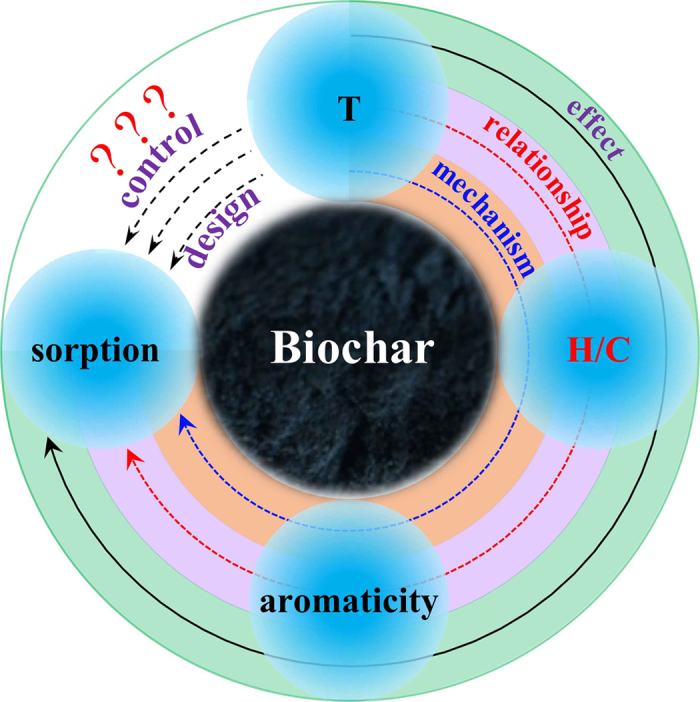
Biochar is increasingly gaining attention due to multifunctional roles in soil amelioration, pollution mitigation and carbon sequestration. It is a significant challenge to compare the reported results from world-wide labs regarding the structure and sorption of biochars derived from various precursors under different pyrolytic conditions due to a lack of a simple linkage. By combining the published works on various biochars, we established a quantitative relationship between H/C atomic ratio and pyrolytic temperature (T), aromatic structure and sorption properties for naphthalene and phenanthrene. A reverse sigmoid shape between T and the H/C ratio was observed, which was independent of the precursors of biochars, including the ash contents. Linear correlations of Freundlich parameters (N, log Kf) and sorption amount (log Qe, log QA) with H/C ratios were found. A rectangle-like model was proposed to predict the aromatic cluster sizes of biochars from their H/C ratios and then a good structure-sorption relationship was derived. These quantitative relationships indicate that the H/C atomic ratio is a universal linkage to predict pyrolytic temperatures, aromatic cluster sizes and sorption characteristics. This study would guide the global study of biochars toward being comparable and then the development of the structure-sorption relationships will benefit the structural design and environmental application of biochars.
Overview
The claims and statistics of this paper haven’t been checked yet.
Free: it reads the open-access text and checks the first 5 claims that cite a source we can check. Create a free account to check every claim.
Integrity signals
Registry
Cites
Statistics
Figures


Verification
Claims the paper makes
The claims and statistics of this paper haven’t been checked yet.
Free: it reads the open-access text and checks the first 5 claims that cite a source we can check. Create a free account to check every claim.
Claims other papers make about this one
Each is checked against this paper’s own text: does it say what the citing paper says it does?
The check wasn’t confident either way, so it gives no verdict — never disputed.
In the citing paper
“This biochar has an alkaline pH, a low ash content (18.5%; Table 1) suggesting it has limited acid neutralizing capacity (Yuan and Xu, 2012, Xiao et al., 2016).”
From Remediation of an acidic mine spoil: Miscanthus biochar and lime amendment affects metal availability, plant growth, and soil enzyme activity (2018) · cites this paper as Xiao et al., 2016
Experimental — accuracy not yet measured
Self-check
Percentages, sums and reported differences re-computed from the paper’s own numbers.
The self-check needs the paper’s full text.
Citations
Cites
Characteristics of hemicellulose, cellulose and lignin pyrolysis
Yang, H., Yan, R., Chen, H., Lee, D. H., & Zheng, C. (2007) · Fuel · doi:10.1016/j.fuel.2006.12.013 · Cited by 8,155
Biochar as a sorbent for contaminant management in soil and water: A review
Ahmad, M., Rajapaksha, A. U., Lim, J. E., Zhang, M., Bolan, N., Mohan, D., Vithanage, M., Lee, S. S., & Ok, Y. S. (2014) · Chemosphere · doi:10.1016/j.chemosphere.2013.10.071 · Cited by 4,662
Dynamic Molecular Structure of Plant Biomass-Derived Black Carbon (Biochar)
Keiluweit, M., Nico, P. S., Johnson, M. G., & Kleber, M. (2010) · Environmental Science & Technology · doi:10.1021/es9031419 · Cited by 3,230
Bio-char Sequestration in Terrestrial Ecosystems – A Review
Lehmann, J., Gaunt, J., & Rondon, M. (2006) · Mitigation and Adaptation Strategies for Global Change · doi:10.1007/s11027-005-9006-5 · Cited by 3,053 · cited 1×
“1038/srep22644 = + Q K N C log log log (9) e f e”
Lehmann, J. (2007) · Nature · doi:10.1038/447143a · Cited by 2,477 · cited 2×
“The reasons why the H/C atomic ratio was chosen are as follows: (1) The H/C atomic ratio is a quantity obtained by taking biochar as a whole and is easily acquired from elemental analysis.”
BackgroundMethodBiochar for Environmental Management: Science, Technology and Implementation
(2015) · doi:10.4324/9780203762264 · Cited by 2,280
Chen, B., Zhou, D., & Zhu, L. (2008) · Environmental Science & Technology · doi:10.1021/es8002684 · Cited by 1,823 · cited 2×
“(3) The H/C atomic ratio is often connected to the O/C ratio in van Krevelen plots50.”
BackgroundSelf-citationImpact of pyrolysis temperature and manure source on physicochemical characteristics of biochar
Cantrell, K. B., Hunt, P. G., Uchimiya, M., Novak, J. M., & Ro, K. S. (2012) · Bioresource Technology · doi:10.1016/j.biortech.2011.11.084 · Cited by 1,502
Ahmad, M., Lee, S. S., Dou, X., Mohan, D., Sung, J.-K., Yang, J. E., & Ok, Y. S. (2012) · Bioresource Technology · doi:10.1016/j.biortech.2012.05.042 · Cited by 1,357
Kim, S., Kramer, R. W., & Hatcher, P. G. (2003) · Analytical Chemistry · doi:10.1021/ac034415p · Cited by 1,336
Cited by
Items 201–300 of 309
Sustainable biochars from carbonization of cellulose filaments and nanocrystals
D’Acierno, F., Hamad, W. Y., Michal, C. A., & MacLachlan, M. J. (2021) · Bioresource Technology Reports · doi:10.1016/j.biteb.2021.100838 · Cited by 11
Zhang, X., Liu, Z., Khan, H. I. U.-H., Barati, B., Parakhonskiy, B. V., Skirtach, A. G., Rousseau, D. P. L., & Hulle, S. W. H. V. (2023) · Biomass Conversion and Biorefinery · doi:10.1007/s13399-023-05224-3 · Cited by 10
“Xiao et al. [70] proposed that the H/C atomic ratio is useful for assessing biochar aromaticity and predicting hydrophobic organic contaminant (HOC) sorption on biochar.”
Muretta, J. E., Uriarte, J., Compton, D., LaDouceur, R. M., Kirtley, J. D., & Prieto‐Centurión, D. (2024) · Scientific Reports · doi:10.1038/s41598-024-70186-z · Cited by 11
“Atomic hydrogen to carbon ratio (H/C) has been identified by Xiao et al . as a simple indicator of biochar aromaticity 13 .”
BackgroundInfluentialChambers, C., Grimes, S., Smith, R. C., Weil, A., & Reza, M. T. (2024) · Chemosphere · doi:10.1016/j.chemosphere.2024.143965 · Cited by 10
Bu, S., Liu, W., Haider, M. R., Li, X., Zhang, W., Sun, Q., Wang, Q., Guo, Y., Nie, S., & Wang, A. (2023) · Process Safety and Environmental Protection · doi:10.1016/j.psep.2023.04.053 · Cited by 10
Harimisa, G. E., Jusoh, N. W. C., Tan, L. S., & Ghafar, N. A. (2023) · Chemical Engineering Research and Design · doi:10.1016/j.cherd.2023.09.008 · Cited by 12
Hagemann, N., Schmidt, H., Bucheli, T. D., Grafmüller, J., Voßwinkel, S., Herdegen, V., Meredith, W., Uguna, C. N., & Snape, C. E. (2025) · PLoS ONE · doi:10.1371/journal.pone.0330206 · Cited by 12
Zhang, R., Zhang, Y., Goei, R., Oh, W., Zhang, Z., & He, C. H. (2023) · Journal of Environmental Management · doi:10.1016/j.jenvman.2023.118441 · Cited by 9
Aissaoui, M. H., Hertzog, J., Sambusiti, C., Gauthier‐Maradei, P., Pons, M., Carré, V., Brech, Y. L., & Dufour, A. (2024) · Journal of Analytical and Applied Pyrolysis · doi:10.1016/j.jaap.2024.106928 · Cited by 10
Sun, Y., Xuan, S., Dong, J., Chen, S., & Fan, X. (2025) · Agriculture · doi:10.3390/agriculture15151617 · Cited by 11
Liu, L., & Fan, S. (2023) · Water Air & Soil Pollution · doi:10.1007/s11270-023-06753-3 · Cited by 9
“The H/C atomic ratio is a universal linkage to predict pyrolytic temperatures, aromatic cluster sizes, and sorption characteristics (Xiao et al., 2016).”
BackgroundMa, M., Rivellini, L.-H., Cui, Y., et al. (2021) · Atmospheric measurement techniques · doi:10.5194/amt-14-2799-2021 · Cited by 8
Mancinelli, E., Baltrėnaitė, E., Baltrėnas, P., Grubliauskas, R., Marčiulaitienė, E., Passerini, G., & Pranskevičius, M. (2018) · Water Air & Soil Pollution · doi:10.1007/s11270-018-3896-9 · Cited by 8
Labanya, R., Srivastava, P. C., Pachauri, S. P., Shukla, A. K., Shrivastava, M., & Srivastava, P. (2022) · Chemistry and Ecology · doi:10.1080/02757540.2022.2075858 · Cited by 10
“0 and the H:C ratio for aromatic organic matter decreases with larger fused aromatic clusters, the H:C ratio is a perfect index to reflect the aromaticity of biochars [52].”
BackgroundUnique Chemistry and Structure of Pyrolyzed Bovine Bone for Enhanced Aqueous Metals Adsorption
Muretta, J. E., Prieto‐Centurión, D., LaDouceur, R. M., & Kirtley, J. D. (2022) · Waste and Biomass Valorization · doi:10.1007/s12649-022-01895-7 · Cited by 15
Temperature-Programmed Reduction of NiO/Al2O3 by Biochar In Situ Generated from Citric Acid
Cheng, F., & Li, X. (2022) · Processes · doi:10.3390/pr10081542 · Cited by 9
Fenton oxidation of biochar improves retention of cattle slurry nitrogen
Cao, X., Reichel, R., & Brüggemann, N. (2022) · Journal of Environmental Quality · doi:10.1002/jeq2.20419 · Cited by 10
Roberts, G. L., Mullett, R., David, B., et al. (2020) · Australian Archaeology · doi:10.1080/03122417.2020.1769250 · Cited by 8
Potential of Virginia Mallow as an Energy Feedstock
Banks, S. W., Śnieg, M., Nowakowski, D. J., Stolarski, M. J., & Bridgwater, A. V. (2020) · Waste and Biomass Valorization · doi:10.1007/s12649-020-01183-2 · Cited by 8
Angel, L., Villot, A., Susa, M. R., Plazas‐Tuttle, J., Andrès, Y., & Gérente, C. (2025) · Journal of Water Process Engineering · doi:10.1016/j.jwpe.2025.107020 · Cited by 8
Polycyclic aromatics in the Chang’E 5 lunar soils
Zhong, G., Yi, X., Gao, S., Zhao, S., Mo, Y., Tian, L., Xu, B., Wang, F., Liao, Y., Li, T., et al. (2025) · Nature Communications · doi:10.1038/s41467-025-58865-5 · Cited by 10
“A quantitative relationship model has been established between the size of aromatic structures and the H/C ratio for such materials 39 .”
Pan, M., Hamid, Y., Czech, B., He, Z. L., & Yang, X. (2025) · Journal of environmental chemical engineering · doi:10.1016/j.jece.2025.116796 · Cited by 7
Unravelling the HER activity of functionalized biochar: a pathway to cost-effective electrocatalysis
Susai, A. J. K., Muthukumaran, M. K., Govindaraj, M., & Selvi, J. A. (2025) · Journal of Materials Chemistry A · doi:10.1039/d5ta05317j · Cited by 8
Unlocking glycerol Potential: Novel pathway for hydrogen production and Value-Added chemicals
Nardo, A. D., Landi, G., Luciani, G., Portarapillo, M., Ruoppolo, G., Russo, D., Zarrelli, A., & Benedetto, A. D. (2024) · Chemical Engineering Journal · doi:10.1016/j.cej.2024.156634 · Cited by 7
Recent advances in pesticides removal using agroindustry based biochar
Deolikar, R., & Patil, R. (2021) · Elsevier eBooks · doi:10.1016/b978-0-323-85583-9.00021-1 · Cited by 9
Liu, D., Cheng, J., Xiao, X., Liao, X., Zhang, S., & Shi, B. Q. (2023) · Industrial Crops and Products · doi:10.1016/j.indcrop.2023.117234 · Cited by 9
Self-citationShen, C., Song, Z., Qiu, Z., et al. (2024) · Chemical Papers · doi:10.1007/s11696-024-03466-7 · Cited by 6
“Furthermore, the H/C ratio can serve as a predictive factor for the adsorption capacity of biochar, given its contribution to a robust structure-sorption relationship (Xiao et al. 2016).”
Characterization of Citrus paradisi peel powder and investigation of lead(II) biosorption
Küçük, İ. (2024) · International Journal of Environmental Science and Technology · doi:10.1007/s13762-024-05992-z · Cited by 7
“According to the H/C ratios, the aromaticity of CPP is higher than pomegranate peel (Xiao et al. 2016). pH pzc plays a major role in the characterization of biosorb-ent.”
Predicting gasification rates of pyrolytic graphite deposited from methane
Kreuger, T., Bos, R., & Kersten, S. R. A. (2022) · Chemical Engineering Journal · doi:10.1016/j.cej.2022.135487 · Cited by 6
Sdoukou, E., Αντωνοπούλου, Μ., Salmas, C. E., Kyzas, G. Z., & Konstantinou, I. (2025) · Journal of environmental chemical engineering · doi:10.1016/j.jece.2025.118834 · Cited by 6
Rethinking Biochar Reinforcement Role in Elastomer Composites for Greener Tire Manufacture
Bernardo, C. D., Messori, M., & Noè, C. (2025) · ACS Sustainable Chemistry & Engineering · doi:10.1021/acssuschemeng.5c05447 · Cited by 8
Nair, R. R., Kißling, P. A., Schaate, A., Marchanka, A., Shamsuyeva, M., Behrens, P. J., & Weichgrebe, D. (2023) · RSC Advances · doi:10.1039/d3ra01911j · Cited by 8
Does Biochar Stabilize the Bioreactive Carbon Fractions of Swine Manure?
Banik, C., Bakshi, S., Andersen, D. S., Cady, S. D., Smith, R. G., & Brown, R. C. (2023) · ACS ES&T Engineering · doi:10.1021/acsestengg.3c00027 · Cited by 5
Burdová, H., Nebeská, D., Kwoczynski, Z., Žižková, L., Neubertová, V., Snow, J., Pilnaj, D., Baka, M., & Souki, K. S. A. (2024) · Environmental Research · doi:10.1016/j.envres.2024.120390 · Cited by 8
Yu, Y., Wang, S., Lv, S., et al. (2024) · The Science of The Total Environment · doi:10.1016/j.scitotenv.2024.171639 · Cited by 5
Wei–Ru, K. U. O., Nien–Chia, Y. E. H., Fujimoto, N., & Han Chien, L. I. N. (2019) · Journal of the Faculty of Agriculture Kyushu University · doi:10.5109/2232296 · Cited by 8
“The hydrophilicity and polarity decrease as carbonization temperature increases, and the nutrient preserving capability subsequently degrades (Xin et al .”
Biochar-enhanced chloramphenicol degradation via electron transfer in electroactive microorganisms
Yang, K., Li, P., Chen, P., Tong, Y. W., Zhang, D., & He, Y. (2025) · Frontiers of Environmental Science & Engineering · doi:10.1007/s11783-025-2075-7 · Cited by 5
“The aromatic cluster model C 2mn+2n+2m H 2+2m+2n proposed by Xiao et al. (2016) posits that H/C is an indicator of aromaticity, with lower H/C corresponding to enhanced growth of aromatic clusters in biochar, that is, higher degree of graphitisation (Xiao et al., 2016).”
Zhou, J., Ge, S., Chen, D., Hong, L., Hu, Y., Feng, Y., & Qian, K. (2025) · Renewable Energy · doi:10.1016/j.renene.2025.124527 · Cited by 6
Li, H., Lyu, X., Ding, S., Zhao, Y., Shagali, A. A., Wang, Y., Su, S., Hu, S., Xiang, J. H., & Chi, H. (2026) · Fuel Processing Technology · doi:10.1016/j.fuproc.2026.108396 · Cited by 7
Wang, J., Ye, C., Yang, H., Ye, Z., Zhu, Z., Liu, H., Jin, H. Z., Wang, X., Zhang, J., Li, G., et al. (2024) · The Science of The Total Environment · doi:10.1016/j.scitotenv.2024.175842 · Cited by 4
Uptake of technetium and iodine (I−, IO3− and organo-I) by pecan biochar
Lin, P., Ferguson, B. O., Greene, K. M., Xing, W., Xu, C., Bagwell, C. E., Watts, D. W., & Kaplan, D. I. (2025) · Journal of Environmental Radioactivity · doi:10.1016/j.jenvrad.2025.107674 · Cited by 4
Mancinelli, E., Baltrėnaitė, E., Baltrėnas, P., Grubliauskas, R., Marčiulaitienė, E., Passerini, G., & Pranskevičius, M. (2018) · Water Air & Soil Pollution · doi:10.1007/s11270-018-3927-6 · Cited by 4
Kwoczynski, Z., Burdová, H., Souki, K. S. A., & Čmelík, J. (2025) · Biomass Conversion and Biorefinery · doi:10.1007/s13399-025-06524-6 · Cited by 4
“Elevated H/C ratio was proved to be associated with enhanced adsorption efficiency of organic substances [46].”
Zhao, B., Jäntti, N., Khakalo, A., Holopainen‐Mantila, U., Xu, W., Vapaavuori, J., Rojas, O. J., & Mattos, B. D. (2025) · Advanced Functional Materials · doi:10.1002/adfm.202506820 · Cited by 5
Morico, A., Lavarias, J. A., Mateo, W., Barroga, A. J., Denson, M. D., Papa, K., Valentin, M. T., & Białowiec, A. (2026) · Biomass · doi:10.3390/biomass6020022 · Cited by 3
“Biochar with higher carbon content and lower molar ratios (e.g., H:C and O:C) exhibits higher carbon stability and aromaticity [16,17].”
Paul, S., Nahnjoh, A. L., Chaurasiya, A., Sivaraman, S., & Selvasembian, R. (2026) · Microchemical Journal · doi:10.1016/j.microc.2026.118422 · Cited by 3
Woody Biomass-Derived Biochar Decorated with Vanadium Oxide as a Potential Adsorbent for CO2 Capture
Amer, N. M., Lahijani, P., Mohammadi, M., Mohamed, A. R., & Anthonysamy, S. I. (2024) · International Journal of Environmental Research · doi:10.1007/s41742-024-00605-6 · Cited by 3
“The degree of aromaticity is denoted by the H/C ratio, while the O/C ratio represents the degree of polarity (Sun et al. 2017; Xiao et al. 2016).”
Biochar mitigation potential in Norway estimated by IPCC Tier 1 and Tier 2 methods
Hagenbo, A., O’Toole, A., Astrup, R., & Rasse, D. P. (2024) · Carbon Management · doi:10.1080/17583004.2024.2410823 · Cited by 5
Biochar-Enhanced Sulfur: Mechanistic Insights into a Novel and Effective Bactericide
Peng, Y., Su, L., Liu, M., Zeng, C., Xiang, B., Xie, Z., Hu, Z., & Zhou, N. (2025) · Nanomaterials · doi:10.3390/nano15090697 · Cited by 4
Leveraging Biochar Amendments to Enhance Food Security and Plant Resilience Under Climate Change
Korai, S. K., Korai, P. K., Jaffar, M. A., Qasim, M., Younas, M. U., Shabaan, M., Zulfiqar, U., Wang, X., & Artyszak, A. (2025) · Plants · doi:10.3390/plants14131984 · Cited by 8
Torchia, D. F. D. O., de Castro, T. A. V. T., Tavares, O. C. H., de Souza, C. D. C. B., da Silva, H. F. O., de Moura, O. V. T., da Silva, K. C. M., Rocha, F. D. S., Zonta, E., & García, A. C. (2023) · Journal of soil science and plant nutrition · doi:10.1007/s42729-023-01548-1 · Cited by 5
“This reduction is consistent with previous studies on plant residues and the influence of pyrolysis on biochar molecules (Bonanomi et al. 2015, 2018; Xiao et al. 2016).”
Biochar for Enhanced Surface Water Quality
Bosch, K., Freebourn, A., Parker, K., Scherman, M., Zodrow, K. R., & Hutchins, D. L. (2021) · Waste-management Education Research Conference (WERC) · doi:10.1109/werc52047.2021.9477543 · Cited by 3
Stefani, M., Lunardi, V. B., Go, A. W., Cheng, K., Hsu, H., Lin, S., Angkawijaya, A. E., Lin, H., Simanullang, W. F., Hsieh, C.-W., et al. (2025) · Biomass Conversion and Biorefinery · doi:10.1007/s13399-025-06881-2 · Cited by 4
“A lower H/C ratio signifies a higher degree of carbon fixation, more significant aromatic condensation, and increased thermal stability [54, 55].”
Linking biochar physico-chemical traits to sorghum growth and soil carbon dynamics
Kefalew, A., Geremew, A., Guthrie, D. M., Elder, D., Woldesenbet, S., Grady, T. L., Shrestha, A. B., Amarasekara, A. S., Ray, R. L., Kuloyo, O., et al. (2025) · Frontiers in Environmental Science · doi:10.3389/fenvs.2025.1644821 · Cited by 5
Luo, X., Ding, W., Radian, A., Tan, L., Sheng, Y., Li, C., Wu, Z., & Xiao, K. (2026) · Waste Management · doi:10.1016/j.wasman.2026.115481 · Cited by 2
Putri, A. M. H., Ramadhoni, B. F., Yuliusman, & Muharam, Y. (2026) · Journal of CO2 Utilization · doi:10.1016/j.jcou.2026.103425 · Cited by 7
Soomro, A., Koçer, A. T., & Balkanlı, D. (2026) · Bioresources and Bioprocessing · doi:10.1186/s40643-026-01067-8 · Cited by 2
Zhu, X., HUANG, K., Liu, S., Bai, X., Xu, D., & Zhou, L. (2026) · Journal of environmental chemical engineering · doi:10.1016/j.jece.2026.123794 · Cited by 4
Msw Compost Pyrolysis: Kinetic Study and Fluidized Bed Pilot Plant Evaluation
Palma, A., Clemente-Castro, S., Montoya, M. R., Giráldez, I., & Díaz, M. (2022) · Waste Management & Research The Journal for a Sustainable Circular Economy · doi:10.1177/0734242x231200744 · Cited by 2
“On the other hand, the H/C ratio can be used as an indicator of the aromaticity and stability of biochar (Wei et al., 2020; Xiao et al., 2016).”
Biochar-facilitated soil microbial diversity under contaminated soil
Ali, B., Fatima, E., Javed, M. A., Suleman, F., Hafeez, A., Ali, S., Fathi, A., & Khan, M. N. (2024) · Elsevier eBooks · doi:10.1016/b978-0-443-21562-9.00006-2 · Cited by 2
Investigation of the Effects of Waste Olive Pomace on Vermicompost
Borazan, A. A., Değirmenci, L., & CUMHUR, Ö. (2024) · Bilge International Journal of Science and Technology Research · doi:10.30516/bilgesci.1460055 · Cited by 2
Guo, Y., Wang, H., Wang, Y., et al. (2024) · Journal of Water Process Engineering · doi:10.1016/j.jwpe.2024.106467 · Cited by 2
Ashraf, A., Liu, G., Akhtar, P., Yousaf, B., Arif, M., & Rehman, A. (2025) · International Journal of Environmental Science and Technology · doi:10.1007/s13762-025-06347-y · Cited by 2
“An increase in H/C indicates an increase in atomicity, whereas a decrease in O/C signals a decrease in polarity (Xiao et al. 2016).”
Morvaridi, R., Hallajisani, A., & Rasouli, J. (2025) · Journal of Material Cycles and Waste Management · doi:10.1007/s10163-025-02230-7 · Cited by 2
“Higher C/H atomic ratio, which leads to increased aromatic structures in pyrolysis products, is advantageous due to increased stability, improved density, better adsorption properties, versatility in chemical applications, and lower volatility [6].”
Rana, G., Ali, S. K., Jawhari, A. H., Rao, S. K., Dhiman, V. K., Ghotekar, S. K., & Chauhan, A. (2025) · Journal of Molecular Structure · doi:10.1016/j.molstruc.2025.143233 · Cited by 2
Naz, Z., Rashid, A., & Jahan, S. (2025) · PeerJ · doi:10.7717/peerj.20048 · Cited by 2
“The current elemental analysis also indicated an increase in carbon content in soil following the application of activated acacia biochar ( Xiao, Chen & Chen, 2016 ).”
Characteristics of Asphaltenes Thin Film Extracted from Crude-Oil-Tank-Bottom-Sludge (COTBS)
Thulasiraman, S., Yunus, N. M. M., Kumar, P., et al. (2019) · IEEE Regional Symposium on Micro and Nanoelectronics · doi:10.1109/rsm46715.2019.8943531 · Cited by 2
“The hydrogen to carbon ratio (H/C) was used as aromaticity index [20].”
MethodCrispo, M., Cameron, D. D., Meredith, W., Eveleigh, A., Ladommatos, N., Mašek, O., & Edmondson, J. L. (2021) · The Science of The Total Environment · doi:10.1016/j.scitotenv.2021.149659 · Cited by 3
Kumar, A., Kumari, P., Solanki, M. K., & Prasad, M. N. V. (2025) · Elsevier eBooks · doi:10.1016/b978-0-443-29855-4.00002-3 · Cited by 2
Agro-Waste-Derived Hybrid Biochar Exhibits High-Efficiency Removal of Endocrine-Disrupting Compounds
Kasambala, H. R., Rwiza, M. J., Mpumi, N., Mwema, M. F., & Njau, K. N. (2025) · Water Air & Soil Pollution · doi:10.1007/s11270-025-07960-w · Cited by 2
“Moreover, the H/C ratio can be used as an indicator of biochar stability, with a lower ratio ( 0.6) (Table 1), generally corresponding to more stable and aromatic bio-chars (Xiao et al., 2016), which is important in pollut-ant adsorption.”
InfluentialKumar, A., Rawat, S., Arora, N., Mishra, R. K., & Bhaskar, T. (2025) · Bioresource Technology Reports · doi:10.1016/j.biteb.2025.102359 · Cited by 4
Guyader, E. L., Oueriemmi, H., Clivot, H., Mazlouzi, M. E., Guillaneuf, A., Gommeaux, M., Marin, B., Zoghlami, R. I., Alavoine, G., Sbih, M., et al. (2025) · Geoderma Regional · doi:10.1016/j.geodrs.2025.e01002 · Cited by 2
Singh, C., Goyal, R., & Saluja, N. K. (2026) · Energy Sources Part A Recovery Utilization and Environmental Effects · doi:10.1080/15567036.2025.2610458 · Cited by 1
Landa-Zavaleta, L. M., Ramírez-Valdespino, C. A., Castillo, O. S., Rodríguez-Alejandro, D. A., Leyva‐Porras, C., Negrete-Rodríguez, M. D. L. L. X., Patiño-Galván, H., Bernal, D. Á., Lastiri-Hernández, M. A., & Conde-Barajas, E. (2026) · Eng—Advances in Engineering · doi:10.3390/eng7010032 · Cited by 1
Isah, A. A., Abdelaal, A. H., Nasiru, Y., SZETO, K. C., Taoufik, M., Jlassi, K., Abdullah, A. M., & Chehimi, M. M. (2026) · ENGINEERING Chemical Engineering · doi:10.1007/s11705-026-2671-5 · Cited by 1
Du, J., Yang, W., Liu, J., & Du, Z. (2026) · BMC Plant Biology · doi:10.1186/s12870-026-08760-y · Cited by 1
“Besides this, MPs also contain a higher carbon to hydrogen ratio, alter the soil structure, microbial activities, and root proliferation, which further imped plant growth [59].”
He, L., Ji, Y., Li, D., Wang, Y., Lyu, H., Wang, B., Chen, B., Liu, X., Chen, C., Guo, B., et al. (2026) · Carbon Research · doi:10.1007/s44246-026-00277-1 · Cited by 1
“HCs have lower aromaticity and stability during application because of their higher O/C and H/C ratios (Xiao et al. 2016).”
Self-citationInvestigations of biochar as a tunable platform for aqueous malathion adsorption and decomposition
Goettlich, D. M., Hadi, A.-S., McEnaney, K., et al. (2021) · MRS Advances · doi:10.1557/s43580-021-00113-1 · Cited by 1
Molecular Modelling and Characterization of Metal Incorporated Biochar from Industrial Wastes
Ansab, N. P., Ranjana, R., & Anjana, R. (2023) · Advanced materials research · doi:10.4028/p-mwp6mr · Cited by 1
Hydrochar as sustainable redox catalyst for advanced oxidation processes-based wastewater treatment
Manickavasagam, G., Saaid, M., & Oh, W. (2025) · Pure and Applied Chemistry · doi:10.1515/pac-2024-0309 · Cited by 2
Theurer, T., Jolley, D. W., Muirhead, D. K., Mauquoy, D., & Hole, M. J. (2025) · Global and Planetary Change · doi:10.1016/j.gloplacha.2025.104990 · Cited by 2
Asphaltene thin film properties and its potential use in organic electronic application
Thulasiraman, S., Yunus, N. M. M., Kumar, P., et al. (2021) · IEEE International Conference on Sensors and Nanotechnology (SENNANO) · doi:10.1109/sennano51750.2021.9642606 · Cited by 1
Mun, H., Ri, C., Liu, Q., & Tang, J. (2022) · Research Square · doi:10.21203/rs.3.rs-1310008/v1 · Cited by 1
The industrial application of methane pyrolysis
Kreuger, T. (2022) · doi:10.3990/1.9789036554619 · Cited by 1
Evaristo, R. B. W., Dutra, R. C., Suarez, P. A. Z., Ghesti, G. F., & Silveira, E. A. (2024) · Preprints.org · doi:10.20944/preprints202404.0916.v1
Predicting Gasification Rates of Pyrolytic GraphitePreprint
Kreuger, T., Kersten, S. R. A., & Bos, R. (2022) · SSRN Electronic Journal · doi:10.2139/ssrn.4007046
Qasim, H. M., Alzubaidi, L. A., & Abudi, Z. N. (2020) · Journal of Engineering and Sustainable Development · doi:10.31272/jeasd.conf.1.10
Removal of MnII and FeIII from groundwater using durian rind-derived biochar
Danwittayakul, S., & Thijina, W. (2023) · Desalination and Water Treatment · doi:10.5004/dwt.2023.29472
Wang, J., Ye, C., Yang, H., et al. (2024) · SSRN Electronic Journal · doi:10.2139/ssrn.4888366
Villot, A., Ángel, L., Gérente, C., et al. (2024) · SSRN Electronic Journal · doi:10.2139/ssrn.4888347
High-value strategies and applications of biomass-based cellulose carbon materials
Gao, Z., 余厚咏, & Chen, Y. (2024) · Scientia Sinica Chimica · doi:10.1360/ssc-2024-0196
Hallmark-Haack, B., Middleton, J., Rodrigues, A. L., et al. (2025) · RSC Advances · doi:10.1039/d4ra09045d
Park, J. C., Yoo, H., Hwang, C., Jo, J., Lee, J., & Koo, B. (2025) · Journal of Korea Technical Association of The Pulp and Paper Industry · doi:10.7584/jktappi.2025.8.57.4.77
The potential for integrated utilization of industrial wastes as soil improvers
Serafimova, E., Petkova, V., & Petkova, V. G. (2025) · Review of the Bulgarian Geological Society · doi:10.52215/rev.bgs.2025.86.3.243
Biomass‐Derived Carbon‐Supported‐SnS Nanostructures for 1‐Pentanol Sensing
Santos, V. S., Gropelo, H. D. S., dos Santos, G. S. M., Perfecto, T. M., Metzker, G., Bisinoti, M. C., Volanti, D. P., & Moreira, A. B. (2026) · Advanced Sustainable Systems · doi:10.1002/adsu.202501108
Yehya, S. (2017) · theses.fr (ABES) · doi:10.70675/4bcdba90z9036z4c7fzbf8fza3b05269785a · Cited by 2
Nandillon, R. (2019) · theses.fr (ABES) · doi:10.70675/022c5fc7zce18z4adcza5c6z8dcf260ac7e8 · Cited by 3
Biochar-compost mixtures : interactions and impact on carbon sequestration and soil fertility
Aubertin, M. (2022) · theses.fr (ABES) · doi:10.70675/444db078z94a4z458bz8952zea6e74668362 · Cited by 5
Metadata
- Authors
- Xiao, X., Chen, Z., & Chen, B.
- Affiliations
- Zhejiang University (CN)
- Ningbo University (CN)
- Corresponding author
- Chen, Baoliang
- Venue
- Scientific Reports
- Published
- 2016-03-04
- Volume
- 6
- Issue
- 1
- Pages
- 22644-22644
- ISSN
- 2045-2322 (ISSN-L)
- PMC
- PMC4778134
- OpenAlex
- W2330543631
- Cited by
- 309
- References
- 76
- Citations by year
- 2026: 23 · 2025: 45 · 2024: 38 · 2023: 36 · 2022: 35 · 2021: 35 · 2020: 37 · 2019: 22 · 2018: 16 · 2017: 16 · 2016: 6
- FWCI
- 11.84
- Type
- journal article
- Language
- en
- Open access
- gold
- doi.org
- Licence
- cc-by
- creativecommons.org/licenses/by/4.0 (tdm)
- creativecommons.org/licenses/by/4.0 (vor)
- Locations
- Scientific Reports (publishedVersion, cc-by)
- PubMed Central (publishedVersion, cc-by)
- PubMed (publishedVersion)
- Funders
- National Natural Science Foundation of China (2014CB441106, 21537005, 21425730, 21277120)
- National Key Research and Development Program of China (2014CB441106, 21537005, 21425730)
- Topics
- Physical Sciences › Environmental Science › Water Science and Technology › Adsorption and biosorption for pollutant removal
- Physical Sciences › Energy › Fuel Technology › Thermochemical Biomass Conversion Processes
- Life Sciences › Agricultural and Biological Sciences › Soil Science › Soil Carbon and Nitrogen Dynamics
- Keywords
- biochar, H/C ratio, pyrolysis temperature, aromatic clusters, Freundlich isotherm, ash content, aromaticity
About these checks
Registry, retraction, Cites and statistics results are computed, not judged, with one exception: a printed reference that no index lists is read once by a model before it counts as a citation error. Claims are extracted by a model and kept only when their quote appears verbatim in the text; each cited source is then checked, with a model’s help, for whether it says what the claim relies on. Those verdicts can be wrong — read the claim’s quote and the cited source before relying on one.
Statistics and arithmetic are recomputed, not judged.
Confidence bands are shown only for fields calibrated on our annotated test set. None is calibrated yet, so no band is shown.
What counts as a claim ›How we measure confidence ›How we check this ›
Are you an author, or do you see a problem with this page? Request a review
Data sources
Bibliographic data: Semantic Scholar, OpenAlex, Crossref.
Contains information from the Semantic Scholar Academic Graph Datasets, made available under the ODC Attribution License (ODC-BY 1.0).
Semantic Scholar’s data is described in: Kinney, R., et al. (2023). The Semantic Scholar Open Data Platform. arXiv:2301.10140.
