

Amyloidogenic amyloid-β-peptide variants induce microbial agglutination and exert antimicrobial activity
Open accessThe DOI matches its Crossref record; 54 of the 54 references it cites were found in a registry or an index.
Abstract
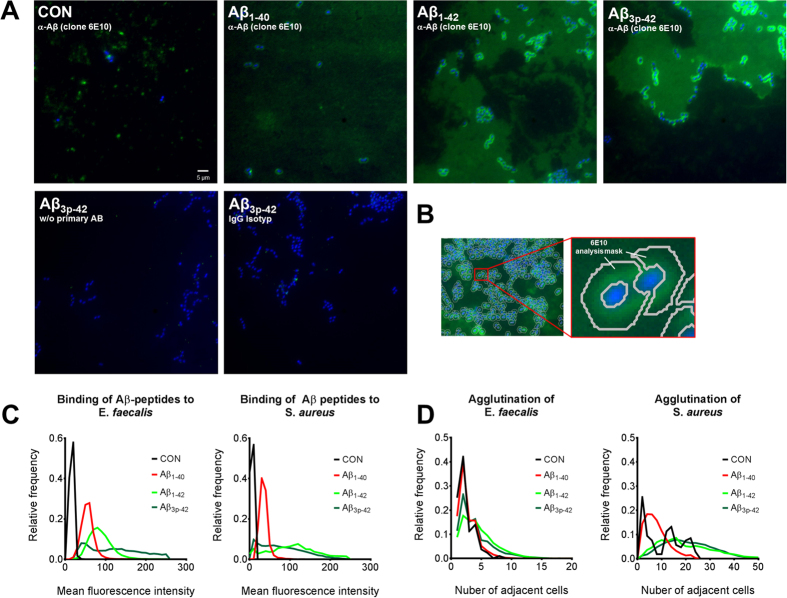
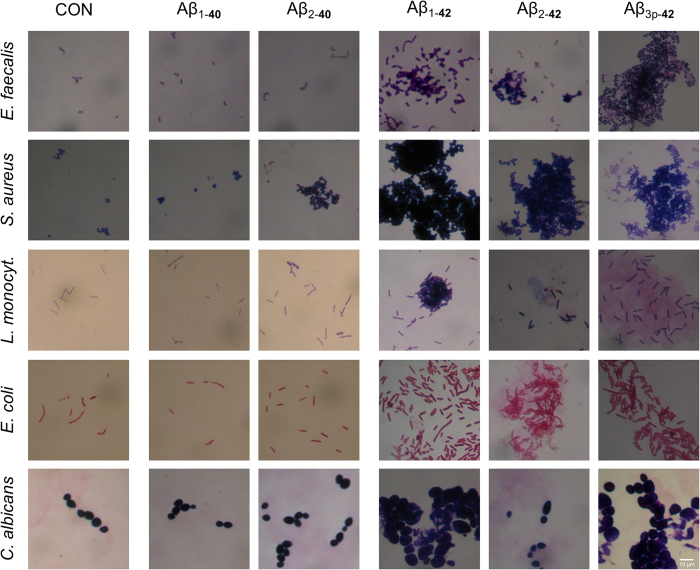
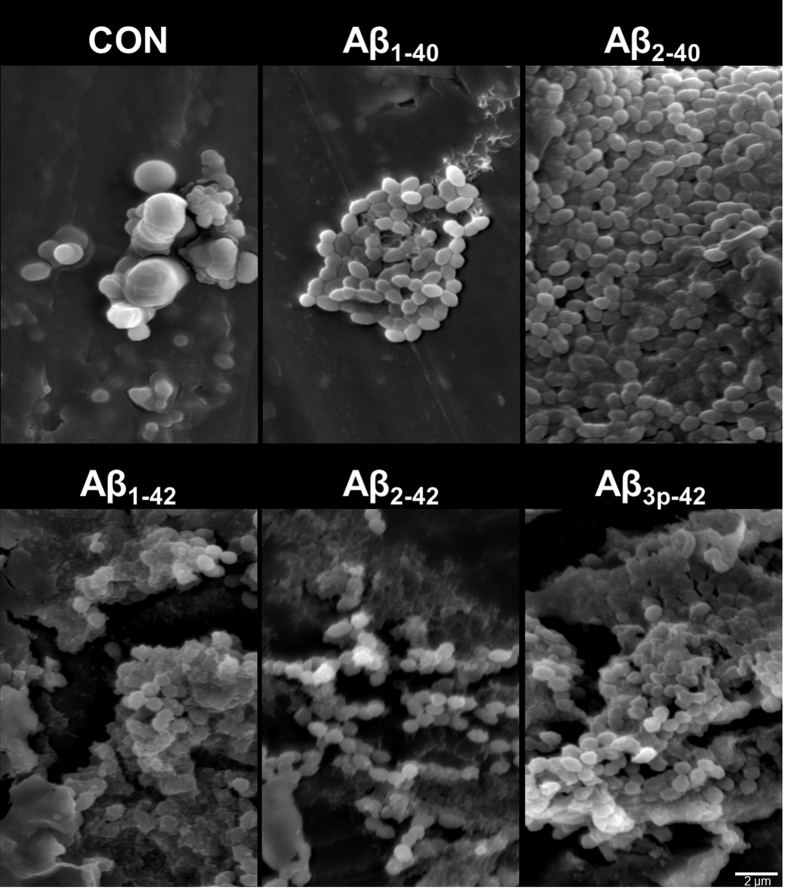
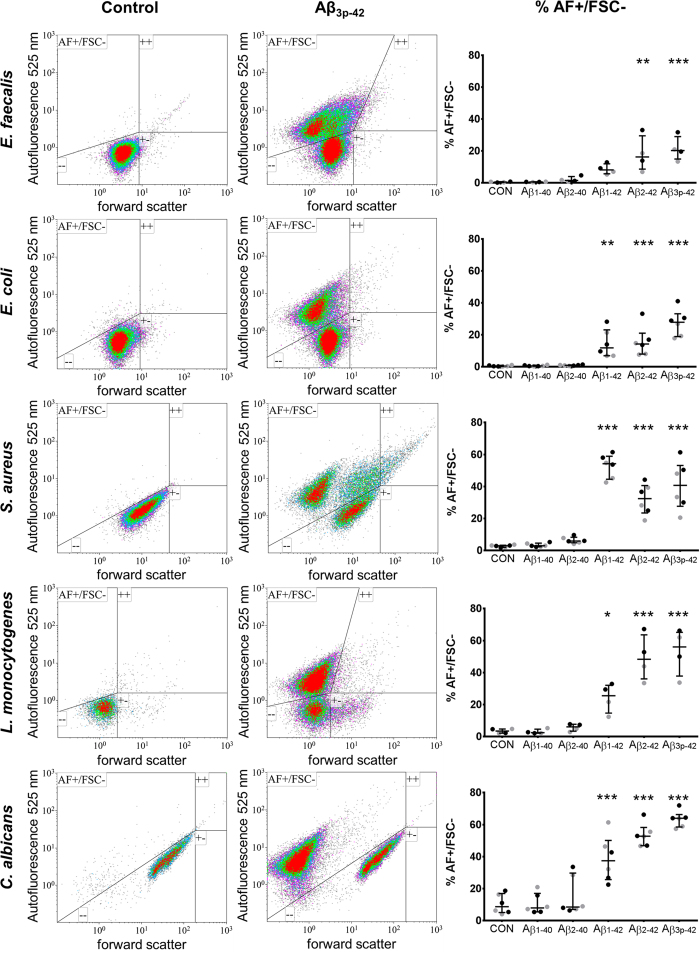
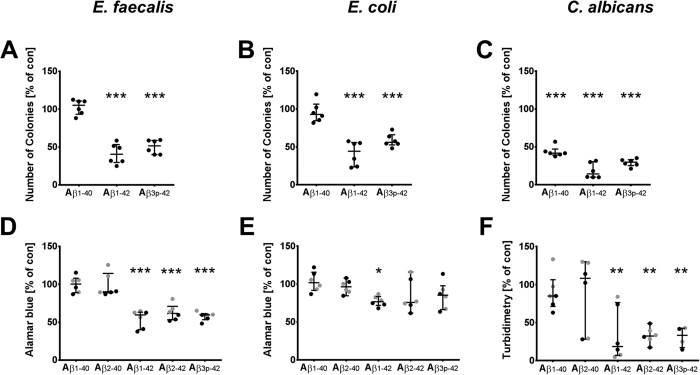
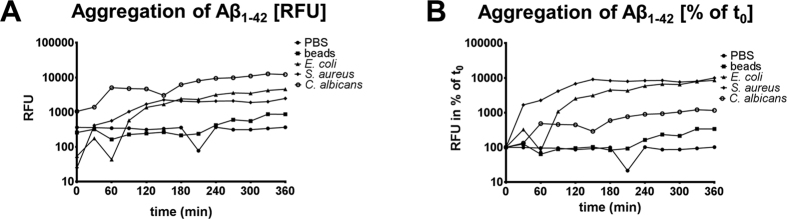
Amyloid-β (Aβ) peptides are the main components of the plaques found in the brains of patients with Alzheimer’s disease. However, Aβ peptides are also detectable in secretory compartments and peripheral blood contains a complex mixture of more than 40 different modified and/or N- and C-terminally truncated Aβ peptides. Recently, anti-infective properties of Aβ peptides have been reported. Here, we investigated the interaction of Aβ peptides of different lengths with various bacterial strains and the yeast Candida albicans. The amyloidogenic peptides Aβ 1-42, Aβ 2-42 and Aβ 3p-42 but not the non-amyloidogenic peptides Aβ 1-40 and Aβ 2-40 bound to microbial surfaces. As observed by immunocytochemistry, scanning electron microscopy and Gram staining, treatment of several bacterial strains and Candida albicans with Aβ peptide variants ending at position 42 (Aβ x-42) caused the formation of large agglutinates. These aggregates were not detected after incubation with Aβ x-40. Furthermore, Aβ x-42 exerted an antimicrobial activity on all tested pathogens, killing up to 80% of microorganisms within 6 h. Aβ 1-40 only had a moderate antimicrobial activity against C. albicans. Agglutination of Aβ 1-42 was accelerated in the presence of microorganisms. These data demonstrate that the amyloidogenic Aβ x-42 variants have antimicrobial activity and may therefore act as antimicrobial peptides in the immune system.
Overview
The claims and statistics of this paper haven’t been checked yet.
Free: it reads the open-access text and checks the first 5 claims that cite a source we can check. Create a free account to check every claim.
Integrity signals
Registry
Cites
Statistics
Figures
Verification
Claims the paper makes
The claims and statistics of this paper haven’t been checked yet.
Free: it reads the open-access text and checks the first 5 claims that cite a source we can check. Create a free account to check every claim.
Claims other papers make about this one
Each is checked against this paper’s own text: does it say what the citing paper says it does?
The source backs part of the claim, not all of it — or backs it for a different population, condition or comparison.
In the citing paper
“Aβ peptides are able to interact and entrap various bacterial strains and viruses, such as HSV1 and HSV6, block their entry into the host cells to replicate.402–404”
From Amyloid β-based therapy for Alzheimer’s disease: Challenges, successes and future (2023) · cites this paper as [402]
Experimental — accuracy not yet measured
Self-check
Percentages, sums and reported differences re-computed from the paper’s own numbers.
The self-check needs the paper’s full text.
Citations
Cites
Molecular modeling of protein-glycosaminoglycan interactions.
Cardin, A. D., & Weintraub, H. J. (1989) · Arteriosclerosis: An Official Journal of the American Heart Association, Inc. · doi:10.1161/01.atv.9.1.21 · Cited by 1,301
The Alzheimer's Disease-Associated Amyloid β-Protein Is an Antimicrobial Peptide
Soscia, S. J., Kirby, J. E., Washicosky, K. J., Tucker, S. M., Ingelsson, M., Hyman, B., Burton, M. A., Goldstein, L. E., Duong, S., Tanzi, R. E., et al. (2010) · PLoS ONE · doi:10.1371/journal.pone.0009505 · Cited by 1,060
Kumar, D. K. V., Choi, S. H., Washicosky, K. J., Eimer, W. A., Tucker, S., Ghofrani, J., Lefkowitz, A., McColl, G., Goldstein, L. E., Tanzi, R. E., et al. (2016) · Science Translational Medicine · doi:10.1126/scitranslmed.aaf1059 · Cited by 971
An overview of APP processing enzymes and products.
Chow, V. W., Mattson, M. P., Wong, P. C., & Gleichmann, M. (2010) · NeuroMolecular Medicine · doi:10.1007/s12017-009-8104-z · Cited by 684
Take five—BACE and the γ‐secretase quartet conduct Alzheimer's amyloid β‐peptide generation
Haass, C. (2004) · The EMBO Journal · doi:10.1038/sj.emboj.7600061 · Cited by 550
Microbes and Alzheimer’s Disease
Itzhaki, R. F., Lathe, R., Balin, B. J., Ball, M. J., Bearer, E. L., Braak, H., Bullido, M. J., Carter, C., Clerici, M., Cosby, S. L., et al. (2016) · Journal of Alzheimer’s Disease · doi:10.3233/jad-160152 · Cited by 532
Izadpanah, A., & Gallo, R. L. (2005) · Journal of the American Academy of Dermatology · doi:10.1016/j.jaad.2004.08.026 · Cited by 380
Phenotypic and Biochemical Analyses of BACE1- and BACE2-deficient Mice
Dominguez, D., Tournoy, J., Hartmann, D., Huth, T., Cryns, K., Deforce, S., Serneels, L., Camacho, I. E., Marjaux, E., Craessaerts, K., et al. (2005) · Journal of Biological Chemistry · doi:10.1074/jbc.m505249200 · Cited by 359
Bacterial programmed cell death: making sense of a paradox
Bayles, K. W. (2014) · Nature Reviews Microbiology · doi:10.1038/nrmicro3136 · Cited by 315
Amino-terminal Deletions Enhance Aggregation of β-Amyloid Peptides in Vitro
Pike, C. J., Overman, M. J., & Cotman, C. W. (1995) · Journal of Biological Chemistry · doi:10.1074/jbc.270.41.23895 · Cited by 302
Wiltfang, J., Esselmann, H., Bibl, M., Smirnov, A., Otto, M., Paul, S., Schmidt, B., Klafki, H. ‐., Maler, M., Dyrks, T., et al. (2002) · Journal of Neurochemistry · doi:10.1046/j.1471-4159.2002.00818.x · Cited by 271
Self-citationMcLaurin, J., Franklin, T., Zhang, X., Deng, J., & Fraser, P. E. (1999) · European Journal of Biochemistry · doi:10.1046/j.1432-1327.1999.00957.x · Cited by 258
On the Seeding and Oligomerization of pGlu-Amyloid Peptides (in vitro)
Schilling, S., Lauber, T., Schaupp, M., Manhart, S., Scheel, E., Böhm, G., & Demuth, H.-U. (2006) · Biochemistry · doi:10.1021/bi0612667 · Cited by 254
Different Brain Regions are Infected with Fungi in Alzheimer’s Disease
Pisa, D., Alonso, R., Rábano, A., Rodal, I., & Carrasco, L. (2015) · Scientific Reports · doi:10.1038/srep15015 · Cited by 248
Multifunctional antimicrobial peptides: therapeutic targets in several human diseases
Zaiou, M. (2007) · Journal of Molecular Medicine · doi:10.1007/s00109-006-0143-4 · Cited by 236
Protein amyloids develop an intrinsic fluorescence signature during aggregation
Chan, F. T. S., Kaminski Schierle, G. S., Kumita, J. R., Bertoncini, C. W., Dobson, C. M., & Kaminski, C. F. (2013) · The Analyst · doi:10.1039/c3an36798c · Cited by 230
Pyroglutamate Formation Influences Solubility and Amyloidogenicity of Amyloid Peptides
Schlenzig, D., Manhart, S., Cinar, Y., Kleinschmidt, M., Hause, G., Willbold, D., Funke, S. A., Schilling, S., & Demuth, H.-U. (2009) · Biochemistry · doi:10.1021/bi900818a · Cited by 228
Antimicrobial Properties of Amyloid Peptides
Kagan, B. L., Jang, H., Capone, R., Teran Arce, F., Ramachandran, S., Lal, R., & Nussinov, R. (2012) · Molecular Pharmaceutics · doi:10.1021/mp200419b · Cited by 227
Emerging roles of pathogens in Alzheimer disease
Miklossy, J. (2011) · Expert Reviews in Molecular Medicine · doi:10.1017/s1462399411002006 · Cited by 201
Itzhaki, R. F. (2014) · Frontiers in Aging Neuroscience · doi:10.3389/fnagi.2014.00202 · Cited by 199
Saliva levels of Abeta1-42 as potential biomarker of Alzheimer's disease: a pilot study
Bermejo-Pareja, F., Antequera, D., Vargas, T., Molina, J. A., & Carro, E. (2010) · BMC Neurology · doi:10.1186/1471-2377-10-108 · Cited by 192
Güntert, A., Döbeli, H., & Bohrmann, B. (2006) · Neuroscience · doi:10.1016/j.neuroscience.2006.08.027 · Cited by 181
Can Infections Cause Alzheimer's Disease?
Mawanda, F., & Wallace, R. (2013) · Epidemiologic Reviews · doi:10.1093/epirev/mxs007 · Cited by 150
Respiratory infection promotes T cell infiltration and amyloid-β deposition in APP/PS1 mice
McManus, R. M., Higgins, S. C., Mills, K. H. G., & Lynch, M. A. (2013) · Neurobiology of Aging · doi:10.1016/j.neurobiolaging.2013.07.025 · Cited by 139
The Metalloprotease Meprin β Generates Amino Terminal-truncated Amyloid β Peptide Species
Bien, J., Jefferson, T., Čaušević, M., Jumpertz, T., Munter, L., Multhaup, G., Weggen, S., Becker-Pauly, C., & Pietrzik, C. U. (2012) · Journal of Biological Chemistry · doi:10.1074/jbc.m112.395608 · Cited by 136
Klajnert‐Maculewicz, B., Cortijo-Arellano, M., Bryszewska, M. J., & Cladera, J. (2005) · Biochemical and Biophysical Research Communications · doi:10.1016/j.bbrc.2005.11.053 · Cited by 132
Mode of action of yeast killer toxins: channel formation in lipid bilayer membranes
Kagan, B. L. (1983) · Nature · doi:10.1038/302709a0 · Cited by 120
Torrent, M., Pulido, D., Nogués, M. V., & Boix, E. (2012) · PLoS Pathogens · doi:10.1371/journal.ppat.1003005 · Cited by 110
Aminopeptidase A contributes to the N‐terminal truncation of amyloid β‐peptide
Sevalle, J., Amoyel, A., Robert, P., Fournié‐Zaluski, M., Roques, B., & Checler, F. (2009) · Journal of Neurochemistry · doi:10.1111/j.1471-4159.2009.05950.x · Cited by 108
Cerebrospinal fluid Alzheimer's biomarker profiles in CNS infections
Krut, J. J., Zetterberg, H., Blennow, K., Cinque, P. M., Hagberg, L., Price, R. W., Studahl, M., & Gisslén, M. (2012) · Journal of Neurology · doi:10.1007/s00415-012-6688-y · Cited by 101
Renggli, S., Keck, W., Jenal, U., & Ritz, D. (2013) · Journal of Bacteriology · doi:10.1128/jb.00393-13 · Cited by 98
Tharp, W. G., & Sarkar, I. (2013) · BMC Genomics · doi:10.1186/1471-2164-14-290 · Cited by 82
Sjögren, M. J. C., Gisslén, M., Vanmechelen, E., & Blennow, K. (2001) · Neuroscience Letters · doi:10.1016/s0304-3940(01)02285-6 · Cited by 79
Identification of Novel APP/Aβ Isoforms in Human Cerebrospinal Fluid
Portelius, E., Brinkmalm, G., Tran, A. J., Zetterberg, H., Westman-Brinkmalm, A., & Blennow, K. (2009) · Neurodegenerative Diseases · doi:10.1159/000203774 · Cited by 73
Mönning, U., König, G., Prior, R., Mechler, H., Schreiter-Gasser, U., Masters, C. L., & Beyreuther, K. (1990) · FEBS Letters · doi:10.1016/0014-5793(90)80861-c · Cited by 73
Bitting, L., Naidu, A., Cordell, B., & Murphy, G. M. (1996) · Journal of Biological Chemistry · doi:10.1074/jbc.271.27.16084 · Cited by 72
Little, C. S., Joyce, T. A., Hammond, C. J., Matta, H., Cahn, D., Appelt, D. M., & Balin, B. J. (2014) · Frontiers in Aging Neuroscience · doi:10.3389/fnagi.2014.00304 · Cited by 71
Amyloid beta accumulation in HIV‐1‐infected brain: The role of the blood brain barrier
András, I. E., & Toborek, M. (2013) · IUBMB Life · doi:10.1002/iub.1106 · Cited by 65
Neuroinflammation in Lyme neuroborreliosis affects amyloid metabolism
Mattsson, N., Bremell, D., Anckarsäter, R., Blennow, K., Anckarsäter, H., Zetterberg, H., & Hagberg, L. (2010) · BMC Neurology · doi:10.1186/1471-2377-10-51 · Cited by 63
Maler, J. M., Klafki, H., Paul, S., Spitzer, P., Groemer, T. W., Henkel, A. W., Esselmann, H., Lewczuk, P., Kornhuber, J., & Wiltfang, J. (2007) · PROTEOMICS · doi:10.1002/pmic.200700311 · Cited by 58
Self-citationGorr, S., Sotsky, J. B., Shelar, A. P., & Demuth, D. R. (2008) · Peptides · doi:10.1016/j.peptides.2008.09.019 · Cited by 58
Takeda, K., Araki, W., Akiyama, H., & Tabira, T. (2004) · The FASEB Journal · doi:10.1096/fj.03-1070fje · Cited by 53
Amyloid-β peptide structure in aqueous solution varies with fragment size
Wise-Scira, O., Xu, L., Kitahara, T., Perry, G. L., & Coskuner‐Weber, O. (2011) · The Journal of Chemical Physics · doi:10.1063/1.3662490 · Cited by 52
Discrete Molecular Dynamics Study of Oligomer Formation by N-Terminally Truncated Amyloid β-Protein
Meral, D., & Urbanc, B. (2013) · Journal of Molecular Biology · doi:10.1016/j.jmb.2013.03.010 · Cited by 48
DetecTiff©: A Novel Image Analysis Routine for High-Content Screening Microscopy
Gilbert, D. F., Meinhof, T., Pepperkok, R., & Runz, H. (2009) · SLAS DISCOVERY · doi:10.1177/1087057109339523 · Cited by 40
Self-citationNguyen, K., & Rabenstein, D. L. (2016) · The Journal of Physical Chemistry B · doi:10.1021/acs.jpcb.5b12235 · Cited by 40
Detection of amyloid β protein in the urine of Alzheimer's disease patients and healthy individuals
Takata, M., Nakashima, M., Takehara, T., Baba, H., Machida, K., Akitake, Y., Ono, K., Hosokawa, M., & Takahashi, M. (2008) · Neuroscience Letters · doi:10.1016/j.neulet.2008.02.019 · Cited by 38
UV light-induced autofluorescence of full-length Abeta-protein deposits in the human brain.
Thal, D. R., Ghebremedhin, E., Haass, C., & Schultz, C. (2002) · PubMed · Cited by 30
Spitzer, P., i, M. H., Klafki, H., Av, S., Lewczuk, P., Kornhuber, J., Wiltfang, J., & Maler, J. M. (2010) · Journal of Neuroinflammation · doi:10.1186/1742-2094-7-59 · Cited by 26
Self-citationKříž, Z., Klusák, J., Krištofíková, Z., & Koča, J. (2013) · PLoS ONE · doi:10.1371/journal.pone.0062914 · Cited by 25
Clasmatodendrosis and β‐amyloidosis in aging hippocampus
Mercatelli, R., Lana, D., Bucciantini, M., Giovannini, M. G., Cerbai, F., Quercioli, F., Zecchi‐Orlandini, S., Delfino, G., Wenk, G. L., & Nosi, D. (2015) · The FASEB Journal · doi:10.1096/fj.15-275503 · Cited by 22
Antimicrobial peptides in the brain neuropeptides and amyloid
Schluesener, H. J., Su, Y., Ebrahimi, A., & Pouladsaz, D. (2012) · Frontiers in Bioscience-Scholar · doi:10.2741/s339 · Cited by 22
Condic, M., Oberstein, T. J., Herrmann, M., Reimann, M. C., Kornhuber, J., Maler, J. M., & Spitzer, P. (2014) · Brain, Behavior, and Immunity · doi:10.1016/j.bbi.2014.05.003 · Cited by 19
Self-citationNasoohi, S., Hemmati, A. A., Moradi, F., & Ahmadiani, A. (2012) · Neuroscience · doi:10.1016/j.neuroscience.2012.02.051 · Cited by 17
Cited by
Alzheimer Disease: An Update on Pathobiology and Treatment Strategies
Long, J. M., & Holtzman, D. M. (2019) · Cell · doi:10.1016/j.cell.2019.09.001 · Cited by 3,204
“Aβ also forms fibrils that entrap bacteria and fungal cells, leading to agglutination in vitro (Kumar et al., 2016; Spitzer et al., 2016).”
Dominy, S. S., Lynch, C., Ermini, F., Benedyk, M., Marczyk, A., Konradi, A., Nguyen, M., Haditsch, U., Raha, D., Griffin, C., et al. (2019) · Science Advances · doi:10.1126/sciadv.aau3333 · Cited by 1,966
Amyloid β-based therapy for Alzheimer’s disease: Challenges, successes and future
Zhang, Y., Chen, H., Li, R., Sterling, K., & Song, W. (2023) · Signal Transduction and Targeted Therapy · doi:10.1038/s41392-023-01484-7 · Cited by 988
The antimicrobial protection hypothesis of Alzheimer’s disease
Moir, R. D., Lathe, R., & Tanzi, R. E. (2018) · Alzheimer's & Dementia · doi:10.1016/j.jalz.2018.06.3040 · Cited by 456
“[41] Spitzer P, Condic M, Herrmann M, Oberstein TJ, ScharinMehlmann M, Gilbert DF, et al.”
BackgroundResultThe impact of the microbiota-gut-brain axis on Alzheimer’s disease pathophysiology
Doifode, T., Giridharan, V. V., Generoso, J. S., Bhatti, G., Collodel, A., Schulz, P. E., Forlenza, O. V., & Barichello, T. (2021) · Pharmacological Research · doi:10.1016/j.phrs.2020.105314 · Cited by 347
Metadata
- Authors
- Spitzer, P., Condic, M., Herrmann, M., Oberstein, T. J., Scharin-Mehlmann, M., Gilbert, D. F., Friedrich, O., Grömer, T., Kornhuber, J., Lang, R., & Maler, J. M.
- Affiliations
- Friedrich-Alexander-Universität Erlangen-Nürnberg (DE)
- Corresponding author
- Spitzer, Philipp
- ORCID
- Venue
- Scientific Reports
- Published
- 2016-09-14
- Volume
- 6
- Issue
- 1
- Pages
- 32228-32228
- ISSN
- 2045-2322 (ISSN-L)
- PMC
- PMC5021948
- OpenAlex
- W2519969044
- Cited by
- 128
- References
- 54
- Citations by year
- 2026: 10 · 2025: 9 · 2024: 9 · 2023: 6 · 2022: 18 · 2021: 17 · 2020: 24 · 2019: 15 · 2018: 13 · 2017: 6 · 2016: 1
- FWCI
- 12.01
- Type
- journal article
- Language
- en
- Open access
- gold
- doi.org
- Licence
- cc-by
- creativecommons.org/licenses/by/4.0 (tdm)
- creativecommons.org/licenses/by/4.0 (vor)
- Locations
- Scientific Reports (publishedVersion, cc-by)
- PubMed Central (publishedVersion, cc-by)
- PubMed (publishedVersion)
- OPUS FAU (Kooperativer Bibliotheksverbund Berlin-Brandenburg (KOBV), on behalf of the Universitätsbibliothek Erlangen-Nürnberg) (submittedVersion, cc-by)
- Funders
- Friedrich-Alexander-Universität Erlangen-Nürnberg
- Deutsche Forschungsgemeinschaft
- Topics
- Life Sciences › Immunology and Microbiology › Microbiology › Antimicrobial Peptides and Activities
- Life Sciences › Neuroscience › Cellular and Molecular Neuroscience › Alzheimer's disease research and treatments
- Life Sciences › Immunology and Microbiology › Applied Microbiology and Biotechnology › Antimicrobial agents and applications
- Keywords
- amyloid-beta, amyloidogenic variants, antimicrobial activity, Candida albicans, Alzheimer's disease, amyloid-beta 42, Aβ40, antimicrobial peptides, pathogenic bacteria
- MeSH terms
- Anti-Infective Agents, Bacteria, Candida albicans, Humans, Microscopy, Electron, Scanning, Peptide Fragments, Enterococcus faecalis, Amyloid beta-Peptides, Microbial Viability
About these checks
Registry, retraction, Cites and statistics results are computed, not judged, with one exception: a printed reference that no index lists is read once by a model before it counts as a citation error. Claims are extracted by a model and kept only when their quote appears verbatim in the text; each cited source is then checked, with a model’s help, for whether it says what the claim relies on. Those verdicts can be wrong — read the claim’s quote and the cited source before relying on one.
Statistics and arithmetic are recomputed, not judged.
Confidence bands are shown only for fields calibrated on our annotated test set. None is calibrated yet, so no band is shown.
What counts as a claim ›How we measure confidence ›How we check this ›
Are you an author, or do you see a problem with this page? Request a review
Data sources
Bibliographic data: Semantic Scholar, OpenAlex, Crossref.
Contains information from the Semantic Scholar Academic Graph Datasets, made available under the ODC Attribution License (ODC-BY 1.0).
Semantic Scholar’s data is described in: Kinney, R., et al. (2023). The Semantic Scholar Open Data Platform. arXiv:2301.10140.
