

Refinement of the androgen response element based on ChIP-Seq in androgen-insensitive and androgen-responsive prostate cancer cell lines
Open accessThe DOI matches its Crossref record; 87 of the 87 references it cites were found in a registry or an index.
Abstract
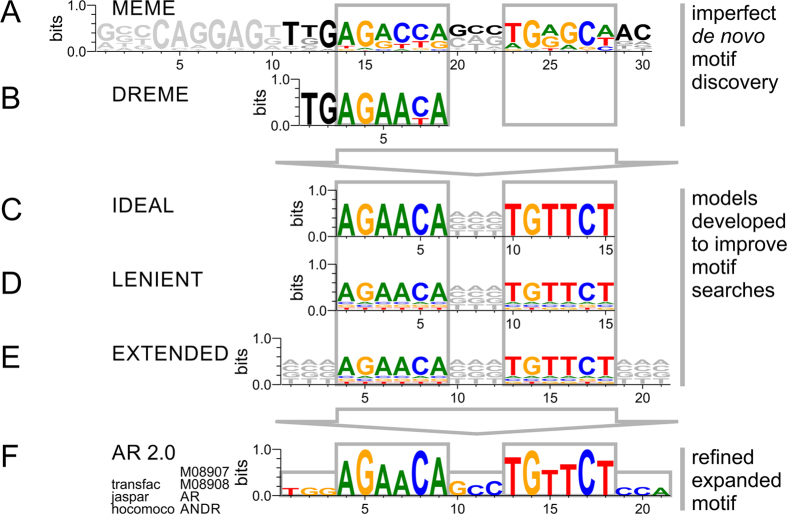
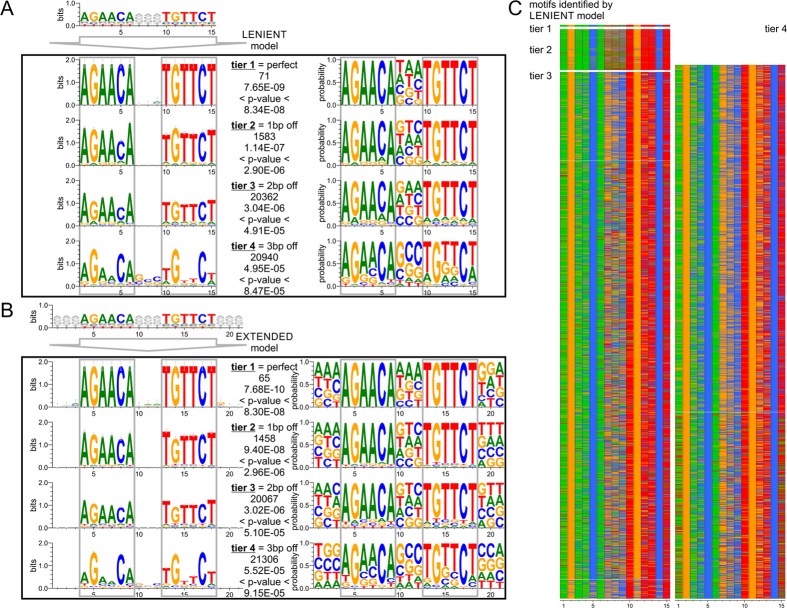
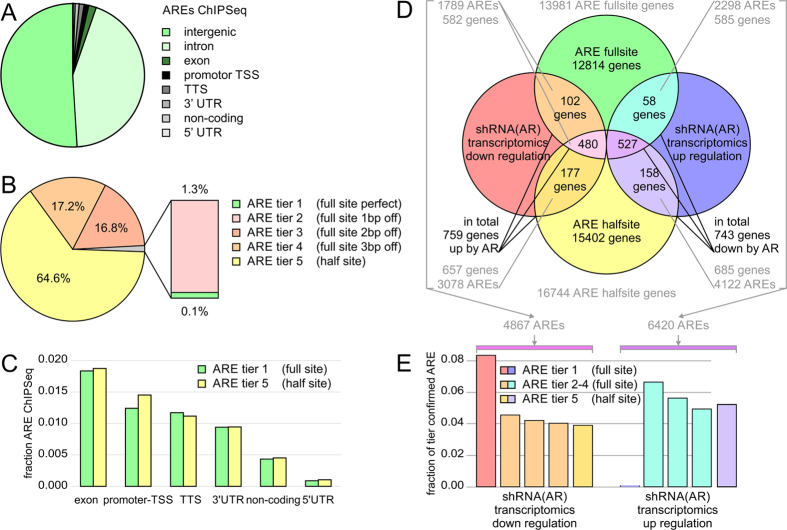
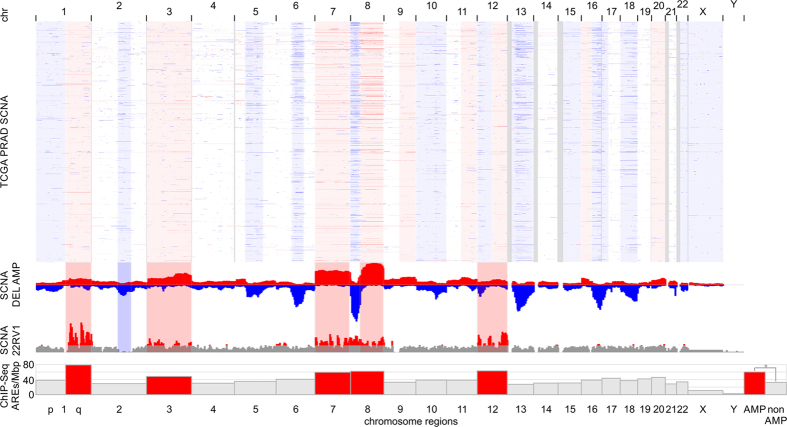
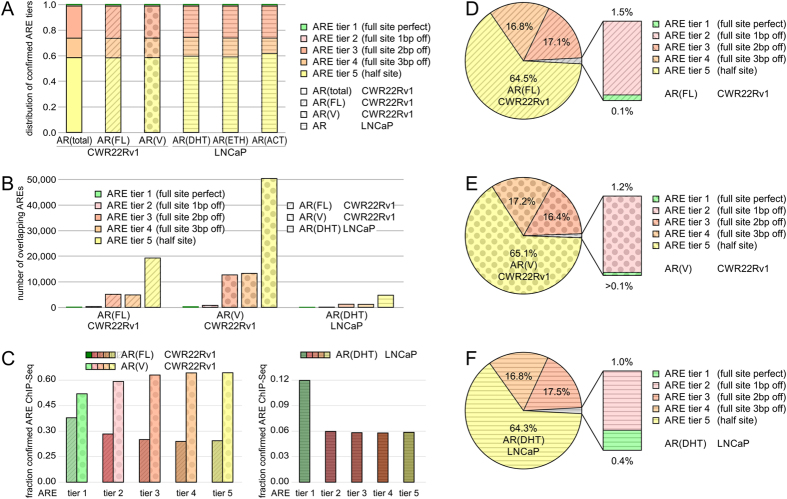
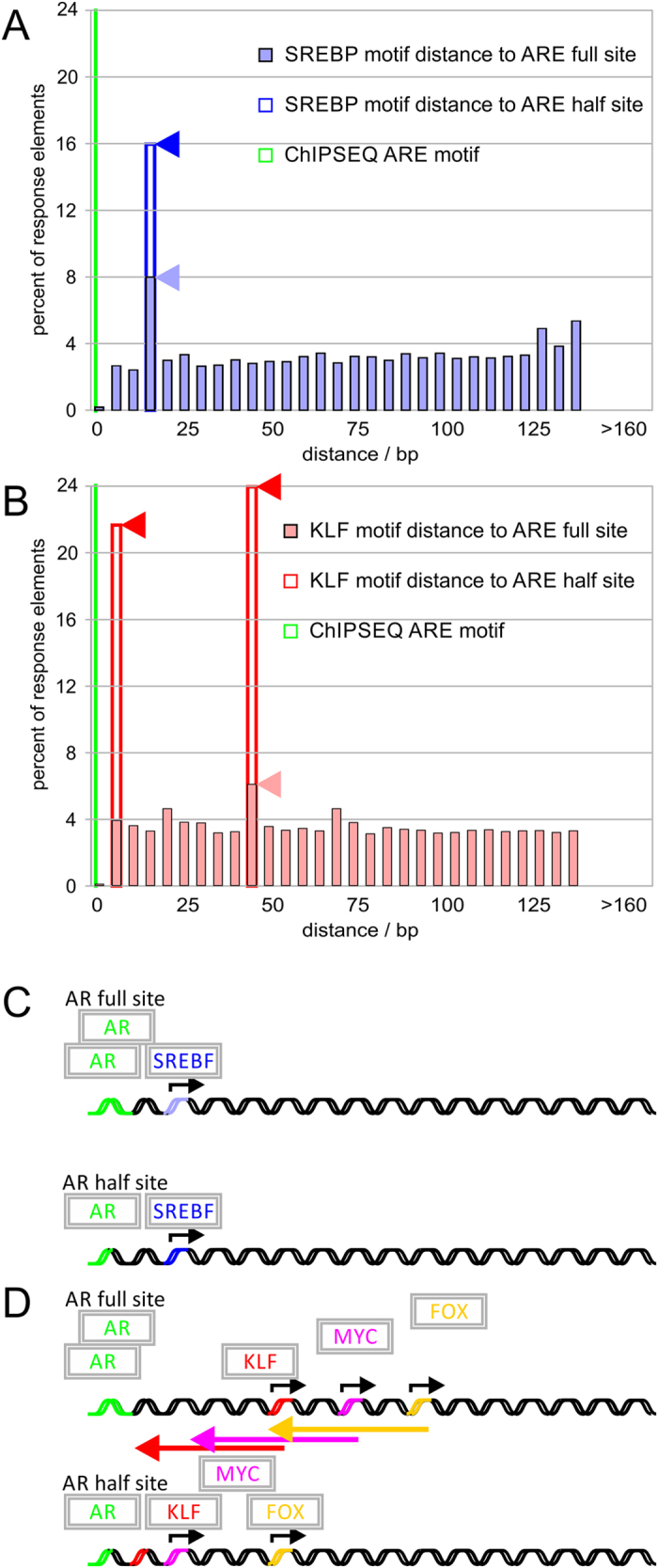
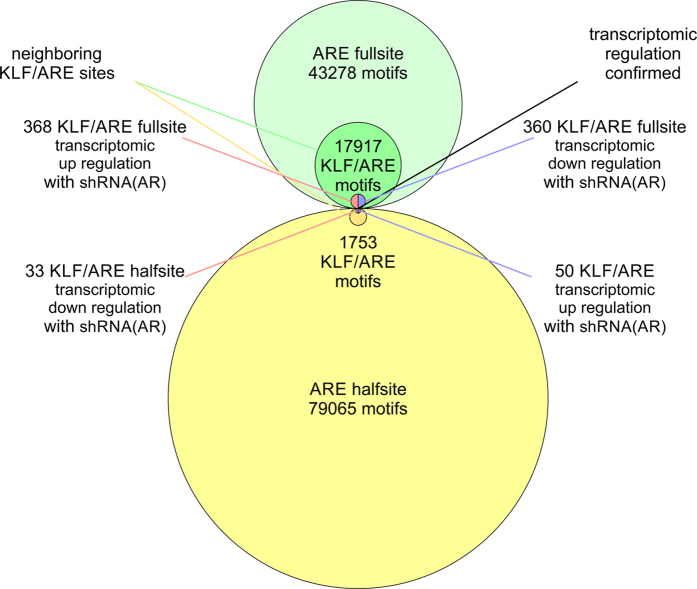
Sequence motifs are short, recurring patterns in DNA that can mediate sequence-specific binding for proteins such as transcription factors or DNA modifying enzymes. The androgen response element (ARE) is a palindromic, dihexameric motif present in promoters or enhancers of genes targeted by the androgen receptor (AR). Using chromatin immunoprecipitation sequencing (ChIP-Seq) we refined AR-binding and AREs at a genome-scale in androgen-insensitive and androgen-responsive prostate cancer cell lines. Model-based searches identified more than 120,000 ChIP-Seq motifs allowing for expansion and refinement of the ARE. We classified AREs according to their degeneracy and their transcriptional involvement. Additionally, we quantified ARE utilization in response to somatic copy number amplifications, AR splice-variants, and steroid treatment. Although imperfect AREs make up 99.9% of the motifs, the degree of degeneracy correlates negatively with validated transcriptional outcome. Weaker AREs, particularly ARE half sites, benefit from neighboring motifs or cooperating transcription factors in regulating gene expression. Taken together, ARE full sites generate a reliable transcriptional outcome in AR positive cells, despite their low genome-wide abundance. In contrast, the transcriptional influence of ARE half sites can be modulated by cooperating factors.
Overview
The claims and statistics of this paper haven’t been checked yet.
Free: it reads the open-access text and checks the first 5 claims that cite a source we can check. Create a free account to check every claim.
Integrity signals
Registry
Cites
Statistics
Figures
Verification
Claims the paper makes
The claims and statistics of this paper haven’t been checked yet.
Free: it reads the open-access text and checks the first 5 claims that cite a source we can check. Create a free account to check every claim.
Claims other papers make about this one
Each is checked against this paper’s own text: does it say what the citing paper says it does?
In the citing paper
“AR has evolved in a manner that allows it to tolerate levels of sequence degeneracy for proper development, with this enhanced flexibility conferred through a plastic dimer interface and an extended hinge, both serving as regulatory mechanisms that allow AR to bind primarily half sites and other degenerate sequences in vivo”
From Allosteric interactions prime androgen receptor dimerization and activation (2022) · cites this paper as Wilson et al., 2016
Self-check
Percentages, sums and reported differences re-computed from the paper’s own numbers.
The self-check needs the paper’s full text.
Citations
Cites
Controlling the False Discovery Rate: A Practical and Powerful Approach to Multiple Testing
Benjamini, Y., & Hochberg, Y. (1995) · Journal of the Royal Statistical Society Series B: Statistical Methodology · doi:10.1111/j.2517-6161.1995.tb02031.x · Cited by 109,482 · cited 1×
“Raw p-values were corrected for multiple testing using the false discovery rate controlling procedure of Benjamini and Hochberg, and adjusted p-values below 0.05 were considered significant 49 .”
InfluentialBEDTools: a flexible suite of utilities for comparing genomic features
Quinlan, A. R., & Hall, I. M. (2010) · Bioinformatics · doi:10.1093/bioinformatics/btq033 · Cited by 27,437
Ultrafast and memory-efficient alignment of short DNA sequences to the human genome.
Langmead, B., Trapnell, C., Pop, M., & Salzberg, S. L. (2009) · Genome Biology · doi:10.1186/gb-2009-10-3-r25 · Cited by 21,849 · cited 1×
“Sequenced regions were aligned to the reference human genome 19 using the Bowtie alignment program that utilizes an extended Burrows-Wheeler indexing for an ultrafast memory efficient alignment 31 .”
Model-based Analysis of ChIP-Seq (MACS)
Zhang, Y., Liu, T., Meyer, C. A., Eeckhoute, J., Johnson, D. S., Bernstein, B. E., Nusbaum, C., Myers, R. M., Brown, M., Li, W., et al. (2008) · Genome Biology · doi:10.1186/gb-2008-9-9-r137 · Cited by 18,386 · cited 1×
“Peak calling utilized a model-based analysis of ChIP-Seq (MACS) algorithm 32,33 .”
Robinson, J. T., Thorvaldsdóttir, H., Winckler, W., Guttman, M., Lander, E. S., Getz, G., & Mesirov, J. P. (2011) · Nature Biotechnology · doi:10.1038/nbt.1754 · Cited by 15,390 · cited 1×
“Data visualization was carried out using the integrative genomics viewer 37 .”
Siegel, R., Ma, J., Zou, Z., & Jemal, A. (2014) · CA: A Cancer Journal for Clinicians · doi:10.3322/caac.21208 · Cited by 11,499
The Human Genome Browser at UCSC
Kent, W. J., Sugnet, C. W., Furey, T. S., Roskin, K. M., Pringle, T. H., Zahler, A. M., & Haussler, A. D. (2002) · Genome Research · doi:10.1101/gr.229102 · Cited by 10,400 · cited 1×
“ChIPseek also employs scripts from BEDtools 35 using a genome binning algorithm used by the UCSC genome browser to sort genomic regions into groups along the length of chromosome 36 .”
Fitting a mixture model by expectation maximization to discover motifs in biopolymers.
Bailey, T. L., & Elkan, C. (1994) · PubMed · Cited by 5,806
Signet-Ring Cell Carcinoma of the Colon: A Case Report and Review of the Literature
Park, P. Y., Goldin, T., Chang, J., Markman, M., & Kundranda, M. N. (2015) · Case Reports in Oncology · doi:10.1159/000441772 · Cited by 5,273
Bailey, T. L., Johnson, J., Grant, C. E., & Noble, W. S. (2015) · Nucleic Acids Research · doi:10.1093/nar/gkv416 · Cited by 5,269
Cited by
Items 101–142 of 142
Androgens modulate endometrial function
Yamagata, K., Mizuno, Y., Mizuno, Y., Tamaru, S., & Kajihara, T. (2025) · Medical Molecular Morphology · doi:10.1007/s00795-025-00430-6 · Cited by 4
“The target genes whose expression is regulated by androgen signaling can be identified mostly by the chromatin-immune precipitation method [17–19].”
Ghione, C., & Dean, M. D. (2025) · Genome Biology and Evolution · doi:10.1093/gbe/evaf068 · Cited by 3
“The proximity over which AREs and EREs can affect gene expression is a topic of debate, but AREs have been shown to influence genes on the order of 1,000 kb away (Wilson et al. 2016).”
Otani, Y., Ichii, O., Masum, M. A., Namba, T., Nakamura, T., & Kon, Y. (2021) · Experimental Biology and Medicine · doi:10.1177/1535370221996010 · Cited by 3
“After androgens bind to AR, androgen/ AR (A/AR) complexes translocate to the nucleus and function as transcription factors by binding to AREs specifically.(28,38) Importantly, the involvement of A/AR signaling in CD44 expression has been suggested in some epithelial tumors.”
BackgroundAllele-specific binding (ASB) analyzer for annotation of allele-specific binding SNPs
Li, Y., Zhang, X.-O., Liu, Y., & Lu, A. (2023) · BMC Bioinformatics · doi:10.1186/s12859-023-05604-6 · Cited by 3
“…can be translated to applications on well-established HOCOMOCO [37] TF motifs, as in the case of the Nuclear Receptor Subfamily 2 Group F Member 1 (NR2F1), where the ASB sites follow sequence-specific binding for proteins like the transcription factors and predominantly occurs at key position [39].”
MethodDecoding the Epigenetics and Chromatin Loop Dynamics of Androgen Receptor-Mediated TranscriptionPreprint
Altıntaş, U. B., Seo, J.-H., Giambartolomei, C., Özturan, D., Fortunato, B. J., Nelson, G. M., Goldman, S. R., Adelman, K., Hach, F., Freedman, M. L., et al. (2023) · bioRxiv (Cold Spring Harbor Laboratory) · doi:10.1101/2023.12.22.573134 · Cited by 3
Filipp, F. V. (2018) · RNA technologies · doi:10.1007/978-3-319-92967-5_7 · Cited by 2
Self-citationAndrogen signaling via sympathetic neurons regulates allergic pulmonary inflammation
Tu, X., Chen, H., Ma, X., Donovan, C., & Yang, J. H. (2026) · Science Immunology · doi:10.1126/sciimmunol.aed0186 · Cited by 2
Anderson, A. P., & Jones, A. G. (2023) · Evolution · doi:10.1093/evolut/qpad181 · Cited by 2
RetractedMeakin, A. S., Smith, M., Morrison, J. L., Roberts, C. T., Lappas, M., Ellery, S. J., Holland, O. J., Perkins, A. V., McCracken, S. A., Flenady, V., et al. (2024) · International Journal of Molecular Sciences · doi:10.3390/ijms25031688 · Cited by 2
“Indeed, different AR protein variants can initiate transcription through an interaction with the cis -regulatory element (androgen response element (ARE)) associated with the AR [10].”
BackgroundMethodInfluentialLisberg, A. E., Liu, Y., & Merry, D. E. (2024) · Journal of Biological Chemistry · doi:10.1016/j.jbc.2024.107246 · Cited by 2
Fernandes, R. C., Greenland, K. K., Campbell, M. J., & Bevan, C. L. (2026) · Endocrine Related Cancer · doi:10.1530/erc-25-0529 · Cited by 1
Cho, S.-B. (2022) · Processes · doi:10.3390/pr10020387 · Cited by 1
Zhang, D., Su, M., Tang, R., Luo, M., Jiang, T., & Chen, R. (2022) · F&S Science · doi:10.1016/j.xfss.2022.02.007 · Cited by 1
Brenig, B., Steingräber, L., Shan, S., Xu, F., Hirschfeld, M., Andag, R., Spengeler, M., Dietschi, E., Mischke, R. H., & Leeb, T. (2018) · bioRxiv (Cold Spring Harbor Laboratory) · doi:10.1101/486373 · Cited by 1
Han, H. (2018) · Corpus Université Laval (Université Laval)
Dissecting hormonal and transient effects in Shankopathies associated with autism spectrum disorder
Eltokhi, A. (2020) · heiDOK (Heidelberg University) · doi:10.11588/heidok.00027223
Sang, X. (2019) · Corpus Université Laval (Université Laval)
Joseph, S., DiVall, S. A., & Wu, S. (2022) · bioRxiv (Cold Spring Harbor Laboratory) · doi:10.1101/2021.12.31.474680
“The DEG between WTDHT/WT were compared to genes containing full and partial ARE (tandem repeats of two hexamers) sites as identified by CHIP-sequencing (10).”
MethodIdentification of molecular genetic causes of bull infertility
Shan, S. (2021) · eDiss (Georg-August-Universität Göttingen) · doi:10.53846/goediss-8879
Tereshchenko, Y. (2024) · eDiss (Georg-August-Universität Göttingen) · doi:10.53846/goediss-10407
Structural characterization of complexes of Intrinsically Disordered Proteins
Mészáros, A. (2024) · Eötvös Loránd Tudományegyetem · doi:10.15476/elte.2024.142
Young, J. I., Varma, A., Gomez, L., Schmidt, M. A., Kunkle, B. W., Wang, L. H.-C., & Martin, E. R. (2025) · bioRxiv (Cold Spring Harbor Laboratory) · doi:10.1101/2025.06.25.661596
“To this end, we compared the overlap of genes that we identified as sex-specific and sex-differential with the genes identified as targeted by either estrogen receptor alpha [40] or by androgen receptor [41] (Table S8).”
Success of immunotherapy stimulates future pigment cell and melanoma research
Filipp, F. V. (2018) · The Conversation · doi:10.64628/aai.kgwsfqa69
Self-citationSure, cancer mutates, but it has other ways to resist treatment
Filipp, F. V. (2018) · The Conversation · doi:10.64628/aai.4s6d3chj4
Self-citationEffects of Hormones and Load on Murine Trabecular and Cortical Bone Turnover
Williamson, A. N. (2024) · Sheffield Hallam University · doi:10.7190/shu-thesis-00727
Inkster, A. M., Yuan, V., Konwar, C., Matthews, A., Brown, C. J., & Robinson, W. P. (2021) · Figshare · doi:10.6084/m9.figshare.14691937
Li, Y., Zhang, X.-O., Liu, Y., & Lu, A. (2024) · Figshare · doi:10.6084/m9.figshare.26651355
Additional file 4 of Integrated analysis of robust sex-biased gene signatures in human brain
Wapeesittipan, P., & Joshi, A. (2024) · Figshare · doi:10.6084/m9.figshare.26591486
Additional file 3 of Integrated analysis of robust sex-biased gene signatures in human brain
Wapeesittipan, P., & Joshi, A. (2024) · Figshare · doi:10.6084/m9.figshare.26591483
Additional file 1 of Integrated analysis of robust sex-biased gene signatures in human brain
Wapeesittipan, P., & Joshi, A. (2024) · Figshare · doi:10.6084/m9.figshare.26591477
Li, Y., Zhang, X.-O., Liu, Y., & Lu, A. (2024) · Figshare · doi:10.6084/m9.figshare.26651358
Additional file 2 of Integrated analysis of robust sex-biased gene signatures in human brain
Wapeesittipan, P., & Joshi, A. (2024) · Figshare · doi:10.6084/m9.figshare.26591480
Einfluss von Enzalutamid auf Expression und Turnover des Androgenrezeptors
Oster, M. A. (2025) · Qucosa (Saxon State and University Library Dresden)
Grimes, T. F., Pope, J., Stenning, J., Smith, T. E., Kent, D. G., Baker, S. C., Brackenbury, W. J., Willems, L. I., & Holding, A. N. (2026) · Biochemical Journal · doi:10.1042/bcj20253216
“For instance, Wilson et al. [431] utilised ChIP-seq to identify the androgen response element (ARE) in prostate cancer cell lines.”
Novel co-targets to improve androgen receptor inhibition in prostate cancer
Hinneh, J. A. (2023) · Adelaide Research & Scholarship (AR&S) (University of Adelaide)
Calcium Channels in Prostate Cancer Drug Resistance
Puthooru, D. K. (2025) · theses.fr (ABES) · doi:10.70675/2f003df4z6fcfz4df2za864z573fbb8c502a
ANDROGENIC REGULATION OF SEX DIFFERENCES IN ADAPTATIONS TO AGING AND EXERCISE IN RATS
Barsky, S. T. (2024) · TSpace (University of Toronto)
Zigdon, I., Shoham, A., Mindel, V., Manadre, W., Jan, D., Krupkin, B., Har-Shai, D. Y., Antebi, Y. E., & Barkai, N. (2026) · Genome Research · doi:10.1101/gr.280896.125
“…of at least one SRinvariouscelllines(Jonatet al.1990;Herrlich2001; Reddyet al. 2009; Biddie et al. 2011; Clarke and Graham 2012; Mazur et al. 2015; Wilson et al. 2016; Dinh et al. 2019; Ogara et al. 2019; Paakinaho et al. 2019; Garcia et al. 2021; Grbesa et al. 2021; Johnson et al. 2021; Wissink…”
Sex Steroid Hormone Regulation of T-Cell Function and Antitumor Immunity
Heard, A. D., Huynh, R. T., Hagan, C. R., & Moran, A. E. (2026) · Clinical Cancer Research · doi:10.1158/1078-0432.ccr-25-4972
MALAT1 is required for estradiol to act as a mitogen in hormone receptor-positive breast cancerPreprint
Martino, S. D., Aiello, A., Barbi, V., Cis, L., Pecci, V., Franco, A., Pompa, M., Borsa, M., Benvenuto, R., Santoro, A., et al. (2026) · Research Square · doi:10.21203/rs.3.rs-11243326/v1
FAIRsharing record for: HOmo sapiens transcription factor COmprehensive MOdel COllection
FAIRsharing Team, & Makeev, V. (2015) · FAIRsharing.org · doi:10.25504/fairsharing.c1bjep
Dodina, M., Pavlova, P., Kuzkokova, P., Krasnyi, A., Shtil, A., Ivanov, R. A., & Minskaia, E. (2026) · International Journal of Molecular Sciences · doi:10.3390/ijms27219855
Metadata
- Authors
- Wilson, S., Qi, J., & Filipp, F. V.
- Affiliations
- University of California, Merced (US)
- University of Maryland, Baltimore (US)
- Corresponding author
- Filipp, Fabian V.
- Venue
- Scientific Reports
- Published
- 2016-09-14
- Volume
- 6
- Issue
- 1
- Pages
- 32611-32611
- ISSN
- 2045-2322 (ISSN-L)
- PMC
- PMC5021938
- OpenAlex
- W2518980159
- Cited by
- 126
- References
- 87
- Citations by year
- 2026: 3 · 2025: 10 · 2024: 19 · 2023: 13 · 2022: 15 · 2021: 17 · 2020: 14 · 2019: 14 · 2018: 12 · 2017: 9
- FWCI
- 10.43
- Type
- journal article
- Language
- en
- Open access
- gold
- doi.org
- Licence
- cc-by
- creativecommons.org/licenses/by/4.0 (tdm)
- creativecommons.org/licenses/by/4.0 (vor)
- Locations
- Scientific Reports (publishedVersion, cc-by)
- PubMed Central (publishedVersion, cc-by)
- PubMed (publishedVersion)
- Funders
- Cancer Research Coordinating Committee
- Health Systems Research Institute
- National Institutes of Health (CA154887, CA154888)
- University of California Merced
- National Cancer Institute (R00CA154888, R00CA154887, K99CA154888, R21CA176114, CA-154887, CA154888, CA176114, K99CA154887)
- Topics
- Life Sciences › Biochemistry, Genetics and Molecular Biology › Cancer Research › Prostate Cancer Treatment and Research
- Life Sciences › Biochemistry, Genetics and Molecular Biology › Molecular Biology › Genomics and Chromatin Dynamics
- Life Sciences › Biochemistry, Genetics and Molecular Biology › Molecular Biology › Chromatin Remodeling and Cancer
- Keywords
- androgen response element, androgen receptor, prostate cancer, transcription factor binding motifs, androgen-insensitive prostate cancer, copy number amplification, androgen receptor splice variants, corticosteroid therapy, gene expression regulation
- MeSH terms
- Androgens, Binding Sites, DNA-Binding Proteins, Humans, Male, Neoplasm Recurrence, Local, Promoter Regions, Genetic, Prostatic Neoplasms, Protein Binding, Receptors, Androgen, Response Elements, Cell Line, Tumor, Chromatin Immunoprecipitation, Nucleotide Motifs
About these checks
Registry, retraction, Cites and statistics results are computed, not judged, with one exception: a printed reference that no index lists is read once by a model before it counts as a citation error. Claims are extracted by a model and kept only when their quote appears verbatim in the text; each cited source is then checked, with a model’s help, for whether it says what the claim relies on. Those verdicts can be wrong — read the claim’s quote and the cited source before relying on one.
Statistics and arithmetic are recomputed, not judged.
Confidence bands are shown only for fields calibrated on our annotated test set. None is calibrated yet, so no band is shown.
What counts as a claim ›How we measure confidence ›How we check this ›
Are you an author, or do you see a problem with this page? Request a review
Data sources
Bibliographic data: Semantic Scholar, OpenAlex, Crossref.
Contains information from the Semantic Scholar Academic Graph Datasets, made available under the ODC Attribution License (ODC-BY 1.0).
Semantic Scholar’s data is described in: Kinney, R., et al. (2023). The Semantic Scholar Open Data Platform. arXiv:2301.10140.
