

Refinement of the androgen response element based on ChIP-Seq in androgen-insensitive and androgen-responsive prostate cancer cell lines
Open accessThe DOI matches its Crossref record; 87 of the 87 references it cites were found in a registry or an index.
Abstract
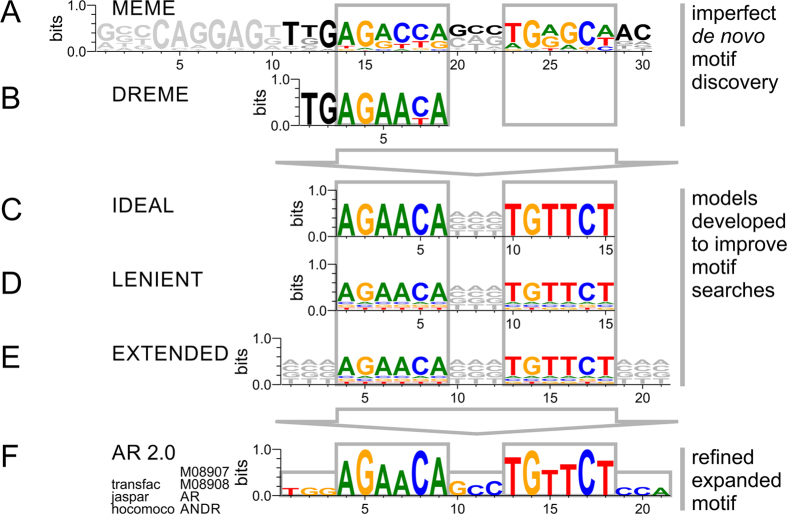
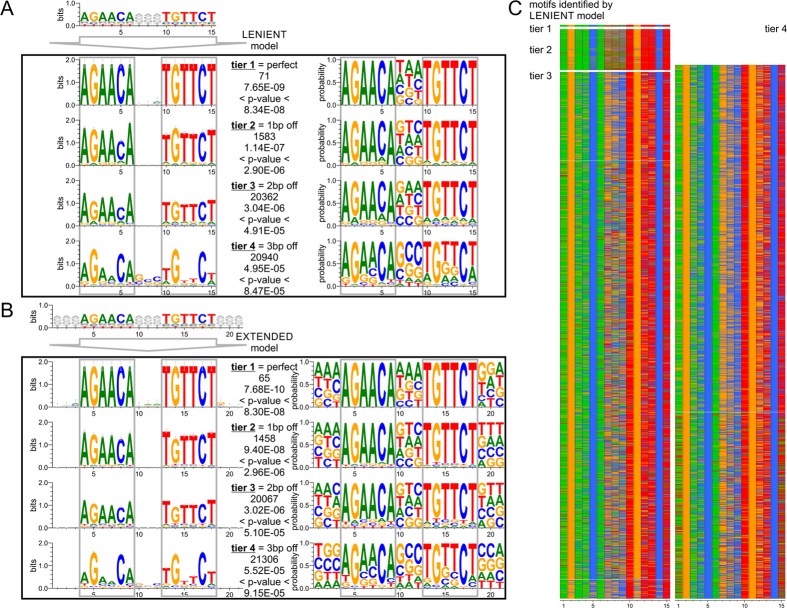
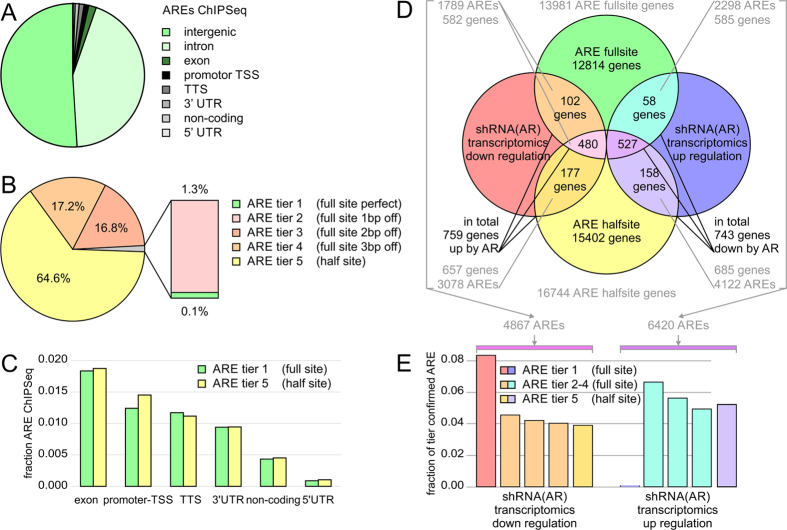
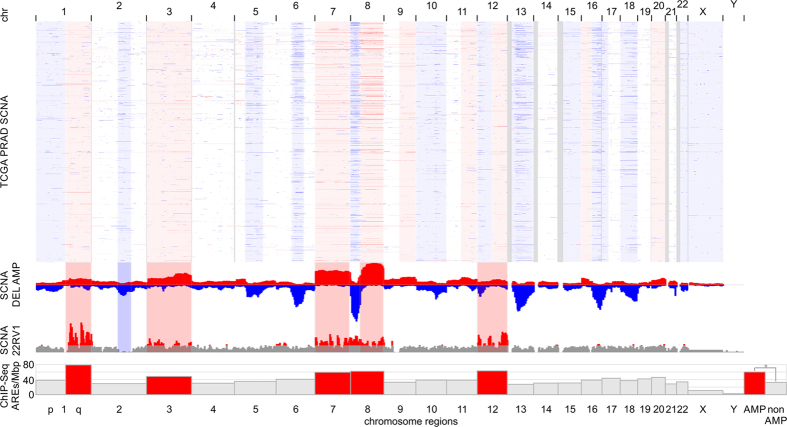
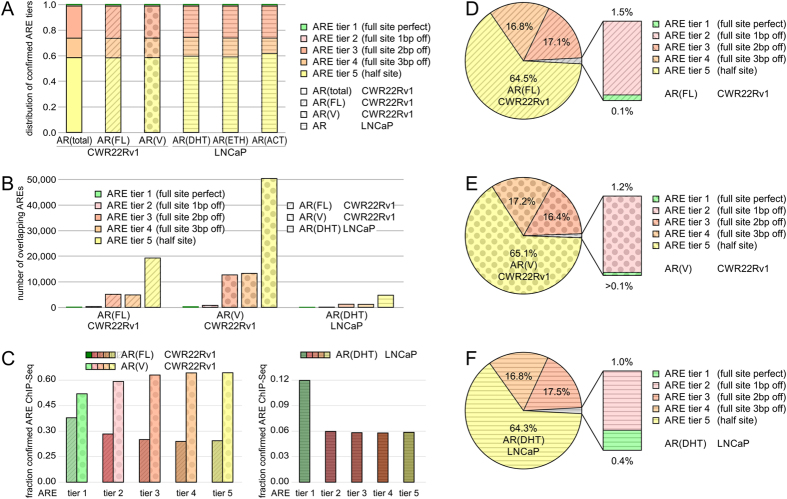
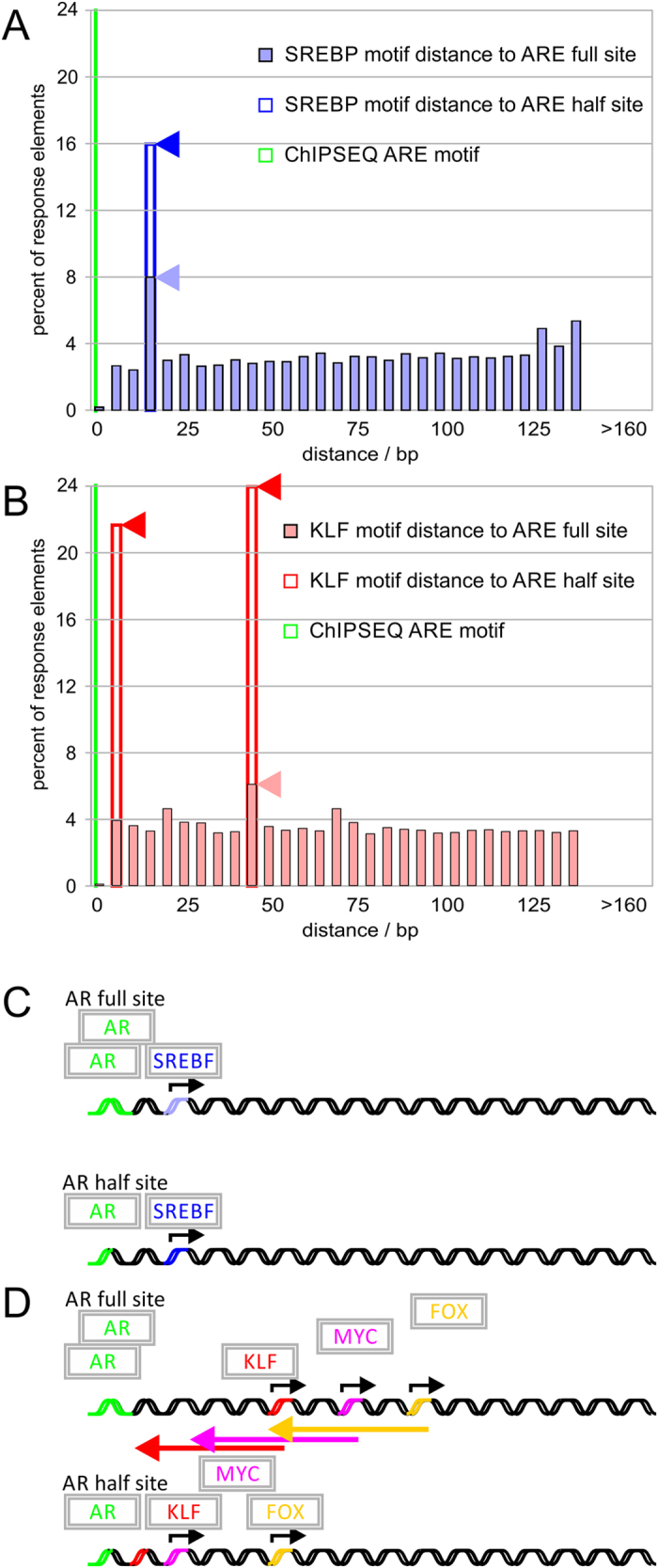
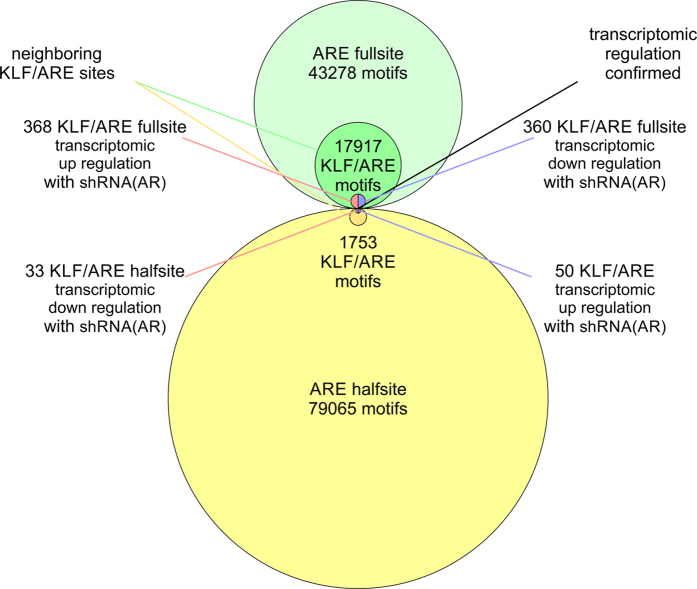
Sequence motifs are short, recurring patterns in DNA that can mediate sequence-specific binding for proteins such as transcription factors or DNA modifying enzymes. The androgen response element (ARE) is a palindromic, dihexameric motif present in promoters or enhancers of genes targeted by the androgen receptor (AR). Using chromatin immunoprecipitation sequencing (ChIP-Seq) we refined AR-binding and AREs at a genome-scale in androgen-insensitive and androgen-responsive prostate cancer cell lines. Model-based searches identified more than 120,000 ChIP-Seq motifs allowing for expansion and refinement of the ARE. We classified AREs according to their degeneracy and their transcriptional involvement. Additionally, we quantified ARE utilization in response to somatic copy number amplifications, AR splice-variants, and steroid treatment. Although imperfect AREs make up 99.9% of the motifs, the degree of degeneracy correlates negatively with validated transcriptional outcome. Weaker AREs, particularly ARE half sites, benefit from neighboring motifs or cooperating transcription factors in regulating gene expression. Taken together, ARE full sites generate a reliable transcriptional outcome in AR positive cells, despite their low genome-wide abundance. In contrast, the transcriptional influence of ARE half sites can be modulated by cooperating factors.
Overview
The claims and statistics of this paper haven’t been checked yet.
Free: it reads the open-access text and checks the first 5 claims that cite a source we can check. Create a free account to check every claim.
Integrity signals
Registry
Cites
Statistics
Figures
Verification
Claims the paper makes
The claims and statistics of this paper haven’t been checked yet.
Free: it reads the open-access text and checks the first 5 claims that cite a source we can check. Create a free account to check every claim.
Claims other papers make about this one
Each is checked against this paper’s own text: does it say what the citing paper says it does?
In the citing paper
“AR has evolved in a manner that allows it to tolerate levels of sequence degeneracy for proper development, with this enhanced flexibility conferred through a plastic dimer interface and an extended hinge, both serving as regulatory mechanisms that allow AR to bind primarily half sites and other degenerate sequences in vivo”
From Allosteric interactions prime androgen receptor dimerization and activation (2022) · cites this paper as Wilson et al., 2016
Self-check
Percentages, sums and reported differences re-computed from the paper’s own numbers.
The self-check needs the paper’s full text.
Citations
Cites
Controlling the False Discovery Rate: A Practical and Powerful Approach to Multiple Testing
Benjamini, Y., & Hochberg, Y. (1995) · Journal of the Royal Statistical Society Series B: Statistical Methodology · doi:10.1111/j.2517-6161.1995.tb02031.x · Cited by 109,482 · cited 1×
“Raw p-values were corrected for multiple testing using the false discovery rate controlling procedure of Benjamini and Hochberg, and adjusted p-values below 0.05 were considered significant 49 .”
InfluentialBEDTools: a flexible suite of utilities for comparing genomic features
Quinlan, A. R., & Hall, I. M. (2010) · Bioinformatics · doi:10.1093/bioinformatics/btq033 · Cited by 27,437
Ultrafast and memory-efficient alignment of short DNA sequences to the human genome.
Langmead, B., Trapnell, C., Pop, M., & Salzberg, S. L. (2009) · Genome Biology · doi:10.1186/gb-2009-10-3-r25 · Cited by 21,849 · cited 1×
“Sequenced regions were aligned to the reference human genome 19 using the Bowtie alignment program that utilizes an extended Burrows-Wheeler indexing for an ultrafast memory efficient alignment 31 .”
Model-based Analysis of ChIP-Seq (MACS)
Zhang, Y., Liu, T., Meyer, C. A., Eeckhoute, J., Johnson, D. S., Bernstein, B. E., Nusbaum, C., Myers, R. M., Brown, M., Li, W., et al. (2008) · Genome Biology · doi:10.1186/gb-2008-9-9-r137 · Cited by 18,386 · cited 1×
“Peak calling utilized a model-based analysis of ChIP-Seq (MACS) algorithm 32,33 .”
Robinson, J. T., Thorvaldsdóttir, H., Winckler, W., Guttman, M., Lander, E. S., Getz, G., & Mesirov, J. P. (2011) · Nature Biotechnology · doi:10.1038/nbt.1754 · Cited by 15,390 · cited 1×
“Data visualization was carried out using the integrative genomics viewer 37 .”
Siegel, R., Ma, J., Zou, Z., & Jemal, A. (2014) · CA: A Cancer Journal for Clinicians · doi:10.3322/caac.21208 · Cited by 11,499
The Human Genome Browser at UCSC
Kent, W. J., Sugnet, C. W., Furey, T. S., Roskin, K. M., Pringle, T. H., Zahler, A. M., & Haussler, A. D. (2002) · Genome Research · doi:10.1101/gr.229102 · Cited by 10,400 · cited 1×
“ChIPseek also employs scripts from BEDtools 35 using a genome binning algorithm used by the UCSC genome browser to sort genomic regions into groups along the length of chromosome 36 .”
Fitting a mixture model by expectation maximization to discover motifs in biopolymers.
Bailey, T. L., & Elkan, C. (1994) · PubMed · Cited by 5,806
Signet-Ring Cell Carcinoma of the Colon: A Case Report and Review of the Literature
Park, P. Y., Goldin, T., Chang, J., Markman, M., & Kundranda, M. N. (2015) · Case Reports in Oncology · doi:10.1159/000441772 · Cited by 5,273
Bailey, T. L., Johnson, J., Grant, C. E., & Noble, W. S. (2015) · Nucleic Acids Research · doi:10.1093/nar/gkv416 · Cited by 5,269
Cited by
Kulakovskiy, I. V., Vorontsov, I. E., Yevshin, I. S., Sharipov, R. N., Fedorova, A. D., Rumynskiy, E. I., Medvedeva, Y. A., Magana-Mora, A., Bajic, V. B., Papatsenko, D. A., et al. (2018) · Nucleic Acids Research · doi:10.1093/nar/gkx1106 · Cited by 917
“A few additional models, e.g. ANDR (androgen receptor) binding model submitted for consideration from (27), were also considered, yet none of them succeeded in the benchmark except for the models that we specifically designed to describe binding sites subtypes, e.g. genuine binding sites of NANOG…”
BackgroundPungsrinont, T., Kallenbach, J., & Baniahmad, A. (2021) · International Journal of Molecular Sciences · doi:10.3390/ijms222011088 · Cited by 210
Cistromic Reprogramming of the Diurnal Glucocorticoid Hormone Response by High-Fat Diet
Quagliarini, F., Mir, A. A., Balazs, K., Wierer, M., Dyar, K. A., Jouffe, C., Makris, K., Hawe, J., Heinig, M., Filipp, F. V., et al. (2019) · Molecular Cell · doi:10.1016/j.molcel.2019.10.007 · Cited by 116
“8 and a motif analysis based on position site specific matrix models to quantify the utilization of specific hormone response elements (Wilson et al., 2017; Wilson et al., 2016).”
BackgroundSelf-citationThe Genomic Impact of DNA CpG Methylation on Gene Expression; Relationships in Prostate Cancer
Long, M. D., Smiraglia, D. J., & Campbell, M. J. (2017) · Biomolecules · doi:10.3390/biom7010015 · Cited by 123
ARe we there yet? Understanding androgen receptor signaling in breast cancer
Michmerhuizen, A. R., Spratt, D. E., Pierce, L. J., & Speers, C. W. (2020) · npj Breast Cancer · doi:10.1038/s41523-020-00190-9 · Cited by 118
Epigenetics and Metabolism in Health and Disease
Tzika, E., Dreker, T., & Imhof, A. (2018) · Frontiers in Genetics · doi:10.3389/fgene.2018.00361 · Cited by 116
Wilson, S. P., Fan, L., Sahgal, N., Qi, J., & Filipp, F. V. (2017) · Oncotarget · doi:10.18632/oncotarget.15681 · Cited by 101
“Sequencespecific matrix models are further used to analyze the next generation sequencing data for motif enrichment and potential coactivators [13, 71].”
BackgroundSelf-citationTRPV6 as A Target for Cancer Therapy
Stewart, J. M. (2019) · Journal of Cancer · doi:10.7150/jca.31640 · Cited by 94
Kalogirou, C., Linxweiler, J., Schmucker, P., Snaebjornsson, M. T., Schmitz, W., Wach, S., Krebs, M., Hartmann, E., Puhr, M., Müller, A., et al. (2021) · Nature Communications · doi:10.1038/s41467-021-25325-9 · Cited by 86
Testosterone and Adult Neurogenesis
Spritzer, M. D., & Roy, E. A. (2020) · Biomolecules · doi:10.3390/biom10020225 · Cited by 84
“An estrogen-response element has been well characterized within the Bdnf gene [182], whereas androgen receptor binding sites within the Bdnf gene remain speculative [183].”
BackgroundCalcium selective channel TRPV6: Structure, function, and implications in health and disease
Khattar, V., Wang, L., & Peng, J. (2022) · Gene · doi:10.1016/j.gene.2022.146192 · Cited by 78
Bleach, R., & McIlroy, M. (2018) · Frontiers in Endocrinology · doi:10.3389/fendo.2018.00594 · Cited by 75
“Furthermore, ARE binding can be influenced by cooperating factors and adjacent motifs, particularly in the case of ARE half sites (79).”
BackgroundBai, J., Jin, B., Ma, J., Liu, T., Yang, C., Chong, Y., Wang, X., He, D., & Guo, P. (2020) · Cancer Letters · doi:10.1016/j.canlet.2020.10.031 · Cited by 70
Androgen receptor-binding sites are highly mutated in prostate cancer
Morova, T., McNeill, D. R., Lallous, N., Gönen, M., Dalal, K., Wilson, D. M., Gürsoy, A., Keskin, Ö., & Lack, N. A. (2020) · Nature Communications · doi:10.1038/s41467-020-14644-y · Cited by 66
Chesner, L. N., Polesso, F., Graff, J. N., Hawley, J. E., Smith, A. K., Lundberg, A., Das, R., Shenoy, T., Sjöström, M., Zhao, F., et al. (2024) · Cancer Discovery · doi:10.1158/2159-8290.cd-24-0559 · Cited by 65
Examining Sex Differences in the Human Placental Transcriptome During the First Fetal Androgen Peak
Braun, A. E., Muench, K. L., Robinson, B. G., Wang, A., Palmer, T. D., & Winn, V. D. (2020) · Reproductive Sciences · doi:10.1007/s43032-020-00355-8 · Cited by 63
“Cross referencing the full list of DE transcripts with a genome-wide survey of androgen-responsive genes in prostate cancer lines [102] revealed some overlap.”
BackgroundProstate Cancer—Focus on Cholesterol
Škara, L., Huđek, A., Pezelj, I., Vrtarić, A., Sinčić, N., Krušlin, B., & Ulamec, M. (2021) · Cancers · doi:10.3390/cancers13184696 · Cited by 57
“CRPC can provide intra-tumoral androgen by testosterone derivatives conversion or de novo androgen synthesized from cholesterol [92].”
BackgroundAndrogen Receptor-Mediated Transcription in Prostate Cancer
Özturan, D., Morova, T., & Lack, N. A. (2022) · Cells · doi:10.3390/cells11050898 · Cited by 58
“Whole-genome AR ChIP-seq shows that only 8–30% of ARBS contain a canonical ARE, while most binding sites have a more common ARE half-motif (5′ -AGAACA-3′) [53,56,78,79,86].”
BackgroundPrecision medicine driven by cancer systems biology
Filipp, F. V. (2017) · Cancer and Metastasis Reviews · doi:10.1007/s10555-017-9662-4 · Cited by 62
“biosynthetic precursors, metabolites can also have functions in signaling and epigenetics [99, 103, 104] (Fig.”
BackgroundSelf-citationAllosteric interactions prime androgen receptor dimerization and activation
Wasmuth, E. V., Broeck, A. V., LaClair, J. R., Hoover, E. A., Lawrence, K. E., Paknejad, N., Pappas, K., Matthies, D., Wang, B., Feng, W., et al. (2022) · Molecular Cell · doi:10.1016/j.molcel.2022.03.035 · Cited by 50
“However, AR’s highly degenerate cistrome is inconsistent with a model whereby dimerization relies on canonical ARE repeats (Massie et al., 2007; Wang et al., 2007; Wilson et al., 2016).”
BackgroundInfluentialWasmuth, E. V., Hoover, E. A., Antar, A., Klinge, S., Chen, Y., & Sawyers, C. L. (2020) · Proceedings of the National Academy of Sciences · doi:10.1073/pnas.1922159117 · Cited by 50
“S1G), which have been reported to comprise the vast majority of AR binding sites in PCa cells (23, 24, 33).”
BackgroundGorodetska, I., Offermann, A., Püschel, J., Lukiyanchuk, V., Gaete, D., Kurzyukova, A., Freytag, V., Haider, M., Fjeldbo, C. S., Gaetano, S. D., et al. (2024) · Theranostics · doi:10.7150/thno.88057 · Cited by 49
“Consistent with RNAseq data, the analysis of the PLK3 gene promoter revealed putative RARA [53] and AR [54] binding elements (Figure S5F).”
A cross-cohort analysis of autosomal DNA methylation sex differences in the term placenta
Inkster, A. M., Yuan, V., Konwar, C., Matthews, A., Brown, C. J., & Robinson, W. P. (2021) · Biology of Sex Differences · doi:10.1186/s13293-021-00381-4 · Cited by 65
Androgens modulate glucocorticoid receptor activity in adipose tissue and liver
Spaanderman, D. C. E., Nixon, M., Buurstede, J. C., Sips, H. C. M., Schilperoort, M., Kuipers, E. N., Backer, E. A., Kooijman, S., Rensen, P. C. N., Homer, N. Z. M., et al. (2018) · Journal of Endocrinology · doi:10.1530/joe-18-0503 · Cited by 50
Resistance to Antiandrogens in Prostate Cancer: Is It Inevitable, Intrinsic or Induced?
Maitland, N. J. (2021) · Cancers · doi:10.3390/cancers13020327 · Cited by 50
Ahmed, J., Mészáros, A., Lázár, T., & Tompa, P. (2021) · Protein Science · doi:10.1002/pro.4100 · Cited by 46
Cox, R. M. (2019) · Molecular and Cellular Endocrinology · doi:10.1016/j.mce.2019.110668 · Cited by 44
Darolutamide antagonizes androgen signaling by blocking enhancer and super‐enhancer activation
Baumgart, S. J., Nevedomskaya, E., Lesche, R., Newman, R., Mumberg, D., & Haendler, B. (2020) · Molecular Oncology · doi:10.1002/1878-0261.12693 · Cited by 44
“Published by FEBS Press and John Wiley & Sons Ltd. sequences and cooperating DNA-binding factors to support AR binding (Toropainen et al., 2016; Wilson et al., 2016).”
BackgroundAndrogen Receptor Regulates CD44 Expression in Bladder Cancer
Sottnik, J. L., Vanderlinden, L. A., Joshi, M., Chauca-Diaz, A., Owens, C. R., Hansel, D. E., Sempeck, C., Ghosh, D., & Theodorescu, D. (2021) · Cancer Research · doi:10.1158/0008-5472.can-20-3095 · Cited by 43
“1C) similar to previous observations of AR in prostate cancer (22).”
BackgroundMethodResultInfluentialSex Hormones Regulate SHANK Expression
Berkel, S., Eltokhi, A., Fröhlich, H., Porras-Gonzalez, D., Rafiullah, R., Sprengel, R., & Rappold, G. A. (2018) · Frontiers in Molecular Neuroscience · doi:10.3389/fnmol.2018.00337 · Cited by 41
“SHANK proteins (SHANK1, SHANK2 and SHANK3) are scaffolding proteins at the postsynaptic site of excitatory synapses in the central nervous system (Kreienkamp, 2008), crucial for the formation, organization and signaling of excitatory synapses.”
BackgroundInfluentialNonalcoholic fatty liver disease in spinal and bulbar muscular atrophy
Guber, R. D., Takyar, V. K., Kokkinis, A. D., Fox, D., Alao, H., Kats, I. R., Bakar, D., Remaley, A. T., Hewitt, S. M., Kleiner, D. E., et al. (2017) · Neurology · doi:10.1212/wnl.0000000000004748 · Cited by 43
“Overall, 72% of the genes present in the array contain an androgen responsive element.(20) The gene expression pattern in SBMA was different from both normal liver controls and from those with non-SBMA NASH Figure 3 Molecular characterization of spinal and bulbar muscular atrophy (SBMA) liver samples”
BackgroundWilson, S. P., & Filipp, F. V. (2018) · npj Systems Biology and Applications · doi:10.1038/s41540-018-0061-4 · Cited by 44
Self-citationFilipp, F. V. (2017) · Briefings in Functional Genomics · doi:10.1093/bfgp/elx001 · Cited by 42
Self-citationNash, C. E., Boufaied, N., Mills, I. G., Franco, O. E., Hayward, S. W., & Thomson, A. A. (2017) · Molecular and Cellular Endocrinology · doi:10.1016/j.mce.2017.05.006 · Cited by 39
“Analysis of the binding sequences present in the AR-derived peaks showed that classical palindromic ARE sequences were very poorly represented in fibroblasts, which suggests that the AR is likely to bind to chromatin via co-factors or other transcription factors (Wilson et al., 2016).”
Zecena, H., Tveit, D. M., Wang, Z., Farhat, A. M., Panchal, P., Liu, J., Singh, S. J., Sanghera, A., Bainiwal, A., Teo, S. Y., et al. (2018) · BMC Systems Biology · doi:10.1186/s12918-018-0554-1 · Cited by 38
“Raw fasta files were mapped to human reference Genome Reference Consortium GRCh38 using Bowtie alignment with an extended BurrowsWheeler indexing for an ultrafast memory efficient alignment [23, 24].”
MethodSelf-citationShrestha, R., Chesner, L. N., Zhang, M., Zhou, S., Foye, A., Lundberg, A., Weinstein, A. S., Sjöström, M., Zhu, X., Moreno-Rodriguez, T., et al. (2024) · Cancer Research · doi:10.1158/0008-5472.can-24-0890 · Cited by 38
The Many Faces of Gene Regulation in Cancer: A Computational Oncogenomics Outlook
Lemus, E. H., Reyes-Gopar, H., Enríquez, J. E., & Ochoa, S. (2019) · Genes · doi:10.3390/genes10110865 · Cited by 35
Implication of Ceramide Kinase/C1P in Cancer Development and Progression
Camacho, L., Ouro, A., Gómez-Larrauri, A., Carracedo, A., & Gómez‐Muñoz, A. (2022) · Cancers · doi:10.3390/cancers14010227 · Cited by 33
“Through a bioinformatics analysis of human PCa transcriptomics datasets, searching for metabolic genes correlated with AR activity, we found that CERK is among the top genes repressed by the nuclear receptor [107], thus confirming results obtained using other approaches [108].”
ResultKregel, S., Bagamasbad, P., He, S., LaPensee, E. W., Raji, Y. R., Brogley, M. A., Chinnaiyan, A. M., Cieslik, M. P., & Robins, D. M. (2020) · Nucleic Acids Research · doi:10.1093/nar/gkaa178 · Cited by 32
“Most AREs vary somewhat from the canonical sequence shared with other steroid receptors (46), but a few well-characterized elements respond specifically to AR and consist of a half-site working in concert with binding sites for other factors (14,16,18,47).”
BackgroundFrequent mutation of the FOXA1 untranslated region in prostate cancer
Annala, M., Taavitsainen, S., Vandekerkhove, G. R., Bacon, J. V. W., Beja, K., Chi, K. N., Nykter, M., & Wyatt, A. W. (2018) · Communications Biology · doi:10.1038/s42003-018-0128-1 · Cited by 31
Sex-biased TGFβ signalling in pulmonary arterial hypertension
Wits, M., Becher, C., de Man, F. S., Sánchez‐Duffhues, G., & Goumans, M. (2023) · Cardiovascular Research · doi:10.1093/cvr/cvad129 · Cited by 27
Evolution of the androgen receptor: Perspectives from human health to dancing birds
Schuppe, E. R., Miles, M. C., & Fuxjager, M. J. (2019) · Molecular and Cellular Endocrinology · doi:10.1016/j.mce.2019.110577 · Cited by 29
Integrated analysis of robust sex-biased gene signatures in human brain
Wapeesittipan, P., & Joshi, A. (2023) · Biology of Sex Differences · doi:10.1186/s13293-023-00515-w · Cited by 34
“element (ERE) and motif analysis In order to determine the number of androgen (AR) and estrogen receptors (ER) in sex-biased genes, genes with full and half ARE and ERE binding sites from published studies [31, 32] were used to find an overlap genes between these receptor genes and sex-biased, brain expressed and brai…”
MethodDecoding the epigenetics and chromatin loop dynamics of androgen receptor-mediated transcription
Altıntaş, U. B., Seo, J.-H., Giambartolomei, C., Özturan, D., Fortunato, B. J., Nelson, G. M., Goldman, S. R., Adelman, K., Hach, F., Freedman, M. L., et al. (2024) · Nature Communications · doi:10.1038/s41467-024-53758-5 · Cited by 29
Chukhu, M., Dahiya, U. R., & Heemers, H. V. (2025) · Oncogene · doi:10.1038/s41388-025-03573-z · Cited by 28
Kneppers, J., Severson, T., Siefert, J. C., Schol, P. J., Joosten, S. E. P., Yu, I. P. L., Huang, C.-C. F., Morova, T., Altıntaş, U. B., Giambartolomei, C., et al. (2022) · Nature Communications · doi:10.1038/s41467-022-35135-2 · Cited by 22
Barsky, S. T., & Monks, D. A. (2025) · Biology of Sex Differences · doi:10.1186/s13293-025-00707-6 · Cited by 23
“…transcription factors, including Krüppel-like factors (KLF), forkhead box K1 (FOXK1), and sterol regulatory element binding factor (SREBF) [108], which are respectively involved in mediating gene expression related to muscle atrophy [109], cell proliferation [110], as well as lipogenesis…”
InfluentialIdentification of Androgen Receptor Modulators in a Prostate Cancer Cell Line Microarray Compendium
Rooney, J. P., Chorley, B. N., Kleinstreuer, N., & Corton, J. C. (2018) · Toxicological Sciences · doi:10.1093/toxsci/kfy187 · Cited by 23
Wen, Y., Tram, V. T. N., Chen, W., Li, C., Yeh, H., Dung, P. V. T., Jiang, K.-C., Li, H., Huang, J., Hsiao, M., et al. (2023) · Cell Death and Disease · doi:10.1038/s41419-023-05836-7 · Cited by 22
Rationale for the development of alternative forms of androgen deprivation therapy
Kumari, S., Senapati, D., & Heemers, H. V. (2017) · Endocrine Related Cancer · doi:10.1530/erc-17-0121 · Cited by 21
Mohideen-Abdul, K., Tazibt, K., Bourguet, M., Hazemann, I., Lebars, I., Takács, M., Cianférani, S., Klaholz, B. P., Moras, D., & Billas, I. M. L. (2017) · Frontiers in Endocrinology · doi:10.3389/fendo.2017.00140 · Cited by 22
Ko, M., Frankl‐Vilches, C., Bakker, A., & Gahr, M. L. (2021) · Frontiers in Neuroscience · doi:10.3389/fnins.2021.680530 · Cited by 21
“Both AR (encoded by AR) and ERs (ERα encoded by ESR1 and ERβ encoded by ESR2) are transcription factors that play important roles in the transcription of numerous genes (Bourdeau et al., 2004; Pihlajamaa et al., 2015; Takayama et al., 2007; Wilson et al., 2016).”
BackgroundAsemota, S., Effah, W., Young, K. L., Holt, J. R., Cripe, L., Ponnusamy, S., Thiyagarajan, T., Hwang, D., He, Y., McNamara, K. M., et al. (2023) · Cell Reports · doi:10.1016/j.celrep.2023.113461 · Cited by 19
“We merged the 291 differentially regulated genes in UT-105-treated tumors with androgen response element (ARE) list obtained from Wilson et al. 72 .”
Sang, X., Han, H., Poirier, D., & Lin, S. (2018) · The Journal of Steroid Biochemistry and Molecular Biology · doi:10.1016/j.jsbmb.2018.05.009 · Cited by 18
Saxena, N., Beraldi, E., Fazli, L., Somasekharan, S. P., Adomat, H. H., Zhang, F., Molokwu, C. N., Gleave, A., Nappi, L., Nguyen, K., et al. (2021) · EMBO Molecular Medicine · doi:10.15252/emmm.202013427 · Cited by 18
“2 of 19 EMBO Molecular Medicine 13: e13427 | 2021 ª 2021 The Authors ª 2021 The Authors EMBO Molecular Medicine 13: e13427 | 2021 3 of 19 analysis (Wilson et al, 2016) on LNCaP cells after R1881 treatment also predicted the presence of potential AREs in genes encoding the above subunits.”
BackgroundScholz, M. R., Horn, K., Pott, J., Wuttke, M., Kühnapfel, A., Nasr, M. K., Kirsten, H., Li, Y., Hoppmann, A., Gorski, M., et al. (2024) · Nature Communications · doi:10.1038/s41467-024-44709-1 · Cited by 20
Ryan, G. E., Bohaczuk, S. C., Cassin, J., Witham, E. A., Shojaei, S., Ho, E. V., Thackray, V. G., & Mellon, P. L. (2021) · Molecular and Cellular Endocrinology · doi:10.1016/j.mce.2021.111286 · Cited by 17
Canonical androgen response element motifs are tumor suppressive regulatory elements in the prostate
Chen, X., Augello, M. A., Liu, D., Lin, K., Hakansson, A., Sjöström, M., Khani, F., Deonarine, L. D., Liu, Y., Travascio-Green, J., et al. (2024) · Nature Communications · doi:10.1038/s41467-024-53734-z · Cited by 17
Zhang, K. J., Ramdev, R. A., Tuta, N. J., & Spritzer, M. D. (2020) · Psychoneuroendocrinology · doi:10.1016/j.psyneuen.2020.104850 · Cited by 17
“, 1995), whereas androgen receptor binding sites within the Bdnf gene remain speculative (Wilson et al., 2016).”
BackgroundEvolution of hormone-phenotype couplings and hormone-genome interactions
Cox, R. M., Hale, M. D., Wittman, T. N., Robinson, C. D., & Cox, C. L. (2022) · Hormones and Behavior · doi:10.1016/j.yhbeh.2022.105216 · Cited by 16
“AREs are short DNA sequences that typically consist of a pair of direct or inverted repeats separated by 3 variable (n) nucleotides (e.g., ARE consensus motif with inverted repeats: 5 ′ -AGAACAnnnTGTTCT-3 ′ ; ARE “ selective ” motif with direct repeats: 5 ′ -AGAACAnnnAGAACA-3 ′ ), and shorter “ half ” motifs can also…”
MethodInfluentialCoates, H. W., Chua, N. K., & Brown, A. J. (2019) · Biochimica et Biophysica Acta (BBA) - Molecular and Cell Biology of Lipids · doi:10.1016/j.bbalip.2019.08.006 · Cited by 15
Prostate cancer and bone: clinical presentation and molecular mechanisms
Wells, K. V., Krackeler, M. L., Jathal, M. K., Parikh, M., Ghosh, P., Leach, J. K., & Genetos, D. C. (2023) · Endocrine Related Cancer · doi:10.1530/erc-22-0360 · Cited by 17
Sealy, R. E., Jones, B. G., Surman, S. L., Penkert, R. R., Pelletier, S. W., Neale, G. A. M., & Hurwitz, J. L. (2019) · Vaccines · doi:10.3390/vaccines7010026 · Cited by 14
“The estrogen receptor binds a consensus palindromic motif GGTCAnnnTGACC, as does the androgen receptor (AGAACAnnnTGTTCT [58,59]).”
BackgroundAli, S., Zhang, Y., Zhou, M., Li, H., Jin, W., Zheng, L., Yu, X., Stark, J. M., Weitzel, J. N., & Shen, B. (2019) · Oncogene · doi:10.1038/s41388-019-1061-6 · Cited by 15
Sun, A., Luo, Y., Xiao, W., Zhu, Z., Yan, H., Miao, C., Zhang, W., Bai, P., Liu, C., Yang, D., et al. (2023) · Laboratory Investigation · doi:10.1016/j.labinv.2023.100148 · Cited by 13
Yu, X., Yan, S.-S., Liu, R.-J., & Zhang, Y. (2024) · International Urology and Nephrology · doi:10.1007/s11255-024-04012-w · Cited by 13
Lee, J. Y. H., Yurkovetskiy, L., Reiman, D. J., Frommer, L., Strong, Z., Chang, A., Kahaly, G. J., Khan, A. A., & Chervonsky, A. V. (2024) · Nature Communications · doi:10.1038/s41467-024-51869-7 · Cited by 15
Nicholas, T. R., Metcalf, S. A., Greulich, B. M., & Hollenhorst, P. C. (2021) · NAR Cancer · doi:10.1093/narcan/zcab033 · Cited by 12
“While 43.5% of AR binding sites are intronic (59), the exact role of AR-bound introns is under-examined and is likely context specific.”
InfluentialCamacho, L., Zabala‐Letona, A., Cortázar, A. R., Astobiza, I., Dominguez-Herrera, A., Ercilla, A., Crespo, J. R., Viera, C., Fernández‐Ruiz, S., Martinez-Gonzalez, A., et al. (2021) · Cancers · doi:10.3390/cancers13174307 · Cited by 14
“We studied two potential androgen receptor binding sites (AR sites) in the proximity of the CERK gene based on a previous report (Figure 3A) [47].”
BackgroundMartino, S. D., Iorio, E., Cencioni, C., Aiello, A., Spallotta, F., Chirico, M., Pisanu, M., Grassi, C., Pontecorvi, A., Gaetano, C., et al. (2022) · Cancers · doi:10.3390/cancers14122902 · Cited by 9
DiNatale, A., Worrede, A., Iqbal, W., Marchioli, M., Toth, A., Sjöström, M., Zhu, X., Corey, E., Feng, F. Y.-C., Zhou, W., et al. (2022) · Cancer Research Communications · doi:10.1158/2767-9764.crc-22-0262 · Cited by 12
Structural mechanism underlying variations in DNA binding by the androgen receptor
Lee, X. Y., Eynde, W. V., Helsen, C., Willems, H., Peperstraete, K., Block, S. D., Voet, A. R. D., & Claessens, F. (2024) · The Journal of Steroid Biochemistry and Molecular Biology · doi:10.1016/j.jsbmb.2024.106499 · Cited by 10
“In addition, a refined analysis of ARE motives defined by ChIP-seq revealed that most will have one hexanucleotide being close to 5 ’ -AGAACA-3 ’ , while the second one can deviate more from this [76].”
Sang, X., Han, H., Li, T., & Lin, S. (2019) · The Journal of Steroid Biochemistry and Molecular Biology · doi:10.1016/j.jsbmb.2019.105411 · Cited by 11
Genetic alterations in the 3q26.31-32 locus confer an aggressive prostate cancer phenotype
Simpson, B. S. S., Camacho, N., Luxton, H. J., Pye, H., Finn, R., Heavey, S., Pitt, J. J., Moore, C. M., & Whitaker, H. C. (2020) · Communications Biology · doi:10.1038/s42003-020-01175-x · Cited by 10
Single-Cell Analysis of Sex and Gender Differences in the Human Brain During Development and Disease
Zelco, A., & Joshi, A. (2025) · Cellular and Molecular Neurobiology · doi:10.1007/s10571-025-01536-2 · Cited by 10
“We obtained list of genes with presence of androgen or estrogen response elements (AREs and EREs respectively) from previous published data (Wilson et al. 2016; Bourdeau et al. 2004).”
Peng, Y., Zhu, H., Han, B., Xu, Y., Liu, X., Song, H., & Qiao, J. (2021) · Frontiers in Endocrinology · doi:10.3389/fendo.2021.731107 · Cited by 9
“By binding to AR, androgens, such as testosterone (T) and dihydrotestosterone (DHT), could translocate into the nucleus of androgen target cells and bind to androgen response elements (AREs), which would regulate the expression of target genes (6).”
BackgroundTanase‐Nakao, K., Mizuno, K., Hayashi, Y., Kojima, Y., Hara, M., Matsumoto, K., Matsubara, Y., Igarashi, M., Miyado, M., & Fukami, M. (2019) · Endocrine Journal · doi:10.1507/endocrj.ej18-0494 · Cited by 9
Förster, F., Emmert, D. B., Horn, K., Pott, J., Frasnelli, J., Imtiaz, M. A., Melas, K., Talevi, V., Chen, H., Engel, C., et al. (2025) · Nature Communications · doi:10.1038/s41467-025-61330-y · Cited by 8
Garcia, T. B., Petrera, A., Hauck, S. M., Baber, R., Wirkner, K., Kirsten, H., Pott, J., Tönjes, A., Henger, S., Loeffler, M., et al. (2024) · Atherosclerosis · doi:10.1016/j.atherosclerosis.2024.118613 · Cited by 10
DNA Methylation Dynamics Reflect Sex and Status Differences in Mortality Rates in a Polygynous Bat
Adams, D. M., Rayner, J. G., Hex, S. B. S. W., & Wilkinson, G. S. (2025) · Molecular Ecology · doi:10.1111/mec.17745 · Cited by 9
“Humans have over 120,000 Androgen Response Elements capable of binding activated AR proteins (Wilson et al. 2016), which provides some indication of how widespread these effects might be.”
Chang, J., Fan, D., Liu, J., Xu, Y., Huang, X., Tian, Y., Xu, J., Huang, Y., Ruan, J., & Shen, X. (2023) · Genes · doi:10.3390/genes14040815 · Cited by 8
“ARE is the target binding element present in promoters or enhancers of genes targeted by the androgen receptor (AR) [50].”
BackgroundAndrogen receptor binding sites are highly mutated in prostate cancer
Morova, T., Gönen, M., Dalal, K., Gürsoy, A., Keskin, O., & Lack, N. A. (2019) · Oncology Abstracts · doi:10.1530/oncolabs.1.p030 · Cited by 8
Niemira, M., Borowa‐Mazgaj, B., Bader, S. B., Moszyńska, A., Ratajewski, M., Karaś, K., Kwaśniewski, M., Kretowski, A. J., Mazerska, Z., Hammond, E. M., et al. (2020) · Biomedicines · doi:10.3390/biomedicines8090292 · Cited by 10
Jathal, M. K., Siddiqui, S., Vasilatis, D. M., Blythe, D.-J., Drake, C., Mooso, B. A., D'Abronzo, L. S., Batra, N., Mudryj, M. M., & Ghosh, P. (2023) · Journal of Biological Chemistry · doi:10.1016/j.jbc.2023.104973 · Cited by 7
“The latter effect can be explained by the fact that the AR also regulates the expression of XPO1 in an androgendependent manner in HSPC cells (33).”
BackgroundBrenig, B., Steingräber, L., Shan, S., Xu, F., Hirschfeld, M., Andag, R., Spengeler, M., Dietschi, E., Mischke, R. H., & Leeb, T. (2019) · Haematologica · doi:10.3324/haematol.2018.215426 · Cited by 8
Mészáros, A., Ahmed, J., Russo, G., Tompa, P., & Lázár, T. (2022) · Frontiers in Medicine · doi:10.3389/fmed.2022.1019803 · Cited by 8
“Going further in evolution toward vertebrates, there is a high degree of conservation of DBD, which can be explained by its function to bind to conserved DNA recognition elements (151).”
BackgroundThe transcription factor CUX1 negatively regulates invasion in castrate resistant prostate cancer
Dorris, E., O’Neill, A., Treacy, A. D., Klocker, H., Teltsh, O., Kay, E. W., & Watson, R. W. G. (2020) · Oncotarget · doi:10.18632/oncotarget.27494 · Cited by 7
“Burton et al. recently demonstrated in mesenchymal prostate cancer cells that this effect could be abrogated via inhibition of cathepsin L. Cathepsin L contains both full and half-site AREs, both intronic and upstream of its transcriptional start site and its expression could not be detected in the androgen-independen…”
BackgroundInfluentialAhram, M., Abdullah, M. S., Mustafa, S., Alsafadi, D. B., & Battah, A. (2021) · Cytoskeleton · doi:10.1002/cm.21691 · Cited by 8
Structural perspectives on the androgen receptor, the elusive shape-shifter
Johnson, M. J., & Wasmuth, E. V. (2024) · Steroids · doi:10.1016/j.steroids.2024.109501 · Cited by 6
Haustrate, A., Hantute-Ghesquier, A., Prevarskaya, N. B., & Lehen’kyi, V. (2019) · Cell Calcium · doi:10.1016/j.ceca.2019.04.006 · Cited by 6
RetractedKneppers, J., Bergman, A. M., & Zwart, W. T. (2022) · Advances in experimental medicine and biology · doi:10.1007/978-3-031-11836-4_15 · Cited by 7
Anderson, A. P., & Jones, A. G. (2022) · Evolution · doi:10.1111/evo.14483 · Cited by 6
RetractedKang, N., Xue, H., Wong, N. K. Y., Lin, Y., Classen, A., Wu, R., Oo, H. Z., Dong, X., Trinh, A. M., Lin, D., et al. (2025) · Molecular Cancer Research · doi:10.1158/1541-7786.mcr-24-0958 · Cited by 7
Buurstede, J. C., Paul, S. N., Bosscher, K. D., Meijer, O. C., & Kroon, J. (2022) · The FASEB Journal · doi:10.1096/fj.202101313r · Cited by 6
Nuclear Receptors, Ligands and the Mammalian B Cell
Jones, B. G., Penkert, R. R., Surman, S. L., Sealy, R. E., & Hurwitz, J. L. (2020) · International Journal of Molecular Sciences · doi:10.3390/ijms21144997 · Cited by 5
“The estrogen receptor often binds a palindromic motif GGTCAnnnTGACC [14,15].”
BackgroundVaiana, A. M., Chen, Y., Gelfond, J., Johnson‐Pais, T. L., Leach, R. J., Ramamurthy, C., Thompson, I. M., & Morilak, D. A. (2023) · Translational Psychiatry · doi:10.1038/s41398-023-02600-5 · Cited by 5
Neural Transcription Factors in Disease Progression
Thaper, D., Vahid, S., & Zoubeidi, A. (2019) · Advances in experimental medicine and biology · doi:10.1007/978-3-030-32656-2_19 · Cited by 4
Sarin, H. (2020) · PLoS ONE · doi:10.1371/journal.pone.0236446 · Cited by 4
“KLF4 has an uppesebssiwaa and dppesebssiwaa of 5.3916E + 04 and 2.21844E + 05 intergene bases with a Peff of 0.243 esebssiwaagoTQ units (Table 11).”
BackgroundInfluentialRetractedDumontet, T., Basham, K. J., Foster, M. C., Silverman, E., Heard, K., Johnson, D., Lee, C., Plaska, S. W., Breault, D. T., Pentón, D., et al. (2026) · Nature Communications · doi:10.1038/s41467-025-68257-4 · Cited by 3
Chung, H.-J., Kim, J., Huh, Y., Lee, J. S., Kim, S., Na, K., Kim, J., Lee, S. H., Konishi, H., Yeo, S. G., et al. (2024) · Experimental Neurobiology · doi:10.5607/en24025 · Cited by 3
Metadata
- Authors
- Wilson, S., Qi, J., & Filipp, F. V.
- Affiliations
- University of California, Merced (US)
- University of Maryland, Baltimore (US)
- Corresponding author
- Filipp, Fabian V.
- Venue
- Scientific Reports
- Published
- 2016-09-14
- Volume
- 6
- Issue
- 1
- Pages
- 32611-32611
- ISSN
- 2045-2322 (ISSN-L)
- PMC
- PMC5021938
- OpenAlex
- W2518980159
- Cited by
- 126
- References
- 87
- Citations by year
- 2026: 3 · 2025: 10 · 2024: 19 · 2023: 13 · 2022: 15 · 2021: 17 · 2020: 14 · 2019: 14 · 2018: 12 · 2017: 9
- FWCI
- 10.43
- Type
- journal article
- Language
- en
- Open access
- gold
- doi.org
- Licence
- cc-by
- creativecommons.org/licenses/by/4.0 (tdm)
- creativecommons.org/licenses/by/4.0 (vor)
- Locations
- Scientific Reports (publishedVersion, cc-by)
- PubMed Central (publishedVersion, cc-by)
- PubMed (publishedVersion)
- Funders
- Cancer Research Coordinating Committee
- Health Systems Research Institute
- National Institutes of Health (CA154887, CA154888)
- University of California Merced
- National Cancer Institute (R00CA154888, R00CA154887, K99CA154888, R21CA176114, CA-154887, CA154888, CA176114, K99CA154887)
- Topics
- Life Sciences › Biochemistry, Genetics and Molecular Biology › Cancer Research › Prostate Cancer Treatment and Research
- Life Sciences › Biochemistry, Genetics and Molecular Biology › Molecular Biology › Genomics and Chromatin Dynamics
- Life Sciences › Biochemistry, Genetics and Molecular Biology › Molecular Biology › Chromatin Remodeling and Cancer
- Keywords
- androgen response element, androgen receptor, prostate cancer, transcription factor binding motifs, androgen-insensitive prostate cancer, copy number amplification, androgen receptor splice variants, corticosteroid therapy, gene expression regulation
- MeSH terms
- Androgens, Binding Sites, DNA-Binding Proteins, Humans, Male, Neoplasm Recurrence, Local, Promoter Regions, Genetic, Prostatic Neoplasms, Protein Binding, Receptors, Androgen, Response Elements, Cell Line, Tumor, Chromatin Immunoprecipitation, Nucleotide Motifs
About these checks
Registry, retraction, Cites and statistics results are computed, not judged, with one exception: a printed reference that no index lists is read once by a model before it counts as a citation error. Claims are extracted by a model and kept only when their quote appears verbatim in the text; each cited source is then checked, with a model’s help, for whether it says what the claim relies on. Those verdicts can be wrong — read the claim’s quote and the cited source before relying on one.
Statistics and arithmetic are recomputed, not judged.
Confidence bands are shown only for fields calibrated on our annotated test set. None is calibrated yet, so no band is shown.
What counts as a claim ›How we measure confidence ›How we check this ›
Are you an author, or do you see a problem with this page? Request a review
Data sources
Bibliographic data: Semantic Scholar, OpenAlex, Crossref.
Contains information from the Semantic Scholar Academic Graph Datasets, made available under the ODC Attribution License (ODC-BY 1.0).
Semantic Scholar’s data is described in: Kinney, R., et al. (2023). The Semantic Scholar Open Data Platform. arXiv:2301.10140.
