

Refinement of the androgen response element based on ChIP-Seq in androgen-insensitive and androgen-responsive prostate cancer cell lines
Open accessThe DOI matches its Crossref record; 87 of the 87 references it cites were found in a registry or an index.
Abstract
Sequence motifs are short, recurring patterns in DNA that can mediate sequence-specific binding for proteins such as transcription factors or DNA modifying enzymes. The androgen response element (ARE) is a palindromic, dihexameric motif present in promoters or enhancers of genes targeted by the androgen receptor (AR). Using chromatin immunoprecipitation sequencing (ChIP-Seq) we refined AR-binding and AREs at a genome-scale in androgen-insensitive and androgen-responsive prostate cancer cell lines. Model-based searches identified more than 120,000 ChIP-Seq motifs allowing for expansion and refinement of the ARE. We classified AREs according to their degeneracy and their transcriptional involvement. Additionally, we quantified ARE utilization in response to somatic copy number amplifications, AR splice-variants, and steroid treatment. Although imperfect AREs make up 99.9% of the motifs, the degree of degeneracy correlates negatively with validated transcriptional outcome. Weaker AREs, particularly ARE half sites, benefit from neighboring motifs or cooperating transcription factors in regulating gene expression. Taken together, ARE full sites generate a reliable transcriptional outcome in AR positive cells, despite their low genome-wide abundance. In contrast, the transcriptional influence of ARE half sites can be modulated by cooperating factors.
Overview
The claims and statistics of this paper haven’t been checked yet.
Free: it reads the open-access text and checks the first 5 claims that cite a source we can check. Create a free account to check every claim.
Integrity signals
Registry
Cites
Statistics
Figures
Verification
Claims the paper makes
The claims and statistics of this paper haven’t been checked yet.
Free: it reads the open-access text and checks the first 5 claims that cite a source we can check. Create a free account to check every claim.
Claims other papers make about this one
Each is checked against this paper’s own text: does it say what the citing paper says it does?
In the citing paper
“AR has evolved in a manner that allows it to tolerate levels of sequence degeneracy for proper development, with this enhanced flexibility conferred through a plastic dimer interface and an extended hinge, both serving as regulatory mechanisms that allow AR to bind primarily half sites and other degenerate sequences in vivo”
From Allosteric interactions prime androgen receptor dimerization and activation (2022) · cites this paper as Wilson et al., 2016
Self-check
Percentages, sums and reported differences re-computed from the paper’s own numbers.
The self-check needs the paper’s full text.
Citations
Cites
Controlling the False Discovery Rate: A Practical and Powerful Approach to Multiple Testing
Benjamini, Y., & Hochberg, Y. (1995) · Journal of the Royal Statistical Society Series B: Statistical Methodology · doi:10.1111/j.2517-6161.1995.tb02031.x · Cited by 109,482 · cited 1×
“Raw p-values were corrected for multiple testing using the false discovery rate controlling procedure of Benjamini and Hochberg, and adjusted p-values below 0.05 were considered significant 49 .”
InfluentialBEDTools: a flexible suite of utilities for comparing genomic features
Quinlan, A. R., & Hall, I. M. (2010) · Bioinformatics · doi:10.1093/bioinformatics/btq033 · Cited by 27,437
Ultrafast and memory-efficient alignment of short DNA sequences to the human genome.
Langmead, B., Trapnell, C., Pop, M., & Salzberg, S. L. (2009) · Genome Biology · doi:10.1186/gb-2009-10-3-r25 · Cited by 21,849 · cited 1×
“Sequenced regions were aligned to the reference human genome 19 using the Bowtie alignment program that utilizes an extended Burrows-Wheeler indexing for an ultrafast memory efficient alignment 31 .”
Model-based Analysis of ChIP-Seq (MACS)
Zhang, Y., Liu, T., Meyer, C. A., Eeckhoute, J., Johnson, D. S., Bernstein, B. E., Nusbaum, C., Myers, R. M., Brown, M., Li, W., et al. (2008) · Genome Biology · doi:10.1186/gb-2008-9-9-r137 · Cited by 18,386 · cited 1×
“Peak calling utilized a model-based analysis of ChIP-Seq (MACS) algorithm 32,33 .”
Robinson, J. T., Thorvaldsdóttir, H., Winckler, W., Guttman, M., Lander, E. S., Getz, G., & Mesirov, J. P. (2011) · Nature Biotechnology · doi:10.1038/nbt.1754 · Cited by 15,390 · cited 1×
“Data visualization was carried out using the integrative genomics viewer 37 .”
Siegel, R., Ma, J., Zou, Z., & Jemal, A. (2014) · CA: A Cancer Journal for Clinicians · doi:10.3322/caac.21208 · Cited by 11,499
The Human Genome Browser at UCSC
Kent, W. J., Sugnet, C. W., Furey, T. S., Roskin, K. M., Pringle, T. H., Zahler, A. M., & Haussler, A. D. (2002) · Genome Research · doi:10.1101/gr.229102 · Cited by 10,400 · cited 1×
“ChIPseek also employs scripts from BEDtools 35 using a genome binning algorithm used by the UCSC genome browser to sort genomic regions into groups along the length of chromosome 36 .”
Fitting a mixture model by expectation maximization to discover motifs in biopolymers.
Bailey, T. L., & Elkan, C. (1994) · PubMed · Cited by 5,806
Signet-Ring Cell Carcinoma of the Colon: A Case Report and Review of the Literature
Park, P. Y., Goldin, T., Chang, J., Markman, M., & Kundranda, M. N. (2015) · Case Reports in Oncology · doi:10.1159/000441772 · Cited by 5,273
Bailey, T. L., Johnson, J., Grant, C. E., & Noble, W. S. (2015) · Nucleic Acids Research · doi:10.1093/nar/gkv416 · Cited by 5,269
FIMO: scanning for occurrences of a given motif
Grant, C. E., Bailey, T. L., & Noble, W. S. (2011) · Bioinformatics · doi:10.1093/bioinformatics/btr064 · Cited by 4,247
Mermel, C. H., Schumacher, S. E., Hill, B., Meyerson, M. L., Beroukhim, R., & Getz, G. (2011) · Genome Biology · doi:10.1186/gb-2011-12-4-r41 · Cited by 3,550 · cited 1×
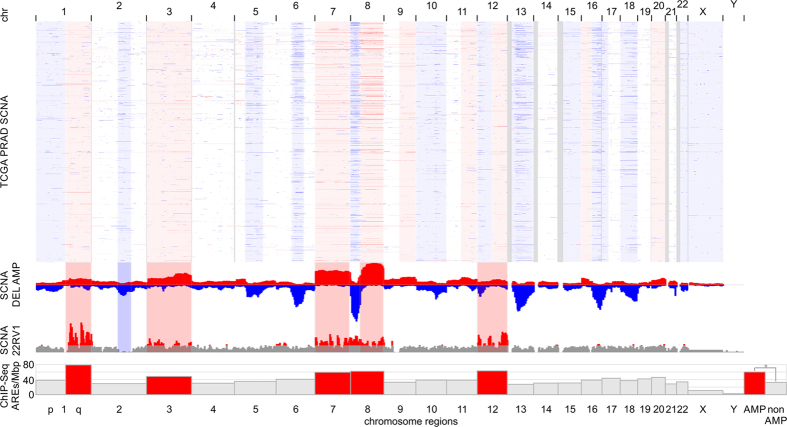
“The tool genomic identification of significant targets in cancer (GISTIC), 2.0.21 38 , was used to identify genomic regions that are significantly gained or lost across a set of paired normal and tumors samples of 492 specimen on Agilent SNP 6.0 gene expression microarrays G4502A_07_01.”
InfluentialHuber, W., von Heydebreck, A., Sültmann, H., Poustka, A., & Vingron, M. (2002) · Bioinformatics · doi:10.1093/bioinformatics/18.suppl_1.s96 · Cited by 2,440 · cited 1×
“The raw signal intensities were background corrected by using array-specific measures of background intensity based on negative control probes, prior to transformation and normalization using the variance stabilization (VSN) 48 .”
Molecular determinants of resistance to antiandrogen therapy
Chen, C. D., Welsbie, D. S., Tran, C., Baek, S. H., Chen, R., Vessella, R., Rosenfeld, M. G., & Sawyers, C. L. (2004) · Nature Medicine · doi:10.1038/nm972 · Cited by 2,278 · cited 1×
“Most AR chromatin binding studies were performed in the LNCaP cell line or its sublines 3,4,6,7,9–12 , which are highly sensitive and responsive to androgen stimulation.”
Function and information content of DNA methylation
Schübeler, D. (2015) · Nature · doi:10.1038/nature14192 · Cited by 2,060 · cited 1×
“Actively transcribed genomic regions, in particular promoter or transcription factor cognate sites, tend to have less DNA methylation 79–81 .”
Pan-cancer patterns of somatic copy number alteration
Zack, T. I., Schumacher, S. E., Carter, S. L., Cherniack, A. D., Saksena, G., Tabak, B., Lawrence, M. S., Zhang, C.-Z., Wala, J., Mermel, C. H., et al. (2013) · Nature Genetics · doi:10.1038/ng.2760 · Cited by 1,870
LNCaP model of human prostatic carcinoma.
Horoszewicz, J. S., Leong, S. S., Kawinski, E., Karr, J. P., Rosenthal, H. E., Chu, T. M., MIRAND, E. A., & Murphy, G. P. (1983) · PubMed · Cited by 1,789
In vivo amplification of the androgen receptor gene and progression of human prostate cancer
Visakorpi, T., Hyytinen, E., Koivisto, P., Tanner, M., Keinänen, R., Palmberg, C., Palotie, A., Tammela, T., Isola, J., & Kallioniemi, O.-P. (1995) · Nature Genetics · doi:10.1038/ng0495-401 · Cited by 1,484 · cited 1×
“%) of CRPC tumors 57–59 .”
Montgomery, R. B., Mostaghel, E. A., Vessella, R., Hess, D. L., Kalhorn, T. F., Higano, C. S., True, L. D., & Nelson, P. S. (2008) · Cancer Research · doi:10.1158/0008-5472.can-08-0249 · Cited by 1,419 · cited 1×
“Such intra-tumoral androgen synthesis permits maintenance of certain intracellular androgen levels and results in reconquered mitogenic AR activity 13–15 .”
Use of within-array replicate spots for assessing differential expression in microarray experiments
Smyth, G. K., Michaud, J., & Scott, H. S. (2005) · Bioinformatics · doi:10.1093/bioinformatics/bti270 · Cited by 1,405 · cited 2×
“Differential expression between experimental groups was assessed by generating relevant contrasts corresponding to the two-group comparison and was evaluated using the linear models for microarray analysis (LIMMA) package 47 .”
InfluentialDNA-binding factors shape the mouse methylome at distal regulatory regions
Stadler, M. B., Murr, R., Burger, L., Ivanek, R., Lienert, F., Schöler, A., Nimwegen, E. V., Wirbelauer, C., Oakeley, E. J., Gaidatzis, D., et al. (2011) · Nature · doi:10.1038/nature10716 · Cited by 1,383 · cited 1×
“Actively transcribed genomic regions, in particular promoter or transcription factor cognate sites, tend to have less DNA methylation 79–81 .”
Charting a dynamic DNA methylation landscape of the human genome
Ziller, M. J., Gu, H., Müller, F., Donaghey, J., Tsai, L. T.-Y., Kohlbacher, O., De Jager, P. L., Rosen, E. D., Bennett, D. A., Bernstein, B. E., et al. (2013) · Nature · doi:10.1038/nature12433 · Cited by 1,357
Combining evidence using p-values: application to sequence homology searches.
Bailey, T. L., & Gribskov, M. (1998) · Bioinformatics · doi:10.1093/bioinformatics/14.1.48 · Cited by 1,253 · cited 4×
“Computational response element searching algorithms are able to estimate a sequence’s likelihood in belonging to the response element of the query transcription factor using position site specific matrices where each position in the query transcription factor model gives each of the four letters in the DNA alphabet a…”
InfluentialHu, R., Dunn, T. A., Wei, S., Isharwal, S., Veltri, R. W., Humphreys, E., Han, M., Partin, A. W., Vessella, R. L., Isaacs, W. B., et al. (2009) · Cancer Research · doi:10.1158/0008-5472.can-08-2764 · Cited by 1,077
DREME: motif discovery in transcription factor ChIP-seq data
Bailey, T. L. (2011) · Bioinformatics · doi:10.1093/bioinformatics/btr261 · Cited by 1,044
Mathelier, A., Zhao, X., Zhang, A. W., Parcy, F., Worsley-Hunt, R., Arenillas, D. J., Buchman, S., Chen, C.-Y., Chou, A., Ienasescu, H., et al. (2014) · Nucleic Acids Research · doi:10.1093/nar/gkt997 · Cited by 983
Guo, Z., Yang, X., Sun, F., Jiang, R., Linn, D. E., Chen, H., Chen, H., Kong, X., Melamed, J., Tepper, C. G., et al. (2009) · Cancer Research · doi:10.1158/0008-5472.can-08-3795 · Cited by 880 · cited 1×
“Derived from an androgen-dependent CWR22 mouse xenograft that relapsed during androgen deprivation, the CWR22Rv1 prostate cancer cell line is androgen-insensitive, expresses different AR isoforms 4,8,9,27,62 , and is expected to display enhanced ARE recognition.”
Dehm, S. M., Schmidt, L. J., Heemers, H. V., Vessella, R. L., & Tindall, D. J. (2008) · Cancer Research · doi:10.1158/0008-5472.can-08-0594 · Cited by 834
Reprogramming transcription by distinct classes of enhancers functionally defined by eRNA
Wang, D., Garcia-Bassets, I., Benner, C., Li, W., Su, X., Zhou, Y., Qiu, J., Liu, W., Kaikkonen, M. U., Ohgi, K. A., et al. (2011) · Nature · doi:10.1038/nature10006 · Cited by 827 · cited 1×
“The cistrome of investigated AREs actively participates in the AR controlled gene expression within CRPC 64,65 .”
Sun, S., Sprenger, C. C. T., Vessella, R. L., Haugk, K., Soriano, K., Mostaghel, E. A., Page, S. T., Coleman, I. M., Nguyen, H. M., Sun, H., et al. (2010) · Journal of Clinical Investigation · doi:10.1172/jci41824 · Cited by 748 · cited 2×
“Most AR chromatin binding studies were performed in the LNCaP cell line or its sublines 3,4,6,7,9–12 , which are highly sensitive and responsive to androgen stimulation.”
Wang, Q., Li, W., Liu, X. S., Carroll, J. S., Jänne, O. A., Keeton, E. K., Chinnaiyan, A. M., Pienta, K. J., & Brown, M. (2007) · Molecular Cell · doi:10.1016/j.molcel.2007.05.041 · Cited by 687 · cited 5×
“A model of susceptibility to cooperation of weak AREs with neighboring transcription factors has already been confirmed for different transcriptional networks with the AR 55,23 .”
InfluentialLi, Y., Chan, S. C., Brand, L. J., Hwang, T. H., Silverstein, K. A. T., & Dehm, S. M. (2013) · Cancer Research · doi:10.1158/0008-5472.can-12-3630 · Cited by 680 · cited 3×
“The tool genomic identification of significant targets in cancer (GISTIC), 2.0.21 38 , was used to identify genomic regions that are significantly gained or lost across a set of paired normal and tumors samples of 492 specimen on Agilent SNP 6.0 gene expression microarrays G4502A_07_01.”
InfluentialMotif Enrichment Analysis: a unified framework and an evaluation on ChIP data
McLeay, R. C., & Bailey, T. L. (2010) · BMC Bioinformatics · doi:10.1186/1471-2105-11-165 · Cited by 679
Bubendorf, L., Kononen, J., Koivisto, P. A., Schraml, P., Moch, H., Gasser, T. C., Willi, N., Mihatsch, M. J., Sauter, G., & Kallioniemi, O. (1999) · PubMed · Cited by 594
A new human prostate carcinoma cell line, 22Rv1
Sramkoski, R. M., Pretlow, T. G., Giaconia, J. M., Pretlow, T. P., Schwartz, S., Sy, M.-S., Marengo, S. R., Rhim, J. S., Zhang, D., & Jacobberger, J. W. (1999) · In Vitro Cellular & Developmental Biology - Animal · doi:10.1007/s11626-999-0115-4 · Cited by 591
Hu, R., Lu, C., Mostaghel, E. A., Yegnasubramanian, S., Gurel, M., Tannahill, C., Edwards, J., Isaacs, W. B., Nelson, P. S., Bluemn, E., et al. (2012) · Cancer Research · doi:10.1158/0008-5472.can-11-3892 · Cited by 583 · cited 1×
“Dihydrotestosterone-activated AR response resembles a narrow, well-defined, physiological gene-expression program required for prostatic function 30,63 .”
Sahu, B., Laakso, M., Ovaska, K., Mirtti, T., Lundin, J., Rannikko, A., Sankila, A., Turunen, J., Lundin, M., Konsti, J., et al. (2011) · The EMBO Journal · doi:10.1038/emboj.2011.328 · Cited by 390
Nuclear Receptor Structure: Implications for Function
Bain, D. L., Heneghan, A. F., Connaghan-Jones, K. D., & Miura, M. T. (2007) · Annual Review of Physiology · doi:10.1146/annurev.physiol.69.031905.160308 · Cited by 366
DNA methylation presents distinct binding sites for human transcription factors
Hu, S., Wan, J., Su, Y., Song, Q., Zeng, Y., Nguyen, H. N., Shin, J., Cox, E., Rho, H. S., Woodard, C., et al. (2013) · eLife · doi:10.7554/elife.00726 · Cited by 349 · cited 1×
“CpG dinucleotides within the genome enable the cell to control ARE availability by DNA 5 ′ -cytosine methylation 77,78 .”
Tepper, C. G., Boucher, D. L., Ryan, P. E., Ma, A., Xia, L. P., Lee, L., Pretlow, T. G., & Kung, H.-J. (2002) · PubMed · Cited by 302
A consensus DNA-binding site for the androgen receptor
Roche, P. J. (1992) · Molecular Endocrinology · doi:10.1210/me.6.12.2229 · Cited by 284 · cited 1×
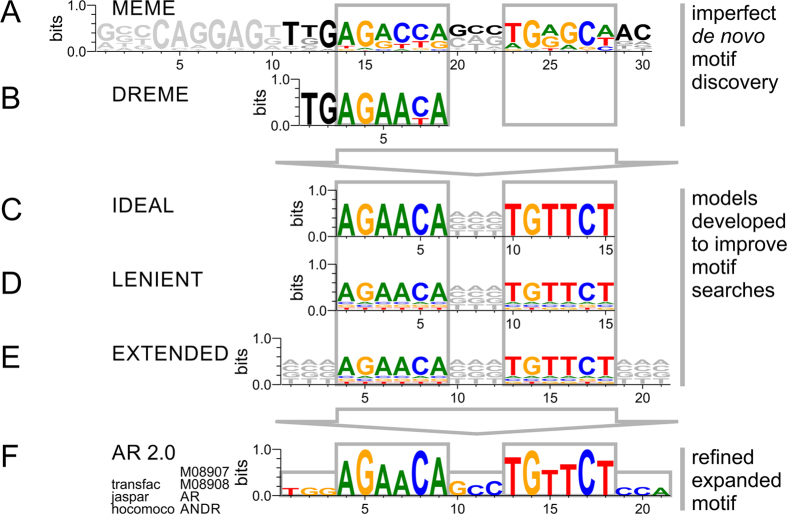
“AREs are well studied but poorly defined and have been shown to contain two hexamers with a three base-pair spacer with an inverted repeat in the second hexamer 22 .”
Swinnen, J. V., Ulrix, W., Heyns, W., & Verhoeven, G. (1997) · Proceedings of the National Academy of Sciences · doi:10.1073/pnas.94.24.12975 · Cited by 262 · cited 1×
“The transcriptional program required for prostate-specific gene expression of steroid biosynthesis enzymes is distinctly enriched in ARE half sites and consistent with modular and tightly regulated tissue-specific control 69,70 .”
New androgen receptor genomic targets show an interaction with the ETS1 transcription factor
Massie, C. E., Adryan, B., Barbosa‐Morais, N. L., Lynch, A. G., Tran, M. G., Neal, D. E., & Mills, I. G. (2007) · The EMBO Reports · doi:10.1038/sj.embor.7401046 · Cited by 259 · cited 2×
“AREs can be modulated by cooperation with other transcription factors, which can compensate for missing canonical contacts of imperfect AREs and nevertheless result in successful gene expression events 23,55 .”
Using MACS to Identify Peaks from ChIP‐Seq Data
Feng, J., Liu, T., & Zhang, Y. (2011) · Current Protocols in Bioinformatics · doi:10.1002/0471250953.bi0214s34 · Cited by 252
Steroid Hormone Receptors in Prostate Cancer: A Hard Habit to Break?
Attard, G., Cooper, C. S., & de Bono, J. S. (2009) · Cancer Cell · doi:10.1016/j.ccr.2009.11.006 · Cited by 242 · cited 2×
“Most AR chromatin binding studies were performed in the LNCaP cell line or its sublines 3,4,6,7,9–12 , which are highly sensitive and responsive to androgen stimulation.”
Androgen Receptor Variants Occur Frequently in Castration Resistant Prostate Cancer Metastases
Zhang, X., Morrissey, C., Sun, S., Ketchandji, M., Nelson, P. S., True, L. D., Vakar-Lopez, F., Vessella, R. L., & Plymate, S. R. (2011) · PLoS ONE · doi:10.1371/journal.pone.0027970 · Cited by 240
Motif-based analysis of large nucleotide data sets using MEME-ChIP
Ma, W., Noble, W. S., & Bailey, T. L. (2014) · Nature Protocols · doi:10.1038/nprot.2014.083 · Cited by 240
FoxA1 Specifies Unique Androgen and Glucocorticoid Receptor Binding Events in Prostate Cancer Cells
Sahu, B., Laakso, M., Pihlajamaa, P., Ovaska, K., Sinielnikov, I., Hautaniemi, S., & Jänne, O. A. (2013) · Cancer Research · doi:10.1158/0008-5472.can-12-2350 · Cited by 232
Huang, W.-C., Li, X., Liu, J., Lin, J., & Chung, L. W. K. (2012) · Molecular Cancer Research · doi:10.1158/1541-7786.mcr-11-0206 · Cited by 228 · cited 1×
“In PRAD, cooperation of SREBF and AR signaling has been linked to progression of prostate cancer cells 71 .”
Li, Y., Hwang, T. H., Oseth, L. A., Hauge, A., Vessella, R. L., Schmechel, S. C., Hirsch, B., Beckman, K. B., Silverstein, K. A., & Dehm, S. M. (2012) · Oncogene · doi:10.1038/onc.2011.637 · Cited by 202 · cited 1×
“The CWR22Rv1 prostate cancer cell line expresses AR full-length (AR(FL)) with a duplicated DBD in exon 3 17–19 and an AR splice variant, AR(V), lacking a LBD, thus becoming constitutively active 4,8,11,20 .”
Li, Y., Alsagabi, M., Fan, D., Bova, G. S., Tewfik, A. H., & Dehm, S. M. (2011) · Cancer Research · doi:10.1158/0008-5472.can-10-1998 · Cited by 199
Cao, B., Qi, Y., Zhang, G., Xu, D., Zhan, Y., Alvarez, X., Guo, Z., Fu, X., Plymate, S. R., Sartor, O., et al. (2014) · Oncotarget · doi:10.18632/oncotarget.1802 · Cited by 194 · cited 4×
“The CWR22Rv1 prostate cancer cell line expresses AR full-length (AR(FL)) with a duplicated DBD in exon 3 17–19 and an AR splice variant, AR(V), lacking a LBD, thus becoming constitutively active 4,8,11,20 .”
InfluentialStructural basis for nuclear hormone receptor DNA binding
Helsen, C., Kerkhofs, S., Clinckemalie, L., Spans, L., Laurent, M. R., Boonen, S., Vanderschueren, D., & Claessens, F. (2011) · Molecular and Cellular Endocrinology · doi:10.1016/j.mce.2011.07.025 · Cited by 187 · cited 1×
“The AR is able to recognize weaker sites by first binding to a high affinity AGAACA site followed by a strong conformation change in the protein and possibly in the ARE 83,84 .”
Cooperativity and equilibrium with FOXA1 define the androgen receptor transcriptional program
Jin, H.-J., Zhao, J. C., Wu, L., Kim, J., & Yu, J. (2014) · Nature Communications · doi:10.1038/ncomms4972 · Cited by 182 · cited 1×
“Overexpression of FOXA1 promotes cell cycle progression, CRPC signature, and has been described as playing a crucial role in assisting AR site recognition for weaker binding sites by creating excessive open chromatin sites 66–68 .”
Integration of Regulatory Networks by NKX3-1 Promotes Androgen-Dependent Prostate Cancer Survival
Tan, P. Y., Chang, C. W., Chng, K. R., Wansa, K. D. S. A., Sung, W.-K., & Cheung, E. (2012) · Molecular and Cellular Biology · doi:10.1128/mcb.05958-11 · Cited by 180 · cited 4×
“For the LNCaP cell line 29 we assessed conditions of testosterone and ethanol treatment as described 30 .”
InfluentialHeemers, H. (2001) · Molecular Endocrinology · doi:10.1210/me.15.10.1817 · Cited by 172 · cited 1×
“The transcriptional program required for prostate-specific gene expression of steroid biosynthesis enzymes is distinctly enriched in ARE half sites and consistent with modular and tightly regulated tissue-specific control 69,70 .”
Schoenmakers, E., Alen, P., Verrijdt, G., Peeters, B., Verhoeven, G., Rombauts, W., & Claessens, F. (1999) · Biochemical Journal · doi:10.1042/0264-6021:3410515 · Cited by 158
Urbanucci, A., Sahu, B., Seppälä, J., Larjo, A., Latonen, L., Waltering, K. K., Tammela, T. L. J., Vessella, R. L., Lähdesmäki, H. J., Jänne, O. A., et al. (2011) · Oncogene · doi:10.1038/onc.2011.401 · Cited by 155 · cited 1×
“The number of recognized ARE sites increases with the level of AR expression 60 .”
Intratumoral androgen biosynthesis in prostate cancer pathogenesis and response to therapy
Cai, C., & Balk, S. P. (2011) · Endocrine-Related Cancer · doi:10.1530/erc-10-0339 · Cited by 155
Xenografts of Primary Human Prostatic Carcinoma
Pretlow, T. G., Wolman, S. R., Micale, M. A., Pelley, R. J., Kursh, E. D., Resnick, M. I., Bodner, D. R., Jacobberger, J. W., Delmoro, C. M., Giaconia, J. M., et al. (1993) · JNCI Journal of the National Cancer Institute · doi:10.1093/jnci/85.5.394 · Cited by 154 · cited 1×
“CWR22Rv1 is a human prostate carcinoma epithelial cell line derived from a xenograft that was serially propagated in mice after castration-induced regression and relapse of the parental, androgen-dependent CWR22 xenograft 26,27 (CRL-2505, American Type Culture Collection, Manassas, VA).”
Verrijdt, G. (2003) · Molecular Genetics and Metabolism · doi:10.1016/s1096-7192(03)00003-9 · Cited by 148
Inferring transcription factor complexes from ChIP-seq data
Whitington, T., Frith, M. C., Johnson, J., & Bailey, T. L. (2011) · Nucleic Acids Research · doi:10.1093/nar/gkr341 · Cited by 135
Bohl, C. E., Wu, Z. R., Miller, D. D., Bell, C. E., & Dalton, J. T. (2007) · Journal of Biological Chemistry · doi:10.1074/jbc.m611711200 · Cited by 133 · cited 3×
“LNCaP or its sublines express a full-length AR with point mutation of T877A at the LBD 16 .”
GATA2 facilitates steroid receptor coactivator recruitment to the androgen receptor complex
He, B., Lanz, R. B., Fiskus, W., Geng, C., Yi, P., Hartig, S. M., Rajapakshe, K., Shou, J., Wei, L., Shah, S. S., et al. (2014) · Proceedings of the National Academy of Sciences · doi:10.1073/pnas.1421415111 · Cited by 123 · cited 1×
“Cooperative interactions facilitate chromatin binding of the AR and contribute to a promiscuous behavior of AREs 23–25 .”
Yamamoto, Y., Loriot, Y., Beraldi, E., Zhang, F., Wyatt, A. W., Nakouzi, N. A., Mo, F., Zhou, T., Kim, Y., Monia, B. P., et al. (2015) · Clinical Cancer Research · doi:10.1158/1078-0432.ccr-14-1108 · Cited by 123
Starick, S. R., Ibn-Salem, J., Jurk, M., Hernandez, C., Love, M. I., Chung, H.-R., Vingron, M., Thomas-Chollier, M., & Meijsing, S. H. (2015) · Genome Research · doi:10.1101/gr.185157.114 · Cited by 123
Marcias, G., Erdmann, É., Lapouge, G., Siebert, C., Barthélémy, P., Duclos, B., Bergerat, J., Céraline, J., & Kurtz, J. (2009) · Human Mutation · doi:10.1002/humu.21138 · Cited by 121 · cited 1×
“The CWR22Rv1 prostate cancer cell line expresses AR full-length (AR(FL)) with a duplicated DBD in exon 3 17–19 and an AR splice variant, AR(V), lacking a LBD, thus becoming constitutively active 4,8,11,20 .”
Asada, M., Rauch, A., Shimizu, H., Maruyama, H., Miyaki, S., Shibamori, M., Kawasome, H., Ishiyama, H., Tuckermann, J., & Asahara, H. (2011) · Laboratory Investigation · doi:10.1038/labinvest.2010.170 · Cited by 105
Sasse, S. K., Mailloux, C. M., Barczak, A. J., Wang, Q., Altonsy, M. O., Jain, M. K., Haldar, S. M., & Gerber, A. N. (2013) · Molecular and Cellular Biology · doi:10.1128/mcb.01474-12 · Cited by 105 · cited 1×
“Other cellular models have linked KLF15 overexpression with enhanced recruitment of nuclear receptors 74,75 .”
Robinson, J. L. L., Hickey, T. E., Warren, A. Y., Vowler, S. L., Carroll, T., Lamb, A. D., Papoutsoglou, N., Neal, D. E., Tilley, W. D., & Carroll, J. S. (2014) · Oncogene · doi:10.1038/onc.2013.508 · Cited by 101 · cited 1×
“Overexpression of FOXA1 promotes cell cycle progression, CRPC signature, and has been described as playing a crucial role in assisting AR site recognition for weaker binding sites by creating excessive open chromatin sites 66–68 .”
Palacios, D., Summerbell, D., Rigby, P. W. J., & Boyes, J. (2010) · Molecular and Cellular Biology · doi:10.1128/mcb.00050-10 · Cited by 81
Steroid hormone synthetic pathways in prostate cancer.
Mostaghel, E. A. (2013) · PubMed · doi:10.3978/j.issn.2223-4683.2013.09.16 · Cited by 80 · cited 2×
“Most AR chromatin binding studies were performed in the LNCaP cell line or its sublines 3,4,6,7,9–12 , which are highly sensitive and responsive to androgen stimulation.”
Ji, L., Lonergan, P. E., Nacusi, L. P., Wang, L., Schmidt, L. J., Sun, Z., der Steen, T. V., Boorjian, S. A., Kosari, F., Vasmatzis, G., et al. (2014) · The Journal of Urology · doi:10.1016/j.juro.2014.08.043 · Cited by 77 · cited 4×
“88.5% of the detected AREs overlapped with ChIP-Seq data of published experiments after processing using the same bioinformatics workflow 28 .”
InfluentialChIPseek, a web-based analysis tool for ChIP data
Chen, T.-W., Li, H.-P., Lee, C., Gan, R.-C., Huang, P.-J., Wu, T. H., Lee, C., Chang, I. Y., & Tang, P. (2014) · BMC Genomics · doi:10.1186/1471-2164-15-539 · Cited by 71 · cited 1×
“The overlap analysis, plot of genomic location, sequence extraction, motif identification, and peak filtering were performed using ChIPseek: a web-based analysis for ChIP data 34 .”
Myers, R. B., Oelschlager, D. K., Weiss, H. L., Frost, A. R., & Grizzle, W. E. (2001) · The Journal of Urology · doi:10.1016/s0022-5347(05)66596-2 · Cited by 52 · cited 1×
“SREBF targeted gene expression drops drastically after androgen deprivation therapy, but their transcription program re-emerges upon reactivation of the AR transcriptional program manifesting the hypothesis of transcriptional cooperation 72 .”
Novel DNA Motif Binding Activity Observed In Vivo With an Estrogen Receptor α Mutant Mouse
Hewitt, S. C., Li, L., Grimm, S. A., Winuthayanon, W., Hamilton, K. J., Pockette, B., Rubel, C. A., Pedersen, L. C., Fargo, D., Lanz, R. B., et al. (2014) · Molecular Endocrinology · doi:10.1210/me.2014-1051 · Cited by 50
Lee, M.-Y., Moon, J.-S., Park, S. W., Koh, Y.-K., Ahn, Y.-H., & Kim, K.-S. (2009) · Biochemical Journal · doi:10.1042/bj20080762 · Cited by 41
Kaspar, F., Klocker, H., Denninger, A., & Cato, A. C. (1993) · Molecular and Cellular Biology · doi:10.1128/mcb.13.12.7850 · Cited by 41
Chen, H., Libertini, S. J., George, M. D., Dandekar, S., Tepper, C. G., Al-Bataina, B., Kung, H.-J., Ghosh, P., & Mudryj, M. M. (2010) · Endocrine Related Cancer · doi:10.1677/erc-10-0081 · Cited by 36 · cited 1×
“2) 51 did not resemble the palindromic ARE sequence described in the literature and were shifted in frame 22,52–54 .”
Qu, X., Randhawa, G., Friedman, C. L., Kurland, B. F., Glaskova, L., Coleman, I. M., Mostaghel, E. A., Higano, C. S., Porter, C. R., Vessella, R. L., et al. (2013) · PLoS ONE · doi:10.1371/journal.pone.0074671 · Cited by 28
Kajita, Y., Kato, T., Tamaki, S., Furu, M., Takahashi, R., Nagayama, S., Aoyama, T., Nishiyama, H., Nakamura, E., Katagiri, T., et al. (2013) · PLoS ONE · doi:10.1371/journal.pone.0049709 · Cited by 23
Zhang, X., HONG, S.-Z., Lin, E.-J., Wang, D., Li, Z., & CHEN, L. (2015) · Oncology Letters · doi:10.3892/ol.2015.3114 · Cited by 18
Suh, J. H., Gong, E., Kim, J. B., Lee, I., Choi, H., & Lee, K. (2008) · Molecular Cancer Research · doi:10.1158/1541-7786.mcr-07-0354 · Cited by 15
Simple d-transposition of the great arteries
Kratz, C., Davignon, A., Chartrand, C., & Stanley, P. (1977) · Journal of Thoracic and Cardiovascular Surgery · doi:10.1016/s0022-5223(19)41468-2 · Cited by 15
Network analysis of ChIP-Seq data reveals key genes in prostate cancer
Zhang, Y., Huang, Z. J., Zhu, Z., Liu, J., Zheng, X. M., & Zhang, Y. (2014) · European journal of medical research · doi:10.1186/s40001-014-0047-7 · Cited by 12
Poelaert, F., Praet, C. V., Beerens, A.-S., Meerleer, G. D., Fonteyne, V., Ost, P., & Lumen, N. (2015) · BioMed Research International · doi:10.1155/2015/812815 · Cited by 11 · cited 2×
“Most AR chromatin binding studies were performed in the LNCaP cell line or its sublines 3,4,6,7,9–12 , which are highly sensitive and responsive to androgen stimulation.”
InfluentialLabbé, D. P., Nowak, D. G., Deblois, G., Lessard, L., Giguère, V., Trotman, L. C., & Tremblay, M. L. (2013) · Molecular Cancer Research · doi:10.1158/1541-7786.mcr-13-0477 · Cited by 9
Cited by
Kulakovskiy, I. V., Vorontsov, I. E., Yevshin, I. S., Sharipov, R. N., Fedorova, A. D., Rumynskiy, E. I., Medvedeva, Y. A., Magana-Mora, A., Bajic, V. B., Papatsenko, D. A., et al. (2018) · Nucleic Acids Research · doi:10.1093/nar/gkx1106 · Cited by 917
“A few additional models, e.g. ANDR (androgen receptor) binding model submitted for consideration from (27), were also considered, yet none of them succeeded in the benchmark except for the models that we specifically designed to describe binding sites subtypes, e.g. genuine binding sites of NANOG…”
BackgroundPungsrinont, T., Kallenbach, J., & Baniahmad, A. (2021) · International Journal of Molecular Sciences · doi:10.3390/ijms222011088 · Cited by 210
Cistromic Reprogramming of the Diurnal Glucocorticoid Hormone Response by High-Fat Diet
Quagliarini, F., Mir, A. A., Balazs, K., Wierer, M., Dyar, K. A., Jouffe, C., Makris, K., Hawe, J., Heinig, M., Filipp, F. V., et al. (2019) · Molecular Cell · doi:10.1016/j.molcel.2019.10.007 · Cited by 116
“8 and a motif analysis based on position site specific matrix models to quantify the utilization of specific hormone response elements (Wilson et al., 2017; Wilson et al., 2016).”
BackgroundSelf-citationThe Genomic Impact of DNA CpG Methylation on Gene Expression; Relationships in Prostate Cancer
Long, M. D., Smiraglia, D. J., & Campbell, M. J. (2017) · Biomolecules · doi:10.3390/biom7010015 · Cited by 123
ARe we there yet? Understanding androgen receptor signaling in breast cancer
Michmerhuizen, A. R., Spratt, D. E., Pierce, L. J., & Speers, C. W. (2020) · npj Breast Cancer · doi:10.1038/s41523-020-00190-9 · Cited by 118
Metadata
- Authors
- Wilson, S., Qi, J., & Filipp, F. V.
- Affiliations
- University of California, Merced (US)
- University of Maryland, Baltimore (US)
- Corresponding author
- Filipp, Fabian V.
- Venue
- Scientific Reports
- Published
- 2016-09-14
- Volume
- 6
- Issue
- 1
- Pages
- 32611-32611
- ISSN
- 2045-2322 (ISSN-L)
- PMC
- PMC5021938
- OpenAlex
- W2518980159
- Cited by
- 126
- References
- 87
- Citations by year
- 2026: 3 · 2025: 10 · 2024: 19 · 2023: 13 · 2022: 15 · 2021: 17 · 2020: 14 · 2019: 14 · 2018: 12 · 2017: 9
- FWCI
- 10.43
- Type
- journal article
- Language
- en
- Open access
- gold
- doi.org
- Licence
- cc-by
- creativecommons.org/licenses/by/4.0 (tdm)
- creativecommons.org/licenses/by/4.0 (vor)
- Locations
- Scientific Reports (publishedVersion, cc-by)
- PubMed Central (publishedVersion, cc-by)
- PubMed (publishedVersion)
- Funders
- Cancer Research Coordinating Committee
- Health Systems Research Institute
- National Institutes of Health (CA154887, CA154888)
- University of California Merced
- National Cancer Institute (R00CA154888, R00CA154887, K99CA154888, R21CA176114, CA-154887, CA154888, CA176114, K99CA154887)
- Topics
- Life Sciences › Biochemistry, Genetics and Molecular Biology › Cancer Research › Prostate Cancer Treatment and Research
- Life Sciences › Biochemistry, Genetics and Molecular Biology › Molecular Biology › Genomics and Chromatin Dynamics
- Life Sciences › Biochemistry, Genetics and Molecular Biology › Molecular Biology › Chromatin Remodeling and Cancer
- Keywords
- androgen response element, androgen receptor, prostate cancer, transcription factor binding motifs, androgen-insensitive prostate cancer, copy number amplification, androgen receptor splice variants, corticosteroid therapy, gene expression regulation
- MeSH terms
- Androgens, Binding Sites, DNA-Binding Proteins, Humans, Male, Neoplasm Recurrence, Local, Promoter Regions, Genetic, Prostatic Neoplasms, Protein Binding, Receptors, Androgen, Response Elements, Cell Line, Tumor, Chromatin Immunoprecipitation, Nucleotide Motifs
About these checks
Registry, retraction, Cites and statistics results are computed, not judged, with one exception: a printed reference that no index lists is read once by a model before it counts as a citation error. Claims are extracted by a model and kept only when their quote appears verbatim in the text; each cited source is then checked, with a model’s help, for whether it says what the claim relies on. Those verdicts can be wrong — read the claim’s quote and the cited source before relying on one.
Statistics and arithmetic are recomputed, not judged.
Confidence bands are shown only for fields calibrated on our annotated test set. None is calibrated yet, so no band is shown.
What counts as a claim ›How we measure confidence ›How we check this ›
Are you an author, or do you see a problem with this page? Request a review
Data sources
Bibliographic data: Semantic Scholar, OpenAlex, Crossref.
Contains information from the Semantic Scholar Academic Graph Datasets, made available under the ODC Attribution License (ODC-BY 1.0).
Semantic Scholar’s data is described in: Kinney, R., et al. (2023). The Semantic Scholar Open Data Platform. arXiv:2301.10140.
