

The effects of self-selected light-dark cycles and social constraints on human sleep and circadian timing: a modeling approach
Open accessThe DOI matches its Crossref record; 70 of the 70 references it cites were found in a registry or an index.
Abstract
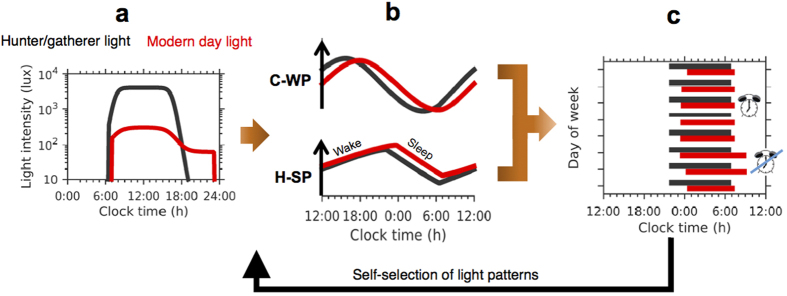
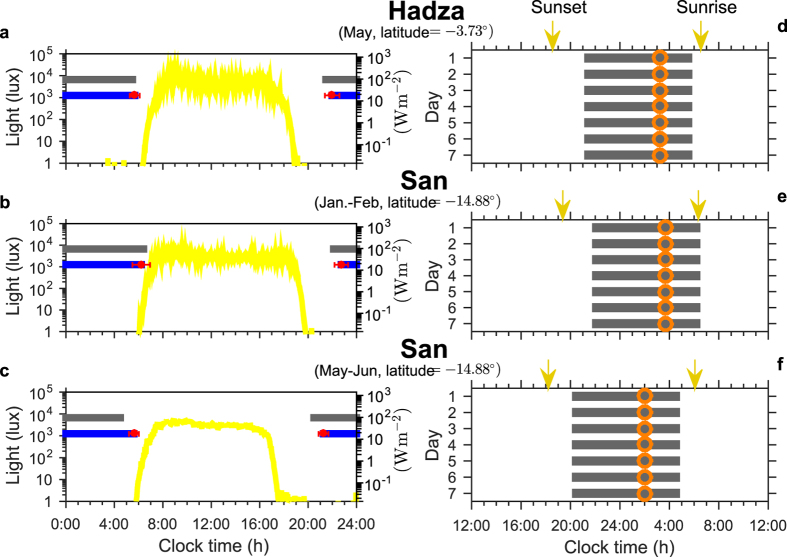
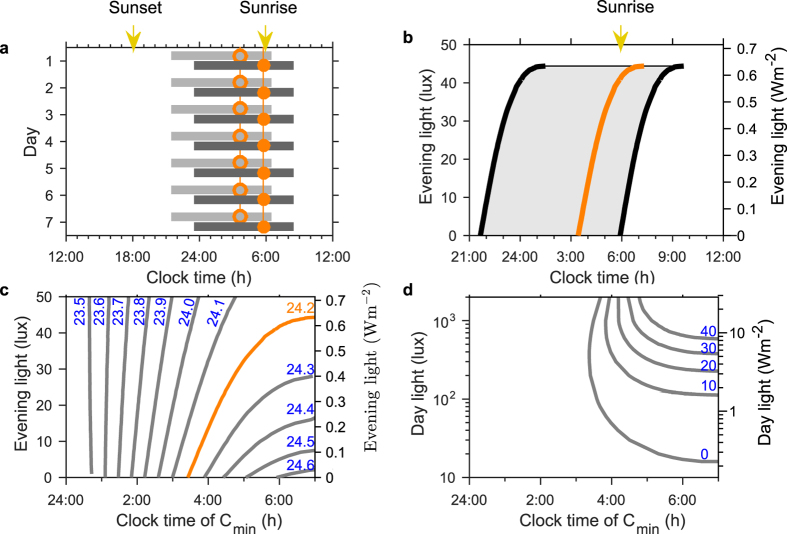
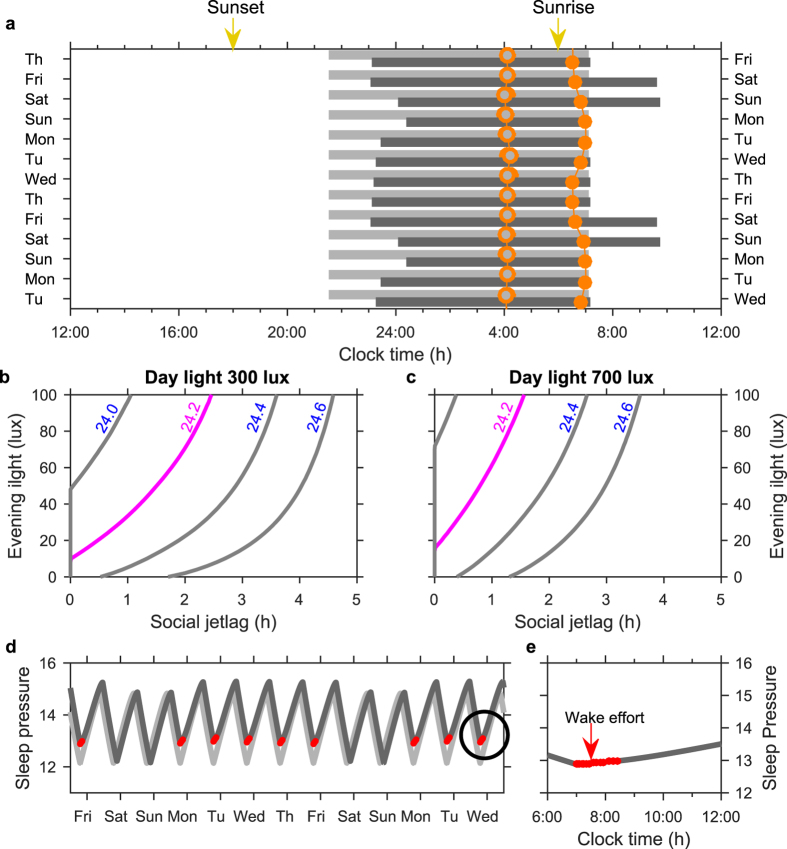
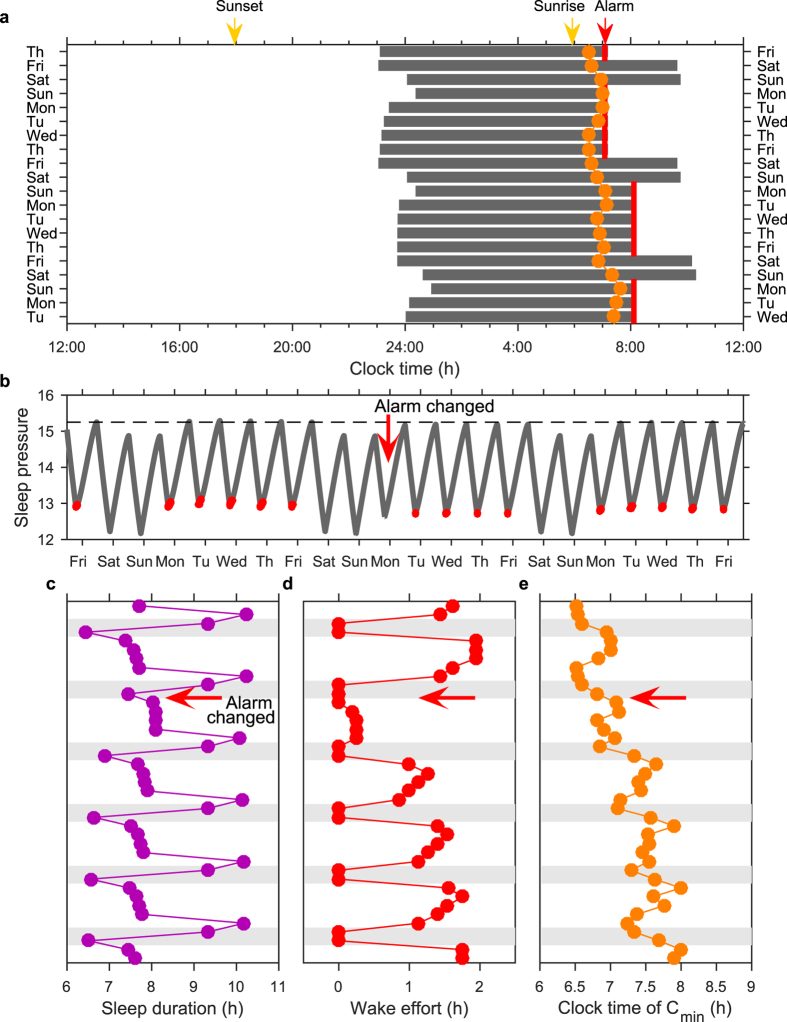
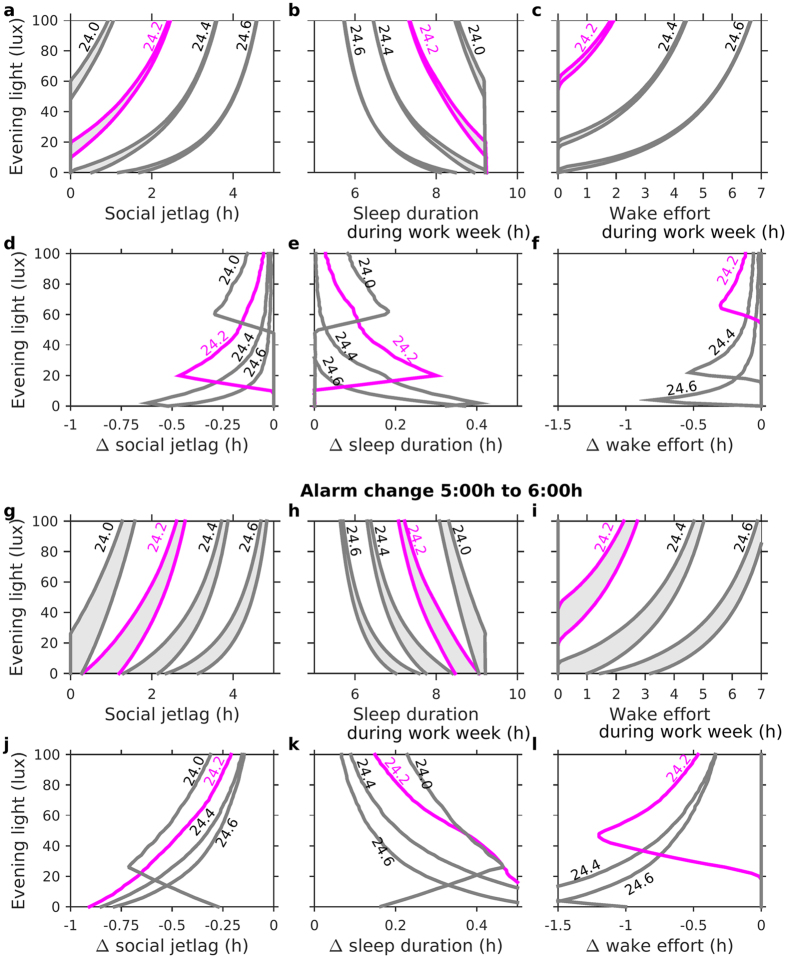
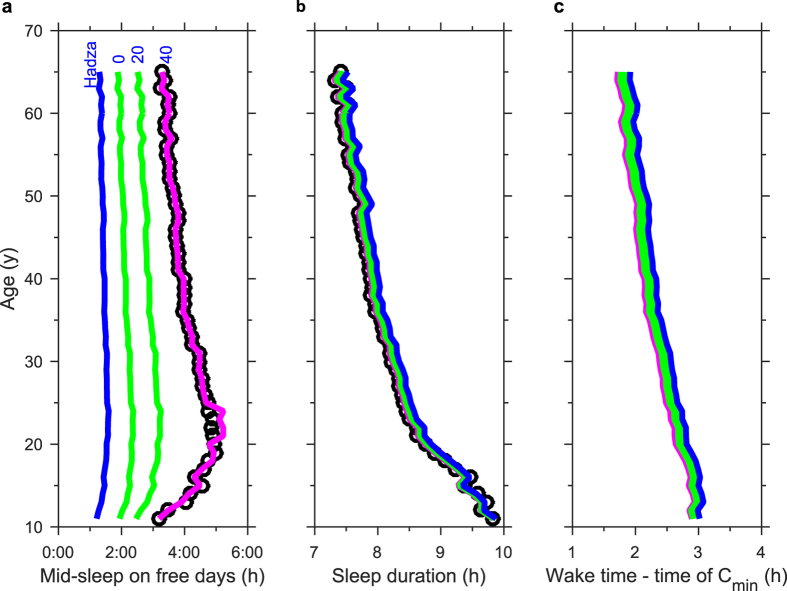
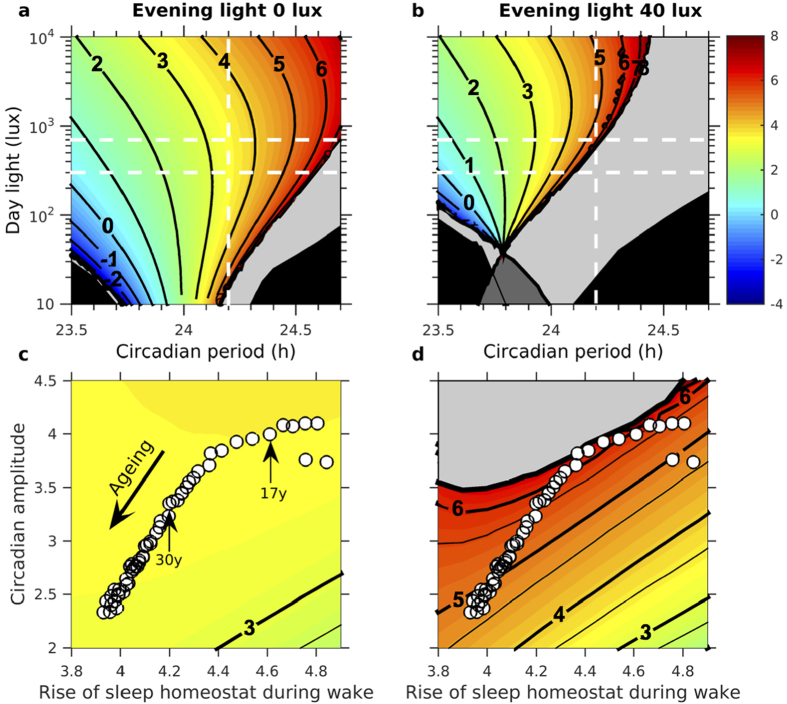
Why do we go to sleep late and struggle to wake up on time? Historically, light-dark cycles were dictated by the solar day, but now humans can extend light exposure by switching on artificial lights. We use a mathematical model incorporating effects of light, circadian rhythmicity and sleep homeostasis to provide a quantitative theoretical framework to understand effects of modern patterns of light consumption on the human circadian system. The model shows that without artificial light humans wakeup at dawn. Artificial light delays circadian rhythmicity and preferred sleep timing and compromises synchronisation to the solar day when wake-times are not enforced. When wake-times are enforced by social constraints, such as work or school, artificial light induces a mismatch between sleep timing and circadian rhythmicity (‘social jet-lag’). The model implies that developmental changes in sleep homeostasis and circadian amplitude make adolescents particularly sensitive to effects of light consumption. The model predicts that ameliorating social jet-lag is more effectively achieved by reducing evening light consumption than by delaying social constraints, particularly in individuals with slow circadian clocks or when imposed wake-times occur after sunrise. These theory-informed predictions may aid design of interventions to prevent and treat circadian rhythm-sleep disorders and social jet-lag.
Overview
The claims and statistics of this paper haven’t been checked yet.
Free: it reads the open-access text and checks the first 5 claims that cite a source we can check. Create a free account to check every claim.
Integrity signals
Registry
Cites
Statistics
Figures
Verification
Claims the paper makes
The claims and statistics of this paper haven’t been checked yet.
Free: it reads the open-access text and checks the first 5 claims that cite a source we can check. Create a free account to check every claim.
Claims other papers make about this one
Each is checked against this paper’s own text: does it say what the citing paper says it does?
The cited source says what the claim attributes to it.
In the citing paper
“We note that this model does not generate sleep/wake patterns, as another recent model does62, 63, as it was not designed for that purpose.”
From Irregular sleep/wake patterns are associated with poorer academic performance and delayed circadian and sleep/wake timing (2017) · cites this paper as [63]
The cited source says what the claim attributes to it.
In the citing paper
“Transitions from weekday to weekend compound the phase delay in the endogenous clock150,151 that is often referred to as ‘social jet-lag’148,152.”
From Rhythms of life: circadian disruption and brain disorders across the lifespan (2019) · cites this paper as [150]
In the citing paper
“Various external stimuli such as light exposure and food intake play dominant roles in the regulation of circadian rhythms and the dark/light cycle is the main external synchronizer of the circadian rhythm [ 43 ].”
From Physiological Rhythms and Biological Variation of Biomolecules: The Road to Personalized Laboratory Medicine (2023) · cites this paper as [43]
Self-check
Percentages, sums and reported differences re-computed from the paper’s own numbers.
The self-check needs the paper’s full text.
Citations
Cites
Two-Process Model of Sleep Regulation
(2009) · Encyclopedia of Neuroscience · doi:10.1007/978-3-540-29678-2_6166 · Cited by 3,899
Hypothalamic regulation of sleep and circadian rhythms
Saper, C. B., Scammell, T. E., & Lu, J. (2005) · Nature · doi:10.1038/nature04284 · Cited by 2,804
Social Jetlag: Misalignment of Biological and Social Time
Wittmann, M., Dinich, J., Merrow, M., & Roenneberg, T. (2006) · Chronobiology International · doi:10.1080/07420520500545979 · Cited by 2,625
The new world atlas of artificial night sky brightness
Falchi, F., Cinzano, P., Duriscoe, D., Kyba, C. C. M., Elvidge, C. D., Baugh, K., Portnov, B. A., Rybnikova, N. A., & Furgoni, R. (2016) · Science Advances · doi:10.1126/sciadv.1600377 · Cited by 1,976
A marker for the end of adolescence
Roenneberg, T., Kuehnle, T., Pramstaller, P. P., Ricken, J., Havel, M., Guth, A., & Merrow, M. (2004) · Current Biology · doi:10.1016/j.cub.2004.11.039 · Cited by 1,585 · cited 3×
“This is represented by the Heaviside function in equation (8), which means that light impinging on photoreceptors is zero if the firing rate of wake promoting neurons, Qm, is greater than a threshold value Qth.”
BackgroundMethodThe two‐process model of sleep regulation: a reappraisal
Borbély, A. A., Daan, S., Wirz‐Justice, A., & Deboer, T. (2016) · Journal of Sleep Research · doi:10.1111/jsr.12371 · Cited by 1,577
Molecular architecture of the mammalian circadian clock
Partch, C. L., Green, C. B., & Takahashi, J. S. (2014) · Trends in Cell Biology · doi:10.1016/j.tcb.2013.07.002 · Cited by 1,449
Timing of human sleep: recovery process gated by a circadian pacemaker
Daan, S., Beersma, D. G., & Borbely, A. A. (1984) · American Journal of Physiology-Regulatory, Integrative and Comparative Physiology · doi:10.1152/ajpregu.1984.246.2.r161 · Cited by 1,419
Dijk, D., & Czeisler, C. (1995) · The Journal of Neuroscience · doi:10.1523/jneurosci.15-05-03526.1995 · Cited by 1,356
Self-citationMeasuring and using light in the melanopsin age
Lucas, R. J., Peirson, S. N., Berson, D. M., Brown, T. M., Cooper, H. M., Czeisler, C. A., Figueiro, M. G., Gamlin, P. D., Lockley, S. W., O’Hagan, J. B., et al. (2014) · Trends in Neurosciences · doi:10.1016/j.tins.2013.10.004 · Cited by 1,278
Cited by
Items 101–152 of 152
Tardiness Increases in Winter: Evidence for Annual Rhythms in Humans
Zerbini, G., van der Vinne, V., Otto, L., Monecke, S., Kantermann, T., & Merrow, M. W. (2019) · Journal of Biological Rhythms · doi:10.1177/0748730419876781 · Cited by 5
“Exposure to less light and to light at night is associated with delayed (later) sleep (Skeldon et al., 2017; Roenneberg et al., 2013).”
BackgroundYeo, S. C., Yabuki, H., Charoenthammanon, R. S., & Gooley, J. J. (2023) · SLEEP · doi:10.1093/sleep/zsad141 · Cited by 7
Skeldon, A. C., Rodriguez, T., Soreq, E., Walsh, C., & Dijk, D. (2025) · SLEEP · doi:10.1093/sleep/zsaf125 · Cited by 6
Self-citationAubourg, T., Demongeot, J., Provost, H., & Vuillerme, N. (2020) · JMIR mhealth and uhealth · doi:10.2196/13535 · Cited by 7
Buschhausen, N., Voshaar, R. C. O., Gordijn, M. C. M., & Zuidersma, M. (2025) · Journal of Affective Disorders · doi:10.1016/j.jad.2025.119823 · Cited by 3
Time-Restricted Feeding in Adult Mice Improves Mood-Related Behaviors in a Sex-Dependent Manner
Bell, K. S., Darling, J. S., Prabhakar, A., Imad, S. T., Gaudet, A. D., & Fonken, L. K. (2025) · Behavioural Brain Research · doi:10.1016/j.bbr.2025.115867 · Cited by 6
The impact of self-selected light on activity rhythms in the diurnal striped mouse
Hughes, R. B., Baño‐Otálora, B., Davey, M., Martial, F. P., Babu, A., Wynne, J., Brown, T. M., & Lucas, R. J. (2026) · Current Biology · doi:10.1016/j.cub.2026.03.036 · Cited by 3
Mohamed, A., Kalavally, V., Khong, Y. J., Tan, C. P., Cain, S. W., & Phillips, A. J. K. (2022) · Building and Environment · doi:10.1016/j.buildenv.2022.109943 · Cited by 4
Self-citationUncovering personal circadian responses to light through particle swarm optimization
Vicente-Martínez, J., Bonmatí‐Carrión, M., Madrid, J. A., & Rol, M. A. (2023) · Computer Methods and Programs in Biomedicine · doi:10.1016/j.cmpb.2023.107933 · Cited by 3
Non-visual daylight potential in offices: a parametric study
Gkouvelou, E., Moskoveli, D., & Khanie, M. S. (2023) · IOP Conference Series Earth and Environmental Science · doi:10.1088/1755-1315/1196/1/012081 · Cited by 4
Pharmacokinetic Model-Based Control across the Blood–Brain Barrier for Circadian Entrainment
Murdoch, S. Ó., Aiello, E. M., & Doyle, F. J. (2023) · International Journal of Molecular Sciences · doi:10.3390/ijms241914830 · Cited by 3
Crowley, R., Javadi, A., & Tamminen, J. (2023) · Chronobiology International · doi:10.1080/07420528.2023.2258954 · Cited by 4
“These findings support the suggestion that social zeitgebers are predominant sources of circadian misalignment (Korman et al. 2020; Skeldon et al. 2017).”
BackgroundKorompeli, A. (2022) · Archives in Neurology & Neuroscience · doi:10.33552/ann.2022.12.000795 · Cited by 3
Lan, A., Ron, T., Stukalin, Y., Kronfeld‐Schor, N., & Einat, H. (2023) · Health Care For Women International · doi:10.1080/07399332.2023.2183206 · Cited by 4
“Human sleep-wake behavior is timed by the interaction between an intrinsic biological clock synchronized to the light/dark cycle, a homeostatic sleep drive, and social schedules (Roenneberg et al., 2007; Skeldon et al., 2017).”
BackgroundRodenbeck, A., Neuwirth, M., Özgüc, R., & Wiater, A. (2019) · Somnologie · doi:10.1007/s11818-019-00229-5 · Cited by 3
Biodynamic Lighting to Support the Wellbeing of People Living with Dementia in Care Facilities
Turley, K., Rafferty, J., Bond, R., Mulvenna, M. D., Ryan, A. A., Topping, P., & Crawford, L. (2021) · IEEE SmartWorld, Ubiquitous Intelligence & Computing, Advanced & Trusted Computing, Scalable Computing & Communications, Cloud & Big Data Computing, Internet of People and Smart City Innovation (SmartWorld/SCALCOM/UIC/ATC/CBDCom/IOP/SCI) · doi:10.1109/swc50871.2021.00050 · Cited by 4
Weekday-to-Weekend Sleep Differences and Poor Mental Health in Young Adulthood
Choi, M., Sempungu, J. K., Han, J. H., Kim, M.-H., & Lee, Y. H. (2025) · Journal of Korean Medical Science · doi:10.3346/jkms.2025.40.e211 · Cited by 2
Micic, G., Reynolds, A. C., Phillips, A. J. K., Zee, P. P., Richardson, C. E., Burgess, H. J., Lack, L. C., CATCHESIDE, P. G., Goldstein, C. A., Scott, H., et al. (2026) · Sleep Medicine Reviews · doi:10.1016/j.smrv.2026.102240 · Cited by 4
Self-citationHausen, J. E., Møller, J., Greiff, S., & Niepel, C. (2023) · Contemporary Educational Psychology · doi:10.1016/j.cedpsych.2023.102199 · Cited by 3
Tayong, F. L. T., Yamapi, R., & Filatrella, G. (2023) · Nonlinear Dynamics · doi:10.1007/s11071-023-08644-y · Cited by 2
Jo, H., Josić́, K., & Kim, J. K. (2026) · SIAM Journal on Applied Mathematics · doi:10.1137/25m1741340 · Cited by 1
Biological timing: The dark side of light around the clock
Skeldon, A. C., & Dijk, D. (2026) · Current Biology · doi:10.1016/j.cub.2026.04.014 · Cited by 1
Self-citationHuman data at odds and in confirmation of the two-process model of sleep regulation—a perspective
Dijk, D. (2026) · npj Biological Timing and Sleep · doi:10.1038/s44323-026-00083-3 · Cited by 1
“Recent models incorporating this notion of gating of light input, combined with knowledge about the phase-dependent response and the sensitivity of the pacemaker to light, show how the light-dark exposure generated by the sleep-wake cycle delays our clocks and causes social jet-lag 12,21,22 .”
Self-citationHickman, R., Jie, D. L., Shergill, S. S., Laborde, S., & D’Oliveira, T. C. (2025) · Chronobiology International · doi:10.1080/07420528.2025.2471887 · Cited by 2
“…or external (zeitgeber) signals also entrain the circadian system (Foster 2020) and differentially impact chronotype, particularly light exposure (light timing, intensity, or consumption behaviour) and societal or social factors (Porcheret et al. 2018; Skeldon et al. 2017; Sletten et al. 2023).”
Rodenbeck, A., & Rodenbeck, K. (2019) · Somnologie - Schlafforschung und Schlafmedizin · doi:10.1007/s11818-019-00228-6 · Cited by 1
Devine, J. K., Choynowski, J. J., & Hursh, S. R. (2022) · Safety · doi:10.3390/safety9030059
“A mismatch between the timing of sleep due to schedule constraints and a human’s natural circadian rhythmicity can result in recurrent symptoms of fatigue known as “social jet lag” [55,56].”
Fatigue, Alertness and Risk Prediction for Shift WorkersPreprint
Cleator, S. F., Coutts, L. V., Phillips, R. A., Turner, R., Dijk, D., & Skeldon, A. C. (2021) · bioRxiv (Cold Spring Harbor Laboratory) · doi:10.1101/2021.01.13.426509 · Cited by 1
“Mathematical models that include the impact of light on biological timing have been constructed [21, 22, 23] but are not yet part of operational models.”
BackgroundSelf-citationMassar, S. A. A., Ng, A., Soon, C. S., Ong, J. L., Chua, X. Y., Chee, N., Tih-Shih, L., & Chee, M. W. L. (2021) · doi:10.31234/osf.io/3rj7d · Cited by 1
Sleep/wake synchronization across latitudePreprint
Martín‐Olalla, J. M. (2018) · bioRxiv (Cold Spring Harbor Laboratory) · doi:10.1101/378737 · Cited by 1
Conceptual Modelling of Brain State Dynamics as Free Energy and Entropy-Based Processes
Plikynas, D., Sakalauskas, L. L., & Raudys, A. (2019) · Informatica · doi:10.15388/informatica.2019.228
Evaluation of Personally Worn and Ceiling-based Sensors in Circadian Rhythm Monitoring
Papatsimpa, C. (2020) · Proceedings of IEEE Sensors/Proceedings of IEEE Sensors ... · doi:10.1109/sensors47125.2020.9278696
“To test this, we perform simulations using typical realistic daily light profiles according to [19].”
MethodFaulkner, S., Bee, P., & Drake, R. (2021) · Research Square · doi:10.21203/rs.3.rs-426609/v1
Biophilic Design Principles : The Power of Individual Initiative
Plotnikova, T. A. (2021) · KIEAE Journal · doi:10.12813/kieae.2021.21.4.005
Blume, C., & Schabus, M. (2019) · OSF Preprints (OSF Preprints) · doi:10.31219/osf.io/6cxhs
Hilaire, M. A. S. (2022) · Progress in brain research · doi:10.1016/bs.pbr.2022.04.007
Dijk, D., & Skeldon, A. C. (2024) · Sleep Health · doi:10.1016/j.sleh.2024.01.001
Self-citationTurley, K., Rafferty, J., Bond, R., Mulvenna, M. D., Ryan, A. A., & Crawford, L. (2025) · Lighting Research & Technology · doi:10.1177/14771535251315476 · Cited by 2
“26 However in reality, testing all these contributions in the field is highly unfeasible and maybe even impossible.”
Modelling Office Lighting Optimization for Daylight Saving Time Transitions
Xu, M., Papatsimpa, C., van Gilst, M. M., & Linnartz, J. M. G. (2024) · IEEE Sustainable Smart Lighting World Conference & Expo (LS) · doi:10.1109/ls2463127.2024.10880902
Interactions of Sleep–Wake History and Circadian Rhythms in Human Sleep
Dijk, D., & Skeldon, A. C. (2025) · Oxford University Press eBooks · doi:10.1093/med/9780197756782.003.0009
Self-citationSchlaf und zirkadiane Rhythmik in Zeiten des Klimawandels
Rodenbeck, A. (2025) · Somnologie - Schlafforschung und Schlafmedizin · doi:10.1007/s11818-025-00516-4
Song, Y. M., Jeon, S., Cho, A., Chung, S., Ahn, Y., Suh, S. A., & Kim, J. K. (2025) · medRxiv · doi:10.1101/2025.10.27.25338848
“…of the intervention effect, we predicted individual alertness (AL) using a validated mathematical model (Hong et al., 2021; Phillips et al., 2010; Skeldon et al., 2017; Song et al., 2025; Song et al., 2023; Swaminathan et al., 2017) (see Supplementary information of (Hong et al., 2021)…”
Turley, K., Rafferty, J., Bond, R., Ryan, A. A., Mulvenna, M. D., & Crawford, L. (2025) · CIE Midterm Meeting · doi:10.25039/x051.2025/tfhwba
Webb, L., Phillips, A. J. K., & Roberts, J. A. (2026) · PLoS Computational Biology · doi:10.64898/2026.02.12.705640
Self-citationBiswas, D., & Kumar, P. (2026) · Studies in Rhythm Engineering · doi:10.1007/978-981-95-1896-8_25
Modeling the effects of flight itinerary on jetlag duration
Huang, S., Bin, Y. S., Caillaud, C., & Postnova, S. (2026) · SLEEP · doi:10.1093/sleep/zsag063
“This is justif ied because light exposure typically follows social schedules in urban environments [ 66].”
Wu, Q., Zhu, W., Xu, H., Li, J., Liu, J., & Yu, T. (2026) · BMC Psychiatry · doi:10.1186/s12888-026-08001-4
“The endogenous period of the biological clock in ET individuals often exceeds 24 h, leading to a physiological phase delay of 2–6 h [33, 34].”
Martínez-Martínez, D., González-Romero, P., Rodríguez-Morilla, B., Bonmatí‐Carrión, M., Rol, M. A., & Pagán, P. (2026) · Frontiers in Physiology · doi:10.3389/fphys.2026.1787735
“…such as skin temperature (Sarabia et al., 2008); b) zeitnehmers (Roenneberg et al., 2003) (German word meaning timekeeper), such as motor activity and body position more dependent on willingness (Skeldon et al., 2017); and c) exogenous synchronisers or zeitgebers , such as light exposure.”
Individual and occupational predictors of CBT-I response patterns among shift-working firefighters
Song, Y. M., Jeon, S., Cho, A., Chung, S., Ahn, Y. S., Suh, S. A., & Kim, J. K. (2026) · Journal of Behavioral and Cognitive Therapy · doi:10.1016/j.jbct.2026.100605
Li, J., Biswas, B. K., Wakabayashi, H., & Lee, S. (2026) · Building and Environment · doi:10.1016/j.buildenv.2026.115046
Chang, C.-S., & Lin, C.-J. (2026) · Autism · doi:10.1177/13623613261477806
“However, wake-up times are often constrained by school schedules, leading to a mismatch between biological sleep timing and social demands (Kirby et al., 2011; Skeldon et al., 2017).”
How much sleep do I need? Why you can forget the eight-hour rule
Dijk, D., & Skeldon, A. C. (2026) · The Conversation · doi:10.64628/ab.qp4kcy46g
Self-citationQuanto tempo de sono preciso? Por que você pode esquecer a “regra das oito horas”
Dijk, D., & Skeldon, A. C. (2026) · The Conversation · doi:10.64628/ade.rede3jskh
Self-citation
Metadata
- Authors
- Skeldon, A. C., Phillips, A. J. K., & Dijk, D.-J.
- Affiliations
- University of Surrey (GB)
- Brigham and Women's Hospital (US)
- Corresponding author
- Skeldon, Anne C.
- Venue
- Scientific Reports
- Published
- 2017-03-27
- Volume
- 7
- Issue
- 1
- Pages
- 45158-45158
- ISSN
- 2045-2322 (ISSN-L)
- PMC
- PMC5366875
- OpenAlex
- W2599514141
- Cited by
- 155
- References
- 70
- Citations by year
- 2026: 15 · 2025: 15 · 2024: 10 · 2023: 27 · 2022: 14 · 2021: 25 · 2020: 15 · 2019: 18 · 2018: 11 · 2017: 5
- FWCI
- 8.16
- Type
- journal article
- Language
- en
- Open access
- gold
- doi.org
- Licence
- cc-by
- creativecommons.org/licenses/by/4.0 (tdm)
- creativecommons.org/licenses/by/4.0 (vor)
- Locations
- Scientific Reports (publishedVersion, cc-by)
- PubMed Central (publishedVersion, cc-by)
- PubMed (publishedVersion)
- Digital Access to Scholarship at Harvard (DASH) (Harvard University) (submittedVersion, cc-by)
- Surrey Research Insight Open Access (The University of Surrey) (submittedVersion)
- Funders
- Engineering and Physical Sciences Research Council (EP/I000992/1)
- National Heart, Lung, and Blood Institute (R00HL119618)
- Topics
- Life Sciences › Neuroscience › Endocrine and Autonomic Systems › Circadian rhythm and melatonin
- Social Sciences › Psychology › Experimental and Cognitive Psychology › Sleep and related disorders
- Social Sciences › Psychology › Experimental and Cognitive Psychology › Sleep and Work-Related Fatigue
- Keywords
- social jetlag, circadian rhythm, sleep homeostasis, artificial light exposure, light-dark cycle, circadian timing, sleep timing, social constraints, circadian amplitude, adolescents, circadian rhythm sleep disorders
- MeSH terms
- Circadian Rhythm, Homeostasis, Humans, Models, Neurological, Social Behavior, Social Environment, Photoperiod
About these checks
Registry, retraction, Cites and statistics results are computed, not judged, with one exception: a printed reference that no index lists is read once by a model before it counts as a citation error. Claims are extracted by a model and kept only when their quote appears verbatim in the text; each cited source is then checked, with a model’s help, for whether it says what the claim relies on. Those verdicts can be wrong — read the claim’s quote and the cited source before relying on one.
Statistics and arithmetic are recomputed, not judged.
Confidence bands are shown only for fields calibrated on our annotated test set. None is calibrated yet, so no band is shown.
What counts as a claim ›How we measure confidence ›How we check this ›
Are you an author, or do you see a problem with this page? Request a review
Data sources
Bibliographic data: Semantic Scholar, OpenAlex, Crossref.
Contains information from the Semantic Scholar Academic Graph Datasets, made available under the ODC Attribution License (ODC-BY 1.0).
Semantic Scholar’s data is described in: Kinney, R., et al. (2023). The Semantic Scholar Open Data Platform. arXiv:2301.10140.
