

The effects of self-selected light-dark cycles and social constraints on human sleep and circadian timing: a modeling approach
Open accessThe DOI matches its Crossref record; 70 of the 70 references it cites were found in a registry or an index.
Abstract
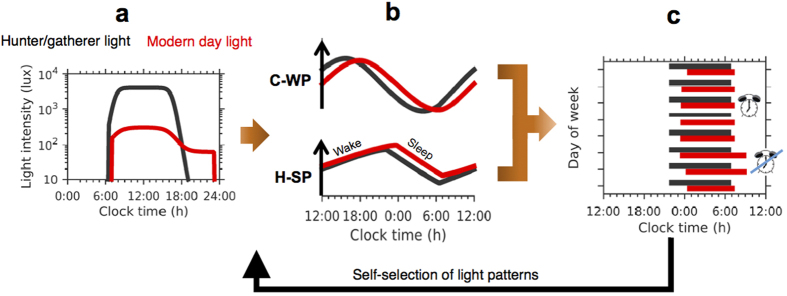
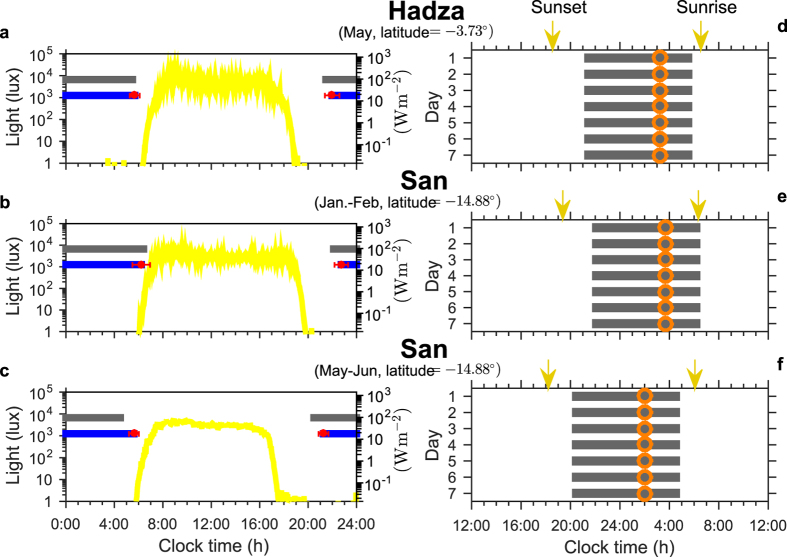
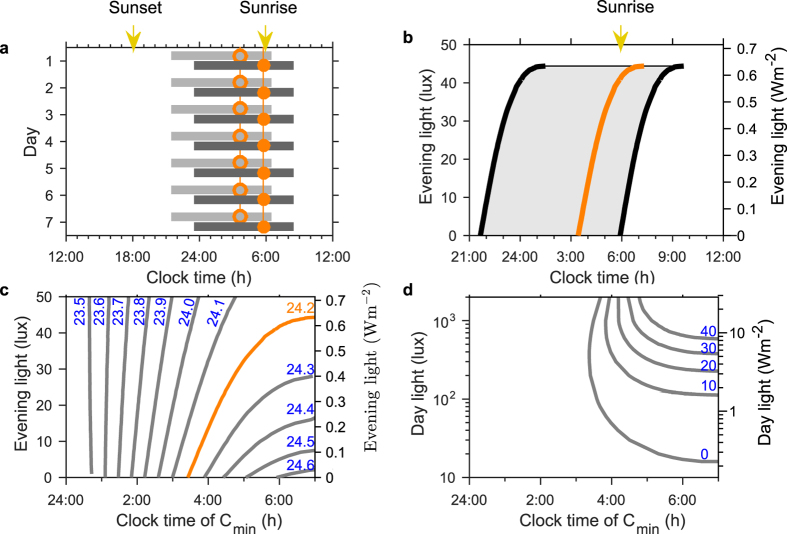
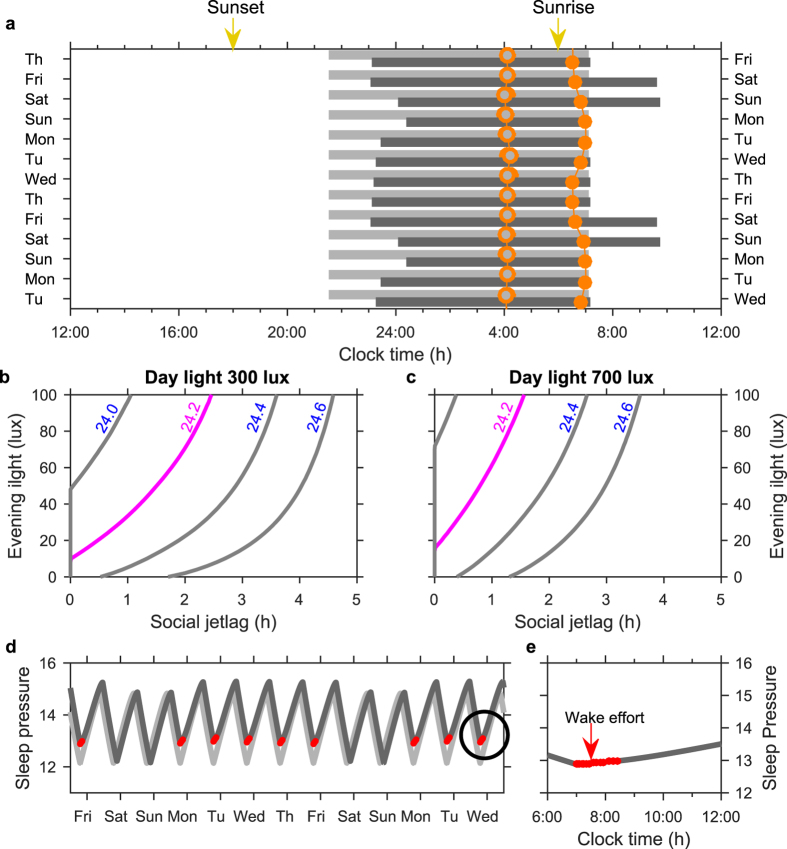
Why do we go to sleep late and struggle to wake up on time? Historically, light-dark cycles were dictated by the solar day, but now humans can extend light exposure by switching on artificial lights. We use a mathematical model incorporating effects of light, circadian rhythmicity and sleep homeostasis to provide a quantitative theoretical framework to understand effects of modern patterns of light consumption on the human circadian system. The model shows that without artificial light humans wakeup at dawn. Artificial light delays circadian rhythmicity and preferred sleep timing and compromises synchronisation to the solar day when wake-times are not enforced. When wake-times are enforced by social constraints, such as work or school, artificial light induces a mismatch between sleep timing and circadian rhythmicity (‘social jet-lag’). The model implies that developmental changes in sleep homeostasis and circadian amplitude make adolescents particularly sensitive to effects of light consumption. The model predicts that ameliorating social jet-lag is more effectively achieved by reducing evening light consumption than by delaying social constraints, particularly in individuals with slow circadian clocks or when imposed wake-times occur after sunrise. These theory-informed predictions may aid design of interventions to prevent and treat circadian rhythm-sleep disorders and social jet-lag.
Overview
The claims and statistics of this paper haven’t been checked yet.
Free: it reads the open-access text and checks the first 5 claims that cite a source we can check. Create a free account to check every claim.
Integrity signals
Registry
Cites
Statistics
Figures
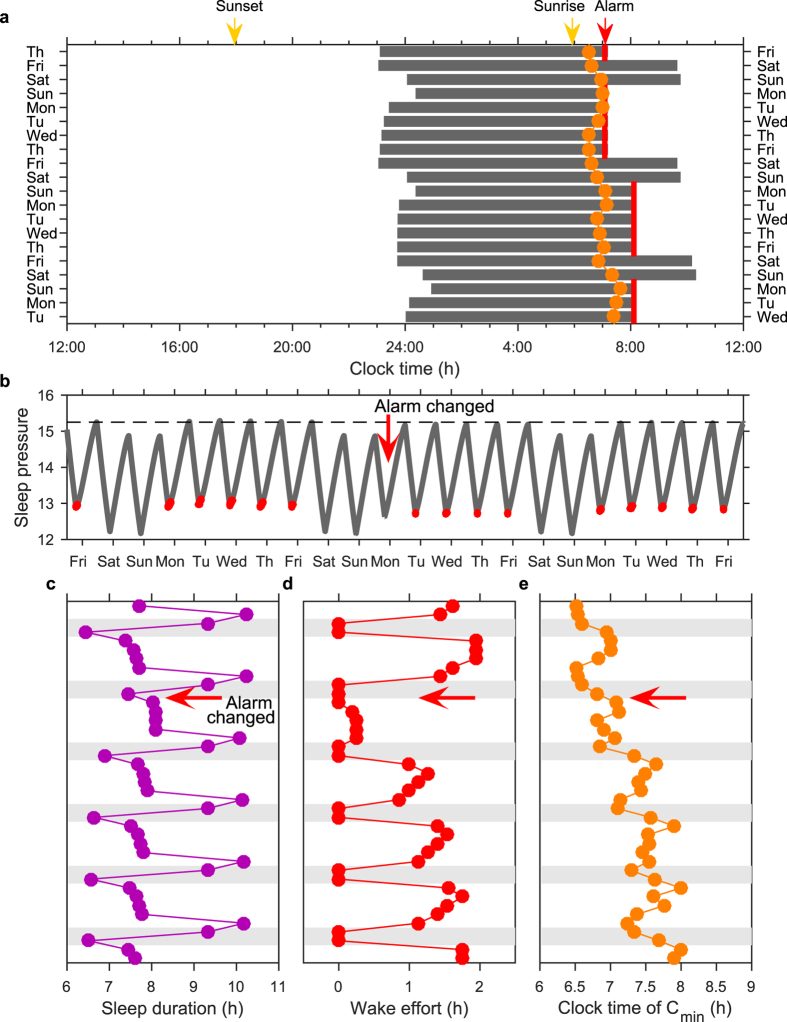
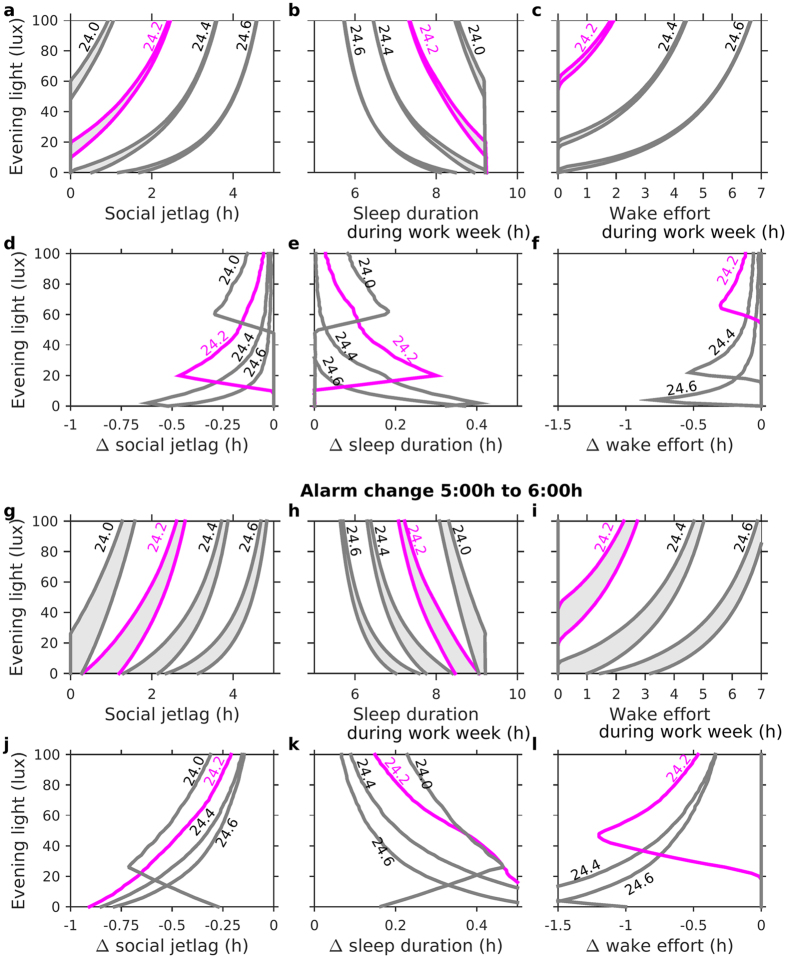
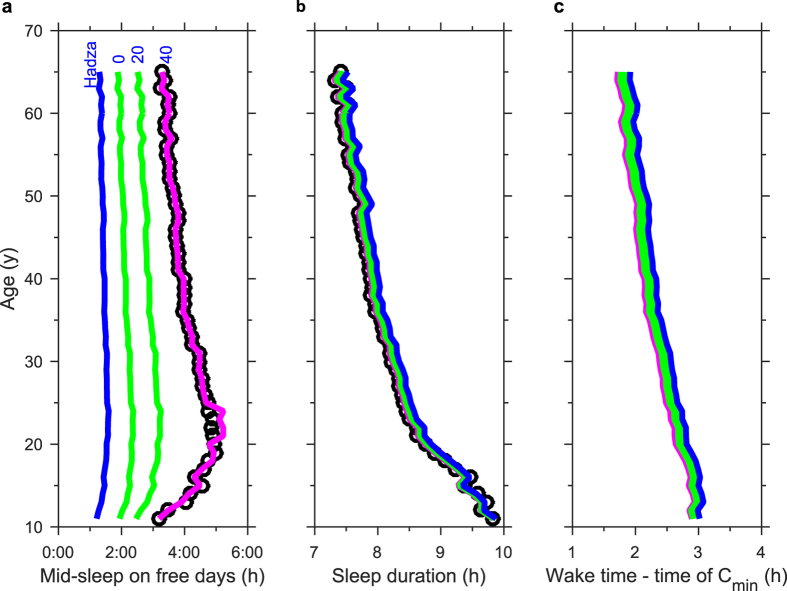
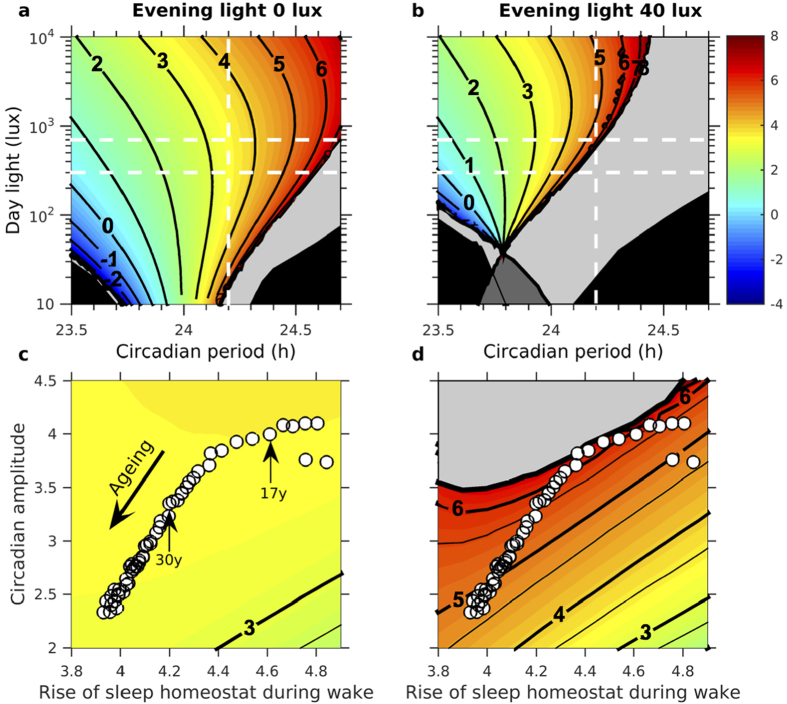
Verification
Claims the paper makes
The claims and statistics of this paper haven’t been checked yet.
Free: it reads the open-access text and checks the first 5 claims that cite a source we can check. Create a free account to check every claim.
Claims other papers make about this one
Each is checked against this paper’s own text: does it say what the citing paper says it does?
The cited source says what the claim attributes to it.
In the citing paper
“We note that this model does not generate sleep/wake patterns, as another recent model does62, 63, as it was not designed for that purpose.”
From Irregular sleep/wake patterns are associated with poorer academic performance and delayed circadian and sleep/wake timing (2017) · cites this paper as [63]
The cited source says what the claim attributes to it.
In the citing paper
“Transitions from weekday to weekend compound the phase delay in the endogenous clock150,151 that is often referred to as ‘social jet-lag’148,152.”
From Rhythms of life: circadian disruption and brain disorders across the lifespan (2019) · cites this paper as [150]
In the citing paper
“Various external stimuli such as light exposure and food intake play dominant roles in the regulation of circadian rhythms and the dark/light cycle is the main external synchronizer of the circadian rhythm [ 43 ].”
From Physiological Rhythms and Biological Variation of Biomolecules: The Road to Personalized Laboratory Medicine (2023) · cites this paper as [43]
Self-check
Percentages, sums and reported differences re-computed from the paper’s own numbers.
The self-check needs the paper’s full text.
Citations
Cites
Two-Process Model of Sleep Regulation
(2009) · Encyclopedia of Neuroscience · doi:10.1007/978-3-540-29678-2_6166 · Cited by 3,899
Hypothalamic regulation of sleep and circadian rhythms
Saper, C. B., Scammell, T. E., & Lu, J. (2005) · Nature · doi:10.1038/nature04284 · Cited by 2,804
Social Jetlag: Misalignment of Biological and Social Time
Wittmann, M., Dinich, J., Merrow, M., & Roenneberg, T. (2006) · Chronobiology International · doi:10.1080/07420520500545979 · Cited by 2,625
The new world atlas of artificial night sky brightness
Falchi, F., Cinzano, P., Duriscoe, D., Kyba, C. C. M., Elvidge, C. D., Baugh, K., Portnov, B. A., Rybnikova, N. A., & Furgoni, R. (2016) · Science Advances · doi:10.1126/sciadv.1600377 · Cited by 1,976
A marker for the end of adolescence
Roenneberg, T., Kuehnle, T., Pramstaller, P. P., Ricken, J., Havel, M., Guth, A., & Merrow, M. (2004) · Current Biology · doi:10.1016/j.cub.2004.11.039 · Cited by 1,585 · cited 3×
“This is represented by the Heaviside function in equation (8), which means that light impinging on photoreceptors is zero if the firing rate of wake promoting neurons, Qm, is greater than a threshold value Qth.”
BackgroundMethodThe two‐process model of sleep regulation: a reappraisal
Borbély, A. A., Daan, S., Wirz‐Justice, A., & Deboer, T. (2016) · Journal of Sleep Research · doi:10.1111/jsr.12371 · Cited by 1,577
Molecular architecture of the mammalian circadian clock
Partch, C. L., Green, C. B., & Takahashi, J. S. (2014) · Trends in Cell Biology · doi:10.1016/j.tcb.2013.07.002 · Cited by 1,449
Timing of human sleep: recovery process gated by a circadian pacemaker
Daan, S., Beersma, D. G., & Borbely, A. A. (1984) · American Journal of Physiology-Regulatory, Integrative and Comparative Physiology · doi:10.1152/ajpregu.1984.246.2.r161 · Cited by 1,419
Dijk, D., & Czeisler, C. (1995) · The Journal of Neuroscience · doi:10.1523/jneurosci.15-05-03526.1995 · Cited by 1,356
Self-citationMeasuring and using light in the melanopsin age
Lucas, R. J., Peirson, S. N., Berson, D. M., Brown, T. M., Cooper, H. M., Czeisler, C. A., Figueiro, M. G., Gamlin, P. D., Lockley, S. W., O’Hagan, J. B., et al. (2014) · Trends in Neurosciences · doi:10.1016/j.tins.2013.10.004 · Cited by 1,278
Zeitzer, J. M., Dijk, D., Kronauer, R. E., Brown, E. N., & Czeisler, C. A. (2000) · The Journal of Physiology · doi:10.1111/j.1469-7793.2000.00695.x · Cited by 1,175
Self-citationThe Circadian Clock and Human Health
Roenneberg, T., & Merrow, M. (2016) · Current Biology · doi:10.1016/j.cub.2016.04.011 · Cited by 1,004
Cajochen, C., Münch, M., Kobialka, S., Kräuchi, K., Steiner, R., Oelhafen, P., Orgül, S., & Wirz-Justice, A. (2005) · The Journal of Clinical Endocrinology & Metabolism · doi:10.1210/jc.2004-0957 · Cited by 939
Luyster, F. S., Strollo, P. J., Zee, P. C., & Walsh, J. K. (2012) · Sleep · doi:10.5665/sleep.1846 · Cited by 853
Entrainment of the Human Circadian Clock to the Natural Light-Dark Cycle
Wright, K. P., McHill, A. W., Birks, B. R., Griffin, B. R., Rusterholz, T., & Chinoy, E. D. (2013) · Current Biology · doi:10.1016/j.cub.2013.06.039 · Cited by 783 · cited 4×
“B = α0(1−n)(1−bx)(1−by) ( Ĩ I0 )p , (7)”
BackgroundMethodInfluentialHigh Sensitivity of the Human Circadian Melatonin Rhythm to Resetting by Short Wavelength Light
Lockley, S. W., Brainard, G. C., & Czeisler, C. A. (2003) · The Journal of Clinical Endocrinology & Metabolism · doi:10.1210/jc.2003-030570 · Cited by 782
Aschoff, J. (1965) · Science · doi:10.1126/science.148.3676.1427 · Cited by 752
Cajochen, C., Frey, S., Anders, D., Späti, J., Bues, M., Pross, A., Mager, R., Wirz-Justice, A., & Stefani, O. (2011) · Journal of Applied Physiology · doi:10.1152/japplphysiol.00165.2011 · Cited by 730
Edgar, D., Dement, W., & Fuller, C. (1993) · The Journal of Neuroscience · doi:10.1523/jneurosci.13-03-01065.1993 · Cited by 666
Dijk, D.-J., & Czeisler, C. A. (1994) · Neuroscience Letters · doi:10.1016/0304-3940(94)90841-9 · Cited by 628
Self-citationSex difference in the near-24-hour intrinsic period of the human circadian timing system
Duffy, J. F., Cain, S. W., Chang, A.-M., Phillips, A. J. K., Münch, M. Y., Gronfier, C., Wyatt, J. K., Dijk, D.-J., Wright, K. P., & Czeisler, C. A. (2011) · Proceedings of the National Academy of Sciences · doi:10.1073/pnas.1010666108 · Cited by 607
Self-citationEntrainment of the human circadian system by light
Duffy, J. F., & Wright, K. P. (2005) · Journal of Biological Rhythms · doi:10.1177/0748730405277983 · Cited by 515
Gradisar, M., Wolfson, A. R., Harvey, A. G., Hale, L., Rosenberg, R., & Czeisler, C. A. (2013) · Journal of Clinical Sleep Medicine · doi:10.5664/jcsm.3272 · Cited by 498
Homeostatic sleep regulation in adolescents
Jenni, O. G., Achermann, P., & Carskadon, M. A. (2005) · Sleep · doi:10.1093/sleep/28.11.1446 · Cited by 469
School Start Times for Adolescents
ADOLESCENT SLEEP WORKING GROUP, COMMITTEE ON ADOLESCENCE, COUNCIL ON SCHOOL HEALTH, Au, R., Carskadon, M., Millman, R., Wolfson, A., Braverman, P. K., Adelman, W. P., Breuner, C. C., et al. (2014) · Pediatrics · doi:10.1542/peds.2014-1697 · Cited by 468
The human circadian clock entrains to sun time
Roenneberg, T., Kumar, C. J., & Merrow, M. (2007) · Current Biology · doi:10.1016/j.cub.2006.12.011 · Cited by 462
Invited Review: Integration of human sleep-wake regulation and circadian rhythmicity
Dijk, D.-J., & Lockley, S. W. (2002) · Journal of Applied Physiology · doi:10.1152/japplphysiol.00924.2001 · Cited by 396
Self-citationNatural Sleep and Its Seasonal Variations in Three Pre-industrial Societies
Yetish, G., Kaplan, H., Gurven, M., Wood, B., Pontzer, H., Manger, P. R., Wilson, C., McGregor, R., & Siegel, J. M. (2015) · Current Biology · doi:10.1016/j.cub.2015.09.046 · Cited by 395
Age-Related Decline in Circadian Output
Nakamura, T. J., Nakamura, W., Yamazaki, S., Kudo, T., Cutler, T., Colwell, C. S., & Block, G. D. (2011) · Journal of Neuroscience · doi:10.1523/jneurosci.0451-11.2011 · Cited by 386
Groeger, J. A., Zijlstra, F. R. H., & Dijk, D. ‐. (2004) · Journal of Sleep Research · doi:10.1111/j.1365-2869.2004.00418.x · Cited by 350
Self-citationDelayed school start times and adolescent sleep: A systematic review of the experimental evidence
Minges, K. E., & Redeker, N. S. (2016) · Sleep Medicine Reviews · doi:10.1016/j.smrv.2015.06.002 · Cited by 338
Effects of caffeine on the human circadian clock in vivo and in vitro
Burke, T. M., Markwald, R. R., McHill, A. W., Chinoy, E. D., Snider, J. A., Bessman, S. C., Jung, C. M., O’Neill, J. S., & Wright, K. P. (2015) · Science Translational Medicine · doi:10.1126/scitranslmed.aac5125 · Cited by 283
Acute exposure to evening blue‐enriched light impacts on human sleep
Chellappa, S. L., Steiner, R., Oelhafen, P., Lang, D., Götz, T., Krebs, J., & Cajochen, C. (2013) · Journal of Sleep Research · doi:10.1111/jsr.12050 · Cited by 283
Crowley, S. J., Van Reen, E., LeBourgeois, M. K., Acebo, C., Tarokh, L., Seifer, R., Barker, D. H., & Carskadon, M. A. (2014) · PLoS ONE · doi:10.1371/journal.pone.0112199 · Cited by 273
Wright, K. P., Hughes, R. J., Kronauer, R. E., Dijk, D.-J., & Czeisler, C. A. (2001) · Proceedings of the National Academy of Sciences · doi:10.1073/pnas.201530198 · Cited by 255
Self-citationIncreased Sensitivity of the Circadian System to Light in Early/Mid-Puberty
Crowley, S. J., Cain, S. W., Burns, A. C., Acebo, C., & Carskadon, M. A. (2015) · The Journal of Clinical Endocrinology & Metabolism · doi:10.1210/jc.2015-2775 · Cited by 248
Perspective: Casting light on sleep deficiency
Czeisler, C. A. (2013) · Nature · doi:10.1038/497s13a · Cited by 243
A global quantification of “normal” sleep schedules using smartphone data
Walch, O. J., Cochran, A., & Forger, D. B. (2016) · Science Advances · doi:10.1126/sciadv.1501705 · Cited by 226
Light and the Human Circadian Clock
Roenneberg, T., Kantermann, T., Juda, M., Vetter, C., & Allebrandt, K. V. (2013) · Handbook of Experimental Pharmacology · doi:10.1007/978-3-642-25950-0_13 · Cited by 220
Santhi, N., Thorne, H. C., van der Veen, D. R., Johnsen, S., Mills, S. L., Hommes, V., Schlangen, L. J. M., Archer, S. N., & Dijk, D. (2012) · Journal of Pineal Research · doi:10.1111/j.1600-079x.2011.00970.x · Cited by 219
Self-citationLight at night, clocks and health: from humans to wild organisms
Dominoni, D. M., Borniger, J. C., & Nelson, R. J. (2016) · Biology Letters · doi:10.1098/rsbl.2016.0015 · Cited by 204
Revised Limit Cycle Oscillator Model of Human Circadian Pacemaker
Jewett, M. E., Forger, D. B., & Kronauer, R. E. (1999) · Journal of Biological Rhythms · doi:10.1177/074873049901400608 · Cited by 172
Neurobiology of Circadian Rhythm Regulation
Rosenwasser, A. M., & Turek, F. W. (2015) · Sleep Medicine Clinics · doi:10.1016/j.jsmc.2015.08.003 · Cited by 170
Skeldon, A. C., Derks, G., & Dijk, D.-J. (2016) · Sleep Medicine Reviews · doi:10.1016/j.smrv.2015.05.011 · Cited by 165
Self-citationA Simpler Model of the Human Circadian Pacemaker
Forger, D. B., Jewett, M. E., & Kronauer, R. E. (1999) · Journal of Biological Rhythms · doi:10.1177/074873099129000867 · Cited by 163 · cited 3×
“This dependence of the intrinsic period on light intensity is controlled by the parameter k in equation (4).”
BackgroundMethodHuman phase response curve to a single 6.5 h pulse of short‐wavelength light
Rüger, M., St Hilaire, M. A., Brainard, G. C., Khalsa, S. S., Kronauer, R. E., Czeisler, C. A., & Lockley, S. W. (2013) · The Journal of Physiology · doi:10.1113/jphysiol.2012.239046 · Cited by 161
de la Iglesia, H. O., Fernández-Duque, E., Golombek, D. A., Lanza, N., Duffy, J. F., Czeisler, C. A., & Valeggia, C. R. (2015) · Journal of Biological Rhythms · doi:10.1177/0748730415590702 · Cited by 156
Daily and seasonal variation in the spectral composition of light exposure in humans
Thorne, H. C., Jones, K. H., Peters, S. P., Archer, S. N., & Dijk, D.-J. (2009) · Chronobiology International · doi:10.1080/07420520903044315 · Cited by 153
Roenneberg, T. (2013) · Nature · doi:10.1038/498427a · Cited by 150
Ohayon, M. M., & Milesi, C. (2016) · Sleep · doi:10.5665/sleep.5860 · Cited by 150
Transition to topological chaos for circle maps
MacKay, R. S., & Tresser, C. P. (1986) · Physica D Nonlinear Phenomena · doi:10.1016/0167-2789(86)90020-5 · Cited by 136
The luminous efficacy of daylight: a review
Littlefair, P. J. (1985) · Lighting Research & Technology · doi:10.1177/14771535850170040401 · Cited by 131
Tuning the phase of circadian entrainment
Bordyugov, G., Abraham, U., Granada, A. E., Rose, P., Imkeller, K., Kramer, A., & Herzel, H. (2015) · Journal of The Royal Society Interface · doi:10.1098/rsif.2015.0282 · Cited by 97
Probing the Mechanisms of Chronotype Using Quantitative Modeling
Phillips, A. J. K., Chen, P. Y., & Robinson, P. A. (2010) · Journal of Biological Rhythms · doi:10.1177/0748730410369208 · Cited by 97 · cited 5×
“In the mathematical model presented in equations (1)-(10), these two changes can be modelled by reducing the parameters μ and νvc.”
BackgroundMethodInfluentialSelf-citationSleep patterns in Amazon rubber tappers with and without electric light at home
Moreno, C. R. C., Vasconcelos, S., Marqueze, E. C., Lowden, A., Middleton, B., Fischer, F. M., Louzada, F. M., & Skene, D. J. (2015) · Scientific Reports · doi:10.1038/srep14074 · Cited by 95
Non–24-Hour Sleep–Wake Rhythm Disorder in Sighted and Blind Patients
Uchiyama, M., & Lockley, S. W. (2015) · Sleep Medicine Clinics · doi:10.1016/j.jsmc.2015.07.006 · Cited by 87
Longitudinal Outcomes of Start Time Delay on Sleep, Behavior, and Achievement in High School
Thacher, P. V., & Onyper, S. V. (2016) · Sleep · doi:10.5665/sleep.5426 · Cited by 83
Adolescents Living in Homes Without Electric Lighting Have Earlier Sleep Times
Peixoto, C. A. T., da Silva, A. G. T., Carskadon, M. A., & Louzada, F. M. (2009) · Behavioral Sleep Medicine · doi:10.1080/15402000902762311 · Cited by 79
Skeldon, A. C., Dijk, D.-J., & Derks, G. (2014) · PLoS ONE · doi:10.1371/journal.pone.0103877 · Cited by 74
Self-citationPolos, P. G., Bhat, S., Gupta, D., O'Malley, R. J., DeBari, V. A., Upadhyay, H., Chaudhry, S., Nimma, A., Pinto‐Zipp, G., & Chokroverty, S. (2015) · Journal of Adolescence · doi:10.1016/j.adolescence.2015.08.002 · Cited by 62
Lazar, A. S., Santhi, N., Hasan, S., Lo, J. C. ‐., Johnston, J. D., Von Schantz, M., Archer, S. N., & Dijk, D. (2013) · Journal of Sleep Research · doi:10.1111/jsr.12001 · Cited by 59
Self-citationCardiac arrhythmias and circle mappingsa)
Arnold, V. I. (1991) · Chaos An Interdisciplinary Journal of Nonlinear Science · doi:10.1063/1.165812 · Cited by 57
Synchronizing education to adolescent biology: ‘let teens sleep, start school later.’
Kelley, P., Lockley, S. W., Foster, R. G., & Kelley, J. (2015) · Learning, Media and Technology · doi:10.1080/17439884.2014.942666 · Cited by 56
Genetic redundancy strengthens the circadian clock leading to a narrow entrainment range
Erzberger, A., Hampp, G., Granada, A. E., Albrecht, U., & Herzel, H. (2013) · Journal of The Royal Society Interface · doi:10.1098/rsif.2013.0221 · Cited by 52
Exploring Sleepiness and Entrainment on Permanent Shift Schedules in a Physiologically Based Model
Postnova, S., Layden, A., Robinson, P. A., Phillips, A. J. K., & Abeysuriya, R. (2012) · Journal of Biological Rhythms · doi:10.1177/0748730411419934 · Cited by 50
Self-citationModeling the impact of impulsive stimuli on sleep-wake dynamics
Fulcher, B. D., Phillips, A. J. K., & Robinson, P. A. (2008) · Physical Review E · doi:10.1103/physreve.78.051920 · Cited by 46
Self-citationRevisiting Spontaneous Internal Desynchrony Using a Quantitative Model of Sleep Physiology
Phillips, A. J. K., Czeisler, C. A., & Klerman, E. B. (2011) · Journal of Biological Rhythms · doi:10.1177/0748730411414163 · Cited by 45
Self-citationPostnova, S., Postnov, D. D., Seneviratne, M. G., & Robinson, P. A. (2014) · Journal of Biological Rhythms · doi:10.1177/0748730413516837 · Cited by 38
Systemic and Cellular Reflections on Ageing and the Circadian Oscillator – A Mini-Review
Brown, S. A., Pagani, L., Cajochen, C., & Eckert, A. (2010) · Gerontology · doi:10.1159/000320673 · Cited by 35
Pacer cell response to periodic Zeitgebers
Beersma, D. G. M., Broer, H., Efstathiou, K., Gargar, K. A., & Hoveijn, I. (2011) · Physica D Nonlinear Phenomena · doi:10.1016/j.physd.2011.06.019 · Cited by 6
Cited by
Rhythms of life: circadian disruption and brain disorders across the lifespan
Logan, R. W., & McClung, C. A. (2019) · Nature Reviews Neuroscience · doi:10.1038/s41583-018-0088-y · Cited by 713
Phillips, A. J. K., Clerx, W. M., O’Brien, C. S., Sano, A., Barger, L. K., Picard, R. W., Lockley, S. W., Klerman, E. B., & Czeisler, C. A. (2017) · Scientific Reports · doi:10.1038/s41598-017-03171-4 · Cited by 647
Self-citationThe nexus between air pollution, green infrastructure and human health
Kumar, P., Druckman, A., Gallagher, J., Gatersleben, B., Allison, S., Eisenman, T. S., Hoang, U., Hama, S., Tiwari, A., Sharma, A., et al. (2019) · Environment International · doi:10.1016/j.envint.2019.105181 · Cited by 462
“In addition to restoration and instoration-based domain pathways, more green space may also reduce exposure to noise and artificial light in the evenings, which are contributors to sleep and circadian disruption (Skeldon et al., 2017).”
BackgroundSelf-citationPhillips, A. J. K., Vidafar, P., Burns, A. C., McGlashan, E. M., Anderson, C., Rajaratnam, S. M. W., Lockley, S. W., & Cain, S. W. (2019) · Proceedings of the National Academy of Sciences · doi:10.1073/pnas.1901824116 · Cited by 430
Self-citationCircadian rhythms and disorders of the timing of sleep
Meyer, N., Harvey, A. G., Lockley, S. W., & Dijk, D.-J. (2022) · The Lancet · doi:10.1016/s0140-6736(22)00877-7 · Cited by 346
Self-citation
Metadata
- Authors
- Skeldon, A. C., Phillips, A. J. K., & Dijk, D.-J.
- Affiliations
- University of Surrey (GB)
- Brigham and Women's Hospital (US)
- Corresponding author
- Skeldon, Anne C.
- Venue
- Scientific Reports
- Published
- 2017-03-27
- Volume
- 7
- Issue
- 1
- Pages
- 45158-45158
- ISSN
- 2045-2322 (ISSN-L)
- PMC
- PMC5366875
- OpenAlex
- W2599514141
- Cited by
- 155
- References
- 70
- Citations by year
- 2026: 15 · 2025: 15 · 2024: 10 · 2023: 27 · 2022: 14 · 2021: 25 · 2020: 15 · 2019: 18 · 2018: 11 · 2017: 5
- FWCI
- 8.16
- Type
- journal article
- Language
- en
- Open access
- gold
- doi.org
- Licence
- cc-by
- creativecommons.org/licenses/by/4.0 (tdm)
- creativecommons.org/licenses/by/4.0 (vor)
- Locations
- Scientific Reports (publishedVersion, cc-by)
- PubMed Central (publishedVersion, cc-by)
- PubMed (publishedVersion)
- Digital Access to Scholarship at Harvard (DASH) (Harvard University) (submittedVersion, cc-by)
- Surrey Research Insight Open Access (The University of Surrey) (submittedVersion)
- Funders
- Engineering and Physical Sciences Research Council (EP/I000992/1)
- National Heart, Lung, and Blood Institute (R00HL119618)
- Topics
- Life Sciences › Neuroscience › Endocrine and Autonomic Systems › Circadian rhythm and melatonin
- Social Sciences › Psychology › Experimental and Cognitive Psychology › Sleep and related disorders
- Social Sciences › Psychology › Experimental and Cognitive Psychology › Sleep and Work-Related Fatigue
- Keywords
- social jetlag, circadian rhythm, sleep homeostasis, artificial light exposure, light-dark cycle, circadian timing, sleep timing, social constraints, circadian amplitude, adolescents, circadian rhythm sleep disorders
- MeSH terms
- Circadian Rhythm, Homeostasis, Humans, Models, Neurological, Social Behavior, Social Environment, Photoperiod
About these checks
Registry, retraction, Cites and statistics results are computed, not judged, with one exception: a printed reference that no index lists is read once by a model before it counts as a citation error. Claims are extracted by a model and kept only when their quote appears verbatim in the text; each cited source is then checked, with a model’s help, for whether it says what the claim relies on. Those verdicts can be wrong — read the claim’s quote and the cited source before relying on one.
Statistics and arithmetic are recomputed, not judged.
Confidence bands are shown only for fields calibrated on our annotated test set. None is calibrated yet, so no band is shown.
What counts as a claim ›How we measure confidence ›How we check this ›
Are you an author, or do you see a problem with this page? Request a review
Data sources
Bibliographic data: Semantic Scholar, OpenAlex, Crossref.
Contains information from the Semantic Scholar Academic Graph Datasets, made available under the ODC Attribution License (ODC-BY 1.0).
Semantic Scholar’s data is described in: Kinney, R., et al. (2023). The Semantic Scholar Open Data Platform. arXiv:2301.10140.
