

The effects of self-selected light-dark cycles and social constraints on human sleep and circadian timing: a modeling approach
Open accessThe DOI matches its Crossref record; 70 of the 70 references it cites were found in a registry or an index.
Abstract
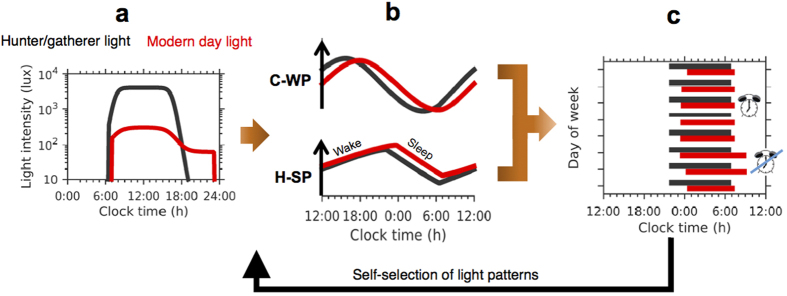
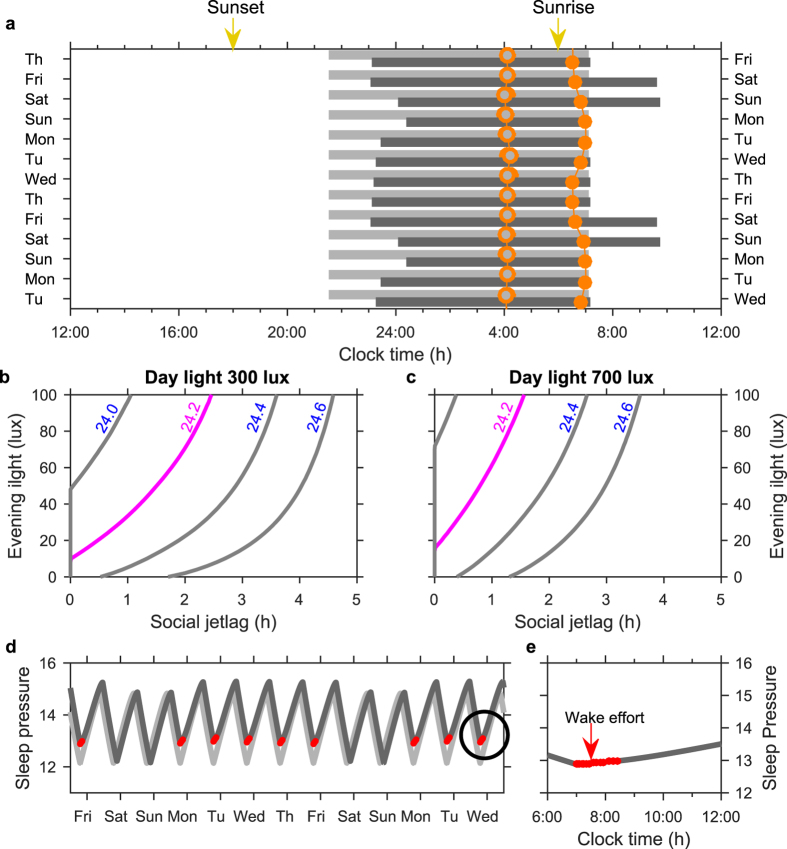
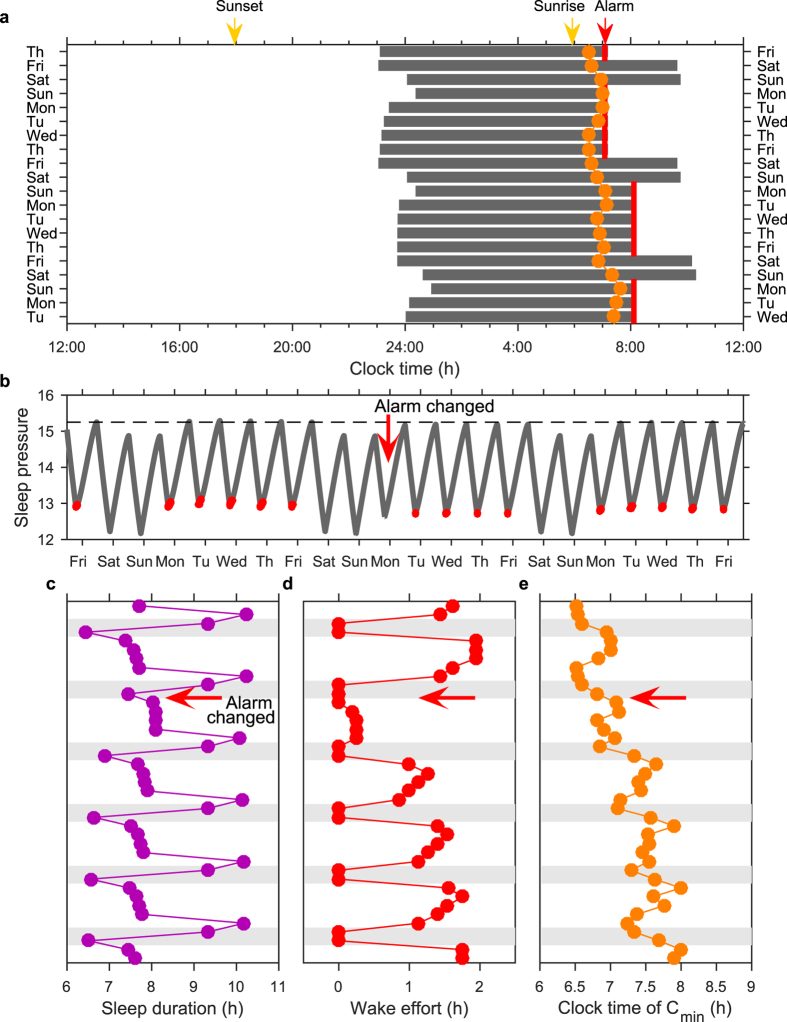
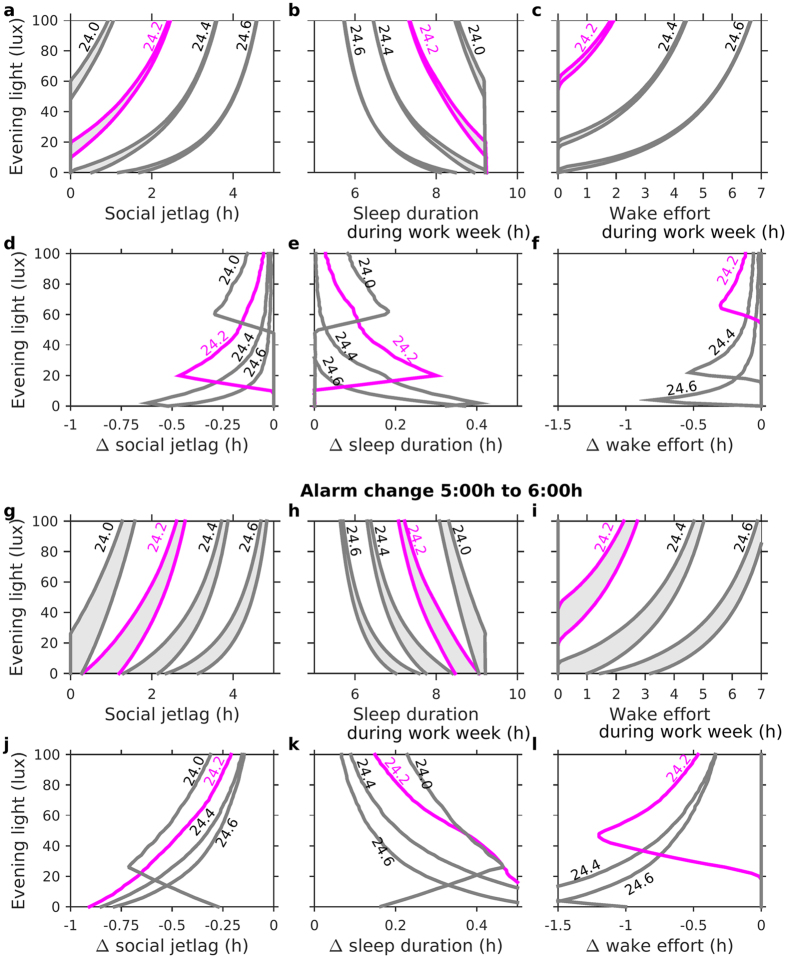
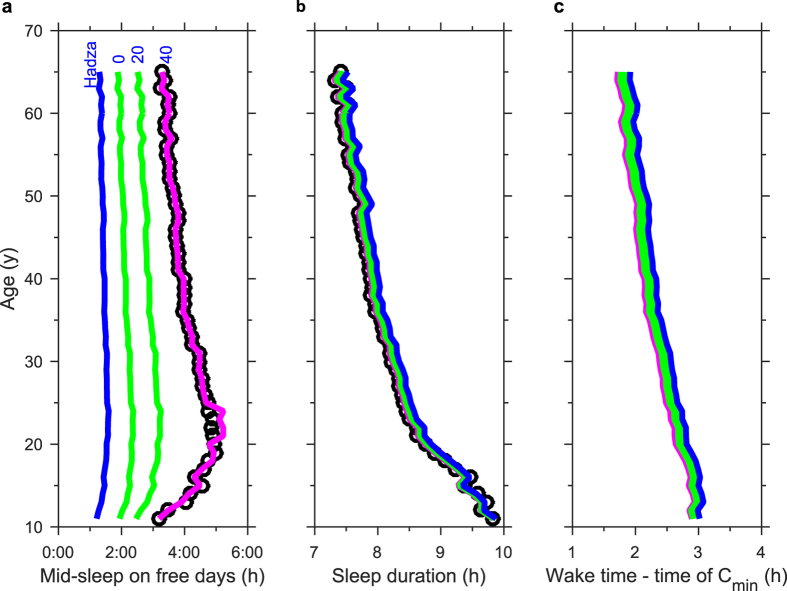
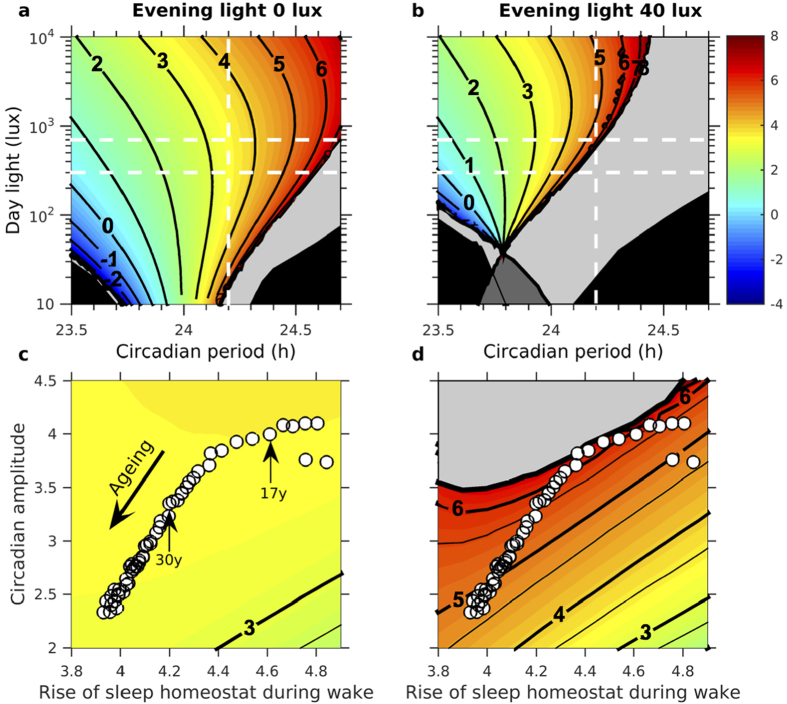
Why do we go to sleep late and struggle to wake up on time? Historically, light-dark cycles were dictated by the solar day, but now humans can extend light exposure by switching on artificial lights. We use a mathematical model incorporating effects of light, circadian rhythmicity and sleep homeostasis to provide a quantitative theoretical framework to understand effects of modern patterns of light consumption on the human circadian system. The model shows that without artificial light humans wakeup at dawn. Artificial light delays circadian rhythmicity and preferred sleep timing and compromises synchronisation to the solar day when wake-times are not enforced. When wake-times are enforced by social constraints, such as work or school, artificial light induces a mismatch between sleep timing and circadian rhythmicity (‘social jet-lag’). The model implies that developmental changes in sleep homeostasis and circadian amplitude make adolescents particularly sensitive to effects of light consumption. The model predicts that ameliorating social jet-lag is more effectively achieved by reducing evening light consumption than by delaying social constraints, particularly in individuals with slow circadian clocks or when imposed wake-times occur after sunrise. These theory-informed predictions may aid design of interventions to prevent and treat circadian rhythm-sleep disorders and social jet-lag.
Overview
The claims and statistics of this paper haven’t been checked yet.
Free: it reads the open-access text and checks the first 5 claims that cite a source we can check. Create a free account to check every claim.
Integrity signals
Registry
Cites
Statistics
Figures
Verification
Claims the paper makes
The claims and statistics of this paper haven’t been checked yet.
Free: it reads the open-access text and checks the first 5 claims that cite a source we can check. Create a free account to check every claim.
Claims other papers make about this one
Each is checked against this paper’s own text: does it say what the citing paper says it does?
The cited source says what the claim attributes to it.
In the citing paper
“We note that this model does not generate sleep/wake patterns, as another recent model does62, 63, as it was not designed for that purpose.”
From Irregular sleep/wake patterns are associated with poorer academic performance and delayed circadian and sleep/wake timing (2017) · cites this paper as [63]
The cited source says what the claim attributes to it.
In the citing paper
“Transitions from weekday to weekend compound the phase delay in the endogenous clock150,151 that is often referred to as ‘social jet-lag’148,152.”
From Rhythms of life: circadian disruption and brain disorders across the lifespan (2019) · cites this paper as [150]
In the citing paper
“Various external stimuli such as light exposure and food intake play dominant roles in the regulation of circadian rhythms and the dark/light cycle is the main external synchronizer of the circadian rhythm [ 43 ].”
From Physiological Rhythms and Biological Variation of Biomolecules: The Road to Personalized Laboratory Medicine (2023) · cites this paper as [43]
Self-check
Percentages, sums and reported differences re-computed from the paper’s own numbers.
The self-check needs the paper’s full text.
Citations
Cites
Two-Process Model of Sleep Regulation
(2009) · Encyclopedia of Neuroscience · doi:10.1007/978-3-540-29678-2_6166 · Cited by 3,899
Hypothalamic regulation of sleep and circadian rhythms
Saper, C. B., Scammell, T. E., & Lu, J. (2005) · Nature · doi:10.1038/nature04284 · Cited by 2,804
Social Jetlag: Misalignment of Biological and Social Time
Wittmann, M., Dinich, J., Merrow, M., & Roenneberg, T. (2006) · Chronobiology International · doi:10.1080/07420520500545979 · Cited by 2,625
The new world atlas of artificial night sky brightness
Falchi, F., Cinzano, P., Duriscoe, D., Kyba, C. C. M., Elvidge, C. D., Baugh, K., Portnov, B. A., Rybnikova, N. A., & Furgoni, R. (2016) · Science Advances · doi:10.1126/sciadv.1600377 · Cited by 1,976
A marker for the end of adolescence
Roenneberg, T., Kuehnle, T., Pramstaller, P. P., Ricken, J., Havel, M., Guth, A., & Merrow, M. (2004) · Current Biology · doi:10.1016/j.cub.2004.11.039 · Cited by 1,585 · cited 3×
“This is represented by the Heaviside function in equation (8), which means that light impinging on photoreceptors is zero if the firing rate of wake promoting neurons, Qm, is greater than a threshold value Qth.”
BackgroundMethodThe two‐process model of sleep regulation: a reappraisal
Borbély, A. A., Daan, S., Wirz‐Justice, A., & Deboer, T. (2016) · Journal of Sleep Research · doi:10.1111/jsr.12371 · Cited by 1,577
Molecular architecture of the mammalian circadian clock
Partch, C. L., Green, C. B., & Takahashi, J. S. (2014) · Trends in Cell Biology · doi:10.1016/j.tcb.2013.07.002 · Cited by 1,449
Timing of human sleep: recovery process gated by a circadian pacemaker
Daan, S., Beersma, D. G., & Borbely, A. A. (1984) · American Journal of Physiology-Regulatory, Integrative and Comparative Physiology · doi:10.1152/ajpregu.1984.246.2.r161 · Cited by 1,419
Dijk, D., & Czeisler, C. (1995) · The Journal of Neuroscience · doi:10.1523/jneurosci.15-05-03526.1995 · Cited by 1,356
Self-citationMeasuring and using light in the melanopsin age
Lucas, R. J., Peirson, S. N., Berson, D. M., Brown, T. M., Cooper, H. M., Czeisler, C. A., Figueiro, M. G., Gamlin, P. D., Lockley, S. W., O’Hagan, J. B., et al. (2014) · Trends in Neurosciences · doi:10.1016/j.tins.2013.10.004 · Cited by 1,278
Cited by
Rhythms of life: circadian disruption and brain disorders across the lifespan
Logan, R. W., & McClung, C. A. (2019) · Nature Reviews Neuroscience · doi:10.1038/s41583-018-0088-y · Cited by 713
Phillips, A. J. K., Clerx, W. M., O’Brien, C. S., Sano, A., Barger, L. K., Picard, R. W., Lockley, S. W., Klerman, E. B., & Czeisler, C. A. (2017) · Scientific Reports · doi:10.1038/s41598-017-03171-4 · Cited by 647
Self-citationThe nexus between air pollution, green infrastructure and human health
Kumar, P., Druckman, A., Gallagher, J., Gatersleben, B., Allison, S., Eisenman, T. S., Hoang, U., Hama, S., Tiwari, A., Sharma, A., et al. (2019) · Environment International · doi:10.1016/j.envint.2019.105181 · Cited by 462
“In addition to restoration and instoration-based domain pathways, more green space may also reduce exposure to noise and artificial light in the evenings, which are contributors to sleep and circadian disruption (Skeldon et al., 2017).”
BackgroundSelf-citationPhillips, A. J. K., Vidafar, P., Burns, A. C., McGlashan, E. M., Anderson, C., Rajaratnam, S. M. W., Lockley, S. W., & Cain, S. W. (2019) · Proceedings of the National Academy of Sciences · doi:10.1073/pnas.1901824116 · Cited by 430
Self-citationCircadian rhythms and disorders of the timing of sleep
Meyer, N., Harvey, A. G., Lockley, S. W., & Dijk, D.-J. (2022) · The Lancet · doi:10.1016/s0140-6736(22)00877-7 · Cited by 346
Self-citationCircadian disruption: what do we actually mean?
Vetter, C. (2020) · European Journal of Neuroscience · doi:10.1111/ejn.14255 · Cited by 333
“For example, one would predict that extremely dark bedrooms precluding natural light exposure will result in activity patterns preceding light onset (e.g., Skeldon et al., 2017; Swaminathan et al., 2017), while this is likely to result in a late circadian phenotype, and even exacerbate it.”
BackgroundSleep timing, chronotype and social jetlag: Impact on cognitive abilities and psychiatric disorders
Taillard, J., Sagaspe, P., Philip, P., & Bioulac, S. (2021) · Biochemical Pharmacology · doi:10.1016/j.bcp.2021.114438 · Cited by 288
Effects of lockdown on human sleep and chronotype during the COVID-19 pandemic
Leone, M. J., Sigman, M., & Golombek, D. A. (2020) · Current Biology · doi:10.1016/j.cub.2020.07.015 · Cited by 232
“Since these are the main entrainment factors for biological rhythms [2], we hypothesized that the lockdown may have affected sleep and circadian rhythms.”
Burns, A. C., Saxena, R., Vetter, C., Phillips, A. J. K., Lane, J. M., & Cain, S. W. (2021) · Journal of Affective Disorders · doi:10.1016/j.jad.2021.08.056 · Cited by 193
Self-citationKorman, M., Tkachev, V., Reis, C., Komada, Y., Kitamura, S., Gubin, D., Kumar, V., & Roenneberg, T. (2020) · Scientific Reports · doi:10.1038/s41598-020-79299-7 · Cited by 161
Novel Approaches for Assessing Circadian Rhythmicity in Humans: A Review
Dijk, D.-J., & Duffy, J. F. (2020) · Journal of Biological Rhythms · doi:10.1177/0748730420940483 · Cited by 138
“in part driven by the timing of sleep and social constraints (Skeldon et al., 2017), are the main”
BackgroundSelf-citationInterplay of chronotype and school timing predicts school performance
Goldin, A. P., Sigman, M., Braier, G., Golombek, D. A., & Leone, M. J. (2020) · Nature Human Behaviour · doi:10.1038/s41562-020-0820-2 · Cited by 142
Evening home lighting adversely impacts the circadian system and sleep
Cain, S. W., McGlashan, E. M., Vidafar, P., Mustafovska, J., Curran, S. P. N., Wang, X., Mohamed, A., Kalavally, V., & Phillips, A. J. K. (2020) · Scientific Reports · doi:10.1038/s41598-020-75622-4 · Cited by 117
Self-citationFaulkner, S., Bee, P., Meyer, N., Dijk, D., & Drake, R. (2019) · Sleep Medicine Reviews · doi:10.1016/j.smrv.2019.04.012 · Cited by 115
Self-citationFischer, D. R., McHill, A. W., Sano, A., Picard, R. W., Barger, L. K., Czeisler, C. A., Klerman, E. B., & Phillips, A. J. K. (2019) · SLEEP · doi:10.1093/sleep/zsz300 · Cited by 109
“Extending this work to other cohorts that include more rigid work and/or sleep schedules would be predicted to reveal a stronger coupling between sleep timing and work constraints [43, 45].”
BackgroundSelf-citationIncreased sensitivity of the circadian system to light in delayed sleep–wake phase disorder
Watson, L. A., Phillips, A. J. K., Hosken, I. T., McGlashan, E. M., Anderson, C., Lack, L. C., Lockley, S. W., Rajaratnam, S. M. W., & Cain, S. W. (2018) · The Journal of Physiology · doi:10.1113/jp275917 · Cited by 80
“The Journal of Physiology C© 2018 The Physiological Society amplifies individual differences in circadian and sleep timing (Skeldon et al. 2017; Swaminathan et al. 2017).”
BackgroundSelf-citationDijk, D., & Landolt, H. (2019) · Handbook of experimental pharmacology · doi:10.1007/164_2019_243 · Cited by 97
Self-citationSong, Y. M., Jeong, J., Reyes, A. A. D. L., V, Lim, D., Cho, C., Yeom, J. W., Lee, T., Lee, J.-B., Lee, H., & Kim, J. K. (2024) · EBioMedicine · doi:10.1016/j.ebiom.2024.105094 · Cited by 87
“71 Nevertheless, our TE analysis suggests that the causal link between circadian phase disruption and mood symptoms is much stronger than that between sleep phase disruption and mood symptoms in patients with MDD and BDI.”
BackgroundDíaz‐Morales, J. F., Randler, C., Arrona‐Palacios, A., & Adán, A. (2017) · Chronobiology International · doi:10.1080/07420528.2017.1361437 · Cited by 74
“Moreover, the effects of self-selected light/dark cycles and social constraints are under control of the lifestyle of people (Martinez-Nicolas et al. 2014; Skeldon et al. 2017).”
BackgroundWinsky‐Sommerer, R., de Oliveira, P., Loomis, S., Wafford, K. A., Dijk, D., & Gilmour, G. (2018) · Neuroscience & Biobehavioral Reviews · doi:10.1016/j.neubiorev.2018.09.027 · Cited by 76
“The absence of social constraints on sleep timing may lead to reduced exposure to daylight- the major synchroniser of the human circadian timing system- that may exacerbate circadian disturbance (Skeldon et al., 2017).”
BackgroundSelf-citationMathematical modeling of circadian rhythms
Asgari‐Targhi, A., & Klerman, E. B. (2019) · WIREs Systems Biology and Medicine · doi:10.1002/wsbm.1439 · Cited by 69
Moreno, J. P., Crowley, S. J., Alfano, C. A., Hannay, K. M., Thompson, D. I., & Baranowski, T. (2019) · International Journal of Behavioral Nutrition and Physical Activity · doi:10.1186/s12966-019-0784-7 · Cited by 72
“school) and free days, optimal duration of sleep, limiting exposure to artificial light in the evenings [115], encouraging light exposure during the day, particularly in the morning [116], encouraging physical activity (to enhance evening fatigue) [99, 100, 117, 118], promoting an overnight fast by limiting food intak…”
BackgroundDelayed sleep-wake phase disorder
Nesbitt, A. D. (2018) · Journal of Thoracic Disease · doi:10.21037/jtd.2018.01.11 · Cited by 77
“Many introductory chapters and reviews have been written outlining the physiology relevant to CRSDs (4-9), as well as several manuscripts providing broad overviews of the circadian rhythm sleep disorders in a clinical context (10-13).”
BackgroundInfluentialCoskun, A., Zarepour, A., & Zarrabi, A. (2023) · International Journal of Molecular Sciences · doi:10.3390/ijms24076275 · Cited by 61
Arrona‐Palacios, A., & Díaz‐Morales, J. F. (2017) · British Journal of Educational Psychology · doi:10.1111/bjep.12196 · Cited by 68
“Skeldon et al. (2017) proposed mathematical models where reduction in light exposure at night could have a greater effect in advancing adolescents’ phase of circadian rhythms than an earlier school start time could, confirming the previously noted results of Crowley et al. (2015).”
ResultChronotype and environmental light exposure in a student population
Porcheret, K., Wald, L., Fritschi, L., Gerkema, M., Gordijn, M., Merrrow, M., Rajaratnam, S. M. W., Rock, D., Sletten, T. L., Warman, G., et al. (2018) · Chronobiology International · doi:10.1080/07420528.2018.1482556 · Cited by 58
“Individuals with a longer intrinsic clock and hence later chronotype are predicted to be more susceptible to evening light, causing even more of a delay in the circadian cycle (Skeldon et al. 2017).”
BackgroundDiekman, C. O., & Bose, A. (2017) · Journal of Theoretical Biology · doi:10.1016/j.jtbi.2017.10.002 · Cited by 64
Stone, J. E., McGlashan, E. M., Quin, N., Skinner, K., Stephenson, J. J., Cain, S. W., & Phillips, A. J. K. (2020) · Journal of Biological Rhythms · doi:10.1177/0748730420962598 · Cited by 58
“Prior studies have focused on the intrinsic circadian period as a parameter that could account for interindividual differences in circadian timing (Granada et al., 2013; Skeldon et al., 2017; Swaminathan et al., 2017; Woelders et al., 2017).”
BackgroundSelf-citationHand, A. J., Stone, J. E., Shen, L., Vetter, C., Cain, S. W., Bei, B., & Phillips, A. J. K. (2023) · SLEEP · doi:10.1093/sleep/zsad001 · Cited by 67
“Sleep can therefore be viewed as a gate for light [39, 40], meaning that irregular sleep patterns would be expected to result in irregular light input to the circadian system, and subsequent circadian disruption [14].”
BackgroundSelf-citationClocks in the Wild: Entrainment to Natural Light
Schmal, C., Herzel, H., & Myung, J. (2020) · Frontiers in Physiology · doi:10.3389/fphys.2020.00272 · Cited by 63
“Self-selected light during the night has been described to affect the sleep-wake behavior in humans (Skeldon et al., 2017; Pilz et al., 2018).”
BackgroundMassar, S. A. A., Ng, A., Soon, C. S., Ong, J. L., Chua, X. Y., Chee, N. I. Y. N., Lee, T.-S. W., & Chee, M. W. L. (2021) · SLEEP · doi:10.1093/sleep/zsab250 · Cited by 66
“However late sleep schedules, in general, are associated with negative health outcomes, and may reflect misalignment with natural night-day rhythms, due to reduced exposure to social and nat-ural time cues [10, 40, 61].”
Computational approaches for individual circadian phase prediction in field settings
Stone, J. E., Postnova, S., Sletten, T. L., Rajaratnam, S. M. W., & Phillips, A. J. K. (2020) · Current Opinion in Systems Biology · doi:10.1016/j.coisb.2020.07.011 · Cited by 47
Self-citationDíaz‐Morales, J. F., & Parra-Robledo, Z. (2018) · The Journal of Genetic Psychology · doi:10.1080/00221325.2018.1424706 · Cited by 53
Personalized Office Lighting for Circadian Health and Improved Sleep
Papatsimpa, C., & Linnartz, J. M. G. (2020) · Sensors · doi:10.3390/s20164569 · Cited by 55
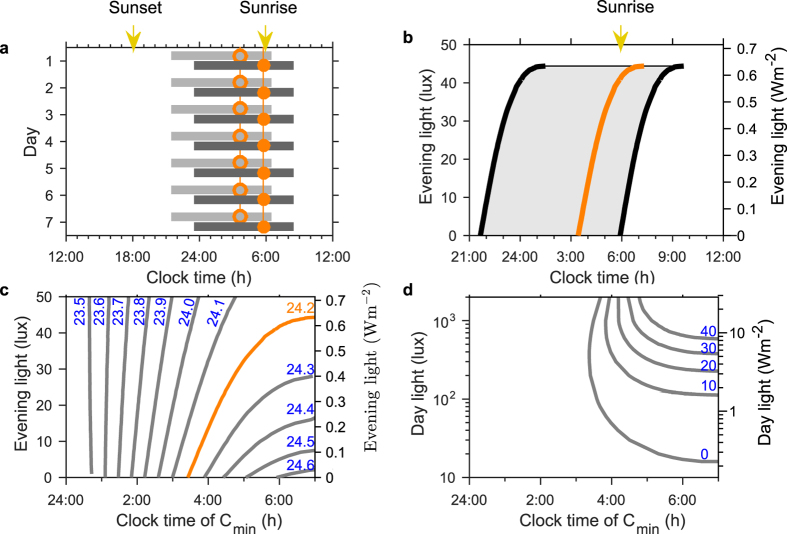
“The reduction of evening light consumption is relatively more effective, since the relationship between day‐time and evening light exposure is highly nonlinear, with large increases in day‐time light intensity needed to offset small increases in evening light intensity [23].”
BackgroundShochat, T., Santhi, N., Herer, P., Flavell, S. A., Skeldon, A. C., & Dijk, D. (2019) · Frontiers in Neuroscience · doi:10.3389/fnins.2019.00882 · Cited by 45
Self-citationSkeldon, A. C., Dijk, D., Meyer, N., & Wulff, K. (2021) · Schizophrenia Bulletin · doi:10.1093/schbul/sbab124 · Cited by 46
Self-citationPapatsimpa, C., Schlangen, L. J. M., Smolders, K. C. H. J., Linnartz, J. M. G., & de Kort, Y. A. W. (2021) · Scientific Reports · doi:10.1038/s41598-021-92863-z · Cited by 48
Wang, Y., Chen, Z., Guo, F., Huang, Z. R., Jiang, L., Duan, Q., & Zhang, J. (2017) · PsyCh Journal · doi:10.1002/pchj.189 · Cited by 38
A real-time, personalized sleep intervention using mathematical modeling and wearable devices
Song, Y. M., Choi, S. J., Park, S. H., Lee, S. J., Joo, E. Y., & Kim, J. K. (2023) · SLEEP · doi:10.1093/sleep/zsad179 · Cited by 48
Delayed sleep in winter related to natural daylight exposure among Arctic day workers
Lowden, A., Lemos, N. A. M., Gonçalves, B. S. B., Öztürk, G., Louzada, F., Pedrazzoli, M., & Moreno, C. R. (2018) · Clocks & Sleep · doi:10.3390/clockssleep1010010 · Cited by 38
“Exposure to daylight and solar timing in electrified in-door oriented societies show influences affecting human behavior and should therefore be recognized, although behaviors such as sleep timing is also regulated under social control [2].”
BackgroundStone, J. E., Phillips, A. J. K., Chachos, E., Hand, A. J., Lu, S., Carskadon, M. A., Klerman, E. B., Lockley, S. W., Wiley, J. F., Bei, B., et al. (2021) · Journal of Pineal Research · doi:10.1111/jpi.12757 · Cited by 48
Self-citationBelle, M. D. C., & Diekman, C. O. (2018) · European Journal of Neuroscience · doi:10.1111/ejn.13856 · Cited by 35
“An area requiring further work in the context of re-entrainment is the incorporation of homeostatic sleep drive and the gating of light input due to sleep (Booth et al., 2017; Skeldon et al., 2017).”
BackgroundMin, J., Jang, T. W., Lee, H., Cho, S., & Kang, M. (2022) · Journal of Affective Disorders · doi:10.1016/j.jad.2022.12.010 · Cited by 36
Ferrante, G. R., Goldin, A. P., Sigman, M., & Leone, M. J. (2023) · npj Science of Learning · doi:10.1038/s41539-023-00171-0 · Cited by 44
Later school start times in a flexible system improve teenage sleep
Winnebeck, E. C., Vuori-Brodowski, M. T., Biller, A. M., Molenda, C., Fischer, D., Zerbini, G., & Roenneberg, T. (2020) · Sleep · doi:10.1093/sleep/zsz307 · Cited by 30
Multi-etiological Perspective on Child Obesity Prevention
Baranowski, T., Motil, K. J., & Moreno, J. P. (2019) · Current Nutrition Reports · doi:10.1007/s13668-019-0256-3 · Cited by 38
Personalized sleep-wake patterns aligned with circadian rhythm relieve daytime sleepiness
Hong, J., Choi, S. J., Park, S. H., Hong, H., Booth, V., Joo, E. Y., & Kim, J. K. (2021) · iScience · doi:10.1016/j.isci.2021.103129 · Cited by 38
“To analyze the sleep-wake patterns of shift workers systematically, we modified a physiologically-based mathematical model of human sleep-wake cycles (Phillips et al., 2010; Skeldon et al., 2017; Swaminathan et al., 2017) (see Transparent Methods).”
BackgroundMethodInfluentialZamora, M., Meller, S., Kajin, F., Sermon, J. J., Toth, R. A., Benjaber, M., Dijk, D., Bogacz, R., Worrell, G. A., Valentín, A., et al. (2021) · Frontiers in Neuroscience · doi:10.3389/fnins.2021.734265 · Cited by 32
Self-citationA systematic and meta-analytic review of the impact of sleep restriction on memory formation
Crowley, R., Alderman, E., Javadi, A., & Tamminen, J. (2024) · Neuroscience & Biobehavioral Reviews · doi:10.1016/j.neubiorev.2024.105929 · Cited by 61
“Yet, many features of modern society pervasively hamper sleep opportunities (Pallesen et al., 2021; Roenneberg et al., 2007; Skeldon et al., 2017).”
BackgroundOved, S., Mofaz, M., Lan, A., Einat, H., Kronfeld‐Schor, N., Yamin, D., & Shmueli, E. (2021) · Journal of The Royal Society Interface · doi:10.1098/rsif.2021.0078 · Cited by 33
Light pollution, sleep deprivation, and infant health at birth
Argys, L. M., Averett, S. L., & Yang, M. (2020) · Southern Economic Journal · doi:10.1002/soej.12477 · Cited by 27
Desynchronised times? Chronobiology, (bio)medicalisation and the rhythms of life itself
Williams, S. J., Meadows, R. P., & Coveney, C. M. (2021) · Sociology of Health & Illness · doi:10.1111/1467-9566.13324 · Cited by 30
Rao, R., Somvanshi, P. R., Klerman, E. B., Marmar, C. R., & Doyle, F. J. (2021) · Metabolites · doi:10.3390/metabo11080483 · Cited by 28
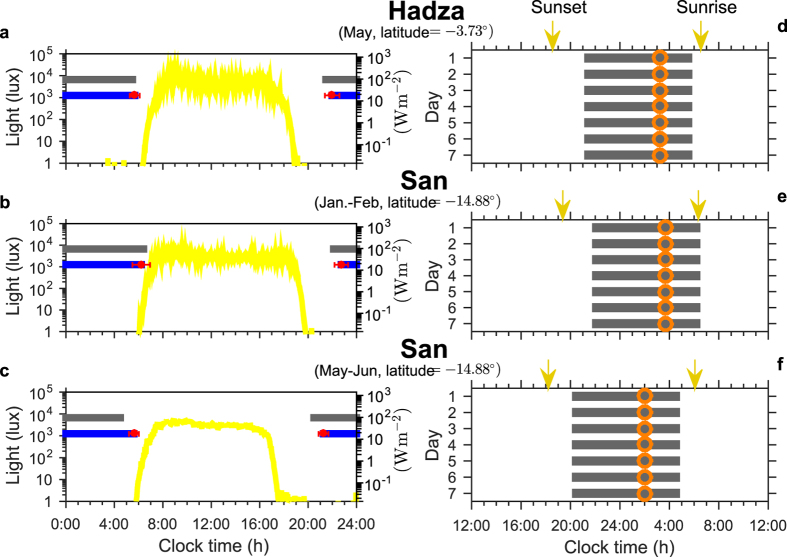
“around noon, similar to that used previously to model sleep schedules prevalent in hunter gatherer societies [34], the model has the flexibility to represent light schedules more typically observed by humans in modern day societies.”
BackgroundMethodInfluentialSkeldon, A. C., & Dijk, D. (2021) · Journal of Pineal Research · doi:10.1111/jpi.12746 · Cited by 21
Self-citationSleepiness is a signal to go to bed: data and model simulations
Shochat, T., Santhi, N., Herer, P., Dijk, D., & Skeldon, A. C. (2021) · SLEEP · doi:10.1093/sleep/zsab123 · Cited by 46
“The mathematical model used was an adapted version [35] of a neuronal model [44] which describes sleep regulation as a flip-flop switch between the firing of wake-promoting and sleeppromoting neurons [45] combined with a Kronauer-style model [46] that models how light input via the eye determines circadian phase.”
BackgroundMethodInfluentialSelf-citationFerrante, G. R., Goldin, A. P., Sigman, M., & Leone, M. J. (2022) · Scientific Reports · doi:10.1038/s41598-022-11928-9 · Cited by 30
Gasperoni, F., Turini, P., & Agostinelli, E. (2019) · Amino Acids · doi:10.1007/s00726-019-02718-1 · Cited by 19
Longitude-based time zone partitions and rates of suicide
Reis, D. J., Yen, P., Tizenberg, B., Gottipati, A., Postolache, S. Y., Riggs, D. D., Nance, M., Dagdag, A., Plater, L. Y., Federline, A., et al. (2023) · Journal of Affective Disorders · doi:10.1016/j.jad.2023.07.080 · Cited by 20
Skeldon, A. C., Garcia, T. R., Cleator, S. F., della Monica, C., Ravindran, K. K. G., Revell, V. L., & Dijk, D. (2023) · PLoS Computational Biology · doi:10.1371/journal.pcbi.1011743 · Cited by 23
“Power spectral density estimates were created via Fast Fourier Transform (FFT) for each of the artefact free 4 s sub-epochs and a measure of SWA activity for each 30 s epoch was calculated by averaging power in the 0.75-4.5 Hz range [50].”
BackgroundMethodInfluentialSelf-citationSchool start times and daylight saving time confuse California lawmakers
Skeldon, A. C., & Dijk, D. (2019) · Current Biology · doi:10.1016/j.cub.2019.03.014 · Cited by 14
Self-citationAssociation between insomnia symptoms and chronotype—A systematic review and meta-analysis
Zhao, Y., Chen, H., Åkerstedt, T., Zhang, Z., Wang, S., & Tan, X. W. (2025) · Sleep Health · doi:10.1016/j.sleh.2025.06.011 · Cited by 18
Vitale, J. A., Borghi, S., Codella, R., Lastella, M., Nédélec, M., Banfi, G., & Torre, A. L. (2021) · Biology of Sport · doi:10.5114/biolsport.2021.109950 · Cited by 18
Kaur, S., Ng, C. M., Tang, S. Y., & Kok, E. Y. (2023) · Chronobiology International · doi:10.1080/07420528.2023.2186120 · Cited by 15
“Extended exposure to artificial light among evening types at night delays the sleep cycle resulting in misalignment that eventually results in late wake up time (Skeldon et al. 2017).”
BackgroundFerrante, G. R., & Leone, M. J. (2023) · Journal of Sleep Research · doi:10.1111/jsr.13974 · Cited by 20
“However, daily social cues also affect circadian rhythms (Goldin et al., 2020; Rodríguez Ferrante et al., 2022; Skeldon et al., 2017) and, then, we expect that the social clock will also contribute to this phenomenon.”
BackgroundNurse rostering with fatigue modelling
Klyve, K. K., Senthooran, I., & Wallace, M. G. (2022) · Health Care Management Science · doi:10.1007/s10729-022-09613-4 · Cited by 13
“[49] [64, 72]) and the circadian response to simulated shift work (see e.”
BackgroundMethodChronodisruption and Ambulatory Circadian Monitoring in Cancer Patients: Beyond the Body Clock
Pagán, P., Torrente, M., Campos, M., Provencio, M., Madrid, J. A., Franco, F., Morilla, B. R., Cantos, B., Sousa, P., Martínez-Madrid, M. J., et al. (2022) · Current Oncology Reports · doi:10.1007/s11912-021-01158-z · Cited by 15
The organization of sleep–wake patterns around daily schedules in college students
Lu, S., Stone, J. E., Klerman, E. B., McHill, A. W., Barger, L. K., Robbins, R., Fischer, D. R., Sano, A., Czeisler, C. A., Rajaratnam, S. M. W., et al. (2023) · SLEEP · doi:10.1093/sleep/zsad278 · Cited by 17
“These findings are similar to results from middle and high school students: delaying school start times generally increases sleep duration [24–26], with modeling showing that the extent of this benefit depends on how early school starts relative to sunrise [37].”
ResultSelf-citationImproving adjustment to daylight saving time transitions with light
Xu, M., Papatsimpa, C., Schlangen, L. J. M., & Linnartz, J. M. G. (2024) · Scientific Reports · doi:10.1038/s41598-024-65705-x · Cited by 13
“Previous research 27 indicates that for individuals aged 30, µ = 4.20& v vc = 3.37 , while for those aged 17, µ = 4.60& v vc = 4.00 best fit in their experiments.”
BackgroundMethodInfluentialRecent advances in modeling sleep: from the clinic to society and disease
Abel, J. H., Lecamwasam, K. H., Hilaire, M. A. S., & Klerman, E. B. (2019) · Current Opinion in Physiology · doi:10.1016/j.cophys.2019.12.001 · Cited by 17
Diekman, C. O., & Bose, A. (2021) · Journal of Theoretical Biology · doi:10.1016/j.jtbi.2022.111148 · Cited by 12
Biologically Relevant Lighting: An Industry Perspective
Soler, R. R., & Voss, E. (2021) · Frontiers in Neuroscience · doi:10.3389/fnins.2021.637221 · Cited by 13
Entrainment Dynamics Organised by Global Manifolds in a Circadian Pacemaker Model
Creaser, J. L., Diekman, C. O., & Wedgwood, K. C. A. (2021) · Frontiers in Applied Mathematics and Statistics · doi:10.3389/fams.2021.703359 · Cited by 10
“Here we choose a two-state model that switches from complete darkness to full light, this could readily be extended in future studies to incorporate multiple light levels such as indoor and outdoor light regimes as well as darkness, as used in [40].”
BackgroundRiedy, S. M., Roach, G. D., & Dawson, D. E. (2020) · SLEEP · doi:10.1093/sleep/zsaa049 · Cited by 12
Liu, Y., Zhang, X., Jiang, M., Zhang, Y., Wang, C., Sun, Y., Shi, Z., & Wang, B. (2023) · Nature and Science of Sleep · doi:10.2147/nss.s432829 · Cited by 12
“13,14 Sleep is incredibly vital for the optimal function of the brain, studies show that the lack of sleep causes a systemic low-grade inflammation without the occurrence of infection the brain.”
BackgroundThe adolescent circadian clock entrains to social time rather than sun time
Charoenthammanon, R. S., & Gooley, J. J. (2025) · Current Biology · doi:10.1016/j.cub.2025.03.059 · Cited by 16
“26 However, predictions based on the model of social jetlag have not been confirmed by measuring the circadian timing of sleep using gold-standard methods in circadian-sleep science, e.g., by measuring the circadian phase of the melatonin rhythm.”
Skeldon, A. C., & Dijk, D. (2025) · npj Biological Timing and Sleep · doi:10.1038/s44323-025-00039-z · Cited by 14
Self-citationSchamilow, S., Santonja, I., Weitzer, J., Strohmaier, S., Klösch, G., Seidel, S., Schernhammer, E. S., & Papantoniou, K. (2023) · Clocks & Sleep · doi:10.3390/clockssleep5030027 · Cited by 15
“Experimental studies in mice [39] and mathematical models [40] provide solid evidence for the beneficial effects of (day)light exposure on circadian rhythms found in epidemiological studies.”
BackgroundThe impact of chronotype on circadian rest-activity rhythm and sleep characteristics across the week
Brooks, C., Kabiri, N. S., Bhangu, J. S., Cai, X., Pickering, E. H., Erb, M. K., Auerbach, S. H., Bonato, P., Moore, T. L., Mortazavi, F., et al. (2021) · Chronobiology International · doi:10.1080/07420528.2021.1937197 · Cited by 13
“work) may be more important for predicting when one wakes up, which reinforce the hypothesis that SON is less susceptible to sociogenic influences than SOFF (Skeldon et al. 2017; Taillard et al. 2021).”
BackgroundInfluentialUsmani, I. M., Dijk, D., & Skeldon, A. C. (2024) · Journal of Biological Rhythms · doi:10.1177/07487304231215844 · Cited by 9
“…(Postnova et al., 2014; Postnova et al., 2018), the impact of light and social constraints on sleep timing preferences and social jet lag (Skeldon et al., 2017), and the effects of daylight saving (Skeldon and Dijk, 2019), and used to propose quantitative light “availability”…”
BackgroundSelf-citation30th Annual Computational Neuroscience Meeting: CNS*2021–Meeting Abstracts
Arora, K., Zulfiqar, I., Schultheiss, H., Martino, F. D., Gulban, O. F., Lage‐Castellanos, A., & Moerel, M. (2021) · Journal of Computational Neuroscience · doi:10.1007/s10827-021-00801-9 · Cited by 9
Ferrante, G. R., Goldin, A. P., & Leone, M. J. (2022) · Springer eBooks · doi:10.1007/978-3-031-06908-6_13 · Cited by 12
Athanasouli, C., Kalmbach, K., Booth, V., & Behn, C. D. (2022) · Mathematical Biosciences · doi:10.1016/j.mbs.2022.108929 · Cited by 12
Assessing the best hour to start the day: an appraisal of seasonal daylight saving time
Martín‐Olalla, J. M., & Mira, J. (2025) · Royal Society Open Science · doi:10.1098/rsos.240727 · Cited by 12
“Furthermore, modern access to artificial light impacts the circadian timing [55,56] and is related to modern syndromes like sleep deprivation [57] and social jet lag (SJL) [58].”
Parameter Estimation in a Model of the Human Circadian Pacemaker Using a Particle Filter
Bonarius, J. H., Papatsimpa, C., & Linnartz, J. M. G. (2020) · IEEE Transactions on Biomedical Engineering · doi:10.1109/tbme.2020.3026538 · Cited by 10
“This combination has been suggested and applied in the past [19], [21] and such a two-process model of sleep regulation has been popular in sleep research for several decades [22].”
BackgroundMethodStone, J. E., Wiley, J. F., Chachos, E., Hand, A. J., Lu, S., Raniti, M. B., Klerman, E. B., Lockley, S. W., Carskadon, M. A., Phillips, A. J. K., et al. (2022) · BMJ Open · doi:10.1136/bmjopen-2021-055716 · Cited by 8
Self-citationMapping the physiological changes in sleep regulation across infancy and young childhood
Webb, L., Phillips, A. J. K., & Roberts, J. A. (2024) · PLoS Computational Biology · doi:10.1371/journal.pcbi.1012541 · Cited by 9
“After the initial newborn days, the best-fitting parameter combinations in each of the datasets tend to have values of b � 0.9, higher than the typical adult value of 0.4 [16, 29], indicating a phase-delayed response to the solar curve compared to adults.”
InfluentialSelf-citationBuekenhout, I., Clara, M. I., Gomes, A. A., & Leitão, J. (2024) · Chronobiology International · doi:10.1080/07420528.2024.2444667 · Cited by 10
“Some authors argue that the primary factor in these changes during old age is the reduction in circadian amplitude (Skeldon et al. 2017; Taillard et al. 2021).”
Felician, J., Galvão, F., Lefebvre, M., Nourredine, M., & Peter‐Derex, L. (2022) · Nature and Science of Sleep · doi:10.2147/nss.s369859 · Cited by 7
“home during the lockdown, with more flexible schedules and a decrease in exposure to external synchronizers such as outdoor daylight and social constraints.(22) It may also result from the psychological distress linked to the pandemic.”
Impact of Light Schedules and Model Parameters on the Circadian Outcomes of Individuals
Mayer, C., Walch, O., Forger, D. B., & Hannay, K. M. (2023) · Journal of Biological Rhythms · doi:10.1177/07487304231176936 · Cited by 8
“Indeed, parameter effects and interindividual differences in circadian models have been shown to impact important factors such as phase prediction, chronotype, and effectiveness of social scheduling alterations (Stone et al., 2020; Phillips et al., 2010; Skeldon et al., 2017).”
BackgroundGubin, D. G. (2024) · Royal Society of Chemistry eBooks · doi:10.1039/bk9781839167553-00536 · Cited by 7
Lengthened circadian rhythms in mice with self-controlled ambient light intensity
Ogasawara, J., Matsumoto, N., Takeuchi, Y., Yamashiro, K., Yasui, M., & Ikegaya, Y. (2024) · Scientific Reports · doi:10.1038/s41598-024-58415-x · Cited by 9
et, J. A., & Tyldesley, K. (2019) · Educational and Child Psychology · doi:10.53841/bpsecp.2019.36.3.77 · Cited by 11
Perspective: Daylight Saving Time—An Advocacy for a Balanced View and against Fanning Fear
Blume, C., & Schabus, M. (2020) · Clocks & Sleep · doi:10.3390/clockssleep2010003 · Cited by 7
“Irrespective of this, social relationships, which people feel benefit from DST, have also been associated with increased cancer survival rates [32,33].”
Effects of Chronotype and Social Jet-Lag on Neurocognitive Functioning
aktaş, S., & Özdemir, P. G. (2023) · Psikiyatride Guncel Yaklasimlar - Current Approaches in Psychiatry · doi:10.18863/pgy.1140109 · Cited by 8
Stone, J. E., Steven, D., Cheng, W., Cain, S. W., & Phillips, A. J. K. (2025) · Journal of Biological Rhythms · doi:10.1177/07487304251391268 · Cited by 6
“…model-based approaches have previously been taken to examine effects of artificial light and social constraints on sleep and circadian outcomes (Skeldon et al., 2017), explore light considerations for the adaptation to day-light savings times (Xu et al., 2024), and the role of light patterns…”
InfluentialSelf-citationComparison of sleep timing of people with different chronotypes affected by modern lifestyle
Li, Y., Guo, J.-C., & Wang, X. (2023) · Chinese Physics B · doi:10.1088/1674-1056/acbf1f · Cited by 7
Gauthier-Gagné, G., Saha, S., Jensen, J., Somerville, G., & Gruber, R. (2023) · Journal of Biological Rhythms · doi:10.1177/07487304231152987 · Cited by 5
“Irregular sleep-wake schedules may allow for irregular light-dark schedules and vice versa (Phillips et al., 2017; Skeldon et al., 2017).”
BackgroundGatari, E., Fleuren, B. P. I., Zijlstra, F., & Hulsheger, U. R. (2023) · Journal of Occupational Health Psychology · doi:10.1037/ocp0000355 · Cited by 6
D’Angiulli, A., Byczynski, G., Yeh, W.-H., Garrett, G., Goldfield, G. S., Devenyi, P., Devenyi, T., & Leisman, G. (2023) · Frontiers in Public Health · doi:10.3389/fpubh.2023.1022731 · Cited by 9
“Namely, the sleep–wake cycle is also significantly influenced by lifestyle effects, working, or studying hours, and personal time, and not strictly by physiological regulation (17).”
BackgroundPhillips, A. J. K., Hilaire, M. A. S., Barger, L. K., O’Brien, C. S., Rahman, S. A., Landrigan, C. P., Lockley, S. W., Czeisler, C. A., & Klerman, E. B. (2023) · Sleep Health · doi:10.1016/j.sleh.2023.10.018 · Cited by 6
Self-citation
Metadata
- Authors
- Skeldon, A. C., Phillips, A. J. K., & Dijk, D.-J.
- Affiliations
- University of Surrey (GB)
- Brigham and Women's Hospital (US)
- Corresponding author
- Skeldon, Anne C.
- Venue
- Scientific Reports
- Published
- 2017-03-27
- Volume
- 7
- Issue
- 1
- Pages
- 45158-45158
- ISSN
- 2045-2322 (ISSN-L)
- PMC
- PMC5366875
- OpenAlex
- W2599514141
- Cited by
- 155
- References
- 70
- Citations by year
- 2026: 15 · 2025: 15 · 2024: 10 · 2023: 27 · 2022: 14 · 2021: 25 · 2020: 15 · 2019: 18 · 2018: 11 · 2017: 5
- FWCI
- 8.16
- Type
- journal article
- Language
- en
- Open access
- gold
- doi.org
- Licence
- cc-by
- creativecommons.org/licenses/by/4.0 (tdm)
- creativecommons.org/licenses/by/4.0 (vor)
- Locations
- Scientific Reports (publishedVersion, cc-by)
- PubMed Central (publishedVersion, cc-by)
- PubMed (publishedVersion)
- Digital Access to Scholarship at Harvard (DASH) (Harvard University) (submittedVersion, cc-by)
- Surrey Research Insight Open Access (The University of Surrey) (submittedVersion)
- Funders
- Engineering and Physical Sciences Research Council (EP/I000992/1)
- National Heart, Lung, and Blood Institute (R00HL119618)
- Topics
- Life Sciences › Neuroscience › Endocrine and Autonomic Systems › Circadian rhythm and melatonin
- Social Sciences › Psychology › Experimental and Cognitive Psychology › Sleep and related disorders
- Social Sciences › Psychology › Experimental and Cognitive Psychology › Sleep and Work-Related Fatigue
- Keywords
- social jetlag, circadian rhythm, sleep homeostasis, artificial light exposure, light-dark cycle, circadian timing, sleep timing, social constraints, circadian amplitude, adolescents, circadian rhythm sleep disorders
- MeSH terms
- Circadian Rhythm, Homeostasis, Humans, Models, Neurological, Social Behavior, Social Environment, Photoperiod
About these checks
Registry, retraction, Cites and statistics results are computed, not judged, with one exception: a printed reference that no index lists is read once by a model before it counts as a citation error. Claims are extracted by a model and kept only when their quote appears verbatim in the text; each cited source is then checked, with a model’s help, for whether it says what the claim relies on. Those verdicts can be wrong — read the claim’s quote and the cited source before relying on one.
Statistics and arithmetic are recomputed, not judged.
Confidence bands are shown only for fields calibrated on our annotated test set. None is calibrated yet, so no band is shown.
What counts as a claim ›How we measure confidence ›How we check this ›
Are you an author, or do you see a problem with this page? Request a review
Data sources
Bibliographic data: Semantic Scholar, OpenAlex, Crossref.
Contains information from the Semantic Scholar Academic Graph Datasets, made available under the ODC Attribution License (ODC-BY 1.0).
Semantic Scholar’s data is described in: Kinney, R., et al. (2023). The Semantic Scholar Open Data Platform. arXiv:2301.10140.
