

How quantum is radical pair magnetoreception?
Open accessThe DOI matches its Crossref record; 50 of the 54 references it cites were found in a registry or an index.
Abstract
Semiclassical methods cannot accurately simulate magnetic field effects relevant to avian magnetoreception, which may therefore deserve the label “quantum biology”.
Overview
The claims and statistics of this paper haven’t been checked yet.
Free: it reads the open-access text and checks the first 5 claims that cite a source we can check. Create a free account to check every claim.
Integrity signals
Registry
Cites
Statistics
Figures
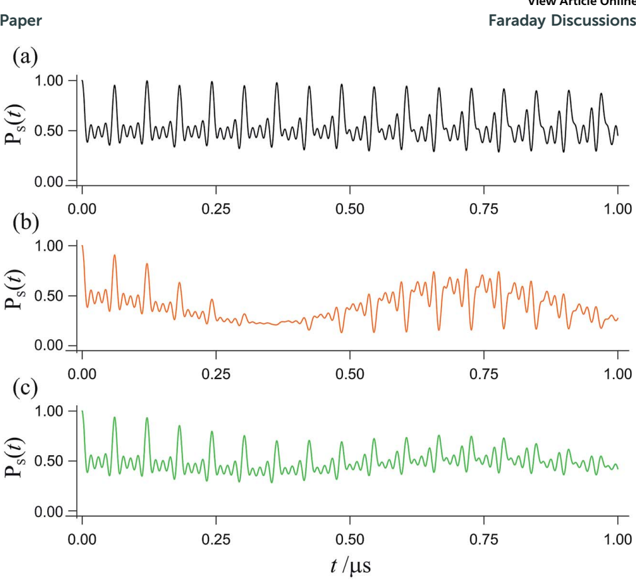
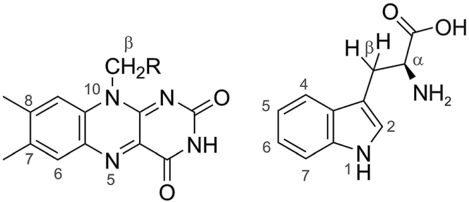


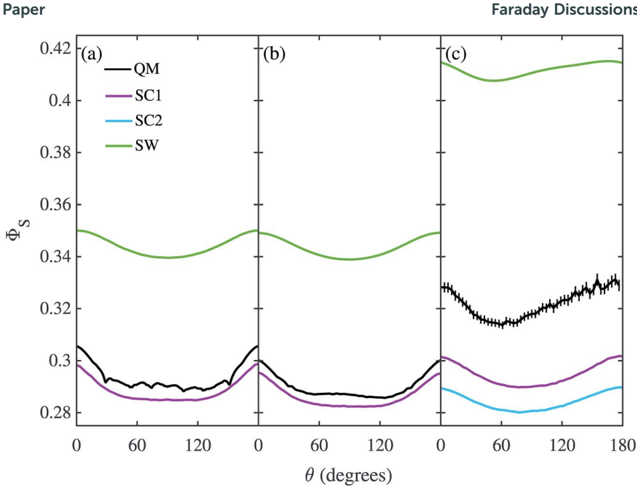
Verification
Claims the paper makes
The claims and statistics of this paper haven’t been checked yet.
Free: it reads the open-access text and checks the first 5 claims that cite a source we can check. Create a free account to check every claim.
Claims other papers make about this one
Each is checked against this paper’s own text: does it say what the citing paper says it does?
The check wasn’t confident either way, so it gives no verdict — never disputed.
In the citing paper
“Semiclassical simulations predict a radical pair lifetime that is much shorter than that obtained with quantum-mechanical models.[171]”
From Quantum Computing for Molecular Biology** (2023) · cites this paper as [171]
Experimental — accuracy not yet measured
Self-check
Percentages, sums and reported differences re-computed from the paper’s own numbers.
The self-check needs the paper’s full text.
Citations
Cites
Principles of Pulse Electron Paramagnetic Resonance
Schweiger, A., & Jeschke, G. (2001) · doi:10.1093/oso/9780198506348.001.0001 · Cited by 2,011
Magnetic field effects in chemical kinetics and related phenomena
Steiner, U. E., & Ulrich, T. (1989) · Chemical Reviews · doi:10.1021/cr00091a003 · Cited by 1,667
Lambert, N., Chen, Y.-N., Cheng, Y.-C., Li, C.-M., Chen, G.-Y., & Nori, F. (2013) · Nature Physics · doi:10.1038/nphys2474 · Cited by 948
Some properties of coherent spin states
Radcliffe, J. M. (1971) · Journal of Physics A: General Physics · doi:10.1088/0305-4470/4/3/009 · Cited by 924
The Radical-Pair Mechanism of Magnetoreception
Hore, P. J., & Mouritsen, H. (2016) · Annual Review of Biophysics · doi:10.1146/annurev-biophys-032116-094545 · Cited by 813
Self-citationMagnetic Compass of European Robins
Wiltschko, W., & Wiltschko, R. (1972) · Science · doi:10.1126/science.176.4030.62 · Cited by 751
Magnetic Orientation in Animals
Wiltschko, R., & Wiltschko, W. (1995) · Zoophysiology · doi:10.1007/978-3-642-79749-1 · Cited by 738
Resonance effects indicate a radical-pair mechanism for avian magnetic compass
Ritz, T., Thalau, P., Phillips, J. B., Wiltschko, R., & Wiltschko, W. (2004) · Nature · doi:10.1038/nature02534 · Cited by 617
Vibrations, quanta and biology
Huelga, S. F., & Plenio, M. B. (2013) · Contemporary Physics · doi:10.1080/00405000.2013.829687 · Cited by 568
Long-distance navigation and magnetoreception in migratory animals
Mouritsen, H. (2018) · Nature · doi:10.1038/s41586-018-0176-1 · Cited by 526
Effects of weak magnetic fields on free radical recombination reactions
Timmel, C. R., Till, U., Brocklehurst, B., Mclauchlan, K. A., & Hore, P. J. (1998) · Molecular Physics · doi:10.1080/00268979809483134 · Cited by 392
Self-citationSchulten, K., & Wolynes, P. G. (1978) · The Journal of Chemical Physics · doi:10.1063/1.436135 · Cited by 385
Maeda, K., Robinson, A. J., Henbest, K. B., Hogben, H. J., Biskup, T., Ahmad, M., Schleicher, E., Weber, S., Timmel, C. R., & Hore, P. J. (2012) · Proceedings of the National Academy of Sciences · doi:10.1073/pnas.1118959109 · Cited by 373
Self-citationSustained Quantum Coherence and Entanglement in the Avian Compass
Gauger, E. M., Rieper, E., Morton, J. J. L., Benjamin, S. C., & Vedral, V. (2011) · Physical Review Letters · doi:10.1103/physrevlett.106.040503 · Cited by 357
Magnetic Compass of Birds Is Based on a Molecule with Optimal Directional Sensitivity
Ritz, T., Wiltschko, R., Hore, P. J., Rodgers, C. T., Stapput, K., Thalau, P., Timmel, C. R., & Wiltschko, W. (2009) · Biophysical Journal · doi:10.1016/j.bpj.2008.11.072 · Cited by 309
Self-citationMarais, A., Adams, B., Ringsmuth, A. K., Ferretti, M., Gruber, J. M., Hendrikx, R., Schuld, M., Smith, S. L., Sinayskiy, I., Krüger, T. P. J., et al. (2018) · Journal of The Royal Society Interface · doi:10.1098/rsif.2018.0640 · Cited by 274
The moyal representation for spin
Várilly, J. C., & Gracia-Bondía, J. (1989) · Annals of Physics · doi:10.1016/0003-4916(89)90262-5 · Cited by 272
The quantum needle of the avian magnetic compass
Hiscock, H. G., Worster, S., Kattnig, D. R., Steers, C., Jin, Y., Manolopoulos, D. E., Mouritsen, H., & Hore, P. J. (2016) · Proceedings of the National Academy of Sciences · doi:10.1073/pnas.1600341113 · Cited by 215
Self-citationDirectional orientation of birds by the magnetic field under different light conditions
Wiltschko, R., Stapput, K., Thalau, P., & Wiltschko, W. (2010) · Journal of The Royal Society Interface · doi:10.1098/rsif.2009.0367.focus · Cited by 205
Role of Exchange and Dipolar Interactions in the Radical Pair Model of the Avian Magnetic Compass
Efimova, O., & Hore, P. J. (2008) · Biophysical Journal · doi:10.1529/biophysj.107.119362 · Cited by 190
Self-citationLife on the edge: the coming of age of quantum biology
(2016) · Choice Reviews Online · doi:10.5860/choice.194602 · Cited by 189
The moyal representation for spin
(1989) · Annals of Physics · doi:10.1016/0003-4916(89)90175-9 · Cited by 189
Quantum Control and Entanglement in a Chemical Compass
Cai, J., Guerreschi, G. G., & Briegel, H. J. (2010) · Physical Review Letters · doi:10.1103/physrevlett.104.220502 · Cited by 184
Density matrix description of spin-selective radical pair reactions
Haberkorn, R. (1976) · Molecular Physics · doi:10.1080/00268977600102851 · Cited by 173
Guidelines for tunneling in enzymes
Moser, C. C., Anderson, J. L. R., & Dutton, P. L. (2010) · Biochimica et Biophysica Acta (BBA) - Bioenergetics · doi:10.1016/j.bbabio.2010.04.441 · Cited by 158
Electron spin relaxation in cryptochrome-based magnetoreception
Kattnig, D. R., Solov’yov, I. A., & Hore, P. J. (2016) · Physical Chemistry Chemical Physics · doi:10.1039/c5cp06731f · Cited by 154
Self-citationPerspective: Quantum or classical coherence?
Miller, W. H. (2012) · The Journal of Chemical Physics · doi:10.1063/1.4727849 · Cited by 145
Extended Electron-Transfer in Animal Cryptochromes Mediated by a Tetrad of Aromatic Amino Acids
Nohr, D., Franz, S., Rodriguez, R., Paulus, B., Essen, L., Weber, S., & Schleicher, E. (2016) · Biophysical Journal · doi:10.1016/j.bpj.2016.06.009 · Cited by 141
Alternative radical pairs for cryptochrome-based magnetoreception
Lee, A. A., Lau, J. C. S., Hogben, H. J., Biskup, T., Kattnig, D. R., & Hore, P. J. (2014) · Journal of The Royal Society Interface · doi:10.1098/rsif.2013.1063 · Cited by 140
Self-citationFleming, G. R., Scholes, G. D., & Cheng, Y.-C. (2011) · Procedia Chemistry · doi:10.1016/j.proche.2011.08.011 · Cited by 123
Müller, P., Yamamoto, J., Martin, R., Iwai, S., & Brettel, K. (2015) · Chemical Communications · doi:10.1039/c5cc06276d · Cited by 113
Wiltschko, W., & Wiltschko, R. (2001) · Journal of Experimental Biology · doi:10.1242/jeb.204.19.3295 · Cited by 113
Electron spin relaxation can enhance the performance of a cryptochrome-based magnetic compass sensor
Kattnig, D. R., Sowa, J. K., Solov'yov, I. A., & Hore, P. J. (2016) · New Journal of Physics · doi:10.1088/1367-2630/18/6/063007 · Cited by 94
Self-citationHiscock, H. G., Mouritsen, H., Manolopoulos, D. E., & Hore, P. J. (2017) · Biophysical Journal · doi:10.1016/j.bpj.2017.07.031 · Cited by 82
Self-citationRadical-Pair-Based Magnetoreception Amplified by Radical Scavenging: Resilience to Spin Relaxation
Kattnig, D. R. (2017) · The Journal of Physical Chemistry B · doi:10.1021/acs.jpcb.7b07672 · Cited by 79
Entanglement and Sources of Magnetic Anisotropy in Radical Pair-Based Avian Magnetoreceptors
Hogben, H. J., Biskup, T., & Hore, P. J. (2012) · Physical Review Letters · doi:10.1103/physrevlett.109.220501 · Cited by 73
Self-citationKattnig, D. R., & Hore, P. J. (2017) · Scientific Reports · doi:10.1038/s41598-017-09914-7 · Cited by 69
Self-citationIvanov, K. L., Petrova, M. V., Lukzen, N. N., & Maeda, K. (2010) · The Journal of Physical Chemistry A · doi:10.1021/jp1048265 · Cited by 68
Miura, T., Scott, A. M., & Wasielewski, M. R. (2010) · The Journal of Physical Chemistry C · doi:10.1021/jp103441n · Cited by 63
Spin relaxation of radicals in cryptochrome and its role in avian magnetoreception
Worster, S. B., Kattnig, D. R., & Hore, P. J. (2016) · The Journal of Chemical Physics · doi:10.1063/1.4958624 · Cited by 63
Self-citationDecoherence in the chemical compass: the role of decoherence for avian magnetoreception
Tiersch, M., & Briegel, H. J. (2012) · Philosophical Transactions of the Royal Society A Mathematical Physical and Engineering Sciences · doi:10.1098/rsta.2011.0488 · Cited by 50
Spin-selective electron transfer reactions of radical pairs: Beyond the Haberkorn master equation
Fay, T. P., Lindoy, L. P., & Manolopoulos, D. E. (2018) · The Journal of Chemical Physics · doi:10.1063/1.5041520 · Cited by 48
Self-citationAn improved semiclassical theory of radical pair recombination reactions
Manolopoulos, D. E., & Hore, P. J. (2013) · The Journal of Chemical Physics · doi:10.1063/1.4821817 · Cited by 44
Self-citationLewis, A. M., Manolopoulos, D. E., & Hore, P. J. (2014) · The Journal of Chemical Physics · doi:10.1063/1.4890659 · Cited by 37
Self-citationSensitivity and entanglement in the avian chemical compass
Zhang, Y., Berman, G. P., & Kais, S. (2014) · Physical Review E · doi:10.1103/physreve.90.042707 · Cited by 32
An improved semiclassical theory of radical pair recombination reactionsPreprint
Manolopoulos, D. E., & Hore, P. J. (2016) · Cited by 26
Self-citationAn efficient quantum mechanical method for radical pair recombination reactions
Lewis, A. M., Fay, T. P., & Manolopoulos, D. E. (2016) · The Journal of Chemical Physics · doi:10.1063/1.4972277 · Cited by 24
Self-citationThe Weyl-Wigner-Moyal formalism for spin
Li, F., Braun, C., & Garg, A. (2013) · Europhysics Letters (EPL) · doi:10.1209/0295-5075/102/60006 · Cited by 16
Spin-dependent charge recombination along para-phenylene molecular wires
Fay, T. P., Lewis, A. M., & Manolopoulos, D. E. (2017) · The Journal of Chemical Physics · doi:10.1063/1.4997482 · Cited by 14
Self-citationSpin Dynamics in Radical Pairs
Lewis, A. M. (2018) · Springer theses · doi:10.1007/978-3-030-00686-0 · Cited by 7
Cited by
Quantum Biology: An Update and Perspective
Kim, Y., Bertagna, F., D’Souza, E. M., Heyes, D. J., Johannissen, L. O., Nery, E. T., Pantelias, A., Sanchez-Pedreño Jimenez, A., Slocombe, L., Spencer, M. G., et al. (2021) · Quantum Reports · doi:10.3390/quantum3010006 · Cited by 169
Generalized spin mapping for quantum-classical dynamics
Runeson, J. E., & Richardson, J. O. (2020) · The Journal of Chemical Physics · doi:10.1063/1.5143412 · Cited by 126
Quantum Computing for Molecular Biology**
Baiardi, A., Christandl, M., & Reiher, M. (2023) · ChemBioChem · doi:10.1002/cbic.202300120 · Cited by 93
Radical pairs may play a role in xenon-induced general anesthesia
Smith, J., Haghighi, H. Z., Salahub, D. R., & Simon, C. (2021) · Scientific Reports · doi:10.1038/s41598-021-85673-w · Cited by 71
Babcock, N. S., & Kattnig, D. R. (2020) · The Journal of Physical Chemistry Letters · doi:10.1021/acs.jpclett.0c00370 · Cited by 59
Metadata
- Authors
- Fay, T. P., Lindoy, L. P., Manolopoulos, D. E., & Hore, P. J.
- Affiliations
- University of Oxford (GB)
- Corresponding author
- Hore, P. J.
- Venue
- Faraday Discussions
- Publisher
- Royal Society of Chemistry (RSC)
- Published
- 2020
- Volume
- 221
- Issue
- 0
- Pages
- 77-91
- ISSN
- 1359-6640 (ISSN-L)
- 1364-5498
- OpenAlex
- W2950872391
- Cited by
- 47
- References
- 54
- Citations by year
- 2026: 4 · 2025: 6 · 2024: 7 · 2023: 8 · 2022: 9 · 2021: 8 · 2020: 5
- FWCI
- 2.67
- Type
- journal article
- Language
- en
- Open access
- hybrid
- doi.org
- Licence
- Locations
- Faraday Discussions (publishedVersion, cc-by-nc)
- PubMed (publishedVersion)
- Funders
- H2020 European Research Council (810002)
- Air Force Office of Scientific Research (FA9550-14-1-0095)
- Engineering and Physical Sciences Research Council (EP/L015722/1)
- Topics
- Life Sciences › Biochemistry, Genetics and Molecular Biology › Biophysics › Electromagnetic Fields and Biological Effects
- Physical Sciences › Chemistry › Spectroscopy › Electron Spin Resonance Studies
- Physical Sciences › Materials Science › Electronic, Optical and Magnetic Materials › Magnetism in coordination complexes
- Keywords
- quantum coherence, coherent spin dynamics, Zeeman interaction, geomagnetic field sensing, avian retina
About these checks
Registry, retraction, Cites and statistics results are computed, not judged, with one exception: a printed reference that no index lists is read once by a model before it counts as a citation error. Claims are extracted by a model and kept only when their quote appears verbatim in the text; each cited source is then checked, with a model’s help, for whether it says what the claim relies on. Those verdicts can be wrong — read the claim’s quote and the cited source before relying on one.
Statistics and arithmetic are recomputed, not judged.
Confidence bands are shown only for fields calibrated on our annotated test set. None is calibrated yet, so no band is shown.
What counts as a claim ›How we measure confidence ›How we check this ›
Are you an author, or do you see a problem with this page? Request a review
Data sources
Bibliographic data: Semantic Scholar, OpenAlex, Crossref.
Contains information from the Semantic Scholar Academic Graph Datasets, made available under the ODC Attribution License (ODC-BY 1.0).
Semantic Scholar’s data is described in: Kinney, R., et al. (2023). The Semantic Scholar Open Data Platform. arXiv:2301.10140.
