

Leveraging Artificial Intelligence to Improve Chronic Disease Care: Methods and Application to Pharmacotherapy Decision Support for Type-2 Diabetes Mellitus
Open accessThe DOI matches its Crossref record; 45 of the 45 references it cites were found in a registry or an index.
Abstract
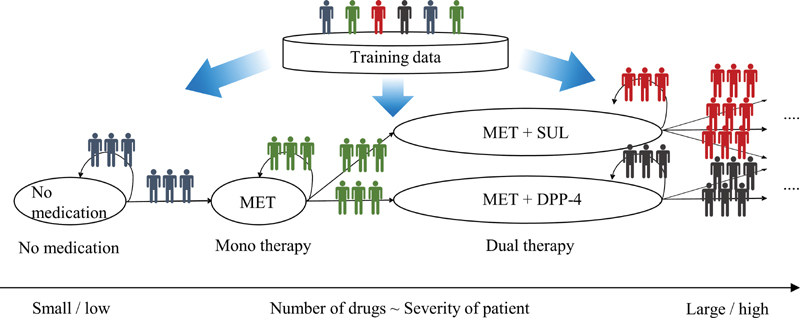
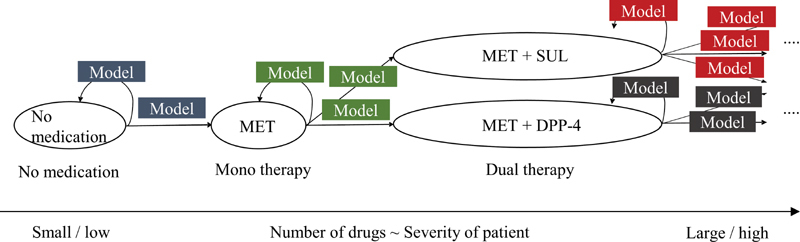
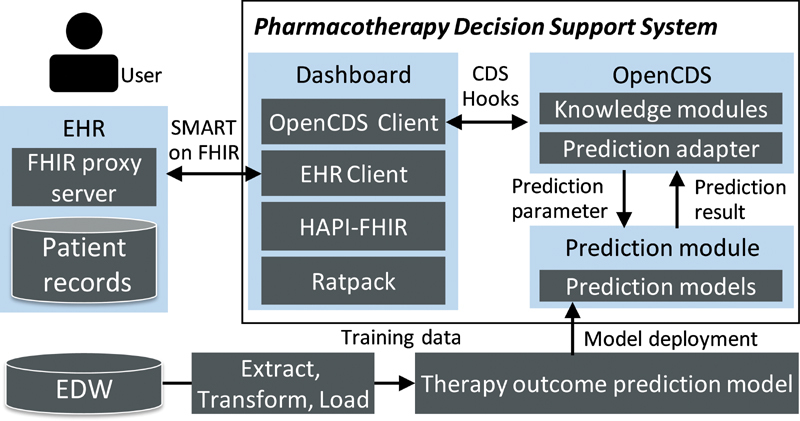
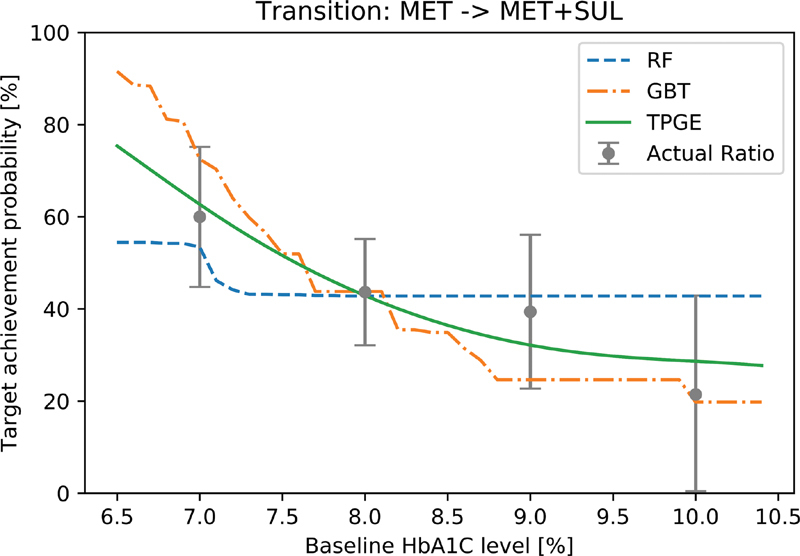
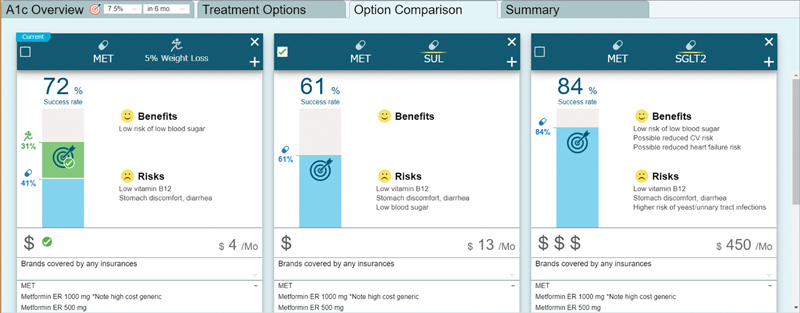
Objectives Artificial intelligence (AI), including predictive analytics, has great potential to improve the care of common chronic conditions with high morbidity and mortality. However, there are still many challenges to achieving this vision. The goal of this project was to develop and apply methods for enhancing chronic disease care using AI. Methods Using a dataset of 27,904 patients with diabetes, an analytical method was developed and validated for generating a treatment pathway graph which consists of models that predict the likelihood of alternate treatment strategies achieving care goals. An AI-driven clinical decision support system (CDSS) integrated with the electronic health record (EHR) was developed by encapsulating the prediction models in an OpenCDS Web service module and delivering the model outputs through a SMART on FHIR (Substitutable Medical Applications and Reusable Technologies on Fast Healthcare Interoperability Resources) web-based dashboard. This CDSS enables clinicians and patients to review relevant patient parameters, select treatment goals, and review alternate treatment strategies based on prediction results. Results The proposed analytical method outperformed previous machine-learning algorithms on prediction accuracy. The CDSS was successfully integrated with the Epic EHR at the University of Utah. Conclusion A predictive analytics-based CDSS was developed and successfully integrated with the EHR through standards-based interoperability frameworks. The approach used could potentially be applied to many other chronic conditions to bring AI-driven CDSS to the point of care.
Overview
The claims and statistics of this paper haven’t been checked yet.
Free: it reads the open-access text and checks the first 5 claims that cite a source we can check. Create a free account to check every claim.
Integrity signals
Registry
Cites
Statistics
Figures

Verification
Claims the paper makes
The claims and statistics of this paper haven’t been checked yet.
Free: it reads the open-access text and checks the first 5 claims that cite a source we can check. Create a free account to check every claim.
Claims other papers make about this one
Each is checked against this paper’s own text: does it say what the citing paper says it does?
The cited source says what the claim attributes to it.
In the citing paper
“For example, for a management decision tool built and deployed in a hospital in Utah for diabetes management, there was a challenge of not offering all the information that was desired by clinicians and patients to decide on type 2 diabetes management [5].”
From Checklist Approach to Developing and Implementing AI in Clinical Settings: Instrument Development Study (2025) · cites this paper as [5]
The cited source says what the claim attributes to it.
In the citing paper
“Artificial intelligence (AI) can further expand CDSS capabilities beyond simply disease differentiation and be used to predict treatment response [223].”
From Toward Safer Diagnoses: A SEIPS-Based Narrative Review of Diagnostic Errors (2026) · cites this paper as [223]
Self-check
Percentages, sums and reported differences re-computed from the paper’s own numbers.
The self-check needs the paper’s full text.
Citations
Cites
Breiman, L. (2001) · Machine Learning · doi:10.1023/a:1010933404324 · Cited by 133,538 · cited 1×
“Despite their successful application in other clinical areas, ML algorithms such as Random Forest 22 (RF) and Gradient Boosting Tree 23 (GBT) can lead to biased estimations in the context of predicting treatment outcomes.”
BackgroundThe central role of the propensity score in observational studies for causal effects
ROSENBAUM, P. R., & RUBIN, D. B. (1983) · Biometrika · doi:10.1093/biomet/70.1.41 · Cited by 31,241 · cited 1×
“We are also considering, but have not yet, used methods such as propensity scoring 51 to adjust for this confounding.”
MethodGreedy function approximation: A gradient boosting machine
Friedman, J. H. (2001) · The Annals of Statistics · doi:10.1214/aos/1013203451 · Cited by 30,731 · cited 1×
“Despite their successful application in other clinical areas, ML algorithms such as Random Forest 22 (RF) and Gradient Boosting Tree 23 (GBT) can lead to biased estimations in the context of predicting treatment outcomes.”
BackgroundProbabilistic Outputs for Support vector Machines and Comparisons to Regularized Likelihood Methods
Platt, J. C. (1999) · Cited by 6,472
Support Vector Regression Machines
Drucker, H., Burges, C. J. C., Kaufman, L., Smola, A. J., & Vapnik, V. N. (1996) · Cited by 4,658
The Regression Analysis of Binary Sequences
Cox, D. R. (1958) · Journal of the Royal Statistical Society Series B: Statistical Methodology · doi:10.1111/j.2517-6161.1958.tb00292.x · Cited by 2,813
Recursive partitioning for heterogeneous causal effects
Athey, S., & Imbens, G. (2016) · Proceedings of the National Academy of Sciences · doi:10.1073/pnas.1510489113 · Cited by 1,586 · cited 1×
“This contrasts with other ML-based approaches, such as Causal Tree, 35 which build a single model from combined treatment and control data to predict an expected effect.”
ResultStandards of Medical Care in Diabetes–2006
Tseng, K. H. (2006) · Diabetes Care · doi:10.2337/dc06-0805 · Cited by 1,092
Metalearners for estimating heterogeneous treatment effects using machine learning
Künzel, S. R., Sekhon, J. S., Bickel, P. J., & Yu, B. (2019) · Proceedings of the National Academy of Sciences · doi:10.1073/pnas.1804597116 · Cited by 1,056 · cited 1×
“34 One Metalearners approach known as T-learner estimates the conditional expectations of the outcomes separately for units under control and those under treatment, then it takes the differences between them as conditional average treat-ment effects.”
BackgroundSMART on FHIR: a standards-based, interoperable apps platform for electronic health records
Mandel, J. C., Kreda, D. A., Mandl, K. D., Kohane, I. S., & Ramoni, R. B. (2016) · Journal of the American Medical Informatics Association · doi:10.1093/jamia/ocv189 · Cited by 829
Artificial intelligence in medical practice: the question to the answer?
Miller, D. D., & Brown, E. W. (2018) · The American Journal of Medicine · doi:10.1016/j.amjmed.2017.10.035 · Cited by 774 · cited 1×
“13 In particular,clinicaldecisionsupport(CDS) isapromisingapproachto informing the care of chronic conditions leveraging AI.”
BackgroundThe Prevalence of Meeting A1C, Blood Pressure, and LDL Goals Among People With Diabetes, 1988–2010
Stark Casagrande, S., Fradkin, J. E., Saydah, S. H., Rust, K. F., & Cowie, C. C. (2013) · Diabetes Care · doi:10.2337/dc12-2258 · Cited by 719
Artificial intelligence for diabetes management and decision support: Literature review
Contreras, I., & Vehi, J. (2018) · Journal of Medical Internet Research · doi:10.2196/10775 · Cited by 560
Machine Learning Methods to Predict Diabetes Complications
Dagliati, A., Marini, S., Sacchi, L., Cogni, G., Teliti, M., Tibollo, V., De Cata, P., Chiovato, L., & Bellazzi, R. (2018) · Journal of Diabetes Science and Technology · doi:10.1177/1932296817706375 · Cited by 407
Determinants of Adherence to Diabetes Medications: Findings From a Large Pharmacy Claims Database
Kirkman, M. S., Rowan-Martin, M. T., Levin, R., Fonseca, V. A., Schmittdiel, J. A., Herman, W. H., & Aubert, R. E. (2015) · Diabetes Care · doi:10.2337/dc14-2098 · Cited by 388 · cited 1×
“26,27 However, about half of patients with T2DM are unable to achieve the treatment target of controlling hemoglobin A1c (HbA1c) levels to less than 7%, 25,28 due to the lack of adherence of patients, 25,29 clinical inertia, 29 – 33 and a trial-and-error approach to treatment selection.”
BackgroundApplications of Machine Learning Predictive Models in the Chronic Disease Diagnosis
Battineni, G., Sagaro, G. G., Chinatalapudi, N., & Amenta, F. (2020) · Journal of Personalized Medicine · doi:10.3390/jpm10020021 · Cited by 385
Feature selection and classification systems for chronic disease prediction: A review
Jain, D., & Singh, V. (2018) · Egyptian Informatics Journal · doi:10.1016/j.eij.2018.03.002 · Cited by 368
Khunti, K., Gomes, M. B., Pocock, S., Shestakova, M. V., Pintat, S., Fenici, P., Hammar, N., & Medina, J. (2018) · Diabetes, Obesity and Metabolism · doi:10.1111/dom.13088 · Cited by 367 · cited 2×
“26,27 Our goal was to develop an EHR-integrated CDSS that overcomes the challenges described above and supports personalized, AI-supported pharmacotherapy for T2DM.”
BackgroundDiagnosis of Chronic Kidney Disease Based on Support Vector Machine by Feature Selection Methods
Polat, H., Danaei Mehr, H., & Cetin, A. (2017) · Journal of Medical Systems · doi:10.1007/s10916-017-0703-x · Cited by 297
Type 2 Diabetes in the Real World: The Elusive Nature of Glycemic Control
Edelman, S. V., & Polonsky, W. H. (2017) · Diabetes Care · doi:10.2337/dc16-1974 · Cited by 285 · cited 2×
“26,27 Our goal was to develop an EHR-integrated CDSS that overcomes the challenges described above and supports personalized, AI-supported pharmacotherapy for T2DM.”
BackgroundClinical inertia and its impact on treatment intensification in people with type 2 diabetes mellitus
Reach, G., Pechtner, V., Gentilella, R., Corcos, A., & Ceriello, A. (2017) · Diabetes & Metabolism · doi:10.1016/j.diabet.2017.06.003 · Cited by 251
Forlenza, G. P., Li, Z., Buckingham, B. A., Pinsker, J. E., Cengiz, E., Wadwa, R. P., Ekhlaspour, L., Church, M. M., Weinzimer, S. A., Jost, E., et al. (2018) · Diabetes Care · doi:10.2337/dc18-0771 · Cited by 246
Clinical inertia to insulin initiation and intensification in the UK: A focused literature review
Khunti, K., & Millar-Jones, D. (2017) · Primary Care Diabetes · doi:10.1016/j.pcd.2016.09.003 · Cited by 235 · cited 1×
“26,27 However, about half of patients with T2DM are unable to achieve the treatment target of controlling hemoglobin A1c (HbA1c) levels to less than 7%, 25,28 due to the lack of adherence of patients, 25,29 clinical inertia, 29 – 33 and a trial-and-error approach to treatment selection.”
BackgroundAddressing Clinical Inertia in Type 2 Diabetes Mellitus: A Review
Okemah, J., Peng, J., & Quiñones, M. (2018) · Advances in Therapy · doi:10.1007/s12325-018-0819-5 · Cited by 211
Debon, R., Coleone, J. D., Bellei, E. A., & De Marchi, A. C. B. (2019) · Diabetes & Metabolic Syndrome: Clinical Research & Reviews · doi:10.1016/j.dsx.2019.07.016 · Cited by 168
Gummesson, A., Nyman, E., Knutsson, M., & Karpefors, M. (2017) · Diabetes Obesity and Metabolism · doi:10.1111/dom.12971 · Cited by 162
Murphy, S. N., Bernstam, E. V., Kreda, D., McCOY, J. M., Adida, B., Mandl, K. D., Mandel, J. C., Ramoni, R. B., & Kohane, I. S. (2011) · DSpace@MIT (Massachusetts Institute of Technology) · Cited by 156
Artificial Intelligence Methodologies and Their Application to Diabetes
Rigla, M., García-Sáez, G., Pons, B., & Hernando, M. E. (2018) · Journal of Diabetes Science and Technology · doi:10.1177/1932296817710475 · Cited by 131
Artificial Intelligence in Clinical Decision Support: a Focused Literature Survey
Montani, S., & Striani, M. (2019) · Yearbook of Medical Informatics · doi:10.1055/s-0039-1677911 · Cited by 129 · cited 1×
“14 – 16 Indeed, machine learning (ML)-based CDS tools have been explored for providing pharmacotherapy recommendations 17,18 and predicting the risk of complications 19,20 in the contextofchronicdisease.”
BackgroundPersonalized Diabetes Management Using Electronic Medical Records
Bertsimas, D., Kallus, N., Weinstein, A. M., & Zhuo, Y. D. (2017) · Diabetes Care · doi:10.2337/dc16-0826 · Cited by 119 · cited 1×
“14 – 16 Indeed, machine learning (ML)-based CDS tools have been explored for providing pharmacotherapy recommendations 17,18 and predicting the risk of complications 19,20 in the contextofchronicdisease.”
BackgroundSanchez-Morillo, D., Fernandez-Granero, M. A., & Leon-Jimenez, A. (2016) · Chronic Respiratory Disease · doi:10.1177/1479972316642365 · Cited by 110 · cited 1×
“11,12 SuchAI-drivenapproaches to improving care could have signi fi cant impact if applied effectively in the care of common chronic diseases with high morbidity and mortality such as diabetes mellitus.”
BackgroundHuang, G.-M., Huang, K.-Y., Lee, T.-Y., & Weng, J. T.-Y. (2015) · BMC Bioinformatics · doi:10.1186/1471-2105-16-s1-s5 · Cited by 101
A dashboard-based system for supporting diabetes care
Dagliati, A., Sacchi, L., Tibollo, V., Cogni, G., Teliti, M., Martinez-Millana, A., Traver, V., Segagni, D., Posada, J., Ottaviano, M., et al. (2018) · Journal of the American Medical Informatics Association · doi:10.1093/jamia/ocx159 · Cited by 96 · cited 1×
“14 – 16 Indeed, machine learning (ML)-based CDS tools have been explored for providing pharmacotherapy recommendations 17,18 and predicting the risk of complications 19,20 in the contextofchronicdisease.”
BackgroundClinical Inertia in Individualising Care for Diabetes: Is There Time to do More in Type 2 Diabetes?
Strain, W. D., Blüher, M., & Paldánius, P. (2014) · Diabetes Therapy · doi:10.1007/s13300-014-0077-8 · Cited by 73
Outpatient diabetes clinical decision support: current status and future directions
O'Connor, P. J., Sperl‐Hillen, J. M., Fazio, C. J., Averbeck, B. M., Rank, B. H., & Margolis, K. L. (2016) · Diabetic Medicine · doi:10.1111/dme.13090 · Cited by 63 · cited 1×
“14 – 16 Indeed, machine learning (ML)-based CDS tools have been explored for providing pharmacotherapy recommendations 17,18 and predicting the risk of complications 19,20 in the contextofchronicdisease.”
BackgroundWang, Y., Li, P.-F., Tian, Y., Ren, J.-J., & Li, J.-S. (2017) · IEEE Journal of Biomedical and Health Informatics · doi:10.1109/jbhi.2016.2614991 · Cited by 51 · cited 1×
“14 – 16 Indeed, machine learning (ML)-based CDS tools have been explored for providing pharmacotherapy recommendations 17,18 and predicting the risk of complications 19,20 in the contextofchronicdisease.”
BackgroundMandl, K. D., Mandel, J. C., Murphy, S. N., Bernstam, E. V., Ramoni, R. L., Kreda, D. A., McCoy, J. M., Adida, B., & Kohane, I. S. (2012) · Journal of the American Medical Informatics Association · doi:10.1136/amiajnl-2011-000622 · Cited by 50
Curran, R. L., Kukhareva, P., Taft, T., Weir, C. R., Reese, T. J., Nanjo, C. J., Rodriguez-Loya, S., Martin, D., Warner, P. B., Shields, D. E., et al. (2020) · Journal of the American Medical Informatics Association · doi:10.1093/jamia/ocaa099 · Cited by 43 · cited 1×
“Interoperabilitystandardshavealso beenexploredasameanstofacilitatethedisseminationofCDS tools for common chronic diseases, 21 including for providing AI-driven care recommendations.”
BackgroundSelf-citationFang, G., Annis, I. E., Elston-Lafata, J., & Cykert, S. (2019) · Journal of the American Medical Informatics Association · doi:10.1093/jamia/ocz036 · Cited by 31 · cited 1×
“24 Also, ML approaches are able to learn only the patterns encountered in the training dataset.”
BackgroundContext Relevant Prediction Model for COPD Domain Using Bayesian Belief Network
Mcheick, H., Saleh, L., Ajami, H., & Mili, H. (2017) · Sensors · doi:10.3390/s17071486 · Cited by 23
Profiling intra-patient type I diabetes behaviors
Contreras, I., Quirós, C., Giménez, M., Conget, I., & Vehı́, J. (2016) · Computer Methods and Programs in Biomedicine · doi:10.1016/j.cmpb.2016.08.022 · Cited by 17
Clinical Decision Support Systems and Predictive Analytics
Lourdusamy, R., & Mattam, X. J. (2020) · Learning and analytics in intelligent systems · doi:10.1007/978-3-030-40850-3_14 · Cited by 13
Segagni, D., Sacchi, L., Dagliati, A., Tibollo, V., Leporati, P., Cata, P. D., Chiovato, L., & Bellazzi, R. (2015) · Studies in health technology and informatics · doi:10.3233/978-1-61499-564-7-682 · Cited by 4 · cited 1×
“14 – 16 Indeed, machine learning (ML)-based CDS tools have been explored for providing pharmacotherapy recommendations 17,18 and predicting the risk of complications 19,20 in the contextofchronicdisease.”
BackgroundVERIFICATION OF FORECASTS EXPRESSED IN TERMS OF PROBABILITY
BRIER, G. W. (1950) · Monthly Weather Review · doi:10.1175/1520-0493(1950)078<0001:vofeit>2.0.co;2
Verification of forecasts expressed in terms of probability
BRIER, G. W. (1950) · Monthly Weather Review · doi:10.1175/1520-0493(1950)078%3c0001:vofeit%3e2.0.co;2
Cited by
Artificial intelligence in diabetes management: Advancements, opportunities, and challenges
Guan, Z., Li, H., Liu, R., Cai, C., Liu, Y., Li, J., Wang, X., Huang, S., Wu, L., Liu, D., et al. (2023) · Cell Reports Medicine · doi:10.1016/j.xcrm.2023.101213 · Cited by 412
Lee, A. Y. L., Wong, A. K. C., Hung, T. T. M., Yan, J., & Yang, S. (2022) · Journal of Medical Internet Research · doi:10.2196/40364 · Cited by 159
“A previous study created an AI-based decision support system for enhancing shared decision-making in a pharmacotherapy regimen for patients with diabetes [70].”
Artificial intelligence, machine learning, and deep learning for clinical outcome prediction
Pettit, R. W., Fullem, R., Cheng, C., & Amos, C. I. (2021) · Emerging Topics in Life Sciences · doi:10.1042/etls20210246 · Cited by 120
Mackenzie, S. C., Sainsbury, C. A. R., & Wake, D. J. (2023) · Diabetologia · doi:10.1007/s00125-023-06038-8 · Cited by 132
“Per-sonalised prescribing could improve outcomes, rationalise choice of medications and minimise side effects [2, 49].”
BackgroundArtificial intelligence for diabetes care: current and future prospects
Sheng, B., Pushpanathan, K., Guan, Z., Lim, Q. H., Lim, Z. W., Yew, S. M. E., Goh, J. H. L., Bee, Y. M., Sabanayagam, C., Sevdalis, N., et al. (2024) · The Lancet Diabetes & Endocrinology · doi:10.1016/s2213-8587(24)00154-2 · Cited by 106
Metadata
- Authors
- Tarumi, S., Takeuchi, W., Chalkidis, G., Rodriguez-Loya, S., Kuwata, J., Flynn, M., Turner, K. M., Sakaguchi, F. H., Weir, C., Kramer, H., Shields, D. E., Warner, P. B., Kukhareva, P., Ban, H., & Kawamoto, K.
- Affiliations
- Department of Media Intelligent Processing Research, Center for Technology Innovation Artificial Intelligence, Hitachi Ltd., Kokubunji, Tokyo, Japan
- Hitachi (Japan) (JP)
- University of Utah (US)
- ORCID
- Venue
- Methods of Information in Medicine
- Publisher
- Georg Thieme Verlag KG
- Published
- 2021-05-11
- Volume
- 60
- Issue
- S 01
- Pages
- e32-e43
- ISSN
- 0026-1270 (ISSN-L)
- 2511-705X
- PMC
- PMC8294941
- OpenAlex
- W3163731260
- Cited by
- 84
- References
- 44
- Citations by year
- 2026: 15 · 2025: 30 · 2024: 14 · 2023: 9 · 2022: 12 · 2021: 3
- FWCI
- 2.77
- Type
- journal article
- Language
- en
- Open access
- hybrid
- doi.org
- Licence
- Locations
- Methods of Information in Medicine (publishedVersion, cc-by-nc-nd)
- PubMed Central (publishedVersion, cc-by-nc-nd)
- PubMed (publishedVersion)
- Funders
- Hitachi, Ltd.
- Topics
- Health Sciences › Medicine › Health Informatics › Artificial Intelligence in Healthcare and Education
- Physical Sciences › Computer Science › Artificial Intelligence › Machine Learning in Healthcare
- Health Sciences › Health Professions › Health Information Management › Electronic Health Records Systems
- Keywords
- artificial intelligence, clinical decision support systems, type 2 diabetes, chronic care, predictive analytics, electronic health record integration, SMART on FHIR, Epic EHR, interoperability
- MeSH terms
- Artificial Intelligence, Chronic Disease, Diabetes Mellitus, Type 2, Humans, Decision Support Systems, Clinical, Electronic Health Records
About these checks
Registry, retraction, Cites and statistics results are computed, not judged, with one exception: a printed reference that no index lists is read once by a model before it counts as a citation error. Claims are extracted by a model and kept only when their quote appears verbatim in the text; each cited source is then checked, with a model’s help, for whether it says what the claim relies on. Those verdicts can be wrong — read the claim’s quote and the cited source before relying on one.
Statistics and arithmetic are recomputed, not judged.
Confidence bands are shown only for fields calibrated on our annotated test set. None is calibrated yet, so no band is shown.
What counts as a claim ›How we measure confidence ›How we check this ›
Are you an author, or do you see a problem with this page? Request a review
Data sources
Bibliographic data: Semantic Scholar, OpenAlex, Crossref.
Contains information from the Semantic Scholar Academic Graph Datasets, made available under the ODC Attribution License (ODC-BY 1.0).
Semantic Scholar’s data is described in: Kinney, R., et al. (2023). The Semantic Scholar Open Data Platform. arXiv:2301.10140.
