

The DOI matches its Crossref record; 22 of the 22 references it cites were found in a registry or an index.
Plasma Neutralization of the SARS-CoV-2 Omicron Variant
Open accessPublished version of a preprint
Abstract
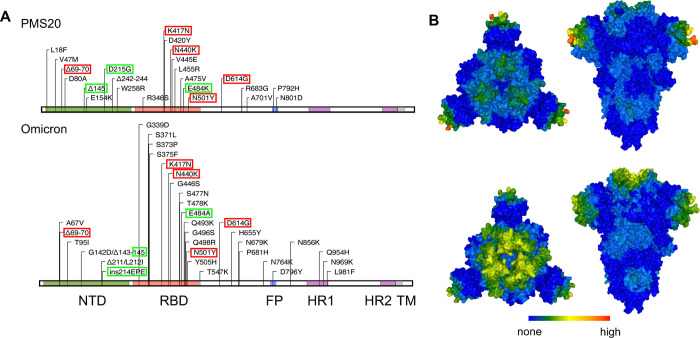
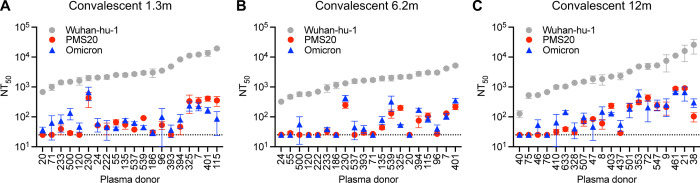
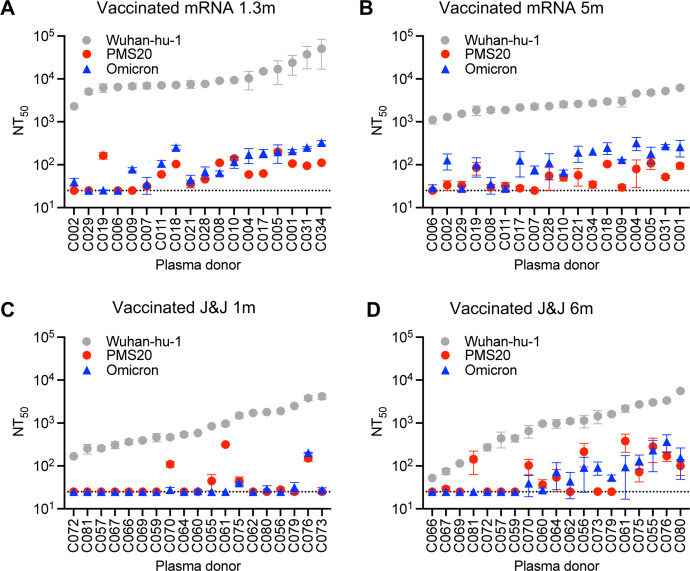
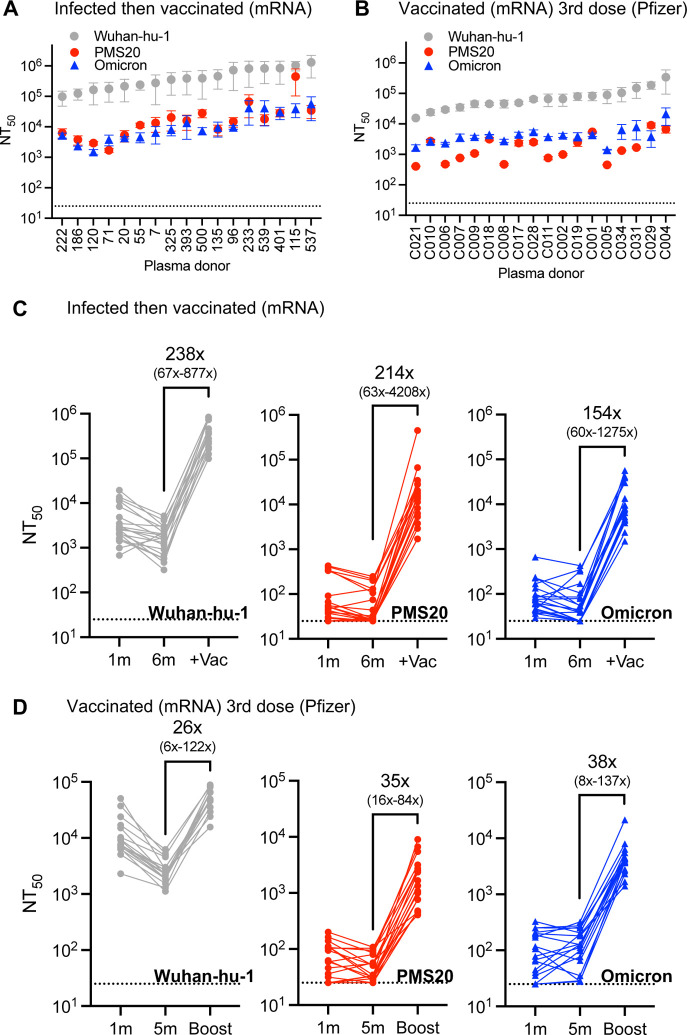
BACKGROUND: The Omicron SARS-CoV-2 variant has spread internationally and is responsible for rapidly increasing case numbers. The emergence of divergent variants in the context of a heterogeneous and evolving neutralizing antibody response in host populations might compromise protection afforded by vaccines or prior infection. METHODS: We measured neutralizing antibody titers in 169 longitudinally collected plasma samples using pseudotypes bearing the Wuhan-hu-1 or the Omicron variant or a laboratory-designed neutralization-resistant SARS-CoV-2 spike (PMS20). Plasmas were obtained from convalescents who did or did not subsequently receive an mRNA vaccine, or naive individuals who received 3-doses of mRNA or 1-dose Ad26 vaccines. Samples were collected approximately 1, 5-6 and 12 months after initial vaccination or infection. RESULTS: Like PMS20, the Omicron spike protein was substantially resistant to neutralization compared to Wuhan-hu-1. In convalescent plasma the median deficit in neutralizing activity against PMS20 or Omicron was 30- to 60-fold. Plasmas from recipients of 2 mRNA vaccine doses were 30- to 180- fold less potent against PMS20 and Omicron than Wuhan-hu-1. Notably, previously infected or two-mRNA dose vaccinated individuals who received additional mRNA vaccine dose(s) had 38 to 154-fold and 35 to 214-fold increases in neutralizing activity against Omicron and PMS20 respectively. CONCLUSIONS: Omicron exhibits similar distribution of sequence changes and neutralization resistance as does a laboratory-designed neutralization-resistant spike protein, suggesting natural evolutionary pressure to evade the human antibody response. Currently available mRNA vaccine boosters, that may promote antibody affinity maturation, significantly ameliorate SARS-CoV-2 neutralizing antibody titers.
Overview
The claims and statistics of this paper haven’t been checked yet.
Run the check — free, no account needed. It reads the open-access text and checks the sources it cites.
Integrity signals
Registry
Cites
Statistics
Figures
Verification
Claims the paper makes
The claims and statistics of this paper haven’t been checked yet.
Run the check — free, no account needed. It reads the open-access text and checks the sources it cites.
Claims other papers make about this one
Each is checked against this paper’s own text: does it say what the citing paper says it does?
The source backs part of the claim, not all of it — or backs it for a different population, condition or comparison.
In the citing paper
“However, due to escape of the Omicron variant from current approved vaccines, the efficacy of all current vaccines is reduced and a new variant-specific analysis is therefore required [13][14][15] .”
From Safety and immunogenicity of a prefusion non-stabilized spike protein mRNA COVID-19 vaccine: a phase I trial (2022) · cites this paper as [14]
Experimental — accuracy not yet measured
Self-check
Percentages, sums and reported differences re-computed from the paper’s own numbers.
The self-check needs the paper’s full text.
Citations
Cites
Convergent Antibody Responses to SARS-CoV-2 in Convalescent Individuals
Robbiani, D. F., Gaebler, C., Muecksch, F., Lorenzi, J. C. C., Wang, Z., Cho, A., Agudelo, M., Barnes, C. O., Gazumyan, A., Finkin, S., et al. (2020) · Nature · doi:10.1038/s41586-020-2456-9 · Cited by 1,853
Self-citationHoffmann, M., Kleine-Weber, H., & Pöhlmann, S. (2020) · Molecular Cell · doi:10.1016/j.molcel.2020.04.022 · Cited by 1,852
Evolution of antibody immunity to SARS-CoV-2
Gaebler, C., Wang, Z., Lorenzi, J. C. C., Muecksch, F., Finkin, S., Tokuyama, M., Cho, A., Jankovic, M., Schaefer-Babajew, D., Oliveira, T. Y., et al. (2021) · Nature · doi:10.1038/s41586-021-03207-w · Cited by 1,674
Self-citationPotent neutralizing antibodies against multiple epitopes on SARS-CoV-2 spike
Liu, L., Wang, P., Nair, M. S., Yu, J., Rapp, M., Wang, Q., Luo, Y., Chan, J. F.-W., Sahi, V., Figueroa, A., et al. (2020) · Nature · doi:10.1038/s41586-020-2571-7 · Cited by 1,349
mRNA vaccine-elicited antibodies to SARS-CoV-2 and circulating variants
Wang, Z., Schmidt, F., Weisblum, Y., Muecksch, F., Barnes, C. O., Finkin, S., Schaefer-Babajew, D., Cipolla, M., Gaebler, C., Lieberman, J. A., et al. (2021) · Nature · doi:10.1038/s41586-021-03324-6 · Cited by 1,343
Self-citationEscape from neutralizing antibodies by SARS-CoV-2 spike protein variants
Weisblum, Y., Schmidt, F., Zhang, F., DaSilva, J., Poston, D., Lorenzi, J. C., Muecksch, F., Rutkowska, M., Hoffmann, H.-H., Michailidis, E., et al. (2020) · eLife · doi:10.7554/elife.61312 · Cited by 1,308
Self-citationOmicron SARS-CoV-2 variant: a new chapter in the COVID-19 pandemic
Karim, S. S. A., & Karim, Q. A. (2021) · The Lancet · doi:10.1016/s0140-6736(21)02758-6 · Cited by 1,302
Baum, A., Fulton, B. O., Wloga, E., Copin, R., Pascal, K. E., Russo, V., Giordano, S., Lanza, K., Negron, N., Ni, M., et al. (2020) · Science · doi:10.1126/science.abd0831 · Cited by 1,253
Greaney, A. J., Loes, A. N., Crawford, K. H. D., Starr, T. N., Malone, K. D., Chu, H. Y., & Bloom, J. D. (2021) · Cell Host & Microbe · doi:10.1016/j.chom.2021.02.003 · Cited by 1,178
Naturally enhanced neutralizing breadth against SARS-CoV-2 one year after infection
Wang, Z., Muecksch, F., Schaefer-Babajew, D., Finkin, S., Viant, C., Gaebler, C., Hoffmann, H. H., Barnes, C. O., Cipolla, M., Ramos, V., et al. (2021) · Nature · doi:10.1038/s41586-021-03696-9 · Cited by 721
Self-citation
Cited by
Sorted by citations
Striking antibody evasion manifested by the Omicron variant of SARS-CoV-2
Liu, L., Iketani, S., Guo, Y., Chan, J. F.-W., Wang, M., Liu, L., Luo, Y., Chu, H., Huang, Y., Nair, M. S., et al. (2022) · Nature · doi:10.1038/s41586-021-04388-0 · Cited by 1,290
Tarke, A., Coelho, C. H., Zhang, Z., Dan, J. M., Yu, E. D., Methot, N., Bloom, N. I., Goodwin, B., Phillips, E., Mallal, S., et al. (2022) · Cell · doi:10.1016/j.cell.2022.01.015 · Cited by 858
SARS-CoV-2 Omicron variant: recent progress and future perspectives
Fan, Y., Li, X., Zhang, L., Wan, S., Zhang, L., & Zhou, F. (2022) · Signal Transduction and Targeted Therapy · doi:10.1038/s41392-022-00997-x · Cited by 599
Shrestha, L. B., Foster, C. S. P., Rawlinson, W. D., Tedla, N. T., & Bull, R. A. (2022) · Reviews in Medical Virology · doi:10.1002/rmv.2381 · Cited by 483
Divergent SARS-CoV-2 Omicron–reactive T and B cell responses in COVID-19 vaccine recipients
GeurtsvanKessel, C. H., Geers, D., Schmitz, K. S., Mykytyn, A. Z., Lamers, M. M., Bogers, S., Scherbeijn, S. M. J., Gommers, L., Sablerolles, R. S. G., Nieuwkoop, N. N., et al. (2022) · Science Immunology · doi:10.1126/sciimmunol.abo2202 · Cited by 406
Pérez-Then, E., Lucas, C., Monteiro, V. S., Miric, M., Brache, V., Cochon, L., Vogels, C. B. F., Malik, A. A., De la Cruz, E., Jorge, A., et al. (2022) · Nature Medicine · doi:10.1038/s41591-022-01705-6 · Cited by 401
Lewnard, J. A., Hong, V. X., Patel, M. M., Kahn, R. J., Lipsitch, M., & Tartof, S. Y. (2022) · Nature Medicine · doi:10.1038/s41591-022-01887-z · Cited by 394
Effect of mRNA Vaccine Boosters against SARS-CoV-2 Omicron Infection in Qatar
Abu-Raddad, L. J., Chemaitelly, H., Ayoub, H. H., AlMukdad, S., Yassine, H. M., Al-Khatib, H. A., Smatti, M. K., Tang, P., Hasan, M. R., Coyle, P., et al. (2022) · New England Journal of Medicine · doi:10.1056/nejmoa2200797 · Cited by 380
Cheng, S. M. S., Mok, C. K. P., Leung, Y. W. Y., Ng, S. S., Chan, K., Ko, F. W. S., Chen, C., Yiu, K. K. L., Lam, B. H., Lau, E. H. Y., et al. (2022) · Nature Medicine · doi:10.1038/s41591-022-01704-7 · Cited by 356
Neutralization of the SARS-CoV-2 Omicron BA.1 and BA.2 Variants
Yu, J., Collier, A.-R. Y., Rowe, M., Mardas, F., Ventura, J. D., Wan, H., Miller, J., Powers, O. C., Chung, B., Siamatu, M., et al. (2022) · New England Journal of Medicine · doi:10.1056/nejmc2201849 · Cited by 322
Unadjuvanted intranasal spike vaccine elicits protective mucosal immunity against sarbecoviruses
Mao, T., Israelow, B., Peña-Hernández, M. A., Suberi, A., Zhou, L., Luyten, S., Reschke, M., Dong, H., Homer, R., Saltzman, W. M., et al. (2022) · Science · doi:10.1126/science.abo2523 · Cited by 356
Khandia, R., Singhal, S., Alqahtani, T., Kamal, M. A., El-Shall, N. A., Nainu, F., Desingu, P. A., & Dhama, K. (2022) · Environmental Research · doi:10.1016/j.envres.2022.112816 · Cited by 308
Correlates of protection against SARS ‐ CoV ‐2 infection and COVID‐19 disease
Goldblatt, D., Alter, G., Crotty, S., & Plotkin, S. A. (2022) · Immunological Reviews · doi:10.1111/imr.13091 · Cited by 301
Increased memory B cell potency and breadth after a SARS-CoV-2 mRNA boost
Muecksch, F., Wang, Z., Cho, A., Gaebler, C., Ben Tanfous, T., DaSilva, J., Bednarski, E., Ramos, V., Zong, S., Johnson, B., et al. (2022) · Nature · doi:10.1038/s41586-022-04778-y · Cited by 297
Self-citationGlobal emerging Omicron variant of SARS-CoV-2: Impacts, challenges and strategies
Dhama, K., Nainu, F., Frediansyah, A., Yatoo, M. I., Mohapatra, R. K., Chakraborty, S., Zhou, H., Islam, M. R., Mamada, S. S., Kusuma, H. I., et al. (2022) · Journal of Infection and Public Health · doi:10.1016/j.jiph.2022.11.024 · Cited by 247
“The persons previously infected or vaccinated may also provide significant protection against Omicron infection [103-105].”
BackgroundLimited cross-variant immunity from SARS-CoV-2 Omicron without vaccination
Suryawanshi, R. K., Chen, I. P., Ma, T., Syed, A. M., Brazer, N., Saldhi, P., Simoneau, C. R., Ciling, A., Khalid, M. M., Sreekumar, B. K. N., et al. (2022) · Nature · doi:10.1038/s41586-022-04865-0 · Cited by 208
Edara, V. V., Manning, K. E., Ellis, M. L., Lai, L., Moore, K. M., Foster, S. L., Floyd, K. A., Davis-Gardner, M. E., Mantus, G. E., Nyhoff, L. E., et al. (2022) · Cell Reports Medicine · doi:10.1016/j.xcrm.2022.100529 · Cited by 209
Structural Diversity of the SARS-CoV-2 Omicron Spike
Gobeil, S., Henderson, R. C., Stalls, V., Janowska, K., Huang, X., May, A. J., Speakman, M., Beaudoin, E. L., Manne, K., Li, D., et al. (2022) · Molecular Cell · doi:10.1016/j.molcel.2022.03.028 · Cited by 206
“Consistent with the extensive immune escape observed with the Omicron variant (Cameroni et al., 2022; Planas et al., 2022; Mannar et al., 2022; Hoffmann et al., 2022; Schmidt et al., 2022), we found that its S protein lost binding to several SARS-CoV-2 neutralizing Abs (Figures 6A– 6C and S3).”
Efficient recall of Omicron-reactive B cell memory after a third dose of SARS-CoV-2 mRNA vaccine
Goel, R. R., Painter, M. M., Lundgreen, K. A., Apostolidis, S. A., Baxter, A. E., Giles, J. R., Mathew, D., Pattekar, A., Reynaldi, A., Khoury, D. S., et al. (2022) · Cell · doi:10.1016/j.cell.2022.04.009 · Cited by 207
“…May 26, 2022 ª 2022 Elsevier Inc. 1875 ll Article virus neutralization assays, and little-to-no neutralizing activity against Omicron detected at >6 months after the primary 2-dose vaccine series (Cameroni et al., 2022; Cele et al., 2021; Garcia-Beltran et al., 2022; Schmidt et al., 2021a).”
COVID-19 vaccines in patients with cancer: immunogenicity, efficacy and safety
Fendler, A., de Vries, E. G. E., GeurtsvanKessel, C. H., Haanen, J. B. A. G., Wormann, B. J., Turajlic, S., & von Lilienfeld‐Toal, M. (2022) · Nature Reviews Clinical Oncology · doi:10.1038/s41571-022-00610-8 · Cited by 211
Gagné, M., Moliva, J. I., Foulds, K. E., Andrew, S. F., Flynn, B. J., Werner, A. P., Wagner, D. A., Teng, I., Lin, B. C., Moore, C. A., et al. (2022) · Cell · doi:10.1016/j.cell.2022.03.038 · Cited by 209
“…reduction for convalescent sera and a 20- to 130-fold reduction for vaccinee sera (Edara et al., 2022; Hoffmann et al., 2022; Muik et al., 2022; Schmidt et al., 2022). mRNA-1273 vaccine efficacy against breakthrough cases of Omicron in the first few months after immunization has been estimated…”
Imprinted SARS-CoV-2-Specific Memory Lymphocytes Define Hybrid Immunity
Rodda, L. B., Morawski, P. A., Pruner, K. B., Fahning, M. L., Howard, C. A., Franko, N., Logue, J. K., Eggenberger, J., Stokes, C., Golez, I., et al. (2022) · Cell · doi:10.1016/j.cell.2022.03.018 · Cited by 200
“…have revealed improved breadth and neutralizing ability of circulating antibodies from previously infected (PI) individuals (Cho et al., 2021; Schmidt et al., 2021b; Stamatatos et al., 2021; Wang et al., 2021), but the specific changes in the cellular immune compartment associated with this…”
BackgroundThe Impact of Evolving SARS-CoV-2 Mutations and Variants on COVID-19 Vaccines
McLean, G. R., Kamil, J. P., Lee, B., Moore, P. L., Schulz, T. F., Muik, A., Şahin, U., Türeci, Ö., & Pather, S. (2022) · mBio · doi:10.1128/mbio.02979-21 · Cited by 195
Immune evasion, infectivity, and fusogenicity of SARS-CoV-2 BA.2.86 and FLip variants
Qu, P., Xu, K. Y., Faraone, J. N., Goodarzi, N., Zheng, Y.-M., Carlin, C., Bednash, J. S., Horowitz, J. C., Mallampalli, R. K., Saif, L. J., et al. (2024) · Cell · doi:10.1016/j.cell.2023.12.026 · Cited by 171
Enhanced evasion of neutralizing antibody response by Omicron XBB.1.5, CH.1.1, and CA.3.1 variants
Qu, P., Faraone, J. N., Evans, J. P., Zheng, Y.-M., Carlin, C., Anghelina, M. I., Stevens, P., Fernández, S., Jones, D. M., Panchal, A. R., et al. (2023) · Cell Reports · doi:10.1016/j.celrep.2023.112443 · Cited by 193
Molecular fate-mapping of serum antibody responses to repeat immunization
Schiepers, A., Wout, M. F. L. V. ’., Greaney, A. J., Zang, T. M., Muramatsu, H., Lin, P. J. C., Tam, Y. K., Mesin, L., Starr, T. N., Bieniasz, P. D., et al. (2023) · Nature · doi:10.1038/s41586-023-05715-3 · Cited by 166
Self-citationSARS-CoV-2 Omicron boosting induces de novo B cell response in humans
Alsoussi, W. B., Malladi, S. K., Zhou, J. Q., Liu, Z., Ying, B., Kim, W., Schmitz, A. J., Lei, T., Horvath, S. C., Sturtz, A. J., et al. (2023) · Nature · doi:10.1038/s41586-023-06025-4 · Cited by 174
Hyams, C. J., Challen, R., Marlow, R. D., Nguyen, J. L., Begier, E. M., Southern, J., King, J., Morley, A., Kinney, J., Clout, M., et al. (2022) · The Lancet Regional Health - Europe · doi:10.1016/j.lanepe.2022.100556 · Cited by 174
“Laboratory data suggest that vaccine-induced neutralizing antibody activity is lower against Delta 4,5 and Omicron variants 6,7 than against the Alpha variant and wild/prototype viral strains.”
Omicron spike function and neutralizing activity elicited by a comprehensive panel of vaccines
Bowen, J. E., Addetia, A., Dang, H. V., Stewart, C., Brown, J. T., Sharkey, W. K., Sprouse, K. R., Walls, A. C., Mazzitelli, I. G., Logue, J. K., et al. (2022) · Science · doi:10.1126/science.abq0203 · Cited by 160
COVID-19 and cellular senescence
Schmitt, C. A., Tchkonia, T., Niedernhofer, L. J., Robbins, P. D., Kirkland, J. L., & Lee, S. (2023) · Nature Reviews Immunology · doi:10.1038/s41577-022-00785-2 · Cited by 153
Fall, A., Eldesouki, R. E., Sachithanandham, J., Morris, C. P., Norton, J. M., Gaston, D. C., Forman, M., Abdullah, O. R., Gallagher, N., Li, M., et al. (2022) · EBioMedicine · doi:10.1016/j.ebiom.2022.104008 · Cited by 149
Antibody-mediated neutralization of SARS-CoV-2
Gruell, H., Vanshylla, K., Weber, T., Barnes, C. O., Kreer, C., & Klein, F. (2022) · Immunity · doi:10.1016/j.immuni.2022.05.005 · Cited by 150
“, Liu, L., Guo, Y., Liu, L., Chan, J.F.W., Huang, Y., Wang, M., Luo, Y., Yu, J., Chu, H., et al. (2022). Antibody evasion properties of SARS-CoV-2 Omicron sublineages.”
InfluentialWang, Z., Muecksch, F., Cho, A., Gaebler, C., Hoffmann, H.-H., Ramos, V., Zong, S., Cipolla, M., Johnson, B., Schmidt, F., et al. (2022) · Immunity · doi:10.1016/j.immuni.2022.04.003 · Cited by 145
“Plasmids pSARS-CoV-2-S D 19(R683G) and pSARS-CoV-S D 19 expressing C-terminally truncated SARS-CoV-2 and SARS-CoV spike proteins and the polymutant PMS20 spike were as described before (Schmidt et al., 2021b).”
InfluentialSelf-citationNeutralization of SARS-CoV-2 Omicron sub-lineages BA.1, BA.1.1, and BA.2
Evans, J. P., Zeng, C., Qu, P., Faraone, J. N., Zheng, Y.-M., Carlin, C., Bednash, J. S., Zhou, T., Lozanski, G., Mallampalli, R. K., et al. (2022) · Cell Host & Microbe · doi:10.1016/j.chom.2022.04.014 · Cited by 134
“This is consistent with prior reports for BA.1 (Jacobsen et al., 2021; Pérez-Then et al., 2022; Planas et al., 2022; Schmidt et al., 2022; Wang et al., 2022b; Xia et al., 2022) and a recent report on BA.2 (Yu et al., 2022).”
Tada, T., Zhou, H., Dcosta, B. M., Samanovic, M. I., Chivukula, V., Herati, R. S., Hubbard, S. R., Mulligan, M. J., & Landau, N. R. (2022) · EBioMedicine · doi:10.1016/j.ebiom.2022.103944 · Cited by 134
Nanotechnology-based strategies against SARS-CoV-2 variants
Huang, X., Kon, E., Han, X., Zhang, X., Kong, N., Mitchell, M. J., Peer, D., & Tao, W. (2022) · Nature Nanotechnology · doi:10.1038/s41565-022-01174-5 · Cited by 146
Striking Antibody Evasion Manifested by the Omicron Variant of SARS-CoV-2Preprint
Liu, L., Iketani, S., Guo, Y., Chan, J. F., Wang, M., Liu, L., Luo, Y., Chu, H., Huang, Y., Nair, M. S., et al. (2021) · bioRxiv (Cold Spring Harbor Laboratory) · doi:10.1101/2021.12.14.472719 · Cited by 142
Rapid increase in Omicron infections in England during December 2021: REACT-1 study
Elliott, P., Bodinier, B., Eales, O. D., Wang, H., Haw, D., Elliott, J., Whitaker, M. D., Jonnerby, J., Tang, D. G., Walters, C. E., et al. (2022) · Science · doi:10.1126/science.abn8347 · Cited by 130
Tartof, S. Y., Slezak, J. M., Puzniak, L., Hong, V. X., Xie, F., Ackerson, B. K., Valluri, S. R., Jódar, L., & McLaughlin, J. M. (2022) · The Lancet Respiratory Medicine · doi:10.1016/s2213-2600(22)00101-1 · Cited by 151
Molecular characteristics, immune evasion, and impact of SARS-CoV-2 variants
Sun, C., Xie, C., Bu, G., Zhong, L., & Zeng, M. (2022) · Signal Transduction and Targeted Therapy · doi:10.1038/s41392-022-01039-2 · Cited by 149
Lusvarghi, S., Pollett, S. D., Neerukonda, S. N., Wang, W., Wang, R., Vassell, R. A., Epsi, N. J., Fries, A. C., Agan, B. K., Lindholm, D. A., et al. (2022) · Science Translational Medicine · doi:10.1126/scitranslmed.abn8543 · Cited by 133
Dhawan, M. K., Saied, A. A., Mitra, S., Alhumaydhi, F. A., Emran, T. B., & Wilairatana, P. (2022) · Biomedicine & Pharmacotherapy · doi:10.1016/j.biopha.2022.113522 · Cited by 130
“With the advent of VOCs and the mutation of SARS-CoV-2, the antibodies created by existing vaccinations may lose their capacity to neutralize different variants [148,149].”
RetractedRichardson, S. I., Madzorera, V. S., Spencer, H., Manamela, N. P., van der Mescht, M. A., Lambson, B. E., Oosthuysen, B., Ayres, F., Makhado, Z., Moyo-Gwete, T., et al. (2022) · Cell Host & Microbe · doi:10.1016/j.chom.2022.03.029 · Cited by 119
“880 Cell Host & Microbe 30, 880–886, June 8, 2022 a 2022 The Auth This is an open access article under the CC BY license (http://creative previously infected with other variants (Cele et al., 2021; Garcia-Beltran et al., 2022; Schmidt et al., 2021; Sievers et al., 2022).”
Spike and nsp6 are key determinants of SARS-CoV-2 Omicron BA.1 attenuation
Chen, D. W., Chin, C. V., Kenney, D., Tavares, A. H., Khan, N., Conway, H. L., Liu, G., Choudhary, M. C., Gertje, H. P., O’Connell, A. K., et al. (2023) · Nature · doi:10.1038/s41586-023-05697-2 · Cited by 148
Guo, Y., Han, J., Zhang, Y., He, J., Yu, W., Zhang, X., Wu, J., Zhang, S., Kong, Y., Guo, Y., et al. (2022) · Frontiers in Immunology · doi:10.3389/fimmu.2022.877101 · Cited by 118
“virus 32 ± 23-fold WT Infected early in the pandemic (N=20) ~ 6 months (78)”
BackgroundInfluentialSievers, B. L., Chakraborty, S., Xue, Y., Gelbart, T., Gonzalez, J. C., Cassidy, A. G., Golan, Y., Prahl, M., Gaw, S. L., Arunachalam, P. S., et al. (2022) · Science Translational Medicine · doi:10.1126/scitranslmed.abn7842 · Cited by 111
Chu, L., Montefiori, D., Huang, W., Nestorova, B., Chang, Y., Carfi, A., Edwards, D. K., Oestreicher, J., Legault, H., Girard, B., et al. (2021) · doi:10.1101/2021.09.29.21264089 · Cited by 105
Kim, S., Liu, Y., Ziarnik, M., Seo, S., Cao, Y., Zhang, X. F., & Im, W. (2022) · Journal of Computational Chemistry · doi:10.1002/jcc.27025 · Cited by 98
Elslande, J. V., Oyaert, M., Lorent, N., Weygaerde, Y. V., Pottelbergh, G. V., Godderis, L., Ranst, M. A. V., André, E., Padalko, E. Y., Lagrou, K., et al. (2022) · Diagnostic Microbiology and Infectious Disease · doi:10.1016/j.diagmicrobio.2022.115659 · Cited by 95
“Variants of concern further complicate the relation between anti-S antibody levels and protection, as mutations in the spike protein can confer (partial) immune evasion and therefore higher antibody levels are required for protection against such variants [49,53].”
Durability of Vaccine-Induced and Natural Immunity Against COVID-19: A Narrative Review
Pooley, N., Karim, S. S. A., Combadière, B., Ooi, E. E., Harris, R. C., Guerche‐Séblain, C. E., Kisomi, M., & Shaikh, N. (2023) · Infectious Diseases and Therapy · doi:10.1007/s40121-022-00753-2 · Cited by 95
Vaccine protection against the SARS-CoV-2 Omicron variant in macaques
Chandrashekar, A., Yu, J., McMahan, K., Jacob-Dolan, C., Liu, J., He, X., Hope, D. L., Anioke, T., Barrett, J., Chung, B., et al. (2022) · Cell · doi:10.1016/j.cell.2022.03.024 · Cited by 82
Emerging evidence on Omicron (B.1.1.529) SARS‐CoV‐2 variant
Sharma, V., Rai, H., Gautam, D. N. S., Prajapati, P., & Sharma, R. (2022) · Journal of Medical Virology · doi:10.1002/jmv.27626 · Cited by 81
Omicron (B.1.1.529) variant of SARS‐CoV‐2: Concerns, challenges, and recent updates
Mohapatra, R. K., Tiwari, R., Sarangi, A. K., Islam, M. R., Chakraborty, C., & Dhama, K. (2022) · Journal of Medical Virology · doi:10.1002/jmv.27633 · Cited by 83
Omicron SARS-CoV-2 variant of concern
Mohsin, M., & Mahmud, S. A. S. (2022) · Medicine · doi:10.1097/md.0000000000029165 · Cited by 92
Abhishek, A., Boyton, R. J., Peckham, N., McKnight, Á., Coates, L. C., Bluett, J., Barber, V. S., Cureton, L., Francis, A., Appelbe, D. E., et al. (2022) · The Lancet Respiratory Medicine · doi:10.1016/s2213-2600(22)00186-2 · Cited by 84
Dufour, J., Marjot, T., Becchetti, C., & Tilg, H. (2022) · Gut · doi:10.1136/gutjnl-2021-326792 · Cited by 89
Protection of Omicron sub-lineage infection against reinfection with another Omicron sub-lineage
(2022) · doi:10.1038/s41467-022-32363-4 · Cited by 84
“Aliquots of UTM were: (1) extracted on KingFisher Flex (Thermo Fisher Scientific, USA), MGISP-960 (MGI, China), or ExiPrep 96 Lite (Bioneer, South Korea), followed by testing with RT-qPCR using TaqPath COVID-19 Combo Kits (Thermo Fisher Scientific, USA) on an ABI 7500 FAST (Thermo Fisher Scientific, USA); (2) tested d…”
MethodReinscheid, M., Luxenburger, H., Karl, V., Graeser, A., Giese, S., Ciminski, K., Reeg, D. B., Oberhardt, V., Roehlen, N., Lang‐Meli, J., et al. (2022) · Nature Communications · doi:10.1038/s41467-022-32324-x · Cited by 79
SARS-CoV-2 Omicron sublineages exhibit distinct antibody escape patterns
Gruell, H., Vanshylla, K., Korenkov, M., Tober‐Lau, P., Zehner, M., Münn, F., Janicki, H., Augustin, M., Schommers, P., Sander, L. E., et al. (2022) · Cell Host & Microbe · doi:10.1016/j.chom.2022.07.002 · Cited by 77
“Although prolonged vaccine dosing intervals and booster immunizations based on the ancestral Wu01 strain elicit Omicron-neutralizing serum activity, titers against Omicron are considerably lower compared with those against other variants (Garcia-Beltran et al., 2022; Gruell et al., 2022a; Pérez-Then et al., 2022; Schm…”
InfluentialAntibody modulation of B cell responses—Incorporating positive and negative feedback
Cyster, J. G., & Wilson, P. C. (2024) · Immunity · doi:10.1016/j.immuni.2024.06.009 · Cited by 78
Zhou, H., Møhlenberg, M., Thakor, J. C., Tuli, H. S., Wang, P., Assaraf, Y. G., Dhama, K., & Jiang, S. (2022) · Clinical Microbiology Reviews · doi:10.1128/cmr.00014-22 · Cited by 78
“Neutralizing titers against the Omicron variant were substantial in all persons who previously had COVID-19 disease and then were fully vaccinated, as well as those who had received three regimens of an mRNA vaccine (57).”
BackgroundEvolution of the SARS-CoV-2 Omicron spike
Parsons, R., & Acharya, P. (2023) · Cell Reports · doi:10.1016/j.celrep.2023.113444 · Cited by 79
“4,18 Several studies have noted decreased binding of antibodies from SARS-CoV-2-infected individuals to the Omicron S protein, 18–29 with neutralization titers of plasma specimens obtained from individuals infected with the Omicron variant up to ~50 times lower than for the wild-type (WT) S protein.”
BackgroundEpistasis lowers the genetic barrier to SARS-CoV-2 neutralizing antibody escape
Witte, L., Baharani, V. A., Schmidt, F., Wang, Z., Cho, A., Raspe, R., Guzmán-Cardozo, C., Muecksch, F., Canis, M., Park, D., et al. (2023) · Nature Communications · doi:10.1038/s41467-023-35927-0 · Cited by 68
“Introduction Consecutive waves of SARS-CoV-2 infection have been driven in part by the repeated emergence of variants with mutations that confer resistance to neutralizing antibodies[1-8] Nevertheless, prolonged or repeated antigen exposure generates diverse memory B-cells [9-14] that can produce affinity matured rece…”
BackgroundInfluentialSelf-citationEstcourt, L. J., Cohn, C. S., Pagano, M. B., Iannizzi, C., Kreuzberger, N., Skoetz, N., Allen, E. S., Bloch, E. M., Beaudoin, G., Casadevall, A., et al. (2022) · Annals of Internal Medicine · doi:10.7326/m22-1079 · Cited by 70
Brüssow, H. (2022) · Microbial Biotechnology · doi:10.1111/1751-7915.14064 · Cited by 70
“Mutations were located in the N-terminal part of the spike protein as well as in the furin cleavage site explaining the decreased syncytium formation by the mutated virus (Shiliaev et al., 2021).”
BackgroundCOVID-19 vaccination in pregnancy
Kalafat, E., Heath, P. T., Prasad, S., O’Brien, P., & Khalil, A. A. (2022) · American Journal of Obstetrics and Gynecology · doi:10.1016/j.ajog.2022.05.020 · Cited by 70
“Booster shots seem to be the most effective option for protection against infection with the Omicron variant, which has substantial immune escape from humoral immunity elicited by mRNA vaccines.(70)”
Wang, Z., Zhou, P., Muecksch, F., Cho, A., Tanfous, T. B., Canis, M., Witte, L., Johnson, B., Raspe, R., Schmidt, F., et al. (2022) · The Journal of Experimental Medicine · doi:10.1084/jem.20221006 · Cited by 61
“WT and Omicron BA.1 NT50 values are derived from two previous reports (Gaebler et al., 2022; Schmidt et al., 2022).”
MethodSelf-citationMao, T., Israelow, B., Suberi, A., Zhou, L., Reschke, M., Peña-Hernández, M. A., Dong, H., Homer, R. J., Saltzman, W., & Iwasaki, A. (2022) · bioRxiv · doi:10.1101/2022.01.24.477597 · Cited by 57
“These data suggest that either IN unadjuvanted spike or mRNA-PACE encoding spike sufficiently boost mucosal immunity to protect from COVID-19 like pulmonary disease and mortality in a preclinical mouse model.”
InfluentialSARS-CoV-2 variants – Evolution, spike protein, and vaccines
Chen, K.-W. K., Huang, D. T., & Huang, L. (2022) · Biomedical Journal · doi:10.1016/j.bj.2022.04.006 · Cited by 63
“and then vaccinated [69,72] and individuals vaccinated with boosters (third dose with mRNA vaccines) [61,70e72] showed detectable neutralizing antibodies against BA.”
College openings in the United States increase mobility and COVID-19 incidence
Andersen, M. S., Bento, A. I., Basu, A., Marsicano, C. R., & Simon, K. I. (2022) · PLoS ONE · doi:10.1371/journal.pone.0272820 · Cited by 61
Babalghith, A. O., Al-Kuraishy, H. M., Al-Gareeb, A. I., WAARD, M. M. D., Sabatier, J., Saad, . M., & Batiha, G. E. (2022) · Diagnostics · doi:10.3390/diagnostics12092051 · Cited by 62
“The last SARS-CoV-2 variant was Omicron, which was declared by the World Health Organization (WHO) on 26 November 2021 and spread to more than 136 countries [3,4].”
BackgroundSARS‐CoV‐2 and its variants of concern including Omicron: A never ending pandemic
Mohapatra, R. K., Kuppili, S., Suvvari, T. K., Kandi, V., Behera, A., Verma, S., Kudrat‐E‐Zahan, Biswal, S. K., AL-Noor, T. H., El‐ajaily, M. M., et al. (2022) · Chemical Biology & Drug Design · doi:10.1111/cbdd.14035 · Cited by 59
“Six months after complete vaccination, a booster dose with mRNA vaccineinduced Omicron neutralizing antibodies (Schmidt et al., 2021).”
BackgroundSkarbinski, J., Wood, M. S., Chervo, T. C., Schapiro, J. M., Elkin, E. P., Valice, E., Amsden, L. B., Hsiao, C. A., Quesenberry, C. P., Corley, D. A., et al. (2022) · The Lancet Regional Health - Americas · doi:10.1016/j.lana.2022.100297 · Cited by 60
Durability of Heterologous and Homologous COVID-19 Vaccine Boosts
Tan, C. S., Collier, A.-R. Y., Yu, J., Liu, J., Chandrashekar, A., McMahan, K., Jacob-Dolan, C., He, X., Roy, V., Hauser, B. M., et al. (2022) · JAMA Network Open · doi:10.1001/jamanetworkopen.2022.26335 · Cited by 57
Recent insights into SARS‐CoV‐2 omicron variant
da Silva, S. J. R., Kohl, A., Pena, L., & Pardee, K. (2022) · Reviews in Medical Virology · doi:10.1002/rmv.2373 · Cited by 56
“studies from different parts of the world using selected samples (sera/plasma).(18,80,81)”
BackgroundSARS-CoV-2 Omicron variant emerged under immune selection
Tan, C. W., Chia, W. N., Zhu, F., Young, B. E., Chantasrisawad, N., Hwa, S.-H., Yeoh, A. Y.-Y., Lim, B. L., Yap, W. C., Pada, S., et al. (2022) · Nature Microbiology · doi:10.1038/s41564-022-01246-1 · Cited by 55
Medigeshi, G. R., Batra, G., Murugesan, D. R., Thiruvengadam, R., Chattopadhyay, S., Das, B., Gosain, M., Ayushi, A., Singh, J., Anantharaj, A., et al. (2022) · EBioMedicine · doi:10.1016/j.ebiom.2022.103938 · Cited by 51
Jurdi, A. A., Gassen, R. B., Borges, T. J., Lape, I. T., Morená, L., Efe, O., Solhjou, Z., Fekih, R. E., Deban, C. A., Bohan, B., et al. (2022) · Kidney International · doi:10.1016/j.kint.2022.04.009 · Cited by 53
Lapointe, H. R., Mwimanzi, F. M., Cheung, P. K., Sang, Y., Yaseen, F., Umviligihozo, G., Kalikawe, R., Speckmaier, S., Moran-Garcia, N., Datwani, S., et al. (2022) · The Journal of Infectious Diseases · doi:10.1093/infdis/jiac229 · Cited by 54
Challenges of the Omicron (B.1.1.529) Variant and Its Lineages: A Global Perspective
Mohapatra, R. K., Kandi, V., Verma, S., & Dhama, K. (2022) · ChemBioChem · doi:10.1002/cbic.202200059 · Cited by 51
Arunachalam, P. S., Feng, Y., Ashraf, U., Hu, M., Walls, A. C., Edara, V. V., Zarnitsyna, V. I., Aye, P. P., Golden, N., Miranda, M. C., et al. (2022) · Science Translational Medicine · doi:10.1126/scitranslmed.abq4130 · Cited by 53
Immune Escape Associated with RBD Omicron Mutations and SARS-CoV-2 Evolution Dynamics
Kudriavtsev, A. V., Vakhrusheva, A., Novoseletsky, V. N., Bozdaganyan, M. E., Шайтан, К. В., Kirpichnikov, M. P., & Sokolova, O. S. (2022) · Viruses · doi:10.3390/v14081603 · Cited by 52
“Thus, booster immunization by vaccines significantly increases the neutralization level titer against Omicron [53,54,55,87,88,89,90,91,92,93].”
BackgroundResultStructural Plasticity and Immune Evasion of SARS-CoV-2 Spike Variants
Ghimire, D., Han, Y., & Lu, M. (2022) · Viruses · doi:10.3390/v14061255 · Cited by 44
Resistance of SARS-CoV-2 Omicron variant to convalescent and CoronaVac vaccine plasma
Wang, Y.-D., Ma, Y., Xu, Y., Liu, J., Li, X., Chen, Y., Chen, Y., Xie, J., Xiao, L., Xiang, Z., et al. (2022) · Emerging Microbes & Infections · doi:10.1080/22221751.2022.2027219 · Cited by 50
Benning, L., Morath, C. P., Bartenschlager, M., Kim, H., Reineke, M., Beimler, J., Buylaert, M., Nußhag, C., Kälble, F., Reichel, P., et al. (2022) · American Journal of Transplantation · doi:10.1111/ajt.17054 · Cited by 51
Arora, P., Zhang, L., Krüger, N., Rocha, C., Sidarovich, A., Schulz, S. R., Kempf, A. M., Graichen, L., Moldenhauer, A.-S., Cossmann, A., et al. (2022) · Cell Host & Microbe · doi:10.1016/j.chom.2022.04.017 · Cited by 45
“…and these allow for higher evasion from neutralizing antibodies than other variants of concern (VOCs) (Carreno et al., 2022; Dejnirattisai et al., 2022; Garcia-Beltran et al., 2022; Hoffmann et al., 2022; Rossler et al., 2022; Schmidt et al., 2022; VanBlargan et al., 2022; Zhang et al., 2022).”
InfluentialThe Robustness of Cellular Immunity Determines the Fate of SARS-CoV-2 Infection
Moga, E., Lynton‐Pons, E., & Domingo, P. (2022) · Frontiers in Immunology · doi:10.3389/fimmu.2022.904686 · Cited by 48
Moore, S. C., Kronsteiner, B., Longet, S., Adele, S., Deeks, A. S., Liu, C., Dejnirattisai, W., Silva-Reyes, L., Meardon, N., Faustini, S. E., et al. (2023) · Med · doi:10.1016/j.medj.2023.02.004 · Cited by 56
Chatterjee, D., Tauzin, A., Marchitto, L., Gong, S. Y., Boutin, M., Bourassa, C., Beaudoin-Bussières, G., Bo, Y., Ding, S., Laumaea, A., et al. (2022) · Cell Reports · doi:10.1016/j.celrep.2022.110429 · Cited by 46
Thakur, N., & Han, C. Y. (2022) · COVID · doi:10.3390/covid2080076 · Cited by 50
Gagné, M., Moliva, J. I., Foulds, K. E., Andrew, S. F., Flynn, B. J., Werner, A. P., Wagner, D. A., Teng, I., Lin, B. C., Moore, C. A., et al. (2022) · bioRxiv (Cold Spring Harbor Laboratory) · doi:10.1101/2022.02.03.479037 · Cited by 47
“…reduction for convalescent sera and a 20- to 130-fold reduction for vaccinee sera (Edara et al., 2021a; Hoffmann et al., 2021; Muik et al., 2022; Schmidt et al., 2021). mRNA-1273 vaccine efficacy against breakthrough cases of Omicron in the first few months after immunization has been estimated…”
BackgroundFurukawa, K., Tjan, L. H., Kurahashi, Y., Sutandhio, S., Nishimura, M., Arii, J., & Mori, Y. (2022) · JAMA Network Open · doi:10.1001/jamanetworkopen.2022.10780 · Cited by 47
Antibody Titers and Protection against Omicron (BA.1 and BA.2) SARS-CoV-2 Infection
Dimeglio, C., Migueres, M., Bouzid, N., Chapuy‐Regaud, S., Gernigon, C., Da-Silva, I., Porcheron, M., Martin‐Blondel, G., Hérin, F., & Izopet, J. (2022) · Vaccines · doi:10.3390/vaccines10091548 · Cited by 45
Liang, Q., Huang, Y., Wang, M., Kuang, D., Yang, J., Yi, Y., Shi, H., Li, J., Yang, J. A., & Li, G. (2022) · Chemical Engineering Journal · doi:10.1016/j.cej.2022.139646 · Cited by 46
Yang, L., Beek, M. V., Wang, Z., Muecksch, F., Canis, M., Hatziioannou, T., Bieniasz, P. D., Nussenzweig, M. C., & Chakraborty, A. K. (2023) · Cell Reports · doi:10.1016/j.celrep.2023.112256 · Cited by 50
“In addition, better Omicron responses are consistently observed after the third dose in a diverse group of individuals.(10) We hope that our results and mechanistic insights will motivate other fundamental studies into how the humoral immune response is influenced by antigen presentation dynamics.”
Self-citationDynamics of a national Omicron SARS-CoV-2 epidemic during January 2022 in England
Elliott, P., Eales, O. D., Bodinier, B., Tang, D. G., Wang, H., Jonnerby, J., Haw, D., Elliott, J., Whitaker, M. D., Walters, C. E., et al. (2022) · Nature Communications · doi:10.1038/s41467-022-32121-6 · Cited by 46
Mazzoni, A., Vanni, A., Spinicci, M., Capone, M., Lamacchia, G., Salvati, L., Coppi, M., Antonelli, A., Carnasciali, A., Farahvachi, P., et al. (2022) · Frontiers in Immunology · doi:10.3389/fimmu.2022.801431 · Cited by 44
“Recent evidences are now demonstrating that the antibody neutralization capacity is significantly reduced against Omicron both in previously SARSCoV-2 infected and vaccinated subjects (8), although a third, booster, vaccine administration seems to partially restore the neutralizing capability (9).”
BackgroundAriën, K. K., Heyndríckx, L., Míchiels, J., Vereecken, K., Lent, K. V., Coppens, S., Willems, B., Pannus, P., Martens, G. A., Esbroeck, M. V., et al. (2022) · npj Vaccines · doi:10.1038/s41541-022-00459-z · Cited by 44
Broad-spectrum pan-genus and pan-family virus vaccines
Tan, C. W., Valkenburg, S., Poon, L. L. M., & Wang, L. (2023) · Cell Host & Microbe · doi:10.1016/j.chom.2023.05.017 · Cited by 42
“1 are the most potent in escaping nAbs directed against the ancestral Wuhan strain,(97) and these variants most likely emerged under immune selective pressure.(93,110) After breakthrough infection, there is a significant increase in overall nAb titers and induce mucosal immunity against SARS-CoV-2.”
Metadata
- Authors
- Schmidt, F., Muecksch, F., Weisblum, Y., Da Silva, J., Bednarski, E., Cho, A., Wang, Z., Gaebler, C., Caskey, M., Nussenzweig, M. C., Hatziioannou, T., & Bieniasz, P. D.
- Affiliations
- Rockefeller University (US)
- Rockefeller University, New York, NY
- Corresponding author
- Bieniasz, Paul D.
- Venue
- New England Journal of Medicine
- Publisher
- Massachusetts Medical Society
- Published
- 2022-02-10
- Volume
- 386
- Issue
- 6
- Pages
- 599-601
- ISSN
- 0028-4793 (ISSN-L)
- 1533-4406
- PMC
- PMC8687470
- OpenAlex
- W4205145778
- Cited by
- 432
- References
- 22
- Citations by year
- 2026: 9 · 2025: 16 · 2024: 24 · 2023: 68 · 2022: 307
- FWCI
- 32.20
- Type
- journal article
- Language
- en
- Open access
- bronze
- doi.org
- Locations
- New England Journal of Medicine (publishedVersion)
- medRxiv (acceptedVersion, cc-by-nc-nd)
- PubMed Central (publishedVersion)
- PubMed (publishedVersion)
- PubMed Central (submittedVersion, cc-by-nc-nd)
- Funders
- Howard Hughes Medical Institute
- National Institutes of Health (2U19AI111825, P01-AI138398-S1, R01AI501111, R01AI78788, R37AI64003)
- National Center for Advancing Translational Sciences (UL1 TR001866)
- Topics
- Health Sciences › Medicine › Infectious Diseases › SARS-CoV-2 and COVID-19 Research
- Health Sciences › Medicine › Infectious Diseases › COVID-19 Clinical Research Studies
- Life Sciences › Agricultural and Biological Sciences › Animal Science and Zoology › Animal Virus Infections Studies
- Keywords
- Omicron variant, neutralizing antibodies, plasma neutralization, spike protein mutations, receptor binding domain, N-terminal domain, antibody escape, Wuhan-Hu-1, COVID-19 recovery, mRNA vaccines, neutralization titers
About these checks
Registry, retraction, Cites and statistics results are computed, not judged, with one exception: a printed reference that no index lists is read once by a model before it counts as a citation error. Claims are extracted by a model and kept only when their quote appears verbatim in the text; each cited source is then checked, with a model’s help, for whether it says what the claim relies on. Those verdicts can be wrong — read the claim’s quote and the cited source before relying on one.
Statistics and arithmetic are recomputed, not judged.
Confidence bands are shown only for fields calibrated on our annotated test set. None is calibrated yet, so no band is shown.
What counts as a claim ›How we measure confidence ›How we check this ›
Are you an author, or do you see a problem with this page? Request a review
