

The DOI matches its Crossref record; 22 of the 22 references it cites were found in a registry or an index.
Plasma Neutralization of the SARS-CoV-2 Omicron Variant
Open accessPublished version of a preprint
Abstract
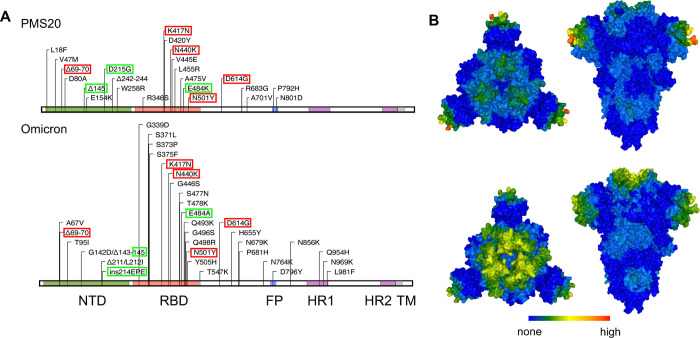
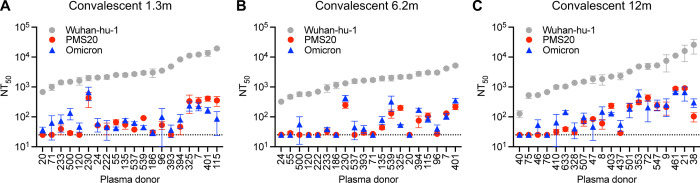
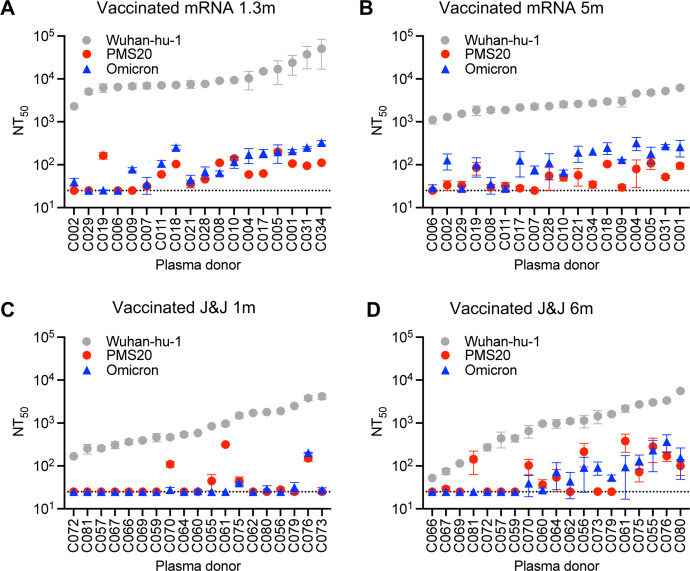
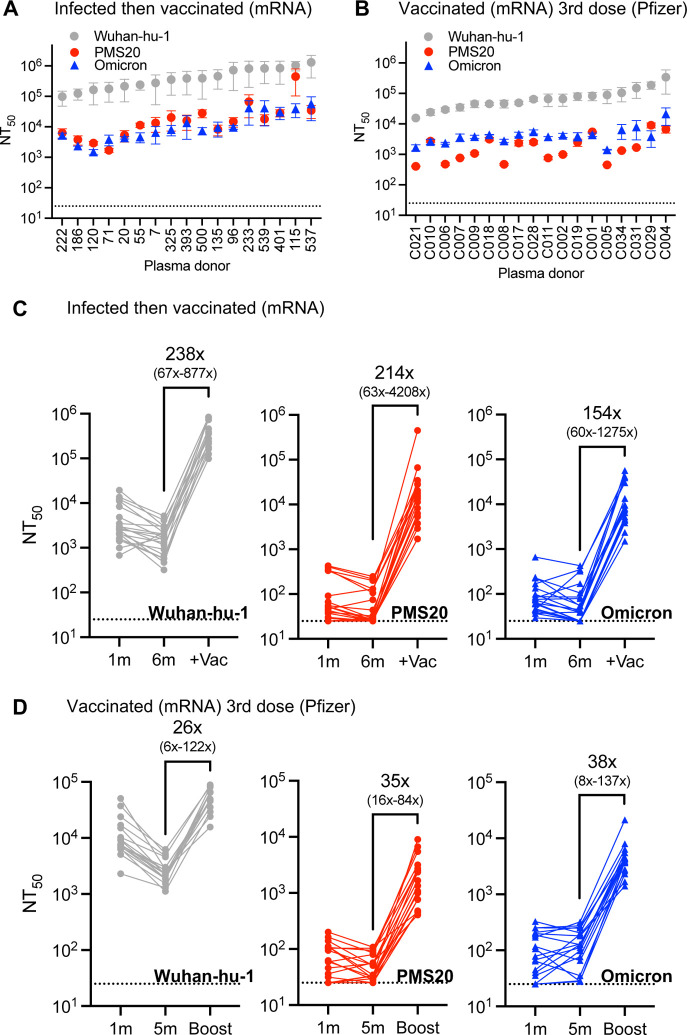
BACKGROUND: The Omicron SARS-CoV-2 variant has spread internationally and is responsible for rapidly increasing case numbers. The emergence of divergent variants in the context of a heterogeneous and evolving neutralizing antibody response in host populations might compromise protection afforded by vaccines or prior infection. METHODS: We measured neutralizing antibody titers in 169 longitudinally collected plasma samples using pseudotypes bearing the Wuhan-hu-1 or the Omicron variant or a laboratory-designed neutralization-resistant SARS-CoV-2 spike (PMS20). Plasmas were obtained from convalescents who did or did not subsequently receive an mRNA vaccine, or naive individuals who received 3-doses of mRNA or 1-dose Ad26 vaccines. Samples were collected approximately 1, 5-6 and 12 months after initial vaccination or infection. RESULTS: Like PMS20, the Omicron spike protein was substantially resistant to neutralization compared to Wuhan-hu-1. In convalescent plasma the median deficit in neutralizing activity against PMS20 or Omicron was 30- to 60-fold. Plasmas from recipients of 2 mRNA vaccine doses were 30- to 180- fold less potent against PMS20 and Omicron than Wuhan-hu-1. Notably, previously infected or two-mRNA dose vaccinated individuals who received additional mRNA vaccine dose(s) had 38 to 154-fold and 35 to 214-fold increases in neutralizing activity against Omicron and PMS20 respectively. CONCLUSIONS: Omicron exhibits similar distribution of sequence changes and neutralization resistance as does a laboratory-designed neutralization-resistant spike protein, suggesting natural evolutionary pressure to evade the human antibody response. Currently available mRNA vaccine boosters, that may promote antibody affinity maturation, significantly ameliorate SARS-CoV-2 neutralizing antibody titers.
Overview
The claims and statistics of this paper haven’t been checked yet.
Run the check — free, no account needed. It reads the open-access text and checks the sources it cites.
Integrity signals
Registry
Cites
Statistics
Figures
Verification
Claims the paper makes
The claims and statistics of this paper haven’t been checked yet.
Run the check — free, no account needed. It reads the open-access text and checks the sources it cites.
Claims other papers make about this one
Each is checked against this paper’s own text: does it say what the citing paper says it does?
The source backs part of the claim, not all of it — or backs it for a different population, condition or comparison.
In the citing paper
“However, due to escape of the Omicron variant from current approved vaccines, the efficacy of all current vaccines is reduced and a new variant-specific analysis is therefore required [13][14][15] .”
From Safety and immunogenicity of a prefusion non-stabilized spike protein mRNA COVID-19 vaccine: a phase I trial (2022) · cites this paper as [14]
Experimental — accuracy not yet measured
Self-check
Percentages, sums and reported differences re-computed from the paper’s own numbers.
The self-check needs the paper’s full text.
Citations
Cites
Convergent Antibody Responses to SARS-CoV-2 in Convalescent Individuals
Robbiani, D. F., Gaebler, C., Muecksch, F., Lorenzi, J. C. C., Wang, Z., Cho, A., Agudelo, M., Barnes, C. O., Gazumyan, A., Finkin, S., et al. (2020) · Nature · doi:10.1038/s41586-020-2456-9 · Cited by 1,853
Self-citationHoffmann, M., Kleine-Weber, H., & Pöhlmann, S. (2020) · Molecular Cell · doi:10.1016/j.molcel.2020.04.022 · Cited by 1,852
Evolution of antibody immunity to SARS-CoV-2
Gaebler, C., Wang, Z., Lorenzi, J. C. C., Muecksch, F., Finkin, S., Tokuyama, M., Cho, A., Jankovic, M., Schaefer-Babajew, D., Oliveira, T. Y., et al. (2021) · Nature · doi:10.1038/s41586-021-03207-w · Cited by 1,674
Self-citationPotent neutralizing antibodies against multiple epitopes on SARS-CoV-2 spike
Liu, L., Wang, P., Nair, M. S., Yu, J., Rapp, M., Wang, Q., Luo, Y., Chan, J. F.-W., Sahi, V., Figueroa, A., et al. (2020) · Nature · doi:10.1038/s41586-020-2571-7 · Cited by 1,349
mRNA vaccine-elicited antibodies to SARS-CoV-2 and circulating variants
Wang, Z., Schmidt, F., Weisblum, Y., Muecksch, F., Barnes, C. O., Finkin, S., Schaefer-Babajew, D., Cipolla, M., Gaebler, C., Lieberman, J. A., et al. (2021) · Nature · doi:10.1038/s41586-021-03324-6 · Cited by 1,343
Self-citationEscape from neutralizing antibodies by SARS-CoV-2 spike protein variants
Weisblum, Y., Schmidt, F., Zhang, F., DaSilva, J., Poston, D., Lorenzi, J. C., Muecksch, F., Rutkowska, M., Hoffmann, H.-H., Michailidis, E., et al. (2020) · eLife · doi:10.7554/elife.61312 · Cited by 1,308
Self-citationOmicron SARS-CoV-2 variant: a new chapter in the COVID-19 pandemic
Karim, S. S. A., & Karim, Q. A. (2021) · The Lancet · doi:10.1016/s0140-6736(21)02758-6 · Cited by 1,302
Baum, A., Fulton, B. O., Wloga, E., Copin, R., Pascal, K. E., Russo, V., Giordano, S., Lanza, K., Negron, N., Ni, M., et al. (2020) · Science · doi:10.1126/science.abd0831 · Cited by 1,253
Greaney, A. J., Loes, A. N., Crawford, K. H. D., Starr, T. N., Malone, K. D., Chu, H. Y., & Bloom, J. D. (2021) · Cell Host & Microbe · doi:10.1016/j.chom.2021.02.003 · Cited by 1,178
Naturally enhanced neutralizing breadth against SARS-CoV-2 one year after infection
Wang, Z., Muecksch, F., Schaefer-Babajew, D., Finkin, S., Viant, C., Gaebler, C., Hoffmann, H. H., Barnes, C. O., Cipolla, M., Ramos, V., et al. (2021) · Nature · doi:10.1038/s41586-021-03696-9 · Cited by 721
Self-citation
Cited by
Sorted by citations
Items 201–300 of 430
Meggiolaro, A., Sane Schepisi, M., Farina, S., Castagna, C., Mammone, A., Siddu, A., Stefanelli, P., Boccia, S., & Rezza, G. (2022) · Expert Review of Vaccines · doi:10.1080/14760584.2022.2130773 · Cited by 17
Bergamaschi, C., Pagoni, M. N., Rosati, M., Angel, M., Tzannou, I., Vlachou, M., Darmani, I., Ullah, A., Bear, J., Devasundaram, S., et al. (2022) · Frontiers in Immunology · doi:10.3389/fimmu.2022.899972 · Cited by 17
Poparn, H., Srichumpuang, C., Sosothikul, D., Jantarabenjakul, W., Lauhasurayotin, S., Techavichit, P., Chiangthong, K., & Poovorawan, Y. (2022) · Asian Pacific Journal of Cancer Prevention · doi:10.31557/apjcp.2022.23.6.2049 · Cited by 17
“…studies, the seroprotective level after 2 doses of BNT162b2 mRNA COVID-19 vaccine against the most recent variant of concern, Omicron strain, seem to be lower than against wild type and delta strain, which is insufficient to protect against omicron stain (Schmidt et al., 2021; Muik et al., 2022).”
BackgroundSitaras, I., Jacobsen, H., Higdon, M. M., Dowling, W. E., Bar-Zeev, N., & Deloria Knoll, M. (2022) · npj Vaccines · doi:10.1038/s41541-022-00565-y · Cited by 17
Fryer, H. A., Hartley, G. E., Edwards, E. S. J., Varese, N. P., Boo, I., Bornheimer, S. J., Hogarth, P. M., Drummer, H. E., O’Hehir, R. E., & van Zelm, M. C. (2023) · Journal of Clinical Immunology · doi:10.1007/s10875-023-01527-2 · Cited by 14
Junker, D., Becker, M., Wagner, T. R., Kaiser, P. D., Maier, S. M., Grimm, T. M., Griesbaum, J., Marsall, P., Gruber, J., Traenkle, B., et al. (2022) · Clinical Infectious Diseases · doi:10.1093/cid/ciac498 · Cited by 17
“Among those who had received 2 doses, binding responses were consistent with other reports (eg, [16]) in identifying a significant decrease for those who received homologous 2-dose vector vaccination as opposed to homologous mRNA vaccination or heterologous vaccination.”
ResultNeerukonda, S. N., Wang, R., Vassell, R. A., Baha, H., Lusvarghi, S., Liu, S., Wang, T. T., Weiss, C. D., & Wang, W. (2022) · Journal of Virology · doi:10.1128/jvi.01140-22 · Cited by 16
Reduced B cell antigenicity of Omicron lowers host serologic response
Tubiana, J., Xiang, Y., Fan, L., Wolfson, H. J., Chen, K., Schneidman‐Duhovny, D., & Shi, Y. (2022) · Cell Reports · doi:10.1016/j.celrep.2022.111512 · Cited by 18
“These mutations collectively facilitate the immune evasion of both vaccinated and convalescent serawhile maintaining angiotensin converting enzyme 2 (ACE2) binding (Collie et al., 2021; Edara et al., 2022; Hoffmann et al., 2021; Liu et al., 2021; Rossler et al., 2022b; Schmidt et al., 2022; Servellita et al., 2022).”
InfluentialRostad, C. A., Chen, X., Sun, H. Y., Hussaini, L., Lu, A., Perez, M. A., Hsiao, H., Anderson, L. J., & Anderson, E. J. (2022) · The Journal of Infectious Diseases · doi:10.1093/infdis/jiac215 · Cited by 16
“horts of infected and vaccinated adults [6, 7], little is known about the vaccine-induced antibody responses to variants including Omicron in children.”
BackgroundMcMillan, C. L. D., Amarilla, A. A., Modhiran, N., Choo, J. J. Y., Azuar, A., Honeyman, K. E., Khromykh, A. A., Young, P. R., Watterson, D., & Muller, D. A. (2022) · Vaccine · doi:10.1016/j.vaccine.2022.07.013 · Cited by 16
Miyamoto, S., Arashiro, T., Ueno, A., Kanno, T., Saito, S., Katano, H., Iida, S., Ainai, A., Ozono, S., Hemmi, T., et al. (2023) · iScience · doi:10.1016/j.isci.2023.105969 · Cited by 13
Third COVID-19 vaccine dose boosts neutralizing antibodies in poor responders
Lake, D. F., Roeder, A. J., González‐Moa, M. J., Koehler, M. A., Kaleta, E. J., Jasbi, P., Vanderhoof, J., McKechnie, D., Forman, J., Edwards, B. A., et al. (2022) · Communications Medicine · doi:10.1038/s43856-022-00151-2 · Cited by 16
Feitsma, E. A., Janssen, Y. F., Boersma, H. H., van Sleen, Y., van Baarle, D., Alleva, D. G., Lancaster, T. M., Sathiyaseelan, T., Murikipudi, S., Delpero, A. R., et al. (2023) · Vaccine · doi:10.1016/j.vaccine.2023.02.057 · Cited by 16
“Yester F. Janssen: Investigation, Methodology, Formal analysis, Writing – review & editing.”
BackgroundInfluentialSullivan, D. J., Franchini, M., Joyner, M. J., Casadevall, A., & Focosi, D. (2021) · medRxiv · doi:10.1101/2021.12.24.21268317 · Cited by 16
At Least Three Doses of Leading Vaccines Essential for Neutralisation of SARS-CoV-2 Omicron Variant
Singanallur, N. B., van Vuren, P. J., McAuley, A. J., Bruce, M. P., Kuiper, M. J., Gwini, S. M., Riddell, S., Goldie, S., Drew, T. W., Blasdell, K. R., et al. (2022) · Frontiers in Immunology · doi:10.3389/fimmu.2022.883612 · Cited by 15
“The Omicron mutations contribute to its ability to circumvent vaccine or infection induced neutralising antibody responses (19, 20).”
BackgroundResultGatechompol, S., Kittanamongkolchai, W., Ketloy, C., Prompetchara, E., Thitithanyanont, A., Jongkaewwattana, A., Buranapraditkun, S., Alameh, M.-G., Ubolyam, S., Sophonphan, J., et al. (2022) · Nature Microbiology · doi:10.1038/s41564-022-01271-0 · Cited by 15
Liu, J., Mao, Q., Wu, X., He, Q., Bian, L., Bai, Y., Wang, Z., Wang, Q., Zhang, J., Liang, Z., et al. (2022) · Frontiers in Immunology · doi:10.3389/fimmu.2022.814365 · Cited by 15
“BNT162b2 Israel 119,236 ≥16 92 (88- 95) 87 (55-100) 92 (75- 100) –”
Self-citationSimon, B., Rubey, H., Gromann, M., Knopf-Völkerer, A., Hemedi, B., Zehetmayer, S., & Kirsch, B. M. (2022) · Vaccines · doi:10.3390/vaccines10050694 · Cited by 13
Lineage BA.2 dominated the Omicron SARS-CoV-2 epidemic wave in the Philippines
Li, Y., Polotan, F. G. M., Sotelo, G. I. S., Alpino, A. P. A., Dolor, A. Y. M., Tujan, M. A. A., Gomez, M. R., Onza, O. J. T., Chang, A. K. T., Bautista, C. T., et al. (2022) · Virus Evolution · doi:10.1093/ve/veac078 · Cited by 16
Farcet, M. R., Karbiener, M., Knotzer, S., Schwaiger, J., & Kreil, T. R. (2022) · The Journal of Infectious Diseases · doi:10.1093/infdis/jiac358 · Cited by 15
Druggable targets and therapeutic development for COVID-19
Duan, X., Lacko, L. A., & Chen, S. (2022) · Frontiers in Chemistry · doi:10.3389/fchem.2022.963701 · Cited by 15
“1 variant has shown substantial escape from neutralizing antibodies induced by vaccination (Cele et al., 2022; Liu et al., 2022; Schmidt et al., 2022).”
BackgroundRosati, M., Terpos, E., Bear, J., Burns, R. T., Devasundaram, S., Ntanasis‐Stathopoulos, I., Gavriatopoulou, M., Kastritis, E., Dimopoulos, M. A., Pavlakis, G. N., et al. (2022) · Cancers · doi:10.3390/cancers14235816 · Cited by 16
“Because we and others have also reported excellent correlation between the pseudotype NAb assay and live-virus neutralization [17,26,38], these data predict also lack of live-virus neutralization of the BA.”
ResultFerreira, V. H., Ierullo, M., Mavandadnejad, F., Kurtesi, A., Hu, Q., Hardy, W. R., Hall, V. G., Pinzon, N., Yotis, D. M., Gingras, A., et al. (2023) · Clinical Infectious Diseases · doi:10.1093/cid/ciad175 · Cited by 14
Great Expectations of COVID-19 Herd Immunity
Giurgea, L. T., & Morens, D. M. (2022) · mBio · doi:10.1128/mbio.03495-21 · Cited by 15
“tions with high levels of vaccine- and natural infection-induced immunity (28).”
BackgroundGiron, C. C., Laaksonen, A., & da Silva, F. L. B. (2022) · Journal of Biomolecular Structure and Dynamics · doi:10.1080/07391102.2022.2095305 · Cited by 18
“neutralization of the SARS-CoV-2 Omicron variant using blood from patients previously infected with other variants (Schmidt et al., 2021).”
MethodHumoral immunity for durable control of SARS-CoV-2 and its variants
Kotaki, R., Moriyama, S., & Takahashi, Y. (2023) · Inflammation and Regeneration · doi:10.1186/s41232-023-00255-9 · Cited by 15
Chammartin, F., Kusejko, K., Pasin, C., Trkola, A., Briel, M., Amico, P., Stoeckle, M. P., Eichenberger, A. L., Hasse, B. K., Braun, D. L., et al. (2022) · AIDS · doi:10.1097/qad.0000000000003246 · Cited by 14
Clinical and genomic signatures of SARS-CoV-2 Delta breakthrough infections in New York
Duerr, R., Dimartino, D., Marier, C., Zappile, P., Levine, S., François, F., Iturrate, E., Wang, G., Dittmann, M., Lighter, J., et al. (2022) · EBioMedicine · doi:10.1016/j.ebiom.2022.104141 · Cited by 14
“4 (cid:1) 6,37 Thus, both Omicron and Delta breakthrough viruses were presumably selected against immune selection pressure, which prompted us to perform a comparative analysis of their full-genome mutational landscapes including regions with high (hotspots) or low (cold-spots) evolutionary…”
Beaudoin-Bussières, G., Tauzin, A., Dionne, K., Gendron‐Lepage, G., Medjahed, H., Perreault, J., Levade, I., Alfadhli, L., Bo, Y., Bazin, R., et al. (2023) · Viruses · doi:10.3390/v15061274 · Cited by 15
Non-neutralizing antibodies: Deleterious or propitious during SARS-CoV-2 infection?
Zanella, I., Antoni, M. D., Marchese, V., Castelli, F., & Quirós-Roldán, E. (2022) · International Immunopharmacology · doi:10.1016/j.intimp.2022.108943 · Cited by 16
“4 the Omicron variant in comparison to the wild-type SARS-CoV-2 [54,55].”
Bednarski, E., Estrada, P. M. D. R., DaSilva, J., Boukadida, C., Zhang, F., Luna-Villalobos, Y. A., Rodríguez-Rangel, X., Pitén-Isidro, E., Luna-García, E., Díaz-Rivera, D., et al. (2022) · mBio · doi:10.1128/mbio.00840-22 · Cited by 15
“We and others have previously reported that mRNA vaccination of individuals who were previously infected can generate neutralizing activity against distantly related sarbecoviruses such as SARS-CoV (6, 18, 26, 27).”
Self-citationAnand, U., Pal, T., Zanoletti, A., Sundaramurthy, S., Varjani, S., Rajapaksha, A. U., Barceló, ., & Bontempi, E. (2023) · Environmental Research · doi:10.1016/j.envres.2023.115612 · Cited by 15
“S, and Sputnik V did not successfully produce neutralizing activity against the Omicron variant (Cameroni et al., 2022; Garcia-Beltran et al., 2022; Rössler et al., 2022; Schmidt et al., 2022).”
Yin, Y., Li, X., Qian, C., Cheng, B., Lu, F., & Shen, T. (2022) · Journal of Infection · doi:10.1016/j.jinf.2022.06.018 · Cited by 14
Germinal center–mediated broadening of B cell responses to SARS-CoV-2 booster immunization
Malladi, S. K., Jaiswal, D., Ying, B., Alsoussi, W. B., Darling, T. L., Dadonaite, B., Civljak, A., Horvath, S. C., Zhou, J. Q., Kim, W., et al. (2025) · Science Immunology · doi:10.1126/sciimmunol.adu4107 · Cited by 15
Zhou, W., He, P., Li, J., Liu, H., Shi, M., Yu, J., & Wei, H. (2022) · Viruses · doi:10.3390/v14020335 · Cited by 13
Antibody durability at 1 year after Sputnik V vaccination
Sanchez, L., Rouco, S. O., Pifano, M., Ojeda, D. S., Pascuale, C. A., Mazzitelli, B., García, F. D. D., Ledesma, M. M. G. L., Rodriguez, P. E., Miglietta, E. A., et al. (2022) · The Lancet Infectious Diseases · doi:10.1016/s1473-3099(22)00176-1 · Cited by 14
da Silva, E. S., Kohnen, M., Gilson, G., Staub, T., Arendt, V., Hilger, C., Servais, J.-Y., Charpentier, É., Domingues, O., Snoeck, C. J., et al. (2022) · International Journal of Molecular Sciences · doi:10.3390/ijms23147675 · Cited by 12
Tauzin, A., Beaudoin-Bussières, G., Gong, S. Y., Chatterjee, D., Gendron‐Lepage, G., Bourassa, C., Goyette, G., Racine, N., Khrifi, Z., Turgeon, J., et al. (2022) · iScience · doi:10.1016/j.isci.2022.104990 · Cited by 13
Global estimates of the fitness advantage of SARS-CoV-2 variant Omicron
van Dorp, C. H., Goldberg, E. E., Ke, R., Hengartner, N., & Romero-Severson, E. O. (2022) · Virus Evolution · doi:10.1093/ve/veac089 · Cited by 13
Luczkowiak, J., Rivas, G. A., Labiod, N., Lasala, F., Rolo, M., Lora‐Tamayo, J., Mancheño‐Losa, M., Rial‐Crestelo, D., Pérez‐Rivilla, A., Folgueira, M. D., et al. (2022) · Journal of Medical Virology · doi:10.1002/jmv.28268 · Cited by 15
“The emergence of the different SARS‐COV‐2 variants of concern (VoC) have represented an important challenge to achieve high levels of protection for COVID‐19(1) especially after the rapid spread of the Omicron VoC which combines an unprecedented number of mutations in its sequence clearly related with an increased tra…”
BackgroundMemory B cell differentiation from germinal centers
Inoue, T. (2023) · International Immunology · doi:10.1093/intimm/dxad017 · Cited by 13
Differential escape of neutralizing antibodies by SARS-CoV-2 Omicron and pre-emergent sarbecovirusesPreprint
Wang, L., Tan, C. W., Chia, W. N., Zhu, F., Young, B. E., Chantasrisawad, N., Hwa, S.-H., Yeoh, A. Y.-Y., Lim, B. L., Yap, W. C., et al. (2022) · Research Square · doi:10.21203/rs.3.rs-1362541/v1 · Cited by 14
Delineating antibody escape from Omicron sublineagesPreprint
Gruell, H., Vanshylla, K., Korenkov, M., Tober‐Lau, P., Zehner, M., Münn, F., Janicki, H., Augustin, M., Schommers, P., Sander, L. E., et al. (2022) · bioRxiv (Cold Spring Harbor Laboratory) · doi:10.1101/2022.04.06.487257 · Cited by 13
Hederman, A. P., Natarajan, H., Heyndríckx, L., Ariën, K. K., Wiener, J. A., Wright, P. F., Bloch, E. M., Tobian, A. A. R., Redd, A. D., Blankson, J. N., et al. (2023) · Nature Communications · doi:10.1038/s41467-023-40960-0 · Cited by 19
“The emergence of the Omicronvariant, with farmoremutationsthan otherVOC, including in other regions of the spike protein, has led to reductions in neutralization potency against this variant 8,40,41 .”
Variant-specific antibody response following repeated SARS-CoV-2 vaccination and infection
Jiang, X., Song, X., Shi, C., Yang, G., Wang, X., Zhang, Y.-W., Wu, J., Zhao, L., Zhang, M., Wang, M., et al. (2024) · Cell Reports · doi:10.1016/j.celrep.2024.114387 · Cited by 13
Byrne, J., Gu, L., Leon, A. A. G., Gaillard, C. M., Saini, G., Alalwan, D., Tomás‐Cortázar, J., Kenny, G., Donohue, S., Reynolds, B., et al. (2024) · Frontiers in Immunology · doi:10.3389/fimmu.2024.1445653 · Cited by 12
“Studies have demonstrated that the third dose of WT virus mRNA signi fi cantly enhances the production of neutralising antibodies against highly mutated strains such as OM (32, 33).”
Backgroundda Silva, A. R., Villas-Boas, L. S., Tozetto-Mendoza, T. R., Honorato, L., de Paula, A., Witkin, S. S., & Mendes-Correa, M. C. (2022) · Revista do Instituto de Medicina Tropical de São Paulo · doi:10.1590/s1678-9946202264019 · Cited by 12
Cross-Variant Neutralizing Serum Activity after SARS-CoV-2 Breakthrough Infections
Tober‐Lau, P., Gruell, H., Vanshylla, K., Koch, W., Hillus, D., Schommers, P., Suárez, I., Suttorp, N., Sander, L. E., Klein, F., et al. (2022) · Emerging infectious diseases · doi:10.3201/eid2805.220271 · Cited by 12
Lee, H., Knabl, L., Walter, M. F., Furth, P. A., & Hennighausen, L. G. (2022) · iScience · doi:10.1016/j.isci.2022.105369 · Cited by 12
“The highly transmissible SARS-CoV-2 Omicron (B.1.1.529) variant has replaced previous variants and is less susceptible to neutralizing antibodies elicited by vaccination or infection (Cele et al., 2022; Edara et al., 2022; Schmidt et al., 2022).”
InfluentialPacheco-Olvera, D. L., Remy-Hernández, S. S., García-Valeriano, M. G., Rivera-Hernández, T., & López-Macías, C. I. R. (2022) · Archives of Medical Research · doi:10.1016/j.arcmed.2022.10.007 · Cited by 12
Maltseva, M., Galipeau, Y., Renner, T. M., Deschatelets, L., Durocher, Y., Akache, B., & Langlois, M. (2022) · Vaccines · doi:10.3390/vaccines11010030 · Cited by 14
Ad26.COV2.S priming provided a solid immunological base for mRNA-based COVID-19 booster vaccination
Geers, D., Sablerolles, R. S. G., van Baarle, D., Kootstra, N. A., Rietdijk, W. J. R., Schmitz, K. S., Gommers, L., Bogers, S., Nieuwkoop, N. J., van Dijk, L. L. A., et al. (2022) · iScience · doi:10.1016/j.isci.2022.105753 · Cited by 12
“Both variants have shown significant escape from neutralizing antibodies.(17,20,56,57) Currently, other Omicron variants are rapidly establishing dominance in different geographical locations, and escape has been demonstrated for the newer Omicron variants.”
McEvoy, C. M., Hu, Q., Abe, K. T., Yau, K., Oliver, M. J., Levin, A., Gingras, A., Hladunewich, M., & Yuen, D. A. (2022) · Transplantation Direct · doi:10.1097/txd.0000000000001401 · Cited by 12
Hertoghs, N., Roels, S., Brückner, M., SADOFF, J. C., Banbury, B. L., Akers, N. K., Howie, B., Robins, H. S., Roey, G. A. V., Tolboom, J. T. B. M., et al. (2025) · EBioMedicine · doi:10.1016/j.ebiom.2025.105809 · Cited by 15
Um, J., Choi, Y. Y., Kim, G., Kim, M.-K., Lee, K., Sung, H. K., Kim, B. C., Lee, Y.-K., Jang, H., Bang, J. H., et al. (2022) · Journal of Korean Medical Science · doi:10.3346/jkms.2022.37.e70 · Cited by 11
Raptis, C., Berger, C. T., Ciurea, A., Andrey, D. O., Polysopoulos, C., Lescuyer, P., Maletic, T., Riek, M., Scherer, A., von Loga, I., et al. (2022) · Frontiers in Immunology · doi:10.3389/fimmu.2022.1016927 · Cited by 12
Agudelo, M., Muecksch, F., Schaefer-Babajew, D. J., Cho, A., DaSilva, J., Bednarski, E., Ramos, V., Oliveira, T. Y., Cipolla, M., Gazumyan, A., et al. (2022) · The Journal of Experimental Medicine · doi:10.1084/jem.20220367 · Cited by 9
Self-citationHelmy, S. A., Morsi, R. M. E., El-Masry, S. M., & El-Masry, S. M. (2022) · Journal of Drug Delivery Science and Technology · doi:10.1016/j.jddst.2022.103762 · Cited by 12
Dürrwald, R., Kolodziejek, J., Oh, D., Herzog, S., Liebermann, H., Osterrieder, N., & Nowotny, N. R. (2022) · Viruses · doi:10.3390/v14122706 · Cited by 10
Abdelaziz, M. O., Raftery, M. J., Weihs, J., Bielawski, O., Edel, R., Köppke, J. K. C., Vladimirova, D., Adler, J. M., Firsching, T. C., Voß, A., et al. (2023) · Frontiers in Immunology · doi:10.3389/fimmu.2023.1166765 · Cited by 10
Patel, R. S., & Agrawal, B. (2022) · Frontiers in Immunology · doi:10.3389/fimmu.2022.952229 · Cited by 10
Detection of the Omicron SARS-CoV-2 Lineage and Its BA.1 Variant with Multiplex RT-qPCR
Yolshin, N. D., Komissarov, A. B., Вадимович, В. К., Даировна, М. Т., Fadeev, A. V., & Lioznov, D. A. (2022) · International Journal of Molecular Sciences · doi:10.3390/ijms232416153 · Cited by 10
“Thus, the Omicron variant poses an increased risk of reinfection with SARS-CoV-2 as compared to other VOCs because it is able to resist neutralization by antibodies [6,7] or sera from vaccinated people [8].”
BackgroundViral N protein hijacks deaminase-containing RNA granules to enhance SARS-CoV-2 mutagenesis
Li, Z., Luo, L., Ju, X., Huang, S., Lei, L., Yu, Y., Liu, J., Zhang, P., Chi, T., Ma, P., et al. (2024) · The EMBO Journal · doi:10.1038/s44318-024-00314-y · Cited by 8
Akula, V. R., Bhate, A. S., Gillurkar, C. S., Kushwaha, J. S., Singh, A. P., Singh, C., Pandey, A. K., K, S. K., Rai, S. K., Vadrevu, K. M., et al. (2025) · Communications Medicine · doi:10.1038/s43856-025-00818-6 · Cited by 11
(2022) · doi:10.3390/v14040800 · Cited by 9
“from vaccinated and/or infected patients [21,22], further highlights the need for a reg 433”
BackgroundHirsiger, J. R., Weigang, S., Walz, A., Fuchs, J., Daly, M.-L., Eggimann, S., Hausmann, O. V., Schwemmle, M., Kochs, G., Panning, M., et al. (2022) · The Journal of Allergy and Clinical Immunology In Practice · doi:10.1016/j.jaip.2022.06.020 · Cited by 9
Strategies and safety considerations of booster vaccination in COVID-19
Meng, H., Mao, J., & Ye, Q. (2022) · Biomolecules and Biomedicine · doi:10.17305/bjbms.2021.7082 · Cited by 12
What, Where, When and How of COVID-19 Patents Landscape: A Bibliometrics Review
Liu, K., Zhang, X., Hu, Y., Chen, W., Kong, X., Yao, P., Cong, J., Zuo, H., Wang, J., Li, X., et al. (2022) · Frontiers in Medicine · doi:10.3389/fmed.2022.925369 · Cited by 10
“Omicron is four times more infectious than the Alpha strain and twice as infectious as the Delta strain (36).”
BackgroundSolanki, K., Rajpoot, S., Kumar, A., Zhang, K. Y. J., Ohishi, T., Hirani, N., Wadhonkar, K., Patidar, P., Pan, Q., & Baig, M. S. (2022) · Future Virology · doi:10.2217/fvl-2022-0003 · Cited by 9
Miyakawa, K., Kato, H., Ohtake, N., Jeremiah, S. S., & Ryo, A. (2022) · The Journal of Infectious Diseases · doi:10.1093/infdis/jiac344 · Cited by 9
Divergent Antibody Repertoires Found for Omicron versus Wuhan SARS-CoV-2 Strains Using Ig-MS
Forte, E., Soye, B. J. D., Melani, R. D., Hollas, M. A. R., Kafader, J. O., Sha, B. E., Schneider, J. R., & Kelleher, N. L. (2022) · Journal of Proteome Research · doi:10.1021/acs.jproteome.2c00514 · Cited by 8
Dynamics of SARS-CoV-2 VOC Neutralization and Novel mAb Reveal Protection against Omicron
Hao, L., Hsiang, T.-Y., Dalmat, R. R., Ireton, R. C., Morton, J. F., Stokes, C., Netland, J., Hale, M. R., Thouvenel, C., Wald, A., et al. (2023) · Viruses · doi:10.3390/v15020530 · Cited by 8
Effects of SARS-CoV-2 Omicron BA.1 Spike Mutations on T-Cell Epitopes in Mice
Wang, Y., Wang, B., Zhao, Z., Xu, J., Zhang, Z., Zhang, J., Chen, Y., Song, X., Zheng, W., Hou, L., et al. (2023) · Viruses · doi:10.3390/v15030763 · Cited by 8
Thakur, N. (2022) · doi:10.36227/techrxiv.20363742 · Cited by 9
The immune memory of innate immune systems
Kato, Y., & Kumanogoh, A. (2024) · International Immunology · doi:10.1093/intimm/dxae067 · Cited by 10
Humoral responses to SARS-CoV-2 vaccine in vasculitis-related immune suppression
Kamelian, K., Sievers, B. L., Chen-Xu, M., Turner, S., Cheng, M. T. K., Altaf, M., Kemp, S. A., Abdullahi, A., Csiba, K., Collier, D. A., et al. (2025) · Science Advances · doi:10.1126/sciadv.adq3342 · Cited by 8
“These results echo previous findings using similar approaches ( 26 , 27 ), suggesting that boosters, including homologous WT vaccines, can promote B cell differentiation and affinity maturation in individuals with previous vaccinations ( 28 – 30 ).”
Odak, I., Schultze-Florey, C. R., Hammerschmidt, S. I., Ritter, C., Willenzon, S., Friedrichsen, M., Ravens, I., Sikora, R., Bayir, L. M., Jauregui, R. G., et al. (2022) · Frontiers in Immunology · doi:10.3389/fimmu.2022.863039 · Cited by 8
“org 8 publications indicating that COVID-19 convalescent individuals possess little if any serum antibodies able for neutralizing the Omicron variant (24, 26) It seems likely that the B cell-mediated protection of infection is severely affected due to the high mutational load in the RBD domain of Omicron (9).”
BackgroundResultUnderstanding COVID-19 Vaccines Today: Are T-cells Key Players?
Shafqat, A., Arabi, T. Z., Sabbah, B. N., Abdulkader, H. S., Shafqat, S., Razak, A., Kashir, J., AlKattan, K. M., & Yaqinuddin, A. (2022) · Vaccines · doi:10.3390/vaccines10060904 · Cited by 8
“529) Majority of samples did not reveal neutralizing activity [27] 74% (57–84) [41]”
BackgroundAl-Hatamleh, M. A. I., Abusalah, M. A. H., Hatmal, M. M., Alshaer, W., Ahmad, S., Mohd-Zahid, M. H., Rahman, E. N. S. E. A., Yean, C. Y., Alias, I. Z., Uskoković, V., et al. (2022) · Journal of Taibah University Medical Sciences · doi:10.1016/j.jtumed.2022.11.007 · Cited by 8
“261 The Omicron variant of the coronavirus, which is spreading more quickly than previous variants, is unlikely to help countries achieve herd immunity against COVID-19, wherein individuals would become immune to the virus with decreased spreading rates.”
Zheng, Q., Bao, C., Ji, Y., Li, P., Ma, Z., Wang, X., Meng, Q., & Pan, Q. (2023) · Scientific Reports · doi:10.1038/s41598-023-32619-z · Cited by 8
Hastert, F. D., Hein, S., von Rhein, C., Benz, N. I., Husria, Y., Oberle, D., Maier, T. J., Hildt, E., & Schnierle, B. S. (2022) · Vaccines · doi:10.3390/vaccines10050794 · Cited by 10
“The analysis of humoral immune responses presented here suggests that the emergence of Omicron is due to immune selective pressure in the hosts [28].”
BackgroundLim, S. Y., Park, S., Kim, J. Y., Kim, S., Jee, Y., & Kim, S. (2022) · Clinical Infectious Diseases · doi:10.1093/cid/ciac435 · Cited by 9
“Previous studies have shown that 2 doses of mRNA-based vaccines elicit poor neutralizing 93 antibody responses against the Omicron variant, while 3 doses of mRNA-based vaccines 94 elicit potent responses against the Omicron variant [2-3].”
BackgroundLou, H., Zheng, J.-Q., Fang, X., Liang, Z., Zhang, M. L., Chen, Y. Z., Wang, C., & Cao, X. (2022) · Cell Research · doi:10.1038/s41422-022-00727-6 · Cited by 9
Djordjević, M., Marković, S. S., Salom, I., & Djordjevic, M. (2022) · Environmental Research · doi:10.1016/j.envres.2022.114446 · Cited by 8
Mohsin, M., & Mahmud, S. A. S. (2022) · Research Square · doi:10.21203/rs.3.rs-1316171/v1 · Cited by 8
A Role for Nucleocapsid-Specific Antibody Function in COVID-19 Convalescent Plasma TherapyPreprint
Herman, J. D., Wang, C., Burke, J. S., Zur, Y., Compere, H., Kang, J., Macvicar, R., Shin, S. A., Frank, I., Siegel, D. L., et al. (2022) · medRxiv · doi:10.1101/2022.02.19.22271230 · Cited by 8
Reduced antigenicity of Omicron lowers host serologic responsePreprint
Tubiana, J., Xiang, Y., Fan, L., Wolfson, H. J., Chen, K., Schneidman‐Duhovny, D., & Shi, Y. (2022) · bioRxiv (Cold Spring Harbor Laboratory) · doi:10.1101/2022.02.15.480546 · Cited by 8
Hederman, A. P., Natarajan, H., Wiener, J. A., Wright, P. F., Bloch, E. M., Tobian, A. A. R., Redd, A. D., Blankson, J. N., Rottenstreich, A., Zarbiv, G., et al. (2022) · medRxiv · doi:10.1101/2022.09.15.22280000 · Cited by 8
Chowdhury, S., Chowdhury, N. S., Chowdhury, N. S., Chowdhury, S., & Chowdhury, S. (2022) · International Journal of Immunopathology and Pharmacology · doi:10.1177/03946320221133001 · Cited by 8
“The effectiveness of neutralizing antibodies generated by vaccines, previous infections, and monoclonal antibody therapy is decreased by the mutations in the Omicron variant.(5) After one or two doses of the coronavirus disease 2019 (COVID-19) vaccine, neutralizing antibodies against the Omicron variant stay low and o…”
BackgroundMiyamoto, S., Numakura, K., Kinoshita, R., Arashiro, T., Takahashi, H., Hibino, H., Hayakawa, M., Kanno, T., Sataka, A., Sakamoto, R., et al. (2025) · Communications Medicine · doi:10.1038/s43856-025-00894-8 · Cited by 6
Ng, E., Choi, C., & Wang, S. X. (2023) · Sensors and Actuators B Chemical · doi:10.1016/j.snb.2023.133773 · Cited by 7
“Mutations to the spike protein associated with Omicron result in greater antigenic escape from antibodies compared to previous variants [32,33].”
Chen, C., Huang, K.-Y. A., Shih, S., Lin, Y., Cheng, C., Huang, Y., Lin, T., & Cheng, S. (2022) · Microbiology Spectrum · doi:10.1128/spectrum.00743-22 · Cited by 7
The Burden of Omicron Variant in Pakistan: An Updated Review
Khan, S., Khan, S., Haider, F., Malik, J., Khan, F., Khan, I., Ullah, I., Zia, M. A., & Kousar, S. (2022) · COVID · doi:10.3390/covid2100105 · Cited by 7
“Scientists expect that vaccines will be less effective against the variant [11].”
BackgroundBoer, J. C., Pan, Q., Holien, J. K., Nguyen, T., Ascher, D. B., & Plebanski, M. (2022) · Frontiers in Immunology · doi:10.3389/fimmu.2022.954435 · Cited by 7
“For instance, through the use of an artificially constructed neutralization resistant virus expressing the Omicron Spike protein variant, authors showed that Omicron and the neutralization resistant Spike construct, were both 30-180 fold more resistant to neuralization by convalescent plasma, compared to the original…”
ResultMcGrath, J., Kenny, C., Nielsen, C. S., Domegan, L. M., Walsh, C., Rooney, P., Walsh, S., Conlon, N. P., Brady, G., Ibrahim, A., et al. (2023) · Frontiers in Medicine · doi:10.3389/fmed.2023.1078022 · Cited by 7
“Booster vaccine dosing with mRNA vaccines mitigates this antibody reduction with significant increases in titres demonstrated in both previously infected individuals and those in receipt of vaccination alone (44, 46).”
BackgroundMuthusami, R., & Saritha, K. (2023) · Proceedings of the Indian National Science Academy · doi:10.1007/s43538-023-00176-8 · Cited by 7
Seo, Y. J., Oh, I., Nam, M., Shin, S., Roh, E. Y., & Song, E. Y. (2023) · Annals of Laboratory Medicine · doi:10.3343/alm.2023.43.6.596 · Cited by 8
“This is in agreement with previous findings of strong hybrid immunity after BI [3, 15, 29].”
Yu, B., Drelich, A. K., Hsu, J. C., Tat, V., Peng, B., Wei, Q., Wang, J., Wang, H., Wages, J. M., Mendelsohn, A. R., et al. (2023) · Journal of Medicinal Chemistry · doi:10.1021/acs.jmedchem.3c01201 · Cited by 6
Gaebler, C., DaSilva, J., Bednarski, E., Muecksch, F., Schmidt, F., Weisblum, Y., Millard, K. G., Turroja, M., Cho, A., Wang, Z., et al. (2022) · Open Forum Infectious Diseases · doi:10.1093/ofid/ofac227 · Cited by 7
“Uninfected vaccine recipient participants have been previously described [3] (Supplementary Table 1).”
Self-citationDesign of immunogens for eliciting antibody responses that may protect against SARS-CoV-2 variants
Wang, E. J. D., & Chakraborty, A. K. (2022) · PLoS Computational Biology · doi:10.1371/journal.pcbi.1010563 · Cited by 7
“Indeed, available data on the Omicron variant suggest that this is true [8,9].”
Background
Metadata
- Authors
- Schmidt, F., Muecksch, F., Weisblum, Y., Da Silva, J., Bednarski, E., Cho, A., Wang, Z., Gaebler, C., Caskey, M., Nussenzweig, M. C., Hatziioannou, T., & Bieniasz, P. D.
- Affiliations
- Rockefeller University (US)
- Rockefeller University, New York, NY
- Corresponding author
- Bieniasz, Paul D.
- Venue
- New England Journal of Medicine
- Publisher
- Massachusetts Medical Society
- Published
- 2022-02-10
- Volume
- 386
- Issue
- 6
- Pages
- 599-601
- ISSN
- 0028-4793 (ISSN-L)
- 1533-4406
- PMC
- PMC8687470
- OpenAlex
- W4205145778
- Cited by
- 432
- References
- 22
- Citations by year
- 2026: 9 · 2025: 16 · 2024: 24 · 2023: 68 · 2022: 307
- FWCI
- 32.20
- Type
- journal article
- Language
- en
- Open access
- bronze
- doi.org
- Locations
- New England Journal of Medicine (publishedVersion)
- medRxiv (acceptedVersion, cc-by-nc-nd)
- PubMed Central (publishedVersion)
- PubMed (publishedVersion)
- PubMed Central (submittedVersion, cc-by-nc-nd)
- Funders
- Howard Hughes Medical Institute
- National Institutes of Health (2U19AI111825, P01-AI138398-S1, R01AI501111, R01AI78788, R37AI64003)
- National Center for Advancing Translational Sciences (UL1 TR001866)
- Topics
- Health Sciences › Medicine › Infectious Diseases › SARS-CoV-2 and COVID-19 Research
- Health Sciences › Medicine › Infectious Diseases › COVID-19 Clinical Research Studies
- Life Sciences › Agricultural and Biological Sciences › Animal Science and Zoology › Animal Virus Infections Studies
- Keywords
- Omicron variant, neutralizing antibodies, plasma neutralization, spike protein mutations, receptor binding domain, N-terminal domain, antibody escape, Wuhan-Hu-1, COVID-19 recovery, mRNA vaccines, neutralization titers
About these checks
Registry, retraction, Cites and statistics results are computed, not judged, with one exception: a printed reference that no index lists is read once by a model before it counts as a citation error. Claims are extracted by a model and kept only when their quote appears verbatim in the text; each cited source is then checked, with a model’s help, for whether it says what the claim relies on. Those verdicts can be wrong — read the claim’s quote and the cited source before relying on one.
Statistics and arithmetic are recomputed, not judged.
Confidence bands are shown only for fields calibrated on our annotated test set. None is calibrated yet, so no band is shown.
What counts as a claim ›How we measure confidence ›How we check this ›
Are you an author, or do you see a problem with this page? Request a review
