

Oxygen, ecology, and the Cambrian radiation of animals
Open accessThe DOI matches its Crossref record; 136 of the 137 references it cites were found in a registry or an index.
Abstract
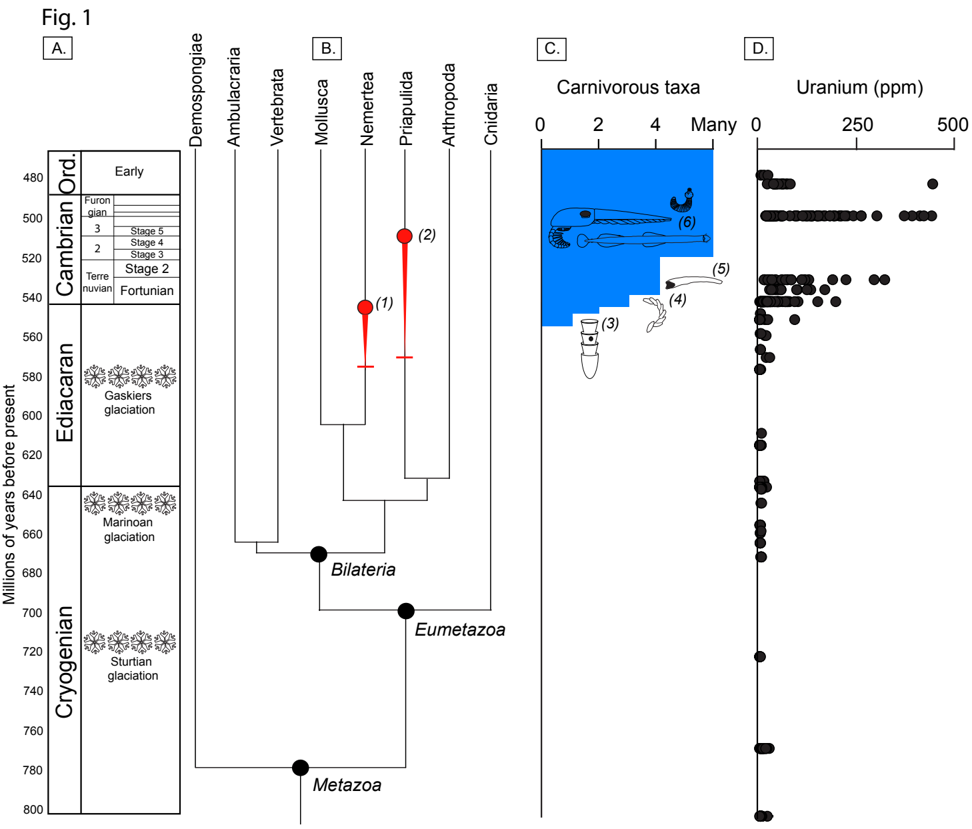
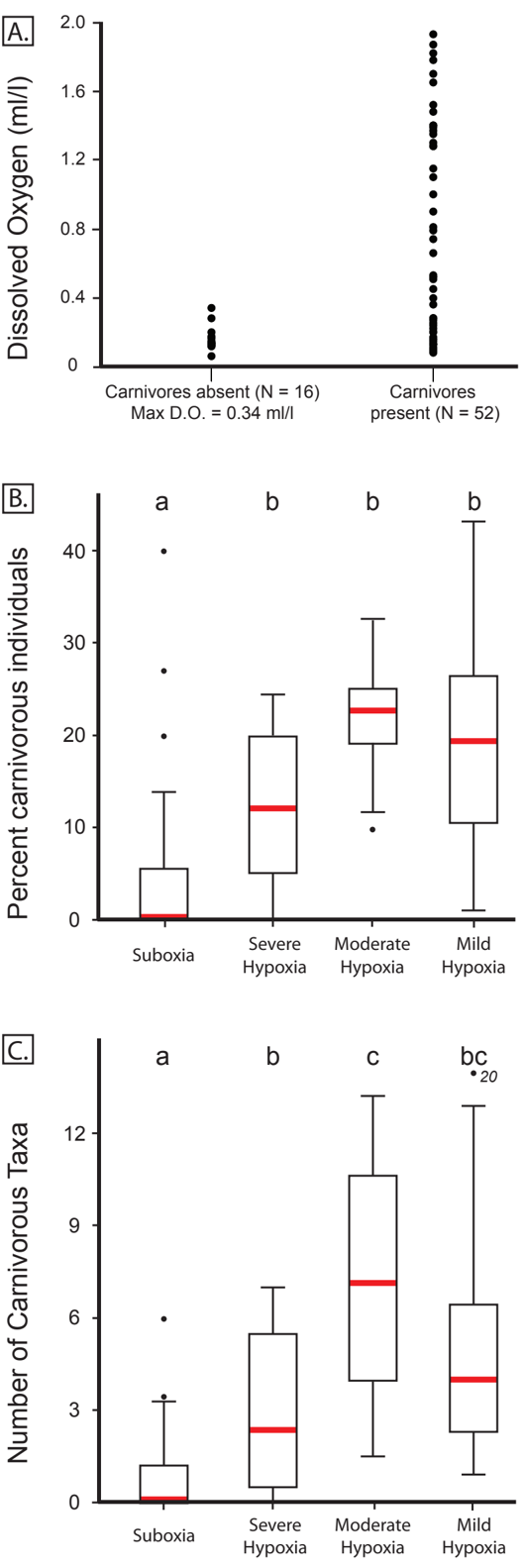
The Proterozoic-Cambrian transition records the appearance of essentially all animal body plans (phyla), yet to date no single hypothesis adequately explains both the timing of the event and the evident increase in diversity and disparity. Ecological triggers focused on escalatory predator–prey “arms races” can explain the evolutionary pattern but not its timing, whereas environmental triggers, particularly ocean/atmosphere oxygenation, do the reverse. Using modern oxygen minimum zones as an analog for Proterozoic oceans, we explore the effect of low oxygen levels on the feeding ecology of polychaetes, the dominant macrofaunal animals in deep-sea sediments. Here we show that low oxygen is clearly linked to low proportions of carnivores in a community and low diversity of carnivorous taxa, whereas higher oxygen levels support more complex food webs. The recognition of a physiological control on carnivory therefore links environmental triggers and ecological drivers, providing an integrated explanation for both the pattern and timing of Cambrian animal radiation.
Overview
The claims and statistics of this paper haven’t been checked yet.
Free: it reads the open-access text and checks the first 5 claims that cite a source we can check. Create a free account to check every claim.
Integrity signals
Registry
Cites
Statistics
Figures

Verification
Claims the paper makes
The claims and statistics of this paper haven’t been checked yet.
Free: it reads the open-access text and checks the first 5 claims that cite a source we can check. Create a free account to check every claim.
Claims other papers make about this one
Each is checked against this paper’s own text: does it say what the citing paper says it does?
The source backs part of the claim, not all of it — or backs it for a different population, condition or comparison.
In the citing paper
“Many of the new animal body plans and lifestyles that appeared during the early Cambrian were associated with considerably higher oxygen demands 9,10 .”
From Possible links between extreme oxygen perturbations and the Cambrian radiation of animals (2019) · cites this paper as [9]
Experimental — accuracy not yet measuredThe source backs part of the claim, not all of it — or backs it for a different population, condition or comparison.
In the citing paper
“In the modern and ancient oceans, well-oxygenated waters are generally associated with larger body sizes, higher diversity, advanced skeletal biomineralization, and increased motility and carnivory 9,10,54,55 .”
From Possible links between extreme oxygen perturbations and the Cambrian radiation of animals (2019) · cites this paper as [9]
Experimental — accuracy not yet measuredThe source backs part of the claim, not all of it — or backs it for a different population, condition or comparison.
In the citing paper
“This, consequently, would have increased surface ocean carbonate supersaturation, which may have reduced the physiological cost of carbonate skeleton construction and facilitated the evolutionary arms race13.”
From Rise to modern levels of ocean oxygenation coincided with the Cambrian radiation of animals (2015) · cites this paper as [13]
Experimental — accuracy not yet measuredThe source backs part of the claim, not all of it — or backs it for a different population, condition or comparison.
In the citing paper
“there is a broad consensus that dissolved oxygen provision reached a threshold, or series of thresholds, during the Neoproterozoic, allowing the diversification of metazoans and their increasing metabolic demands (23-25).”
From Integrated records of environmental change and evolution challenge the Cambrian Explosion (2019) · cites this paper as [23]
Experimental — accuracy not yet measuredThe source backs part of the claim, not all of it — or backs it for a different population, condition or comparison.
In the citing paper
“Modern lowoxygen regions are heterogeneous and dynamic habitats that support low diversity communities of opportunistic and non-skeletal metazoans, many of which are meiofaunal: large, skeletal, and motile metazoans, which form complex, biodiverse ecosystems, typically require higher oxygen levels (23).”
From Integrated records of environmental change and evolution challenge the Cambrian Explosion (2019) · cites this paper as [23]
Experimental — accuracy not yet measured
6 more claims about this paper
Create a free account to see every claim other papers make about this one.
Self-check
Percentages, sums and reported differences re-computed from the paper’s own numbers.
The self-check needs the paper’s full text.
Citations
Cites
Díaz, R. J., & Rosenberg, R. (1995) · Oceanography and Marine Biology/Oceanography and marine biology - an annual review · Cited by 2,846
The Diet of Worms: A Study of Polychaete Feeding Guilds
Fauchald, K., & Jumars, P. A. (1979) · Smithsonian Digital Repository (Smithsonian Institution) · Cited by 2,334
(2000) · CrossRef Listing of Deleted DOIs · doi:10.1016/s0967-0653(97)84825-9 · Cited by 2,011
Thresholds of hypoxia for marine biodiversity
Vaquer-Sunyer, R., & Duarte, C. M. (2008) · Proceedings of the National Academy of Sciences · doi:10.1073/pnas.0803833105 · Cited by 1,971
Biochemical Adaptation: Mechanism and Process in Physiological Evolution
Hochachka, P. W., & Somero, G. N. (2002) · doi:10.1093/oso/9780195117028.001.0001 · Cited by 1,906
Erwin, D. H., Laflamme, M., Tweedt, S. M., Sperling, E. A., Pisani, D., & Peterson, K. J. (2011) · Science · doi:10.1126/science.1206375 · Cited by 1,336 · cited 16×
“Palma M, et al. (2005) Macrobenthic animal assemblages of the continental margin off Chile (22° to 42° S).”
BackgroundInfluentialSelf-citationEarly animal evolution: emerging views from comparative biology and geology
Knoll, A. H., & Carroll, S. B. (1999) · Science · doi:10.1126/science.284.5423.2129 · Cited by 821 · cited 10×
“(Geological Society London, London), pp 405–414. 10. Peterson KJ, McPeek MA, Evans DAD (2005) Tempo and mode of early animal evo-”
BackgroundInfluentialSelf-citationGlobal distribution of naturally occurring marine hypoxia on continental margins
Helly, J. J., & Levin, L. A. (2004) · Deep Sea Research Part I: Oceanographic Research Papers · doi:10.1016/j.dsr.2004.03.009 · Cited by 767
Self-citationCoull, B. C. (1977) · Medical Entomology and Zoology · Cited by 748
OXYGEN MINIMUM ZONE BENTHOS: ADAPTATION AND COMMUNITY RESPONSE TO HYPOXIA
(2003) · Oceanography and Marine Biology, An Annual Review, Volume 41 · doi:10.1201/9780203180570-3 · Cited by 706
Self-citation
Research works printed but not linked: 2
- 9. Dzik J (2005) in The Rise and Fall of the Ediacara Biota, eds Vickers-Rich P, Komarower, P. (Geological Society London, London), pp 405-414.
- 11. Parker A (2003) In the Blink of an Eye (Perseus Publishing, Cambridge, MA).
Cited by
Items 101–200 of 392
Macroevolutionary dynamics of gene family gain and loss along multicellular eukaryotic lineages
Domazet-Lošo, M., Široki, T., Šimičević, K., & Domazet‐Lošo, T. (2024) · Nature Communications · doi:10.1038/s41467-024-47017-w · Cited by 56
The largest Silurian vertebrate and its palaeoecological implications
Choo, B., Zhu, M., Zhao, W., Jia, L., & Zhu, Y.-A. (2014) · Scientific Reports · doi:10.1038/srep05242 · Cited by 55
Oxygen requirements for the Cambrian explosion
Zhang, X., & Cui, L. (2016) · Journal of Earth Science · doi:10.1007/s12583-016-0690-8 · Cited by 55
Edwards, C. T. (2019) · Palaeoworld · doi:10.1016/j.palwor.2018.08.006 · Cited by 53
Sea level controls on Ediacaran-Cambrian animal radiations
Bowyer, F. T., Wood, R. A., & Yilales, M. (2024) · Science Advances · doi:10.1126/sciadv.ado6462 · Cited by 54
“…concentration may have deepened the redoxcline, so extending habitable water depths, promoted animal-sediment mixing [e.g., ( 52 )], and allowed for the evolution of more metabolically costly ecologies such as carnivory, in turn driving a predator-prey “arms race” and hence diversification ( 53 ).”
BackgroundBudd, G. E., & Mann, R. P. (2020) · Interface Focus · doi:10.1098/rsfs.2019.0110 · Cited by 54
Surfing in and on microbial mats: Oxygen-related behavior of a terminal Ediacaran bilaterian animal
Xiao, S., Chen, Z., Zhou, C., & Yuan, X. (2019) · Geology · doi:10.1130/g46474.1 · Cited by 54
LeRoy, M. A., Gill, B. C., Sperling, E. A., McKenzie, N. R., & Park, T. S. (2021) · Palaeogeography Palaeoclimatology Palaeoecology · doi:10.1016/j.palaeo.2020.110209 · Cited by 54
Self-citationEvans, S. D., Diamond, C. W., Droser, M. L., & Lyons, T. W. (2018) · Emerging Topics in Life Sciences · doi:10.1042/etls20170148 · Cited by 51
Molecular clocks and the early evolution of metazoan nervous systems
Wray, G. A. (2015) · Philosophical Transactions of the Royal Society B: Biological Sciences · doi:10.1098/rstb.2015.0046 · Cited by 51
Impacts of Low Oxygen on Marine Life: Neglected, but a Crucial Priority for Research
Borges, F. O., Sampaio, E., Santos, C. P., & Rosa, R. (2022) · Biological Bulletin · doi:10.1086/721468 · Cited by 51
“This type of community is particularly evident in OMZs, where O2 is the major factor limiting the diversity and abundance of organisms in both the benthic and pelagic realms (Sperling et al., 2013).”
BackgroundGrazers and Phytoplankton Growth in the Oceans: an Experimental and Evolutionary Perspective
Ratti, S., Knoll, A. H., & Giordano, M. (2013) · PLoS ONE · doi:10.1371/journal.pone.0077349 · Cited by 46
“, [31]), the Neoproterozoic radiation of eukaryophagic protists may have changed phytoplankton growth dynamics in a way that favored the expansion of eukaryotic phytoplankton in the oceans.”
BackgroundSelf-citationAhn, S. Y., & Zhu, M. (2017) · Geological Magazine · doi:10.1017/s0016756816001369 · Cited by 52
“…for the radiation of metazoans (e.g., Brasier et al. 1990, 1996; Knoll & Carroll, 1999; Zhu, Babcock & Peng, 2006; Zhu, Strauss & Shields, 2007; Zhu, Zhang & Yang, 2007; Maloof et al. 2010a; Shields-Zhou & Zhu, 2013; Sperling et al. 2013; Lenton et al. 2014; Chen et al. 2015; Och et al. 2015).”
Pates, S., & Bicknell, R. D. C. (2018) · Palaeogeography Palaeoclimatology Palaeoecology · doi:10.1016/j.palaeo.2018.12.013 · Cited by 50
“Among these, predation was likely an important evolutionary shaper of events and morphologies (e.g. Bengtson 2002; Knoll 2003; Wood and Zhuravlev 2012; Erwin and Valentine 2013; Sperling et al. 2013; Zhang et al. 2014; Bicknell and Paterson 2018).”
BackgroundCambrian transgression and radiation linked to an Iapetus-Pacific oceanic connection?
Dalziel, I. W. D. (2014) · Geology · doi:10.1130/g35886.1 · Cited by 49
Assessing the veracity of Precambrian ‘sponge’ fossils using in situ nanoscale analytical techniques
Muscente, A. D., Marc Michel, F., Dale, J. G., & Xiao, S. (2015) · Precambrian Research · doi:10.1016/j.precamres.2015.03.010 · Cited by 49
Mid-Proterozoic redox evolution and the possibility of transient oxygenation events
Diamond, C. W., & Lyons, T. W. (2018) · Emerging Topics in Life Sciences · doi:10.1042/etls20170146 · Cited by 49
Huang, W., Tarduno, J. A., Zhou, T., Ibáñez-Mejía, M., Olmo‐Barbosa, L. D., Koester, E., Blackman, E. G., Smirnov, A. V., Ahrendt, G. C., Cottrell, R. D., et al. (2024) · Communications Earth & Environment · doi:10.1038/s43247-024-01360-4 · Cited by 49
“A complex animal ecosystem involving long food chains and predators requires still greater amounts of oxygen, as indicated by the exclusion of such complex ecosystems from the modern oxygen minimum zone 39 , which is characterized by dissolved O 2 levels of 20 – 30 μ M or 10% PAL.”
Riding, R., Liang, L., Lee, J., & Virgone, A. (2018) · Palaeogeography Palaeoclimatology Palaeoecology · doi:10.1016/j.palaeo.2018.10.006 · Cited by 48
“The rise of eukaryotes, particularly invertebrates, has been attributed to marine oxygenation (Nursall, 1959; Sperling et al., 2013; Knoll, 2014; Reinhard et al., 2016).”
BackgroundChen, X., Li, S., Newby, S. M., Lyons, T. W., Wu, F., & Owens, J. D. (2021) · Geochimica et Cosmochimica Acta · doi:10.1016/j.gca.2021.11.010 · Cited by 47
Metabolic reprogramming in crustaceans: A vital immune and environmental response strategy
Wang, Z., Zhang, Y., Yao, D., Zhao, Y., Tran, N. T., Li, S., Ma, H., & Aweya, J. J. (2021) · Reviews in Aquaculture · doi:10.1111/raq.12640 · Cited by 45
Dwindling vanadium in seawater during the early Cambrian, South China
Han, T., Fan, H., & Wen, H. (2018) · Chemical Geology · doi:10.1016/j.chemgeo.2018.05.022 · Cited by 45
Phanerozoic parasitism and marine metazoan diversity: dilution versus amplification
Baets, K. D., Huntley, J. W., Scarponi, D., Klompmaker, A. A., & Skawina, A. (2021) · Philosophical Transactions of the Royal Society B Biological Sciences · doi:10.1098/rstb.2020.0366 · Cited by 45
“Metazoan fossils document the appearance of predation in the terminal Ediacaran Period [35–37], and the appearance of the earliest parasitic relationships are preserved slightly later amongCambrian brachiopods [38–41] during the explosive radiation of animal body plans [42,43].”
BackgroundMicrostructure and Biogeochemistry of the Organically Preserved Ediacaran Metazoan Sabellidites
Moczydłowska, M., Westall, F., & Foucher, F. (2014) · Journal of Paleontology · doi:10.1666/13-003 · Cited by 44
“Phylogenetic reconstructions of metazoans place alternatively origins of bilaterians in Cryogenian and major divergences of placozoans, priapulids, molluscs, nemerteans and annelids, and arthropods in early Ediacaran (Sperling and Vinther, 2010; Erwin et al., 2013; Sperling et al., 2013).”
BackgroundInfluentialMiller, A. J., Strauss, J. V., Halverson, G. P., Macdonald, F. A., Johnston, D. T., & Sperling, E. A. (2017) · Chemical Geology · doi:10.1016/j.chemgeo.2017.03.010 · Cited by 44
Self-citationEarly animal evolution and highly oxygenated seafloor niches hosted by microbial mats
Ding, W., Dong, L., Sun, Y., Ma, H., Xu, Y., Yang, R., Peng, Y., Zhou, C., & Shen, B. (2019) · Scientific Reports · doi:10.1038/s41598-019-49993-2 · Cited by 44
Lu, X., Dahl, T. W., Zheng, W., Wang, S., & Kendall, B. (2020) · Geochimica et Cosmochimica Acta · doi:10.1016/j.gca.2020.08.032 · Cited by 45
Wood, R. A., Donoghue, P. C. J., Lenton, T. M., Liu, A., & Poulton, S. W. (2020) · Interface Focus · doi:10.1098/rsfs.2020.0024 · Cited by 42
“Alternatively, extant benthic animal community composition and modes of life—such as carnivory—have been related to dissolved O2 levels [39,40].”
BackgroundNitrogen cycle perturbations linked to metazoan diversification during the early Cambrian
Xu, D., Wang, X., Shi, X., Tang, D., Zhao, X., Feng, L., & Song, H. (2019) · Palaeogeography Palaeoclimatology Palaeoecology · doi:10.1016/j.palaeo.2019.109392 · Cited by 41
A diverse Ediacara assemblage survived under low-oxygen conditions
Cherry, L. B., Gilleaudeau, G. J., Grazhdankin, D. V., Romaniello, S. J., Martin, A. J., & Kaufman, A. J. (2022) · Nature Communications · doi:10.1038/s41467-022-35012-y · Cited by 38
Limited role of functional differentiation in early diversification of animals
Knope, M. L., Heim, N. A., Frishkoff, L. O., & Payne, J. L. (2015) · Nature Communications · doi:10.1038/ncomms7455 · Cited by 40
Aerotaxis in the closest relatives of animals
Kirkegaard, J. B., Bouillant, A., Marron, A. O., Leptos, K. C., & Goldstein, R. E. (2016) · eLife · doi:10.7554/elife.18109 · Cited by 42
“, 2014), with some hypotheses that the emergence of complex animal ecosystems (Sperling et al., 2013) were only triggered when oxygen levels rose above certain thresholds.”
BackgroundWas the Ediacaran–Cambrian radiation a unique evolutionary event?
Erwin, D. H. (2015) · Paleobiology · doi:10.1017/pab.2014.2 · Cited by 40
“Sperling et al. (2013a) compiled data on the ecology of polychaete assemblages in low-oxygen zones and showed that carnivores are absent in such settings.”
BackgroundInfluentialBiotic and Abiotic Controls on the Phanerozoic History of Marine Animal Biodiversity
Bush, A. M., & Payne, J. L. (2021) · Annual Review of Ecology Evolution and Systematics · doi:10.1146/annurev-ecolsys-012021-035131 · Cited by 40
Pulses of atmosphere oxygenation during the Cambrian radiation of animals
Jiang, L., Zhao, M., Shen, A., Huang, L., Chen, D., & Cai, C. (2022) · Earth and Planetary Science Letters · doi:10.1016/j.epsl.2022.117565 · Cited by 40
Wei, G., Ling, H., Shields, G., Chen, T., Lechte, M. A., Chen, X., Qiu, C., Lei, H., & Zhu, M. (2019) · Palaeogeography Palaeoclimatology Palaeoecology · doi:10.1016/j.palaeo.2019.109367 · Cited by 40
Laing, B. A., Buatois, L. A., Mángano, M. G., Narbonne, G. M., & Gougeon, R. C. (2018) · Palaeogeography Palaeoclimatology Palaeoecology · doi:10.1016/j.palaeo.2018.01.010 · Cited by 41
Zhang, J., Fan, T., Zhang, Y., Lash, G. G., Li, Y., & Wu, Y. (2017) · Scientific Reports · doi:10.1038/s41598-017-07904-3 · Cited by 39
A trophic framework for animal origins
Mills, D. B., & Canfield, D. E. (2017) · Geobiology · doi:10.1111/gbi.12216 · Cited by 38
Increase of seawater Mo inventory and ocean oxygenation during the early Cambrian
Wang, X., Shi, X., Zhao, X., & Tang, D. (2015) · Palaeogeography Palaeoclimatology Palaeoecology · doi:10.1016/j.palaeo.2015.09.003 · Cited by 39
Huntley, J. W., & Scarponi, D. (2015) · Paleobiology · doi:10.1017/pab.2014.9 · Cited by 39
“Predation has likely played an important role in the evolutionary process since the origin and early evolution of animals (Bengtson andYue 1992; Butterfield 1997;Huntley and Kowalewski 2007; Stanley 2008; Sperling et al. 2013), but what about parasites?”
BackgroundMeishucun phosphorite succession (SW China) records redox changes of the early Cambrian ocean
Liu, Z.-R. R., & Zhou, M. (2017) · Geological Society of America Bulletin · doi:10.1130/b31612.1 · Cited by 39
Krissansen‐Totton, J., Kipp, M. A., & Catling, D. C. (2021) · Geobiology · doi:10.1111/gbi.12440 · Cited by 38
“The answer may inform the search for life elsewhere (Meadows et al., 2018) and elucidate the evolution of complex life on Earth (Catling et al., 2005; Catling & Zahnle, 2020; Mills et al., 2014; Reinhard et al., 2016; Sperling et al., 2013).”
BackgroundPeterson, K. J., & Eernisse, D. J. (2016) · Organisms Diversity & Evolution · doi:10.1007/s13127-016-0270-x · Cited by 37
“…of the geologic fossil record with the genomic fossil record has revealed fundamental insights into the timing and pattern of divergence times, estimates that can then be compared and contrasted with Earth history to gain deeper insights into the history of life (e.g., Sperling et al. 2013).”
BackgroundAn evolutionary comparative analysis of the medusozoan (Cnidaria) exoskeleton
Mendoza‐Becerril, M. A., Maronna, M. M., Pacheco, M. L. A. F., Simões, M. G., Leme, J. D. M., Miranda, L. S., Morandini, A. C., & Marques, A. C. (2016) · Zoological Journal of the Linnean Society · doi:10.1111/zoj.12415 · Cited by 38
Zhu, G., Li, T., Zhao, K., Li, C., Cheng, M., Chen, W., Yan, H., Zhang, Z., & Algeo, T. J. (2021) · Geological Society of America Bulletin · doi:10.1130/b35726.1 · Cited by 36
Phanerozoic trends in brachiopod body size from synoptic data
Zhang, Z., Augustin, M., & Payne, J. L. (2015) · Paleobiology · doi:10.1017/pab.2015.12 · Cited by 36
Zhang, Z., Li, C., Cheng, M., Algeo, T. J., Jin, C., Tang, F., & Huang, J. (2018) · Geochemistry Geophysics Geosystems · doi:10.1029/2018gc007666 · Cited by 37
“H2S, tracking oceanic redox evolution is crucial to understanding this biological event (Butterfield, 2009; Mills & Canfield, 2014; Sperling et al., 2013; Zhang et al., 2014).”
BackgroundBattistuzzi, F. U., Billing-Ross, P., Murillo, O., Filipski, A., & Kumar, S. (2015) · Molecular Biology and Evolution · doi:10.1093/molbev/msv075 · Cited by 34
“…(Doolittle et al. 1996; Bromham et al. 1999; Aris-Brosou and Yang 2002; Aris-Brosou and Yang 2003; Douzery et al. 2004; Peterson et al. 2004, 2008; Peterson and Butterfield 2005; Cartwright and Collins 2007; Erwin et al. 2011; Gueidan et al. 2011; Sperling et al. 2013; Wheat and Wahlberg 2013b).”
BackgroundKipp, M. A., Algeo, T. J., Stüeken, E. E., & Buick, R. (2019) · Geochimica et Cosmochimica Acta · doi:10.1016/j.gca.2019.12.016 · Cited by 34
Li, Z., Zhang, M., Chen, Z., Algeo, T. J., Zhao, L., & Zhang, F. (2021) · Global and Planetary Change · doi:10.1016/j.gloplacha.2021.103561 · Cited by 34
Moczydłowska, M., Pease, V., Willman, S., Wickström, L., & Agić, H. (2017) · Geological Magazine · doi:10.1017/s0016756817000085 · Cited by 34
“…malgo.vidal@pal.uu.se ine basins could have also been influenced by the evolution of increasingly complex eukaryotes (Lenton et al. 2014), but also eukaryote evolution could have been more independent of oxygen concentration (Butterfield, 2009; Milles et al. 2011; Sperling et al. 2013).”
BackgroundBottom-up controls, ecological revolutions and diversification in the oceans through time
Antell, G. T., & Saupe, E. E. (2021) · Current Biology · doi:10.1016/j.cub.2021.08.069 · Cited by 33
Fossils, Feeding, and the Evolution of Complex Multicellularity
Knoll, A. H., & Lahr, D. J. G. (2016) · Multicellularity · doi:10.7551/mitpress/10525.003.0006 · Cited by 30
“In animals, the oxygen requirements for carnivory are thought to reflect, at least in part, the transiently high oxygen demand of digesting large prey (Sperling et al. 2013b).”
BackgroundSelf-citationStepwise oxygenation of early Cambrian ocean controls early metazoan diversification
Zhao, X., Wang, X., Shi, X., Tang, D., & Shi, Q. (2018) · Palaeogeography Palaeoclimatology Palaeoecology · doi:10.1016/j.palaeo.2018.05.009 · Cited by 33
Kozik, N. P., Young, S. A., Bowman, C. N., Saltzman, M. R., & Them, T. R. (2019) · Palaeogeography Palaeoclimatology Palaeoecology · doi:10.1016/j.palaeo.2019.01.032 · Cited by 33
The Origin of Large-Bodied Shrimp that Dominate Modern Global Aquaculture
Robalino, J., Wilkins, B., Bracken‐Grissom, H. D., Chan, T., & O’Leary, M. A. (2016) · PLoS ONE · doi:10.1371/journal.pone.0158840 · Cited by 33
“Oxygen has been recognized for a long time to be an important factor in the evolution of animal body size [35,36].”
BackgroundOf Time and Taphonomy: Preservation in the Ediacaran
Kenchington, C. G., & Wilby, P. R. (2014) · The Paleontological Society Papers · doi:10.1017/s1089332600002825 · Cited by 34
“The limits of the resolution of preservation also render invisible any meiofauna which may have been present, so there is no knowledge of these components of the ecosystem (Sperling et al., 2013).”
BackgroundDevelopmental capacity and the early evolution of animals
Erwin, D. H. (2021) · Journal of the Geological Society · doi:10.1144/jgs2020-245 · Cited by 31
“Other alternatives include the suggestion that oxygen played little or no role in facilitating the early evolution of animals (Sperling et al. 2013), or that increases in oxygen levels were primarily biologically mediated, with early metazoans themselves generating increased marine oxygen levels…”
BackgroundLife on the Edge: The Cambrian Marine Realm and Oxygenation
Pruss, S. B., & Gill, B. C. (2023) · Annual Review of Earth and Planetary Sciences · doi:10.1146/annurev-earth-031621-070316 · Cited by 32
“…for the diversity and complexity of Cambrian and Ordovician ecosystems, the oxygen demands of these organisms were likely lower (Mills et al. 2014, Sperling & Stockey 2018, Sperling et al. 2013), and these ecosystems evolved and thrived in an overall lower oxygen world (Sperling et al. 2015).”
BackgroundInfluentialUncovering diversity and metabolic spectrum of animals in dead zone sediments
Broman, E., Bonaglia, S., Holovachov, O. V., Marzocchi, U., Hall, P., & Nascimento, F. J. A. (2020) · Communications Biology · doi:10.1038/s42003-020-0822-7 · Cited by 31
ACloudina-like fossil with evidence of asexual reproduction from the lowest Cambrian, South China
Han, J., Cai, Y., Schiffbauer, J. D., Hua, H., Wang, X., Yang, X., Uesugi, K., Komiya, T., & Sun, J. (2017) · Geological Magazine · doi:10.1017/s0016756816001187 · Cited by 32
“…rise of oxygen (e.g. Fike et al. 2006; Canfield et al. 2008; Komiya et al. 2008; Canfield & Farquhar, 2009; Li et al. 2010) has been sug- †Author for correspondence: yaopingcai@nwu.edu.cn gested to have had profound effects on the evolution and diversification of metazoans (Sperling et al. 2013).”
BackgroundThe Polyphenols as Potential Agents in Prevention and Therapy of Prostate Diseases
Pejcic, T. P., Tosti, T. B., Dzamic, Z. M., Gašić, U. M., Vuksanović, A., Dolicanin, Z. C., & Tešić, Ž. (2019) · Molecules · doi:10.3390/molecules24213982 · Cited by 31
“The large amount of oxygen enormously increased the energy sources necessary for living beings, which led to the expansion of evolution [5].”
BackgroundThe representation of animal behaviour in the fossil record
Hsieh, S., & Plotnick, R. E. (2020) · Animal Behaviour · doi:10.1016/j.anbehav.2020.09.010 · Cited by 31
Han, T., Fan, H., Wen, H., Mo, B., Murowchick, J. B., Lu, Z., & Algeo, T. J. (2020) · Precambrian Research · doi:10.1016/j.precamres.2020.105757 · Cited by 30
Organic enrichment simplifies marine benthic food web structure
Nordström, M. C., & Bonsdorff, E. (2017) · Limnology and Oceanography · doi:10.1002/lno.10558 · Cited by 29
“…regime shift in the Baltic Sea (Yletyinen et al. 2016), the disassembly of network topology described in the present study demonstrates how ecosystem energy flow can be altered due to, e.g., eutrophicationinduced hypoxia (Diaz and Rosenberg 2008; Sperling et al. 2013; Sweetman et al. 2014).”
BackgroundInfluentialReviews and syntheses: Biological indicators of low-oxygen stress in marine water-breathing animals
Roman, M. R., Altieri, A. H., Breitburg, D. L., Ferrer, E. M., Gallo, N. D., Ito, S., Limburg, K. E., Rose, K. A., Yasuhara, M., & Levin, L. A. (2024) · Biogeosciences · doi:10.5194/bg-21-4975-2024 · Cited by 28
Self-citationSarangi, S., Mohanty, S., & Barik, A. (2017) · Journal of Asian Earth Sciences · doi:10.1016/j.jseaes.2017.08.016 · Cited by 29
Marine redox and nutrient dynamics linked to the Cambrian radiation of animals
Liu, Y., Bowyer, F. T., Zhu, M., Xiong, Y., He, T., Han, M., Tang, X., Zhang, J., & Poulton, S. W. (2024) · Geology · doi:10.1130/g52220.1 · Cited by 27
Rodler, A., Frei, R., Gaucher, C., Korte, C., Rosing, S. A., & Germs, G. J. B. (2017) · Precambrian Research · doi:10.1016/j.precamres.2017.05.006 · Cited by 27
Knaust, D., & Desrochers, A. (2019) · Gondwana Research · doi:10.1016/j.gr.2019.01.016 · Cited by 27
Early Cambrian ocean mixing recorded by phosphorite successions in the Nanhua Basin, South China
Liu, Z.-R. R., & Zhou, M. (2019) · Precambrian Research · doi:10.1016/j.precamres.2019.105414 · Cited by 27
Sperling, E. A. (2013) · The Paleontological Society Papers · doi:10.1017/s1089332600002692 · Cited by 28
“This phenomenon was recently quantified by Sperling et al. (2013a), who investigated how polychaete feeding strategies in OMZs varied with oxygen levels.”
BackgroundInfluentialSelf-citationUahengo, C.-I., Shi, X., Jiang, G., & Vatuva, A. (2020) · Precambrian Research · doi:10.1016/j.precamres.2020.105732 · Cited by 27
Liyuan, W., Qingjun, G., Changqiu, Z., Rongfei, W., Yinan, D., Han, X., Tian, L., Jing, K., & Yang, X. (2020) · Precambrian Research · doi:10.1016/j.precamres.2020.105942 · Cited by 27
Vertically migrating Isoxys and the early Cambrian biological pump
Pates, S., Daley, A. C., David, L., & Rahman, I. A. (2021) · Proceedings of the Royal Society B Biological Sciences · doi:10.1098/rspb.2021.0464 · Cited by 27
“For example, the higher metabolic needs and nutrient requirements of large biomineralizing animals and motile predators [66] may have been facilitated by increased quality and quantity of nutrient transport in the biological pump, and resulted in increased oxygenation of bottom waters.”
BackgroundShields, G. (2016) · Geological Society London Special Publications · doi:10.1144/sp448.17 · Cited by 26
“This may help to explain the evolutionary expansion of energy-sapping metabolic processes and biological traits during the ensuing Ediacaran–Cambrian transition, including mobility (Liu et al. 2010; Chen et al. 2013), carnivory (Sperling et al. 2013) and biomineralization (Penny et al. 2014).”
BackgroundDiamond, C. W., Ernst, R. E., Zhang, S., & Lyons, T. W. (2021) · Geophysical Monograph Series · doi:10.1002/9781119507444.ch21 · Cited by 25
Follow the Oxygen: Comparative Histories of Planetary Oxygenation and Opportunities for Aerobic Life
Ward, L. M., Stamenković, V., Hand, K. P., & Fischer, W. W. (2019) · Astrobiology · doi:10.1089/ast.2017.1779 · Cited by 25
“The Pasteur point corresponds to an O 2 concentration of about 1% of PAL dissolved in seawater, or about 3 m M.”
InfluentialZhang, X., Zhou, X., & Hu, D. (2019) · Precambrian Research · doi:10.1016/j.precamres.2019.105561 · Cited by 24
Adaptation to a Viscous Snowball Earth Ocean as a Path to Complex Multicellularity
Simpson, C. (2021) · The American Naturalist · doi:10.1086/716634 · Cited by 24
“But because low oxygen limits carnivory (Sperling et al. 2013) and the likely persistence of low oxygen until after the Cambrian explosion (Sperling et al. 2015), it seems that an escalation in size produced by predationmay not be so important in the origins of animalmulticellularity.”
BackgroundLi, D., Zhang, X., Hu, D., Li, D., Zhang, G., Zhang, X., Ling, H., Xu, Y., & Shen, Y. (2019) · Precambrian Research · doi:10.1016/j.precamres.2019.105500 · Cited by 24
Was the Devonian placoderm Titanichthys a suspension feeder?
Coatham, S. J., Vinther, J., Rayfield, E. J., & Klug, C. (2020) · Royal Society Open Science · doi:10.1098/rsos.200272 · Cited by 25
“While the Cambrian radiation may be entirely unique with the innovation of micropredation [87], evidence for increased primary productivity is manifested in global Early Cambrian phosphate deposits [88], often associated with upwelling systems in modern oceans [89].”
BackgroundDing, Y., Sun, W., Liu, S., Xie, J., Tang, D., Zhou, X., Zhou, L., Li, Z., Song, J., Li, Z., et al. (2022) · Geobiology · doi:10.1111/gbi.12520 · Cited by 25
“…(Chen et al., 2009; Husson et al., 2015; Jiang et al., 2007; Och & Shields- Zhou, 2012; Tostevin et al., 2017, 2019; Wei, Planavsky, et al., 2018), and the sudden occurrence and rapid diversification of metazoan (Cole et al., 2020; Hua et al., 2020; Sperling et al., 2013, 2015; Xiao et al., 2016).”
BackgroundJin, C., Li, C., Algeo, T. J., Cheng, M., Lei, L., Zhang, Z., & Shi, W. (2016) · Geological Magazine · doi:10.1017/s0016756816001138 · Cited by 24
“Animal evolution during early Cambrian time is widely inferred to have been linked to rising oxy- †Author for correspondence: chaoli@cug.edu.cn gen levels in the atmospheric–oceanic system (Nursall, 1959; Knoll & Carroll, 1999; Sperling et al. 2013).”
BackgroundLow oxygen but dynamic marine redox conditions permitted the Cambrian Radiation
Alexander, R. D., Zhuravlev, A. Y., Bowyer, F. T., Pichevin, L., Poulton, S. W., Kouchinsky, A., & Wood, R. A. (2025) · Science Advances · doi:10.1126/sciadv.ads2846 · Cited by 24
“Enhanced oxygenation may also have enabled the evolution of more metabolically costly ecologies such as mobility and carnivory ( 15 ), as well as the ability to produce skeletal hard parts, thus promoting animal-sediment mixing [e.g., ( 16 )] and evolutionary escalation ( 17 ).”
A giant stem-group chaetognath
Park, T. S., Nielsen, M. L., Parry, L. A., Sørensen, M. V., Lee, M., Kihm, J., Ahn, I., Park, C., Vivo, G. D., Smith, M. P., et al. (2024) · Science Advances · doi:10.1126/sciadv.adi6678 · Cited by 23
“The causes underlying this evolutionary “explosion” remain debated, but the convergent evolution of predation and ensuing arms races ( 4 ) are nevertheless considered key components ( 5 ).”
BackgroundFroehlich, H. E., Hennessey, S. M., Essington, T., Beaudreau, A. H., & Levin, P. (2014) · Marine Ecology Progress Series · doi:10.3354/meps11105 · Cited by 23
“The extent of these changes thus influences the state and function of the system, including local food web dynamics and energy flow (Baird et al. 2004, Eby & Crowder 2004, Seitz et al. 2009, Sperling et al. 2013, Campbell & Rice 2014).”
BackgroundDawn of metazoans: to what extent was this influenced by the onset of “modern-type plate tectonics”?
Cordani, U. G., Fairchild, T. R., Ganade, C. E., Babinski, M., & Leme, J. D. M. (2020) · Brazilian Journal of Geology · doi:10.1590/2317-4889202020190095 · Cited by 23
Wu, Y., Tian, H., Jia, W., Li, J., Li, T., Zhou, Q., Xie, L., & Peng, P. (2021) · Chemical Geology · doi:10.1016/j.chemgeo.2021.120679 · Cited by 22
Tracking the evolution of seawater Mo isotopes through the Ediacaran–Cambrian transition
Ye, Y., Wang, H., Wang, X., Zhai, L., Wu, C., Canfield, D. E., & Zhang, S. (2020) · Precambrian Research · doi:10.1016/j.precamres.2020.105929 · Cited by 22
Evolution of Bilateria from a Meiofauna Perspective—Miniaturization in the Focus
Worsaae, K., Vinther, J., & Sørensen, M. V. (2023) · Springer eBooks · doi:10.1007/978-3-031-21622-0_1 · Cited by 21
Late Cambrian geomagnetic instability after the onset of inner core nucleation
Li, Y. X., Tarduno, J. A., Jiao, W., Liu, X., Peng, S., Shi-hua, X., Yang, A., & Yang, Z. (2023) · Nature Communications · doi:10.1038/s41467-023-40309-7 · Cited by 21
Huang, K., Cheng, M., Algeo, T. J., Hu, J., Wang, H., Zhang, Z., Dodd, M. S., Wu, Y., Guo, W., & Li, C. (2022) · Precambrian Research · doi:10.1016/j.precamres.2022.106814 · Cited by 20
Li, W.-P., Zhao, Y.-Y., Zhao, M.-Y., Zha, X.-P., & Zheng, Y.-F. (2019) · Scientific Reports · doi:10.1038/s41598-019-47142-3 · Cited by 19
Liu, W., Gao, P., Lash, G. G., & Xiao, X. (2025) · Earth-Science Reviews · doi:10.1016/j.earscirev.2025.105294 · Cited by 19
Xu, L., Lehmann, B., Weyer, S., Wen, H., Mao, J., Neubert, N., & Jian, W. (2023) · Mineralium Deposita · doi:10.1007/s00126-023-01201-y · Cited by 19
“The Precambrian-Cambrian transition represents a dramatic change of the hydrosphere and biosphere in Earth history, with the Cambrian explosion of animal diversity which likely was linked to increased oxygen concentration in the oceans (Knoll and Carroll 1999; Sperling et al. 2013).”
Intraspecific variation in an Ediacaran skeletal metazoan: Namacalathus from the Nama Group, Namibia
Penny, A., Wood, R. A., Zhuravlev, A. Y., Curtis, A., Bowyer, F. T., & Tostevin, R. (2016) · Geobiology · doi:10.1111/gbi.12205 · Cited by 19
A pulse of seafloor oxygenation at the Late Devonian Frasnian-Famennian boundary in South China
Cui, Y., Shen, B., Sun, Y., Ma, H., Chang, J., Li, F., Lang, X., & Peng, Y. (2021) · Earth-Science Reviews · doi:10.1016/j.earscirev.2021.103651 · Cited by 19
Millikin, A. E. G., Strauss, J. V., Halverson, G. P., Bergmann, K., Tosca, N. J., & Rooney, A. D. (2022) · Geology · doi:10.1130/g49593.1 · Cited by 22
Metadata
- Authors
- Sperling, E. A., Frieder, C. A., Raman, A. V., Girguis, P. R., Levin, L. A., & Knoll, A. H.
- Affiliations
- Departments of aEarth and Planetary Sciences and
- Scripps Institution of Oceanography (US)
- Andhra University (IN)
- Harvard University (US)
- Venue
- Proceedings of the National Academy of Sciences
- Publisher
- National Academy of Sciences
- Published
- 2013-07-29
- Volume
- 110
- Issue
- 33
- Pages
- 13446-13451
- ISSN
- 0027-8424 (ISSN-L)
- 1091-6490
- PMC
- PMC3746845
- OpenAlex
- W2064523628
- Cited by
- 367
- References
- 137
- Citations by year
- 2026: 13 · 2025: 24 · 2024: 37 · 2023: 22 · 2022: 30 · 2021: 25 · 2020: 34 · 2019: 31 · 2018: 27 · 2017: 32 · 2016: 35 · 2015: 28 · 2014: 25 · 2013: 4
- FWCI
- 20.78
- Type
- journal article
- Language
- en
- Open access
- green
- www.ncbi.nlm.nih.gov
- Locations
- Proceedings of the National Academy of Sciences (publishedVersion)
- Europe PMC (PubMed Central) (publishedVersion)
- PubMed Central (publishedVersion)
- PubMed (publishedVersion)
- Digital Access to Scholarship at Harvard (DASH) (Harvard University) (submittedVersion, cc-by)
- eScholarship (California Digital Library) (submittedVersion)
- Funders
- National Aeronautics and Space Administration
- Ministry of Earth Sciences
- NASA Astrobiology Institute
- Topics
- Physical Sciences › Earth and Planetary Sciences › Paleontology › Paleontology and Stratigraphy of Fossils
- Physical Sciences › Earth and Planetary Sciences › Paleontology › Evolution and Paleontology Studies
- Physical Sciences › Earth and Planetary Sciences › Paleontology › Paleontology and Evolutionary Biology
- Keywords
- oxygen minimum zone, ocean oxygenation, predation, predator-prey arms race, Polychaeta, feeding ecology, carnivory, food web complexity, deep-sea macrofauna, animal body plans, diversification timing
- MeSH terms
- Analysis of Variance, Animals, Biological Evolution, Feeding Behavior, Fossils, Oceans and Seas, Oxygen, Paleontology, Food Chain, Biodiversity
About these checks
Registry, retraction, Cites and statistics results are computed, not judged, with one exception: a printed reference that no index lists is read once by a model before it counts as a citation error. Claims are extracted by a model and kept only when their quote appears verbatim in the text; each cited source is then checked, with a model’s help, for whether it says what the claim relies on. Those verdicts can be wrong — read the claim’s quote and the cited source before relying on one.
Statistics and arithmetic are recomputed, not judged.
Confidence bands are shown only for fields calibrated on our annotated test set. None is calibrated yet, so no band is shown.
What counts as a claim ›How we measure confidence ›How we check this ›
Are you an author, or do you see a problem with this page? Request a review
Data sources
Bibliographic data: Semantic Scholar, OpenAlex, Crossref.
Contains information from the Semantic Scholar Academic Graph Datasets, made available under the ODC Attribution License (ODC-BY 1.0).
Semantic Scholar’s data is described in: Kinney, R., et al. (2023). The Semantic Scholar Open Data Platform. arXiv:2301.10140.
