

Oxygen, ecology, and the Cambrian radiation of animals
Open accessThe DOI matches its Crossref record; 136 of the 137 references it cites were found in a registry or an index.
Abstract
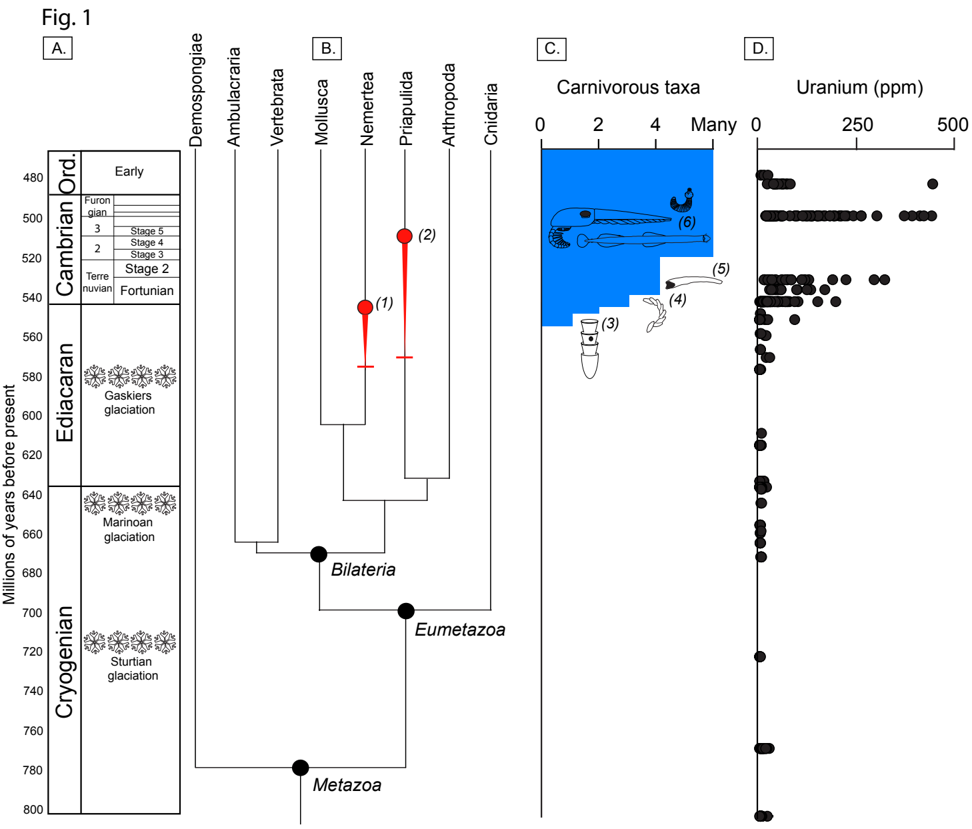
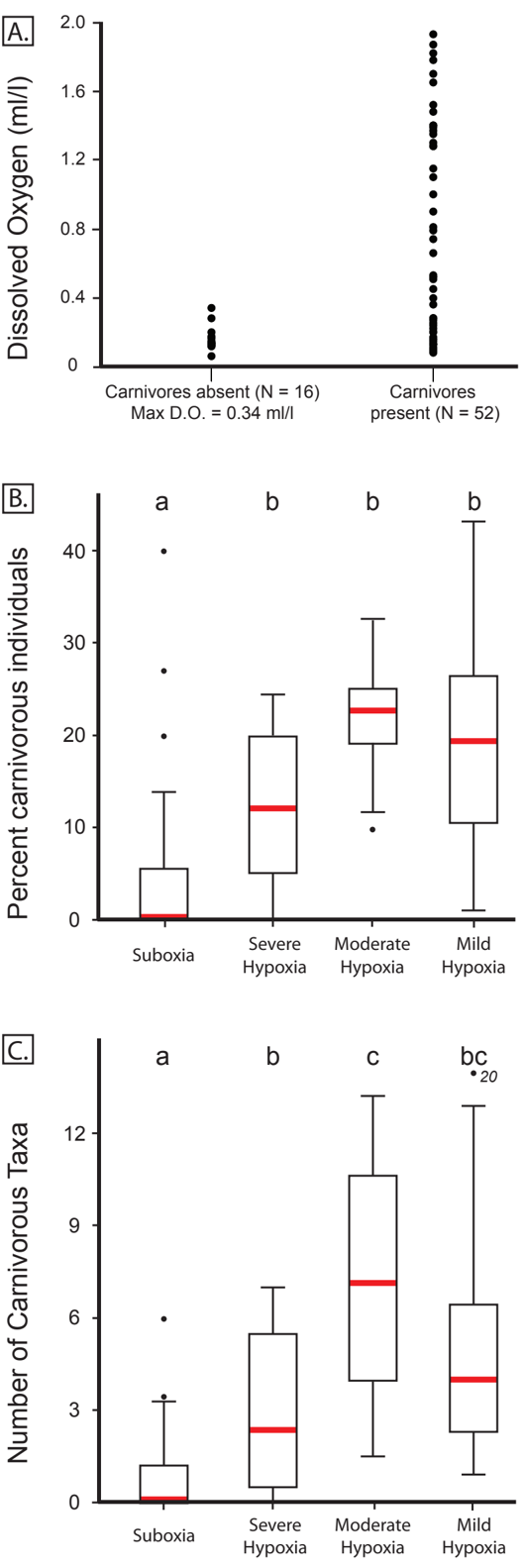
The Proterozoic-Cambrian transition records the appearance of essentially all animal body plans (phyla), yet to date no single hypothesis adequately explains both the timing of the event and the evident increase in diversity and disparity. Ecological triggers focused on escalatory predator–prey “arms races” can explain the evolutionary pattern but not its timing, whereas environmental triggers, particularly ocean/atmosphere oxygenation, do the reverse. Using modern oxygen minimum zones as an analog for Proterozoic oceans, we explore the effect of low oxygen levels on the feeding ecology of polychaetes, the dominant macrofaunal animals in deep-sea sediments. Here we show that low oxygen is clearly linked to low proportions of carnivores in a community and low diversity of carnivorous taxa, whereas higher oxygen levels support more complex food webs. The recognition of a physiological control on carnivory therefore links environmental triggers and ecological drivers, providing an integrated explanation for both the pattern and timing of Cambrian animal radiation.
Overview
The claims and statistics of this paper haven’t been checked yet.
Free: it reads the open-access text and checks the first 5 claims that cite a source we can check. Create a free account to check every claim.
Integrity signals
Registry
Cites
Statistics
Figures

Verification
Claims the paper makes
The claims and statistics of this paper haven’t been checked yet.
Free: it reads the open-access text and checks the first 5 claims that cite a source we can check. Create a free account to check every claim.
Claims other papers make about this one
Each is checked against this paper’s own text: does it say what the citing paper says it does?
The source backs part of the claim, not all of it — or backs it for a different population, condition or comparison.
In the citing paper
“Many of the new animal body plans and lifestyles that appeared during the early Cambrian were associated with considerably higher oxygen demands 9,10 .”
From Possible links between extreme oxygen perturbations and the Cambrian radiation of animals (2019) · cites this paper as [9]
Experimental — accuracy not yet measuredThe source backs part of the claim, not all of it — or backs it for a different population, condition or comparison.
In the citing paper
“In the modern and ancient oceans, well-oxygenated waters are generally associated with larger body sizes, higher diversity, advanced skeletal biomineralization, and increased motility and carnivory 9,10,54,55 .”
From Possible links between extreme oxygen perturbations and the Cambrian radiation of animals (2019) · cites this paper as [9]
Experimental — accuracy not yet measuredThe source backs part of the claim, not all of it — or backs it for a different population, condition or comparison.
In the citing paper
“This, consequently, would have increased surface ocean carbonate supersaturation, which may have reduced the physiological cost of carbonate skeleton construction and facilitated the evolutionary arms race13.”
From Rise to modern levels of ocean oxygenation coincided with the Cambrian radiation of animals (2015) · cites this paper as [13]
Experimental — accuracy not yet measuredThe source backs part of the claim, not all of it — or backs it for a different population, condition or comparison.
In the citing paper
“there is a broad consensus that dissolved oxygen provision reached a threshold, or series of thresholds, during the Neoproterozoic, allowing the diversification of metazoans and their increasing metabolic demands (23-25).”
From Integrated records of environmental change and evolution challenge the Cambrian Explosion (2019) · cites this paper as [23]
Experimental — accuracy not yet measuredThe source backs part of the claim, not all of it — or backs it for a different population, condition or comparison.
In the citing paper
“Modern lowoxygen regions are heterogeneous and dynamic habitats that support low diversity communities of opportunistic and non-skeletal metazoans, many of which are meiofaunal: large, skeletal, and motile metazoans, which form complex, biodiverse ecosystems, typically require higher oxygen levels (23).”
From Integrated records of environmental change and evolution challenge the Cambrian Explosion (2019) · cites this paper as [23]
Experimental — accuracy not yet measured
6 more claims about this paper
Create a free account to see every claim other papers make about this one.
Self-check
Percentages, sums and reported differences re-computed from the paper’s own numbers.
The self-check needs the paper’s full text.
Citations
Cites
Díaz, R. J., & Rosenberg, R. (1995) · Oceanography and Marine Biology/Oceanography and marine biology - an annual review · Cited by 2,846
The Diet of Worms: A Study of Polychaete Feeding Guilds
Fauchald, K., & Jumars, P. A. (1979) · Smithsonian Digital Repository (Smithsonian Institution) · Cited by 2,334
(2000) · CrossRef Listing of Deleted DOIs · doi:10.1016/s0967-0653(97)84825-9 · Cited by 2,011
Thresholds of hypoxia for marine biodiversity
Vaquer-Sunyer, R., & Duarte, C. M. (2008) · Proceedings of the National Academy of Sciences · doi:10.1073/pnas.0803833105 · Cited by 1,971
Biochemical Adaptation: Mechanism and Process in Physiological Evolution
Hochachka, P. W., & Somero, G. N. (2002) · doi:10.1093/oso/9780195117028.001.0001 · Cited by 1,906
Erwin, D. H., Laflamme, M., Tweedt, S. M., Sperling, E. A., Pisani, D., & Peterson, K. J. (2011) · Science · doi:10.1126/science.1206375 · Cited by 1,336 · cited 16×
“Palma M, et al. (2005) Macrobenthic animal assemblages of the continental margin off Chile (22° to 42° S).”
BackgroundInfluentialSelf-citationEarly animal evolution: emerging views from comparative biology and geology
Knoll, A. H., & Carroll, S. B. (1999) · Science · doi:10.1126/science.284.5423.2129 · Cited by 821 · cited 10×
“(Geological Society London, London), pp 405–414. 10. Peterson KJ, McPeek MA, Evans DAD (2005) Tempo and mode of early animal evo-”
BackgroundInfluentialSelf-citationGlobal distribution of naturally occurring marine hypoxia on continental margins
Helly, J. J., & Levin, L. A. (2004) · Deep Sea Research Part I: Oceanographic Research Papers · doi:10.1016/j.dsr.2004.03.009 · Cited by 767
Self-citationCoull, B. C. (1977) · Medical Entomology and Zoology · Cited by 748
OXYGEN MINIMUM ZONE BENTHOS: ADAPTATION AND COMMUNITY RESPONSE TO HYPOXIA
(2003) · Oceanography and Marine Biology, An Annual Review, Volume 41 · doi:10.1201/9780203180570-3 · Cited by 706
Self-citation
Research works printed but not linked: 2
- 9. Dzik J (2005) in The Rise and Fall of the Ediacara Biota, eds Vickers-Rich P, Komarower, P. (Geological Society London, London), pp 405-414.
- 11. Parker A (2003) In the Blink of an Eye (Perseus Publishing, Cambridge, MA).
Cited by
Declining oxygen in the global ocean and coastal waters
Breitburg, D., Levin, L. A., Oschlies, A., Grégoire, M., Chavez, F. P., Conley, D. J., Garçon, V., Gilbert, D., Gutiérrez, D., Isensee, K., et al. (2018) · Science · doi:10.1126/science.aam7240 · Cited by 3,253
“energy-intensive ecological interactions such as predation are reduced (17-19), and energy is increasingly transferred to microbes (3, 16).”
Self-citationThe rise of oxygen in Earth's early ocean and atmosphere
Lyons, T. W., Reinhard, C. T., & Planavsky, N. J. (2014) · Nature · doi:10.1038/nature13068 · Cited by 2,810
Diet of Worms Emended: An Update of Polychaete Feeding Guilds
Jumars, P. A., Dorgan, K. M., & Lindsay, S. M. (2015) · Annual Review of Marine Science · doi:10.1146/annurev-marine-010814-020007 · Cited by 688
“…however, has been highlighted by a recent study using F&J’s guild classification to test the hypothesis that the Cambrian explosion was linked to the appearance in benthic systems of sufficient oxygen for the evolution of carnivory, defined as feeding on active prey (Sperling et al. 2013).”
BackgroundStatistical analysis of iron geochemical data suggests limited late Proterozoic oxygenation
Sperling, E. A., Wolock, C. J., Morgan, A. S., Gill, B. C., Kunzmann, M., Halverson, G. P., Macdonald, F. A., Knoll, A. H., & Johnston, D. T. (2015) · Nature · doi:10.1038/nature14589 · Cited by 637
“(14) (12) (14) (10) (7) Outer shelf and basinal environments (n = 3,988)”
Self-citationUnraveling the processes shaping mammalian gut microbiomes over evolutionary time
Groussin, M., Mazel, F., Sanders, J. G., Smillie, C. S., Lavergne, S., Thuiller, W., & Alm, E. J. (2017) · Nature Communications · doi:10.1038/ncomms14319 · Cited by 508
Uncertainty in the Timing of Origin of Animals and the Limits of Precision in Molecular Timescales
dos Reis, M., Thawornwattana, Y., Angelis, K., Telford, M. J., Donoghue, P. C. J., & Yang, Z. (2015) · Current Biology · doi:10.1016/j.cub.2015.09.066 · Cited by 471
“Other potential, but not necessarily mutually exclusive, triggers for animal diversification include the release of their forebears from the environmental strictures of the Cryogenian or Ediacaran Snowball Earth [5, 6] and the effects of cosmic radiation [7], polar wander [8], continental fragmentation [9], H2S toxici…”
Co-evolution of eukaryotes and ocean oxygenation in the Neoproterozoic era
Lenton, T. M., Boyle, R. A., Poulton, S. W., Shields-Zhou, G. A., & Butterfield, N. J. (2014) · Nature Geoscience · doi:10.1038/ngeo2108 · Cited by 424
Rise to modern levels of ocean oxygenation coincided with the Cambrian radiation of animals
Chen, X., Ling, H.-F., Vance, D., Shields-Zhou, G. A., Zhu, M., Poulton, S. W., Och, L. M., Jiang, S.-Y., Li, D., Cremonese, L., et al. (2015) · Nature Communications · doi:10.1038/ncomms8142 · Cited by 413
Paleobiological Perspectives on Early Eukaryotic Evolution
Knoll, A. H. (2014) · Cold Spring Harbor Perspectives in Biology · doi:10.1101/cshperspect.a016121 · Cited by 394
“…the evolution of carnivory is thought to have set off an ecological arms race between predators and prey that fueled the observed Cambrian diversification of animals (Stanley 1973; Bengtson and Conway Morris 1992; Sperling et al., 2013) and algae (Knoll 1994; Vidal and Moczydłowska -Vidal 1997).”
BackgroundSelf-citationOxygen requirements of the earliest animals
Mills, D. B., Ward, L. M., Jones, C., Sweeten, B., Forth, M., Treusch, A. H., & Canfield, D. E. (2014) · Proceedings of the National Academy of Sciences · doi:10.1073/pnas.1400547111 · Cited by 355
Oceanic oxygenation events in the anoxic Ediacaran ocean
Sahoo, S. K., Planavsky, N. J., Jiang, G., Kendall, B., Owens, J. D., Wang, X., Shi, X., Anbar, A. D., & Lyons, T. W. (2016) · Geobiology · doi:10.1111/gbi.12182 · Cited by 352
Sufficient oxygen for animal respiration 1,400 million years ago
Zhang, S., Wang, X., Wang, H., Bjerrum, C. J., Hammarlund, E. U., Costa, M. M., Connelly, J. N., Zhang, B., Su, J., & Canfield, D. E. (2016) · Proceedings of the National Academy of Sciences · doi:10.1073/pnas.1523449113 · Cited by 344
“Our most likely minimum estimate of 3.8–6.2% PAL is very different from the 0.1% PAL oxygen suggested for this time from Cr isotope results (11).”
BackgroundInfluentialIntegrated records of environmental change and evolution challenge the Cambrian Explosion
Wood, R., Liu, A. G., Bowyer, F., Wilby, P. R., Dunn, F. S., Kenchington, C. G., Cuthill, J. F. H., Mitchell, E. G., & Penny, A. (2019) · Nature Ecology & Evolution · doi:10.1038/s41559-019-0821-6 · Cited by 337
Kendall, B., Komiya, T., Lyons, T. W., Bates, S. M., Gordon, G. W., Romaniello, S. J., Jiang, G., Creaser, R. A., Xiao, S., McFadden, K., et al. (2015) · Geochimica et Cosmochimica Acta · doi:10.1016/j.gca.2015.02.025 · Cited by 286
Changing Ocean, Marine Ecosystems, and Dependent Communities
(2022) · The Ocean and Cryosphere in a Changing Climate · doi:10.1017/9781009157964.007 · Cited by 286
Manifestation, Drivers, and Emergence of Open Ocean Deoxygenation
Levin, L. A. (2018) · Annual Review of Marine Science · doi:10.1146/annurev-marine-121916-063359 · Cited by 283
“Such studies of benthic (Levin 2003; Levin et al. 2009; Sperling et al. 2013, 2016; Gallo & Levin 2016; Papiol et al. 2017) and pelagic (Ekau et al. 2010, Seibel 2011, Wishner et al. 2013) ecosystems demonstrate morphological and metabolic adaptations and shifts in body size, taxonomic composition,…”
BackgroundSelf-citationThe evolution of diatoms and their biogeochemical functions
Benoiston, A.-S., Ibarbalz, F. M., Bittner, L., Guidi, L., Jahn, O., Dutkiewicz, S., & Bowler, C. (2017) · Philosophical Transactions of the Royal Society B: Biological Sciences · doi:10.1098/rstb.2016.0397 · Cited by 273
Jin, C., Li, C., Algeo, T. J., Planavsky, N. J., Cui, H., Yang, X., Zhao, Y., Zhang, X., & Xie, S. (2016) · Earth and Planetary Science Letters · doi:10.1016/j.epsl.2016.02.019 · Cited by 263
“These parallel changes in oceanic redox conditions and metazoan evolution suggest that a stepwise increase in seawater oxygen levels on the early Cambrian Yangtze Block is consistent with a previous hypothesis that higher oxygen levels are needed to sustain more complex ecosystems, in which animals are characterized b…”
BackgroundOxygenation of the mid-Proterozoic atmosphere: clues from chromium isotopes in carbonates
Gilleaudeau, G. J., Frei, R., Kaufman, A. J., Kah, L. C., Azmy, K., Bartley, J. K., Chernyavskiy, P., & Knoll, A. H. (2016) · Geochemical Perspectives Letters · doi:10.7185/geochemlet.1618 · Cited by 214
“Studies from modern oxygen minimum zones confirm these estimates and suggest that the bilaterian body plan would only be inhibited if p O 2 were below 0.4 % PAL (Levin, 2003; Palma et al ., 2005; Sperling et al. , 2013a).”
BackgroundInfluentialSelf-citationOxygenation, Life, and the Planetary System during Earth's Middle History: An Overview
Lyons, T. W., Diamond, C. W., Planavsky, N. J., Reinhard, C. T., & Li, C. (2021) · Astrobiology · doi:10.1089/ast.2020.2418 · Cited by 211
“…relationship to environmental change, including dramatic and persistent shifts in atmospheric and oceanic O2 and stably oxic conditions in the surface-most waters, remains unresolved (Sperling et al., 2013b, 2016; Chen et al., 2015; Jin et al., 2016; Li et al., 2017b, 2018; Lu et al., 2018).”
BackgroundInfluentialCope’s rule in the evolution of marine animals
Heim, N. A., Knope, M. L., Schaal, E. K., Wang, S. C., & Payne, J. L. (2015) · Science · doi:10.1126/science.1260065 · Cited by 199
Possible links between extreme oxygen perturbations and the Cambrian radiation of animals
He, T., Zhu, M., Mills, B. J. W., Wynn, P. M., Zhuravlev, A. Y., Tostevin, R., Pogge von Strandmann, P. A. E., Yang, A., Poulton, S. W., & Shields, G. A. (2019) · Nature Geoscience · doi:10.1038/s41561-019-0357-z · Cited by 193
Dynamic redox conditions control late Ediacaran metazoan ecosystems in the Nama Group, Namibia
Wood, R. A., Poulton, S. W., Prave, A. R., Hoffmann, K.-H., Clarkson, M. O., Guilbaud, R., Lyne, J. W., Tostevin, R., Bowyer, F., Penny, A. M., et al. (2015) · Precambrian Research · doi:10.1016/j.precamres.2015.02.004 · Cited by 188
Oxygenation as a driver of the Great Ordovician Biodiversification Event
Edwards, C. T., Saltzman, M. R., Royer, D. L., & Fike, D. A. (2017) · Nature Geoscience · doi:10.1038/s41561-017-0006-3 · Cited by 177
The Rise of Animals in a Changing Environment: Global Ecological Innovation in the Late Ediacaran
Droser, M. L., Tarhan, L. G., & Gehling, J. G. (2017) · Annual Review of Earth and Planetary Sciences · doi:10.1146/annurev-earth-063016-015645 · Cited by 172
The Ecological Physiology of Earth's Second Oxygen Revolution
Sperling, E. A., Knoll, A. H., & Girguis, P. R. (2015) · Annual Review of Ecology, Evolution, and Systematics · doi:10.1146/annurev-ecolsys-110512-135808 · Cited by 165
Self-citationThe origin of animals: an ancestral reconstruction of the unicellular-to-multicellular transition
Ros-Rocher, N., Pérez-Posada, A., Leger, M. M., & Ruiz-Trillo, I. (2021) · Open Biology · doi:10.1098/rsob.200359 · Cited by 163
“The ecological context might have also had an impact on animal evolution, such as in shaping animal feeding modes and morphological features [209].”
BackgroundBoscolo‐Galazzo, F., Crichton, K., Barker, S., & Pearson, P. N. (2018) · Global and Planetary Change · doi:10.1016/j.gloplacha.2018.08.017 · Cited by 164
“…micro and mesozooplankton by reducing zooplankton diversity and population density, compressing toward the surface the vertical habitat of zooplankters living at mesopelagic depths, and eventually causing habitat reductions (Stramma et al., 2012; Sperling et al., 2013, 2016; Deutsch et al., 2014).”
BackgroundJavaux, E. J., & Lepot, K. (2018) · Earth-Science Reviews · doi:10.1016/j.earscirev.2017.10.001 · Cited by 158
“…euxinic conditions may have been maintained until about 750 Ma, when the return to a ferruginous ocean coeval with the break-up of the supercontinent Rodinia prior to the Sturtian glaciation, is documented by S, C and Fe data (Canfield et al., 2008; Johnston et al., 2010; Sperling et al., 2013).”
BackgroundRemarkable insights into the paleoecology of the Avalonian Ediacaran macrobiota
Liu, A. G., Kenchington, C. G., & Mitchell, E. G. (2015) · Gondwana Research · doi:10.1016/j.gr.2014.11.002 · Cited by 157
“…between these extrinsic events and biological evolution (e.g. Logan et al., 1995; Runnegar, 2000; Butterfield, 2009b; Canfield and Farquhar, 2009; Sperling et al., 2013; Lenton et al., 2014; McKenzie et al., 2014), and efforts to unite them into a coherent narrative continue (e.g. Knoll and…”
Early metazoan life: divergence, environment and ecology
Erwin, D. H. (2015) · Philosophical Transactions of the Royal Society B: Biological Sciences · doi:10.1098/rstb.2015.0036 · Cited by 154
“Recent studies suggest that low oxygen levels would not have precluded the origin of metazoans, as was once believed, but are quite likely to have limited their maximum body size [38,42,43].”
BackgroundThe Cambrian revolutions: Trace-fossil record, timing, links and geobiological impact
Gabriela Mángano, M., & Buatois, L. A. (2017) · Earth-Science Reviews · doi:10.1016/j.earscirev.2017.08.009
Carbone, C., & Narbonne, G. M. (2014) · Journal of Paleontology · doi:10.1666/13-066 · Cited by 152
“Sperling et al. (2013) have suggested that the advent of predation near the beginning of the Cambrian may reflect an increase in oxygen that permitted more active ecological strategies.”
BackgroundGlobal marine redox changes drove the rise and fall of the Ediacara biota
Zhang, F., Xiao, S., Romaniello, S. J., Hardisty, D., Li, C., Melezhik, V., Pokrovsky, B., Cheng, M., Shi, W., Lenton, T. M., et al. (2019) · Geobiology · doi:10.1111/gbi.12359 · Cited by 142
“…pathways provide much more energy than anaerobic ones, and so the presence of free O2 is often regarded as a prerequisite for the evolution of macroscopic animals, particularly those involved in energetically expensive lifestyles such as mobility, burrowing, and predation (Sperling et al., 2013).”
BackgroundEvolution of Atmospheric O2 Through the Phanerozoic, Revisited
Mills, B. J. W., Krause, A. J., Jarvis, I., & Cramer, B. D. (2023) · Annual Review of Earth and Planetary Sciences · doi:10.1146/annurev-earth-032320-095425 · Cited by 132
“The principal drivers of the Ediacaran and Cambrian radiations are still debated, but certainly the O2 metabolic thresholds must have been crossed at some point prior to these evolutionary events (Sperling et al. 2013, Wood et al. 2019).”
BackgroundCoupling of ocean redox and animal evolution during the Ediacaran-Cambrian transition
Wang, D., Ling, H.-F., Struck, U., Zhu, X.-K., Zhu, M., He, T., Yang, B., Gamper, A., & Shields, G. A. (2018) · Nature Communications · doi:10.1038/s41467-018-04980-5 · Cited by 145
Saltzman, M. R., Edwards, C. T., Adrain, J. M., & Westrop, S. R. (2015) · Geology · doi:10.1130/g36814.1 · Cited by 144
“…geographic and bathymetric variability) could create greater stability in shelf environments that facilitated the GOBE if, as proposed for the Cambrian radiation by Sperling et al. (2013), this increased the proportion of carnivores (e.g., cephalopods; Servais et al., 2010) and overall diversity.”
Oxygen and animal evolution: Did a rise of atmospheric oxygen "trigger" the origin of animals?
Mills, D. B., & Canfield, D. E. (2014) · BioEssays · doi:10.1002/bies.201400101 · Cited by 141
“Therefore, even if increasing oxygen availability was critical for achieving large body sizes [102], active lifestyles [84], predatory feeding strategies [103], and “hard parts” [29, 74], it was unnecessary for the evolutionary origin of animals [66].”
BackgroundOn the co‐evolution of surface oxygen levels and animals
Cole, D. B., Mills, D. B., Erwin, D. H., Sperling, E. A., Porter, S. M., Reinhard, C. T., & Planavsky, N. J. (2020) · Geobiology · doi:10.1111/gbi.12382 · Cited by 141
Self-citationThe Latest Ediacaran Wormworld Fauna: Setting the Ecological Stage for the Cambrian Explosion
Schiffbauer, J. D., Huntley, J. W., O’Neil, G. R., Darroch, S. A. F., Laflamme, M., & Cai, Y. (2016) · GSA Today · doi:10.1130/gsatg265a.1 · Cited by 137
Sophisticated digestive systems in early arthropods
Vannier, J., Liu, J., Lerosey‐Aubril, R., Vinther, J., & Daley, A. C. (2014) · Nature Communications · doi:10.1038/ncomms4641 · Cited by 138
Boag, T. H., Darroch, S. A. F., & Laflamme, M. (2016) · Paleobiology · doi:10.1017/pab.2016.20 · Cited by 136
“…correlative testing of causal drivers for early metazoan diversification—including ecological (Laflamme et al. 2013; Darroch et al. 2015), developmental (Erwin et al. 2011), and environmental (Sperling et al. 2013; Lyons et al. 2014) changes under way in the latest Ediacaran stratigraphy worldwide.”
BackgroundReconciling proxy records and models of Earth's oxygenation during the Neoproterozoic and Palaeozoic
Tostevin, R., & Mills, B. J. W. (2020) · Interface Focus · doi:10.1098/rsfs.2019.0137 · Cited by 120
“Waters containing 100 μM or 1 μM O2 would be indistinguishable in many proxy systems, but the first could host a complex ecosystem containing skeletal animals andmotile predators, and the secondwould be largely uninhabitable [83,84].”
BackgroundMeyer, K. M., Ridgwell, A., & Payne, J. L. (2016) · Geobiology · doi:10.1111/gbi.12176 · Cited by 121
“Oxygen limitation tends to exclude them from oxygen minimum zones (Levin, 2003; Sperling et al. , 2014), and low food supply limits their abundance on the abyssal ocean floor (Rex et al. , 2006; Ruhl et al. , 2008).”
InfluentialGallo, N. D., & Levin, L. A. (2016) · Advances in marine biology · doi:10.1016/bs.amb.2016.04.001 · Cited by 138
“Low oxygen conditions have been linked with lower proportions of carnivory in the polychaete community due to high mobility and metabolic demand (Sperling et al., 2013), raising the possibility that carnivory in demersal fish living in OMZs may also be selected against.”
BackgroundSelf-citationCoupled oceanic oxygenation and metazoan diversification during the early–middle Cambrian?
Li, C., Jin, C., Planavsky, N. J., Algeo, T. J., Cheng, M., Yang, X., Zhao, Y., & Xie, S. (2017) · Geology · doi:10.1130/g39208.1 · Cited by 127
“Given the relatively high respiratory oxygen demands of echinoderms and mobile metazoans like arthropods, rising oceanic oxygen levels are likely to have facilitated the diversification of metazoans during Age 2–Age 3 (Sperling et al., 2013).”
BackgroundQin, L., & Wang, X. (2017) · Reviews in Mineralogy and Geochemistry · doi:10.2138/rmg.2017.82.10 · Cited by 128
Sperling, E. A., & Stockey, R. G. (2018) · Integrative and Comparative Biology · doi:10.1093/icb/icy088 · Cited by 122
Self-citationWei, G.-Y., Planavsky, N. J., He, T., Zhang, F., Stockey, R. G., Cole, D. B., Lin, Y.-B., & Ling, H.-F. (2021) · Earth-Science Reviews · doi:10.1016/j.earscirev.2021.103506 · Cited by 122
“Especially, biological turnover, innovations and diversification of the metazoans have been closely linked to secular changes in atmospheric and oceanic oxygen level (e.g., Butterfield, 2009, 2018; Sperling et al., 2013; Lenton et al., 2014; Wood and Erwin, 2018; Li et al., 2018).”
BackgroundKlompmaker, A. A., Kelley, P. H., Chattopadhyay, D., Clements, J. C., Huntley, J. W., & Kowalewski, M. (2019) · Earth-Science Reviews · doi:10.1016/j.earscirev.2019.02.020 · Cited by 120
The energy expansions of evolution
Judson, O. P. (2017) · Nature Ecology & Evolution · doi:10.1038/s41559-017-0138 · Cited by 118
Atmosphere-ocean oxygen and productivity dynamics during early animal radiations
Dahl, T. W., Connelly, J. N., Li, D., Kouchinsky, A., Gill, B. C., Porter, S., Maloof, A. C., & Bizzarro, M. (2019) · Proceedings of the National Academy of Sciences · doi:10.1073/pnas.1901178116 · Cited by 113
“Our results show that the dissolved O2 concentration in the Terreneuvian surface ocean would have varied between ∼40 and ∼110 μmol·kg, a range well above the level of severe hypoxia ∼9 μmol·kg where carnivorous taxa disappear (8).”
InfluentialControls on the evolution of Ediacaran metazoan ecosystems: A redox perspective
Bowyer, F., Wood, R. A., & Poulton, S. W. (2017) · Geobiology · doi:10.1111/gbi.12232 · Cited by 112
Spence, G. H., Le Heron, D. P., & Fairchild, I. J. (2016) · Sedimentology · doi:10.1111/sed.12261 · Cited by 104
“Morphological phylogenic and molecular clock estimates suggest that the earliest metazoans were sponge-grade, i.e. having cellular organization, but not organs (Peterson et al., 2008; Benton et al., 2009; Erwin et al., 2011; Sperling et al., 2013).”
BackgroundMarine oxygenation, lithistid sponges, and the early history of Paleozoic skeletal reefs
Lee, J., & Riding, R. (2018) · Earth-Science Reviews · doi:10.1016/j.earscirev.2018.04.003 · Cited by 107
“…and Morse, 1971; Knoll and Carroll, 1999; Canfield et al., 2007; Payne et al., 2009, 2011; Dahl et al., 2010; Maloof et al., 2010a; Knoll, 2011; Sperling et al., 2013; Ader et al., 2014; Mills and Canfield, 2014; Xiao, 2014; Zhang et al., 2014, 2018; Chen et al., 2015; Li et al., 2017a;…”
Briggs, D. E. G. (2015) · Current Biology · doi:10.1016/j.cub.2015.04.047 · Cited by 104
Physical Controls on Oxygen Distribution and Denitrification Potential in the North West Arabian Sea
Queste, B. Y., Vic, C., Heywood, K. J., & Piontkovski, S. A. (2018) · Geophysical Research Letters · doi:10.1029/2017gl076666 · Cited by 104
“…(20 < [O2] < 140 μmol/kg 1) where predation is greatly reduced; these hypoxic conditions are habitable to specially adapted, smaller and less metabolically active prey species while larger predators are limited to the surface oxygenated layer (Bianchi et al., 2013; Sperling et al., 2013).”
BackgroundCarbonates before skeletons: A database approach
Cantine, M. D., Knoll, A. H., & Bergmann, K. (2019) · Earth-Science Reviews · doi:10.1016/j.earscirev.2019.103065 · Cited by 102
Self-citationMeert, J. G., Levashova, N. M., Bazhenov, M. L., & Landing, E. (2016) · Gondwana Research · doi:10.1016/j.gr.2016.01.001 · Cited by 102
“…oxygen levels (along with deep ocean and shallow ocean oxygen levels) reached Phanerozoic modulation levels early in the Palaeozoic, the exact timing, structure and dynamics of that rise is still a matter of debate (Lenton et al., 2014; Berner, 2009; Sperling et al., 2013; Clapham et al., 2003).”
BackgroundBicknell, R. D. C., & Paterson, J. R. (2018) · Biological Reviews · doi:10.1111/brv.12365 · Cited by 101
“This ecological expansion resulted in marine communities that included a huge diversity of soft-bodied benthic, nektonic and planktonic taxa, along with organisms sporting biomineralised structures (composed of calcium carbonate, calcium phosphate, or silica), such as exoskeletons, shells and multi-element scleritomes…”
BackgroundInfluentialInnovation not recovery: dynamic redox promotes metazoan radiations
Wood, R., & Erwin, D. H. (2018) · Biological Reviews · doi:10.1111/brv.12375 · Cited by 101
“At slightly higher O2 levels (0.1–0.2 ml/L), deposit feeders and detritivores dominate, but food webs still remain relatively short (Sperling et al., 2013).”
BackgroundInfluentialEdiacaran Marine Redox Heterogeneity and Early Animal Ecosystems
Li, C., Planavsky, N. J., Shi, W., Zhang, Z., Zhou, C., Cheng, M., Tarhan, L. G., Luo, G., & Xie, S. (2015) · Scientific Reports · doi:10.1038/srep17097 · Cited by 100
Winnie, J. A., & Creel, S. (2016) · Food Webs · doi:10.1016/j.fooweb.2016.09.002 · Cited by 102
“…on their prey are so profound that despite being nearly undetectable in early Cambrian strata, predators appear to have influenced the evolutionary paths of most taxa around them, likely driving the course of the Cambrian Explosion (Bengtson, 2002; Erwin et al., 2011; Sperling et al., 2013).”
BackgroundThe rise and early evolution of animals: where do we stand from a trace-fossil perspective?
Mángano, M. G., & Buatois, L. A. (2020) · Interface Focus · doi:10.1098/rsfs.2019.0103 · Cited by 99
“Nagovitsin KE, Rogov VI, Marusin VV, Karlova GA, Kolesnikov AV, Bykova NV, Grazhdankin DV. 2015 Revised Neoproterozoic and Terreneuvian stratigraphy of the Lena-Anabar Basin and northwestern slope of the Olenek Uplift, Siberian Platform.”
BackgroundInfluentialWhat sparked the Cambrian explosion?
Fox, D. (2016) · Nature · doi:10.1038/530268a · Cited by 98
Oxygen, temperature and the deep-marine stenothermal cradle of Ediacaran evolution
Boag, T. H., Stockey, R. G., Elder, L. E., Hull, P. M., & Sperling, E. A. (2018) · Proceedings of the Royal Society B: Biological Sciences · doi:10.1098/rspb.2018.1724 · Cited by 76
Self-citationDiversity partitioning during the Cambrian radiation
Na, L., & Kiessling, W. (2015) · Proceedings of the National Academy of Sciences · doi:10.1073/pnas.1424985112 · Cited by 95
“The causes of this unique evolutionary radiation have been suggested to be abiotic (8), ecologic (9, 10), and genetic (5, 11) factors and their complex interplay (12, 13).”
BackgroundBreathless through Time: Oxygen and Animals across Earth’s History
Sperling, E. A., Boag, T. H., Duncan, M. I., Endriga, C. R., Marquez, J. A., Mills, D. B., Monarrez, P. M., Sclafani, J. A., Stockey, R., & Payne, J. L. (2022) · Biological Bulletin · doi:10.1086/721754 · Cited by 95
Self-citationSelection for Mitochondrial Quality Drives Evolution of the Germline
Radzvilavicius, A. L., Hadjivasiliou, Z., Pomiankowski, A., & Lane, N. J. (2016) · PLoS Biology · doi:10.1371/journal.pbio.2000410 · Cited by 95
“the early Cambrian, predation drove an evolutionary arms race leading to greater size and physical activity in bilaterians (31,32).”
BackgroundEarly Palaeozoic ocean anoxia and global warming driven by the evolution of shallow burrowing
van de Velde, S., Mills, B. J. W., Meysman, F. J. R., Lenton, T. M., & Poulton, S. W. (2018) · Nature Communications · doi:10.1038/s41467-018-04973-4 · Cited by 83
Oxygen, animals and aquatic bioturbation: An updated account
Butterfield, N. J. (2018) · Geobiology · doi:10.1111/gbi.12267 · Cited by 89
“If oxygen availability presented no fundamental impediment to the evolution of bilaterians per se, then perhaps the critical step was their ability to engage in macro- carnivory (Norin & Clark, 2017; Sperling et al., 2013).”
BackgroundInfluentialKurzweil, F., Drost, K., Pašava, J., Wille, M., Taubald, H., Schoeckle, D., & Schoenberg, R. (2015) · Geochimica et Cosmochimica Acta · doi:10.1016/j.gca.2015.08.022 · Cited by 86
The origin of phagocytosis in Earth history
Mills, D. B. (2020) · Interface Focus · doi:10.1098/rsfs.2020.0019 · Cited by 84
“6 Ga) and eukaryovory (ca 800 Ma) [34,50]—comparable to the observed relationship betweenoxygen concentration andanimal-on-animal predation inmodernmarine oxygenminimumzones [73].”
BackgroundWard, L. M., & Shih, P. M. (2019) · Free Radical Biology and Medicine · doi:10.1016/j.freeradbiomed.2019.01.049 · Cited by 81
Pehr, K., Love, G. D., Kuznetsov, A., Podkovyrov, V., Junium, C. K., Shumlyanskyy, L., Sokur, T., & Bekker, A. (2018) · Nature Communications · doi:10.1038/s41467-018-04195-8 · Cited by 68
The Equatorial Undercurrent and the Oxygen Minimum Zone in the Pacific
Busecke, J. J. M., Resplandy, L., & Dunne, J. P. P. (2019) · Geophysical Research Letters · doi:10.1029/2019gl082692 · Cited by 80
“These changes in the depth of the OMZ upper boundary could have severe impacts on marine life and biogeochemical cycling (Gruber, 2004; Levin, 2018), such as the compression of the habitat of commercially fished species and related ecosystems (Chu & Tunnicliffe, 2015; Sperling et al., 2013; Stramma et al., 2012), the…”
BackgroundPhanerozoic p O2and the early evolution of terrestrial animals
Schachat, S. R., Labandeira, C. C., Saltzman, M. R., Cramer, B. D., Payne, J. L., & Boyce, C. K. (2018) · Proceedings of the Royal Society B: Biological Sciences · doi:10.1098/rspb.2017.2631 · Cited by 71
O’Malley, M. A., & Powell, R. (2015) · Biology & Philosophy · doi:10.1007/s10539-015-9513-z · Cited by 76
A small marine biosphere in the Proterozoic
Laakso, T. A., & Schrag, D. P. (2019) · Geobiology · doi:10.1111/gbi.12323 · Cited by 72
The transition from a cyanobacterial to algal world and the emergence of animals
Brocks, J. J. (2018) · Emerging Topics in Life Sciences · doi:10.1042/etls20180039 · Cited by 74
Increased productivity as a primary driver of marine anoxia in the Lower Cambrian
Liu, K., Feng, Q., Shen, J., Khan, M. Z., & Planavsky, N. J. (2017) · Palaeogeography Palaeoclimatology Palaeoecology · doi:10.1016/j.palaeo.2017.11.007 · Cited by 73
Oxygen and animals in Earth history
Knoll, A. H., & Sperling, E. A. (2014) · Proceedings of the National Academy of Sciences · doi:10.1073/pnas.1401745111 · Cited by 72
Self-citationEnvironmental disturbance, resource availability, and biologic turnover at the dawn of animal life
Muscente, A. D., Boag, T. H., Bykova, N., & Schiffbauer, J. D. (2018) · Earth-Science Reviews · doi:10.1016/j.earscirev.2017.11.019 · Cited by 72
Cohen, P. A., & Kodner, R. B. (2022) · Trends in Ecology & Evolution · doi:10.1016/j.tree.2021.11.005 · Cited by 65
Zhang, T., Li, Y., Fan, T., Da Silva, A.-C., Shi, J., Gao, Q., Kuang, M., Liu, W., Gao, Z., & Li, M. (2022) · Earth and Planetary Science Letters · doi:10.1016/j.epsl.2022.117420 · Cited by 71
A tectonically driven Ediacaran oxygenation event
Williams, J., Mills, B. J. W., & Lenton, T. M. (2019) · Nature Communications · doi:10.1038/s41467-019-10286-x · Cited by 71
Ghisalberti, M., Gold, D. A., Laflamme, M., Clapham, M. E., Narbonne, G. M., Summons, R. E., Johnston, D. T., & Jacobs, D. K. (2014) · Current Biology · doi:10.1016/j.cub.2013.12.017 · Cited by 70
“Regardless of the exact relationship between rangeomorphs and animals, the evolution of large multicellular osmotrophs in response to flow preceded and set the ecological stage for the ensuing evolutionary radiation of animals in the late Ediacaran and Cambrian [32, 33].”
BackgroundInfluentialPhysiological and ecological implications of ocean deoxygenation for vision in marine organisms
McCormick, L. R., & Levin, L. A. (2017) · Philosophical Transactions of the Royal Society A: Mathematical, Physical and Engineering Sciences · doi:10.1098/rsta.2016.0322 · Cited by 62
“Although such organisms may also be active predators whose mobility also creates high oxygen demand [84], this finding is consistent with the hypothesis that eyes with advanced visual structures and fast detection capabilities require more oxygen to function (specific to marine vertebrates, cephalopods and arthropods…”
ResultSelf-citationBiodiversity response to natural gradients of multiple stressors on continental margins
Sperling, E. A., Frieder, C. A., & Levin, L. A. (2016) · Proceedings of the Royal Society B: Biological Sciences · doi:10.1098/rspb.2016.0637 · Cited by 59
Self-citationMcDonald, A. E., Pichaud, N., & Darveau, C.-A. (2017) · Comparative Biochemistry and Physiology Part B Biochemistry and Molecular Biology · doi:10.1016/j.cbpb.2017.11.006 · Cited by 69
The evolutionary dynamics of the early Palaeozoic marine biodiversity accumulation
Kröger, B., Franeck, F., & Rasmussen, C. M. Ø. (2019) · Proceedings of the Royal Society B: Biological Sciences · doi:10.1098/rspb.2019.1634 · Cited by 65
“change in habitat space [12,14], spread of oxygen minimum zones [15,16], and extent of primary production [17,18] with biodiversity remain elusive [19].”
BackgroundReviews and syntheses: Review of proxies for low-oxygen paleoceanographic reconstructions
Hoogakker, B. A. A., Davis, C. V., Wang, Y., Kusch, S., Nilsson-Kerr, K., Hardisty, D. S., Jacobel, A. W., Macaya, D. A. R., Glock, N., Ni, S., et al. (2025) · Biogeosciences · doi:10.5194/bg-22-863-2025 · Cited by 65
Evolution of diet across the animal tree of life
Román‐Palacios, C., Scholl, J. P., & Wiens, J. J. (2019) · Evolution Letters · doi:10.1002/evl3.127 · Cited by 66
Ediacaran origin and Ediacaran-Cambrian diversification of Metazoa
Carlisle, E., Yin, Z., Pisani, D., & Donoghue, P. C. J. (2024) · Science Advances · doi:10.1126/sciadv.adp7161 · Cited by 60
“Low ocean oxygenation may not limit the origination of metazoans such as sponges ( 121 ), but higher levels may be required for the formation of complex food webs ( 122 ).”
Predation and the Origin of Neurones
Monk, T., & Paulin, M. G. (2014) · Brain, Behavior and Evolution · doi:10.1159/000368177 · Cited by 56
“…trace fossils or functional interpretations of body parts that are consistent with the existence of macrophagy (e.g. shells and drills) [McMenamin, 1986; Waggoner, 1998; Clapham et al., 2003; Hua et al., 2003; Narbonne, 2005; Xiao and Laflamme, 2008; Northcutt, 2012; Sperling et al., 2013].”
BackgroundWei, G.-Y., Planavsky, N. J., Tarhan, L. G., He, T., Wang, D., Shields, G. A., Wei, W., & Ling, H.-F. (2020) · Earth and Planetary Science Letters · doi:10.1016/j.epsl.2020.116361 · Cited by 62
The influence of environmental setting on the community ecology of Ediacaran organisms
Mitchell, E. G., Bobkov, N. I., Bykova, N., Dhungana, A., Kolesnikov, A. V., Hogarth, I. R. P., Liu, A., Mustill, T. M. R., Sozonov, N. G., Rogov, V. I., et al. (2020) · Interface Focus · doi:10.1098/rsfs.2019.0109 · Cited by 63
Sedimentary vanadium isotope signatures in low oxygen marine conditions
Wu, F., Owens, J. D., Scholz, F., Huang, L., Li, S., Riedinger, N., Peterson, L. C., German, C. R., & Nielsen, S. G. (2020) · Geochimica et Cosmochimica Acta · doi:10.1016/j.gca.2020.06.013 · Cited by 59
Thermochronologic constraints on the origin of the Great Unconformity
McDannell, K. T., Keller, C. B., Guenthner, W. R., Zeitler, P. K., & Shuster, D. L. (2022) · Proceedings of the National Academy of Sciences · doi:10.1073/pnas.2118682119 · Cited by 59
Biomineral armor in leaf-cutter ants
Li, H., Sun, C.-Y., Fang, Y., Carlson, C. M., Xu, H., Ješovnik, A., Sosa-Calvo, J., Zarnowski, R., Bechtel, H. A., Fournelle, J. H., et al. (2020) · Nature Communications · doi:10.1038/s41467-020-19566-3 · Cited by 58
Metadata
- Authors
- Sperling, E. A., Frieder, C. A., Raman, A. V., Girguis, P. R., Levin, L. A., & Knoll, A. H.
- Affiliations
- Departments of aEarth and Planetary Sciences and
- Scripps Institution of Oceanography (US)
- Andhra University (IN)
- Harvard University (US)
- Venue
- Proceedings of the National Academy of Sciences
- Publisher
- National Academy of Sciences
- Published
- 2013-07-29
- Volume
- 110
- Issue
- 33
- Pages
- 13446-13451
- ISSN
- 0027-8424 (ISSN-L)
- 1091-6490
- PMC
- PMC3746845
- OpenAlex
- W2064523628
- Cited by
- 367
- References
- 137
- Citations by year
- 2026: 13 · 2025: 24 · 2024: 37 · 2023: 22 · 2022: 30 · 2021: 25 · 2020: 34 · 2019: 31 · 2018: 27 · 2017: 32 · 2016: 35 · 2015: 28 · 2014: 25 · 2013: 4
- FWCI
- 20.78
- Type
- journal article
- Language
- en
- Open access
- green
- www.ncbi.nlm.nih.gov
- Locations
- Proceedings of the National Academy of Sciences (publishedVersion)
- Europe PMC (PubMed Central) (publishedVersion)
- PubMed Central (publishedVersion)
- PubMed (publishedVersion)
- Digital Access to Scholarship at Harvard (DASH) (Harvard University) (submittedVersion, cc-by)
- eScholarship (California Digital Library) (submittedVersion)
- Funders
- National Aeronautics and Space Administration
- Ministry of Earth Sciences
- NASA Astrobiology Institute
- Topics
- Physical Sciences › Earth and Planetary Sciences › Paleontology › Paleontology and Stratigraphy of Fossils
- Physical Sciences › Earth and Planetary Sciences › Paleontology › Evolution and Paleontology Studies
- Physical Sciences › Earth and Planetary Sciences › Paleontology › Paleontology and Evolutionary Biology
- Keywords
- oxygen minimum zone, ocean oxygenation, predation, predator-prey arms race, Polychaeta, feeding ecology, carnivory, food web complexity, deep-sea macrofauna, animal body plans, diversification timing
- MeSH terms
- Analysis of Variance, Animals, Biological Evolution, Feeding Behavior, Fossils, Oceans and Seas, Oxygen, Paleontology, Food Chain, Biodiversity
About these checks
Registry, retraction, Cites and statistics results are computed, not judged, with one exception: a printed reference that no index lists is read once by a model before it counts as a citation error. Claims are extracted by a model and kept only when their quote appears verbatim in the text; each cited source is then checked, with a model’s help, for whether it says what the claim relies on. Those verdicts can be wrong — read the claim’s quote and the cited source before relying on one.
Statistics and arithmetic are recomputed, not judged.
Confidence bands are shown only for fields calibrated on our annotated test set. None is calibrated yet, so no band is shown.
What counts as a claim ›How we measure confidence ›How we check this ›
Are you an author, or do you see a problem with this page? Request a review
Data sources
Bibliographic data: Semantic Scholar, OpenAlex, Crossref.
Contains information from the Semantic Scholar Academic Graph Datasets, made available under the ODC Attribution License (ODC-BY 1.0).
Semantic Scholar’s data is described in: Kinney, R., et al. (2023). The Semantic Scholar Open Data Platform. arXiv:2301.10140.
