

Constraining the climate and ocean pH of the early Earth with a geological carbon cycle model
Open accessThe DOI matches its Crossref record; 146 of the 146 references it cites were found in a registry or an index.
Abstract
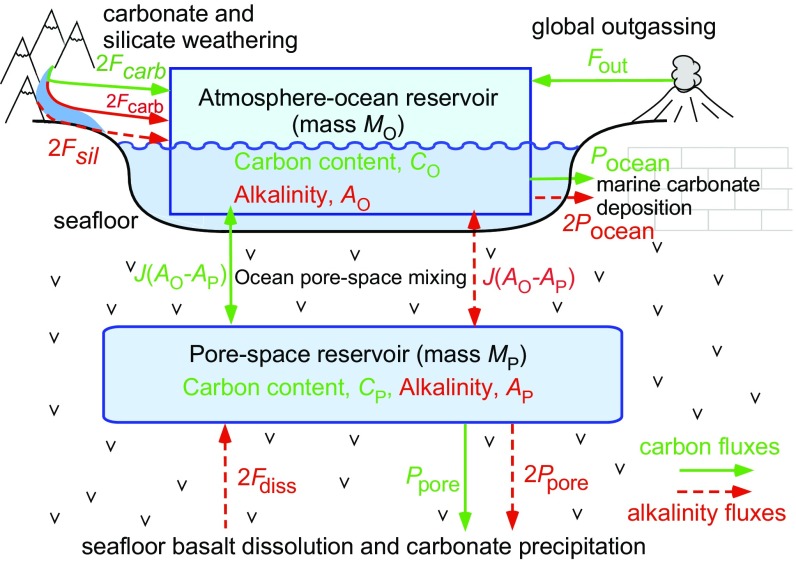
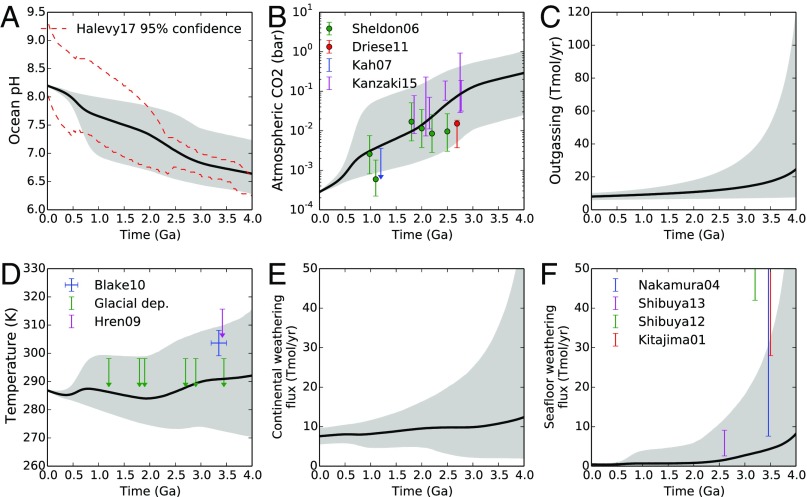
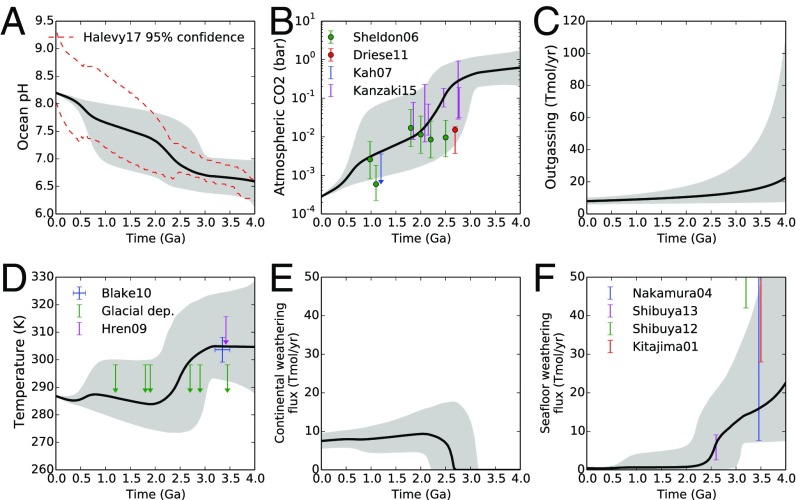
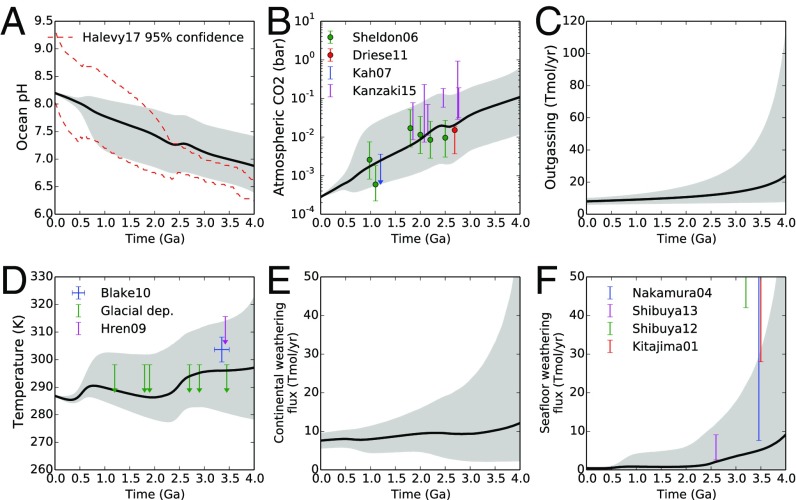
Significance: The climate and ocean pH of the early Earth are important for understanding the origin and early evolution of life. However, estimates of early climate range from below freezing to over 70 °C, and ocean pH estimates span from strongly acidic to alkaline. To better constrain environmental conditions, we applied a self-consistent geological carbon cycle model to the last 4 billion years. The model predicts a temperate (0–50 °C) climate and circumneutral ocean pH throughout the Precambrian due to stabilizing feedbacks from continental and seafloor weathering. These environmental conditions under which life emerged and diversified were akin to the modern Earth. Similar stabilizing feedbacks on climate and ocean pH may operate on earthlike exoplanets, implying life elsewhere could emerge in comparable environments.
Overview
The claims and statistics of this paper haven’t been checked yet.
Free: it reads the open-access text and checks the first 5 claims that cite a source we can check. Create a free account to check every claim.
Integrity signals
Registry
Cites
Statistics
Figures
Verification
Claims the paper makes
The claims and statistics of this paper haven’t been checked yet.
Free: it reads the open-access text and checks the first 5 claims that cite a source we can check. Create a free account to check every claim.
Claims other papers make about this one
Each is checked against this paper’s own text: does it say what the citing paper says it does?
The source backs part of the claim, not all of it — or backs it for a different population, condition or comparison.
In the citing paper
“In the Archean, with greater seafloor production than today, seafloor weathering could have been comparable to continental weathering (34, 35, 182), and negative feedback (Eq. 2) likely maintained average Archean surface temperatures between 0° and 40°C with seawater pH 6.4 to 7.4 (34).”
From The Archean atmosphere (2020) · cites this paper as [34]
Experimental — accuracy not yet measuredThe source backs part of the claim, not all of it — or backs it for a different population, condition or comparison.
In the citing paper
“The corresponding pCO2 would have been 0.006 to 0.6 bar 4 Ga ago, assuming that ~104-ppmv CH4 also contributed to the greenhouse effect.”
From The Archean atmosphere (2020) · cites this paper as [34]
Experimental — accuracy not yet measuredThe source backs part of the claim, not all of it — or backs it for a different population, condition or comparison.
In the citing paper
“CO2 alone could have solved the FYS problem with 0.004- to 0.03-bar CO2 at 2.5 Ga ago and 0.024- to 1-bar CO2 at 4 Ga ago, where the spread comes from uncertain carbonate-silicate model parameters.”
From The Archean atmosphere (2020) · cites this paper as [34]
Experimental — accuracy not yet measuredThe source backs part of the claim, not all of it — or backs it for a different population, condition or comparison.
In the citing paper
“In general, how CO2 outgassing changed with time dominates the uncertainty (34).”
From The Archean atmosphere (2020) · cites this paper as [34]
Experimental — accuracy not yet measured
5 more claims about this paper
Create a free account to see every claim other papers make about this one.
Self-check
Percentages, sums and reported differences re-computed from the paper’s own numbers.
The self-check needs the paper’s full text.
Citations
Cites
An early Cenozoic perspective on greenhouse warming and carbon-cycle dynamics
Zachos, J. C., Dickens, G. R., & Zeebe, R. E. (2008) · Nature · doi:10.1038/nature06588 · Cited by 3,550 · cited 2×
“e existence of glacial deposits anywhere on Earth bounds global average temperatures to <25°C. The glaciation of Antarctica occurred approximately 35 Ma when global temperatures crossed below 20°C (48), and so an upper limit of 25°C is a more conservative estimate allowing for variations due to paleogeography. Of c…”
BackgroundInfluentialClark, P. U., Dyke, A. S., Shakun, J. D., Carlson, A. E., Clark, J., Wohlfarth, B., Mitrovica, J. X., Hostetler, S. W., & McCabe, A. M. (2009) · Science · doi:10.1126/science.1172873 · Cited by 3,277 · cited 2×
“coupled atmosphere-ocean GCMs with complete ocean circulation. Paleocene-Eocene Thermal Maximum (PETM) temperatures were sourced from Jones, et al. (22), Last Glacial Maximum (LGM) from Clark, et al. (23), and Cretaceous proxies from a composite dataset described in Krissansen-Totton and Catling (1). See KrissansenTot…”
BackgroundMethodInfluentialA negative feedback mechanism for the long‐term stabilization of Earth's surface temperature
Walker, J. C. G., Hays, P. B., & Kasting, J. F. (1981) · Journal of Geophysical Research: Oceans · doi:10.1029/jc086ic10p09776 · Cited by 2,310 · cited 1×
“The conventional view of the carbon cycle is that carbon outgassing into the atmosphere– ocean system is balanced by continental silicate weathering and subsequent marine carbonate formation (30, 31).”
BackgroundThermal Equilibrium of the Atmosphere with a Given Distribution of Relative Humidity
Manabe, S., & Wetherald, R. T. (1967) · Journal of the Atmospheric Sciences · doi:10.1175/1520-0469(1967)024<0241:teotaw>2.0.co;2 · Cited by 1,735 · cited 1×
“n). 13 We assume an Earth-mass planet with a surface albedo of 0.32, which includes the radiative effects of water clouds (60). We apply a Manabe/Wetherald relative humidity model for the troposphere (71) and specify a surface relative humidity of 0.8. Our relative humidity parameterization is described in more detail…”
MethodInfluentialGEOCARB II; a revised model of atmospheric CO 2 over Phanerozoic time
Berner, R. A. (1994) · American Journal of Science · doi:10.2475/ajs.294.1.56 · Cited by 1,683
HABITABLE ZONES AROUND MAIN-SEQUENCE STARS: NEW ESTIMATES
Kopparapu, R. K., Ramirez, R., Kasting, J. F., Eymet, V., Robinson, T. D., Mahadevan, S., Terrien, R. C., Domagal-Goldman, S., Meadows, V., & Deshpande, R. (2013) · The Astrophysical Journal · doi:10.1088/0004-637x/765/2/131 · Cited by 1,615 · cited 1×
“We used a 1D radiative convective model (46) to create a grid of mean surface temperatures as a function of solar luminosity and pCO2.”
MethodMantle Convection in the Earth and Planets
Schubert, G., Turcotte, D. L., & Olson, P. (2001) · Cambridge University Press eBooks · doi:10.1017/cbo9780511612879 · Cited by 1,374
GEOCARB III: A revised model of atmospheric CO2 over Phanerozoic time
Berner, R. A. (2001) · American Journal of Science · doi:10.2475/ajs.301.2.182 · Cited by 1,323
Research works printed but not linked: 1
- 2. Knauth LP Lowe DR 2003 High Archean climatic temperature inferred from oxygen isotope geochemistry of cherts in the 3.5 Ga Swaziland Supergroup, South Africa Geol Soc Am Bull 115 566 580 · doi:10.1130/0016-7606(2003)115
Cited by
Items 201–300 of 368
Astrobiology: resolution of the statistical Drake equation by Maccone's lognormal method in 50 steps
Mieli, E., Valli, A. M. F., & Maccone, C. (2023) · International Journal of Astrobiology · doi:10.1017/s1473550423000113 · Cited by 7
A seawater origin for greenalite in iron formation
Nke, A. Y., Tsikos, H., Mason, P. R. D., Mhlanga, X., & Tostevin, R. (2024) · Earth and Planetary Science Letters · doi:10.1016/j.epsl.2024.118917 · Cited by 9
Saintilan, N. J., Selby, D. S., Hughes, J., Schlatter, D., Kolb, J., & Boyce, A. J. (2020) · Precambrian Research · doi:10.1016/j.precamres.2020.105717 · Cited by 7
Greber, N. D., Murphy, M. E., Storck, J.-C., Reimink, J., Dauphas, N., & Savage, P. S. (2025) · Communications Earth & Environment · doi:10.1038/s43247-025-02337-7 · Cited by 7
Exo-Geoscience Perspectives Beyond Habitability
Spohn, T., Roberge, A., Way, M. J., Duarte, J. C., Miozzi, F., Baumeister, P., Byrne, P. K., & Lineweaver, C. H. (2026) · Space Science Reviews · doi:10.1007/s11214-026-01265-y · Cited by 7
“Yet, the estimates of salinity (Marty et al. 2018) and pH (Krissansen-Totton et al. 2018) in the Archean are quite poor (e.g. Catling and Zahnle 2020).”
Phyllosilicate adsorption limited phosphorus bioavailability in early ferruginous oceans
Cui, X., Zhang, Z., Li, Q., Knoll, A. H., Zhao, G., Sun, M., Huang, F., Lu, X., Li, J., Ju, P., et al. (2026) · Nature Communications · doi:10.1038/s41467-026-69293-4 · Cited by 9
“49.”
InfluentialTino, C., Stüeken, E. E., Gregory, D. D., & Lyons, T. W. (2025) · Geobiology · doi:10.1111/gbi.70018 · Cited by 6
Interaction between adenine and Cu 2+ and Fe 3+ -montmorillonites: a prebiotic chemistry experiment
Pereira, R. C., Teixeira, B. S., da Costa, A. C. S., & Zaia, D. A. M. (2021) · International Journal of Astrobiology · doi:10.1017/s1473550421000070 · Cited by 6
Meléndez-López, A. L., Colín-García, M., Ortega‐Gutiérrez, F., & Cruz-Castañeda, J. A. (2021) · Origins of Life and Evolution of Biospheres · doi:10.1007/s11084-021-09609-0 · Cited by 6
Hofmann, A. (2024) · Precambrian Research · doi:10.1016/j.precamres.2024.107584 · Cited by 6
Meng, L., Shi, X., Zhou, L., Li, J., Liu, W., Xie, B., Sun, L., Xu, D., Xu, L., Wang, X., et al. (2025) · Palaeogeography Palaeoclimatology Palaeoecology · doi:10.1016/j.palaeo.2025.112752 · Cited by 6
Nucleobases on the Primitive Earth: Their Sources and Stabilities
Cleaves, H. J. (2018) · Nucleic acids and molecular biology · doi:10.1007/978-3-319-93584-3_1 · Cited by 7
Database on mineral mediated carbon reduction: implications for future research
Prakash, M., Weber, J. M., Rodriguez, L. E., Sheppard, R. Y., & Barge, L. M. (2022) · International Journal of Astrobiology · doi:10.1017/s1473550422000052 · Cited by 8
Naranjo, D. (2022) · BioEssays · doi:10.1002/bies.202100210 · Cited by 6
“1–1 μM, 10–100 times higher [H] than today.[52,53] Thus, CO2 abundance may have made shallow ponds substantially acidic.”
BackgroundControls of Atmospheric Methane on Early Earth and Inhabited Earth-like Terrestrial Exoplanets
Akahori, A., Watanabe, Y., & Tajika, E. (2024) · The Astrophysical Journal · doi:10.3847/1538-4357/ad47f3 · Cited by 6
Shtyrlin, V. G., Borissenok, V. A., Serov, N. Y., Геннадиевич, С. В., Алексеевич, Б. В., Трунин, И. Р., Tereshkina, I. A., Кошкин, С. А., Bukharov, M. S., Makhmutovich, G. E., et al. (2019) · Origins of Life and Evolution of Biospheres · doi:10.1007/s11084-019-09575-8 · Cited by 7
Origin and Evolution of Atmospheres
Visconti, G. (2021) · Springer eBooks · doi:10.1007/978-3-030-74713-8_1 · Cited by 6
Sevgen, S., Retzmann, A., Nightingale, M. J., de Obeso, J. C., Zhang, Q., Fleming, I., Tostevin, R., Tosca, N. J., & Tutolo, B. M. (2025) · Geochimica et Cosmochimica Acta · doi:10.1016/j.gca.2025.02.015 · Cited by 5
Neoproterozoic Snowball Earth Initiation From Silicate Weathering of a Large Igneous Province
Minsky, C., Wordsworth, R., Macdonald, F. A., & Knoll, A. (2025) · Journal of Geophysical Research - Planets · doi:10.1029/2024je008701 · Cited by 4
“For the Neoproterozoic and earlier, we calculate initial conditions (surface temperature, atmospheric pCO 2 , and global outgassing flux) using the geologic carbon cycle model of Krissansen‐Totton et al. (2018).”
Igneous and Metamorphic CO2 Sources: How Large and How Variable?
Stewart, E. M., & Shimizu, K. (2026) · Elements · doi:10.2138/gselements.22.1.18 · Cited by 5
Patil, M. P., Jeong, I., Woo, H.-E., Kim, J., Lee, D.-I., & Kim, K. (2023) · Indian Journal of Microbiology · doi:10.1007/s12088-023-01067-8 · Cited by 5
“pH is an important parameter in marine science because it connects the climate, chemical reactions, and biological activity [17].”
BackgroundAbiotic and biotic constraints on Earth’s ancient colonisers in the Proterozoic
Mukherjee, I., Corkrey, R., Large, R. R., & Danyushevsky, L. V. (2023) · Precambrian Research · doi:10.1016/j.precamres.2023.107089 · Cited by 5
Were early Archean carbonate factories major carbon sinks on the juvenile Earth?
Xiang, W., Duda, J., Pack, A., van Zuilen, M. A., & Reitner, J. (2024) · Biogeosciences · doi:10.5194/bg-21-5653-2024 · Cited by 5
“…through hydrothermal alteration of oceanic crust has become obvious, underscoring the meaning of these processes for the global carbon cycle and, by extension, long-range climate regulation (Alt and Teagle, 1999; Bach et al., 2011; Coogan and Gillis, 2013; Krissansen-Totton et al., 2015, 2018).”
InfluentialKitadai, N., Nishiuchi, K., & Takahagi, W. (2021) · Minerals · doi:10.3390/min11030234 · Cited by 5
“However, the extrapolation of the results to those at naturally prevalent conditions, 0–50 °C for the early Archean ocean [14], is always difficult owing to the occurrence of side reactions (e.”
BackgroundOn the Photostability of Cyanuric Acid and Its Candidature as a Prebiotic Nucleobase
Ortiz‐Rodríguez, L. A., Hoehn, S. J., & Crespo‐Hernández, C. E. (2022) · Molecules · doi:10.3390/molecules27041184 · Cited by 5
Dissolution of a submarine carbonate platform by a submerged lake of acidic seawater
Humphreys, M. P., Meesters, E. H., de Haas, H., Karancz, S., Delaigue, L., Bakker, K., Duineveld, G., de Goeyse, S., Haas, A. F., Mienis, F., et al. (2022) · Biogeosciences · doi:10.5194/bg-19-347-2022 · Cited by 8
Jia, G., Zhong, J., Li, S., Xu, S., Luo, H., & Liu, C. (2025) · Chemical Geology · doi:10.1016/j.chemgeo.2025.122644 · Cited by 4
Hansen, J., Angerhausen, D., Quanz, S. P., Vance, D., Konrad, B. S., Garvin, E. O., Alei, E., Kammerer, J., & Dannert, F. (2025) · The Astrophysical Journal · doi:10.3847/1538-4357/addc6e · Cited by 4
Park, J. G., Hudgins, M., Fralick, P. W., Shelley, J. T., & Schaller, M. F. (2025) · Proceedings of the National Academy of Sciences · doi:10.1073/pnas.2513030122 · Cited by 5
Cuéllar‐Cruz, M. (2024) · Progress in Crystal Growth and Characterization of Materials · doi:10.1016/j.pcrysgrow.2024.100625 · Cited by 4
Agangi, A., Hofmann, A., Echigo, T., Bolhar, R., Araoka, D., Mashoene, V., Ndhlovu, L. T., Takahashi, R., & Manalo, P. C. (2024) · Chemical Geology · doi:10.1016/j.chemgeo.2024.122442 · Cited by 5
Control of temperature on the weathering of slow-eroding post-orogenic terrains
Xu, Z., Liu, L., Zheng, H., Ji, J., Chen, J., Teng, H. H., & Li, G. (2025) · Global and Planetary Change · doi:10.1016/j.gloplacha.2025.104901 · Cited by 5
The Role of Tectonic Luck in Long-term Habitability of Abiotic Earth-like Planets
Coy, B. P., Kite, E. S., & Graham, R. J. (2025) · The Planetary Science Journal · doi:10.3847/psj/adf643 · Cited by 4
The Nature of the Spark Is a Pivotal Element in the Design of a Miller–Urey Experiment
Ravanbodshirazi, S., Boutfol, T., Safaridehkohneh, N., Finkler, M., Mohammadi-Kambs, M., & Ott, A. (2023) · Life · doi:10.3390/life13112201 · Cited by 4
“Russell et al. proposed that the origin of life occurred in alkaline hydrothermal vents resembling those found in the Lost City, a hydrothermal field in the Atlantic ocean where a proton gradient produces a natural proton-motive force at the boundary between the alkaline containing SH − ions…”
BackgroundEscobar, L. (2024) · ChemSystemsChem · doi:10.1002/syst.202400030 · Cited by 4
Sun, S., & Li, Y. (2024) · Precambrian Research · doi:10.1016/j.precamres.2024.107484 · Cited by 4
Russo, S., McCoy‐West, A. J., & Duuring, P. (2024) · Precambrian Research · doi:10.1016/j.precamres.2024.107573 · Cited by 5
The Hubble Space Telescope's Near-UV and Optical Transmission Spectrum of Earth as an Exoplanet
Youngblood, A., Arney, G., Muñoz, A. G., Stocke, J. T., France, K., & Roberge, A. (2020) · The Astronomical Journal · doi:10.3847/1538-3881/aba0b4 · Cited by 4
Self-citationZaia, D. A. M., Coutinho, M. A., Mosca, D. H., da Costa, A. C. S., & Urbano, A. (2020) · International Journal of Astrobiology · doi:10.1017/s1473550420000245 · Cited by 4
Dub, S. A. (2021) · Russian Geology and Geophysics · doi:10.2113/rgg20204205 · Cited by 4
Zhao, J., Zhang, Y., Zhao, T.-L., Han, L., Yao, Q., Fu, S., & Zhou, G. (2022) · Astrobiology · doi:10.1089/ast.2020.2416 · Cited by 5
“Seawater may have pH values depending on different time over Earth’s history; seawater pH has increased from between * 6.5 and 7.0 in the early Ar-chean to between * 7.5 and 9.0 over Phanerozoic time (Halevy and Bachan, 2017; Krissansen-Totton et al., 2018).”
InfluentialA PERSISTENTLY LOW LEVEL OF ATMOSPHERIC OXYGEN IN EARTH’S MIDDLE AGE
Liu, X., Kah, L. C., Knoll, A. H., Cui, H., Wang, C., Bekker, A., & Hazen, R. M. (2021) · Abstracts with programs - Geological Society of America · doi:10.1130/abs/2021am-365936 · Cited by 4
Umesh, R., & Harohally, N. V. (2025) · ACS Earth and Space Chemistry · doi:10.1021/acsearthspacechem.5c00095 · Cited by 3
Yu, X., Bai, J., Wei, G., Lin, M., & Rudnick, R. L. (2025) · Geochimica et Cosmochimica Acta · doi:10.1016/j.gca.2025.10.026 · Cited by 5
Ebadirad, S., Lyons, T. W., & Fournier, G. P. (2025) · Elsevier eBooks · doi:10.1016/b978-0-323-95547-8.00030-6 · Cited by 3
Y/Ho ratios in marine sediments unveil Neoproterozoic ocean acidification
Liu, Y.-S., Li, W.-S., Zhang, J.-B., Lin, J., Yang, A., Zhou, L., Fan, D.-D., Zhu, X., & Zhang, Y.-H. (2026) · 中国科学通报:英文版 · doi:10.1016/j.scib.2026.01.028 · Cited by 3
A Prebiotic Route to Lactate from Acetaldehyde, Cyanide and Carbon Dioxide
Sharma, S., Yang, Y., & Lee, J. (2025) · Chemistry - A European Journal · doi:10.1002/chem.202403763 · Cited by 3
Li, D., Luo, G., Shen, B., & Xiao, S. (2025) · Precambrian Research · doi:10.1016/j.precamres.2025.107960 · Cited by 3
A Historical Perspective on Long‐Term Global Biogeochemical Box Models
Kemeny, P. C., Krause, A., & Kump, L. R. (2025) · Geophysical monograph · doi:10.1002/9781394229185.ch12 · Cited by 3
Waltham, D. A. (2019) · Astrobiology · doi:10.1089/ast.2018.1942 · Cited by 4
“…these time-dependent geological processes predict climate evolution that, in some models at least, agrees with the available data on Earth’s temperature (Kadoya and Tajika, 2015) as well as with data on CO 2 concentration, seafloor weathering, and ocean pH (Krissansen-Totton et al., 2018).”
Formation and evolution of C–C, C–O, CO and C–N bonds in chemical reactions of prebiotic interest
Arias, A., Gómez, S., Rojas‐Valencia, N., Núñez‐Zarur, F., Cappelli, C., Murillo-López, J. A., & Restrepo, A. A. (2022) · RSC Advances · doi:10.1039/d2ra06000k · Cited by 3
Carbon Input and Output at Subduction Zones: Review and Prospect
Chen, W., & Zhang, G. (2025) · Journal of Ocean University of China · doi:10.1007/s11802-025-5942-8 · Cited by 2
Novichkov, A. I., Diskin‐Posner, Y., Shimon, L. J. W., Leitus, G., Flamm, C., & Semenov, S. N. (2025) · Journal of the American Chemical Society · doi:10.1021/jacs.5c09581 · Cited by 3
Motomura, K., Sano, T., & Kiyokawa, S. (2025) · Earth and Planetary Science Letters · doi:10.1016/j.epsl.2025.119659 · Cited by 2
Müller, R. D., Dutkiewicz, A., Farkaš, J., Loehr, S., & Merdith, A. (2025) · Earth and Planetary Science Letters · doi:10.1016/j.epsl.2025.119683 · Cited by 3
Redox Dynamics of the Atmosphere and Oceans Induced by the Paleoproterozoic Snowball Earth Events
Harada, M., Miura, Y., Watanabe, Y., & Ozaki, K. (2025) · Geobiology · doi:10.1111/gbi.70040 · Cited by 2
“The values adopted in this study (Table S3) fall within the uncertainty range of previous estimates (Krissansen-Totton et al. 2018).”
Hudgins, M., Park, J. G., Ryan, A. M., Rogers, J. A., & Schaller, M. F. (2026) · Geochimica et Cosmochimica Acta · doi:10.1016/j.gca.2026.02.039 · Cited by 2
Huang, X. (2026) · Proceedings of the Royal Society A Mathematical Physical and Engineering Sciences · doi:10.1098/rspa.2025.0570 · Cited by 4
Dembitsky, V. M. (2026) · Membranes · doi:10.3390/membranes16080272 · Cited by 2
“Alkaline environments, particularly those associated with serpentinization-driven hydrothermal systems, alkaline lakes, and evaporitic borate deposits, may have played a unique role in prebiotic molecular evolution [99–101].”
Progress and persistent questions in understanding the origin of life on Earth
Ansari, A. H. (2026) · Discover Life · doi:10.1007/s11084-026-09753-5 · Cited by 2
“At the same time, an increase in oceanic alkalinity as a byproduct of weathering would have raised the pH of oceanic water, resulting in a cold and alkaline condition that persisted in the Archean even after 3.8 Ga [134].”
InfluentialFioroni, M. (2021) · Advances in astrobiology and biogeophysics · doi:10.1007/978-3-030-81039-9_1 · Cited by 2
Prebiotic Gels as the Cradle of Life
Khanum, R., Satthiyasilan, N., Tharumen, N., Kee, T. P., Mayer, C., Menon, P. S., Jia, T. Z., & Chandru, K. (2025) · ChemSystemsChem · doi:10.1002/syst.202500038 · Cited by 2
Pathways for the Photoreduction of Fumarate on ZnS
Mangiante, D. M., Schaller, R. D., Banfield, J. F., & Gilbert, B. (2019) · ACS Earth and Space Chemistry · doi:10.1021/acsearthspacechem.9b00169 · Cited by 2
Protein Homochirality May Be Derived from Primitive Peptide Synthesis by RNA
Chu, X., & Zhang, H. (2021) · Astrobiology · doi:10.1089/ast.2020.2324 · Cited by 2
“The early ocean was inferred to be acidic, with a pH as low as 6.2 at 4.0 Ga (Krissansen-Totton et al., 2018), and thus we think that the chirality transmission may be facilitated in the prebiotic world. systems chemistry model for the origin of protein homo-chirality (Fig.”
InfluentialAtmospheric Pressure and Snowball Earth Deglaciation
Edkins, N. J., & Davies, R. (2021) · Journal of Geophysical Research Atmospheres · doi:10.1029/2021jd035423 · Cited by 2
Giving Some Tooth to Precambrian Carbonates and the Tales They Tell About Ancient Oceans
Lyons, T. W., Tu, C., & Hancock, L. G. (2023) · Journal of Geophysical Research Biogeosciences · doi:10.1029/2023jg007491 · Cited by 2
“Carbonate saturation through time is a complex interplay of Ca 2+ availability, alkalinity, and pH (Krissansen-Totton et al., 2018), a cocktail whose explanation is far beyond the space permitted here.”
BackgroundPusat Sains Angkasa, I. P. I., Tharumen, N., Sithamparam, M., Pusat Sains Angkasa, I. P. I., Satthiyasilan, N., Pusat Sains Angkasa, I. P. I., Bahari, S. A., Pusat Sains Angkasa, I. P. I., Chelvanathan, P., Institut Penyelidikan Tenaga Suria (SERI), U. K. M., et al. (2024) · Jurnal Kejuruteraan · doi:10.17576/jkukm-2024-36(3)-39 · Cited by 2
Geophysical and geochemical controls on abiotic carbon cycling on Earth-like planetsPreprint
Neveu, M. F., Bartlow, T. L. C., Felton, R. C., Domagal-Goldman, S. D., & Desch, S. J. (2023) · ESS Open Archive · doi:10.22541/essoar.167751627.79222663/v1 · Cited by 2
Metals for microbes in the ancient sea
Johnson, J. E. (2023) · Nature Geoscience · doi:10.1038/s41561-023-01314-z · Cited by 2
Yi, Z.-Y., Yan, Z., Wei, X., Wang, K., Shen, B. Q., & Liu, J. (2025) · Palaeoworld · doi:10.1016/j.palwor.2025.200969 · Cited by 1
Li-Hau, F., Nakagawa, M., Kakegawa, T., Ward, L. M., Ueno, Y., & McGlynn, S. E. (2025) · Microbes and Environments · doi:10.1264/jsme2.me24067 · Cited by 3
“Some consensus exists on the geochemical constraints that shaped Precambrian oceans: During the Archean, an anoxic (Cloud, 1968; Holland, 2002), ferruginous (~100 μM Fe 2+ ) (Planavsky et al. , 2011), circumneutral ocean was present (Krissansen-Totton et al. , 2018).”
Observation of Decadal Natural Ocean Alkalinity Enhancement in the South China Sea
Lui, H. (2025) · Geophysical Research Letters · doi:10.1029/2025gl117872 · Cited by 1
Impacts of Atmospheric Carbon Species and Stellar Type on Climates of Terrestrial Planets
Landry, J., Kurokawa, H., Taki, T., Fujii, Y., Aoki, K., & Genda, H. (2025) · The Planetary Science Journal · doi:10.3847/psj/adf7a1 · Cited by 1
“This negative feedback has likely contributed to keep early Earth habitable (Walker et al. 1981; Krissansen-Totton et al. 2018), and is considered to determine the extent of habitable zones (Kasting et al. 1993; Kopparapu et al. 2013).”
Масленников, В. В., Целуйко, А. С., Ayupova, N. R., & Artemyev, D. A. (2025) · Mineralium Deposita · doi:10.1007/s00126-025-01394-4 · Cited by 1
“…solution is thermodynamically favored either at acidic pH or under anoxic conditions, where the reduced iron (Fe 2+ ) is orders of magnitude more soluble than the oxidized iron (Fe 3+ ) at circumneutral pH (i.e., 6–8) through pervasive anoxia (Krissansen-Totton et al. 2018; Swanner et al. 2020).”
Kane, S. R., Ernst, R. E., Gillmann, C., Jones, C. K., Lyons, T. W., & Tino, C. (2025) · Elsevier eBooks · doi:10.1016/b978-0-323-95547-8.00005-7 · Cited by 1
Kipp, M. A., & Alcott, L. (2025) · Elsevier eBooks · doi:10.1016/b978-0-323-95547-8.00029-x · Cited by 1
Zhu, L., Graham, R. J., & Abbot, D. S. (2025) · The Astrophysical Journal Letters · doi:10.3847/2041-8213/ae2b58 · Cited by 1
“…S represent the temperature and CO 2 dependencies of seafloor weathering respectively, the latter of which can be converted from a pH dependency as in Krissansen-Totton et al. (2018); Hayworth & Foley (2020): where γ is the pH dependence ranging from 0.04 to 0.48 with a median value of 0.27,…”
InfluentialMicrobial biogeochemistry and extreme environments
King, G. M., & Fenchel, T. (2026) · Elsevier eBooks · doi:10.1016/b978-0-443-15883-4.00001-3 · Cited by 1
A Whole-planet Model of the Earth without Life for Terrestrial Exoplanet Studies
Gilbert-Janizek, S., Barnes, R., Driscoll, P., Wogan, N. F., Mandell, A. M., Birky, J., Carone, L., & Garcia, R. (2026) · The Planetary Science Journal · doi:10.3847/psj/ae9d79 · Cited by 1
“…Earth and Sun based on geological evidence (Barley et al. 2005; Kharecha et al. 2005; Zerkle et al. 2012; Charnay et al. 2013; Arney et al. 2016; Krissansen-Totton et al. 2018; Catling & Zahnle 2020; Wogan et al. 2022) and extrapolated these results to predict the conditions of Earth-like…”
Thermodynamic ontogeny: The emergence of persistence and complexity in pre-genetic chemical systems
Magro, A. M. (2026) · Biosystems · doi:10.1016/j.biosystems.2026.105717 · Cited by 1
Survival of cyanobacteria and mitigation of Fe(II) toxicity effects in a silica-rich Archean ocean
Dreher, C., Cirpka, O. A., Schad, M., Konhauser, K. O., & Kappler, A. A. (2026) · Nature Communications · doi:10.1038/s41467-026-69826-x · Cited by 1
“This pH range is consistent with both our experimental conditions (pH 7) and estimates for circumneutralpH inearly Precambrian oceans 43,44 .”
Abiotic CO2 reduction promoted by carbonate and phyllosilicate minerals on the primitive seafloor
Zhong, Y., Zhang, N., Huan, D., Low, J., Daniel, I., Cleaves, H. J., Zhang, C., Li, Y., Jiang, Y., Wang, X., et al. (2026) · Nature Communications · doi:10.1038/s41467-026-71130-7 · Cited by 1
“However, alteration of ultrama fi c/ma fi c rocks on the early Earth should produce predominantly Ca/Mg carbonate minerals 19 , similar to the modern Earth, due to the high partial pressure of CO 2 in the atmosphere and the high abundances of Ca and Mg in the oceanic crustandseawater 19,29 .”
InfluentialCarbon Cycle Imbalances on Arid Terrestrial Planets with Implications for Venus
White, H., & Krissansen‐Totton, J. (2026) · The Planetary Science Journal · doi:10.3847/psj/ae4faa · Cited by 1
“This atmospheric evolution is comparable to what has been reported previously in carbon cycle models of Earth’s long-term evolution ( J. Krissansen-Totton et al. 2018 ) .”
Self-citationEquifinality of Venus-like CO2 atmospheres
Constantinou, T., Shorttle, O., & Nicholls, H. (2026) · Monthly Notices of the Royal Astronomical Society · doi:10.1093/mnras/stag823 · Cited by 1
Batra, K., Olson, S. L., & Schwieterman, E. W. (2026) · The Astrophysical Journal · doi:10.3847/1538-4357/ae63b8 · Cited by 1
“…has changed substantially through Earth’s history (Yang et al. 2017) and salinity likely decreased to present-day values throughout the Precambrian and Phanerozoic simultaneously with the extended decline of atmospheric CO 2 (Hay et al. 2006; Halevy & Bachan 2017; Krissansen-Totton et al. 2018).”
Anoxic photo-oxidation of Mn(II)-bearing carbonates on Mars and early Earth
Guo, J., Zhu, Y., Tosca, N. J., Pan, L., Catling, D. C., Liu, Y., Zhang, W. L., Chaddha, A. S., Ju, P., Li, J., et al. (2026) · Proceedings of the National Academy of Sciences · doi:10.1073/pnas.2607260123 · Cited by 1
Self-citationThe contribution and responses of mosses to the global carbon cycle
Mohanasundaram, B., & Pandey, S. (2026) · Trends in Plant Science · doi:10.1016/j.tplants.2026.06.012 · Cited by 1
Manale, A., & Hyberg, S. (2021) · IWA Publishing eBooks · doi:10.2166/9781789060997 · Cited by 2
Sedimentation across the Paraburdoo spherule layer: Implications for the Neoarchean Earth system
Souders, K. S., Krull-Davatzes, A. E., Ziegler, B., Goderis, S., Déhais, T., & Claeys, P. (2021) · Geological Society of America eBooks · doi:10.1130/2021.2550(11 · Cited by 2
CaCO3 precipitation kinetics and polymorphism in ferruginous seawater
Barnes, B. D., Jiang, C. Z., Methley, P., Strauss, J. V., & Tosca, N. J. (2025) · Earth and Planetary Science Letters · doi:10.1016/j.epsl.2025.119345 · Cited by 1
Identifying sulphate-reducing and magnetotactic bacteria in a hyperalkaline cave system
Shen, J., Smith, A. C., Barnett, M. J., Morgan, A., & Wynn, P. M. (2023) · Lancaster EPrints (Lancaster University) · Cited by 1
Can prebiotic reaction systems survive in the wild? An interference chemistry approachPreprint
Walton, C. R., Rimmer, P. B., & Shorttle, O. (2021) · doi:10.33774/chemrxiv-2021-4p7pq-v2 · Cited by 1
Photoferrotrophy, BIF deposition, and iron-free oxygen oases in the Archean surface oceanPreprint
Crowe, S. A., Ding, A., & Zhao, G. (2023) · Research Square · doi:10.21203/rs.3.rs-3565535/v1 · Cited by 1
Coupling biological, interior and atmosphere models to infer habitability and biosignatures
Affholder, A. (2022) · theses.fr (ABES) · doi:10.70675/2097bf4bz3cebz45f9zb3cdz470fc5ddac4d · Cited by 2
Glikson, A. Y. (2019) · Springer eBooks · doi:10.1007/978-3-030-10603-4_2
Abiotic Influences on the Early Evolution of Life
Mukherjee, I., & Corkrey, R. (2020) · Encyclopedia of the UN sustainable development goals · doi:10.1007/978-3-319-71065-5_130-1
L'Evoluzione Biosferica è Grossolanamente Deterministica
SCHWARTZMAN, D. W. (2020) · Journal of Big History · doi:10.22339/jbh.v4i2.4231
(2021) · Biogeosciences · doi:10.5194/bg-2021-78-rc1
Li, Y. (2020) · ERA: Education and Research Archive (University of Alberta) · doi:10.7939/r3-mrzw-h530
Metadata
- Authors
- Krissansen-Totton, J., Arney, G. N., & Catling, D. C.
- Affiliations
- Department of Earth and Space Sciences, University of Washington, Seattle, WA 98195;
- Goddard Space Flight Center (US)
- NASA Astrobiology Institute (US)
- Venue
- Proceedings of the National Academy of Sciences
- Publisher
- National Academy of Sciences
- Published
- 2018-04-02
- Volume
- 115
- Issue
- 16
- Pages
- 4105-4110
- ISSN
- 0027-8424 (ISSN-L)
- 1091-6490
- PMC
- PMC5910859
- OpenAlex
- W2796394497
- Cited by
- 348
- References
- 140
- Citations by year
- 2026: 35 · 2025: 51 · 2024: 38 · 2023: 37 · 2022: 44 · 2021: 62 · 2020: 43 · 2019: 27 · 2018: 9
- FWCI
- 25.94
- Type
- journal article
- Language
- en
- Open access
- hybrid
- doi.org
- Licence
- Locations
- Proceedings of the National Academy of Sciences (publishedVersion, cc-by-nc-nd)
- Europe PMC (PubMed Central) (publishedVersion, cc-by-nc-nd)
- PubMed Central (publishedVersion, cc-by-nc-nd)
- PubMed (publishedVersion)
- arXiv (Cornell University) (submittedVersion)
- arXiv (Cornell University)
- Funders
- National Aeronautics and Space Administration (NNX15AL23G, NNX15AR63H, NNA13AA93A)
- Simons Foundation (511570)
- Topics
- Physical Sciences › Earth and Planetary Sciences › Paleontology › Paleontology and Stratigraphy of Fossils
- Physical Sciences › Environmental Science › Global and Planetary Change › Earth Systems and Cosmic Evolution
- Physical Sciences › Physics and Astronomy › Astronomy and Astrophysics › Origins and Evolution of Life
- Keywords
- early Earth climate, seawater pH, Precambrian, continental weathering, seafloor weathering, origin of life, early evolution of life, exoplanet habitability
About these checks
Registry, retraction, Cites and statistics results are computed, not judged, with one exception: a printed reference that no index lists is read once by a model before it counts as a citation error. Claims are extracted by a model and kept only when their quote appears verbatim in the text; each cited source is then checked, with a model’s help, for whether it says what the claim relies on. Those verdicts can be wrong — read the claim’s quote and the cited source before relying on one.
Statistics and arithmetic are recomputed, not judged.
Confidence bands are shown only for fields calibrated on our annotated test set. None is calibrated yet, so no band is shown.
What counts as a claim ›How we measure confidence ›How we check this ›
Are you an author, or do you see a problem with this page? Request a review
Data sources
Bibliographic data: Semantic Scholar, OpenAlex, Crossref.
Contains information from the Semantic Scholar Academic Graph Datasets, made available under the ODC Attribution License (ODC-BY 1.0).
Semantic Scholar’s data is described in: Kinney, R., et al. (2023). The Semantic Scholar Open Data Platform. arXiv:2301.10140.
