

The DOI matches its Crossref record; 38 of the 38 references it cites were found in a registry or an index.
Expression of ABCA4 in the retinal pigment epithelium and its implications for Stargardt macular degeneration
Open accessAbstract
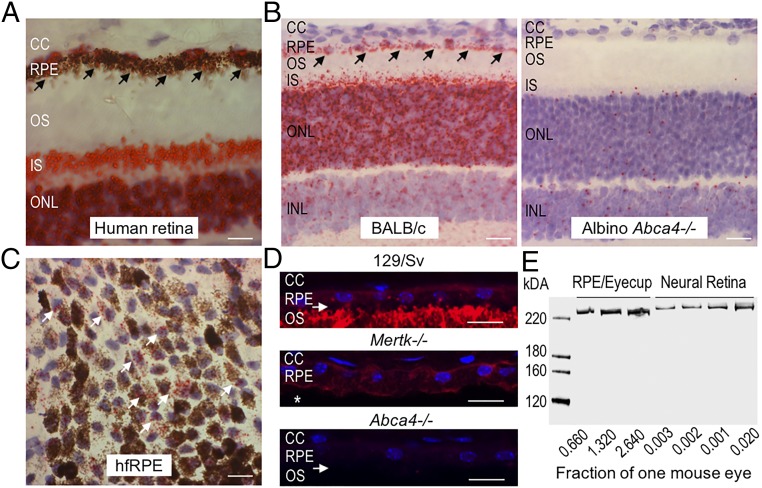
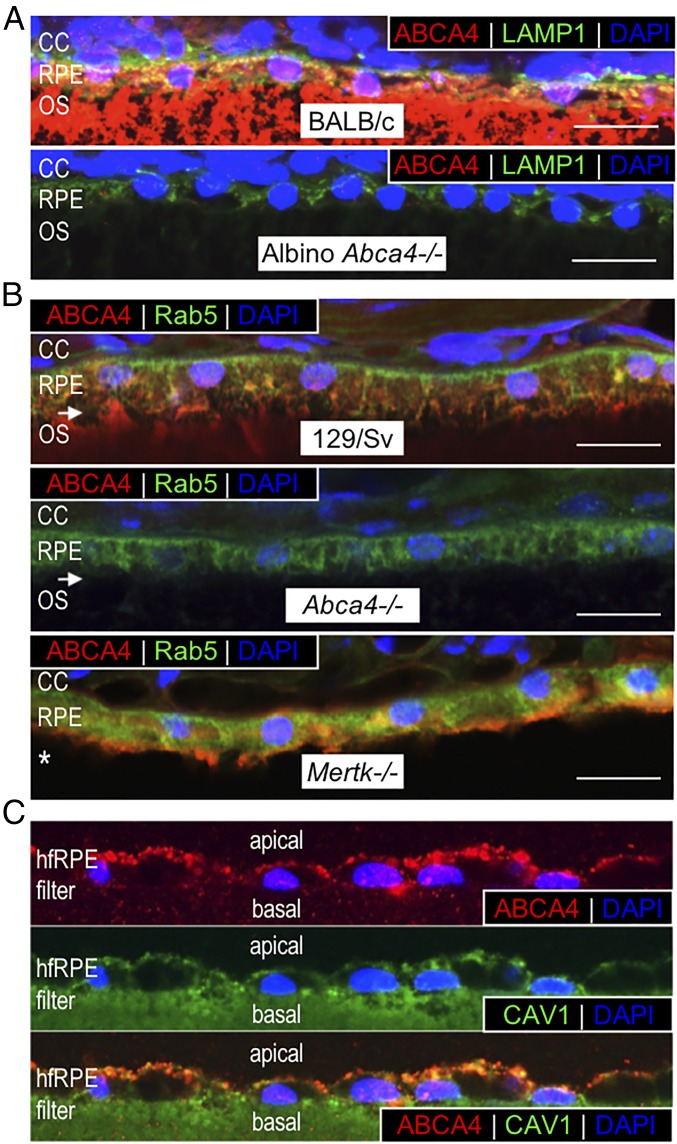
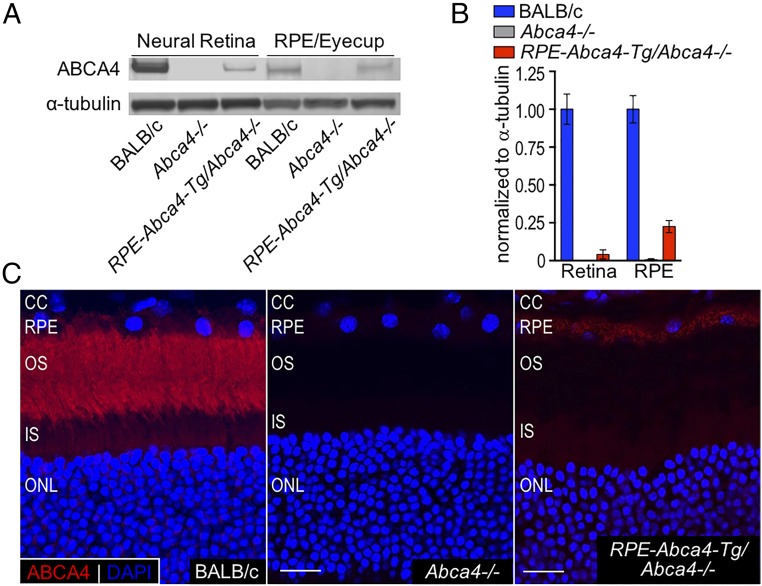
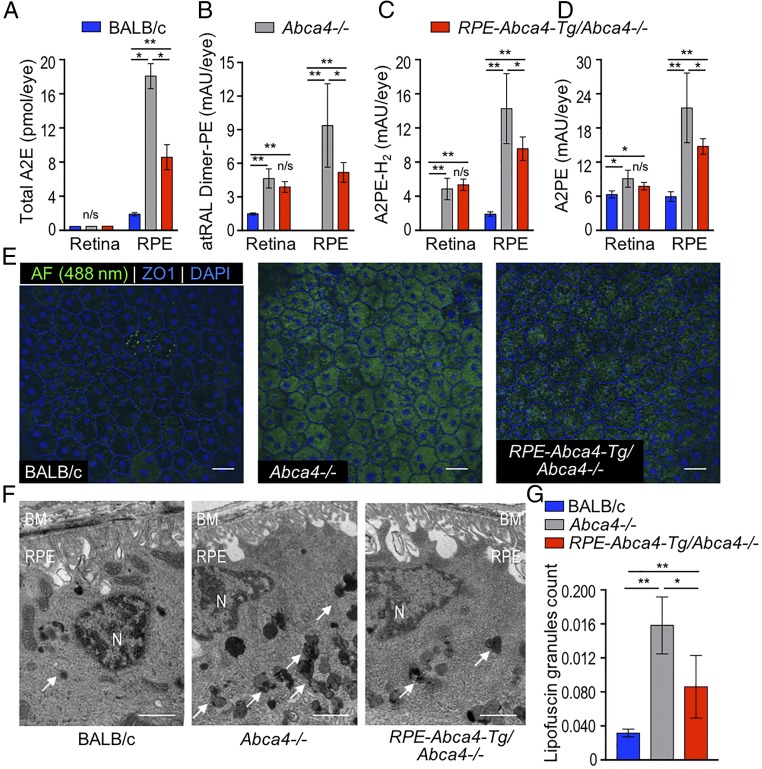
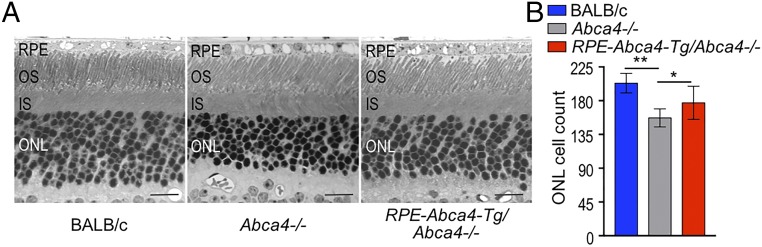
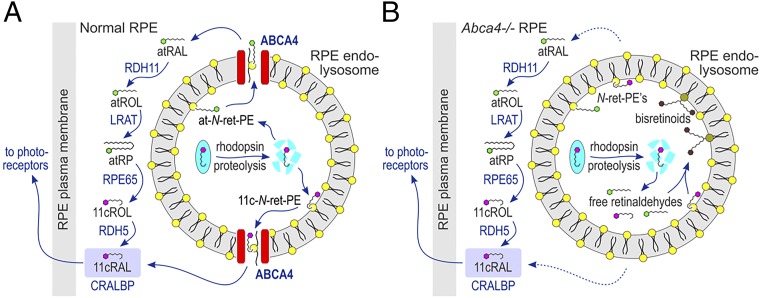
Significance: Recessive Stargardt macular degeneration (STGD1) and a subset of cone–rod dystrophies are caused by mutations in the Abca4 gene. The ABCA4 protein is a flippase in photoreceptor cells that helps eliminate retinaldehyde, a toxic photoproduct of vision. Here we found that ABCA4 is additionally present in the retinal pigment epithelium (RPE) of mice at approximately 1% of its abundance in the neural retina. Genetically modified mice that express ABCA4 in RPE but not in photoreceptor cells showed partial rescue of both the lipofuscin accumulation and photoreceptor degeneration observed in Abca4 −/− mice and in STGD1 patients. These observations suggest that ABCA4 in the RPE prevents photoreceptor degeneration in Abca4 −/− mice and possibly in STGD1 patients.
Overview
The claims and statistics of this paper haven’t been checked yet.
Run the check — free, no account needed. It reads the open-access text and checks the sources it cites.
Integrity signals
Registry
Cites
Statistics
Figures
Verification
Claims the paper makes
The claims and statistics of this paper haven’t been checked yet.
Run the check — free, no account needed. It reads the open-access text and checks the sources it cites.
Claims other papers make about this one
Each is checked against this paper’s own text: does it say what the citing paper says it does?
The source backs part of the claim, not all of it — or backs it for a different population, condition or comparison.
In the citing paper
“In the membranes of outer photoreceptor segments are nonenzymatically formed toxic bisretinoids. Upon phagocytosis, these bisretinoids are in the acidic environment of RPE phagolysosomes converted to bisretinoid pyridinium compound A2E and related bisretinoids [54,69,70,71,72,73,74].”
From The Role of Vitamin A in Retinal Diseases (2022) · cites this paper as [70]
Experimental — accuracy not yet measuredThe cited source says what the claim attributes to it.
In the citing paper
“ABCA4 is also present at extremely low levels in the retinal pigment epithelium (RPE) where it has been proposed to enhance endolysosomal function (2, 3).”
From Retinal gene therapy for Stargardt disease with dual AAV intein vectors is both safe and effective in large animal models (2025) · cites this paper as [3]
Self-check
Percentages, sums and reported differences re-computed from the paper’s own numbers.
The self-check needs the paper’s full text.
Citations
Cites
NIH Image to ImageJ: 25 years of image analysis
Schneider, C. A., Rasband, W. S., & Eliceiri, K. W. (2012) · Nature Methods · doi:10.1038/nmeth.2089 · Cited by 64,638
Allikmets, R., Singh, N., Sun, H., Shroyer, N. F., Hutchinson, A., Chidambaram, A., Gerrard, B., Baird, L., Stauffer, D., Peiffer, A., et al. (1997) · Nature Genetics · doi:10.1038/ng0397-236 · Cited by 1,435 · cited 1×
“Mutations in the Abca4 gene are responsible for several inherited blinding diseases including recessive Stargardt macular degeneration (STGD1) and a subset of cone–rod dystrophies (5, 6).”
BackgroundSchwartz, S. D., Regillo, C. D., Lam, B. L., Eliott, D., Rosenfeld, P. J., Gregori, N. Z., Hubschman, J.-P., Davis, J. L., Heilwell, G., Spirn, M., et al. (2015) · The Lancet · doi:10.1016/s0140-6736(14)61376-3 · Cited by 1,327
Weng, J., Mata, N. L., Azarian, S. M., Tzekov, R. T., Birch, D. G., & Travis, G. H. (1999) · Cell · doi:10.1016/s0092-8674(00)80602-9 · Cited by 881 · cited 1×
“The phenotype in albino Abca4 mice includes the accumulation of bisretinoids such as A2E in the RPE, the deposition of fluorescent lipofuscin granules in RPE cells, and slow photoreceptor degeneration (24, 25).”
BackgroundSelf-citationMolecular Basis of Visual Excitation
Wald, G. (1968) · Science · doi:10.1126/science.162.3850.230 · Cited by 832
Rod outer segment disk shedding in rat retina: relationship to cyclic lighting
LaVail, M. M. (1976) · Science · doi:10.1126/science.982063 · Cited by 689
Parish, C. A., Hashimoto, M., Nakanishi, K., Dillon, J., & Sparrow, J. (1998) · Proceedings of the National Academy of Sciences · doi:10.1073/pnas.95.25.14609 · Cited by 474
Mata, N. L., Weng, J., & Travis, G. H. (2000) · Proceedings of the National Academy of Sciences · doi:10.1073/pnas.130110497 · Cited by 456
Self-citationCarr, A. F., Vugler, A., Hikita, S. T., Lawrence, J. M., Gias, C., Chen, L., Buchholz, D. E., Ahmado, A., Semo, M., Smart, M. J. K., et al. (2009) · PLoS ONE · doi:10.1371/journal.pone.0008152 · Cited by 422
Mutations in the ABCA4 (ABCR) Gene Are the Major Cause of Autosomal Recessive Cone-Rod Dystrophy
Maugeri, A., Klevering, B. J., Rohrschneider, K., Blankenagel, A., Brunner, H. G., Deutman, A. F., Hoyng, C. B., & Cremers, F. P. M. (2000) · The American Journal of Human Genetics · doi:10.1086/303079 · Cited by 329
The 220-kDa Rim Protein of Retinal Rod Outer Segments Is a Member of the ABC Transporter Superfamily
Illing, M., Molday, L. L., & Molday, R. S. (1997) · Journal of Biological Chemistry · doi:10.1074/jbc.272.15.10303 · Cited by 304
ABCA4 is an N-retinylidene-phosphatidylethanolamine and phosphatidylethanolamine importer
Quazi, F., Lenevich, S., & Molday, R. S. (2012) · Nature Communications · doi:10.1038/ncomms1927 · Cited by 276
PARTICIPATION OF THE RETINAL PIGMENT EPITHELIUM IN THE ROD OUTER SEGMENT RENEWAL PROCESS
Young, R. W., & Bok, D. (1969) · Journal of Cell Biology · doi:10.1083/jcb.42.2.392 · Cited by 271
Self-citationAn RCS-Like Retinal Dystrophy Phenotype in Mer Knockout Mice
Duncan, J. L., LaVail, M. M., Yasumura, D., Matthes, M. T., Yang, H., Trautmann, N., Chappelow, A. V., Feng, W., Earp, H. S., Matsushima, G. K., et al. (2003) · Investigative Ophthalmology & Visual Science · doi:10.1167/iovs.02-0438 · Cited by 262
Stargardt's ABCR is localized to the disc membrane of retinal rod outer segments
Sun, H., & Nathans, J. (1997) · Nature Genetics · doi:10.1038/ng0997-15 · Cited by 251
Feng, W., Yasumura, D., Matthes, M. T., LaVail, M. M., & Vollrath, D. (2002) · Journal of Biological Chemistry · doi:10.1074/jbc.m107876200 · Cited by 244
Dual-substrate Specificity Short Chain Retinol Dehydrogenases from the Vertebrate Retina
Haeseleer, F., Jang, G.-F., Imanishi, Y., Driessen, C. A. G. G., Matsumura, M., Nelson, P. S., & Palczewski, K. (2002) · Journal of Biological Chemistry · doi:10.1074/jbc.m208882200 · Cited by 214
Rattner, A., Smallwood, P. M., & Nathans, J. (2000) · Journal of Biological Chemistry · doi:10.1074/jbc.275.15.11034 · Cited by 207
Radu, R. A., Yuan, Q., Hu, J., Peng, J. H., Lloyd, M., Nusinowitz, S., Bok, D., & Travis, G. H. (2008) · Investigative Opthalmology & Visual Science · doi:10.1167/iovs.07-1470 · Cited by 188
Self-citationQuantitative Fundus Autofluorescence in Recessive Stargardt Disease
Burke, T. R., Duncker, T., Woods, R. L., Greenberg, J. P., Zernant, J., Tsang, S. H., Smith, R. T., Allikmets, R. L., Sparrow, J. R., & Delori, F. C. (2014) · Investigative Ophthalmology & Visual Science · doi:10.1167/iovs.13-13624 · Cited by 183
Congenital hypothyroidism caused by a mutation in the Na+/l− symporter
Fujiwara, H., Tatsumi, K., Miki, K., Harada, T., Miyai, K., Takai, S., & Amino, N. (1997) · Nature Genetics · doi:10.1038/ng0697-124 · Cited by 161
Radu, R. A., Hu, J., Yuan, Q., Welch, D. L., Makshanoff, J., Lloyd, M., McMullen, S., Travis, G. H., & Bok, D. (2011) · Journal of Biological Chemistry · doi:10.1074/jbc.m110.191866 · Cited by 157
Self-citationNatkunarajah, M., Trittibach, P., McIntosh, J., Duran, Y., Barker, S. E., Smith, A. J., Nathwani, A. C., & Ali, R. R. (2008) · Gene Therapy · doi:10.1038/sj.gt.3303074 · Cited by 138
Boyer, N. P., Higbee, D., Currin, M. B., Blakeley, L. R., Chen, C., Ablonczy, Z., Crouch, R. K., & Koutalos, Y. (2012) · Journal of Biological Chemistry · doi:10.1074/jbc.m111.329235 · Cited by 133
Quazi, F., & Molday, R. S. (2014) · Proceedings of the National Academy of Sciences · doi:10.1073/pnas.1400780111 · Cited by 129
(1997) · Nature Genetics · doi:10.1038/ng0997-122b · Cited by 129
Autoradiographic studies on the metabolism of the retinal pigment epithelium.
Young, R. W., & Bok, D. (1970) · PubMed · Cited by 100
Self-citationChen, C., Thompson, D. A., & Koutalos, Y. (2012) · Journal of Biological Chemistry · doi:10.1074/jbc.m112.354514 · Cited by 85
Lenis, T. L., Sarfare, S. S., Jiang, Z., Lloyd, M. B., Bok, D., & Radu, R. A. (2017) · Proceedings of the National Academy of Sciences · doi:10.1073/pnas.1620299114 · Cited by 72
Self-citationKaylor, J. J., Xu, T., Ingram, N. T., Tsan, A., Hakobyan, H. T., Fain, G., & Travis, G. H. (2017) · Nature Communications · doi:10.1038/s41467-017-00018-4 · Cited by 60
Self-citationSethna, S., Chamakkala, T., Gu, X., Thompson, T. C., Cao, G., Elliott, M. H., & Finnemann, S. C. (2016) · Journal of Biological Chemistry · doi:10.1074/jbc.m115.687004 · Cited by 53
Self-citationBoulanger, A., Liu, S., Henningsgaard, A. A., Yu, S., & Redmond, T. M. (2000) · Journal of Biological Chemistry · doi:10.1074/jbc.m003441200 · Cited by 50
Self-citationAnderson, D. M. G., Ablonczy, Z., Koutalos, Y., Hanneken, A. M., Spraggins, J. M., Calcutt, M. W., Crouch, R. K., Caprioli, R. M., & Schey, K. L. (2017) · Scientific Reports · doi:10.1038/s41598-017-17402-1 · Cited by 48
Retinal Degeneration Progression Changes Lentiviral Vector Cell Targeting in the Retina
Calame, M., Cachafeiro, M. C. B., Philippe, S., Schouwey, K., Tekaya, M., Wanner, D., Sarkis, C., Kostic, C., & Arsenijévic, Y. (2011) · PLoS ONE · doi:10.1371/journal.pone.0023782 · Cited by 30
Studies of All-trans-retinal as a Photooxidizing Agent
Harper, W. S., & Gaillard, E. R. (2001) · Photochemistry and Photobiology · doi:10.1562/0031-8655(2001)0730071soatra2.0.co2 · Cited by 27
Hu, J., & Bok, D. (2010) · Methods in Molecular Biology · doi:10.1007/978-1-60327-325-1_2 · Cited by 24
Self-citationStec, D. E., Morimoto, S., & Sigmund, C. D. (2001) · BioTechniques · doi:10.2144/01312bm03 · Cited by 19
Simultaneous visualization and cell-specific confirmation of RNA and protein in the mouse retina.
Stempel, A. J., Morgans, C. W., Stout, J. T., & Appukuttan, B. (2014) · Europe PMC (PubMed Central) · Cited by 18
Research works printed but not linked: 1
- 10.1562/0031-8655(2001)073<0071:SOATRA>2.0.CO;2 · DOI
Cited by
Sorted by citations
Cell Types of the Human Retina and Its Organoids at Single-Cell Resolution
Cowan, C. S., Renner, M., De Gennaro, M., Gross-Scherf, B., Goldblum, D., Hou, Y., Munz, M., Rodrigues, T. M., Krol, J., Szikra, T., et al. (2020) · Cell · doi:10.1016/j.cell.2020.08.013 · Cited by 654
Cremers, F. P. M., Lee, W., Collin, R. W. J., & Allikmets, R. (2020) · Progress in Retinal and Eye Research · doi:10.1016/j.preteyeres.2020.100861 · Cited by 315
Cellular mechanisms of hereditary photoreceptor degeneration – Focus on cGMP
Power, M., Das, S., Schütze, K., Marigo, V., Ekström, P. A. R., & Paquet‐Durand, F. (2019) · Progress in Retinal and Eye Research · doi:10.1016/j.preteyeres.2019.07.005 · Cited by 124
The Role of Vitamin A in Retinal Diseases
Sajovic, J., Meglič, A., Glavač, D., Markelj, Š., Hawlina, M., & Fakin, A. (2022) · International Journal of Molecular Sciences · doi:10.3390/ijms23031014 · Cited by 109
Structure and function of ABCA4 and its role in the visual cycle and Stargardt macular degeneration
Molday, R. S., Garces, F. A., Scortecci, J. F., & Molday, L. L. (2022) · Progress in Retinal and Eye Research · doi:10.1016/j.preteyeres.2021.101036 · Cited by 107
Metadata
- Authors
- Lenis, T. L., Hu, J., Ng, S. Y., Jiang, Z., Sarfare, S., Lloyd, M. B., Esposito, N. J., Samuel, W., Jaworski, C., Bok, D., Finnemann, S. C., Radeke, M. J., Redmond, T. M., Travis, G. H., & Radu, R. A.
- Affiliations
- University of California, Los Angeles (US)
- Fordham University (US)
- National Institutes of Health (US)
- University of California, Santa Barbara (US)
- Corresponding author
- Radu, Roxana A.
- ORCID
- Venue
- Proceedings of the National Academy of Sciences
- Publisher
- National Academy of Sciences
- Published
- 2018-11-05
- Volume
- 115
- Issue
- 47
- Pages
- E11120-E11127
- ISSN
- 0027-8424 (ISSN-L)
- 1091-6490
- PMC
- PMC6255167
- OpenAlex
- W2900433461
- Cited by
- 158
- References
- 38
- Citations by year
- 2026: 14 · 2025: 14 · 2024: 27 · 2023: 23 · 2022: 25 · 2021: 20 · 2020: 22 · 2019: 13
- FWCI
- 4.98
- Type
- journal article
- Language
- en
- Open access
- hybrid
- doi.org
- Licence
- Locations
- Proceedings of the National Academy of Sciences (publishedVersion, cc-by-nc-nd)
- Europe PMC (PubMed Central) (publishedVersion, cc-by-nc-nd)
- PubMed Central (publishedVersion, cc-by-nc-nd)
- PubMed (publishedVersion)
- eScholarship (California Digital Library) (submittedVersion)
- eScholarship (California Digital Library) (submittedVersion, cc-by-nc-nd)
- Funders
- HHS | NIH | National Eye Institute (R01 EY025002, R01 EY011713, R01 EY026215, EY000331)
- Topics
- Health Sciences › Medicine › Ophthalmology › Retinal Development and Disorders
- Health Sciences › Medicine › Ophthalmology › Retinal Diseases and Treatments
- Life Sciences › Biochemistry, Genetics and Molecular Biology › Molecular Biology › Retinoids in leukemia and cellular processes
- Keywords
- ABCA4, retinal pigment epithelium, cone-rod dystrophy, lipofuscin accumulation, photoreceptor degeneration, retinal, flippase, gene rescue
- MeSH terms
- c-Mer Tyrosine Kinase, Stargardt Disease, Animals, Cells, Cultured, Disease Models, Animal, Lipofuscin, Lysosomes, Macular Degeneration, Mice, Inbred BALB C, Phagocytosis, Photoreceptor Cells, Retina, Retinal Degeneration, Retinaldehyde, Rhodopsin, Mice, Knockout, ATP-Binding Cassette Transporters, Mice, Retinal Pigment Epithelium
About these checks
Registry, retraction, Cites and statistics results are computed, not judged, with one exception: a printed reference that no index lists is read once by a model before it counts as a citation error. Claims are extracted by a model and kept only when their quote appears verbatim in the text; each cited source is then checked, with a model’s help, for whether it says what the claim relies on. Those verdicts can be wrong — read the claim’s quote and the cited source before relying on one.
Statistics and arithmetic are recomputed, not judged.
Confidence bands are shown only for fields calibrated on our annotated test set. None is calibrated yet, so no band is shown.
What counts as a claim ›How we measure confidence ›How we check this ›
Are you an author, or do you see a problem with this page? Request a review
