

Discovery of potent SOS1 inhibitors that block RAS activation via disruption of the RAS–SOS1 interaction
Open accessThe DOI matches its Crossref record; 43 of the 43 references it cites were found in a registry or an index.
Abstract
Since the late 1980s, mutations in the RAS genes have been recognized as major oncogenes with a high occurrence rate in human cancers. Such mutations reduce the ability of the small GTPase RAS to hydrolyze GTP, keeping this molecular switch in a constitutively active GTP-bound form that drives, unchecked, oncogenic downstream signaling. One strategy to reduce the levels of active RAS is to target guanine nucleotide exchange factors, which allow RAS to cycle from the inactive GDP-bound state to the active GTP-bound form. Here, we describe the identification of potent and cell-active small-molecule inhibitors which efficiently disrupt the interaction between KRAS and its exchange factor SOS1, a mode of action confirmed by a series of biophysical techniques. The binding sites, mode of action, and selectivity were elucidated using crystal structures of KRAS G12C –SOS1, SOS1, and SOS2. By preventing formation of the KRAS–SOS1 complex, these inhibitors block reloading of KRAS with GTP, leading to antiproliferative activity. The final compound 23 (BAY-293) selectively inhibits the KRAS–SOS1 interaction with an IC 50 of 21 nM and is a valuable chemical probe for future investigations.
Overview
The claims and statistics of this paper haven’t been checked yet.
Free: it reads the open-access text and checks the first 5 claims that cite a source we can check. Create a free account to check every claim.
Integrity signals
Registry
Cites
Statistics
Figures
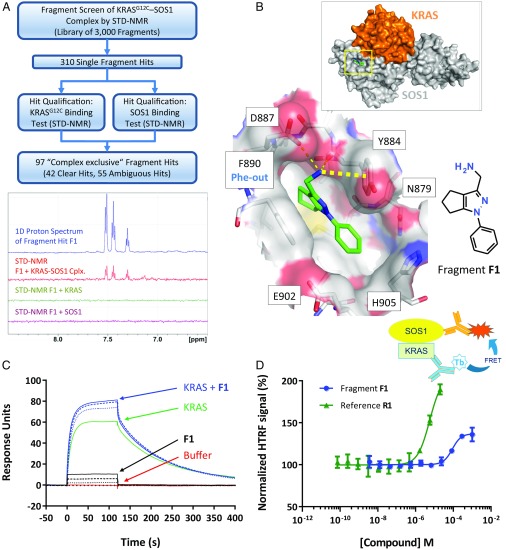
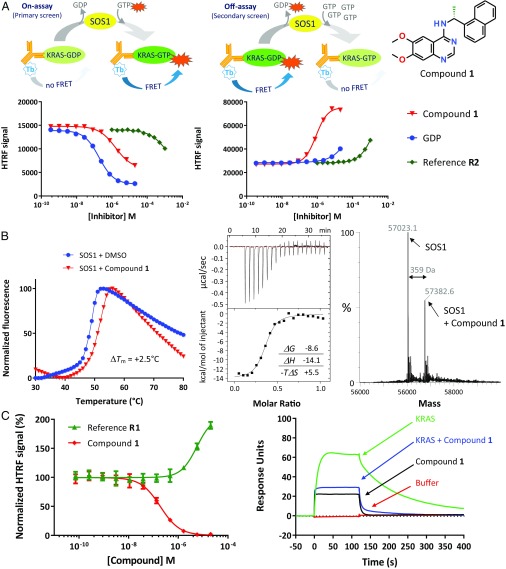
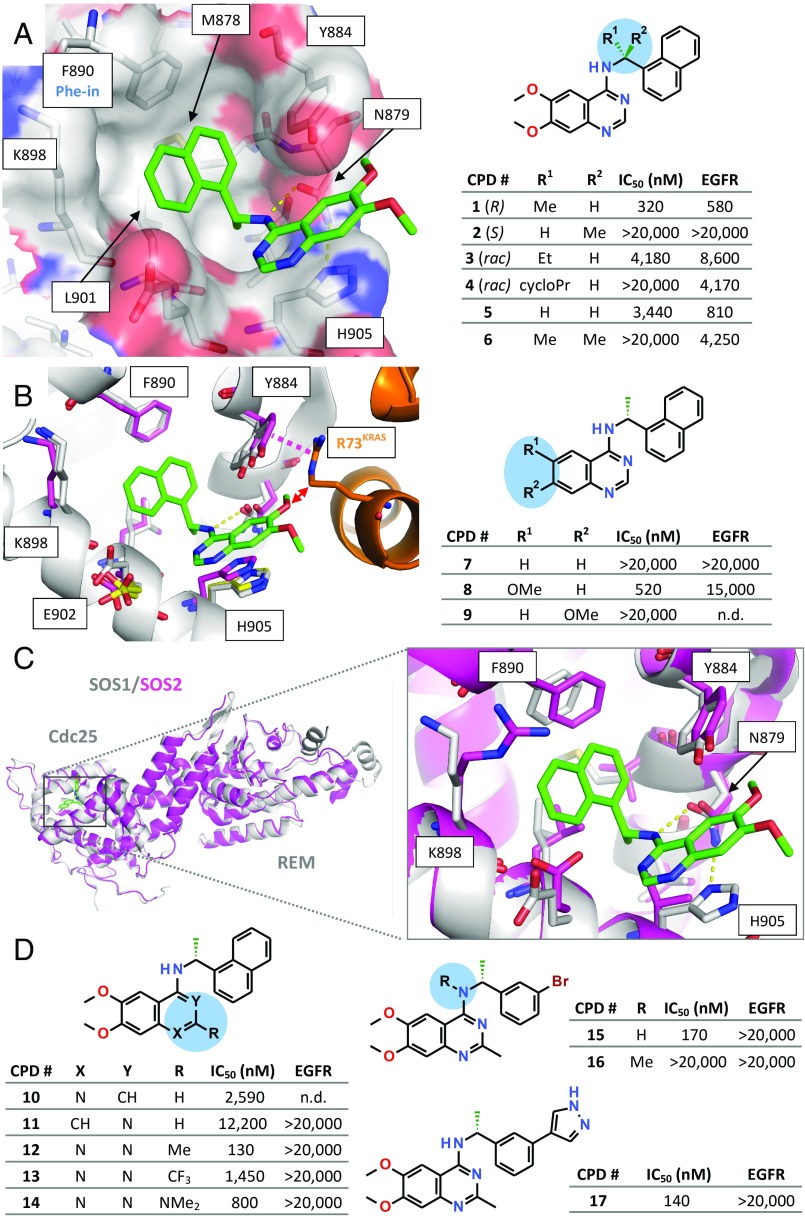
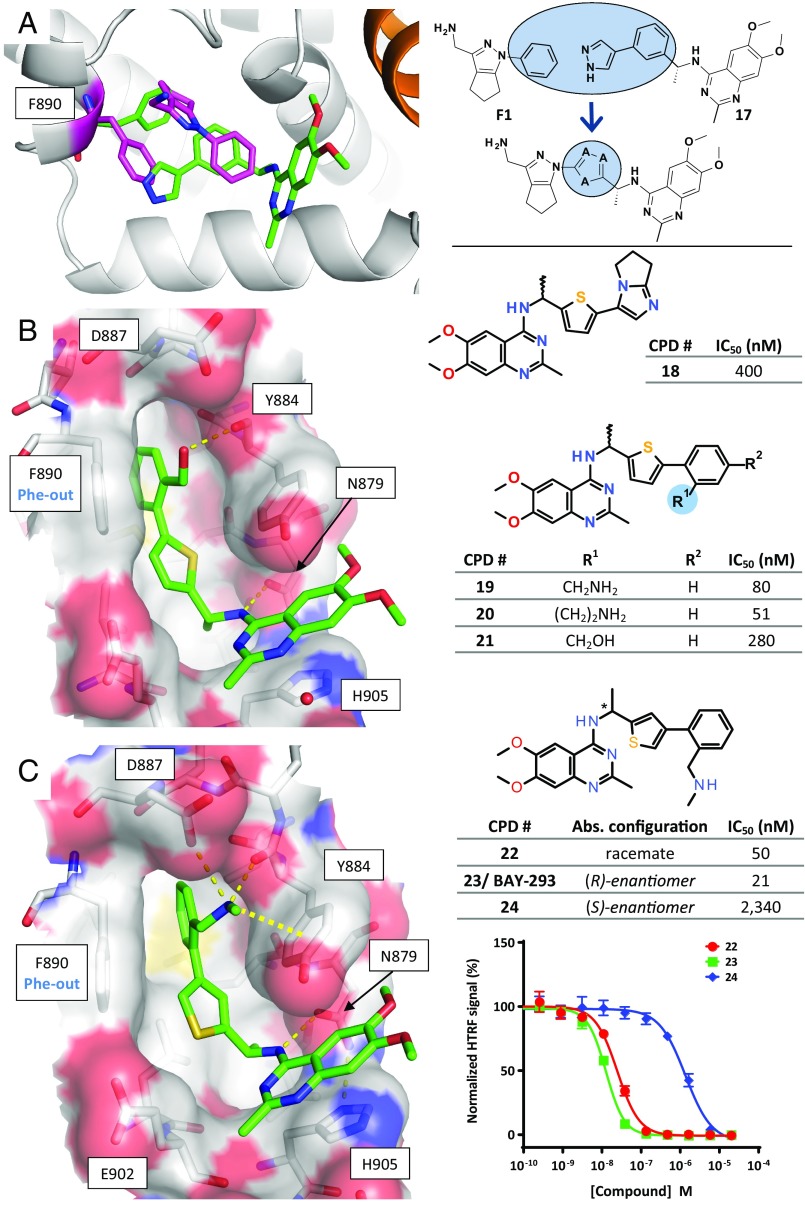
Verification
Claims the paper makes
The claims and statistics of this paper haven’t been checked yet.
Free: it reads the open-access text and checks the first 5 claims that cite a source we can check. Create a free account to check every claim.
Claims other papers make about this one
Each is checked against this paper’s own text: does it say what the citing paper says it does?
The source backs part of the claim, not all of it — or backs it for a different population, condition or comparison.
In the citing paper
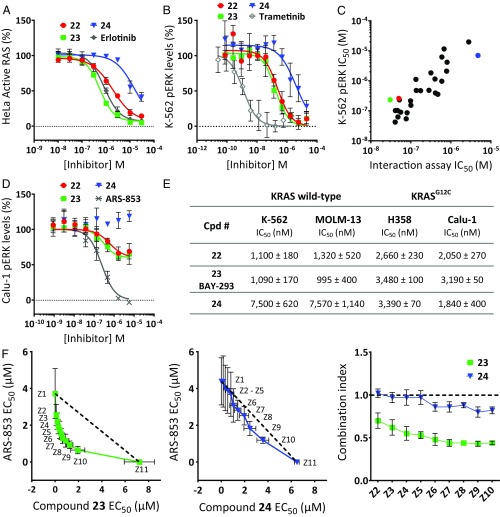
“BAY-293, a potent SOS1 inhibitor, was recently found to synergize with ARS-853 to inhibit Ras activation and cell proliferation by disrupting Ras-SOS1 interaction (Table 3).79”
From Overcoming Resistance to Drugs Targeting KRAS Mutation (2020) · cites this paper as [79]
Experimental — accuracy not yet measuredThe source backs part of the claim, not all of it — or backs it for a different population, condition or comparison.
In the citing paper
“Selective SOS1 inhibitors, such as BAY-293 and BI-3406, have demonstrated synergistic antiproliferative activity in the KRASG12C mutant cell line by inhibiting the RAS-RAF-MEK-ERK pathway [66,67].”
From RAS Mutations in Advanced Colorectal Cancer: Mechanisms, Clinical Implications, and Novel Therapeutic Approaches (2025) · cites this paper as [66]
Experimental — accuracy not yet measuredThe source backs part of the claim, not all of it — or backs it for a different population, condition or comparison.
In the citing paper
“Son of sevenless 1 (SOS1) and SH2-containing protein tyrosine phosphatase (SHP2) are the two most critical targets in the RAS signaling pathway [61, 62].”
From Targeting KRAS mutant cancers: from druggable therapy to drug resistance (2022) · cites this paper as [61]
Experimental — accuracy not yet measuredThe source backs part of the claim, not all of it — or backs it for a different population, condition or comparison.
In the citing paper
“Furthermore, mutant KRAS can also activate wild-type RAS through SOS1 and subsequently RTK downstream signaling, leading to resistance to KRAS-targeted therapies [96].”
From Differential Response and Resistance to KRAS-Targeted Therapy (2025) · cites this paper as [96]
Experimental — accuracy not yet measuredThe source backs part of the claim, not all of it — or backs it for a different population, condition or comparison.
In the citing paper
“As evidenced by reports of small molecules targeting the RAS GEF SOS1, inhibition of GEF activity would thus arrest the given GTPase signaling pathways, constituting a promising target for small-molecule therapeutic development (11, 12).”
From RHO to the DOCK for GDP disembarking: Structural insights into the DOCK GTPase nucleotide exchange factors (2021) · cites this paper as [11]
Experimental — accuracy not yet measured
7 more claims about this paper
Create a free account to see every claim other papers make about this one.
Self-check
Percentages, sums and reported differences re-computed from the paper’s own numbers.
The self-check needs the paper’s full text.
Citations
Cites
Features and development of Coot
Emsley, P., Lohkamp, B., Scott, W. G., & Cowtan, K. (2010) · Acta Crystallographica Section D Biological Crystallography · doi:10.1107/s0907444910007493 · Cited by 29,915 · cited 2×
“Models were rebuilt using Coot (40) and refined using REFMAC (41).”
Phaser crystallographic software
McCoy, A. J., Grosse-Kunstleve, R. W., Adams, P. D., Winn, M. D., Storoni, L. C., & Read, R. J. (2007) · Journal of Applied Crystallography · doi:10.1107/s0021889807021206 · Cited by 20,612
Kabsch, W. (2010) · Acta Crystallographica Section D Biological Crystallography · doi:10.1107/s0907444909047337 · Cited by 16,463
Overview of the CCP 4 suite and current developments
Winn, M. D., Ballard, C. C., Cowtan, K. D., Dodson, E. J., Emsley, P., Evans, P. R., Keegan, R. M., Krissinel, E. B., Leslie, A. G. W., McCoy, A., et al. (2011) · Acta Crystallographica Section D Biological Crystallography · doi:10.1107/s0907444910045749 · Cited by 12,353 · cited 1×
“Datasets were collected at the Helmholtz-Zentrum Berlin in Germany, at the European Synchrotron Radiation Facility in Grenoble, France, or at the PETRA III synchrotron in Hamburg, Germany; processed using XDS (36) and XDSAPP (37); and solved using Molecular Replacement with Phaser (38) from the CCP4 suite (39).”
MethodREFMAC 5 for the refinement of macromolecular crystal structures
Murshudov, G. N., Skubák, P., Lebedev, A. A., Pannu, N. S., Steiner, R. A., Nicholls, R. A., Winn, M. D., Long, F., & Vagin, A. A. (2011) · Acta Crystallographica Section D Biological Crystallography · doi:10.1107/s0907444911001314 · Cited by 8,317
Drug combination studies and their synergy quantification using the Chou-Talalay method
Chou, T.-C. (2010) · Cancer Research · doi:10.1158/0008-5472.can-09-1947 · Cited by 5,739 · cited 1×
“(Right) The combination index was calculated according to the median-effect model of Chou– Talalay (43); a value below 0.”
PRODRG: a tool for high-throughput crystallography of protein–ligand complexes
Schüttelkopf, A. W., & van Aalten, D. M. F. (2004) · Acta Crystallographica Section D Biological Crystallography · doi:10.1107/s0907444904011679 · Cited by 4,804 · cited 3×
“Ligand models were generated using BIOVIA Discovery Hillig et al. PNAS | February 12, 2019 | vol. 116 | no. 7 | 2559 BI O CH EM IS TR Y Studio (Dassault Systèmes) and parameter files calculated with PRODRG (42).”
MethodInfluentialTargeting RAS signalling pathways in cancer therapy
Downward, J. (2003) · Nature Reviews Cancer · doi:10.1038/nrc969 · Cited by 3,256 · cited 1×
“For oncogenic RAS mutants, however, the GAP activity is impaired or greatly reduced, resulting in permanent activation, which is the basis of oncogenic RAS signaling (7); for example, through the RAS-RAF-MEK-ERK and RAS-PI3K-PDK1-AKT pathways, both essential to cell survival and proliferation (8).”
Drugging the undruggable RAS: Mission Possible?
Cox, A. D., Fesik, S. W., Kimmelman, A. C., Luo, J., & Der, C. J. (2014) · Nature Reviews Drug Discovery · doi:10.1038/nrd4389 · Cited by 1,997
RAS Proteins and Their Regulators in Human Disease
Simanshu, D. K., Nissley, D. V., & McCormick, F. (2017) · Cell · doi:10.1016/j.cell.2017.06.009 · Cited by 1,943
Cited by
Items 101–200 of 403
Monteleone, S., Fedorov, D. G., Townsend‐Nicholson, A., Southey, M. W. Y., Bodkin, M. J., & Heifetz, A. (2022) · Journal of Chemical Information and Modeling · doi:10.1021/acs.jcim.2c00457 · Cited by 43
The current landscape of using direct inhibitors to target KRASG12C-mutated NSCLC
Batrash, F., Kutmah, M., & Zhang, J. (2023) · Experimental Hematology and Oncology · doi:10.1186/s40164-023-00453-8 · Cited by 43
“The SOS1 inhibitor BAY-293 produced a synergistic response with ARS-853 in tumor cell lines [79, 104].”
BackgroundTang, Y., Pu, X., Yuan, X., Pang, Z., Li, F., & Wang, X. (2024) · Cancer Gene Therapy · doi:10.1038/s41417-024-00778-4 · Cited by 43
“BAY-293 also exhibits synergistic effects with covalent inhibitors of KRASG12D, highlighting the potential of combined therapy targeting both KRAS and SOS1 [36].”
BackgroundTargeting KRAS mutant cancers by preventing signaling transduction in the MAPK pathway
Korzeniecki, C., & Priefer, R. (2020) · European Journal of Medicinal Chemistry · doi:10.1016/j.ejmech.2020.113006 · Cited by 43
Targeting RAS mutants in malignancies: successes, failures, and reasons for hope
Yang, H. S., Zhou, X., Fu, D., Le, C., Wang, J., Zhou, Q., Liu, X., Yuan, Y., Ding, K., & Xiao, Q. (2022) · 癌症:英文版 · doi:10.1002/cac2.12377 · Cited by 39
“[73] recently developed potent small-molecule SOS1 inhibitors using a structure-guided design, which combined fragment-based andhigh-throughput screening.”
BackgroundTargeting KRASG12C in colorectal cancer: the beginning of a new era
Ciardiello, D., Maiorano, B. A., & Martinelli, E. (2022) · ESMO Open · doi:10.1016/j.esmoop.2022.100745 · Cited by 42
“BAY-293 is a first-in-class potent SOS1 inhibitor that provided synergistic activity when combined with ARS-853 in preclinical KRAS cancer cell models.(33) A new SOS1 inhibitor, BI-1701963, is currently under evaluation as a single agent, or with the MEK inhibitor trametinib (NCT04111458) or in combination with adagra…”
BackgroundZheng, L., Zhang, Y., Mei, S., Xie, T., Zou, Y., Wang, Y., Jing, H., Xu, S., Dramou, P., Xu, Z. C., et al. (2024) · Journal of Medicinal Chemistry · doi:10.1021/acs.jmedchem.3c02433 · Cited by 37
Sudhakar, N., Yan, L., Qiryaqos, F., Engstrom, L. D., Laguer, J., Calinisan, A., Hebbert, A., Waters, L. M., Moya, K., Bowcut, V., et al. (2024) · Molecular Cancer Therapeutics · doi:10.1158/1535-7163.mct-23-0870 · Cited by 43
Targeting KRAS in Colorectal Cancer
Wang, C., & Fakih, M. (2021) · Current Oncology Reports · doi:10.1007/s11912-021-01022-0 · Cited by 37
Small molecule Son of Sevenless 1 (SOS1) inhibitors: a review of the patent literature
Thompson, S. K., Buckl, A. K., Dossetter, A. G., Griffen, E., & Gill, A. L. (2021) · Expert Opinion on Therapeutic Patents · doi:10.1080/13543776.2021.1952984 · Cited by 35
Design, Synthesis, and Bioevaluation of Pyrido[2,3-d]pyrimidin-7-ones as Potent SOS1 Inhibitors
Liu, M., Zhou, G., Su, W., Gu, Y., Gao, M., Wang, K., Huo, R., Li, Y., Zhou, Z., Chen, K., et al. (2023) · ACS Medicinal Chemistry Letters · doi:10.1021/acsmedchemlett.2c00490 · Cited by 33
The transcription factor XBP1 in dendritic cells promotes the T H 2 cell response in airway allergy
Yang, G., Zeng, X., Geng, X., Liu, J., Mo, L., Luo, X., Liu, H., Zhang, Y., Yang, L.-T., Huang, Q., et al. (2023) · Science Signaling · doi:10.1126/scisignal.abm9454 · Cited by 33
“For example, the uncontrolled growth of cancer cells can be attributed to sustained guanosine triphosphate (GTP)–bound (active) RAS, for which SOS1 (Son of sevenless-1) plays a critical role, because SOS1 is the most important guanine nucleotide exchange factor (GEF) to maintain RAS in a GTP-bound state (12, 13).”
BackgroundResultInfluentialCamps-Fajol, C., Cavero, D., Minguillón, J., & Surrallés, J. (2024) · Pharmacological Research · doi:10.1016/j.phrs.2024.107544 · Cited by 36
Sarkar, D., Olejniczak, E. T., Phan, J., Coker, J. A., Sai, J., Arnold, A. L., Beesetty, Y., Waterson, A. G., & Fesik, S. W. (2020) · Journal of Medicinal Chemistry · doi:10.1021/acs.jmedchem.0c00511 · Cited by 33
RAS pathway regulation in melanoma
Mahi, A. A., & Ablain, J. (2022) · Disease Models & Mechanisms · doi:10.1242/dmm.049229 · Cited by 38
Structural insights into small-molecule KRAS inhibitors for targeting KRAS mutant cancers
Pandey, D., Chauhan, S. C., Kashyap, V. K., & Roy, K. K. (2024) · European Journal of Medicinal Chemistry · doi:10.1016/j.ejmech.2024.116771 · Cited by 32
Identification of novel peptide inhibitors for the KRas-G12C variant to prevent oncogenic signaling
Ajmal, A., Ali, Y., Khan, A., Wadood, A., & Rehman, A. U. (2022) · Journal of Biomolecular Structure and Dynamics · doi:10.1080/07391102.2022.2138550 · Cited by 33
SOS2 Comes to the Fore: Differential Functionalities in Physiology and Pathology
Baltanás, F. C., García‐Navas, R., & Santos, E. (2021) · International Journal of Molecular Sciences · doi:10.3390/ijms22126613 · Cited by 32
“Within this group, BAY-293 has been shown to bind directly to the SOS partner of the RAS:SOS complex, thus preventing KRAS–SOS1 complex formation [47].”
BackgroundInfluentialTargeting RAS oncogenesis with SOS1 inhibitors
Hillig, R. C., & Bader, B. (2022) · Advances in cancer research · doi:10.1016/bs.acr.2021.07.001 · Cited by 39
Self-citationDaley, B. R., Vieira, H. M., Rao, C., Hughes, J. M., Beckley, Z., Huisman, D. H., Chatterjee, D., Sealover, N. E., Cox, K., Askew, J. W., et al. (2023) · Proceedings of the National Academy of Sciences · doi:10.1073/pnas.2313137120 · Cited by 32
“Further, we and others have shown that inhibition or deletion of proximal RTK signaling intermediates SOS1 (31, 32, 81), SOS2 (18, 68), and SHP2 (22, 81–83) inhibit proliferation of RTK/RAS mutated cancers and synergize with therapies targeting the RTK/RAS pathway, but only under 3D culture…”
BackgroundXing, F., Zhao, D., Wu, S.-Y., Tyagi, A., Wu, K., Sharma, S., Liu, Y., Deshpande, R. P., Wang, Y., Cleary, J. A., et al. (2021) · Cancer Research · doi:10.1158/0008-5472.can-19-4031 · Cited by 33
“Hillig and colleagues performed a high-throughput screening using the Bayer drug library, which consists of more than 3 million compounds, and identified quinazoline as a potential Ras inhibitor by blocking the interaction between Ras and SOS1 (60).”
Selumetinib: a selective MEK1 inhibitor for solid tumor treatment
Hedayat, M., Jafari, R., & Zolbanin, N. M. (2022) · Clinical and Experimental Medicine · doi:10.1007/s10238-021-00783-z · Cited by 36
“Binding the monomeric Grb2 to SOS (most-studied GEF for RAS: Son of Sevenless) results in upregulating MAP kinase signaling thereby dimeric condition stops this procedure [20, 21].”
BackgroundComputationally Empowered Workflow Identifies Novel Covalent Allosteric Binders for KRASG12C
Mortier, J., Friberg, A., Badock, V., Moosmayer, D., Schroeder, J., Steigemann, P., Siegel, F., Gradl, S., Bauser, M., Hillig, R. C., et al. (2020) · ChemMedChem · doi:10.1002/cmdc.201900727 · Cited by 29
Self-citationTargeting KRAS in Non-Small Cell Lung Cancer
Corral de la Fuente, E., Olmedo Garcia, M. E., Gomez Rueda, A., Lage, Y., & Garrido, P. (2022) · Frontiers in Oncology · doi:10.3389/fonc.2021.792635 · Cited by 30
“Another inhibitor of the SOS1-KRAS interaction is BAY-293, which has demonstrated efficacy in KRAS-driven cancers in preclinical studies (71).”
BackgroundLuo, G., Wang, B., Hou, Q., & Wu, X. (2023) · Journal of Medicinal Chemistry · doi:10.1021/acs.jmedchem.2c01729 · Cited by 30
Wortmann, L., Bräuer, N., Holton, S. J., Irlbacher, H., Weiske, J., Lechner, C., Meier, R., Karén, J., Sioberg, C., Pütter, V., et al. (2021) · Journal of Medicinal Chemistry · doi:10.1021/acs.jmedchem.1c01245 · Cited by 31
Self-citationFiorentino, F., Rotili, D., & Mai, A. (2023) · Drug Discovery Today · doi:10.1016/j.drudis.2023.103548 · Cited by 31
Biology, pathology, and therapeutic targeting of RAS
Rhett, J. M., Khan, I., & O’Bryan, J. P. (2020) · Advances in cancer research · doi:10.1016/bs.acr.2020.05.002 · Cited by 31
“A number of compounds bind SOS in a hydrophobic pocket in the CDC25 domain adjacent to where RAS binds (Abbott et al., 2018; Burns et al., 2018; Burns et al., 2014; Hillig et al., 2019; Hodges et al., 2018).”
BackgroundLee, M. S., & Pant, S. (2021) · American Society of Clinical Oncology Educational Book · doi:10.1200/edbk_321255 · Cited by 34
Morphologic-Molecular Transformation of Oncogene Addicted Non-Small Cell Lung Cancer
Calabrese, F., Pezzuto, F., Lunardi, F., Fortarezza, F., Tzorakoleftheraki, S., Resi, M. V., Tinè, M., Pasello, G., & Hofman, P. M. (2022) · International Journal of Molecular Sciences · doi:10.3390/ijms23084164 · Cited by 30
“Several ongoing studies are considering the efficacy and tolerability of combination therapies to overcome these mechanisms of resistance, associating KRAS-G12C inhibitors with other small molecules—such as SHP2 inhibitors (TNO155, RMC-4630), SOS1 inhibitor (BI 1701963), EGFR inhibitors (panitumumab, cetuximab, afatin…”
BackgroundStructure-based inhibitor design of mutant RAS proteins—a paradigm shift
Nyíri, K., Koppány, G., & Vértessy, B. G. (2020) · Cancer and Metastasis Reviews · doi:10.1007/s10555-020-09914-6 · Cited by 27
“Small molecule 6EPL, 6EPM, 6EPN, 6EPO, 6EPP 5OVI S9 BAY-293 Hillig-2019 [73]”
BackgroundUnderstand KRAS and the Quest for Anti-Cancer Drugs
Han, C. W., Jeong, M. S., & Jang, S. B. (2021) · Cells · doi:10.3390/cells10040842 · Cited by 29
“BAY-293 was found to block GTP binding to KRAS and suppress the formation of KRAS-SOS1 complex, which reduced phospho-ERK activity by ∼50% in NSCLC cell lines [12].”
BackgroundTracking the mechanism of covalent molecular glue stabilization using native mass spectrometry
Verhoef, C. J. A., Kay, D. F., Dijck, L. V., Doveston, R. G., Brunsveld, L., Leney, A. C., & Cossar, P. J. (2023) · Chemical Science · doi:10.1039/d3sc01732j · Cited by 31
Baltanás, F. C., García‐Navas, R., Rodríguez-Ramos, P., Calzada, N., Cuesta, C., Borrajo, J., Fuentes‐Mateos, R., Juan, A. O.-S., Vidaña, N., Castellano, E., et al. (2023) · Nature Communications · doi:10.1038/s41467-023-41583-1 · Cited by 27
“Con-sistently, pharmacological treatment with BAY-293, a selective inhibitor of SOS1:KRAS interaction 47 , resulted also in decreased cell proliferation of different KRAS G12D -LUAD murine tumor cell lines such as KPB6, LKR10, and LKR13, exhibiting a closely similar anti-proliferative effect than…”
BackgroundPlangger, A., Rath, B., Stickler, S., Hochmair, M., Lang, C., Weigl, L., Funovics, M., & Hamilton, G. (2022) · Discover Oncology · doi:10.1007/s12672-022-00550-w · Cited by 25
“Interestingly, all SOS1 inhibitors BAY-293, BI-3406 and RM-0331 target essentially the same binding pocket of this GEF, establishing BAY-293 as model compound for in vitro studies [25, 92].”
BackgroundSmall molecule inhibitors of RAS proteins with oncogenic mutations
Orgován, Z., & Keserű, G. M. (2020) · Cancer and Metastasis Reviews · doi:10.1007/s10555-020-09911-9 · Cited by 28
Plangger, A., Rath, B., Hochmair, M. J., Funovics, M. A., & Hamilton, G. (2021) · Translational Oncology · doi:10.1016/j.tranon.2021.101230 · Cited by 24
Exploiting RAS Nucleotide Cycling as a Strategy for Drugging RAS-Driven Cancers
Mattox, T. E., Chen, X., Maxuitenko, Y. Y., Keeton, A. B., & Piazza, G. A. (2019) · International Journal of Molecular Sciences · doi:10.3390/ijms21010141 · Cited by 31
“While, this compound is a first-in-class potent inhibitor of SOS-RAS interactions, its lack of in vivo bioavailability limit its development potential [48].”
BackgroundBreaking Oncogene Addiction: Getting RTK/RAS-Mutated Cancers off the SOS
Sheffels, E., & Kortum, R. L. (2021) · Journal of Medicinal Chemistry · doi:10.1021/acs.jmedchem.1c00698 · Cited by 23
KRAS mutations in advanced non-small cell lung cancer: From biology to novel therapeutic strategies
Liguori, L., Salomone, F., Viggiano, A., Sabbatino, F., Pepe, S., Formisano, L., Bianco, R., & Servetto, A. (2024) · Critical Reviews in Oncology/Hematology · doi:10.1016/j.critrevonc.2024.104554 · Cited by 31
KRAS as a Key Oncogene in the Clinical Precision Diagnosis and Treatment of Pancreatic Cancer
Dai, M., Chen, S., Teng, X., Chen, K., & Cheng, W. (2022) · Journal of Cancer · doi:10.7150/jca.76695 · Cited by 29
“New SOS1 inhibitors BAY293 [33] and BI3406 [34] have achieved a good inhibition effect on tumor cells, and further animal and human tests are needed for verification.”
BackgroundTargeting RAS in pediatric cancer: is it becoming a reality?
Vaseva, A. V., & Yohe, M. E. (2019) · Current Opinion in Pediatrics · doi:10.1097/mop.0000000000000856 · Cited by 27
“SHP2 inhibitors [71], as well as inhibitors of the RAS: SOS interaction [72], both of which function to inhibit RAS activation, have shown activity in both RAS-mutant and RAS WT cancer models.”
ResultAdvances in Immunosuppressive Agents Based on Signal Pathway
Xu, Z., & Chu, M. (2022) · Frontiers in Pharmacology · doi:10.3389/fphar.2022.917162 · Cited by 31
Zhang, S., Zhang, Y., Chen, X., Xu, J., Fang, H., Li, Y., Liu, Y., & He, H. (2022) · Journal of Medicinal Chemistry · doi:10.1021/acs.jmedchem.2c01517 · Cited by 22
Najumudeen, A. K., Fey, S. K., Millett, L. M., Ford, C. A., Gilroy, K. L., Gündüz, N., Ridgway, R. A., Anderson, E., Strathdee, D., Clark, W. A., et al. (2024) · Nature Communications · doi:10.1038/s41467-023-44342-4 · Cited by 30
Lim, C., Xu, J.-C., Chen, T., Xu, J., Chen, W., Hu, J., Li, Q., & Zhang, Y. (2020) · Cancer Cell International · doi:10.1186/s12935-020-1137-y · Cited by 23
Suppressing nucleotide exchange to inhibit KRAS-mutant tumors
Zhao, Y., Xue, J. Y., & Lito, P. (2021) · Cancer Discovery · doi:10.1158/2159-8290.cd-20-1331 · Cited by 21
Thompson, A. P., Bitsina, C., Gray, J. L., von Delft, F., & Brennan, P. E. (2021) · Journal of Biological Chemistry · doi:10.1016/j.jbc.2021.100521 · Cited by 22
“A similar protein–protein interaction inhibitor approach has been applied to the RAS GEF SOS1 as potential cancer therapeutics (11, 12).”
BackgroundMethodTargeting KRASG12C in Non-Small-Cell Lung Cancer: Current Standards and Developments
Torres-Jiménez, J., Espinar, J. B., Bote, H., Berjaga, M. Z., Esteban-Villarrubia, J., Fraile, J. Z., & Paz-Ares, L. G. (2024) · Drugs · doi:10.1007/s40265-024-02030-7 · Cited by 28
“BAY-293, which also inhibits the SOS1-KRAS interaction, has shown efficacy in preclinical studies [29].”
Treatment of KRAS-Mutated Pancreatic Cancer: New Hope for the Patients?
Krupa, K., Fudalej, M. M., Włoszek, E., Miski, H., Badowska-Kozakiewicz, A. M., Mękal, D., Budzik, M. P., Czerw, A. I., & Deptała, A. (2025) · Cancers · doi:10.3390/cancers17152453 · Cited by 25
“Additionally, in combination with ARS-853 (covalent KRAS G12C inhibitor), it showed synergistic antiproliferative activity in the KRAS G12C-mutated cell line [152].”
Li, C., Zhao, N., An, L., Dai, Z., Chen, X., Yang, F., You, Q., Di, B., Hu, C., & Xu, L. (2021) · Acta Pharmaceutica Sinica B · doi:10.1016/j.apsb.2021.06.013 · Cited by 20
Qi, F., Qin, W., Zhang, Y., Luo, Y., Niu, B., An, Q., Yang, B., Shi, K., Yu, Z., Chen, J., et al. (2021) · Journal of Experimental & Clinical Cancer Research · doi:10.1186/s13046-021-02085-4 · Cited by 20
Xiong, Y., Zeng, J., Xia, F., Cui, Q., Deng, X., & Xu, X. (2022) · Journal of Computational Chemistry · doi:10.1002/jcc.26846 · Cited by 20
Targeting KRAS mutations with HLA class II-restricted TCRs for the treatment of solid tumors
Dillard, P., Casey, N. P., Pollmann, S., Vernhoff, P., Gaudernack, G., Kvalheim, G., Wälchli, S., & Inderberg, E. M. (2021) · OncoImmunology · doi:10.1080/2162402x.2021.1936757 · Cited by 21
“It is tempting to speculate that HLA-II loading of this KRAS peptide might be related to abnormal events such as cancer development or an inflammatory response, whereas in steady state, KRAS might simply not be loaded.(42) Isolation of memory T cells recognizing the KRAS G12D mutation has already been reported(13) and…”
BackgroundHlophe, Y. N., & Joubert, A. M. (2022) · Journal of Cellular and Molecular Medicine · doi:10.1111/jcmm.17571 · Cited by 23
Luo, Z., Lin, C., Yu, C., Yuan, C., Wu, W., Xu, X., Sun, R., Jia, Y., Wang, Y., Shen, J., et al. (2024) · Cancer Research · doi:10.1158/0008-5472.can-24-1093 · Cited by 19
Rahimi, A., Khibech, O., Benabbou, A., Merzouki, M., Bouhrim, M., Al-Zharani, M. M., Nasr, F. A., Qurtam, A. A., Abadi, S., Challioui, A., et al. (2025) · Pharmaceuticals · doi:10.3390/ph18081110 · Cited by 24
“These setbacks have rein-vigorated interest in the natural-product space, whose structural diversity, dense stereo-chemistry, and pre-organised pharmacophores frequently outperform synthetic libraries in three-dimensional complexity and ligand efficiency [15].”
RASGRF1 Fusions Activate Oncogenic RAS Signaling and Confer Sensitivity to MEK Inhibition
Hunihan, L., Zhao, D., Lazowski, H., Li, M., Qian, Y., Abriola, L., Surovtseva, Y. V., Muthusamy, V., Tanoue, L. T., Rothberg, B. E. G., et al. (2022) · Clinical Cancer Research · doi:10.1158/1078-0432.ccr-21-4291 · Cited by 19
Targeting the ‘Undruggable’ Driver Protein, KRAS, in Epithelial Cancers: Current Perspective
Lam, K. K., Wong, S. H., & Cheah, P. Y. (2023) · Cells · doi:10.3390/cells12040631 · Cited by 19
“BAY-293 completely inhibited downstream pERK activity in KRAS WT cells but only a ~50% inhibition in KRAS-mutant cells [36].”
BackgroundThe Impact of Cancer-Associated Fibroblasts on the Biology and Progression of Colorectal Carcinomas
Henrich, L. M., Greimelmaier, K., Wessolly, M., Klopp, N., Mairinger, E., Krause, Y., Berger, S., Wohlschlaeger, J., Schildhaus, H., Baba, H. A., et al. (2024) · Genes · doi:10.3390/genes15020209 · Cited by 19
“Most commonly, this occurs due to KRAS or BRAF mutations [34–36], thereby initiating RAS-RAF-MEK-ERK and RAS-PI3K-PDK1-AKT signalling pathways, both of which are essential for cell survival and proliferation [37].”
BackgroundMahran, R., Kapp, J. N., Valtonen, S., Champagne, A., Ning, J., Gillette, W., Stephen, A. G., Hao, F., Plückthun, A., Härmä, H., et al. (2024) · ACS Chemical Biology · doi:10.1021/acschembio.4c00315 · Cited by 23
Pancreatic cancer in 2025: Have we found a solution?
Tonini, V., & Zanni, M. (2025) · World Journal of Gastroenterology · doi:10.3748/wjg.v31.i43.111433 · Cited by 26
“NCT04111458)[155, 156].”
Tisi, R., Gaponenko, V., Vanoni, M., & Sacco, E. (2020) · Biomolecules · doi:10.3390/biom10111535 · Cited by 19
Critical Requirement of SOS1 for Development of BCR/ABL-Driven Chronic Myelogenous Leukemia
Gómez, C., García‐Navas, R., Baltanás, F. C., Fuentes‐Mateos, R., Fernández‐Medarde, A., Calzada, N., & Santos, E. (2022) · Cancers · doi:10.3390/cancers14163893 · Cited by 17
Ni, Q., Zhu, B., Ji, Y., Zheng, Q., Liang, X., Ma, N., Jiang, H., Zhang, F., Shang, Y., Wang, Y., et al. (2022) · Advanced Science · doi:10.1002/advs.202202448 · Cited by 18
Targeting KRAS in pancreatic cancer: Emerging therapeutic strategies
Khan, S. U., Budamagunta, V., & Zhou, D. (2023) · Advances in cancer research · doi:10.1016/bs.acr.2023.02.004 · Cited by 23
A Potent SOS1 PROTAC Degrader with Synergistic Efficacy in Combination with KRASG12C Inhibitor
Lv, Y., Yang, Z., Chen, Y., Ma, X., Guo, M., Zhang, C., Jiang, X., Wang, C., Li, Z., Tai, Z., et al. (2024) · Journal of Medicinal Chemistry · doi:10.1021/acs.jmedchem.3c01598 · Cited by 20
A Breakthrough Brought about by Targeting KRASG12C: Nonconformity Is Punished
Ning, W., Zhang, Y., Kocher, G. J., Dorn, P., & Peng, R. (2022) · Cancers · doi:10.3390/cancers14020390 · Cited by 22
“The strategy to prevent GTP-KRAS formation by interfering with the interaction with GEFs also failed, as the inhibition affects both KRAS wild-type and mutant cells [16,23].”
BackgroundAmanlou, M., Hashemi, S., Sharifi, A., Zareei, S., Mohamedi, G., & Biglar, M. (2020) · Research in Pharmaceutical Sciences · doi:10.4103/1735-5362.288425 · Cited by 17
“However, the mechanism by which their inhibitor prevents KRAS-SOS1 complex was different, so that it bound to SOS1 protein not KRAS, another mechanism with the same final result (30).”
BackgroundDiscovery of a dual Ras and ARF6 inhibitor from a GPCR endocytosis screen
Giubilaro, J., Schuetz, D. A., Stępniewski, T. M., Namkung, Y., Khoury, E., Lara‐Márquez, M., Campbell, S. L., Beautrait, A., Armando, S., Radresa, O., et al. (2021) · Nature Communications · doi:10.1038/s41467-021-24968-y · Cited by 18
Targeting KRAS G12C mutation in lung adenocarcinoma
Rohatgi, A., & Govindan, R. (2021) · Lung Cancer · doi:10.1016/j.lungcan.2021.12.021 · Cited by 18
Targeted therapies in non-small cell lung cancer: present and future
McLaughlin, J., Berkman, J. D., & Nana-Sinkam, P. S. (2023) · Faculty Reviews · doi:10.12703/r/12-22 · Cited by 24
Multiple medicinal chemistry strategies of targeting KRAS: State-of-the art and future directions
Shang, Y., Fu, S., Hao, Q., Ying, H., Wang, J., & Shen, T. (2024) · Bioorganic Chemistry · doi:10.1016/j.bioorg.2023.107092 · Cited by 18
Targeting KRAS in NSCLC: Old Failures and New Options for “Non-G12c” Patients
Jacobs, F., Cani, M., Malapelle, U., Novello, S., Napoli, V. M., & Bironzo, P. (2021) · Cancers · doi:10.3390/cancers13246332 · Cited by 19
Novel approaches for the development of direct KRAS inhibitors: structural insights and drug design
Haider, K., Sharma, A., Yar, M. S., Yakkala, P. A., Shafi, S., & Kamal, Ä. (2022) · Expert Opinion on Drug Discovery · doi:10.1080/17460441.2022.2029842 · Cited by 17
Lin, Q., Qiu, M., Wei, X., xiang, Z., Zhou, Z., Ji, I., Liang, X., Zhou, X., Wen, Q., Liu, Y., et al. (2023) · Archives of Toxicology · doi:10.1007/s00204-023-03469-5 · Cited by 16
“RASGRF2 is located on human chromosome 5q13, and its C-terminal CDC25H homology domain catalyzes the release of GDP from Ras family proteins and restores Ras signaling activity (GTP)(Ma et al.”
BackgroundInfluentialHe, H., Chen, R., Wang, Z., Qing, L., Zhang, Y., Liu, Y., Pan, W., Fang, H., & Zhang, S. (2023) · Bioorganic Chemistry · doi:10.1016/j.bioorg.2023.106536 · Cited by 16
Selected Approaches to Disrupting Protein–Protein Interactions within the MAPK/RAS Pathway
Harwood, S. J., Smith, C. R., Lawson, J. D., & Ketcham, J. M. (2023) · International Journal of Molecular Sciences · doi:10.3390/ijms24087373 · Cited by 17
“[56] Analogous to BAY-293 (1), [53] the phthalazine analog 9 (SOS1 Ki = 3.”
BackgroundInfluentialTheard, P. L., Linke, A. J., Sealover, N. E., Daley, B. R., Yang, J. J., Cox, K., & Kortum, R. L. (2024) · Molecular Oncology · doi:10.1002/1878-0261.13564 · Cited by 18
“Although SOS1 and SOS2 were previously considered poor candidates for therapeutic intervention due to their low oncogenic potential, recent studies showed that both SOS1 and SOS2 may be important therapeutic targets in EGFR - and KRAS-mutated cancers [21 – 27].”
BackgroundDaley, B. R., Sealover, N. E., Finniff, B. A., Hughes, J. M., Sheffels, E., Gerlach, D., Hofmann, M. H., Kostyrko, K., LaMorte, J. P., Linke, A. J., et al. (2024) · Cancer Research · doi:10.1158/0008-5472.can-23-3256 · Cited by 22
Wang, C.-X., Wang, T., Zhang, K.-D., Li, M., Shen, Q., Lu, S., & Zhang, J. (2022) · Acta Pharmacologica Sinica · doi:10.1038/s41401-022-00897-4 · Cited by 16
“BAY-293 inhibited cell growth of PDAC patient-derived organoids BAY-293 showed broad and robust antiproliferation effects in PDAC in the cell-based assays of this study, but its poor bioavailability limits its usage in vivo [25, 40].”
BackgroundInfluentialZeng, J., Chen, J., Xia, F., Cui, Q., Deng, X., & Xu, X. (2022) · Physical Chemistry Chemical Physics · doi:10.1039/d2cp00274d · Cited by 15
Targeting the Ras pathway in pediatric hematologic malignancies
Pikman, Y., & Stieglitz, E. (2020) · Current Opinion in Pediatrics · doi:10.1097/mop.0000000000000981 · Cited by 16
Emerging drug targets for colon cancer: A preclinical assessment
Crutcher, M. M., Baybutt, T. R., Kopenhaver, J. S., Snook, A. E., & Waldman, S. A. (2022) · Expert Opinion on Therapeutic Targets · doi:10.1080/14728222.2022.2039119 · Cited by 15
“SOS1 inhibitor with a covalent inhibitor of KRAS G12 C has synergistic antiproliferative activity in a KRAS G12 C-mutated cell line [48].”
BackgroundJackson, M. R., Ahmari, N., Wu, J., Rizvi, T. A., Fugate, E. M., Kim, M.-O., Dombi, E., Arnhof, H., Boehmelt, G., Duechs, M. J., et al. (2023) · Journal of Pharmacology and Experimental Therapeutics · doi:10.1124/jpet.122.001431 · Cited by 16
SOS1-inspired hydrocarbon-stapled peptide as a pan-Ras inhibitor
Li, A., Li, X., Zou, J., Zhuo, X., Chen, S., Chai, X., Gai, C., Xu, W., Zhao, Q., & Zou, Y. (2023) · Bioorganic Chemistry · doi:10.1016/j.bioorg.2023.106500 · Cited by 16
Development of PROTACS degrading KRAS and SOS1
Hamilton, G., Eggerstorfer, M.-T., & Stickler, S. (2024) · Oncology Research Featuring Preclinical and Clinical Cancer Therapeutics · doi:10.32604/or.2024.051653 · Cited by 18
“Through the elimination of the SOS1-KRAS protein-protein interaction (PPI), these agents aim to impair the downstream signaling cascades and suppress cancer cell growth in KRAS-driven cancers, for example, colon cancer (CRC) [32,33].”
BackgroundAdvances and Challenges in RAS Signaling Targeted Therapy in Leukemia
Chen, Y., Yin, Z., Westover, K. D., Zhou, Z., & Shu, L. (2024) · Molecular Cancer Therapeutics · doi:10.1158/1535-7163.mct-24-0504 · Cited by 18
Xu, L., Li, C., An, L.-Y., Dai, Z., Chen, X., You, Q., Hu, C., & Di, B. (2019) · European Journal of Medicinal Chemistry · doi:10.1016/j.ejmech.2019.111844 · Cited by 15
NMR in integrated biophysical drug discovery for RAS: past, present, and future
Marshall, C. B., KleinJan, F., Gebregiworgis, T., Lee, K., Fang, Z., Eves, B. J., Liu, N. F., Gasmi-Seabrook, G. M. C., Enomoto, M., & Ikura, M. (2020) · Journal of Biomolecular NMR · doi:10.1007/s10858-020-00338-6 · Cited by 16
“After an extensive study of the structure activity relationship the authors developed BAY-293, a SOS1-selective inhibitor that blocks GEF activity for RAS and blocks ERK phosphorylation in cells with either wild-type or mutant KRAS (Hillig 2019).”
MethodLi, L., Liu, X., Cui, Y., Chen, Y., Wu, H., Wang, J., Gong, X., Gao, X., Yang, L., Li, J., et al. (2022) · Bioorganic Chemistry · doi:10.1016/j.bioorg.2022.106008 · Cited by 14
Wu, P.-S., Wang, C., Chen, P.-S., Hung, J., Yen, J.-H., & Wu, M. (2021) · Biomedicines · doi:10.3390/biomedicines9121907 · Cited by 16
“Selective and potent small-molecule inhibitors of SOS1 were developed to block RAS activity in tumor cell lines [86].”
BackgroundLi, Y., Han, L., & Zhang, Z. (2022) · Computational and Structural Biotechnology Journal · doi:10.1016/j.csbj.2022.02.018 · Cited by 17
Chen, T., Tang, X., Tang, X., Feng, F., Xu, C., Zhao, Q., Wu, Y., Sun, H., & Chen, Y. (2023) · European Journal of Medicinal Chemistry · doi:10.1016/j.ejmech.2023.115828 · Cited by 16
KRASG12C inhibitor: combing for combination
Chakraborty, A. (2020) · Biochemical Society Transactions · doi:10.1042/bst20200473 · Cited by 15
Cheng, R., Lv, X., Bu, H., Xu, Q., Wu, J., Xie, K., Tang, J., Wang, L., Zhuang, J., Zhang, Y., et al. (2022) · European Journal of Medicinal Chemistry · doi:10.1016/j.ejmech.2022.114808 · Cited by 16
Chhichholiya, Y., Singh, H. V., Vashistha, R., Singh, S., & Munshi, A. (2023) · Critical Reviews in Oncology/Hematology · doi:10.1016/j.critrevonc.2023.104250 · Cited by 17
Mutant-Specific Targeting of Ras G12C Activity by Covalently Reacting Small Molecules
Goody, R. S., Müller, M. P., & Rauh, D. (2019) · Cell chemical biology · doi:10.1016/j.chembiol.2019.07.005 · Cited by 16
Spagnuolo, A., Maione, P., & Gridelli, C. (2022) · Translational Lung Cancer Research · doi:10.21037/tlcr-21-948 · Cited by 17
“The SOS1 inhibitor BAY-29 exhibited efficacy in combination with ARS-853, a KRAS G12C inhibitor (76).”
Synthetic Vulnerabilities in the KRAS Pathway
Román, M., Hwang, E. E., & Sweet-Cordero, A. (2022) · Cancers · doi:10.3390/cancers14122837 · Cited by 16
“BAY293 (small molecule) [50] SOS1 Disruption of the KRAS-SOS1 interaction Preclinical”
Background
Metadata
- Authors
- Hillig, R. C., Sautier, B., Schroeder, J., Moosmayer, D., Hilpmann, A., Stegmann, C. M., Werbeck, N. D., Briem, H., Boemer, U., Weiske, J., Badock, V., Mastouri, J., Petersen, K., Siemeister, G., Kahmann, J. D., Wegener, D., Böhnke, N., Eis, K., Graham, K., Wortmann, L., von Nussbaum, F., & Bader, B.
- Affiliations
- Bayer (Germany) (DE)
- Evotec (Germany) (DE)
- Research and Development, Pharmaceuticals, Bayer AG, 13353 Berlin, Germany;
- Corresponding author
- Hillig, Roman C.
- Bader, Benjamin
- ORCID
- Venue
- Proceedings of the National Academy of Sciences
- Publisher
- National Academy of Sciences
- Published
- 2019-01-25
- Volume
- 116
- Issue
- 7
- Pages
- 2551-2560
- ISSN
- 0027-8424 (ISSN-L)
- 1091-6490
- PMC
- PMC6377443
- OpenAlex
- W2912277053
- Cited by
- 388
- References
- 43
- Citations by year
- 2026: 29 · 2025: 45 · 2024: 67 · 2023: 65 · 2022: 62 · 2021: 61 · 2020: 43 · 2019: 16
- FWCI
- 15.56
- Type
- journal article
- Language
- en
- Open access
- hybrid
- doi.org
- Licence
- Locations
- Proceedings of the National Academy of Sciences (publishedVersion, cc-by-nc-nd)
- Europe PMC (PubMed Central) (publishedVersion, cc-by-nc-nd)
- PubMed Central (publishedVersion, cc-by-nc-nd)
- PubMed (publishedVersion)
- Desy publication database (The Deutsches Elektronen-Synchrotron) (submittedVersion, cc-by-nc-nd)
- HZB Repository (Helmholtz-Zentrum Berlin für Materialien und Energie GmbH (HZB)) (submittedVersion, other-oa)
- Repository of Futwangen University of Applied Sciences (Furtwangen University) (submittedVersion, cc-by-nc-nd)
- Topics
- Life Sciences › Biochemistry, Genetics and Molecular Biology › Molecular Biology › Protein Kinase Regulation and GTPase Signaling
- Life Sciences › Biochemistry, Genetics and Molecular Biology › Molecular Biology › Protein Tyrosine Phosphatases
- Life Sciences › Biochemistry, Genetics and Molecular Biology › Molecular Biology › Melanoma and MAPK Pathways
- Keywords
- SOS1 inhibitor, KRAS, Ras activation, guanine nucleotide exchange factor, small molecule inhibitors, KRAS G12C, SOS2, GTP loading, oncogenic Ras mutations, antiproliferative activity, chemical probes
- MeSH terms
- Cell Line, Humans, Protein Binding, Signal Transduction, Proto-Oncogene Proteins p21(ras), Crystallography, X-Ray, SOS1 Protein, Fluorescence Resonance Energy Transfer, Drug Discovery, High-Throughput Screening Assays
About these checks
Registry, retraction, Cites and statistics results are computed, not judged, with one exception: a printed reference that no index lists is read once by a model before it counts as a citation error. Claims are extracted by a model and kept only when their quote appears verbatim in the text; each cited source is then checked, with a model’s help, for whether it says what the claim relies on. Those verdicts can be wrong — read the claim’s quote and the cited source before relying on one.
Statistics and arithmetic are recomputed, not judged.
Confidence bands are shown only for fields calibrated on our annotated test set. None is calibrated yet, so no band is shown.
What counts as a claim ›How we measure confidence ›How we check this ›
Are you an author, or do you see a problem with this page? Request a review
Data sources
Bibliographic data: Semantic Scholar, OpenAlex, Crossref.
Contains information from the Semantic Scholar Academic Graph Datasets, made available under the ODC Attribution License (ODC-BY 1.0).
Semantic Scholar’s data is described in: Kinney, R., et al. (2023). The Semantic Scholar Open Data Platform. arXiv:2301.10140.
