

Discovery of potent SOS1 inhibitors that block RAS activation via disruption of the RAS–SOS1 interaction
Open accessThe DOI matches its Crossref record; 43 of the 43 references it cites were found in a registry or an index.
Abstract
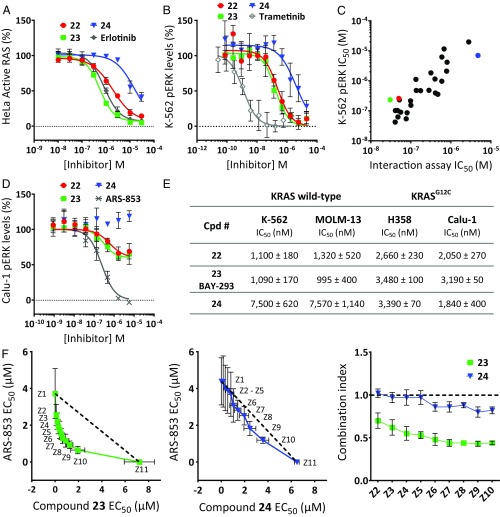
Since the late 1980s, mutations in the RAS genes have been recognized as major oncogenes with a high occurrence rate in human cancers. Such mutations reduce the ability of the small GTPase RAS to hydrolyze GTP, keeping this molecular switch in a constitutively active GTP-bound form that drives, unchecked, oncogenic downstream signaling. One strategy to reduce the levels of active RAS is to target guanine nucleotide exchange factors, which allow RAS to cycle from the inactive GDP-bound state to the active GTP-bound form. Here, we describe the identification of potent and cell-active small-molecule inhibitors which efficiently disrupt the interaction between KRAS and its exchange factor SOS1, a mode of action confirmed by a series of biophysical techniques. The binding sites, mode of action, and selectivity were elucidated using crystal structures of KRAS G12C –SOS1, SOS1, and SOS2. By preventing formation of the KRAS–SOS1 complex, these inhibitors block reloading of KRAS with GTP, leading to antiproliferative activity. The final compound 23 (BAY-293) selectively inhibits the KRAS–SOS1 interaction with an IC 50 of 21 nM and is a valuable chemical probe for future investigations.
Overview
The claims and statistics of this paper haven’t been checked yet.
Free: it reads the open-access text and checks the first 5 claims that cite a source we can check. Create a free account to check every claim.
Integrity signals
Registry
Cites
Statistics
Figures
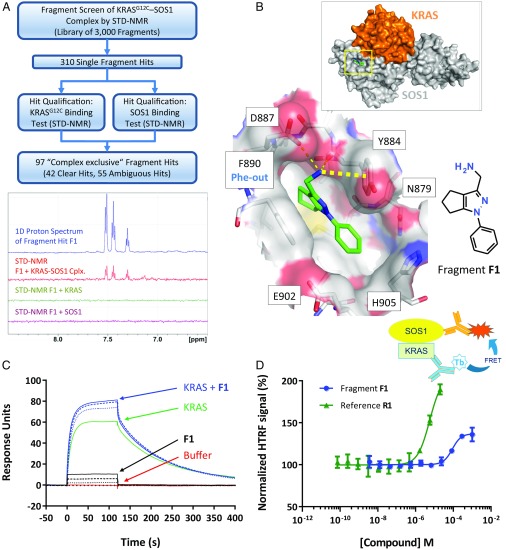
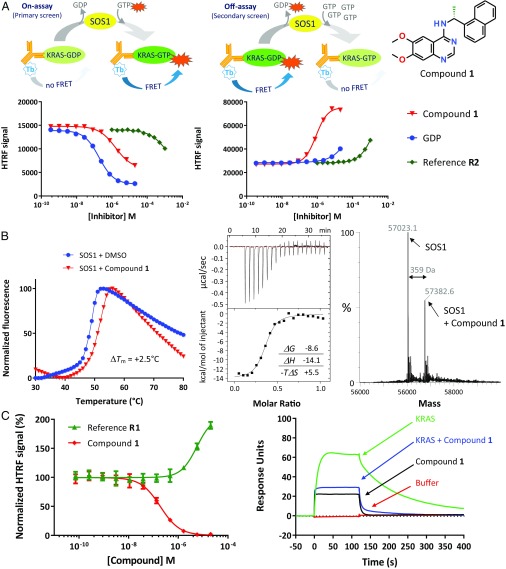
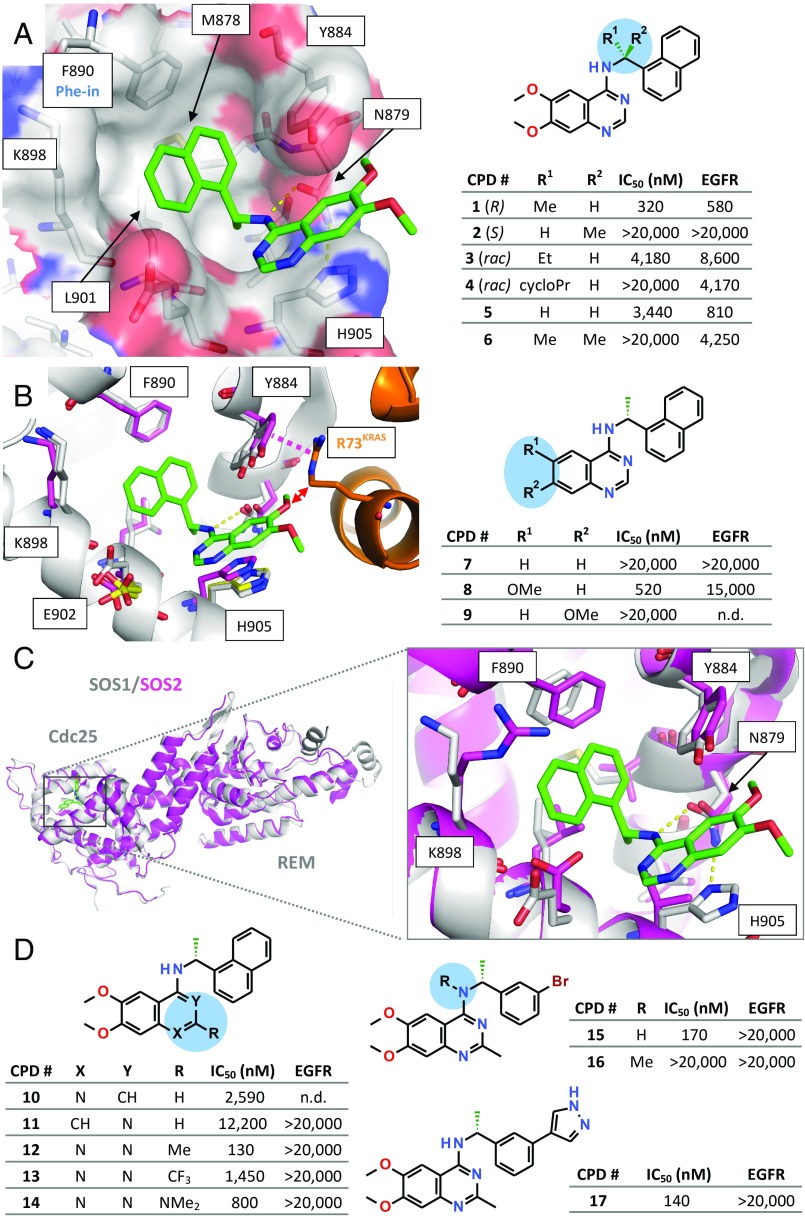
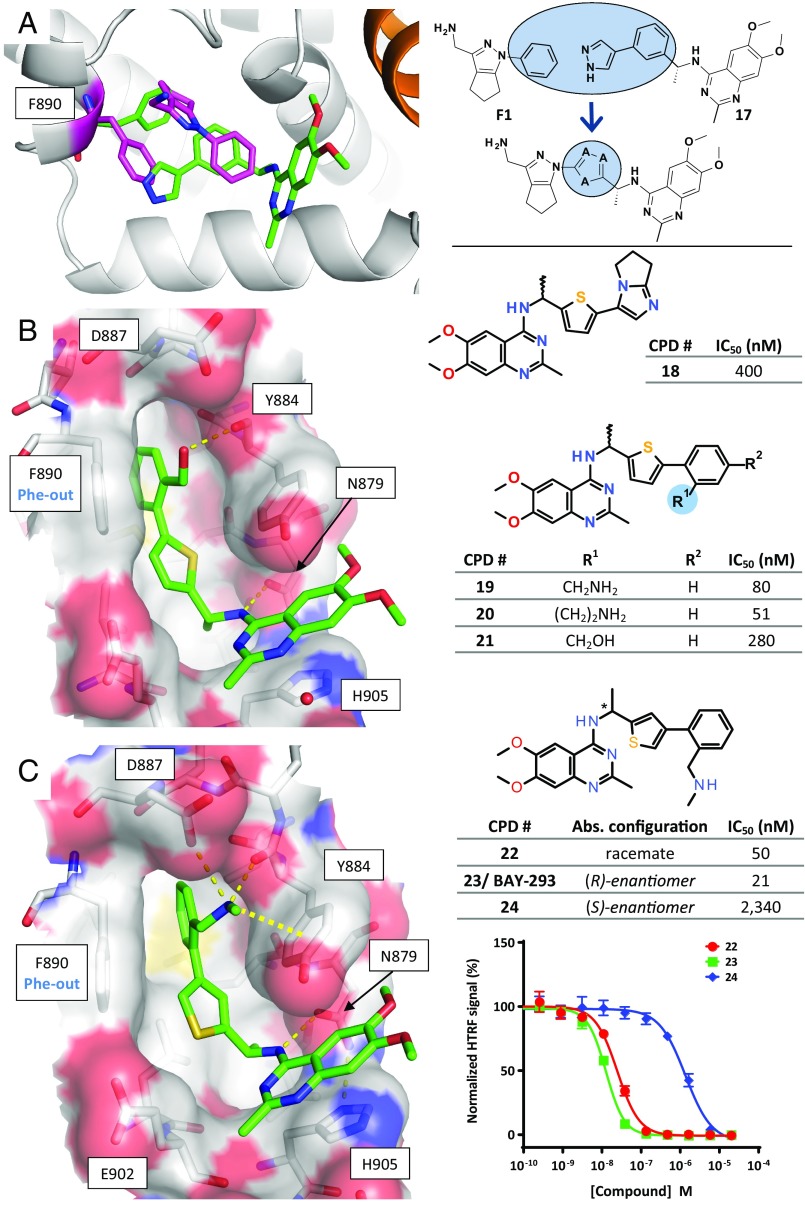
Verification
Claims the paper makes
The claims and statistics of this paper haven’t been checked yet.
Free: it reads the open-access text and checks the first 5 claims that cite a source we can check. Create a free account to check every claim.
Claims other papers make about this one
Each is checked against this paper’s own text: does it say what the citing paper says it does?
The source backs part of the claim, not all of it — or backs it for a different population, condition or comparison.
In the citing paper
“BAY-293, a potent SOS1 inhibitor, was recently found to synergize with ARS-853 to inhibit Ras activation and cell proliferation by disrupting Ras-SOS1 interaction (Table 3).79”
From Overcoming Resistance to Drugs Targeting KRAS Mutation (2020) · cites this paper as [79]
Experimental — accuracy not yet measuredThe source backs part of the claim, not all of it — or backs it for a different population, condition or comparison.
In the citing paper
“Selective SOS1 inhibitors, such as BAY-293 and BI-3406, have demonstrated synergistic antiproliferative activity in the KRASG12C mutant cell line by inhibiting the RAS-RAF-MEK-ERK pathway [66,67].”
From RAS Mutations in Advanced Colorectal Cancer: Mechanisms, Clinical Implications, and Novel Therapeutic Approaches (2025) · cites this paper as [66]
Experimental — accuracy not yet measuredThe source backs part of the claim, not all of it — or backs it for a different population, condition or comparison.
In the citing paper
“Son of sevenless 1 (SOS1) and SH2-containing protein tyrosine phosphatase (SHP2) are the two most critical targets in the RAS signaling pathway [61, 62].”
From Targeting KRAS mutant cancers: from druggable therapy to drug resistance (2022) · cites this paper as [61]
Experimental — accuracy not yet measuredThe source backs part of the claim, not all of it — or backs it for a different population, condition or comparison.
In the citing paper
“Furthermore, mutant KRAS can also activate wild-type RAS through SOS1 and subsequently RTK downstream signaling, leading to resistance to KRAS-targeted therapies [96].”
From Differential Response and Resistance to KRAS-Targeted Therapy (2025) · cites this paper as [96]
Experimental — accuracy not yet measuredThe source backs part of the claim, not all of it — or backs it for a different population, condition or comparison.
In the citing paper
“As evidenced by reports of small molecules targeting the RAS GEF SOS1, inhibition of GEF activity would thus arrest the given GTPase signaling pathways, constituting a promising target for small-molecule therapeutic development (11, 12).”
From RHO to the DOCK for GDP disembarking: Structural insights into the DOCK GTPase nucleotide exchange factors (2021) · cites this paper as [11]
Experimental — accuracy not yet measured
7 more claims about this paper
Create a free account to see every claim other papers make about this one.
Self-check
Percentages, sums and reported differences re-computed from the paper’s own numbers.
The self-check needs the paper’s full text.
Citations
Cites
Features and development of Coot
Emsley, P., Lohkamp, B., Scott, W. G., & Cowtan, K. (2010) · Acta Crystallographica Section D Biological Crystallography · doi:10.1107/s0907444910007493 · Cited by 29,915 · cited 2×
“Models were rebuilt using Coot (40) and refined using REFMAC (41).”
Phaser crystallographic software
McCoy, A. J., Grosse-Kunstleve, R. W., Adams, P. D., Winn, M. D., Storoni, L. C., & Read, R. J. (2007) · Journal of Applied Crystallography · doi:10.1107/s0021889807021206 · Cited by 20,612
Kabsch, W. (2010) · Acta Crystallographica Section D Biological Crystallography · doi:10.1107/s0907444909047337 · Cited by 16,463
Overview of the CCP 4 suite and current developments
Winn, M. D., Ballard, C. C., Cowtan, K. D., Dodson, E. J., Emsley, P., Evans, P. R., Keegan, R. M., Krissinel, E. B., Leslie, A. G. W., McCoy, A., et al. (2011) · Acta Crystallographica Section D Biological Crystallography · doi:10.1107/s0907444910045749 · Cited by 12,353 · cited 1×
“Datasets were collected at the Helmholtz-Zentrum Berlin in Germany, at the European Synchrotron Radiation Facility in Grenoble, France, or at the PETRA III synchrotron in Hamburg, Germany; processed using XDS (36) and XDSAPP (37); and solved using Molecular Replacement with Phaser (38) from the CCP4 suite (39).”
MethodREFMAC 5 for the refinement of macromolecular crystal structures
Murshudov, G. N., Skubák, P., Lebedev, A. A., Pannu, N. S., Steiner, R. A., Nicholls, R. A., Winn, M. D., Long, F., & Vagin, A. A. (2011) · Acta Crystallographica Section D Biological Crystallography · doi:10.1107/s0907444911001314 · Cited by 8,317
Drug combination studies and their synergy quantification using the Chou-Talalay method
Chou, T.-C. (2010) · Cancer Research · doi:10.1158/0008-5472.can-09-1947 · Cited by 5,739 · cited 1×
“(Right) The combination index was calculated according to the median-effect model of Chou– Talalay (43); a value below 0.”
PRODRG: a tool for high-throughput crystallography of protein–ligand complexes
Schüttelkopf, A. W., & van Aalten, D. M. F. (2004) · Acta Crystallographica Section D Biological Crystallography · doi:10.1107/s0907444904011679 · Cited by 4,804 · cited 3×
“Ligand models were generated using BIOVIA Discovery Hillig et al. PNAS | February 12, 2019 | vol. 116 | no. 7 | 2559 BI O CH EM IS TR Y Studio (Dassault Systèmes) and parameter files calculated with PRODRG (42).”
MethodInfluentialTargeting RAS signalling pathways in cancer therapy
Downward, J. (2003) · Nature Reviews Cancer · doi:10.1038/nrc969 · Cited by 3,256 · cited 1×
“For oncogenic RAS mutants, however, the GAP activity is impaired or greatly reduced, resulting in permanent activation, which is the basis of oncogenic RAS signaling (7); for example, through the RAS-RAF-MEK-ERK and RAS-PI3K-PDK1-AKT pathways, both essential to cell survival and proliferation (8).”
Drugging the undruggable RAS: Mission Possible?
Cox, A. D., Fesik, S. W., Kimmelman, A. C., Luo, J., & Der, C. J. (2014) · Nature Reviews Drug Discovery · doi:10.1038/nrd4389 · Cited by 1,997
RAS Proteins and Their Regulators in Human Disease
Simanshu, D. K., Nissley, D. V., & McCormick, F. (2017) · Cell · doi:10.1016/j.cell.2017.06.009 · Cited by 1,943
Cited by
Items 201–300 of 403
KRASG12C mutant lung adenocarcinoma: unique biology, novel therapies and new challenges
Moldvay, J., & Tímár, J. (2024) · Pathology & Oncology Research · doi:10.3389/pore.2023.1611580 · Cited by 19
Current advances and development strategies of targeting son of sevenless 1 (SOS1) in drug discovery
Wu, J., Li, X., Wu, C., Wang, D., & Zhang, J. (2024) · European Journal of Medicinal Chemistry · doi:10.1016/j.ejmech.2024.116282 · Cited by 13
Lee, A. A., Kim, N. H., Alvarez, S. A., Ren, H., DeGrandchamp, J. B., Lew, L. J. N., & Groves, J. T. (2024) · Science Advances · doi:10.1126/sciadv.adi0707 · Cited by 14
Advances in Novel Targeted Therapies for Pancreatic Adenocarcinoma
Hoang, T. A., & Tsang, E. S. (2025) · Journal of Gastrointestinal Cancer · doi:10.1007/s12029-024-01149-w · Cited by 18
“Other promising SOS1 inhibitors include BAY-293 [32], RM-0331 [33], RMC-5845, and MRTX0902 [34].”
Baltanás, F. C., Kramer‐Drauberg, M., García‐Navas, R., Patrucco, E., Petrini, E., Arnhof, H., Juan, A. O.-S., Rodríguez-Ramos, P., Borrajo-Sánchez, J., Calzada, N., et al. (2025) · Proceedings of the National Academy of Sciences · doi:10.1073/pnas.2422943122 · Cited by 17
Liu, Y., Li, C., Su, R. J., Yin, Z., Huang, G., Yang, J., Li, Q., Zhang, K., & Fei, J. (2021) · Molecular Therapy — Oncolytics · doi:10.1016/j.omto.2021.11.010 · Cited by 14
“Sustained activation of the Ras/ERK signaling pathway caused malignant proliferation of cells.(15,16) Recent studies have shown that SOS1 cooperates with STAT5 activation to initiate progenitor B cell leukemia and that SOS1 induces leukemogenesis in KrasG12D and contributes to BCR-ABL leukemogenesis.”
BackgroundAn eosinophil-Sos1-RAS axis licenses corticosteroid resistance in patients with allergic rhinitis
Yang, G., Suo, L., Geng, X., Zeng, X., Liu, J., Liu, Z., Li, M., Chen, Y., Hong, J., Xue, J., et al. (2022) · Immunobiology · doi:10.1016/j.imbio.2022.152215 · Cited by 12
Kalirin as a Novel Treatment Target for Cognitive Dysfunction in Schizophrenia
Mould, A. W., Al‐Juffali, N., von Delft, A., Brennan, P. E., & Tunbridge, E. M. (2021) · CNS Drugs · doi:10.1007/s40263-021-00884-z · Cited by 12
“In analogy to developing an inhibitor for kalirin, researchers from Boehringer Ingelheim and Bayer have reported selective inhibitors of the Son of Sevenless 1 (SOS1) GEF- Kirsten rat sarcoma virus (KRAS) protein-protein interaction [97, 98].”
MethodLin, W., Feathers, R. W., Cooper, L. M., Lewis‐Tuffin, L. J., Chen, J., Sarkaria, J. N., & Anastasiadis, P. Z. (2023) · JCI Insight · doi:10.1172/jci.insight.157491 · Cited by 13
Innovative drugs promote precision cancer therapy
Huang, X., Zhu, M., Chen, R., Ni, J., Zhao, W., Li, S., Lü, X., Jiao, H., & Cao, X. (2023) · Clinical Cancer Bulletin · doi:10.1007/s44272-023-00002-8 · Cited by 12
“One of these GEFs is the SOS protein, a promising target for the treatment of solid tumors [22].”
Discovery of novel SOS1 inhibitors using machine learning
Duo, L., Chen, Y., Liu, Q., Ma, Z., Farjudian, A., Ho, W. Y., Low, S. S., Ren, J., Hirst, J. D., Xie, H. Q., et al. (2024) · RSC Medicinal Chemistry · doi:10.1039/d4md00063c · Cited by 12
Capturing RAS oligomerization on a membrane
Yun, S. D., Scott, E., Chang, J., Bahramimoghaddam, H., Lynn, M., Lantz, C., Russell, D. H., & Laganowsky, A. D. (2024) · Proceedings of the National Academy of Sciences · doi:10.1073/pnas.2405986121 · Cited by 12
Jin, H., Koh, M., Lim, H., Yong, H., Kim, E., Kim, S. Y., Kim, K., Jung, J., Ryu, W., Choi, K., et al. (2023) · International Journal of Cancer · doi:10.1002/ijc.34443 · Cited by 13
Targeting of SOS1: from SOS1 Activators to Proteolysis Targeting Chimeras
Hamilton, G., Stickler, S., & Rath, B. (2023) · Current Pharmaceutical Design · doi:10.2174/1381612829666230418114520 · Cited by 13
Mottini, C., & Cardone, L. (2020) · International Journal of Molecular Sciences · doi:10.3390/ijms21145023 · Cited by 13
Tummanatsakun, D., Proungvitaya, T., Roytrakul, S., & Proungvitaya, S. (2021) · Molecules · doi:10.3390/molecules26092587 · Cited by 12
“(2019) suggested that SOS1 inhibition resulted in a reduction of extracellular signal-regulated kinase (ERK), which was involved in the progression of lung cancer [22].”
BackgroundSütcüoğlu, O., Yıldırım, H. Ç., Almuradova, E., Günenç, D., & Yalçın, Ş. (2025) · Medicina · doi:10.3390/medicina61071202 · Cited by 10
“Selective SOS1 inhibitors, such as BAY-293 and BI-3406, have demonstrated synergistic antiproliferative activity in the KRASG12C mutant cell line by inhibiting the RAS-RAF-MEK-ERK pathway [66,67].”
Early-stage structure-based drug discovery for small GTPases by NMR spectroscopy
Yin, G., Lv, G., Zhang, J., Jiang, H., Lai, T., Yang, Y., Ren, Y., Wang, J., Yi, C., Chen, H., et al. (2022) · Pharmacology & Therapeutics · doi:10.1016/j.pharmthera.2022.108110 · Cited by 11
Lead Identification of Novel Naphthyridine Derivatives as Potent SOS1 Inhibitors
Li, D., Xie, Q., Yang, M., Cai, Y., Sun, K., Jiang, S., Yu, S., Liu, L., Zhang, Y., Yu, B., et al. (2024) · ACS Medicinal Chemistry Letters · doi:10.1021/acsmedchemlett.4c00156 · Cited by 10
Assessment of KRASG12C inhibitors for colorectal cancer
Piazza, G. A., Chandrasekaran, P., Maxuitenko, Y. Y., & Budhwani, K. I. (2024) · Frontiers in Oncology · doi:10.3389/fonc.2024.1412435 · Cited by 11
Xiao, F., Wang, K., Wang, X., Li, H., Hu, Z., Ren, X., Huang, W., Feng, T., Yao, L., Lin, J., et al. (2024) · Molecular Cancer Therapeutics · doi:10.1158/1535-7163.mct-24-0049 · Cited by 10
Leffler, A. E., Houang, E. M., Gray, F., Placzek, A. T., Ruvinsky, A. M., Bell, J. A., Wang, H., Sun, S., Svensson, M., Greenwood, J. R., et al. (2025) · ACS Medicinal Chemistry Letters · doi:10.1021/acsmedchemlett.4c00602 · Cited by 12
Transformation to Neuroendocrine Phenotype in Non-Small-Cell Lung Carcinoma: A Literature Review
de Córdoba, I. H., Mielgo-Rubio, X., Cejas, P., Ramos, J. P., Garrido-Rubiales, B., Martínez, S. F., Romero, G. R., Parga, M. M., Taltavull, L. M., González, A. F., et al. (2025) · International Journal of Molecular Sciences · doi:10.3390/ijms26115096 · Cited by 16
Identification of the Highly Active, Species Cross-Reactive Complex I Inhibitor BAY-179
Mowat, J., Ehrmann, A., Christian, S., Sperl, C., Menz, S., Günther, J., Hillig, R. C., Bauser, M., & Schwede, W. (2022) · ACS Medicinal Chemistry Letters · doi:10.1021/acsmedchemlett.1c00666 · Cited by 10
Self-citationTranslational relevance of SOS1 targeting for KRAS‐mutant colorectal cancer
Alem, D., Yang, X., Beato, F., Sarcar, B., Tassielli, A. F., Dai, R., Hogenson, T. L., Park, M. A., Jiang, K., Cai, J., et al. (2023) · Molecular Carcinogenesis · doi:10.1002/mc.23543 · Cited by 12
Nanobody Loop Mimetics Enhance Son of Sevenless 1‐Catalyzed Nucleotide Exchange on RAS**
holsbeeck, K. V., Fischer, B., González, S., Gadais, C., Versées, W., Martins, J. C., Martin, C., Wohlkönig, A., Steyaert, J., & Ballet, S. (2023) · Angewandte Chemie International Edition · doi:10.1002/anie.202219095 · Cited by 11
The MAPK/ERK Pathway and the Role of DUSP1 in JCPyV Infection of Primary Astrocytes
Wilczek, M. P., Armstrong, F. J., Geohegan, R. P., Mayberry, C. L., DuShane, J. K., King, B. L., & Maginnis, M. S. (2021) · Viruses · doi:10.3390/v13091834 · Cited by 11
Durojaye, O. A., Ejaz, U., Uzoeto, H. O., Fadahunsi, A. A., Opabunmi, A. O., Ekpo, D. E., Sedzro, D. M., & Idris, M. O. (2023) · Amino Acids · doi:10.1007/s00726-023-03304-2 · Cited by 11
“Two areas known as switch I and switch II were discovered by comparing the KRAS GDP-and GTP-bound structures (Hillig et al. 2019; Pantsar 2020a).”
Bruggemann, L., Falls, Z., Mangione, W., Schwartz, S. A., Battaglia, S., Aalinkeel, R., Mahajan, S. D., & Samudrala, R. (2023) · International Journal of Molecular Sciences · doi:10.3390/ijms24020997 · Cited by 8
Branched Multimeric Peptides as Affinity Reagents for the Detection of α‐Klotho Protein
Ye, X., Zhang, P., Wang, J. C. K., Smith, C. L., Sousa, S., Loas, A., Eaton, D., López, M. P., & Pentelute, B. L. (2023) · Angewandte Chemie International Edition · doi:10.1002/anie.202300289 · Cited by 11
Discovery of Five SOS2 Fragment Hits with Binding Modes Determined by SOS2 X-Ray Cocrystallography
Smith, C. R., Chen, D., Christensen, J. G., Coulombe, R., Féthière, J., Gunn, R. J., Hollander, J. G., Jones, B., Ketcham, J. M., Khare, S., et al. (2023) · Journal of Medicinal Chemistry · doi:10.1021/acs.jmedchem.3c02140 · Cited by 9
Lee, K. (2024) · International Journal of Molecular Sciences · doi:10.3390/ijms25052530 · Cited by 10
“…anionic membrane containing PS appears incompatible with the binding of the dimer to the catalytic REM– CDC25 domains of the guanine nucleotide exchange factor (GEF) son of sevenless homolog 1 (SOS1) [63] (Figure 6), which accelerates GDP/GTP exchange to produce the active GTP-bound state of KRAS.”
BackgroundDrug discovery through biophysical techniques: Methods and applications
Zhou, Y., Hu, H., Huang, Q., Tang, Y., & Liu, Y. (2025) · Pharmacology & Therapeutics · doi:10.1016/j.pharmthera.2025.108947 · Cited by 15
KRAS-targeted therapies in cancer: novel approaches and overcoming resistance
Tang, D., Kroemer, G., & Kang, R. (2025) · BMJ Oncology · doi:10.1136/bmjonc-2025-000946 · Cited by 16
2′-Deoxy Guanosine Nucleotides Alter the Biochemical Properties of Ras
Yun, S. D., Scott, E., Moghadamchargari, Z., & Laganowsky, A. D. (2023) · Biochemistry · doi:10.1021/acs.biochem.3c00258 · Cited by 9
Studying early structural changes in SOS1 mediated KRAS activation mechanism
Bhadhadhara, K., Jani, V., Koulgi, S., Sonavane, U., & Joshi, R. (2023) · Current Research in Structural Biology · doi:10.1016/j.crstbi.2023.100115 · Cited by 10
“Hillig RC et al. have also shown the role of R73 from KRAS and N879 from SOS1 to form interactions with inhibitors by obstructing the reloading of KRAS with GTP, resulting in significant anti-proliferative effects (Hillig et al., 2019).”
BackgroundBum‐Erdene, K., Ghozayel, M. K., Xu, D. D., & Meroueh, S. O. (2022) · ChemMedChem · doi:10.1002/cmdc.202100750 · Cited by 8
Inhibition of K-Ras4B-plasma membrane association with a membrane microdomain-targeting peptide
Li, F.-Y., Zhang, Z., Voß, S., Wu, Y., Zhao, Y., Li, Y., & Chen, Y. (2020) · Chemical Science · doi:10.1039/c9sc04726c · Cited by 9
Profiling oncogenic KRAS mutant drugs with a cell-based Lumit p-ERK immunoassay
Swiatnicki, M., Engel, L., Shrestha, R., Alves, J., Goueli, S. A., & Zegzouti, H. (2022) · SLAS DISCOVERY · doi:10.1016/j.slasd.2022.03.001 · Cited by 7
If Virchow and Ehrlich Had Dreamt Together: What the Future Holds for KRAS-Mutant Lung Cancer
Köhler, J., & Janne, P. A. (2021) · International Journal of Molecular Sciences · doi:10.3390/ijms22063025 · Cited by 7
“Boehringer Ingelheim’s BI-1701963 and Bayer’s BAY-293 “pan-KRAS inhibitors” selectively inhibit the SOS1–KRAS interaction [150,151], but unfortunately, apoptosis induction and tumor regressions were only observed when this drug class was combined with a MEK inhibitor.”
BackgroundLin, P., Cheng, W., Qi, X., Zhang, P., Xiong, J., & Li, J. (2024) · International Journal of Molecular Sciences · doi:10.3390/ijms25031555 · Cited by 7
Discovery of LHF418 as a new potent SOS1 PROTAC degrader
Li, H., Chai, M., Chen, Y., Zhou, F., Ren, X., Xu, J., Wang, J., Wang, Z., & Huang, W. (2024) · Bioorganic & Medicinal Chemistry · doi:10.1016/j.bmc.2024.117661 · Cited by 7
Yuan, Q., Wang, R., Li, X., Sun, F., Lin, J., Fu, Z., & Zhang, J. (2024) · Clinical Epigenetics · doi:10.1186/s13148-024-01663-5 · Cited by 7
“Development of inhibitors targeting SOS1 as potential therapeutic agents in cancer research [49–51].”
BackgroundPeptide inhibitors targeting Ras and Ras-associated protein–protein interactions
Han, D., Li, A., Zhu, L., Zhuang, C., Zhao, Q., & Zou, Y. (2024) · European Journal of Medicinal Chemistry · doi:10.1016/j.ejmech.2024.116878 · Cited by 7
Cytotoxic activity of KRAS inhibitors in combination with chemotherapeutics
Hamilton, G., & Plangger, A. (2021) · Expert Opinion on Drug Metabolism & Toxicology · doi:10.1080/17425255.2021.1965123 · Cited by 7
PH-Binding Motif in PAR4 Oncogene: From Molecular Mechanism to Drug Design
Nag, J. K., Malka, H., Sedley, S., Appasamy, P., Rudina, T., Levi, T., Hoffman, A., Gilon, C., Uziely, B., & Bar‐Shavit, R. (2022) · Molecular Cancer Therapeutics · doi:10.1158/1535-7163.mct-21-0946 · Cited by 7
Regulation of Ras-GTPase Signaling and Localization by Post-Translational Modifications
Nair, A., & Saha, B. (2023) · Kinases and Phosphatases · doi:10.3390/kinasesphosphatases1020007 · Cited by 9
“By combining the activator fragment F1, which stabilizes the KRasG12C–SOS1cat complex with the quinazoline inhibitor 7, Bayer generated an inhibitor called BAY 293 with an IC50 = 21 nm [84].”
MethodBegovich, K., Schoolmeesters, A., Rajapakse, N., Martínez‐Terroba, E., Kumar, M., Shakya, A., Lai, C., Greene, S., Whitefield, B., Okano, A., et al. (2024) · Molecular Cancer Therapeutics · doi:10.1158/1535-7163.mct-23-0513 · Cited by 8
Sabt, A., Tawfik, H. O., Khaleel, E. F., Badi, R. M., Ibrahim, H. A. A., Elkaeed, E. B., & Eldehna, W. M. (2024) · Molecular Diversity · doi:10.1007/s11030-023-10777-6 · Cited by 9
Crystal structure of the SH3 domain of growth factor receptor-bound protein 2
Bolgov, A., Korban, S. A., Luzik, D. A., Zhemkov, V., Kim, M., Rogacheva, O. N., & Борисович, Б. И. (2020) · Acta Crystallographica Section F Structural Biology Communications · doi:10.1107/s2053230x20007232 · Cited by 7
“Upstream and downstream Ras signaling interactions are also targeted, for example the interaction of Ras with Sos1 (Hillig et al., 2019).”
BackgroundDaley, B. R., Sealover, N. E., Sheffels, E., Hughes, J. M., Gerlach, D., Hofmann, M. H., Kostyrko, K., Mair, B., Linke, A. J., Beckley, Z., et al. (2023) · bioRxiv (Cold Spring Harbor Laboratory) · doi:10.1101/2023.12.07.570642 · Cited by 7
“…resistance limit their overall effectiveness (4,13-17, Studies show that inhibition of proximal RTK signaling using SHP2 (3,6,18,19,80) or SOS1 (51,53) inhibitors enhances G12Ci binding to mutated KRAS G12C and limits RTK-SOS-WT RAS signaling to overcome intrinsic G12Ci resistance, and, as a…”
Müller, M., & Tougeron, D. (2023) · Translational Cancer Research · doi:10.21037/tcr-23-1629 · Cited by 7
“SOS1 inhibitors also antagonize the negative feedback relief induced by RAF/MEK/ ERK pathway inhibitor (24).”
BackgroundDifferential Response and Resistance to KRAS-Targeted Therapy
Liu, Z., Lenz, H., Yu, J., & Zhang, L. (2025) · Molecular Carcinogenesis · doi:10.1002/mc.23908 · Cited by 7
“Furthermore, mutant KRAS can also activate wild ‐ type RAS through SOS1 and, subsequently, RTK downstream signaling, leading to resistance to KRAS ‐ targeted therapies [99].”
Gong, Z., Zhao, Y., Xu, B., Zhou, Y., Ren, B., Yang, H. B., Zeng, C., Chen, R., Xu, Y., & Li, Q. (2023) · Bioorganic Chemistry · doi:10.1016/j.bioorg.2023.106954 · Cited by 6
Prajapati, V., Singh, A. K., Kumar, A. M., Singh, H., Pathak, P., Grishina, M., Kumar, V., Khalilullah, H., Verma, A., & Kumar, P. (2025) · RSC Medicinal Chemistry · doi:10.1039/d4md00923a · Cited by 7
Li, H., Shen, X., Wu, W., Zhang, W., & Wang, Y. (2023) · Journal of Fungi · doi:10.3390/jof9040432 · Cited by 6
Allosteric nanobodies to study the interactions between SOS1 and RAS
Fischer, B., Uchański, T., Sheryazdanova, A., González, S., Volkov, A. N., Brosens, E., Zögg, T., Kalichuk, V., Ballet, S., Versées, W., et al. (2024) · Nature Communications · doi:10.1038/s41467-024-50349-2 · Cited by 10
“In Figure 5, the overall claim is that Nb22 increases the affinity of an aminopiperidine.”
Towards Targeting Endothelial Rap1B to Overcome Vascular Immunosuppression in Cancer
Nakhchi, B. G., Kosuru, R., & Chrzanowska‐Wodnicka, M. (2024) · International Journal of Molecular Sciences · doi:10.3390/ijms25189853 · Cited by 10
Bansod, A. A., Gnanam, R., Nathan, B., Kandhasamy, R., Meenakshisundaram, P., & Santhanakrishnan, V. P. (2021) · 3 Biotech · doi:10.1007/s13205-021-02768-x · Cited by 7
“17 SOS1 5OVE Asn879, His905, Leu901, Met878 AXE Hillig et al. (2019) 18 VEGFR1 3HNG Glu878, Asp1040, Cys912, Ile1038, Val907, Glu910, Tyr 911, Ala 859 CHEMBL101683 Tresaugues et al. (2013)”
InfluentialAnthraquinones as Inhibitors of SOS RAS-GEF Activity
Fernández‐Medarde, A., Fuentes‐Mateos, R., García‐Navas, R., Juan, A. O.-S., Sánchez-López, J. M., Fernández-Medarde, A., & Santos, E. (2021) · Biomolecules · doi:10.3390/biom11081128 · Cited by 7
“Furthermore, several inhibitors of RAS:SOS interaction have already been isolated [20,21], and BI-1701963 is the first among such inhibitors to reach clinical trials (reviewed in [5]).”
BackgroundCombinatorial approaches for mitigating resistance to KRAS-targeted therapies
Warren, H. R., Ross, S. J., Smith, P. D., Coulson, J. M., & Prior, I. A. (2022) · Biochemical Journal · doi:10.1042/bcj20220440 · Cited by 8
“Encouraging results have been observed using combination approaches of RTK, SOS1 or SHP2 inhibitors to sensitize or prolong responses to KRAS inhibitors in naïve cells [9,10,15 – 17 , 42 – 44 ].”
Dissociation of the Signaling Protein K‐Ras4B from Lipid Membranes Induced by a Molecular Tweezer
Li, L., Erwin, N., Möbitz, S., Niemeyer, F. C., Schrader, T. H., & Winter, R. (2019) · Chemistry - A European Journal · doi:10.1002/chem.201901861 · Cited by 8
Qing, L., Cheng, Z., Xu, J., Wang, Z., Li, Y., Gauthier, M., Zhang, S., & He, H. (2024) · European Journal of Medicinal Chemistry · doi:10.1016/j.ejmech.2024.117065 · Cited by 6
Shan, J., Zhang, K.-M., Zhong, W.-Q., Yang, X.-Y., Li, Z., Huang, Y., Du, T., Yang, D., Tang, J.-H., Chen, Y.-H., et al. (2025) · Cancer Research · doi:10.1158/0008-5472.can-24-2983 · Cited by 5
Focused Structure-Based Virtual Screening Identifies Novel Inhibitors of SOS1
Bonomo, S., Gibault, F., Bagal, S. K., Blackwell, J. H., Breed, J., Collie, G. W., Couturier, M., Diène, C. R., Fruscia, P. D., Gray, S., et al. (2025) · ACS Medicinal Chemistry Letters · doi:10.1021/acsmedchemlett.5c00302 · Cited by 5
Unveiling the power of quinazoline derivatives: a new frontier in targeted cancer therapy
Long, H.-Z., Fu, M., Ji, X.-Q., Liu, C., Wang, B., Gao, Y., Liu, H., Zheng, Y., Liu, H., & Dai, X. (2025) · Bioorganic & Medicinal Chemistry · doi:10.1016/j.bmc.2025.118497 · Cited by 6
Lin, Q., Morales-Giron, A. A., Sander, C., Curtis, J. M., Barnes, H., Patel, P. S., de la Cruz, F. F., Riedl, J. M., Matsubara, H., Nakamura, H., et al. (2026) · Clinical Cancer Research · doi:10.1158/1078-0432.ccr-25-1788 · Cited by 12
“Prior studies have suggested that feedback activation of RTK signaling may play a dominant role in driving adaptive feedback to inhibitors of the RAS–MAPK pathway (5, 19, 42–44).”
Advances in KRAS mutation inhibition in metastatic colorectal cancer
Wu, C., Li, W., Chen, M., Zhang, Q., Xu, T., Ma, Y., Liu, W., Wang, Z., Wang, X., Li, J., et al. (2023) · Holistic Integrative Oncology · doi:10.1007/s44178-023-00032-1 · Cited by 7
Targeting KRAS-G12C in lung cancer: The emerging role of PROTACs in overcoming resistance
Chidambaram, K., Rekha, A., Goyal, A., & Rana, M. (2025) · Pathology - Research and Practice · doi:10.1016/j.prp.2025.155954 · Cited by 5
Khalid, E., & Chang, J. P. (2023) · General and Comparative Endocrinology · doi:10.1016/j.ygcen.2023.114287 · Cited by 5
Positive feedback in Ras activation by full-length SOS arises from autoinhibition release mechanism
Ren, H., Lee, A. A., Lew, L. J. N., DeGrandchamp, J. B., & Groves, J. T. (2024) · Biophysical Journal · doi:10.1016/j.bpj.2024.07.014 · Cited by 6
“Recently, several small-molecule inhibitors that target the SOS:Ras interaction have emerged as candidates for pan-KRas cancer therapy (29,30).”
Drugging the undruggable: a computational chemist's view of KRAS G12C
Bodnarchuk, M. S., Cassar, D. J., Kettle, J. G., Robb, G. R., & Ward, R. A. (2021) · RSC Medicinal Chemistry · doi:10.1039/d1md00055a · Cited by 6
RAS: Circuitry and therapeutic targeting
Singh, G., Thakur, N., & Kumar, U. (2022) · Cellular Signalling · doi:10.1016/j.cellsig.2022.110505 · Cited by 7
Sarıca, Z., Kürkçüoğlu, Ö., & Sungur, F. A. (2025) · International Journal of Molecular Sciences · doi:10.3390/ijms26073293 · Cited by 4
“These are SOS1 in complex with small molecule inhibitor BAY-293 (PDB ID: 5ovi [38]), SOS1 in complex with KRASG12C and the co-crystalized fragment at the SOS1 binding site, (1-phenyl-5,6-dihydro-4~{H}- cyclopenta[c]pyrazol-3-yl)methanamine (BQ5 in PDB ID: 6epm [38]), and the ternary KRASG13D-SOS1…”
InfluentialAn overview of PROTACs targeting KRAS and SOS1 as antitumor agents
Han, Z., Wu, Q., Rao, H., Xu, T., & Zhou, C. (2025) · Bioorganic & Medicinal Chemistry Letters · doi:10.1016/j.bmcl.2025.130283 · Cited by 5
CEBPB regulates ERK1/2 activity through SOS1 and contributes to ovarian cancer progression
Tan, J., Wang, D., Tu, A., Xu, Q., Zhuan, L., Wu, X., Lin, Z., Dong, W., Zhang, J., & Feng, Y. (2025) · Medical Oncology · doi:10.1007/s12032-025-02794-2 · Cited by 5
“Furthermore, selective inhibition of SOS1 significantly downregulated the levels of active RAS in tumor cells [34, 35].”
Pan-RAS inhibitors and polo-like kinase 1: promising targets in colorectal cancer
Jayachandran, P., Elliott, A., Soni, S., Battaglin, F., Mittal, P., Algaze, S. D., Lo, J. H., Yang, Y., Ashouri, K., Torres, E. T. R., et al. (2025) · Oncogene · doi:10.1038/s41388-025-03484-z · Cited by 6
“BAY-293, another small-molecule inhibitor shows synergism with a KRAS G12C inhibitor by increasing available inactive GDP-bound KRAS G12C [46].”
Liao, Y., Tao, S., Wang, S., Wu, G., Yao, W., Yang, L., Huang, Q., Liu, Y., Yang, P., & Yang, P. (2023) · Molecular Immunology · doi:10.1016/j.molimm.2023.07.001 · Cited by 4
Ikram, S., Sayyah, E., & Durdağı, S. (2024) · ChemBioChem · doi:10.1002/cbic.202400008 · Cited by 5
Surface-mutagenesis strategies to enable structural biology crystallization platforms
Schäfer, M., Pütter, V., Hilpmann, A., Egner, U., Holton, S. J., & Hillig, R. C. (2024) · Acta Crystallographica Section D Structural Biology · doi:10.1107/s2059798324007939 · Cited by 4
Self-citationFerrara, M. G., Stefani, A., Pilotto, S., Carbone, C., Vita, E., Salvatore, M. D., D’Argento, E., Sparagna, I., Monaca, F., Valente, G., et al. (2021) · Frontiers in Oncology · doi:10.3389/fonc.2021.792385 · Cited by 5
“BAY-293 is a SOS1 inhibitor which showed a high affinity for its target but weak activity on cell proliferation in vitro (73).”
BackgroundStructurally-informed human interactome reveals proteome-wide perturbations by disease mutationsPreprint
Xiong, D., Qiu, Y., Zhao, J., Zhou, Y., Lee, D., Gupta, S., Torres, M., Lü, W., Liang, S., Kang, J. J., et al. (2023) · bioRxiv (Cold Spring Harbor Laboratory) · doi:10.1101/2023.04.24.538110 · Cited by 4
Baltanás, F. C., Kramer‐Drauberg, M., García‐Navas, R., Patrucco, E., Petrini, E., Arnhof, H., Juan, A. O.-S., Rodríguez-Ramos, P., Borrajo, J., Calzada, N., et al. (2024) · bioRxiv (Cold Spring Harbor Laboratory) · doi:10.1101/2024.09.18.613686 · Cited by 4
Design and structural optimization of novel SOS1 inhibitors in KRAS-driven cancers
Chen, Y., Liu, Q., Meng, X., Cao, W., Duo, L., Song, X., Shen, X., Low, S. S., Ho, W. Y., Tang, B., et al. (2025) · Bioorganic & Medicinal Chemistry Letters · doi:10.1016/j.bmcl.2025.130282 · Cited by 3
Li, D., Xie, Q., Yang, M., Sun, K., Jiang, S., Yu, S., Liu, L., Yu, B., Li, L., Zhang, Y., et al. (2025) · ACS Medicinal Chemistry Letters · doi:10.1021/acsmedchemlett.5c00300 · Cited by 4
Shen, T., Fei, W., Hu, Z., Pang, M., Ma, J., Zhou, T., & Shang, Y. (2025) · Bioorganic Chemistry · doi:10.1016/j.bioorg.2025.109345 · Cited by 4
Branched Multimeric Peptides as Affinity Reagents for the Detection of α‐Klotho Protein
Ye, X., Zhang, P., Wang, J. C. K., Smith, C. L., Sousa, S., Loas, A., Eaton, D., López, M. P., & Pentelute, B. L. (2023) · Angewandte Chemie · doi:10.1002/ange.202300289 · Cited by 3
Discovery of novel indazole derivatives as SOS1 agonists that activate KRAS signaling
Liu, L., Song, Z., Fan, G., Lou, L., Wang, Y., Zhang, X., & Xiong, X. (2023) · Bioorganic & Medicinal Chemistry · doi:10.1016/j.bmc.2023.117457 · Cited by 3
Rat Sarcoma Virus Family Genes in Acute Myeloid Leukemia: Pathogenetic and Clinical Implications
Khattab, S., Berisha, A., Baran, N., & Piccaluga, P. P. (2025) · Biomedicines · doi:10.3390/biomedicines13010202 · Cited by 5
“Several small molecules that inhibit SOS–RAS interaction are under investigation [106].”
KRAS mutations in colorectal cancer: impacts on tumor microenvironment and therapeutic implications
Emami, A., Sharif, P. M., & Rezaei, N. (2025) · Expert Opinion on Therapeutic Targets · doi:10.1080/14728222.2025.2500426 · Cited by 4
Wang, J., Zhang, L., Pratilas, C. A., & Llosa, N. J. (2021) · Journal of Cancer Immunology · doi:10.33696/cancerimmunol.3.038 · Cited by 5
“An alternative therapeutic concept is the utilization of RAS-SOS1 interaction inhibitors, such as BI-3406, RMC5845 and BAY-293 [97,98] to block adaptive activation of FGFR upon ERK signaling inhibition in some cellular context.”
BackgroundTargeting K-Ras Mutations Show Promise Towards Ending Ras’s “Undruggable” Era
Adams, P. D., & Muhoza, D. (2022) · Protein and Peptide Letters · doi:10.2174/0929866529666221003124202 · Cited by 3
Drugging the undruggable: Advances in targeting KRAS signaling in solid tumors
Tripathi, P., Kumari, R., & Pathak, R. (2024) · International review of cytology · doi:10.1016/bs.ircmb.2023.11.004 · Cited by 4
Sárkány, O., Szőke, A., Pettkó‐Szandtner, A., Kálmán, E. É., Brunner, M., Gyöngyösi, N., & Káldi, K. (2025) · FEBS Journal · doi:10.1111/febs.70122 · Cited by 3
“To address whether SOS1, the mammalian homolog of the Neurospora RasGEF, is involved in the maintenance of clock function under low glucose concentration, we treated the cells with a specific SOS1 inhibitor, BAY-293 [52] (Fig.”
Autophagy Flux Correlates with Upregulation of AKT-1 in RAS Mutated Colon Cancer Cells
Behrouj, H., Mahmoudzadeh, A. P., Ghavami, S., & Mokarram, P. (2021) · DOAJ (DOAJ: Directory of Open Access Journals) · doi:10.30476/mejc.2021.85836.1307 · Cited by 3
Therapeutic Targeting of RAS Mutant Cancers
Stites, E. C., Paskvan, K. V., & Kato, S. (2022) · Cambridge University Press eBooks · doi:10.1017/9781009064828 · Cited by 2
Quah, S. Y., Tan, M. S., Ho, K. L., Manan, N. A., Gorfe, A. A., Deb, P. K., Sagineedu, S. R., & Stanslas, J. (2020) · Future Medicinal Chemistry · doi:10.4155/fmc-2020-0104 · Cited by 4
Fischer, B., Uchański, T., Sheryazdanova, A., González, S., Volkov, A. N., Brosens, E., Zögg, T., Kalichuk, V., Ballet, S., Versées, W., et al. (2022) · bioRxiv (Cold Spring Harbor Laboratory) · doi:10.1101/2022.12.06.519258 · Cited by 3
KRAS Mutations in Cancer: From Molecular Insights to Therapeutic Strategies
Zhang, Y., Ma, Y., Zhang, K., Wang, Y., Sun, X., Kan, C., & Han, F. (2025) · American Journal of Clinical Oncology · doi:10.1097/coc.0000000000001192 · Cited by 3
Chen, X., Ma, X., Yang, Z., Mao, M., Niu, W., Zhang, C., Meng, X.-L., Ma, M., Li, Z., Wang, X., et al. (2025) · Bioorganic & Medicinal Chemistry Letters · doi:10.1016/j.bmcl.2025.130344 · Cited by 2
Metadata
- Authors
- Hillig, R. C., Sautier, B., Schroeder, J., Moosmayer, D., Hilpmann, A., Stegmann, C. M., Werbeck, N. D., Briem, H., Boemer, U., Weiske, J., Badock, V., Mastouri, J., Petersen, K., Siemeister, G., Kahmann, J. D., Wegener, D., Böhnke, N., Eis, K., Graham, K., Wortmann, L., von Nussbaum, F., & Bader, B.
- Affiliations
- Bayer (Germany) (DE)
- Evotec (Germany) (DE)
- Research and Development, Pharmaceuticals, Bayer AG, 13353 Berlin, Germany;
- Corresponding author
- Hillig, Roman C.
- Bader, Benjamin
- ORCID
- Venue
- Proceedings of the National Academy of Sciences
- Publisher
- National Academy of Sciences
- Published
- 2019-01-25
- Volume
- 116
- Issue
- 7
- Pages
- 2551-2560
- ISSN
- 0027-8424 (ISSN-L)
- 1091-6490
- PMC
- PMC6377443
- OpenAlex
- W2912277053
- Cited by
- 388
- References
- 43
- Citations by year
- 2026: 29 · 2025: 45 · 2024: 67 · 2023: 65 · 2022: 62 · 2021: 61 · 2020: 43 · 2019: 16
- FWCI
- 15.56
- Type
- journal article
- Language
- en
- Open access
- hybrid
- doi.org
- Licence
- Locations
- Proceedings of the National Academy of Sciences (publishedVersion, cc-by-nc-nd)
- Europe PMC (PubMed Central) (publishedVersion, cc-by-nc-nd)
- PubMed Central (publishedVersion, cc-by-nc-nd)
- PubMed (publishedVersion)
- Desy publication database (The Deutsches Elektronen-Synchrotron) (submittedVersion, cc-by-nc-nd)
- HZB Repository (Helmholtz-Zentrum Berlin für Materialien und Energie GmbH (HZB)) (submittedVersion, other-oa)
- Repository of Futwangen University of Applied Sciences (Furtwangen University) (submittedVersion, cc-by-nc-nd)
- Topics
- Life Sciences › Biochemistry, Genetics and Molecular Biology › Molecular Biology › Protein Kinase Regulation and GTPase Signaling
- Life Sciences › Biochemistry, Genetics and Molecular Biology › Molecular Biology › Protein Tyrosine Phosphatases
- Life Sciences › Biochemistry, Genetics and Molecular Biology › Molecular Biology › Melanoma and MAPK Pathways
- Keywords
- SOS1 inhibitor, KRAS, Ras activation, guanine nucleotide exchange factor, small molecule inhibitors, KRAS G12C, SOS2, GTP loading, oncogenic Ras mutations, antiproliferative activity, chemical probes
- MeSH terms
- Cell Line, Humans, Protein Binding, Signal Transduction, Proto-Oncogene Proteins p21(ras), Crystallography, X-Ray, SOS1 Protein, Fluorescence Resonance Energy Transfer, Drug Discovery, High-Throughput Screening Assays
About these checks
Registry, retraction, Cites and statistics results are computed, not judged, with one exception: a printed reference that no index lists is read once by a model before it counts as a citation error. Claims are extracted by a model and kept only when their quote appears verbatim in the text; each cited source is then checked, with a model’s help, for whether it says what the claim relies on. Those verdicts can be wrong — read the claim’s quote and the cited source before relying on one.
Statistics and arithmetic are recomputed, not judged.
Confidence bands are shown only for fields calibrated on our annotated test set. None is calibrated yet, so no band is shown.
What counts as a claim ›How we measure confidence ›How we check this ›
Are you an author, or do you see a problem with this page? Request a review
Data sources
Bibliographic data: Semantic Scholar, OpenAlex, Crossref.
Contains information from the Semantic Scholar Academic Graph Datasets, made available under the ODC Attribution License (ODC-BY 1.0).
Semantic Scholar’s data is described in: Kinney, R., et al. (2023). The Semantic Scholar Open Data Platform. arXiv:2301.10140.
