

Discovery of potent SOS1 inhibitors that block RAS activation via disruption of the RAS–SOS1 interaction
Open accessThe DOI matches its Crossref record; 43 of the 43 references it cites were found in a registry or an index.
Abstract
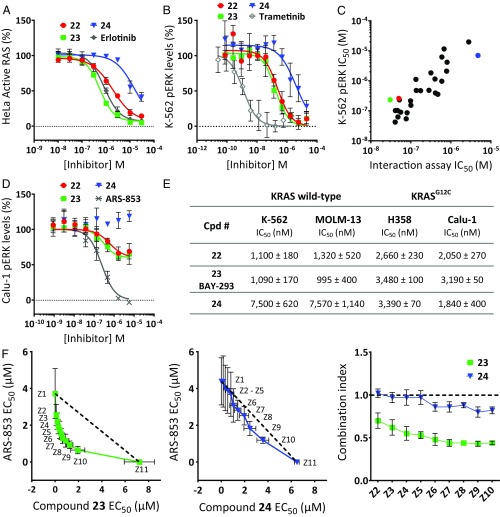
Since the late 1980s, mutations in the RAS genes have been recognized as major oncogenes with a high occurrence rate in human cancers. Such mutations reduce the ability of the small GTPase RAS to hydrolyze GTP, keeping this molecular switch in a constitutively active GTP-bound form that drives, unchecked, oncogenic downstream signaling. One strategy to reduce the levels of active RAS is to target guanine nucleotide exchange factors, which allow RAS to cycle from the inactive GDP-bound state to the active GTP-bound form. Here, we describe the identification of potent and cell-active small-molecule inhibitors which efficiently disrupt the interaction between KRAS and its exchange factor SOS1, a mode of action confirmed by a series of biophysical techniques. The binding sites, mode of action, and selectivity were elucidated using crystal structures of KRAS G12C –SOS1, SOS1, and SOS2. By preventing formation of the KRAS–SOS1 complex, these inhibitors block reloading of KRAS with GTP, leading to antiproliferative activity. The final compound 23 (BAY-293) selectively inhibits the KRAS–SOS1 interaction with an IC 50 of 21 nM and is a valuable chemical probe for future investigations.
Overview
The claims and statistics of this paper haven’t been checked yet.
Free: it reads the open-access text and checks the first 5 claims that cite a source we can check. Create a free account to check every claim.
Integrity signals
Registry
Cites
Statistics
Figures
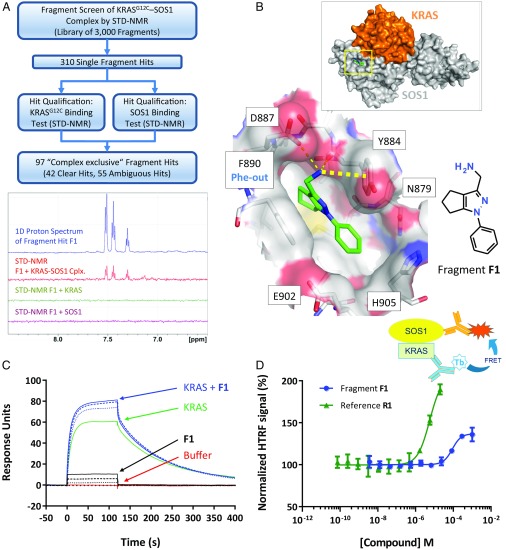
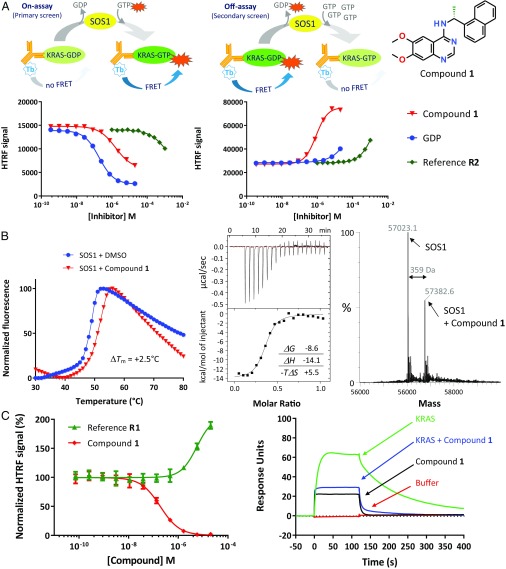
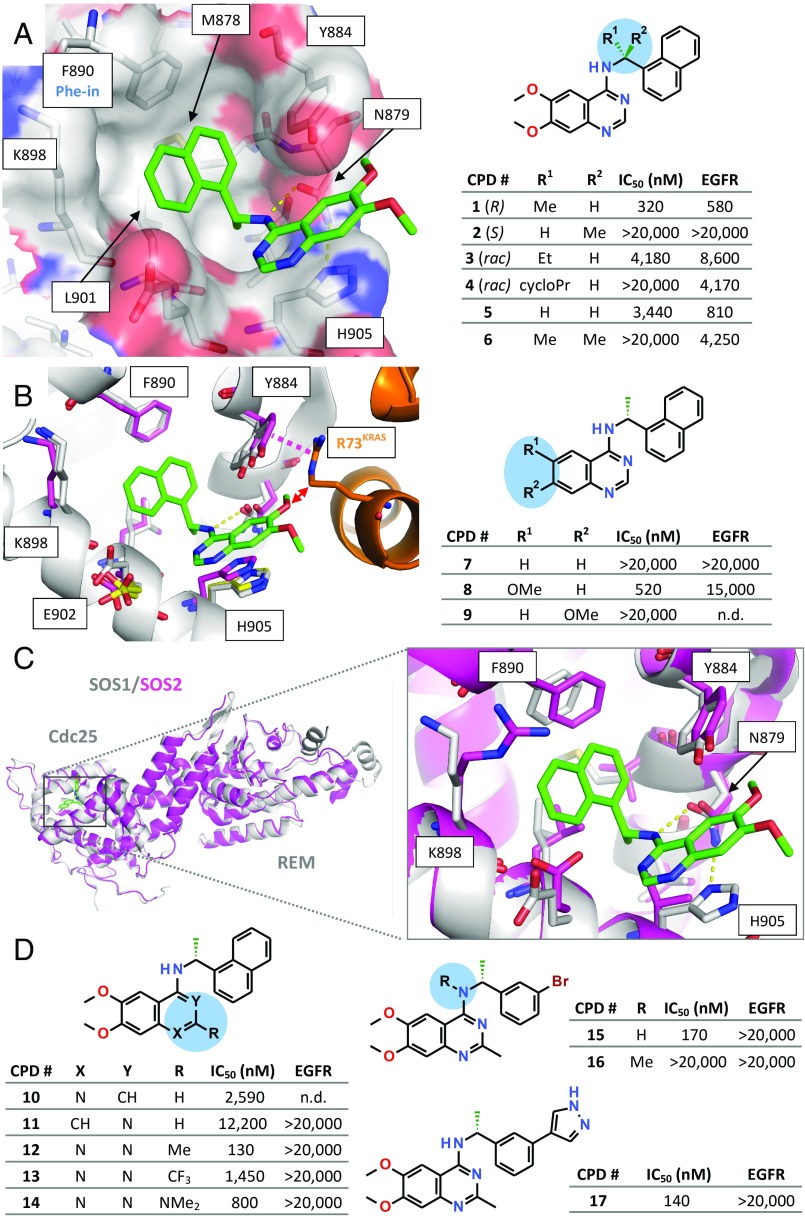
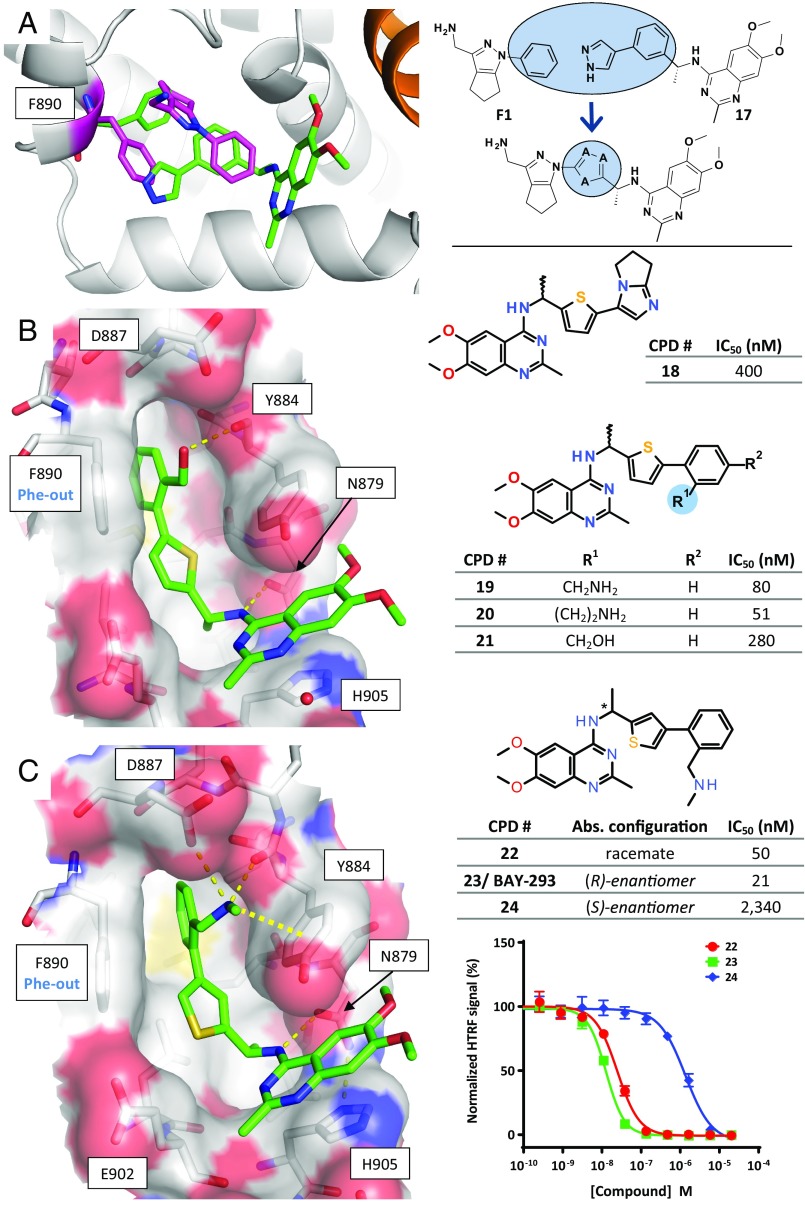
Verification
Claims the paper makes
The claims and statistics of this paper haven’t been checked yet.
Free: it reads the open-access text and checks the first 5 claims that cite a source we can check. Create a free account to check every claim.
Claims other papers make about this one
Each is checked against this paper’s own text: does it say what the citing paper says it does?
The source backs part of the claim, not all of it — or backs it for a different population, condition or comparison.
In the citing paper
“BAY-293, a potent SOS1 inhibitor, was recently found to synergize with ARS-853 to inhibit Ras activation and cell proliferation by disrupting Ras-SOS1 interaction (Table 3).79”
From Overcoming Resistance to Drugs Targeting KRAS Mutation (2020) · cites this paper as [79]
Experimental — accuracy not yet measuredThe source backs part of the claim, not all of it — or backs it for a different population, condition or comparison.
In the citing paper
“Selective SOS1 inhibitors, such as BAY-293 and BI-3406, have demonstrated synergistic antiproliferative activity in the KRASG12C mutant cell line by inhibiting the RAS-RAF-MEK-ERK pathway [66,67].”
From RAS Mutations in Advanced Colorectal Cancer: Mechanisms, Clinical Implications, and Novel Therapeutic Approaches (2025) · cites this paper as [66]
Experimental — accuracy not yet measuredThe source backs part of the claim, not all of it — or backs it for a different population, condition or comparison.
In the citing paper
“Son of sevenless 1 (SOS1) and SH2-containing protein tyrosine phosphatase (SHP2) are the two most critical targets in the RAS signaling pathway [61, 62].”
From Targeting KRAS mutant cancers: from druggable therapy to drug resistance (2022) · cites this paper as [61]
Experimental — accuracy not yet measuredThe source backs part of the claim, not all of it — or backs it for a different population, condition or comparison.
In the citing paper
“Furthermore, mutant KRAS can also activate wild-type RAS through SOS1 and subsequently RTK downstream signaling, leading to resistance to KRAS-targeted therapies [96].”
From Differential Response and Resistance to KRAS-Targeted Therapy (2025) · cites this paper as [96]
Experimental — accuracy not yet measuredThe source backs part of the claim, not all of it — or backs it for a different population, condition or comparison.
In the citing paper
“As evidenced by reports of small molecules targeting the RAS GEF SOS1, inhibition of GEF activity would thus arrest the given GTPase signaling pathways, constituting a promising target for small-molecule therapeutic development (11, 12).”
From RHO to the DOCK for GDP disembarking: Structural insights into the DOCK GTPase nucleotide exchange factors (2021) · cites this paper as [11]
Experimental — accuracy not yet measured
7 more claims about this paper
Create a free account to see every claim other papers make about this one.
Self-check
Percentages, sums and reported differences re-computed from the paper’s own numbers.
The self-check needs the paper’s full text.
Citations
Cites
Features and development of Coot
Emsley, P., Lohkamp, B., Scott, W. G., & Cowtan, K. (2010) · Acta Crystallographica Section D Biological Crystallography · doi:10.1107/s0907444910007493 · Cited by 29,915 · cited 2×
“Models were rebuilt using Coot (40) and refined using REFMAC (41).”
Phaser crystallographic software
McCoy, A. J., Grosse-Kunstleve, R. W., Adams, P. D., Winn, M. D., Storoni, L. C., & Read, R. J. (2007) · Journal of Applied Crystallography · doi:10.1107/s0021889807021206 · Cited by 20,612
Kabsch, W. (2010) · Acta Crystallographica Section D Biological Crystallography · doi:10.1107/s0907444909047337 · Cited by 16,463
Overview of the CCP 4 suite and current developments
Winn, M. D., Ballard, C. C., Cowtan, K. D., Dodson, E. J., Emsley, P., Evans, P. R., Keegan, R. M., Krissinel, E. B., Leslie, A. G. W., McCoy, A., et al. (2011) · Acta Crystallographica Section D Biological Crystallography · doi:10.1107/s0907444910045749 · Cited by 12,353 · cited 1×
“Datasets were collected at the Helmholtz-Zentrum Berlin in Germany, at the European Synchrotron Radiation Facility in Grenoble, France, or at the PETRA III synchrotron in Hamburg, Germany; processed using XDS (36) and XDSAPP (37); and solved using Molecular Replacement with Phaser (38) from the CCP4 suite (39).”
MethodREFMAC 5 for the refinement of macromolecular crystal structures
Murshudov, G. N., Skubák, P., Lebedev, A. A., Pannu, N. S., Steiner, R. A., Nicholls, R. A., Winn, M. D., Long, F., & Vagin, A. A. (2011) · Acta Crystallographica Section D Biological Crystallography · doi:10.1107/s0907444911001314 · Cited by 8,317
Drug combination studies and their synergy quantification using the Chou-Talalay method
Chou, T.-C. (2010) · Cancer Research · doi:10.1158/0008-5472.can-09-1947 · Cited by 5,739 · cited 1×
“(Right) The combination index was calculated according to the median-effect model of Chou– Talalay (43); a value below 0.”
PRODRG: a tool for high-throughput crystallography of protein–ligand complexes
Schüttelkopf, A. W., & van Aalten, D. M. F. (2004) · Acta Crystallographica Section D Biological Crystallography · doi:10.1107/s0907444904011679 · Cited by 4,804 · cited 3×
“Ligand models were generated using BIOVIA Discovery Hillig et al. PNAS | February 12, 2019 | vol. 116 | no. 7 | 2559 BI O CH EM IS TR Y Studio (Dassault Systèmes) and parameter files calculated with PRODRG (42).”
MethodInfluentialTargeting RAS signalling pathways in cancer therapy
Downward, J. (2003) · Nature Reviews Cancer · doi:10.1038/nrc969 · Cited by 3,256 · cited 1×
“For oncogenic RAS mutants, however, the GAP activity is impaired or greatly reduced, resulting in permanent activation, which is the basis of oncogenic RAS signaling (7); for example, through the RAS-RAF-MEK-ERK and RAS-PI3K-PDK1-AKT pathways, both essential to cell survival and proliferation (8).”
Drugging the undruggable RAS: Mission Possible?
Cox, A. D., Fesik, S. W., Kimmelman, A. C., Luo, J., & Der, C. J. (2014) · Nature Reviews Drug Discovery · doi:10.1038/nrd4389 · Cited by 1,997
RAS Proteins and Their Regulators in Human Disease
Simanshu, D. K., Nissley, D. V., & McCormick, F. (2017) · Cell · doi:10.1016/j.cell.2017.06.009 · Cited by 1,943
Cited by
Items 301–400 of 403
Kamel, E. M., Khadrawy, S. M., Ali, M. A. M., Abukhadra, M. R., Yassin, N. Y. S., Alkhedhairi, S., Alkhayl, F. F. A., & Lamsabhi, A. M. (2026) · Frontiers in Chemistry · doi:10.3389/fchem.2026.1808601 · Cited by 3
“From a medicinal chemistry standpoint, BAY-293 did not yet meet clinical-candidate standards because, although it was an excellent cell-active chemical probe, it was not advanced with the integrated exposure, physicochemical, selectivity, and broader developability profile typically required for in vivo translation an…”
InfluentialImbuing peptide libraries with drug-likeness
Pal, S., & Hart, P. ‘. (2024) · Nature Chemical Biology · doi:10.1038/s41589-023-01524-x · Cited by 4
Molecular and Clinicopathological Correlates of Wild-Type KRAS Expression in Prostate Cancer
Ebili, H. O., Omenai, S. A., Ezenkwa, U. S., Ale, A. O., Akintola, P. A., Adetona, A. E., Akunwata, C. U., Mashor, M. I., Nwanji, I. D., Iyapo, O., et al. (2024) · annals of urologic oncology · doi:10.32948/auo.2024.07.29 · Cited by 3
Zeng, Y., Huang, C., Hou, Q., Jiang, W., Cheng, J., & Wu, X. (2024) · Bioorganic Chemistry · doi:10.1016/j.bioorg.2024.107833 · Cited by 3
Hu, Z., & Martí, J. (2024) · Computers in Biology and Medicine · doi:10.1016/j.compbiomed.2024.109599 · Cited by 3
1 H, 15 N and 13 C resonance assignments of the Q61H mutant of human KRAS bound to GDP
Huang, Q., Ng, E. Y., Li, Q., & Kang, C. (2021) · Biomolecular NMR Assignments · doi:10.1007/s12104-021-10058-z · Cited by 2
Novel Small Molecules Capable of Blocking mtRAS-Signaling Pathway
Kim, N., Shin, I., Kim, Y., Jeon, E., Lee, J., Lee, C., Nam, Y., Lee, S., Ju, E., Kim, C., et al. (2021) · Frontiers in Oncology · doi:10.3389/fonc.2021.768022 · Cited by 2
“N-(3-(7-((1-(2-Methoxyethyl)-1H-pyrazol-4-yl)amino)-1methyl-2-oxo-1,4-dihydropyrimido[4,5-d]pyrimidin-3(2H)-yl)4-methylphenyl)-3-(trifluoromethyl)benzamide (12).”
Targeted Therapies for Pancreatic Cancer
Lee, M. S., & Pant, S. (2023) · Springer eBooks · doi:10.1007/978-3-031-38623-7_5 · Cited by 3
Design, synthesis and bioactivity evaluation of novel quinazoline based KRAS G12C inhibitors
Liu, Q., Li, Y., Zhi, Y., Liu, B., & Sun, J. (2022) · New Journal of Chemistry · doi:10.1039/d1nj06226c · Cited by 2
Nandan, P. K., & Jayanthi, S. (2025) · Biochemistry and Biophysics Reports · doi:10.1016/j.bbrep.2024.101913 · Cited by 2
Benary, G. E., Kilgenstein, F., Koller, S., & Scherkenbeck, J. (2025) · RSC Advances · doi:10.1039/d4ra08503e · Cited by 2
“42,46,47 The same e ff ect is achieved with BI3406 ( 55 ) and MRTX0902 ( 56 ), which bind to SOS and also prevent the formation of the K-RAS4B:SOS complex and subsequent GDP/GTP exchange.”
Novel paradigms in KRAS targeting: Unveiling strategies to combat drug resistance
Luo, X., Zhou, F., Tang, Y., Liu, X., Xiao, R., Gu, M., Bai, J., Jiang, D., Yang, G., You, L., et al. (2025) · Chinese Medical Journal · doi:10.1097/cm9.0000000000003776 · Cited by 2
“[257] The combination of BI3406 with Trametinib proves effective in overcoming acquired resistance caused by secondary Y96D and Y96S mutations in KRAS G12C .”
Khalid, E., & Vijayan, M. M. (2025) · Frontiers in Endocrinology · doi:10.3389/fendo.2025.1650458 · Cited by 1
Davoudi, Z., Dexheimer, T. S., Coussens, N. P., Silvers, T. E., Fox, R. G., Kemp, S. B., Juneja, P., Morris, J., Hollingshead, M. G., Takebe, N., et al. (2025) · Cancer Research Communications · doi:10.1158/2767-9764.crc-24-0582 · Cited by 2
“Structural and functional studies of SOS1 have enabled the development of multiple SOS1 inhibitors, including BAY-293, which binds the hydrophobic pocket of the Cdc25 domain and disrupts the interaction between RAS and SOS1 (9, 32).”
Eberspaecher, U., Schmitz, A. A. P., Siemeister, G., Bömer, U., Bandeiras, T. M., Matias, P. M., Schulze, V., & Hillig, R. C. (2025) · Acta Crystallographica Section D Structural Biology · doi:10.1107/s2059798325009325 · Cited by 1
Self-citationUnderstanding KRAS: mechanisms of resistance and future therapeutic strategies
Khashaba, R. M., Refaat, N. A., Elmorsy, S. E., Ali, F. I., & Magar, R. W. (2025) · Discover Applied Sciences · doi:10.1007/s42452-025-07959-2 · Cited by 2
“Activation is primarily mediated by guanine nucleotide exchange factors (GEFs), with SOS1 being a key facilitator that promotes the exchange of GDP for GTP, thereby shifting KRAS into its active configuration [13, 14].”
Luna-Ramírez, L., García‐Navas, R., Santos, E., & Baltanás, F. C. (2026) · Molecular Cancer · doi:10.1186/s12943-026-02632-7 · Cited by 3
“Interestingly, the antiproliferative properties of BAY-293 are significantly enhanced when combined with other RAS pathway-related inhibitors, including EGFRi, KRAS G12C inhibitors, and MEKi, as well as glucose metabolism modulators, and certain chemotherapeutics [36, 37, 40, 50].”
InfluentialLiu, X., Xiao, Y., Tang, L., Zhou, Y., Zhao, J., Zou, J., Zhou, Y., Teng, Y., Fan, X., Qiu, J., et al. (2026) · Bioorganic Chemistry · doi:10.1016/j.bioorg.2026.109823 · Cited by 1
Zeng, J., Lan, Y., & Xia, F. (2026) · PLoS Computational Biology · doi:10.1371/journal.pcbi.1014213 · Cited by 1
“Most works focus on the KRas·SOS1 binary complex to studying the interaction between KRas and CDC25 domain, hoping to reveal the mechanism by which SOS1 promotes the GDP-GTP exchange [38,58,66,67].”
Vitale, A., Marafioti, M., Galassi, T., Madonia, G., Moro, M., & Dubois, M. (2026) · Critical Reviews in Oncology/Hematology · doi:10.1016/j.critrevonc.2026.105396 · Cited by 2
Nanobody Loop Mimetics Enhance Son of Sevenless 1‐Catalyzed Nucleotide Exchange on RAS**
holsbeeck, K. V., Fischer, B., González, S., Gadais, C., Versées, W., Martins, J. C., Martin, C., Wohlkönig, A., Steyaert, J., & Ballet, S. (2023) · Angewandte Chemie · doi:10.1002/ange.202219095 · Cited by 1
Small-Molecule Inhibitors of Protein–Protein Interactions as Therapeutics
Poluri, K. M., Gulati, K., Tripathi, D. K., & Nagar, N. (2023) · Springer eBooks · doi:10.1007/978-981-99-2423-3_7 · Cited by 1
Development of an α-Klotho Recognizing High-Affinity Peptide Probe from In-Solution Enrichment
Zhang, P., Ye, X., Wang, J. C. K., Smith, C. L., Sousa, S., Loas, A., Eaton, D., López, M. P., & Pentelute, B. L. (2024) · JACS Au · doi:10.1021/jacsau.3c00650 · Cited by 4
KRAS combination strategies: How well aligned is clinical and preclinical research?
Nadal, E., Ambrogio, C., Santamaría, D., & Lindsay, C. R. (2024) · Elsevier eBooks · doi:10.1016/b978-0-443-21861-3.00018-8 · Cited by 2
An updated patent review of SOS1 inhibitors (2022–present)
Zhou, G., Zhou, C., Ma, X., Xu, J., Zhou, Z., Xu, T., Zheng, M., & Zhang, S. (2024) · Expert Opinion on Therapeutic Patents · doi:10.1080/13543776.2024.2419825 · Cited by 1
“BAY-293 effectively disrupts the KRAS-SOS1 interaction and exhibits significant antiproliferative activity [35].”
Motif-guided identification of KRAS-interacting proteins
Wu, S., Gao, X., Wu, D., Liu, L., Yao, H., Meng, X., Zhang, X., & Bai, F. (2024) · BMC Biology · doi:10.1186/s12915-024-02067-w · Cited by 1
“Hillig et al. discovered a SOS1 inhibitor that can interrupt PPI between KRAS and SOS1 with an IC 50 of 21 nM [17].”
Targeting der kleinen GTPasen über ihre regulatorischen Proteine
Gray, J. L., von Delft, F., & Brennan, P. E. (2020) · Angewandte Chemie · doi:10.1002/ange.201900585 · Cited by 1
Med Chem Remote: The Frontiers in Medicinal Chemistry 2021
Knaup, F. H., Meyners, C., Charalampidou, A., Krajczy, P., Purder, P. L., Ross, T., & Hausch, F. (2021) · ChemMedChem · doi:10.1002/cmdc.202100355 · Cited by 1
Allosteric regulation of switch-II controls K-Ras oncogenicityPreprint
Yang, M. H., Tran, T. H., Hunt, B., Agnor, R., Johnson, C. W., Waybright, T. J., Nowak, J. A., Stephen, A. G., Simanshu, D. K., & Haigis, K. M. (2022) · bioRxiv (Cold Spring Harbor Laboratory) · doi:10.1101/2022.09.20.508702 · Cited by 1
“Based on the structural superposition of K-Ras structures described above with the previously solved structure of the H-Ras-SOS complex [25], a change in the orientation of the 2 helix of SWII in the structures of K- Ras, K-Ras, and K-Ras”
The translational role of SOS1 in colorectal cancerPreprint
Alem, D., Yang, X., Beato, F., Sarcar, B., Tassielli, A. F., Dai, R., Hogenson, T. L., Park, M. A., Jiang, K., Cai, J., et al. (2022) · bioRxiv (Cold Spring Harbor Laboratory) · doi:10.1101/2022.10.14.512156 · Cited by 1
Nanobody CDR3 mimetics enhance SOS1-catalyzed nucleotide exchange on RASPreprint
holsbeeck, K. V., Fischer, B., González, S., Gadais, C., Versées, W., Martins, J. C., Martin, C., Wohlkönig, A., Steyaert, J., & Ballet, S. (2022) · bioRxiv (Cold Spring Harbor Laboratory) · doi:10.1101/2022.12.09.519747 · Cited by 1
Davoudi, Z., Dexheimer, T. S., Coussens, N. P., Silvers, T. E., Morris, J., Takebe, N., Doroshow, J. H., & Teicher, B. A. (2024) · bioRxiv (Cold Spring Harbor Laboratory) · doi:10.1101/2024.11.17.623998 · Cited by 1
Targeting the RAS–SOS1 Interaction
Trauner, D., & Reyes, J. R. (2019) · Synfacts · doi:10.1055/s-0037-1612500
KRAS: The Art of Understanding a Complex Gene
Velasco, W. V., Ramos-Castaneda, M. A., Clowers, M. J., Deng, S., & Moghaddam, S. J. (2020) · Elsevier eBooks · doi:10.1016/b978-0-08-102723-3.00003-2
Helix-mimetics as Protein–Protein Interaction Inhibitors
Naiya, G., Chakraborty, M., Ghosh, P., & Roy, S. (2020) · Royal Society of Chemistry eBooks · doi:10.1039/9781788016544-00147
Ras and Ras Signaling as a Therapeutic Target in Cancer
Sliker, B. H., & Campbell, P. M. (2021) · Elsevier eBooks · doi:10.1016/b978-0-12-820472-6.00006-2
Mechanistic Insight on Ras Inhibition Strategies in Cancer Therapy
Anoosheh, J. P., Barzegar, A., Hejazi, M. S., Hasheminejad, N., Heidari, H. R., & Aghdam, E. M. (2021) · Pharmaceutical Sciences · doi:10.34172/ps.2021.25
“One of the partially successful compounds was BAY-293 which showed a growth inhibition effect when combined with ARS-853 in a K-Ras(G12C) mutant cell line.(45) This result suggests that these types of compounds can be used with direct K-Ras-GDP (g12C) inhibitors.”
BackgroundRecent Developments, Challenges and Opportunities in Targeting the KRAS Pathway
Pothuganti, M. K., Mitra, S., Iyer, P. S., & Gowda, N. M. (2022) · Letters in Drug Design & Discovery · doi:10.2174/1570180819666220704104028 · Cited by 2
Frontiers in Medicinal Chemistry 2022 Goes Virtual
Diamanti, E., Méndez, M. M., Ross, T., Kuttruff, C. A., Lefranc, J., Klingler, F., von Nussbaum, F., Jung, M., & Gehringer, M. (2022) · ChemMedChem · doi:10.1002/cmdc.202200419 · Cited by 1
Xing, F., Zhao, D., Wu, S.-Y., Tyagi, A., Wu, K., Sharma, S., Liu, Y., Deshpande, R. P., Wang, Y., Cleary, J. A., et al. (2023) · doi:10.1158/0008-5472.c.6513627.v1
Targeting Rat Sarcoma Viral Oncogene Homolog for Treatment of Gastrointestinal Cancers
Robinson, H. R., Davis, S. L., & Lieu, C. H. (2023) · Advances in Oncology · doi:10.1016/j.yao.2023.01.011
Research Progress of Antitumor Small Molecule Inhibitor Targeting SOS1
黄, 景. (2023) · World Journal of Cancer Research · doi:10.12677/wjcr.2023.132014
Lee, A. A., Kim, N. H., Alvarez, S. A., Ren, H., DeGrandchamp, J. B., Lew, L. J. N., & Groves, J. T. (2023) · bioRxiv (Cold Spring Harbor Laboratory) · doi:10.1101/2023.07.17.549263
“H-Ras (1-181, C118S) (human H-Ras protein with residues 1-181 and a point mutation to serine at residue C118), SOS (566-1049), SOS (1-1049) were purified based on previous reports (35).”
Method曹, 修. (2023) · Hans Journal of Biomedicine · doi:10.12677/hjbm.2023.133039
Najumudeen, A. K., Fey, S. K., Millett, L. M., Ford, C. A., Gilroy, K. L., Gündüz, N., Ridgway, R. A., Anderson, E., Strathdee, D., Clark, W. A., et al. (2023) · bioRxiv (Cold Spring Harbor Laboratory) · doi:10.1101/2023.08.29.555396
Biophysical Characterization of RAS-SOS Complexes by Native Mass Spectrometry
Yun, S., Scott, E., & Laganowsky, A. D. (2024) · Methods in molecular biology · doi:10.1007/978-1-0716-3822-4_13
Atomic-scale mechanisms of GDP extraction by SOS1 in KRAS-G12 and KRAS-D12 oncogenesPreprint
Hu, Z., & Martı́, J. (2024) · bioRxiv (Cold Spring Harbor Laboratory) · doi:10.1101/2024.06.17.599303
Liu, Y., Duo, L., Hirst, J. D., Rent, J., Tang, B., & Towey, D. (2024) · IEEE Annual International Computer Software and Applications Conference (COMPSAC) · doi:10.1109/compsac61105.2024.00317 · Cited by 3
“Additionally, two known SOS1 inhibitors, BI-3406 [9] and BAY-293 [10], were strategically integrated into this dataset.”
BackgroundResultInfluentialTargeting RAS and associated proteins
Müller, M. P., Goody, R. S., & Rauh, D. (2025) · Elsevier eBooks · doi:10.1016/b978-0-443-29808-0.00008-x
Zhang, X., Basappa, B., Lobie, P. E., & Pandey, V. (2025) · Communications Medicine · doi:10.1038/s43856-025-01032-0
“3. https://doi.org/10.1038/s43856-025-01032-0 BI-3406in2Dcellviabilityassays(SF2C),andadifferentlaboratoryhasalso observedtheactivityofBAY293in2Dculture 25 .”
InfluentialRajitha Rajeshwar, T., Lagergren, J. H., Smith, J. C., & Demerdash, O. (2025) · Biophysical Journal · doi:10.1016/j.bpj.2025.12.011
Yuan, Q., Wang, R., Li, X., Sun, F., Lin, J., Fu, Z., & Zhang, J. (2024) · Figshare · doi:10.6084/m9.figshare.26707077
Yuan, Q., Wang, R., Li, X., Sun, F., Lin, J., Fu, Z., & Zhang, J. (2024) · Figshare · doi:10.6084/m9.figshare.26707074
Buñuales, M., Inogés, S., de Cerio, A. L.-D., Hervás‐Stubbs, S., Rodriguez, J., González-Aparicio, M., Jáuregui, P., & Hernández-Alcoceba, R. (2026) · Gene Therapy · doi:10.1038/s41434-025-00590-1
“The screening included novel KRAS-targeted therapies such as the KRAS-SOS1 complex formation inhibitor BAY-293 [30].”
Protein-protein interaction inhibitors in cancer
Hardcastle, I. R., Goujon-Ricci, J., & Thompson, W. I. (2026) · Elsevier eBooks · doi:10.1016/b978-0-443-29808-0.00067-4
Masuda, T., Watanabe, T., Ozaki, T., & Kamikubo, Y. (2026) · Cancer Science · doi:10.1111/cas.70364
“Experimental and pharmacologic studies have shown that changes in SOS1 expression or activity markedly influence both the magnitude and duration of MAPK signaling, even when upstream HER2 activity is effectively suppressed [11].”
Ljubojević, N. (2021) · theses.fr (ABES) · doi:10.70675/64151986z4fabz4445zbe11zb41f75c6be3b
Gonzalez, V. G. (2023) · theses.fr (ABES) · doi:10.70675/f8c09968z97c4z4635za591z74bf90b6fe70 · Cited by 2
Unlocking drug sensitivity in KRAS
MingCong, L. I., YueSong, Z. H. O. U., Qiao, T. D., QingLin, B. A. I., & Li, C. (2026) · Scientia Sinica Vitae · doi:10.1360/ssv-2025-0279
“pan-KRAS 抑制剂 , 可削弱 KRAS 结合 GTP 的能力 , 该药 物与 MEK 抑制剂 Trametinib 联用在临床前模型中显示 出良好的抗肿瘤活性 , 适用于携带任意 KRAS 突变的 肿瘤患者 [94,95] .”
Samudrala, R., Bruggemann, L., Falls, Z., & Mahajan, S. D. (2026) · Expert Opinion on Drug Discovery · doi:10.1080/17460441.2026.2654614
“The first nanomolar SOS1 inhibitor, BAY-293, was identified as a direct result of work by Hillig and colleagues [27].”
InfluentialZhu, G., Pei, L., Li, J., Zhang, C., Ye, D., Li, J., Tang, Q., Huang, H., Xu, H., & Bi, F. (2026) · Cell Reports · doi:10.1016/j.celrep.2026.117338
Emerging concepts, hot topics, and open questions in today’s pancreatic cancer research
Keber, C. U., Schmitt, M., Visekruna, A., Brichkina, A. I., von Strandmann, E. P., Bartsch, J. W., Huber, M., Bauer, U., Gress, T. M., & Lauth, M. (2026) · Biochimica et Biophysica Acta (BBA) - Reviews on Cancer · doi:10.1016/j.bbcan.2026.189614
Mitcheltree, M. J., Boo, N., Boyer, N. C., Brown, Z. Z., Chai, X., Duggal, R., Garrigou, M., Hayes, R. P., Johnston, J. M., Josien, H. B., et al. (2026) · bioRxiv (Cold Spring Harbor Laboratory) · doi:10.64898/2026.05.20.726527
Lefas, A. Y., Lote, H., & Chau, I. (2026) · Precision Oncology · doi:10.3390/precisoncol1020009
“Further SOS1 inhibitors in the preclinical phase of development include: BAY-293, RM-0331, RMC-5845 and MRTX0902 [47,48].”
Liu, X., Xiao, Y., Zhou, Y., Teng, Y., Zou, J., Zhou, Y., Fan, X., Zhao, J., Qiu, J., Tang, L., et al. (2026) · Journal of Medicinal Chemistry · doi:10.1021/acs.jmedchem.6c00196 · Cited by 2
Kızıl, H. E., Ekíncíoğlu, Y., Özkan, E. H., Güllü, E., & Nartop, D. (2026) · Discover Chemistry. · doi:10.1007/s44371-026-00785-4
“…the global reactivity descriptors derived from our DFT analysis, including ionization potential (4.664 eV), electron affinity (2.482 eV), and electrophilicity index (5.850 eV), demonstrate concordance with values reported for other bioactive compounds in the scientific literature [68, 69].”
InfluentialDiscovery of CNS Penetrant SOS1 Inhibitors for the Treatment of KRAS-Dependent Cancers
Bagal, S. K., Diène, C. R., Stefanovic-Barrett, S., Breed, J., Kauffman, G. W., Bodnarchuk, M. S., Collie, G. W., Staniszewska, A. D., Srivastava, A., Irving, E., et al. (2026) · Journal of Medicinal Chemistry · doi:10.1021/acs.jmedchem.5c03800
Structural and Biophysical Characterization of Aminobenzo[ d ]isothiazole 1,1-Dioxide SOS1 Ligands
Pereira, T. M., Romero, A. R., van der Laan, M., Guan, Z., Oerlemans, R., Groves, M. R., Mori, M., Meneghetti, F., & Dömling, A. S. S. (2026) · ACS Medicinal Chemistry Letters · doi:10.1021/acsmedchemlett.6c00300
Yang, X., Tao, X., Qi, W., Luo, R., Lan, T., Xie, K., Cai, Y., Gao, F., Lv, Y., Liu, C., et al. (2026) · Journal of Pharmaceutical Analysis · doi:10.1016/j.jpha.2026.101718
Xiang, X., Basnet, M., Yuan, C., Bruschweiler‐Li, L., & Brüschweiler, R. (2026) · Journal of the American Chemical Society · doi:10.1021/jacs.6c09870
Protein–Protein Interactions with the Fragment Molecular Orbital Method
Woods, D. C., Monteleone, S., & Labouille, S. (2026) · Methods in molecular biology · doi:10.1007/978-1-0716-5420-0_5
A chemigenetic endogenous Ras activity biosensor for live-cell pharmacology
Weeks, R., Zhou, D. R., Frei, M. S., & Zhang, J. (2026) · Nature Chemical Biology · doi:10.1038/s41589-026-02276-0 · Cited by 1
“Other Ras signaling pathway components have also been targeted, such as blocking SOS1 GEF activity toward Ras 24 .”
Small-molecule RAS/RAF inhibitors target RAS-driven cancers via allosteric RAF disruption
Yoshikawa, Y., Kubota, H., Matsumoto, S., Makino, Y., Kawamura, T., Yuki, H., Sakai, N., Shibaike, A., Okamura, M., Fujimoto-Sakisaka, W., et al. (2026) · Nature Communications · doi:10.1038/s41467-026-76337-2 · Cited by 1
“Compounds developed using the second strategy, including SOS1 inhibitors 41,42 such as BI1701963 and SHP2 inhibitors such as TNO155 43 , have also achieved some ef fi cacy in clinical trials.”
Current and future therapies for acute myeloblastic leukemia
Marvin‐Peek, J., & Ravandi, F. (2026) · Journal of Hematology & Oncology · doi:10.1186/s13045-026-01849-9
“In normal hematopoiesis, activation of receptor tyrosine kinases (such as FLT3) initiates downstream signaling through RAS, which cycles from an inactive GDP-bound state to an active GTP-bound state via guanine nucleotide exchange factors (GEFs) such as SOS1 [161].”
BindingDB Entry 50013003: Drugging the undruggable: a computational chemist's view of KRAS
BindingDB (2022) · UC San Diego · doi:10.7270/q2db85kh
BindingDB (2023) · UC San Diego · doi:10.7270/q2g44vbp
BindingDB (2025) · UC San Diego · doi:10.7270/q2w66rfz
BindingDB Entry 50018208: Design, Synthesis, and Bioevaluation of Pyrido[2,3-
BindingDB (2024) · UC San Diego · doi:10.7270/q2dj5ktj
BindingDB (2026) · UC San Diego · doi:10.7270/q26w9gxr
BindingDB (2023) · UC San Diego · doi:10.7270/q28g8qmq
BindingDB (2024) · UC San Diego · doi:10.7270/q2988chg
BindingDB (2026) · UC San Diego · doi:10.7270/q2t4401d
BindingDB Entry 50008525: Discovery of BAY-985, a Highly Selective TBK1/IKKε Inhibitor.
BindingDB (2021) · UC San Diego · doi:10.7270/q2cn7795
BindingDB Entry 50012178: Fragment-to-Lead Medicinal Chemistry Publications in 2019.
BindingDB (2022) · UC San Diego · doi:10.7270/q25d8wht
BindingDB (2023) · UC San Diego · doi:10.7270/q2154mxq
Metadata
- Authors
- Hillig, R. C., Sautier, B., Schroeder, J., Moosmayer, D., Hilpmann, A., Stegmann, C. M., Werbeck, N. D., Briem, H., Boemer, U., Weiske, J., Badock, V., Mastouri, J., Petersen, K., Siemeister, G., Kahmann, J. D., Wegener, D., Böhnke, N., Eis, K., Graham, K., Wortmann, L., von Nussbaum, F., & Bader, B.
- Affiliations
- Bayer (Germany) (DE)
- Evotec (Germany) (DE)
- Research and Development, Pharmaceuticals, Bayer AG, 13353 Berlin, Germany;
- Corresponding author
- Hillig, Roman C.
- Bader, Benjamin
- ORCID
- Venue
- Proceedings of the National Academy of Sciences
- Publisher
- National Academy of Sciences
- Published
- 2019-01-25
- Volume
- 116
- Issue
- 7
- Pages
- 2551-2560
- ISSN
- 0027-8424 (ISSN-L)
- 1091-6490
- PMC
- PMC6377443
- OpenAlex
- W2912277053
- Cited by
- 388
- References
- 43
- Citations by year
- 2026: 29 · 2025: 45 · 2024: 67 · 2023: 65 · 2022: 62 · 2021: 61 · 2020: 43 · 2019: 16
- FWCI
- 15.56
- Type
- journal article
- Language
- en
- Open access
- hybrid
- doi.org
- Licence
- Locations
- Proceedings of the National Academy of Sciences (publishedVersion, cc-by-nc-nd)
- Europe PMC (PubMed Central) (publishedVersion, cc-by-nc-nd)
- PubMed Central (publishedVersion, cc-by-nc-nd)
- PubMed (publishedVersion)
- Desy publication database (The Deutsches Elektronen-Synchrotron) (submittedVersion, cc-by-nc-nd)
- HZB Repository (Helmholtz-Zentrum Berlin für Materialien und Energie GmbH (HZB)) (submittedVersion, other-oa)
- Repository of Futwangen University of Applied Sciences (Furtwangen University) (submittedVersion, cc-by-nc-nd)
- Topics
- Life Sciences › Biochemistry, Genetics and Molecular Biology › Molecular Biology › Protein Kinase Regulation and GTPase Signaling
- Life Sciences › Biochemistry, Genetics and Molecular Biology › Molecular Biology › Protein Tyrosine Phosphatases
- Life Sciences › Biochemistry, Genetics and Molecular Biology › Molecular Biology › Melanoma and MAPK Pathways
- Keywords
- SOS1 inhibitor, KRAS, Ras activation, guanine nucleotide exchange factor, small molecule inhibitors, KRAS G12C, SOS2, GTP loading, oncogenic Ras mutations, antiproliferative activity, chemical probes
- MeSH terms
- Cell Line, Humans, Protein Binding, Signal Transduction, Proto-Oncogene Proteins p21(ras), Crystallography, X-Ray, SOS1 Protein, Fluorescence Resonance Energy Transfer, Drug Discovery, High-Throughput Screening Assays
About these checks
Registry, retraction, Cites and statistics results are computed, not judged, with one exception: a printed reference that no index lists is read once by a model before it counts as a citation error. Claims are extracted by a model and kept only when their quote appears verbatim in the text; each cited source is then checked, with a model’s help, for whether it says what the claim relies on. Those verdicts can be wrong — read the claim’s quote and the cited source before relying on one.
Statistics and arithmetic are recomputed, not judged.
Confidence bands are shown only for fields calibrated on our annotated test set. None is calibrated yet, so no band is shown.
What counts as a claim ›How we measure confidence ›How we check this ›
Are you an author, or do you see a problem with this page? Request a review
Data sources
Bibliographic data: Semantic Scholar, OpenAlex, Crossref.
Contains information from the Semantic Scholar Academic Graph Datasets, made available under the ODC Attribution License (ODC-BY 1.0).
Semantic Scholar’s data is described in: Kinney, R., et al. (2023). The Semantic Scholar Open Data Platform. arXiv:2301.10140.
