

Discovery of potent SOS1 inhibitors that block RAS activation via disruption of the RAS–SOS1 interaction
Open accessThe DOI matches its Crossref record; 43 of the 43 references it cites were found in a registry or an index.
Abstract
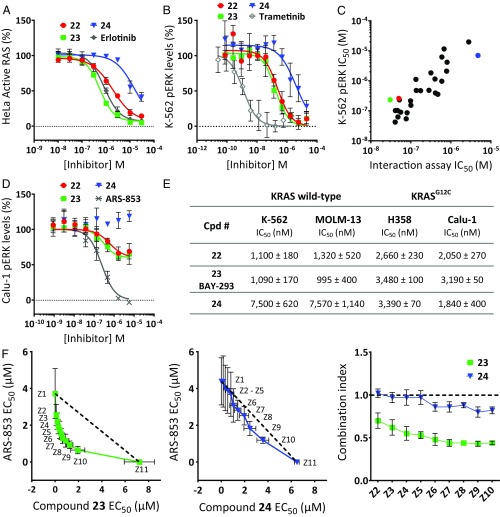
Since the late 1980s, mutations in the RAS genes have been recognized as major oncogenes with a high occurrence rate in human cancers. Such mutations reduce the ability of the small GTPase RAS to hydrolyze GTP, keeping this molecular switch in a constitutively active GTP-bound form that drives, unchecked, oncogenic downstream signaling. One strategy to reduce the levels of active RAS is to target guanine nucleotide exchange factors, which allow RAS to cycle from the inactive GDP-bound state to the active GTP-bound form. Here, we describe the identification of potent and cell-active small-molecule inhibitors which efficiently disrupt the interaction between KRAS and its exchange factor SOS1, a mode of action confirmed by a series of biophysical techniques. The binding sites, mode of action, and selectivity were elucidated using crystal structures of KRAS G12C –SOS1, SOS1, and SOS2. By preventing formation of the KRAS–SOS1 complex, these inhibitors block reloading of KRAS with GTP, leading to antiproliferative activity. The final compound 23 (BAY-293) selectively inhibits the KRAS–SOS1 interaction with an IC 50 of 21 nM and is a valuable chemical probe for future investigations.
Overview
The claims and statistics of this paper haven’t been checked yet.
Free: it reads the open-access text and checks the first 5 claims that cite a source we can check. Create a free account to check every claim.
Integrity signals
Registry
Cites
Statistics
Figures
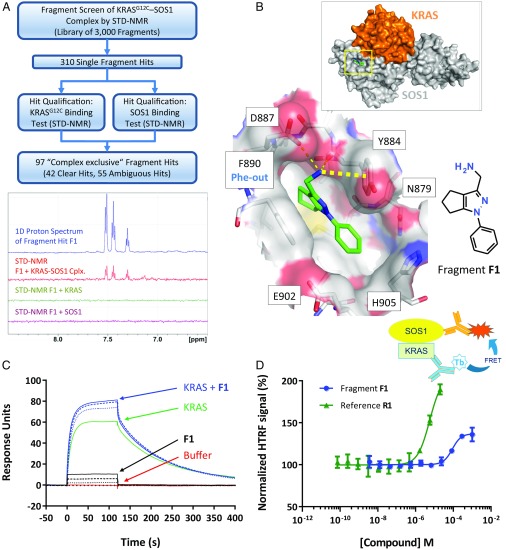
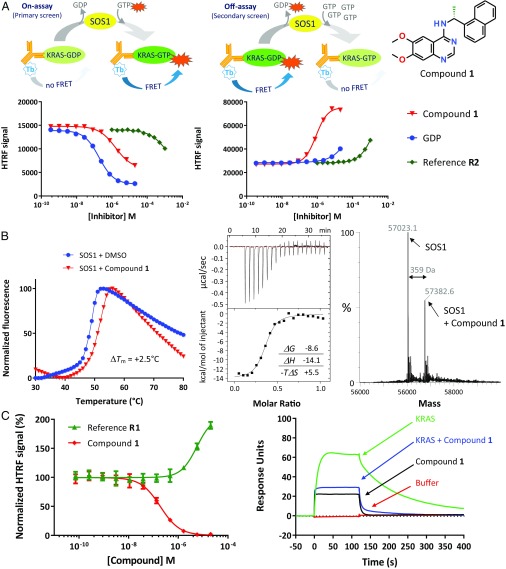
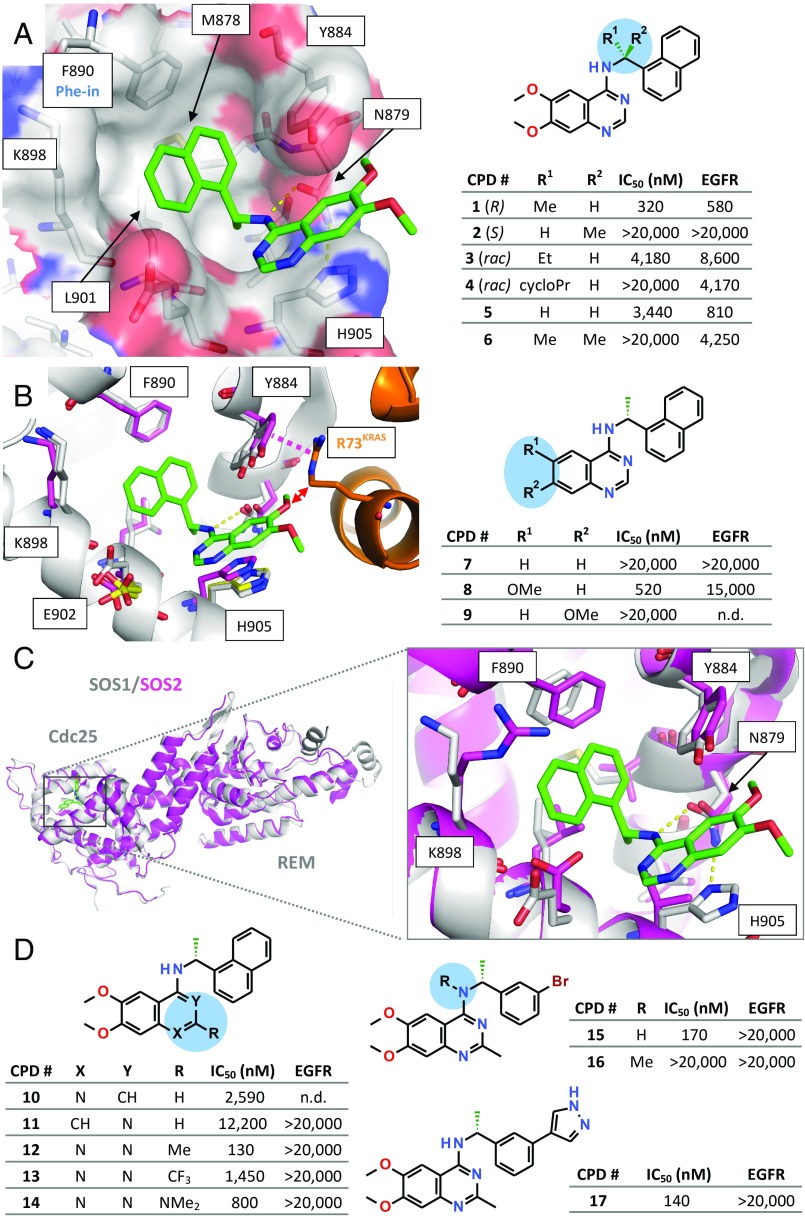
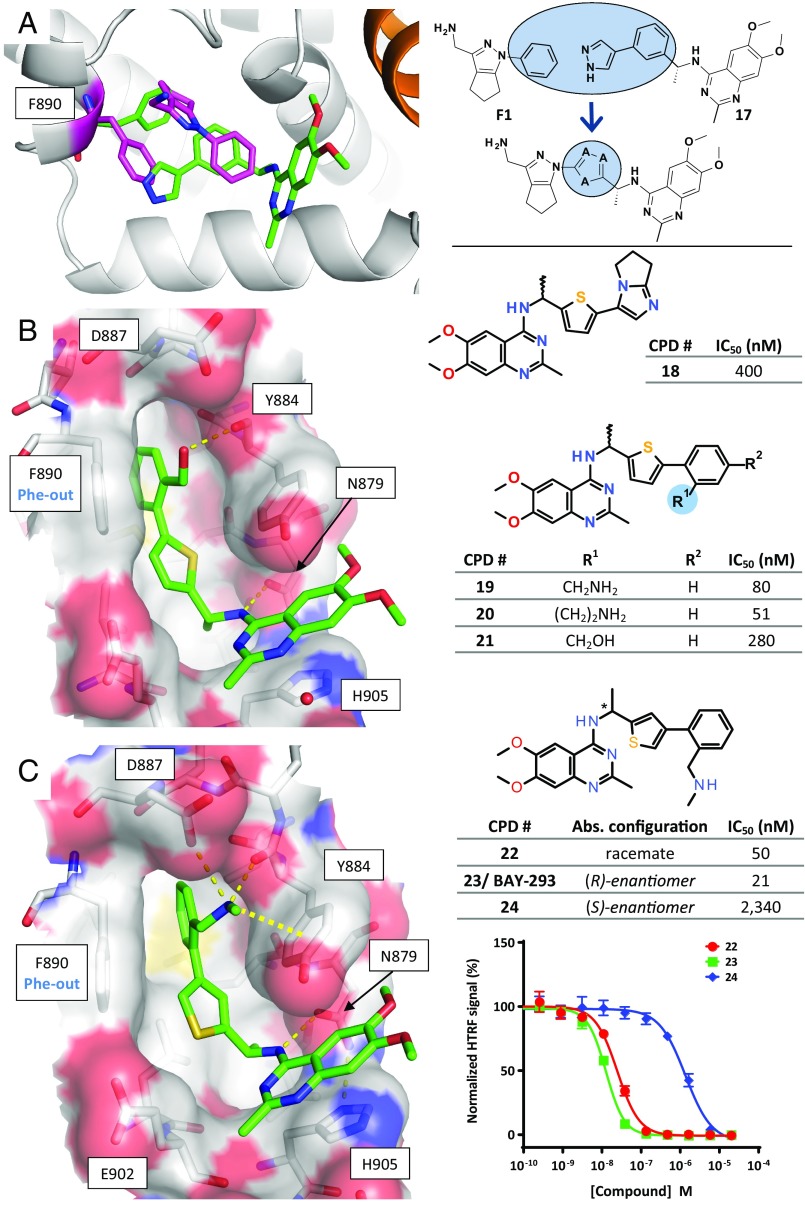
Verification
Claims the paper makes
The claims and statistics of this paper haven’t been checked yet.
Free: it reads the open-access text and checks the first 5 claims that cite a source we can check. Create a free account to check every claim.
Claims other papers make about this one
Each is checked against this paper’s own text: does it say what the citing paper says it does?
The source backs part of the claim, not all of it — or backs it for a different population, condition or comparison.
In the citing paper
“BAY-293, a potent SOS1 inhibitor, was recently found to synergize with ARS-853 to inhibit Ras activation and cell proliferation by disrupting Ras-SOS1 interaction (Table 3).79”
From Overcoming Resistance to Drugs Targeting KRAS Mutation (2020) · cites this paper as [79]
Experimental — accuracy not yet measuredThe source backs part of the claim, not all of it — or backs it for a different population, condition or comparison.
In the citing paper
“Selective SOS1 inhibitors, such as BAY-293 and BI-3406, have demonstrated synergistic antiproliferative activity in the KRASG12C mutant cell line by inhibiting the RAS-RAF-MEK-ERK pathway [66,67].”
From RAS Mutations in Advanced Colorectal Cancer: Mechanisms, Clinical Implications, and Novel Therapeutic Approaches (2025) · cites this paper as [66]
Experimental — accuracy not yet measuredThe source backs part of the claim, not all of it — or backs it for a different population, condition or comparison.
In the citing paper
“Son of sevenless 1 (SOS1) and SH2-containing protein tyrosine phosphatase (SHP2) are the two most critical targets in the RAS signaling pathway [61, 62].”
From Targeting KRAS mutant cancers: from druggable therapy to drug resistance (2022) · cites this paper as [61]
Experimental — accuracy not yet measuredThe source backs part of the claim, not all of it — or backs it for a different population, condition or comparison.
In the citing paper
“Furthermore, mutant KRAS can also activate wild-type RAS through SOS1 and subsequently RTK downstream signaling, leading to resistance to KRAS-targeted therapies [96].”
From Differential Response and Resistance to KRAS-Targeted Therapy (2025) · cites this paper as [96]
Experimental — accuracy not yet measuredThe source backs part of the claim, not all of it — or backs it for a different population, condition or comparison.
In the citing paper
“As evidenced by reports of small molecules targeting the RAS GEF SOS1, inhibition of GEF activity would thus arrest the given GTPase signaling pathways, constituting a promising target for small-molecule therapeutic development (11, 12).”
From RHO to the DOCK for GDP disembarking: Structural insights into the DOCK GTPase nucleotide exchange factors (2021) · cites this paper as [11]
Experimental — accuracy not yet measured
7 more claims about this paper
Create a free account to see every claim other papers make about this one.
Self-check
Percentages, sums and reported differences re-computed from the paper’s own numbers.
The self-check needs the paper’s full text.
Citations
Cites
Features and development of Coot
Emsley, P., Lohkamp, B., Scott, W. G., & Cowtan, K. (2010) · Acta Crystallographica Section D Biological Crystallography · doi:10.1107/s0907444910007493 · Cited by 29,915 · cited 2×
“Models were rebuilt using Coot (40) and refined using REFMAC (41).”
Phaser crystallographic software
McCoy, A. J., Grosse-Kunstleve, R. W., Adams, P. D., Winn, M. D., Storoni, L. C., & Read, R. J. (2007) · Journal of Applied Crystallography · doi:10.1107/s0021889807021206 · Cited by 20,612
Kabsch, W. (2010) · Acta Crystallographica Section D Biological Crystallography · doi:10.1107/s0907444909047337 · Cited by 16,463
Overview of the CCP 4 suite and current developments
Winn, M. D., Ballard, C. C., Cowtan, K. D., Dodson, E. J., Emsley, P., Evans, P. R., Keegan, R. M., Krissinel, E. B., Leslie, A. G. W., McCoy, A., et al. (2011) · Acta Crystallographica Section D Biological Crystallography · doi:10.1107/s0907444910045749 · Cited by 12,353 · cited 1×
“Datasets were collected at the Helmholtz-Zentrum Berlin in Germany, at the European Synchrotron Radiation Facility in Grenoble, France, or at the PETRA III synchrotron in Hamburg, Germany; processed using XDS (36) and XDSAPP (37); and solved using Molecular Replacement with Phaser (38) from the CCP4 suite (39).”
MethodREFMAC 5 for the refinement of macromolecular crystal structures
Murshudov, G. N., Skubák, P., Lebedev, A. A., Pannu, N. S., Steiner, R. A., Nicholls, R. A., Winn, M. D., Long, F., & Vagin, A. A. (2011) · Acta Crystallographica Section D Biological Crystallography · doi:10.1107/s0907444911001314 · Cited by 8,317
Drug combination studies and their synergy quantification using the Chou-Talalay method
Chou, T.-C. (2010) · Cancer Research · doi:10.1158/0008-5472.can-09-1947 · Cited by 5,739 · cited 1×
“(Right) The combination index was calculated according to the median-effect model of Chou– Talalay (43); a value below 0.”
PRODRG: a tool for high-throughput crystallography of protein–ligand complexes
Schüttelkopf, A. W., & van Aalten, D. M. F. (2004) · Acta Crystallographica Section D Biological Crystallography · doi:10.1107/s0907444904011679 · Cited by 4,804 · cited 3×
“Ligand models were generated using BIOVIA Discovery Hillig et al. PNAS | February 12, 2019 | vol. 116 | no. 7 | 2559 BI O CH EM IS TR Y Studio (Dassault Systèmes) and parameter files calculated with PRODRG (42).”
MethodInfluentialTargeting RAS signalling pathways in cancer therapy
Downward, J. (2003) · Nature Reviews Cancer · doi:10.1038/nrc969 · Cited by 3,256 · cited 1×
“For oncogenic RAS mutants, however, the GAP activity is impaired or greatly reduced, resulting in permanent activation, which is the basis of oncogenic RAS signaling (7); for example, through the RAS-RAF-MEK-ERK and RAS-PI3K-PDK1-AKT pathways, both essential to cell survival and proliferation (8).”
Drugging the undruggable RAS: Mission Possible?
Cox, A. D., Fesik, S. W., Kimmelman, A. C., Luo, J., & Der, C. J. (2014) · Nature Reviews Drug Discovery · doi:10.1038/nrd4389 · Cited by 1,997
RAS Proteins and Their Regulators in Human Disease
Simanshu, D. K., Nissley, D. V., & McCormick, F. (2017) · Cell · doi:10.1016/j.cell.2017.06.009 · Cited by 1,943
Cited by
KRAS Mutation: From Undruggable to Druggable in Cancer
Huang, L., Guo, Z., Wang, F., & Fu, L. (2021) · Signal Transduction and Targeted Therapy · doi:10.1038/s41392-021-00780-4 · Cited by 1,127
RAS-targeted therapies: is the undruggable drugged?
Moore, A. R., Rosenberg, S. C., McCormick, F., & Malek, S. (2020) · Nature Reviews Drug Discovery · doi:10.1038/s41573-020-0068-6 · Cited by 1,103
Proteogenomic Characterization Reveals Therapeutic Vulnerabilities in Lung Adenocarcinoma
Gillette, M. A., Satpathy, S., Cao, S., Dhanasekaran, S. M., Vasaikar, S. V., Krug, K., Petralia, F., Li, Y., Liang, W.-W., Reva, B., et al. (2020) · Cell · doi:10.1016/j.cell.2020.06.013 · Cited by 820
“, 2010), and inhibition of SOS1 and KRAS is an emerging therapeutic strategy for KRAS mutant cancers (Hillig et al., 2019; O’Bryan, 2019).”
BackgroundTumor biomarkers for diagnosis, prognosis and targeted therapy
Zhou, Y., Tao, L., Qiu, J., Xu, J., Yang, X., Zhang, Y., Tian, X., Guan, X., Cen, X., & Zhao, Y. (2024) · Signal Transduction and Targeted Therapy · doi:10.1038/s41392-024-01823-2 · Cited by 720
Molecular Dynamics Simulations in Drug Discovery and Pharmaceutical Development
Salo-Ahen, O. M. H., Alanko, I., Bhadane, R., Bonvin, A. M. J. J., Honorato, R. V., Hossain, S., Juffer, A. H., Kabedev, A., Lahtela-Kakkonen, M., Larsen, A. S., et al. (2020) · Processes · doi:10.3390/pr9010071 · Cited by 659
The current state of the art and future trends in RAS-targeted cancer therapies
Punekar, S. R., Velcheti, V., Neel, B. G., & Wong, K.-K. (2022) · Nature Reviews Clinical Oncology · doi:10.1038/s41571-022-00671-9 · Cited by 549
Targeting the MAPK pathway in KRAS-driven tumors
Drosten, M., & Barbacid, M. (2020) · Cancer Cell · doi:10.1016/j.ccell.2020.03.013 · Cited by 512
Role of oncogenic KRAS in the prognosis, diagnosis and treatment of colorectal cancer
Zhu, G., Pei, L., Xia, H., Tang, Q., & Bi, F. (2021) · Molecular Cancer · doi:10.1186/s12943-021-01441-4 · Cited by 482
“Additionally, when combined with a KRASG12C covalent inhibitor, BAY-293 demonstrated synergistic antiproliferative activity in a KRASG12C-mutant cell line, due to its ability to increase the pool of GDP-bound KRASG12C [79].”
BackgroundHofmann, M. H., Gmachl, M., Ramharter, J., Savarese, F., Gerlach, D., Marszalek, J. R., Sanderson, M. P., Kessler, D., Trapani, F., Arnhof, H., et al. (2021) · Cancer Discovery · doi:10.1158/2159-8290.cd-20-0142 · Cited by 444
“We subsequently tested BI-3406 side-by-side with the recently reported SOS1 inhibitor 275 BAY293 (28) and the SHP2 inhibitor SHP099 (18) in 2D and 3D proliferation assays across a 276 panel of 24 cell lines, including 18 KRAS-mutated cell lines (Supplementary Table 6).”
BackgroundTherapeutic developments in pancreatic cancer
Hu, Z. I., & O’Reilly, E. M. (2024) · Nature Reviews Gastroenterology & Hepatology · doi:10.1038/s41575-023-00840-w · Cited by 413
“One indirect way to block RAS activation is to block the guanine nucleotide exchange factor son of sevenless 1 (SOS1) and reduce the formation of KRAS in its GTP-bound form 111 .”
Targeting KRAS in non-small-cell lung cancer: recent progress and new approaches
Reck, M., Carbone, D. P., Garassino, M., & Barlesi, F. (2021) · Annals of Oncology · doi:10.1016/j.annonc.2021.06.001 · Cited by 326
The current understanding of KRAS protein structure and dynamics
Pantsar, T. (2020) · Computational and Structural Biotechnology Journal · doi:10.1016/j.csbj.2019.12.004 · Cited by 282
Targeting KRAS(G12C): From Inhibitory Mechanism to Modulation of Antitumor Effects in Patients
Kim, D., Xue, J. Y., & Lito, P. (2020) · Cell · doi:10.1016/j.cell.2020.09.044 · Cited by 239
Emerging strategies to target RAS signaling in human cancer therapy
Chen, K., Zhang, Y., Qian, L., & Wang, P. (2021) · Journal of Hematology & Oncology · doi:10.1186/s13045-021-01127-w · Cited by 226
Targeting KRAS mutant cancers: from druggable therapy to drug resistance
Zhu, C., Guan, X., Zhang, X., Luan, X., Song, Z., Cheng, X., Zhang, W., & Qin, J.-J. (2022) · Molecular Cancer · doi:10.1186/s12943-022-01629-2 · Cited by 231
“Son of sevenless 1 (SOS1) and SH2-containing protein tyrosine phosphatase (SHP2) are the two most critical targets in the RAS signaling pathway [61, 62].”
BackgroundMethodInfluentialThe KRAS-G12C inhibitor: activity and resistance
Liu, J., Kang, R., & Tang, D. (2022) · Cancer Gene Therapy · doi:10.1038/s41417-021-00383-9 · Cited by 219
Application of Fragment-Based Drug Discovery to Versatile Targets
Li, Q. (2020) · Frontiers in Molecular Biosciences · doi:10.3389/fmolb.2020.00180 · Cited by 198
KRAS G12C Game of Thrones, which direct KRAS inhibitor will claim the iron throne?
Nagasaka, M., Li, Y., Sukari, A., Ou, S.-H. I., Al-Hallak, M. N., & Azmi, A. S. (2020) · Cancer Treatment Reviews · doi:10.1016/j.ctrv.2020.101974 · Cited by 185
The RASopathies: from pathogenetics to therapeutics
Hebron, K. E., Hernandez, E. R., & Yohe, M. E. (2022) · Disease Models & Mechanisms · doi:10.1242/dmm.049107 · Cited by 167
“BI 1701963, which inhibits the interaction between RAS and SOS1 to inhibit RAS activation, is in clinical development for solid tumors harboring a KRAS mutation, but it also represents a potential RASopathy therapeutic (Hillig et al., 2019), although it has not yet been tested in RASopathy models.”
BackgroundDrugging KRAS: Current perspectives and state-of-art review
Parikh, K., Banna, G., Liu, S. V., Friedlaender, A., Desai, A., Subbiah, V., & Addeo, A. (2022) · Journal of Hematology & Oncology · doi:10.1186/s13045-022-01375-4 · Cited by 164
Mechanisms of Resistance to KRASG12C-Targeted Therapy
Akhave, N. S., Biter, A. B., & Hong, D. S. (2021) · Cancer Discovery · doi:10.1158/2159-8290.cd-20-1616 · Cited by 156
“Finally, BI1701963, developed by Boehringer Ingelheim, is a distinct therapeutic class that acts as a pan-KRAS inhibitor by preventing SOS1 from binding inactive GDP-bound KRAS, thus inhibiting exchange of GDP to GTP (39,40) and indirectly inactivating all forms of KRAS.”
BackgroundInfluentialTargeting the Small GTPase Superfamily through Their Regulatory Proteins
Gray, J. L., von Delft, F., & Brennan, P. E. (2020) · Angewandte Chemie International Edition · doi:10.1002/anie.201900585 · Cited by 142
Oncogenic alterations in advanced NSCLC: a molecular super-highway
Friedlaender, A., Pérol, M., Banna, G. L., Parikh, K., & Addeo, A. (2024) · Biomarker Research · doi:10.1186/s40364-024-00566-0 · Cited by 179
“Combination approaches are also being tested, with immune checkpoint inhibitors, SHP2 and SOS1 inhibitors, among others [124–126].”
Classification of KRAS -Activating Mutations and the Implications for Therapeutic Intervention
Johnson, C., Burkhart, D. L., & Haigis, K. M. (2022) · Cancer Discovery · doi:10.1158/2159-8290.cd-22-0035 · Cited by 121
KRAS G12C in advanced NSCLC: Prevalence, co-mutations, and testing
Lim, T. K. H., Skoulidis, F., Kerr, K. M., Ahn, M., Kapp, J. R., Soares, F. A., & Yatabe, Y. (2023) · Lung Cancer · doi:10.1016/j.lungcan.2023.107293 · Cited by 154
RAS signaling in carcinogenesis, cancer therapy and resistance mechanisms
Yang, X., & Wu, H. K. (2024) · Journal of Hematology & Oncology · doi:10.1186/s13045-024-01631-9 · Cited by 146
Current therapy of KRAS-mutant lung cancer
Ghimessy, A., Radeczky, P., Laszlo, V., Hegedus, B., Renyi-Vamos, F., Fillinger, J., Klepetko, W., Lang, C., Dome, B., & Megyesfalvi, Z. (2020) · Cancer and Metastasis Reviews · doi:10.1007/s10555-020-09903-9 · Cited by 115
“For decades, KRAS was considered undruggable due to its exceptionally high affinity to GTP/GDP, to the absence of known allosteric binding sites, and to the presence of extensive post-transcriptional modifications [3, 7, 67].”
BackgroundInfluentialKetcham, J. M., Haling, J., Khare, S., Bowcut, V., Briere, D. M., Burns, A. C., Gunn, R. J., Ivetac, A., Kuehler, J., Kulyk, S., et al. (2022) · Journal of Medicinal Chemistry · doi:10.1021/acs.jmedchem.2c00741 · Cited by 96
Targeting KRAS in pancreatic cancer: new drugs on the horizon
Bannoura, S. F., Uddin, M. H., Nagasaka, M., Fazili, F., Hallak, M. N. A., Philip, P. A., El‐Rayes, B. F., & Azmi, A. S. (2021) · Cancer and Metastasis Reviews · doi:10.1007/s10555-021-09990-2 · Cited by 122
Bhardwaj, V. K., Singh, R., Das, P., & Purohit, R. (2020) · Computers in Biology and Medicine · doi:10.1016/j.compbiomed.2020.104117 · Cited by 105
Oncogenic KRAS: Signaling and Drug Resistance
Kim, H. J., Lee, H. N., Jeong, M. S., & Jang, S. B. (2021) · Cancers · doi:10.3390/cancers13225599 · Cited by 119
“Discovered by virtual screening BAY-293 KRAS-SOS1 interaction suppresses the RAS-RAF-MEK-ERK pathway and inhibits the activation of RAS in tumor cells [66]”
BackgroundKRAS G12C–Mutant Non–Small Cell Lung Cancer
Veluswamy, R., Mack, P. C., Houldsworth, J., Elkhouly, E., & Hirsch, F. R. (2021) · The Journal of Molecular Diagnostics · doi:10.1016/j.jmoldx.2021.02.002 · Cited by 96
SOS GEFs in health and disease
Baltanás, F. C., Zarich, N., Rojas-Cabañeros, J. M., & Santos, E. (2020) · Biochimica et Biophysica Acta (BBA) - Reviews on Cancer · doi:10.1016/j.bbcan.2020.188445 · Cited by 100
Targeting Son of Sevenless 1: The pacemaker of KRAS
Kessler, D., Gerlach, D., Kraut, N., & McConnell, D. B. (2021) · Current Opinion in Chemical Biology · doi:10.1016/j.cbpa.2021.02.014 · Cited by 97
Direct Targeting KRAS Mutation in Non-Small Cell Lung Cancer: Focus on Resistance
Reita, D., Pabst, L., Pencreach, E., Guérin, E., Dano, L., Rimelen, V., Voegeli, A.-C., Vallat, L., Mascaux, C., & Beau-Faller, M. (2022) · Cancers · doi:10.3390/cancers14051321 · Cited by 95
“As novel KRAS G12C inhibitors solely inhibit the inactive GDP-bound KRAS conformation, only cells with KRAS G12C inactivation state are strongly sensitive, stop proliferating, and enter into quiescence.”
BackgroundTargeting KRAS in pancreatic cancer
Stickler, S., RATH, B., & Hamilton, G. (2024) · Oncology Research Featuring Preclinical and Clinical Cancer Therapeutics · doi:10.32604/or.2024.045356 · Cited by 119
“The RM-0331 SOS1-directed compound (Revolution Medicines) targets the same binding site as BI-3406 [66,67].”
Zhou, C., Fan, Z., Zhou, Z., Li, Y., Cui, R., Liu, C., Zhou, G., Diao, X., Jiang, H., Zheng, M., et al. (2022) · Journal of Medicinal Chemistry · doi:10.1021/acs.jmedchem.1c01774 · Cited by 94
Inhibition of RAF dimers: it takes two to tango
Cook, F. A., & Cook, S. J. (2020) · Biochemical Society Transactions · doi:10.1042/bst20200485 · Cited by 91
RAS, wanted dead or alive: Advances in targeting RAS mutant cancers
Stalnecker, C. A., & Der, C. J. (2020) · Science Signaling · doi:10.1126/scisignal.aay6013 · Cited by 90
“” Aside from cysteine-tethering screens used to find KRASG12C inhibitors, to date, two alternative approaches have been described to identify druggable surfaces on RAS: (i) fragment library screens (13, 14) and (ii) small antibody-like protein screens (15, 16).”
BackgroundThe roles of KRAS in cancer metabolism, tumor microenvironment and clinical therapy
Ma, Q., Zhang, W., Wu, K., & Shi, L. (2025) · Molecular Cancer · doi:10.1186/s12943-024-02218-1 · Cited by 111
“Inhibitors targeting the SOS1 such as BAY-293 and BI-3406, have been developed to block KRAS GDP-GTP switch, thus preventing the downstream pathway [177, 178].”
The Ras switch in structural and historical perspective
Gasper, R., & Wittinghofer, F. (2019) · Biological Chemistry · doi:10.1515/hsz-2019-0330 · Cited by 84
“A recent approach to target Ras·SOS interaction identified a small molecule, which required both Ras and SOS for binding although its binding site was exclusively on SOS itself (Hillig et al., 2019).”
BackgroundSakamoto, K., Masutani, T., & Hirokawa, T. (2020) · Scientific Reports · doi:10.1038/s41598-020-78712-5 · Cited by 85
Kettle, J. G., Bagal, S. K., Bickerton, S., Bodnarchuk, M. S., Breed, J., Carbajo, R. J., Cassar, D. J., Chakraborty, A., Cosulich, S., Cumming, I., et al. (2020) · Journal of Medicinal Chemistry · doi:10.1021/acs.jmedchem.9b01720 · Cited by 82
Targeting small GTPases: emerging grasps on previously untamable targets, pioneered by KRAS
Yin, G., Huang, J., Petela, J., Jiang, H., Zhang, Y., Gong, S., Wu, J., Liu, B., Shi, J., & Gao, Y. (2023) · Signal Transduction and Targeted Therapy · doi:10.1038/s41392-023-01441-4 · Cited by 82
“The mechanism of action (MOA) for their inhibition of SOS1 are identical, which could be explained by disrupting the RAS binding epitope on SOS1 interaction sterically.(396,398) BAY-293 was reported to show antiproliferative activity in both KRAS mutant and wild-type human cancer cell lines, and the efficacy of this c…”
BackgroundKRAS G12C Mutations in NSCLC: From Target to Resistance
Addeo, A., Banna, G. L., & Friedlaender, A. (2021) · Cancers · doi:10.3390/cancers13112541 · Cited by 82
“Some SOS1 inhibitors have been investigated and BAY-29 showed high efficacy once combined with ARS-853, a KRAS G12C inhibitor, to inhibit Ras activation and cell proliferation by disrupting RAS-SOS1 interactions [77].”
BackgroundChen, J., Wang, J., Yang, W., Zhao, L., & Hu, G. (2024) · Journal of Chemical Information and Modeling · doi:10.1021/acs.jcim.4c01174 · Cited by 84
Babur, Ö., Melrose, A. R., Cunliffe, J. M., Klimek, J., Pang, J., Sepp, A.-L. I., Zilberman-Rudenko, J., Tassi Yunga, S., Zheng, T., Parra-Izquierdo, I., et al. (2020) · Blood · doi:10.1182/blood.2020005496 · Cited by 80
Oncogenic KRAS blockade therapy: renewed enthusiasm and persistent challenges
Tang, D., Kroemer, G., & Kang, R. (2021) · Molecular Cancer · doi:10.1186/s12943-021-01422-7 · Cited by 80
Yang, Y., Zhang, H., Huang, S., & Chu, Q. (2023) · Journal of Clinical Medicine · doi:10.3390/jcm12020709 · Cited by 84
“Guanine nucleotide exchange factor (GEF), such as son of sevenless isoform 1 (SOS1) protein, functions to promote the active form of KRAS during this switch [10,11].”
BackgroundTherapeutics Targeting Mutant KRAS
Thein, K. Z., Biter, A. B., & Hong, D. S. (2021) · Annual Review of Medicine · doi:10.1146/annurev-med-080819-033145 · Cited by 72
Fragment-to-Lead Medicinal Chemistry Publications in 2019
Jahnke, W., Erlanson, D. A., de Esch, I. J. P., Johnson, C. N., Mortenson, P. N., Ochi, Y., & Urushima, T. (2020) · Journal of Medicinal Chemistry · doi:10.1021/acs.jmedchem.0c01608 · Cited by 78
KRAS-Mutant Non-Small Cell Lung Cancer: An Emerging Promisingly Treatable Subgroup
Xie, M., Xu, X., & Fan, Y. (2021) · Frontiers in Oncology · doi:10.3389/fonc.2021.672612 · Cited by 74
“A study (40) screened out a specific small-molecule SOS1 inhibitor, BAY-293, which can effectively destroy the mutual effect between KRAS and SOS1, prevent the formation of the KRAS-SOS1 complex, and thereby inhibit the activity of all KRAS mutants.”
BackgroundCurrent Approaches in NSCLC Targeting K-RAS and EGFR
Aran, V., & Omerović, J. (2019) · International Journal of Molecular Sciences · doi:10.3390/ijms20225701 · Cited by 77
“The study presented a compound (BAY-293) which selectively inhibited the K-RAS–SOS1 interaction which can be tested in a variety of cancer types including lung cancer [25].”
BackgroundOne Atom Makes All the Difference: Getting a Foot in the Door between SOS1 and KRAS
Ramharter, J., Kessler, D., Ettmayer, P., Hofmann, M. H., Gerstberger, T., Gmachl, M., Wunberg, T., Kofink, C., Sanderson, M., Arnhof, H., et al. (2021) · Journal of Medicinal Chemistry · doi:10.1021/acs.jmedchem.0c01949 · Cited by 62
Palma, G., Khurshid, F., Lu, K., Woodward, B., & Husain, H. (2021) · npj Precision Oncology · doi:10.1038/s41698-021-00237-5 · Cited by 72
Drugging the Undruggable: Advances on RAS Targeting in Cancer
Molina-Arcas, M., Samani, A., & Downward, J. (2021) · Genes · doi:10.3390/genes12060899 · Cited by 71
“SOS1 inhibitors have also been developed recently [68,69].”
BackgroundSmall molecules targeting protein–protein interactions for cancer therapy
Wu, D., Li, Y., Zheng, L., Xiao, H., Ouyang, L., Wang, G., & Sun, Q. (2023) · Acta Pharmaceutica Sinica B · doi:10.1016/j.apsb.2023.05.035 · Cited by 71
Targeting KRAS: The Elephant in the Room of Epithelial Cancers
Merz, V., Gaule, M., Zecchetto, C., Cavaliere, A., Casalino, S., Pesoni, C., Contarelli, S., Sabbadini, F., Bertolini, M., Mangiameli, D., et al. (2021) · Frontiers in Oncology · doi:10.3389/fonc.2021.638360 · Cited by 70
“The SOS1 inhibitor BAY-293 can synergize with the KRAS inhibitor ARS-853 reducing cell proliferation (98).”
BackgroundThe next-generation KRAS inhibitors…What comes after sotorasib and adagrasib?
Oya, Y., Imaizumi, K., & Mitsudomi, T. (2024) · Lung Cancer · doi:10.1016/j.lungcan.2024.107886 · Cited by 65
Theard, P. L., Sheffels, E., Sealover, N. E., Linke, A. J., Pratico, D. J., & Kortum, R. L. (2020) · eLife · doi:10.7554/elife.58204 · Cited by 69
“, 2019), and a specific SOS1 inhibitor (BAY-293) has recently been identified (Hillig et al., 2019).”
BackgroundTargeting ROS production through inhibition of NADPH oxidases
Reis, J., Gorgulla, C., Massari, M., Marchese, S., Valente, S., Noce, B., Basile, L., Törner, R., Cox, H., Viennet, T., et al. (2023) · Nature Chemical Biology · doi:10.1038/s41589-023-01457-5 · Cited by 73
“ROS are known to fuel proliferative signaling and are required for cell transformation and tumorigenesis by oncogenes such as oncogenic Ras 10,12,53–56 .”
BackgroundRAS-ON inhibition overcomes clinical resistance to KRAS G12C-OFF covalent blockade
Nokin, M., Mira, A., Patrucco, E., Ricciuti, B., Cousin, S., Soubeyran, I., José, S. S., Peirone, S., Caizzi, L., Michelina, S. V., et al. (2024) · Nature Communications · doi:10.1038/s41467-024-51828-2 · Cited by 76
“Similarly, SOS1 inhibition enhances the potency of inactive-state selective drugs 32 .”
Santarpia, M., Ciappina, G., Spagnolo, C. C., Squeri, A., Passalacqua, M. I., Aguilar, A., Gonzalez-Cao, M., Giovannetti, E., Silvestris, N., & Rosell, R. (2023) · Translational Lung Cancer Research · doi:10.21037/tlcr-22-639 · Cited by 65
Wang, Y., Ji, D., Lei, C., Chen, Y.-F., Qiu, Y., Li, X.-Y., Li, M.-Y., Ni, D., Pu, J., Zhang, J., et al. (2021) · Computational and Structural Biotechnology Journal · doi:10.1016/j.csbj.2021.01.044 · Cited by 60
“The crystal structure of the SOS1 catalytic domain in complex with apo K-Ras4B G12C (PDB ID 6EPL) [37] was selected as the initial structure of SOS.”
MethodStructural Insights into the Regulation Mechanism of Small GTPases by GEFs
Toma-Fukai, S., & Shimizu, T. (2019) · Molecules · doi:10.3390/molecules24183308 · Cited by 65
“Most recently, the inhibitor o SOS1 was reported [28].”
BackgroundOvercoming Resistance to Drugs Targeting KRAS Mutation
Jiao, D., & Yang, S. (2020) · The Innovation · doi:10.1016/j.xinn.2020.100035 · Cited by 61
“Synergistic antiproliferative activity has been reported upon co-inhibition of K-Ras and SOS1, although these findings need to be validated in in vivo studies.(79) In addition, future studies are expected to evaluate the combinatorial effects of KRas and GRB2 inhibition.”
InfluentialThatikonda, V., Lyu, H., Jurado, S., Kostyrko, K., Bristow, C. A., Albrecht, C., Alpar, D., Arnhof, H., Bergner, O., Bosch, K., et al. (2024) · Nature Cancer · doi:10.1038/s43018-024-00800-6 · Cited by 76
“SOS1 catalyzes RAS-GTP-loading as a GEF 24,25 and serves as a key node of feedback regulation 23,24 .”
InfluentialDevelopment of SOS1 Inhibitor-Based Degraders to Target KRAS-Mutant Colorectal Cancer
Bian, Y., Alem, D., Beato, F., Hogenson, T. L., Yang, X., Jiang, K., Cai, J., Ma, W. W., Fernández-Zapico, M. E., Tan, A. C., et al. (2022) · Journal of Medicinal Chemistry · doi:10.1021/acs.jmedchem.2c01300 · Cited by 64
Gross, A. M., Frone, M. N., Gripp, K. W., Gelb, B. D., Schoyer, L., Schill, L., Stronach, B. E., Biesecker, L. G., Esposito, D., Hernandez, E. R., et al. (2020) · American Journal of Medical Genetics Part A · doi:10.1002/ajmg.a.61485 · Cited by 59
“Preclinical tool compounds that inhibit the interaction between RAS and SOS to inhibit RAS activation are currently in development and represent an exciting class of potential novel RASopathy therapeutics (Hillig et al., 2019).”
BackgroundResistance looms for KRAS G12C inhibitors and rational tackling strategies
Zhang, J., Zhang, J., Liu, Q., Fan, X., Leung, E. L., Yao, X., & Liu, L. (2021) · Pharmacology & Therapeutics · doi:10.1016/j.pharmthera.2021.108050 · Cited by 57
Precision medicine for metastatic colorectal cancer in clinical practice
Riedesser, J. E., Ebert, M. P. A., & Betge, J. (2022) · Therapeutic Advances in Medical Oncology · doi:10.1177/17588359211072703 · Cited by 71
Zhou, Z., Zhou, G., Zhou, C., Fan, Z., Cui, R., Li, Y., Li, R., Gu, Y., Li, H., Ge, Z., et al. (2023) · Journal of Medicinal Chemistry · doi:10.1021/acs.jmedchem.3c00075 · Cited by 58
KRAS: A Druggable Target in Colon Cancer Patients
Negri, F., Bottarelli, L., de’Angelis, G. L., & Gnetti, L. (2022) · International Journal of Molecular Sciences · doi:10.3390/ijms23084120 · Cited by 62
“BAY-293, a small-molecule inhibitor that hampers the SOS1–KRAS interaction, was recently identified [51].”
BackgroundBurns, T. F., Borghaei, H., Ramalingam, S. S., Mok, T. S. K., & Peters, S. (2020) · Journal of Clinical Oncology · doi:10.1200/jco.20.00744 · Cited by 65
“Combinations with KRAS inhibitors are synergistic; however, clinical efficacy and tolerability have not yet been explored.(72)”
BackgroundPost-translational modification of KRAS: potential targets for cancer therapy
Wang, W., Yuan, T., Qian, M., Yan, F., Yang, L., He, Q., Yang, B., Lu, J., & Zhu, H. (2020) · Acta Pharmacologica Sinica · doi:10.1038/s41401-020-00542-y · Cited by 60
Targeting KRAS mutations: orchestrating cancer evolution and therapeutic challenges
Choucair, K., Imtiaz, H., Uddin, M. H., Nagasaka, M., Al-Hallak, M. N., Philip, P. A., El-Rayes, B., Pasche, B., & Azmi, A. S. (2025) · Signal Transduction and Targeted Therapy · doi:10.1038/s41392-025-02473-8 · Cited by 83
Issahaku, A. R., Salifu, E. Y., Agoni, C., Alahmdi, M. I., Abo-Dya, N. E., Soliman, M. E. S., Rudrapal, M., & Naresh, P. (2023) · ChemistrySelect · doi:10.1002/slct.202300277 · Cited by 58
Discovery of BAY-985, a Highly Selective TBK1/IKKε Inhibitor
Lefranc, J., Schulze, V., Hillig, R. C., Briem, H., Prinz, F., Mengel, A., Heinrich, T. K., Bálint, J., Rengachari, S., Irlbacher, H., et al. (2019) · Journal of Medicinal Chemistry · doi:10.1021/acs.jmedchem.9b01460 · Cited by 49
Self-citationThe importance of Ras in drug resistance in cancer
Healy, F. M., Prior, I. A., & MacEwan, D. J. (2021) · British Journal of Pharmacology · doi:10.1111/bph.15420 · Cited by 53
“For example, BAY293 is a first-in-class compound with the ability to bind directly to SOS1 and inhibit the Ras–SOS interaction and thereby downstream signalling of the PI3K and MAPK pathways (Hillig et al., 2019).”
BackgroundGebregiworgis, T., Kano, Y., St-Germain, J., Radulovich, N., Udaskin, M. L., Mentes, A., Huang, R., Poon, B. P. K., He, W., Valencia-Sama, I., et al. (2021) · Nature Communications · doi:10.1038/s41467-021-26526-y · Cited by 49
“RAS/RAF binding was assessed using the RAS activation assay kit from Millipore (17-218).”
MethodAvery, T. Y., Köhler, N., Zeiser, R., Brummer, T., & Ruess, D. A. (2022) · Frontiers in Oncology · doi:10.3389/fonc.2022.931774 · Cited by 54
Structural impact of GTP binding on downstream KRAS signaling
Menyhárd, D. K., Pálfy, G., Orgován, Z., Vida, I., Keserű, G. M., & Perczel, A. (2020) · Chemical Science · doi:10.1039/d0sc03441j · Cited by 58
Targeting KRAS mutant lung cancer: light at the end of the tunnel
Drosten, M., & Barbacid, M. (2022) · Molecular Oncology · doi:10.1002/1878-0261.13168 · Cited by 47
“Recently, several inhibitors that disrupt the SOS1-KRAS interaction have been developed that synergized with KRAS G12C inhibitors in cell lines [69,70].”
BackgroundTargeting KRAS G12C Mutation in Colorectal Cancer, A Review: New Arrows in the Quiver
Ros, J., Vaghi, C., Baraibar, I., Gonzalez, N. S., Rodríguez-Castells, M., García, A., Alcaráz, A., Salvà, F., Tabernero, J. M., & Élez, E. (2024) · International Journal of Molecular Sciences · doi:10.3390/ijms25063304 · Cited by 62
“Simultaneous inhibition of SOS1 and KRAS, which was synergistic in preclinical models of KRAS G12C-mutated cancer cells [40], is now under clinical investigation in KRYSTAL-14 and other trials (such as NCT05578092).”
BackgroundPDE6D Inhibitors with a New Design Principle Selectively Block K-Ras Activity
Siddiqui, F. A., Alam, C., Rosenqvist, P., Ora, M., Sabt, A., Manoharan, G. B., Bindu, L., Okutachi, S., Catillon, M., Taylor, T., et al. (2020) · ACS Omega · doi:10.1021/acsomega.9b03639 · Cited by 46
Xiong, D., Qiu, Y., Zhao, J., Zhou, Y., Lee, D., Gupta, S., Torres, M., Lü, W., Liang, S., Kang, J. J., et al. (2024) · Nature Biotechnology · doi:10.1038/s41587-024-02428-4 · Cited by 61
“SOS1 is a RAS activator that loads GTP (PDB: 6EPO) 84 .”
Lu, H., Liu, C., Huynh, H., Le, T. B. U., LaMarche, M. J., Mohseni, M., Engelman, J. A., Hammerman, P. S., Caponigro, G., & Hao, H.-X. (2020) · Oncotarget · doi:10.18632/oncotarget.27435 · Cited by 43
“Similar to SHP244, BAY-293 alone had little effect on p-ERK levels but it effectively abolished the rebound of p-ERK levels following twohour treatment with RMC-4550 (Supplementary Figure 2G).”
Targeting KRAS G12C with Covalent Inhibitors
Ostrem, J. M. L., & Shokat, K. M. (2021) · Annual Review of Cancer Biology · doi:10.1146/annurev-cancerbio-041621-012549 · Cited by 52
Shi, J., Chen, Y., Peng, C., Kuang, L., Zhang, Z., Li, Y., & Huang, K. (2022) · ONCOLOGIE · doi:10.32604/oncologie.2022.027545 · Cited by 48
KRAS(G12C)–AMG 510 interaction dynamics revealed by all-atom molecular dynamics simulations
Pantsar, T. (2020) · Scientific Reports · doi:10.1038/s41598-020-68950-y · Cited by 43
The role of wild-type RAS in oncogenic RAS transformation
Sheffels, E., & Kortum, R. L. (2021) · Genes · doi:10.3390/genes12050662 · Cited by 42
Small molecular inhibitors for KRAS-mutant cancers
Wu, X., Song, W., Cheng, C., Liu, Z., Li, X., Cui, Y., Gao, Y., & Li, D. (2023) · Frontiers in Immunology · doi:10.3389/fimmu.2023.1223433 · Cited by 47
“However, preclinical studies have shown that BAY 293 only demonstrates modest antiproliferative effects, and no significant difference between KRAS mutation and wild-type was observed (78).”
BackgroundFrom bench to bedside: current development and emerging trend of KRAS-targeted therapy
Chen, Y., Liu, Q.-P., Xie, H., & Ding, J. (2023) · Acta Pharmacologica Sinica · doi:10.1038/s41401-023-01194-4 · Cited by 47
“BAY-293 exhibited submicromolar growth inhibition activity at the cellular level and had a synergistic anti-proliferative activity with KRAS G12C covalent inhibitor ARS-853 [147].”
InfluentialResistance to KRAS G12C Inhibition in Non-small Cell Lung Cancer
Federico, A. D., Ricciotti, I., Favorito, V., Michelina, S. V., Scaparone, P., Metro, G., Giglio, A. D., Pecci, F., Lamberti, G., Ambrogio, C., et al. (2023) · Current Oncology Reports · doi:10.1007/s11912-023-01436-y · Cited by 47
Therapeutic Advances of Rare ALK Fusions in Non-Small Cell Lung Cancer
Xiang, Y., Zhang, S., Fang, X., Jiang, Y., Fang, T., Liu, J., & Lu, K. (2022) · Current Oncology · doi:10.3390/curroncol29100618 · Cited by 44
“As a key protein in the signaling pathway, SOS1 plays an important role in the regulation of many signal transduction pathways in cells, such as Ras and Rac [102,103].”
BackgroundNew prospectives on treatment opportunities in RASopathies
Gelb, B. D., Yohe, M. E., Wolf, C. M., & Andelfinger, G. (2022) · American Journal of Medical Genetics Part C Seminars in Medical Genetics · doi:10.1002/ajmg.c.32024 · Cited by 43
“SOS1 inhibitors (e.g., BI 1701963 and RMC-5845) that inhibit the interaction between RAS proteins and its exchange factor SOS1 to inhibit RAS activation are in clinical develop- ment for RAS-mutated malignancies (Hillig et al., 2019).”
BackgroundKRAS: A Promising Therapeutic Target for Cancer Treatment
Wu, H.-Z., Xiao, J., Xiao, S., & Cheng, Y. (2019) · Current Topics in Medicinal Chemistry · doi:10.2174/1568026619666190905164144 · Cited by 43
Molecular assemblies of the catalytic domain of SOS with KRas and oncogenic mutants
Moghadamchargari, Z., Shirzadeh, M., Liu, C., Schrecke, S., Packianathan, C., Russell, D. H., Zhao, M., & Laganowsky, A. (2021) · Proceedings of the National Academy of Sciences · doi:10.1073/pnas.2022403118 · Cited by 38
“The antitumor activity of BAY-293 and BI-3406 is greatly enhanced in combination with specific KRas and MEK1 inhibitors (22, 23), and this strategy may mitigate cases where the efficacy of small-molecule Ras•SOS disruptors is reduced when SOS is engaged with oncogenic Ras mutants, such as KRas.”
BackgroundInfluentialTargeting farnesylation as a novel therapeutic approach in HRAS-mutant rhabdomyosarcoma
Odeniyide, P., Yohe, M. E., Pollard, K., Vaseva, A. V., Calizo, A., Zhang, L., Rodríguez, F. J., Gross, J. M., Allen, A. N., Wan, X., et al. (2022) · Oncogene · doi:10.1038/s41388-022-02305-x · Cited by 47
Kumar, V., Lakshman, P. K. C., Prasad, T. K., Manjunath, K., Bairy, S. G., Vasu, A. S., Ganavi, B., Jasti, S., & Kamariah, N. (2023) · Heliyon · doi:10.1016/j.heliyon.2023.e23864 · Cited by 51
“Recently, a TR-FRET based assay was developed to find inhibitors targeting Ras GTPase activity [147].”
Method
Metadata
- Authors
- Hillig, R. C., Sautier, B., Schroeder, J., Moosmayer, D., Hilpmann, A., Stegmann, C. M., Werbeck, N. D., Briem, H., Boemer, U., Weiske, J., Badock, V., Mastouri, J., Petersen, K., Siemeister, G., Kahmann, J. D., Wegener, D., Böhnke, N., Eis, K., Graham, K., Wortmann, L., von Nussbaum, F., & Bader, B.
- Affiliations
- Bayer (Germany) (DE)
- Evotec (Germany) (DE)
- Research and Development, Pharmaceuticals, Bayer AG, 13353 Berlin, Germany;
- Corresponding author
- Hillig, Roman C.
- Bader, Benjamin
- ORCID
- Venue
- Proceedings of the National Academy of Sciences
- Publisher
- National Academy of Sciences
- Published
- 2019-01-25
- Volume
- 116
- Issue
- 7
- Pages
- 2551-2560
- ISSN
- 0027-8424 (ISSN-L)
- 1091-6490
- PMC
- PMC6377443
- OpenAlex
- W2912277053
- Cited by
- 388
- References
- 43
- Citations by year
- 2026: 29 · 2025: 45 · 2024: 67 · 2023: 65 · 2022: 62 · 2021: 61 · 2020: 43 · 2019: 16
- FWCI
- 15.56
- Type
- journal article
- Language
- en
- Open access
- hybrid
- doi.org
- Licence
- Locations
- Proceedings of the National Academy of Sciences (publishedVersion, cc-by-nc-nd)
- Europe PMC (PubMed Central) (publishedVersion, cc-by-nc-nd)
- PubMed Central (publishedVersion, cc-by-nc-nd)
- PubMed (publishedVersion)
- Desy publication database (The Deutsches Elektronen-Synchrotron) (submittedVersion, cc-by-nc-nd)
- HZB Repository (Helmholtz-Zentrum Berlin für Materialien und Energie GmbH (HZB)) (submittedVersion, other-oa)
- Repository of Futwangen University of Applied Sciences (Furtwangen University) (submittedVersion, cc-by-nc-nd)
- Topics
- Life Sciences › Biochemistry, Genetics and Molecular Biology › Molecular Biology › Protein Kinase Regulation and GTPase Signaling
- Life Sciences › Biochemistry, Genetics and Molecular Biology › Molecular Biology › Protein Tyrosine Phosphatases
- Life Sciences › Biochemistry, Genetics and Molecular Biology › Molecular Biology › Melanoma and MAPK Pathways
- Keywords
- SOS1 inhibitor, KRAS, Ras activation, guanine nucleotide exchange factor, small molecule inhibitors, KRAS G12C, SOS2, GTP loading, oncogenic Ras mutations, antiproliferative activity, chemical probes
- MeSH terms
- Cell Line, Humans, Protein Binding, Signal Transduction, Proto-Oncogene Proteins p21(ras), Crystallography, X-Ray, SOS1 Protein, Fluorescence Resonance Energy Transfer, Drug Discovery, High-Throughput Screening Assays
About these checks
Registry, retraction, Cites and statistics results are computed, not judged, with one exception: a printed reference that no index lists is read once by a model before it counts as a citation error. Claims are extracted by a model and kept only when their quote appears verbatim in the text; each cited source is then checked, with a model’s help, for whether it says what the claim relies on. Those verdicts can be wrong — read the claim’s quote and the cited source before relying on one.
Statistics and arithmetic are recomputed, not judged.
Confidence bands are shown only for fields calibrated on our annotated test set. None is calibrated yet, so no band is shown.
What counts as a claim ›How we measure confidence ›How we check this ›
Are you an author, or do you see a problem with this page? Request a review
Data sources
Bibliographic data: Semantic Scholar, OpenAlex, Crossref.
Contains information from the Semantic Scholar Academic Graph Datasets, made available under the ODC Attribution License (ODC-BY 1.0).
Semantic Scholar’s data is described in: Kinney, R., et al. (2023). The Semantic Scholar Open Data Platform. arXiv:2301.10140.
