

Combination anti–CTLA-4 plus anti–PD-1 checkpoint blockade utilizes cellular mechanisms partially distinct from monotherapies
Open accessThe DOI matches its Crossref record; 55 of the 55 references it cites were found in a registry or an index.
Abstract
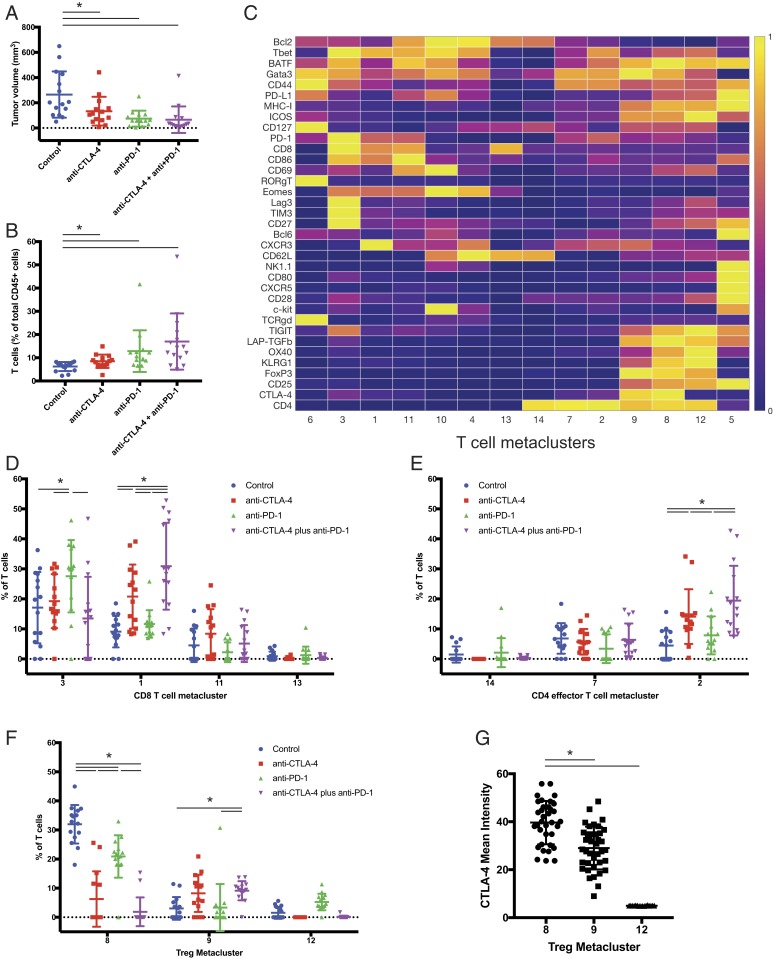
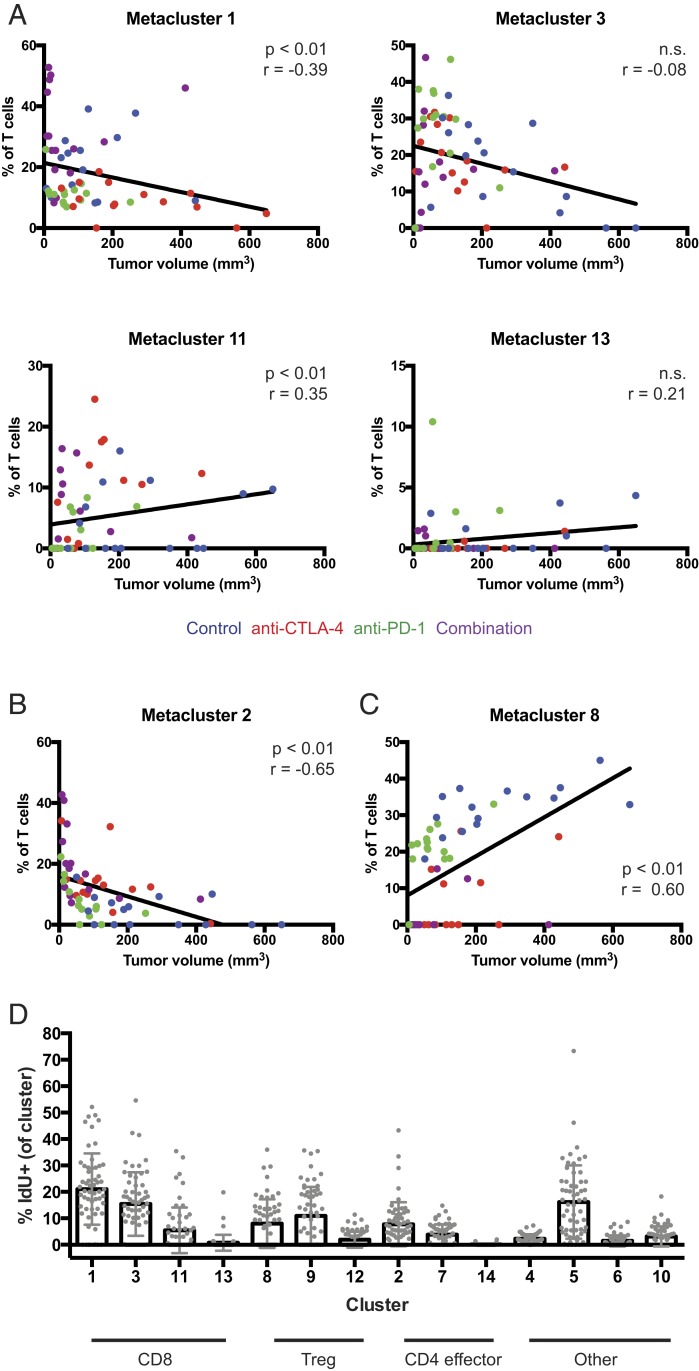
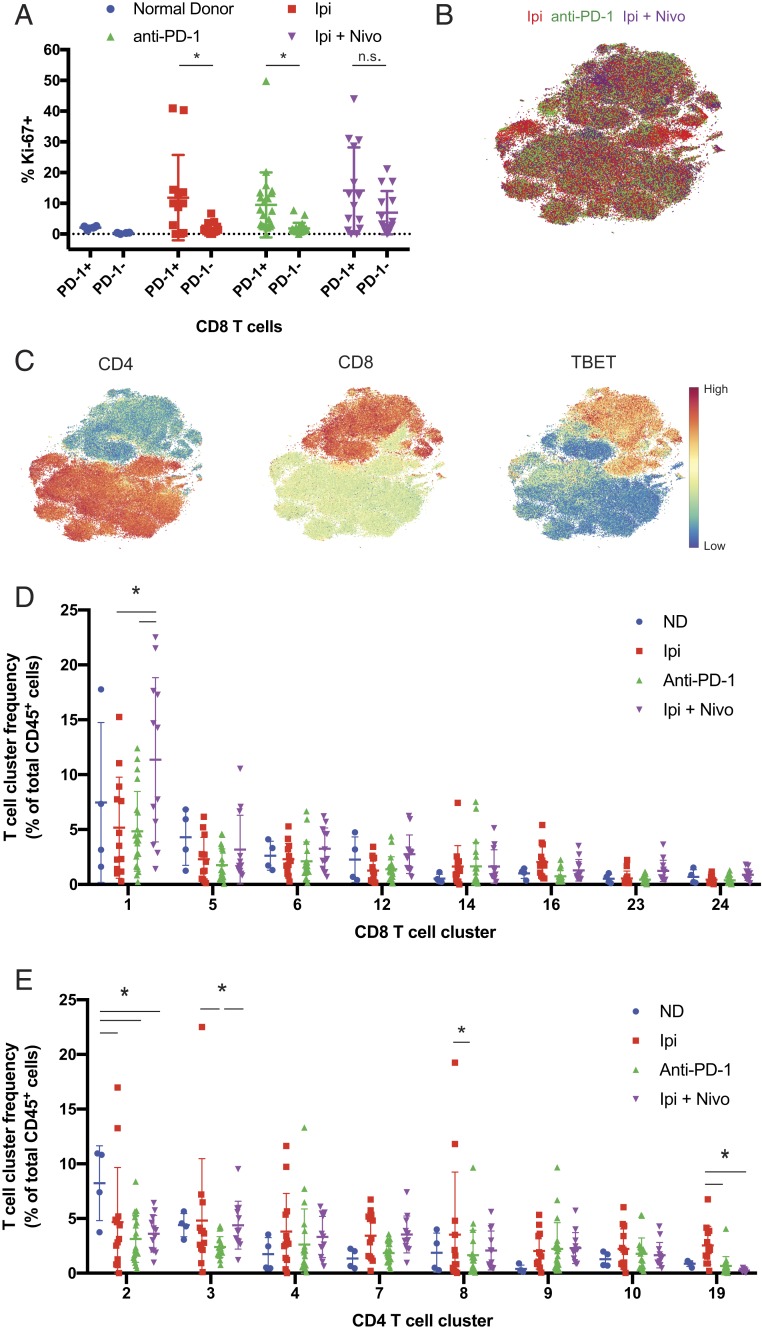
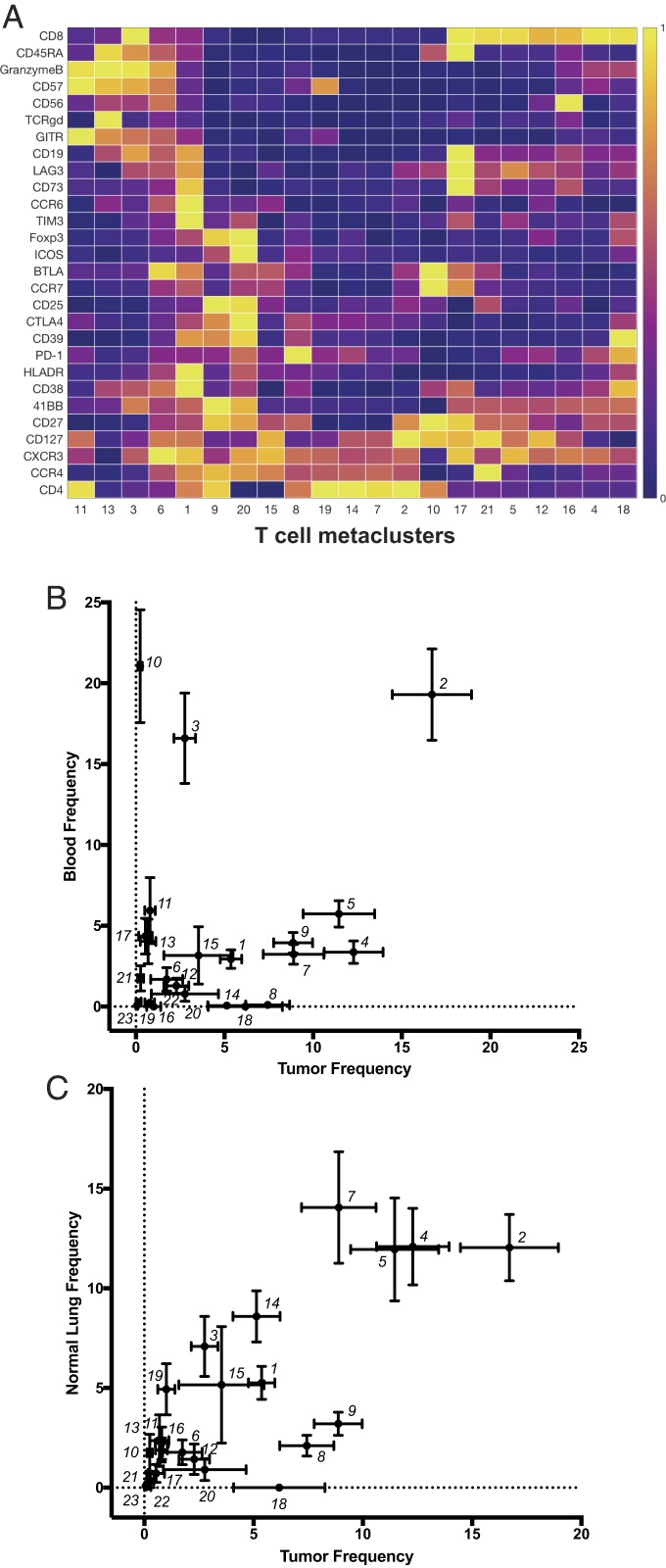
Immune checkpoint blockade therapy targets T cell-negative costimulatory molecules such as cytotoxic T lymphocyte antigen-4 (CTLA-4) and programmed cell death-1 (PD-1). Combination anti–CTLA-4 and anti–PD-1 blockade therapy has enhanced efficacy, but it remains unclear through what mechanisms such effects are mediated. A critical question is whether combination therapy targets and modulates the same T cell populations as monotherapies. Using a mass cytometry-based systems approach, we comprehensively profiled the response of T cell populations to monotherapy and combination anti–CTLA-4 plus anti–PD-1 therapy in syngeneic murine tumors and clinical samples. Most effects of monotherapies were additive in the context of combination therapy; however, multiple combination therapy-specific effects were observed. Highly phenotypically exhausted cluster of differentiation 8 (CD8) T cells expand in frequency following anti–PD-1 monotherapy but not combination therapy, while activated terminally differentiated effector CD8 T cells expand only following combination therapy. Combination therapy also led to further increased frequency of T helper type 1 (Th1)-like CD4 effector T cells even though anti–PD-1 monotherapy is not sufficient to do so. Mass cytometry analyses of peripheral blood from melanoma patients treated with immune checkpoint blockade therapies similarly revealed mostly additive effects on the frequencies of T cell subsets along with unique modulation of terminally differentiated effector CD8 T cells by combination ipilimumab plus nivolumab therapy. Together, these findings indicate that dual blockade of CTLA-4 and PD-1 therapy is sufficient to induce unique cellular responses compared with either monotherapy.
Overview
The claims and statistics of this paper haven’t been checked yet.
Free: it reads the open-access text and checks the first 5 claims that cite a source we can check. Create a free account to check every claim.
Integrity signals
Registry
Cites
Statistics
Figures
Verification
Claims the paper makes
The claims and statistics of this paper haven’t been checked yet.
Free: it reads the open-access text and checks the first 5 claims that cite a source we can check. Create a free account to check every claim.
Claims other papers make about this one
Each is checked against this paper’s own text: does it say what the citing paper says it does?
The source backs part of the claim, not all of it — or backs it for a different population, condition or comparison.
In the citing paper
“Anti-CTLA-4 therapy has been somewhat effective in melanoma and several other cancers, and blockade of the PD-1/PD-L1 axis is now first-line therapy for various tumor types, particularly melanoma and non-small cell lung carcinoma, with their combination being superior at the expense of enhanced adverse effects359,360.”
From TGFβ biology in cancer progression and immunotherapy (2021) · cites this paper as [360]
Experimental — accuracy not yet measuredIn the citing paper
“This is biologically plausible, given that we know that CICB has a distinct mechanism of action compared to anti-PD-1 monotherapy 48 and distinct baseline tumor immune microenvironment signatures 49 .”
From A gut microbial signature for combination immune checkpoint blockade across cancer types (2024) · cites this paper as [48]
In the citing paper
“Wei and colleagues20 have shown that combination therapy with CTLA-4 and PD-1 blockade mediates a switch from expansion of exhausted CD8+ T cells to expansion of activated effector CD8+ T cells.”
From Neoadjuvant nivolumab or nivolumab plus ipilimumab in operable non-small cell lung cancer: the phase 2 randomized NEOSTAR trial (2021) · cites this paper as [20]
In the citing paper
“Anti-CTLA-4 therapy has been somewhat effective in melanoma and several other cancers, and blockade of the PD-1/PD-L1 axis is now first-line therapy for various tumor types, particularly melanoma and non-small cell lung carcinoma, with their combination being superior at the expense of enhanced adverse effects359,360.”
From TGFβ biology in cancer progression and immunotherapy (2021) · cites this paper as [360]
Self-check
Percentages, sums and reported differences re-computed from the paper’s own numbers.
The self-check needs the paper’s full text.
Citations
Cites
PD-1 and PD-L1 Immune Checkpoint Blockade to Treat Breast Cancer
Hartkopf, A. D., Taran, F.-A., Wallwiener, M., Walter, C. B., Krämer, B., Grischke, E.-M., & Brucker, S. Y. (2016) · Breast Care · doi:10.1159/000453569 · Cited by 30,845
Adverse Renal Effects of Immune Checkpoint Inhibitors: A Narrative Review
Wanchoo, R., Karam, S., Uppal, N. N., Barta, V. S., Deray, G., Devoe, C., Launay-Vacher, V., Jhaveri, K. D., & on behalf of Cancer and Kidney International Network Workgroup on Immune Checkpoint Inhibitors (2017) · American Journal of Nephrology · doi:10.1159/000455014 · Cited by 15,256
The blockade of immune checkpoints in cancer immunotherapy
Pardoll, D. M. (2012) · Nature Reviews Cancer · doi:10.1038/nrc3239 · Cited by 13,838 · cited 2×
“This is based on differences between the cellular and molecular mechanisms of CTLA-4– and PD-1– mediated regulation of T cell activation (1, 5).”
BackgroundCombined Nivolumab and Ipilimumab or Monotherapy in Untreated Melanoma
Larkin, J., Chiarion-Sileni, V., Gonzalez, R., Grob, J. J., Cowey, C. L., Lao, C. D., Schadendorf, D., Dummer, R., Smylie, M., Rutkowski, P., et al. (2015) · New England Journal of Medicine · doi:10.1056/nejmoa1504030 · Cited by 8,157 · cited 1×
“Combination ipilimumab plus nivolumab has enhanced efficacy compared with monotherapies in advanced melanoma (8), superior efficacy compared with standard-of-care sunitinib in renal cell carcinoma (9), and higher objective response rates in mismatch repair-deficient/microsatellite instability-high colorectal cancer co…”
BackgroundThe future of immune checkpoint therapy
Sharma, P., & Allison, J. P. (2015) · Science · doi:10.1126/science.aaa8172 · Cited by 4,878
Self-citationNivolumab plus Ipilimumab versus Sunitinib in Advanced Renal-Cell Carcinoma
Motzer, R. J., Tannir, N. M., McDermott, D. F., Arén Frontera, O., Melichar, B., Choueiri, T. K., Plimack, E. R., Barthélémy, P., Porta, C., George, S., et al. (2018) · New England Journal of Medicine · doi:10.1056/nejmoa1712126 · Cited by 4,656
Immune Checkpoint Blockade: A Common Denominator Approach to Cancer Therapy
Topalian, S. L., Drake, C. G., & Pardoll, D. M. (2015) · Cancer Cell · doi:10.1016/j.ccell.2015.03.001 · Cited by 4,229
Pembrolizumab plus axitinib versus sunitinib for advanced renal-cell carcinoma
Rini, B. I., Plimack, E. R., Stus, V., Gafanov, R., Hawkins, R., Nosov, D., Pouliot, F., Alekseev, B., Soulières, D., Melichar, B., et al. (2019) · New England Journal of Medicine · doi:10.1056/nejmoa1816714 · Cited by 3,403
Fundamental Mechanisms of Immune Checkpoint Blockade Therapy
Wei, S. C., Duffy, C. R., & Allison, J. P. (2018) · Cancer Discovery · doi:10.1158/2159-8290.cd-18-0367 · Cited by 3,088 · cited 2×
“This is based on differences between the cellular and molecular mechanisms of CTLA-4– and PD-1– mediated regulation of T cell activation (1, 5).”
BackgroundSelf-citationData-Driven Phenotypic Dissection of AML Reveals Progenitor-like Cells that Correlate with Prognosis
Levine, J. H., Simonds, E. F., Bendall, S. C., Davis, K. L., Amir, E.-A. D., Tadmor, M. D., Litvin, O., Fienberg, H. G., Jager, A., Zunder, E. R., et al. (2015) · Cell · doi:10.1016/j.cell.2015.05.047 · Cited by 2,303 · cited 6×
“To robustly identify tumor-infiltrating T cell populations across multiple replicate cohorts of mice, we utilized a PhenoGraphdriven metaclustering approach (Methods).”
MethodSelf-citation
Research works printed but not linked: 1
- Postow M., “Pooled 3-year overall survival data from phase II and phase III trials of nivolumab (NIVO) combined with ipilimumab (IPI) in advanced melanoma” in 32nd Annual Meeting and Pre-Conference Programs of the Society for Immunotherapy of Cancer (SITC 2017): Part One, Romero P. J., Ed. (Journal for ImmunoTherapy of Cancer, 2017), vol. 5, p. 86.
Cited by
Items 101–200 of 362
Differential effects of PD-1 and CTLA-4 blockade on the melanoma-reactive CD8 T cell response
Gangaev, A., Rozeman, E. A., Rohaan, M. W., Isaeva, O. I., Philips, D., Patiwael, S., van den Berg, J. H., Ribas, A., Schadendorf, D., Schilling, B., et al. (2021) · Proceedings of the National Academy of Sciences · doi:10.1073/pnas.2102849118 · Cited by 43
Sharma, N., Fan, X., Atolagbe, O. T., Ge, Z., Dao, K., Sharma, P., & Allison, J. P. (2024) · The Journal of Experimental Medicine · doi:10.1084/jem.20231263 · Cited by 44
Self-citationThe identification and functional analysis of CD8+PD-1+CD161+ T cells in hepatocellular carcinoma
Li, Z., Zheng, B. J., Qiu, X., Wu, R. T., Wu, T., Yang, S., Zhu, Y., Wu, X., Wang, S., Gu, Z., et al. (2020) · npj Precision Oncology · doi:10.1038/s41698-020-00133-4 · Cited by 46
Cintio, F. D., Bo, M. D., Baboçi, L., Mattia, E. D., Polano, M., & Toffoli, G. (2020) · Frontiers in Neuroscience · doi:10.3389/fnins.2020.603647 · Cited by 43
New approaches to first-line treatment of advanced renal cell carcinoma
George, D. J., Lee, C., & Heng, D. Y. C. (2021) · Therapeutic Advances in Medical Oncology · doi:10.1177/17588359211034708 · Cited by 43
Upregulation of CD47 Is a Host Checkpoint Response to Pathogen Recognition
Tal, M. C., Dulgeroff, L. B. T., Myers, L. M., Cham, L. B., Mayer-Barber, K. D., Bohrer, A. C., Castro, E., Yiu, Y. Y., Angel, C. J. L., Pham, E., et al. (2020) · mBio · doi:10.1128/mbio.01293-20 · Cited by 50
“Antibody (Ab)-mediated blockade of checkpoint molecules such as CTLA4 and PD-1 is being used therapeutically to enhance anticancer immune responses (2, 3), and blockade of CD47 is now in clinical trials to activate macrophagemediated phagocytosis of cancer cells (4–7), which upregulate CD47 expression as an immune eva…”
BackgroundUnraveling the Role of Immune Checkpoints in Leishmaniasis
Silva, R. D. F. E., & von Stebut, E. (2021) · Frontiers in Immunology · doi:10.3389/fimmu.2021.620144 · Cited by 49
Joseph, E. L. M., Kirilovsky, A., Lecoester, B., Sissy, C. E., Boullerot, L., Rangan, L., Marguier, A., Tochet, F., Dosset, M., Boustani, J., et al. (2021) · Journal for ImmunoTherapy of Cancer · doi:10.1136/jitc-2020-002256 · Cited by 47
The Interplay of Tumor Vessels and Immune Cells Affects Immunotherapy of Glioblastoma
Ghosh, M., Lenkiewicz, A. M., & Kaminska, B. (2022) · Biomedicines · doi:10.3390/biomedicines10092292 · Cited by 43
“Anti-CTLA-4 (ipilimumab) and anti-PD-1 (nivolumab) antibodies have been approved by the Food and Drug Administration (FDA) for the treatment of advanced melanoma [61].”
BackgroundRajasekaran, N., Wang, X., Ravindranathan, S., Chin, D. J., Tseng, S.-Y., Klakamp, S. L., Widmann, K., Kapoor, V. N., Vexler, V. S., Keegan, P., et al. (2024) · Cancer Immunology Immunotherapy · doi:10.1007/s00262-024-03635-3 · Cited by 39
T Cell Engaging Immunotherapies, Highlighting Chimeric Antigen Receptor (CAR) T Cell Therapy
Bousser, E. D., Callewaert, N., & Festjens, N. (2021) · Cancers · doi:10.3390/cancers13236067 · Cited by 44
“Examples are the combination of Ipilimumab (anti-CTLA-4) and Nivolumab (anti-PD-1), showing significantly enhanced efficacy in metastatic melanoma patients [15,16] or the inhibition of both TIM-3 and PD-1, preventing the feedback loop of cancer resistance and progression [17].”
BackgroundVorwald, V. M., Davis, D. M., Gulick, R. J. V., Torphy, R. J., Borgers, J. S. W., Klarquist, J. S., Couts, K. L., Amato, C. M., Cogswell, D. T., Fujita, M., et al. (2022) · Clinical & Translational Immunology · doi:10.1002/cti2.1367 · Cited by 35
Uncoupling Therapeutic Efficacy from Immune-Related Adverse Events in Immune Checkpoint Blockade
Hu, W., Wang, G., Wang, Y., Riese, M. J., & You, M. (2020) · iScience · doi:10.1016/j.isci.2020.101580 · Cited by 38
Epigenetic modulation of immunotherapy and implications in head and neck cancer
Zhou, L., Xu, N., Shibata, H., Saloura, V., & Uppaluri, R. (2021) · Cancer and Metastasis Reviews · doi:10.1007/s10555-020-09944-0 · Cited by 37
da Silva, W., Costa, P. A. C., Scalzo, S., Ferreira, H. A. S., Prazeres, P. H. D. M., Campos, C., Alves, M. T. R., da Silva, N. J. A., Santos, A. L. D. C., Guimarães, L. C., et al. (2024) · International Journal of Nanomedicine · doi:10.2147/ijn.s452896 · Cited by 36
Semmrich, M., Marchand, J.-B., Fend, L., Rehn, M., Remy, C., Holmkvist, P., Silvestre, N., Svensson, C., Kleinpeter, P., Deforges, J., et al. (2022) · Journal for ImmunoTherapy of Cancer · doi:10.1136/jitc-2021-003488 · Cited by 37
Morehead, L. C., Garg, S., Wallis, K., Simões, C., Siegel, E. R., Tackett, A. J., & Miousse, I. R. (2023) · Cancers · doi:10.3390/cancers15184467 · Cited by 43
“On days 5, 8, 11, and 13, the mice in 2 groups (CTL+ICI and MR + ICI) were injected intraperitoneally with monoclonal antibodies against PD-1 (RMP1-14, 250 µ g per dose) and CLTA-4 (9D9, 100 µ g per dose) (BioXCell, Lebanon, NH, USA) in sterile PBS or a control PBS solution [30].”
MethodKim, C. G., Hong, M. H., Kim, D., Lee, B. H., Kim, H., Ock, C., Kelly, G., Bang, Y. J., Kim, G., Lee, J. E., et al. (2024) · Clinical Cancer Research · doi:10.1158/1078-0432.ccr-23-3249 · Cited by 38
Shitara, K., Janjigian, Y. Y., Ajani, J. A., Moehler, M. H., Yao, J. G., Wang, X., Chhibber, A., Pandya, D., Shen, L., Garrido, M., et al. (2025) · Nature Medicine · doi:10.1038/s41591-025-03575-0 · Cited by 47
“…distinct subsets of gastroesophageal cancer 17 , microsatellite instability (MSI)-high tumors have the most favorable outcomes with immune checkpoint blockade, whereas enhance expansion of tumor-specific T cells, including CD8 + T cells and T helper cells, compared with monotherapies 8,15 .”
Kines, R. C., Thompson, C. D., Spring, S. M., Li, Z., Pinos, E. D. L., Monks, S. A., & Schiller, J. T. (2021) · Cancer Immunology Research · doi:10.1158/2326-6066.cir-19-0974 · Cited by 33
“Checkpoint inhibitors are currently being combined with a variety of other therapeutic modalities such as radiation (26), chemotherapy (27), oncolytic viruses (28), peptide and protein subunit vaccines (29,30), tumor-infiltrating lymphocyte (TIL) therapy (31), CAR-T therapy (32), as well as in combination with other a…”
BackgroundGe, Y., Zhang, Y., Zhao, K., & Zhu, H. (2022) · Drug Design Development and Therapy · doi:10.2147/dddt.s374672 · Cited by 34
“The addition of CTLA-4 blockade therapy to PD-1 blockade therapy induces an expansive frequency of effector CD4 T cells that is not sufficient for PD-1 inhibitory monotherapy, which is observed in murine colon carcinoma models.(9,42) However, dual blockade may not induce the expansion of phenotypically exhausted CD8 T…”
BackgroundSong, D., Hou, S., Ma, N., Yan, B., & Gao, J. (2024) · Frontiers in Immunology · doi:10.3389/fimmu.2024.1485303 · Cited by 39
The distinct roles of ROS in tumor immunity: from mechanisms to immunotherapeutic applications
Li, J., Huang, C., Tang, P., Wu, R., Wu, Q., & Zhang, C. (2026) · Journal of Hematology & Oncology · doi:10.1186/s13045-026-01780-z · Cited by 42
“Progress has been made in harnessing the power of these innate and adaptive cytotoxic immune cells in immune checkpoint blockade or CAR-T/NK cell immunotherapy [199, 200].”
Rochigneux, P., Lisberg, A. E., Garcia, A. J., Granjeaud, S., Madroszyk, A., Fattori, S., Gonçalvès, A., Devillier, R., Maby, P., Salem, N., et al. (2022) · Clinical Cancer Research · doi:10.1158/1078-0432.ccr-22-1386 · Cited by 34
Therapeutic antibodies for precise cancer immunotherapy: current and future perspectives
Liu, L., & Chen, J. (2022) · Medical Review · doi:10.1515/mr-2022-0033 · Cited by 29
“Finally, studies have shown that combination treatment of anti-PD-L1 and anti-CTLA-4 can generate synergistic antitumor effect by coordinately enhancing the B7-CD28 signaling [88, 89].”
BackgroundImmuno-reactive cancer organoid model to assess effects of the microbiome on cancer immunotherapy
Shelkey, E., Oommen, D., Stirling, E. R., Soto‐Pantoja, D. R., Cook, K. L., Lu, Y., Votanopoulos, K. I., & Söker, S. (2022) · Scientific Reports · doi:10.1038/s41598-022-13930-7 · Cited by 31
Loss of endothelial EMCN drives tumor lung metastasis through the premetastatic niche
Zhang, G., Li, M., Zhou, D.-D., Yang, X., Zhang, W., & Gao, R. (2022) · Journal of Translational Medicine · doi:10.1186/s12967-022-03649-4 · Cited by 37
Sweet Immune Checkpoint Targets to Enhance T Cell Therapy
Derosiers, N., Aguilar, W., Degaramo, D. A., & Posey, A. D. (2022) · The Journal of Immunology · doi:10.4049/jimmunol.2100706 · Cited by 28
β-adrenergic signaling blockade attenuates metastasis through activation of cytotoxic CD4 T cells
Fjæstad, K. Y., Johansen, A. Z., Linder, H., Baker, K. J., Schattefor, M., Czajkowski, N. K., Thorseth, M., Siersbæk, M. S., Kurzay, A., Perez-Penco, M., et al. (2025) · Nature Communications · doi:10.1038/s41467-025-65048-9 · Cited by 28
Targeting the TRIM21-PD-1 axis potentiates immune checkpoint blockade and CAR-T cell therapy
Shi, J., Zhang, Z., Chen, H.-Y., Yao, Y., Ke, S., Yu, K., Shi, J., Xiao, X., He, C., Xiang, B., et al. (2025) · Molecular Therapy · doi:10.1016/j.ymthe.2025.01.047 · Cited by 31
Immune System Efficiency in Cancer and the Microbiota Influence
Barbosa, A. M., Gomes-Gonçalves, A., Castro, A. G., & Torrado, E. (2021) · Pathobiology · doi:10.1159/000512326 · Cited by 26
Pregnancy and Tumour: The Parallels and Differences in Regulatory T Cells
Muralidhara, P., Sood, V., Ashok, V. V., & Bansal, K. (2022) · Frontiers in Immunology · doi:10.3389/fimmu.2022.866937 · Cited by 26
Jagodinsky, J. C., Bates, A. M., Clark, P. A., Sriramaneni, R. N., Havighurst, T. C., Chakravarty, I., Nystuen, E. J., Kim, K., Sondel, P. M., Jin, W. J., et al. (2022) · Journal for ImmunoTherapy of Cancer · doi:10.1136/jitc-2022-005103 · Cited by 26
Bandi, D. S. R., Sarvesh, S., Farran, B., Nagaraju, G. P., & El‐Rayes, B. F. (2023) · Cytokine & Growth Factor Reviews · doi:10.1016/j.cytogfr.2023.06.006 · Cited by 29
Stark, F. C., Agbayani, G., Sandhu, J. K., Akache, B., McPherson, C., Deschatelets, L., Dudani, R., Hewitt, M., Jia, Y., Krishnan, L., et al. (2019) · Biomedicines · doi:10.3390/biomedicines7040091 · Cited by 24
“While it has been reported that anti-PD-1 and anti-CTLA-4 combination therapy increases the incidence and severity of adverse effects, these were observed to be linked to the beneficial anti-tumor immune response; an inherently anti-“self” immune response capable of targeting non-tumor “self” targets throughout the bo…”
BackgroundNamikawa, K., Kiyohara, Y., Takenouchi, T., Uhara, H., Uchi, H., Yoshikawa, S., Takatsuka, S., Koga, H., Wada, N. A., Minami, H., et al. (2020) · The Journal of Dermatology · doi:10.1111/1346-8138.15514 · Cited by 26
Understanding and Overcoming the Inflammatory Toxicities of Immunotherapy
Dougan, M. L. (2020) · Cancer Immunology Research · doi:10.1158/2326-6066.cir-20-0372 · Cited by 26
“Reactivation of previously exhausted T cells, particularly CD8þ T cells, appears to be critical for the antitumor activity of PD-1/PD-L1 blockade (5, 6).”
BackgroundRegulatory T Cells in Cancer Immunotherapy: Basic Research Outcomes and Clinical Directions
Zeng, G., Jin, L., Ying, Q., Chen, H., Thembinkosi, M. C., Yang, C., Zhao, J., Ji, H., Lin, S., Peng, R., et al. (2020) · Cancer Management and Research · doi:10.2147/cmar.s265828 · Cited by 29
Farag, K., Makkouk, A., & Norian, L. A. (2021) · Frontiers in Immunology · doi:10.3389/fimmu.2021.668494 · Cited by 24
“Combination anti-PD-1/anti-CTLA-4 therapy induces a unique immune response wherein activated but terminally differentiated CD8 TILs and T helper 1 (Th1) cells expanded (76).”
BackgroundAnker, J. F., Miller, J. R., Taylor, N., Kyprianou, N., & Tsao, C. (2021) · Cells · doi:10.3390/cells10113231 · Cited by 28
“Dual ICI therapy results in a unique gene expression profile [22] and the expansion of specific T cell subsets [23] not seen with either PD-1/PD-L1- or CTLA-4-based monotherapies.”
BackgroundTran, M., Yoon, S., Teoh, M., Andersen, S. B., Lam, P. Y., Purdue, B. W., Raghubar, A. M., Hanson, S. J., Devitt, K., Jones, K., et al. (2022) · Frontiers in Immunology · doi:10.3389/fimmu.2022.911873 · Cited by 26
“However, mechanisms of action for combinational immunotherapies remain elusive (5) and the number of current druggable targets for cancer-immune cell interaction is extremely limited, compared to the large repertoire of over 2,000 known ligands and receptors.”
BackgroundSchwenck, J., Sonanini, D., Seyfried, D., Ehrlichmann, W., Kienzle, G., Reischl, G., Krezer, P., Wilson, I., Korn, R. L., González-Menéndez, I., et al. (2023) · Theranostics · doi:10.7150/thno.79976 · Cited by 26
“Activated effector CD8+ T cells are an important prerequisite for successful ICT [8].”
BackgroundGao, Y., Feng, C., Ma, J., & Yan, Q. (2024) · Biochemical Pharmacology · doi:10.1016/j.bcp.2024.116048 · Cited by 28
Rana, M., Kansal, R. G., Chaib, M., Teng, B., Morrrison, M., Hayes, D. N., Stanfill, A. G., Shibata, D., Carson, J. A., Makowski, L., et al. (2022) · Molecular Carcinogenesis · doi:10.1002/mc.23401 · Cited by 25
Chung, C. K., Beekmann, U., Kralisch, D., Bierau, K., Chan, A. B., OSSENDORP, F. A., & Cruz, L. J. (2022) · Pharmaceutics · doi:10.3390/pharmaceutics14071351 · Cited by 23
“Of increasing interest are in particular combination therapies, in which, for instance, checkpoint therapies blocking distinct immune pathways are combined to harness more powerful anti-immune responses [3,4].”
BackgroundWu, M. C., Fulgenzi, C. A. M., D’Alessio, A., Cortellini, A., Celsa, C., Manfredi, G. F., Stefanini, B., Wu, L. Y., Huang, Y., Saeed, A., et al. (2024) · JHEP Reports · doi:10.1016/j.jhepr.2024.101232 · Cited by 30
“20,21 23 The largest of these, SWOG S1616, showed a statistically signi fi - cant improvement in PFS for patients with metastatic melanoma who progressed on 1L anti-PD-1 therapy and then received 2L ipi/nivo (6-month PFS 34”
Keshari, S., Shavkunov, A. S., Miao, Q., Saha, A., Minowa, T., Molgora, M., Williams, C. D., Chaib, M., Highsmith, A. M., Pineda, J. E., et al. (2024) · Cell Reports · doi:10.1016/j.celrep.2024.114875 · Cited by 31
Immunotherapy for resectable lung cancer
Dennehy, C., Conroy, M. R., & Forde, P. M. (2025) · Cancer · doi:10.1002/cncr.35849 · Cited by 29
Immunophenotyping: Analytical approaches and role in preclinical development of nanomedicines
Newton, H. S., & Dobrovolskaia, M. A. (2022) · Advanced Drug Delivery Reviews · doi:10.1016/j.addr.2022.114281 · Cited by 28
Niu, G., Zhao, L., Wang, Y., & Jiang, Y. (2022) · ChemPhysMater · doi:10.1016/j.chphma.2022.07.001 · Cited by 23
Aru, B., Pehlivanoğlu, C., Dal, Z., DERELI-CALISKAN, N. N., Gürlü, E., & Demirel, G. Y. (2023) · Frontiers in Immunology · doi:10.3389/fimmu.2023.1108200 · Cited by 26
“1/ CTLA-4 and PD-1/PD-L1 axes may target different mechanisms compared to monotherapies (36), and elucidating such pathways in leukemias may pave the way for novel combinatorial therapies.”
BackgroundDemerle, C., Gorvel, L., Mello, M., Pastor, S., Degos, C., Zarubica, A., Rigotti, F., FIORE, F., Nunès, J. A., MALISSEN, B., et al. (2023) · Journal for ImmunoTherapy of Cancer · doi:10.1136/jitc-2022-006348 · Cited by 23
Genome-wide gain-of-function screening characterized lncRNA regulators for tumor immune response
Wang, Y., Zhao, Y., Guo, W., Yadav, G. S., Bhaskarla, C., Wang, Z., Wang, X., Li, S., Wang, Y., Chen, Y., et al. (2022) · Science Advances · doi:10.1126/sciadv.add0005 · Cited by 21
Using nanoparticles for in situ vaccination against cancer: mechanisms and immunotherapy benefits
Gorbet, M.-J., Singh, A., Mao, C., Fiering, S., & Ranjan, A. (2020) · International Journal of Hyperthermia · doi:10.1080/02656736.2020.1802519 · Cited by 23
“To address this, immunotherapy agents that reverse or circumvent immune suppression and stimulate immune cell activation against tumor cells are increasingly being utilized clinically [4,5].”
Kaczmarek, F., Marcinkowska‐Gapińska, A., Bartkowiak-Wieczorek, J., Nowak, M., Kmiecik, M., Brzezińska, K., Dotka, M., Brosz, P., Firlej, W., & Wojtyła-Buciora, P. (2025) · Cancers · doi:10.3390/cancers17122001 · Cited by 24
Zhang, L., Sun, L., Zhou, Y., Yu, J., Lin, Y., Wasan, H. S., Shen, M., & Ruan, S. (2021) · Frontiers in Oncology · doi:10.3389/fonc.2021.575457 · Cited by 23
Lai, S.-C. A., Gundlapalli, H., Ekiz, H. A., Jiang, A., Fernandez, E., & Welm, A. L. (2021) · Cancer Discovery · doi:10.1158/2159-8290.cd-20-1172 · Cited by 21
“The combination of both CTLA4 and PD-1 blockade on treating murine colon cancer increased Th1-like effectors and expanded both PD-1+ and PD-1 CD8+ T-cell effectors contributing to tumor elimination (87).”
BackgroundSustained release hydrogel for durable locoregional chemoimmunotherapy for BRAF-mutated melanoma
Kim, J., Archer, P. A., Manspeaker, M. P., Avecilla, A. R. C., Pollack, B. P., & Thomas, S. N. (2023) · Journal of Controlled Release · doi:10.1016/j.jconrel.2023.04.028 · Cited by 23
Prinz, L. F., Riët, T., Neureuther, D. F., Lennartz, S., Chrobok, D., Hübbe, H., Uhl, G., Riet, N., Hofmann, P., Hösel, M., et al. (2024) · Cell Reports Medicine · doi:10.1016/j.xcrm.2024.101421 · Cited by 23
Seyhan, A. A., & Carini, C. (2022) · International Journal of Molecular Sciences · doi:10.3390/ijms24010041 · Cited by 24
Chen, Z., Rong, Y., Ding, J., Cheng, X., Chen, X., & He, C. (2023) · Pharmaceutics · doi:10.3390/pharmaceutics15020428 · Cited by 20
Shining a LIGHT on myeloid cell targeted immunotherapy
Shuptrine, C. W., Perez, V. M., Selitsky, S. R., Schreiber, T. H., & Fromm, G. J. (2023) · European Journal of Cancer · doi:10.1016/j.ejca.2023.03.040 · Cited by 21
CytofIn enables integrated analysis of public mass cytometry datasets using generalized anchors
Lo, Y., Keyes, T., Jager, A., Sarno, J., Domizi, P., Majeti, R., Sakamoto, K. M., Lacayo, N. J., Mullighan, C. G., Waters, J., et al. (2022) · Nature Communications · doi:10.1038/s41467-022-28484-5 · Cited by 18
Wang, Z., Cheng, Z., Lu, S., Chard, L. S., Wang, J., Guo, Y., & Wang, Y. (2022) · Frontiers in Immunology · doi:10.3389/fimmu.2022.896627 · Cited by 21
“Immunotherapies using immune checkpoint inhibitors (5, 6), for example targeting the programmed cell death protein 1/ programmed cell death ligand 1 (PD-1/PD-L1) axis, and cellular therapy including the use of chimeric antigen receptor (CAR) T cells (7, 8), have revolutionized the treatment of cancers (9, 10).”
BackgroundBlair, T. C., Alice, A. F., Zebertavage, L., Crittenden, M. R., & Gough, M. J. (2021) · Frontiers in Oncology · doi:10.3389/fonc.2021.653625 · Cited by 20
Gaißler, A., Bochem, J., Spreuer, J., Ottmann, S., Martens, A., Amaral, T. M. S., Wagner, N. B., Claassen, M., Meier, F. E., Terheyden, P. A. M., et al. (2023) · Journal for ImmunoTherapy of Cancer · doi:10.1136/jitc-2023-006802 · Cited by 22
A multidisciplinary approach with immunotherapies for advanced hepatocellular carcinoma
Lee, Y. R. (2023) · Journal of Liver Cancer · doi:10.17998/jlc.2023.09.04 · Cited by 18
“28 In a murine HCC model, the combination therapy of anti-CTLA-4 and anti-PD-1 monoclonal antibodies increased the infiltration of CD8 + and CD4 + T cells into tumors as compared to mono-therapy, while reducing the infiltration of Tregs.”
Ayass, M. A., Tripathi, T., Griko, N., Okyay, T., Nair, R. R., Zhang, J., Zhu, K., Melendez, K., Pashkov, V., & Abi-Mosleh, L. (2024) · Cancers · doi:10.3390/cancers16051041 · Cited by 22
Bullock, K. K., & Richmond, A. J. (2024) · Cancers · doi:10.3390/cancers16122189 · Cited by 24
“A soluble LAG-3 protein that acts as an MHCII agonist is also under development, and a clinical trial is currently recruiting to test this in combination with standard-of-care chemotherapy in metastatic breast cancer patients (NCT05747794).”
BackgroundSchoenfeld, D. A., Djureinovic, D., Su, D. G., Zhang, L., Lu, B. Y., Kamga, L., Mann, J. E., Huck, J. D., Hurwitz, M. E., Braun, D. A., et al. (2024) · JCI Insight · doi:10.1172/jci.insight.184545 · Cited by 22
Ninomiya, T., Kemmotsu, N., Mukohara, F., Magari, M., Miyamoto, A., Ueda, Y., Ishino, T., Nagasaki, J., Fujiwara, T., Yamamoto, H., et al. (2025) · Cancer Research · doi:10.1158/0008-5472.can-24-2274 · Cited by 17
Damei, I., Caidi, A., Auclin, É., Adam, J., Mella, S., Hasan, M., Tartour, É., Robert, C., Corgnac, S., & Mami‐Chouaib, F. (2025) · Nature Communications · doi:10.1038/s41467-025-60657-w · Cited by 24
“The CD8 T-cell population is also expanded by anti-PD-1 monotherapy in murine tumour models and human melanoma, whereasTh1-like CD4 Tcellsproliferate inresponse to anti-PD-1-plus-anti-CTLA-4 combination therapy 41 .”
Jacobs, L., Yshii, L., Junius, S., Geukens, N., Liston, A., Hollevoet, K., & Declerck, P. J. (2021) · Cancer Gene Therapy · doi:10.1038/s41417-021-00403-8 · Cited by 16
Opposing functions of distinct regulatory T cell subsets in colorectal cancer
Huang, X., Feng, D., Mitra, S., Andretta, E. S., Hooshdaran, N., Ghelani, A. P., Wang, E. Y., Frost, J. N., Lawless, V. R., Vancheswaran, A., et al. (2025) · Immunity · doi:10.1016/j.immuni.2025.11.014 · Cited by 21
“6 Contrary to antibody-mediated PD-1 blockage sensitivity of MC38, 25 AKP tumors were resistant to this therapeutic modality, which resulted in a mild increase in Treg cells with no significant changes in tumor volume or CD8 + T cell activation status (Figures 1D–1F).”
Guo, R., Peng, J.-Z., Li, Y., & Li, X. (2022) · Cell Cycle · doi:10.1080/15384101.2022.2112007 · Cited by 17
“Combination therapy of anti-CTLA-4 and anti-PD-1 sufficiently induce increased frequency of T helper type 1 (Th1)-like CD4 effector T cells in malignant melanoma [25].”
BackgroundAtkins, M. B., Abu‐Sbeih, H., Ascierto, P. A., Bishop, M., Chen, D. S., Dhodapkar, M. V., Emens, L. A., Ernstoff, M. S., Ferris, R. L., Greten, T. F., et al. (2022) · Journal for ImmunoTherapy of Cancer · doi:10.1136/jitc-2022-005413 · Cited by 16
Geva, R., Alon, G., Nathanson, M., Bar-David, S., Nevo, N., Aizic, A., Peles-Avraham, S., Lahat, G., & Nizri, E. (2023) · Annals of Surgical Oncology · doi:10.1245/s10434-022-13025-7 · Cited by 16
“1) and according to reports on the activation of CD8? cells in experimental model and melanoma patients.(13)”
BackgroundImmune checkpoint inhibition (ICI) in current systemic therapies for hepatocellular carcinoma (HCC)
van Bömmel, F., Berg, T., & Lordick, F. (2023) · ESMO Gastrointestinal Oncology · doi:10.1016/j.esmogo.2023.08.004 · Cited by 17
“25 In a clinical phase Ib/ II study, combined CTLA-4 and PD-1/PD-L1 produced an initial burst of peripheral T cells within patients receiving a single high dose of tremelimumab followed by durvalumab monotherapy.”
Monoclonal Antibodies to CTLA-4 with Focus on Ipilimumab
Graziani, G., Lisi, L., Tentori, L., & Navarra, P. (2022) · Experientia supplementum · doi:10.1007/978-3-030-91311-3_10 · Cited by 21
Treatment for hepatocellular carcinoma after immunotherapy
Chan, L. L., Kwong, T. T., Yau, J., & Chan, S. L. (2025) · Annals of Hepatology · doi:10.1016/j.aohep.2025.101781 · Cited by 20
“Preclinical studies have shown that addition of an anti-CTLA-4 agent to PD-(L)1 therapy led to enhance anti-tumour ef fi cacy such as greater expansion of activated CD8+ T-cells, expansion of Th1-like CD4 effector T-cells, and decreases in Tregs [51].”
Peng, L., Liang, W., Mu, D., Xu, S., Hong, S., Stebbing, J., Liang, F., & Xia, Y. (2021) · Frontiers in Oncology · doi:10.3389/fonc.2021.657545 · Cited by 18
“Dual blockade of CTLA-4 and PD-1 therapy is sufficient to induce unique cellular responses compared with either monotherapy, which has been proven in preclinical studies (41).”
BackgroundRay, S. K., Meshram, Y., & Mukherjee, S. (2020) · Current Molecular Medicine · doi:10.2174/1566524020666200824103749 · Cited by 16
Analysis of immune subtypes across the epithelial-mesenchymal plasticity spectrum
Chakraborty, P., Chen, E., McMullen, I., Armstrong, A. J., Jolly, M. K., & Somarelli, J. A. (2021) · Computational and Structural Biotechnology Journal · doi:10.1016/j.csbj.2021.06.023 · Cited by 15
“We next investigated the levels of different immune checkpoint markers across the immune subtypes: CTLA-4 (cytotoxic T lymphocyte antigen-4), CD274 (PD-L1; programmed death-ligand 1) [92], LAG3 (lymphocyte activation gene 3) [93], CD276 (B7-H3) ([94], CD47 (cluster of differentiation 47) [95], and HAVCR2 (TIM-3) and i…”
BackgroundPapadakos, S. P., Stergiou, I. Ε., Gkolemi, N., Arvanitakis, K., & Theocharis, S. E. (2023) · Cancers · doi:10.3390/cancers15133434 · Cited by 16
“To expand the potential benefits of immunotherapy to a wider range of patients, combination approaches have been investigated [124].”
BackgroundCheng, T., Wu, Y., & Wu, R. (2025) · Frontiers in Immunology · doi:10.3389/fimmu.2025.1616872 · Cited by 14
The Microbiome in Advanced Melanoma: Where Are We Now?
Fortman, D. D., Hurd, D. E., & Davar, D. (2023) · Current Oncology Reports · doi:10.1007/s11912-023-01431-3 · Cited by 14
Li, Z., Xie, Y., Wang, T., Liu, Y., Tian, Y. E., & Hua, Y. (2025) · Frontiers in Immunology · doi:10.3389/fimmu.2025.1631273 · Cited by 14
Mielgo-Rubio, X., Calvo, V., Luna, J., Remón, J., Martín, M., Berraondo, P., Jarabo, J. R., Higuera, O., Conde, E., de Castro, J., et al. (2020) · Cancers · doi:10.3390/cancers12113459 · Cited by 12
“The combination of anti-PD-1 and anti-CTLA-4 promotes an immune response characterized by an increase of CD4+ICOS+T lymphocytes and a different CD8+ population than the exhausted CD8+PD-1+TIM-3+LAG3+T lymphocytes that dominate the response after anti-PD1 monotherapy [13].”
BackgroundRegulation of CD4 T Cell Responses by the Transcription Factor Eomesodermin
Dhume, K., Kaye, B., & McKinstry, K. K. (2022) · Biomolecules · doi:10.3390/biom12111549 · Cited by 13
“In support of this hypothesis, cancer patients given anti-CTLA-4 and anti-PD-1 therapy develop tumor-specific cytolytic CD4 T cells marked by enhanced Eomes expression [118].”
BackgroundThe future of targeting cytotoxic T-lymphocyte-associated protein-4: Is there a role?
Giacomo, A. M. D., Lahn, M., Eggermont, A. M. M., Fox, B. A., Ibrahim, R. A., Sharma, P., Allison, J. P., & Maio, M. (2023) · European Journal of Cancer · doi:10.1016/j.ejca.2023.113501 · Cited by 14
Self-citationWang, V. G., Liu, Z., Martínek, J., pour, A. F., Zhou, J., Boruchov, H., Ray, K., Palucka, K., & Chuang, J. H. (2024) · Communications Biology · doi:10.1038/s42003-024-06902-2 · Cited by 13
Zhao, Y., Wu, Y., Islam, K., Paul, R., Zhou, Y., Qin, X., Li, Q., & Liu, Y. (2024) · ACS Applied Materials & Interfaces · doi:10.1021/acsami.4c00391 · Cited by 25
Increased Response to Immune Checkpoint Inhibitors with Dietary Methionine RestrictionPreprint
Morehead, L. C., Garg, S., Wallis, K., Siegel, E. R., Tackett, A. J., & Miousse, I. R. (2023) · bioRxiv (Cold Spring Harbor Laboratory) · doi:10.1101/2023.04.05.535695 · Cited by 12
“On days 5, 8, 11, and 13, mice in 2 groups (CTL+ICI and MR+ICI) were injected intraperitoneally with monoclonal antibodies against PD-1 (RMP1-14, 250 μg per dose) and CLTA-4 (9D9, 100 μg per dose) (BioXCell, Lebanon, NH) in sterile PBS or a control PBS solution (25).”
MethodHuang, S., Zheng, G., & Yang, K. (2023) · World Journal of Surgical Oncology · doi:10.1186/s12957-023-03212-5 · Cited by 12
“Ipilimumab (PD-1 inhibitor) is an antibody of IgG1 that facilitates participation in ADCC or CDC, while tremelimumab (PD-L1 inhibitor) is an antibody of IgG2 which does not engage in these two pathways [49, 50].”
BackgroundCan gut microbes predict efficacy and toxicity of combined immune checkpoint blockade?
Lam, K. C., & Goldszmid, R. S. (2021) · Cancer Cell · doi:10.1016/j.ccell.2021.09.013 · Cited by 13
Khalifa, R., Elsese, N., El-Desouky, K. I., Shaair, H., & Helal, D. S. (2021) · Journal of Immunoassay and Immunochemistry · doi:10.1080/15321819.2021.1981377 · Cited by 11
“The peculiar finding that CTLA-4 is expressed and functioning in endometrial tumor cells encourages the possibility of antitumor therapeutic approach based on targeting CTLA-4 .[29] Zhang et al.”
BackgroundSingh, R. K., Srivastava, P., & Manna, P. P. (2024) · Medical Oncology · doi:10.1007/s12032-023-02289-y · Cited by 12
Special Review: The future of Immunotherapy
Melief, C. J. M. (2020) · Immunotherapy Advances · doi:10.1093/immadv/ltaa005 · Cited by 13
Immune Resistance in Glioblastoma: Understanding the Barriers to ICI and CAR-T Cell Therapy
Eckert, T., Zobaer, M. S., Boulos, J., Alexander-Bryant, A. A., Baker, T. G., Rivers, C., Das, A., Vandergrift, W. A., Santos, J. L. M., Zukas, A. M., et al. (2025) · Cancers · doi:10.3390/cancers17030462 · Cited by 13
“…anti-PD-1/PD-L1 activates the ability of cytotoxic T cells to lyse cancer cells, resulting in mutually synergistic e ff ects when delivered together [31]. respective outcomes involving ICI as a monotherapy, combination therapy, or as neoadjuvant therapy are discussed below and depicted in Table 1.”
Single-cell RNA sequencing: enhancing the predictive accuracy of tumor immunotherapy efficacy
Zhou, W., Huang, Z., Wu, Z., Tang, M., Zhu, L., Shi, W., Wang, Q., & Feng, L. (2025) · Essays in Biochemistry · doi:10.1042/ebc20253017 · Cited by 10
“Additional research has demonstrated that the combination of anti-CTLA-4 and anti-PD-1 therapies can augment the proportion of Th1-like CD4 + effector T cells [33].”
Metadata
- Authors
- Wei, S. C., Anang, N.-A. A. S., Sharma, R., Andrews, M. C., Reuben, A., Levine, J. H., Cogdill, A. P., Mancuso, J. J., Wargo, J. A., Pe’er, D., & Allison, J. P.
- Affiliations
- The University of Texas MD Anderson Cancer Center (US)
- Columbia University (US)
- Computational and Systems Biology Program, Sloan Kettering Institute, New York, NY 10065;
- Memorial Sloan Kettering Cancer Center (US)
- Corresponding author
- Allison, James P.
- ORCID
- Venue
- Proceedings of the National Academy of Sciences
- Publisher
- National Academy of Sciences
- Published
- 2019-10-21
- Volume
- 116
- Issue
- 45
- Pages
- 22699-22709
- ISSN
- 0027-8424 (ISSN-L)
- 1091-6490
- PMC
- PMC6842624
- OpenAlex
- W2981443129
- Cited by
- 359
- References
- 55
- Citations by year
- 2026: 38 · 2025: 42 · 2024: 47 · 2023: 52 · 2022: 69 · 2021: 63 · 2020: 47 · 2019: 1
- FWCI
- 18.88
- Type
- journal article
- Language
- en
- Open access
- hybrid
- doi.org
- Licence
- Locations
- Proceedings of the National Academy of Sciences (publishedVersion, cc-by-nc-nd)
- Europe PMC (PubMed Central) (publishedVersion, cc-by-nc-nd)
- PubMed Central (publishedVersion, cc-by-nc-nd)
- PubMed (publishedVersion)
- Funders
- HHS | NIH | National Cancer Institute (P30CA16672)
- Cancer Prevention and Research Institute of Texas (R1203)
- National Health and Medical Research Council of Australia (#1148680)
- Topics
- Health Sciences › Medicine › Oncology › Cancer Immunotherapy and Biomarkers
- Life Sciences › Immunology and Microbiology › Immunology › T-cell and B-cell Immunology
- Life Sciences › Immunology and Microbiology › Immunology › Immunotherapy and Immune Responses
- Keywords
- immune checkpoint blockade, anti-CTLA-4, anti-PD-1, combination immunotherapy, T cell exhaustion, CD8+ T cells, melanoma, ipilimumab, nivolumab, mass cytometry, T cell subsets
- MeSH terms
- Animals, Immunotherapy, Neoplasms, T-Lymphocyte Subsets, Lymphocytes, Tumor-Infiltrating, CD8-Positive T-Lymphocytes, Mice, CTLA-4 Antigen, Programmed Cell Death 1 Receptor
About these checks
Registry, retraction, Cites and statistics results are computed, not judged, with one exception: a printed reference that no index lists is read once by a model before it counts as a citation error. Claims are extracted by a model and kept only when their quote appears verbatim in the text; each cited source is then checked, with a model’s help, for whether it says what the claim relies on. Those verdicts can be wrong — read the claim’s quote and the cited source before relying on one.
Statistics and arithmetic are recomputed, not judged.
Confidence bands are shown only for fields calibrated on our annotated test set. None is calibrated yet, so no band is shown.
What counts as a claim ›How we measure confidence ›How we check this ›
Are you an author, or do you see a problem with this page? Request a review
Data sources
Bibliographic data: Semantic Scholar, OpenAlex, Crossref.
Contains information from the Semantic Scholar Academic Graph Datasets, made available under the ODC Attribution License (ODC-BY 1.0).
Semantic Scholar’s data is described in: Kinney, R., et al. (2023). The Semantic Scholar Open Data Platform. arXiv:2301.10140.
