

Combination anti–CTLA-4 plus anti–PD-1 checkpoint blockade utilizes cellular mechanisms partially distinct from monotherapies
Open accessThe DOI matches its Crossref record; 55 of the 55 references it cites were found in a registry or an index.
Abstract
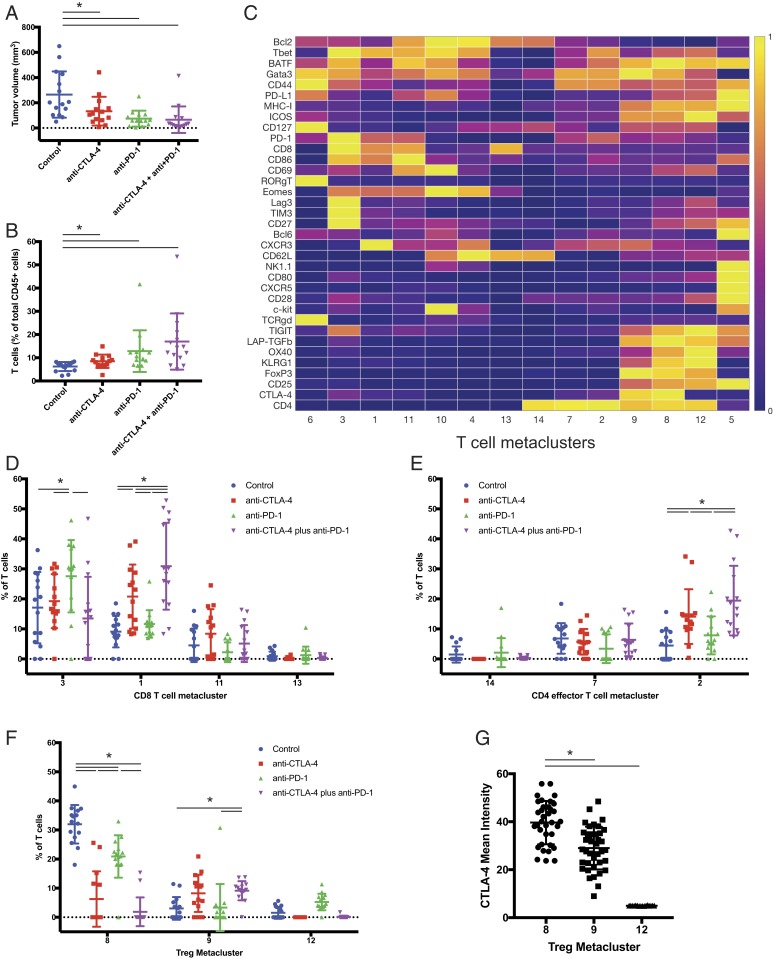
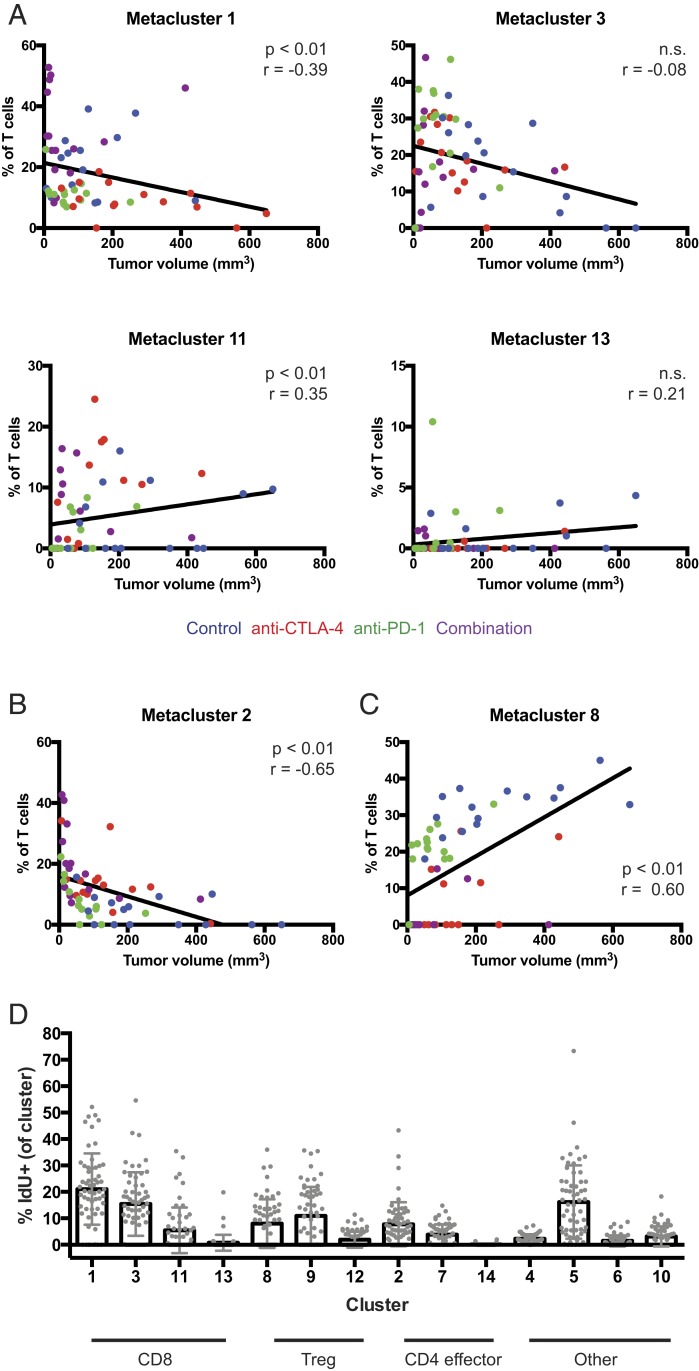
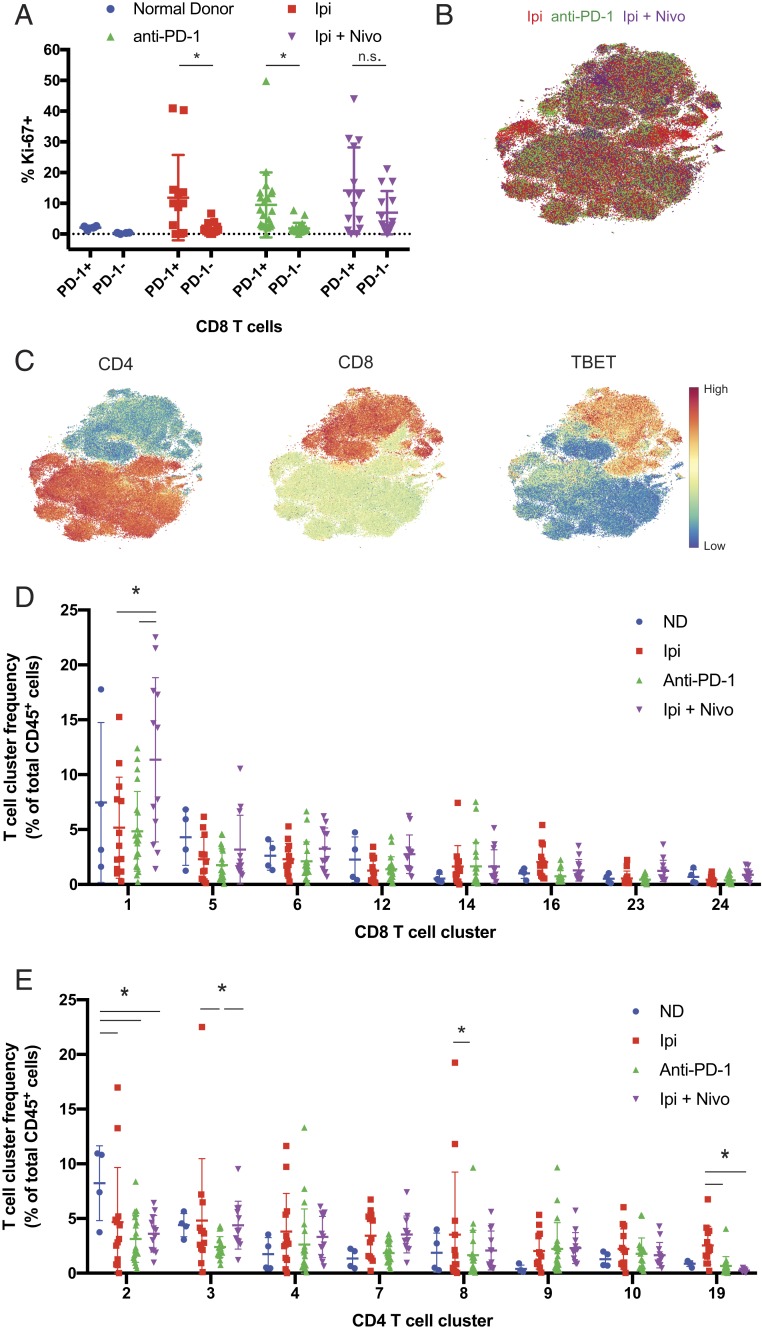
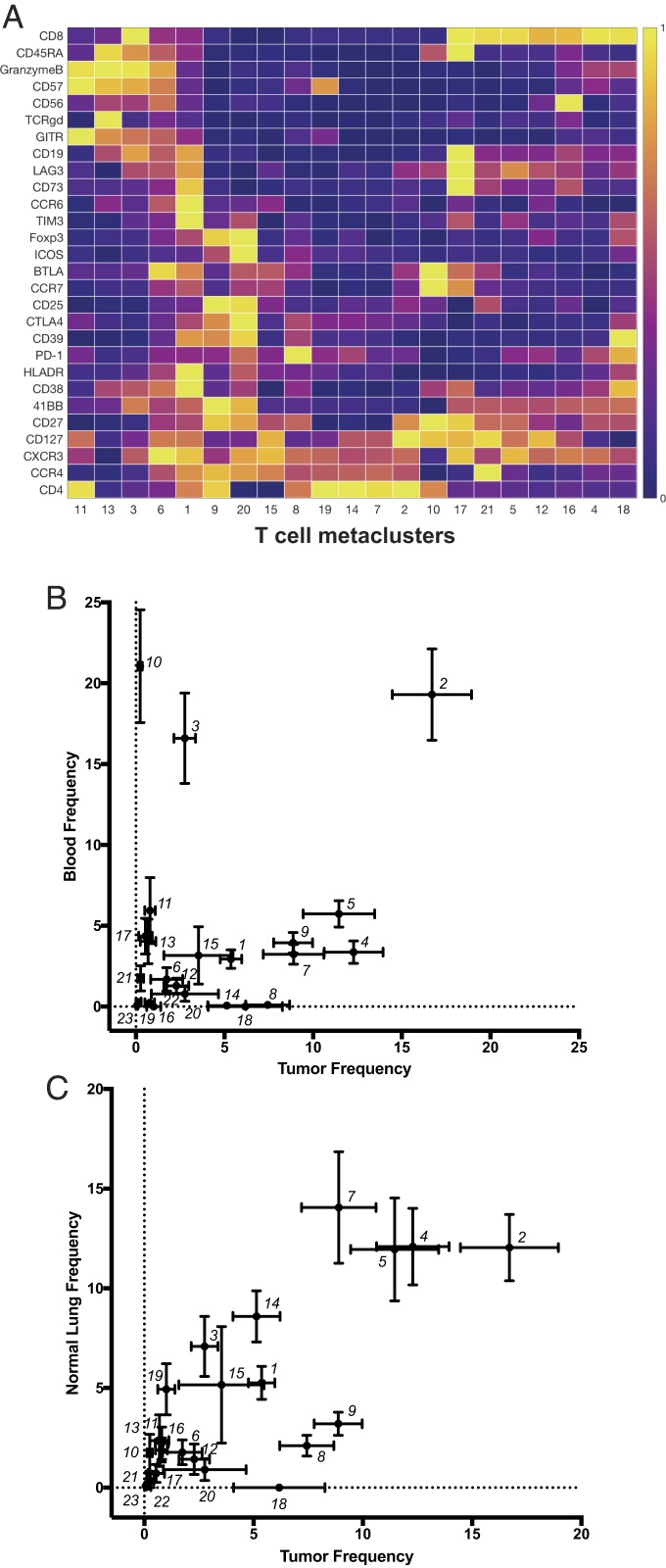
Immune checkpoint blockade therapy targets T cell-negative costimulatory molecules such as cytotoxic T lymphocyte antigen-4 (CTLA-4) and programmed cell death-1 (PD-1). Combination anti–CTLA-4 and anti–PD-1 blockade therapy has enhanced efficacy, but it remains unclear through what mechanisms such effects are mediated. A critical question is whether combination therapy targets and modulates the same T cell populations as monotherapies. Using a mass cytometry-based systems approach, we comprehensively profiled the response of T cell populations to monotherapy and combination anti–CTLA-4 plus anti–PD-1 therapy in syngeneic murine tumors and clinical samples. Most effects of monotherapies were additive in the context of combination therapy; however, multiple combination therapy-specific effects were observed. Highly phenotypically exhausted cluster of differentiation 8 (CD8) T cells expand in frequency following anti–PD-1 monotherapy but not combination therapy, while activated terminally differentiated effector CD8 T cells expand only following combination therapy. Combination therapy also led to further increased frequency of T helper type 1 (Th1)-like CD4 effector T cells even though anti–PD-1 monotherapy is not sufficient to do so. Mass cytometry analyses of peripheral blood from melanoma patients treated with immune checkpoint blockade therapies similarly revealed mostly additive effects on the frequencies of T cell subsets along with unique modulation of terminally differentiated effector CD8 T cells by combination ipilimumab plus nivolumab therapy. Together, these findings indicate that dual blockade of CTLA-4 and PD-1 therapy is sufficient to induce unique cellular responses compared with either monotherapy.
Overview
The claims and statistics of this paper haven’t been checked yet.
Free: it reads the open-access text and checks the first 5 claims that cite a source we can check. Create a free account to check every claim.
Integrity signals
Registry
Cites
Statistics
Figures
Verification
Claims the paper makes
The claims and statistics of this paper haven’t been checked yet.
Free: it reads the open-access text and checks the first 5 claims that cite a source we can check. Create a free account to check every claim.
Claims other papers make about this one
Each is checked against this paper’s own text: does it say what the citing paper says it does?
The source backs part of the claim, not all of it — or backs it for a different population, condition or comparison.
In the citing paper
“Anti-CTLA-4 therapy has been somewhat effective in melanoma and several other cancers, and blockade of the PD-1/PD-L1 axis is now first-line therapy for various tumor types, particularly melanoma and non-small cell lung carcinoma, with their combination being superior at the expense of enhanced adverse effects359,360.”
From TGFβ biology in cancer progression and immunotherapy (2021) · cites this paper as [360]
Experimental — accuracy not yet measuredIn the citing paper
“This is biologically plausible, given that we know that CICB has a distinct mechanism of action compared to anti-PD-1 monotherapy 48 and distinct baseline tumor immune microenvironment signatures 49 .”
From A gut microbial signature for combination immune checkpoint blockade across cancer types (2024) · cites this paper as [48]
In the citing paper
“Wei and colleagues20 have shown that combination therapy with CTLA-4 and PD-1 blockade mediates a switch from expansion of exhausted CD8+ T cells to expansion of activated effector CD8+ T cells.”
From Neoadjuvant nivolumab or nivolumab plus ipilimumab in operable non-small cell lung cancer: the phase 2 randomized NEOSTAR trial (2021) · cites this paper as [20]
In the citing paper
“Anti-CTLA-4 therapy has been somewhat effective in melanoma and several other cancers, and blockade of the PD-1/PD-L1 axis is now first-line therapy for various tumor types, particularly melanoma and non-small cell lung carcinoma, with their combination being superior at the expense of enhanced adverse effects359,360.”
From TGFβ biology in cancer progression and immunotherapy (2021) · cites this paper as [360]
Self-check
Percentages, sums and reported differences re-computed from the paper’s own numbers.
The self-check needs the paper’s full text.
Citations
Cites
PD-1 and PD-L1 Immune Checkpoint Blockade to Treat Breast Cancer
Hartkopf, A. D., Taran, F.-A., Wallwiener, M., Walter, C. B., Krämer, B., Grischke, E.-M., & Brucker, S. Y. (2016) · Breast Care · doi:10.1159/000453569 · Cited by 30,845
Adverse Renal Effects of Immune Checkpoint Inhibitors: A Narrative Review
Wanchoo, R., Karam, S., Uppal, N. N., Barta, V. S., Deray, G., Devoe, C., Launay-Vacher, V., Jhaveri, K. D., & on behalf of Cancer and Kidney International Network Workgroup on Immune Checkpoint Inhibitors (2017) · American Journal of Nephrology · doi:10.1159/000455014 · Cited by 15,256
The blockade of immune checkpoints in cancer immunotherapy
Pardoll, D. M. (2012) · Nature Reviews Cancer · doi:10.1038/nrc3239 · Cited by 13,838 · cited 2×
“This is based on differences between the cellular and molecular mechanisms of CTLA-4– and PD-1– mediated regulation of T cell activation (1, 5).”
BackgroundCombined Nivolumab and Ipilimumab or Monotherapy in Untreated Melanoma
Larkin, J., Chiarion-Sileni, V., Gonzalez, R., Grob, J. J., Cowey, C. L., Lao, C. D., Schadendorf, D., Dummer, R., Smylie, M., Rutkowski, P., et al. (2015) · New England Journal of Medicine · doi:10.1056/nejmoa1504030 · Cited by 8,157 · cited 1×
“Combination ipilimumab plus nivolumab has enhanced efficacy compared with monotherapies in advanced melanoma (8), superior efficacy compared with standard-of-care sunitinib in renal cell carcinoma (9), and higher objective response rates in mismatch repair-deficient/microsatellite instability-high colorectal cancer co…”
BackgroundThe future of immune checkpoint therapy
Sharma, P., & Allison, J. P. (2015) · Science · doi:10.1126/science.aaa8172 · Cited by 4,878
Self-citationNivolumab plus Ipilimumab versus Sunitinib in Advanced Renal-Cell Carcinoma
Motzer, R. J., Tannir, N. M., McDermott, D. F., Arén Frontera, O., Melichar, B., Choueiri, T. K., Plimack, E. R., Barthélémy, P., Porta, C., George, S., et al. (2018) · New England Journal of Medicine · doi:10.1056/nejmoa1712126 · Cited by 4,656
Immune Checkpoint Blockade: A Common Denominator Approach to Cancer Therapy
Topalian, S. L., Drake, C. G., & Pardoll, D. M. (2015) · Cancer Cell · doi:10.1016/j.ccell.2015.03.001 · Cited by 4,229
Pembrolizumab plus axitinib versus sunitinib for advanced renal-cell carcinoma
Rini, B. I., Plimack, E. R., Stus, V., Gafanov, R., Hawkins, R., Nosov, D., Pouliot, F., Alekseev, B., Soulières, D., Melichar, B., et al. (2019) · New England Journal of Medicine · doi:10.1056/nejmoa1816714 · Cited by 3,403
Fundamental Mechanisms of Immune Checkpoint Blockade Therapy
Wei, S. C., Duffy, C. R., & Allison, J. P. (2018) · Cancer Discovery · doi:10.1158/2159-8290.cd-18-0367 · Cited by 3,088 · cited 2×
“This is based on differences between the cellular and molecular mechanisms of CTLA-4– and PD-1– mediated regulation of T cell activation (1, 5).”
BackgroundSelf-citationData-Driven Phenotypic Dissection of AML Reveals Progenitor-like Cells that Correlate with Prognosis
Levine, J. H., Simonds, E. F., Bendall, S. C., Davis, K. L., Amir, E.-A. D., Tadmor, M. D., Litvin, O., Fienberg, H. G., Jager, A., Zunder, E. R., et al. (2015) · Cell · doi:10.1016/j.cell.2015.05.047 · Cited by 2,303 · cited 6×
“To robustly identify tumor-infiltrating T cell populations across multiple replicate cohorts of mice, we utilized a PhenoGraphdriven metaclustering approach (Methods).”
MethodSelf-citation
Research works printed but not linked: 1
- Postow M., “Pooled 3-year overall survival data from phase II and phase III trials of nivolumab (NIVO) combined with ipilimumab (IPI) in advanced melanoma” in 32nd Annual Meeting and Pre-Conference Programs of the Society for Immunotherapy of Cancer (SITC 2017): Part One, Romero P. J., Ed. (Journal for ImmunoTherapy of Cancer, 2017), vol. 5, p. 86.
Cited by
TGFβ biology in cancer progression and immunotherapy
Derynck, R., Turley, S. J., & Akhurst, R. J. (2021) · Nature Reviews Clinical Oncology · doi:10.1038/s41571-020-0403-1 · Cited by 944
Cascone, T., William, W. N., Weissferdt, A., Leung, C. H., Lin, H. Y., Pataer, A., Godoy, M. C. B., Carter, B. W., Federico, L., Reuben, A., et al. (2021) · Nature Medicine · doi:10.1038/s41591-020-01224-2 · Cited by 618
Self-citationImmunity, endothelial injury and complement-induced coagulopathy in COVID-19
Perico, L., Benigni, A., Casiraghi, F., Ng, L. F. P., Renia, L., & Remuzzi, G. (2021) · Nature Reviews Nephrology · doi:10.1038/s41581-020-00357-4 · Cited by 607
Tekguc, M., Wing, J. B., Osaki, M., Long, J., & Sakaguchi, S. (2021) · Proceedings of the National Academy of Sciences · doi:10.1073/pnas.2023739118 · Cited by 490
“Given the effectiveness of combination therapies with anti–CTLA-4 and anti–PD-1/PD-L1 for advanced stage cancers (50), our results imply that these combination therapies may strongly interfere with Treg-mediated immune suppression at both the priming and effector phases of T cell immune responses, thereby contributing…”
BackgroundLow-Dose Radiotherapy Reverses Tumor Immune Desertification and Resistance to Immunotherapy
Herrera, F. G., Ronet, C., Ochoa de Olza, M., Barras, D., Crespo, I., Andreatta, M., Corria-Osorio, J., Spill, A., Benedetti, F., Genolet, R., et al. (2022) · Cancer Discovery · doi:10.1158/2159-8290.cd-21-0003 · Cited by 451
“To attenuate macrophage suppression, we used aspirin, which prevents prostaglandin E 2 (PGE 2 )-mediated inhibition of DCs, attenuates Tregs and myeloid-derived suppressor cells (101, 102), and reduces endothelial FasL-mediated killing of homing effector T cells (51).”
Dissecting the mechanisms of immune checkpoint therapy
Sharma, P., & Allison, J. P. (2020) · Nature Reviews Immunology · doi:10.1038/s41577-020-0275-8 · Cited by 434
Self-citationGrasso, C. S., Tsoi, J., Onyshchenko, M., Abril-Rodriguez, G., Ross-Macdonald, P., Wind-Rotolo, M., Champhekar, A., Medina, E., Torrejon, D. Y., Shin, D. S., et al. (2020) · Cancer Cell · doi:10.1016/j.ccell.2020.08.005 · Cited by 390
“In preclinical modeling (Curran et al., 2010; Wei et al., 2017, 2019) and in clinical series (Larkin et al., 2019), the combination of anti-PD-1 and anti-CTLA-4 is arguably a stronger immune stimulation than either therapy alone, thereby shifting the balance in favor of an antitumor immune response…”
BackgroundApoptosis Deregulation and the Development of Cancer Multi-Drug Resistance
Neophytou, C. M., Trougakos, I. P., Erin, N., & Papageorgis, P. (2021) · Cancers · doi:10.3390/cancers13174363 · Cited by 371
Combination immunotherapy for hepatocellular carcinoma
Rimassa, L., Finn, R. S., & Sangro, B. (2023) · Journal of Hepatology · doi:10.1016/j.jhep.2023.03.003 · Cited by 359
Adaptive immune resistance at the tumour site: mechanisms and therapeutic opportunities
Kim, T. K., Vandsemb, E. N., Herbst, R. S., & Chen, L. (2022) · Nature Reviews Drug Discovery · doi:10.1038/s41573-022-00493-5 · Cited by 351
Independent Drug Action in Combination Therapy: Implications for Precision Oncology
Plana, D., Palmer, A. C., & Sorger, P. K. (2022) · Cancer Discovery · doi:10.1158/2159-8290.cd-21-0212 · Cited by 307
Gao, J., Navai, N., Alhalabi, O., Siefker-Radtke, A., Campbell, M. T., Tidwell, R. S., Guo, C. C., Kamat, A. M., Matin, S. F., Araujo, J. C., et al. (2020) · Nature Medicine · doi:10.1038/s41591-020-1086-y · Cited by 318
Self-citationReversing T-cell Exhaustion in Cancer: Lessons Learned from PD-1/PD-L1 Immune Checkpoint Blockade
Budimir, N., Thomas, G. D., Dolina, J. S., & Salek-Ardakani, S. (2022) · Cancer Immunology Research · doi:10.1158/2326-6066.cir-21-0515 · Cited by 298
“Finally, treatment based on the combination of anti–PD-1 and anti–CTLA-4 exhibits synergistic activity in both murine tumors and peripheral blood of patients with melanoma, as demonstrated by induction of partially distinct cellular mechanisms (43).”
BackgroundAsrir, A., Tardiveau, C., Coudert, J., Laffont, R., Blanchard, L., Bellard, E., Veerman, K., Bettini, S., Lafouresse, F., Vina, E., et al. (2022) · Cancer Cell · doi:10.1016/j.ccell.2022.01.002 · Cited by 257
Moreno Ayala, M. A., Campbell, T. F., Zhang, C., Dahan, N., Bockman, A., Prakash, V., Feng, L., Sher, T., & DuPage, M. (2023) · Immunity · doi:10.1016/j.immuni.2023.06.003 · Cited by 241
Virassamy, B., Caramia, F., Savas, P., Sant, S., Wang, J., Christo, S. N., Byrne, A., Clarke, K., Brown, E., Teo, Z. L., et al. (2023) · Cancer Cell · doi:10.1016/j.ccell.2023.01.004 · Cited by 230
Overcoming Immune Evasion in Melanoma
Eddy, K., & Chen, S. (2020) · International Journal of Molecular Sciences · doi:10.3390/ijms21238984 · Cited by 222
Cascone, T., Leung, C. H., Weissferdt, A., Pataer, A., Carter, B. W., Godoy, M. C. B., Feldman, H., William, W. N., Xi, Y., Basu, S., et al. (2023) · Nature Medicine · doi:10.1038/s41591-022-02189-0 · Cited by 215
Self-citationDual blockade immunotherapy targeting PD-1/PD-L1 and CTLA-4 in lung cancer
Cheng, W., Kang, K., Zhao, A., & Wu, Y. (2024) · Journal of Hematology & Oncology · doi:10.1186/s13045-024-01581-2 · Cited by 204
“Wei et al. [43, 50] reported that their synergistic effect significantly surpassed the sum of their effects when used individually.”
BackgroundWillsmore, Z. N., Coumbe, B. G. T., Crescioli, S., Reci, S., Gupta, A., Harris, R. J., Chenoweth, A., Chauhan, J., Bax, H. J., McCraw, A., et al. (2021) · European Journal of Immunology · doi:10.1002/eji.202048747 · Cited by 204
Emerging concepts in PD-1 checkpoint biology
Pauken, K. E., Torchia, J. A., Chaudhri, A., Sharpe, A. H., & Freeman, G. J. (2021) · Seminars in Immunology · doi:10.1016/j.smim.2021.101480 · Cited by 191
VanderWalde, A., Bellasea, S. L., Kendra, K. L., Khushalani, N. I., Campbell, K. M., Scumpia, P. O., Kuklinski, L. F., Collichio, F., Sosman, J. A., Ikeguchi, A., et al. (2023) · Nature Medicine · doi:10.1038/s41591-023-02498-y · Cited by 176
A gut microbial signature for combination immune checkpoint blockade across cancer types
Gunjur, A., Shao, Y., Rozday, T., Klein, O., Mu, A., Haak, B. W., Markman, B., Kee, D., Carlino, M. S., Underhill, C., et al. (2024) · Nature Medicine · doi:10.1038/s41591-024-02823-z · Cited by 165
“This is biologically plausible, given that we know that CICB has a distinct mechanism of action compared to anti-PD-1 mono-therapy 48 and distinct baseline tumor immune microenvironment signatures 49 .”
Neoadjuvant immunotherapy for non–small cell lung cancer: State of the art
Kang, J., Zhang, C., & Zhong, W. (2021) · Cancer Communications · doi:10.1002/cac2.12153 · Cited by 160
“Although these therapies employ different mechanisms, they may act synergistically [25].”
BackgroundPD-1 and PD-L1 inhibitors in cold colorectal cancer: challenges and strategies
Lin, K. X., Istl, A. C., Quan, D., Skaro, A. I., Tang, E. S.-T., & Zheng, X. (2023) · Cancer Immunology Immunotherapy · doi:10.1007/s00262-023-03520-5 · Cited by 179
“As such, the dual ICI treatment with anti-PD-1/anti-PD-L1 and anti-CTLA-4 has shown to reverse the upregulation of other immune checkpoints on T cells, which are induced as a compensatory effect by either drug alone [92].”
BackgroundSong, X., Zhou, Z., Li, H., Xue, Y., Lu, X., Bahar, I., Kepp, O., Hung, M.-C., Kroemer, G., & Wan, Y. (2020) · Cancer Discovery · doi:10.1158/2159-8290.cd-20-0402 · Cited by 155
“The PD-1 pathway regulates activated T cells at the later stages of an immune response, primarily in peripheral tissues (39).”
BackgroundSufficiency of CD40 activation and immune checkpoint blockade for T cell priming and tumor immunity
Morrison, A. H., Diamond, M. S., Hay, C. A., Byrne, K. T., & Vonderheide, R. H. (2020) · Proceedings of the National Academy of Sciences · doi:10.1073/pnas.1918971117 · Cited by 147
“Recent reports highlighting the distinct cellular mechanisms observed only in certain T cell populations after dual ICB as compared to either αPD-1 or αCTLA-4 alone bolster our finding that both ICB molecules were required in combination with αCD40 for optimal survival benefit in the orthotopic tumor setting (50, 51).”
Small-molecule MMP2/MMP9 inhibitor SB-3CT modulates tumor immune surveillance by regulating PD-L1
Ye, Y., Kuang, X., Xie, Z., Liang, L., Zhang, Z., Zhang, Y., Ma, F., Gao, Q., Chang, R., Lee, H., et al. (2020) · Genome Medicine · doi:10.1186/s13073-020-00780-z · Cited by 171
“A recent study demonstrated the therapeutic efficacy of anti-PD-1 in combination with anti-CTLA4 [39].”
Iyer, S., Zhang, S., Yucel, S., Horn, H., Smith, S. G., Reinhardt, F., Hoefsmit, E., Assatova, B., Casado, J., Meinsohn, M.-C., et al. (2021) · Cancer Discovery · doi:10.1158/2159-8290.cd-20-0818 · Cited by 136
“We additionally investigated CTLA4 inhibition (51), which can inhibit Treg function (elevated in KPCA tumors) and can promote T-cell infiltration (low in KPCA tumors; Fig.”
BackgroundClinical and translational attributes of immune-related adverse events
Suijkerbuijk, K. P. M., van Eijs, M. J. M., van Wijk, F., & Eggermont, A. M. M. (2024) · Nature Cancer · doi:10.1038/s43018-024-00730-3 · Cited by 149
“Conversely, concurrent PD-1 blockade has been shown to potentiate anti-CTLA-4-induced expansion of T H 1 CD4 + T cells, while anti-PD-1 monotherapy could not achieve this effect 67 .”
Current trends in sensitizing immune checkpoint inhibitors for cancer treatment
Wei, J., Li, W., Zhang, P., Guo, F., & Liu, M. (2024) · Molecular Cancer · doi:10.1186/s12943-024-02179-5 · Cited by 160
Molecular Pathways and Mechanisms of LAG3 in Cancer Therapy
Andrews, L. P., Cillo, A. R., Karapetyan, L., Kirkwood, J. M., Workman, C. J., & Vignali, D. A. A. (2022) · Clinical Cancer Research · doi:10.1158/1078-0432.ccr-21-2390 · Cited by 134
Lurje, I., Hammerich, L., & Tacke, F. (2020) · International Journal of Molecular Sciences · doi:10.3390/ijms21197378 · Cited by 126
“The combination of anti-CTLA4 and anti-PD-1/PD-L1 therapy reduced the fraction of exhausted (PD1hiTIM3hiLAG3hi) CD8+ T cells, which were found predominantly in the context of anti-PD-1 monotherapy [164,166].”
BackgroundSingle-cell analyses identify circulating anti-tumor CD8 T cells and markers for their enrichment
Pauken, K. E., Shahid, O., Lagattuta, K. A., Mahuron, K. M., Luber, J. M., Lowe, M. M., Huang, L., Delaney, C., Long, J. M., Fung, M. E., et al. (2021) · The Journal of Experimental Medicine · doi:10.1084/jem.20200920 · Cited by 124
“Both preclinical and clinical data have highlighted the importance of the systemic immune response to anti-tumor immunity following checkpoint blockade (Fransen et al., 2018; Huang et al., 2019; Huang et al., 2017; Kamphorst et al., 2017; Sharpe and Pauken, 2017; Spitzer et al., 2017; Valpione et al., 2020; Wei et al.…”
BackgroundInfluentialCytokine release syndrome and cancer immunotherapies – historical challenges and promising futures
Shah, D., Soper, B. W., & Shopland, L. S. (2023) · Frontiers in Immunology · doi:10.3389/fimmu.2023.1190379 · Cited by 122
“Moreover, the reduction in Tregs in the tumors in combination therapy was higher than in the monotherapy groups (141).”
BackgroundWang, K., Coutifaris, P., Brocks, D., Wang, G., Azar, T., Solis, S., Nandi, A., Anderson, S., Han, N. A., Manne, S., et al. (2024) · Cancer Cell · doi:10.1016/j.ccell.2024.08.007 · Cited by 135
Next-generation combination approaches for immune checkpoint therapy
Goswami, S., Pauken, K. E., Wang, L., & Sharma, P. (2024) · Nature Immunology · doi:10.1038/s41590-024-02015-4 · Cited by 127
NF-κB and Its Role in Checkpoint Control
Betzler, A. C., Theodoraki, M., Schuler, P. J., Döscher, J., Laban, S. A., Hoffmann, T. K., & Brunner, C. (2020) · International Journal of Molecular Sciences · doi:10.3390/ijms21113949 · Cited by 113
“Using preclinical tumor models, several studies revealed that resveratrol prevents tumorigenesis by modulating multiple pathways dysregulated in cancer [129,130].”
BackgroundCombination therapy for pancreatic cancer: anti-PD-(L)1-based strategy
Liu, L., Huang, X., Shi, F., Song, J., Guo, C., Yang, J., Liang, T., & Bai, X. (2022) · Journal of Experimental & Clinical Cancer Research · doi:10.1186/s13046-022-02273-w · Cited by 112
“It was shown that the majority of the effects of monotherapies are additive in the context of combination therapy, while combination therapy mediates a switch from an expansion of phenotypically exhausted CD8 T cells to an expansion of activated effector CD8 T cells [115].”
BackgroundTumor-infiltrating CD8+ T cell antitumor efficacy and exhaustion: molecular insights
Kumar, S., Singh, S. K., Rana, B., & Rana, A. (2021) · Drug Discovery Today · doi:10.1016/j.drudis.2021.01.002 · Cited by 120
“blockade is suggested to provide a significant antitumor response by increasing the effector:suppressor immune cell ratio [69].”
BackgroundBo, M. D., Mattia, E. D., Baboçi, L., Mezzalira, S., Cecchin, E., Assaraf, Y. G., & Toffoli, G. (2020) · Drug Resistance Updates · doi:10.1016/j.drup.2020.100702 · Cited by 104
The Multifaceted Role of Th1, Th9, and Th17 Cells in Immune Checkpoint Inhibition Therapy
Lee, J., Lozano‐Ruiz, B., Yang, F. M., Fan, D. D., Shen, L., & González-Navajas, J. M. (2021) · Frontiers in Immunology · doi:10.3389/fimmu.2021.625667 · Cited by 147
“In fact, when anti–CTLA-4 and anti–PD-1 are administered together there is a further increase in the frequency of these Th1-like effector cells compared with anti– CTLA-4 monotherapy (52).”
BackgroundResultAscierto, P. A., Casula, M., Bulgarelli, J., Pisano, M., Piccinini, C., Piccin, L., Cossu, A., Mandalà, M., Ferrucci, P. F., Guidoboni, M., et al. (2024) · Nature Communications · doi:10.1038/s41467-023-44475-6 · Cited by 113
“Dual checkpoint blockade, distinct from anti-PD-1 alone, leads to an expansion of activated terminally differentiated effector CD8 + T cells 55 .”
BackgroundCharacteristics of TCR Repertoire Associated With Successful Immune Checkpoint Therapy Responses
Kidman, J., Principe, N., Watson, M. W., Lassmann, T., Holt, R. A., Nowak, A. K., Lesterhuis, W. J., Lake, R., & Chee, J. (2020) · Frontiers in Immunology · doi:10.3389/fimmu.2020.587014 · Cited by 102
“Our next section will focus on anti-CTLA-4 and anti-PD-1/PD-L1 separately, as they are the most commonly used antibodies in the clinic and have different mechanisms of action (48, 49).”
BackgroundRizzo, A., Ricci, A. D., Gadaleta‐Caldarola, G., & Brandi, G. (2021) · Expert Review of Gastroenterology & Hepatology · doi:10.1080/17474124.2021.1973431 · Cited by 93
ERK and USP5 govern PD-1 homeostasis via deubiquitination to modulate tumor immunotherapy
Xiao, X., Shi, J., He, C., Bu, X., Sun, Y., Gao, M., Xiang, B., Xiong, W., Dai, P., Mao, Q., et al. (2023) · Nature Communications · doi:10.1038/s41467-023-38605-3 · Cited by 101
“In vitro kinase assay Recombinant humanGST-PD-1 (23-170), PD-1 (192-288)WT, and T234A mutant proteins were purified from E.”
Reactive Oxygen Species: Do They Play a Role in Adaptive Immunity?
Bassoy, E. Y., Walch, M., & Martinvalet, D. (2021) · Frontiers in Immunology · doi:10.3389/fimmu.2021.755856 · Cited by 103
Thomas, M. F., Slowikowski, K., Manakongtreecheep, K., Sen, P., Samanta, N., Tantivit, J., Nasrallah, M., Zubiri, L., Smith, N. P., Tirard, A. J., et al. (2024) · Nature Medicine · doi:10.1038/s41591-024-02895-x · Cited by 107
Palmer, A. C., Izar, B., Hwangbo, H., & Sorger, P. K. (2022) · Clinical Cancer Research · doi:10.1158/1078-0432.ccr-21-2275 · Cited by 79
First line Immunotherapy for Non-Small Cell Lung Cancer
Nasser, N. J., Gorenberg, M., & Agbarya, A. (2020) · Pharmaceuticals · doi:10.3390/ph13110373 · Cited by 88
“cell kill in multiple preclinical and clinical trials [12,13], though with an increase in immune related”
BackgroundRasmussen, T. A., Rajdev, L., Rhodes, A., Dantanarayana, A., Tennakoon, S., Chea, S., Spelman, T., Lensing, S., Rutishauser, R., Bakkour, S., et al. (2021) · Clinical Infectious Diseases · doi:10.1093/cid/ciaa1530 · Cited by 81
Manipulation of immune‒vascular crosstalk: new strategies towards cancer treatment
Zhao, Y., Yu, X., & Li, J. (2020) · Acta Pharmaceutica Sinica B · doi:10.1016/j.apsb.2020.09.014 · Cited by 84
Canagliflozin primes antitumor immunity by triggering PD-L1 degradation in endocytic recycling
Ding, L., Chen, X., Zhang, W., Dai, X., Guo, H., Pan, X., Xu, Y., Feng, J., Yuan, M., Gao, X., et al. (2023) · Journal of Clinical Investigation · doi:10.1172/jci154754 · Cited by 95
“The anti-PD-1 mAb and anti-CTLA-4 mAb combination has been recently reported to achieve better therapeutic efficacy in several clinical trials (42, 43).”
BackgroundCombining Cancer Vaccines with Immunotherapy: Establishing a New Immunological Approach
Kim, C.-G., Sang, Y. B., Lee, J. H., & Chon, H. J. (2021) · International Journal of Molecular Sciences · doi:10.3390/ijms22158035 · Cited by 83
Singh, M. P., Sethuraman, S. N., Miller, C., Malayer, J. R., & Ranjan, A. (2020) · Theranostics · doi:10.7150/thno.49517 · Cited by 83
“IFN-γ can induce additional production of this chemokines via STAT1 signaling to enhance CD8+ T cells recruitment into tumors [69-71].”
BackgroundLian, J., Liang, Y., Zhang, H., Lan, M., Ye, Z., Lin, B., Qiu, X., & Zeng, J. (2022) · Frontiers in Immunology · doi:10.3389/fimmu.2022.912279 · Cited by 84
Rupp, T., Genest, L., Babin, D., Legrand, C., Hunault, M., Froget, G., & Castagné, V. (2022) · Translational Oncology · doi:10.1016/j.tranon.2022.101405 · Cited by 77
“Never-theless, this phenomenon seems different between tumor models since Wei and collaborators demonstrated that combination therapy improved tumor reduction in MC38 colon cancer graft model [39].”
UFL1 ablation in T cells suppresses PD-1 UFMylation to enhance anti-tumor immunity
He, C., Xing, X., Chen, H.-Y., Gao, M., Shi, J., Xiang, B., Xiao, X., Sun, Y., Yu, H., Xu, G., et al. (2024) · Molecular Cell · doi:10.1016/j.molcel.2024.01.024 · Cited by 85
TIM-3 teams up with PD-1 in cancer immunotherapy: mechanisms and perspectives
Yan, Z., Wang, C., Wu, J., Wang, J., & Ma, T. (2025) · Molecular Biomedicine · doi:10.1186/s43556-025-00267-6 · Cited by 89
“These molecules exert their effects at various sites and time points throughout the T cell development process [234, 241, 242].”
PRMT7 ablation stimulates anti-tumor immunity and sensitizes melanoma to immune checkpoint blockade
Srour, N., Villarreal, O. D., Hardikar, S., Yu, Z., Preston, S. E. J., Miller, W. H., Szewczyk, M. M., Baršytė-Lovejoy, D., Xu, H., Chen, T., et al. (2022) · Cell Reports · doi:10.1016/j.celrep.2022.110582 · Cited by 76
Wang, R., Singaraju, A., Marks, K. E., Shakib, L., Dunlap, G. S., Adejoorin, I., Greisen, S. R., Chen, L., Tirpack, A., Aude, C. A., et al. (2023) · Science Immunology · doi:10.1126/sciimmunol.add1591 · Cited by 81
Pavlick, A. C., Ariyan, C. E., Buchbinder, E. I., Davar, D., Gibney, G. T., Hamid, O., Hieken, T. J., Izar, B., Johnson, D. B., Kulkarni, R. P., et al. (2023) · Journal for ImmunoTherapy of Cancer · doi:10.1136/jitc-2023-006947 · Cited by 82
Sethuraman, S. N., Singh, M. P., Patil, G., Li, S., Fiering, S., Hoopes, P. J., Guha, C., Malayer, J. R., & Ranjan, A. (2020) · Theranostics · doi:10.7150/thno.42243 · Cited by 74
“Reversing the protective immune suppression and stimulating immune cell activation is the key goal of cancer immunotherapy [9, 10].”
BackgroundRivas, J. R., Liu, Y., Alhakeem, S. S., Eckenrode, J. M., Martí, F., Collard, J. P., Zhang, Y., Shaaban, K. A., Muthusamy, N., Hildebrandt, G. C., et al. (2021) · Leukemia · doi:10.1038/s41375-021-01217-1 · Cited by 73
“Anti-PD-1 ICB primarily affects CD8+ T-cells and can rescue exhausted T-cells, in contrast with antiCTLA4 [59].”
ResultRegulation and impact of tumor-specific CD4+ T cells in cancer and immunotherapy
Guo, M., Liu, M. Y. R., & Brooks, D. G. (2024) · Trends in Immunology · doi:10.1016/j.it.2024.02.005 · Cited by 71
Ma, H., He, C., & Chen, X. (2021) · Macromolecular Bioscience · doi:10.1002/mabi.202100039 · Cited by 65
Gut microbiome for predicting immune checkpoint blockade-associated adverse events
Hu, M., Lin, X., Sun, T., Shao, X., Huang, X., Du, W., Guo, M., Zhu, X., Zhou, Y., Tong, T., et al. (2024) · Genome Medicine · doi:10.1186/s13073-024-01285-9 · Cited by 78
“Several lines of evidence support the hypothesis that anti-CTLA-4 and anti-PD-1/PD-L1 therapy are associated with distinct microbial biomarkers [15, 53].”
BackgroundEmerging immunotherapies for metastasis
Edwards, S. C., Hoevenaar, W. H. M., & Coffelt, S. B. (2020) · British Journal of Cancer · doi:10.1038/s41416-020-01160-5 · Cited by 67
Skin immunity in wound healing and cancer
Jakovija, A., & Chtanova, T. (2023) · Frontiers in Immunology · doi:10.3389/fimmu.2023.1060258 · Cited by 73
Machiraju, D., Wiecken, M., Lang, N., Hülsmeyer, I., Roth, J., Schank, T. E., Eurich, R., Halama, N., Enk, A., & Hassel, J. C. (2021) · OncoImmunology · doi:10.1080/2162402x.2021.1926762 · Cited by 72
“In a recent study, increased proliferation of CD8 + T cells upon anti-PD1 treatment was limited to PD1 expressing T cells, whereas anti-CTLA4 plus anti-PD1 combination treatment induced proliferation of CD8 + T cells irrespective of PD1 expression.(6) In line with these reports, our analysis demonstrates that anti-CTL…”
ResultCharacterization of neoantigen-specific T cells in cancer resistant to immune checkpoint therapies
Li, S., Simoni, Y., Zhuang, S., Gabel, A. M., Ma, S., Chee, J., Islas, L., Cessna, A., Creaney, J., Bradley, R. K., et al. (2021) · Proceedings of the National Academy of Sciences · doi:10.1073/pnas.2025570118 · Cited by 63
Intestinal toxicity to CTLA-4 blockade driven by IL-6 and myeloid infiltration
Zhou, Y., Medik, Y. B., Patel, B., Zamler, D. B., Chen, S., Chapman, T., Schneider, S., Park, E. M., Babcock, R. L., Chrisikos, T. T., et al. (2023) · Journal of Experimental Medicine · doi:10.1084/jem.20221333 · Cited by 62
“…alone or in combination with anti-programmed cell death protein 1 ( α PD-1), and the increased use of α CTLA-4/ α PD-1 combination therapy, which demonstrates improved tumor control versus single agent treatments (Larkin et al., 2015; Pedicord et al., 2011; Wei et al., 2017; Wei et al., 2019).”
Self-citationHargadon, K. M. (2020) · Clinical and Translational Medicine · doi:10.1002/ctm2.37 · Cited by 67
Emerging principles of brain immunology and immune checkpoint blockade in brain metastases
Fares, J., Ulasov, I. V., Timashev, P. S., & Lesniak, M. S. (2021) · Brain · doi:10.1093/brain/awab012 · Cited by 66
“127 The combination mediated a switch from expansion of phenotypically exhausted CD8 T cells to expansion of activated effector CD8 T cells.”
BackgroundYadav, D., Kwak, M., Chauhan, P., Puranik, N., Lee, P. C.-W., & Jin, J. (2022) · Seminars in Cancer Biology · doi:10.1016/j.semcancer.2022.02.016 · Cited by 63
Frontiers in cancer immunotherapy—a symposium report
Cable, J., Greenbaum, B. D., Pe’er, D., Bollard, C. M., Bruni, S., Griffin, M. E., Allison, J. P., Wu, C. J., Subudhi, S. K., Mardis, E. R., et al. (2020) · Annals of the New York Academy of Sciences · doi:10.1111/nyas.14526 · Cited by 67
Self-citationT-cell exhaustion and stemness in antitumor immunity: Characteristics, mechanisms, and implications
Chi, X., Luo, S., Ye, P., Hwang, W., Cha, J., Yan, X., & Yang, W. (2023) · Frontiers in Immunology · doi:10.3389/fimmu.2023.1104771 · Cited by 68
Becerril-Rico, J., Alvarado-Ortiz, E., Toledo-Guzmán, M. E., Pelayo, R., & Ortíz-Sánchez, E. (2021) · Stem Cell Research & Therapy · doi:10.1186/s13287-021-02562-9 · Cited by 66
Harnessing Antitumor CD4+ T Cells for Cancer Immunotherapy
Khelil, M. B., Godet, Y., Abdeljaoued, S., Borg, C., Adotévi, O., & Loyon, R. (2022) · Cancers · doi:10.3390/cancers14010260 · Cited by 68
“It has also been shown that anti-CTLA-4 and anti-PD-1 combination therapy resulting in increasing Th1-like CD4+ effector T cells frequency [157].”
BackgroundTargeting CXCL9/10/11–CXCR3 axis: an important component of tumor-promoting and antitumor immunity
Pan, M., Wei, X., Xiang, X., Liu, Y., Zhou, Q., & Yang, W.-B. (2023) · Clinical & Translational Oncology · doi:10.1007/s12094-023-03126-4 · Cited by 63
“In preclinical tumor models, after blockade of CTLA-4 combined with PD-1/PD-L1, proinflammatory cytokines such as IFN-γ significantly increased, and the function of CD4+ T cells was enhanced, resulting in the later activation of CD103+ dendritic cells and increase of CXCL9 [140].”
BackgroundSubudhi, S. K., Siddiqui, B. A., Aparicio, A. M., Yadav, S. S., Basu, S., Chen, H., Jindal, S., Tidwell, R. S. S., Varma, A., Logothetis, C. J., et al. (2021) · Journal for ImmunoTherapy of Cancer · doi:10.1136/jitc-2021-002919 · Cited by 68
Self-citationKim, C. G., Kim, G., Kim, K. H., Park, S., Shin, S., Yeo, D., Shim, H. S., Yoon, H. I., Park, S. Y., Ha, S., et al. (2021) · Journal for ImmunoTherapy of Cancer · doi:10.1136/jitc-2021-002780 · Cited by 61
Perdigoto, A. L., Deng, S., Du, K., Kuchroo, M. R., Burkhardt, D. B., Tong, A., Israel, G. M., Robert, M., Weisberg, S. P., Kirkiles-Smith, N. C., et al. (2022) · JCI Insight · doi:10.1172/jci.insight.156330 · Cited by 66
“A primary role for cytotoxic CD8+ T cells in the pathogenesis of CPI-DM is suggested by finding CD8+ cells infiltrating the islets in a patient who succumbed with CPI-DM and in NOD mice with PD-L1 induced diabetes consistent with the known role of PD-1 signaling in limiting the expansion of CD8+ T cells (59).”
Grasso, C. S., Tsoi, J., Onyshchenko, M. I., Abril-Rodríguez, G., Ross‐Macdonald, P., Wind‐Rotolo, M., Champhekar, A. S., Medina, E., Torrejon, D. Y., Shin, D. S., et al. (2020) · Cancer Cell · doi:10.1016/j.ccell.2020.11.015 · Cited by 63
Combinatorial blockade for cancer immunotherapy: targeting emerging immune checkpoint receptors
Roy, D., Gilmour, C., Patnaik, S., & Wang, L. L. (2023) · Frontiers in Immunology · doi:10.3389/fimmu.2023.1264327 · Cited by 53
T cell costimulation, checkpoint inhibitors and anti-tumor therapy
Nandi, D., Pathak, S., Verma, T., Singh, M., Chattopadhyay, A., Thakur, S., Raghavan, A., Gokhroo, A., & Vijayamahantesh, V. (2020) · Journal of Biosciences · doi:10.1007/s12038-020-0020-2 · Cited by 61
The regulation of immune checkpoints by the hypoxic tumor microenvironment
Hu, M., Li, Y., Lu, Y., Wang, M., Li, Y., Wang, C., Li, Q., & Zhao, H. (2021) · PeerJ · doi:10.7717/peerj.11306 · Cited by 51
Шульгин, Б. В., Kosinsky, Y., Omelchenko, A. V., Chu, L., Mugundu, G. M., Aksenov, S., Pimentel, R., DeYulia, G., Kim, G., Peskov, K. V., et al. (2020) · OncoImmunology · doi:10.1080/2162402x.2020.1748982 · Cited by 55
The role of CD4+ T cells in tumor and chronic viral immune responses
Xie, L., Fang, J., Yu, J., Zhang, W., He, Z., Ye, L., & Wang, H. (2023) · MedComm · doi:10.1002/mco2.390 · Cited by 62
Hong, M. M. Y., & Vareki, S. M. (2022) · Cancers · doi:10.3390/cancers14061580 · Cited by 55
“Notably, the combination of anti-CTLA-4 and anti-PD-1 induces a unique cellular response distinct from the immune response induced by either therapeutic alone [122,123].”
BackgroundModern Aspects of Immunotherapy with Checkpoint Inhibitors in Melanoma
Petrova, V., Arkhypov, I., Weber, R., Groth, C., Altevogt, P., Utikal, J. S., & Umansky, V. (2020) · International Journal of Molecular Sciences · doi:10.3390/ijms21072367 · Cited by 54
“Moreover, the combination of anti-CTLA-4 and anti-PD-1 antibodies was shown to work synergistically by expanding activated effector CD8 T cells [15,16].”
BackgroundBacteria-based immune therapies for cancer treatment
Howell, L. M., & Forbes, N. S. (2021) · Seminars in Cancer Biology · doi:10.1016/j.semcancer.2021.09.006 · Cited by 48
Taylor, J., Gandhi, A., Gray, E. S., & Zaenker, P. (2023) · Frontiers in Immunology · doi:10.3389/fimmu.2022.991433 · Cited by 53
Bispecific antibodies targeting CTLA-4: game-changer troopers in cancer immunotherapy
Farhangnia, P., Ghomi, S. M., Akbarpour, M., & Delbandi, A. (2023) · Frontiers in Immunology · doi:10.3389/fimmu.2023.1155778 · Cited by 48
Resisting Resistance to Immune Checkpoint Therapy: A Systematic Review
Haibe, Y., Husseini, Z. E., Sayed, R. E., & Shamseddine, A. I. (2020) · International Journal of Molecular Sciences · doi:10.3390/ijms21176176 · Cited by 48
“Remarkable responses have been noted, mostly when ipilimumab has been combined with other checkpoint inhibitors, anti-PD1/PDL-1 inhibitors specifically [14].”
BackgroundDeterminants of Resistance to Checkpoint Inhibitors
Tran, L. L., & Theodorescu, D. (2020) · International Journal of Molecular Sciences · doi:10.3390/ijms21051594 · Cited by 47
“Anti-PD-1 monotherapy results in the expansion of exhausted CD8+ T cells, while dual therapy results in the expansion of activated terminally differentiated effector CD8+ T cells [106].”
BackgroundMultibatch Cytometry Data Integration for Optimal Immunophenotyping
Ogishi, M., Yang, R., Gruber, C., Zhang, P., Pelham, S. J., Spaan, A. N., Rosain, J., Chbihi, M., Han, J. E., Rao, V. K., et al. (2021) · The Journal of Immunology · doi:10.4049/jimmunol.2000854 · Cited by 42
Listeria monocytogenes: a promising vector for tumor immunotherapy
Ding, Y.-D., Shu, L.-Z., He, R.-S., Chen, K., Deng, Y.-J., Zhou, Z., Xiong, Y., & Deng, H. (2023) · Frontiers in Immunology · doi:10.3389/fimmu.2023.1278011 · Cited by 55
“Meanwhile, immune checkpoints can limit the potency of activated T cells through the interactions between T cells and partner proteins on target cells such as tumor cells (74).”
BackgroundFriedman, C. F., Spencer, C. N., Cabanski, C. R., Panageas, K. S., Wells, D. K., Ribas, A., Tawbi, H. A., Tsai, K. K., Postow, M. A., Shoushtari, A. N., et al. (2022) · Journal for ImmunoTherapy of Cancer · doi:10.1136/jitc-2021-003853 · Cited by 50
Malik, A., Thanekar, U., Amarachintha, S. P., Mourya, R., Nalluri, S., Bondoc, A. J., & Shivakumar, P. (2021) · Frontiers in Oncology · doi:10.3389/fonc.2020.627701 · Cited by 51
Metadata
- Authors
- Wei, S. C., Anang, N.-A. A. S., Sharma, R., Andrews, M. C., Reuben, A., Levine, J. H., Cogdill, A. P., Mancuso, J. J., Wargo, J. A., Pe’er, D., & Allison, J. P.
- Affiliations
- The University of Texas MD Anderson Cancer Center (US)
- Columbia University (US)
- Computational and Systems Biology Program, Sloan Kettering Institute, New York, NY 10065;
- Memorial Sloan Kettering Cancer Center (US)
- Corresponding author
- Allison, James P.
- ORCID
- Venue
- Proceedings of the National Academy of Sciences
- Publisher
- National Academy of Sciences
- Published
- 2019-10-21
- Volume
- 116
- Issue
- 45
- Pages
- 22699-22709
- ISSN
- 0027-8424 (ISSN-L)
- 1091-6490
- PMC
- PMC6842624
- OpenAlex
- W2981443129
- Cited by
- 359
- References
- 55
- Citations by year
- 2026: 38 · 2025: 42 · 2024: 47 · 2023: 52 · 2022: 69 · 2021: 63 · 2020: 47 · 2019: 1
- FWCI
- 18.88
- Type
- journal article
- Language
- en
- Open access
- hybrid
- doi.org
- Licence
- Locations
- Proceedings of the National Academy of Sciences (publishedVersion, cc-by-nc-nd)
- Europe PMC (PubMed Central) (publishedVersion, cc-by-nc-nd)
- PubMed Central (publishedVersion, cc-by-nc-nd)
- PubMed (publishedVersion)
- Funders
- HHS | NIH | National Cancer Institute (P30CA16672)
- Cancer Prevention and Research Institute of Texas (R1203)
- National Health and Medical Research Council of Australia (#1148680)
- Topics
- Health Sciences › Medicine › Oncology › Cancer Immunotherapy and Biomarkers
- Life Sciences › Immunology and Microbiology › Immunology › T-cell and B-cell Immunology
- Life Sciences › Immunology and Microbiology › Immunology › Immunotherapy and Immune Responses
- Keywords
- immune checkpoint blockade, anti-CTLA-4, anti-PD-1, combination immunotherapy, T cell exhaustion, CD8+ T cells, melanoma, ipilimumab, nivolumab, mass cytometry, T cell subsets
- MeSH terms
- Animals, Immunotherapy, Neoplasms, T-Lymphocyte Subsets, Lymphocytes, Tumor-Infiltrating, CD8-Positive T-Lymphocytes, Mice, CTLA-4 Antigen, Programmed Cell Death 1 Receptor
About these checks
Registry, retraction, Cites and statistics results are computed, not judged, with one exception: a printed reference that no index lists is read once by a model before it counts as a citation error. Claims are extracted by a model and kept only when their quote appears verbatim in the text; each cited source is then checked, with a model’s help, for whether it says what the claim relies on. Those verdicts can be wrong — read the claim’s quote and the cited source before relying on one.
Statistics and arithmetic are recomputed, not judged.
Confidence bands are shown only for fields calibrated on our annotated test set. None is calibrated yet, so no band is shown.
What counts as a claim ›How we measure confidence ›How we check this ›
Are you an author, or do you see a problem with this page? Request a review
Data sources
Bibliographic data: Semantic Scholar, OpenAlex, Crossref.
Contains information from the Semantic Scholar Academic Graph Datasets, made available under the ODC Attribution License (ODC-BY 1.0).
Semantic Scholar’s data is described in: Kinney, R., et al. (2023). The Semantic Scholar Open Data Platform. arXiv:2301.10140.
