

Combination anti–CTLA-4 plus anti–PD-1 checkpoint blockade utilizes cellular mechanisms partially distinct from monotherapies
Open accessThe DOI matches its Crossref record; 55 of the 55 references it cites were found in a registry or an index.
Abstract
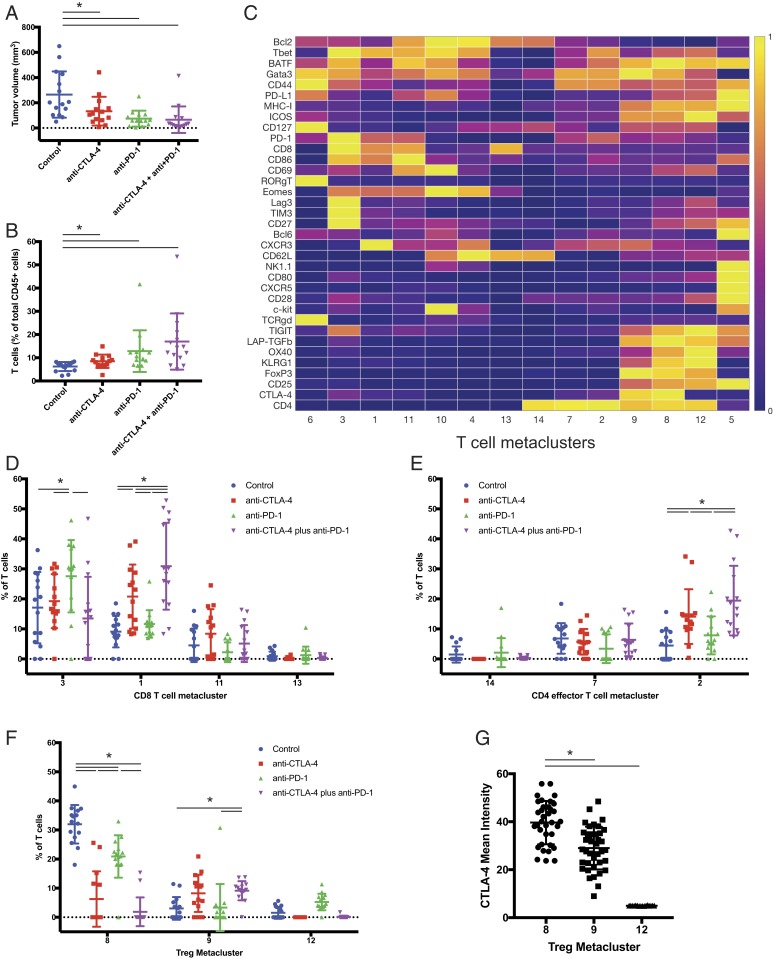
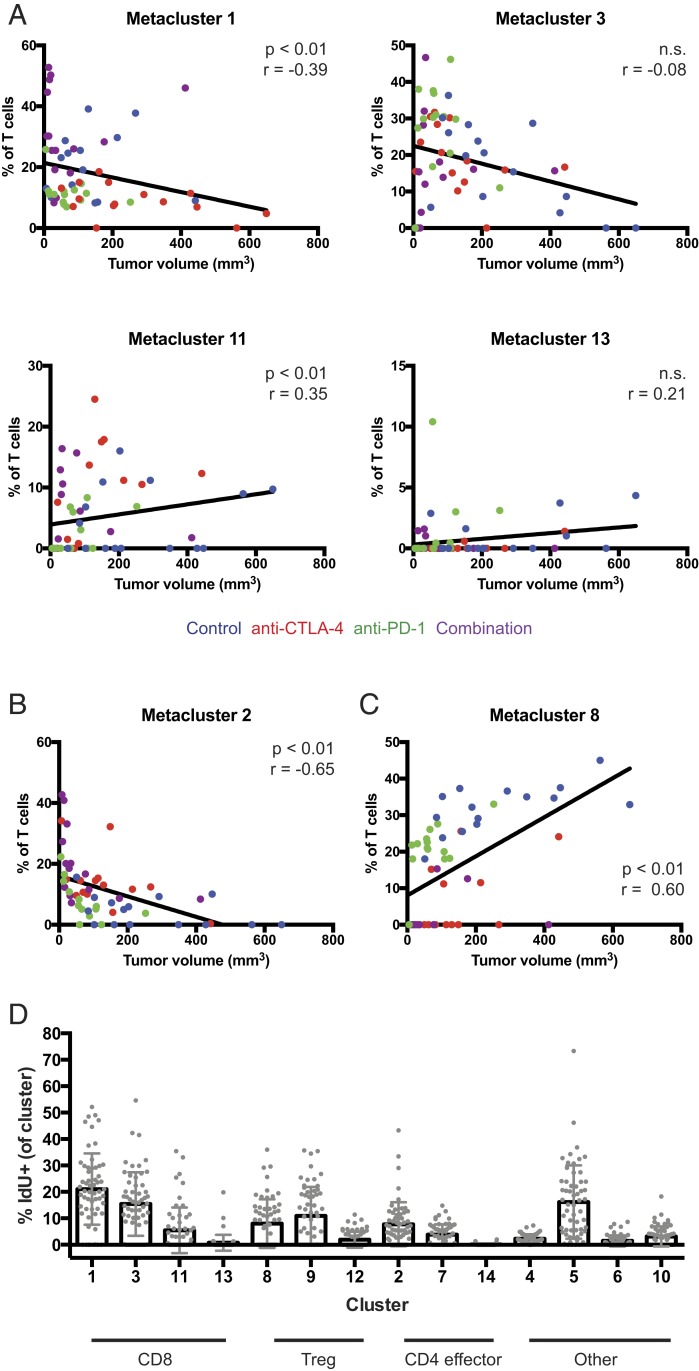
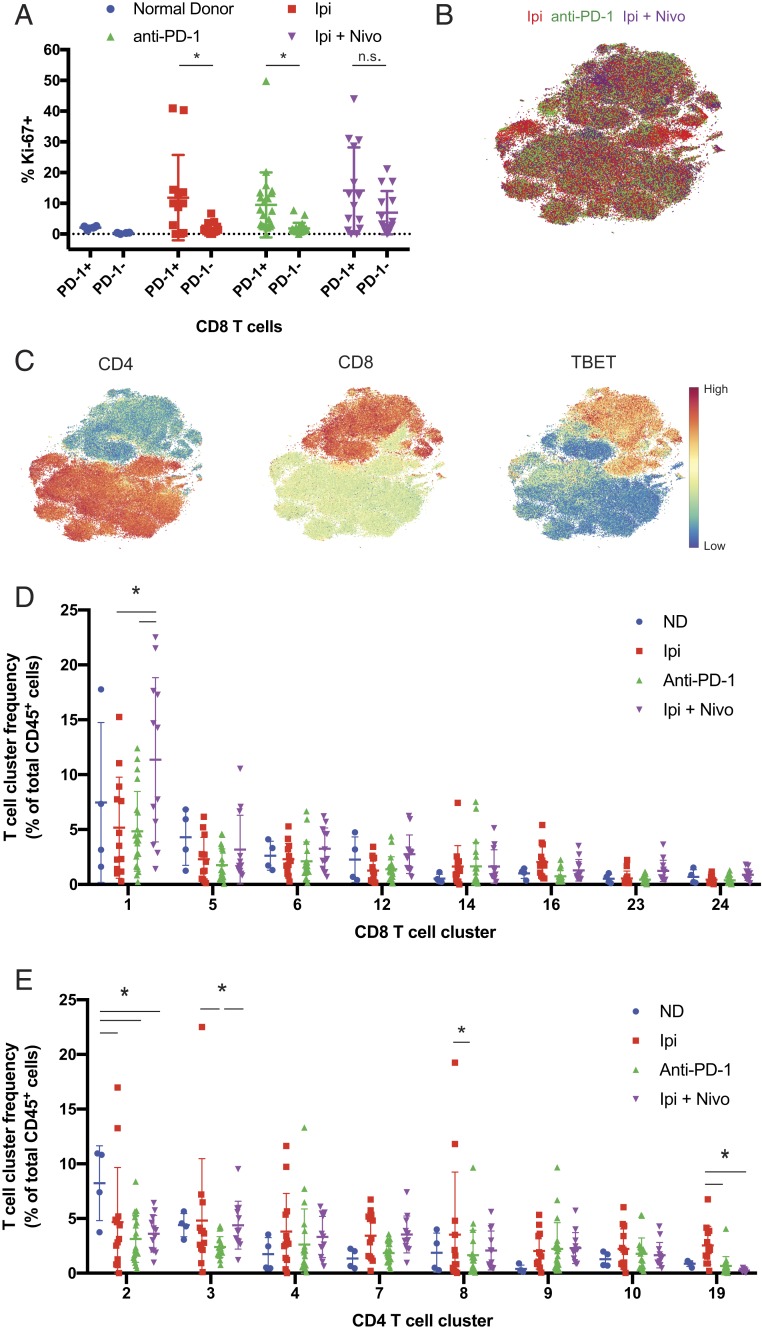
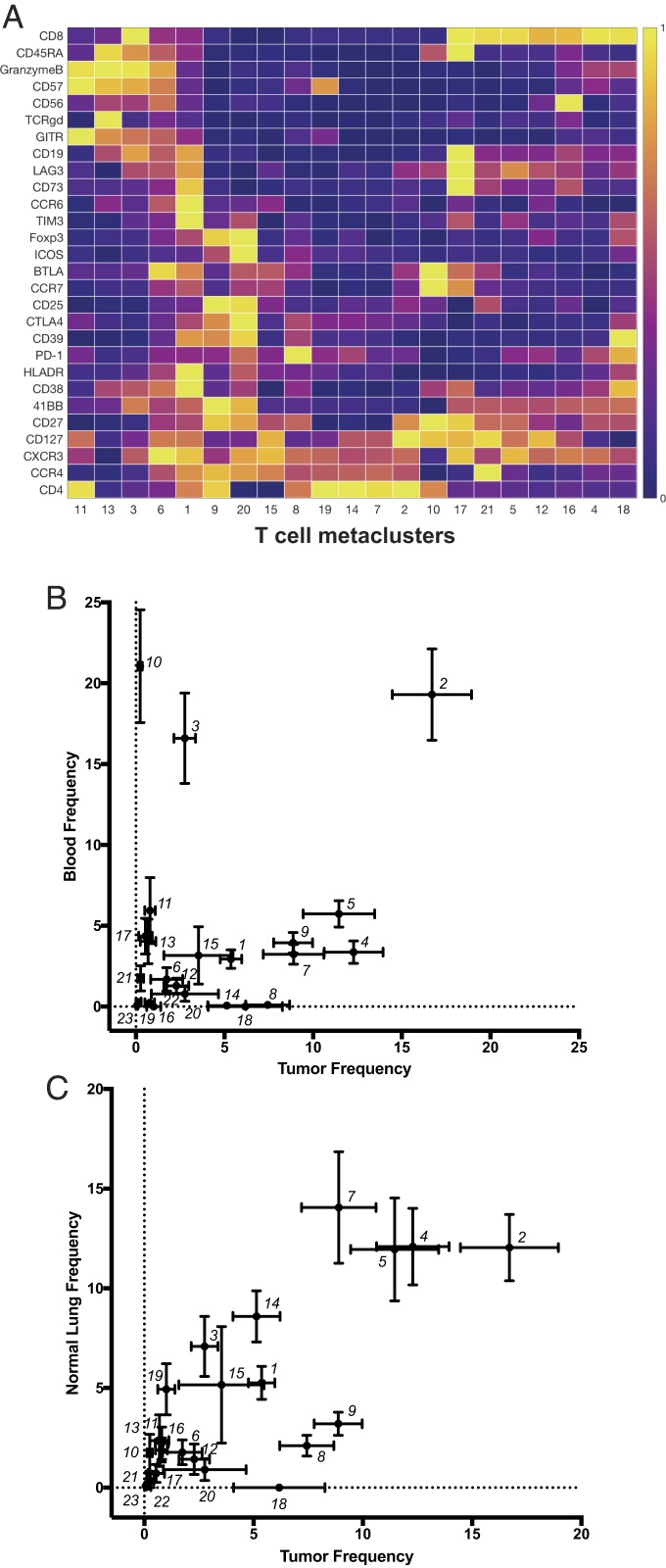
Immune checkpoint blockade therapy targets T cell-negative costimulatory molecules such as cytotoxic T lymphocyte antigen-4 (CTLA-4) and programmed cell death-1 (PD-1). Combination anti–CTLA-4 and anti–PD-1 blockade therapy has enhanced efficacy, but it remains unclear through what mechanisms such effects are mediated. A critical question is whether combination therapy targets and modulates the same T cell populations as monotherapies. Using a mass cytometry-based systems approach, we comprehensively profiled the response of T cell populations to monotherapy and combination anti–CTLA-4 plus anti–PD-1 therapy in syngeneic murine tumors and clinical samples. Most effects of monotherapies were additive in the context of combination therapy; however, multiple combination therapy-specific effects were observed. Highly phenotypically exhausted cluster of differentiation 8 (CD8) T cells expand in frequency following anti–PD-1 monotherapy but not combination therapy, while activated terminally differentiated effector CD8 T cells expand only following combination therapy. Combination therapy also led to further increased frequency of T helper type 1 (Th1)-like CD4 effector T cells even though anti–PD-1 monotherapy is not sufficient to do so. Mass cytometry analyses of peripheral blood from melanoma patients treated with immune checkpoint blockade therapies similarly revealed mostly additive effects on the frequencies of T cell subsets along with unique modulation of terminally differentiated effector CD8 T cells by combination ipilimumab plus nivolumab therapy. Together, these findings indicate that dual blockade of CTLA-4 and PD-1 therapy is sufficient to induce unique cellular responses compared with either monotherapy.
Overview
The claims and statistics of this paper haven’t been checked yet.
Free: it reads the open-access text and checks the first 5 claims that cite a source we can check. Create a free account to check every claim.
Integrity signals
Registry
Cites
Statistics
Figures
Verification
Claims the paper makes
The claims and statistics of this paper haven’t been checked yet.
Free: it reads the open-access text and checks the first 5 claims that cite a source we can check. Create a free account to check every claim.
Claims other papers make about this one
Each is checked against this paper’s own text: does it say what the citing paper says it does?
The source backs part of the claim, not all of it — or backs it for a different population, condition or comparison.
In the citing paper
“Anti-CTLA-4 therapy has been somewhat effective in melanoma and several other cancers, and blockade of the PD-1/PD-L1 axis is now first-line therapy for various tumor types, particularly melanoma and non-small cell lung carcinoma, with their combination being superior at the expense of enhanced adverse effects359,360.”
From TGFβ biology in cancer progression and immunotherapy (2021) · cites this paper as [360]
Experimental — accuracy not yet measuredIn the citing paper
“This is biologically plausible, given that we know that CICB has a distinct mechanism of action compared to anti-PD-1 monotherapy 48 and distinct baseline tumor immune microenvironment signatures 49 .”
From A gut microbial signature for combination immune checkpoint blockade across cancer types (2024) · cites this paper as [48]
In the citing paper
“Wei and colleagues20 have shown that combination therapy with CTLA-4 and PD-1 blockade mediates a switch from expansion of exhausted CD8+ T cells to expansion of activated effector CD8+ T cells.”
From Neoadjuvant nivolumab or nivolumab plus ipilimumab in operable non-small cell lung cancer: the phase 2 randomized NEOSTAR trial (2021) · cites this paper as [20]
In the citing paper
“Anti-CTLA-4 therapy has been somewhat effective in melanoma and several other cancers, and blockade of the PD-1/PD-L1 axis is now first-line therapy for various tumor types, particularly melanoma and non-small cell lung carcinoma, with their combination being superior at the expense of enhanced adverse effects359,360.”
From TGFβ biology in cancer progression and immunotherapy (2021) · cites this paper as [360]
Self-check
Percentages, sums and reported differences re-computed from the paper’s own numbers.
The self-check needs the paper’s full text.
Citations
Cites
PD-1 and PD-L1 Immune Checkpoint Blockade to Treat Breast Cancer
Hartkopf, A. D., Taran, F.-A., Wallwiener, M., Walter, C. B., Krämer, B., Grischke, E.-M., & Brucker, S. Y. (2016) · Breast Care · doi:10.1159/000453569 · Cited by 30,845
Adverse Renal Effects of Immune Checkpoint Inhibitors: A Narrative Review
Wanchoo, R., Karam, S., Uppal, N. N., Barta, V. S., Deray, G., Devoe, C., Launay-Vacher, V., Jhaveri, K. D., & on behalf of Cancer and Kidney International Network Workgroup on Immune Checkpoint Inhibitors (2017) · American Journal of Nephrology · doi:10.1159/000455014 · Cited by 15,256
The blockade of immune checkpoints in cancer immunotherapy
Pardoll, D. M. (2012) · Nature Reviews Cancer · doi:10.1038/nrc3239 · Cited by 13,838 · cited 2×
“This is based on differences between the cellular and molecular mechanisms of CTLA-4– and PD-1– mediated regulation of T cell activation (1, 5).”
BackgroundCombined Nivolumab and Ipilimumab or Monotherapy in Untreated Melanoma
Larkin, J., Chiarion-Sileni, V., Gonzalez, R., Grob, J. J., Cowey, C. L., Lao, C. D., Schadendorf, D., Dummer, R., Smylie, M., Rutkowski, P., et al. (2015) · New England Journal of Medicine · doi:10.1056/nejmoa1504030 · Cited by 8,157 · cited 1×
“Combination ipilimumab plus nivolumab has enhanced efficacy compared with monotherapies in advanced melanoma (8), superior efficacy compared with standard-of-care sunitinib in renal cell carcinoma (9), and higher objective response rates in mismatch repair-deficient/microsatellite instability-high colorectal cancer co…”
BackgroundThe future of immune checkpoint therapy
Sharma, P., & Allison, J. P. (2015) · Science · doi:10.1126/science.aaa8172 · Cited by 4,878
Self-citationNivolumab plus Ipilimumab versus Sunitinib in Advanced Renal-Cell Carcinoma
Motzer, R. J., Tannir, N. M., McDermott, D. F., Arén Frontera, O., Melichar, B., Choueiri, T. K., Plimack, E. R., Barthélémy, P., Porta, C., George, S., et al. (2018) · New England Journal of Medicine · doi:10.1056/nejmoa1712126 · Cited by 4,656
Immune Checkpoint Blockade: A Common Denominator Approach to Cancer Therapy
Topalian, S. L., Drake, C. G., & Pardoll, D. M. (2015) · Cancer Cell · doi:10.1016/j.ccell.2015.03.001 · Cited by 4,229
Pembrolizumab plus axitinib versus sunitinib for advanced renal-cell carcinoma
Rini, B. I., Plimack, E. R., Stus, V., Gafanov, R., Hawkins, R., Nosov, D., Pouliot, F., Alekseev, B., Soulières, D., Melichar, B., et al. (2019) · New England Journal of Medicine · doi:10.1056/nejmoa1816714 · Cited by 3,403
Fundamental Mechanisms of Immune Checkpoint Blockade Therapy
Wei, S. C., Duffy, C. R., & Allison, J. P. (2018) · Cancer Discovery · doi:10.1158/2159-8290.cd-18-0367 · Cited by 3,088 · cited 2×
“This is based on differences between the cellular and molecular mechanisms of CTLA-4– and PD-1– mediated regulation of T cell activation (1, 5).”
BackgroundSelf-citationData-Driven Phenotypic Dissection of AML Reveals Progenitor-like Cells that Correlate with Prognosis
Levine, J. H., Simonds, E. F., Bendall, S. C., Davis, K. L., Amir, E.-A. D., Tadmor, M. D., Litvin, O., Fienberg, H. G., Jager, A., Zunder, E. R., et al. (2015) · Cell · doi:10.1016/j.cell.2015.05.047 · Cited by 2,303 · cited 6×
“To robustly identify tumor-infiltrating T cell populations across multiple replicate cohorts of mice, we utilized a PhenoGraphdriven metaclustering approach (Methods).”
MethodSelf-citation
Research works printed but not linked: 1
- Postow M., “Pooled 3-year overall survival data from phase II and phase III trials of nivolumab (NIVO) combined with ipilimumab (IPI) in advanced melanoma” in 32nd Annual Meeting and Pre-Conference Programs of the Society for Immunotherapy of Cancer (SITC 2017): Part One, Romero P. J., Ed. (Journal for ImmunoTherapy of Cancer, 2017), vol. 5, p. 86.
Cited by
Items 301–362 of 362
First Clinical Experience With [89Zr]Zr-Df-IAB22M2C PET/MRI in Patients With Metastatic CancerPreprint
Schwenck, J., Sonanini, D., Seyfried, D., Ehrlichmann, W., Kienzle, G. J., Reischl, G., Krezer, P., Wilson, I., Korn, R. L., González-Menéndez, I., et al. (2022) · Research Square · doi:10.21203/rs.3.rs-1369201/v1 · Cited by 1
Differential effects of PD-1 and CTLA-4 blockade on the melanoma-reactive CD8 T cell response
Gangaev, A., Rozeman, E., Rohaan, M. W., Isaeva, O. I., Philips, D., Patiwael, S., van den Berg, J. H., Ribas, A., Schadendorf, D., Schilling, B., et al. (2021) · immuneACCESS · doi:10.21417/ag2021pnas · Cited by 1
Saeed, A., Park, R., Dai, J., Al-Rajabi, R., Kasi, A., Baranda, J. C., Williamson, S. K., Saeed, A., Ripp, J., Collins, Z. S., et al. (2022) · SSRN Electronic Journal · doi:10.2139/ssrn.4195069 · Cited by 1
Sen, P., & Ghosh, S. (2022) · Research Square · doi:10.21203/rs.3.rs-2044865/v1 · Cited by 1
Martinez-Paniagua, M. A., Haymaker, C., Robinson, J. L., Harel, M., Creasy, C. A., Adolacion, J. R. T., An, X., Fathi, M., Rezvan, A., Kumar, M., et al. (2022) · bioRxiv (Cold Spring Harbor Laboratory) · doi:10.1101/2022.09.28.509590 · Cited by 1
“4 INTRODUCTION Successful cancer immunotherapy, such as the adoptive T-cell therapy (ACT), chimeric antigen receptor (CAR), or immune checkpoint blockade (ICB), relies on T-cells that can infiltrate the tumor and unleash potent antitumor functions, including direct cytolysis and cytokine secretion (Grasso et al., 2020…”
BackgroundDemerle, C., Gorvel, L., Mello, M., Pastor, S., Degos, C., Zarubica, A., Rigotti, F., FIORE, F., Nunès, J. A., MALISSEN, B., et al. (2022) · bioRxiv (Cold Spring Harbor Laboratory) · doi:10.1101/2022.11.04.515180 · Cited by 1
“These phenotypic changes contribute to the reduction of tumor growth and 405 correspond to phenotypes observed in previous studies showing tumor reduction following 406 immunotherapeutic treatments in mouse models (21) (22).”
BackgroundResultBreaking T-cell tolerance in the immune system
Chen, J. Y. (2024) · Blood · doi:10.1182/blood.2024026075 · Cited by 1
Kim, N., Park, S., Jo, A., Eum, H. H., Kim, H. K., Lee, K., Cho, J. H., Ku, B. M., Jung, H. A., Sun, J., et al. (2024) · eLife · doi:10.7554/elife.98366.2 · Cited by 3
Moderne Aspekte der Immuntherapie mit Checkpoint-Inhibitoren bei Melanom
Petrova, V., Arkhypov, I., Weber, R., Groth, C., Altevogt, P., Utikal, J. S., & Umansky, V. (2020) · Kompass Dermatologie · doi:10.1159/000509449
The Divergent Role of Co-receptors and Cytokines in the Immune Response to Cancer and Self
Tucker, C. (2020) · University of Minnesota Digital Conservancy (University of Minnesota)
The immunoregulation of autoimmune diabetes
Hu, H. (2021) · Open Scholarship Institutional Repository (Washington University in St. Louis) · doi:10.7936/3sz5-xf29
Inestabilidad genética, origen y evolución del cáncer y la inmunoterapia personalizada
Maruri, J., Martínez‐Cortés, F., Odales, J., & Manoutcharian, K. (2022) · Vacunas · doi:10.1016/j.vacun.2022.01.004 · Cited by 1
Deconstructing T Cell Clonal Dynamics in Response to Immune-Checkpoint BlockadePreprint
Rao, S., Obradović, A., Gharib, K., Kornberg, A. E., Botella, T., Moon, C., Ghasemzadeh, A., Lin, S., Krupska, I., Bush, E. C., et al. (2022) · SSRN Electronic Journal · doi:10.2139/ssrn.4144960
Triviño, J. Y. M. (2020) · Repositorio Institucional (Pontificia Universidad Javeriana) · doi:10.11144/javeriana.10554.49675
Sharma, P., Anandhan, S., Siddiqui, B. A., Goswami, S., Subudhi, S. K., Gao, J., Peggs, K. S., Quezada, S. A., & Allison, J. P. (2022) · Wiley eBooks · doi:10.1002/9781119000822.hfcm068.pub2
Self-citationGenomic instability, origin and evolution of cancer, and personalized immunotherapy
Maruri, J., Martínez‐Cortés, F., Odales, J., & Manoutcharian, K. (2022) · Vacunas (English Edition) · doi:10.1016/j.vacune.2022.10.008
Nivolumab in the treatment of thoracic cancer — new possibilities
Knetki‐Wróblewska, M., & Wojas‐Krawczyk, K. (2022) · Oncology in Clinical Practice · doi:10.5603/ocp.2022.0033
Kines, R. C., Thompson, C. D., Spring, S. M., Li, Z., Pinos, E. D. L., Monks, S. A., & Schiller, J. T. (2023) · doi:10.1158/2326-6066.22543341
Iyer, S., Zhang, S., Yucel, S., Horn, H., Smith, S. G., Reinhardt, F., Hoefsmit, E. P., Assatova, B., Casado, J., Meinsohn, M.-C., et al. (2023) · doi:10.1158/2159-8290.c.6548069
Early T Cell Infiltration Correlates with Anti-CTLA4 Treatment Response in Murine Cancer Models
Almonte, A. A., Cavic, G., Carroll, C., Neeman, T. M., & Fahrer, A. M. (2023) · The Journal of Immunology · doi:10.4049/jimmunol.2300040 · Cited by 3
Kim, N., Park, S., Jo, A., Eum, H. H., Kim, H. K., Lee, K., Cho, J. H., Ku, B. M., Jung, H. A., Sun, J., et al. (2024) · eLife · doi:10.7554/elife.98366.1
Kim, N., Park, S., Jo, A., Eum, H. H., Kim, H. K., Lee, K., Cho, J. H., Ku, B. M., Jung, H. A., Sun, J., et al. (2024) · eLife · doi:10.7554/elife.98366
“In previous studies, prediction of the response to ICI highlighted CD8+ cytotoxic effector T cells and CD4+ Tregs 32 .”
BackgroundInfluentialSato, M., Umeda, Y., Tsujikawa, T., Mori, T., Shimada, A., Sonoda, T., Yamaguchi, M., Honjo, C., Waseda, Y., Kiyono, Y., et al. (2025) · EJNMMI Research · doi:10.1186/s13550-025-01225-7
“Similarly, the inhibition of CTLA-4 in patients with cancer can cause the activation of CD8 + T cells and proliferation of CD4 + T cells [26], which may lead to increased 18 F-FDG accumulation in lymphoid tissues.”
Cortijo-Gutierréz, M., Maldonado‐Pérez, N., Tristán‐Manzano, M., Pavlovic, K., Justicia-Lirio, P., Fuster‐García, C., Cathomen, T., Bak, R. O., Jurado-Bascón, P. P., Carmona‐Sáez, P., et al. (2025) · Research Square · doi:10.21203/rs.3.rs-7012598/v1
Neoadjuvant immune checkpoint inhibition improves protection against hepatic melanoma metastasis
Wohlfeil, S. A., Weller, C., Dietsch, B., Agardy, D. A., Boschert, T., Vormehr, S. A., Dormann, C., Straub, N., Häfele, V., Platten, M., et al. (2025) · Cancer Letters · doi:10.1016/j.canlet.2025.217950 · Cited by 1
Figueiredo, A. B., Evangelista, G. F. D. B., Ferreira, S. M. I., Kuil, L. D. M., Faccio, A. T., Cardozo, K. H. M., Carvalho, V. M., Cavalcanti, C. M., BALDERAS, R. S., Lopes, R. P., et al. (2025) · SSRN Electronic Journal · doi:10.2139/ssrn.5368719
Deluce, N. K.-N., Creton, E., Savatier, A., Lucchi, H., Bardouillet, L., Ramos, O. H. P., Berthon, P., & Léonetti, M. (2025) · bioRxiv (Cold Spring Harbor Laboratory) · doi:10.1101/2025.08.07.665051
“Given the sensitivity of MC38 to immune checkpoint blockade 39 we also tested whether our immunotherapy could synergize with anti-PD-1 antibody treatment.”
Zhang, G., Li, M., Zhou, D., Yang, X., Zhang, W., & Gao, R. (2022) · Figshare · doi:10.6084/m9.figshare.21261649
Ye, Y., Kuang, X., Xie, Z., Liang, L., Zhang, Z., Zhang, Y., Ma, F., Gao, Q., Chang, R., Lee, H.-H., et al. (2020) · Figshare · doi:10.6084/m9.figshare.13018227
Hu, M., Lin, X., Sun, T., Shao, X., Huang, X., Weiwei, D., Guo, M., Zhu, X., Zhou, Y., Tong, T., et al. (2024) · Figshare · doi:10.6084/m9.figshare.26669787
Zhang, G., Li, M., Zhou, D., Yang, X., Zhang, W., & Gao, R. (2022) · Figshare · doi:10.6084/m9.figshare.21261643
Zhang, G., Li, M., Zhou, D., Yang, X., Zhang, W., & Gao, R. (2022) · Figshare · doi:10.6084/m9.figshare.21261640
Hu, M., Lin, X., Sun, T., Shao, X., Huang, X., Weiwei, D., Guo, M., Zhu, X., Zhou, Y., Tong, T., et al. (2024) · Figshare · doi:10.6084/m9.figshare.26669790
Zhang, G., Li, M., Zhou, D., Yang, X., Zhang, W., & Gao, R. (2022) · Figshare · doi:10.6084/m9.figshare.21261637
Zhang, G., Li, M., Zhou, D., Yang, X., Zhang, W., & Gao, R. (2022) · Figshare · doi:10.6084/m9.figshare.21261634
Zhang, G., Li, M., Zhou, D., Yang, X., Zhang, W., & Gao, R. (2022) · Figshare · doi:10.6084/m9.figshare.21261646
Zhang, G., Li, M., Zhou, D., Yang, X., Zhang, W., & Gao, R. (2022) · Figshare · doi:10.6084/m9.figshare.21261652
Advances in immunomodulation: From dietary influence to computational precision
Mohan, S., Selvam, P. K., & Vasudevan, K. (2025) · Advances in protein chemistry and structural biology · doi:10.1016/bs.apcsb.2025.10.004
Bracha, S., & Pollack, S. M. (2026) · Springer eBooks · doi:10.1007/978-3-032-04454-9_4
Pre-Existing Immunity Shapes Cancer Immunotherapy Efficacy
Xagara, A., Koinis, F., Tsapakidis, K., Samaras, I., Chantzara, E., Vasilieva, K., Lazarou, A., Georgoulias, V., & Kotsakis, A. P. (2026) · Onco · doi:10.3390/onco6010004
“Simultaneous blocking of immune checkpoints with complementary mechanisms of action has been superior in improving clinical outcomes after vaccination [100,101].”
Spatial immune hubs defined by conserved activated dendritic cells are remodeled by immunotherapyPreprint
Minowa, T., Keshari, S., He, S., Saha, A., Shavkunov, A. S., Pineda, J. E., Yeo, Y. Y., Zhu, B., Mohanty, V., Jindal, S., et al. (2026) · bioRxiv (Cold Spring Harbor Laboratory) · doi:10.64898/2026.02.10.703136
Kim, J. H., Yau, T. C. C., & Chon, H. J. (2026) · Liver International · doi:10.1111/liv.70554
Inhibitory receptor agonists: Emerging strategies in immune modulation
Adam, K. R., Suhail, A., Kuchroo, V. K., & Vignali, D. A. A. (2026) · The Journal of Experimental Medicine · doi:10.1084/jem.20241217 · Cited by 1
Immune biomarkers of the efficacy of checkpoint inhibitors in advanced lung cancer
Rochigneux, P. (2021) · theses.fr (ABES) · doi:10.70675/a681be3bz25eez4193z8df5za159cdd1666c
Normal and pathological functions of the T cell signaling protein, THEMIS, in CD4+ T cells
Yang, C. (2021) · theses.fr (ABES) · doi:10.70675/59026c4ezea46z4241za55azd03232fac9cd
Modulation de l'activation des lymphocytes T et des réponses anti-tumorales par le fer
Porte, S. (2022) · theses.fr (ABES) · doi:10.70675/4251e200zd50ez4a76zb869zb97fa8d3e879
Zhang, Y., Zhou, P., Guo, Y., Zhang, H., Zhao, G., Yin, J., Ge, D., Liu, R., Gu, J., & Zhang, C. (2026) · Communications Biology · doi:10.1038/s42003-026-10070-w · Cited by 1
Figueiredo, A. B., Evangelista, G. F. D. B., Ferreira, S. M. I., Kuil, L. D. M., Barbeta, G., Iohan, L. D. C. C., Faccio, A. T., Cardozo, K. H., Carvalho, V. M., Cavalcanti, C. M., et al. (2026) · iScience · doi:10.1016/j.isci.2026.116124
“In parallel, some studies have demonstrated the importance of combining anti-CTLA-4 with anti-PD-1, and have proposed potential mechanisms of action, 64,65 however, they have focused on melanoma or have used in vitro or in vivo approaches rather than prospective patient cohorts.”
Shukshin, A. A., Rubinstein, A., Головкин, А. С., Моисеева, О. М., & Kudryavtsev, I. V. (2026) · Medical academic journal · doi:10.17816/maj641690
Yang, Y., Song, S., Fan, C., Luo, Q., Wang, C., & Luo, Y. (2026) · Frontiers in Immunology · doi:10.3389/fimmu.2026.1868547
“Differences in cancer type and severity re fl ect the known clinical pro fi le of the combination (Supplementary Tables 11 – 13).”
Deluce, N. K.-N., Creton, E., Savatier, A., Lucchi, H., Bardouillet, L., Ramos, O. H. P., Berthon, P., & Léonetti, M. (2026) · Frontiers in Immunology · doi:10.3389/fimmu.2026.1734778
“Given the sensitivity of MC38 cells to immune checkpoint blockade (38) we also tested whether our immunotherapy could synergize with anti-PD-1 antibody treatment.”
A phase II basket trial of DART SWOG S1609: the salivary gland tumor cohort
Chae, Y. K., Sun, R., Patel, S. P., Giles, F. J., Ohr, J. P., Worden, M. F. P., Suga, J. M., Naing, A., Cohen, E. E., Wallace, J., et al. (2026) · Therapeutic Advances in Medical Oncology · doi:10.1177/17588359261451739
Iparomlimab and tuvonralimab in previously treated patients with cervical cancer
Lou, H., Zhou, Y., Li, D., Zhang, H., Zhang, M., Wang, L., Cheng, H., Liu, Z., Duan, W., Feng, M., et al. (2026) · Cell Reports Medicine · doi:10.1016/j.xcrm.2026.102944 · Cited by 1
Raza, A., Raza, M. A., Khan, J., & Ajazuddin (2026) · Pathology - Research and Practice · doi:10.1016/j.prp.2026.156645
Fan, Y., Yang, R., Min, X., Ma, H., Wang, Y., Zhao, Y., Wang, H., Zhang, M., Wang, H., Zhang, T., et al. (2026) · Frontiers in Immunology · doi:10.3389/fimmu.2026.1879524
Franco, F. D., Greppi, M., Obino, V., Rebaudi, F., Goda, R., Caffa, I., Bozzo, M., Melaiu, O., Munari, E., Vellone, V. G., et al. (2026) · Frontiers in Cell and Developmental Biology · doi:10.3389/fcell.2026.1924522
“These seminal discoveries ultimately led to the awarding of the 2018 Nobel Prize in Physiology or Medicine to Tasuku Honjo for the discovery of PD-1 and its development as a therapeutic immune checkpoint (Huang and Chang, 2019; Wei et al., 2019).”
Zhang, Y., Wang, H., Furukawa, N., Patil, A., Arulraj, T., & Popel, A. S. (2026) · ACS Pharmacology & Translational Science · doi:10.1021/acsptsci.6c00347
Integrating biology and mathematics to understand checkpoint immunotherapy
Sousa, R. S., Moshensky, A., Murat, C., Geels, S. N., Lowengrub, J. S., & Marangoni, F. (2026) · Trends in cancer · doi:10.1016/j.trecan.2026.09.004
Chae, Y. K., Dietrich, E., Patel, S. P., Zalupski, M. M., Kasi, A., Khalil, M. F., Kalyan, A., Polite, B. N., Fenton, S. E., Chung, L. I., et al. (2026) · Therapeutic Advances in Medical Oncology · doi:10.1177/17588359261458742
Metadata
- Authors
- Wei, S. C., Anang, N.-A. A. S., Sharma, R., Andrews, M. C., Reuben, A., Levine, J. H., Cogdill, A. P., Mancuso, J. J., Wargo, J. A., Pe’er, D., & Allison, J. P.
- Affiliations
- The University of Texas MD Anderson Cancer Center (US)
- Columbia University (US)
- Computational and Systems Biology Program, Sloan Kettering Institute, New York, NY 10065;
- Memorial Sloan Kettering Cancer Center (US)
- Corresponding author
- Allison, James P.
- ORCID
- Venue
- Proceedings of the National Academy of Sciences
- Publisher
- National Academy of Sciences
- Published
- 2019-10-21
- Volume
- 116
- Issue
- 45
- Pages
- 22699-22709
- ISSN
- 0027-8424 (ISSN-L)
- 1091-6490
- PMC
- PMC6842624
- OpenAlex
- W2981443129
- Cited by
- 359
- References
- 55
- Citations by year
- 2026: 38 · 2025: 42 · 2024: 47 · 2023: 52 · 2022: 69 · 2021: 63 · 2020: 47 · 2019: 1
- FWCI
- 18.88
- Type
- journal article
- Language
- en
- Open access
- hybrid
- doi.org
- Licence
- Locations
- Proceedings of the National Academy of Sciences (publishedVersion, cc-by-nc-nd)
- Europe PMC (PubMed Central) (publishedVersion, cc-by-nc-nd)
- PubMed Central (publishedVersion, cc-by-nc-nd)
- PubMed (publishedVersion)
- Funders
- HHS | NIH | National Cancer Institute (P30CA16672)
- Cancer Prevention and Research Institute of Texas (R1203)
- National Health and Medical Research Council of Australia (#1148680)
- Topics
- Health Sciences › Medicine › Oncology › Cancer Immunotherapy and Biomarkers
- Life Sciences › Immunology and Microbiology › Immunology › T-cell and B-cell Immunology
- Life Sciences › Immunology and Microbiology › Immunology › Immunotherapy and Immune Responses
- Keywords
- immune checkpoint blockade, anti-CTLA-4, anti-PD-1, combination immunotherapy, T cell exhaustion, CD8+ T cells, melanoma, ipilimumab, nivolumab, mass cytometry, T cell subsets
- MeSH terms
- Animals, Immunotherapy, Neoplasms, T-Lymphocyte Subsets, Lymphocytes, Tumor-Infiltrating, CD8-Positive T-Lymphocytes, Mice, CTLA-4 Antigen, Programmed Cell Death 1 Receptor
About these checks
Registry, retraction, Cites and statistics results are computed, not judged, with one exception: a printed reference that no index lists is read once by a model before it counts as a citation error. Claims are extracted by a model and kept only when their quote appears verbatim in the text; each cited source is then checked, with a model’s help, for whether it says what the claim relies on. Those verdicts can be wrong — read the claim’s quote and the cited source before relying on one.
Statistics and arithmetic are recomputed, not judged.
Confidence bands are shown only for fields calibrated on our annotated test set. None is calibrated yet, so no band is shown.
What counts as a claim ›How we measure confidence ›How we check this ›
Are you an author, or do you see a problem with this page? Request a review
Data sources
Bibliographic data: Semantic Scholar, OpenAlex, Crossref.
Contains information from the Semantic Scholar Academic Graph Datasets, made available under the ODC Attribution License (ODC-BY 1.0).
Semantic Scholar’s data is described in: Kinney, R., et al. (2023). The Semantic Scholar Open Data Platform. arXiv:2301.10140.
