

Robust single-cell Hi-C clustering by convolution- and random-walk-based imputation
Open accessThe DOI matches its Crossref record; 42 of the 42 references it cites were found in a registry or an index.
Abstract
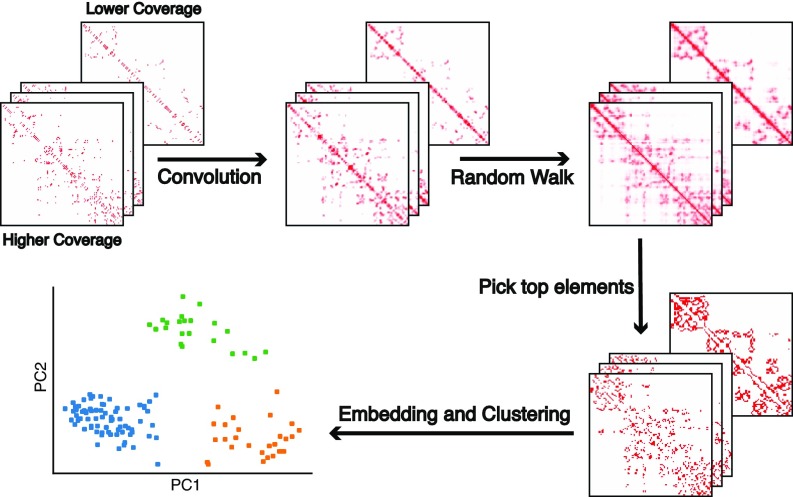
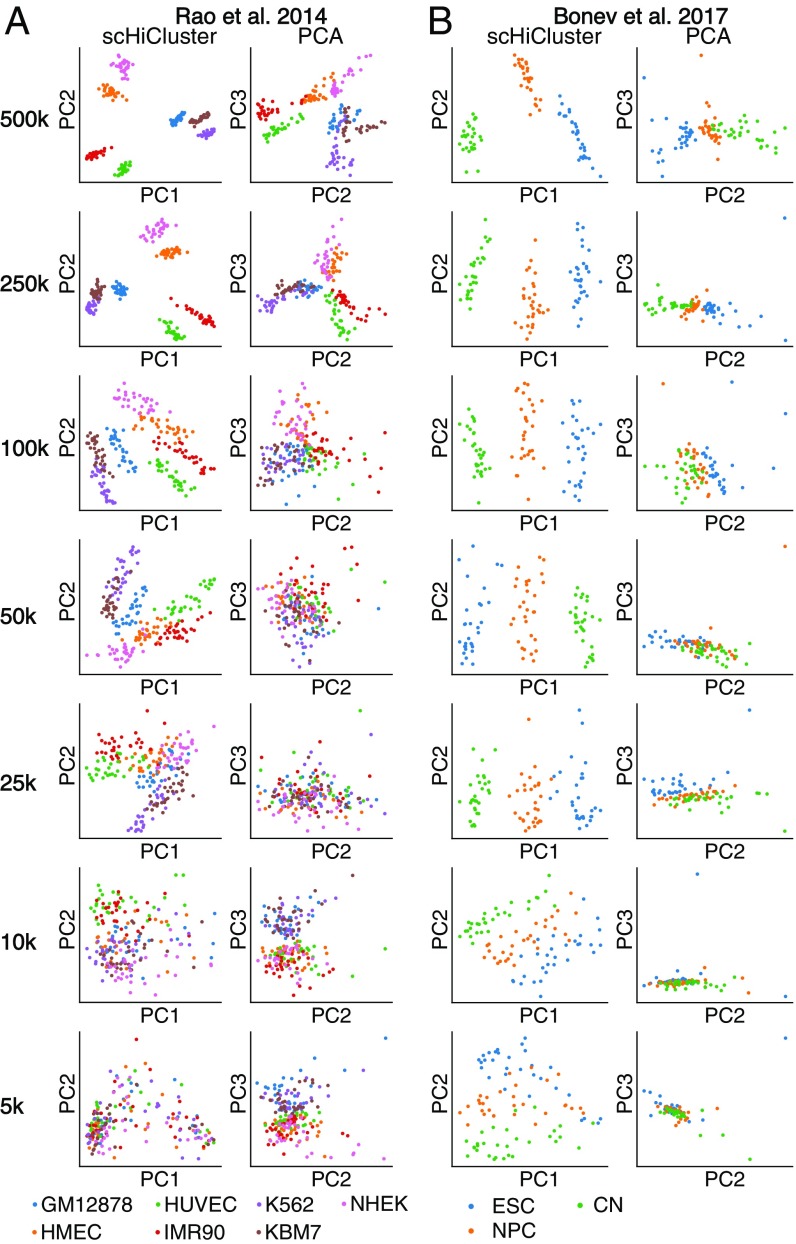
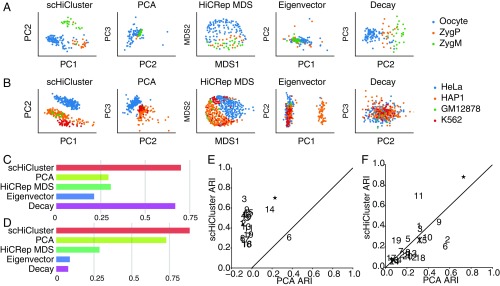
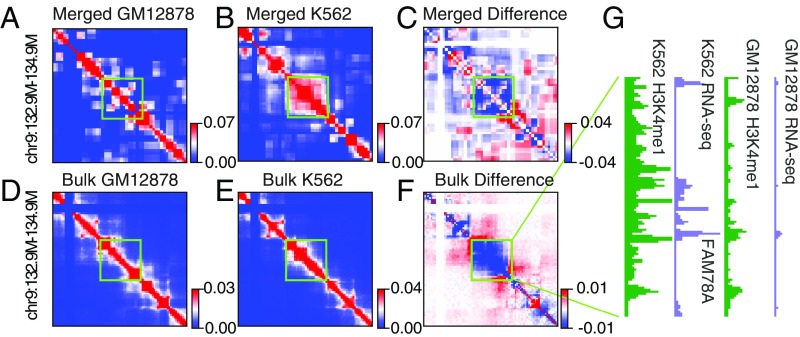
Three-dimensional genome structure plays a pivotal role in gene regulation and cellular function. Single-cell analysis of genome architecture has been achieved using imaging and chromatin conformation capture methods such as Hi-C. To study variation in chromosome structure between different cell types, computational approaches are needed that can utilize sparse and heterogeneous single-cell Hi-C data. However, few methods exist that are able to accurately and efficiently cluster such data into constituent cell types. Here, we describe scHiCluster, a single-cell clustering algorithm for Hi-C contact matrices that is based on imputations using linear convolution and random walk. Using both simulated and real single-cell Hi-C data as benchmarks, scHiCluster significantly improves clustering accuracy when applied to low coverage datasets compared with existing methods. After imputation by scHiCluster, topologically associating domain (TAD)-like structures (TLSs) can be identified within single cells, and their consensus boundaries were enriched at the TAD boundaries observed in bulk cell Hi-C samples. In summary, scHiCluster facilitates visualization and comparison of single-cell 3D genomes.
Overview
The claims and statistics of this paper haven’t been checked yet.
Free: it reads the open-access text and checks the first 5 claims that cite a source we can check. Create a free account to check every claim.
Integrity signals
Registry
Cites
Statistics
Figures

Verification
Claims the paper makes
The claims and statistics of this paper haven’t been checked yet.
Free: it reads the open-access text and checks the first 5 claims that cite a source we can check. Create a free account to check every claim.
Claims other papers make about this one
Each is checked against this paper’s own text: does it say what the citing paper says it does?
In the citing paper
“Cluster analysis of single cell Hi-C data can identify groups of cells with similar chromatin organization (Zhou et al., 2019), but on its own it does not reliably distinguish cortical neuron types (Lee et al., 2019; Li et al., 2019a).”
From Single-Cell Sequencing of Brain Cell Transcriptomes and Epigenomes (2021) · cites this paper as Zhou et al., 2019
Self-check
Percentages, sums and reported differences re-computed from the paper’s own numbers.
The self-check needs the paper’s full text.
Citations
Cites
A 3D Map of the Human Genome at Kilobase Resolution Reveals Principles of Chromatin Looping
Rao, S. S. P., Huntley, M. H., Durand, N. C., Stamenova, E. K., Bochkov, I. D., Robinson, J. T., Sanborn, A. L., Machol, I., Omer, A. D., Lander, E. S., et al. (2014) · Cell · doi:10.1016/j.cell.2014.11.021 · Cited by 9,212 · cited 3×
“Previous studies using bulk cell lines have reported the existence of several 3D structural features: megabase-level A/B compartments, submegabase-level TADs, and kilobase-level loops (29, 31, 39, 40).”
BackgroundMethodComprehensive Mapping of Long-Range Interactions Reveals Folding Principles of the Human Genome
Lieberman-Aiden, E., van Berkum, N. L., Williams, L., Imakaev, M., Ragoczy, T., Telling, A., Amit, I., Lajoie, B. R., Sabo, P. J., Dorschner, M. O., et al. (2009) · Science · doi:10.1126/science.1181369 · Cited by 8,898 · cited 2×
“Previous studies using bulk cell lines have reported the existence of several 3D structural features: megabase-level A/B compartments, submegabase-level TADs, and kilobase-level loops (29, 31, 39, 40).”
Highly parallel genome-wide expression profiling of individual cells using nanoliter droplets.
Macosko, E. Z., Basu, A., Satija, R., Nemesh, J., Shekhar, K., Goldman, M., Tirosh, I., Bialas, A. R., Kamitaki, N., Martersteck, E. M., et al. (2015) · Cell · doi:10.1016/j.cell.2015.05.002 · Cited by 7,110 · cited 1×
“Computational methods have been developed to identify different cell types in heterogeneous cell populations based on various molecular features such as transcriptome (12, 13), methylome (14), and open chromatin (15– 17).”
MethodTopological domains in mammalian genomes identified by analysis of chromatin interactions
Dixon, J. R., Selvaraj, S., Yue, F., Kim, A., Li, Y., Shen, Y., Hu, M., Liu, J. S., & Ren, B. (2012) · Nature · doi:10.1038/nature11082 · Cited by 6,829 · cited 1×
“Previous studies using bulk cell lines have reported the existence of several 3D structural features: megabase-level A/B compartments, submegabase-level TADs, and kilobase-level loops (29, 31, 39, 40).”
BackgroundSelf-citationSpatial partitioning of the regulatory landscape of the X-inactivation centre
Nora, E. P., Lajoie, B. R., Schulz, E. G., Giorgetti, L., Okamoto, I., Servant, N., Piolot, T., van Berkum, N. L., Meisig, J., Sedat, J., et al. (2012) · Nature · doi:10.1038/nature11049 · Cited by 2,895 · cited 1×
“Previous studies using bulk cell lines have reported the existence of several 3D structural features: megabase-level A/B compartments, submegabase-level TADs, and kilobase-level loops (29, 31, 39, 40).”
BackgroundSingle-cell chromatin accessibility reveals principles of regulatory variation
Buenrostro, J. D., Wu, B., Litzenburger, U. M., Ruff, D., Gonzales, M. L., Snyder, M. P., Chang, H. Y., & Greenleaf, W. J. (2015) · Nature · doi:10.1038/nature14590 · Cited by 2,308 · cited 1×
“I recent years, there has been a rapid increase in the development of single-cell transcriptomic and epigenomic assays (1), including single-cell/nucleus RNA sequencing (RNA-seq) (2), assay for transposase-accessible chromatin using sequencing (ATACseq) (3, 4), bisulfite sequencing (5), and Hi-C (6–11).”
BackgroundData-Driven Phenotypic Dissection of AML Reveals Progenitor-like Cells that Correlate with Prognosis
Levine, J. H., Simonds, E. F., Bendall, S. C., Davis, K. L., Amir, E.-A. D., Tadmor, M. D., Litvin, O., Fienberg, H. G., Jager, A., Zunder, E. R., et al. (2015) · Cell · doi:10.1016/j.cell.2015.05.047 · Cited by 2,303
chromVAR: inferring transcription-factor-associated accessibility from single-cell epigenomic data
Schep, A. N., Wu, B., Buenrostro, J. D., & Greenleaf, W. J. (2017) · Nature Methods · doi:10.1038/nmeth.4401 · Cited by 1,680
Chromatin architecture reorganization during stem cell differentiation
Dixon, J. R., Jung, I., Selvaraj, S., Shen, Y., Antosiewicz-Bourget, J. E., Lee, A. Y., Ye, Z., Kim, A., Rajagopal, N., Xie, W., et al. (2015) · Nature · doi:10.1038/nature14222 · Cited by 1,646 · cited 1×
“Besides the methods used in published works, we included the eigenvector method since the chromosome compartments are considered to be cell type specific based on the bulk Hi-C experiments, and the first eigenvector of contact matrix is widely used to represent these compartment features (29, 31, 32).”
MethodSelf-citationFull-length mRNA-Seq from single-cell levels of RNA and individual circulating tumor cells
Ramsköld, D., Luo, S., Wang, Y.-C., Li, R., Deng, Q., Faridani, O. R., Daniels, G. A., Khrebtukova, I., Loring, J. F., Laurent, L. C., et al. (2012) · Nature Biotechnology · doi:10.1038/nbt.2282 · Cited by 1,609 · cited 1×
“I recent years, there has been a rapid increase in the development of single-cell transcriptomic and epigenomic assays (1), including single-cell/nucleus RNA sequencing (RNA-seq) (2), assay for transposase-accessible chromatin using sequencing (ATACseq) (3, 4), bisulfite sequencing (5), and Hi-C (6–11).”
Background
Cited by
Wolff, J., Rabbani, L., Gilsbach, R., Richard, G., Manke, T., Backofen, R., & Grüning, B. A. (2020) · Nucleic Acids Research · doi:10.1093/nar/gkaa220 · Cited by 441
“K-means was used on scHi-C data by (36) or (26), but the choice of a clustering algorithm is always dependent on the data.”
MethodCis-regulatory sequences in plants: Their importance, discovery, and future challenges
Schmitz, R. J., Grotewold, E., & Stam, M. (2022) · The Plant Cell · doi:10.1093/plcell/koab281 · Cited by 356
“Whereas single-cell ChIP-seq, HiC, and whole-genome bisulfite sequencing methods are emerging for mammalian systems (Ramani et al., 2017; Luo et al., 2018; GrosseLin et al., 2019; Lee et al., 2019; Zhou et al., 2019), they have yet to be implemented for plants.”
BackgroundSimultaneous profiling of 3D genome structure and DNA methylation in single human cells
Lee, D.-S., Luo, C., Zhou, J., Chandran, S., Rivkin, A., Bartlett, A., Nery, J. R., Fitzpatrick, C., O’Connor, C., Dixon, J. R., et al. (2019) · Nature Methods · doi:10.1038/s41592-019-0547-z · Cited by 340
Self-citationDNA Methylation Atlas of the Mouse Brain at Single-Cell Resolution
Liu, H., Zhou, J., Tian, W., Luo, C., Bartlett, A., Aldridge, A., Lucero, J., Osteen, J. K., Nery, J. R., Chen, H., et al. (2020) · doi:10.1101/2020.04.30.069377 · Cited by 290
Self-citationDNA methylation atlas of the mouse brain at single-cell resolution
Liu, H., Zhou, J., Tian, W., Luo, C., Bartlett, A., Aldridge, A., Lucero, J., Osteen, J. K., Nery, J. R., Chen, H., et al. (2021) · Nature · doi:10.1038/s41586-020-03182-8 · Cited by 289
Self-citationSingle-Cell Sequencing of Brain Cell Transcriptomes and Epigenomes
Armand, E. J., Li, J., Xie, F., Luo, C., & Mukamel, E. A. (2021) · Neuron · doi:10.1016/j.neuron.2020.12.010 · Cited by 241
“Cluster analysis of single cell Hi-C data can identify groups of cells with similar chromatin organization (Zhou et al., 2019) , but on its own it does not reliably distinguish cortical neuron types (Lee et al.”
BackgroundA fast, scalable and versatile tool for analysis of single-cell omics data
Zhang, K., Zemke, N. R., Armand, E. J., & Ren, B. (2024) · Nature Methods · doi:10.1038/s41592-023-02139-9 · Cited by 185
Multiscale and integrative single-cell Hi-C analysis with Higashi
Zhang, R., Zhou, T., & Ma, J. (2022) · Nature Biotechnology · doi:10.1038/s41587-021-01034-y · Cited by 178
Linking genome structures to functions by simultaneous single-cell Hi-C and RNA-seq
Liu, Z., Chen, Y., Xia, Q., Liu, M., Xu, H., Chi, Y., Deng, Y., & Xing, D. (2023) · Science · doi:10.1126/science.adg3797 · Cited by 168
Single nucleus multi-omics identifies human cortical cell regulatory genome diversity
Luo, C., Liu, H., Xie, F., Armand, E. J., Siletti, K., Bakken, T. E., Fang, R., Doyle, W. I., Stuart, T., Hodge, R. D., et al. (2022) · Cell Genomics · doi:10.1016/j.xgen.2022.100107 · Cited by 166
Single-cell DNA methylation and 3D genome architecture in the human brain
Tian, W., Zhou, J., Bartlett, A., Zeng, Q., Liu, H., Castanon, R. G., Kenworthy, M., Altshul, J., Valadon, C., Aldridge, A., et al. (2023) · Science · doi:10.1126/science.adf5357 · Cited by 154
“Using the improved scHiCluster (15) for m3C cells, we were able to separate all major types except MSN-D1 and D2 solely through chromatin contacts (Fig.”
BackgroundMethodInfluentialSelf-citationSingle-cell DNA methylome and 3D multi-omic atlas of the adult mouse brain
Liu, H., Zeng, Q., Zhou, J., Bartlett, A., Wang, B.-A., Berube, P., Tian, W., Kenworthy, M., Altshul, J., Nery, J. R., et al. (2023) · Nature · doi:10.1038/s41586-023-06805-y · Cited by 139
“We then used the scHiCluster package (v.1.3.2) to perform contact matrix imputation as previously described 70 .”
InfluentialSelf-citationHyper-SAGNN: a self-attention based graph neural network for hypergraphsPreprint
Zhang, R., Zou, Y., & Ma, J. (2019) · arXiv (Cornell University) · doi:10.48550/arxiv.1911.02613 · Cited by 191
“, 2018) and scHiCluster (Zhou et al., 2019).”
Kim, H.-J., Yardımcı, G. G., Bonora, G., Ramani, V., Liu, J., Qiu, R., Lee, C., Hesson, J., Ware, C. B., Shendure, J., et al. (2020) · PLoS Computational Biology · doi:10.1371/journal.pcbi.1008173 · Cited by 98
“We compared the performance of topic modeling against two methods: PCA as a baseline and the scHiCluster method [12] (Fig 2A).”
BackgroundMethodComputational methods for analysing multiscale 3D genome organization
Zhang, Y., Boninsegna, L., Yang, M., Misteli, T., Alber, F., & Ma, J. (2023) · Nature Reviews Genetics · doi:10.1038/s41576-023-00638-1 · Cited by 104
“Computational methods of identifying 3D genome features 146,164–168 , including A/B compartments, sub-compartments, TAD-like structures and chromatin loops, are still limited and lack benchmark datasets for evaluation owing to high intrinsic cell-to-cell variation.”
SnapHiC: a computational pipeline to identify chromatin loops from single-cell Hi-C data
Yu, M., Abnousi, A., Zhang, Y., Li, G., Lee, L., Chen, Z., Fang, R., Lagler, T. M., Yang, Y., Wen, J., et al. (2021) · Nature Methods · doi:10.1038/s41592-021-01231-2 · Cited by 89
“8 and Supplementary Table 3), which had comparable sequencing depth to routine bulk Hi-C data after aggregating (roughly 278 million intrachromosomal reads > 20 kb, 1,038 cells).”
BackgroundMethodInfluentialLifelong restructuring of 3D genome architecture in cerebellar granule cells
Tan, L., Shi, J., Moghadami, S., Wright, C. P., Parasar, B., Seo, Y., Vallejo, K., Cobos, I., Duncan, L. E., Chen, R., et al. (2023) · Science · doi:10.1126/science.adh3253 · Cited by 90
Single-cell omics: experimental workflow, data analyses and applications
Sun, F., Li, H., Sun, D., Fu, S., Gu, L., Shao, X., Wang, Q., Dong, X., Duan, B., Xing, F., et al. (2024) · Science China Life Sciences · doi:10.1007/s11427-023-2561-0 · Cited by 102
Temporally distinct 3D multi-omic dynamics in the developing human brain
Heffel, M. G., Zhou, J., Zhang, Y., Lee, D.-S., Hou, K., Pastor-Alonso, O., Abuhanna, K. D., Galasso, J., Kern, C., Tai, C., et al. (2024) · Nature · doi:10.1038/s41586-024-08030-7 · Cited by 77
“Chromatin loops were identified with scHiCluster 56 for each cell type identified in this study.”
InfluentialChang, L., Xie, Y., Taylor, B., Wang, Z., Sun, J., Armand, E. J., Mishra, S. V., Xu, J., Tastemel, M., Lie, A., et al. (2024) · Nature Biotechnology · doi:10.1038/s41587-024-02447-1 · Cited by 87
“3.4) to perform contact matrix imputation for individual cells at three different resolutions: 100 kb (for cell embedding and visualization), 25 kb (for domain boundary calling) and 10 kb (for cell embedding and loop calling) 82 .”
InfluentialSMILE: mutual information learning for integration of single-cell omics data
Xu, Y., Das, P., & McCord, R. P. (2021) · Bioinformatics · doi:10.1093/bioinformatics/btab706 · Cited by 59
Zhou, X., & Wu, H. (2024) · Briefings in Bioinformatics · doi:10.1093/bib/bbaf009 · Cited by 72
“Nonetheless, it offers the potential to elucidate detailed relationships between unique cellular expression patterns and genome conformation [9, 10].”
InfluentialA new precision medicine initiative at the dawn of exascale computing
Nussinov, R., Jang, H., Nir, G., Tsai, C., & Cheng, F. (2021) · Signal Transduction and Targeted Therapy · doi:10.1038/s41392-020-00420-3 · Cited by 55
Normalization and de-noising of single-cell Hi-C data with BandNorm and scVI-3D
Zheng, Y., Shen, S., & Keleş, S. (2022) · Genome biology · doi:10.1186/s13059-022-02774-z · Cited by 56
The 3D Genome Structure of Single Cells
Zhou, T., Zhang, R., & Ma, J. (2021) · Annual Review of Biomedical Data Science · doi:10.1146/annurev-biodatasci-020121-084709 · Cited by 52
“However,to date,computational methods for scHi-C data imputation are still in their infancy and much more development is urgently needed. scHiCluster (67) and the very recent Higashi (69) are the only existing methods for imputing scHi-C contact maps.”
BackgroundMethodInfluentialUltrafast and interpretable single-cell 3D genome analysis with Fast-Higashi
Zhang, R., Zhou, T., & Ma, J. (2022) · Cell Systems · doi:10.1016/j.cels.2022.09.004 · Cited by 49
Single-cell Hi-C data analysis: safety in numbers
Galitsyna, A. A., & Gelfand, M. S. (2021) · Briefings in Bioinformatics · doi:10.1093/bib/bbab316 · Cited by 53
“One of the most generalised approaches is HiCRep [100], which calculates a similarity matrix between each pair of individual cells, taking the stratum-adjusted correlation coefficient (SCC) measure of similarity.”
BackgroundInfluentialHierarchical chromatin organization detected by TADpole
Soler-Vila, P., Cuscó, P., Farabella, I., Stefano, M. D., & Martí-Renom, M. A. (2020) · Nucleic Acids Research · doi:10.1093/nar/gkaa087 · Cited by 40
“In fact, it has been determined that the shared boundaries between individual cells have a direct correspondence with TAD borders identified in cell populations (56,57) and after cohesin depletion, these TAD-like structures are maintained with changes in their boundary positions.”
BackgroundDeTOKI identifies and characterizes the dynamics of chromatin TAD-like domains in a single cell
Li, X., Zeng, G., Li, A., & Zhang, Z. (2021) · Genome biology · doi:10.1186/s13059-021-02435-7 · Cited by 39
Are Parallel Proliferation Pathways Redundant?
Nussinov, R., Tsai, C., & Jang, H. (2020) · Trends in Biochemical Sciences · doi:10.1016/j.tibs.2020.03.013 · Cited by 34
Wu, H., Wu, Y., Jiang, Y., Zhou, B., Zhou, H., Chen, Z., Xiong, Y., Liu, Q., & Zhang, H. (2021) · Briefings in Bioinformatics · doi:10.1093/bib/bbab396 · Cited by 34
Omenn, G. S. (2021) · Molecular & Cellular Proteomics · doi:10.1016/j.mcpro.2021.100062 · Cited by 35
“Hi-C cross-linking analyses identify functionally associated proteins from coexpressed genes and formation of transcriptionassociated domains (TADs) and transcriptional condensates (69, 70).”
BackgroundUnderstanding generation and regeneration of pancreatic β cells from a single-cell perspective
Yu, X., & Xu, C. (2020) · Development · doi:10.1242/dev.179051 · Cited by 34
“…Reviewed by Karemaker and Vermeulen, 2018 Single-cell Hi-C (scHi-C) Epigenome: 3D chromatin organization Nagano et al., 2013; Ramani et al., 2017; Zhou et al., 2019 Single-molecule fluorescence in situ hybridization (smFISH) Spatial transcriptome Reviewed by Mayr et al., 2019 Box 1. scRNA-seq…”
BackgroundLi, A., Zeng, G., Wang, H., Li, X., & Zhang, Z. (2023) · Advanced Science · doi:10.1002/advs.202300366 · Cited by 25
Elucidation of Biological Networks across Complex Diseases Using Single-Cell Omics
Li, Y., Ma, A., Mathé, E. A., Li, L., Liu, B., & Ma, Q. (2020) · Trends in Genetics · doi:10.1016/j.tig.2020.08.004 · Cited by 26
“Chromatin interactions in CINs can be captured directly by scHi-C [60].”
BackgroundMethodInfluentialRappoport, N., Chomsky, E., Nagano, T., Seibert, C., Lubling, Y., Baran, Y., Lifshitz, A., Leung, W., Mukamel, Z., Shamir, R., et al. (2023) · Nature Communications · doi:10.1038/s41467-023-39549-4 · Cited by 25
DiffDomain enables identification of structurally reorganized topologically associating domains
Hua, D., Gu, M., Zhang, X., Du, Y., Xie, H., Qi, L., Du, X., Bai, Z., Zhu, X., & Tian, D. (2024) · Nature Communications · doi:10.1038/s41467-024-44782-6 · Cited by 27
Chi, Y., Shi, J., Xing, D., & Tan, L. (2022) · Frontiers in Molecular Biosciences · doi:10.3389/fmolb.2022.959688 · Cited by 25
“…2018; Zhou et al., 2019), “inside-out” configuration of retinal rods in nocturnal animals (Tan et al., 2019), inter-chromosomal gene and enhancer hubs (also known as “Greek Islands”) in olfactory sensory neurons (Tan et al., 2019), and the “compact silent center” (CSC) in rice (Zhou et al., 2019).”
BackgroundInfluentialWang, Y., Kong, S., Zhou, C., Zhang, Y., Zhang, Y., Fang, Y., & Li, G. (2024) · Briefings in Bioinformatics · doi:10.1093/bib/bbae651 · Cited by 27
“Additionally, data imputation algorithms scHiCluster (linear convolution and random walks) [94] and Higashi (hypergraph neural networks) [95], offer effective solutions for processing single-cell Hi-C data.”
scHiCTools: A computational toolbox for analyzing single-cell Hi-C data
Li, X., Feng, F., Pu, H., Leung, W. Y., & Liu, J. (2021) · PLoS Computational Biology · doi:10.1371/journal.pcbi.1008978 · Cited by 22
“scHiCluster [18] is a clustering method designed explicitly for single-cell Hi-C data.”
MethodDeep generative modeling and clustering of single cell Hi-C data
Liu, Q., Zeng, W., Zhang, W., Wang, S., Chen, H., Jiang, R., Zhou, M., & Zhang, S. (2022) · Briefings in Bioinformatics · doi:10.1093/bib/bbac494 · Cited by 22
Robust and efficient single-cell Hi-C clustering with approximate k-nearest neighbor graphs
Wolff, J., Backofen, R., & Grüning, B. A. (2021) · Bioinformatics · doi:10.1093/bioinformatics/btab394 · Cited by 23
SnapHiC2: A computationally efficient loop caller for single cell Hi-C data
Li, X., Lee, L., Abnousi, A., Yu, M., Liu, W., Huang, L., Li, Y., & Hu, M. (2022) · Computational and Structural Biotechnology Journal · doi:10.1016/j.csbj.2022.05.046 · Cited by 21
“First, it adopts the random walk with restart (RWR) algorithm [7] to impute contact probability in each cell at 10 Kb bin resolution.”
MethodscGHOST: identifying single-cell 3D genome subcompartments
Xiong, K., Zhang, R., & Ma, J. (2024) · Nature Methods · doi:10.1038/s41592-024-02230-9 · Cited by 24
scEpiTools: a database to comprehensively interrogate analytic tools for single-cell epigenomic data
Gao, Z., Chen, X., Li, Z., Cui, X., Jiang, Q., Li, K., Chen, S., & Jiang, R. (2023) · Journal of genetics and genomics/Journal of Genetics and Genomics · doi:10.1016/j.jgg.2023.09.011 · Cited by 18
Epigenetic and 3D genome reprogramming during the aging of the human hippocampus
Zemke, N. R., Lee, S. Y., Mamde, S., Yang, B., Berchtold, N. C., Garduño, B. M., Indralingam, H. S., Bartosik, W. M., Lau, P. K., Dong, K., et al. (2026) · Science · doi:10.1126/science.adt8307 · Cited by 37
Comparing chromatin contact maps at scale: methods and insights
Gjoni, K., Gunsalus, L. M., Kuang, S., McArthur, E., Pittman, M., Capra, J. A., & Pollard, K. S. (2025) · Nature Methods · doi:10.1038/s41592-025-02630-5 · Cited by 23
“Contact map methods often require parameter tuning and significance thresholds, and are computationally and time intensive (Supplementary Table 1).”
Are dropout imputation methods for scRNA-seq effective for scHi-C data?
Han, C., Xie, Q. S., & Lin, S. (2020) · Briefings in Bioinformatics · doi:10.1093/bib/bbaa289 · Cited by 18
“…of dropout events may bring bias and/or computational complexities to downstream analyses, including single cell clustering [3] (RNA-Seq or Hi-C data), and structural studies such as A/B compartments [4], topologically associating domain (TAD) [5] and 3D chromatin structure models (Hi-C data) [6].”
BackgroundMethodInfluentialDsouza, K. B., Maslova, A., Al-Jibury, E., Merkenschlager, M., Bhargava, V. K., & Libbrecht, M. W. (2022) · Nature Communications · doi:10.1038/s41467-022-31337-w · Cited by 15
Wang, Z., Zhang, P., Sun, W., & Li, D. (2021) · doi:10.52810/tc.2021.100043 · Cited by 14
Seeing the forest through the trees: prioritising potentially functional interactions from Hi-C
Liu, N., Low, W. Y., Alinejad‐Rokny, H., Pederson, S., Sadlon, T. J., Barry, S. C., & Breen, J. (2021) · Epigenetics & Chromatin · doi:10.1186/s13072-021-00417-4 · Cited by 17
A comprehensive review of bioinformatics tools for chromatin loop calling
Liu, L., Han, K., Sun, H., Han, L., Gao, D., Xi, Q., Zhang, L., & Lin, H. (2023) · Briefings in Bioinformatics · doi:10.1093/bib/bbad072 · Cited by 15
A review and performance evaluation of clustering frameworks for single-cell Hi-C data
Zhen, C., Wang, Y., Geng, J., Han, L., Li, J., Peng, J., Wang, T., Hao, J., Shang, X., Wei, Z., et al. (2022) · Briefings in Bioinformatics · doi:10.1093/bib/bbac385 · Cited by 21
Single-cell DNA methylome and 3D genome atlas of human subcutaneous adipose tissue
Chen, Z. J., Das, S. S., Kar, A., Lee, S. H., Abuhanna, K. D., Alvarez, M., Sukhatme, M. G., Wang, Z., Gelev, K. Z., Heffel, M. G., et al. (2025) · Nature Genetics · doi:10.1038/s41588-025-02300-4 · Cited by 17
“For the chromosome conformation modality, we imputed the contact matrix of each cell at 100 kb resolution using scHicluster 63 (v.1.3.5) with pad = 1 and used singular value decomposition to project all intra-chromosome contacts between 100 kb and 10 Mb that land in autosomal chromosomes to a…”
InfluentialYe, Y., Zhang, S., Gao, L., Zhu, Y., & Zhang, J. (2023) · Advanced Science · doi:10.1002/advs.202205162 · Cited by 15
Subgraph extraction and graph representation learning for single cell Hi-C imputation and clustering
Zheng, J., Yang, Y., & Dai, Z. (2023) · Briefings in Bioinformatics · doi:10.1093/bib/bbad379 · Cited by 16
“We compare our method with existing scHi-C data imputation methods: scHiCluster [20], Higashi [21] and scDEC-Hi-C [23], using AUPR and AUC metrics to assess the imputation results.”
MethodMapping chromatin loops in single cells
Yu, M., Li, Y., & Hu, M. (2022) · Trends in Genetics · doi:10.1016/j.tig.2022.03.007 · Cited by 10
Understanding Regulatory Mechanisms of Brain Function and Disease through 3D Genome Organization
Liu, W., Zhong, W., Chen, J. C., Huang, B., Hu, M., & Li, Y. (2022) · Genes · doi:10.3390/genes13040586 · Cited by 12
“[43] proposed the SnapHiC method, which identifies chromatin loops from scHi-C data by first applying the random walk with the restart algorithm [45] for each single cell, and then aggregating normalized contacts after imputation across cells of the same cell type to detect loops.”
MethodSnapATAC2: a fast, scalable and versatile tool for analysis of single-cell omics dataPreprint
Zhang, K., Zemke, N. R., Armand, E. J., & Ren, B. (2023) · bioRxiv · doi:10.1101/2023.09.11.557221 · Cited by 11
Gene regulatory landscape dissected by single-cell four-omics sequencing
Chen, Y., Liu, Z., Xu, H., Liu, J., Wang, M., Chi, Y., LIANG, B., Liu, M., Peng, Y., Ge, H., et al. (2026) · Nature · doi:10.1038/s41586-026-10322-z · Cited by 24
“For Hi-C data, per-chromosome imputation was performed at 100 kb resolution using scHiCluster 92 , followed by its default dimensionality reduction.”
scGAD: single-cell gene associating domain scores for exploratory analysis of scHi-C data
Shen, S., Zheng, Y., & Keleş, S. (2022) · Bioinformatics · doi:10.1093/bioinformatics/btac372 · Cited by 14
Xie, Q. S., Han, C., Jin, V. X., & Lin, S. (2022) · PLoS Computational Biology · doi:10.1371/journal.pcbi.1010129 · Cited by 14
Single-cell Hi-C data enhancement with deep residual and generative adversarial networks
Wang, Y., Guo, Z., & Cheng, J. (2023) · Bioinformatics · doi:10.1093/bioinformatics/btad458 · Cited by 13
“Zhou et al. (2019) populate chromosomal contact matrices (maps) with contacts generated by random walk. scVI-3D (Zheng et al. 2021) denoises single-cell Hi-C data by a variational autoencoder framework.”
BackgroundDynamic changes in 3D chromatin structure during male gametogenesis in Arabidopsis thaliana
Song, Z., Xia, Q., Yang, M., Yang, T., Liu, Y., Wang, D., Shu, J., Liu, Z., Chi, Y., Xu, H., et al. (2025) · Genome biology · doi:10.1186/s13059-025-03496-8 · Cited by 15
Single‐Cell Hi‐C Technologies and Computational Data Analysis
Dautle, M., & Chen, Y. (2025) · Advanced Science · doi:10.1002/advs.202412232 · Cited by 15
Open Structural Data in Precision Medicine
Nussinov, R., Jang, H., Nir, G., Tsai, C., & Cheng, F. (2022) · Annual Review of Biomedical Data Science · doi:10.1146/annurev-biodatasci-122220-012951 · Cited by 12
Integrative approaches in genome structure analysis
Boninsegna, L., Yıldırım, A., Zhan, Y., & Alber, F. (2021) · Structure · doi:10.1016/j.str.2021.12.003 · Cited by 11
Zhou, Y., Tian, L., Choppavarapu, L., Fang, K., Lin, S., & Jin, V. X. (2024) · Nature Communications · doi:10.1038/s41467-024-52440-0 · Cited by 13
Advancements and future directions in single-cell Hi-C based 3D chromatin modeling
Banecki, K. H., Korsak, S., & Plewczyński, D. (2024) · Computational and Structural Biotechnology Journal · doi:10.1016/j.csbj.2024.09.026 · Cited by 12
Three-dimensional genome structures of single mammalian sperm
Xu, H., Chi, Y., Yin, C., Li, C., Chen, Y., Liu, Z., Liu, X., Xie, H., Chen, Z., Zhao, H., et al. (2025) · Nature Communications · doi:10.1038/s41467-025-59055-z · Cited by 11
Gong, W., Wee, J., Wu, M.-C., Sun, X., Li, C., & Xia, K. (2022) · Briefings in Bioinformatics · doi:10.1093/bib/bbac168 · Cited by 13
Heffel, M. G., Zhou, J., Zhang, Y., Lee, D.-S., Hou, K., Pastor-Alonso, O., Abuhanna, K. D., Schmitt, A. D., Li, T., Haeussler, M., et al. (2022) · bioRxiv (Cold Spring Harbor Laboratory) · doi:10.1101/2022.10.07.511350 · Cited by 10
Human Body Single-Cell Atlas of 3D Genome Organization and DNA MethylationPreprint
Zhou, J., Wu, Y., Liu, H., Tian, W., Castanon, R., Bartlett, A., Zhang, Z., Yao, G., Shi, D., Clock, B., et al. (2025) · bioRxiv (Cold Spring Harbor Laboratory) · doi:10.1101/2025.03.23.644697 · Cited by 10
Regulating epithelial-mesenchymal plasticity from 3D genome organization
Pang, Q. Y., Chiu, Y.-C., & Huang, R. Y. (2024) · Communications Biology · doi:10.1038/s42003-024-06441-w · Cited by 10
Advancing single-cell omics and cell-based therapeutics with quantum computing
Bose, A., Rhrissorrakrai, K., Utro, F., Parida, L., Basu, S., Born, J., Capponi, S., Chalkia, D., Chan, T. A.-T., Doğa, H., et al. (2026) · Nature Reviews Molecular Cell Biology · doi:10.1038/s41580-025-00918-0 · Cited by 23
Lee, L., Yu, M., Li, X., Zhu, C., Zhang, Y., Yu, H., Chen, Z., Mishra, S. V., Ren, B., Li, Y., et al. (2023) · Briefings in Bioinformatics · doi:10.1093/bib/bbad315 · Cited by 12
Network diffusion for scalable embedding of massive single-cell ATAC-seq data
Dong, K., & Zhang, S. (2021) · 中国科学通报:英文版 · doi:10.1016/j.scib.2021.05.014 · Cited by 10
Human body single-cell atlas of three-dimensional genome organization and DNA methylation
Zhou, J., Wu, Y., Liu, H., Tian, W., Castanon, R., Bartlett, A., Zhang, Z., Yao, G., Shi, D., Clock, B., et al. (2026) · Science · doi:10.1126/science.adx0673 · Cited by 31
Mapping nucleosome and chromatin architectures: A survey of computational methods
Fang, K., Wang, J., Liu, L., & Jin, V. X. (2022) · Computational and Structural Biotechnology Journal · doi:10.1016/j.csbj.2022.07.037 · Cited by 10
scHiCPTR: unsupervised pseudotime inference through dual graph refinement for single-cell Hi-C data
Lyu, H., Liu, E., Wu, Z., Li, Y., Liu, Y., & Yin, X. (2022) · Bioinformatics · doi:10.1093/bioinformatics/btac670 · Cited by 9
Zhou, X., Shi, Z., Wu, Y., Zhao, J., & Wu, H. (2022) · IEEE International Conference on Bioinformatics and Biomedicine (BIBM) · doi:10.1109/bibm55620.2022.9995134 · Cited by 8
“RWR is utilized to smooth the matrix S in order to excavate the affinity between chromosome segments from a global perspective and improve the accuracy of contact information [6].”
BackgroundMethodInfluentialIdentifying TAD-like domains on single-cell Hi-C data by graph embedding and changepoint detection
Liu, E., Lyu, H., Liu, Y., Fu, L., Cheng, X., & Yin, X. (2024) · Bioinformatics · doi:10.1093/bioinformatics/btae138 · Cited by 10
“Currently, a few ad-hoc methods for identification of TAD-like domains on single-cell Hi-C data have been designed, including scHiCluster (Zhou et al. 2019), Higashi (Zhang et al. 2022), and deTOKI (Li et al. 2021).”
Zhan, Y., Yıldırım, A., Boninsegna, L., & Alber, F. (2025) · Genome biology · doi:10.1186/s13059-024-03472-8 · Cited by 9
“We adapt the preprocessing method from Zhou et al. [58].”
scHiCEmbed: Bin-Specific Embeddings of Single-Cell Hi-C Data Using Graph Auto-Encoders
Liu, T., & Wang, Z. (2022) · Genes · doi:10.3390/genes13061048 · Cited by 9
“The scHiCluster [32] is an imputation method for single-cell Hi-C data for the task of cell type clustering.”
MethodInfluentialSnapHiC: a computational pipeline to map chromatin contacts from single cell Hi-C dataPreprint
Yu, M., Abnousi, A., Zhang, Y.-X., Li, G., Lee, L., Chen, Z.-Y., Fang, R.-X., Wen, J., Sun, Q., Li, Y., et al. (2020) · bioRxiv · doi:10.1101/2020.12.13.422543 · Cited by 6
Tian, W., Zhou, J., Bartlett, A., Zeng, Q., Liu, H., Castanon, R., Kenworthy, M. A., Altshul, J., Valadon, C., Aldridge, A. I., et al. (2022) · bioRxiv (Cold Spring Harbor Laboratory) · doi:10.1101/2022.11.30.518285 · Cited by 8
Cell-type-specific transposon demethylation and TAD remodeling in aging mouse brain
Zeng, Q., Wang, W., Tian, W., Klein, A., Bartlett, A., Liu, H., Nery, J. R., Castanon, R., Osteen, J. K., Johnson, N. D., et al. (2026) · Cell · doi:10.1016/j.cell.2026.02.015 · Cited by 20
Uncovering topologically associating domains from three-dimensional genome maps with TADGATE
Dang, D., Zhang, S.-W., Dong, K., Duan, R., & Zhang, S. (2024) · Nucleic Acids Research · doi:10.1093/nar/gkae1267 · Cited by 9
Normalization and De-noising of Single-cell Hi-C Data with BandNorm and 3DVIPreprint
Zheng, Y., Shen, S., & Keleş, S. (2021) · bioRxiv · doi:10.1101/2021.03.10.434870 · Cited by 6
“Most recent approaches for normalization and de-noising of scHi-C data rely on linear smoothing and random walk imputation 15 of cell-specific contact matrices or hypergraph representation learning 16 .”
MethodInfluentialEpigenome erosion in Alzheimer’s disease brain cells and induced neuronsPreprint
Wang, B.-A., Jones, J. R., Zhou, J., Tian, W., Wu, Y., Wang, W., Berube, P., Bartlett, A., Castanon, R., Nery, J. R., et al. (2023) · bioRxiv (Cold Spring Harbor Laboratory) · doi:10.1101/2023.10.15.562394 · Cited by 8
Wang, X., Zhang, Y., Ray, S., Jha, A., Fang, T., Hang, S., Doulatov, S. R., Noble, W. S., & Wang, S. (2026) · Nature Methods · doi:10.1038/s41592-026-03097-8 · Cited by 15
“Benchmarking on three different testing settings, HiCFoundation consistently delivers superior performance compared to three state-of-the-art methods—Higashi 57 , scHiCluster 58 and scVI-3D 59 —across various metrics (Fig.”
Chromatin structures from integrated AI and polymer physics model
Schultz, E. R., Kyhl, S., Willett, R., & de Pablo, J. J. (2025) · PLOS Computational Biology · doi:10.1371/journal.pcbi.1012912 · Cited by 6
“Future work will address how to generalize our graph neural network to the single-cell setting, potentially by leveraging existing imputation procedures such as scHiCluster [37] or Higashi [25] to infer missing contacts in single-cell Hi-C data in silico .”
scHi-CSim: a flexible simulator that generates high-fidelity single-cell Hi-C data for benchmarking
Fan, S., Dang, D., Ye, Y., Zhang, S.-W., Gao, L., & Zhang, S. (2023) · Journal of Molecular Cell Biology · doi:10.1093/jmcb/mjad003 · Cited by 6
“…cell clustering, single-cell level chromatin structure identification, and three-dimensional modeling of chromatin structures ( Liu et al., 2018 ; Zhou et al., 2019 ; Zhu and Wang, 2019 ; Kim et al., 2020 ; Han et al., 2021 ; Li et al., 2021 ; Yu et al., 2021 ; Zhang et al., 2021 ; Zheng et…”
InfluentialSingle-cell analysis of the epigenome and 3D chromatin architecture in the human retina
Yuan, Y., Biswas, P., Zemke, N. R., Dang, K., Wu, Y., D’Antonio, M., Xie, Y., Yang, Q., Dong, K., Lau, P. K., et al. (2026) · Science Advances · doi:10.1126/sciadv.adv9162 · Cited by 10
Three-dimensional chromatin ensemble reconstruction via stochastic embedding
Guarnera, E., Tan, Z. W., & Berezovsky, I. N. (2021) · Structure · doi:10.1016/j.str.2021.01.008 · Cited by 5
Cell-Type Resolved Insights into the Cis-Regulatory Genome of NAFLD
Dam, T. V., Toft, N. I., & Grøntved, L. (2022) · Cells · doi:10.3390/cells11050870 · Cited by 6
A comprehensive benchmark of single-cell Hi-C embedding tools
Plummer, D., Lang, X., Zhang, S., Li, Y., Li, J., & Jin, F. (2025) · Nature Communications · doi:10.1038/s41467-025-64186-4 · Cited by 8
Reference panel-guided super-resolution inference of Hi-C data
Zhang, Y., & Blanchette, M. (2023) · Bioinformatics · doi:10.1093/bioinformatics/btad266 · Cited by 6
Enhancing Single-Cell and Bulk Hi-C Data Using a Generative Transformer Model
Gao, R., Ferraro, T. N., Chen, L., Zhang, S., & Chen, Y. (2025) · Biology · doi:10.3390/biology14030288 · Cited by 8
Zhen, C., Wang, Y., Han, L., Li, J., Peng, J., Wang, T., Hao, J., Shang, X., Wei, Z., & Peng, J. (2021) · bioRxiv (Cold Spring Harbor Laboratory) · doi:10.1101/2021.04.30.442215 · Cited by 5
“The sparsity of single-cell Hi-C data is usually high because of experimental limitations of material dropout 23,24 .”
BackgroundMethodInfluential
Metadata
- Authors
- Zhou, J., Ma, J., Chen, Y., Cheng, C., Bao, B., Peng, J., Sejnowski, T. J., Dixon, J. R., & Ecker, J. R.
- Affiliations
- Salk Institute for Biological Studies (US)
- University of California San Diego (US)
- University of Illinois Urbana-Champaign (US)
- Computational Neurobiology Laboratory, Salk Institute for Biological Studies, La Jolla, CA 92037;
- Corresponding author
- Ecker, Joseph R.
- Venue
- Proceedings of the National Academy of Sciences
- Publisher
- National Academy of Sciences
- Published
- 2019-06-24
- Volume
- 116
- Issue
- 28
- Pages
- 14011-14018
- ISSN
- 0027-8424 (ISSN-L)
- 1091-6490
- PMC
- PMC6628819
- OpenAlex
- W2949773289
- Cited by
- 180
- References
- 42
- Citations by year
- 2026: 29 · 2025: 34 · 2024: 27 · 2023: 20 · 2022: 27 · 2021: 31 · 2020: 9 · 2019: 3
- FWCI
- 6.12
- Type
- journal article
- Language
- en
- Open access
- hybrid
- doi.org
- Licence
- Locations
- Proceedings of the National Academy of Sciences (publishedVersion, cc-by-nc-nd)
- Europe PMC (PubMed Central) (publishedVersion, cc-by-nc-nd)
- PubMed Central (publishedVersion, cc-by-nc-nd)
- PubMed (publishedVersion)
- Funders
- Howard Hughes Medical Institute
- National Human Genome Research Institute (R21HG009274)
- National Cancer Institute (P30CA014195)
- Topics
- Life Sciences › Biochemistry, Genetics and Molecular Biology › Molecular Biology › Genomics and Chromatin Dynamics
- Life Sciences › Biochemistry, Genetics and Molecular Biology › Molecular Biology › Single-cell and spatial transcriptomics
- Life Sciences › Biochemistry, Genetics and Molecular Biology › Genetics › Genomic variations and chromosomal abnormalities
- Keywords
- single-cell Hi-C, 3D genome organization, chromatin conformation, cell type clustering, linear convolution, random walks, topologically associating domains, TAD boundaries, data sparsity, low coverage, chromatin structure
- MeSH terms
- Algorithms, Chromatin, Humans, Molecular Conformation, Cluster Analysis, Genome, Computational Biology, Chromosome Structures, Single-Cell Analysis
About these checks
Registry, retraction, Cites and statistics results are computed, not judged, with one exception: a printed reference that no index lists is read once by a model before it counts as a citation error. Claims are extracted by a model and kept only when their quote appears verbatim in the text; each cited source is then checked, with a model’s help, for whether it says what the claim relies on. Those verdicts can be wrong — read the claim’s quote and the cited source before relying on one.
Statistics and arithmetic are recomputed, not judged.
Confidence bands are shown only for fields calibrated on our annotated test set. None is calibrated yet, so no band is shown.
What counts as a claim ›How we measure confidence ›How we check this ›
Are you an author, or do you see a problem with this page? Request a review
Data sources
Bibliographic data: Semantic Scholar, OpenAlex, Crossref.
Contains information from the Semantic Scholar Academic Graph Datasets, made available under the ODC Attribution License (ODC-BY 1.0).
Semantic Scholar’s data is described in: Kinney, R., et al. (2023). The Semantic Scholar Open Data Platform. arXiv:2301.10140.
