

Robust single-cell Hi-C clustering by convolution- and random-walk-based imputation
Open accessThe DOI matches its Crossref record; 42 of the 42 references it cites were found in a registry or an index.
Abstract
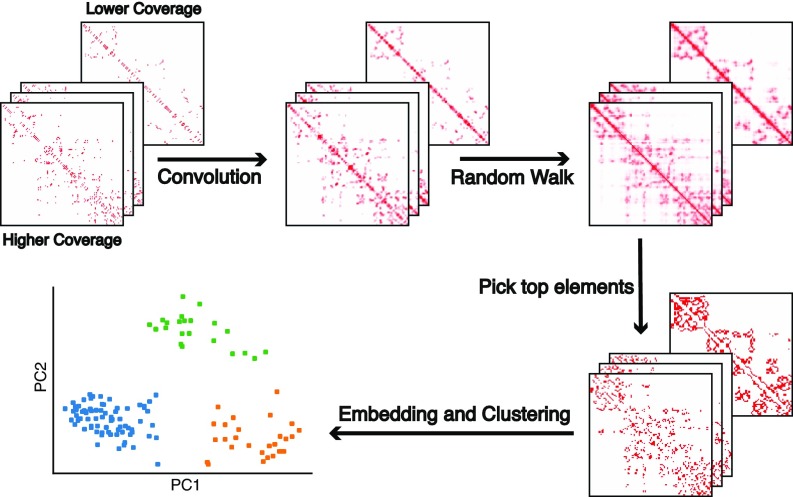
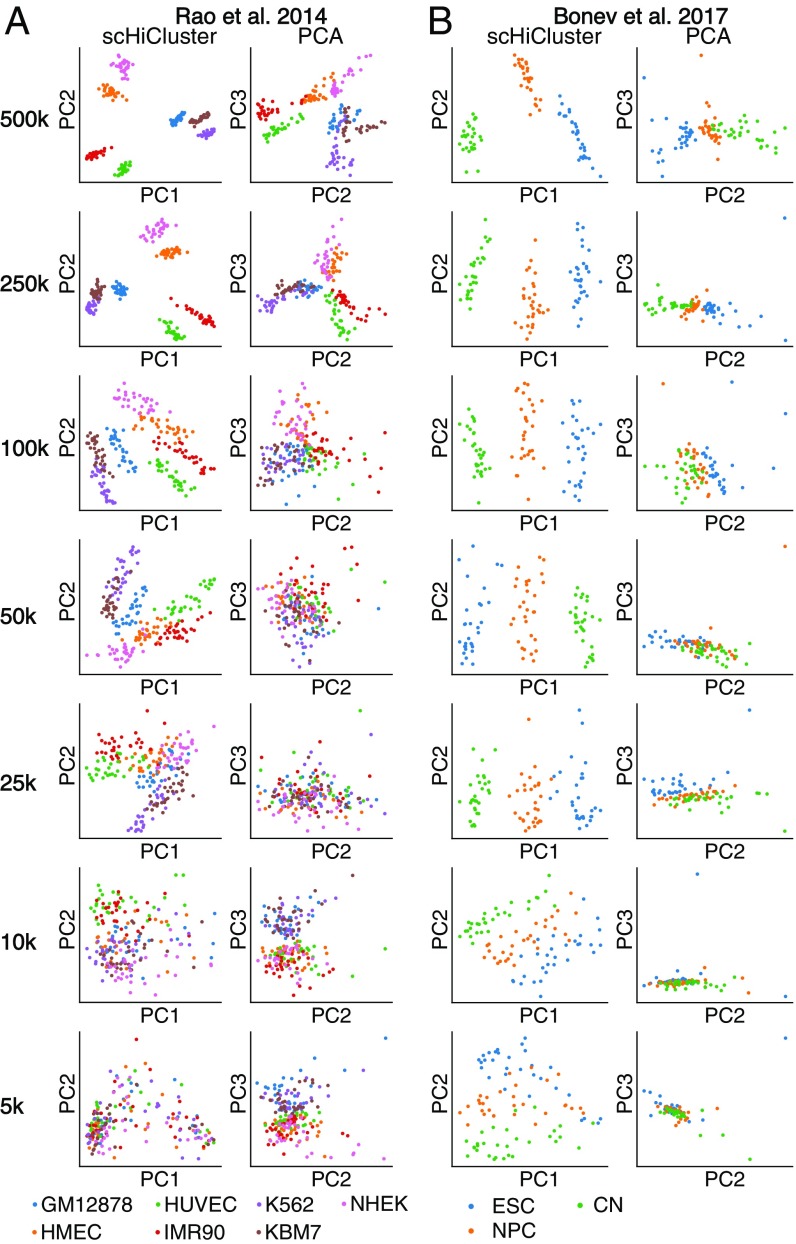
Three-dimensional genome structure plays a pivotal role in gene regulation and cellular function. Single-cell analysis of genome architecture has been achieved using imaging and chromatin conformation capture methods such as Hi-C. To study variation in chromosome structure between different cell types, computational approaches are needed that can utilize sparse and heterogeneous single-cell Hi-C data. However, few methods exist that are able to accurately and efficiently cluster such data into constituent cell types. Here, we describe scHiCluster, a single-cell clustering algorithm for Hi-C contact matrices that is based on imputations using linear convolution and random walk. Using both simulated and real single-cell Hi-C data as benchmarks, scHiCluster significantly improves clustering accuracy when applied to low coverage datasets compared with existing methods. After imputation by scHiCluster, topologically associating domain (TAD)-like structures (TLSs) can be identified within single cells, and their consensus boundaries were enriched at the TAD boundaries observed in bulk cell Hi-C samples. In summary, scHiCluster facilitates visualization and comparison of single-cell 3D genomes.
Overview
The claims and statistics of this paper haven’t been checked yet.
Free: it reads the open-access text and checks the first 5 claims that cite a source we can check. Create a free account to check every claim.
Integrity signals
Registry
Cites
Statistics
Figures

Verification
Claims the paper makes
The claims and statistics of this paper haven’t been checked yet.
Free: it reads the open-access text and checks the first 5 claims that cite a source we can check. Create a free account to check every claim.
Claims other papers make about this one
Each is checked against this paper’s own text: does it say what the citing paper says it does?
In the citing paper
“Cluster analysis of single cell Hi-C data can identify groups of cells with similar chromatin organization (Zhou et al., 2019), but on its own it does not reliably distinguish cortical neuron types (Lee et al., 2019; Li et al., 2019a).”
From Single-Cell Sequencing of Brain Cell Transcriptomes and Epigenomes (2021) · cites this paper as Zhou et al., 2019
Self-check
Percentages, sums and reported differences re-computed from the paper’s own numbers.
The self-check needs the paper’s full text.
Citations
Cites
A 3D Map of the Human Genome at Kilobase Resolution Reveals Principles of Chromatin Looping
Rao, S. S. P., Huntley, M. H., Durand, N. C., Stamenova, E. K., Bochkov, I. D., Robinson, J. T., Sanborn, A. L., Machol, I., Omer, A. D., Lander, E. S., et al. (2014) · Cell · doi:10.1016/j.cell.2014.11.021 · Cited by 9,212 · cited 3×
“Previous studies using bulk cell lines have reported the existence of several 3D structural features: megabase-level A/B compartments, submegabase-level TADs, and kilobase-level loops (29, 31, 39, 40).”
BackgroundMethodComprehensive Mapping of Long-Range Interactions Reveals Folding Principles of the Human Genome
Lieberman-Aiden, E., van Berkum, N. L., Williams, L., Imakaev, M., Ragoczy, T., Telling, A., Amit, I., Lajoie, B. R., Sabo, P. J., Dorschner, M. O., et al. (2009) · Science · doi:10.1126/science.1181369 · Cited by 8,898 · cited 2×
“Previous studies using bulk cell lines have reported the existence of several 3D structural features: megabase-level A/B compartments, submegabase-level TADs, and kilobase-level loops (29, 31, 39, 40).”
Highly parallel genome-wide expression profiling of individual cells using nanoliter droplets.
Macosko, E. Z., Basu, A., Satija, R., Nemesh, J., Shekhar, K., Goldman, M., Tirosh, I., Bialas, A. R., Kamitaki, N., Martersteck, E. M., et al. (2015) · Cell · doi:10.1016/j.cell.2015.05.002 · Cited by 7,110 · cited 1×
“Computational methods have been developed to identify different cell types in heterogeneous cell populations based on various molecular features such as transcriptome (12, 13), methylome (14), and open chromatin (15– 17).”
MethodTopological domains in mammalian genomes identified by analysis of chromatin interactions
Dixon, J. R., Selvaraj, S., Yue, F., Kim, A., Li, Y., Shen, Y., Hu, M., Liu, J. S., & Ren, B. (2012) · Nature · doi:10.1038/nature11082 · Cited by 6,829 · cited 1×
“Previous studies using bulk cell lines have reported the existence of several 3D structural features: megabase-level A/B compartments, submegabase-level TADs, and kilobase-level loops (29, 31, 39, 40).”
BackgroundSelf-citationSpatial partitioning of the regulatory landscape of the X-inactivation centre
Nora, E. P., Lajoie, B. R., Schulz, E. G., Giorgetti, L., Okamoto, I., Servant, N., Piolot, T., van Berkum, N. L., Meisig, J., Sedat, J., et al. (2012) · Nature · doi:10.1038/nature11049 · Cited by 2,895 · cited 1×
“Previous studies using bulk cell lines have reported the existence of several 3D structural features: megabase-level A/B compartments, submegabase-level TADs, and kilobase-level loops (29, 31, 39, 40).”
BackgroundSingle-cell chromatin accessibility reveals principles of regulatory variation
Buenrostro, J. D., Wu, B., Litzenburger, U. M., Ruff, D., Gonzales, M. L., Snyder, M. P., Chang, H. Y., & Greenleaf, W. J. (2015) · Nature · doi:10.1038/nature14590 · Cited by 2,308 · cited 1×
“I recent years, there has been a rapid increase in the development of single-cell transcriptomic and epigenomic assays (1), including single-cell/nucleus RNA sequencing (RNA-seq) (2), assay for transposase-accessible chromatin using sequencing (ATACseq) (3, 4), bisulfite sequencing (5), and Hi-C (6–11).”
BackgroundData-Driven Phenotypic Dissection of AML Reveals Progenitor-like Cells that Correlate with Prognosis
Levine, J. H., Simonds, E. F., Bendall, S. C., Davis, K. L., Amir, E.-A. D., Tadmor, M. D., Litvin, O., Fienberg, H. G., Jager, A., Zunder, E. R., et al. (2015) · Cell · doi:10.1016/j.cell.2015.05.047 · Cited by 2,303
chromVAR: inferring transcription-factor-associated accessibility from single-cell epigenomic data
Schep, A. N., Wu, B., Buenrostro, J. D., & Greenleaf, W. J. (2017) · Nature Methods · doi:10.1038/nmeth.4401 · Cited by 1,680
Chromatin architecture reorganization during stem cell differentiation
Dixon, J. R., Jung, I., Selvaraj, S., Shen, Y., Antosiewicz-Bourget, J. E., Lee, A. Y., Ye, Z., Kim, A., Rajagopal, N., Xie, W., et al. (2015) · Nature · doi:10.1038/nature14222 · Cited by 1,646 · cited 1×
“Besides the methods used in published works, we included the eigenvector method since the chromosome compartments are considered to be cell type specific based on the bulk Hi-C experiments, and the first eigenvector of contact matrix is widely used to represent these compartment features (29, 31, 32).”
MethodSelf-citationFull-length mRNA-Seq from single-cell levels of RNA and individual circulating tumor cells
Ramsköld, D., Luo, S., Wang, Y.-C., Li, R., Deng, Q., Faridani, O. R., Daniels, G. A., Khrebtukova, I., Loring, J. F., Laurent, L. C., et al. (2012) · Nature Biotechnology · doi:10.1038/nbt.2282 · Cited by 1,609 · cited 1×
“I recent years, there has been a rapid increase in the development of single-cell transcriptomic and epigenomic assays (1), including single-cell/nucleus RNA sequencing (RNA-seq) (2), assay for transposase-accessible chromatin using sequencing (ATACseq) (3, 4), bisulfite sequencing (5), and Hi-C (6–11).”
BackgroundSingle-cell Hi-C reveals cell-to-cell variability in chromosome structure
Nagano, T., Lubling, Y., Stevens, T. J., Schoenfelder, S., Yaffe, E., Dean, W., Laue, E. D., Tanay, A., & Fraser, P. (2013) · Nature · doi:10.1038/nature12593 · Cited by 1,589 · cited 1×
“…years, there has been a rapid increase in the development of single-cell transcriptomic and epigenomic assays (1), including single-cell/nucleus RNA sequencing (RNA-seq) (2), assay for transposase-accessible chromatin using sequencing (ATAC-seq) (3, 4), bisulfite sequencing (5), and Hi-C (6 – 11).”
BackgroundMultiscale 3D Genome Rewiring during Mouse Neural Development
Bonev, B., Mendelson Cohen, N., Szabo, Q., Fritsch, L., Papadopoulos, G. L., Lubling, Y., Xu, X., Lv, X., Hugnot, J.-P., Tanay, A., et al. (2017) · Cell · doi:10.1016/j.cell.2017.09.043 · Cited by 1,338 · cited 8×
“(30) examined three mouse cell types [embryonic stem cells (ESCs), neural progenitor cells (NPCs), and cortical neurons (CNs)].”
BackgroundInfluentialMultiplex single-cell profiling of chromatin accessibility by combinatorial cellular indexing
Cusanovich, D. A., Daza, R., Adey, A., Pliner, H. A., Christiansen, L., Gunderson, K. L., Steemers, F. J., Trapnell, C., & Shendure, J. (2015) · Science · doi:10.1126/science.aab1601 · Cited by 1,248 · cited 1×
“I recent years, there has been a rapid increase in the development of single-cell transcriptomic and epigenomic assays (1), including single-cell/nucleus RNA sequencing (RNA-seq) (2), assay for transposase-accessible chromatin using sequencing (ATACseq) (3, 4), bisulfite sequencing (5), and Hi-C (6–11).”
BackgroundSuper-resolution chromatin tracing reveals domains and cooperative interactions in single cells
Bintu, B., Mateo, L. J., Su, J.-H., Sinnott-Armstrong, N. A., Parker, M., Kinrot, S., Yamaya, K., Boettiger, A. N., & Zhuang, X. (2018) · Science · doi:10.1126/science.aau1783 · Cited by 976 · cited 2×
“These results would support recent imaging studies (35), which suggested that TLSs exist in single cells, and their boundaries in individual cells are variable but nonrandom.”
Result3D structures of individual mammalian genomes studied by single-cell Hi-C
Stevens, T. J., Lando, D., Basu, S., Atkinson, L. P., Cao, Y., Lee, S. F., Leeb, M., Wohlfahrt, K. J., Boucher, W., O’Shaughnessy-Kirwan, A., et al. (2017) · Nature · doi:10.1038/nature21429 · Cited by 832 · cited 4×
“Stevens et al. (8) carried out Hi-C analysis of eight single haploid mouse ESCs.”
BackgroundMethodInfluentialCell-cycle dynamics of chromosomal organization at single-cell resolution
Nagano, T., Lubling, Y., Várnai, C., Dudley, C., Leung, W., Baran, Y., Mendelson Cohen, N., Wingett, S., Fraser, P., & Tanay, A. (2017) · Nature · doi:10.1038/nature23001 · Cited by 794 · cited 5×
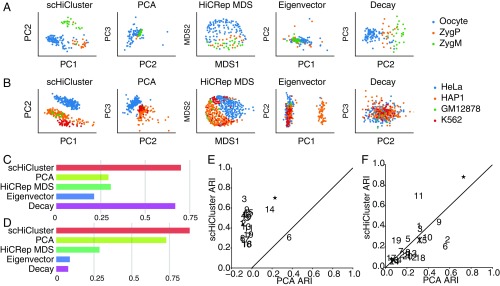
“We compared our algorithm with four baseline methods: PCA, HiCRep+MDS (23), the eigenvector method along with the decay profile method (9) (Methods).”
BackgroundMethodInfluentialScaling single-cell genomics from phenomenology to mechanism
Tanay, A., & Regev, A. (2017) · Nature · doi:10.1038/nature21350 · Cited by 792 · cited 1×
“I recent years, there has been a rapid increase in the development of single-cell transcriptomic and epigenomic assays (1), including single-cell/nucleus RNA sequencing (RNA-seq) (2), assay for transposase-accessible chromatin using sequencing (ATACseq) (3, 4), bisulfite sequencing (5), and Hi-C (6–11).”
BackgroundSingle-nucleus Hi-C reveals unique chromatin reorganization at oocyte-to-zygote transition
Flyamer, I. M., Gassler, J., Imakaev, M., Brandão, H. B., Ulianov, S. V., Abdennur, N., Razin, S. V., Mirny, L. A., & Tachibana-Konwalski, K. (2017) · Nature · doi:10.1038/nature21711 · Cited by 753 · cited 4×
“These findings also explained why the oocytes and zy-gotes in Flyamer et al. (10) are dominantly separated by PC1 (Fig.”
BackgroundMethodInfluentialSingle-Cell Dynamics of Genome-Nuclear Lamina Interactions
Kind, J., Pagie, L., Ortabozkoyun, H., Boyle, S., de Vries, S. S., Janssen, H., Amendola, M., Nolen, L. D., Bickmore, W. A., & van Steensel, B. (2013) · Cell · doi:10.1016/j.cell.2013.02.028 · Cited by 727
Network propagation: a universal amplifier of genetic associations
Cowen, L., Ideker, T., Raphael, B. J., & Sharan, R. (2017) · Nature Reviews Genetics · doi:10.1038/nrg.2017.38 · Cited by 657 · cited 1×
“Random walk with restarts (RWR) is widely used to capture the topological structure of a network (28, 41).”
MethodSpatial organization of chromatin domains and compartments in single chromosomes
Wang, S., Su, J.-H., Beliveau, B. J., Bintu, B., Moffitt, J. R., Wu, C.-T., & Zhuang, X. (2016) · Science · doi:10.1126/science.aaf8084 · Cited by 627 · cited 1×
“Imaging-based technologies have suggested a large degree of heterogeneity of chromosome positioning and spatial distances between loci even within a population of the same cell type (24 – 27).”
BackgroundMassively multiplex single-cell Hi-C
Ramani, V., Deng, X., Qiu, R., Gunderson, K. L., Steemers, F. J., Disteche, C. M., Noble, W. S., Duan, Z., & Shendure, J. (2017) · Nature Methods · doi:10.1038/nmeth.4155 · Cited by 546 · cited 5×
“(7) (B, D, and F), the embedding (A and B) and ARI of clustering (C and D) are shown.”
BackgroundMethodInfluentialSingle-cell methylomes identify neuronal subtypes and regulatory elements in mammalian cortex
Luo, C., Keown, C. L., Kurihara, L., Zhou, J., He, Y., Li, J., Castanon, R., Lucero, J., Nery, J. R., Sandoval, J. P., et al. (2017) · Science · doi:10.1126/science.aan3351 · Cited by 545 · cited 1×
“I recent years, there has been a rapid increase in the development of single-cell transcriptomic and epigenomic assays (1), including single-cell/nucleus RNA sequencing (RNA-seq) (2), assay for transposase-accessible chromatin using sequencing (ATACseq) (3, 4), bisulfite sequencing (5), and Hi-C (6–11).”
BackgroundSelf-citationHiCRep: assessing the reproducibility of Hi-C data using a stratum-adjusted correlation coefficient
Yang, T., Zhang, F., Yardımcı, G. G., Song, F., Hardison, R. C., Noble, W. S., Yue, F., & Li, Q. (2017) · Genome Research · doi:10.1101/gr.220640.117 · Cited by 533
Three-dimensional genome structures of single diploid human cells
Tan, L., Xing, D., Chang, C.-H., Li, H., & Xie, X. S. (2018) · Science · doi:10.1126/science.aat5641 · Cited by 496 · cited 4×
“(11) were downloaded from GSE80006, GSE80280, and GSE117876, respectively.”
BackgroundMethodInfluentialGenome-wide Maps of Nuclear Lamina Interactions in Single Human Cells
Kind, J., Pagie, L., de Vries, S. S., Nahidiazar, L., Dey, S. S., Bienko, M., Zhan, Y., Lajoie, B., de Graaf, C. A., Amendola, M., et al. (2015) · Cell · doi:10.1016/j.cell.2015.08.040 · Cited by 482
Automatic multimedia cross-modal correlation discovery
Pan, J.-Y., Yang, H.-J., Faloutsos, C., & Duygulu, P. (2004) · Proceedings of the tenth ACM SIGKDD international conference on Knowledge discovery and data mining · doi:10.1145/1014052.1014135 · Cited by 479 · cited 2×
“Random walk with restarts (RWR) is widely used to capture the topological structure of a network (28, 41).”
MethodSingle-cell epigenomics: Recording the past and predicting the future
Kelsey, G., Stegle, O., & Reik, W. (2017) · Science · doi:10.1126/science.aan6826 · Cited by 415 · cited 1×
“While such single-cell multiomic data modalities may provide the information content necessary to deconvolute cell types while preserving 3D structural information (38), they can also be more costly to perform, and more technically challenging to carry out.”
BackgroundThe cis-regulatory dynamics of embryonic development at single-cell resolution
Cusanovich, D. A., Reddington, J. P., Garfield, D. A., Daza, R. M., Aghamirzaie, D., Marco-Ferreres, R., Pliner, H. A., Christiansen, L., Qiu, X., Steemers, F. J., et al. (2018) · Nature · doi:10.1038/nature25981 · Cited by 363
TopDom: an efficient and deterministic method for identifying topological domains in genomes
Shin, H., Shi, Y., Dai, C., Tjong, H., Gong, K., Alber, F., & Zhou, X. J. (2016) · Nucleic Acids Research · doi:10.1093/nar/gkv1505 · Cited by 342 · cited 3×
“We applied scHiCluster on contact matrices and then ran TopDom (34) to detect TLSs in every single cell.”
MethodInfluentialPreissl, S., Fang, R., Huang, H., Zhao, Y., Raviram, R., Gorkin, D. U., Zhang, Y., Sos, B. C., Afzal, V., Dickel, D. E., et al. (2018) · Nature Neuroscience · doi:10.1038/s41593-018-0079-3 · Cited by 332 · cited 1×
“Computational methods have been developed to identify different cell types in heterogeneous cell populations based on various molecular features such as transcriptome (12, 13), methylome (14), and open chromatin (15 – 17).”
MethodRobust single-cell DNA methylome profiling with snmC-seq2
Luo, C., Rivkin, A., Zhou, J., Sandoval, J. P., Kurihara, L., Lucero, J., Castanon, R., Nery, J. R., Pinto-Duarte, A., Bui, B., et al. (2018) · Nature Communications · doi:10.1038/s41467-018-06355-2 · Cited by 189 · cited 1×
“Computational methods have been developed to identify different cell types in heterogeneous cell populations based on various molecular features such as transcriptome (12, 13), methylome (14), and open chromatin (15– 17).”
MethodSelf-citationIdentification of Gene Positioning Factors Using High-Throughput Imaging Mapping
Shachar, S., Voss, T. C., Pegoraro, G., Sciascia, N., & Misteli, T. (2015) · Cell · doi:10.1016/j.cell.2015.07.035 · Cited by 177
Measuring the reproducibility and quality of Hi-C data
Yardımcı, G. G., Ozadam, H., Sauria, M. E. G., Ursu, O., Yan, K.-K., Yang, T., Chakraborty, A., Kaul, A., Lajoie, B. R., Song, F., et al. (2019) · Genome Biology · doi:10.1186/s13059-019-1658-7 · Cited by 165
Burger, J. A., & Bürkle, A. (2007) · British Journal of Haematology · doi:10.1111/j.1365-2141.2007.06590.x · Cited by 161 · cited 9×
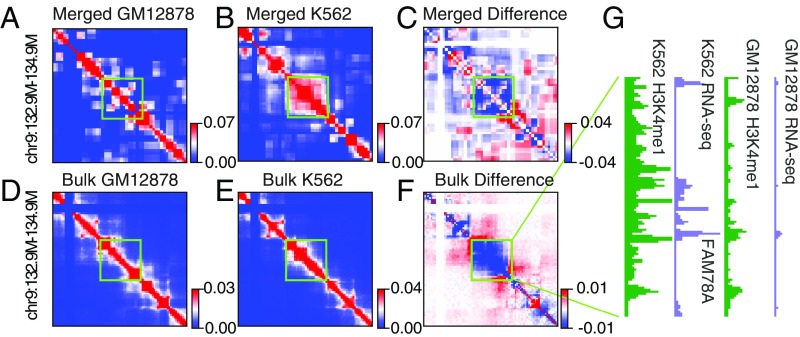
“Intriguingly, an H3K4me1 peak was detected in bulk GM12878 but not K562 at the other boundary of the TLS, which may indicate the potential interaction between the gene and its enhancer.”
BackgroundInfluentialUrsu, O., Boley, N., Taranova, M., Wang, Y. X. R., Yardimci, G. G., Stafford Noble, W., & Kundaje, A. (2018) · Bioinformatics · doi:10.1093/bioinformatics/bty164 · Cited by 135
HiC-spector: a matrix library for spectral and reproducibility analysis of Hi-C contact maps
Yan, K.-K., Yardımcı, G. G., Yan, C., Noble, W. S., & Gerstein, M. (2017) · Bioinformatics · doi:10.1093/bioinformatics/btx152 · Cited by 112
Unsupervised embedding of single-cell Hi-C data
Liu, J., Lin, D., Yardımcı, G. G., & Noble, W. S. (2018) · Bioinformatics · doi:10.1093/bioinformatics/bty285 · Cited by 67 · cited 3×
“(23) systematically evaluated these methods for single-cell Hi-C data embedding.”
MethodQuASAR: Quality Assessment of Spatial Arrangement Reproducibility in Hi-C Data
Sauria, M. E., & Taylor, J. (2017) · bioRxiv (Cold Spring Harbor Laboratory) · doi:10.1101/204438 · Cited by 40 · cited 1×
“Several methods have been developed to examine the reproducibility of bulk Hi-C data, which mainly focus on computing different types of similarity scores between contact matrices (18 – 21).”
MethodSingle-cell multi-omic profiling of chromatin conformation and DNA methylomePreprint
Lee, D.-S., Luo, C., Zhou, J., Chandran, S., Rivkin, A. C., Bartlett, A., Nery, J. R., Fitzpatrick, C., O’Connor, C., Dixon, J. R., et al. (2018) · bioRxiv (Cold Spring Harbor Laboratory) · doi:10.1101/503235 · Cited by 6 · cited 1×
“An alternative approach would be to simultaneously profile 3D genome architecture along with other “omic” information in the same cell, such as jointly profiling chromatin conformation and DNA methylation (36, 37).”
BackgroundLi, G., Liu, Y., Zhang, Y., Fang, R., Kellis, M., & Ren, B. (2018) · bioRxiv (Cold Spring Harbor Laboratory) · doi:10.1101/470963 · Cited by 4 · cited 1×
“An alternative approach would be to simultaneously profile 3D genome architecture along with other “omic” information in the same cell, such as jointly profiling chromatin conformation and DNA methylation (36, 37).”
BackgroundSingle-cell multi-omic profiling of chromatin conformation and DNA methylationPreprint
Lee, D.-S., Luo, C., Zhou, J., Chandran, S., Rivkin, A. C., Bartlett, A., Nery, J. R., Fitzpatrick, C., O’Connor, C., Dixon, J. R., et al. (2019) · doi:10.21203/rs.2.11454/v1 · Cited by 4
Cited by
Wolff, J., Rabbani, L., Gilsbach, R., Richard, G., Manke, T., Backofen, R., & Grüning, B. A. (2020) · Nucleic Acids Research · doi:10.1093/nar/gkaa220 · Cited by 441
“K-means was used on scHi-C data by (36) or (26), but the choice of a clustering algorithm is always dependent on the data.”
MethodCis-regulatory sequences in plants: Their importance, discovery, and future challenges
Schmitz, R. J., Grotewold, E., & Stam, M. (2022) · The Plant Cell · doi:10.1093/plcell/koab281 · Cited by 356
“Whereas single-cell ChIP-seq, HiC, and whole-genome bisulfite sequencing methods are emerging for mammalian systems (Ramani et al., 2017; Luo et al., 2018; GrosseLin et al., 2019; Lee et al., 2019; Zhou et al., 2019), they have yet to be implemented for plants.”
BackgroundSimultaneous profiling of 3D genome structure and DNA methylation in single human cells
Lee, D.-S., Luo, C., Zhou, J., Chandran, S., Rivkin, A., Bartlett, A., Nery, J. R., Fitzpatrick, C., O’Connor, C., Dixon, J. R., et al. (2019) · Nature Methods · doi:10.1038/s41592-019-0547-z · Cited by 340
Self-citationDNA Methylation Atlas of the Mouse Brain at Single-Cell Resolution
Liu, H., Zhou, J., Tian, W., Luo, C., Bartlett, A., Aldridge, A., Lucero, J., Osteen, J. K., Nery, J. R., Chen, H., et al. (2020) · doi:10.1101/2020.04.30.069377 · Cited by 290
Self-citationDNA methylation atlas of the mouse brain at single-cell resolution
Liu, H., Zhou, J., Tian, W., Luo, C., Bartlett, A., Aldridge, A., Lucero, J., Osteen, J. K., Nery, J. R., Chen, H., et al. (2021) · Nature · doi:10.1038/s41586-020-03182-8 · Cited by 289
Self-citation
Metadata
- Authors
- Zhou, J., Ma, J., Chen, Y., Cheng, C., Bao, B., Peng, J., Sejnowski, T. J., Dixon, J. R., & Ecker, J. R.
- Affiliations
- Salk Institute for Biological Studies (US)
- University of California San Diego (US)
- University of Illinois Urbana-Champaign (US)
- Computational Neurobiology Laboratory, Salk Institute for Biological Studies, La Jolla, CA 92037;
- Corresponding author
- Ecker, Joseph R.
- Venue
- Proceedings of the National Academy of Sciences
- Publisher
- National Academy of Sciences
- Published
- 2019-06-24
- Volume
- 116
- Issue
- 28
- Pages
- 14011-14018
- ISSN
- 0027-8424 (ISSN-L)
- 1091-6490
- PMC
- PMC6628819
- OpenAlex
- W2949773289
- Cited by
- 180
- References
- 42
- Citations by year
- 2026: 29 · 2025: 34 · 2024: 27 · 2023: 20 · 2022: 27 · 2021: 31 · 2020: 9 · 2019: 3
- FWCI
- 6.12
- Type
- journal article
- Language
- en
- Open access
- hybrid
- doi.org
- Licence
- Locations
- Proceedings of the National Academy of Sciences (publishedVersion, cc-by-nc-nd)
- Europe PMC (PubMed Central) (publishedVersion, cc-by-nc-nd)
- PubMed Central (publishedVersion, cc-by-nc-nd)
- PubMed (publishedVersion)
- Funders
- Howard Hughes Medical Institute
- National Human Genome Research Institute (R21HG009274)
- National Cancer Institute (P30CA014195)
- Topics
- Life Sciences › Biochemistry, Genetics and Molecular Biology › Molecular Biology › Genomics and Chromatin Dynamics
- Life Sciences › Biochemistry, Genetics and Molecular Biology › Molecular Biology › Single-cell and spatial transcriptomics
- Life Sciences › Biochemistry, Genetics and Molecular Biology › Genetics › Genomic variations and chromosomal abnormalities
- Keywords
- single-cell Hi-C, 3D genome organization, chromatin conformation, cell type clustering, linear convolution, random walks, topologically associating domains, TAD boundaries, data sparsity, low coverage, chromatin structure
- MeSH terms
- Algorithms, Chromatin, Humans, Molecular Conformation, Cluster Analysis, Genome, Computational Biology, Chromosome Structures, Single-Cell Analysis
About these checks
Registry, retraction, Cites and statistics results are computed, not judged, with one exception: a printed reference that no index lists is read once by a model before it counts as a citation error. Claims are extracted by a model and kept only when their quote appears verbatim in the text; each cited source is then checked, with a model’s help, for whether it says what the claim relies on. Those verdicts can be wrong — read the claim’s quote and the cited source before relying on one.
Statistics and arithmetic are recomputed, not judged.
Confidence bands are shown only for fields calibrated on our annotated test set. None is calibrated yet, so no band is shown.
What counts as a claim ›How we measure confidence ›How we check this ›
Are you an author, or do you see a problem with this page? Request a review
Data sources
Bibliographic data: Semantic Scholar, OpenAlex, Crossref.
Contains information from the Semantic Scholar Academic Graph Datasets, made available under the ODC Attribution License (ODC-BY 1.0).
Semantic Scholar’s data is described in: Kinney, R., et al. (2023). The Semantic Scholar Open Data Platform. arXiv:2301.10140.
