

DNA methylation enables transposable element-driven genome expansion
Open accessThe DOI matches its Crossref record; 64 of the 64 references it cites were found in a registry or an index.
Abstract
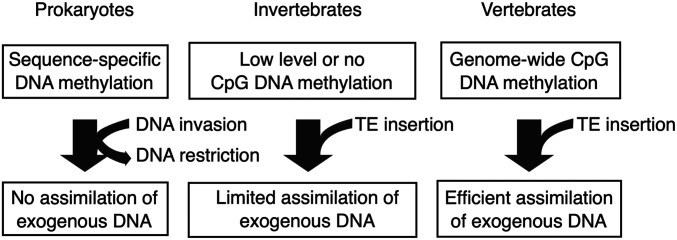
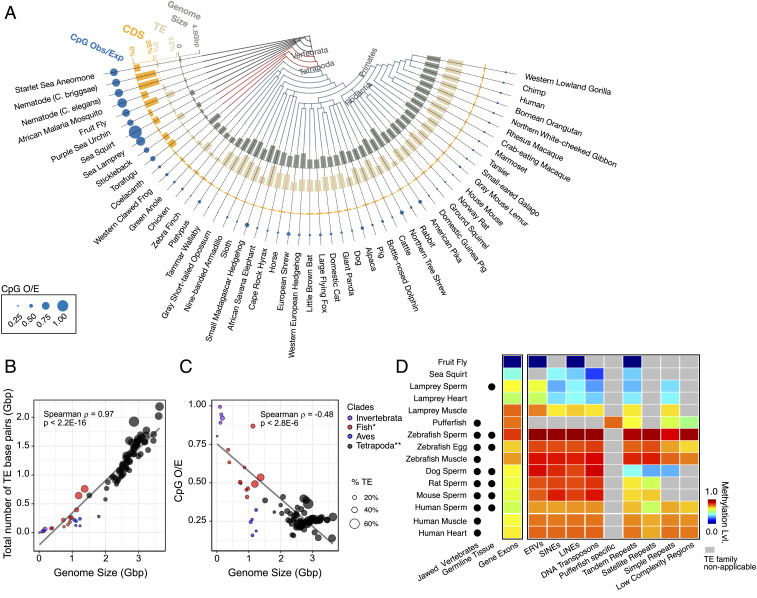
Significance: We examined recent whole-genome data of 53 organisms and found that the substantial differences in their genome sizes can be largely explained by the proportion of transposable elements (TEs) within them. TEs coexist with their host largely because CpG methylation suppresses their transcription. Genome expansion is therefore dependent to a large extent on the action of DNA methyltransferases, which evolved at roughly the same time as TEs. A long-term outcome of CpG methylation is an increase in C-to-T transition mutations both in the TEs and host DNA, which leads to a decreased proportion of CpG dinucleotides over evolutionary time. The survival of TEs in the host genome also provides extra DNA that may be repurposed for host regulatory functions.
Overview
The claims and statistics of this paper haven’t been checked yet.
Free: it reads the open-access text and checks the first 5 claims that cite a source we can check. Create a free account to check every claim.
Integrity signals
Registry
Cites
Statistics
Figures
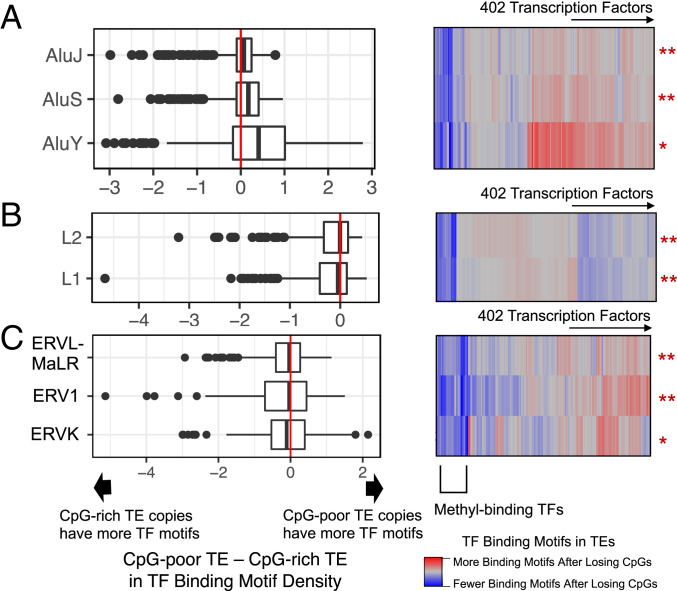
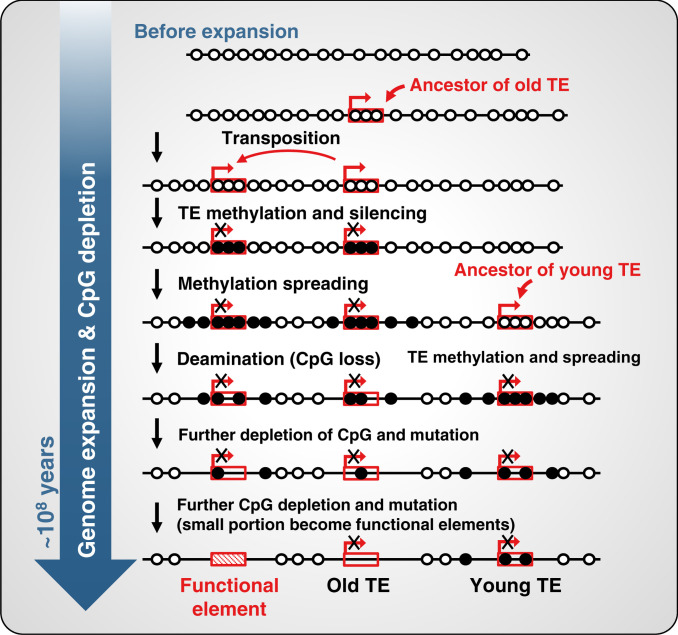
Verification
Claims the paper makes
The claims and statistics of this paper haven’t been checked yet.
Free: it reads the open-access text and checks the first 5 claims that cite a source we can check. Create a free account to check every claim.
Claims other papers make about this one
Each is checked against this paper’s own text: does it say what the citing paper says it does?
The source backs part of the claim, not all of it — or backs it for a different population, condition or comparison.
In the citing paper
“Second, repetitive elements display reduced sequence variation compared to other regions, in particular younger repeats with little time to accumulate mutations (47).”
From DNA language models are powerful predictors of genome-wide variant effects (2023) · cites this paper as [47]
Experimental — accuracy not yet measured
Self-check
Percentages, sums and reported differences re-computed from the paper’s own numbers.
The self-check needs the paper’s full text.
Citations
Cites
BEDTools: a flexible suite of utilities for comparing genomic features
Quinlan, A. R., & Hall, I. M. (2010) · Bioinformatics · doi:10.1093/bioinformatics/btq033 · Cited by 27,437
Integrative analysis of 111 reference human epigenomes
Roadmap Epigenomics Consortium, Kundaje, A., Meuleman, W., Ernst, J., Bilenky, M., Yen, A., Heravi-Moussavi, A., Kheradpour, P., Zhang, Z., Wang, J., et al. (2015) · Nature · doi:10.1038/nature14248 · Cited by 6,368 · cited 1×
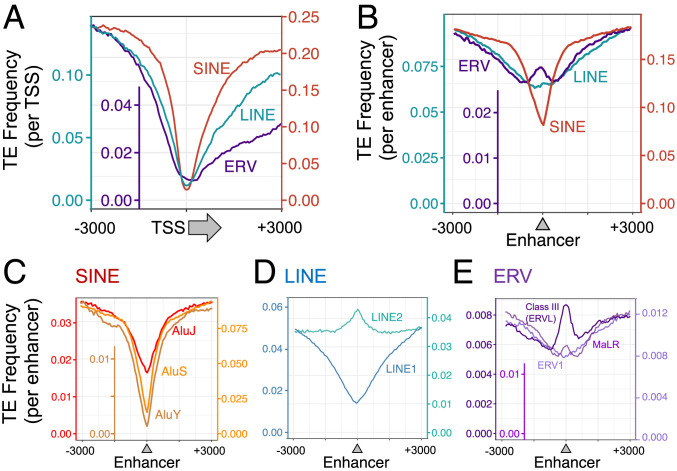
“For the enhancer analysis, we studied the 15-state chromHMM annotation generated from the Roadmap Epigenome Project (60).”
Functions of DNA methylation: islands, start sites, gene bodies and beyond
Jones, P. A. (2012) · Nature Reviews Genetics · doi:10.1038/nrg3230 · Cited by 6,061 · cited 1×
“Discussion DNA methylation has roles in the control of gene expression at the levels of transcription initiation and elongation as well as in the function of regulatory elements such as promoters, enhancers, and insulators; those roles are relatively well understood (29).”
Self-citationFIMO: scanning for occurrences of a given motif
Grant, C. E., Bailey, T. L., & Noble, W. S. (2011) · Bioinformatics · doi:10.1093/bioinformatics/btr064 · Cited by 4,247
Epigenetics in human disease and prospects for epigenetic therapy
Egger, G., Liang, G., Aparicio, A., & Jones, P. A. (2004) · Nature · doi:10.1038/nature02625 · Cited by 3,232 · cited 1×
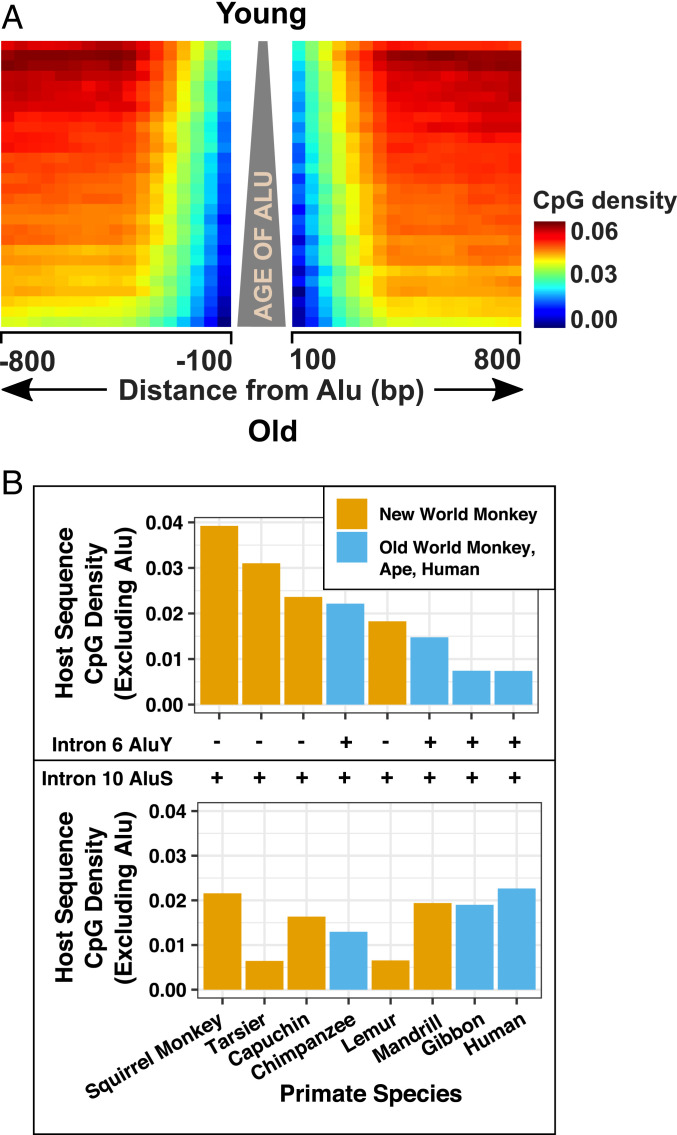
“We know that Alus can act as “ methylation centers ” after insertion into host DNA, whereby methylation subsequently spreads into the flanking DNA (13 – 15).”
Self-citationThe Significance of Responses of the Genome to Challenge
McClintock, B. (1984) · Science · doi:10.1126/science.15739260 · Cited by 2,617 · cited 1×
“Although the functional significance of these size differences remains enigmatic (2), much of the variability can be explained by the presence of repetitive DNA, particularly transposable elements (TEs), which were identified by Barbara McClintock many years ago (3).”
Zerbino, D. R., Achuthan, P., Akanni, W., Amode, M. R., Barrell, D., Bhai, J., Billis, K., Cummins, C., Gall, A., Girón, C. G., et al. (2018) · Nucleic Acids Research · doi:10.1093/nar/gkx1098 · Cited by 2,605 · cited 1×
“The genome sequence and transcript annotation was retrieved from Ensembl release 87 (47 vertebrates) and Ensembl metazoa (6 invertebrates) release 38 (56).”
Britten, R. J., & Davidson, E. H. (1969) · Science · doi:10.1126/science.165.3891.349 · Cited by 2,064 · cited 1×
“The presence of multiple transcription factor binding sites (TFBSs) in TE-derived DNA led to the hypothesis that TEs might provide a ready source of DNA that could be co-opted by the cell to help regulate gene expression (16, 21, 22), summarized in previous reviews (23, 24).”
Genome-Wide Evolutionary Analysis of Eukaryotic DNA Methylation
Zemach, A., McDaniel, I. E., Silva, P., & Zilberman, D. (2010) · Science · doi:10.1126/science.1186366 · Cited by 1,793 · cited 1×
“Inverte-brates have small genomes, few TEs, higher percentages of coding sequence, and little CpG loss because they do not have strong intergenic CpG methylation (11).”
Cytosine methylation and the ecology of intragenomic parasites
Yoder, J. A., Walsh, C. P., & Bestor, T. H. (1997) · Trends in Genetics · doi:10.1016/s0168-9525(97)01181-5 · Cited by 1,562 · cited 1×
“The central role of cytosine methylation in repressing the transcription of evolutionarily young TEs (i.e., those more recently inserted) has been well-described (5, 33).”
Cited by
Items 101–200 of 208
Feng, C., Tie, R., Xin, S., Chen, Y., Li, S., Chen, Y., Hu, X., Zhou, Y., Liu, Y., Hu, Y., et al. (2024) · BMC Biology · doi:10.1186/s12915-024-01939-5 · Cited by 8
Zhuo, X., Tomlinson, C., Belter, E. A., Kuntala, P. K., Saintilnord, W. N., Jiang, J., Graves-Lindsay, T. A., Macias-Velasco, J. F., Fulton, B. S., & Wang, T. (2026) · Genome Research · doi:10.1101/gr.281571.125 · Cited by 7
“By examining CpG density flanking Alu insertions, Zhou et al. (2020) found evidence of CpG methylation spreading from old TEs to flanking regions during evolution.”
InfluentialGenomic and genetic dissection of drought tolerance in a resilient wheat germplasm JIN50
Lin, J., Zhang, C., Liu, Z., Li, J., Yang, Q., Chu, W., Liu, D., Zhang, L., Zhao, D., Peng, X., et al. (2026) · Nature Genetics · doi:10.1038/s41588-026-02596-w · Cited by 8
“Seven-day-old seedlings in one-fourth strength of Hoagland solution were subjected to 42 °C for 3–5 days, then recovered at 22 °C for 3–5 days, and SR was calculated (Supplementary Table 28).”
Non-Mendelian inheritance of DNA methylation patterns in mice
Davidovich, A., Cuomo, D., Su, H., Kambhampati, S., Gong, Q., Naron, A., Tryggvadóttir, R., McMillan, L., Hansen, K. D., Threadgill, D. W., et al. (2026) · Nature Genetics · doi:10.1038/s41588-026-02604-z · Cited by 7
“…is particularly intriguing in the context of IAPs associated with some non-Mendelian epigenetic inheritance patterns, as IAPs are a known source of new mutations in the mouse genome 59 and their transposition is modulated by their epigenetic state 60 . https://doi.org/10.1038/s41588-026-02604-z”
InfluentialLi, S., Zhang, X., Yang, L., Jia, K., Li, J., Lan, L., Zhang, Y., Li, N., Deng, C., & Gao, W. (2022) · Journal of Systematics and Evolution · doi:10.1111/jse.12929 · Cited by 7
“Due to their high copy number and mobility, they have great impacts on genome structure and evolution (Bennetzen & Wang, 2014; Zhou et al., 2020), chromosomal rearrangement (Li et al.”
BackgroundRepressive Cytosine Methylation is a Marker of Viral Gene Transfer Across Divergent Eukaryotes
Sarre, L. A., Peralta, G. A. G., Charria, P. R., Ovchinnikov, V. Y., & de Mendoza, A. (2025) · Molecular Biology and Evolution · doi:10.1093/molbev/msaf176 · Cited by 7
“…sizes observed across species where 5mC functions as a repressive mark, the notion that epigenetic silencing inevitably leads to genome expansion is questionable (Zhou et al. 2020), implying that TE accumulation reflects a multifactorial process that cannot be solely attributed to one factor.”
He, G., Jin, H., Cheng, Y., Yu, Y., & Guo, D. (2022) · Journal of Systematics and Evolution · doi:10.1111/jse.12850 · Cited by 7
“However, most transposons are immobile because of purifying selection (Baduel et al., 2019; Kapun et al., 2020) and transposon mobilization could be limited by epigenetic mechanisms, such as DNA methylation in plants (Zhou et al., 2020).”
BackgroundZhou, J., Horton, J. R., Kaur, G., Chen, Q., Li, X., Mendoza, F., Wu, T., Blumenthal, R., Zhang, X., & Cheng, X. (2023) · Journal of Biological Chemistry · doi:10.1016/j.jbc.2023.105017 · Cited by 7
A new challenge for data analytics: transposons
Wellinger, R. E., & Aguilar–Ruiz, J. S. (2022) · BioData Mining · doi:10.1186/s13040-022-00294-x · Cited by 7
“About half of the human genome is composed of transposons [23] explaining their important role for providing human genetic diversity.”
BackgroundAlgorithms for the Uniqueness of the Longest Common Subsequence
Wang, Y. (2023) · Journal of Bioinformatics and Computational Biology · doi:10.1142/s0219720023500270 · Cited by 6
“Transposons can participate in controlling gene expression [94], and they are related to several diseases, such as cancer [13], hemophilia [33], and porphyria [46].”
BackgroundLiu, H., Pei, M., Ampomah‐Dwamena, C., He, G., Wei, T., Shi, Q., Yu, Y., & Guo, D. (2023) · Functional & Integrative Genomics · doi:10.1007/s10142-023-01128-7 · Cited by 6
“The LTR-RTs are also influenced by epigenetic regulation, such as DNA methylation (Zhou et al. 2020).”
BackgroundNuclear Organization during Hepatogenesis in Zebrafish Requires Uhrf1
Madakashira, B. P., Zhang, C., Macchi, F., Magnani, E., & Sadler, K. C. (2021) · Genes · doi:10.3390/genes12071081 · Cited by 6
“Our DNA methylation data from larval zebrafish livers show, unsurprisingly, that most gene promoters remain unmethylated as in nearly all other vertebrate tissues examined [104], and that methylated CpGs are enriched in TEs and in gene bodies, as consistently reported in the genome of vertebrates [105,106].”
BackgroundZhou, W., Kunz, D., & Jiggins, C. D. (2025) · Heredity · doi:10.1038/s41437-025-00805-6 · Cited by 5
“The species tree was calibrated based on estimated divergence time between Drosophila melanogaster and Stratiomyidae (MYA) (Wiegmann et al. 2011). the expansion of TEs are enabled by DNA methylation (Zhou et al. 2020).”
Self-citationLuo, Z., Tobias, P. A., Singh, L., Dong, C., Martino, A. M., Saber, E., Quecine, M. C., Júnior, N. S. M., Amorim, L., Zhang, P., et al. (2025) · G3 Genes Genomes Genetics · doi:10.1093/g3journal/jkaf255 · Cited by 5
“Because uncontrolled proliferation can lead to genome instability (Mita and Boeke 2016), fungi have evolved defense mechanisms that include RNA interference (RNAi), repeat-induced point (RIP) mutation, DNA, or histone methylation (Selker 1990, 2002; Buchon and Vaury 2006; Zhou et al. 2020).”
Viral mimicry acts as a tumor suppressor in colitis
Larsen, F., Jeong, W., Schep, D., Good, H. J., Shin, A. E., Zhang, L., Derouet, M., Wang, T. C., Castellani, C. A., Shooshtari, P., et al. (2026) · Nature Communications · doi:10.1038/s41467-026-68850-1 · Cited by 5
Bin, H., Li, Z., & Li, Z. (2022) · Gene · doi:10.1016/j.gene.2022.146959 · Cited by 5
When cleaning facilitates cluttering – genome editing in ciliates
Seah, B. K. B., & Swart, E. C. (2023) · Trends in Genetics · doi:10.1016/j.tig.2023.02.016 · Cited by 5
Mariner, B. L., McCoy, B. M., Greenier, A., Brassington, L., Slikas, B., Adjangba, C., Marye, A., Harrison, B. R., Bamberger, T., Algavi, Y. M., et al. (2024) · bioRxiv (Cold Spring Harbor Laboratory) · doi:10.1101/2024.10.08.617286 · Cited by 6
“Changes in DNAm patterns close to TEs can have wide-ranging consequences [26–31], but largely, the loss of methylation (hypomethylation) at TEs specifically is a known consequence of aging [25,32–34].”
BackgroundSalazar, A., Tesi, N., Knoop, L., van Schoor, N. M., Huisman, M. A., Tijms, B. M., Vijverberg, E. G. B., van der Lee, S. J., Wijesekera, S., Křížová, J., et al. (2025) · medRxiv · doi:10.1101/2025.02.02.25321330 · Cited by 5
Bi, Y., Hu, J., Wu, T., Ouyang, Z., Lin, T., Sun, J., Zhang, X., Xu, X., Wang, H., Wei, K., et al. (2025) · Protein & Cell · doi:10.1093/procel/pwaf053 · Cited by 4
“…our findings suggest that suppression ofTE transcription activities by DNA CpG methylation is not only consistent with long-term accommodation in the host genome, but also present in the effect of culture conditions on naïve cells (Meng et al., 2015; Soto-Palma et al., 2022; Zhou et al., 2020).”
Long-read sequencing for epigenomic studies in the fields of ecology and evolution
de Carvalho, C. F., Ord, J., Escuer, P., Fox, J. A., Li‐Byarlay, H., Peck, L. D., Planidin, N. P., Venney, C. J., & Marshall, H. (2026) · Philosophical Transactions of the Royal Society B Biological Sciences · doi:10.1098/rstb.2025.0099 · Cited by 4
DNA methylation in plants and its role in abiotic stress tolerance
Bhanu, B. D., Alluri, A., Shanker, A. K., & Ulaganathan, K. (2021) · Elsevier eBooks · doi:10.1016/b978-0-12-816091-6.00018-3 · Cited by 4
Diverging transposon activity among polar bear sub-populations inhabiting different climate zones
Godden, A. M., Rix, B., & Immler, S. (2025) · Mobile DNA · doi:10.1186/s13100-025-00387-4 · Cited by 4
Wen, S., Zhao, H., Qiao, G., & Shen, X. (2023) · Plant Biology · doi:10.1111/plb.13532 · Cited by 4
Marino, A., Debaecker, G., Fiston-Lavier, A.-S., Haudry, A., & Nabholz, B. (2025) · eLife · doi:10.7554/elife.100574.2 · Cited by 4
Hu, J., Mao, T., Huang, K., Yang, S., Yu, W., Huang, J., Jin, S., Sun, C., Jiapaer, Z., & Wang, X. (2026) · Cell Cycle · doi:10.1080/15384101.2025.2611968 · Cited by 3
Now and then in eukaryotic DNA methylation
Stein, R. A., Gomaa, F. E., Raparla, P., & Riber, L. (2024) · Physiological Genomics · doi:10.1152/physiolgenomics.00091.2024 · Cited by 3
Nandety, R. S., Oh, S., Lee, H., Krom, N., Gupta, R., & Mysore, K. S. (2024) · The Plant Journal · doi:10.1111/tpj.16744 · Cited by 3
To Build or To Break: The Dual Impact of Interspersed Transposable Elements in Cancer
Moreira, D. A., de Lanna, C. A., da Cruz, J. G. V., & Boroni, M. (2021) · Springer eBooks · doi:10.1007/978-3-030-73151-9_8 · Cited by 3
Jackson, T. K., & Rhode, C. (2024) · Journal of Fish Biology · doi:10.1111/jfb.15844 · Cited by 3
Smith, S. S. (2025) · Nucleic Acids Research · doi:10.1093/nar/gkaf762 · Cited by 2
Recombination Suppression Drives Expansion of the Drosophila Dot Chromosome
Stanek, T. J., Leung, W., Shaffer, C. D., Partnership, T. G. E., Kleinschmit, A. J., Mix, J., Starkey, J. M., Ogden, S., Robic, S., Roman, D., et al. (2025) · Molecular Biology and Evolution · doi:10.1093/molbev/msaf304 · Cited by 2
“In fact, the evolution of repetitive DNA silencing mechanisms may facilitate genome size expansion (Zhou et al. 2020): once a particular repeat class is effectively silenced by its host genome, its presence in the genome becomes less deleterious or even neutral (Lu and Clark 2010).”
Comparative view of DNA methylation in stramenopiles and other eukaryotes: Focus on 5-methylcytosine
Khatei, A., Tirichine, L., Sidiq, M. J., Cock, J. M., & Jüterbock, A. O. (2026) · Algal Research · doi:10.1016/j.algal.2026.104551 · Cited by 3
Variability in Global DNA Methylation Rate Across Tissues and Over Time in Sheep
Drouilhet, L., Moreno, C. R., Plisson‐Petit, F., Marcon, D., Fabre, S., & Hazard, D. (2022) · Frontiers in Genetics · doi:10.3389/fgene.2022.791283 · Cited by 2
Sereshki, S., & Lonardi, S. (2025) · Briefings in Bioinformatics · doi:10.1093/bib/bbaf092 · Cited by 2
Khan, R. U., Ullah, I., Khurshid, G., Suboktagin, S., Khan, A. R., Zeb, I., Khan, Z. A., Jamil, M. A., Rha, E. S., Ali, H. M., et al. (2024) · Plant Signaling & Behavior · doi:10.1080/15592324.2024.2336724 · Cited by 2
“61 This finding gives a new insight into the role of smoke solution to regulate plant metabolism.”
BackgroundA tunable, ultrasensitive threshold in enzymatic activity governs the DNA methylation landscape
Bonsu, K., Laszik, N., Trinh, A., Downing, T. L., & Read, E. L. (2026) · Biophysical Journal · doi:10.1016/j.bpj.2026.03.013 · Cited by 2
Li, Y., Teng, W., Xu, C., Yu, H. S., Kong, L., Liu, S., & Li, Q. (2022) · bioRxiv (Cold Spring Harbor Laboratory) · doi:10.1101/2022.02.22.481396 · Cited by 2
Christenson, A. E., Divekar, N. S., Lubin, J. P., Palma, L. G., Colias, P. J., Pattali, R. K., Xu, D. Z., Hubbard, A., Lin, K., Phan, N., et al. (2026) · bioRxiv (Cold Spring Harbor Laboratory) · doi:10.64898/2026.02.24.707761 · Cited by 2
Tiedemann, R. L., Liang, G., & Jones, P. A. (2022) · Springer eBooks · doi:10.1007/978-3-030-94475-9_1 · Cited by 1
Self-citationClement, K., McGill, M. R., Miousse, I. R., Young, S. G., Melnyk, S., & Koturbash, I. (2022) · Journal of Dietary Supplements · doi:10.1080/19390211.2022.2153957 · Cited by 1
“Repetitive elements (RE) comprise a substantial percentage of the genome, with some estimates for this number to be over 60%, with DNA methylation serving as a principal mechanism for regulation of their transcriptional activity (16–18).”
Linquist, S., Fullerton, B., & Grewal, A. (2023) · Synthese · doi:10.1007/s11229-023-04265-5 · Cited by 1
Plasmonics: An Optical Approach to Study Plant Epigenetics
Mamián-López, M. B., & Begcy, K. (2023) · Plasmonics · doi:10.1007/s11468-023-02000-x · Cited by 1
“For instance, DNA methylation is fundamental for transcriptional repression of transposable elements (TEs) and regulation of gene expression [5, 6].”
Sun, J., Chen, X., Ruan, Y., Xu, J., & Xu, H. (2025) · Genomics · doi:10.1016/j.ygeno.2025.111016 · Cited by 1
Zhu, M., Zhou, J., Chen, N., Xu, J., Wang, H., Jiang, L., & Yang, F. (2025) · Genes · doi:10.3390/genes16040397 · Cited by 1
“Additionally, DNA methylation can contribute to genome expansion by depleting CpG sites through TE-mediated deam-ination and neofunctionalization [76].”
Wang, T., Wu, Y., Lu, H.-J., Liao, T., Tai, J., Huang, S., Wang, F., Yu, T., Ting, C., Chaw, S., et al. (2025) · Molecular Ecology Resources · doi:10.1111/1755-0998.14110 · Cited by 1
“Over time, these once parasitic sequences can become integral parts of the genomic regulatory architecture, contributing to the formation of new regulatory elements like enhancers, which are crucial for gene expression regulation (Zhou et al. 2020).”
Modern understanding of epigenetic inheritance mechanisms and their role in the evolutionary process
Toshchakova, V. A., Noskov, S. A., Khazieva, K. R., Erofeeva, T. V., & Toshchakov, S. V. (2025) · Molecular Genetics Microbiology and Virology (Russian) · doi:10.17116/molgen2025430426 · Cited by 1
Transposable Elements and Genome Evolution in Vertebrates
Fard, V. N., & Tollis, M. (2025) · Epigenetics and human health · doi:10.1007/978-3-032-04125-8_1 · Cited by 1
Garcia, A. D., & Jachowicz, J. W. (2026) · Advances in genetics · doi:10.1016/bs.adgen.2026.03.001 · Cited by 1
Adams, A. N., Denton, R. D., & Mueller, R. L. (2022) · Evolution · doi:10.1111/evo.14468 · Cited by 1
“This suggests that much of the signal within the Zhou et al. dataset comes from the fact that mammals are endothermic and also tend to have larger genomes than fish, reptiles, and frogs—but it is endothermy itself, rather than genome size, that is driving the CpG O/E pattern (Supplemental Figures 1 and 2).”
BackgroundMethodResultInfluentialZuo, Q., Wu, R., Sun, L., Ren, T., Fan, Z., Wang, L., Tan, B., Luo, B., Irfan, M., Huang, Q., et al. (2025) · Molecular Ecology Resources · doi:10.1111/1755-0998.14071 · Cited by 1
“As a result, species have developed mechanisms to limit transposon activity, with DNA methylation—particularly 5-methylcytosine (5mC)—serving as a primary strategy for transposon repression in higher eukaryotes (Lawson, Liang, and Wang 2023; Mattei, Bailly, and Meissner 2022; Zhou et al. 2020).”
Liao, H.-R., Zhong, L., He, Y., He, J., Wu, Y., Guo, Y. Q., Mei, L., Wang, G., Cao, F., Fu, F., et al. (2025) · Plants · doi:10.3390/plants14152361 · Cited by 1
“Particularly, LINE1 elements can modulate gene expression through various mechanisms, including functioning as promoters or enhancers, disrupting transcript splicing, and altering epigenetic modifications, which may potentially compromise genomic stability [60–62].”
Martínez-Ugalde, I., Neophytou, K., Villagrana-Pacheco, Y., Durañona, A. O., Stevens, L., Du, X., Bancroft, R. E., Hall, J. L., Pedersen, A. B., Blaxter, M., et al. (2026) · Genome Biology and Evolution · doi:10.1093/gbe/evag117 · Cited by 1
“To offset this, host genomes have adapted different molecular mechanisms, including noncoding RNA pathways, to regulate TE activity (Wolf et al. 2020; Zhou et al. 2020; Van Lopik et al. 2023).”
MITE infestation of germline accommodated by genome editing in BlepharismaPreprint
Seah, B. K. B., Singh, M., Emmerich, C., Singh, A. D., Woehle, C., Hüettel, B., Byerly, A., Stover, N. A., Sugiura, M., Harumoto, T., et al. (2022) · bioRxiv (Cold Spring Harbor Laboratory) · doi:10.1101/2022.05.02.489906 · Cited by 1
“When seen from a non-teleological perspective, it is precisely because CpG-mediated transposon inactivation is so effective, preventing exposure to selection, that transposons persist, leading to larger genomes (Zhou et al., 2020).”
BackgroundKavaklıoğlu, G., Podhornik, A., Vcelkova, T., Marjanović, J., Beck, M. A., Phan-Canh, T., Mair, T., Miccolo, C., Drino, A., Egger, G., et al. (2024) · eLife · doi:10.7554/elife.96850.1 · Cited by 1
Interplay of genetic and epigenetic variation in evolutionary processes
Meröndun, J. (2024) · doi:10.5282/edoc.33681 · Cited by 1
Human panepigenome represents epigenomic diversityPreprint
Dong, Z., Macias-Velasco, J. F., Zhuo, X., Zhang, W., Tomlinson, C., Jiang, J., Belter, E. A., Jony, S. R., Li, R., Fulton, R. S., et al. (2026) · bioRxiv (Cold Spring Harbor Laboratory) · doi:10.64898/2026.08.19.745838 · Cited by 1
Silvestrini, A. J. A., Ramsay, L., Koh, K. C., Baker, M., Mau, M., Kaur, S., Sudheesh, S., Rodde, N., Pasipanodya, L., Kagale, S., et al. (2026) · bioRxiv (Cold Spring Harbor Laboratory) · doi:10.64898/2026.09.02.749020 · Cited by 1
Two Sorts of DNA in Eukaryotic Cells: Linear Chromosomal DNA and Circular Extrachromosomal DNA
Dennin, R. H. (2022) · American Journal of Biomedical Science & Research · doi:10.34297/ajbsr.2022.15.002160
Algorithms for determining transposons in gene sequencesPreprint
Wang, Y. (2015) · arXiv (Cornell University) · doi:10.48550/arxiv.1506.02424
Determine transposable genes when the orders of genes are differentPreprint
Wang, Y. (2023) · bioRxiv (Cold Spring Harbor Laboratory) · doi:10.1101/2023.03.14.532623
“Transposons can participate in controlling gene expression [82], and they are related to several diseases, such as cancer [13], hemophilia [33], and porphyria [45].”
BackgroundEffect of environmental toxicants on the epigenome and current applications
Prada, D., & Baccarelli, A. (2023) · Elsevier eBooks · doi:10.1016/b978-0-12-824010-6.00033-2
Fawzy, M. M., Nazmy, M., El‐Sheikh, A. A. K., & Fathy, M. (2024) · Immunologic Research · doi:10.1007/s12026-023-09451-8
A Workflow for Genome Assembly and Annotation of Hāpuku (Polyprion oxygeneios)
Roberts, B. (2024) · Open Access Victoria University of Wellington | Te Herenga Waka (Figshare) · doi:10.26686/wgtn.25405450
Kavaklıoğlu, G., Podhornik, A., Vcelkova, T., Marjanović, J., Beck, M. A., Phan-Canh, T., Mair, T., Miccolo, C., Drino, A., Doni, M., et al. (2024) · eLife · doi:10.7554/elife.96850.2.sa0
Kavaklıoğlu, G., Podhornik, A., Vcelkova, T., Marjanović, J., Beck, M. A., Phan-Canh, T., Mair, T., Miccolo, C., Drino, A., Doni, M., et al. (2024) · eLife · doi:10.7554/elife.96850.2
Kavaklıoğlu, G., Podhornik, A., Vcelkova, T., Marjanović, J., Beck, M. A., Phan-Canh, T., Mair, T., Miccolo, C., Drino, A., Doni, M., et al. (2025) · eLife · doi:10.7554/elife.96850.3.sa0
Kavaklıoğlu, G., Podhornik, A., Vcelkova, T., Marjanović, J., Beck, M. A., Phan-Canh, T., Mair, T., Miccolo, C., Drino, A., Doni, M., et al. (2025) · eLife · doi:10.7554/elife.96850.3
Molecular mechanisms involved in the expansion of Tet2-/- hematopoietic stem cells upon stresses
Stolz, A. (2024) · theses.fr (ABES) · doi:10.70675/1570a347zc84az4834z8b5cz8e7395385c5b
Labella-Ortega, M., Guarino, C., Cipriani, G., Schicchi, R., Bazan, G., Chen, H., Ranauda, M. A., Maisto, M., Zuzolo, D., Tartaglia, M., et al. (2025) · Research Square · doi:10.21203/rs.3.rs-6595308/v1
Darwin’s Abominable Mystery: DNA Replication Timing, Genome Stability and BiodiversityPreprint
Herrick, J. (2025) · Preprints.org · doi:10.20944/preprints202506.1612.v1
Darwin’s Abominable Mystery: DNA Replication Timing, Genome Stability and BiodiversityPreprint
Herrick, J. (2025) · Preprints.org · doi:10.20944/preprints202506.1612.v2
Targeting DNA methylation in leukaemic cells
Selimović-Pašić, A. (2025) · Linköping University medical dissertations · doi:10.3384/9789181182200
Ametrano, A., Fioriniello, S., Cocca, E., Italiani, P., & Coscia, M. R. (2025) · Fish & Shellfish Immunology · doi:10.1016/j.fsi.2025.111078
Discovery of HPV-associated genomic alterations in cervical cancer
Porter, V. (2024) · cIRcle (University of British Columbia) · doi:10.14288/1.0440536
野沢, 紘. (2022) · Institutional Repositories DataBase (IRDB) · doi:10.14943/doctoral.k14831
Wang, M., Bissonnette, N., Laterrière, M., Dudemaine, P.-L., Gagné, D., Roy, J., Sirard, M.-A., & Ibeagha-Awemu, E. M. (2024) · Figshare · doi:10.6084/m9.figshare.25414919
Wang, M., Bissonnette, N., Laterrière, M., Dudemaine, P.-L., Gagné, D., Roy, J., Sirard, M.-A., & Ibeagha-Awemu, E. M. (2024) · Figshare · doi:10.6084/m9.figshare.25415005
A Study of DNA Methylation Through the Lens of Machine Learning
Sereshki, S. (2024) · eScholarship (California Digital Library)
Criscio, M. D. (2024) · Uppsala University Publications (Uppsala University)
The influence of the Y chromosome on autosomal DNA methylation
Batdorj, E. (2023) · eScholarship@McGill (McGill) · doi:10.82308/11854
Sullivan, J. V., Eccersall, S., Smith, G. R., Dobson, R. C. J., & Meisrimler, C. (2026) · Molecular Plant Pathology · doi:10.1111/mpp.70190
“The trans-posable element insertions reported in the first version genome were confirmed in the third version genome, with 89% of the genome composed of repetitive regions, which are subsequently silenced by DNA methylation (Luo et al. 2025; Zhou et al. 2020).”
Omae, N. (2020) · Institutional Repositories DataBase (IRDB) · doi:10.15083/0002006496
Modern Understanding of Epigenetic Inheritance Mechanisms and Their Role in the Evolutionary Process
Toshchakova, V. A., Noskov, S. A., Khazieva, K. R., Erofeeva, T. V., & Toshchakov, S. V. (2025) · Molecular Genetics Microbiology and Virology · doi:10.3103/s0891416825700272
Gerchen, J., Jeffries, D. L., Grob, S., Mac, V., & Pannell, J. R. (2026) · bioRxiv (Cold Spring Harbor Laboratory) · doi:10.64898/2026.03.31.715504
Evolution of the eukaryote (epi)genome : Insights from orphan protists
Blaz, J. (2023) · theses.fr (ABES) · doi:10.70675/68387a32zd0bfz4f4fz89f9zfa56c5677bb4
Shih, R. M. (2026) · Digital Commons - RU (Rockefeller University) · doi:10.48496/crrb-zk02
DNA methylation links lagging strand replication to transposable element controlPreprint
Fajri, N., Coulée, M., Pigeon, A., Badugu, S. B., Güller, A. S., Bandau, S., Jiang, H., Lamond, A. I., Ferry, L., Greenberg, M., et al. (2026) · bioRxiv (Cold Spring Harbor Laboratory) · doi:10.64898/2026.06.23.733924
Quantitative Control of Transposable Elements: From Genome Plasticity to Immune Regulatory Circuits
Reyes‐Barragán, I. J. (2026) · Cell Biochemistry and Function · doi:10.1002/cbf.70252
“DNA methylation at TE promoters and CpG‐rich regulatory regions serves as a primary mechanism to promote compact chromatin states and suppress transcription [32].”
Ayuketah, A., Meredith, M., Groza, C., Moller, A., Daida, K., Catching, A., Weller, C. A., Kouam, C., Paulin, L., Malik, L., et al. (2026) · bioRxiv (Cold Spring Harbor Laboratory) · doi:10.64898/2026.07.02.735893
Shi, Y., Zhong, Z., Liu, W., Zhang, Y., Sun, J., & He, M. (2026) · DNA Research · doi:10.1093/dnares/dsag008
“65 Remarkably, repetitive sequences constitute 70.10% of the C. tritonis genome, the highest proportion among studied gastropods (Tables S10, S11, S12).”
InfluentialVolakhava, A., Pavlová, Š., Radová, L., Taušová, K., Svozilová, H., Ženatová, M., Doubek, M., Mamedov, I., Pospíšilová, Š., & Plevová, K. (2026) · bioRxiv (Cold Spring Harbor Laboratory) · doi:10.64898/2026.07.16.738931
Orłowska, R., Zimny, J., & Bednarek, P. T. (2026) · Plant Cell Tissue and Organ Culture (PCTOC) · doi:10.1007/s11240-026-03544-6
“It was evidenced that methylation changes may affect regulatory regions (Lucibelli et al. 2022) or transposable element-associated sequences may alter chromatin accessibility and transcriptional activity (Wen et al. 2026; Zhou et al. 2020 ).”
TLR9 DNA methylation and gene expression in cattle naturally infected with B. abortus
Mabrouk, D. M., Makawy, A. I. E., El-Diasty, M., & Abdel‐Aziem, S. H. (2026) · Tropical Animal Health and Production · doi:10.1007/s11250-026-05246-9
“…in gene silencing, recent evidence has highlighted the regulatory role of methylation within gene bodies, including CDS regions, where it can influence transcript elongation and alter - native splicing (Jones 2012; Zhou et al. 2020; Niyikiza et al. 2020; Kumar and Mohapatra 2021; Qing et al. 2023).”
Population-Scale Landscape of Mobile Element Insertions Across 82 Diverse Indian PopulationsPreprint
Sagar, S., Srinivas, S. G., Byrohalli, R. G., Dwivedi, V., Ali, H., Rupanagudi, K. V., Yelagandula, R., Sowpati, D. T., Gupta, I., Yadav, P., et al. (2026) · bioRxiv (Cold Spring Harbor Laboratory) · doi:10.64898/2026.07.29.741658
Hufton, J., Husby, A., Sengupta, M., Olsson, M., & Lillie, M. (2026) · Journal of Evolutionary Biology · doi:10.1093/jeb/voag085
Bobbo, T., Widuranga, W., Boattini, A., Lió, P., & Taccioli, C. (2026) · bioRxiv (Cold Spring Harbor Laboratory) · doi:10.64898/2026.09.02.747768
“Other work associated genome size with relative CpG methylation across metazoans (15) and linked DNA methylation to transposable-element expansion and genome size (16).”
Metadata
- Authors
- Zhou, W., Liang, G., Molloy, P. L., & Jones, P. A.
- Affiliations
- Children's Hospital of Philadelphia (US)
- University of Southern California (US)
- Commonwealth Scientific and Industrial Research Organisation (AU)
- Van Andel Institute (US)
- Corresponding author
- Zhou, Wanding
- Jones, Peter A.
- Venue
- Proceedings of the National Academy of Sciences
- Publisher
- National Academy of Sciences
- Published
- 2020-07-27
- Volume
- 117
- Issue
- 32
- Pages
- 19359-19366
- ISSN
- 0027-8424 (ISSN-L)
- 1091-6490
- PMC
- PMC7431005
- OpenAlex
- W3046171324
- Cited by
- 181
- References
- 64
- Citations by year
- 2026: 22 · 2025: 38 · 2024: 31 · 2023: 33 · 2022: 33 · 2021: 24
- FWCI
- 14.52
- Type
- journal article
- Language
- en
- Open access
- hybrid
- doi.org
- Licence
- Locations
- Proceedings of the National Academy of Sciences (publishedVersion, cc-by-nc-nd)
- PubMed Central (publishedVersion, cc-by-nc-nd)
- PubMed (publishedVersion)
- Funders
- HHS | NIH | National Cancer Institute (CA209859)
- Van Andel Research Institute (NA)
- Topics
- Life Sciences › Biochemistry, Genetics and Molecular Biology › Genetics › Chromosomal and Genetic Variations
- Life Sciences › Biochemistry, Genetics and Molecular Biology › Molecular Biology › Epigenetics and DNA Methylation
- Life Sciences › Biochemistry, Genetics and Molecular Biology › Molecular Biology › Genomics and Chromatin Dynamics
- Keywords
- DNA methylation, transposable elements, genome size, CpG, cytosine deamination, C>T mutations, genome expansion, enhancers, gene expression regulation, transposon silencing, whole genome sequencing
- MeSH terms
- Cytosine, DNA Transposable Elements, Gene Expression Regulation, Mutation, Promoter Regions, Genetic, Genome, CpG Islands, DNA Methylation, Eukaryota, Genome Size
About these checks
Registry, retraction, Cites and statistics results are computed, not judged, with one exception: a printed reference that no index lists is read once by a model before it counts as a citation error. Claims are extracted by a model and kept only when their quote appears verbatim in the text; each cited source is then checked, with a model’s help, for whether it says what the claim relies on. Those verdicts can be wrong — read the claim’s quote and the cited source before relying on one.
Statistics and arithmetic are recomputed, not judged.
Confidence bands are shown only for fields calibrated on our annotated test set. None is calibrated yet, so no band is shown.
What counts as a claim ›How we measure confidence ›How we check this ›
Are you an author, or do you see a problem with this page? Request a review
Data sources
Bibliographic data: Semantic Scholar, OpenAlex, Crossref.
Contains information from the Semantic Scholar Academic Graph Datasets, made available under the ODC Attribution License (ODC-BY 1.0).
Semantic Scholar’s data is described in: Kinney, R., et al. (2023). The Semantic Scholar Open Data Platform. arXiv:2301.10140.
