

Vertebrates on the brink as indicators of biological annihilation and the sixth mass extinction
Open accessThe DOI matches its Crossref record; 53 of the 54 references it cites were found in a registry or an index; 12 of the 39 sources its claims cite were checked for support.
Abstract
Significance: The ongoing sixth mass extinction may be the most serious environmental threat to the persistence of civilization, because it is irreversible. Thousands of populations of critically endangered vertebrate animal species have been lost in a century, indicating that the sixth mass extinction is human caused and accelerating. The acceleration of the extinction crisis is certain because of the still fast growth in human numbers and consumption rates. In addition, species are links in ecosystems, and, as they fall out, the species they interact with are likely to go also. In the regions where disappearing species are concentrated, regional biodiversity collapses are likely occurring. Our results reemphasize the extreme urgency of taking massive global actions to save humanity’s crucial life-support systems.
Overview
CoChat Summary
TL;DR
The paper identifies 515 terrestrial vertebrate species with ≤1,000 individuals as “on the brink,” representing 1.7% of evaluated terrestrial vertebrates but a quarter of species with population data. It argues these losses signal an accelerating, human-caused sixth mass extinction and likely incipient regional biodiversity collapse.
Key findings
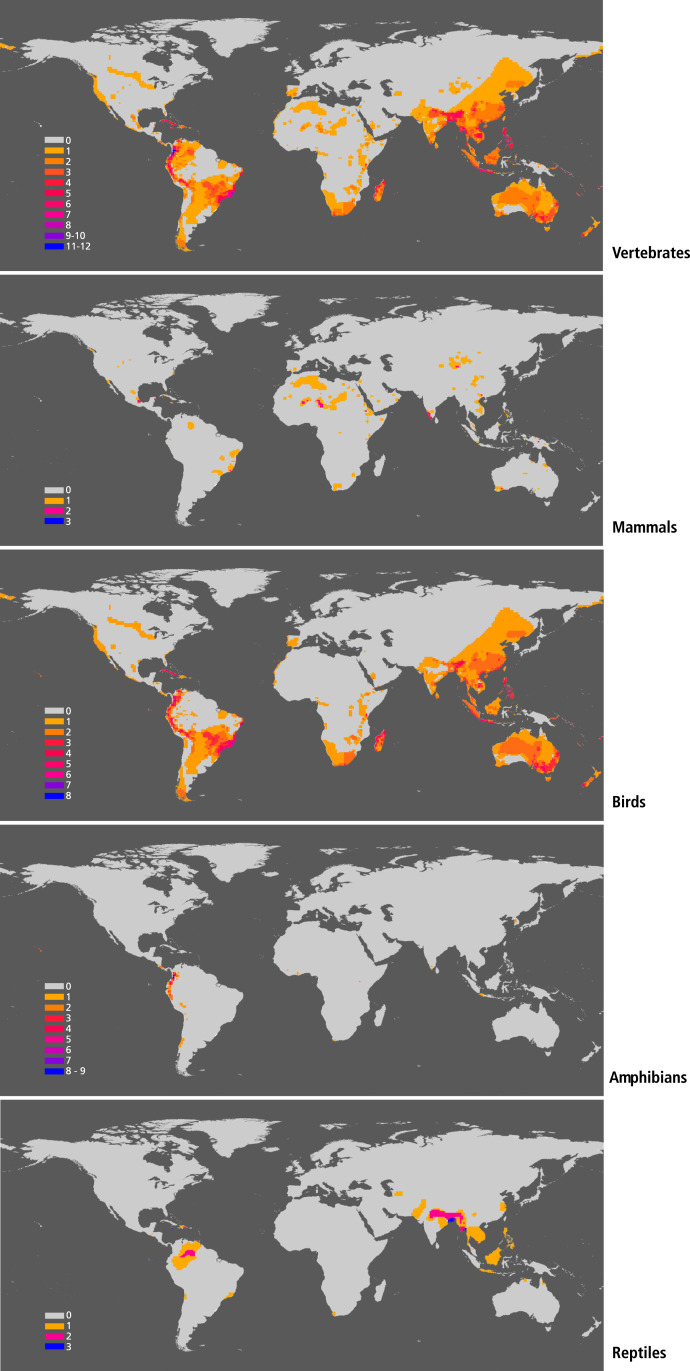
- 515 species (74 mammals, 335 birds, 41 reptiles, 65 amphibians) have fewer than 1,000 individuals: 1.7% of 29,374 IUCN-evaluated terrestrial vertebrates, but a quarter of species with population data. Of these, 243 are continental and 272 insular; most occur in South America (157 spp), Oceania (108), Asia (106), Africa (82), North/Central America (55), and Europe (6).
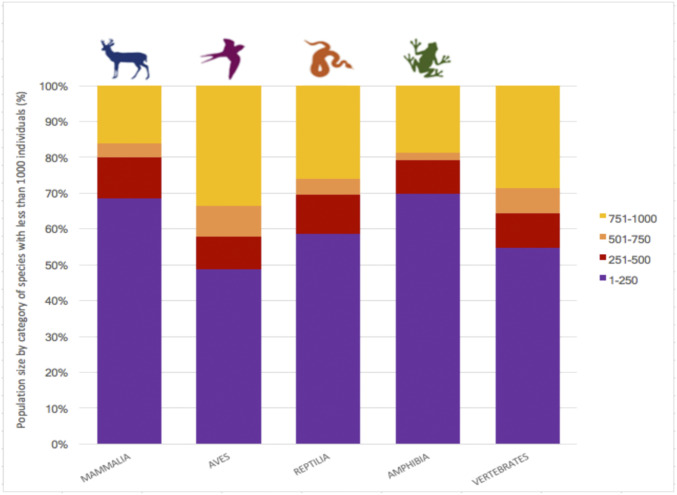
- More than half of the species on the brink have ≤250 individuals, with roughly two-thirds of mammals and amphibians in that category. Among 388 species with >1,000 but <5,000 individuals, 84% overlap in distribution with species on the brink.
- For 48 mammal and 29 bird species examined, average geographic range losses since 1900 were 95% and 94%, respectively; roughly 3,600 mammal populations and 2,930 bird populations disappeared. Extrapolating to all 515 brink species suggests about 237,000 populations lost since 1900.
- If brink species become extinct by 2050, 543 already extinct vertebrates plus 515 would total 1,058 extinctions, versus 9 expected under the background rate for 29,400 species over 150 years—a rate 117 times higher; those extinctions would have taken 11,700 years under the background rate.
Methods
- Used IUCN Red List and BirdLife International data for global terrestrial vertebrates, classified IUCN categories, excluded extinct species, and identified species with a maximum population size of 1,000 mature individuals (515 species); compared them with species estimated at >1,000 but <5,000 individuals (388 species; 903 total under 5,000).
- Mapped species richness with ArcGIS 10.1 using a Behrmann equal-area grid of 96.5 km × 96.5 km. Population extinction analysis used 48 terrestrial mammals and 29 birds on five continents, comparing historical distributions from specialized literature with current IUCN ranges and calculating lost and current distribution areas.
Limitations
- Stated: the data are necessarily incomplete, and historic/current distribution data for the population-loss analysis were available only for mammals and birds.
- Stated/evident: the extrapolation of population losses to all 515 brink species assumes similar historic range reduction and an average mammal or bird population occupying 10,000 km²; the 2050 extinction-rate estimate is explicitly a thought experiment.
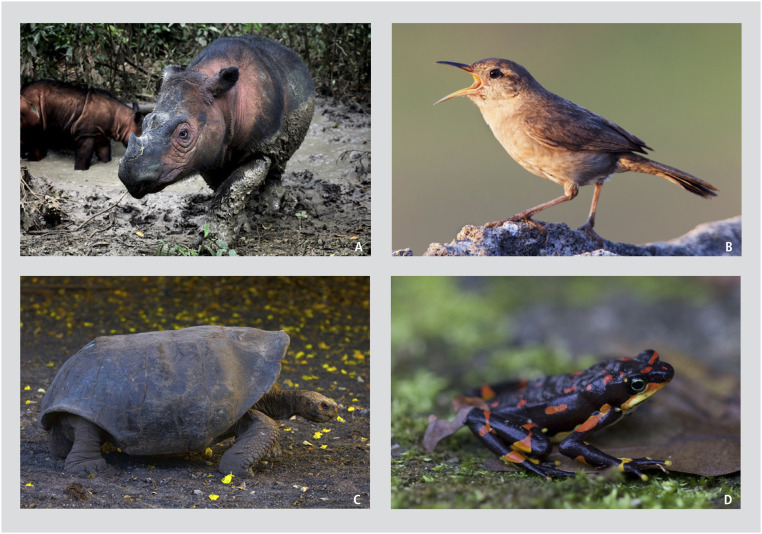
- Evident: reliance on IUCN/BirdLife assessments and range data may carry taxonomic and geographic gaps; the paper also notes that the harlequin frog’s population size is unknown but estimated at fewer than 1,000.
Model-written summary. Check it against the paper before relying on it.
Integrity signals
Registry
Cites
Statistics
Figures
Verification
Claims the paper makes
3 Valid · 0 Not valid · 11 Not checked · 40 Own results and interpretations
None of the sources cited for this claim have been checked yet.
In the paper
“Similarly, closely linked pairs of species involved in relationships like pollination may become extinct simultaneously (49–51).”
§ Vertebrates on the brink as indicators of biological annihilation and the sixth mass extinction > Discussion
What the sources say
- Not checked yetcites [49] Brodie J. F.., Secondary extinctions of biodiversity. Trends Ecol. Evol. 29, 664– 672 (2014). 25445878 source
- Not checked yetcites [50] Anderson S. H., Kelly D., Ladley J. J., Molloy S., Terry J., Cascading effects of bird functional extinction reduce pollination and plant density. Science 331, 1068– 1071 (2011). 21292938 source
- Could not verifycites [51] Schultz C. B., Haddad N. M., Henry E. H., Crone E. E., Movement and demography of at-risk butterflies: Building blocks for conservation. Annu. Rev. Entomol. 64, 167– 184 (2019). 30296858 sourceExperimental — accuracy not yet measured
Our copy of Schultz et al. (2019) is a review of movement and demography of at-risk butterflies; its INTRODUCTION, Demography, Immature survival, FUTURE ISSUES and CONCLUDING THOUGHTS sections discuss decline, extinction risk, host-plant and Myrmica ant dependencies, and habitat restoration, but no passage states or implies that tightly linked species pairs (e.g., pollination mutualists) may go extinct simultaneously. I searched for coextinction/simultaneous extinction of partner species, pollinator-plant interaction collapse, and dependent-species loss, and the only hits were reference-list entries (e.g., Stenoien et al. 2016 'collateral landscape level effect'; Goulson et al. 2015 on bee declines; Thomas 1980 on the large blue) with no accompanying text making the coextinction point. Nothing in our copy contradicts the claim either, so it is unaddressed rather than disputed. (LLM, conf=0.68)
hedgedstates a possible cause- Asserted: passes — The authors put it forward as true.
- Checkable: passes — It can be checked against evidence.
- Load-bearing: unclear — It is unclear whether the paper’s conclusions depend on it.
- Based: passes — The paper gives a reason why it holds.
The cited sources support only part of this claim — read each source’s verdict below.
In the paper
“They occur mostly in heavily populated regions such as tropical Asia, where major ongoing biodiversity losses are well known (10, 13–15, 30, 46, 52, 53).”
§ Vertebrates on the brink as indicators of biological annihilation and the sixth mass extinction > Discussion
What the sources say
- Could not verifycites [10] Ceballos G.., Accelerated modern human-induced species losses: Entering the sixth mass extinction. Sci. Adv. 1, e1400253 (2015). 26601195 PMC4640606 sourceExperimental — accuracy not yet measured
The Introduction discusses biodiversity loss globally and gives an example from tropical Oceania; the Discussion reports exceptionally high modern extinction rates. Neither section says that the concentrations occur mostly in heavily populated regions or in tropical Asia. Searches for tropical Asia and the geographic distribution of extinctions found no passage addressing that claim. (LLM, conf=0.74)
- Not checked yetcites [13] Ceballos G., Ehrlich P. R., Mammal population losses and the extinction crisis. Science 296, 904– 907 (2002). 11988573 source
- Partly supportedcites [14] Dirzo R.., Defaunation in the Anthropocene. Science 345, 401– 406 (2014). 25061202 sourceExperimental — accuracy not yet measured
The Patterns of defaunation section reports that declining mammal and bird species are most numerous in tropical regions, supporting the general geographic pattern of biodiversity loss. It does not identify tropical Asia specifically, link those losses to heavily populated regions, or establish where the citing sentence’s unspecified concentrations occur. No page number is available in our copy. (LLM, conf=0.85)
- Partly supportedcites [15] Ceballos G., Ehrlich P. R., Dirzo R., Biological annihilation via the ongoing sixth mass extinction signaled by vertebrate population losses and declines. Proc. Natl. Acad. Sci. U.S.A. 114, E6089– E6096 (2017). 28696295 PMC5544311 sourceExperimental — accuracy not yet measured
The Results (page unavailable) identify concentrations of declining vertebrate species in the Himalayas–south Asian jungle belt and report severe mammal population losses in south and southeast Asia. They also identify concentrations in the Andes–Amazon region and eastern Africa; the cited passages do not establish that the concentrations occur mostly in heavily populated regions. (LLM, conf=0.83)
- Not checked yetcites [30] Anchukaitis K. J., Evans M. N., Tropical cloud forest climate variability and the demise of the Monteverde golden toad. Proc. Natl. Acad. Sci. U.S.A. 107, 5036– 5040 (2010). 20194772 PMC2841931 source
- Not checked yetcites [46] International Union for Conservation of Nature, The IUCN red list of threatened species. https://www.iucn.org/. Accessed 15 January 2019.
- Partly supportedcites [52] Ripple W. J.., Collapse of the world’s largest herbivores. Sci. Adv. 1, e1400103 (2015). 26601172 PMC4640652 sourceExperimental — accuracy not yet measured
The STATUS section (page unavailable) places the highest number of threatened large herbivores in Southeast Asia and identifies southern and Southeast Asian ecoregions among those with the most threatened species. The THREATS section describes deforestation and potential biodiversity loss there. Neither passage establishes that these concentrations occur mostly in heavily populated regions. (LLM, conf=0.82)
- Partly supportedcites [53] Cardillo M.., Human population density and extinction risk in the world’s carnivores. PLoS Biol. 2, E197 (2004). 15252445 PMC449851 sourceExperimental — accuracy not yet measured
The Discussion (page unavailable) links higher human population density to threats to carnivores, supporting the general connection to heavily populated regions. It does not place the concentrations mostly in tropical Asia or document biodiversity losses there; the species it identifies as facing the greatest projected risk are mostly from Africa. (LLM, conf=0.78)
boostedstates an association- Asserted: passes — The authors put it forward as true.
- Checkable: passes — It can be checked against evidence.
- Load-bearing: unclear — It is unclear whether the paper’s conclusions depend on it.
- Based: passes — The paper gives a reason why it holds.
- Could not verify
Every source the paper cites for this claim was checked and supports it.
In the paper
“Thus, moving onto the brink is an important part of the process of defaunation (14).”
§ Vertebrates on the brink as indicators of biological annihilation and the sixth mass extinction > Discussion
What the sources say
- Supportedcites [14] Dirzo R.., Defaunation in the Anthropocene. Science 345, 401– 406 (2014). 25061202 source
In 'Defaunation: a pervasive phenomenon' our copy lists species being 'globally threatened or endangered' (16–33% of vertebrates) and iconic populations 'rapidly declining towards extinction' as components of defaunation, alongside abundance declines. The Abstract's definition section states defaunation denotes 'the loss of both species and populations of wildlife... as well as local declines in abundance of individuals', and the opening synthesis adds that 'declines in the number of individuals in local populations... will generally cause greater immediate impacts on ecosystem function' and that abundance declines to functionally extinct levels occur rapidly while extinctions proceed slowly. Together these support the paraphrase that moving onto the brink (threat/decline toward extinction) is an important part of defaunation; no contrary statement appears in our copy. (LLM, conf=0.85)
plainstates a cause- Asserted: passes — The authors put it forward as true.
- Checkable: passes — It can be checked against evidence.
- Load-bearing: unclear — It is unclear whether the paper’s conclusions depend on it.
- Based: passes — The paper gives a reason why it holds.
- Supported
The cited sources support only part of this claim — read each source’s verdict below.
In the paper
“More recently, climate disruption is becoming a major cause of species endangerment (10, 11, 14–17).”
§ Vertebrates on the brink as indicators of biological annihilation and the sixth mass extinction > Discussion
What the sources say
- Partly supportedcites [10] Ceballos G.., Accelerated modern human-induced species losses: Entering the sixth mass extinction. Sci. Adv. 1, e1400253 (2015). 26601195 PMC4640606 sourceExperimental — accuracy not yet measured
The Discussion (page not available) names climate change alongside habitat loss and overexploitation as a notable pressure on threatened species. It does not establish that climate change has recently become a major cause of endangerment or show a trend in its relative importance. (LLM, conf=0.82)
- Not checked yetcites [11] Díaz S., “Summary for policymakers of the global assessment report on biodiversity and ecosystem services of the Intergovernmental Science-Policy Platform on Biodiversity and Ecosystem Services” (Intergovernmental Science-Policy Platform on Biodiversity and Ecosystem Services, 2020).
- Supportedcites [14] Dirzo R.., Defaunation in the Anthropocene. Science 345, 401– 406 (2014). 25061202 source
The “Multiple, unaddressed drivers of defaunation” section identifies anthropogenic climate disruption as a recently emerged threat that will likely soon compete with habitat loss as a leading driver. The “Synthesis and ways forward” section also calls it a critical driver. The source frames its rise in importance as a projection, consistent with “becoming.” (LLM, conf=0.88)
- Partly supportedcites [15] Ceballos G., Ehrlich P. R., Dirzo R., Biological annihilation via the ongoing sixth mass extinction signaled by vertebrate population losses and declines. Proc. Natl. Acad. Sci. U.S.A. 114, E6089– E6096 (2017). 28696295 PMC5544311 sourceExperimental — accuracy not yet measured
The Abstract says that climate disruption has more recently joined other factors contributing to catastrophic declines in vertebrate populations, and notes that some formerly safer species are now endangered. The Conclusion also lists climate disruption as a cause of population extinctions. Neither passage establishes that climate disruption, individually, is becoming a major cause of species endangerment. (LLM, conf=0.83)
- Partly supportedcites [16] Hallmann C. A.., More than 75 percent decline over 27 years in total flying insect biomass in protected areas. PLoS One 12, e0185809 (2017). 29045418 PMC5646769 sourceExperimental — accuracy not yet measured
The Introduction names climate change as one proposed cause of insect declines, and the Weather data section calls it a known factor in such declines. But the paper does not establish that climate disruption is becoming a major cause of species endangerment generally; its Discussion finds climate change unlikely to explain the insect-biomass decline studied here. Page numbers are unavailable in our copy. (LLM, conf=0.86)
- Partly supportedcites [17] Lister B. C., Garcia A., Climate-driven declines in arthropod abundance restructure a rainforest food web. Proc. Natl. Acad. Sci. U.S.A. 115, E10397– E10406 (2018). 30322922 PMC6217376 sourceExperimental — accuracy not yet measured
The Conclusion (page unavailable) identifies climate warming as a major factor in arthropod declines in Puerto Rico’s rainforests and links those declines to decreases in insectivores. The Abstract (page unavailable) also discusses possible increases in arthropod extinction rates. These passages support climate change as a threat to species, but do not establish that it is becoming a major cause of species endangerment generally. (LLM, conf=0.84)
plainstates a cause- Asserted: passes — The authors put it forward as true.
- Checkable: passes — It can be checked against evidence.
- Load-bearing: unclear — It is unclear whether the paper’s conclusions depend on it.
- Based: passes — The paper gives a reason why it holds.
- Partly supported
A result the paper reports from its own data — it cites no other source for it, so there is none to check. The quote shows it is in the paper.
In the paper
“The distribution of those on the brink and the under 5,000s shows a significant concurrence; an impressive 84% of the under 5,000s species are found in the same regions as the species on the brink.”
§ Vertebrates on the brink as indicators of biological annihilation and the sixth mass extinction > Results > The Road to the Brink: From 5,000 to 1,000 Individuals.
boostedstates an association- Asserted: passes — The authors put it forward as true.
- Checkable: passes — It can be checked against evidence.
- Load-bearing: passes — The paper’s conclusions depend on it.
- Based: passes — The paper gives a reason why it holds.
26 more claims
Create a free account to see all 54 claims and to verify the 27 references still open.
- It may state two separate claims as one. 13
- Probably not a substantial claim. 11
Claims other papers make about this one
Each is checked against this paper’s own text: does it say what the citing paper says it does?
The cited source says what the claim attributes to it.
In the citing paper
“Animal diversity is declining at an unprecedented rate1.”
From Perspectives in machine learning for wildlife conservation (2022) · cites this paper as [1]
Self-check
Percentages, sums and reported differences re-computed from the paper’s own numbers.
Each contradiction between two passages listed here was confirmed by an independent check.
Rated major: it would touch a result — a value a result rests on, reported and recomputed p-values on opposite sides of the significance level, two passages that conflict with no sign which is right, or a cited work retracted before this paper was published.
In the paper
“So, the extinction rate by 2050 would be 117 times higher than the background rate. Therefore, the species extinct in those 150 y would have taken 11,700 y to become extinct under the background extinction rate.”
§ Vertebrates on the brink as indicators of biological annihilation and the sixth mass extinction > Results > Mass Extinction of Species: Accelerated Human-Induced Rates.
Reported 11700 · recomputed 17550
Rated minor: it would not touch a result — a value no result rests on, a p-value that stays on the same side of the significance level, or a conflict that is clerical, resolved elsewhere in the paper, or outside its own findings.
In the paper
§ Vertebrates on the brink as indicators of biological annihilation and the sixth mass extinction > Results > Vertebrates on the Brink of Extinction.
“Proportionally, more bird species are on the brink, followed by amphibians, then mammals, and reptiles.”
§ Vertebrates on the brink as indicators of biological annihilation and the sixth mass extinction > Results > Vertebrates on the Brink of Extinction.
“| Mammalia | 74 | 5,459 | 1.4 | | Aves | 335 | 10,423 | 3.2 | | Reptilia | 41 | 6,861 | 0.6 | | Amphibia | 65 | 6,631 | 1.0 |”
Rated minor: it would not touch a result — a value no result rests on, a p-value that stays on the same side of the significance level, or a conflict that is clerical, resolved elsewhere in the paper, or outside its own findings.
In the paper
§ Vertebrates on the brink as indicators of biological annihilation and the sixth mass extinction > Results > Mass Extinction of Populations: Comparing Historic and Current Range.
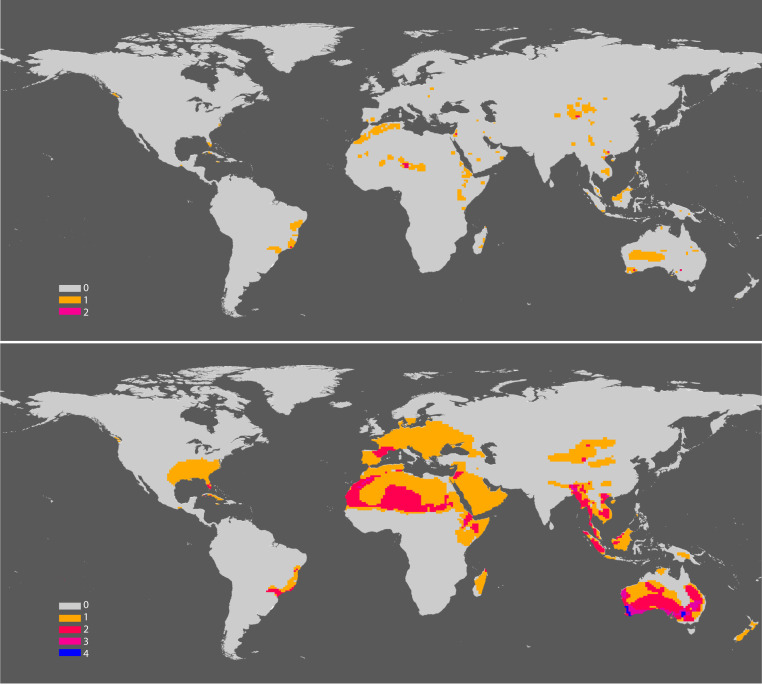
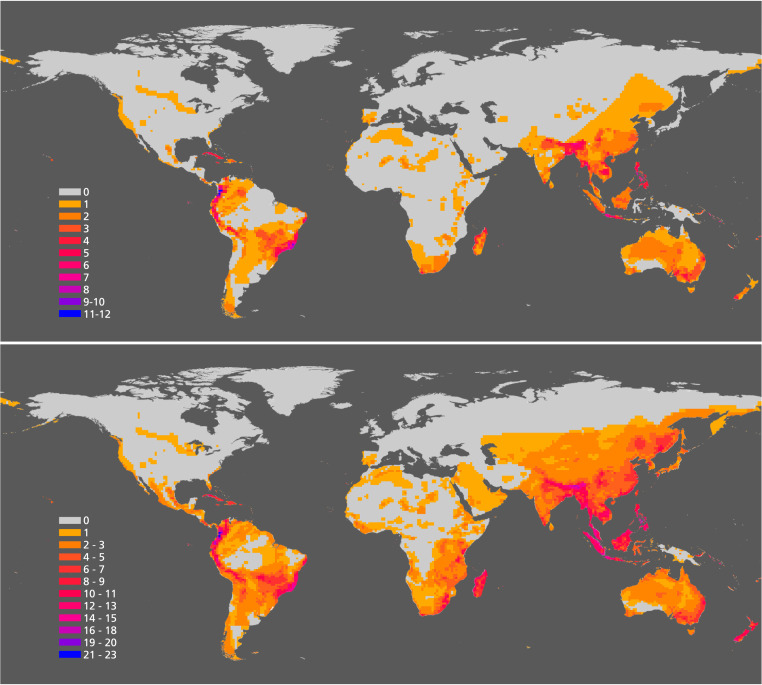
“To gain insights into the extent and significance of population extinction, we compared the historic and current distributions of both 48 species of mammals and 29 species of birds on the brink; mammals and birds were the only groups for which such data were available (Fig. 5).”
§ Vertebrates on the brink as indicators of biological annihilation and the sixth mass extinction > Results > Mass Extinction of Populations: Comparing Historic and Current Range.
“Figure: Fig. 5. Current distribution of 515 terrestrial vertebrate species on the brink (i.e., with under 1,000 individuals; Top) and 903 species with under 5,000 individuals (Bottom).”
Citations
Cites
Defaunation in the Anthropocene
Dirzo, R., Young, H. S., Galetti, M., Ceballos, G., Isaac, N. J. B., & Collen, B. (2014) · Science · doi:10.1126/science.1251817 · Cited by 4,474 · cited 9×
“The effects of extinctions will worsen in the coming decades, as losses of functional units, redundancy, and genetic and cultural variability change entire ecosystems (14, 23, 24).”
InfluentialSelf-citationHas the Earth’s sixth mass extinction already arrived?
Barnosky, A. D., Matzke, N., Tomiya, S., Wogan, G. O. U., Swartz, B., Quental, T. B., Marshall, C., McGuire, J. L., Lindsey, E. L., Maguire, K. C., et al. (2011) · Nature · doi:10.1038/nature09678 · Cited by 4,400 · cited 1×
“Under the last 2 million years’ background rate, 2 species would be expected to become extinct in a century for every 10,000 species (8).”
Accelerated modern human–induced species losses: Entering the sixth mass extinction
Ceballos, G., Ehrlich, P. R., Barnosky, A. D., García, A., Pringle, R. M., & Palmer, T. M. (2015) · Science Advances · doi:10.1126/sciadv.1400253 · Cited by 4,220 · cited 7×
“The species extinctions that define the current crisis are, in turn, based on the massive disappearance of their component populations, mostly since the 1800s (10, 13 – 20).”
InfluentialSelf-citationThe biomass distribution on Earth
Bar-On, Y. M., Phillips, R., & Milo, R. (2018) · Proceedings of the National Academy of Sciences · doi:10.1073/pnas.1711842115 · Cited by 3,723 · cited 1×
“The reason so many species are being pushed to extinction by anthropogenic causes is indicated by humans and their domesticated animals being some 30 times the living mass of all of the wild mammals that must compete with them for space and resources (43).”
The biodiversity of species and their rates of extinction, distribution, and protection
Pimm, S. L., Jenkins, C. N., Abell, R., Brooks, T. M., Gittleman, J. L., Joppa, L. N., Raven, P. H., Roberts, C. M., & Sexton, J. O. (2014) · Science · doi:10.1126/science.1246752 · Cited by 3,542 · cited 1×
“So, predictions that one-fifth of all species would be in danger of extinction by midcentury and half or more by the end of the century begin to make sense (9 – 11).”
Self-citationMore than 75 percent decline over 27 years in total flying insect biomass in protected areas
Hallmann, C. A., Sorg, M., Jongejans, E., Siepel, H., Hofland, N., Schwan, H., Stenmans, W., Müller, A., Sumser, H., Hörren, T., et al. (2017) · PLOS ONE · doi:10.1371/journal.pone.0185809 · Cited by 3,499 · cited 2×
“About 75% of all flying insects in national parks in Germany disappeared in 25 y (16), and there are numerous signs that many species of insects are heading for the exit (34, 35).”
Worldwide decline of the entomofauna: A review of its drivers
Sánchez-Bayo, F., & Wyckhuys, K. A. G. (2019) · Biological Conservation · doi:10.1016/j.biocon.2019.01.020 · Cited by 3,462 · cited 1×
“About 75% of all flying insects in national parks in Germany disappeared in 25 y (16), and there are numerous signs that many species of insects are heading for the exit (34, 35).”
Ceballos, G., Ehrlich, P. R., & Dirzo, R. (2017) · Proceedings of the National Academy of Sciences · doi:10.1073/pnas.1704949114 · Cited by 2,663 · cited 3×
“They occur mostly in heavily populated regions such as tropical Asia, where major ongoing biodiversity losses are well known (10, 13 – 15, 30, 46, 52, 53).”
Self-citationMass extinctions in the marine fossil record
Raup, D. M., & Sepkoski, J. J. (1982) · Science · doi:10.1126/science.215.4539.1501 · Cited by 1,774 · cited 1×
“Even though only an estimated 2% of all of the species that ever lived are alive today, the absolute number of species is greater now than ever before (2).”
Amphibian fungal panzootic causes catastrophic and ongoing loss of biodiversity
Scheele, B. C., Pasmans, F., Skerratt, L. F., Berger, L., Martel, A., Beukema, W., Acevedo, A. A., Burrowes, P. A., Carvalho, T., Catenazzi, A., et al. (2019) · Science · doi:10.1126/science.aav0379 · Cited by 1,366 · cited 1×
“The principal culprit in the disappearance of so many amphibians so rapidly is a chytrid fungus, sometimes spread from place to place as a result of human activities (29); this parasite affects populations weakened by climate disruption particularly rapidly (30).”
Research works printed but not linked: 1
- G. C. Daily, Nature’s Services, (Island Press, Washington, DC, 1997).
Cited by
The Sixth Mass Extinction: fact, fiction or speculation?
Cowie, R. H., Bouchet, P., & Fontaine, B. (2022) · Biological Reviews · doi:10.1111/brv.12816 · Cited by 874
“…accepted not only among the vertebrate-centric media but also among many vertebrate-centric scienti fi c and conservation organisations and seemingly sometimes even among vertebrate-centric scientists themselves (e.g. Ceballos et al ., 2015, 2017, 2020; McCallum, 2015; Tilman et al ., 2017).”
Perspectives in machine learning for wildlife conservation
Tuia, D., Kellenberger, B., Beery, S., Costelloe, B. R., Zuffi, S., Risse, B., Mathis, A., Mathis, M. W., van Langevelde, F., Burghardt, T., et al. (2022) · Nature Communications · doi:10.1038/s41467-022-27980-y · Cited by 740
“Animal diversity is declining at an unprecedented rate (1).”
BackgroundRegenerative Agriculture: An agronomic perspective
Giller, K. E., Hijbeek, R., Andersson, J. A., & Sumberg, J. (2021) · Outlook on Agriculture · doi:10.1177/0030727021998063 · Cited by 605
“If we consider biodiversity more broadly, there is little doubt that the earth has entered a sixth mass extinction (Ceballos et al., 2020).”
BackgroundUnderestimating the Challenges of Avoiding a Ghastly Future
Bradshaw, C. J. A., Ehrlich, P. R., Beattie, A., Ceballos, G., Crist, E., Diamond, J., Dirzo, R., Ehrlich, A. H., Harte, J., Harte, M. E., et al. (2021) · Frontiers in Conservation Science · doi:10.3389/fcosc.2020.615419 · Cited by 526
“…sizes of vertebrate species that have been monitored across years have declined by an average of 68% over the last five decades (WWF, 2020), with certain population clusters in extreme decline (Leung et al., 2020), thus presaging the imminent extinction of their species (Ceballos et al., 2020).”
Self-citationHow genomics can help biodiversity conservation
Theissinger, K., Fernandes, C., Formenti, G., Bista, I., Berg, P. R., Bleidorn, C., Bombarely, A., Crottini, A., Gallo, G. R., Godoy, J. A., et al. (2023) · Trends in Genetics · doi:10.1016/j.tig.2023.01.005 · Cited by 401
“14-16, 60325 Frankfurt/Main, Germany (2)CE3C - Centre for Ecology, Evolution and Environmental Changes & CHANGE - Global Change and Sustainability Institute, Departamento de Biologia Animal, Faculdade de Ciências, Universidade de Lisboa, 1749-016 Lisboa, Portugal The value of integrating genomics into conservation Wea…”
BackgroundCombating ecosystem collapse from the tropics to the Antarctic
Bergstrom, D. M., Wienecke, B. C., van den Hoff, J., Hughes, L., Lindenmayer, D. B., Ainsworth, T. D., Baker, C. M., Bland, L., Bowman, D. M. J. S., Brooks, S. T., et al. (2021) · Global Change Biology · doi:10.1111/gcb.15539 · Cited by 257
“Ecosystems are deteriorating globally, and species extinction rates are strongly correlated with both climate change and the human footprint (Ceballos et al., 2020; Keith et al., 2013).”
BackgroundGlobal Commitments to Conserving and Monitoring Genetic Diversity Are Now Necessary and Feasible
Hoban, S., Bruford, M. W., Funk, W. C., Galbusera, P., Griffith, M. P., Grueber, C. E., Heuertz, M., Hunter, M. E., Hvilsom, C., Stroil, B. K., et al. (2021) · BioScience · doi:10.1093/biosci/biab054 · Cited by 240
Finn, C., Grattarola, F., & Pincheira‐Donoso, D. (2023) · Biological Reviews · doi:10.1111/brv.12974 · Cited by 192
Persello, C., Wegner, J. D., Hansch, R., Tuia, D., Ghamisi, P., Koeva, M., & Camps-Valls, G. (2022) · IEEE Geoscience and Remote Sensing Magazine · doi:10.1109/mgrs.2021.3136100 · Cited by 184
Deleterious Variation in Natural Populations and Implications for Conservation Genetics
Robinson, J. A., Kyriazis, C. C., Yuan, S., & Lohmueller, K. E. (2022) · Annual Review of Animal Biosciences · doi:10.1146/annurev-animal-080522-093311 · Cited by 182
Earth at risk: An urgent call to end the age of destruction and forge a just and sustainable future
Fletcher, C., Ripple, W. J., Newsome, T., Barnard, P., Beamer, K., Behl, A., Bowen, J., Cooney, M., Crist, E., Field, C., et al. (2024) · PNAS Nexus · doi:10.1093/pnasnexus/pgae106 · Cited by 162
“Anthropogenic extinction rates are driving Earth’s sixth mass extinction (142).”
The critically endangered vaquita is not doomed to extinction by inbreeding depression
Robinson, J. A., Kyriazis, C. C., Nigenda-Morales, S. F., Beichman, A. C., Rojas-Bracho, L., Robertson, K. M., Fontaine, M. C., Wayne, R. K., Lohmueller, K. E., Taylor, B. L., et al. (2022) · Science · doi:10.1126/science.abm1742 · Cited by 148
Nature and COVID-19: The pandemic, the environment, and the way ahead
McNeely, J. A. (2021) · AMBIO · doi:10.1007/s13280-020-01447-0 · Cited by 204
Roberts, L., Hassan, A. M., Elamer, A. A., & Nandy, M. (2020) · Business Strategy and the Environment · doi:10.1002/bse.2649 · Cited by 201
“We expect a high number of contributions in the coming years, as experts believe pandemics such as Covid-19 are a result of human’s destruction of biodiversity and illegal wildlife trafficking (Ceballos et al., 2020).”
BackgroundInfluentialA quantitative review of abundance‐based species distribution models
Waldock, C. A., Stuart‐Smith, R. D., Albouy, C. P., Cheung, W. W. L., Edgar, G. J., Mouillot, D., Tjiputra, J. F., & Pellissier, L. (2021) · Ecography · doi:10.1111/ecog.05694 · Cited by 187
Koger, B., Deshpande, A., Kerby, J. T., Graving, J. M., Costelloe, B. R., & Couzin, I. D. (2023) · Journal of Animal Ecology · doi:10.1111/1365-2656.13904 · Cited by 181
NGSpeciesID: DNA barcode and amplicon consensus generation from long‐read sequencing data
Sahlin, K., Lim, M., & Prost, S. (2021) · Ecology and Evolution · doi:10.1002/ece3.7146 · Cited by 131
“We are in the middle of a biodiversity crisis, in which anthropogenic change is driving many species to extinction, often faster than they can be characterized (see, e.g., Ceballos et al., 2020).”
BackgroundKopnina, H., Zhang, R., Anthony, S., Hassan, A. M., & Maroun, W. (2023) · Journal of Environmental Management · doi:10.1016/j.jenvman.2023.119808 · Cited by 167
“Despite the need for urgent action expressed by the scientific community (Ceballos et al., 2020) and extra-governmental bodies (IUCN, 2022; IPBES, 2019; UN, 2022), most ESG reporting guidelines provide incomplete coverage of biodiversity factors (Hassan et al., 2021; Milan, 2022).”
BackgroundMutilation of the tree of life via mass extinction of animal genera
Ceballos, G., & Ehrlich, P. R. (2023) · Proceedings of the National Academy of Sciences · doi:10.1073/pnas.2306987120 · Cited by 160
“Furthermore, the potential losses of thousands of endangered (EN) vertebrate species and genera in this century would dwarf the damage done in the last 500 y (10, 20–22).”
BackgroundSelf-citationPurging of deleterious burden in the endangered Iberian lynx
Kleinman-Ruiz, D., Lucena-Perez, M., Villanueva, B., Fernández, J., Saveljev, A. P., Ratkiewicz, M., Schmidt, K., Galtier, N., García-Dorado, A., & Godoy, J. A. (2022) · Proceedings of the National Academy of Sciences · doi:10.1073/pnas.2110614119 · Cited by 92
“…for future conservation efforts. genetic load j purging j small populations j population genomics j conservation I n the last few centuries, the ever-growing anthropogenic pressures (1) have significantly accelerated the extinction of populations and species across a wide spectrum of taxa (2–4).”
The Future of Non-Financial Businesses Reporting: Learning from the Covid-19 Pandemic
Hassan, A. M., Elamer, A. A., Lodh, S., Roberts, L., & Nandy, M. (2021) · Corporate Social Responsibility and Environmental Management · doi:10.1002/csr.2145 · Cited by 145
“We find evidence from the literature that the Covid-19 crisis could be a result of ignorance of non-human activities at large (Ceballos et al., 2020).”
Biodiversity accounting and reporting: A systematic literature review and bibliometric analysis
Blanco-Zaitegi, G., Echeverría, I. Á., & Abadía, J. M. M. (2022) · Journal of Cleaner Production · doi:10.1016/j.jclepro.2022.133677 · Cited by 135
The Effects of Climate Change on Child and Adolescent Mental Health: Clinical Considerations
van Nieuwenhuizen, A. O., Hudson, K. E., Chen, X., & Hwong, A. R. (2021) · Current Psychiatry Reports · doi:10.1007/s11920-021-01296-y · Cited by 132
“Given the urgency and scope of this public health threat, there is a growing consensus that mental health clinicians 88 Page 4 of 9 Current Psychiatry Reports (2021) 23: 88”
BackgroundA global ecological signal of extinction risk in terrestrial vertebrates
Munstermann, M. J., Heim, N. A., McCauley, D. J., Payne, J. L., Upham, N. S., Wang, S. C., & Knope, M. L. (2021) · Conservation Biology · doi:10.1111/cobi.13852 · Cited by 105
“Although the rate and projected magnitude of the current loss of terrestrial vertebrates is increasingly well quantified (Barnosky et al., 2011; Ceballos et al., 2020), the distribution of extinction threat across ecological functional groups is only just coming into focus (e.g., Chichorro et al.,…”
BackgroundRapid butterfly declines across the United States during the 21st century
Edwards, C. B., Zipkin, E. F., Henry, E. H., Haddad, N. M., Forister, M. L., Burls, K. J., Campbell, S., Crone, E. E., Diffendorfer, J. E., Douglas, M. R., et al. (2025) · Science · doi:10.1126/science.adp4671 · Cited by 116
Individual species provide multifaceted contributions to the stability of ecosystems
White, L., O’Connor, N. E., Yang, Q., Emmerson, M., & Donohue, I. (2020) · Nature Ecology & Evolution · doi:10.1038/s41559-020-01315-w · Cited by 90
The new annotated checklist of the wild bees of Europe (Hymenoptera: Anthophila)
Ghisbain, G., Rosa, P., Bogusch, P., Flaminio, S., Divelec, R. L., DORCHIN, A., Kasparek, M., Kuhlmann, M. T., Litman, J. R., Mignot, M., et al. (2023) · Zootaxa · doi:10.11646/zootaxa.5327.1.1 · Cited by 127
Epochs, events and episodes: Marking the geological impact of humans
Waters, C. N., Williams, M., Zalasiewicz, J., Turner, S. D., Barnosky, A. D., Head, M. J., Wing, S. L., Wagreich, M., Steffen, W., Summerhayes, C. P., et al. (2022) · Earth-Science Reviews · doi:10.1016/j.earscirev.2022.104171 · Cited by 101
Roberts, L., Nandy, M., Hassan, A. M., Lodh, S., & Elamer, A. A. (2021) · Journal of Business Ethics · doi:10.1007/s10551-021-04800-9 · Cited by 117
“This research is significantly timely, as experts suggest that pandemics such as COVID-19 are a result of habitat loss, wildlife trafficking, and humanity’s destruction of biodiversity (Ceballos et al., 2020; Johnson et al., 2020).”
BackgroundInfluentialWhat's on the horizon for community-based conservation? Emerging threats and opportunities
Esmail, N., McPherson, J. M., Abulu, L., Amend, T., Amit, R., Bhatia, S., Bikaba, D., Brichieri‐Colombi, T. A., Brown, J., Buschman, V. Q., et al. (2023) · Trends in Ecology & Evolution · doi:10.1016/j.tree.2023.02.008 · Cited by 119
“Given the biodiversity crisis [15], Parties to the Convention on Biological Diversity (CBD) have concluded protracted negotiations for the Kunming – Montreal Global Biodiversity Framework ( GBF [16]).”
BackgroundFarrell, J., Whitmore, L., & Duffy, D. J. (2021) · BioScience · doi:10.1093/biosci/biab027 · Cited by 98
In Vitro Technology in Plant Conservation: Relevance to Biocultural Diversity
Kulak, V., Longboat, S., Brunet, N. D., Shukla, M. R., & Saxena, P. K. (2022) · Plants · doi:10.3390/plants11040503 · Cited by 101
Agersnap, S., Sigsgaard, E. E., Jensen, M. R., Ávila, M. D. P., Carl, H., Møller, P. R., Krøs, S. L., Knudsen, S. W., Wisz, M. S., & Thomsen, P. F. (2022) · Frontiers in Marine Science · doi:10.3389/fmars.2022.824100 · Cited by 89
A national‐scale dataset for threats impacting Australia’s imperiled flora and fauna
Ward, M., Carwardine, J., Yong, C., Watson, J. E. M., Silcock, J. L., Taylor, G. S., Lintermans, M., Gillespie, G. R., Garnett, S. T., Woinarski, J. C. Z., et al. (2021) · Ecology and Evolution · doi:10.1002/ece3.7920 · Cited by 78
“Email: m.ward@uq.edu.au 1 | INTRODUC TION The sixth mass extinction is arguably the worst environmental crisis humanity currently faces (Ceballos et al., 2020), with species becoming extinct 100– 1,000 times faster than Earth's biota has experienced over the last ten million years (Barnosky et al.,…”
BackgroundEstimates of genetic load suggest frequent purging of deleterious alleles in small populations
van der Valk, T., de Manuel, M., Marques-Bonet, T., & Guschanski, K. (2019) · bioRxiv (Cold Spring Harbor Laboratory) · doi:10.1101/696831 · Cited by 66
How many replicates to accurately estimate fish biodiversity using environmental DNA on coral reefs?
Stauffer, S., Jucker, M., Keggin, T., Marques, V., Andrello, M., Bessudo, S., Cheutin, M., Borrero‐Pérez, G. H., Richards, E., Déjean, T., et al. (2021) · Ecology and Evolution · doi:10.1002/ece3.8150 · Cited by 86
Translating genomic advances into biodiversity conservation
Hogg, C. J. (2023) · Nature Reviews Genetics · doi:10.1038/s41576-023-00671-0 · Cited by 94
“1), including understanding functional diversity within a species or ecosystem, and enhancing our understanding of adaptive potential, which is critical in a changing climate and on a planet where population fragmentation is increasing owing to anthropogenic factors 2 .”
InfluentialGlobal determinants and conservation of evolutionary and geographic rarity in land vertebrates
Murali, G., Gumbs, R., Meiri, S., & Roll, U. (2021) · Science Advances · doi:10.1126/sciadv.abe5582 · Cited by 67
Coextinctions dominate future vertebrate losses from climate and land use change
Strona, G., & Bradshaw, C. J. A. (2022) · Science Advances · doi:10.1126/sciadv.abn4345 · Cited by 79
Achieving win-win outcomes for biodiversity and yield through diversified farming
Jones, S. K., Sánchez, A. C., Beillouin, D., Juventia, S. D., Mosnier, A., Remans, R., & Estrada-Carmona, N. (2022) · Basic and Applied Ecology · doi:10.1016/j.baae.2022.12.005 · Cited by 79
Hassan, A. M., Roberts, L., & Rodger, K. (2021) · Business Strategy and the Environment · doi:10.1002/bse.2890 · Cited by 77
Head, M. J., Zalasiewicz, J., Waters, C. N., Turner, S. D., Williams, M., Barnosky, A. D., Steffen, W., Wagreich, M., Haff, P. K., Syvitski, J., et al. (2022) · Journal of Quaternary Science · doi:10.1002/jqs.3467 · Cited by 75
Huber, J. M., Newig, J., & Loos, J. (2023) · Journal of Environmental Management · doi:10.1016/j.jenvman.2023.117593 · Cited by 94
Ekardt, F., Günther, P., Hagemann, K., Garske, B., Heyl, K., & Weyland, R. (2023) · Environmental Sciences Europe · doi:10.1186/s12302-023-00786-5 · Cited by 99
“…of animal and plant species, around one million species, are threatened with extinction, many of them within decades [39, 66], for vertebrates see [67], for pollinators see [68, 69], for carnivores see [70], for mammals and birds see [71, 59], for plants see [72, 47, for marine plants and animals…”
BackgroundImproving the assessment of ecosystem and wildlife health: microbiome as an early indicator
Ribas, M. P., García-Ulloa, M. I., Espunyes, J., & Cabezón, Ó. (2023) · Current Opinion in Biotechnology · doi:10.1016/j.copbio.2023.102923 · Cited by 73
“Despite years of research, we still rely heavily on alterations that manifest late in the disturbance process such as changes in animal abundance and richness [5], loss of interactions and functional diversity [6,7], decline in ecosystem services [8], or pa-thogen emergence [9,10].”
BackgroundThe effects of climate change on wildlife biodiversity of the galapagos islands
Dueñas, A., Jiménez-Uzcátegui, G., & Bosker, T. (2021) · Climate Change Ecology · doi:10.1016/j.ecochg.2021.100026 · Cited by 82
Random forest and spatial cross-validation performance in predicting species abundance distributions
Mushagalusa, C. A., Fandohan, A. B., & Kakaï, R. G. (2024) · ENVIRONMENTAL SYSTEMS RESEARCH · doi:10.1186/s40068-024-00352-9 · Cited by 83
“Abundance trends can serve as an early indicator of population collapse (Clements et al. 2017; Ceballos et al. 2020; Hastings et al. 2020).”
BackgroundAirborne environmental DNA captures terrestrial vertebrate diversity in nature
Lynggaard, C., Frøslev, T. G., Johnson, M. S., Olsen, M. T., & Bohmann, K. (2023) · Molecular Ecology Resources · doi:10.1111/1755-0998.13840 · Cited by 88
Completeness analysis for over 3000 United States bee species identifies persistent data gap
Chesshire, P., Fischer, E. E., Dowdy, N., Griswold, T., Hughes, A. C., Orr, M. C., Ascher, J. S., Guzman, L. M., Hung, K. J., Cobb, N. S., et al. (2023) · Ecography · doi:10.1111/ecog.06584 · Cited by 61
“Evidence continues to support the decline of both animal (Ceballos et al. 2010, 2020) and plant (Gray 2019) species, documenting the initial phase of the sixth mass extinction (Leakey and Lewin 1996).”
BackgroundMagness, D. R., Hoang, L., Belote, R. T., Brennan, J., Carr, W., Chapin, F. S., Clifford, K. R., Morrison, W. E., Morton, J. M., & Sofaer, H. R. (2021) · BioScience · doi:10.1093/biosci/biab083 · Cited by 71
Maintaining biodiversity will define our long-term success
Raven, P. H., & Wackernagel, M. (2020) · Acta Botanica Yunnanica · doi:10.1016/j.pld.2020.06.002 · Cited by 81
Self-citationWater is a preservative of microbes
Hallsworth, J. E. (2021) · Microbial Biotechnology · doi:10.1111/1751-7915.13980 · Cited by 78
“Whereas the current (Anthropocene) mass extinction event is being monitored (Ceballos et al., 2020; Estes et al., 2020), another major consequence is the release/reactivation of preserved microbes which were until now within the cryosphere (permafrost, the polar ice caps, glaciers and sea”
BackgroundExtinct in the wild: The precarious state of Earth’s most threatened group of species
Smith, D., Abeli, T., Bruns, E. B., Dalrymple, S. E., Foster, J., Gilbert, T. C., Hogg, C. J., Lloyd, N. A., Meyer, A., Moehrenschlager, A., et al. (2023) · Science · doi:10.1126/science.add2889 · Cited by 61
“However—despite the failure to meet similar commitments in the 2010 Aichi Biodiversity Targets ( 7 )—the 2022 Kunming-Montreal Global biodiversity targets to halt extinctions and recover species ( 8 ) should be regarded as achievable.”
InfluentialRobust induction of primordial germ cells of white rhinoceros on the brink of extinction
Hayashi, M., Zywitza, V., Naitou, Y., Hamazaki, N., Göritz, F., Hermes, R. E., Holtze, S., Lazzari, G., Galli, C., Stejskal, J., et al. (2022) · Science Advances · doi:10.1126/sciadv.abp9683 · Cited by 65
The Role of Zoos and Aquariums in a Changing World
Miranda, R., Escribano, N., Casas, M., Pino‐del‐Carpio, A., & Villarroya, A. (2022) · Annual Review of Animal Biosciences · doi:10.1146/annurev-animal-050622-104306 · Cited by 97
Global patterns of resilience decline in vertebrate populations
Capdevila, P., Noviello, N., McRae, L., Freeman, R., & Clements, C. F. (2021) · Ecology Letters · doi:10.1111/ele.13927 · Cited by 61
“Our findings, reinforce the vulnerability of these taxa and suggest that in addition to declining populations and range contractions (Almond et al., 2020; Ceballos et al., 2020) they are becoming more vulnerable to future threats.”
BackgroundTowards a just sustainability transition in tourism: A multispecies justice perspective
Rastegar, R. (2022) · Journal of Hospitality and Tourism Management · doi:10.1016/j.jhtm.2022.06.008 · Cited by 69
Recognizing Salinity Threats in the Climate Crisis
Lee, C. E., Downey, K. M., Colby, R. S., Freire, C. A., Nichols, S., Burgess, M. N., & Judy, K. (2022) · Integrative and Comparative Biology · doi:10.1093/icb/icac069 · Cited by 62
Hidden hotspots of amphibian biodiversity in China
Xu, W., Wu, Y., Zhou, W., Chen, H.-M., Zhang, B.-L., Chen, J., Xu, W., Rao, D., Zhao, H., Fang, Y., et al. (2024) · Proceedings of the National Academy of Sciences · doi:10.1073/pnas.2320674121 · Cited by 72
Forty years later: The status of the “Big Five” mass extinctions
Marshall, C. R. (2023) · Cambridge Prisms Extinction · doi:10.1017/ext.2022.4 · Cited by 73
“A key point is not what has happened to date in the current biosphere but what may happen (Ceballos et al., 2020).”
Raimi, M. O., Saliu, A. O., Babatunde, A., Okon, O. G., Taiwo, P. A., Amuda-Kannike, A. K., Loto, O., Austin-Asomeji, I., & Telu, M. (2022) · Sustainable development and biodiversity · doi:10.1007/978-981-19-3326-4_18 · Cited by 65
Diminishing Opportunities for Sustainability of Coastal Cities in the Anthropocene: A Review
Day, J. W., Gunn, J. D., & Burger, J. R. (2021) · Frontiers in Environmental Science · doi:10.3389/fenvs.2021.663275 · Cited by 67
The Anthropocene is a prospective epoch/series, not a geological event
Head, M. J., Zalasiewicz, J., Waters, C. N., Turner, S. D., Williams, M., Barnosky, A. D., Steffen, W., Wagreich, M., Haff, P. K., Syvitski, J. P. M., et al. (2022) · Episodes · doi:10.18814/epiiugs/2022/022025 · Cited by 65
“…(Ceballos et al., 2015); a dramatic decline in vertebrate populations and increased rates of extinctions since the middle of the 20th century (Ceballos et al., 2017, 2020; WWF, 2020); rapidly increasing global atmospheric surface temperatures; changes in atmospheric circulation and…”
BackgroundLizards from warm and declining populations are born with extremely short telomeres
Dupoué, A., Blaimont, P., Angelier, F., Ribout, C., Rozen‐Rechels, D., Richard, M., Miles, D. B., de Villemereuil, P., Rutschmann, A., Badiane, A., et al. (2022) · Proceedings of the National Academy of Sciences · doi:10.1073/pnas.2201371119 · Cited by 55
“Biodiversity is undergoing a global crisis, highlighted by the alarming pace of species loss worldwide (1, 2).”
BackgroundBogoni, J. A., Ferraz, K. M. P. M. D. B., & Peres, C. A. (2022) · Biological Conservation · doi:10.1016/j.biocon.2022.109635 · Cited by 61
Gallegos-Riofrío, C. A., Arab, H., Carrasco-Torrontegui, A., & Gould, R. K. (2022) · Current Research in Environmental Sustainability · doi:10.1016/j.crsust.2022.100148 · Cited by 55
Vertebrate environmental DNA from leaf swabs
Lynggaard, C., Calvignac‐Spencer, S., Chapman, C. A., et al. (2023) · Current Biology · doi:10.1016/j.cub.2023.06.031 · Cited by 47
Williams, M., Leinfelder, R., Barnosky, A. D., Head, M. J., McCarthy, F. M. G., Cearreta, A., Himson, S. J., Holmes, R., Waters, C. N., Zalasiewicz, J., et al. (2022) · Palaeontology · doi:10.1111/pala.12618 · Cited by 52
“…2014; Ceballos et al. 2015) and have increased dramatically since the year 1900, with about 543 vertebrate species becoming extinct, and many terrestrial vertebrate species are now on the brink of extinction, with populations of fewer than 1000 individuals (Ceballos et al. 2015, 2020; IUCN 2021).”
Background(Re-)Imagining Social Work in the Anthropocene
Panagiotaros, C. V., Boddy, J., Gray, T. L., & Ife, J. (2022) · The British Journal of Social Work · doi:10.1093/bjsw/bcac075 · Cited by 52
Pincheira‐Donoso, D., Harvey, L. P., Cotter, S. C., Stark, G., Meiri, S., & Hodgson, D. J. (2021) · Global Ecology and Biogeography · doi:10.1111/geb.13287 · Cited by 49
“…al. , 2017) has more recently led to an ‘extinction hypothesis’, aimed to elucidate the drivers behind interspecific variation in extinction risk – within the same lineages, some species thrive while others collapse to extinction (Sinervo et al. , 2010; Pimm et al. , 2014; Ceballos et al. , 2020).”
BackgroundKansky, R., Kidd, M., & Fischer, J. (2021) · Biological Conservation · doi:10.1016/j.biocon.2020.108947 · Cited by 54
Environmental effects of the COVID-19 pandemic from a (marine) ecological perspective
Coll, M. (2020) · Ethics in Science and Environmental Politics · doi:10.3354/esep00192 · Cited by 52
“These global im - pacts can be observed on land and at sea (e.g. Estes et al. 2011, Tittensor et al. 2014, Halpern et al. 2015, McCauley et al. 2015, Ceballos et al. 2020).”
BackgroundThe population genetics of urban and rural amphibians in North America
Schmidt, C., & Garroway, C. J. (2021) · Molecular Ecology · doi:10.1111/mec.16005 · Cited by 48
“Habitat transformation by humans threatens vertebrate biodiversity in terms of both species losses and declining population sizes (Ceballos et al., 2020; Hamer & McDonnell, 2008).”
BackgroundNiche Construction Theory in Archaeology: A Critical Review
Spengler, R. N. (2021) · Journal of Archaeological Method and Theory · doi:10.1007/s10816-021-09528-4 · Cited by 55
“Ceballos et al. (2020) referred to humanity as the Sixth Mass Extinction, and many scholars have started adopting the term Anthropocene to recognize the dramatic effects humanity has had on the planet.”
BackgroundThe neonicotinoid thiamethoxam impairs male fertility in solitary bees, Osmia cornuta
Strobl, V., Albrecht, M., Villamar‐Bouza, L., Tosi, S., Neumann, P., & Straub, L. (2021) · Environmental Pollution · doi:10.1016/j.envpol.2021.117106 · Cited by 47
“There is consensus that the ongoing loss of biodiversity is a defining feature of the Anthropocene (Dirzo et al., 2014; Ceballos et al., 2020; Wagner, 2020) with potentially drastic consequences for human food security and well-being (Díaz et al.”
BackgroundTargeting Terrestrial Vertebrates With eDNA : Trends, Perspectives, and Considerations for Sampling
Newton, J. P., Allentoft, M. E., Bateman, P. W., van der Heyde, M., & Nevill, P. (2025) · Environmental DNA · doi:10.1002/edn3.70056 · Cited by 54
Mai, G., Xuan, Y., Zuo, W., He, Y., Song, J., Ermon, S., Janowicz, K., & Lao, N. (2023) · ISPRS Journal of Photogrammetry and Remote Sensing · doi:10.1016/j.isprsjprs.2023.06.016 · Cited by 82
MammalNet: A Large-Scale Video Benchmark for Mammal Recognition and Behavior Understanding
Chen, J., Hu, M., Coker, D. J., Berumen, M. L., Costelloe, B. R., Beery, S., Rohrbach, A., & Elhoseiny, M. (2023) · IEEE Computer Society Conference on Computer Vision and Pattern Recognition/Proceedings - IEEE Computer Society Conference on Computer Vision and Pattern Recognition/Proceedings · doi:10.1109/cvpr52729.2023.01254 · Cited by 95
The effect of past defaunation on ranges, niches, and future biodiversity forecasts
Sales, L. P., Galetti, M., Carnaval, A. C., Monsarrat, S., Svenning, J., & Pires, M. M. (2022) · Global Change Biology · doi:10.1111/gcb.16145 · Cited by 44
Hakkenberg, C. R., & Goetz, S. J. (2021) · Global Ecology and Biogeography · doi:10.1111/geb.13380 · Cited by 40
“The gravity of this theoretical inquiry is amplified by practical concerns, as accelerating global biodiversity losses threaten populations, species, ecological processes and ecosystem services (Ceballos et al., 2020).”
BackgroundHigh frequency of an otherwise rare phenotype in a small and isolated tiger population
Sagar, V., Kaelin, C. B., Natesh, M., Reddy, P. A., Mohapatra, R. K., Chhattani, H., Thatte, P., Vaidyanathan, S., Biswas, S., Bhatt, S., et al. (2021) · Proceedings of the National Academy of Sciences · doi:10.1073/pnas.2025273118 · Cited by 41
“S recent studies demonstrate that biodiversity is declining globally (1).”
Farrell, J., Yetsko, K., Whitmore, L., Whilde, J., Eastman, C. B., Ramia, D. R., Thomas, R. S., Linser, P. J., Creer, S., Burkhalter, B., et al. (2021) · Communications Biology · doi:10.1038/s42003-021-02085-2 · Cited by 44
Climate-resilient development: An approach to sustainable food production in sub-Saharan Africa
Fagbemi, F., Oke, D. F., & Fajingbesi, A. (2023) · Future Foods · doi:10.1016/j.fufo.2023.100216 · Cited by 40
Global meta-analysis shows progress towards recovery of soil microbiota following revegetation
Watson, C. D., Gardner, M. G., Hodgson, R. J., Liddicoat, C., Peddle, S. D., & Breed, M. F. (2022) · Biological Conservation · doi:10.1016/j.biocon.2022.109592 · Cited by 44
Hedberg, C. P., Lyons, S. K., & Smith, F. A. (2021) · Global Ecology and Biogeography · doi:10.1111/geb.13428 · Cited by 41
Human‐modified landscapes driving the global primate extinction crisis
Torres‐Romero, E. J., Nijman, V., Fernández, D., & Eppley, T. M. (2023) · Global Change Biology · doi:10.1111/gcb.16902 · Cited by 41
“Recent decades have brought about a significant negative impact on the environment due to anthropogenic pressures such as land use change, overexploitation/over- harvesting, pollution, and climate change, all of which have contributed to a massive global loss in biodiversity (Ceballos et al., 2020; Dirzo et al., 2014).”
BackgroundBeyond the “empty forest”: The defaunation syndromes of Neotropical forests in the Anthropocene
Pires, M. M., & Galetti, M. (2022) · Global Ecology and Conservation · doi:10.1016/j.gecco.2022.e02362 · Cited by 64
Automated detection of gunshots in tropical forests using convolutional neural networks
Katsis, L. K. D., Hill, A. P., Piña‐Covarrubias, E., Prince, P., Rogers, A., Doncaster, C. P., & Snaddon, J. L. (2022) · Ecological Indicators · doi:10.1016/j.ecolind.2022.109128 · Cited by 46
A global assessment of research on urban ecology of reptiles: patterns, gaps and future directions
Brum, P., Gonçalves, S. R. A., Strüssmann, C., & Teixido, A. L. (2022) · Animal Conservation · doi:10.1111/acv.12799 · Cited by 46
Telomeres and anthropogenic disturbances in wildlife: A systematic review and meta‐analysis
Salmón, P., & Burraco, P. (2022) · Molecular Ecology · doi:10.1111/mec.16370 · Cited by 41
“There is ample evidence that human population growth and its increasing ecological footprint are driving dramatic environmental changes for wildlife worldwide (Ceballos et al., 2020; Diffenbaugh & Field, 2013).”
BackgroundEcological impacts and limits of biomass use: a critical review
Arodudu, O. T., Holmatov, B., & Voinov, A. A. (2020) · Clean Technologies and Environmental Policy · doi:10.1007/s10098-020-01911-1 · Cited by 47
Torres‐Romero, E. J., Giordano, A. J., Ceballos, G., & López‐Bao, J. V. (2020) · Biological Conservation · doi:10.1016/j.biocon.2020.108706 · Cited by 45
Self-citationIntegrative taxonomy clarifies the evolution of a cryptic primate clade
van Elst, T., Sgarlata, G. M., Schüßler, D., Tiley, G. P., Poelstra, J. W., Scheumann, M., Blanco, M. B., Aleixo-Pais, I. G., Rina Evasoa, M., Ganzhorn, J. U., et al. (2024) · Nature Ecology & Evolution · doi:10.1038/s41559-024-02547-w · Cited by 37
Expósito‐Alonso, M. (2023) · New Phytologist · doi:10.1111/nph.18718 · Cited by 40
Human activity and climate change accelerate the extinction risk to non‐human primates in China
Li, W., Teng, Y., Zhang, M., Shen, Y., Liu, J., Qi, J., Wang, X., Wu, R., Li, J., Garber, P. A., et al. (2023) · Global Change Biology · doi:10.1111/gcb.17114 · Cited by 43
“This is expected to result in the loss of one million animal and plant species (Barnosky et al., 2011 ; Ceballos et al., 2020; Dawson et al., 2011 ; Dobson et al., 2021 ; Song et al., 2021 ).”
BackgroundThe Anthropocene within the Geological Time Scale: a response to fundamental questions
Zalasiewicz, J., Head, M. J., Waters, C. N., Turner, S. D., Haff, P. K., Summerhayes, C. P., Williams, M., Cearreta, A., Wagreich, M., Fairchild, I. J., et al. (2023) · Episodes · doi:10.18814/epiiugs/2023/023025 · Cited by 41
The fitness consequences of wildlife conservation translocations: a meta‐analysis
Gross, I. P., Wilson, A. E., & Wolak, M. E. (2023) · Biological reviews/Biological reviews of the Cambridge Philosophical Society · doi:10.1111/brv.13025 · Cited by 45
“…(ACTs) are a common strategy intended to directly offset species extinction or provide bene fi cial ecosystem functions through the supplementation of threatened populations and the repatriation of extirpated populations (Ceballos, Ehrlich & Dirzo, 2017; Ceballos, Ehrlich & Raven, 2020).”
BackgroundAnalysing corporate forest disclosure: How does business value biodiversity?
Anthony, S., & Morrison‐Saunders, A. (2022) · Business Strategy and the Environment · doi:10.1002/bse.3164 · Cited by 38
Yetsko, K., Farrell, J., Blackburn, N. B., Whitmore, L., Stammnitz, M. R., Whilde, J., Eastman, C. B., Ramia, D. R., Thomas, R. S., Krstić, A., et al. (2021) · Communications Biology · doi:10.1038/s42003-021-01656-7 · Cited by 46
“Anthropogenic activities are stressing habitats 61 , and the rapid environmental changes induced by these activities are likely increasing cancer rates in wildlife populations 62 .”
Questioning the sixth mass extinction
Wiens, J. J., & Saban, K. E. (2025) · Trends in Ecology & Evolution · doi:10.1016/j.tree.2025.01.002 · Cited by 46
Metadata
- Authors
- Ceballos, G., Ehrlich, P. R., & Raven, P. H.
- Affiliations
- Universidad Nacional Autónoma de México (MX)
- Stanford University (US)
- Missouri Botanical Garden (US)
- Corresponding author
- Ceballos, Gerardo
- Venue
- Proceedings of the National Academy of Sciences
- Publisher
- National Academy of Sciences
- Published
- 2020-06
- Volume
- 117
- Issue
- 24
- Pages
- 13596-13602
- ISSN
- 0027-8424 (ISSN-L)
- 1091-6490
- PMC
- PMC7306750
- OpenAlex
- W3030395860
- Cited by
- 926
- References
- 54
- Citations by year
- 2026: 88 · 2025: 139 · 2024: 157 · 2023: 171 · 2022: 182 · 2021: 147 · 2020: 34
- FWCI
- 85.23
- Type
- journal article
- Language
- en
- Open access
- hybrid
- doi.org
- Licence
- Locations
- Proceedings of the National Academy of Sciences (publishedVersion, cc-by)
- PubMed Central (publishedVersion, cc-by)
- PubMed (publishedVersion)
- Lincoln (University of Nebraska) (submittedVersion, cc-by)
- Greater South Information System
- Funders
- Dirección General de Asuntos del Personal Académico, Universidad Nacional Autónoma de México
- Topics
- Physical Sciences › Environmental Science › Nature and Landscape Conservation › Ecology and Vegetation Dynamics Studies
- Physical Sciences › Environmental Science › Management, Monitoring, Policy and Law › Conservation, Ecology, Wildlife Education
- Physical Sciences › Environmental Science › Ecology › Wildlife Ecology and Conservation
- Keywords
- sixth mass extinction, extinction crisis, terrestrial vertebrates, small population size, population decline (ecology), mammal extinction, bird extinction, threatened species, extinction cascades, human impact on biodiversity, wildlife trade, COVID-19 pandemic, ecosystem services
- MeSH terms
- COVID-19, Animals, Animals, Wild, Commerce, Conservation of Natural Resources, Human Activities, Pneumonia, Viral, Population Density, Vertebrates, Ecosystem, Coronavirus Infections, Extinction, Biological, Endangered Species, Climate Change, Pandemics
About these checks
Registry, retraction, Cites and statistics results are computed, not judged, with one exception: a printed reference that no index lists is read once by a model before it counts as a citation error. Claims are extracted by a model and kept only when their quote appears verbatim in the text; each cited source is then checked, with a model’s help, for whether it says what the claim relies on. Those verdicts can be wrong — read the claim’s quote and the cited source before relying on one.
The claim verdicts this report counts are experimental: their accuracy is not yet measured.
A language model drew the claims from the paper on 2026-10-02, under version 3 of the claim definition (model deepseek-v4.1-flash, prompt extract-v3).
A second model labelled each claim on 2026-10-02 (model jev-1.13-20260917, definition revision gold-guideline-v0.2).
Cited sources are checked with a language model’s help (qwen3.8-omni-flash and gpt-6-sol).
Statistics and arithmetic are recomputed, not judged.
Confidence bands are shown only for fields calibrated on our annotated test set. None is calibrated yet, so no band is shown.
What counts as a claim ›How we measure confidence ›How we check this ›
Are you an author, or do you see a problem with this page? Request a review
Data sources
Bibliographic data: Semantic Scholar, OpenAlex, Crossref.
Contains information from the Semantic Scholar Academic Graph Datasets, made available under the ODC Attribution License (ODC-BY 1.0).
Semantic Scholar’s data is described in: Kinney, R., et al. (2023). The Semantic Scholar Open Data Platform. arXiv:2301.10140.
