

Polygenic risk for skin autoimmunity impacts immune checkpoint blockade in bladder cancer
Open accessPublished version of a preprint
The DOI matches its Crossref record; 27 of the 27 references it cites were found in a registry or an index.
Abstract
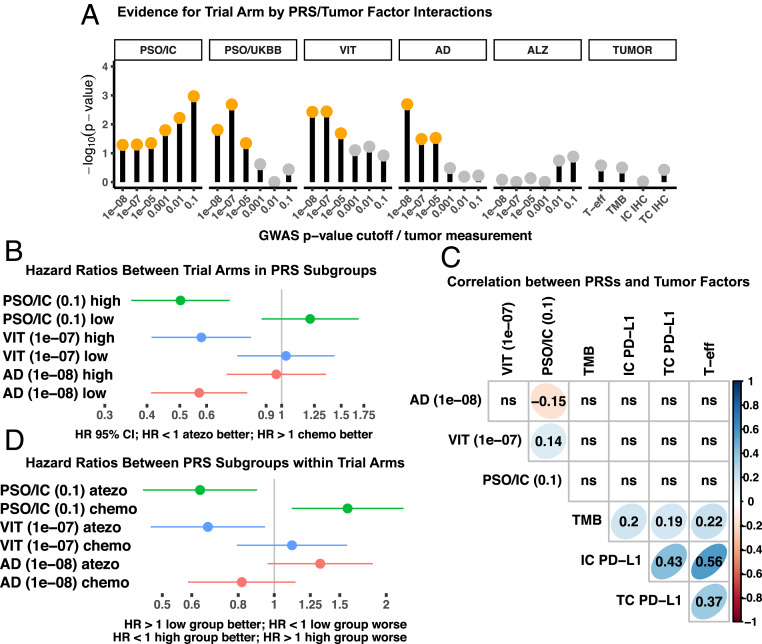
PD-1 and PD-L1 act to restrict T cell responses in cancer and contribute to self-tolerance. Consistent with this role, PD-1 checkpoint inhibitors have been associated with immune-related adverse events (irAEs), immune toxicities thought to be autoimmune in origin. Analyses of dermatological irAEs have identified an association with improved overall survival (OS) following anti-PD-(L)1 therapy, but the factors that contribute to this relationship are poorly understood. We collected germline whole-genome sequencing data from IMvigor211, a recent phase 3 randomized controlled trial comparing atezolizumab (anti-PD-L1) monotherapy to chemotherapy in bladder cancer. We found that high vitiligo, high psoriasis, and low atopic dermatitis polygenic risk scores (PRSs) were associated with longer OS under anti-PD-L1 monotherapy as compared to chemotherapy, reflecting the Th17 polarization of these diseases. PRSs were not correlated with tumor mutation burden, PD-L1 immunohistochemistry, nor T-effector gene signatures. Shared genetic factors impact risk for dermatological autoimmunity and anti-PD-L1 monotherapy in bladder cancer.
Overview
The claims and statistics of this paper haven’t been checked yet.
Free: it reads the open-access text and checks the first 5 claims that cite a source we can check. Create a free account to check every claim.
Integrity signals
Registry
Cites
Statistics
Figures
Verification
Claims the paper makes
The claims and statistics of this paper haven’t been checked yet.
Free: it reads the open-access text and checks the first 5 claims that cite a source we can check. Create a free account to check every claim.
Claims other papers make about this one
Each is checked against this paper’s own text: does it say what the citing paper says it does?
In the citing paper
“a polygenic risk score (PRS) designed to calculate risk for vitiligo, psoriasis, and atopic dermatitis was predictive of response to ICBs in bladder cancer”
From Hallmarks of response, resistance, and toxicity to immune checkpoint blockade (2021) · cites this paper as Khan et al., 2020
Self-check
Percentages, sums and reported differences re-computed from the paper’s own numbers.
The self-check needs the paper’s full text.
Citations
Cites
The blockade of immune checkpoints in cancer immunotherapy
Pardoll, D. M. (2012) · Nature Reviews Cancer · doi:10.1038/nrc3239 · Cited by 13,838 · cited 1×
“The PD-1 immune checkpoint acts to restrict T cell responses and contributes to the regulation of immune self-tolerance (4, 5).”
BackgroundUnderstanding the tumor immune microenvironment (TIME) for effective therapy
Binnewies, M., Roberts, E. W., Kersten, K., Chan, V., Fearon, D. F., Merad, M., Coussens, L. M., Gabrilovich, D. I., Ostrand-Rosenberg, S., Hedrick, C. C., et al. (2018) · Nature Medicine · doi:10.1038/s41591-018-0014-x · Cited by 6,145 · cited 1×
“The tumor microenvironment (TME) consists of a complex mixture of immune cells, stromal, and tumor cells (22).”
BackgroundElements of cancer immunity and the cancer–immune set point
Chen, D. S., & Mellman, I. (2017) · Nature · doi:10.1038/nature21349 · Cited by 5,352 · cited 2×
“Taken together, these observations support the notion that an immune set point, at least in part determined by germline genetic variation, may influence the efficacy of immune checkpoint blockade (1).”
BackgroundSelf-citationImmune-Related Adverse Events Associated with Immune Checkpoint Blockade
Postow, M. A., Sidlow, R., & Hellmann, M. D. (2018) · New England Journal of Medicine · doi:10.1056/nejmra1703481 · Cited by 4,849 · cited 1×
“Consistent with this role, patients develop immune-related adverse events (irAEs) that are thought to be autoimmune in origin, but the link is poorly understood (6, 7).”
BackgroundxCell: digitally portraying the tissue cellular heterogeneity landscape
Aran, D., Hu, Z., & Butte, A. J. (2017) · Genome Biology · doi:10.1186/s13059-017-1349-1 · Cited by 4,397 · cited 1×
“Using pretreatment, bulk tumor gene expression for n = 398 individuals with both RNA-seq and germline genetic data, we generated immune and stromal celltype enrichment scores, and, to limit the multiple testing burden, we associated them with PRSs that had the strongest trial arm by risk score interaction for each der…”
MethodBrahmer, J. R., Lacchetti, C., Schneider, B. J., Atkins, M. B., Brassil, K. J., Caterino, J. M., Chau, I., Ernstoff, M. S., Gardner, J. M., Ginex, P., et al. (2018) · Journal of Clinical Oncology · doi:10.1200/jco.2017.77.6385 · Cited by 3,713
Rosenberg, J. E., Hoffman-Censits, J., Powles, T., van der Heijden, M. S., Balar, A. V., Necchi, A., Dawson, N., O'Donnell, P. H., Balmanoukian, A., Loriot, Y., et al. (2016) · The Lancet · doi:10.1016/s0140-6736(16)00561-4 · Cited by 3,669 · cited 2×
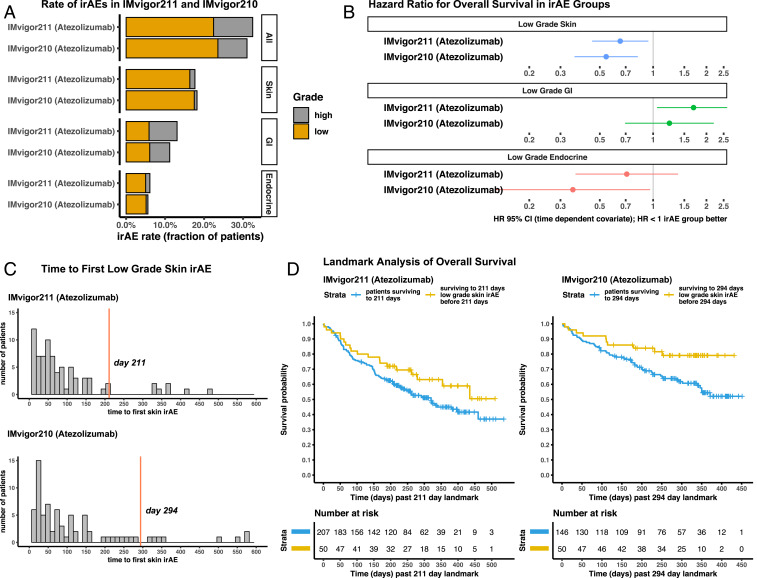
“We confirmed a similar distribution of irAE in IMvigor210 (N=429), a phase 2 single-arm trial for treatment of mUC(14, 15).”
BackgroundResultSelf-citationBalar, A. V., Galsky, M. D., Rosenberg, J. E., Powles, T., Petrylak, D. P., Bellmunt, J., Loriot, Y., Necchi, A., Hoffman-Censits, J., Perez-Gracia, J. L., et al. (2017) · The Lancet · doi:10.1016/s0140-6736(16)32455-2 · Cited by 2,199 · cited 1×
“We confirmed a similar distribution of irAE in IMvigor210 (N=429), a phase 2 single-arm trial for treatment of mUC(14, 15).”
ResultSelf-citationThe personal and clinical utility of polygenic risk scores
Torkamani, A., Wineinger, N. E., & Topol, E. J. (2018) · Nature Reviews Genetics · doi:10.1038/s41576-018-0018-x · Cited by 1,623
Power and predictive accuracy of polygenic risk scores
Dudbridge, F. (2013) · PLoS Genetics · doi:10.1371/journal.pgen.1003348 · Cited by 1,509
Cited by
Hallmarks of response, resistance, and toxicity to immune checkpoint blockade
Morad, G., Helmink, B. A., Sharma, P., & Wargo, J. A. (2021) · Cell · doi:10.1016/j.cell.2021.09.020 · Cited by 1,648
Immunologic tumor microenvironment modulators for turning cold tumors hot
Khosravi, G., Mostafavi, S., Bastan, S., Ebrahimi, N., Gharibvand, R. S., & Eskandari, N. (2024) · Cancer Communications · doi:10.1002/cac2.12539 · Cited by 364
“Interestingly, research has revealed that a polygenic risk score (PRS) designed to assess the risk for conditions like vitiligo, psoriasis, and atopic dermatitis can serve as a predictor of response to ICBs, as demonstrated in bladder cancer cases [208].”
BackgroundPrognostic and predictive biomarkers for immunotherapy in advanced renal cell carcinoma
Rosellini, M., Marchetti, A., Mollica, V., Rizzo, A., Santoni, M., & Massari, F. (2023) · Nature Reviews Urology · doi:10.1038/s41585-022-00676-0 · Cited by 240
Socinski, M. A., Jotte, R. M., Cappuzzo, F., Nishio, M., Mok, T. S. K., Reck, M., Finley, G. G., Kaul, M. D., Yu, W., Paranthaman, N., et al. (2023) · JAMA Oncology · doi:10.1001/jamaoncol.2022.7711 · Cited by 186
“Rash 20 (35) 26 (32) 32 (32) 29 (32) Pneumonitis 9 (16)b 11 (14) 12 (12)b 7 (8) Colitis 3 (5) 6 (7) 7 (7) 6 (7) Severe cutaneous reaction 3 (5) 4 (5) 4 (4) 3 (3) Pancreatitis 2 (3) 2 (3) 4 (4) 5 (5) Nephritis 0 0 5 (5) 6 (7) Diabetes 0 3 (4) 3 (3) 3 (3) Encephalitis 2 (3) 2 (3) 2 (2) 2 (2) Hypothyroidism 0 0 4 (4) 4 (…”
Immune-related adverse events in various organs caused by immune checkpoint inhibitors
Okiyama, N., & Tanaka, R. (2022) · Allergology International · doi:10.1016/j.alit.2022.01.001 · Cited by 159
Translational precision medicine: an industry perspective
Hartl, D., Luca, V. D., Kostikova, A., Laramie, J. M., Kennedy, S., Ferrero, E., Siegel, R. W., Fink, M., Ahmed, S., Millholland, J. M., et al. (2021) · Journal of Translational Medicine · doi:10.1186/s12967-021-02910-6 · Cited by 187
“For example, the observation that patients receiving checkpoint inhibitor therapy experiencing immune-related adverse events also exhibit an improved treatment response was recently shown to be related to a polygenic risk score [84].”
BackgroundHolistic Approach to Immune Checkpoint Inhibitor-Related Adverse Events
Poto, R., Troiani, T., Criscuolo, G., Marone, G., Ciardiello, F., Tocchetti, C. G., & Varricchi, G. (2022) · Frontiers in Immunology · doi:10.3389/fimmu.2022.804597 · Cited by 147
Clinical and translational attributes of immune-related adverse events
Suijkerbuijk, K. P. M., van Eijs, M. J. M., van Wijk, F., & Eggermont, A. M. M. (2024) · Nature Cancer · doi:10.1038/s43018-024-00730-3 · Cited by 149
“In some patients, susceptibility to irAEs and autoimmunity may be overlapping, illustrated by HLA alleles associated with same-organ ‘classical’ autoimmunity that can sometimes be found in organ-specific irAEs, including dermatitis, colitis and diabetes 78–80 .”
Biomarkers of Checkpoint Inhibitor Induced Immune-Related Adverse Events—A Comprehensive Review
Hommes, J. W., Verheijden, R. J., Suijkerbuijk, K. P. M., & Hamann, D. (2021) · Frontiers in Oncology · doi:10.3389/fonc.2020.585311 · Cited by 140
Germline variants associated with toxicity to immune checkpoint blockade
Groha, S., Alaiwi, S. A., Xu, W. V., Naranbhai, V., Nassar, A. H., Bakouny, Z., Zarif, T. E., Saliby, R. M., Wan, G., Rajeh, A. A., et al. (2022) · Nature Medicine · doi:10.1038/s41591-022-02094-6 · Cited by 125
“Recent work has shown that polygenic germline risk for autoimmune conditions is correlated with the onset of cutaneous and thyroid irAEs 9,10 .”
Self-citationPredictive Biomarkers for Checkpoint Inhibitor Immune-Related Adverse Events
Les, I., Martínez, M., Pérez-Francisco, I., Cabero, M., Teijeira, L., Arrazubi, V., Torrego, N., Campillo-Calatayud, A., Elejalde, I., Kochan, G., et al. (2023) · Cancers · doi:10.3390/cancers15051629 · Cited by 100
Association between immune-related adverse event timing and treatment outcomes
Hsiehchen, D., Naqash, A. R., Espinoza, M., von Itzstein, M. S., Cortellini, A., Ricciuti, B., Owen, D. H., Laharwal, M., Toi, Y., Burke, M., et al. (2022) · OncoImmunology · doi:10.1080/2162402x.2021.2017162 · Cited by 99
“with autoimmune skin disorders are also associated with ICI outcomes and skin irAE, suggesting overlapping mechanisms of efficacy and toxicity.(35) In support of this, shared T-cell antigens between tumor tissue and irAE-related skin lesions have been reported in patients with NSCLC who responded to ICI.”
BackgroundClinical therapies and nano drug delivery systems for urinary bladder cancer
Jain, P., Kathuria, H., & Momin, M. (2021) · Pharmacology & Therapeutics · doi:10.1016/j.pharmthera.2021.107871 · Cited by 89
Khan, Z., Hammer, C., Carroll, J., Nucci, F. D., Acosta, S. L., Maiya, V., Bhangale, T., Hunkapiller, J., Mellman, I., Albert, M. L., et al. (2021) · Nature Communications · doi:10.1038/s41467-021-23661-4 · Cited by 93
Self-citationLuo, J., Martucci, V. L., Quandt, Z., Groha, S., Murray, M. H., Lovly, C. M., Rizvi, H. A., Egger, J. V., Plodkowski, A. J., Abu-Akeel, M., et al. (2021) · Clinical Cancer Research · doi:10.1158/1078-0432.ccr-21-0921 · Cited by 88
“Our findings differ from this study of genetics of autoimmune skin conditions and survival (54).”
ResultLechner, M. G., Patel, A. Y., Hugo, W., Angell, T. E., Cheng, M. I., Pioso, M. S., Hoang, A. T., Yakobian, N., McCarthy, E. C., Chen, H.-C., et al. (2022) · The Journal of Immunology · doi:10.4049/jimmunol.2200244 · Cited by 59
Therapy-Induced Modulation of the Tumor Microenvironment: New Opportunities for Cancer Therapies
Benavente, S., Sánchez-García, A., Naches, S., LLeonart, M. E., & Lorente, J. (2020) · Frontiers in Oncology · doi:10.3389/fonc.2020.582884 · Cited by 61
“On the other hand, it has been suggested that irAEs could help select responders to ICB in bladder cancer (17).”
BackgroundPagadala, M. S., Sears, T. J., Wu, V. H., Pérez‐Guijarro, E., Kim, H., Castro, A., Talwar, J. V., González-Colín, C., Cao, S., Schmiedel, B. J., et al. (2023) · Nature Communications · doi:10.1038/s41467-023-38271-5 · Cited by 66
Lechner, M. G., Zhou, Z., Hoang, A. T., Huang, N., Ortega, J., Scott, L. N., Chen, H.-C., Patel, A. Y., Tafti, R. Y., Kim, K., et al. (2023) · Science Translational Medicine · doi:10.1126/scitranslmed.adg0675 · Cited by 63
Sung, C., An, J., Lee, S. H., Park, J., Lee, K. S., Kim, I. H., Han, J., Park, Y. H., Kim, J. H., Kang, E. J., et al. (2023) · Nature Cancer · doi:10.1038/s43018-023-00572-5 · Cited by 56
Unravelling Checkpoint Inhibitor Associated Autoimmune Diabetes: From Bench to Bedside
Wu, L., Tsang, V., Sasson, S. C., Menzies, A. M., Carlino, M. S., Brown, D. A., Clifton-Bligh, R. J., & Gunton, J. E. (2021) · Frontiers in Endocrinology · doi:10.3389/fendo.2021.764138 · Cited by 48
A Systematic Review and Analysis of the Use of Polygenic Scores in Pharmacogenomics
Johnson, D., Wilke, M. A. P., Lyle, S. M., Kowalec, K., Jorgensen, A., Wright, G. E. B., & Drögemöller, B. I. (2022) · Clinical Pharmacology & Therapeutics · doi:10.1002/cpt.2520 · Cited by 52
Reconsidering Dexamethasone for Antiemesis when Combining Chemotherapy and Immunotherapy
Janowitz, T., Kleeman, S., & Vonderheide, R. H. (2021) · The Oncologist · doi:10.1002/onco.13680 · Cited by 42
“Genetic variants partly explain the risk of autoimmune conditions that are treated with systemic steroids, such as RA [51], and in turn, such variants are associated with enhanced responsiveness to ICI [52].”
BackgroundFunctional Impact of Risk Gene Variants on the Autoimmune Responses in Type 1 Diabetes
Gootjes, C., Zwaginga, J. J., Roep, B. O., & Nikolić, T. (2022) · Frontiers in Immunology · doi:10.3389/fimmu.2022.886736 · Cited by 47
Polygenic risk score for ulcerative colitis predicts immune checkpoint inhibitor-mediated colitis
Middha, P., Thummalapalli, R., Betti, M. J., Yao, L., Quandt, Z., Balaratnam, K., Bejan, C. A., Cardenas, E. R., Falcon, C. J., Faleck, D. M., et al. (2024) · Nature Communications · doi:10.1038/s41467-023-44512-4 · Cited by 46
Yang, X., Kar, S., Antoniou, A. C., & Pharoah, P. D. P. (2023) · Nature reviews. Cancer · doi:10.1038/s41568-023-00599-x · Cited by 55
Bienfait, K., Chhibber, A., Marshall, J.-C. A., Armstrong, M., Cox, C. J., Shaw, P. M., & Paulding, C. (2021) · Human Genetics · doi:10.1007/s00439-021-02282-3 · Cited by 46
Differential Involvement of Programmed Cell Death Ligands in Skin Immune Responses
Tanaka, R., Ichimura, Y., Kubota, N., Saito, A., Nakamura, Y., Ishitsuka, Y., Watanabe, R., Fujisawa, Y., Mizuno, S., Takahashi, S., et al. (2021) · Journal of Investigative Dermatology · doi:10.1016/j.jid.2021.06.026 · Cited by 40
Marhold, M., Udovica, S., Halstead, A., Hirdler, M., Ferner, M., Wimmer, K., Bagó-Horváth, Z., Exner, R., Fitzal, F., Strasser‐Weippl, K., et al. (2023) · OncoImmunology · doi:10.1080/2162402x.2023.2275846 · Cited by 40
Germline genetic variation and predicting immune checkpoint inhibitor induced toxicity
Chin, I. S., Khan, A., Olsson-Brown, A. C., Papa, S., Middleton, G., & Palles, C. (2022) · npj Genomic Medicine · doi:10.1038/s41525-022-00345-6 · Cited by 44
Gravina, A. G., Pellegrino, R., Esposito, A., Cipullo, M., Romeo, M., Palladino, G., Iodice, P., Federico, A., & Troiani, T. (2024) · Cancers · doi:10.3390/cancers16030611 · Cited by 43
“Khan et al., for example, reported how dermatologic toxicity (e.g., vitiligo, psoriasis) could predict oncologic response and overall survival in the case of bladder cancer [36].”
BackgroundPonvilawan, B., Khan, A. W., Subramanian, J., & Bansal, D. (2024) · Cancers · doi:10.3390/cancers16061225 · Cited by 34
“…3-item clinicopathological score [132] Score > 2: associated with severe irAE Psoriasis-associated polygenic risk scores for dermatologic irAEs [133] Higher score: associated with higher risk of dermatologic irAE 140-gene germline polygenic risk score [134] Higher score: associated with…”
BackgroundBayless, N. L., Bluestone, J. A., Bucktrout, S. L., Butterfield, L. H., Jaffee, E. M., Koch, C. A., Roep, B. O., Sharpe, A. H., Murphy, W. J., Villani, A., et al. (2021) · Journal for ImmunoTherapy of Cancer · doi:10.1136/jitc-2021-002627 · Cited by 34
The Role of 18F-FDG PET/CT in Guiding Precision Medicine for Invasive Bladder Carcinoma
Girard, A., Vila-Reyes, H., Shaish, H. A., Grellier, J.-F., Dercle, L., Salaün, P., Delcroix, O., & Rouanne, M. (2020) · Frontiers in Oncology · doi:10.3389/fonc.2020.565086 · Cited by 34
“Authors recently reported that shared genetic factors impact risk for IrAEs and survival on immunotherapy in BC (60).”
BackgroundNasca, V., Barretta, F., Corti, F., Lonardi, S., Niger, M., Élez, E., Fakih, M., Jayachandran, P., Shah, A. T., Salati, M., et al. (2023) · Journal for ImmunoTherapy of Cancer · doi:10.1136/jitc-2022-005493 · Cited by 31
Limited overlap between genetic effects on disease susceptibility and disease survival
Yang, Z., Pajuste, F., Zguro, K., Cheng, Y., Kurant, D. E., Eoli, A., Wanner, J., Jermy, B. S., Rämö, J. T., FinnGen, et al. (2025) · Nature Genetics · doi:10.1038/s41588-025-02342-8 · Cited by 36
Advancing drug discovery using the power of the human genome
Heilbron, K., Mozaffari, S. V., Vacic, V., Yue, P., Wang, W., Shi, J., Jubb, A. M., Pitts, S. J., & Wang, X. (2021) · The Journal of Pathology · doi:10.1002/path.5664 · Cited by 28
“Consistent with the role of immune checkpoints in self-tolerance and autoimmunity, Khan et al [119] set out to apply PRS constructed for skin autoimmunity (psoriasis, vitiligo, atopic dermatitis) to a failed phase III clinical trial that tested the efficacy of the immune checkpoint inhibitor atezolizumab/antiPD-L1 (CD…”
BackgroundApplying polygenic risk score methods to pharmacogenomics GWAS: challenges and opportunities
Zhai, S., Mehrotra, D. V., & Shen, J. (2023) · Briefings in Bioinformatics · doi:10.1093/bib/bbad470 · Cited by 28
Zhou, J., Wong, A. H., Wang, H., Tan, F., Chen, X., Jin, S., He, S., Shen, G., Wang, Y., Frey, B., et al. (2022) · Frontiers in Immunology · doi:10.3389/fimmu.2022.862752 · Cited by 26
“The variable “ AEGRP01F = Y ” was selected to ensure that the irAE was associated with PD-L1 checkpoint blockade, as already de fi ned by Khan and colleagues (3).”
BackgroundCesano, A., Augustin, R. C., Barrea, L., Bedognetti, D., Bruno, T. C., Carturan, A., Hammer, C., Ho, W. S., Kather, J. N., Kirchhoff, T., et al. (2025) · Journal for ImmunoTherapy of Cancer · doi:10.1136/jitc-2024-008876 · Cited by 25
“33 To date, no large studies are available on genetic predictors of gastrointestinal complications.”
Self-citation‘Know thyself’ – host factors influencing cancer response to immune checkpoint inhibitors
Gunjur, A., Manrique-Rincón, A., Klein, O., Behren, A., Lawley, T. D., Welsh, S. J., & Adams, D. J. (2022) · The Journal of Pathology · doi:10.1002/path.5907 · Cited by 20
“Similarly, several groups have associated ICI susceptibility with polygenic risk scores for rheumatoid arthritis [58], autoimmune thyroid, and dermatological conditions, respectively [59,60].”
BackgroundChye, A., Allen, I., Barnet, M. B., & Burnett, D. L. (2022) · Frontiers in Oncology · doi:10.3389/fonc.2022.894015 · Cited by 17
The Current and Future of Biomarkers of Immune Related Adverse Events
Bracamonte‐Baran, W., & Kim, S. T. (2024) · Rheumatic Disease Clinics of North America · doi:10.1016/j.rdc.2024.01.004 · Cited by 18
Zhao, F., Zhu, J., Yu, R., Shao, T., Chen, S., Zhang, G., & Shu, Q. (2022) · Scientific Reports · doi:10.1038/s41598-022-24286-3 · Cited by 17
Sanda, G. E., Shabto, J. M., Goyal, S., Liu, Y., Martini, D. J., Nazha, B., Brown, J. T., Yantorni, L. B., Russler, G. A., Caulfield, S. E., et al. (2023) · The Oncologist · doi:10.1093/oncolo/oyad154 · Cited by 15
“28 Accordingly, histologic studies of cutaneous irAEs remain limited with respect to the diverse skin changes reported with PD-1/PD-L1 blockade but have shown similar patterns to psoriasis and other th-17 axis diseases.”
BackgroundWang, Y., Cheng, H. S., Zeng, T., Chen, S., Xing, Q., & Zhu, B. (2022) · Heliyon · doi:10.1016/j.heliyon.2022.e11343 · Cited by 14
Germline prediction of immune checkpoint inhibitor discontinuation for immune-related adverse events
Middha, P., Thummalapalli, R., Quandt, Z., Balaratnam, K., Cardenas, E. R., Falcon, C. J., Princess Margaret Lung Group, Gubens, M. A., Huntsman, S., Khan, K., et al. (2025) · Journal for ImmunoTherapy of Cancer · doi:10.1136/jitc-2024-011273 · Cited by 15
“30 These findings suggest that pre-existing genetic susceptibility can unmask underlying autoimmunity, leading to the onset of irAEs in patients treated with ICIs.”
Dudley, M. Z., Gerber, J. E., Ni, H. B., Blunt, M., Holroyd, T. A., Carleton, B., Poland, G. A., & Salmon, D. A. (2023) · Vaccine · doi:10.1016/j.vaccine.2023.02.009 · Cited by 11
Ashoori, M. D., Suzuki, K., Tokumaru, Y., Ikuta, N., Tajima, M., Honjo, T., & Ohta, A. (2021) · Frontiers in Immunology · doi:10.3389/fimmu.2020.618711 · Cited by 10
Coming of Age: Human Genomics and the Cancer–Immune Set Point
Hammer, C., & Mellman, I. (2022) · Cancer Immunology Research · doi:10.1158/2326-6066.cir-21-1017 · Cited by 11
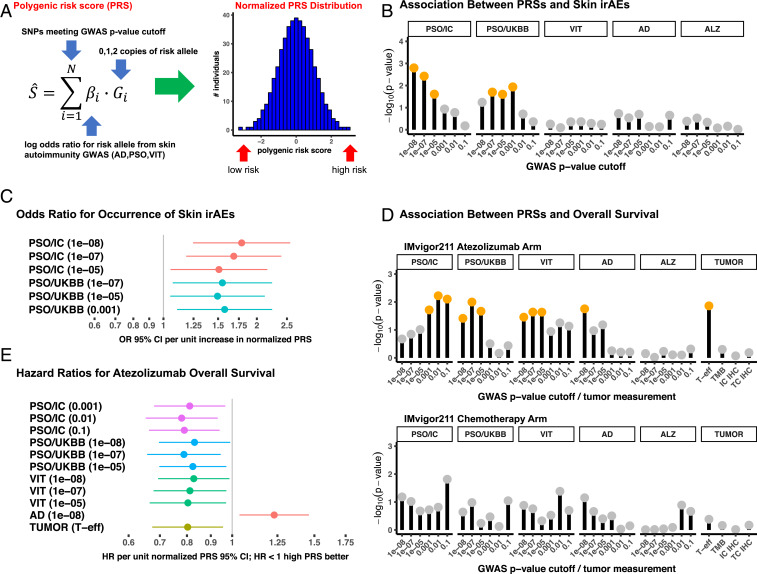
“A high PRS for vitiligo and psoriasis, as well as a low PRS for atopic dermatitis, was found to be associated with longer overall survival in patients with bladder cancer treated with the anti–PD-L1 atezolizumab (26).”
Self-citationDisentangling the complexity of psoriasis in the post-genome-wide association era
Antonatos, C., Grafanaki, K., Georgiou, S., Εvangelou, Ε., & Vasilopoulos, Y. (2023) · Genes and Immunity · doi:10.1038/s41435-023-00222-x · Cited by 11
“[109] Europeans PRS Psoriasis PRS is associated with overall survival of anti-PD-L1 therapy in bladder cancer.”
BackgroundKummar, S., Razak, A. R. A., Laurie, S. A., Glatt, D. M., Kell, S. A., Diep, A. N., Schmidt, M., Hom, C., German, C., Shringarpure, S., et al. (2024) · Cancer Research Communications · doi:10.1158/2767-9764.crc-24-0568 · Cited by 7
“…PRSs have demonstrated correlations with development of irAEs such as rashes and hypothyroidism and have also correlated in overall survival improvements for immune-oncology treatment, suggesting the potential utility of germline genetic scores to be used as predictive biomarker (26, 27, 54–56).”
Risk of Rash in PD-1 or PD-L1-Related Cancer Clinical Trials: A Systematic Review and Meta-Analysis
Tian, Y., Zhang, C., Dang, Q., Wang, K., Liu, Q., Liu, H., Shang, H., Zhao, J., Xu, Y., Wu, T., et al. (2022) · Journal of Oncology · doi:10.1155/2022/4976032 · Cited by 8
“Skin toxicities, such as rash, pruritus, vitiligo, palmarplantar erythrodysasthesia (PPE), erythema, eczema, urticaria, dermatitis, dry skin, and maculopapular rash, were frequently observed in cancer patients treated with PD-1 or PD-L1 [3, 10, 11].”
BackgroundGermline mechanisms of immunotherapy toxicities in the era of genome‐wide association studies
Gusev, A. (2023) · Immunological Reviews · doi:10.1111/imr.13253 · Cited by 8
Chen, S., Tan, A. L. M., Menezes, M. C. S., Mao, J. F., Perry, C. L., Vella, M. E., Viswanadham, V., Kobren, S. N., Churchill, S. E., & Kohane, I. S. (2024) · npj Precision Oncology · doi:10.1038/s41698-024-00613-x · Cited by 8
“26 showedlongoverallsurvivalforpatientswith bladder cancer high PRS for psoriasis and low PRS for atopic dermatitis.”
Autoimmune alleles at the major histocompatibility locus modify melanoma susceptibility
Talwar, J. V., Laub, D., Pagadala, M. S., Castro, A., Lewis, M., Luebeck, E. G., Gorman, B. R., Pan, C., Dong, F. N., Markianos, K., et al. (2023) · The American Journal of Human Genetics · doi:10.1016/j.ajhg.2023.05.013 · Cited by 5
Skelly, D. A., Graham, J. P., Cheng, M., Furuta, M., Walter, A., Stoklasek, T. A., Yang, H., Stearns, T. M., Poirion, O., Zhang, J., et al. (2025) · Cell Reports · doi:10.1016/j.celrep.2025.115698 · Cited by 7
Mechanism and Management of Checkpoint Inhibitor-Related Toxicities in Genitourinary Cancers
Li, H., Sahu, K. K., & Maughan, B. L. (2022) · Cancers · doi:10.3390/cancers14102460 · Cited by 6
“A PRS for PSO, VIT, and AD was predictive of overall survival in IMvigor 211 study [89].”
BackgroundMethodNguyen-Hoang, N., Nazzal, M., Schneider, B. P., Trivedi, M. S., & Hertz, D. L. (2025) · Critical Reviews in Oncology/Hematology · doi:10.1016/j.critrevonc.2025.104739 · Cited by 5
Chen, J., Epstein, M. P., Schildkraut, J. M., & Kar, S. (2025) · Genes · doi:10.3390/genes16050575 · Cited by 4
“…scores predictive of autoimmune disease, is associated with the risk of developing immune-related adverse events in cancer patients receiving immune checkpoint inhibitors and, in turn, with better therapeutic response and survival likely due to the enhanced autoimmune anti-tumor activity [1,2].”
Polygenic Risk Scores Associated with Tumor Immune Infiltration in Common Cancers
Choi, J. Y., Kim, J. S., Sung, H. J., Chen, Y., Chen, Z., Wen, W., Shu, X., & Guo, X. (2022) · Cancers · doi:10.3390/cancers14225571 · Cited by 7
Liu, Y., Peng, C., Brorson, I. S., O'Mahony, D. G., Kelly, R. L., Heng, Y. J., Baker, G. M., Alnæs, G. I. G., Bodelón, C., Stover, D. G., et al. (2024) · The American Journal of Human Genetics · doi:10.1016/j.ajhg.2024.08.009 · Cited by 4
Chapel, M., Dennis, J. K., & de Boer, C. G. (2026) · Cell Genomics · doi:10.1016/j.xgen.2025.101131 · Cited by 4
“Phenotypes associated with risk variants that may be masked in one environment could be revealed when an environmental stressor is applied.”
Powles, T. B., Sridhar, S. S., Bellmunt, J., Sternberg, C. N., Grivas, P. D., Hunter, E., Salter, M., Powell, R., Dring, A. M., Green, J., et al. (2025) · Cancers · doi:10.3390/cancers17142332 · Cited by 3
“…application of novel technologies, such as spatial transcriptomics, support hypotheses that response to ICI may be contingent on host factors such as germline single nucleotide polymorphisms [7], microbiomes [8], and epigenetic modification of the 3-dimensional (3D) structure of chromatin [9–13].”
Self-citationPark, J., Yoon, D., Lee, J., Oh, S. J., Kim, H. J., Lee, J. H., & Lee, D. (2021) · The Journal of Dermatology · doi:10.1111/1346-8138.15824 · Cited by 3
The Current and Future of Biomarkers of Immune Related Adverse Events
Bracamonte‐Baran, W., & Kim, S. T. (2025) · Immunology and Allergy Clinics of North America · doi:10.1016/j.iac.2025.01.010 · Cited by 2
Heterogeneous survival impact of immune-related adverse events in US veterans
Rehmani, S., Higgins, L. M., Brinzevich, D., Falvello, V. B., Strohbehn, G. W., Dykstra, M. P., Elliott, D., Ramnath, N., & Bryant, A. K. (2026) · Journal for ImmunoTherapy of Cancer · doi:10.1136/jitc-2025-014622 · Cited by 2
Checking autoimmune genetic risk to stratify immune checkpoint inhibitor responders
Sinha, A. A. (2020) · Proceedings of the National Academy of Sciences · doi:10.1073/pnas.2007744117 · Cited by 3
Genetic Predisposition to Bladder Cancer
Kiemeney, L. A. L. M., Rothman, N., Koutros, S., Prokunina‐Olsson, L., Verhaegh, G. W. C. T., & Vermeulen, S. H. H. M. (2024) · Springer eBooks · doi:10.1007/978-3-031-68505-7_2 · Cited by 2
Sun, G. J., Arango-Argoty, G., Doherty, G. J., Bikiel, D. E., Pavlović, D., Chen, A. C., Stewart, R. A., Lai, Z., & Jacob, E. (2024) · iScience · doi:10.1016/j.isci.2024.110634 · Cited by 2
Gut Microbiome Strategies for Enhancing ICI Delivery Across the BBB in Glioblastoma
Barati, S., Ghoflchi, S., Nakhaei, A., Yazdi, M., Hosseinzadeh, P., Hosseini, H., & Jalili‐Nik, M. (2026) · BioFactors · doi:10.1002/biof.70077 · Cited by 1
“…SNP, previously linked to colitis and Type 1 diabetes, as being associated with enhanced anti-PD1 responses in melanoma patients [79], along with connections between ICI efficacy and polygenic risk scores for rheumatoid arthritis [80], autoimmune thyroid disorders [81], and skin conditions [82].”
Amin, I., Ali, A., Shah, I. M., Wani, R. F. C., Jabeen, F., Wani, H. A., Mushtaq, S., Rehman, M. U., & Maqbool, M. T. (2023) · Elsevier eBooks · doi:10.1016/b978-0-443-15336-5.00010-5 · Cited by 2
Girard, A., Vila-Reyes, H., Dercle, L., & Rouanne, M. (2021) · Urologic Oncology Seminars and Original Investigations · doi:10.1016/j.urolonc.2020.12.003 · Cited by 1
De, S. K. (2022) · Wiley eBooks · doi:10.1002/9783527838561.ch3 · Cited by 1
Polygenic risk scores associated with tumor immune infiltration in common cancersPreprint
Choi, J., Kim, J. S., Sung, H. J., Chen, Y., Chen, Z., Wen, W., Shu, X., & Guo, X. (2022) · Research Square · doi:10.21203/rs.3.rs-1796640/v2 · Cited by 1
Polygenic risk scores associated with tumor immune infiltration in common cancersPreprint
Choi, J., Kim, J. S., Sung, H. J., Chen, Y., Chen, Z., Wen, W., Shu, X., Zheng, W., & Guo, X. (2022) · Research Square · doi:10.21203/rs.3.rs-1796640/v1
Luo, J., Martucci, V. L., Quandt, Z., Groha, S., Murray, M. H., Lovly, C. M., Rizvi, H. A., Egger, J. V., Plodkowski, A. J., Abu-Akeel, M., et al. (2023) · doi:10.1158/1078-0432.c.6530652.v1
NLRC5 germline variants as potential pharmacogenomic markers for immune checkpoint inhibitors
Meng, X. (2023) · Journal for ImmunoTherapy of Cancer · doi:10.1136/jitc-2023-007255
Chengting, R., ZHANG, H., Hu, L. H., Jingjing, L., Li, Y., Jianjuan, X., & Wu, X. (2025) · Research Square · doi:10.21203/rs.3.rs-7495701/v1
Prediction and treatment of skin adverse reactions related to inhibitors at immune checkpointsPreprint
Meng, Z.-N., Chen, J.-Y., Yu, C. H. A., Zheng, A.-H., Liu, K., Su, Y., Zhang, S.-T., Wang, F., Wu, G., & Zhang, D. (2025) · Research Square · doi:10.21203/rs.3.rs-7640849/v1
Raj, P., Liu, J., Zhu, C., Arana, C., Fattah, F. J., Mu-Mosley, H., Switzer, B., Park, J. Y., von Itzstein, M. S., Wakeland, E. K., et al. (2025) · Journal for ImmunoTherapy of Cancer · doi:10.1136/jitc-2025-012012 · Cited by 2
Biomarkers and testing in pathology
Compérat, É. (2026) · Current Opinion in Urology · doi:10.1097/mou.0000000000001363
Jan, I., Ali, T., Bashir, R., Khaki, P. S. S., Andrabi, K. I., & Bader, G. N. (2026) · Elsevier eBooks · doi:10.1016/b978-0-443-23908-3.00018-6
Salazar, V., Espenschied, S. T., Fernandez, A. P., Karell, P. E., Sangwan, N., & Stappenbeck, T. S. (2026) · Cell Host & Microbe · doi:10.1016/j.chom.2026.03.008
Li, H. L., Charmsaz, S., Kao, C., Pazzi, C., Brancati, M., Leatherman, J. M., Zhao, X., Arif, W., Lee, R. P., Hernandez, J. P., et al. (2026) · Cancer Immunology Research · doi:10.1158/2326-6066.cir-25-1611
Self-citationPowles, T. B., Madjar, K., Balas, B. I., Carter, C. A., Essioux, L., Tehrani, A., Mariathasan, S., Heinzmann, D., Arellano, F., Mohindra, R., et al. (2026) · ESMO Open · doi:10.1016/j.esmoop.2026.107701
Self-citationZhou, J., Jingzhi, W., & Liu, L. (2026) · Frontiers in Pharmacology · doi:10.3389/fphar.2026.1875485
“Existing studies have shown that PRS is associated with the incidence and treatment outcomes of skin irAEs, suggesting an immunogenetic predisposition in patients’ responses to ICIs treatment (Khan et al., 2020).”
Metadata
- Authors
- Khan, Z., Di Nucci, F., Kwan, A., Hammer, C., Mariathasan, S., Rouilly, V., Carroll, J., Fontes, M., Ley Acosta, S., Guardino, E., Chen-Harris, H., Bhangale, T., Mellman, I., Rosenberg, J., Powles, T., Hunkapiller, J., Chandler, G. S., & Albert, M. L.
- Affiliations
- Genentech (US)
- Genentech, South San Francisco, CA 94080;
- Memorial Sloan Kettering Cancer Center (US)
- Queen Mary University of London (GB)
- Corresponding author
- Khan, Zia
- Mellman, Ira
- Albert, Matthew L.
- ORCID
- Venue
- Proceedings of the National Academy of Sciences
- Publisher
- National Academy of Sciences
- Published
- 2020-05-19
- Volume
- 117
- Issue
- 22
- Pages
- 12288-12294
- ISSN
- 0027-8424 (ISSN-L)
- 1091-6490
- PMC
- PMC7275757
- OpenAlex
- W3026699635
- Cited by
- 91
- References
- 27
- Citations by year
- 2026: 9 · 2025: 10 · 2024: 12 · 2023: 19 · 2022: 22 · 2021: 16 · 2020: 3
- FWCI
- 5.42
- Type
- journal article
- Language
- en
- Open access
- hybrid
- doi.org
- Licence
- Locations
- Proceedings of the National Academy of Sciences (publishedVersion, cc-by-nc-nd)
- bioRxiv (Cold Spring Harbor Laboratory) (acceptedVersion, cc-by-nc-nd)
- PubMed Central (publishedVersion, cc-by-nc-nd)
- PubMed (publishedVersion)
- Funders
- Genentech
- National Cancer Institute (P30CA008748)
- Topics
- Health Sciences › Medicine › Oncology › Cancer Immunotherapy and Biomarkers
- Health Sciences › Medicine › Surgery › Bladder and Urothelial Cancer Treatments
- Life Sciences › Immunology and Microbiology › Immunology › Immunotherapy and Immune Responses
- Keywords
- polygenic risk score, skin autoimmunity, immune checkpoint blockade, bladder cancer, PD-L1 blockade, atezolizumab, vitiligo, psoriasis, atopic dermatitis, immune-related adverse events, Th17 polarization, overall survival, germline mutations
- MeSH terms
- Urinary Bladder Neoplasms, Humans, Skin, Cohort Studies, Autoimmunity, Multifactorial Inheritance, Th17 Cells, B7-H1 Antigen, Programmed Cell Death 1 Receptor, Antibodies, Monoclonal, Humanized
About these checks
Registry, retraction, Cites and statistics results are computed, not judged, with one exception: a printed reference that no index lists is read once by a model before it counts as a citation error. Claims are extracted by a model and kept only when their quote appears verbatim in the text; each cited source is then checked, with a model’s help, for whether it says what the claim relies on. Those verdicts can be wrong — read the claim’s quote and the cited source before relying on one.
Statistics and arithmetic are recomputed, not judged.
Confidence bands are shown only for fields calibrated on our annotated test set. None is calibrated yet, so no band is shown.
What counts as a claim ›How we measure confidence ›How we check this ›
Are you an author, or do you see a problem with this page? Request a review
Data sources
Bibliographic data: Semantic Scholar, OpenAlex, Crossref.
Contains information from the Semantic Scholar Academic Graph Datasets, made available under the ODC Attribution License (ODC-BY 1.0).
Semantic Scholar’s data is described in: Kinney, R., et al. (2023). The Semantic Scholar Open Data Platform. arXiv:2301.10140.
