

The DOI matches its Crossref record; 94 of the 95 references it cites were found in a registry or an index, and 1 are not checked yet; none of the 87 sources its claims cite is checked for support yet.
Asteroid impact, not volcanism, caused the end-Cretaceous dinosaur extinction
Open accessAbstract
Significance: We present a quantitative test of end-Cretaceous extinction scenarios and how these would have affected dinosaur habitats. Combining climate and ecological modeling tools, we demonstrate a substantial detrimental effect on dinosaur habitats caused by an impact winter scenario triggered by the Chicxulub asteroid. We were not able to obtain such an extinction state with several modeling scenarios of Deccan volcanism. We further show that the concomitant prolonged eruption of the Deccan traps might have acted as an ameliorating agent, buffering the negative effects on climate and global ecosystems that the asteroid impact produced at the Cretaceous–Paleogene boundary.
Checked 2026-11-12 · 1 reference not checked yet
Overview
CoChat Summary
Written by AI from the paper’s full text.
TL;DR
Combining climate and habitat suitability models, this study finds that a Chicxulub asteroid impact winter produced extinction-level loss of non-avian dinosaur habitat, whereas modeled Deccan volcanism scenarios did not. Deccan CO₂ release may instead have buffered post-impact cooling and accelerated ecological recovery.
Key findings
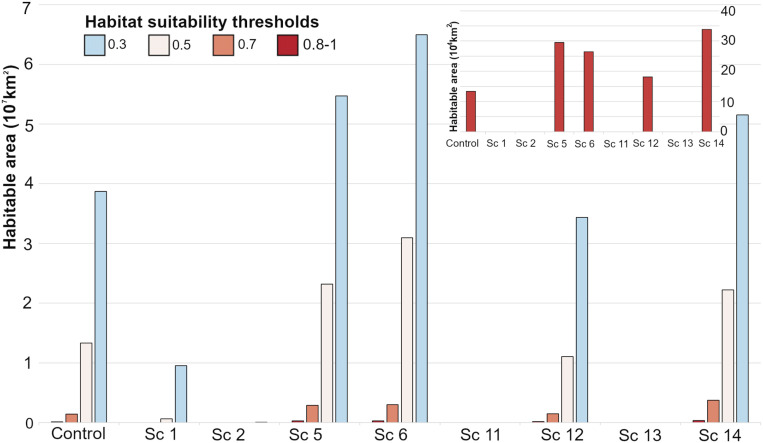
- Solar dimming scenarios reduced dinosaur habitat: 5% dimming left potential habitat at 4% and 24% of pre-K/Pg values at suitability thresholds 0.5 and 0.3, respectively; 10% dimming reduced habitat to 0.4% at the 0.3 threshold; habitat was extinguished at ≥15% dimming.
- Deccan CO₂ warming increased maximum dinosaur habitat suitability by ∼120% at 1,120 ppm CO₂ and ∼97% at 1,680 ppm CO₂ in Ensemble models, and by ∼27% and ∼32% in MaxEnt, so long-term Deccan volcanism alone could not explain complete dinosaur habitat disruption.
- Transient asteroid aerosol experiments produced >34 °C global mean cooling over the 6-y aerosol period, peak land surface cooling of −34.7 °C globally within 5 y, and >85% reduction in land precipitation, causing an extinction-level event for the non-avian dinosaur climatic niche.
- Climate recovery took around 30 y, accelerated by ∼10 y with Deccan-derived CO₂; an ash layer over North America offset ∼4–5 °C of land surface cooling. With active volcanism, maximum habitability increased 152% from preimpact levels after recovery.
Methods
- Used the coupled atmosphere–ocean GCM HadCM3L-M2.1 with end-Cretaceous boundary conditions and 560 ppm CO₂ baseline, running decoupled and transient scenarios including 5–20% solar dimming, 1,120/1,680 ppm CO₂, and 100× Pinatubo aerosol forcing with/without ash and Deccan CO₂.
- Assembled a late Maastrichtian (69–66 Ma) global dinosaur fossil-occurrence dataset from the Paleobiology Database, cleaned to 2,088 entries across nine clades.
- Modeled habitat suitability using Ensemble modeling in biomod2 and MaxEnt, with predictors limited to warmest/coldest annual quartile temperatures and wettest/driest yearly quarter precipitation after removing collinear variables (Pearson’s r ≥ 0.7).
Limitations
- The paper states that chemical processes were not simulated and could further lead to habitat loss; the precise amount of Deccan CO₂ released is unknown; and the pace and magnitude of Deccan volcanism remain uncertain.
- The authors state they do not discount biotic effects or other untested abiotic drivers (e.g., wildfire, acid rain, acidification, halogens, ultraviolet radiation, carbon cycle disruption), and they note that a deep-ocean impact scenario involving stratospheric water vapor was not tested.
- Evident from the text: habitat suitability models rely on analogy with crocodiles and birds and on fossil occurrence data, and the Deccan CO₂ scenarios are described as conservative/extreme and likely unrealistic in amount, so the modeled volcanic buffering effect depends on uncertain forcing assumptions.
Model-written summary. Check it against the paper before relying on it.
Integrity signals
Registry
Cites
Statistics
Figures
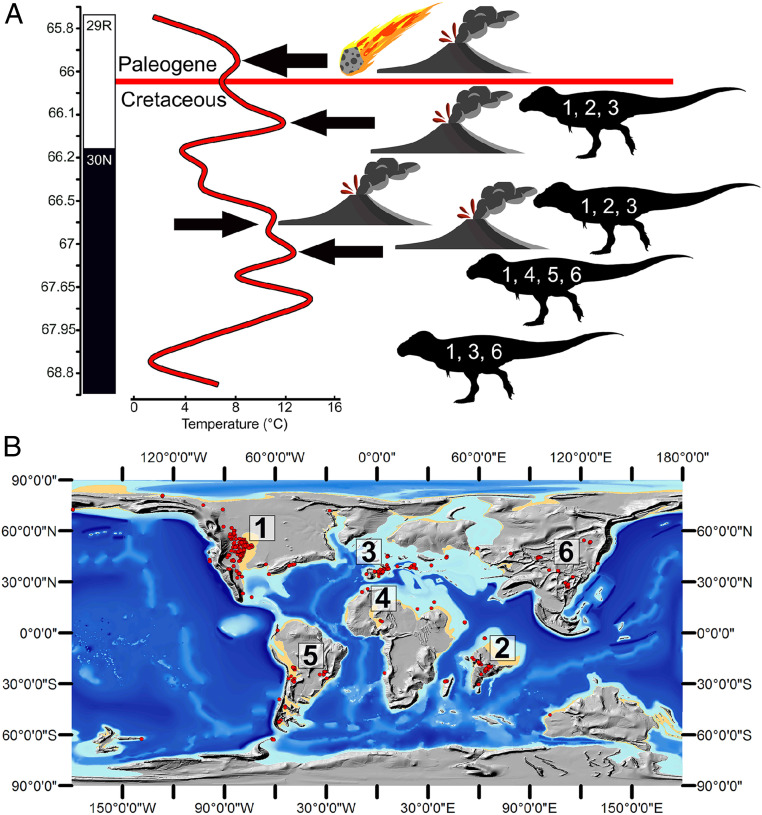
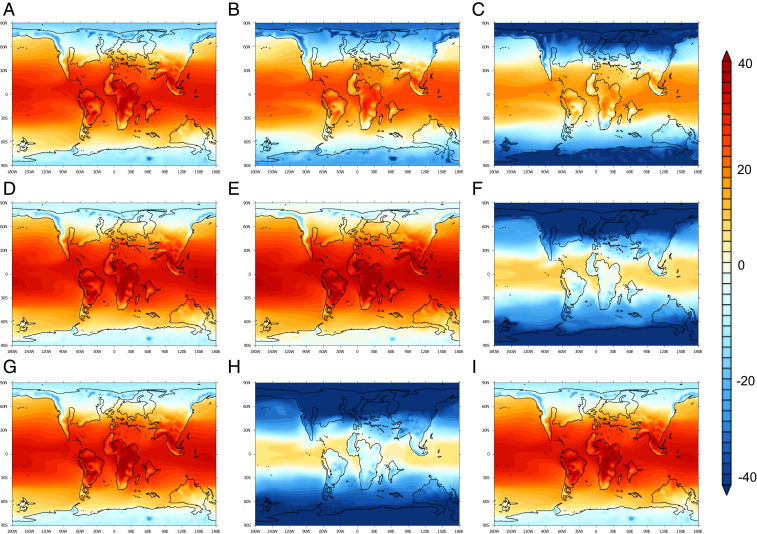
Verification
Claims the paper makes
31 Own result · 27 Check pending · 11 Own interpretation · 6 No full text of the sources · 6 Not checked yet · 4 Own method
A result the paper reports from its own data — it cites no other source for it, so there is none to check. The quote shows it is in the paper.
In the paper
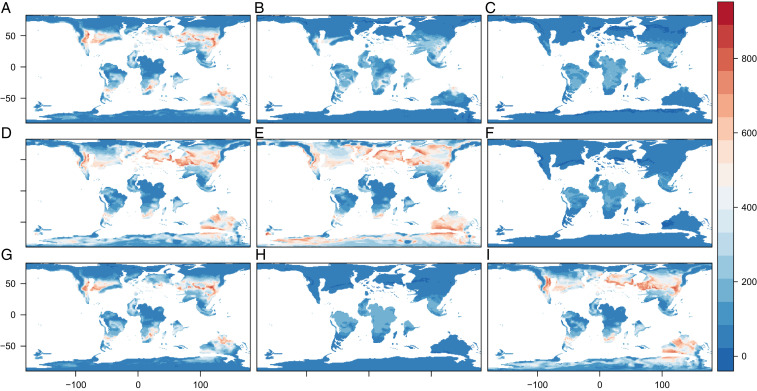
“At 10% solar dimming, potential habitat is effectively removed (0.4% of pre-K/Pg values) (Fig. 3C) at the lowest habitability threshold (0.3) (Fig. 4).”
§ Asteroid impact, not volcanism, caused the end-Cretaceous dinosaur extinction > Results
plainstates a cause- Asserted: passes — The authors put it forward as true.
- Checkable: passes — It can be checked against evidence.
- Load-bearing: passes — The paper’s conclusions depend on it.
- Based: passes — The paper gives a reason why it holds.
A result the paper reports from its own data — it cites no other source for it, so there is none to check. The quote shows it is in the paper.
In the paper
“We show that the abiotic impact of Deccan volcanism was not sufficient to cause the extinction of non-avian dinosaurs, while the effects of the impact alone were enough to cause the extinction.”
§ Asteroid impact, not volcanism, caused the end-Cretaceous dinosaur extinction > Discussion
plainstates a cause- Asserted: passes — The authors put it forward as true.
- Checkable: passes — It can be checked against evidence.
- Load-bearing: passes — The paper’s conclusions depend on it.
- Based: passes — The paper gives a reason why it holds.
A result the paper reports from its own data — it cites no other source for it, so there is none to check. The quote shows it is in the paper.
In the paper
“Global habitability increases in models simulating long-term CO2 injection due to Deccan volcanism, in case an asteroid impact would not have happened (Fig. 3 D and E): maximum dinosaur habitat suitability increases by ∼120% at 1,120 ppm of CO2 and ∼97% at 1,680 ppm of CO2.”
§ Asteroid impact, not volcanism, caused the end-Cretaceous dinosaur extinction > Results
hedgedstates a cause- Asserted: passes — The authors put it forward as true.
- Checkable: passes — It can be checked against evidence.
- Load-bearing: passes — The paper’s conclusions depend on it.
- Based: passes — The paper gives a reason why it holds.
A result the paper reports from its own data — it cites no other source for it, so there is none to check. The quote shows it is in the paper.
In the paper
“The 5% solar dimming experiment leads to a substantial, but noncatastrophic, 50% reduction in peak habitability from pre-K/Pg values (SI Appendix, Fig. S18 A and B).”
§ Asteroid impact, not volcanism, caused the end-Cretaceous dinosaur extinction > Results
plainstates a cause- Asserted: passes — The authors put it forward as true.
- Checkable: passes — It can be checked against evidence.
- Load-bearing: unclear — It is unclear whether the paper’s conclusions depend on it.
- Based: passes — The paper gives a reason why it holds.
A result the paper reports from its own data — it cites no other source for it, so there is none to check. The quote shows it is in the paper.
In the paper
“The transient asteroid experiments show an extinction-level event of the non-avian dinosaurs’ climatic niche (Fig. 3 F and H), coincident with the lowest temperatures reached in experimental simulations after asteroid-induced cooling (SI Appendix, Fig. S3).”
§ Asteroid impact, not volcanism, caused the end-Cretaceous dinosaur extinction > Results
plainstates an association- Asserted: passes — The authors put it forward as true.
- Checkable: passes — It can be checked against evidence.
- Load-bearing: passes — The paper’s conclusions depend on it.
- Based: passes — The paper gives a reason why it holds.
- It may state two separate claims as one. 25
- Probably not a substantial claim. 20
Create a free account to see these claims.
Create a free account to see these assumptions.
38 more claims
Create a free account to see all 85 claims and to verify the 50 references still open.
Self-check
Percentages, sums and reported differences re-computed from the paper’s own numbers.
Each contradiction between two passages listed here was confirmed by an independent check.
Rated minor: it would not touch a result — a value no result rests on, a p-value that stays on the same side of the significance level, or a conflict that is clerical, resolved elsewhere in the paper, or outside its own findings.
In the paper
§ Asteroid impact, not volcanism, caused the end-Cretaceous dinosaur extinction > Results
“A transient model including both Deccan volcanism and the effect of the Chicxulub impact is shown in F (scenario 11) and G (scenario 12), and with inactive volcanism (H, scenario 13 and I, scenario 14)”
§ Asteroid impact, not volcanism, caused the end-Cretaceous dinosaur extinction > Results
“The effect on the dinosaur-suitable habitats for two transient simulations with Deccan volcanism inactive (F, scenario 11 and G, scenario 12) and active (H, scenario 13 and I, scenario 14)”
Rated minor: it would not touch a result — a value no result rests on, a p-value that stays on the same side of the significance level, or a conflict that is clerical, resolved elsewhere in the paper, or outside its own findings.
In the paper
§ Asteroid impact, not volcanism, caused the end-Cretaceous dinosaur extinction > Discussion
“Our simulations (Tables 1 and 2) suggest that sea surface temperatures would have been reduced for all scenarios”
§ Asteroid impact, not volcanism, caused the end-Cretaceous dinosaur extinction > Results
“| Control | 22.64 | 12.41 | 21.65 | 11.49 | 18.96 | 3.5 | 2.38 | 3.2 | | −5% Sol. (Sc 1) | 16.93 | 12.06 | 14.87 | 1.83 | 11.42 | 3 | 2.05 | 2.75 | | −10% Sol. (Sc 2) | 11.06 | 11.72 | 4.56 | −12.18 | 0.13 | 2.5 | 1.59 | 2.26 | | 2 × CO2 > 4 × CO2 (Sc 5) | 25.11 | 12.56 | 24.47 | 16.2 | 22.28 | 3.58 | 2.49 | 3.29 | | 2 × CO2 > 6 × CO2 (Sc 6) | 27.02 | 12.66 | 26.86 | 20.24 | 25.11 | 3.59 | 2.5 | 3.3 |”
Citations
Cites
A statistical explanation of MaxEnt for ecologists
Elith, J., Phillips, S. J., Hastie, T., Dudík, M., Chee, Y. E., & Yates, C. J. (2011) · Diversity and Distributions · doi:10.1111/j.1472-4642.2010.00725.x · Cited by 6,699
Extraterrestrial Cause for the Cretaceous-Tertiary Extinction
Alvarez, L. W., Alvarez, W., Asaro, F., & Michel, H. V. (1980) · Science · doi:10.1126/science.208.4448.1095 · Cited by 3,198
BIOMOD – a platform for ensemble forecasting of species distributions
Thuiller, W., Lafourcade, B., Engler, R., & Araújo, M. B. (2009) · Ecography · doi:10.1111/j.1600-0587.2008.05742.x · Cited by 2,762
Opening the black box: an open‐source release of Maxent
Phillips, S. J., Anderson, R. P., Dudík, M., Schapire, R. E., & Blair, M. E. (2017) · Ecography · doi:10.1111/ecog.03049 · Cited by 2,729
Mass extinctions in the marine fossil record
Raup, D. M., & Sepkoski, J. J. (1982) · Science · doi:10.1126/science.215.4539.1501 · Cited by 1,774
The Chicxulub Asteroid Impact and Mass Extinction at the Cretaceous-Paleogene Boundary
Schulte, P., Alegret, L., Arenillas, I., Arz, J. A., Barton, P. J., Bown, P. R., Bralower, T. J., Christeson, G. L., Claeys, P., Cockell, C. S., et al. (2010) · Science · doi:10.1126/science.1177265 · Cited by 1,323
Self-citationThe Placental Mammal Ancestor and the Post–K-Pg Radiation of Placentals
O’Leary, M. A., Bloch, J. I., Flynn, J. J., Gaudin, T. J., Giallombardo, A., Giannini, N. P., Goldberg, S. L., Kraatz, B., Luo, Z., Meng, J., et al. (2013) · Science · doi:10.1126/science.1229237 · Cited by 1,228
Large igneous provinces and mass extinctions
Wignall, P. B. (2001) · Earth-Science Reviews · doi:10.1016/s0012-8252(00)00037-4 · Cited by 1,217
Standards for distribution models in biodiversity assessments
Araújo, M. B., Anderson, R. P., Barbosa, A. M., Beale, C. M., Dormann, C. F., Early, R., Garcia, R. A., Guisan, A., Maiorano, L., Naimi, B., et al. (2019) · Science Advances · doi:10.1126/sciadv.aat4858 · Cited by 1,214
PREDICTING SPECIES' GEOGRAPHIC DISTRIBUTIONS BASED ON ECOLOGICAL NICHE MODELING
Peterson, A. T. (2001) · The Condor · doi:10.1650/0010-5422(2001)103[0599:psgdbo]2.0.co;2 · Cited by 1,019
Research works printed but not linked: 1
- 10.1093/condor/103.3.599 · DOI
Cited by
Felsic volcanism as a factor driving the end-Permian mass extinction
Zhang, H., Zhang, F., Chen, J., Erwin, D. H., Syverson, D. D., Ni, P., Rampino, M. R., Chi, Z., Cai, Y.-F., Xiang, L., et al. (2021) · Science Advances · doi:10.1126/sciadv.abh1390 · Cited by 152
Mercury linked to Deccan Traps volcanism, climate change and the end-Cretaceous mass extinction
Keller, G., Mateo, P., Monkenbusch, J., Thibault, N., Punekar, J., Spangenberg, J. E., Abramovich, S., Ashckenazi-Polivoda, S., Schoene, B., Eddy, M. P., et al. (2020) · Global and Planetary Change · doi:10.1016/j.gloplacha.2020.103312 · Cited by 130
The Chicxulub impact and its environmental consequences
Morgan, J. V., Bralower, T. J., Brugger, J., & Wünnemann, K. (2022) · Nature Reviews Earth & Environment · doi:10.1038/s43017-022-00283-y · Cited by 100
Self-citationCondamine, F. L., Guinot, G., Benton, M. J., & Currie, P. J. (2021) · Nature Communications · doi:10.1038/s41467-021-23754-0 · Cited by 88
Organic matter from the Chicxulub crater exacerbated the K–Pg impact winter
Lyons, S. L., Karp, A. T., Bralower, T. J., Grice, K., Schaefer, B., Gulick, S. P. S., Morgan, J. V., & Freeman, K. H. (2020) · Proceedings of the National Academy of Sciences · doi:10.1073/pnas.2004596117 · Cited by 82
Self-citationThe elements of life: A biocentric tour of the periodic table
(2023) · Advances in Microbial Physiology · doi:10.1016/bs.ampbs.2022.11.001 · Cited by 71
Continental flood basalts drive Phanerozoic extinctions
Green, T., Renne, P. R., & Keller, C. B. (2022) · Proceedings of the National Academy of Sciences · doi:10.1073/pnas.2120441119 · Cited by 71
Chicxulub impact winter sustained by fine silicate dust
Senel, C. B., Kaskes, P., Temel, O., Vellekoop, J., Goderis, S., DePalma, R. A., Prins, M. A., Claeys, P., & Karatekin, Ö. (2023) · Nature Geoscience · doi:10.1038/s41561-023-01290-4 · Cited by 65
Climatic constraints on the biogeographic history of Mesozoic dinosaurs
Chiarenza, A. A., Mannion, P. D., Farnsworth, A., Carrano, M. T., & Varela, S. (2021) · Current Biology · doi:10.1016/j.cub.2021.11.061 · Cited by 61
Self-citationIdentifying Future-Proof Science
Vickers, P. (2022) · doi:10.1093/oso/9780192862730.001.0001 · Cited by 57
Forty years later: The status of the “Big Five” mass extinctions
Marshall, C. R. (2023) · Cambridge Prisms Extinction · doi:10.1017/ext.2022.4 · Cited by 57
Kaas, J. H., Qi, H., & Stepniewska, I. (2021) · Philosophical Transactions of the Royal Society B Biological Sciences · doi:10.1098/rstb.2021.0293 · Cited by 50
The Angiosperm Terrestrial Revolution buffered ants against extinction
Jouault, C., Condamine, F. L., Legendre, F., & Perrichot, V. (2024) · Proceedings of the National Academy of Sciences · doi:10.1073/pnas.2317795121 · Cited by 39
Genome and life-history evolution link bird diversification to the end-Cretaceous mass extinction
Berv, J. S., Singhal, S., Field, D. J., Walker‐Hale, N., McHugh, S. W., Shipley, J. R., Miller, E. T., Kimball, R. T., Braun, E. L., Dornburg, A., et al. (2024) · Science Advances · doi:10.1126/sciadv.adp0114 · Cited by 37
Brown, C. M., Campione, N. E., Wilson, G. P., & Evans, D. C. (2021) · Paleobiology · doi:10.1017/pab.2021.35 · Cited by 36
Island refuges for surviving nuclear winter and other abrupt sunlight‐reducing catastrophes
Boyd, M., & Wilson, N. (2022) · Risk Analysis · doi:10.1111/risa.14072 · Cited by 36
Tooth morphology elucidates shark evolution across the end-Cretaceous mass extinction
Bazzi, M., Campione, N. E., Ahlberg, P., Blom, H., & Kear, B. P. (2021) · PLoS Biology · doi:10.1371/journal.pbio.3001108 · Cited by 34
Toyokuni, S., Kong, Y., Cheng, Z., Sato, K., Hayashi, S., Ito, F., Jiang, L., Yanatori, I., Okazaki, Y., & Akatsuka, S. (2020) · Cancers · doi:10.3390/cancers12113320 · Cited by 33
Thinking about the Biodiversity Loss in This Changing World
Palombo, M. R. (2021) · Geosciences · doi:10.3390/geosciences11090370 · Cited by 33
Shifts in food webs and niche stability shaped survivorship and extinction at the end-Cretaceous
García‐Girón, J., Chiarenza, A. A., Alahuhta, J., DeMar, D. G., Heino, J., Mannion, P. D., Williamson, T. E., Wilson, G. P., & Brusatte, S. L. (2022) · Science Advances · doi:10.1126/sciadv.add5040 · Cited by 33
Self-citationChiarenza, A. A., Waterson, A., Schmidt, D. N., Valdes, P. J., Yesson, C., Holroyd, P. A., Collinson, M. E., Farnsworth, A., Nicholson, D. B., Varela, S., et al. (2022) · Current Biology · doi:10.1016/j.cub.2022.11.056 · Cited by 33
Self-citationClimate extremes likely to drive land mammal extinction during next supercontinent assembly
Farnsworth, A., Lo, Y. T. E., Valdes, P. J., Buzan, J., Mills, B. J. W., Merdith, A., Scotese, C. R., & Wakeford, H. R. (2023) · Nature Geoscience · doi:10.1038/s41561-023-01259-3 · Cited by 33
Self-citationDinosaur diversification rates were not in decline prior to the K-Pg boundary
Bonsor, J. A., Barrett, P. M., Raven, T. J., & Cooper, N. (2020) · Royal Society Open Science · doi:10.1098/rsos.201195 · Cited by 32
The paradox of predictability provides a bridge between micro- and macroevolution
Tsuboi, M., Sztepanacz, J. L., Lisle, S. P. D., Voje, K. L., Grabowski, M. W., Hopkins, M. J., Porto, A., Balk, M. A., Pontarp, M., Rossoni, D. M., et al. (2024) · Journal of Evolutionary Biology · doi:10.1093/jeb/voae103 · Cited by 31
Callegaro, S., Baker, D. R., Renne, P. R., Melluso, L., Geraki, K., Whitehouse, M. J., De Min, A., & Marzoli, A. (2023) · Science Advances · doi:10.1126/sciadv.adg8284 · Cited by 31
Malm, A. (2022) · Historical Materialism · doi:10.1163/1569206x-20222369 · Cited by 30
Wilson, N., Valler, V., Cassidy, M., Boyd, M., Mani, L., & Brönnimann, S. (2023) · Scientific Reports · doi:10.1038/s41598-023-30729-2 · Cited by 30
How predictable are mass extinction events?
Foster, W. J., Allen, B. J., Kitzmann, N. H., Münchmeyer, J., Rettelbach, T., Witts, J. D., Whittle, R. J., Larina, E., Clapham, M. E., & Dunhill, A. M. (2023) · Royal Society Open Science · doi:10.1098/rsos.221507 · Cited by 30
Dark primitive asteroids account for a large share of K/Pg-scale impacts on the Earth
Nesvorný, D., Bottke, W. F., & Marchi, S. (2021) · Icarus · doi:10.1016/j.icarus.2021.114621 · Cited by 26
Han, F., Wang, Q., Wang, H., Zhu, X., Zhou, X., Wang, Z., Fang, K., Stidham, T. A., Wang, W., Wang, X., et al. (2022) · Proceedings of the National Academy of Sciences · doi:10.1073/pnas.2211234119 · Cited by 26
Relict duck-billed dinosaurs survived into the last age of the dinosaurs in subantarctic Chile
Alarcón-Muñoz, J., Vargas, A. O., Püschel, H. P., Soto‐Acuña, S., Manríquez, L. M. E., Leppe, M. A., Kaluza, J., Milla, V., Gutstein, C. S., Palma-Liberona, J., et al. (2023) · Science Advances · doi:10.1126/sciadv.adg2456 · Cited by 26
Knowledge gaps and missing links in understanding mass extinctions: Can mathematical modeling help?
Sudakow, I., Myers, C., Petrovskii, S., Sumrall, C. D., & Witts, J. D. (2022) · Physics of Life Reviews · doi:10.1016/j.plrev.2022.04.001 · Cited by 25
Pérez-Pueyo, M., Cruzado‐Caballero, P., Moreno‐Azanza, M., Vila, B., Castanera, D., Gasca, J. M., Puértolas‐Pascual, E., Bádenas, B., & Canudo, J. I. (2021) · Geosciences · doi:10.3390/geosciences11040162 · Cited by 24
Early Jurassic origin of avian endothermy and thermophysiological diversity in dinosaurs
Chiarenza, A. A., Cantalapiedra, J. L., Jones, L. A., Gamboa, S., Galván, S., Farnsworth, A., Valdes, P. J., Sotelo, G., & Varela, S. (2024) · Current Biology · doi:10.1016/j.cub.2024.04.051 · Cited by 23
Self-citationEnvironmental Effects of Volcanic Volatile Fluxes From Subaerial Large Igneous Provinces
Mather, T. A., & Schmidt, A. (2021) · Geophysical monograph · doi:10.1002/9781119507444.ch4 · Cited by 22
Gilabert, V., Arenillas, I., Arz, J. A., Batenburg, S. J., & Robinson, S. A. (2021) · Palaeogeography Palaeoclimatology Palaeoecology · doi:10.1016/j.palaeo.2021.110513 · Cited by 21
Kinsland, G. L., Egedahl, K., Strong, M. A., & Ivy, R. M. (2021) · Earth and Planetary Science Letters · doi:10.1016/j.epsl.2021.117063 · Cited by 21
Jouault, C., Nel, A., Legendre, F., & Condamine, F. L. (2022) · Insect Systematics and Diversity · doi:10.1093/isd/ixac017 · Cited by 21
The Habitat of the Nascent Chicxulub Crater
Bralower, T. J., Cosmidis, J., Fantle, M. S., Lowery, C. M., Passey, B. H., Gulick, S. P. S., Morgan, J. V., Vajda, V., Whalen, M. T., Wittmann, A., et al. (2020) · AGU Advances · doi:10.1029/2020av000208 · Cited by 20
Self-citationDavis, S. N., Soto‐Acuña, S., Fernández, R. A., Plaza, J. M. A., Leppe, M. A., Rubilar-Rogers, D., Vargas, A. O., & Clarke, J. A. (2022) · Journal of South American Earth Sciences · doi:10.1016/j.jsames.2022.104163 · Cited by 20
Eta-Earth Revisited II: Deriving a Maximum Number of Earth-Like Habitats in the Galactic Disk
Scherf, M., Lammer, H., & Sproß, L. (2024) · Astrobiology · doi:10.1089/ast.2023.0076 · Cited by 19
Calvete, J. J., Plá, D., Els, J., Carranza, S., Damm, M., Hempel, B.-F., John, E. B. O., Petras, D., Heiss, P., Nalbantsoy, A., et al. (2021) · Journal of Proteome Research · doi:10.1021/acs.jproteome.1c00608 · Cited by 19
Feignon, J., Schulz, T., Ferrière, L., Goderis, S., Graaff, S. J. D., Kaskes, P., Déhais, T., Claeys, P., & Koeberl, C. (2022) · Geochimica et Cosmochimica Acta · doi:10.1016/j.gca.2022.02.006 · Cited by 19
Wilson, N., Prickett, M., & Boyd, M. (2023) · New Zealand Medical Journal · doi:10.26635/6965.6004 · Cited by 18
Mocho, P., Escaso, F., Fernández, F. M., Blázquez, A. P., Sanz, J. L., Vidal, D., & Ortega, F. (2024) · Communications Biology · doi:10.1038/s42003-024-06653-0 · Cited by 18
Allen, B. J., Oliveira, M. V. V., Stadler, T., Vaughan, T. G., & Warnock, R. C. M. (2024) · Cambridge Prisms Extinction · doi:10.1017/ext.2024.5 · Cited by 18
Bedrock geological map predictions for Phanerozoic fossil occurrences
Ye, S., & Peters, S. E. (2023) · Paleobiology · doi:10.1017/pab.2022.46 · Cited by 16
A Bayesian inversion for emissions and export productivity across the end-Cretaceous boundary
Cox, A., & Keller, C. B. (2023) · Science · doi:10.1126/science.adh3875 · Cited by 16
The spatiotemporal distribution of Mesozoic dinosaur diversity
Mannion, P. D. (2024) · Biology Letters · doi:10.1098/rsbl.2024.0443 · Cited by 16
Self-citationGarcía‐Girón, J., Heino, J., Alahuhta, J., Chiarenza, A. A., & Brusatte, S. L. (2021) · Palaeontology · doi:10.1111/pala.12526 · Cited by 16
Self-citationRising from the Ashes: The Biogeographic Origins of Modern Coral Reef Fishes
Cantalice, K. M., Alvarado‐Ortega, J., Bellwood, D. R., & Siqueira, A. C. (2022) · BioScience · doi:10.1093/biosci/biac045 · Cited by 16
Perfect storms shape biodiversity in time and space
Jablonski, D., & Edie, S. M. (2023) · Evolutionary Journal of the Linnean Society · doi:10.1093/evolinnean/kzad003 · Cited by 16
The Greatest Extinction Event in 66 Million Years? Contextualising Anthropogenic Extinctions
Hatfield, J. H., Allen, B. J., Carroll, T., Dean, C. D., Deng, S., Gordon, J. D., Guillerme, T., Hansford, J. P., Cuthill, J. F. H., Mannion, P. D., et al. (2025) · Global Change Biology · doi:10.1111/gcb.70476 · Cited by 15
Self-citationMacroevolutionary dynamics of climatic niche space
Quintero, I., Suchard, M. A., & Jetz, W. (2022) · Proceedings of the Royal Society B Biological Sciences · doi:10.1098/rspb.2022.0091 · Cited by 15
Vickers, P. (2022) · Oxford University Press eBooks · doi:10.1093/oso/9780192862730.003.0001 · Cited by 15
Kontopoulos, D. ‐. G., Levesque, D. L., & Hiller, M. (2025) · Functional Ecology · doi:10.1111/1365-2435.14739 · Cited by 15
Brownstein, C. D., & Lyson, T. R. (2022) · Biology Letters · doi:10.1098/rsbl.2022.0118 · Cited by 15
Extreme-sized anurans are more prone to climate-driven extinctions
Feijó, A., Karlsson, C., Gray, R. D., Yang, Q., & Hughes, A. C. (2022) · Climate Change Ecology · doi:10.1016/j.ecochg.2022.100062 · Cited by 15
Selective extinction at the end-Cretaceous and appearance of the modern Decapoda
Schweitzer, C. E., & Feldmann, R. M. (2023) · Journal of Crustacean Biology · doi:10.1093/jcbiol/ruad018 · Cited by 14
Racki, G., & Koeberl, C. (2024) · Earth-Science Reviews · doi:10.1016/j.earscirev.2024.104904 · Cited by 14
The macroecology of Mesozoic dinosaurs
Chiarenza, A. A. (2024) · Biology Letters · doi:10.1098/rsbl.2024.0392 · Cited by 14
Self-citationFingerprinting the Cretaceous-Paleogene boundary impact with Zn isotopes
Mathur, R. D., Mahan, B., Spencer, M. K., Godfrey, L., Landman, N. H., Garb, M. P., Pearson, D. G., Liu, S., & Oboh‐Ikuenobe, F. E. (2021) · Nature Communications · doi:10.1038/s41467-021-24419-8 · Cited by 14
Seasonal calibration of the end-cretaceous Chicxulub impact event
DePalma, R. A., Oleinik, A. E., Gurche, L., Burnham, D. A., Klingler, J., McKinney, C., Cichocki, F. P., Larson, P. L., Egerton, V. M., Wogelius, R. A., et al. (2021) · Scientific Reports · doi:10.1038/s41598-021-03232-9 · Cited by 14
Wilson, N., Payne, B., & Boyd, M. (2023) · Scientific Reports · doi:10.1038/s41598-023-35354-7 · Cited by 14
Rampino, M. R., Caldeira, K., & Rodriguez, S. (2023) · Earth-Science Reviews · doi:10.1016/j.earscirev.2023.104548 · Cited by 13
Reduced contribution of sulfur to the mass extinction associated with the Chicxulub impact event
Rodiouchkina, K., Goderis, S., Karatekin, O., Claeys, P., Boettcher, M., Vanhaecke, F., Senel, C., Rodushkin, I., Temel, O., Vellekoop, J., et al. (2025) · Nature Communications · doi:10.1038/s41467-024-55145-6 · Cited by 13
Feignon, J., Graaff, S. J. D., Ferrière, L., Kaskes, P., Déhais, T., Goderis, S., Claeys, P., & Koeberl, C. (2021) · Meteoritics and Planetary Science · doi:10.1111/maps.13705 · Cited by 13
Singh, B., Singh, S., & Bhan, U. (2022) · Arabian Journal of Geosciences · doi:10.1007/s12517-021-09180-y · Cited by 13
A Reappraisal of Polyploidy Events in Grasses (Poaceae) in a Rapidly Changing World
Cheng, A., Hanafiah, N. M., Harikrishna, J. A., Lim, P., Baisakh, N., & Mispan, M. S. (2022) · Biology · doi:10.3390/biology11050636 · Cited by 13
The relationships between species age and range size
Guo, Q., Qian, H., Zhang, J., & Liu, P. (2024) · Journal of Biogeography · doi:10.1111/jbi.14809 · Cited by 12
Role of volcanism and impact heating in mass extinction climate shifts
Kaiho, K. (2024) · Scientific Reports · doi:10.1038/s41598-024-60467-y · Cited by 12
The Chicxulub impactor: comet or asteroid?
Desch, S., Jackson, A., Noviello, J. L., & Anbar, A. (2021) · Astronomy & Geophysics · doi:10.1093/astrogeo/atab069 · Cited by 12
Alegret, L., Arreguín‐Rodríguez, G. J., & Thomas, E. (2022) · Geological Society of America eBooks · doi:10.1130/2022.2557(21 · Cited by 12
The landscape of integrative pluralism
Mitchell, S. D. (2023) · THEORIA An International Journal for Theory History and Foundations of Science · doi:10.1387/theoria.25273 · Cited by 11
Pereira, A. G., Antonelli, A., Silvestro, D., & Faurby, S. (2024) · The American Naturalist · doi:10.1086/729604 · Cited by 11
Deccan Traps Volcanism Implicated in the Extinction of Non‐Avian Dinosaurs in Southeastern China
Ma, M., Zhang, W., Zhao, M., Qiu, Y., Cai, H., Chen, J., & Liu, X. (2022) · Geophysical Research Letters · doi:10.1029/2022gl100342 · Cited by 11
Milankovitch cyclicity in the latest Cretaceous of the Gulf Coastal Plain, USA
Naujokaitytė, J., Garb, M. P., Thibault, N. R., Brophy, S. K., Landman, N. H., Witts, J. D., Cochran, J. K., Larina, E., Phillips, G. E., & Myers, C. (2021) · Sedimentary Geology · doi:10.1016/j.sedgeo.2021.105954 · Cited by 10
The structure of the end-Cretaceous dinosaur fossil record in North America
Dean, C. D., Chiarenza, A. A., Doser, J. W., Farnsworth, A., Jones, L. A., Lyster, S., Outhwaite, C. L., Valdes, P. J., Butler, R. J., & Mannion, P. D. (2025) · Current Biology · doi:10.1016/j.cub.2025.03.025 · Cited by 10
Self-citationWHAT CAN EARTH HISTORY AND EVOLUTION TELL ABOUT THE CREATOR OF THE UNIVERSE?
May, A. (2021) · International Journal of Theology Philosophy and Science · doi:10.26520/ijtps.201.5.8.19-41 · Cited by 10
Li, H., Lotter, M. G., Kuman, K., Lei, L., & Wang, W. (2020) · Palaeogeography Palaeoclimatology Palaeoecology · doi:10.1016/j.palaeo.2020.109927 · Cited by 10
Extinction of the human species: What could cause it and how likely is it to occur?
hÉigeartaigh, S. Ó. (2025) · Cambridge Prisms Extinction · doi:10.1017/ext.2025.4 · Cited by 9
Csivincsik, Á., Halász, T., & Nagy, G. (2023) · Parasitologia · doi:10.3390/parasitologia3040031 · Cited by 9
Patarroyo, G. D., Kochhann, K. G. D., Ceolín, D., Guerra, R. M., Alegret, L., & Bom, M. H. H. (2022) · Journal of South American Earth Sciences · doi:10.1016/j.jsames.2022.104015 · Cited by 9
James, S., Chandran, S. R., Aswathi, J., Padmakumar, D., & Sajinkumar, K. S. (2023) · Earth-Science Reviews · doi:10.1016/j.earscirev.2023.104545 · Cited by 9
2. Theories and Models: Understanding and Predicting Societal Collapse
Roman, S. (2023) · Open Book Publishers · doi:10.11647/obp.0336.02 · Cited by 9
Li, S., Grasby, S. E., Xing, Y., Jarzembowski, E. A., Wang, Q., Zhang, H., Wan, X., & Wáng, B. (2023) · Earth-Science Reviews · doi:10.1016/j.earscirev.2023.104635 · Cited by 9
Late-surviving New Mexican dinosaurs illuminate high end-Cretaceous diversity and provinciality
Flynn, A. G., Brusatte, S. L., Chiarenza, A. A., García‐Girón, J., Davis, A. J., Fenley, C. W., Leslie, C. E., Secord, R., Shelley, S. L., Weil, A., et al. (2025) · Science · doi:10.1126/science.adw3282 · Cited by 8
Self-citationSeed traits linked to differential survival of plants during the Cretaceous/Paleogene impact winter
Berry, K. (2020) · Acta Palaeobotanica · doi:10.35535/acpa-2020-0016 · Cited by 8
Spicher, G. E., Lyson, T. R., & Evers, S. (2024) · Swiss Journal of Palaeontology · doi:10.1186/s13358-023-00301-6 · Cited by 7
Moreno, R., Dunne, E. M., Mujal, E., Farnsworth, A., Valdes, P. J., & Schoch, R. R. (2024) · Palaeontology · doi:10.1111/pala.12724 · Cited by 7
Self-citationBaumann, N. B., Regelous, M., Adatte, T., Regelous, A., Haase, K. M., & Khozyem, H. M. (2025) · Geochemistry Geophysics Geosystems · doi:10.1029/2024gc011967 · Cited by 7
Internet of Spacecraft for Multi-Planetary Defense and Prosperity
Huo, Y. (2022) · Signals · doi:10.3390/signals3030026 · Cited by 7
Feichtinger, I., Pollerspöck, J., Harzhauser, M., Auer, G., Ćorić, S., Kranner, M., Beaury, B., & Guinot, G. (2024) · Papers in Palaeontology · doi:10.1002/spp2.1547 · Cited by 7
Morales, P., Gajardo, F., Valdivieso, C., Valladares, M. A., Genova, A. D., Orellana, A., Gutiérrez, R. A., González, M., Montecino, M. A., Maass, A., et al. (2024) · BMC Genomics · doi:10.1186/s12864-024-10416-w · Cited by 6
Dinosaurs, Extinction Theories for
Chiarenza, A. A., & Brusatte, S. L. (2023) · Elsevier eBooks · doi:10.1016/b978-0-12-822562-2.00108-0 · Cited by 6
Self-citationA Late Cretaceous lizard assemblage from the Allen Formation, northern Patagonia, Argentina
Garberoglio, F. F., Gómez, R. O., Apesteguía, S., & Rougier, G. W. (2024) · Historical Biology · doi:10.1080/08912963.2024.2344789 · Cited by 5
Quirk, Z. J., Smith, S. Y., Acosta, R. P., & Poulsen, C. J. (2024) · American Journal of Botany · doi:10.1002/ajb2.16426 · Cited by 5
Cavalcante, R., Silva, C. S., Vidal, A. F., Pires, E. S., Nunes, G. L., Montag, L. F. D. A., Oliveira, G., Ribeiro‐dos‐Santos, Â., dos Santos, S. E. B., SOUZA, S. J. D., et al. (2025) · Scientific Reports · doi:10.1038/s41598-025-94272-y · Cited by 5
Revealing the hidden patterns of shark and ray diversity over the past 145 million years
Gardiner, A. M., Mathes, G., Cooper, R., Kocáková, K., Villafaña, J. A., Silvestro, D., & Pimiento, C. (2026) · Current Biology · doi:10.1016/j.cub.2025.12.017 · Cited by 5
Zecca, G., Panzeri, D., & Grassi, F. (2022) · Annals of Botany · doi:10.1093/aob/mcac128 · Cited by 5
Metadata
- Authors
- Chiarenza, A. A., Farnsworth, A., Mannion, P. D., Lunt, D. J., Valdes, P. J., Morgan, J. V., & Allison, P. A.
- Affiliations
- University College London (GB)
- School of Geographical Sciences, University of Bristol, BS8 1TH Bristol, United Kingdom
- University of Bristol (GB)
- Imperial College London (GB)
- Corresponding author
- Chiarenza, Alfio Alessandro
- ORCID
- Venue
- Proceedings of the National Academy of Sciences
- Publisher
- National Academy of Sciences
- Published
- 2020-06-29
- Volume
- 117
- Issue
- 29
- Pages
- 17084-17093
- ISSN
- 0027-8424 (ISSN-L)
- 1091-6490
- PMC
- PMC7382232
- OpenAlex
- W3038551147
- Cited by
- 228
- References
- 94
- Citations by year
- 2026: 24 · 2025: 32 · 2024: 32 · 2023: 36 · 2022: 65 · 2021: 29 · 2020: 9
- FWCI
- 18.30
- Type
- journal article
- Language
- en
- Open access
- hybrid
- doi.org
- Licence
- Locations
- Proceedings of the National Academy of Sciences (publishedVersion, cc-by-nc-nd)
- PubMed (publishedVersion)
- PubMed Central (publishedVersion, cc-by-nc-nd)
- Bristol Research (University of Bristol) (publishedVersion, cc-by-nc-nd)
- UCL Discovery (University College London) (submittedVersion)
- Spiral (Imperial College London) (submittedVersion, other-oa)
- Funders
- Natural Environment Research Council (NE/P005217/1, NE/P013805/1, NE/K014757/1)
- Topics
- Physical Sciences › Earth and Planetary Sciences › Paleontology › Paleontology and Stratigraphy of Fossils
- Physical Sciences › Earth and Planetary Sciences › Paleontology › Paleontology and Evolutionary Biology
- Physical Sciences › Earth and Planetary Sciences › Paleontology › Evolution and Paleontology Studies
- Keywords
- end-Cretaceous mass extinction, dinosaur extinction, Chicxulub impact, impact winter, Deccan Traps, Deccan volcanism, Cretaceous-Paleogene boundary, climate modeling, ecological modeling, extinction scenarios
- MeSH terms
- Animals, Carbon Dioxide, Climate, Fossils, India, Mexico, Models, Biological, Paleontology, Minor Planets, Volcanic Eruptions, Dinosaurs, History, Ancient, Extinction, Biological
About these checks
Registry, retraction, Cites and statistics results are computed, not judged, with one exception: a printed reference that no index lists is read once by a model before it counts as a citation error. Claims are extracted by a model and kept only when their quote appears verbatim in the text; each cited source is then checked, with a model’s help, for whether it says what the claim relies on. Those verdicts can be wrong — read the claim’s quote and the cited source before relying on one.
A language model drew the claims from the paper on 2026-11-12, under version 3 of the claim definition (model deepseek-v4.1-flash, prompt extract-v3).
A second model labelled each claim on 2026-11-12 (model jev-1.13-20260917, definition revision gold-guideline-v0.2).
Statistics and arithmetic are recomputed, not judged.
Confidence bands are shown only for fields calibrated on our annotated test set. None is calibrated yet, so no band is shown.
What counts as a claim ›How we measure confidence ›How we check this ›
Are you an author, or do you see a problem with this page? Request a review
