

The DOI matches its Crossref record; 94 of the 95 references it cites were found in a registry or an index, and 1 are not checked yet; none of the 87 sources its claims cite is checked for support yet.
Asteroid impact, not volcanism, caused the end-Cretaceous dinosaur extinction
Open accessAbstract
Significance: We present a quantitative test of end-Cretaceous extinction scenarios and how these would have affected dinosaur habitats. Combining climate and ecological modeling tools, we demonstrate a substantial detrimental effect on dinosaur habitats caused by an impact winter scenario triggered by the Chicxulub asteroid. We were not able to obtain such an extinction state with several modeling scenarios of Deccan volcanism. We further show that the concomitant prolonged eruption of the Deccan traps might have acted as an ameliorating agent, buffering the negative effects on climate and global ecosystems that the asteroid impact produced at the Cretaceous–Paleogene boundary.
Checked 2026-11-12 · 1 reference not checked yet
Overview
CoChat Summary
Written by AI from the paper’s full text.
TL;DR
Combining climate and habitat suitability models, this study finds that a Chicxulub asteroid impact winter produced extinction-level loss of non-avian dinosaur habitat, whereas modeled Deccan volcanism scenarios did not. Deccan CO₂ release may instead have buffered post-impact cooling and accelerated ecological recovery.
Key findings
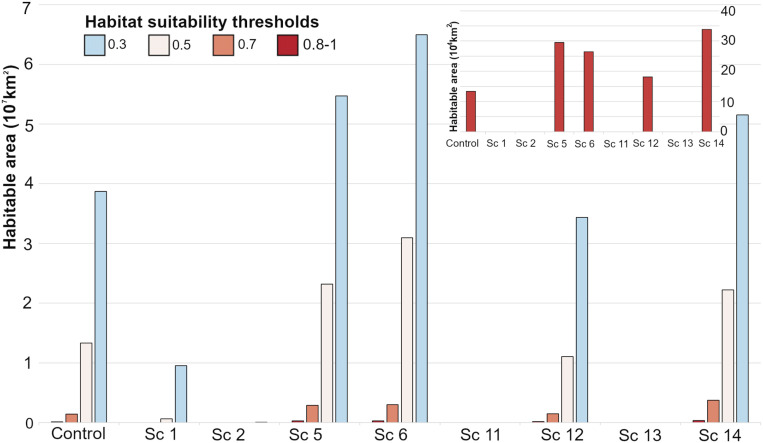
- Solar dimming scenarios reduced dinosaur habitat: 5% dimming left potential habitat at 4% and 24% of pre-K/Pg values at suitability thresholds 0.5 and 0.3, respectively; 10% dimming reduced habitat to 0.4% at the 0.3 threshold; habitat was extinguished at ≥15% dimming.
- Deccan CO₂ warming increased maximum dinosaur habitat suitability by ∼120% at 1,120 ppm CO₂ and ∼97% at 1,680 ppm CO₂ in Ensemble models, and by ∼27% and ∼32% in MaxEnt, so long-term Deccan volcanism alone could not explain complete dinosaur habitat disruption.
- Transient asteroid aerosol experiments produced >34 °C global mean cooling over the 6-y aerosol period, peak land surface cooling of −34.7 °C globally within 5 y, and >85% reduction in land precipitation, causing an extinction-level event for the non-avian dinosaur climatic niche.
- Climate recovery took around 30 y, accelerated by ∼10 y with Deccan-derived CO₂; an ash layer over North America offset ∼4–5 °C of land surface cooling. With active volcanism, maximum habitability increased 152% from preimpact levels after recovery.
Methods
- Used the coupled atmosphere–ocean GCM HadCM3L-M2.1 with end-Cretaceous boundary conditions and 560 ppm CO₂ baseline, running decoupled and transient scenarios including 5–20% solar dimming, 1,120/1,680 ppm CO₂, and 100× Pinatubo aerosol forcing with/without ash and Deccan CO₂.
- Assembled a late Maastrichtian (69–66 Ma) global dinosaur fossil-occurrence dataset from the Paleobiology Database, cleaned to 2,088 entries across nine clades.
- Modeled habitat suitability using Ensemble modeling in biomod2 and MaxEnt, with predictors limited to warmest/coldest annual quartile temperatures and wettest/driest yearly quarter precipitation after removing collinear variables (Pearson’s r ≥ 0.7).
Limitations
- The paper states that chemical processes were not simulated and could further lead to habitat loss; the precise amount of Deccan CO₂ released is unknown; and the pace and magnitude of Deccan volcanism remain uncertain.
- The authors state they do not discount biotic effects or other untested abiotic drivers (e.g., wildfire, acid rain, acidification, halogens, ultraviolet radiation, carbon cycle disruption), and they note that a deep-ocean impact scenario involving stratospheric water vapor was not tested.
- Evident from the text: habitat suitability models rely on analogy with crocodiles and birds and on fossil occurrence data, and the Deccan CO₂ scenarios are described as conservative/extreme and likely unrealistic in amount, so the modeled volcanic buffering effect depends on uncertain forcing assumptions.
Model-written summary. Check it against the paper before relying on it.
Integrity signals
Registry
Cites
Statistics
Figures
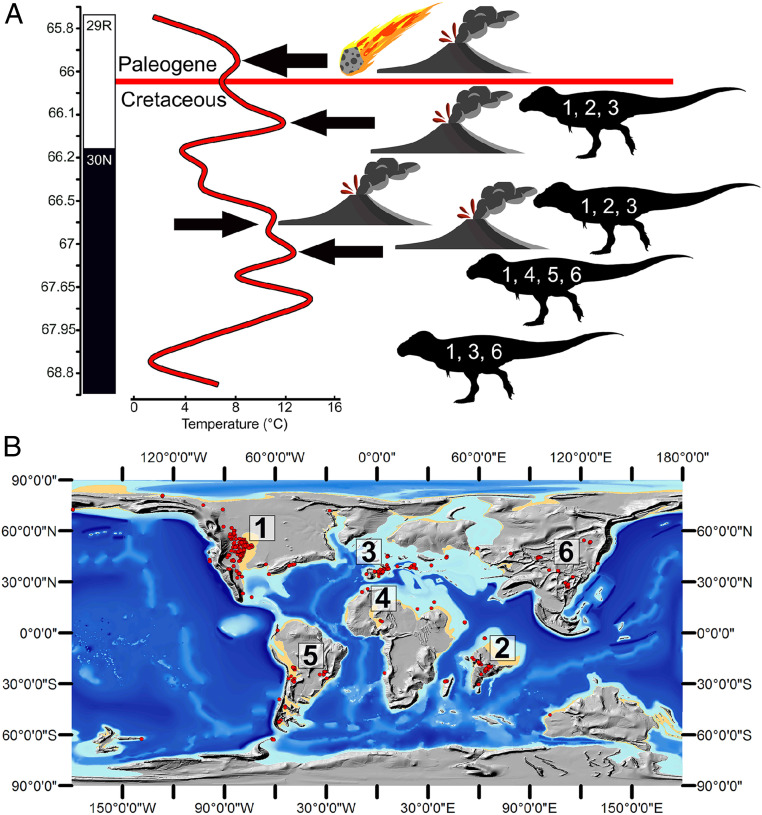
Verification
Claims the paper makes
31 Own result · 27 Check pending · 11 Own interpretation · 6 No full text of the sources · 6 Not checked yet · 4 Own method
A result the paper reports from its own data — it cites no other source for it, so there is none to check. The quote shows it is in the paper.
In the paper
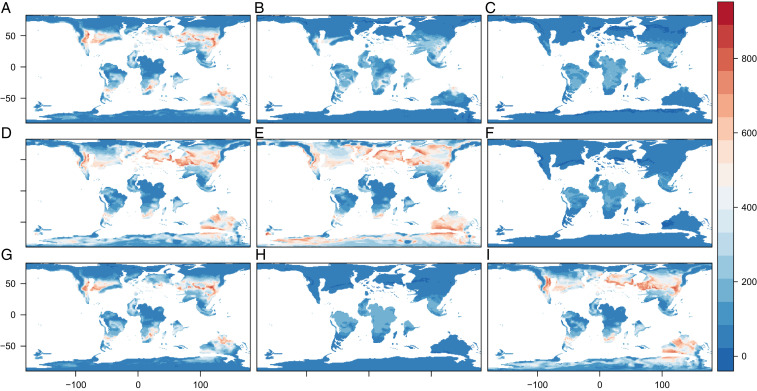
“At 10% solar dimming, potential habitat is effectively removed (0.4% of pre-K/Pg values) (Fig. 3C) at the lowest habitability threshold (0.3) (Fig. 4).”
§ Asteroid impact, not volcanism, caused the end-Cretaceous dinosaur extinction > Results
plainstates a cause- Asserted: passes — The authors put it forward as true.
- Checkable: passes — It can be checked against evidence.
- Load-bearing: passes — The paper’s conclusions depend on it.
- Based: passes — The paper gives a reason why it holds.
A result the paper reports from its own data — it cites no other source for it, so there is none to check. The quote shows it is in the paper.
In the paper
“We show that the abiotic impact of Deccan volcanism was not sufficient to cause the extinction of non-avian dinosaurs, while the effects of the impact alone were enough to cause the extinction.”
§ Asteroid impact, not volcanism, caused the end-Cretaceous dinosaur extinction > Discussion
plainstates a cause- Asserted: passes — The authors put it forward as true.
- Checkable: passes — It can be checked against evidence.
- Load-bearing: passes — The paper’s conclusions depend on it.
- Based: passes — The paper gives a reason why it holds.
A result the paper reports from its own data — it cites no other source for it, so there is none to check. The quote shows it is in the paper.
In the paper
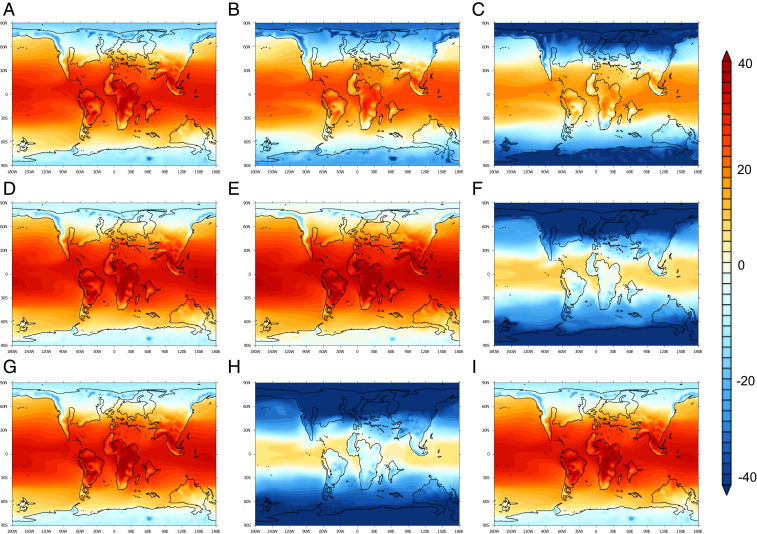
“Global habitability increases in models simulating long-term CO2 injection due to Deccan volcanism, in case an asteroid impact would not have happened (Fig. 3 D and E): maximum dinosaur habitat suitability increases by ∼120% at 1,120 ppm of CO2 and ∼97% at 1,680 ppm of CO2.”
§ Asteroid impact, not volcanism, caused the end-Cretaceous dinosaur extinction > Results
hedgedstates a cause- Asserted: passes — The authors put it forward as true.
- Checkable: passes — It can be checked against evidence.
- Load-bearing: passes — The paper’s conclusions depend on it.
- Based: passes — The paper gives a reason why it holds.
A result the paper reports from its own data — it cites no other source for it, so there is none to check. The quote shows it is in the paper.
In the paper
“The 5% solar dimming experiment leads to a substantial, but noncatastrophic, 50% reduction in peak habitability from pre-K/Pg values (SI Appendix, Fig. S18 A and B).”
§ Asteroid impact, not volcanism, caused the end-Cretaceous dinosaur extinction > Results
plainstates a cause- Asserted: passes — The authors put it forward as true.
- Checkable: passes — It can be checked against evidence.
- Load-bearing: unclear — It is unclear whether the paper’s conclusions depend on it.
- Based: passes — The paper gives a reason why it holds.
A result the paper reports from its own data — it cites no other source for it, so there is none to check. The quote shows it is in the paper.
In the paper
“The transient asteroid experiments show an extinction-level event of the non-avian dinosaurs’ climatic niche (Fig. 3 F and H), coincident with the lowest temperatures reached in experimental simulations after asteroid-induced cooling (SI Appendix, Fig. S3).”
§ Asteroid impact, not volcanism, caused the end-Cretaceous dinosaur extinction > Results
plainstates an association- Asserted: passes — The authors put it forward as true.
- Checkable: passes — It can be checked against evidence.
- Load-bearing: passes — The paper’s conclusions depend on it.
- Based: passes — The paper gives a reason why it holds.
- It may state two separate claims as one. 25
- Probably not a substantial claim. 20
Create a free account to see these claims.
Create a free account to see these assumptions.
38 more claims
Create a free account to see all 85 claims and to verify the 50 references still open.
Self-check
Percentages, sums and reported differences re-computed from the paper’s own numbers.
Each contradiction between two passages listed here was confirmed by an independent check.
Rated minor: it would not touch a result — a value no result rests on, a p-value that stays on the same side of the significance level, or a conflict that is clerical, resolved elsewhere in the paper, or outside its own findings.
In the paper
§ Asteroid impact, not volcanism, caused the end-Cretaceous dinosaur extinction > Results
“A transient model including both Deccan volcanism and the effect of the Chicxulub impact is shown in F (scenario 11) and G (scenario 12), and with inactive volcanism (H, scenario 13 and I, scenario 14)”
§ Asteroid impact, not volcanism, caused the end-Cretaceous dinosaur extinction > Results
“The effect on the dinosaur-suitable habitats for two transient simulations with Deccan volcanism inactive (F, scenario 11 and G, scenario 12) and active (H, scenario 13 and I, scenario 14)”
Rated minor: it would not touch a result — a value no result rests on, a p-value that stays on the same side of the significance level, or a conflict that is clerical, resolved elsewhere in the paper, or outside its own findings.
In the paper
§ Asteroid impact, not volcanism, caused the end-Cretaceous dinosaur extinction > Discussion
“Our simulations (Tables 1 and 2) suggest that sea surface temperatures would have been reduced for all scenarios”
§ Asteroid impact, not volcanism, caused the end-Cretaceous dinosaur extinction > Results
“| Control | 22.64 | 12.41 | 21.65 | 11.49 | 18.96 | 3.5 | 2.38 | 3.2 | | −5% Sol. (Sc 1) | 16.93 | 12.06 | 14.87 | 1.83 | 11.42 | 3 | 2.05 | 2.75 | | −10% Sol. (Sc 2) | 11.06 | 11.72 | 4.56 | −12.18 | 0.13 | 2.5 | 1.59 | 2.26 | | 2 × CO2 > 4 × CO2 (Sc 5) | 25.11 | 12.56 | 24.47 | 16.2 | 22.28 | 3.58 | 2.49 | 3.29 | | 2 × CO2 > 6 × CO2 (Sc 6) | 27.02 | 12.66 | 26.86 | 20.24 | 25.11 | 3.59 | 2.5 | 3.3 |”
Citations
Cites
A statistical explanation of MaxEnt for ecologists
Elith, J., Phillips, S. J., Hastie, T., Dudík, M., Chee, Y. E., & Yates, C. J. (2011) · Diversity and Distributions · doi:10.1111/j.1472-4642.2010.00725.x · Cited by 6,699
Extraterrestrial Cause for the Cretaceous-Tertiary Extinction
Alvarez, L. W., Alvarez, W., Asaro, F., & Michel, H. V. (1980) · Science · doi:10.1126/science.208.4448.1095 · Cited by 3,198
BIOMOD – a platform for ensemble forecasting of species distributions
Thuiller, W., Lafourcade, B., Engler, R., & Araújo, M. B. (2009) · Ecography · doi:10.1111/j.1600-0587.2008.05742.x · Cited by 2,762
Opening the black box: an open‐source release of Maxent
Phillips, S. J., Anderson, R. P., Dudík, M., Schapire, R. E., & Blair, M. E. (2017) · Ecography · doi:10.1111/ecog.03049 · Cited by 2,729
Mass extinctions in the marine fossil record
Raup, D. M., & Sepkoski, J. J. (1982) · Science · doi:10.1126/science.215.4539.1501 · Cited by 1,774
The Chicxulub Asteroid Impact and Mass Extinction at the Cretaceous-Paleogene Boundary
Schulte, P., Alegret, L., Arenillas, I., Arz, J. A., Barton, P. J., Bown, P. R., Bralower, T. J., Christeson, G. L., Claeys, P., Cockell, C. S., et al. (2010) · Science · doi:10.1126/science.1177265 · Cited by 1,323
Self-citationThe Placental Mammal Ancestor and the Post–K-Pg Radiation of Placentals
O’Leary, M. A., Bloch, J. I., Flynn, J. J., Gaudin, T. J., Giallombardo, A., Giannini, N. P., Goldberg, S. L., Kraatz, B., Luo, Z., Meng, J., et al. (2013) · Science · doi:10.1126/science.1229237 · Cited by 1,228
Large igneous provinces and mass extinctions
Wignall, P. B. (2001) · Earth-Science Reviews · doi:10.1016/s0012-8252(00)00037-4 · Cited by 1,217
Standards for distribution models in biodiversity assessments
Araújo, M. B., Anderson, R. P., Barbosa, A. M., Beale, C. M., Dormann, C. F., Early, R., Garcia, R. A., Guisan, A., Maiorano, L., Naimi, B., et al. (2019) · Science Advances · doi:10.1126/sciadv.aat4858 · Cited by 1,214
PREDICTING SPECIES' GEOGRAPHIC DISTRIBUTIONS BASED ON ECOLOGICAL NICHE MODELING
Peterson, A. T. (2001) · The Condor · doi:10.1650/0010-5422(2001)103[0599:psgdbo]2.0.co;2 · Cited by 1,019
Stratospheric aerosol optical depths, 1850–1990
Sato, M., Hansen, J. E., McCormick, M. P., & Pollack, J. B. (1993) · Journal of Geophysical Research: Atmospheres · doi:10.1029/93jd02553 · Cited by 808
Future climate forcing potentially without precedent in the last 420 million years
Foster, G. L., Royer, D. L., & Lunt, D. J. (2017) · Nature Communications · doi:10.1038/ncomms14845 · Cited by 774
Self-citationOn the ages of flood basalt events
Courtillot, V. E., & Renne, P. R. (2003) · Comptes Rendus. Géoscience · doi:10.1016/s1631-0713(03)00006-3 · Cited by 727
The impacts of climate change on ecosystem structure and function
Grimm, N. B., Chapin, F. S., Bierwagen, B., Gonzalez, P., Groffman, P. M., Luo, Y., Melton, F., Nadelhoffer, K., Pairis, A., Raymond, P. A., et al. (2013) · Frontiers in Ecology and the Environment · doi:10.1890/120282 · Cited by 647
Bulletins of American Paleontology
(2018) · Bulletins of American Paleontology · doi:10.32857/bap · Cited by 634
Stratospheric aerosol-Observations, processes, and impact on climate
Kremser, S., Thomason, L. W., von Hobe, M., Hermann, M., Deshler, T., Timmreck, C., Toohey, M., Stenke, A., Schwarz, J. P., Weigel, R., et al. (2016) · Reviews of Geophysics · doi:10.1002/2015rg000511 · Cited by 578
(2002) · Medical Entomology and Zoology · Cited by 555
Time Scales of Critical Events Around the Cretaceous-Paleogene Boundary
Renne, P. R., Deino, A. L., Hilgen, F. J., Kuiper, K. F., Mark, D. F., Mitchell, W. S., Morgan, L. E., Mundil, R., & Smit, J. (2013) · Science · doi:10.1126/science.1230492 · Cited by 545
U-Pb constraints on pulsed eruption of the Deccan Traps across the end-Cretaceous mass extinction
Schoene, B., Eddy, M. P., Samperton, K. M., Keller, C. B., Keller, G., Adatte, T., & Khadri, S. F. R. (2019) · Science · doi:10.1126/science.aau2422 · Cited by 542
Global Cooling After the Eruption of Mount Pinatubo: A Test of Climate Feedback by Water Vapor
Soden, B. J., Wetherald, R. T., Stenchikov, G. L., & Robock, A. D. (2002) · Science · doi:10.1126/science.296.5568.727 · Cited by 530
The eruptive tempo of Deccan volcanism in relation to the Cretaceous-Paleogene boundary
Sprain, C. J., Renne, P. R., Vanderkluysen, L., Pande, K., Self, S., & Mittal, T. (2019) · Science · doi:10.1126/science.aav1446 · Cited by 395
Large igneous provinces and mass extinctions: An update
Bond, D. P. G., & Wignall, P. B. (2014) · Geological Society of America eBooks · doi:10.1130/2014.2505(02 · Cited by 344
Collins, M., Tett, S. F. B., & Cooper, C. (2001) · Climate Dynamics · doi:10.1007/s003820000094 · Cited by 332
Changes in temperature alter the relationship between biodiversity and ecosystem functioning
García, F. C., Bestion, E., Warfield, R., & Yvon-Durocher, G. (2018) · Proceedings of the National Academy of Sciences · doi:10.1073/pnas.1805518115 · Cited by 316
Self, S., Widdowson, M., Thordarson, T., & Jay, A. E. (2006) · Earth and Planetary Science Letters · doi:10.1016/j.epsl.2006.05.041 · Cited by 287
The BRIDGE HadCM3 family of climate models: HadCM3@Bristol v1.0
Valdes, P. J., Armstrong, E., Badger, M. P. S., Bradshaw, C. D., Bragg, F., Crucifix, M., Davies-Barnard, T., Day, J. J., Farnsworth, A., Gordon, C., et al. (2017) · Geoscientific Model Development · doi:10.5194/gmd-10-3715-2017 · Cited by 286
Self-citationOn impact and volcanism across the Cretaceous-Paleogene boundary
Hull, P. M., Bornemann, A., Penman, D. E., Henehan, M. J., Norris, R. D., Wilson, P. A., Blum, P., Alegret, L., Batenburg, S. J., Bown, P. R., et al. (2020) · Science · doi:10.1126/science.aay5055 · Cited by 279
Mass extinction of birds at the Cretaceous–Paleogene (K–Pg) boundary
Longrich, N. R., Tokaryk, T. T., & Field, D. J. (2011) · Proceedings of the National Academy of Sciences · doi:10.1073/pnas.1110395108 · Cited by 235
Mass extinction of lizards and snakes at the Cretaceous–Paleogene boundary
Longrich, N. R., Bhullar, B.-A. S., & Gauthier, J. A. (2012) · Proceedings of the National Academy of Sciences · doi:10.1073/pnas.1211526110 · Cited by 225
Chenet, A., Courtillot, V., Fluteau, F., Gérard, M., Quidelleur, X., Khadri, S. F. R., Subbarao, K. V., & Thordarson, T. (2009) · Journal of Geophysical Research: Solid Earth · doi:10.1029/2008jb005644 · Cited by 221
Sharpton, V. L., & Ward, P. D. (1990) · Geological Society of America eBooks · doi:10.1130/spe247 · Cited by 218
Wilf, P., Johnson, K. R., & Huber, B. T. (2003) · Proceedings of the National Academy of Sciences · doi:10.1073/pnas.0234701100 · Cited by 218
Henehan, M. J., Ridgwell, A. J., Thomas, E., Zhang, S., Alegret, L., Schmidt, D. N., Rae, J. W. B., Witts, J. D., Landman, N. H., Greene, S. E., et al. (2019) · Proceedings of the National Academy of Sciences · doi:10.1073/pnas.1905989116 · Cited by 211
The extinction of the dinosaurs
Brusatte, S. L., Butler, R. J., Barrett, P. M., Carrano, M. T., Evans, D. C., Lloyd, G. T., Mannion, P. D., Norell, M. A., Peppe, D. J., Upchurch, P., et al. (2014) · Biological reviews/Biological reviews of the Cambridge Philosophical Society · doi:10.1111/brv.12128 · Cited by 199
Self-citationRapid recovery of life at ground zero of the end-Cretaceous mass extinction
Lowery, C. M., Bralower, T. J., Owens, J. D., Rodríguez‐Tovar, F. J., Jones, H. L., Smit, J., Whalen, M. T., Claeys, P., Farley, K. A., Gulick, S. P. S., et al. (2018) · Nature · doi:10.1038/s41586-018-0163-6 · Cited by 194
Self-citationExceptional continental record of biotic recovery after the Cretaceous–Paleogene mass extinction
Lyson, T. R., Miller, I. M., Bercovici, A. D., Weissenburger, K., Fuentes, A. J., Clyde, W. C., Hagadorn, J. W., Butrim, M. J., Johnson, K. R., Fleming, R. F., et al. (2019) · Science · doi:10.1126/science.aay2268 · Cited by 192
Rapid short-term cooling following the Chicxulub impact at the Cretaceous–Paleogene boundary
Vellekoop, J., Sluijs, A., Smit, J., Schouten, S., Weijers, J. W. H., Sinninghe Damsté, J. S., & Brinkhuis, H. (2014) · Proceedings of the National Academy of Sciences · doi:10.1073/pnas.1319253111 · Cited by 190
Volcanism, Impacts, and Mass Extinctions: Causes and Effects
Keller, G., & Kerr, A. C. (2014) · Geological Society of America eBooks · doi:10.1130/spe505 · Cited by 181
Predicting distributions of Mexican birds using ecological niche modelling methods
Peterson, A. T., Ball, L. G., & Cohoon, K. P. (2002) · Ibis · doi:10.1046/j.0019-1019.2001.00031.x · Cited by 178
Energy, volatile production, and climatic effects of the Chicxulub Cretaceous/Tertiary impact
Pope, K. O., Baines, K. H., Ocampo, A. C., & Ivanov, B. A. (1997) · Journal of Geophysical Research: Planets · doi:10.1029/97je01743 · Cited by 174
Predicting reptile distributions at the mesoscale: relation to climate and topography
Guisan, A., & Hofer, U. (2003) · Journal of Biogeography · doi:10.1046/j.1365-2699.2003.00914.x · Cited by 162
O'Keefe, J. D., & Ahrens, T. J. (1989) · Nature · doi:10.1038/338247a0 · Cited by 158
Mass Mortality and Its Environmental and Evolutionary Consequences
Hsü, K. J., He, Q., McKenzie, J. A., Weissert, H., Perch-Nielsen, K., Oberhänsli, H., Kelts, K., LaBrecque, J., Tauxe, L., Krähenbühl, U., et al. (1982) · Science · doi:10.1126/science.216.4543.249 · Cited by 155
An atmospheric p CO 2 reconstruction across the Cretaceous-Tertiary boundary from leaf megafossils
Beerling, D. J., Lomax, B. H., Royer, D. L., Upchurch, G. R., & Kump, L. R. (2002) · Proceedings of the National Academy of Sciences · doi:10.1073/pnas.122573099 · Cited by 152
Field, D. J., Bercovici, A., Berv, J. S., Dunn, R., Fastovsky, D. E., Lyson, T. R., Vajda, V., & Gauthier, J. A. (2018) · Current Biology · doi:10.1016/j.cub.2018.04.062 · Cited by 150
On transient climate change at the Cretaceous−Paleogene boundary due to atmospheric soot injections
Bardeen, C., García, R. R., Toon, O. B., & Conley, A. (2017) · Proceedings of the National Academy of Sciences · doi:10.1073/pnas.1708980114 · Cited by 148
Impact winter and the Cretaceous/Tertiary extinctions: Results of a Chicxulub asteroid impact model
Pope, K. O., Baines, K. H., Ocampo, A. C., & Ivanov, B. A. (1994) · Earth and Planetary Science Letters · doi:10.1016/0012-821x(94)90186-4 · Cited by 145
Palaeogeographic controls on climate and proxy interpretation
Lunt, D. J., Farnsworth, A., Loptson, C., Foster, G. L., Markwick, P., O'Brien, C. L., Pancost, R. D., Robinson, S. A., & Wrobel, N. (2016) · Climate of the Past · doi:10.5194/cp-12-1181-2016 · Cited by 145
Self-citationBenson, R., & Butler, R. J. (2011) · Geological Society London Special Publications · doi:10.1144/sp358.13 · Cited by 144
Climate Sensitivity on Geological Timescales Controlled by Nonlinear Feedbacks and Ocean Circulation
Farnsworth, A., Lunt, D. J., O'Brien, C. L., Foster, G. L., Inglis, G. N., Markwick, P., Pancost, R. D., & Robinson, S. A. (2019) · Geophysical Research Letters · doi:10.1029/2019gl083574 · Cited by 138
Self-citationCretaceous Extinctions: Multiple Causes
Archibald, J. D., Clemens, W. A., Padian, K., Rowe, T., Macleod, N., Barrett, P. M., Gale, A., Holroyd, P., Sues, H.-D., Arens, N. C., et al. (2010) · Science · doi:10.1126/science.328.5981.973-a · Cited by 132
Volcanism, impact and mass extinctions: incredible or credible coincidences?☆
White, R. V., & Saunders, A. D. (2004) · Lithos · doi:10.1016/j.lithos.2004.09.016 · Cited by 130
Subduction zone backarcs, mobile belts, and orogenic heat
Hyndman, R. D., Currie, C. A., & Mazzotti, S. P. (2005) · GSA Today · doi:10.1130/1052-5173(2005)15 · Cited by 128
The Extinction of the Dinosaurs in North America
Fastovsky, D. E., & Sheehan, P. M. (2005) · GSA Today · doi:10.1130/1052-5173(2005)015 · Cited by 126
Brugger, J., Feulner, G., & Petri, S. (2017) · Geophysical Research Letters · doi:10.1002/2016gl072241 · Cited by 123
Selective environmental stress from sulphur emitted by continental flood basalt eruptions
Schmidt, A., Skeffington, R. A., Thordarson, T., Self, S., Forster, P. M., Rap, A., Ridgwell, A., Fowler, D., Wilson, M., Mann, G. W., et al. (2016) · Nature Geoscience · doi:10.1038/ngeo2588 · Cited by 122
Chiarenza, A. A., Mannion, P. D., Lunt, D. J., Farnsworth, A., Jones, L. A., Kelland, S.-J., & Allison, P. A. (2019) · Nature Communications · doi:10.1038/s41467-019-08997-2 · Cited by 116
Self-citationKRING, D. A., & DURDA, D. D. (2002) · Journal of Geophysical Research Atmospheres · doi:10.1029/2001je001532 · Cited by 115
Enhanced chemistry-climate feedbacks in past greenhouse worlds
Beerling, D. J., Fox, A., Stevenson, D. S., & Valdes, P. J. (2011) · Proceedings of the National Academy of Sciences · doi:10.1073/pnas.1102409108 · Cited by 115
Self-citationChicxulub and Climate: Radiative Perturbations of Impact-Produced S-Bearing Gases
Pierazzo, E., Hahmann, A. N., & Sloan, L. C. (2003) · Astrobiology · doi:10.1089/153110703321632453 · Cited by 107
Global climate change driven by soot at the K-Pg boundary as the cause of the mass extinction
Kaiho, K., Oshima, N., Adachi, K., Adachi, Y., Mizukami, T., Fujibayashi, M., & Saito, R. (2016) · Scientific Reports · doi:10.1038/srep28427 · Cited by 105
Wilson, G. P. (2014) · Geological Society of America eBooks · doi:10.1130/2014.2503(15 · Cited by 101
Mitchell, J. S., Roopnarine, P. D., & Angielczyk, K. D. (2012) · Proceedings of the National Academy of Sciences · doi:10.1073/pnas.1202196109 · Cited by 99
Artemieva, N., Morgan, J., & Party, E. 3. S. (2017) · Geophysical Research Letters · doi:10.1002/2017gl074879 · Cited by 96
Self-citationGeobiological constraints on Earth system sensitivity to CO2 during the Cretaceous and Cenozoic
ROYER, D. L., PAGANI, M., & BEERLING, D. J. (2012) · Geobiology · doi:10.1111/j.1472-4669.2012.00320.x · Cited by 95
Global climatic effects of atmospheric dust from an asteroid or comet impact on Earth
Covey, C., Thompson, S. L., WEISSMAN, P. R., & MacCracken, M. C. (1994) · Global and Planetary Change · doi:10.1016/0921-8181(94)90020-5 · Cited by 92
End-Permian extinction amplified by plume-induced release of recycled lithospheric volatiles
Broadley, M. W., Barry, P. H., Ballentine, C. J., Taylor, L. A., & Burgess, R. (2018) · Nature Geoscience · doi:10.1038/s41561-018-0215-4 · Cited by 89
Bekki, S., Pyle, J. A., Zhong, W., Toumi, R., Haigh, J. D., & Pyle, D. M. (1996) · Geophysical Research Letters · doi:10.1029/96gl02088 · Cited by 86
Biogeography of worm lizards (Amphisbaenia) driven by end-Cretaceous mass extinction
Longrich, N. R., Vinther, J., Pyron, R. A., Pisani, D., & Gauthier, J. A. (2015) · Proceedings of the Royal Society B Biological Sciences · doi:10.1098/rspb.2014.3034 · Cited by 80
Macrofossil evidence for a rapid and severe Cretaceous–Paleogene mass extinction in Antarctica
Witts, J. D., Whittle, R. J., Wignall, P. B., Crame, J. A., Francis, J. E., Newton, R. J., & Bowman, V. C. (2016) · Nature Communications · doi:10.1038/ncomms11738 · Cited by 72
Longrich, N. R., Scriberas, J., & Wills, M. A. (2016) · Journal of Evolutionary Biology · doi:10.1111/jeb.12882 · Cited by 70
The climatic impact of supervolcanic ash blankets
Jones, M. T., Sparks, R. S. J., & Valdes, P. J. (2007) · Climate Dynamics · doi:10.1007/s00382-007-0248-7 · Cited by 68
Self-citationHalliday, T. J. D., Upchurch, P., & Goswami, A. (2016) · Proceedings of the Royal Society B Biological Sciences · doi:10.1098/rspb.2015.3026 · Cited by 61
Microbial life in the nascent Chicxulub crater
Schaefer, B., Grice, K., Coolen, M. J. L., Summons, R. E., Cui, X., Bauersachs, T., Schwark, L., Böttcher, M. E., Bralower, T. J., Lyons, S. L., et al. (2020) · Geology · doi:10.1130/g46799.1 · Cited by 60
Self-citationWilson, G. P. (2005) · Journal of Mammalian Evolution · doi:10.1007/s10914-005-6943-4 · Cited by 57
Font, E. C., Adatte, T., Andrade, M., Keller, G., Bitchong, A. M., Carvallo, C., Ferreira, J. A., Diogo, Z., & Mirão, J. P. (2017) · Earth and Planetary Science Letters · doi:10.1016/j.epsl.2017.11.055 · Cited by 57
Thermal relations of large crocodiles, Crocodylus porosus, free—ranging in a naturalistic situation
Grigg, G. C., Seebacherd, F., Beard, L. A., & Morris, D. (1998) · Proceedings of the Royal Society of London. Series B: Biological Sciences · doi:10.1098/rspb.1998.0504 · Cited by 56
Marzocchi, A., Lunt, D. J., Flecker, R., Bradshaw, C. D., Farnsworth, A., & Hilgen, F. J. (2015) · Climate of the Past · doi:10.5194/cp-11-1271-2015 · Cited by 55
Self-citationThe Stratigraphy of Mass Extinctions and Recoveries
Holland, S. M. (2019) · Annual Review of Earth and Planetary Sciences · doi:10.1146/annurev-earth-071719-054827 · Cited by 53
Mass extinctions among tetrapods and the quality of the fossil record
Benton, M. J. (1989) · Philosophical Transactions of the Royal Society of London. B, Biological Sciences · doi:10.1098/rstb.1989.0094 · Cited by 51
Archibald, J. D., & Bryant, L. J. (1990) · Global Catastrophes in Earth History; An Interdisciplinary Conference on Impacts, Volcanism, and Mass Mortality · doi:10.1130/spe247-p549 · Cited by 44
Cleary, T. J., Benson, R., Evans, S. E., & Barrett, P. M. (2018) · Royal Society Open Science · doi:10.1098/rsos.171830 · Cited by 44
Tobin, T. S., Bitz, C. M., & Archer, D. (2017) · Palaeogeography, Palaeoclimatology, Palaeoecology · doi:10.1016/j.palaeo.2016.05.028 · Cited by 43
Atmospheric and oceanic impacts of Antarctic glaciation across the Eocene–Oligocene transition
Kennedy, A. T., Farnsworth, A., Lunt, D. J., Lear, C. H., & Markwick, P. J. (2015) · Philosophical Transactions of the Royal Society A: Mathematical, Physical and Engineering Sciences · doi:10.1098/rsta.2014.0419 · Cited by 37
Self-citationMazzotti, F. J., Cherkiss, M. S., Parry, M., Beauchamp, J., Rochford, M., Smith, B., Hart, K., & Brandt, L. A. (2016) · Ecosphere · doi:10.1002/ecs2.1439 · Cited by 33
Vertebrate fauna from the Deccan volcanic province: Response to volcanic activity
Prasad, G. V. R., & Sahni, A. (2014) · Geological Society of America eBooks · doi:10.1130/2014.2505(09 · Cited by 31
Kapur, V. V., Khosla, A., & Tiwari, N. (2018) · Historical Biology · doi:10.1080/08912963.2018.1425408 · Cited by 29
Vellekoop, J., Tilborgh, K. H. V., van Knippenberg, P. H. M., Jagt, J. W. M., Stassen, P., Goolaerts, S., & Speijer, R. P. (2019) · Palaeontology · doi:10.1111/pala.12462 · Cited by 26
Andrew, S. C., Awasthy, M., Griffith, A. D., Nakagawa, S., & Griffith, S. C. (2018) · The Auk · doi:10.1642/auk-17-129.1 · Cited by 23
Mussard, M., Hir, G. L., Fluteau, F., Lefebvre, V., & Goddéris, Y. (2014) · Geological Society of America eBooks · doi:10.1130/2014.2505(17 · Cited by 18
Response—Cretaceous Extinctions
Schulte, P., Alegret, L., Arenillas, I., Arz, J. A., Barton, P. J., Bown, P. R., Bralower, T. J., Christeson, G. L., Claeys, P., Cockell, C. S., et al. (2010) · Science · doi:10.1126/science.328.5981.975 · Cited by 15
Self-citationGlobal warming and ocean stratification: A potential result of large extraterrestrial impacts
Joshi, M., von Glasow, R., Smith, R. S., Paxton, C. G. M., Maycock, A. C., Lunt, D. J., Loptson, C. A., & MARKWICK, P. J. (2017) · Geophysical Research Letters · doi:10.1002/2017gl073330 · Cited by 12
Self-citation(1989) · University of California Press eBooks
Scott (1992) · doi:10.1130/0091-7613(1992)020
Research works printed but not linked: 1
- 10.1093/condor/103.3.599 · DOI
Cited by
Felsic volcanism as a factor driving the end-Permian mass extinction
Zhang, H., Zhang, F., Chen, J., Erwin, D. H., Syverson, D. D., Ni, P., Rampino, M. R., Chi, Z., Cai, Y.-F., Xiang, L., et al. (2021) · Science Advances · doi:10.1126/sciadv.abh1390 · Cited by 152
Mercury linked to Deccan Traps volcanism, climate change and the end-Cretaceous mass extinction
Keller, G., Mateo, P., Monkenbusch, J., Thibault, N., Punekar, J., Spangenberg, J. E., Abramovich, S., Ashckenazi-Polivoda, S., Schoene, B., Eddy, M. P., et al. (2020) · Global and Planetary Change · doi:10.1016/j.gloplacha.2020.103312 · Cited by 130
The Chicxulub impact and its environmental consequences
Morgan, J. V., Bralower, T. J., Brugger, J., & Wünnemann, K. (2022) · Nature Reviews Earth & Environment · doi:10.1038/s43017-022-00283-y · Cited by 100
Self-citationCondamine, F. L., Guinot, G., Benton, M. J., & Currie, P. J. (2021) · Nature Communications · doi:10.1038/s41467-021-23754-0 · Cited by 88
Organic matter from the Chicxulub crater exacerbated the K–Pg impact winter
Lyons, S. L., Karp, A. T., Bralower, T. J., Grice, K., Schaefer, B., Gulick, S. P. S., Morgan, J. V., & Freeman, K. H. (2020) · Proceedings of the National Academy of Sciences · doi:10.1073/pnas.2004596117 · Cited by 82
Self-citation
Metadata
- Authors
- Chiarenza, A. A., Farnsworth, A., Mannion, P. D., Lunt, D. J., Valdes, P. J., Morgan, J. V., & Allison, P. A.
- Affiliations
- University College London (GB)
- School of Geographical Sciences, University of Bristol, BS8 1TH Bristol, United Kingdom
- University of Bristol (GB)
- Imperial College London (GB)
- Corresponding author
- Chiarenza, Alfio Alessandro
- ORCID
- Venue
- Proceedings of the National Academy of Sciences
- Publisher
- National Academy of Sciences
- Published
- 2020-06-29
- Volume
- 117
- Issue
- 29
- Pages
- 17084-17093
- ISSN
- 0027-8424 (ISSN-L)
- 1091-6490
- PMC
- PMC7382232
- OpenAlex
- W3038551147
- Cited by
- 228
- References
- 94
- Citations by year
- 2026: 24 · 2025: 32 · 2024: 32 · 2023: 36 · 2022: 65 · 2021: 29 · 2020: 9
- FWCI
- 18.30
- Type
- journal article
- Language
- en
- Open access
- hybrid
- doi.org
- Licence
- Locations
- Proceedings of the National Academy of Sciences (publishedVersion, cc-by-nc-nd)
- PubMed (publishedVersion)
- PubMed Central (publishedVersion, cc-by-nc-nd)
- Bristol Research (University of Bristol) (publishedVersion, cc-by-nc-nd)
- UCL Discovery (University College London) (submittedVersion)
- Spiral (Imperial College London) (submittedVersion, other-oa)
- Funders
- Natural Environment Research Council (NE/P005217/1, NE/P013805/1, NE/K014757/1)
- Topics
- Physical Sciences › Earth and Planetary Sciences › Paleontology › Paleontology and Stratigraphy of Fossils
- Physical Sciences › Earth and Planetary Sciences › Paleontology › Paleontology and Evolutionary Biology
- Physical Sciences › Earth and Planetary Sciences › Paleontology › Evolution and Paleontology Studies
- Keywords
- end-Cretaceous mass extinction, dinosaur extinction, Chicxulub impact, impact winter, Deccan Traps, Deccan volcanism, Cretaceous-Paleogene boundary, climate modeling, ecological modeling, extinction scenarios
- MeSH terms
- Animals, Carbon Dioxide, Climate, Fossils, India, Mexico, Models, Biological, Paleontology, Minor Planets, Volcanic Eruptions, Dinosaurs, History, Ancient, Extinction, Biological
About these checks
Registry, retraction, Cites and statistics results are computed, not judged, with one exception: a printed reference that no index lists is read once by a model before it counts as a citation error. Claims are extracted by a model and kept only when their quote appears verbatim in the text; each cited source is then checked, with a model’s help, for whether it says what the claim relies on. Those verdicts can be wrong — read the claim’s quote and the cited source before relying on one.
A language model drew the claims from the paper on 2026-11-12, under version 3 of the claim definition (model deepseek-v4.1-flash, prompt extract-v3).
A second model labelled each claim on 2026-11-12 (model jev-1.13-20260917, definition revision gold-guideline-v0.2).
Statistics and arithmetic are recomputed, not judged.
Confidence bands are shown only for fields calibrated on our annotated test set. None is calibrated yet, so no band is shown.
What counts as a claim ›How we measure confidence ›How we check this ›
Are you an author, or do you see a problem with this page? Request a review
