

Anthropogenic climate change is worsening North American pollen seasons
Open accessThe DOI matches its Crossref record; 42 of the 43 references it cites were found in a registry or an index.
Abstract
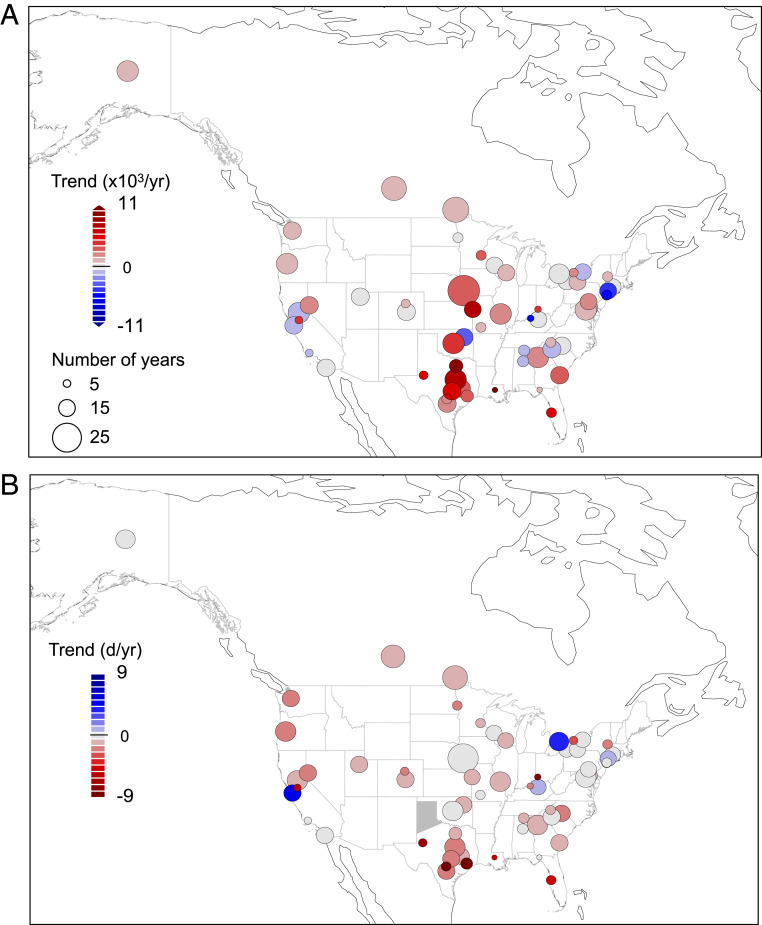
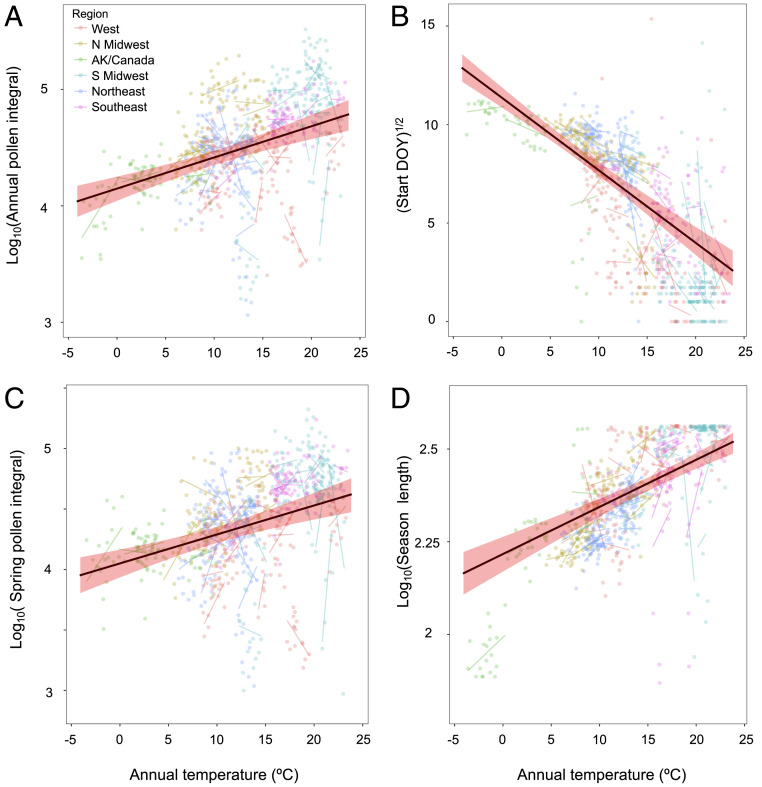
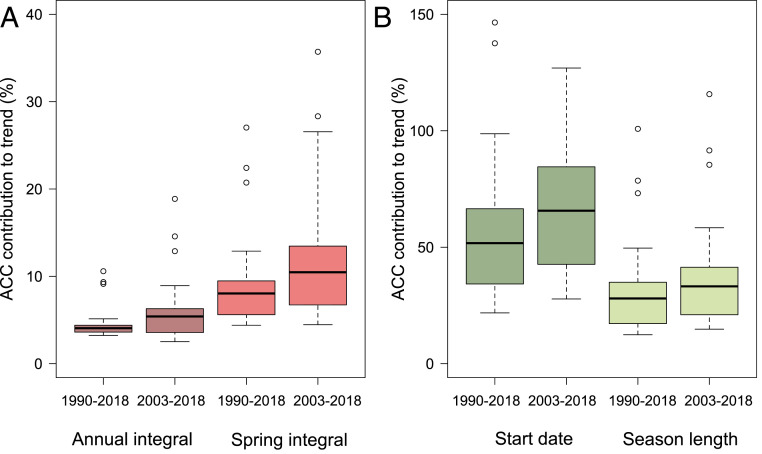
Significance: Human-caused climate change could impact respiratory health, including asthma and allergies, through temperature-driven increases in airborne pollen, but the long-term continental pollen trends and role of climate change in pollen patterns are not well-understood. We measure pollen trends across North America from 1990 to 2018 and find increases in pollen concentrations and longer pollen seasons. We use an ensemble of climate models to test the role of climate change and find that it is the dominant driver of changes in pollen season length and a significant contributor to increasing pollen concentrations. Our results indicate that human-caused climate change has already worsened North American pollen seasons, and climate-driven pollen trends are likely to further exacerbate respiratory health impacts in coming decades.
Overview
The claims and statistics of this paper haven’t been checked yet.
Free: it reads the open-access text and checks the first 5 claims that cite a source we can check. Create a free account to check every claim.
Integrity signals
Registry
Cites
Statistics
Figures
Verification
Claims the paper makes
The claims and statistics of this paper haven’t been checked yet.
Free: it reads the open-access text and checks the first 5 claims that cite a source we can check. Create a free account to check every claim.
Claims other papers make about this one
Each is checked against this paper’s own text: does it say what the citing paper says it does?
The source backs part of the claim, not all of it — or backs it for a different population, condition or comparison.
In the citing paper
“they have chronically inflamed airways, which makes them more sensitive to pollen exposure and are at greater risk of exacerbation of allergic rhinitis.[63][64][65]”
From Effects of Extreme Weather on Health in Underserved Communities (2024) · cites this paper as [64]
Experimental — accuracy not yet measuredThe check wasn’t confident either way, so it gives no verdict — never disputed.
In the citing paper
“as individuals in low-income areas are exposed to higher levels of air pollution due to industrial and vehicular emissions”
From Effects of Extreme Weather on Health in Underserved Communities (2024) · cites this paper as [64]
Experimental — accuracy not yet measured
Self-check
Percentages, sums and reported differences re-computed from the paper’s own numbers.
The self-check needs the paper’s full text.
Citations
Cites
Mixed effects models and extensions in ecology with R
Zuur, A. F., Ieno, E. N., Walker, N., Saveliev, A. A., & Smith, G. M. (2009) · Statistics for Biology and Health · doi:10.1007/978-0-387-87458-6 · Cited by 17,963
An Overview of CMIP5 and the Experiment Design
Taylor, K. E., Stouffer, R. J., & Meehl, G. A. (2012) · Bulletin of the American Meteorological Society · doi:10.1175/bams-d-11-00094.1 · Cited by 14,052 · cited 1×
“We downloaded monthly surface air temperature (variable “tas”) climate model output from 14 Earth system models in the CMIP5 and 8 Earth system models in the CMIP6 databases (40, 41) (SI Appendix, Table S5).”
Eyring, V., Bony, S., Meehl, G. A., Senior, C. A., Stevens, B., Stouffer, R. J., & Taylor, K. E. (2016) · Geoscientific Model Development · doi:10.5194/gmd-9-1937-2016 · Cited by 11,981 · cited 1×
“We downloaded monthly surface air temperature (variable “tas”) climate model output from 14 Earth system models in the CMIP5 and 8 Earth system models in the CMIP6 databases (40, 41) (SI Appendix, Table S5).”
Multimodel Inference: Understanding AIC and BIC in Model Selection
Burnham, K. P., & Anderson, D. R. (2004) · Sociological Methods & Research · doi:10.1177/0049124104268644 · Cited by 11,648
Version 4 of the CRU TS monthly high-resolution gridded multivariate climate dataset
Harris, I., Osborn, T. J., Jones, P., & Lister, D. (2020) · Scientific Data · doi:10.1038/s41597-020-0453-3 · Cited by 4,906 · cited 1×
“We extracted monthly temperature, precipitation, and frost days from the HadCRUT4 dataset at 0.5° spatial resolution (36) and calculatedmonthly time-series of thesevariables from 1991to 2018over all 60 pollen stations.”
InfluentialFingerprints of global warming on wild animals and plants
Root, T. L., Price, J. T., Hall, K. R., Schneider, S. H., Rosenzweig, C., & Pounds, J. A. (2003) · Nature · doi:10.1038/nature01333 · Cited by 4,774 · cited 1×
“A few long-term observational studies on selected plant taxa or at a small number of sites have found increases in pollen concentrations and pollen season length over time, often correlated with temperature (11, 12, 15, 26), although temperature–pollen season relationships may depend on chilling requirements in some t…”
Impact of anthropogenic climate change on wildfire across western US forests
Abatzoglou, J. T., & Williams, A. P. (2016) · Proceedings of the National Academy of Sciences · doi:10.1073/pnas.1607171113 · Cited by 3,073 · cited 1×
“Following approaches used in previous studies (20, 42), we calculated the anthropogenic climate change (ACC) signal using a 50-y moving average of the temperature anomaly in each grid cell of each model, combining the historical and RCP simulation, to remove high frequency variability.”
Self-citationWatts, N., Amann, M., Ayeb-Karlsson, S., Belesova, K., Bouley, T., Boykoff, M., Byass, P., Cai, W., Campbell-Lendrum, D., Chambers, J., et al. (2018) · The Lancet · doi:10.1016/s0140-6736(17)32464-9 · Cited by 1,236
Trends in asthma prevalence, health care use, and mortality in the United States, 2001-2010.
Akinbami, L. J., Moorman, J. E., Bailey, C., Zahran, H. S., King, M., Johnson, C. A., & Liu, X. (2012) · PubMed · Cited by 1,198
Human-Induced Changes in the Hydrology of the Western United States
Barnett, T. P., Pierce, D. W., Hidalgo, H. G., Bonfils, C., Santer, B. D., Das, T., Bala, G., Wood, A. W., Nozawa, T., Mirin, A. A., et al. (2008) · Science · doi:10.1126/science.1152538 · Cited by 1,193 · cited 1×
“Climate change detection and attribution analysis is a powerful tool for linking long-term climate change and observed impacts (16, 17).”
Research works printed but not linked: 3
- C. B. Field., IPCC, 2014: Climate change 2014: Impacts, adaptation, and vulnerability. Part A: Global and sectoral aspects. Contribution of working group II to the fifth assessment report of the Intergovernmental panel on climate change (Cambridge University Press, Cambridge, UK and New York, NY, 2014).
- J. Fox, M. Friendly, S. Weisberg, Hypothesis tests for multivariate linear models using the car package. The R Journal 5, 39– 52 (2013). · DOI · Paper page
- R Core Development Team, R: A Language and Environment for Statistical Computing, Version 3.6 (R Foundation for Statistical Computing, Vienna, Austria, 2012).
Cited by
International consensus statement on allergy and rhinology: Allergic rhinitis – 2023
Wise, S. K., Damask, C., Roland, L. T., Ebert, C., Levy, J. M., Lin, S., Luong, A., Rodriguez, K., Sedaghat, A. R., Toskala, E., et al. (2023) · International Forum of Allergy & Rhinology · doi:10.1002/alr.23090 · Cited by 507
Celebi Sozener, Z., Ozdel Ozturk, B., Cerci, P., Turk, M., Gorgulu Akin, B., Akdis, M., Altiner, S., Ozbey, U., Ogulur, I., Mitamura, Y., et al. (2022) · Allergy · doi:10.1111/all.15240 · Cited by 418
Climate change, fossil-fuel pollution, and children's health
Perera, F., & Nadeau, K. (2022) · New England Journal of Medicine · doi:10.1056/nejmra2117706 · Cited by 420
EAACI Molecular Allergology User's Guide 2.0
Dramburg, S., Hilger, C., Santos, A. F., de las Vecillas, L., Aalberse, R. C., Acevedo, N., Aglas, L., Altmann, F., Arruda, K. L., Asero, R., et al. (2023) · Pediatric Allergy and Immunology · doi:10.1111/pai.13854 · Cited by 298
Global climate change and human health: Pathways and possible solutions
Zhao, Q., Yu, P., Mahendran, R., Huang, W., Gao, Y., Yang, Z., Ye, T., Wen, B., Wu, Y., Li, S., et al. (2022) · Eco-Environment & Health · doi:10.1016/j.eehl.2022.04.004 · Cited by 250
“In North America, elevated temperature and carbon dioxide concentration have resulted in a 20-day-earlier, 8-day-longer season of allergenic pollen, accompanied by a 21% increase in the level of annual pollen concentration between 1990 and 2018 [84].”
BackgroundZhang, Y., & Steiner, A. L. (2022) · Nature Communications · doi:10.1038/s41467-022-28764-0 · Cited by 230
Climate change and global issues in allergy and immunology
Pacheco, S. E., Guidos-Fogelbach, G., Annesi-Maesano, I., Pawankar, R., D' Amato, G., Latour-Staffeld, P., Urrutia-Pereira, M., Kesic, M. J., & Hernandez, M. L. (2021) · Journal of Allergy and Clinical Immunology · doi:10.1016/j.jaci.2021.10.011 · Cited by 204
Climate change and global health: a call to more research and more action
Agache, I., Sampath, V., Aguilera, J., Akdis, C. A., Akdis, M., Barry, M., Bouagnon, A., Chinthrajah, S., Collins, W., Dulitzki, C., et al. (2022) · Allergy · doi:10.1111/all.15229 · Cited by 183
Current and future threats to human health in the Anthropocene
Tong, S., Bambrick, H., Beggs, P. J., Chen, L., Hu, Y., Ma, W., Steffen, W., & Tan, J. (2021) · Environment International · doi:10.1016/j.envint.2021.106892 · Cited by 193
The Changing Climate and Pregnancy Health
Ha, S. (2022) · Current Environmental Health Reports · doi:10.1007/s40572-022-00345-9 · Cited by 178
“Studies show that warmer temperatures in the USA have caused more than 21% higher pollen concentration together with an increase of more than 20 days in the pollen season from 1990 to 2018 [118].”
BackgroundHealth and Clinical Impacts of Air Pollution and Linkages with Climate Change
Keswani, A., Akselrod, H., & Anenberg, S. C. (2022) · NEJM Evidence · doi:10.1056/evidra2200068 · Cited by 135
Connections Between Air Pollution, Climate Change, and Cardiovascular Health
Alahmad, B., Khraishah, H., Althalji, K., Borchert, W., Al‐Mulla, F., & Koutrakis, P. (2023) · Canadian Journal of Cardiology · doi:10.1016/j.cjca.2023.03.025 · Cited by 148
Automatic detection of airborne pollen: an overview
Buters, J., Clot, B., Galán, C., Gehrig, R., Gilge, S., Hentges, F., O’Connor, D. J., Šikoparija, B., Skjøth, C. A., Tummon, F., et al. (2022) · Aerobiologia · doi:10.1007/s10453-022-09750-x · Cited by 103
“Pollen observations analysed together with meteorological data can be used to quantify changes in the timing and intensity of the pollen season resulting from climate change, which are expected to adversely affect public health and the quality of life of allergy sufferers (Anderegg et al., 2021; Höflich et al., 2016;…”
Multi-decade changes in pollen season onset, duration, and intensity: A concern for public health?
Glick, S., Gehrig, R., & Eeftens, M. (2021) · The Science of The Total Environment · doi:10.1016/j.scitotenv.2021.146382 · Cited by 100
“Given that climactic factors such as temperature are positively associated with plant growth, readiness for flowering, and pollen abundance (Anderegg et al., 2021; Beggs, 2016; Clot et al., 2012; Dahl et al., 2013; Rojo et al., 2021), this longitudinal change is likely to have transformed the onset, duration, and inte…”
BackgroundLu, C., Fu, J., Liu, X., Chen, W., Hao, J., Li, X., & Pant, O. P. (2021) · Light Science & Applications · doi:10.1038/s41377-021-00630-6 · Cited by 89
Pollen season trends as markers of climate change impact: Betula, Quercus and Poaceae
Adams‐Groom, B., Selby, K., Derrett, S., Frisk, C. A., Pashley, C. H., Satchwell, J., King, D., McKenzie, G., & Neilson, R. (2022) · The Science of The Total Environment · doi:10.1016/j.scitotenv.2022.154882 · Cited by 99
Gehrig, R., & Clot, B. (2021) · Frontiers in Allergy · doi:10.3389/falgy.2021.677159 · Cited by 84
Climate Change and Children’s Health: Building a Healthy Future for Every Child
Ahdoot, S., Baum, C. R., Cataletto, M. B., Hogan, P., Wu, C. B., Bernstein, A. S., Bole, A., Balk, S. J., Byron, L. G., Huerta-Montañez, G. M., et al. (2024) · PEDIATRICS · doi:10.1542/peds.2023-065505 · Cited by 123
Maya‐Manzano, J. M., Tummon, F., Abt, R., Allan, N., Bunderson, L. D., Clot, B., Crouzy, B., Daunys, G., Erb, S., González-Alonso, M., et al. (2022) · The Science of The Total Environment · doi:10.1016/j.scitotenv.2022.161220 · Cited by 92
Impact of climate change on immune responses and barrier defense
Skevaki, C. L., Nadeau, K. C., Rothenberg, M. E., Alahmad, B., Mmbaga, B. T., Masenga, G. G., Sampath, V., Christiani, D. C., Haahtela, T., & Renz, H. E. (2024) · Journal of Allergy and Clinical Immunology · doi:10.1016/j.jaci.2024.01.016 · Cited by 87
Bioaerosol nexus of air quality, climate system and human health
Shen, F., & Yao, M. (2023) · National Science Open · doi:10.1360/nso/20220050 · Cited by 73
“Another long-term data (1990-2018) in North America showed 157 the increasing concentrations of airborne pollen [18].”
Immunologic, genetic, and ecological interplay of factors involved in allergic diseases
Falcon, R. M. G., & Caoili, S. E. C. (2023) · Frontiers in Allergy · doi:10.3389/falgy.2023.1215616 · Cited by 82
“Anthropogenic climate change, leading to increased global temperatures, has led to longer and more widespread pollen seasons, and increased pollen load—resulting in greater exacerbation and negative impacts on the respiratory health of allergic individuals (86, 87).”
BackgroundBell, K. L., Turo, K. J., Lowe, A., Nota, K., Keller, A., Encinas‐Viso, F., Parducci, L., Richardson, R. T., Leggett, R. M., Brosi, B. J., et al. (2022) · Molecular Ecology · doi:10.1111/mec.16689 · Cited by 76
“Likewise, the changing distribution and phenology of plants with allergenic pollen could challenge human health and quality of life (Anderegg et al., 2021).”
BackgroundIs exposure to pollen a risk factor for moderate and severe asthma exacerbations?
Annesi‐Maesano, I., Cecchi, L., Biagioni, B., Chung, K. F., Clot, B., Collaud Coen, M., D'Amato, G., Damialis, A., Dominguez‐Ortega, J., Galàn, C., et al. (2023) · Allergy · doi:10.1111/all.15724 · Cited by 61
The impact of temperature on the skin barrier and atopic dermatitis
Hui-Beckman, J. W., Goleva, E., Leung, D. Y. M., & Kim, B. E. (2023) · Annals of Allergy, Asthma & Immunology · doi:10.1016/j.anai.2023.08.007 · Cited by 58
de Weger, L. A., Bruffaerts, N., Koenders, M. M. J. F., Verstraeten, W. W., Delcloo, A., Hentges, P., & Hentges, F. (2021) · Frontiers in Allergy · doi:10.3389/falgy.2021.676176 · Cited by 63
“In addition, the increase in amount of airborne allergenic pollen and prolonged pollen seasons caused by climate change and/or by changes in land use may also contribute (8, 9).”
BackgroundPolling, M., Sin, M., de Weger, L. A., Speksnijder, A. G. C. L., Koenders, M. M. J. F., de Boer, H., & Gravendeel, B. (2021) · The Science of The Total Environment · doi:10.1016/j.scitotenv.2021.150468 · Cited by 61
Agache, I. O., Akdiş, C. A., Akdiş, M., Al-Hemoud, A. M., Annesi‐Maesano, I., Balmes, J. R., Cecchi, L., Damialis, A., Haahtela, T., Haber, A. L., et al. (2024) · Frontiers in Science · doi:10.3389/fsci.2024.1279192 · Cited by 72
“Changes in land use and climate, such as rising temperatures and nitrogen oxides (NOx), ozone (O 3 ), and carbon dioxide (CO 2 ) levels, have led to increased pollen quantity, quality, allergenicity, and duration of the pollen season (Table 1, Figure 3) (38, 41).”
BackgroundMelén, E., Koppelman, G. H., Vicedo‐Cabrera, A. M., Andersen, Z. J., & Bunyavanich, S. (2022) · The Lancet Child & Adolescent Health · doi:10.1016/s2352-4642(22)00215-2 · Cited by 52
Factors by which global warming worsens allergic disease
Seastedt, H., & Nadeau, K. (2023) · Annals of Allergy, Asthma & Immunology · doi:10.1016/j.anai.2023.08.610 · Cited by 44
Effects of Extreme Weather on Health in Underserved Communities
Leap, S. R., Soled, D. R., Sampath, V., & Nadeau, K. C. (2024) · Annals of Allergy, Asthma & Immunology · doi:10.1016/j.anai.2024.04.018 · Cited by 49
The Role of Defensins as Pollen and Food Allergens
Cosi, V., & Gadermaier, G. (2023) · Current Allergy and Asthma Reports · doi:10.1007/s11882-023-01080-3 · Cited by 47
Climate change impacts on respiratory health: exposure, vulnerability, and risk
Covert, H. H., Wahid, F. A., Wenzel, S. E., & Lichtveld, M. Y. (2023) · Physiological Reviews · doi:10.1152/physrev.00043.2022 · Cited by 60
Ravindra, K., Goyal, A., & Mor, S. (2021) · The Science of The Total Environment · doi:10.1016/j.scitotenv.2021.151829 · Cited by 43
Impacts of climate change on allergenic pollen production: A systematic review and meta-analysis
Mousavi, F., Oteros, J., Shahali, Y., & Cariñanos, P. (2024) · Agricultural and Forest Meteorology · doi:10.1016/j.agrformet.2024.109948 · Cited by 48
Optimized Spectrophotometry Method for Starch Quantification
Bahdanovich, P., Axelrod, K., Khlystov, A. Y., & Samburova, V. (2022) · Analytica—A Journal of Analytical Chemistry and Chemical Analysis · doi:10.3390/analytica3040027 · Cited by 45
“They have become an important research topic in recent years, as anthropogenic climate change is causing an increase in pollen season duration and pollen concentrations in air [20–22].”
Pollen forecasting and its relevance in pollen allergen avoidance
Suanno, C., Aloisi, I., Fernández‐González, D., & Duca, S. D. (2021) · Environmental Research · doi:10.1016/j.envres.2021.111150 · Cited by 45
Schaefer, J., Milling, M., Schuller, B. W., Bauer, B., Brunner, J. O., Traidl‐Hoffmann, C., & Damialis, A. (2021) · The Science of The Total Environment · doi:10.1016/j.scitotenv.2021.148932 · Cited by 42
“…than ever, especially if climate change effects are also considered: earlier pollen seasons and higher pollen abundances (Ziska et al., 2019; Anderegg et al., 2021) would make the co-occurrence of any winter-spring viruses and high pollen concentrations a common phenomenon with additive…”
A review of short-term weather impacts on honey production
Vincze, C., Leelőssy, Á., Zajácz, E., & Mészáros, R. (2024) · International Journal of Biometeorology · doi:10.1007/s00484-024-02824-0 · Cited by 61
Detecting Airborne Pollen Using an Automatic, Real-Time Monitoring System: Evidence from Two Sites
Plaza, M. P., Kolek, F., Leier-Wirtz, V., Brunner, J. O., Traidl‐Hoffmann, C., & Damialis, A. (2022) · International Journal of Environmental Research and Public Health · doi:10.3390/ijerph19042471 · Cited by 36
“If we additionally consider the dramatic impacts of the ongoing climate change on pollen seasons, shifting them earlier within the late winter viruses’ seasons and increasing their intensity [6,46], the development of operational systems of automatic pollen monitoring seems urgent and with multiple potential applicati…”
BackgroundClimate Change and Children’s Health: Building a Healthy Future for Every Child
Ahdoot, S., Baum, C. R., Cataletto, M. B., Hogan, P., Wu, C. B., Bernstein, A. S., Bole, A., Balk, S. J., Byron, L. G., Huerta-Montañez, G. M., et al. (2024) · PEDIATRICS · doi:10.1542/peds.2023-065504 · Cited by 74
Effects of urbanization and industrialization on air quality
Thanvisitthpon, N. T., Kallawicha, K., & Chao, H. J. (2024) · Elsevier eBooks · doi:10.1016/b978-0-443-16088-2.00003-x · Cited by 52
Manangan, A. P., Brown, C., Saha, S., Bell, J. E., Hess, J. J., Uejio, C. K., Fìneman, S. M., & Schramm, P. J. (2021) · Annals of Allergy Asthma & Immunology · doi:10.1016/j.anai.2021.07.012 · Cited by 35
Davies, J. M., Addison‐Smith, B., Milić, A., Campbell, B. C., Haeften, S. V., Burton, P. K., Keaney, B., Lampugnani, E. R., Vicendese, D., Medek, D. E., et al. (2022) · Environmental Research · doi:10.1016/j.envres.2022.113762 · Cited by 35
Compound impacts of climate change, urbanization and biodiversity loss on allergic disease
Tong, S., Beggs, P. J., Davies, J. M., Jiang, F., Kinney, P. L., Liu, S., Yin, Y., & Ebi, K. L. (2022) · International Journal of Epidemiology · doi:10.1093/ije/dyac197 · Cited by 33
Self-citationNPCC4: Climate change and New York City's health risk
Matte, T., Lane, K., Tipaldo, J. F., Barnes, J., Knowlton, K., Torem, E., Anand, G., Yoon, L., Marcotullio, P., Balk, D., et al. (2024) · Annals of the New York Academy of Sciences · doi:10.1111/nyas.15115 · Cited by 29
Lam, H. C. Y., Anees‐Hill, S., Satchwell, J., Symon, F. A., Macintyre, H. L., Pashley, C. H., Marczylo, E. L., Douglas, P., Aldridge, S., & Hansell, A. (2023) · The Science of The Total Environment · doi:10.1016/j.scitotenv.2023.167607 · Cited by 34
Thunderstorm Asthma: Current Perspectives and Emerging Trends
Thien, F. C. K., Davies, J. M., Douglass, J. A., & Hew, M. J. (2025) · The Journal of Allergy and Clinical Immunology In Practice · doi:10.1016/j.jaip.2025.04.001 · Cited by 38
Climate, Carbon Dioxide, and Plant-Based Aero-Allergens: A Deeper Botanical Perspective
Ziska, L. H. (2021) · Frontiers in Allergy · doi:10.3389/falgy.2021.714724 · Cited by 30
Self-citationThe Impact of Climate Change on Asthma and Allergic-Immunologic Disease
Kelly, G., Idubor, O. I., Binney, S., Schramm, P. J., Mirabelli, M. C., & Hsu, J. (2023) · Current Allergy and Asthma Reports · doi:10.1007/s11882-023-01093-y · Cited by 37
Kuczmarski, T. M., Fox, J. A., Katznelson, E., Thakral, D., Aung, K.-K., Moore, E., Eisen, J., Slutzman, J. E., LaRocque, R. C., Solomon, C. G., et al. (2021) · The Journal of Climate Change and Health · doi:10.1016/j.joclim.2021.100067 · Cited by 35
Epstein, T., Rorie, A. C., Ramon, G. D., Keswani, A., Bernstein, J. A., Codina, R., Codispoti, C. D., Craig, T., Dykewicz, M. S., Ferastraoaru, D. E., et al. (2025) · Journal of Allergy and Clinical Immunology · doi:10.1016/j.jaci.2025.01.048 · Cited by 31
Environmental Health: A Position Paper From the American College of Physicians
Crowley, R. J., Mathew, S. M., Hilden, D. R., Mathew, S. M., Hilden, D. R., Beachy, M. W., Curry, W. A., Hollon, M. F., Jumper, C., Mellacheruvu, P., et al. (2022) · Annals of Internal Medicine · doi:10.7326/m22-1864 · Cited by 43
Addison‐Smith, B., Milić, A., Dwarakanath, D., Simunovic, M. R. I., Haeften, S. V., Timbrell, V. L., & Davies, J. M. (2021) · Frontiers in Allergy · doi:10.3389/falgy.2021.705313 · Cited by 26
“Whilst several time series aerobiological monitoring studies have shown effects on the timing of pollen seasons in Northern Hemisphere including Europe (17) and the US (21), no universal trend in grass pollen aerobiology has been found.”
BackgroundGagné, M. E., Karanikas, A., Green, S., & Gupta, S. (2023) · BMJ Open Respiratory Research · doi:10.1136/bmjresp-2023-001716 · Cited by 28
Pollen and sub-pollen particles: External interactions shaping the allergic potential of pollen
Venkatesan, S., Zare, A., & Stevanović, S. (2024) · The Science of The Total Environment · doi:10.1016/j.scitotenv.2024.171593 · Cited by 29
Ščevková, J., Štefániková, N., Dušička, J., Lafférsová, J., & Zahradníková, E. (2024) · Environmental Science and Pollution Research · doi:10.1007/s11356-024-34027-w · Cited by 27
“The intensity of ragweed pollen season has been predicted to rise under changing climate conditions (Rogers et al. 2006; Ziska et al. 2019; Anderegg et al. 2021).”
BackgroundPollen and asthma morbidity in Atlanta: A 26-year time-series study
Lappe, B. L., Ebelt, S., D’Souza, R. R., Manangan, A. P., Brown, C., Saha, S., Harris, D. A., Chang, H. H., Sole, A., & Scovronick, N. (2023) · Environment International · doi:10.1016/j.envint.2023.107998 · Cited by 31
Miller, R. L., Schuh, H. B., Chandran, A., Aris, I. M., Bendixsen, C. G., Blossom, J. C., Breton, C. V., Camargo, C. A., CANINO, G. J., Carroll, K. N., et al. (2023) · Journal of Allergy and Clinical Immunology · doi:10.1016/j.jaci.2023.03.016 · Cited by 26
The Effect of Climate Change on Allergen and Irritant Exposure
Kim, S., Damialis, A., Charalampopoulos, A. F., Voelker, D., & Rorie, A. C. (2024) · The Journal of Allergy and Clinical Immunology In Practice · doi:10.1016/j.jaip.2024.12.019 · Cited by 30
Rojo, J., Romero-Morte, J., Lara, B., Quirós, E., Richardson, A. D., & Pérez-Badía, R. (2022) · Ecological Informatics · doi:10.1016/j.ecoinf.2022.101898 · Cited by 22
Who is the biological patient? A new gradational and dynamic model for one health medicine
Friedman, Y. (2022) · History & Philosophy of the Life Sciences · doi:10.1007/s40656-022-00540-9 · Cited by 21
“Both PH and OH have become more prominent in light of the current COVID-19 pandemic and the climate crisis (Anderegg et al., 2021; Markovic et al., 2021; Paul et al., 2020; Schmiege et al., 2020; Selbach et al., 2021; Sironi et al., 2022; Viegas, 2021).”
BackgroundA user‐friendly method to get automated pollen analysis from environmental samples
Gimenez, B., Joannin, S., Pasquet, J., Beaufort, L., Gally, Y., de Garidel‐Thoron, T., Combourieu‐Nebout, N., Bouby, L., Canal, S., Ivorra, S., et al. (2024) · New Phytologist · doi:10.1111/nph.19857 · Cited by 25
“…al ., 2010), inform on plant – pollinator interactions (Morente-L (cid:1) opez et al ., 2018), reconstruct past vegetation and climate (Peyron et al ., 2017), anticipate aller-gology (Anderegg et al ., 2021), infer honey origin (Corvucci et al ., 2015), or predict harvests (Oteros et al ., 2014).”
BackgroundClimate change and children’s respiratory health
Bignier, C., Havet, L., Brisoux, M., Omeiche, C., Misra, S., Gonsard, A., & Drummond, D. (2024) · Paediatric Respiratory Reviews · doi:10.1016/j.prrv.2024.07.002 · Cited by 48
Souëf, P. N. L., Adachi, Y., Anastasiou, E., Ansotegui, I. J., Badellino, H., Banzon, T. M., Beltrán, C. P., D’Amato, G., El-Sayed, Z. A., Gómez, R. M., et al. (2024) · World Allergy Organization Journal · doi:10.1016/j.waojou.2024.100988 · Cited by 29
Respiratory Health Effects of Air Pollutants
Peden, D. B. (2023) · Immunology and Allergy Clinics of North America · doi:10.1016/j.iac.2023.07.004 · Cited by 25
Climate change related phenological decoupling in species belonging to the Betulaceae family
Picornell, A., Smith, M., & Rojo, J. (2022) · International Journal of Biometeorology · doi:10.1007/s00484-022-02398-9 · Cited by 22
Levetin, E., Pityn, P. J., Ramon, G. D., Pityn, E., Anderson, J., Bielory, L., Dalan, D., Codina, R., Rivera-Mariani, F. E., & Bolaños, B. (2022) · The Journal of Allergy and Clinical Immunology In Practice · doi:10.1016/j.jaip.2022.11.026 · Cited by 28
Self-citationRen, X., Cai, T., Mi, Z., Bielory, L., Nolte, C. G., & Georgopoulos, P. G. (2022) · Frontiers in Allergy · doi:10.3389/falgy.2022.959594 · Cited by 20
“(22) report that pollen seasons started earlier by up to 20 days and pollen concentrations increased by 21% across North America, based on pollen observations (all taxa combined) from 1990 to 2018.”
BackgroundSelf-citationGarcía‐Barreda, S., Valeriano, C., & Camarero, J. J. (2023) · Agricultural and Forest Meteorology · doi:10.1016/j.agrformet.2023.109435 · Cited by 19
Jung, S., Estrella, N., Pfaffl, M. W., Hartmann, S., Ewald, F., & Menzel, A. (2021) · PLoS ONE · doi:10.1371/journal.pone.0248759 · Cited by 24
“In the last decades the length of the pollen season worldwide has been extended and just comparably, the time period in which pollen allergies occur has been prolonged [4].”
BackgroundIce nucleation activity of airborne pollen: A short review of results from laboratory experiments
Duan, P., Hu, W., Wu, Z., Bi, K., Zhu, J., & Fu, P. (2023) · Atmospheric Research · doi:10.1016/j.atmosres.2023.106659 · Cited by 23
Health-based strategies for overcoming barriers to climate change adaptation and mitigation
Kinney, P. L., Ge, B., Sampath, V., & Nadeau, K. C. (2023) · Journal of Allergy and Clinical Immunology · doi:10.1016/j.jaci.2023.09.012 · Cited by 18
Self-citationMorales, P. C., Ferencová, Z., Cascón, Á., Romero-Morte, J., Díaz, J. G., Ruiz, S. S., Torres, M., Bustillo, M. G., & Rojo, J. (2024) · Landscape and Urban Planning · doi:10.1016/j.landurbplan.2024.105053 · Cited by 17
Climate change and allergic diseases: A scoping review
Agache, I. O., Akdiş, C. A., Akdiş, M., Al-Hemoud, A. M., Annesi‐Maesano, I., Balmes, J. R., Cecchi, L., Damialis, A., Haahtela, T., Haber, A. L., et al. (2024) · The Journal of Climate Change and Health · doi:10.1016/j.joclim.2024.100350 · Cited by 26
Ahlstrand, N. I., Elvery, H. M., & Primack, R. B. (2023) · The Science of The Total Environment · doi:10.1016/j.scitotenv.2023.163824 · Cited by 17
Verstraeten, W. W., Bruffaerts, N., Kouznetsov, R. D., de Weger, L. A., Sofiev, M. A., & Delcloo, A. (2023) · Atmospheric Environment · doi:10.1016/j.atmosenv.2023.119643 · Cited by 17
Haeften, S. V., Campbell, B. C., Milić, A., Addison-Smith, E., Kouba, J. A., HUETE, A. R., Beggs, P. J., & Davies, J. M. (2023) · Environmental Research · doi:10.1016/j.envres.2023.117983 · Cited by 21
The priming effect of diesel exhaust on native pollen exposure at the air-liquid interface
Candeias, J., Zimmermann, E. J., Bisig, C., Gawlitta, N., Oeder, S., Gröger, T., Zimmermann, R., Schmidt‐Weber, C. B., & Buters, J. (2022) · Environmental Research · doi:10.1016/j.envres.2022.112968 · Cited by 17
Climate change and allergic diseases in children and adolescents
Urrutia‐Pereira, M., Badellino, H., Ansotegui, I. J., Fogelbach, G. G., & Solé, D. (2022) · Allergologia et Immunopathologia · doi:10.15586/aei.v50isp1.545 · Cited by 22
Chapter 22 : Southeast. Fifth National Climate Assessment
Hoffman, J. S., McNulty, S. G., Brown, C., Dello, K. D., Knox, P. N., Lascurain, A., Mickalonis, C., Mitchum, G. T., Rivers, L., Schaefer, M. G., et al. (2023) · doi:10.7930/nca5.2023.ch22 · Cited by 24
Determining if honey bees ( Apis mellifera ) collect pollen from anemophilous plants in the UK
Pound, M. J., Vinkenoog, R., Hornby, S., Benn, J., Goldberg, S., Keating, B., & Woollard, F. (2022) · Palynology · doi:10.1080/01916122.2022.2154867 · Cited by 16
“Especially as experimental and observational data have shown that pollen production increases with atmospheric CO2 concentration (LaDeau and Clark 2006; Anderegg et al. 2021).”
BackgroundPollen, respiratory viruses, and climate change: Synergistic effects on human health
Martikainen, M., Tossavainen, T., Hannukka, N., & Roponen, M. (2022) · Environmental Research · doi:10.1016/j.envres.2022.115149 · Cited by 21
Makra, L., Matyasovszky, I., Tusnády, G., Ziska, L. H., Hess, J. J., Nyúl, L. G., Chapman, D. S., Coviello, L., Gobbi, A., Jurman, G., et al. (2023) · The Science of The Total Environment · doi:10.1016/j.scitotenv.2023.167095 · Cited by 18
“Recent anthropogenic warming is associated with changes in the phenological and quantitative parameters of pollen dispersion of different plant species (Recio et al., 2010; Rodríguez-Rajo et al., 2011; Hess, 2019; Anderegg et al., 2021).”
Self-citationEsterhuizen, N., Berman, D. M., Neumann, F. H., Ajikah, L., Quick, L. J., Hilmer, E., van Aardt, A. C., John, J., Garland, R. M., Hill, T., et al. (2023) · Clinical and Translational Allergy · doi:10.1002/clt2.12304 · Cited by 14
Influence of climate change on airborne pollen concentrations in Madrid, 1979–2018
Subiza, J., Cabrera, M., Cárdenas‐Rebollo, J. M., Craciunescu, J. C., & Narganes, M. J. (2021) · Clinical & Experimental Allergy · doi:10.1111/cea.14082 · Cited by 15
Pollen in the Baltic Sea as viewed from space
Hu, C., Qi, L., English, D., Wang, M., Mikelsons, K., Barnes, B. B., Pawlik, M., & Ficek, D. (2022) · Remote Sensing of Environment · doi:10.1016/j.rse.2022.113337 · Cited by 14
The effects of meteorological conditions on allergenic airborne pollen in arid Northwest China
Lei, Y., Miao, Y., Zhao, Y., Zhang, S., Cao, H., Lan, X., Zhang, Z., & Jin, H. (2023) · Atmospheric Environment · doi:10.1016/j.atmosenv.2023.119647 · Cited by 15
Levetin, E. (2021) · Frontiers in Allergy · doi:10.3389/falgy.2021.726445 · Cited by 16
Austin, M. W., Cole, P. O., Olsen, K. M., & Smith, A. B. (2022) · American Journal of Botany · doi:10.1002/ajb2.16021 · Cited by 14
“, 2015) that can support greater investment in overall reproductive output (Anderegg et al., 2021).”
BackgroundClimate change, the environment, and rhinologic disease
Kim, J., Waugh, D. W., Zaitchik, B. F., Luong, A., Bergmark, R. W., Lam, K. K., Roland, L. T., Levy, J. M., Lee, J. T., Cho, D., et al. (2023) · International Forum of Allergy & Rhinology · doi:10.1002/alr.23128 · Cited by 16
Alarcón, M., Solá, R. R., Castillo, M. D. C. C., Molero, F., Salvador, P., Periago, C., & Belmonte, J. (2023) · The Science of The Total Environment · doi:10.1016/j.scitotenv.2023.165337 · Cited by 16
Bürgler, A., Glick, S., Hartmann, K., & Eeftens, M. (2021) · Frontiers in Public Health · doi:10.3389/fpubh.2021.689248 · Cited by 13
“Similar shifts have been observed in other countries (3, 4).”
BackgroundResultThe Relationship of Climate Change to Rhinitis
Kim, J., & Rouadi, P. W. (2024) · The Journal of Allergy and Clinical Immunology In Practice · doi:10.1016/j.jaip.2024.04.012 · Cited by 13
Montiel, N., Hidalgo, P. J., Adame, J. A., & Minero, F. J. G. (2024) · International Journal of Biometeorology · doi:10.1007/s00484-024-02796-1 · Cited by 12
A global survey addressing sustainability of pollen monitoring
Dwarakanath, D., Milić, A., Beggs, P. J., Wraith, D., & Davies, J. M. (2024) · World Allergy Organization Journal · doi:10.1016/j.waojou.2024.100997 · Cited by 17
“Sustained pollen monitoring is a necessary requirement for long pollen records to track effects of climate change on pollen exposure, 23 , 25 integration of contemporary airborne pollen records with other palynological datasets, 39 and interaction of bioaerosols with other meteorological parameters…”
Fungal Spore Seasons Advanced Across the US Over Two Decades of Climate Change
Wu, R., Song, Y., Head, J. R., Katz, D., Peay, K., Shedden, K., & Zhu, K. (2025) · GeoHealth · doi:10.1029/2024gh001323 · Cited by 15
“131 132 Given the lack of studies on North American fungal spore seasonality, our study focuses on total spore concentration to fill this important gap.”
InfluentialHow Climate Change Is Impacting Allergic Rhinitis: A Scoping Review
Pershad, A. R., Krishnan, R., Lee, E., Gardiner, L. A., Hughes, E., & Tummala, N. (2025) · The Laryngoscope · doi:10.1002/lary.32124 · Cited by 15
The association of air pollution in respiratory allergy: Its impact in an industrial city
de Lira-Quezada, C. E., Díaz, S. N. G., Lira, A. G. C.-D., Macouzet-Sánchez, C., Acuña-Ortega, N., Guzmán-Avilán, R. I., & Macías-Weinmann, A. (2024) · World Allergy Organization Journal · doi:10.1016/j.waojou.2023.100867 · Cited by 15
Current and Future Effects of Climate Change on Airborne Allergens
Weber, R. W. (2024) · Current Allergy and Asthma Reports · doi:10.1007/s11882-024-01151-z · Cited by 14
Metadata
- Authors
- Anderegg, W. R. L., Abatzoglou, J. T., Anderegg, L. D. L., Bielory, L., Kinney, P. L., & Ziska, L.
- Affiliations
- University of Utah (US)
- University of California, Merced (US)
- University of California, Santa Barbara (US)
- Rutgers, The State University of New Jersey (US)
- Boston University (US)
- Columbia University (US)
- Corresponding author
- Anderegg, William R. L.
- ORCID
- Venue
- Proceedings of the National Academy of Sciences
- Publisher
- National Academy of Sciences
- Published
- 2021-02-08
- Volume
- 118
- Issue
- 7
- ISSN
- 0027-8424 (ISSN-L)
- 1091-6490
- PMC
- PMC7896283
- OpenAlex
- W3126762737
- Semantic Scholar
- 152e8dcba78a4baa25b0236ad6d1e52ec0961b23
- Cited by
- 302
- References
- 43
- Citations by year
- 2026: 54 · 2025: 58 · 2024: 60 · 2023: 56 · 2022: 45 · 2021: 27
- FWCI
- 35.22
- Type
- journal article
- Language
- en
- Open access
- hybrid
- doi.org
- Licence
- Locations
- Proceedings of the National Academy of Sciences (publishedVersion, cc-by)
- PubMed Central (publishedVersion, cc-by)
- PubMed (publishedVersion)
- eScholarship (California Digital Library) (submittedVersion)
- eScholarship (California Digital Library) (submittedVersion, cc-by)
- Funders
- National Science Foundation (2003205, 1711243, 1802880, 1714972)
- U.S. Department of Energy
- U.S. Department of Agriculture (2018-67019-27850, 67019)
- National Institute of Food and Agriculture (2018‐67019‐27850)
- Topics
- Health Sciences › Medicine › Immunology and Allergy › Allergic Rhinitis and Sensitization
- Physical Sciences › Environmental Science › Health, Toxicology and Mutagenesis › Climate Change and Health Impacts
- Physical Sciences › Environmental Science › Global and Planetary Change › Climate variability and models
- Keywords
- airborne pollen, pollen season length, anthropogenic climate change, climate change attribution, pollen concentration, temperature effects on pollen, respiratory health, North America
- MeSH terms
- Air Pollution, Rhinitis, Allergic, Seasonal, Humans, North America, Plants, Pollen, Seasons, Climate Change
About these checks
Registry, retraction, Cites and statistics results are computed, not judged, with one exception: a printed reference that no index lists is read once by a model before it counts as a citation error. Claims are extracted by a model and kept only when their quote appears verbatim in the text; each cited source is then checked, with a model’s help, for whether it says what the claim relies on. Those verdicts can be wrong — read the claim’s quote and the cited source before relying on one.
Statistics and arithmetic are recomputed, not judged.
Confidence bands are shown only for fields calibrated on our annotated test set. None is calibrated yet, so no band is shown.
What counts as a claim ›How we measure confidence ›How we check this ›
Are you an author, or do you see a problem with this page? Request a review
Data sources
Bibliographic data: Semantic Scholar, OpenAlex, Crossref.
Contains information from the Semantic Scholar Academic Graph Datasets, made available under the ODC Attribution License (ODC-BY 1.0).
Semantic Scholar’s data is described in: Kinney, R., et al. (2023). The Semantic Scholar Open Data Platform. arXiv:2301.10140.
