

Anthropogenic climate change is worsening North American pollen seasons
Open accessThe DOI matches its Crossref record; 42 of the 43 references it cites were found in a registry or an index.
Abstract
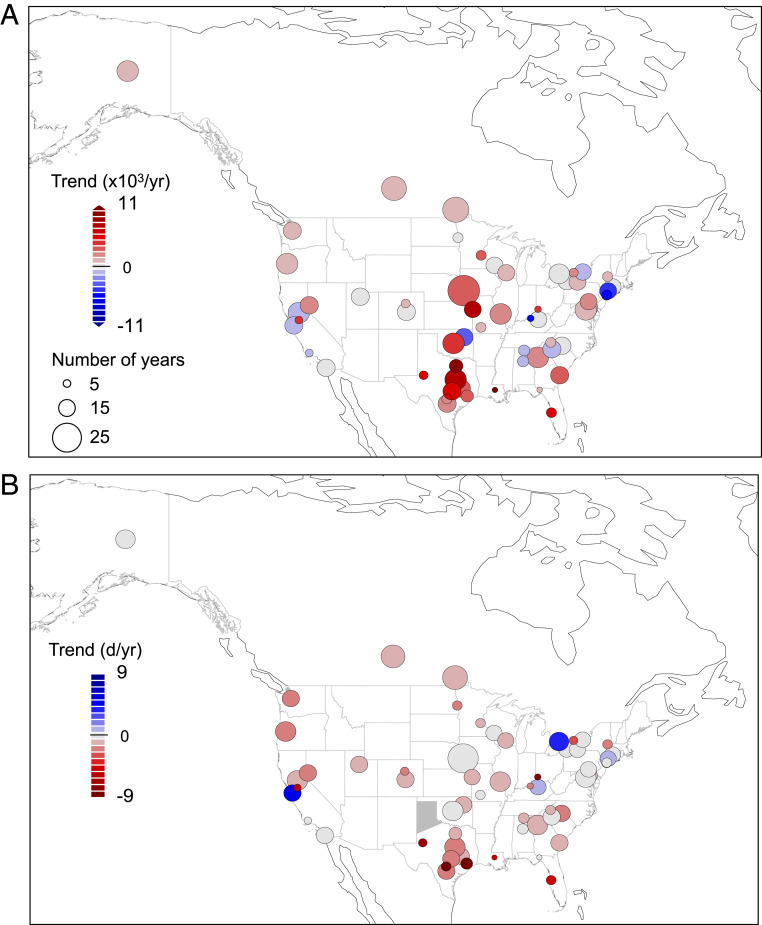
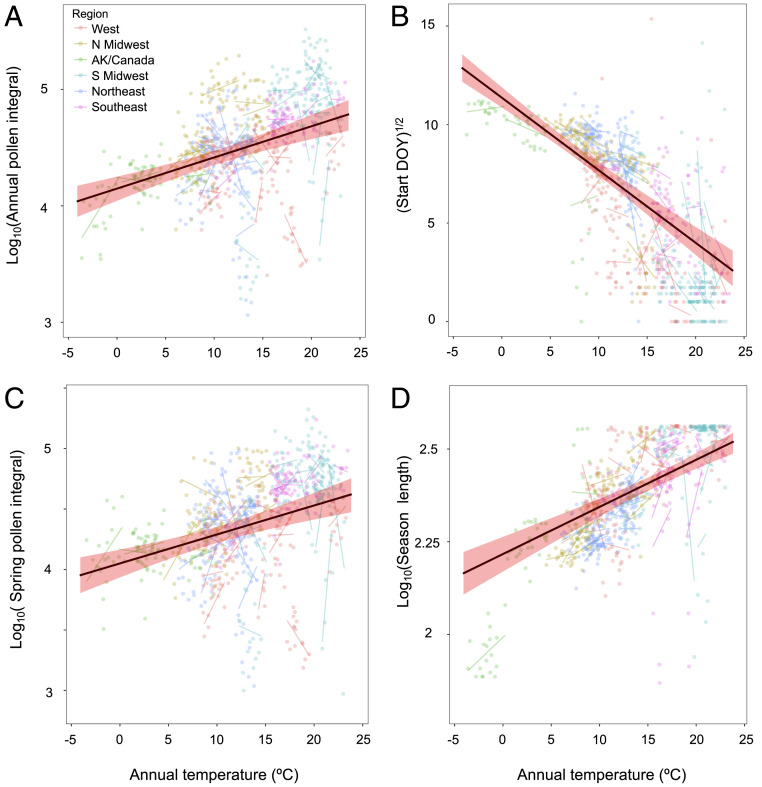
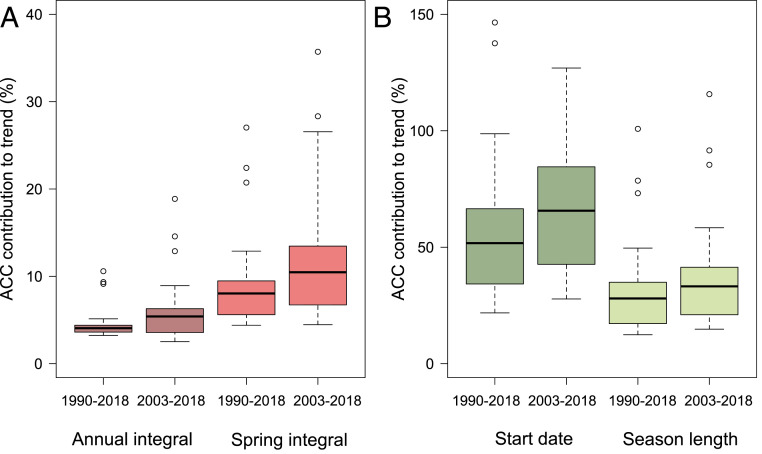
Significance: Human-caused climate change could impact respiratory health, including asthma and allergies, through temperature-driven increases in airborne pollen, but the long-term continental pollen trends and role of climate change in pollen patterns are not well-understood. We measure pollen trends across North America from 1990 to 2018 and find increases in pollen concentrations and longer pollen seasons. We use an ensemble of climate models to test the role of climate change and find that it is the dominant driver of changes in pollen season length and a significant contributor to increasing pollen concentrations. Our results indicate that human-caused climate change has already worsened North American pollen seasons, and climate-driven pollen trends are likely to further exacerbate respiratory health impacts in coming decades.
Overview
The claims and statistics of this paper haven’t been checked yet.
Free: it reads the open-access text and checks the first 5 claims that cite a source we can check. Create a free account to check every claim.
Integrity signals
Registry
Cites
Statistics
Figures
Verification
Claims the paper makes
The claims and statistics of this paper haven’t been checked yet.
Free: it reads the open-access text and checks the first 5 claims that cite a source we can check. Create a free account to check every claim.
Claims other papers make about this one
Each is checked against this paper’s own text: does it say what the citing paper says it does?
The source backs part of the claim, not all of it — or backs it for a different population, condition or comparison.
In the citing paper
“they have chronically inflamed airways, which makes them more sensitive to pollen exposure and are at greater risk of exacerbation of allergic rhinitis.[63][64][65]”
From Effects of Extreme Weather on Health in Underserved Communities (2024) · cites this paper as [64]
Experimental — accuracy not yet measuredThe check wasn’t confident either way, so it gives no verdict — never disputed.
In the citing paper
“as individuals in low-income areas are exposed to higher levels of air pollution due to industrial and vehicular emissions”
From Effects of Extreme Weather on Health in Underserved Communities (2024) · cites this paper as [64]
Experimental — accuracy not yet measured
Self-check
Percentages, sums and reported differences re-computed from the paper’s own numbers.
The self-check needs the paper’s full text.
Citations
Cites
Mixed effects models and extensions in ecology with R
Zuur, A. F., Ieno, E. N., Walker, N., Saveliev, A. A., & Smith, G. M. (2009) · Statistics for Biology and Health · doi:10.1007/978-0-387-87458-6 · Cited by 17,963
An Overview of CMIP5 and the Experiment Design
Taylor, K. E., Stouffer, R. J., & Meehl, G. A. (2012) · Bulletin of the American Meteorological Society · doi:10.1175/bams-d-11-00094.1 · Cited by 14,052 · cited 1×
“We downloaded monthly surface air temperature (variable “tas”) climate model output from 14 Earth system models in the CMIP5 and 8 Earth system models in the CMIP6 databases (40, 41) (SI Appendix, Table S5).”
Eyring, V., Bony, S., Meehl, G. A., Senior, C. A., Stevens, B., Stouffer, R. J., & Taylor, K. E. (2016) · Geoscientific Model Development · doi:10.5194/gmd-9-1937-2016 · Cited by 11,981 · cited 1×
“We downloaded monthly surface air temperature (variable “tas”) climate model output from 14 Earth system models in the CMIP5 and 8 Earth system models in the CMIP6 databases (40, 41) (SI Appendix, Table S5).”
Multimodel Inference: Understanding AIC and BIC in Model Selection
Burnham, K. P., & Anderson, D. R. (2004) · Sociological Methods & Research · doi:10.1177/0049124104268644 · Cited by 11,648
Version 4 of the CRU TS monthly high-resolution gridded multivariate climate dataset
Harris, I., Osborn, T. J., Jones, P., & Lister, D. (2020) · Scientific Data · doi:10.1038/s41597-020-0453-3 · Cited by 4,906 · cited 1×
“We extracted monthly temperature, precipitation, and frost days from the HadCRUT4 dataset at 0.5° spatial resolution (36) and calculatedmonthly time-series of thesevariables from 1991to 2018over all 60 pollen stations.”
InfluentialFingerprints of global warming on wild animals and plants
Root, T. L., Price, J. T., Hall, K. R., Schneider, S. H., Rosenzweig, C., & Pounds, J. A. (2003) · Nature · doi:10.1038/nature01333 · Cited by 4,774 · cited 1×
“A few long-term observational studies on selected plant taxa or at a small number of sites have found increases in pollen concentrations and pollen season length over time, often correlated with temperature (11, 12, 15, 26), although temperature–pollen season relationships may depend on chilling requirements in some t…”
Impact of anthropogenic climate change on wildfire across western US forests
Abatzoglou, J. T., & Williams, A. P. (2016) · Proceedings of the National Academy of Sciences · doi:10.1073/pnas.1607171113 · Cited by 3,073 · cited 1×
“Following approaches used in previous studies (20, 42), we calculated the anthropogenic climate change (ACC) signal using a 50-y moving average of the temperature anomaly in each grid cell of each model, combining the historical and RCP simulation, to remove high frequency variability.”
Self-citationWatts, N., Amann, M., Ayeb-Karlsson, S., Belesova, K., Bouley, T., Boykoff, M., Byass, P., Cai, W., Campbell-Lendrum, D., Chambers, J., et al. (2018) · The Lancet · doi:10.1016/s0140-6736(17)32464-9 · Cited by 1,236
Trends in asthma prevalence, health care use, and mortality in the United States, 2001-2010.
Akinbami, L. J., Moorman, J. E., Bailey, C., Zahran, H. S., King, M., Johnson, C. A., & Liu, X. (2012) · PubMed · Cited by 1,198
Human-Induced Changes in the Hydrology of the Western United States
Barnett, T. P., Pierce, D. W., Hidalgo, H. G., Bonfils, C., Santer, B. D., Das, T., Bala, G., Wood, A. W., Nozawa, T., Mirin, A. A., et al. (2008) · Science · doi:10.1126/science.1152538 · Cited by 1,193 · cited 1×
“Climate change detection and attribution analysis is a powerful tool for linking long-term climate change and observed impacts (16, 17).”
Research works printed but not linked: 3
- C. B. Field., IPCC, 2014: Climate change 2014: Impacts, adaptation, and vulnerability. Part A: Global and sectoral aspects. Contribution of working group II to the fifth assessment report of the Intergovernmental panel on climate change (Cambridge University Press, Cambridge, UK and New York, NY, 2014).
- J. Fox, M. Friendly, S. Weisberg, Hypothesis tests for multivariate linear models using the car package. The R Journal 5, 39– 52 (2013). · DOI · Paper page
- R Core Development Team, R: A Language and Environment for Statistical Computing, Version 3.6 (R Foundation for Statistical Computing, Vienna, Austria, 2012).
Cited by
Items 201–300 of 302
How Does Climate Change Affect the Upper Airway?
Kim, J., Zaitchik, B. F., & Waugh, D. W. (2023) · Otolaryngologic Clinics of North America · doi:10.1016/j.otc.2023.09.008 · Cited by 2
Humayun, M., Naseem, S., Ali, Z., & Goodman, R. E. (2023) · Research Square · doi:10.21203/rs.3.rs-2672801/v1 · Cited by 2
Chapter 8 : Ecosystems, Ecosystem Services, and Biodiversity. Fifth National Climate Assessment
McElwee, P. D., Carter, S. L., Hyde, K. J. W., West, J. M., Akamani, K., Babson, A. L., Bowser, G., Bradford, J. B., Costanza, J., Crimmins, T. M., et al. (2023) · doi:10.7930/nca5.2023.ch8 · Cited by 10
Díaz‐Perales, A., García, C. M. A., Lesmes, I. B., Gil‐Izquierdo, Á., Nieto, G., Velasco, A. M. R., & Mata, M. D. C. S. (2024) · Food Risk Assess Europe · doi:10.2903/fr.efsa.2024.fr-0018 · Cited by 1
“As another example, Anderegg et al. (2021) have shown a global increase in pollen concentration of 21 % and an average lengthening of the pollen season in the United States by more than 20 days between 1990 and 2018.”
BackgroundBaber, S., & Ullah, K. (2024) · Modeling Earth Systems and Environment · doi:10.1007/s40808-024-02074-4 · Cited by 1
“…forecast-ers in Europe, the United Kingdom, and North America have endeavored to predict pollen allergy onset and severity for upcoming days or weeks using short-range, medium-range, or long-range forecasts (McInnes et al. 2017; Al-Nesf et al. 2020; Anderegg et al. 2021; Zhang and Steiner 2022).”
Webber, K., McCoy, J., Rogers, A., Prendergast‐Miller, M. T., Carel, T., & Pound, M. J. (2024) · Palynology · doi:10.1080/01916122.2024.2406867 · Cited by 1
“This is unsurprising given the ubiquitous nature of pollen in the atmosphere when anemophilous plants are pol-linating (Ziello et al. 2012; Anderegg et al. 2021; Pound et al. 2023).”
Beggs, P. J. (2024) · Springer eBooks · doi:10.1007/978-3-031-75027-4_26 · Cited by 1
The Impact of Environmental Pollution and Climate Change on Allergic Rhinitis and Lung Diseases
Liu, X., Han, R., Wang, Y., Zhu, D., & Meng, C. (2025) · World Journal of Otorhinolaryngology - Head and Neck Surgery · doi:10.1002/wjo2.70045 · Cited by 3
“Anderegg et al. [102] reported that earlier spring resulted in earlier and longer release of tree pollen.”
Pollen exposure and mild allergy: A multi-city study in China
Zhen, S., Yin, Z., Duan, J., Li, Q., Pei, H., Wu, Q., Li, Q., Zhang, Y., Zhang, H., Chen, N., et al. (2025) · Journal of Hazardous Materials · doi:10.1016/j.jhazmat.2025.140122 · Cited by 3
Lidar‐Based Observations of Pollen Above a Mixed Hardwood Forest in the United States
Steiner, A. L., Wozniak, M. C., Zhang, Y., Ault, A. P., Kort, E. A., DeCola, P., Lersch, T. L., Casuccio, G. S., & Reilly, K. S. (2025) · Journal of Geophysical Research Atmospheres · doi:10.1029/2025jd044361 · Cited by 3
“These emissions are closely tied to meteorological factors (e.g., wind, relative humidity) (Weber, 2003) and recent studies indicate that atmospheric pollen concentrations are influenced by changes in climate (Anderegg et al., 2021; Lake et al., 2018; Zhang & Steiner, 2022; Ziska et al., 2011).”
Artificial light at night extends pollen season and elevates allergen exposure
Geist, B., Meng, L., Katz, D., Li, H., Hölker, F., & Xiao, Q. (2026) · PNAS Nexus · doi:10.1093/pnasnexus/pgaf405 · Cited by 2
“The NAB operates the largest certified pollen monitoring network in North America, with 70 active stations reporting daily or near-daily pollen counts during the pollen season.”
InfluentialClimate Change and the Impact On Interstitial Lung Diseases
Ahluwalia, B., & Singh, S. (2026) · Pulmonary Therapy · doi:10.1007/s41030-026-00347-0 · Cited by 3
“Although most existing evidence centers on allergic air-ways diseases, prolonged and high-intensity allergic seasons may also influence phenotypes of HP, in which plant-derived and microbial antigens are recognized as key causative agents [82].”
Air Quality Benefits and Disbenefits of Forests under Future Environmental Stressors
Lassiter, M. G., Dalton, R. M., Olson, N. E., McDow, S. R., Herrick, J. D., & LeDuc, S. D. (2026) · ACS ES&T Air · doi:10.1021/acsestair.5c00391 · Cited by 1
Tossavainen, T., Turunen, T., Martikainen, M., Kankaanpää, M., Malinen, M., & Roponen, M. (2026) · Allergy · doi:10.1111/all.70251 · Cited by 1
Possible implications of the variability of the most allergenic plant pollen seasons in Poland
Myszkowska, D., Kubik-Komar, A., Piotrowicz, K., Dąbrowska-Zapart, K., Grewling, Ł., Kasprzyk, I., Kluska, K., Leśkiewicz, K., Majkowska‐Wojciechowska, B., Malkiewicz, M., et al. (2026) · Scientific Reports · doi:10.1038/s41598-026-36159-0 · Cited by 1
Xiao, R., Wang, Z., Wang, P., Zhong, J., Yang, X., Dai, W., Huang, F., Sun, R., & Ouyang, Z. (2026) · Landscape and Urban Planning · doi:10.1016/j.landurbplan.2026.105617 · Cited by 1
Boyte, J. M., Sherson, S. M., Tegart, L. J., Fernandopulle, N. A., Kang, H. S., Lampugnani, E. R., Pham, J., Mackay, G. A., Newbigin, E., & Golz, J. F. (2026) · Environmental Research · doi:10.1016/j.envres.2026.124518 · Cited by 2
Faucher, J., Love, K. R., Quinn, A. R., & Bizikova, P. (2026) · Veterinary Dermatology · doi:10.1111/vde.70081 · Cited by 1
Bıçakçı, A., & Altunoğlu, M. K. (2026) · Environmental Monitoring and Assessment · doi:10.1007/s10661-026-15564-y · Cited by 1
“…their vast distribution across Eurasia, North America, and Anatolia, high-altitude continental steppe ecosystems remain underrepresented in global aerobiological databases and predictive exposure models (Ziello et al., 2012; Lake et al., 2017; Anderegg et al., 2021; Bıçakçı and Tosunoğlu 2019).”
Climate Change and the Increasing Burden of Allergies in Children
Koumpagioti, D., Boutopoulou, B., Grammeniatis, V., Douros, K., & Moriki, D. (2026) · Allergies · doi:10.3390/allergies6030025 · Cited by 2
“Evidence has shown that both rising CO 2 , O 3 , and NOx concentrations and global temperatures, as a result of climate change, cause alterations in aeroallergen patterns, particularly pollen, marked by longer seasons, wider spread, higher levels, and increased allergenicity [14,15].”
Brown, A., Dowdy, A. J., & Ebert, E. E. (2022) · Weather and Forecasting · doi:10.1175/waf-d-21-0109.1 · Cited by 1
Villegas, J. C. V., & Fajardo-Herrera, R. (2023) · Environmental & Socio-economic Studies · doi:10.2478/environ-2023-0018 · Cited by 1
Health Inequality - A Comprehensive Exploration
Krishnamoorthy, Y. (2023) · IntechOpen eBooks · doi:10.5772/intechopen.1000293 · Cited by 6
Perspective Chapter: Climate Change and Health Inequities
Johnson, S. M., Williams, K. D., Clark, B., Stewart, E., Jr., Peyton, C., & Johnson, C. (2024) · IntechOpen eBooks · doi:10.5772/intechopen.1004280 · Cited by 4
Newhouse, D., Mihalcin, E., Lefebvre, K., Nucci, M., & Ravanelli, N. (2024) · Medicine & Science in Sports & Exercise · doi:10.1249/mss.0000000000003527 · Cited by 2
From trees to rain: enhancement of cloud glaciation and precipitation by pollen
Kretzschmar, J. G., Pöhlker, M. L., Stratmann, F., Wex, H., Wirth, C., & Quaas, J. (2024) · Environmental Research Letters · doi:10.1088/1748-9326/ad747a · Cited by 6
“Such conditions can to some extent be assumed for regional scales of a few hundred kilometers with similar climatic conditions and similar composition of pollen emitting plants (Nowosad et al., 2015).”
Gut–lung axis and microbiome interplay in type 2 high asthma
Meslamani, A. Z. A. (2025) · Expert Review of Respiratory Medicine · doi:10.1080/17476348.2025.2581339 · Cited by 1
Adding the variable of environmental complexity into the COVID‐19 pandemic equation
Damialis, A., Gilles, S., & Traidl‐Hoffmann, C. (2021) · Allergy · doi:10.1111/all.14966 · Cited by 1
Lehrer, L., Geiger, M., Sprengholz, P., Jenny, M. A., Temme, H., Shamsrizi, P., Eitze, S., & Betsch, C. (2024) · Research Square · doi:10.21203/rs.3.rs-3953077/v1 · Cited by 2
Driving Under the Influence of Allergies: The Effect of Seasonal Pollen on Traffic Fatalities
Danagoulian, S., & Deza, M. (2024) · National Bureau of Economic Research · doi:10.3386/w32233 · Cited by 2
“…are expected to grow as climate change leads to rising temperatures, which have been shown to extend the pollen season as well as increase the intensity of pollen emissions (Anderegg et al, 2021; Zhang and Steiner, 2022; D’Amato et al, 2007; Ziello et al, 2012; Hamaoui-Laguel et al, 2015).”
ON HISTOPATHOLOGICAL FINDINGS OF THE LUNGS OF SERUM HORSES
NAKAGAWA, M. (1961) · Hokkaido University Collection of Scholarly and Academic Papers (Hokkaido University)
社会連帯の観点で保険料を公平化 (焦点採録 財政調整と保険者機能めぐり議論--「日本の医療保険制度」をテーマにシンポジウム)
三上, 裕. (2010) · 週刊社会保障
Colangelo, S. A., & Whiteley, J. (2022) · SSRN Electronic Journal · doi:10.2139/ssrn.4017969
Planetary Health – Gesundheit und Krankheit im Kontext von Klima und Umwelt
Hartmann, S., & Eichinger, M. (2022) · Springer Reference Pflege, Therapie, Gesundheit · doi:10.1007/978-3-662-54179-1_78-1
A légköri állapothatározók és a változó éghajlat hatása a háziméhekre
Vincze, C., Leelőssy, Á., & Mészáros, R. (2023) · Légkör · doi:10.56474/legkor.2023.3.4
“Invisible Killer”: Seasonal Allergies and AccidentsPreprint
Akesaka, M., & Shigeoka, H. (2023) · medRxiv · doi:10.1101/2023.09.08.23294325 · Cited by 1
Axelrod, K., Bhattarai, C., Bahdanovich, P., Samburova, V., & Khlystov, A. Y. (2023) · Aerosol Science and Technology · doi:10.1080/02786826.2023.2265954
“However, with pollen seasons expected to increase in release and duration with rising temperatures (Anderegg et al. 2021) and aspen tree populations rising with carbon dioxide levels (Cole et al. 2009) in the atmosphere, it is important to note that up to 8.5% of water-soluble aspen pollen mass is…”
BackgroundInfluentialCurrent Status of Research on Airborne Pollen
闫, 海. (2024) · Advances in Clinical Medicine · doi:10.12677/acm.2024.143937
Driving Under the Influence of Allergies: the Effect of Seasonal Pollen on Traffic FatalitiesPreprint
Deza, M., & Danagoulian, S. (2024) · SSRN Electronic Journal · doi:10.2139/ssrn.4776598
Tossavainen, T., Kivimäenpää, M., Martikainen, M., Leskinen, A., Heinonen, T., Pessi, A.-M., Louna‐Korteniemi, M., Pätsi, S., Komppula, M., Saarto, A., et al. (2024) · SSRN Electronic Journal · doi:10.2139/ssrn.4797284
JEDI: A Priority When Addressing Climate Change and Its Impact on Adolescent Mental Health
Israni, S. T., Matlow, R. B., Nadeau, K. C., Sampath, V., & Wray, B. (2024) · Springer eBooks · doi:10.1007/978-3-031-56736-0_3
Humayun, M., Naseem, S., Goodman, R. E., & Ali, Z. (2025) · Metabolites · doi:10.3390/metabo15020137
“Climate change is expected to have significant effects on plant growth and development and could impact pollen seasons [1].”
Kwong, R., Victor, T. E., Dijstelbloem, N., Dong, Z. Y., Robillard, A. M., Gagnon, W. A., Simon, C. S., Radhakrishnan, C. I., Peralta, K. A., Youngstrom, E. C., et al. (2025) · bioRxiv (Cold Spring Harbor Laboratory) · doi:10.1101/2025.02.21.639397 · Cited by 2
The value of a life course approach to the health consequences of climate change
Simonin, E. M., Leap, S. R., Klibaner-Schiff, E., Kirsh, S., Kline, O., Matthews, H., Vogler, N., Kepner, C., Sampath, V., Johnson, M. M. D., et al. (2025) · Oxford University Press eBooks · doi:10.1093/oso/9780198895961.003.0003
Ecological factors underlying the spatiotemporal dynamics in a key forest beetle pollinator
Lagacé, M., Boudreau, D. R., Tousignant, L., & Moreau, G. (2025) · Agricultural and Forest Entomology · doi:10.1111/afe.12687 · Cited by 1
“In addition, fluctuations in climatic conditions such as temperature, precipitation and snowfall directly affect the main resources of Eusphalerum , namely pollen (Anderegg et al., 2021).”
Automated Pollen Monitoring and Exposure Prediction for Pollen Allergic Patients Care
Suarez-Suarez, M., González-Alonso, M., Matricardi, P. M., Dramburg, S., & Buters, J. (2025) · Health informatics · doi:10.1007/978-3-031-71021-6_5
A globális éghajlatváltozás egészséghatásai
Márovics, G., & Girán, J. (2025) · Magyar Tudomány · doi:10.1556/2065.186.2025.4.17
Cambio climático. Un análisis holístico sobre su impacto en la salud
López-Pérez, G., Sánchez, L. C. C., & Altamirano, M. S. T. (2024) · Alergia, Asma e Inmunología Pediátricas · doi:10.35366/120447
Pollen can raise your risk of COVID-19 – and the season is getting longer thanks to climate change
Ziska, L. H. (2021) · doi:10.64628/aai.hedaevkyf
Self-citationZhang, Y., & Steiner, A. L. (2023) · The Conversation · doi:10.64628/aai.9kx743gnr
Zhang, Y., & Steiner, A. L. (2022) · The Conversation · doi:10.64628/aai.huuhtpknn · Cited by 1
Dominance of plasticity in wind-pollinated trees’ flowering time response to temperaturePreprint
Liu, Y., Song, Y., Weaver, W. N., Shedden, K., Chen, Y., Smith, S. A., & Zhu, K. (2025) · bioRxiv (Cold Spring Harbor Laboratory) · doi:10.1101/2025.08.26.672405
Newnham, R. M., McDonald, L. S., Holt, K. A., Misra, S., Ngadi, N., Ngadi, C. L., & Chan, A. H. Y. (2025) · Aerobiology · doi:10.3390/aerobiology3030008 · Cited by 3
“Climate change is one of the key factors thought to contribute to the growing prevalence of allergic respiratory disease in many regions [2–7].”
Livelihood Transitions under Climate Change in the Mekong Delta of Vietnam
Thu, H. N., & Ha, L. (2025) · IOP Conference Series Earth and Environmental Science · doi:10.1088/1755-1315/1539/1/012001 · Cited by 1
“In the modern era, human activities, particularly fossil fuel combustion, deforestation, and intensive agricultural practices, have been identified as the primary drivers of climate change [4, 5].”
Axelrod, K., Bahdanovich, P., Samburova, V., & Khlystov, A. Y. (2025) · Environmental Chemistry · doi:10.1071/en24047
Zhai, G., Feng, C., & Zhou, W. (2025) · International Archives of Allergy and Immunology · doi:10.1159/000549815
Oboh-Ikuenobe, F., & Anyanna, L. (2025) · doi:10.64628/aai.t6japyjk9
Polen puede aumentar el riesgo de contraer COVID-19, ya sea que tengas alergias o no, según estudio
Ziska, L. (2021) · doi:10.64628/aai.3ff9kt3tp
Self-citationBioaerosol exposure and associated health effects in a changing planet: beyond the state-of-the-art
Damialis, A., & Gilles, S. (2025) · Advances in chemical pollution, environmental management and protection · doi:10.1016/bs.apmp.2025.06.002
Political ideology and scientific communication shape human perceptions of pollen seasons
Song, Y., Millard‐Ball, A., Fox, N., Berkel, D. V., Agrawal, A., & Zhu, K. (2025) · PNAS Nexus · doi:10.1093/pnasnexus/pgaf386
Climate change and the immune system
Rijkers, G. T., Timraliyeva, Z., Mackie, E., & Lupuşoara, M. (2026) · Expert Review of Clinical Immunology · doi:10.1080/1744666x.2026.2625969 · Cited by 2
“For instance, many studies over the last few decades have noted an earlier start for pollen season (see also Figure 2) or increased season length [51–57], while others noted higher ambient air concentrations of pollen taxa [58–62].”
Breathing in a changing climate: Compounding risks to respiratory health in Canada
Doiron, D., Brook, J. R., & Bourbeau, J. (2026) · Canadian Journal of Respiratory Critical Care and Sleep Medicine · doi:10.1080/24745332.2026.2622324
Effects of simulated atmospheric aging on bioaerosol chemistry in the aqueous phase
Bahdanovich, P., Axelrod, K., Khlystov, A. Y., & Samburova, V. (2026) · Atmospheric Pollution Research · doi:10.1016/j.apr.2026.102973
Changes in the pollen season dynamics in central Chile in the last 20 years
Pedro Mardones, P., Espinoza, S., Urzua, J., Matamala, K., Pereira, I., Pardo, M., Peralta, T., Peñailillo, P., & Reyes, E. S. (2026) · Aerobiologia · doi:10.1007/s10453-026-09908-x
Lessons from automatic airborne pollen monitoring by holography at three Australian sites
Milić, A., Addison‐Smith, B., Ullah, I., Douch, J. K., Keaney, B., Beggs, P. J., Haberle, S. G., & Davies, J. M. (2026) · Aerobiologia · doi:10.1007/s10453-026-09907-y
Fan, Y., Yao, Y., Xu, J., Meng, T., Li, B., Hu, J., Zhou, Y., Lei, Y., Zhao, Y., Su, R., et al. (2026) · Research Square · doi:10.21203/rs.3.rs-9142792/v1
Flow cytometry and machine learning enable identification of allergenic urban tree pollen
Tardif, S., Kanieski, M. R., Lapa, G., Bonnamour, G., Sousa‐Silva, R., Laforest‐Lapointe, I., & Paquette, A. (2026) · Atmospheric measurement techniques · doi:10.5194/amt-19-2817-2026
“Seasonal allergic rhinitis affects approximately 20 % of the global population (Savouré et al., 2022) and is expected to worsen with climate change, which is projected to lengthen pollen seasons (Anderegg et al., 2021; Mousavi et al., 2024; Zhang and Steiner, 2022; Ziska et al., 2019).”
Fan, J., Song, H., Zhao, C., Wang, X., Zhao, Q., Wang, X., Wang, Y., & Xia, Y. (2026) · World Allergy Organization Journal · doi:10.1016/j.waojou.2026.101391
Ma, T.-T., Yang, M., Cheng, Z.-L., Wang, X. M., Shan, G.-L., Hu, Y.-D., Yong-Fei, B. A. I., Ning, H.-Y., Yang, J.-L., Chen, Y.-L., et al. (2026) · Frontiers in Allergy · doi:10.3389/falgy.2026.1800197
Li, G. D., Chen, J., Wang, A., Hao, S., Okoye, C. O., Qiao, Y., Cheng, Y., Liang, H., Deng, L., & Chen, X. (2026) · Toxics · doi:10.3390/toxics14050452
“%) of the concentration increase [174].”
Climate Change and Rhinitis: What Does the Future Hold?
Song, H., Dilger, A. E., Bergmark, R. W., & Tummala, N. (2026) · Current Otorhinolaryngology Reports · doi:10.1007/s40136-026-00552-0
Incorporating air quality health impacts into the social cost of carbon
Kingdon, C., Cromar, K. R., Anenberg, S. C., Kerr, G. H., Prest, B., Rabii, K., & Anthoff, D. (2026) · Nature Climate Change · doi:10.1038/s41558-026-02653-6 · Cited by 1
“Rising temperatures and CO 2 concentrations can also lead to higher pollen allergenicity 71,75,77,80 , and increases in pollen season length have already been documented and linked to a changing climate 43,70,71,77,80,81 .”
Introduction: Breath and More-than-Human Geography
Hepach, M. G., & Nieuwenhuis, M. (2026) · Handbooks in philosophy · doi:10.1007/978-3-031-75780-8_59-1
Wang, Z., Cui, J., Zhang, S., Wang, Y., Qiu, L., Ma, Z., Shen, H., Lu, Z., & Li, C. (2026) · Frontiers in Pharmacology · doi:10.3389/fphar.2026.1801620
Long-term changes in the timing and intensity of the pollen season in Slovenia (2002–2024)
Markovič, R., Grubelnik, V., Simčič, A., Seliger, A. K., Razborsek, U., Marhl, M., & Lešnik, U. (2026) · Aerobiologia · doi:10.1007/s10453-026-09924-x
“Several studies indicate that the duration of pollen season has increased over time for various taxa (Anderegg et al., 2021; Tagliaferro et al., 2024; Ziska et al., 2019).”
Trends in the 10-Year Record of Airborne Cryptomeria japonica Pollen Concentrations in Jeju, Korea
Han, Y. J., Han, M. J., Kim, S., Oh, J., & Kim, K. R. (2026) · Atmosphere · doi:10.3390/atmos17060618
“Climate change significantly affects airborne pollen concentrations, seasonality, and aller-genicity, with direct implications for respiratory health worldwide [1–6].”
Addressing climate change challenges through ergonomics and human factors
Thatcher, A., & Alexander, T. (2026) · Zeitschrift für Arbeitswissenschaft · doi:10.1007/s41449-026-00537-1
“Climate change alters the onset time, the length of the pollinating season, and the distribution of pollinating plants (Anderegg et al. 2021).”
Impact of airborne pollen on stock market volatility
Kaukonen, V., Vaihekoski, M., & Saarto, A. (2026) · Research in International Business and Finance · doi:10.1016/j.ribaf.2026.103529
Manangan, A. P., Brown, C., Werner, A. K., Katz, D. S. W., Rorie, A. C., Voelker, D., Gabrish, P., Hess, J. J., & Schramm, P. J. (2026) · Atmosphere · doi:10.3390/atmos17070635
Earlier spring and later autumn: Climate warming reshapes pollen seasons in Beijing
Li, J.-T., Xing-Qin, A. N., Yu-ping, Y., Bo, Y. A. O., Liu, Z., Zhao-bin, S., & Ruan, W.-X. (2026) · Advances in Climate Change Research · doi:10.1016/j.accre.2026.07.003
Clinical Heterogeneity in Adult Rhinitis: Symptom‐Sensitization Concordance and Asthma Burden
Wang, C., He, X. Y., Zhang, H., & Lin, X. (2026) · Laryngoscope Investigative Otolaryngology · doi:10.1002/lio2.70514
Boser, M., Damialis, A., Knote, C., Seemann, M., Traidl‐Hoffmann, C., & Plaza, M. P. (2026) · Environment International · doi:10.1016/j.envint.2026.110426 · Cited by 1
Lipiec, A., Rapiejko, J., & Jurkiewicz, D. (2026) · Otolaryngologia Polska · doi:10.5604/01.3001.0055.8490
Real-time pollen dynamics and automated detection: novel insights from Wrocław (Poland) 2024–2025
Tomczyk, S., Werner, M., Malkiewicz, M., & Bubel, K. (2026) · Atmospheric measurement techniques · doi:10.5194/amt-19-4779-2026
“In recent decades, climate change has become a key factor influencing the dynamics of pollen production and dispersion (Anderegg et al., 2021; Lake et al., 2017).”
Changes in pollen exposure driven by intense meteorological fluctuations
Romero-Morte, J., Rojo, J., Lara, B., Rodriguez-Arias, R. M., Fernández‐González, F., Aznar, F., Negral, L., Grau, S. M., Moreno, J. M., & Pérez-Badía, R. (2026) · Aerobiologia · doi:10.1007/s10453-026-09939-4
“The study of the partial contribution of each component, which is not always easy to analyse, requires a more exhaustive analysis of the causes of this trend in the long term (Anderegg et al., 2021; Verstraeten et al., 2023).”
Comprehensive analysis of factors influencing temporal changes in airborne grass pollen
Rojo, J., Cascón, Á., Ruiz, S. S., Díaz, J. G., Rodriguez-Arias, R. M., Morales, P. C., & Romero-Morte, J. (2026) · Agricultural and Forest Meteorology · doi:10.1016/j.agrformet.2026.111426
Ortiz, S. G., Moreno, K. S., Marrero, M. D. R., Barbero–Barrera, M. D. M., & Reyes, E. S. (2026) · Environmental Pollution · doi:10.1016/j.envpol.2026.129041
She, Z. J., Ma, C., Li, Z., Fang, Y. M., Li, F., Zhang, Y. C., Lu, H., Li, Y. C., & Ding, A. (2026) · Journal of Geophysical Research Atmospheres · doi:10.1029/2025jd045928
“Quantitative characteristics of airborne pollen are shaped by the interplay of plant biology and meteorological factors (Anderegg et al., 2021; Fröhlich‐Nowoisky et al., 2016), with temperature, precipitation, humidity, and wind speed being the key regulators of release and transport (Valipour…”
Tran, X. N., Lee, Y., Chang, L.-T., Chang, T.-Y., Chuang, K.-J., Ho, K.-F., Chung, K. F., Chang, J., & Chuang, H. (2026) · Pediatric Research · doi:10.1038/s41390-026-05418-1
Evaluation of a fine-scale Eulerian modeling system for pollen in Thessaloniki, Greece
Papadogiannaki, S., Kontos, S., Tsiaousidis, D., Wang, T., & Μελάς, Δ. (2026) · Agricultural and Forest Meteorology · doi:10.1016/j.agrformet.2026.111461
Factors beyond anthropogenic climate change affecting airborne pollen levels in urban areas
Cascón, Á., Romero-Morte, J., Ruiz, S. S., & Rojo, J. (2026) · Journal of Environmental Management · doi:10.1016/j.jenvman.2026.130949
Estimating Daily Taxon-Specific Tree Pollen at a 1-km Resolution in Atlanta, GA from 2020 to 2024
Zhang, X., Wang, W., Saburi, Y., Paduch, H. R., Jin, Z., Zhu, K., & Liu, Y. (2026) · ACS ES&T Air · doi:10.1021/acsestair.6c00218
Research Priorities for Robust Climate Assessments in the United States
Kenney, M. A., Kopp, R. E., Samaras, C., Alberti, M., Angell, S. Y., Burney, J. A., Cunliff, C., Duffy‐Anderson, J. T., Fischer, L. W., Frey, S. D., et al. (2026) · Earth s Future · doi:10.1029/2025ef007336 · Cited by 1
Gutiérrez, L. L., Ramírez, C., Henríquez, A., & Contreras, S. (2026) · bioRxiv (Cold Spring Harbor Laboratory) · doi:10.64898/2026.09.28.755009
“Analysis of North American pollen records confirms that pollen seasons have already lengthened by approximately 20 days and airborne concentrations have increased by 21% since 1990, with anthropogenic climate change responsible for roughly half of the trend (Anderegg et al., 2021).”
Limaheluw, J., Niese, R., Schram-Bijkerk, D., Hall, L. F., de Kraker, J., Oostdijk, S. C. J., Serafim, F., & Husman, A. M. D. R. (2026) · BMJ Open · doi:10.1136/bmjopen-2025-108532
“For effective climate change adaptation, results should be considered with respect to their specific local or regional context if possible.”
Attributing Airborne Fungal Spore Increases to Wildfire in Southern California, USA
Aguilera, R., Dinasquet, J., Hale, M., Gershunov, A., & Benmarhnia, T. (2026) · ACS ES&T Air · doi:10.1021/acsestair.6c00067
Heat and childhood respiratory health: exploring the evidence and raising the red flags
Buthelezi, M. S., Jeena, P. M., & Naidoo, R. N. (2026) · Expert Review of Respiratory Medicine · doi:10.1080/17476348.2026.2749889
Metadata
- Authors
- Anderegg, W. R. L., Abatzoglou, J. T., Anderegg, L. D. L., Bielory, L., Kinney, P. L., & Ziska, L.
- Affiliations
- University of Utah (US)
- University of California, Merced (US)
- University of California, Santa Barbara (US)
- Rutgers, The State University of New Jersey (US)
- Boston University (US)
- Columbia University (US)
- Corresponding author
- Anderegg, William R. L.
- ORCID
- Venue
- Proceedings of the National Academy of Sciences
- Publisher
- National Academy of Sciences
- Published
- 2021-02-08
- Volume
- 118
- Issue
- 7
- ISSN
- 0027-8424 (ISSN-L)
- 1091-6490
- PMC
- PMC7896283
- OpenAlex
- W3126762737
- Semantic Scholar
- 152e8dcba78a4baa25b0236ad6d1e52ec0961b23
- Cited by
- 302
- References
- 43
- Citations by year
- 2026: 54 · 2025: 58 · 2024: 60 · 2023: 56 · 2022: 45 · 2021: 27
- FWCI
- 35.22
- Type
- journal article
- Language
- en
- Open access
- hybrid
- doi.org
- Licence
- Locations
- Proceedings of the National Academy of Sciences (publishedVersion, cc-by)
- PubMed Central (publishedVersion, cc-by)
- PubMed (publishedVersion)
- eScholarship (California Digital Library) (submittedVersion)
- eScholarship (California Digital Library) (submittedVersion, cc-by)
- Funders
- National Science Foundation (2003205, 1711243, 1802880, 1714972)
- U.S. Department of Energy
- U.S. Department of Agriculture (2018-67019-27850, 67019)
- National Institute of Food and Agriculture (2018‐67019‐27850)
- Topics
- Health Sciences › Medicine › Immunology and Allergy › Allergic Rhinitis and Sensitization
- Physical Sciences › Environmental Science › Health, Toxicology and Mutagenesis › Climate Change and Health Impacts
- Physical Sciences › Environmental Science › Global and Planetary Change › Climate variability and models
- Keywords
- airborne pollen, pollen season length, anthropogenic climate change, climate change attribution, pollen concentration, temperature effects on pollen, respiratory health, North America
- MeSH terms
- Air Pollution, Rhinitis, Allergic, Seasonal, Humans, North America, Plants, Pollen, Seasons, Climate Change
About these checks
Registry, retraction, Cites and statistics results are computed, not judged, with one exception: a printed reference that no index lists is read once by a model before it counts as a citation error. Claims are extracted by a model and kept only when their quote appears verbatim in the text; each cited source is then checked, with a model’s help, for whether it says what the claim relies on. Those verdicts can be wrong — read the claim’s quote and the cited source before relying on one.
Statistics and arithmetic are recomputed, not judged.
Confidence bands are shown only for fields calibrated on our annotated test set. None is calibrated yet, so no band is shown.
What counts as a claim ›How we measure confidence ›How we check this ›
Are you an author, or do you see a problem with this page? Request a review
Data sources
Bibliographic data: Semantic Scholar, OpenAlex, Crossref.
Contains information from the Semantic Scholar Academic Graph Datasets, made available under the ODC Attribution License (ODC-BY 1.0).
Semantic Scholar’s data is described in: Kinney, R., et al. (2023). The Semantic Scholar Open Data Platform. arXiv:2301.10140.
