

Anthropogenic climate change is worsening North American pollen seasons
Open accessThe DOI matches its Crossref record; 42 of the 43 references it cites were found in a registry or an index.
Abstract
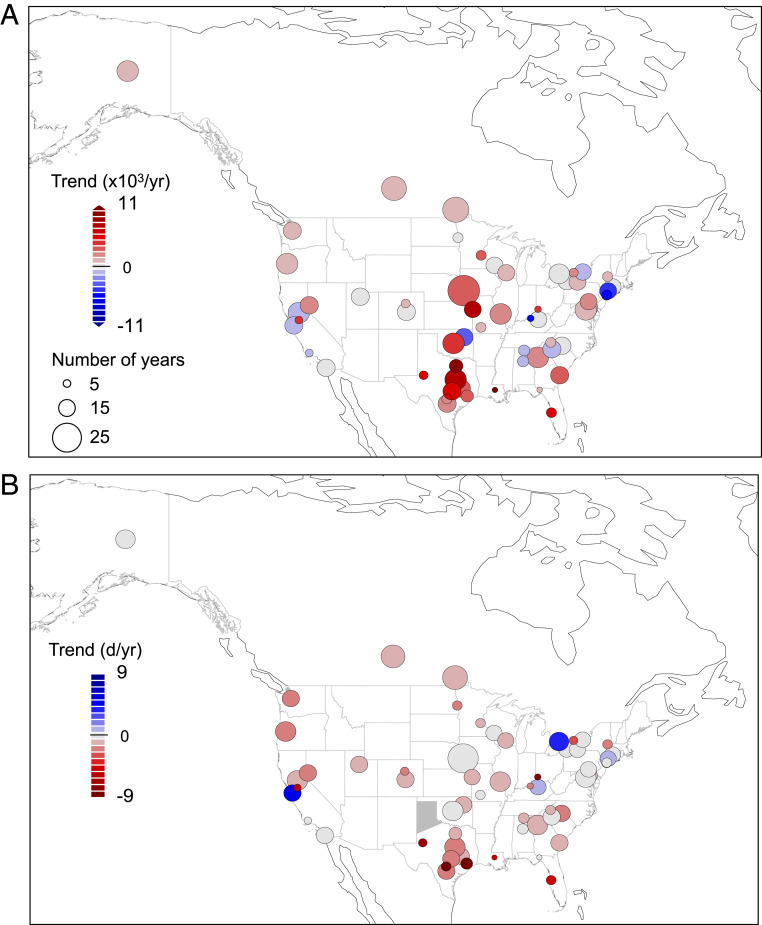
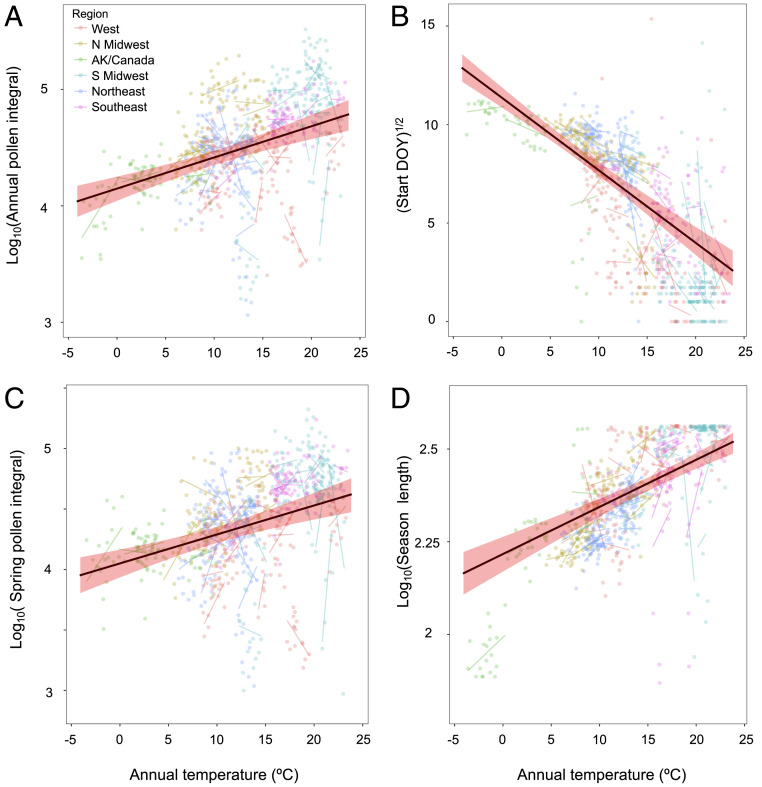
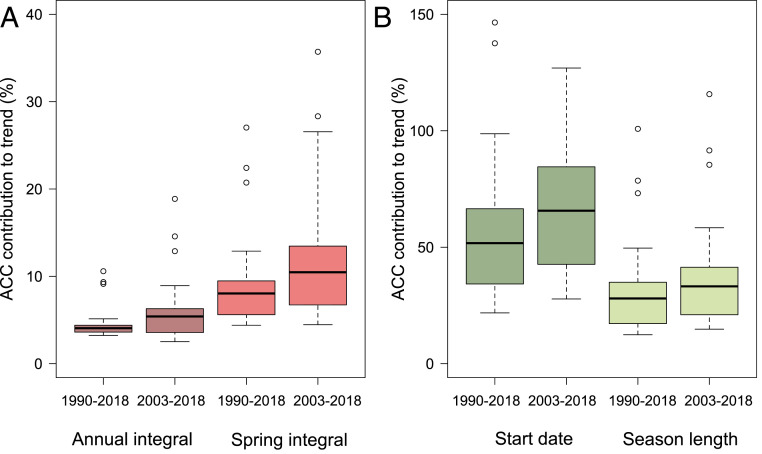
Significance: Human-caused climate change could impact respiratory health, including asthma and allergies, through temperature-driven increases in airborne pollen, but the long-term continental pollen trends and role of climate change in pollen patterns are not well-understood. We measure pollen trends across North America from 1990 to 2018 and find increases in pollen concentrations and longer pollen seasons. We use an ensemble of climate models to test the role of climate change and find that it is the dominant driver of changes in pollen season length and a significant contributor to increasing pollen concentrations. Our results indicate that human-caused climate change has already worsened North American pollen seasons, and climate-driven pollen trends are likely to further exacerbate respiratory health impacts in coming decades.
Overview
The claims and statistics of this paper haven’t been checked yet.
Free: it reads the open-access text and checks the first 5 claims that cite a source we can check. Create a free account to check every claim.
Integrity signals
Registry
Cites
Statistics
Figures
Verification
Claims the paper makes
The claims and statistics of this paper haven’t been checked yet.
Free: it reads the open-access text and checks the first 5 claims that cite a source we can check. Create a free account to check every claim.
Claims other papers make about this one
Each is checked against this paper’s own text: does it say what the citing paper says it does?
The source backs part of the claim, not all of it — or backs it for a different population, condition or comparison.
In the citing paper
“they have chronically inflamed airways, which makes them more sensitive to pollen exposure and are at greater risk of exacerbation of allergic rhinitis.[63][64][65]”
From Effects of Extreme Weather on Health in Underserved Communities (2024) · cites this paper as [64]
Experimental — accuracy not yet measuredThe check wasn’t confident either way, so it gives no verdict — never disputed.
In the citing paper
“as individuals in low-income areas are exposed to higher levels of air pollution due to industrial and vehicular emissions”
From Effects of Extreme Weather on Health in Underserved Communities (2024) · cites this paper as [64]
Experimental — accuracy not yet measured
Self-check
Percentages, sums and reported differences re-computed from the paper’s own numbers.
The self-check needs the paper’s full text.
Citations
Cites
Mixed effects models and extensions in ecology with R
Zuur, A. F., Ieno, E. N., Walker, N., Saveliev, A. A., & Smith, G. M. (2009) · Statistics for Biology and Health · doi:10.1007/978-0-387-87458-6 · Cited by 17,963
An Overview of CMIP5 and the Experiment Design
Taylor, K. E., Stouffer, R. J., & Meehl, G. A. (2012) · Bulletin of the American Meteorological Society · doi:10.1175/bams-d-11-00094.1 · Cited by 14,052 · cited 1×
“We downloaded monthly surface air temperature (variable “tas”) climate model output from 14 Earth system models in the CMIP5 and 8 Earth system models in the CMIP6 databases (40, 41) (SI Appendix, Table S5).”
Eyring, V., Bony, S., Meehl, G. A., Senior, C. A., Stevens, B., Stouffer, R. J., & Taylor, K. E. (2016) · Geoscientific Model Development · doi:10.5194/gmd-9-1937-2016 · Cited by 11,981 · cited 1×
“We downloaded monthly surface air temperature (variable “tas”) climate model output from 14 Earth system models in the CMIP5 and 8 Earth system models in the CMIP6 databases (40, 41) (SI Appendix, Table S5).”
Multimodel Inference: Understanding AIC and BIC in Model Selection
Burnham, K. P., & Anderson, D. R. (2004) · Sociological Methods & Research · doi:10.1177/0049124104268644 · Cited by 11,648
Version 4 of the CRU TS monthly high-resolution gridded multivariate climate dataset
Harris, I., Osborn, T. J., Jones, P., & Lister, D. (2020) · Scientific Data · doi:10.1038/s41597-020-0453-3 · Cited by 4,906 · cited 1×
“We extracted monthly temperature, precipitation, and frost days from the HadCRUT4 dataset at 0.5° spatial resolution (36) and calculatedmonthly time-series of thesevariables from 1991to 2018over all 60 pollen stations.”
InfluentialFingerprints of global warming on wild animals and plants
Root, T. L., Price, J. T., Hall, K. R., Schneider, S. H., Rosenzweig, C., & Pounds, J. A. (2003) · Nature · doi:10.1038/nature01333 · Cited by 4,774 · cited 1×
“A few long-term observational studies on selected plant taxa or at a small number of sites have found increases in pollen concentrations and pollen season length over time, often correlated with temperature (11, 12, 15, 26), although temperature–pollen season relationships may depend on chilling requirements in some t…”
Impact of anthropogenic climate change on wildfire across western US forests
Abatzoglou, J. T., & Williams, A. P. (2016) · Proceedings of the National Academy of Sciences · doi:10.1073/pnas.1607171113 · Cited by 3,073 · cited 1×
“Following approaches used in previous studies (20, 42), we calculated the anthropogenic climate change (ACC) signal using a 50-y moving average of the temperature anomaly in each grid cell of each model, combining the historical and RCP simulation, to remove high frequency variability.”
Self-citationWatts, N., Amann, M., Ayeb-Karlsson, S., Belesova, K., Bouley, T., Boykoff, M., Byass, P., Cai, W., Campbell-Lendrum, D., Chambers, J., et al. (2018) · The Lancet · doi:10.1016/s0140-6736(17)32464-9 · Cited by 1,236
Trends in asthma prevalence, health care use, and mortality in the United States, 2001-2010.
Akinbami, L. J., Moorman, J. E., Bailey, C., Zahran, H. S., King, M., Johnson, C. A., & Liu, X. (2012) · PubMed · Cited by 1,198
Human-Induced Changes in the Hydrology of the Western United States
Barnett, T. P., Pierce, D. W., Hidalgo, H. G., Bonfils, C., Santer, B. D., Das, T., Bala, G., Wood, A. W., Nozawa, T., Mirin, A. A., et al. (2008) · Science · doi:10.1126/science.1152538 · Cited by 1,193 · cited 1×
“Climate change detection and attribution analysis is a powerful tool for linking long-term climate change and observed impacts (16, 17).”
Research works printed but not linked: 3
- C. B. Field., IPCC, 2014: Climate change 2014: Impacts, adaptation, and vulnerability. Part A: Global and sectoral aspects. Contribution of working group II to the fifth assessment report of the Intergovernmental panel on climate change (Cambridge University Press, Cambridge, UK and New York, NY, 2014).
- J. Fox, M. Friendly, S. Weisberg, Hypothesis tests for multivariate linear models using the car package. The R Journal 5, 39– 52 (2013). · DOI · Paper page
- R Core Development Team, R: A Language and Environment for Statistical Computing, Version 3.6 (R Foundation for Statistical Computing, Vienna, Austria, 2012).
Cited by
Items 101–200 of 302
Expert judgement reveals current and emerging UK climate-mortality burden
Mitchell, D., Lo, Y. T. E., Ball, E., Godwin, J. L., Andrews, O., Barciela, R. M., Berrang‐Ford, L., Napoli, C. D., Ebi, K. L., Fučkar, N. S., et al. (2024) · The Lancet Planetary Health · doi:10.1016/s2542-5196(24)00175-x · Cited by 18
The Role of Climate Change in Asthma
Goshua, A., Sampath, V., Efobi, J. A., & Nadeau, K. C. (2023) · Advances in experimental medicine and biology · doi:10.1007/978-3-031-32259-4_2 · Cited by 13
A Review of Pollen Counting Networks: From the Nineteenth Century into the Twenty-first Century
Lucas, R. W., & Bunderson, L. D. (2023) · Current Allergy and Asthma Reports · doi:10.1007/s11882-023-01119-5 · Cited by 10
Impacts of climate change on airborne Quercus pollen trends in Andalusia region (southern Spain)
Alcázar, P., de Torres, C., Linares, C. D., Minero, F. J. G., Valenzuela, L. R., Picornell, A., & Galán, C. (2024) · Regional Environmental Change · doi:10.1007/s10113-023-02181-5 · Cited by 10
“…in the region caused by a marked delay at the end of the pollen season coinciding with many previous studies (Recio et al. 2018; Ziska et al. 2019; Anderegg et al. 2021); a general increase in observed pollen intensity may have also affected Gehrig and Clot (2021) where a prolongation of the…”
Roland, L. T., Damask, C. C., Luong, A., Azar, A., Ebert, C. S., Edwards, T. S., Cahill, K. N., Cho, D., Corry, D. B., Croston, T. L., et al. (2025) · International Forum of Allergy & Rhinology · doi:10.1002/alr.23582 · Cited by 15
“Saravanan et al. [25] attempted to address the diagnostic challenges associated with AFRS in their study titled “Allergic Fungal Rhinosinusitis: An Attempt to Resolve the Diagnostic Dilemma.””
Verstraeten, W. W., Kouznetsov, R. D., Hoebeke, L., Bruffaerts, N., Sofiev, M. A., & Delcloo, A. (2022) · Agricultural and Forest Meteorology · doi:10.1016/j.agrformet.2022.108942 · Cited by 13
Solá, R. R., Castillo, M. D. C. C., Zhang, J. J. H., Kirchner, R., Alarcón, M., Periago, C., Linares, C. D., & Belmonte, J. (2022) · International Journal of Biometeorology · doi:10.1007/s00484-022-02267-5 · Cited by 14
Acute exposure to pollen and airway inflammation in adolescents
Nassikas, N. J., Luttmann‐Gibson, H., Rifas‐Shiman, S. L., Oken, E., Gold, D. R., & Rice, M. B. (2024) · Pediatric Pulmonology · doi:10.1002/ppul.26908 · Cited by 13
Long-term changes in the allergenic potential of ruderal vegetation in a Central European urban area
Hrabovský, M., Ščevková, J., Rendeková, A., Zahradníková, E., & Jarolímek, I. (2025) · Regional Environmental Change · doi:10.1007/s10113-025-02372-2 · Cited by 9
“Researchers have also noted an increasing trend in the intensity of pollen seasons for certain plant species in urban areas, driven by climate change (Ščevková et al. 2021, 2024; Anderegg et al. 2021; Mousavi et al. 2024).”
Child-focused climate change and health content in medical schools and pediatric residencies
Goshua, A., Gomez, J., Erny, B. C., Gisondi, M. A., Patel, L. H., Sampath, V., Sheffield, P. E., & Nadeau, K. C. (2023) · Pediatric Research · doi:10.1038/s41390-023-02600-7 · Cited by 16
“29 Suggested competencies: 1.”
Bernasconi, S., Lévy, C., Cohen, R., Giardino, I., Pettoello‐Mantovani, M., & Somekh, E. (2021) · The Journal of Pediatrics · doi:10.1016/j.jpeds.2021.08.001 · Cited by 9
Tegart, L. J., Schiro, G., Dickinson, J. L., Green, B. J., Barberán, A., Marthick, J. R., Bissett, A. B., Johnston, F. H., & Jones, P. (2023) · Environmental Research · doi:10.1016/j.envres.2023.117808 · Cited by 9
Influence of spatiotemporal and meteorological variation on Norwegian atmospheric pollen seasonality
Frisk, C. A., Brobakk, T. E., Rizzi, J., & Ramfjord, H. (2024) · Agricultural and Forest Meteorology · doi:10.1016/j.agrformet.2024.110059 · Cited by 11
Influence of ENSO, droughts, and temperature rise on pollen and pollen seasons in Australia
Dhankhar, A., Darssan, D., Dey, S., Lampugnani, E. R., Haberle, S. G., Katelaris, C. H., Burton, P. K., Nattala, U., & Osborne, N. J. (2025) · The Science of The Total Environment · doi:10.1016/j.scitotenv.2025.179326 · Cited by 9
Changes of Pollen Allergens in Northern China
Qi, W., Bian, S., Li, L., & Guan, K. (2025) · International Archives of Allergy and Immunology · doi:10.1159/000547301 · Cited by 15
“A North American study analyzing continental pollen trends from 1990 to 2018 found that temperature is the primary predictor of pollen season timing [20].”
Novo-Lourés, M., Fernández-González, M., Pavón, R., Espinosa, K. C. S., Laza, R., Guada, G., Méndez, J. R., Fdez‐Riverola, F., & Rodríguez‐Rajo, F. J. (2023) · Forests · doi:10.3390/f14081586 · Cited by 8
Ma, X., HUETE, A. R., Liu, Y., Zhu, X., Nguyen, H. T., Miura, T., Chen, M., Li, X., & Asrar, G. (2024) · Global Change Biology · doi:10.1111/gcb.17451 · Cited by 8
“For those affected, the situation is becoming more stressful every year: Global warming and rising atmospheric CO 2 levels are causing longer pollen seasons with earlier onset and higher pollen concentrations (Anderegg et al., 2021; Ziska et al., 2019).”
Advocating for planetary health is an essential part of advocating for children’s health
Haq, M., Sampath, V., Sheffield, P. E., Jackson, R. J., & Nadeau, K. C. (2024) · Pediatric Research · doi:10.1038/s41390-024-03665-8 · Cited by 11
“51 A systemic review and meta-analysis found a signi fi cant increase in the number of asthma emergency department visits with increases of 10 grass pollen grains per cubic meter of exposure.”
A comparison of experience sampled hay fever symptom severity across rural and urban areas of the UK
Gledson, A., Lowe, D., Reani, M., Topping, D. O., Hall, I., Cruickshank, S. M., Harwood, A., Woodcock, J., & Jay, C. (2023) · Scientific Reports · doi:10.1038/s41598-023-30027-x · Cited by 10
Tossavainen, T., Kivimäenpää, M., Martikainen, M., Leskinen, A., Heinonen, T., Pessi, A.-M., Louna‐Korteniemi, M., Pätsi, S., Komppula, M., Saarto, A., et al. (2024) · Environmental and Experimental Botany · doi:10.1016/j.envexpbot.2024.105995 · Cited by 8
Larson, P. S., Steiner, A. L., O’Neill, M. S., Baptist, A. P., & Gronlund, C. J. (2025) · BMC Public Health · doi:10.1186/s12889-025-21386-3 · Cited by 9
“Consequently, people now not only experience longer and more intense exposures to aeroal-lergens [1, 6] but greater numbers of people are being exposed due to rapid increases in the geographic range of various plant species [7].”
ERS International Congress 2022: highlights from the Basic and Translational Science Assembly
Ocaña, S. C., El-Merhie, N., Kuipers, M. E., Lehmann, M., Enes, S. R., Voss, C., Dean, L. S. N., Loxham, M., Boots, A. W., Cloonan, S. M., et al. (2023) · ERJ Open Research · doi:10.1183/23120541.00561-2022 · Cited by 8
“During the past 20 years, the pollen season has lengthened by 20 days and pollen release increased by 21% due to increased temperatures and carbon dioxide emissions [9].”
Davies, J. M., Pralong, C., Tickner, J. A., Timbrell, V. L., Rodger, A., van den Bogaard, P., & Rebeaud, F. (2023) · Annals of Allergy Asthma & Immunology · doi:10.1016/j.anai.2023.11.025 · Cited by 7
Environmental sustainability in otolaryngologic surgery
Dilger, A. E., & Bergmark, R. W. (2023) · Current Opinion in Otolaryngology & Head & Neck Surgery · doi:10.1097/moo.0000000000000888 · Cited by 7
“Global warming and increased atmospheric levels of carbon dioxide directly impact the duration (þ20days) and intensity (þ21%) of pollen seasons in North America, with more pronounced effects seen in urban areas [13,14].”
BackgroundBell, K. L., Turo, K. J., Lowe, A., Nota, K., Keller, A., Encinas‐Viso, F., Parducci, L., Richardson, R. T., Leggett, R. M., Brosi, B. J., et al. (2022) · doi:10.22541/au.164346764.44098850/v1 · Cited by 7
Variation of pollen season trends under mediterranean climate: a systematic review
Boullayali, A., Hassoun, M., & Bouziane, H. (2025) · Aerobiologia · doi:10.1007/s10453-025-09862-0 · Cited by 6
“The importance of temperatures patterns for the phenology development of plants have been highlighted by many studies (Garcia-Mozo et al., 2010; Ščevková et al., 2021; Glick et al., 2021; Anderegg et al., 2021).”
Karabağ, M., & Akpınar, S. (2025) · Scientific Reports · doi:10.1038/s41598-025-05867-4 · Cited by 8
“Recent studies indicate that rising temperatures and changing precipitation patterns are altering the timing and duration of pollen seasons across various plant taxa, including Pinaceae 64,65 .”
Ščevková, J., Tropeková, M., Dušička, J., Lafférsová, J., Rybníček, O., Zahradníková, E., & Hrabovský, M. (2025) · Regional Environmental Change · doi:10.1007/s10113-025-02446-1 · Cited by 8
“The prevalence of these diseases is expected to rise in the coming decades due to environmental changes and increased exposure to airborne allergenic pollen grains (Glick et al. 2021; Anderegg et al. 2021; Oh 2022), thereby enhancing the need for pollen calendars to be as accurate as possible.”
Ragweed in South America: the relevance of aerobiology stations in Latin America
Chérrez-Ojeda, I., Robles‐Velasco, K., Ramon, G. D., Barrionuevo, L. B., LLosa, O. M. C., Cevallos-Levicek, D., Faytong‐Haro, M., Espinoza-Maticurena, A., Álvarez-Muñoz, P., Tinoco, I., et al. (2024) · Aerobiologia · doi:10.1007/s10453-024-09825-x · Cited by 6
“The contribution of human forcing on the climate system – due to the accumulation of anthropogenic greenhouse gases, especially CO 2 and methane, accounted for ∼ 50% of the trend in lengthening pollen seasons and ∼ 8% of the trend in increasing pollen concentrations (Anderegg et al., 2021).”
Lehrer, L., Geiger, M., Sprengholz, P., Jenny, M. A., Temme, H., Shamsrizi, P., Eitze, S., & Betsch, C. (2024) · BMJ Open · doi:10.1136/bmjopen-2024-091093 · Cited by 14
Chico-Fernández, J., & Ayuga-Téllez, E. (2025) · Applied Sciences · doi:10.3390/app15020692 · Cited by 6
Simulation of pollen–humidity interactions and origin of airborne sub-pollen particles
Venkatesan, S., Zare, A., Ristovski, Z., Niazi, S., Vahaji, S., Lampugnani, E. R., & Stevanović, S. (2025) · The Science of The Total Environment · doi:10.1016/j.scitotenv.2025.178706 · Cited by 9
Aprea, C. M., Torres, D. J., & Cordova, M. M. (2022) · Aerobiologia · doi:10.1007/s10453-022-09756-5 · Cited by 6
Live oak pollen as a source of atmospheric particles
Hendrickson, B. N., Alsante, A. N., & Brooks, S. D. (2022) · Aerobiologia · doi:10.1007/s10453-022-09773-4 · Cited by 11
“In the last several decades, allergic reactions to pollen in sensitized people have increased in frequency and severity which parallels an increase in airborne pollen concentrations and lengthening of pollen seasons (Anderegg et al., 2021; Damialis et al., 2019; Marselle et al., 2019).”
BackgroundRobichaud, A. (2021) · Atmosphere · doi:10.3390/atmos12060789 · Cited by 6
“First, global warming contributes to an earlier start of the pollen season [22–24], increases the length of the pollen season [9–12,23,25,26], augments the quantity of emitted pollen [11,21,22,27] and also increases the pollen allergenicity [21,27,28].”
BackgroundOrtega‐Rosas, C. I., Gutiérrez-Ruacho, O. G., Castillo, L., Calderón-Ezquerro, M. D. C., Guerrero-Guerra, C., & Amaya-García, V. (2023) · International Journal of Biometeorology · doi:10.1007/s00484-023-02546-9 · Cited by 7
“…could explain the variation between years of airborne pollen onset at Hermosillo and the long MPS for these desert taxa, as suggested for airborne pollen in North America, where increases in mean temperatures may increase pollen concentrations and extend pollen seasons (Anderegg et al. 2021).”
BackgroundPredicting reproductive phenology of wind-pollinated trees via PlanetScope time series
Song, Y., Katz, D., Zhu, Z., Beaulieu, C., & Zhu, K. (2025) · Science of Remote Sensing · doi:10.1016/j.srs.2025.100205 · Cited by 5
Climate Change, Allergic Rhinitis, and Sinusitis
Meiklejohn, D. A., Tummala, N., & Lalakea, M. L. (2025) · JAMA · doi:10.1001/jama.2025.19748 · Cited by 5
Wind dynamics drives the changes of the 2001–2023 grass pollen seasons in Córdoba (southern Spain)
Hernández-Ceballos, M. A., López‐Orozco, R., Tenor-Ortiz, M. J., Galán, C., & García-Mozo, H. (2025) · Agricultural and Forest Meteorology · doi:10.1016/j.agrformet.2025.110955 · Cited by 5
Alarcón, M., Castillo, M. D. C. C., Solá, R. R., Periago, C., & Belmonte, J. (2024) · The Science of The Total Environment · doi:10.1016/j.scitotenv.2024.173363 · Cited by 5
“Anderegg et al. (2021) found widespread advances and lengthening of pollen seasons, as well as increases in concentrations in North America, strongly related to the observed warming.”
Internet-based surveillance to track trends in seasonal allergies across the United States
Stallard-Olivera, E., & Fierer, N. (2024) · PNAS Nexus · doi:10.1093/pnasnexus/pgae430 · Cited by 4
“Moreover, seasonal allergies are expected to worsen with climate change-induced increases in aerial mold and pollen exposures (7 – 10 ), but such changes in aeroallergen exposures remain difficult to quantify.”
BackgroundWu, S., Sun, A., Shen, X., Luo, X., & Li, X. (2025) · Aerobiologia · doi:10.1007/s10453-024-09844-8 · Cited by 9
“Recent research has revealed a significant increase in the number of hay fever sufferers, and hay fever has affected the global population over the last half-century (Adams-Groom et al., 2022; Anderegg et al., 2021; Ziello et al., 2012; Ziska et al., 2019).”
Aerobiology matters: Why people in the community access pollen information and how they use it
Medek, D. E., Katelaris, C. H., Milić, A., Beggs, P. J., Lampugnani, E. R., Vicendese, D., Erbas, B., & Davies, J. M. (2025) · Clinical and Translational Allergy · doi:10.1002/clt2.70031 · Cited by 9
A novel climate and health decision support platform: Approach, outputs, and policy considerations
Hess, J. J., Sheehan, T. J., Miller, A., Cunningham, R., Errett, N. A., Isaksen, T. B., Vogel, J. M., & Ebi, K. L. (2023) · Environmental Research · doi:10.1016/j.envres.2023.116530 · Cited by 6
Communicating climate change and health to specific target groups
Lehrer, L., Hellmann, L., Temme, H., Otten, L., Hübenthal, J., Geiger, M., Jenny, M. A., & Betsch, C. (2023) · PubMed Central · doi:10.25646/11773 · Cited by 11
Les aéroallergènes de l’environnement extérieur et le changement climatique
Thibaudon, M., & Besancenot, J. (2021) · Revue des Maladies Respiratoires · doi:10.1016/j.rmr.2021.08.007 · Cited by 7
Chapter 26 : Southern Great Plains. Fifth National Climate Assessment
McPherson, R. A., Fay, P. A., Alvarez, S. G., Bertrand, D., Broadbent, T. L., Bruno, T., Fares, A., McCullough, B., Moore, G. W., Moorhead, B. B., et al. (2023) · doi:10.7930/nca5.2023.ch26 · Cited by 13
Intra-urban variations in land surface phenology in a semi-arid environment
Crawford, B., Kelsey, K. C., Ibsen, P. C., Rees, A., & Charobee, A. (2024) · Environmental Research Letters · doi:10.1088/1748-9326/ad9759 · Cited by 6
“…vegetation (Penuelas et al 2009), create mismatches or temporal isolation of species among trophic levels or among plants and pollinators, with consequences for ecological and biogeochemical processes (Beard et al 2019), and increase the length and severity of allergy seasons (Anderegg et al 2021).”
Liu, Y., Shao, W., Lei, X., Shao, W., Gao, Z., Sun, J. Y., Yang, S., Cai, Y., Ding, Z., Sun, N., et al. (2025) · Atmosphere · doi:10.3390/atmos16050531 · Cited by 4
The climate crisis in clinical practice: Addressing air pollution, heat, and microplastics
Cerceo, E. A. (2025) · European Journal of Internal Medicine · doi:10.1016/j.ejim.2025.07.031 · Cited by 4
Driving under the influence of allergies: the effect of seasonal pollen on traffic fatalities
Danagoulian, S., & Deza, M. (2024) · Journal of Health Economics · doi:10.1016/j.jhealeco.2024.102945 · Cited by 6
Data Mining Methods to Detect Airborne Pollen of Spring Flowering Arboreal Taxa
González-Fernández, E., Álvarez-López, S., Piña-Rey, A., Fernández-González, M., & Rodríguez‐Rajo, F. J. (2021) · Forests · doi:10.3390/f12121801 · Cited by 4
“Similarly, Anderegg et al. [9] found a substantial intensification of pollen seasons in North America over the 1990–2018 period, detecting significant temporal trends in some pollen metrics, including daily pollen extremes, pollen season start date and length, and seasonal and annual total pollen…”
Data mining assessment of Poaceae pollen influencing factors and its environmental implications
González-Fernández, E., Álvarez-López, S., Garrido, A., Fernández-González, M., & Rodríguez‐Rajo, F. J. (2022) · The Science of The Total Environment · doi:10.1016/j.scitotenv.2021.152874 · Cited by 6
Emmerson, K. M., Addison‐Smith, B., Ebert, E. E., Milić, A., Vicendese, D., Lampugnani, E. R., Erbas, B., Medek, D. E., HUETE, A. R., Beggs, P. J., et al. (2022) · Atmospheric Environment X · doi:10.1016/j.aeaoa.2022.100183 · Cited by 5
Protecting Children's Health: Asthma and Climate Change
McDermott‐Levy, R., Pennea, E., & Moore, C. H. (2023) · MCN The American Journal of Maternal/Child Nursing · doi:10.1097/nmc.0000000000000927 · Cited by 7
Cradle-to-Grave Emission Reduction for Easyhaler Dry Powder Inhaler Product Portfolio
Inget, M., Hisinger‐Mölkänen, H., Howard, M., Lähelmä, S., & Paronen, N. (2023) · Pulmonary Therapy · doi:10.1007/s41030-023-00239-7 · Cited by 4
“These effects are driven, for example, by increased heat waves [6], reduced air quality [7], and longer pollen seasons and higher pollen concentrations [8].”
BackgroundIoannou, G., & Charalambous, G. (2024) · Global Society · doi:10.1080/13600826.2024.2359953 · Cited by 7
Seasonal Allergies and Accidents
Akesaka, M., & Shigeoka, H. (2023) · National Bureau of Economic Research · doi:10.3386/w31593 · Cited by 5
Smith, M. L., MacLehose, R. F., & Berman, J. D. (2025) · Journal of Exposure Science & Environmental Epidemiology · doi:10.1038/s41370-025-00777-z · Cited by 4
Akpınar, S. (2025) · Biology · doi:10.3390/biology14070841 · Cited by 5
“Among these, temperature is considered one of the most critical drivers, as it accelerates floral development and enhances pollen release, particularly in anemophilous taxa [81,82].”
Kim, J.-H., Kim, K. R., Han, M. J., Cho, Y., & Jeong, S. (2025) · Agricultural and Forest Meteorology · doi:10.1016/j.agrformet.2025.110753 · Cited by 5
Urban Allergic Diseases Are Exacerbated by Adverse Environmental Factors
Shi, J., Zhang, R., Zhang, L., Wang, Y., Xu, Y. J., Wang, Y., Raghavan, V., & Wang, J. (2025) · Environmental Science & Technology · doi:10.1021/acs.est.5c09233 · Cited by 5
Trost, C., Rötzer, T., Traidl‐Hoffmann, C., & Plaza, M. P. (2025) · Sustainable Cities and Society · doi:10.1016/j.scs.2025.106927 · Cited by 5
“…intensity (Zhang & Steiner, 2022; Rojo et al., 2021; Chmielewski & R ¨ otzer, 2001; Ranpal et al., 2024; Schramm et al., 2021), increasing pollen potency (Oh, 2022), and enabling the spread of allergenic plant species into new areas (Damialis et al., 2019; Anderegg et al., 2021; Xian et al., 2023).”
Skin-lung axis in the atopic march: The immune link from skin to lungs
Zhu, M., Liu, X., Jing, Q., Lei, Y., & Yao, X. (2025) · Chinese Medical Journal - Pulmonary and Critical Care Medicine · doi:10.1016/j.pccm.2025.11.002 · Cited by 3
Advancing airborne pollen mapping with integrated ground and satellite observations
Zhang, Y., Liu, Y., Zhu, K., Yu, H., Tan, Q., & Steiner, A. L. (2026) · Remote Sensing of Environment · doi:10.1016/j.rse.2026.115291 · Cited by 3
Bahdanovich, P., Axelrod, K., Khlystov, A. Y., & Samburova, V. (2024) · Environmental Science Atmospheres · doi:10.1039/d4ea00083h · Cited by 5
Plaza, M. P., Charalampopoulos, A. F., Leier-Wirtz, V., Ørby, P. V., Kloster, M., Christiansen, M. D., Traidl‐Hoffmann, C., Damialis, A., & Gosewinkel, U. (2024) · Heliyon · doi:10.1016/j.heliyon.2024.e38924 · Cited by 4
“This situation is expected to worsen due to climate change [3,4], exacerbating the synergistic effects of pollutants and respiratory infections on asthma [5] for most allergenic taxa, with earlier pollen seasons [6 – 8], as well as higher pollen production and intensity [9].”
BackgroundPapadogiannaki, S., Karatzas, K. D., Kontos, S., Poupkou, A., & Melas, D. S. (2025) · Atmosphere · doi:10.3390/atmos16040454 · Cited by 5
Indoor Air Quality in the Context of Climate Change
Kinney, P. L. (2022) · Handbook of Indoor Air Quality · doi:10.1007/978-981-16-7680-2_74 · Cited by 4
Self-citationClimate change and its impact on asthma
Arceneaux, L. S., & Gregory, K. L. (2024) · The Nurse Practitioner · doi:10.1097/01.npr.0000000000000174 · Cited by 4
Robichaud, A. (2024) · Aerobiologia · doi:10.1007/s10453-024-09834-w · Cited by 3
“…reasons: with climate change, (1) the length of the birch pollen season is expected to increase (2.3 days/ decade, see Robichaud & Comtois, 2017; Anderegg et al., 2021), (2) the birch pollen grain itself becomes more allergenic at higher temperature ( Ahlholm et al., 1998 ), (3) frequencies of…”
InfluentialSeasonal allergies and mental health: Do small health shocks affect suicidality?
Abramowitz, J., Danagoulian, S., & Fleming, O. (2025) · Journal of Health Economics · doi:10.1016/j.jhealeco.2025.103069 · Cited by 5
“In fact, the pollen season has been increasing in intensity and duration in the past 30 years due to climate change, with plants blooming earlier in the season (Anderegg et al. 2021; D’Amato et al. 2020, Shea et al. 2008; Zhang and Steiner 2022).”
Outdoor air pollution and asthma in a changing climate
Jacquemin, B., Burte, E., Savouré, M., & Heinrich, J. (2022) · Elsevier eBooks · doi:10.1016/b978-0-323-85419-1.00011-6 · Cited by 8
Ambient pollen and air quality on children’s lung function: is there a synergy?
Cai, Y. S. (2021) · Thorax · doi:10.1136/thoraxjnl-2021-217063 · Cited by 3
Chapter 14 : Air Quality. Fifth National Climate Assessment
West, J. J., Nolte, C. G., Bell, M. L., Fiore, A. M., Georgopoulos, P. G., Hess, J. J., Mickley, L. J., O’Neill, S. M., Pierce, J. R., Pinder, R. W., et al. (2023) · doi:10.7930/nca5.2023.ch14 · Cited by 15
Lehrer, L., Geiger, M., Sprengholz, P., Jenny, M. A., Temme, H., Shamsrizi, P., Eitze, S., & Betsch, C. (2023) · PsyArXiv (OSF Preprints) · doi:10.31234/osf.io/jcwv7 · Cited by 4
Transpirational water loss from flowers is low but unregulatedPreprint
Roddy, A. B., Schreel, J., Paiva, D. C., Qin, N., Jiang, G., Brodersen, C. R., & Simonin, K. A. (2024) · bioRxiv (Cold Spring Harbor Laboratory) · doi:10.1101/2024.06.28.600864 · Cited by 3
Newnham, R. M., McDonald, L. S., Holt, K. A., Misra, S., Ngadi, N., Ngadi, C. L., & Chan, A. H. Y. (2024) · Research Square · doi:10.21203/rs.3.rs-4598891/v1 · Cited by 3
Climate Change, Sleep, and Mental Health
Wallace, D. A., & Johnson, D. A. (2024) · Springer eBooks · doi:10.1007/978-3-031-56736-0_7 · Cited by 3
Przedpelska‐Wasowicz, E. M., Piotrowicz, K., & Myszkowska, D. (2025) · Aerobiologia · doi:10.1007/s10453-025-09851-3 · Cited by 3
“Recent research has shown that while some allergenic species produce more pollen and exhibit earlier and longer pollen seasons in response to warmer climates, this trend is not universally observed across all species (Anderegg et al., 2021).”
A 15-year survey of pollen aeroallergens in North Texas
Crisp, H. C., & Richards, M. P. (2025) · Journal of Allergy and Clinical Immunology Global · doi:10.1016/j.jacig.2025.100469 · Cited by 2
Influence of climate change on prevalence of pollen sensitization in northern Taiwan
Liang, Y., Chiang, B., Kang, C., Chu, K., Yang, Y., Lin, Y., Lee, J., Yu, H., Hu, Y., & Wang, L. (2025) · Journal of Microbiology Immunology and Infection · doi:10.1016/j.jmii.2025.06.007 · Cited by 2
Schisa, V., & Farnè, M. (2025) · Environmetrics · doi:10.1002/env.70041 · Cited by 6
Li, Z., Sun, J., Wu, Y. Z., Xiao, J., Xu, X., Meng, L., Li, X., Wan, Z., & Zhong, K. (2025) · Global and Planetary Change · doi:10.1016/j.gloplacha.2025.105128 · Cited by 2
Climate Change and Childhood Asthma: A Scoping Review
Noah, T. L., & Jaspers, I. (2025) · Pediatric Pulmonology · doi:10.1002/ppul.71373 · Cited by 3
Qin, X., Xu, J., Li, Y., Yun, X., Zhang, H., Liu, W., Zhao, X., & Lin, N. (2025) · Urban forestry & urban greening · doi:10.1016/j.ufug.2025.129199 · Cited by 2
Maassel, A. K., Brochu, P., Harder, V. S., Ricketts, T. H., Teach, S. J., & Robinson, K. J. (2025) · Environmental Health · doi:10.1186/s12940-025-01245-9 · Cited by 3
“As climate change extends wildfire [13] and pollen [57] seasons, these environmental triggers may increasingly overlap, intensifying seasonal exacerbations and challenging previously reliable trends.”
Macronutrient composition in pollen affects development and survival in wild bees
Stephen, K. W., & Rehan, S. M. (2026) · Physiological Entomology · doi:10.1111/phen.70029 · Cited by 2
“…nutrition because, despite being widely accessible during periods of scarcity, its low protein content, poor amino acid composition and spiny exine structure may limit its nutritional value, digestibility and larval growth potential (Anderegg et al., 2021; Fan et al., 2018; Peng et al., 1985).”
Almohammadi, A. A. (2026) · Pediatric Respirology and Critical Care Medicine · doi:10.4103/prcm.prcm_22_25 · Cited by 5
Boullayali, A., Raissouni, I., Sahli, A., & Bouziane, H. (2026) · Aerobiologia · doi:10.1007/s10453-026-09915-y · Cited by 2
How does climate change impact our patients?
Gordon, I. O., Mehta, N., Isaacson, J. H., & Khatri, S. B. (2023) · Cleveland Clinic Journal of Medicine · doi:10.3949/ccjm.90a.22007 · Cited by 4
“26 Enhanced ozone formation is associated with high-heat days, and longer ozone seasons are associated with more prominent asthma symptoms 27,28 and a higher incidence of asthma in children who play outdoor sports.”
BackgroundWetherbee, G. A., Gay, D. A., Uram, E. R., Williams, T. L., & Johnson, A. P. (2023) · Aerobiologia · doi:10.1007/s10453-023-09794-7 · Cited by 2
Common Pollen Modulate Immune Responses against Viral-Like Challenges in Airway Coculture Model
Tossavainen, T., Martikainen, M., Loukola, H., & Roponen, M. (2023) · Journal of Immunology Research · doi:10.1155/2023/6639092 · Cited by 2
“Climate change increases exposure to pollen [1] and pathogens [2, 3], leading to even more prevalent exposure to both risk factors.”
BackgroundProposing an Approach for the Diffusion of Building Integrated Photovoltaics (BIPVs)—A Case Study
Awuku, S. A., Bennadji, A., Muhammad‐Sukki, F., Prabhu, R., & Sellami, N. (2024) · New Energy Exploitation and Application · doi:10.54963/neea.v3i1.196 · Cited by 3
Roos, A. J. D., Senter, J. P., Schinasi, L. H., Huang, W., Moore, K., Maltenfort, M., Forrest, C. B., Henrickson, S. E., & Kenyon, C. C. (2024) · Journal of Allergy and Clinical Immunology Global · doi:10.1016/j.jacig.2024.100248 · Cited by 6
“24,25 It is thus increasingly important that clinicians be armed with data to inform strategies for management of aeroallergen-related risks in their patients.”
BackgroundSinghal, R. P., Khandelwal, S., & Gupta, A. B. (2024) · The Science of The Total Environment · doi:10.1016/j.scitotenv.2024.172793 · Cited by 2
The Impact of Climate Change on Plant Physiology and Health
Ziska, L. H. (2025) · Physiology · doi:10.1152/physiol.00067.2024 · Cited by 4
Self-citationPapadogiannaki, S., Karatzas, K. D., Kontos, S., Poupkou, A., & Melas, D. S. (2025) · Scientific Reports · doi:10.1038/s41598-025-92259-3 · Cited by 2
Indoor Air Quality in the Context of Climate Change
Kinney, P. L. (2022) · Handbook of Indoor Air Quality · doi:10.1007/978-981-10-5155-5_74-1 · Cited by 2
Self-citationPlanetary Health – Gesundheit und Krankheit im Kontext von Klima und Umwelt
Hartmann, S., & Eichinger, M. (2022) · Springer Reference Pflege, Therapie, Gesundheit · doi:10.1007/978-3-662-65219-0_78 · Cited by 4
Metadata
- Authors
- Anderegg, W. R. L., Abatzoglou, J. T., Anderegg, L. D. L., Bielory, L., Kinney, P. L., & Ziska, L.
- Affiliations
- University of Utah (US)
- University of California, Merced (US)
- University of California, Santa Barbara (US)
- Rutgers, The State University of New Jersey (US)
- Boston University (US)
- Columbia University (US)
- Corresponding author
- Anderegg, William R. L.
- ORCID
- Venue
- Proceedings of the National Academy of Sciences
- Publisher
- National Academy of Sciences
- Published
- 2021-02-08
- Volume
- 118
- Issue
- 7
- ISSN
- 0027-8424 (ISSN-L)
- 1091-6490
- PMC
- PMC7896283
- OpenAlex
- W3126762737
- Semantic Scholar
- 152e8dcba78a4baa25b0236ad6d1e52ec0961b23
- Cited by
- 302
- References
- 43
- Citations by year
- 2026: 54 · 2025: 58 · 2024: 60 · 2023: 56 · 2022: 45 · 2021: 27
- FWCI
- 35.22
- Type
- journal article
- Language
- en
- Open access
- hybrid
- doi.org
- Licence
- Locations
- Proceedings of the National Academy of Sciences (publishedVersion, cc-by)
- PubMed Central (publishedVersion, cc-by)
- PubMed (publishedVersion)
- eScholarship (California Digital Library) (submittedVersion)
- eScholarship (California Digital Library) (submittedVersion, cc-by)
- Funders
- National Science Foundation (2003205, 1711243, 1802880, 1714972)
- U.S. Department of Energy
- U.S. Department of Agriculture (2018-67019-27850, 67019)
- National Institute of Food and Agriculture (2018‐67019‐27850)
- Topics
- Health Sciences › Medicine › Immunology and Allergy › Allergic Rhinitis and Sensitization
- Physical Sciences › Environmental Science › Health, Toxicology and Mutagenesis › Climate Change and Health Impacts
- Physical Sciences › Environmental Science › Global and Planetary Change › Climate variability and models
- Keywords
- airborne pollen, pollen season length, anthropogenic climate change, climate change attribution, pollen concentration, temperature effects on pollen, respiratory health, North America
- MeSH terms
- Air Pollution, Rhinitis, Allergic, Seasonal, Humans, North America, Plants, Pollen, Seasons, Climate Change
About these checks
Registry, retraction, Cites and statistics results are computed, not judged, with one exception: a printed reference that no index lists is read once by a model before it counts as a citation error. Claims are extracted by a model and kept only when their quote appears verbatim in the text; each cited source is then checked, with a model’s help, for whether it says what the claim relies on. Those verdicts can be wrong — read the claim’s quote and the cited source before relying on one.
Statistics and arithmetic are recomputed, not judged.
Confidence bands are shown only for fields calibrated on our annotated test set. None is calibrated yet, so no band is shown.
What counts as a claim ›How we measure confidence ›How we check this ›
Are you an author, or do you see a problem with this page? Request a review
Data sources
Bibliographic data: Semantic Scholar, OpenAlex, Crossref.
Contains information from the Semantic Scholar Academic Graph Datasets, made available under the ODC Attribution License (ODC-BY 1.0).
Semantic Scholar’s data is described in: Kinney, R., et al. (2023). The Semantic Scholar Open Data Platform. arXiv:2301.10140.
