

Protein sequence design by conformational landscape optimization
Open accessThe DOI matches its Crossref record; 40 of the 40 references it cites were found in a registry or an index.
Abstract
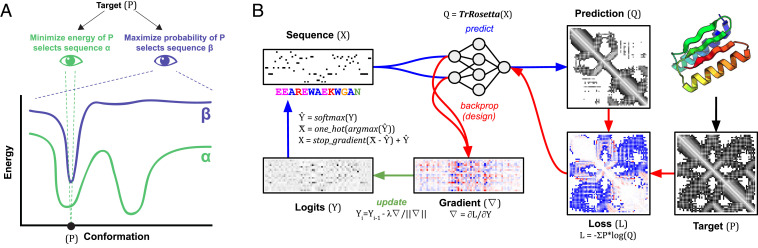
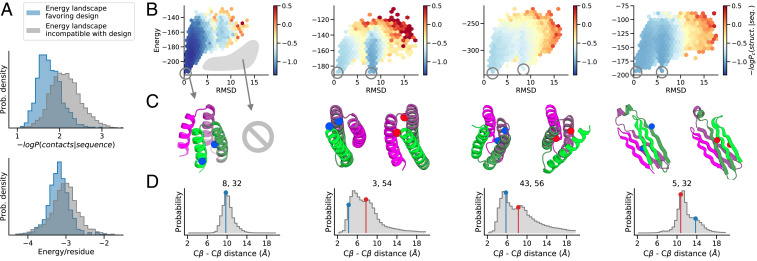
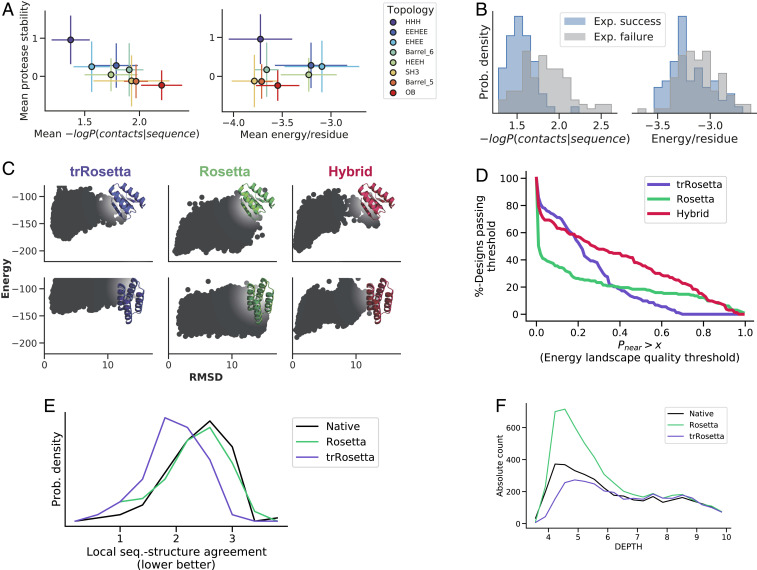
Significance: Almost all proteins fold to their lowest free energy state, which is determined by their amino acid sequence. Computational protein design has primarily focused on finding sequences that have very low energy in the target designed structure. However, what is most relevant during folding is not the absolute energy of the folded state but the energy difference between the folded state and the lowest-lying alternative states. We describe a deep learning approach that captures aspects of the folding landscape, in particular the presence of structures in alternative energy minima, and show that it can enhance current protein design methods.
Overview
The claims and statistics of this paper haven’t been checked yet.
Free: it reads the open-access text and checks the first 5 claims that cite a source we can check. Create a free account to check every claim.
Integrity signals
Registry
Cites
Statistics
Figures
Verification
Claims the paper makes
The claims and statistics of this paper haven’t been checked yet.
Free: it reads the open-access text and checks the first 5 claims that cite a source we can check. Create a free account to check every claim.
Claims other papers make about this one
Each is checked against this paper’s own text: does it say what the citing paper says it does?
The cited source says what the claim attributes to it.
In the citing paper
“trRosetta can also be used to design sequences that fold into a target backbone structure by carrying out sequence optimization using a structure recapitulation loss function that rewards similarity of the predicted structure to the target structure (13).”
From Scaffolding protein functional sites using deep learning (2022) · cites this paper as [13]
The check wasn’t confident either way, so it gives no verdict — never disputed.
In the citing paper
“We determined a 2.5 Å resolution crystal of L056 (see Methods, Figure 3e). The global fold was similar to predictions, with a Cα RMSD of 2.9 Å from the backbone structure predicted by trRosetta and 2.3 Å RMSD from a WT T4 Lysozyme structure59,60.”
From Large language models generate functional protein sequences across diverse families (2023) · cites this paper as [59]
Experimental — accuracy not yet measuredIn the citing paper
“RF and AF have different architectures and were trained independently, and hence AF predictions can be regarded as a partially orthogonal in silico test of whether RF-designed sequences fold into the intended structures, analogous to traditional ab initio folding (13, 24).”
From Scaffolding protein functional sites using deep learning (2022) · cites this paper as [13]
Self-check
Percentages, sums and reported differences re-computed from the paper’s own numbers.
The self-check needs the paper’s full text.
Citations
Cites
A Simplex Method for Function Minimization
Nelder, J. A., & Mead, R. (1965) · The Computer Journal · doi:10.1093/comjnl/7.4.308 · Cited by 28,905
Amino acid substitution matrices from protein blocks.
Henikoff, S., & Henikoff, J. G. (1992) · Proceedings of the National Academy of Sciences · doi:10.1073/pnas.89.22.10915 · Cited by 6,218
TM-align: a protein structure alignment algorithm based on the TM-score
Zhang, Y. (2005) · Nucleic Acids Research · doi:10.1093/nar/gki524 · Cited by 3,774
Categorical Reparameterization with Gumbel-Softmax
Jang, E., Gu, S., & Poole, B. (2016) · arXiv · doi:10.48550/arxiv.1611.01144 · Cited by 3,616 · cited 1×
“3 with respect to the auxiliary variable Y (24):”
BackgroundHow fast-folding proteins fold
Lindorff-Larsen, K., Piana, S., Dror, R. O., & Shaw, D. E. (2011) · Science · doi:10.1126/science.1208351 · Cited by 1,980 · cited 1×
“…folding energy landscape characterization using molecular dynamics methods even for small proteins is a resource-intensive computational task (18, 19), and even Rosetta ab initio folding simulations are extremely computationally intensive, requiring thousands of CPU hours to generate enough…”
BackgroundAtomic-level characterization of the structural dynamics of proteins
Shaw, D. E., Maragakis, P., Lindorff-Larsen, K., Piana, S., Dror, R. O., Eastwood, M. P., Bank, J. A., Jumper, J. M., Salmon, J. K., Shan, Y., et al. (2010) · Science · doi:10.1126/science.1187409 · Cited by 1,923
Protein Structure Prediction Using Rosetta
Rohl, C. A., Strauss, C. E. M., Misura, K. M. S., & Baker, D. (2004) · Methods in Enzymology · doi:10.1016/s0076-6879(04)83004-0 · Cited by 1,725 · cited 1×
“Energy landscapes of designs were mapped out using Rosetta de novo structure prediction (ab initio folding) (27).”
MethodSelf-citationDesign of a Novel Globular Protein Fold with Atomic-Level Accuracy
Kuhlman, B., Dantas, G., Ireton, G. C., Varani, G., Stoddard, B. L., & Baker, D. (2003) · Science · doi:10.1126/science.1089427 · Cited by 1,670
Self-citationThe Rosetta All-Atom Energy Function for Macromolecular Modeling and Design
Alford, R. F., Leaver-Fay, A., Jeliazkov, J. R., O’Meara, M. J., DiMaio, F. P., Park, H., Shapovalov, M. V., Renfrew, P. D., Mulligan, V. K., Kappel, K., et al. (2017) · Journal of Chemical Theory and Computation · doi:10.1021/acs.jctc.7b00125 · Cited by 1,532
Self-citationImproved protein structure prediction using predicted interresidue orientations
Yang, J., Anishchenko, I., Park, H., Peng, Z., Ovchinnikov, S., & Baker, D. (2020) · Proceedings of the National Academy of Sciences · doi:10.1073/pnas.1914677117 · Cited by 1,421 · cited 2×
“Combining these predictions with Rosetta energy minimization yielded excellent predictions of structures in benchmark cases, as well as recent blind Continous Automated Model EvalutiOn (CAMEO) structure modeling evaluations (13).”
BackgroundMethodSelf-citation
Cited by
Items 101–170 of 170
Abiotic Foldamer Quaternary Structures
Wang, S., Allmendinger, L., & Huc, I. (2024) · Angewandte Chemie International Edition · doi:10.1002/anie.202413252 · Cited by 10
A probabilistic view of protein stability, conformational specificity, and design
Stern, J. A., Free, T. J., Stern, K. L., Gardiner, S., Dalley, N. A., Bundy, B. C., Price, J. L., Wingate, D., & Della Corte, D. (2023) · Scientific Reports · doi:10.1038/s41598-023-42032-1 · Cited by 10
Extending the Horizon of Homology Detection with Coevolution-based Structure Prediction
Sánchez‐Pulido, L., & Ponting, C. P. (2021) · Journal of Molecular Biology · doi:10.1016/j.jmb.2021.167106 · Cited by 11
How much can physics do for protein design?
Michael, E., & Simonson, T. (2021) · Current Opinion in Structural Biology · doi:10.1016/j.sbi.2021.07.011 · Cited by 10
Hansen, A. L., Theisen, F. F., Crehuet, R., Marcos, E., Aghajari, N., & Willemoës, M. (2024) · ACS Synthetic Biology · doi:10.1021/acssynbio.3c00674 · Cited by 11
Liu, Q., Wang, T., Nian, B., Ma, F., Zhao, S., Vásquez, A. F., Guo, L., Ding, C., & Davari, M. D. (2026) · Biotechnology Advances · doi:10.1016/j.biotechadv.2026.108803 · Cited by 12
A Minireview on Temperature Dependent Protein Conformational Sampling
Dong, M. (2021) · The Protein Journal · doi:10.1007/s10930-021-10012-x · Cited by 8
Computational Design of Peptide-Based Binders to Therapeutic Targets
Mulligan, V. K., & Hosseinzadeh, P. (2022) · ACS symposium series · doi:10.1021/bk-2022-1417.ch003 · Cited by 9
The design of functional proteins using tensorized energy calculations
Maksymenko, K., Maurer, A., Aghaallaei, N., Barry, C., Borbarán‐Bravo, N., Ullrich, T., Dijkstra, T. M. H., Alvarez, B. H., Müller, P., Lupas, A. N., et al. (2023) · Cell Reports Methods · doi:10.1016/j.crmeth.2023.100560 · Cited by 7
Sidechain conditioning and modeling for full-atom protein sequence design with FAMPNNPreprint
Shuai, R. W., Widatalla, T., Huang, P., & Hie, B. (2025) · bioRxiv (Cold Spring Harbor Laboratory) · doi:10.1101/2025.02.13.637498 · Cited by 11
Isolation of structural constraints by ensemble-conditioned protein sequence designPreprint
Shuai, R. W., Zhou, L., Nesr, G. E., Lin, J., Lu, T., Mathews, I. I., Bhatti, S., Yuan, J., Kouba, P., & Huang, P. (2025) · bioRxiv (Cold Spring Harbor Laboratory) · doi:10.1101/2025.09.30.679633 · Cited by 12
Stable de novo protein design via joint conformational landscape and sequence optimization
Cho, Y., Dauparas, J., Tsuboyama, K., Rocklin, G. J., & Ovchinnikov, S. (2025) · Nature Communications · doi:10.1038/s41467-025-66526-w · Cited by 11
“For unconditional protein generation to create thousands of structures and sequences, we use TrROS, starting with random amino acids and continuously applying gradient backpropagation until a clear distance matrix is obtained 9,14 .”
InfluentialSelf-citationCoarse-Grain Model of Ultrarigid Polymer Rods Comprising Bifunctionally Linked Peptide Bundlemers
Zhang, T., Yang, D.-B., Kloxin, C. J., Pochan, D. J., & Saven, J. G. (2024) · Biomacromolecules · doi:10.1021/acs.biomac.4c01192 · Cited by 7
Saharkhiz, S., Mostafavi, M., Birashk, A., Karimian, S., Khalilollah, S., Jaferian, S., Yazdani, Y., Alipourfard, I., Huh, Y. S., Farani, M. R., et al. (2024) · Topics in Current Chemistry · doi:10.1007/s41061-024-00469-6 · Cited by 7
“This indicates a rich understanding of these methods about sequence-structure relationships [41].”
Protein sequence design by deep learning
Wang, J. (2022) · Nature Computational Science · doi:10.1038/s43588-022-00274-5 · Cited by 7
Programmed mineralization of metal-oxides by de novo designed protein templatesPreprint
Saragovi, A., Pyles, H., Huddy, E. B., Borst, A. J., Hanikel, N., Kwon, P. S., Dávila-Hernández, F. A., Li, X., Courbet, A., Kibler, R. D., et al. (2024) · bioRxiv (Cold Spring Harbor Laboratory) · doi:10.1101/2024.06.24.600095 · Cited by 6
Self-citationTang, W. Y., Dai, N., Zhou, T., Mathews, D. H., & Huang, L. (2026) · Nature Communications · doi:10.1038/s41467-025-67901-3 · Cited by 11
“Its importance is also evidenced by COVID-19, an RNA virus, as well as the two recent Nobel Prizes in Physiology and Medicine for messenger RNA vaccines (2023) and microRNAs (2024).”
Characterising Intrinsically Disordered Proteins Using NMR Spectroscopy and MD Simulations
Heller, G. T., Yu, L., & Hansen, D. F. (2022) · Royal Society of Chemistry eBooks · doi:10.1039/9781839165702-00383 · Cited by 7
Machine learning-based environmental art automated design method
Wang, L. (2024) · Journal of Computational Methods in Sciences and Engineering · doi:10.1177/14727978241306041 · Cited by 5
Talluri, S. (2022) · Advances in protein chemistry and structural biology · doi:10.1016/bs.apcsb.2022.01.003 · Cited by 6
ZetaDesign: an end-to-end deep learning method for protein sequence design and side-chain packing
Yan, J., Li, S., Zhang, Y., Hao, A., & Zhao, Q. (2023) · Briefings in Bioinformatics · doi:10.1093/bib/bbad257 · Cited by 6
Gradient-Informed Quality Diversity for the Illumination of Discrete Spaces
Boige, R., Richard, G., Donà, J., Pierrot, T., & Cully, A. (2023) · Genetic and Evolutionary Computation Conference (GECCO) · doi:10.1145/3583131.3590407 · Cited by 11
“Several work tried to leverage recent breakthroughs of deep learning methods tailored to proteins in the protein design, such as AlphaDesign [27] or TrDesign [43].”
BackgroundTuned Fitness Landscapes for Benchmarking Model-Guided Protein Design
Thomas, N., Agarwala, A., Belanger, D., Song, Y. S., & Colwell, L. J. (2026) · Genetics · doi:10.1101/2022.10.28.514293 · Cited by 7
Protein Language Model Supervised Precise and Efficient Protein Backbone Design MethodPreprint
Zhang, B., Liu, K., Zheng, Z., Liu, Y., Mu, J., Wei, T., & Chen, H. (2023) · bioRxiv (Cold Spring Harbor Laboratory) · doi:10.1101/2023.10.26.564121 · Cited by 6
Kanwal, M., Basheer, A., Bilal, M., Faheem, M. Q., Aziz, T. A., Alamri, A. S., Alsanie, W. F., Alhomrani, M., & Jamal, S. B. (2024) · International Immunopharmacology · doi:10.1016/j.intimp.2024.113241 · Cited by 4
Generative β-hairpin design using a residue-based physicochemical property landscape
Satalkar, V. B., Degaga, G. D., Li, W., Pang, Y. T., McShan, A. C., Gumbart, J. C., Mitchell, J. C., & Torres, M. P. (2024) · Biophysical Journal · doi:10.1016/j.bpj.2024.01.029 · Cited by 5
“…of extant protein structures are fused to achieve a final larger protein structure in which the relative position and orientation of secondary structure elements, such as side chains and backbone structure, are sampled to identify local energy minima in the sequence-structure landscape (15–17).”
Self-citationChu, H. Y., & Wong, A. S. L. (2021) · Advanced Genetics · doi:10.1002/ggn2.202100038 · Cited by 5
Prasetiya, F. S., Destiarani, W., Prihastaningtyas, I. R. C., Agung, M. U. K., & Yusuf, M. (2023) · Journal of Applied Pharmaceutical Science · doi:10.7324/japs.2023.10012 · Cited by 3
“Additionally, the receptor preparation also aims to ease the structure of the B-Raf protein and minimize its energy, based on the literature that native structures in nature generally have the lowest free energies (Norn et al., 2021; Yu et al., 2020).”
BackgroundQuartärstrukturen abiotischer Foldamere
Wang, S., Allmendinger, L., & Huc, I. (2024) · Angewandte Chemie · doi:10.1002/ange.202413252 · Cited by 3
Liu, T., Gu, Y., AL‐Ansi, W., Fan, M., Wang, L., Li, Y., & Qian, H. (2025) · Food Chemistry · doi:10.1016/j.foodchem.2025.143401 · Cited by 3
Wang, B., Lin, J. H., Hoag, M. R., Wright, M., Ma, M., Cai, W., Kankanamalage, S. G., & Liu, Y. (2022) · Antibody Therapeutics · doi:10.1093/abt/tbac019 · Cited by 3
“With the advent of new and highly accurate protein structure prediction software applying deep learning such as Google AlphaFold [33] and RoseTTAFold [34, 35], advancements in software using energy functions [36] and new hybrid approaches [37], and with improving accuracy in the prediction of stabilizing mutations [38…”
MethodProtSeqGen: a novel deep learning model for protein sequence design
Gao, Q., Li, Z., Deng, Y., & Ji, Z. (2026) · BMC Bioinformatics · doi:10.1186/s12859-026-06482-4 · Cited by 2
“In contrast, statistic-based approaches infer sequence-structure relationships from multiple sequence alignments or structural databases, but they tend to generalize poorly to novel folds and perform particularly poorly in data-scarce settings [7, 12].”
Paritala, V., Thummala, H., & Mohith, T. N. S. (2022) · Journal of Molecular Docking · doi:10.33084/jmd.v2i1.3407 · Cited by 2
Nie, Z., Li, D., Liu, Y., Xu, F., Zhang, H., Huang, X., Liu, X., Wang, Z., Ma, Y., Ye, Y., et al. (2025) · Journal of Chemical Information and Modeling · doi:10.1021/acs.jcim.5c00623 · Cited by 4
Computational design of industrially relevant enzymes
Osuna, S. (2023) · Advances in catalysis · doi:10.1016/bs.acat.2023.07.001 · Cited by 2
Training data composition affects performance of protein structure analysis algorithmsPreprint
Derry, A., Carpenter, K. A., & Altman, R. B. (2021) · bioRxiv (Cold Spring Harbor Laboratory) · doi:10.1101/2021.09.30.462647 · Cited by 2
Computational Peptide Design for Diverse Structures and Functions
Rettie, S., Juergens, D., & Bhardwaj, G. (2025) · Wiley eBooks · doi:10.1002/9781119824701.ch05 · Cited by 3
Self-citationArya, A., Jain, A., & Kishore, N. (2023) · Journal of Biomolecular Structure and Dynamics · doi:10.1080/07391102.2023.2239922 · Cited by 1
“Current knowledge of protein folding process suggests formation of intermediate states in achieving minimum energy conformation (Englander & Mayne, 2014; Norn et al., 2021).”
Tahzima, R., Charon, J., Díaz, A., Jonghe, K. D., Massart, S., Michon, T., & Vranken, W. (2025) · Frontiers in Virology · doi:10.3389/fviro.2025.1501616 · Cited by 1
A Comparative Review of Modern Pharmacy and Jamu through the Djampi Oesodo Triad Philosophy
Prasetya, F., Noviani, L., Kuncoro, H., Indriyanti, N., Tjen, D., & Suprana, J. (2025) · Journal Of Tropical Pharmacy And Chemistry · doi:10.30872/jtpc.v9i2.312 · Cited by 1
AI-Driven Protein Research: From Prediction to Design
Min, G., & Peng, H. (2026) · Methods in molecular biology · doi:10.1007/978-1-0716-5249-7_13 · Cited by 1
Zheng, W., Xu, Y.-F., Hu, Z.-M., Li, K., Xu, Z.-Q., Sun, J.-L., & Wei, J.-F. (2024) · International Immunopharmacology · doi:10.1016/j.intimp.2024.111488 · Cited by 1
Oduro‐Kwateng, E., Ali, M. A. M., Kehinde, I. O., Rao, L., & Soliman, M. E. S. (2025) · BMC Methods · doi:10.1186/s44330-025-00021-y · Cited by 2
“These energy terms can be derived from experimental data or calculated using computational methods [17].”
EnerBridge-DPO: Energy-Aware Markov Bridge Inverse Folding for Protein Sequence Design
Rong, D., Lu, H., Zhang, X., Zheng, W., Zhang, F., Zheng, S., & Liu, N. (2026) · Journal of Chemical Information and Modeling · doi:10.1021/acs.jcim.6c01697 · Cited by 4
Duan, B., & Sun, Y. (2021) · International Conference on Biological Information and Biomedical Engineering (BIBE) · doi:10.1145/3469678.3469685 · Cited by 1
Gene Mutagenesis Methods in Directed Evolution and Rational Enzyme Design
Reetz, M. T., Sun, Z., & Qu, G. (2023) · Wiley eBooks · doi:10.1002/9783527836895.ch3 · Cited by 1
Assessment of AlphaFold structures and optimization methods for virtual screeningPreprint
Peng, Y., Wu, X., Lin, L., Deng, Z., Zhao, L., & Hao, K. (2023) · bioRxiv (Cold Spring Harbor Laboratory) · doi:10.1101/2023.01.10.523376 · Cited by 1
A Generative Model for Creating Path Delineated Helical ProteinsPreprint
Kibler, R. D., Wicky, B. I. M., Coventry, B., & Woodall, N. B. (2023) · bioRxiv (Cold Spring Harbor Laboratory) · doi:10.1101/2023.05.24.542095 · Cited by 1
“Deep learning methods have accelerated all aspects of protein design including backbone generation 1–5 , sequence prediction 6–8 and design confirmation 9 .”
MethodSelf-citationTetraprenyltoluquinone Inhibits the Tumor Marker Aldo-Keto Reductase: An in Silico Study
Hefni, D., Dachriyanus, Susanti, M., Wahyuni, F. S., & Pratama, F. A. (2022) · International Journal on Advanced Science Engineering and Information Technology · doi:10.18517/ijaseit.12.6.16596
Protein Manufacture: Protein Design Assisted by Machine Learning from Backbone to Sequence
Xu, M., Luo, Y., Jiang, J., Cui, Z., & Wu, H. (2024) · Lecture notes in computer science · doi:10.1007/978-981-97-5692-6_30
Omwansu, W., Musembi, R. J., & Derese, S. (2024) · Physical Chemistry Chemical Physics · doi:10.1039/d4cp02123a · Cited by 1
Li, D., Zhu, Y., Zhang, W., Liu, J., Yang, X., Liu, Z., & Wei, D. (2024) · Interdisciplinary Sciences Computational Life Sciences · doi:10.1007/s12539-024-00662-7 · Cited by 1
“Nanoproteins 3, 6, 18, 21, and 24 had two very similar dynamic stable conformations.”
Kumari, N., Abhijat, A., & Dheer, H. (2026) · SSRN Electronic Journal · doi:10.2139/ssrn.6161003
Structural prediction of protein assemblies with deep learning
Bret, H. (2023) · theses.fr (ABES) · doi:10.70675/b3849091zce01z4ab0z91efz2b71d9cc754d
Protein inverse folding through joint modeling of surface and backbone geometryPreprint
Hong, Y., Cai, Y., Jiao, Y., qi, M., Huang, Q., & Sun, L. (2026) · bioRxiv (Cold Spring Harbor Laboratory) · doi:10.64898/2026.04.20.719544
“Second, the current framework emphasizes geometric surface information and does not yet incorporate other potentially important factors, such as electrostatic features[29], conformational dynamics[30], or environmental context[31].”
Mapping AAV capsid sequences to functions through function-guided in silico evolution
Guo, B., Zheng, H., Lin, X., Jiang, H., Mo, A., Wei, H., Zhang, R., Yuan, Y., Wu, Y., Li, H., et al. (2026) · Cell Press Blue · doi:10.1016/j.cpblue.2026.100016 · Cited by 3
Sequence-dominant protein therapeutics: mechanistic foundations for efficient biologics development
Niazi, S. K. (2026) · Frontiers in Drug Discovery · doi:10.3389/fddsv.2026.1781560
SteerAF: Distogram-based Steering of AlphaFold2 toward Alternative ConformationsPreprint
Tang, J., Zhu, Z., Yang, S., & Song, C. (2026) · bioRxiv (Cold Spring Harbor Laboratory) · doi:10.64898/2026.06.19.733296 · Cited by 1
“Note that, when updating the gradient, similar to the gradient regularization in ColabDe-sign, 37,39,40 we also regularize the gradient.”
Zhao, W., Pan, X., Yang, W., LIU, Z., Wei, X., Lin, A., Tang, B., Zhang, L., Xiao, M., Zeng, Q., et al. (2026) · Probiotics and Antimicrobial Proteins · doi:10.1007/s12602-026-11131-6
Identification of TMEM41B TM6 as a critical domain for coronavirus replication in vitro and in vivo
Fang, P., Xiao, W., Wang, X., Xiong, Y., Ding, T., Cheng, T., Chen, C., Xiao, S., & Fang, L. (2026) · Journal of Virology · doi:10.1128/jvi.00493-26
“We predicted the structure of porcine TMEM41B-WT and its mutant TMEM41B-Δ(TM6+CTD) using trRosetta (42) and found that both TMEM41B-WT and TMEM41B-Δ(TM6+CTD) contain two reentrant loops (Fig.”
Li, Z., Tian, F., Jiang, S., Dong, S., & Tian, F. (2026) · Molecular Diversity · doi:10.1007/s11030-026-11714-z
Computational Peptide Design Methods for Drug Discovery Targeting Protein-Protein Interactions
Kosugi, T. (2024) · Institutional Repositories DataBase (IRDB)
Harteveld, Z., Rigoldi, F., Toniolo, C., Granger, A., Gensous, C., Blum, T., Jean-Baptiste, R., Kobayashi, M., Siegal, G., Habeshian, S., et al. (2026) · bioRxiv (Cold Spring Harbor Laboratory) · doi:10.64898/2026.09.24.754019
Structure-Guided Hybrid GCN−Transformer Framework for Enzyme Optimal pH Prediction
Tao, L., Zhang, J., Xiang, C., Yang, J., Wei, L., & Kang, S. (2026) · ACS Synthetic Biology · doi:10.1021/acssynbio.6c00421
Self-citationIntroduction to the principles of protein engineering
Sharp, J. F., Nelson, M. K., Rustembek, M., Samanta, R., & Stern, L. A. (2026) · Elsevier eBooks · doi:10.1016/b978-0-443-44536-1.00010-9
Machine learning and artificial intelligence in protein design
Madala, B. P., & Kumar, R. (2026) · Elsevier eBooks · doi:10.1016/b978-0-443-44536-1.00013-4
Projected Gradient Descent for Hallucination-Based Protein Binder DesignPreprint
Ross, M., Miller, D. M., & Wells, J. (2026) · bioRxiv (Cold Spring Harbor Laboratory) · doi:10.64898/2026.10.22.760942
“Following common usage in the protein design literature (Frank et al., 2024; Goverde et al., 2023; Norn et al., 2021) we refer to X as a position-specific scoring matrix (PSSM), though we note that it is a position-specific probability matrix.”
EquiDesign: a versatile computational framework for de novo protein sequence design
Gao, Q., Xu, Z., Chen, K., Cen, X., Yan, K., Liu, J., & Ji, Z. (2026) · Briefings in Bioinformatics · doi:10.1093/bib/bbag581
“Physics-based methods, rooted in molecular mechanics, typically formulate inverse folding as a combinatorial energy minimization problem, relying on physical force fields and conformational sampling to identify stabilizing sequences for a fixed backbone [ 6, 7].”
Metadata
- Authors
- Norn, C., Wicky, B. I. M., Juergens, D., Liu, S., Kim, D., Tischer, D., Koepnick, B., Anishchenko, I., Players, F., Baker, D., Ovchinnikov, S., Coral, A., Bubar, A. J., Boykov, A., Valle Pérez, A. U., MacMillan, A., Lubow, A., Mussini, A., Cai, A., Ardill, A. J., Seal, A., Kalantarian, A., Failer, B., Lackersteen, B., Chagot, B., Haight, B. R., Taştan, B., Uitham, B., Roy, B. G., de Melo Cruz, B. R., Echols, B., Lorenz, B. E., Blair, B., Kestemont, B., Eastlake, C. D., Bragdon, C. J., Vardeman, C., Salerno, C., Comisky, C., Hayman, C. L., Landers, C. R., Zimov, C., Coleman, C. D., Painter, C. R., Ince, C., Lynagh, C., Malaniia, D., Wheeler, D. C., Robertson, D., Simon, V., Chisari, E., Kai, E. L. J., Rezae, F., Lengyel, F., Tabotta, F., Padelletti, F., Boström, F., Gross, G. O., McIlvaine, G., Beecher, G., Hansen, G. T., de Jong, G., Feldmann, H., Borman, J. L., Quinn, J., Norrgard, J., Truong, J., Diderich, J. A., Canfield, J. M., Photakis, J., Slone, J. D., Madzio, J., Mitchell, J., Stomieroski, J. C., Mitch, J. H., Altenbeck, J. R., Schinkler, J., Weinberg, J. B., Burbach, J. D., Sequeira da Costa, J. C., Bada Juarez, J. F., Gunnarsson, J. P., Harper, K. D., Joo, K., Clayton, K. T., DeFord, K. E., Scully, K. F., Gildea, K. M., Abbey, K. J., Kohli, K. L., Stenner, K., Takács, K., Poussaint, L. L., Manalo, L. C., Withers, L. C., Carlson, L., Wei, L., Fisher, L. R., Carpenter, L., Ji-hwan, M., Ricci, M., Belcastro, M. A., Leniec, M., Hohmann, M., Thompson, M., Thayer, M. A., Gaebel, M., Cassidy, M. D., Fagiola, M., Lewis, M., Pfützenreuter, M., Simon, M., Elmassry, M. M., Benevides, N., Kerr, N. K., Verma, N., Shannon, O., Yin, O., Wolfteich, P., Gummersall, P., Tłuścik, P., Gajar, P., Triggiani, P. J., Guha, R., Mathew Innes, R. B., Buchanan, R., Gamble, R., Leduc, R., Spearing, R., dos Santos Gomes, R. L. C., Estep, R. D., DeWitt, R., Moore, R., Shnider, S. G., Zaccanelli, S. J., Kuznetsov, S., Burillo-Sanz, S., Mooney, S., Vasiliy, S., Butkovich, S. S., Hudson, S. B., Pote, S. L., Denne, S. P., Schwegmann, S. A., Ratna, S., Kleinfelter, S. C., Bausewein, T., George, T. J., de Almeida, T. S., Yeginer, U., Barmettler, W., Pulley, W. R., Wright, W. S., Willyanto, Lansford, W., Hochart, X., Gaiji, Y. A. S., Lagodich, Y., & Christian, V.
- Affiliations
- University of Washington (US)
- Harvard University (US)
- Howard Hughes Medical Institute (US)
- Corresponding author
- Baker, David
- Ovchinnikov, Sergey
- ORCID
- Norn, Christoffer
- Wicky, Basile I. M.
- Juergens, David
- Liu, Sirui
- Kim, David
- Tischer, Doug
- Koepnick, Brian
- Anishchenko, Ivan
- Baker, David
- Ovchinnikov, Sergey
- Seal, Aniruddha
- Chagot, Benjamin
- Roy, Brandon G.
- Kestemont, Bruno
- Coleman, Charles David
- Chisari, Emanuele
- Truong, Jason
- Diderich, Jasper A.
- Slone, Jesse David
- Madzio, Joanna
- Joo, Keehyoung
- Wei, Linda
- Elmassry, Moamen M.
- Guha, Rajarshi
- Kuznetsov, Sergey
- Butkovich, Slava S.
- Pote, Spencer Len
- George, Thomas J.
- Venue
- Proceedings of the National Academy of Sciences
- Publisher
- National Academy of Sciences
- Published
- 2021-03-12
- Volume
- 118
- Issue
- 11
- ISSN
- 0027-8424 (ISSN-L)
- 1091-6490
- PMC
- PMC7980421
- OpenAlex
- W3134186384
- Cited by
- 144
- References
- 34
- Citations by year
- 2026: 19 · 2025: 15 · 2024: 26 · 2023: 33 · 2022: 30 · 2021: 21
- FWCI
- 8.62
- Type
- journal article
- Language
- en
- Open access
- hybrid
- doi.org
- Licence
- Locations
- Proceedings of the National Academy of Sciences (publishedVersion, cc-by-nc-nd)
- PubMed Central (publishedVersion, cc-by-nc-nd)
- PubMed (publishedVersion)
- Funders
- Novo Nordisk Foundation (NNF17OC0030446)
- European Molecular Biology Organization (ALTF 139-2018)
- HHS | NIH | NIH Office of the Director (DP5OD026389)
- Howard Hughes Medical Institute (N/A)
- Audacious Project at the Institute for Protein Design (N/A)
- HHS | NIH | National Institute of Allergy and Infectious Diseases (HHSN272201700059C)
- Schmidt Futures program (N/A)
- Topics
- Life Sciences › Biochemistry, Genetics and Molecular Biology › Molecular Biology › Protein Structure and Dynamics
- Life Sciences › Biochemistry, Genetics and Molecular Biology › Molecular Biology › RNA and protein synthesis mechanisms
- Physical Sciences › Chemistry › Organic Chemistry › Chemical Synthesis and Analysis
- Keywords
- protein design, backpropagation, de novo protein design, energy landscape, folding stability
- MeSH terms
- Models, Molecular, Protein Conformation, Proteins, Thermodynamics, Neural Networks, Computer, Protein Folding
About these checks
Registry, retraction, Cites and statistics results are computed, not judged, with one exception: a printed reference that no index lists is read once by a model before it counts as a citation error. Claims are extracted by a model and kept only when their quote appears verbatim in the text; each cited source is then checked, with a model’s help, for whether it says what the claim relies on. Those verdicts can be wrong — read the claim’s quote and the cited source before relying on one.
Statistics and arithmetic are recomputed, not judged.
Confidence bands are shown only for fields calibrated on our annotated test set. None is calibrated yet, so no band is shown.
What counts as a claim ›How we measure confidence ›How we check this ›
Are you an author, or do you see a problem with this page? Request a review
Data sources
Bibliographic data: Semantic Scholar, OpenAlex, Crossref.
Contains information from the Semantic Scholar Academic Graph Datasets, made available under the ODC Attribution License (ODC-BY 1.0).
Semantic Scholar’s data is described in: Kinney, R., et al. (2023). The Semantic Scholar Open Data Platform. arXiv:2301.10140.
